
The Victorian Society’s national list of ‘Top Ten Endangered Buildings 2025’ features one building recognisable from regular visits down the decades to Newcastle upon Tyne.
Gibson Street Baths was built in the early 20th century under the 1846 Public Baths and Wash-houses Act that was still in force.
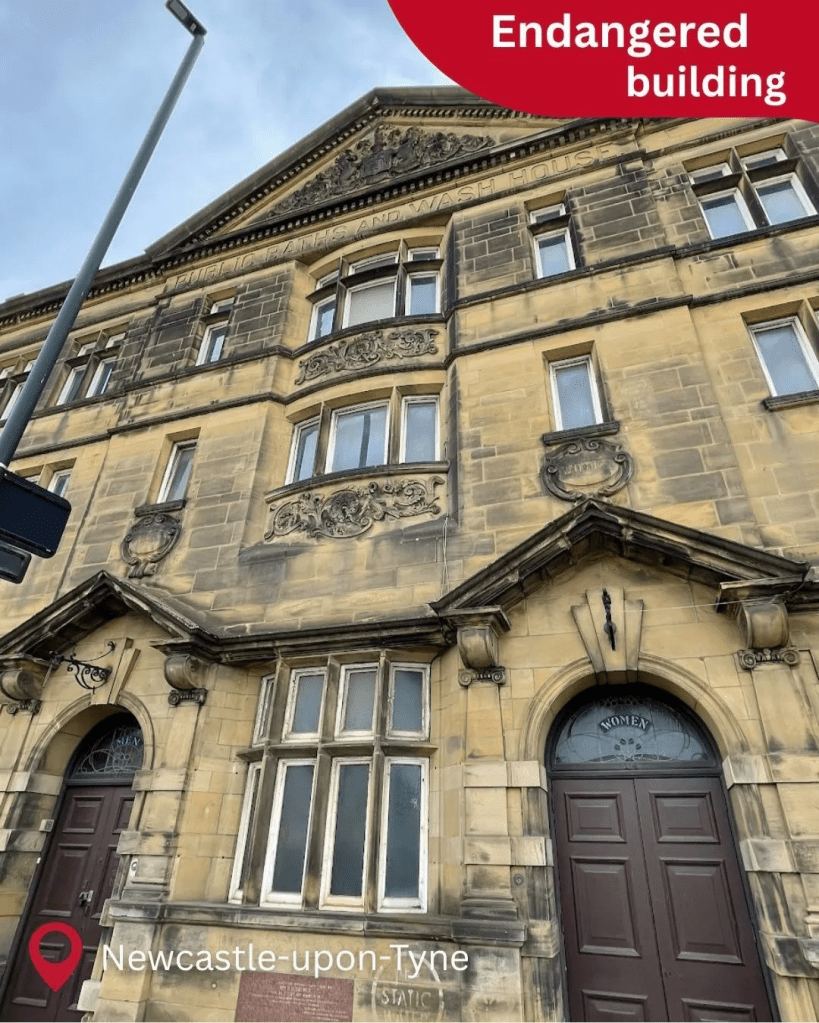
A weekly visit to such buildings was part of everyday life for many families including earlier generations of mine.
Now Grade 2 listed, Gibson Street Baths has lain dormant since 2016 and, according to the Victorian Society, “needs a sensitive reuse before restoration costs escalate further.”
It’s a theme that has echoed down the years as revealed by a 1971 article that recently joined the Pressphotoman collection.
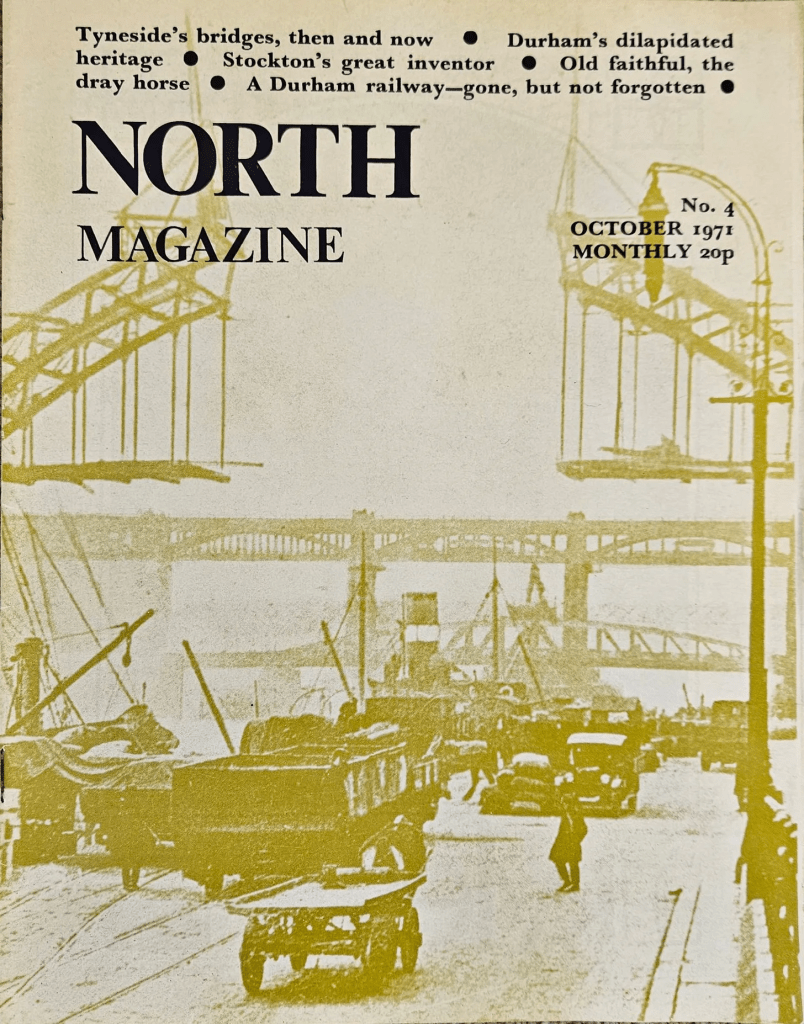
North Magazine was a monthly publication for ‘Durham, Northumberland and North Yorkshire’ edited by the journalist and author Leslie Geddes-Brown (1942-2020).
The cover of the October 1971 issue (vol. 1, no. 4) featured an eye-catching photograph of the Tyne Bridge, which is currently undergoing major renovation as it approaches its centenary in 2028.
However, it was the subject of ‘Durham’s dilapidated heritage’ that prompted a hard-hitting editorial headlined ‘Goodbye To All This?’
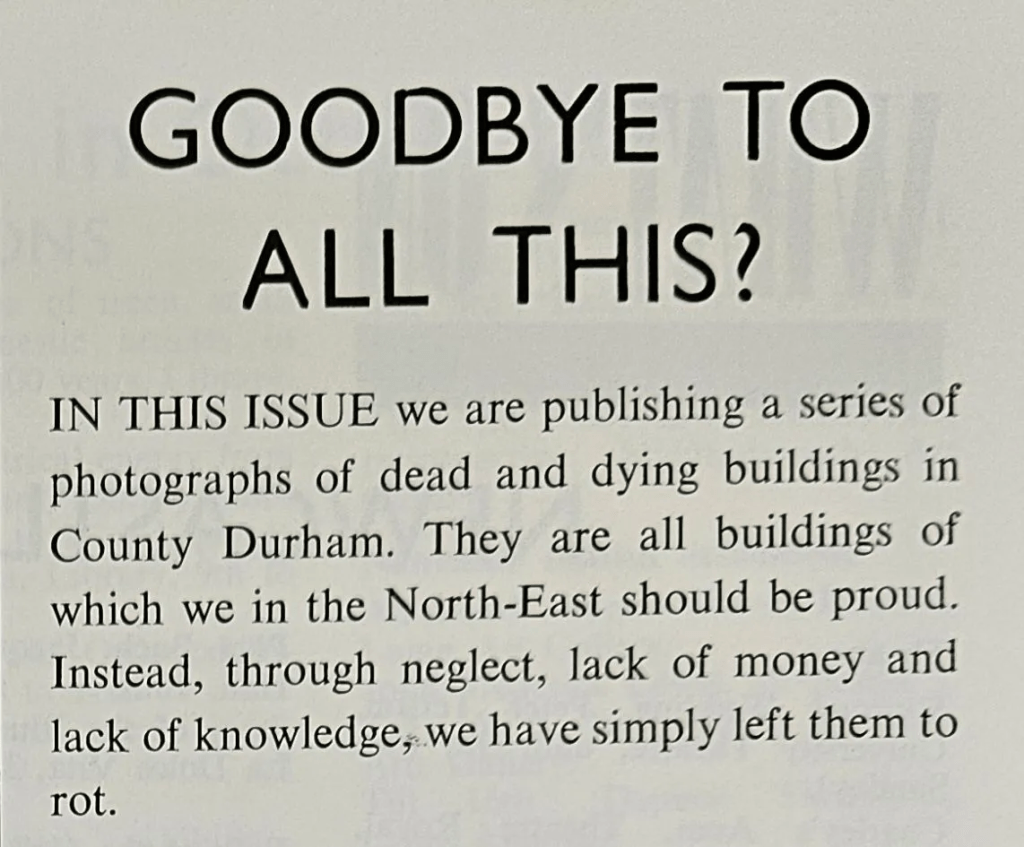
The series of photographs referred to came from Historic Architecture of County Durham by Neville Whittaker and Ursula Clark (Oriel Press) that was about to be published.
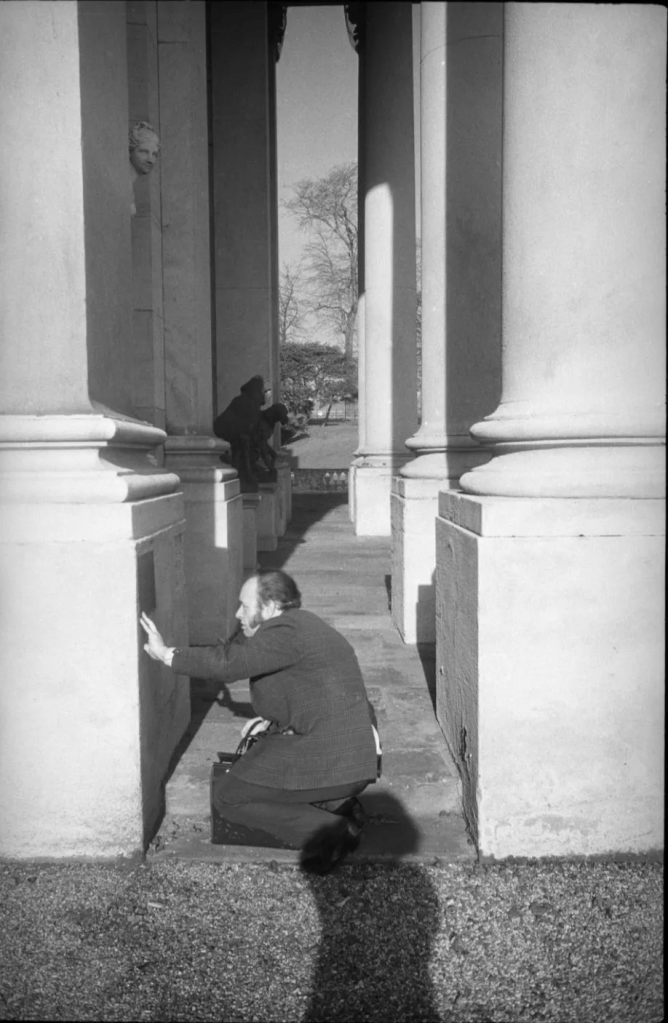
© Historic England Archive/UXC01/01/1272/10.
Regular readers will recognise the name of Ursula Clark (1940-2000) as the architectural photographer, who featured in my recent talk for the RPS Historical Group marking the 25th anniversary of her death.
The three-page North Magazine article devoted much of its space to Ursula’s photographs and it is instructive to trace what has happened to the featured buildings in the half century since.
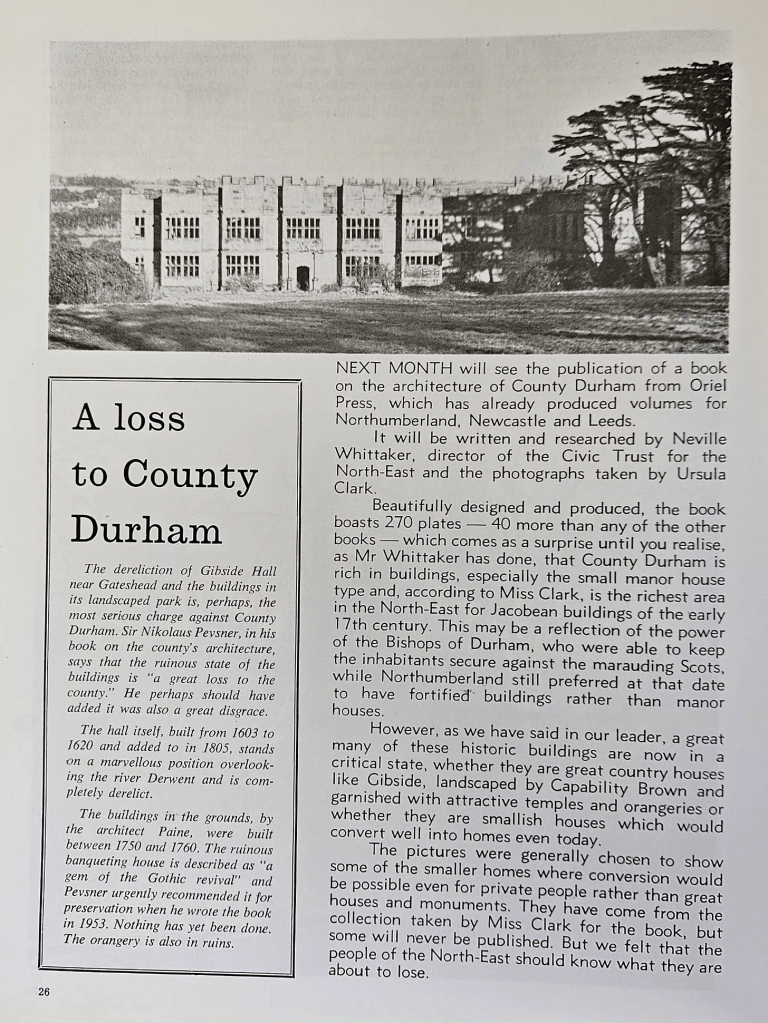
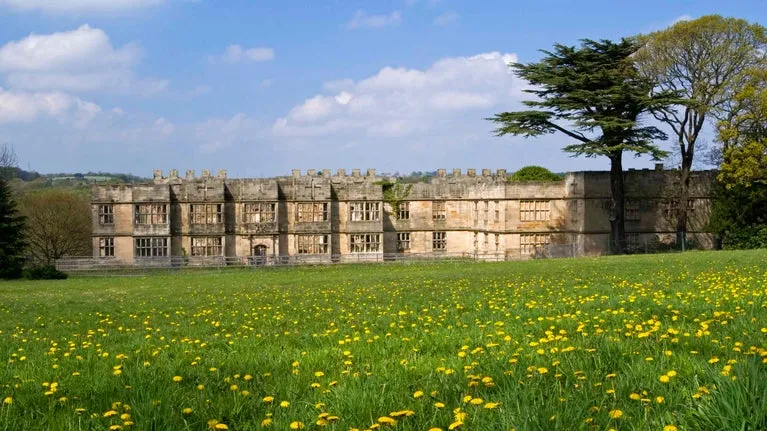
Fortunately for the Gibside estate, it is now in the care of the National Trust and is a popular location with visitors.
Whilst the ruined hall still stands, today it is surrounded by wire mesh fencing as a safety precaution against falling masonry.
The magazine’s decision to then feature smaller homes “where conversion would be possible even for private people” has proved a sound one.
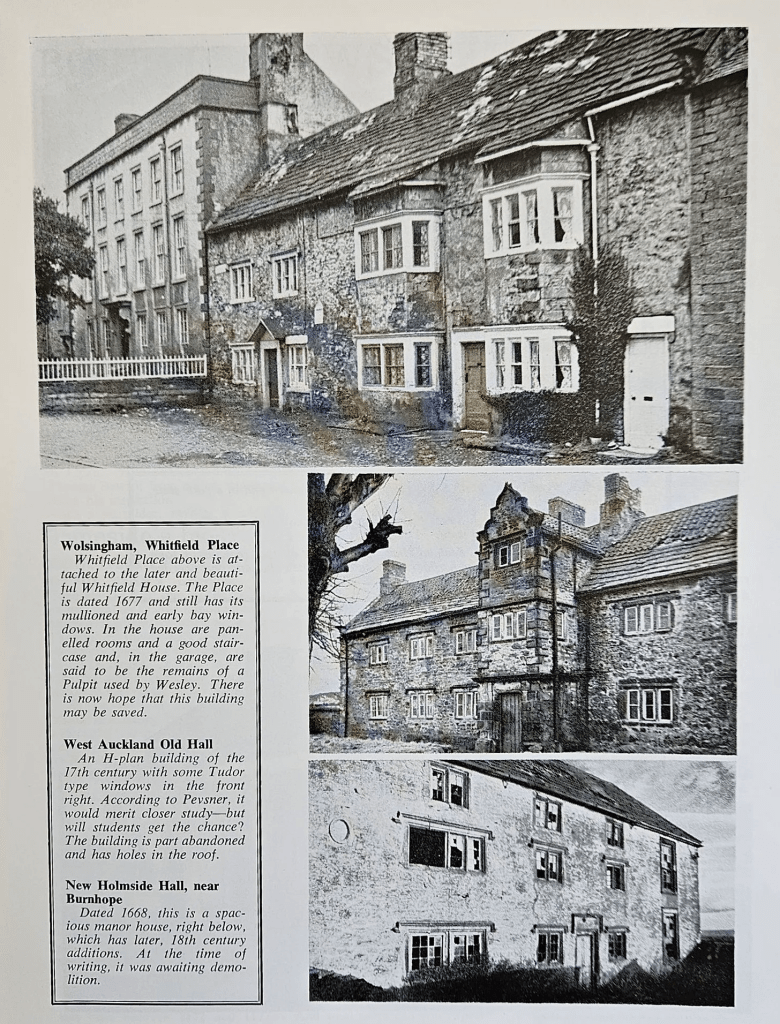
In the years since, all three of the featured properties – Whitfield Place, Wolsingham; West Auckland Old Hall; and New Holmside Hall, near Burnhope – have been lovingly restored to their former glory.
Perhaps the most stunning transformation though is the classical shop front in High Street East, Sunderland (top right below) with its “ornate and elegant pillars” described in 1971 as “in a bad state.”
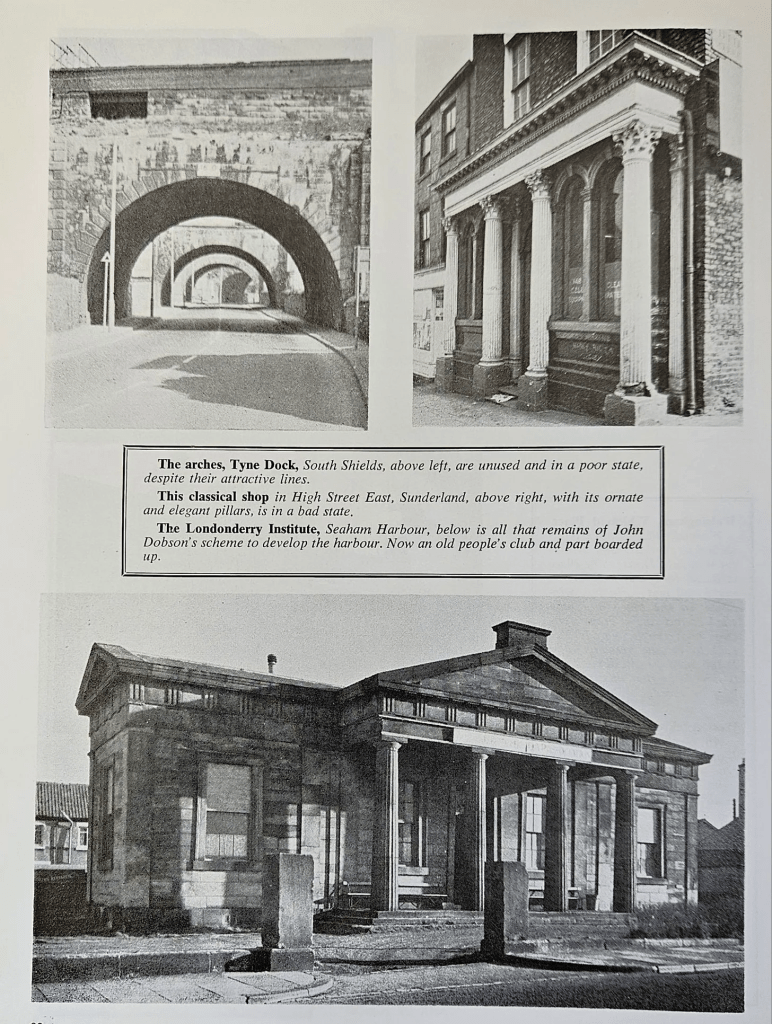
Thanks to becoming part of Sunderland’s Heritage Action Zone (HAZ), the adjoining terrace initially built as merchants’ houses in the late 18th century is now home to Pop Recs, a café, music and arts venue and community hub.
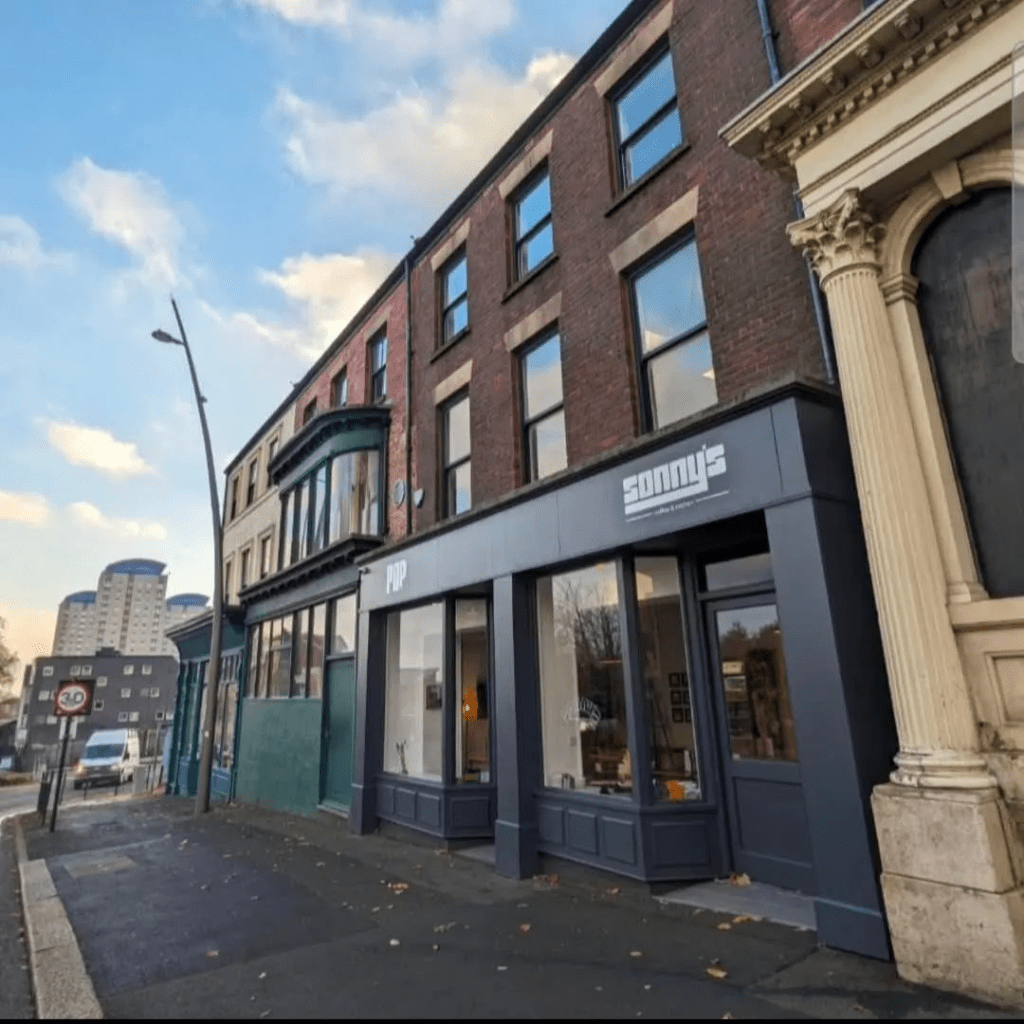
These restorations and reinventions confirm that there is hope for the current crop of endangered buildings of which Newcastle’s Gibson Street Baths is just one.

 Pressphotoman
Leave a comment