Since the advent of photography, certain locations have proved popular with landscape and architectural photographers.
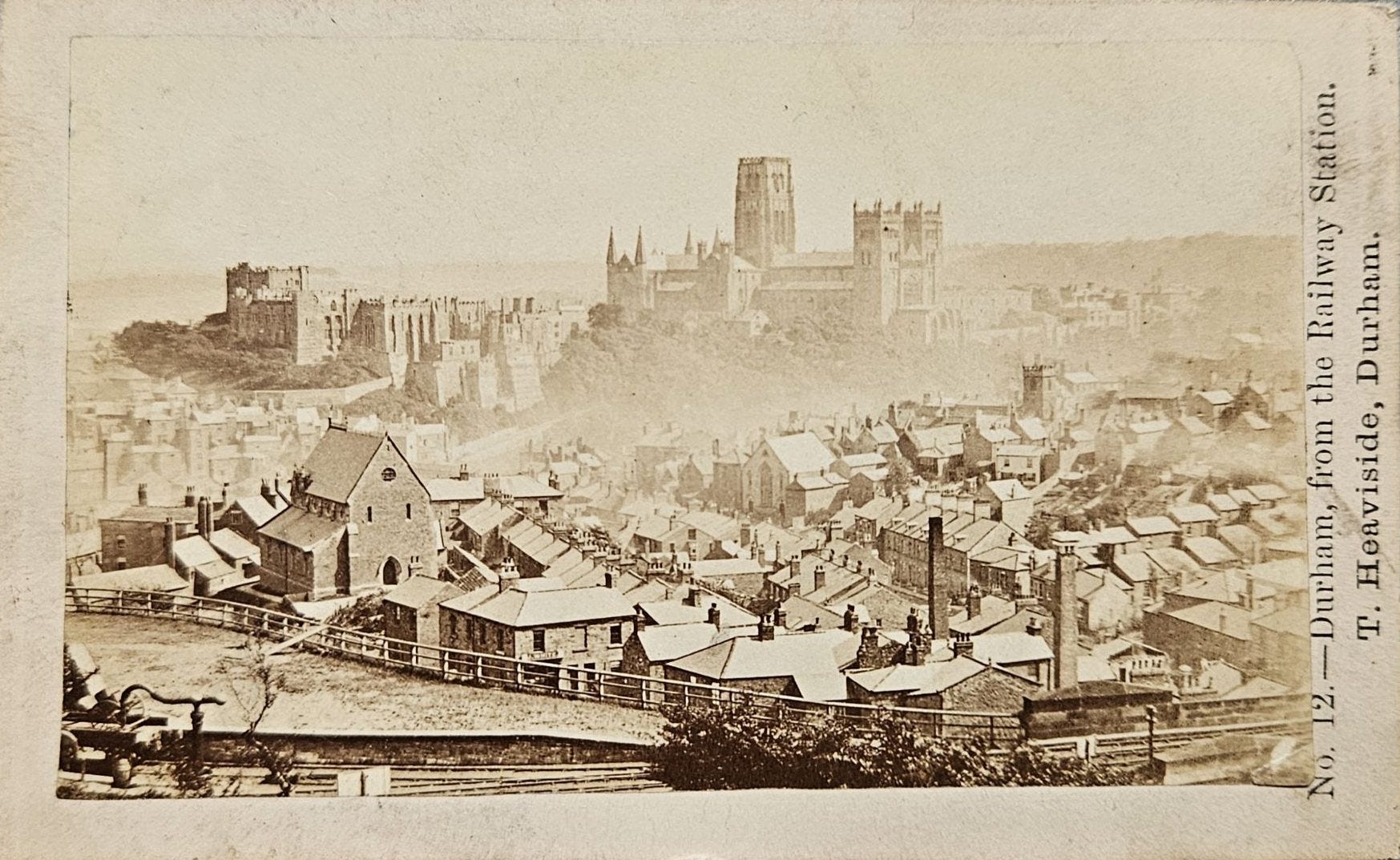
One enduring ‘view’ is the skyline of Durham in North East England with its distinctive castle and cathedral dating back to Norman times.
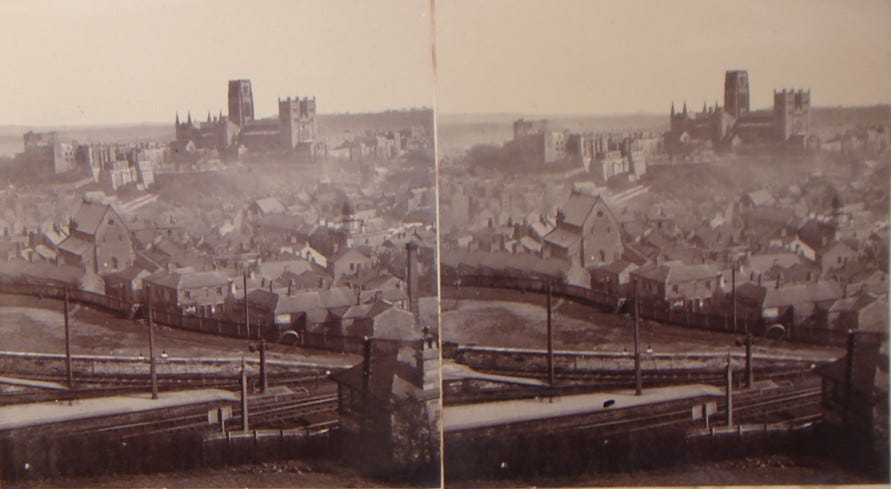
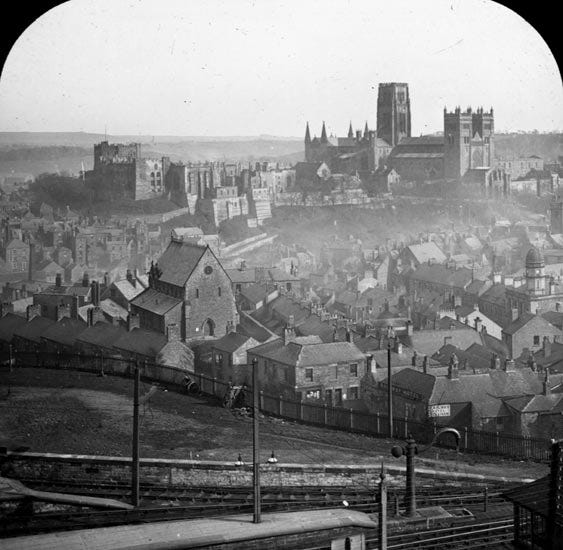
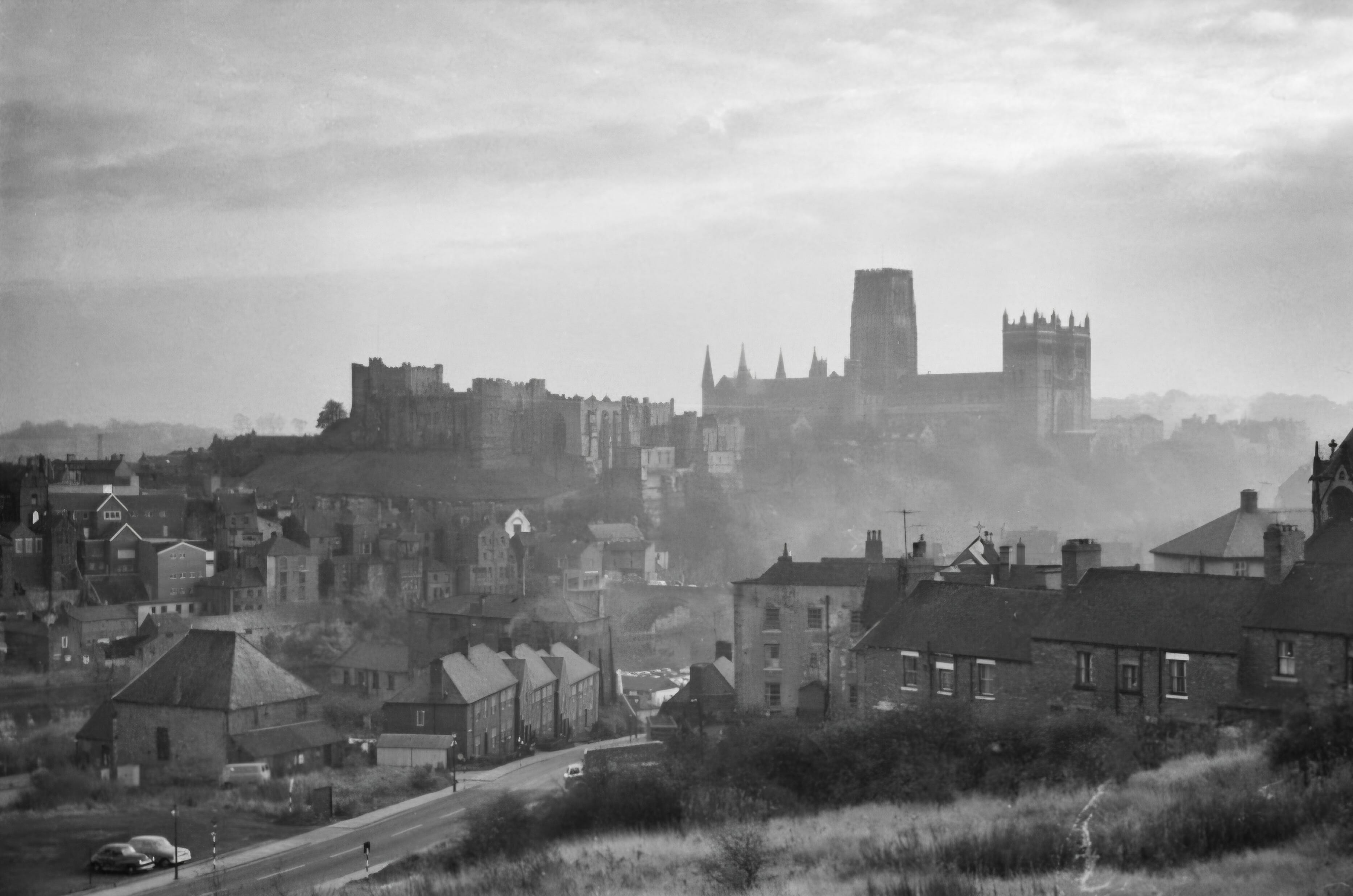
Down the years, successive generations have placed their tripods in roughly the same spot and unfailingly produced a successful shot.
A popular location has proved to be Durham railway station, opened in 1857, and which today continues to offer train passengers a panoramic vista as they travel on the East Coast line.
During the late-1860s, Thomas Heaviside (1828-1886), Durham’s first professional photographer, produced this carte de visite as number 12 in a set featuring views of his home city.
If you wish to spend time looking at these three images more closely, visit my Instagram account @pressphotoman where you can swipe between them and travel through time.
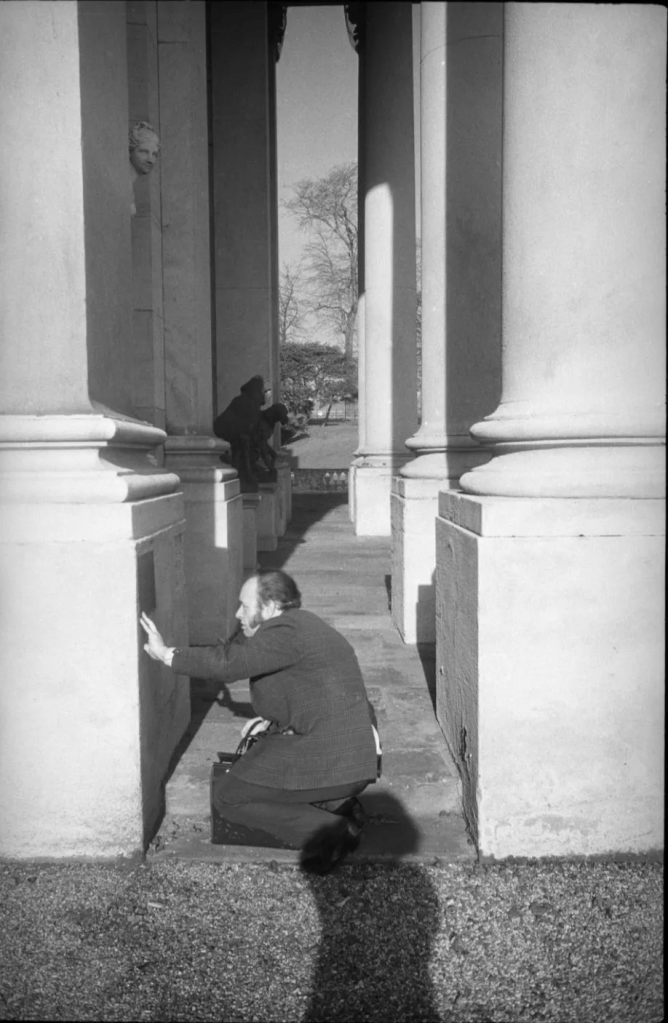
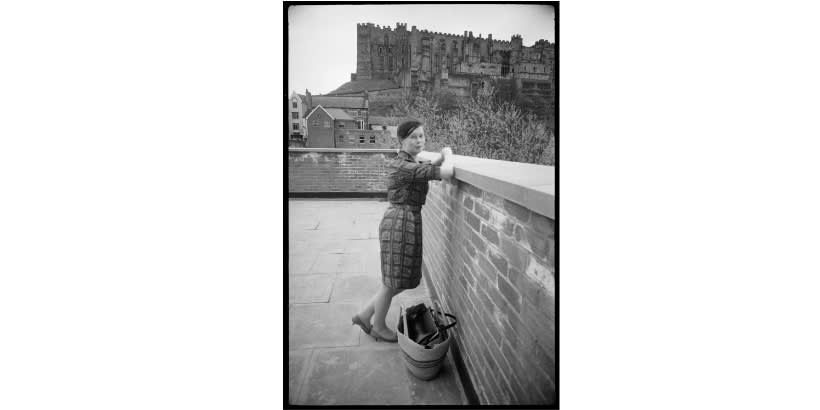
The work of architectural photographer Ursula Clark (1940-2000) is primarily captured in publications produced by Oriel Press of Newcastle upon Tyne.
These include the series of Oriel Guides to England, Scotland, France, Italy and Spain (1963-1969) as well as its Historic Architecture of … series featuring Newcastle upon Tyne (1967), Northumberland (1969), Leeds (1969) and County Durham (1971).
However, these books, many co-authored with Oriel’s Bruce Allsopp, and the quality of Ursula Clark’s images attracted wider attention.
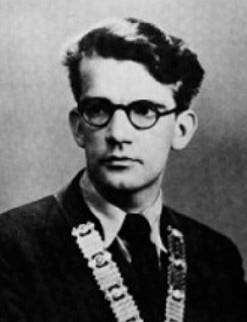
One of their admirers was the celebrated town planner Thomas Sharp (1901-1978) whose many books celebrated the heritage of British architecture.
Thomas Sharp (1901-1978).
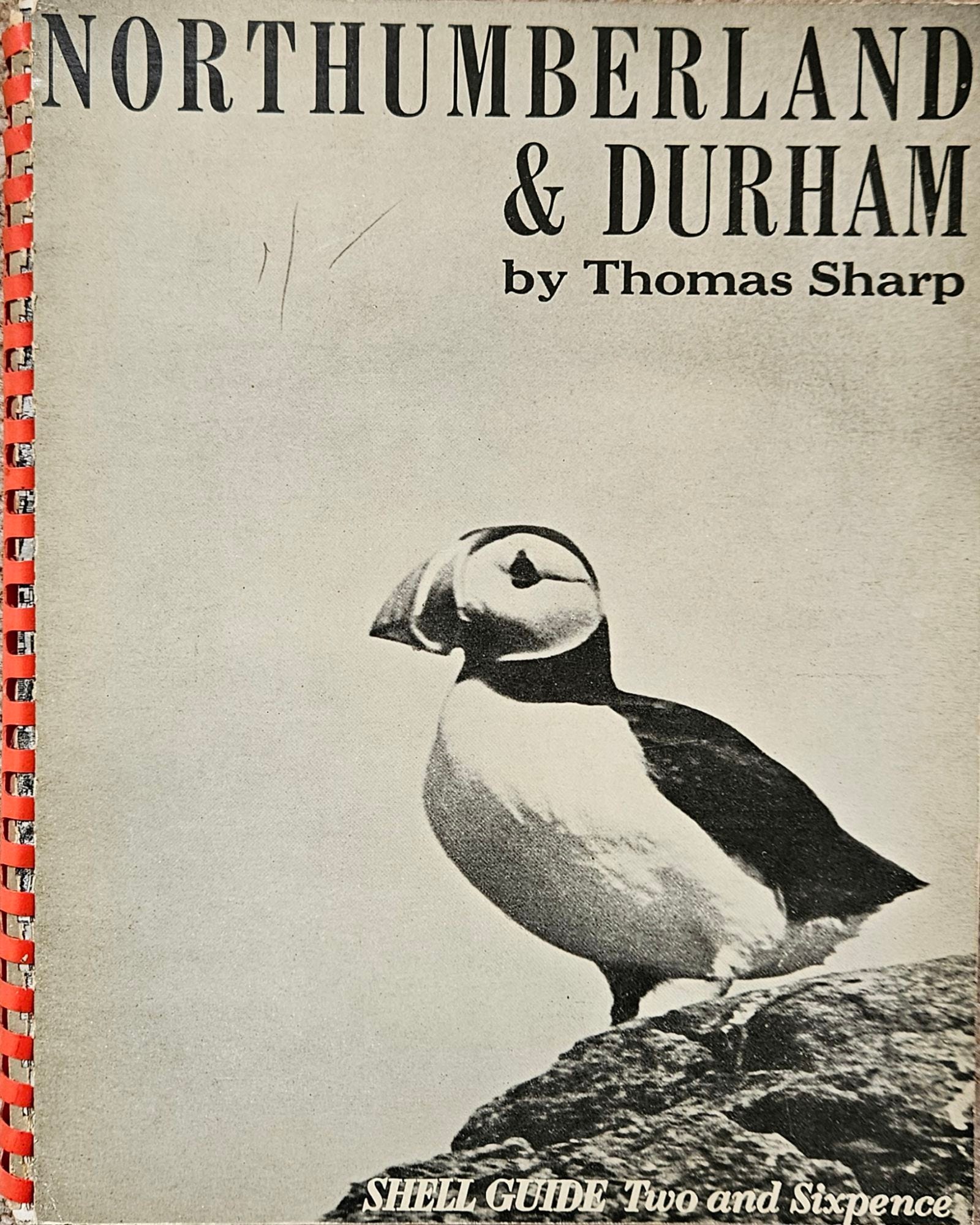
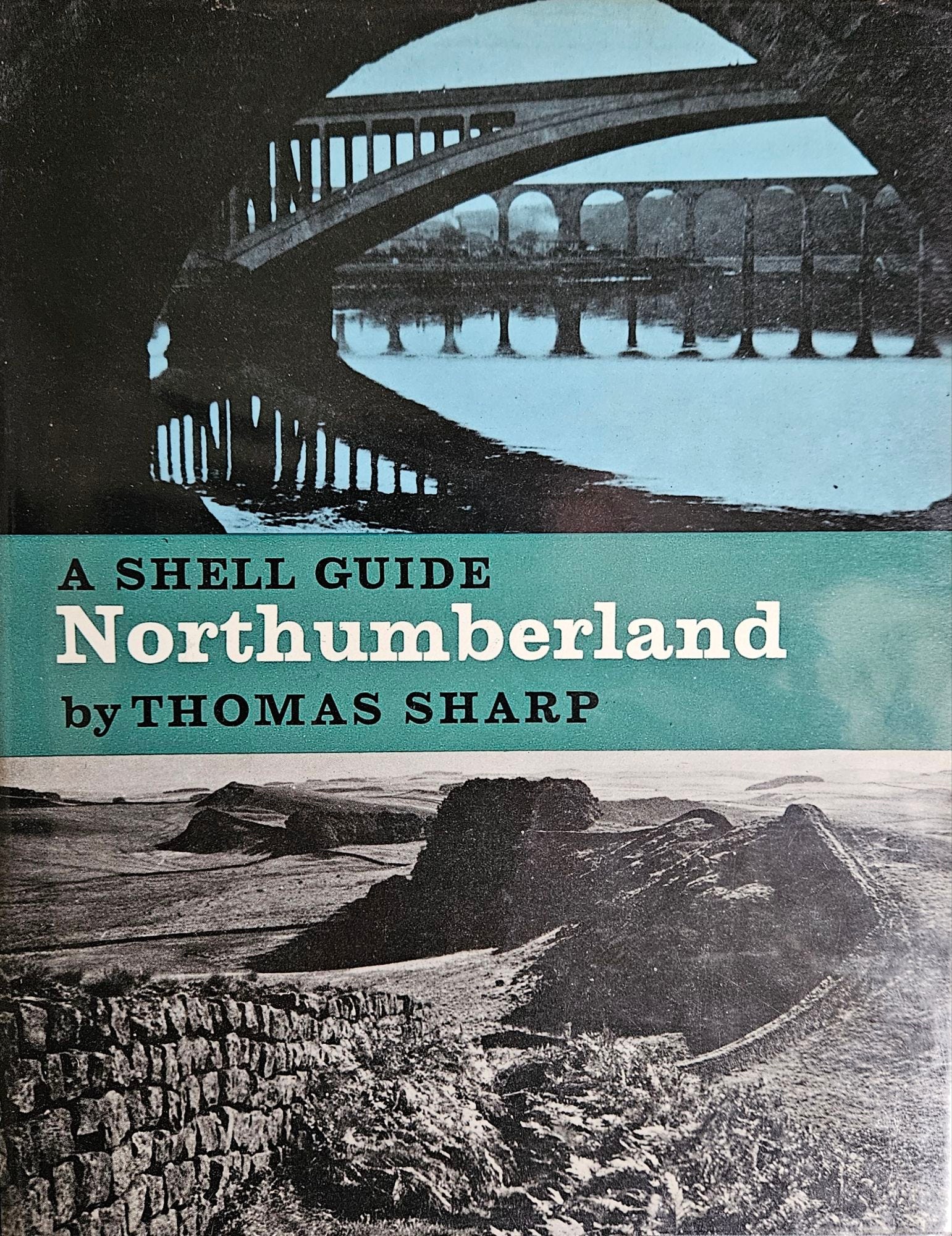
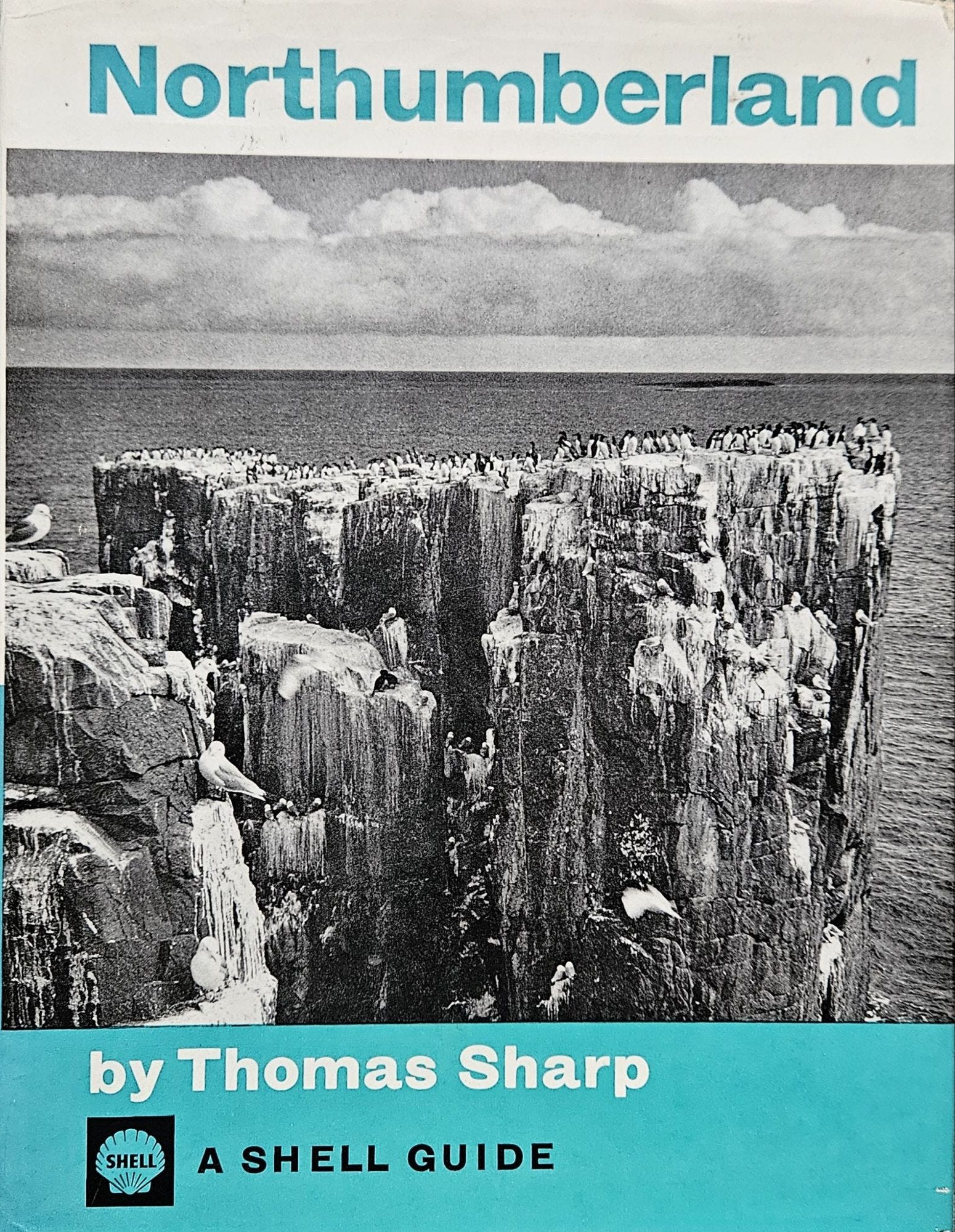
Aimed at motorists and tourists, Sharp had contributed Northumberland& Durham (1937) and Northumberland (1954) to the Shell Guides series masterminded by joint editors John Betjeman and John Piper.
Piper became the series’ sole editor in 1967 and following a request from Faber & Faber, publisher of the Shell Guides, Sharp agreed to revise and update his Northumberland volume for a third edition.
However, correspondence in the Thomas Sharp Archive held by Newcastle University reveals that its production was hindered by a fundamental disagreement about the choice of photographs to be included.
Piper’s biographer Frances Spalding describes Sharp as being “greatly angered” by the issue (Oxford University Press: Oxford, 2009).
In particular, he was “deeply dissatisfied” with some of the proposed images featuring the historic heart of Newcastle upon Tyne which prior to 1974 was part of Northumberland.
In an effort to resolve what had become an impasse, Sharp wrote to Bruce Allsopp at Oriel Press with a photographic request.
“I am most anxious to obtain, as soon as possible, and to be given permission to reproduce, the following illustrations from Historic Architecture of Newcastle upon Tyne.”
He also took the opportunity to request a copy of the book which he described as “so good I should like to possess it” (THS 42.284).
The following day, Allsopp replied positively enclosing copies of the four glossy prints that Sharp had requested (THS 42.285).
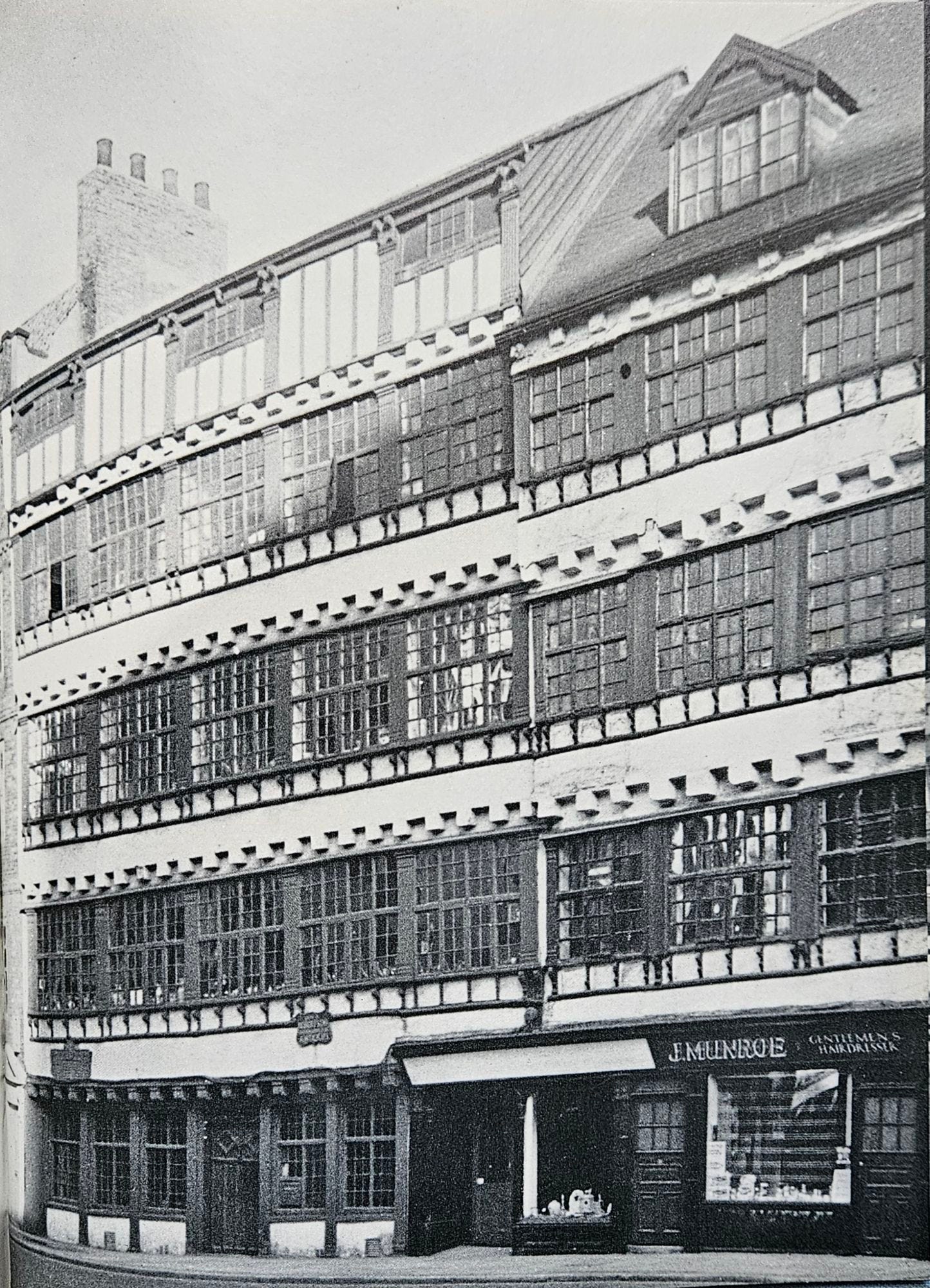
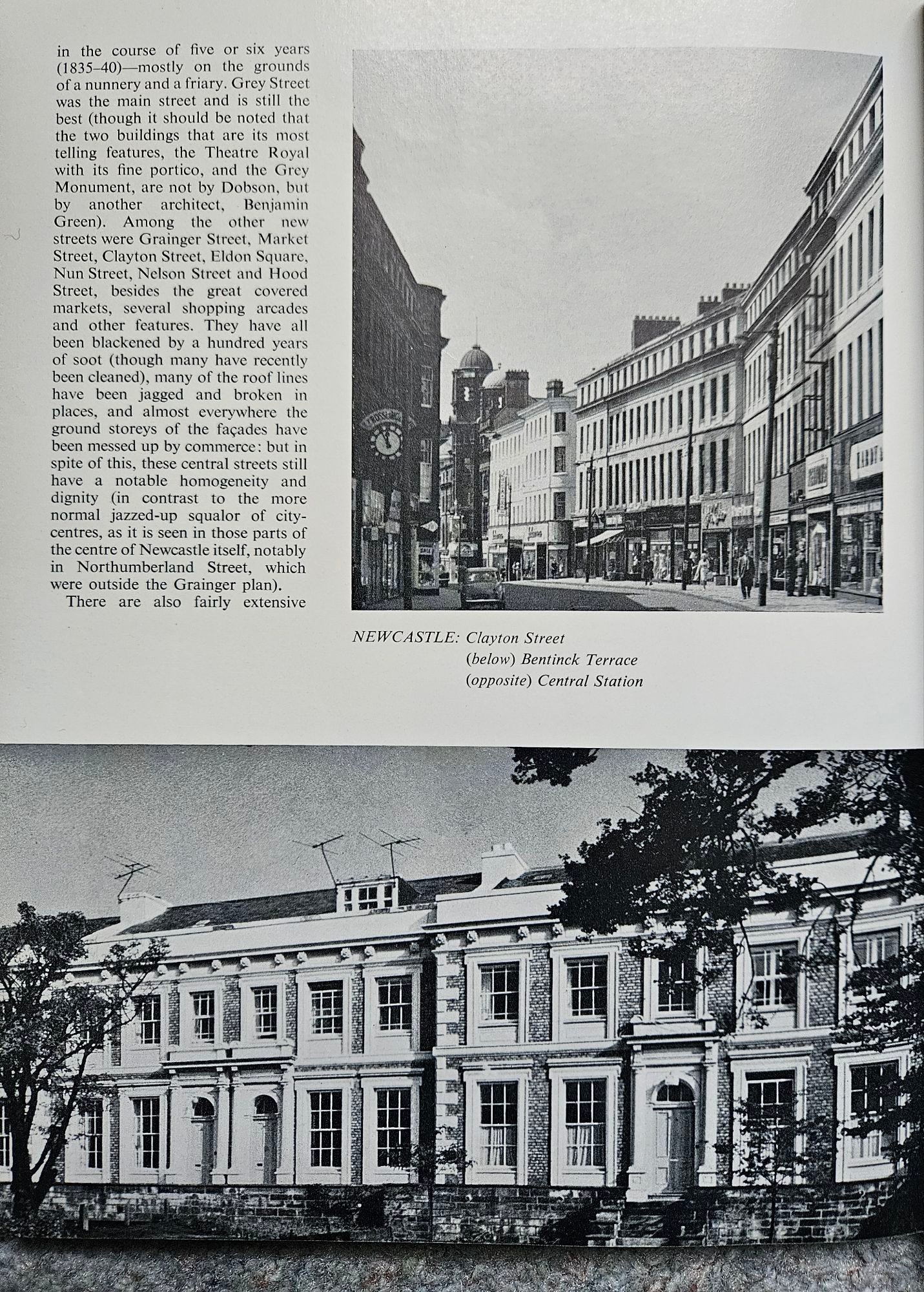
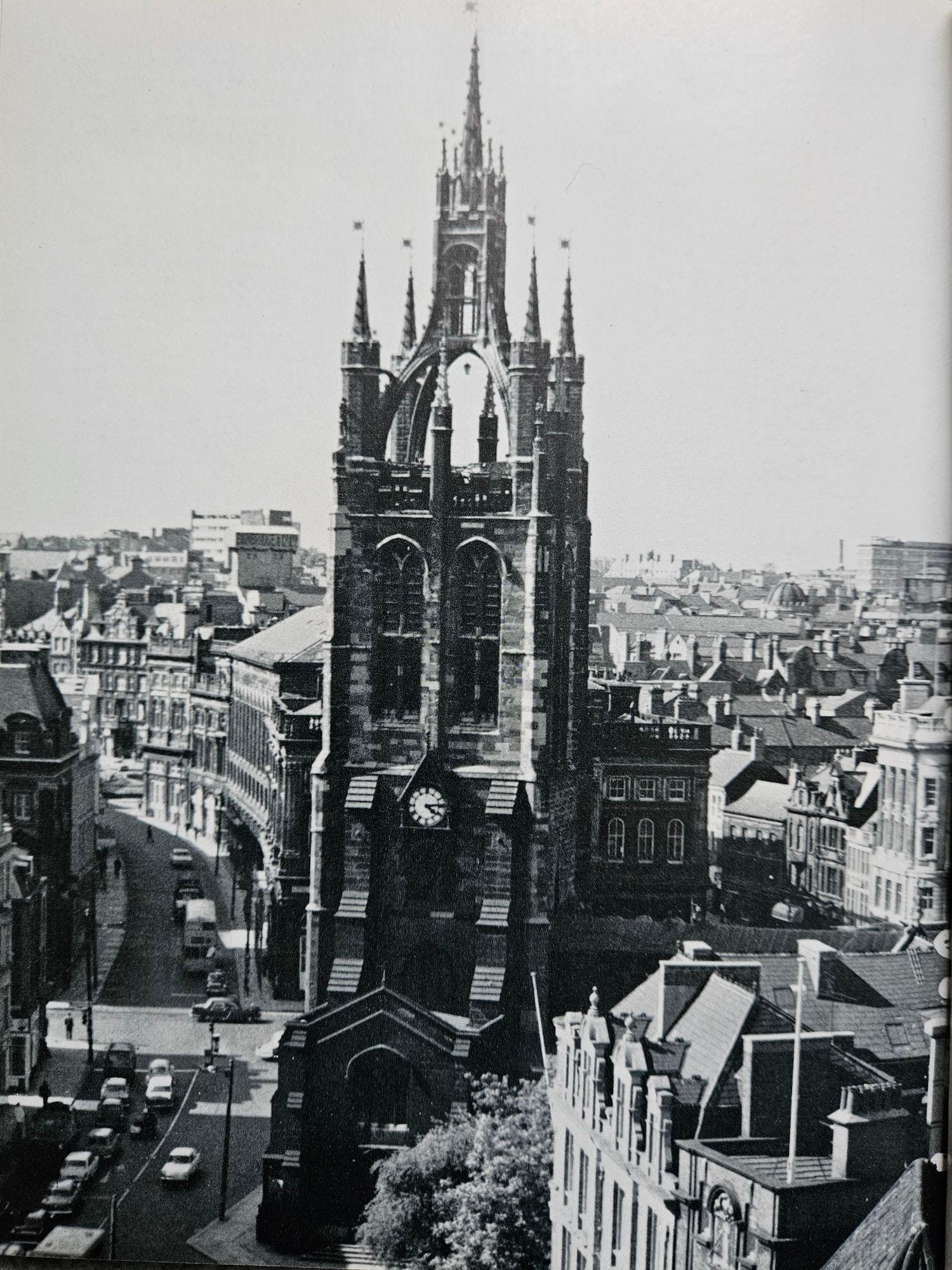
These featured Ursula Clark’s images of (Bessie) Surtees House, Clayton Street, Bentinck Terrace and St. Nicholas Cathedral.
When the book finally appeared, Sharp had succeeded in changing some of the images at the heart of his dispute with Piper including all those obtained from Oriel Press.
Two of Ursula’s shots were given full pages, whilst the other two shared a page with Sharp’s illuminating text.
(Bessie) Surtees House by Ursula Clark. From Northumberland: A Shell Guide by Thomas Sharp (London: Faber & Faber, 1969).Clayton Street and Bentinck Terrace by Ursula Clark. From Northumberland: A Shell Guide by Thomas Sharp (London: Faber & Faber, 1969).St. Nicholas Cathedral by Ursula Clark. From Northumberland: A Shell Guide by Thomas Sharp (London: Faber & Faber, 1969).
Sharp had also suggested an acknowledgement for Ursula Clark which duly appeared in his Prefatory Note alongside a mention for ‘Oriel Studios’ suggested by Bruce Allsopp.
However, the disagreement with John Piper as series’ editor surrounding the final choice of photographs for Northumberland: A Shell Guide continued into its publication.
At Sharp’s request, the following text appeared beneath the list of Illustrations.
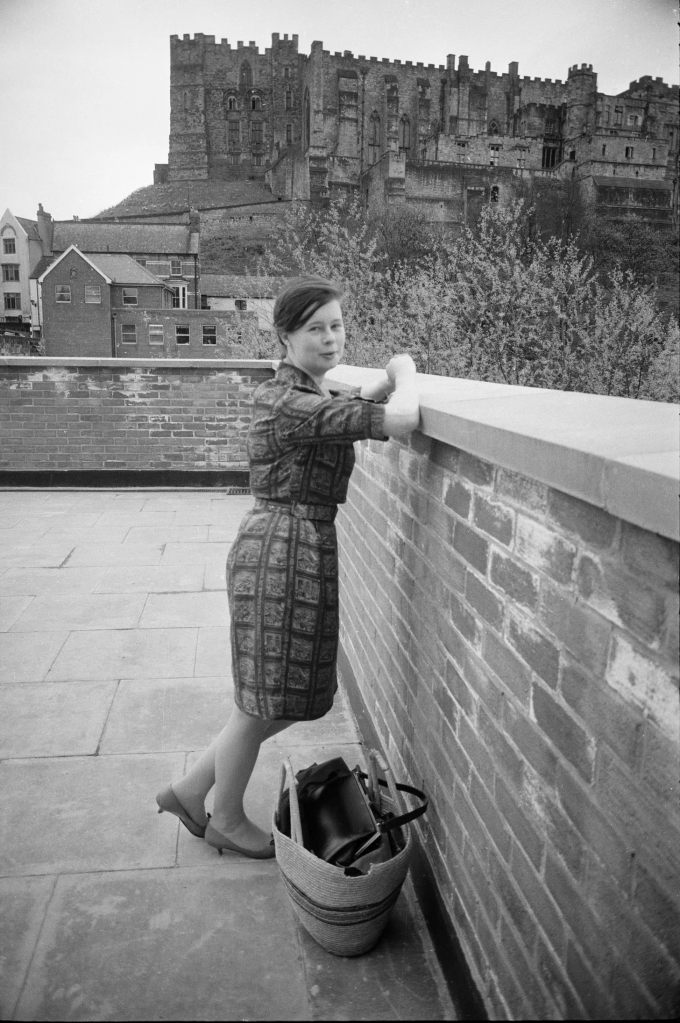
The architectural photographer Ursula Clark (1940-2000) is best-known for an archive of around 20,000 largely black-and-white images held by Historic England.
They were created by the Newcastle upon Tyne publisher Oriel Press during the 1960s and 1970s for a series of architecture guides featuring buildings in Britain and continental Europe.
Earlier this year, the Royal Photographic Society Historical Group hosted a talk in which I presented original research about Ursula Clark and her pioneering role in photographic history.
That research is ongoing and has focused recently on non-Oriel Press books and illustrated magazines where her architectural photographs were also published.
From visiting the Historic England archive in Swindon, I was aware that a proportion of her output involved colour photography.
Two of her exercise book shot lists are titled ‘Colour Copies’, suggesting that Oriel Press intended to reproduce images in colour.
Perhaps, given the company’s later financial difficulties which led to a corporate take-over by Routledge Kegan Paul in 1973, any plans proved too expensive to realise.
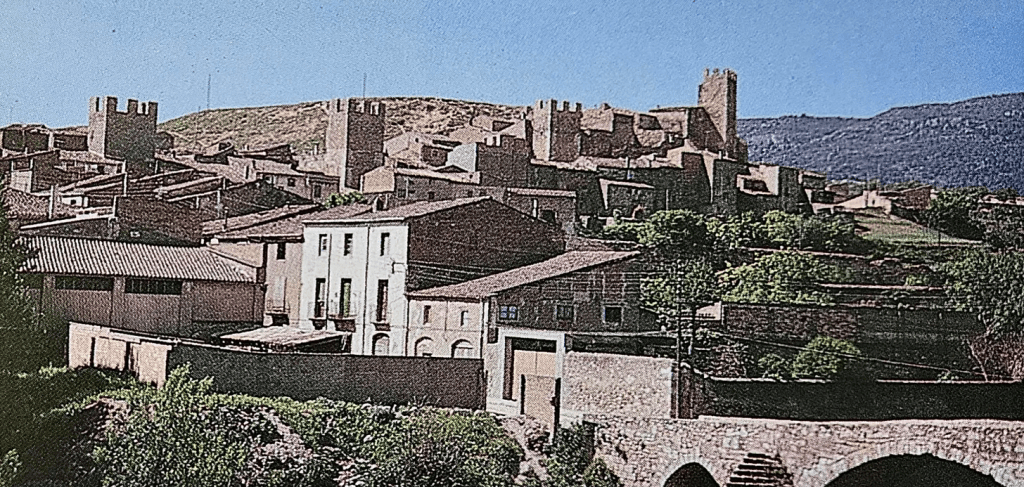
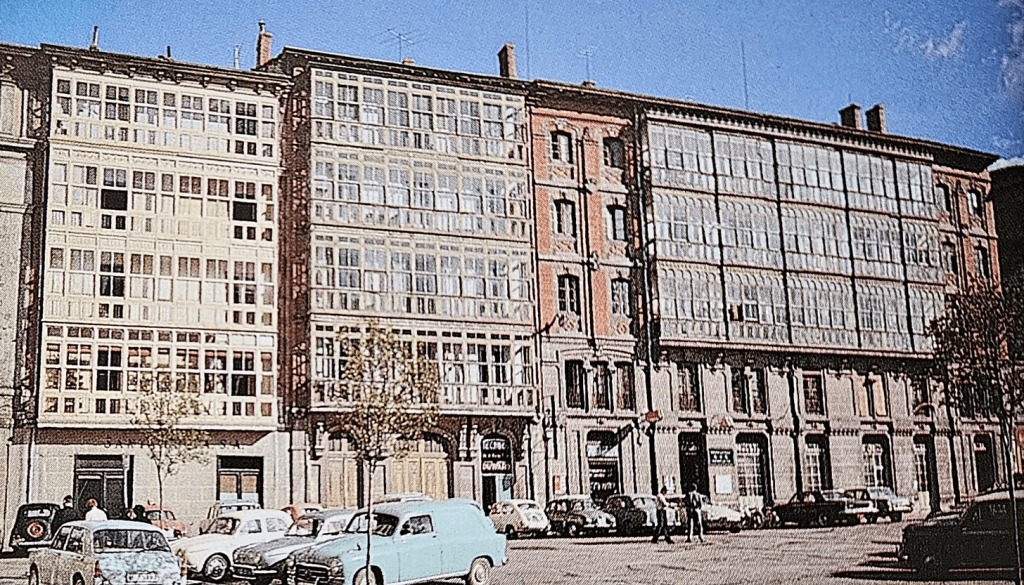
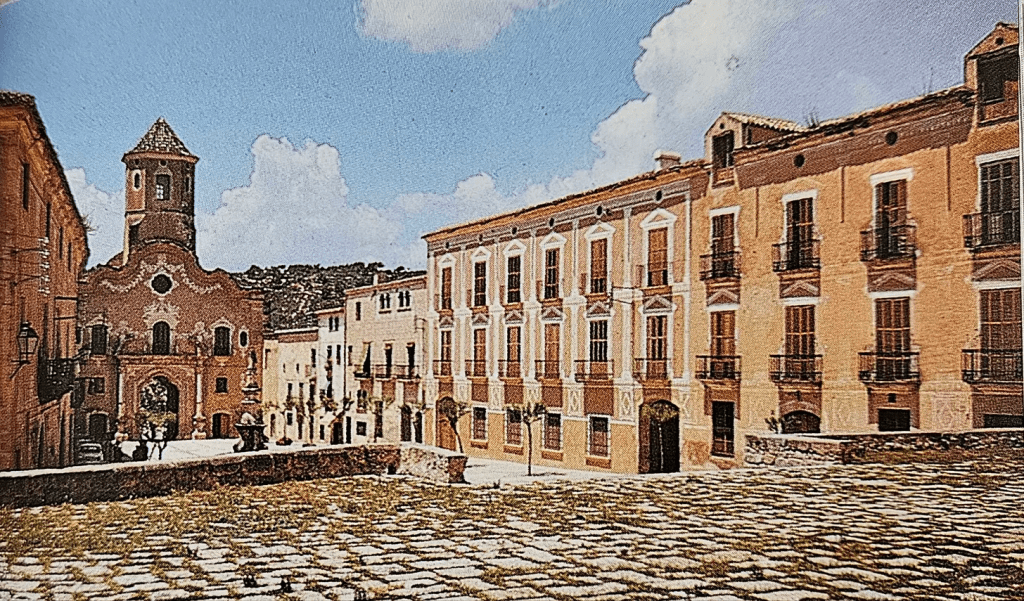
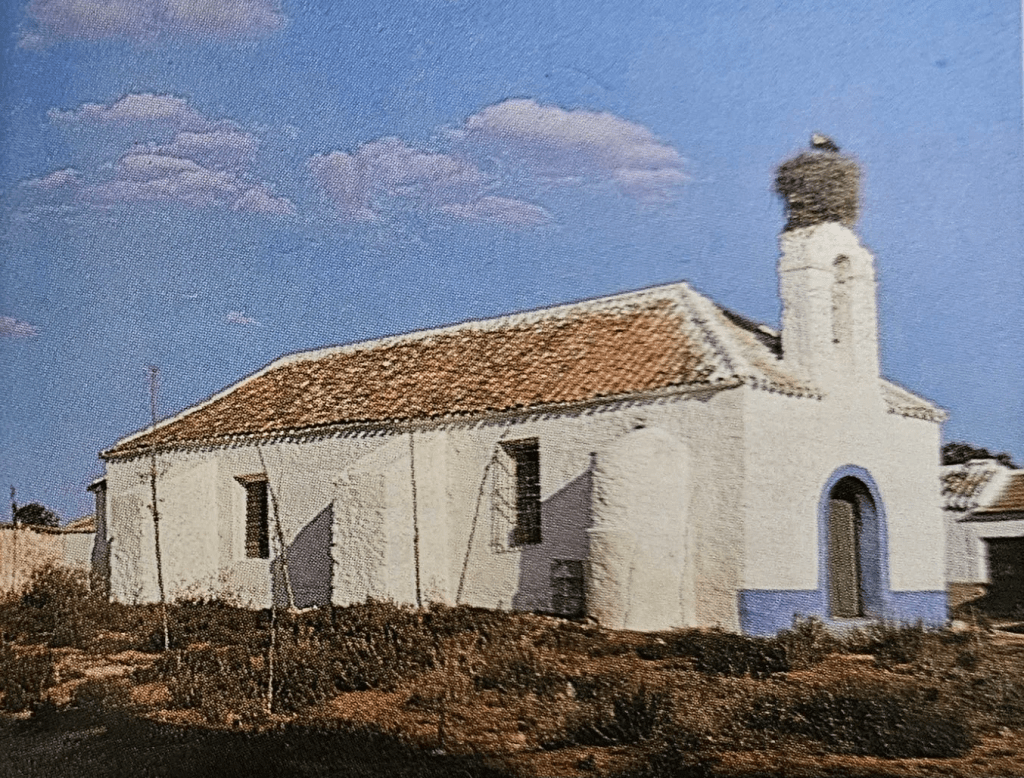
Given this background, it’s a pleasure to share colour versions of Ursula’s 35 mm photography in this latest Pressphotoman post about her photographic career.
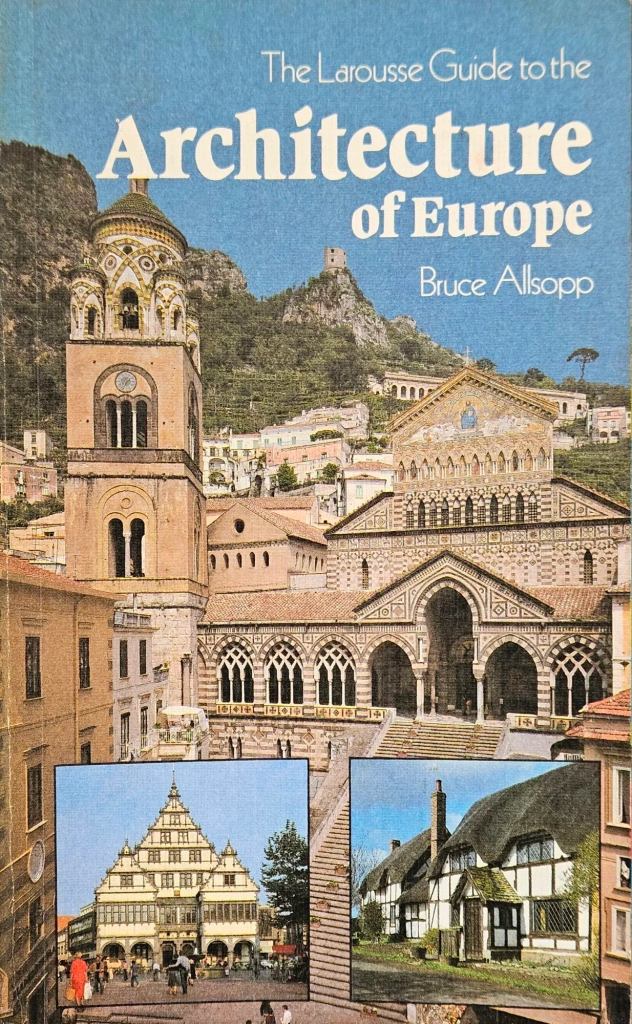
These images were discovered in Architecture of Europe, a guide published in 1985 in Britain by Newnes Books and by Larousse in the United States.
The guide was authored by Bruce Allsopp (1912-2000), who was Ursula’s chief collaborator at Oriel Press and hired her on its launch as the publisher’s photographic editor in 1962.
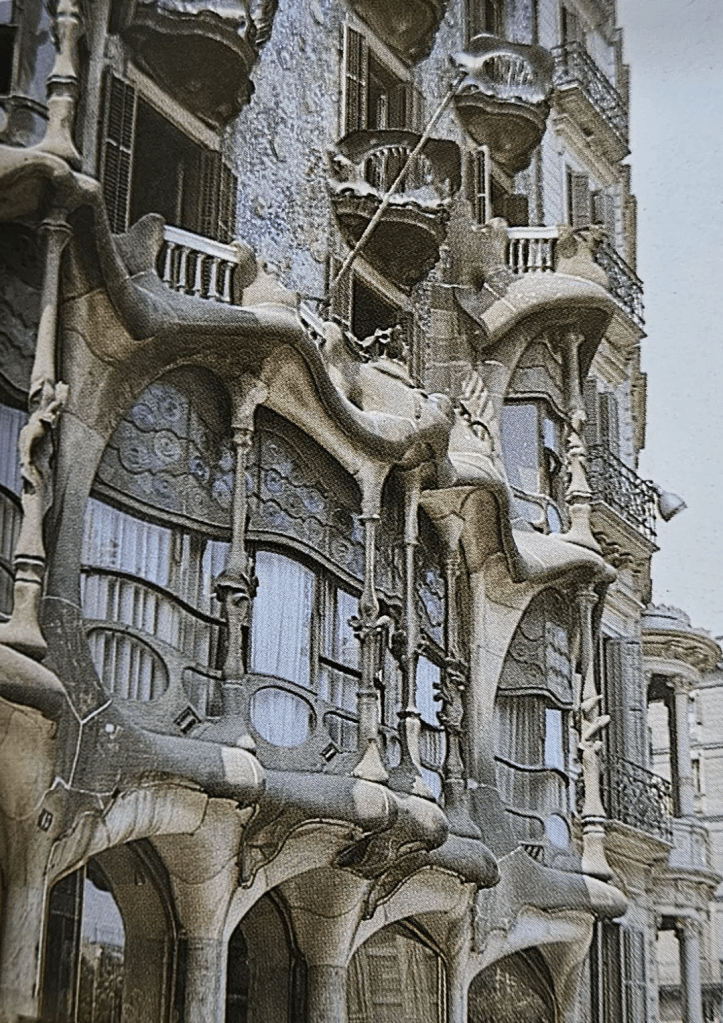
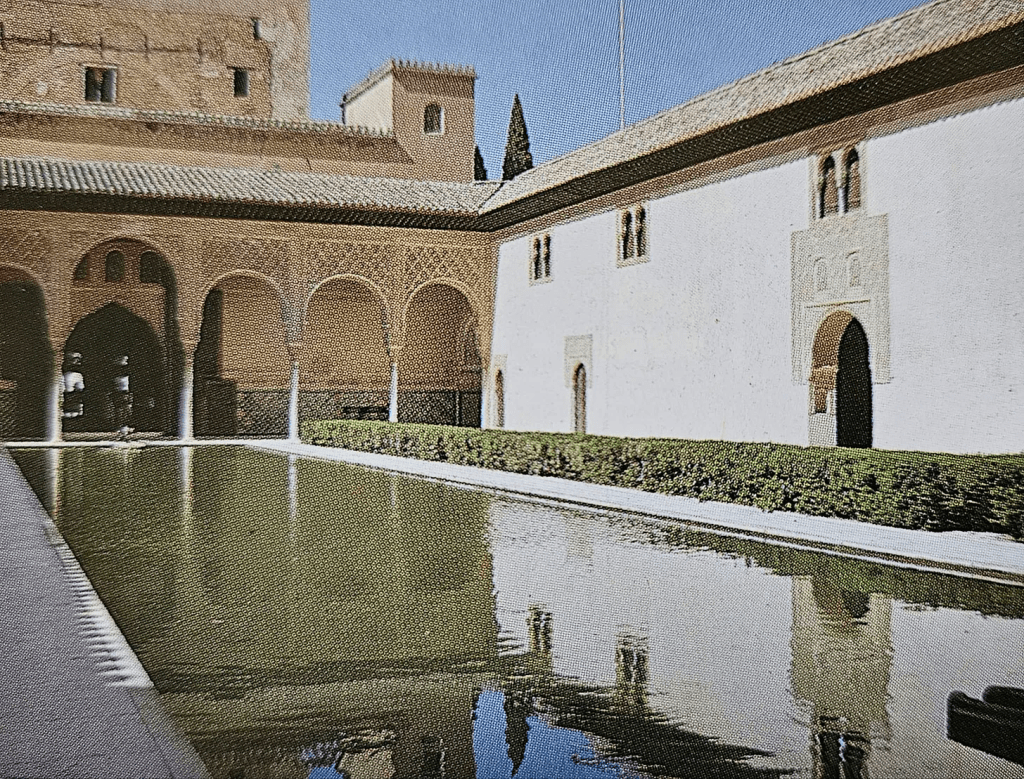
Colour photographs credited to ‘Ursula Clark’ illustrate a section of Architecture of Europe devoted to Spain and Portugal.
It appears that some were first published as black-and-white illustrations in Oriel’s Architecture of Spain and The Great Tradition of Western Architecture (both 1966).
This information helps date these images as being taken during a period when Ursula was in her mid-twenties.
The sequence starts with a striking image of Barcelona’s ‘Facade of the Casa Battló’ (1905-07) by Antoni Gaudi, perhaps best-known for the catholic cathedral Segrada Familia, also in Barcelona that is due to be completed in 2026.
Then a double page is devoted to Ursula’s photographs with a brief accompanying explanatory text to point out significant features or historical information.
I reproduce them in the order they appear with a caption identifying each location.
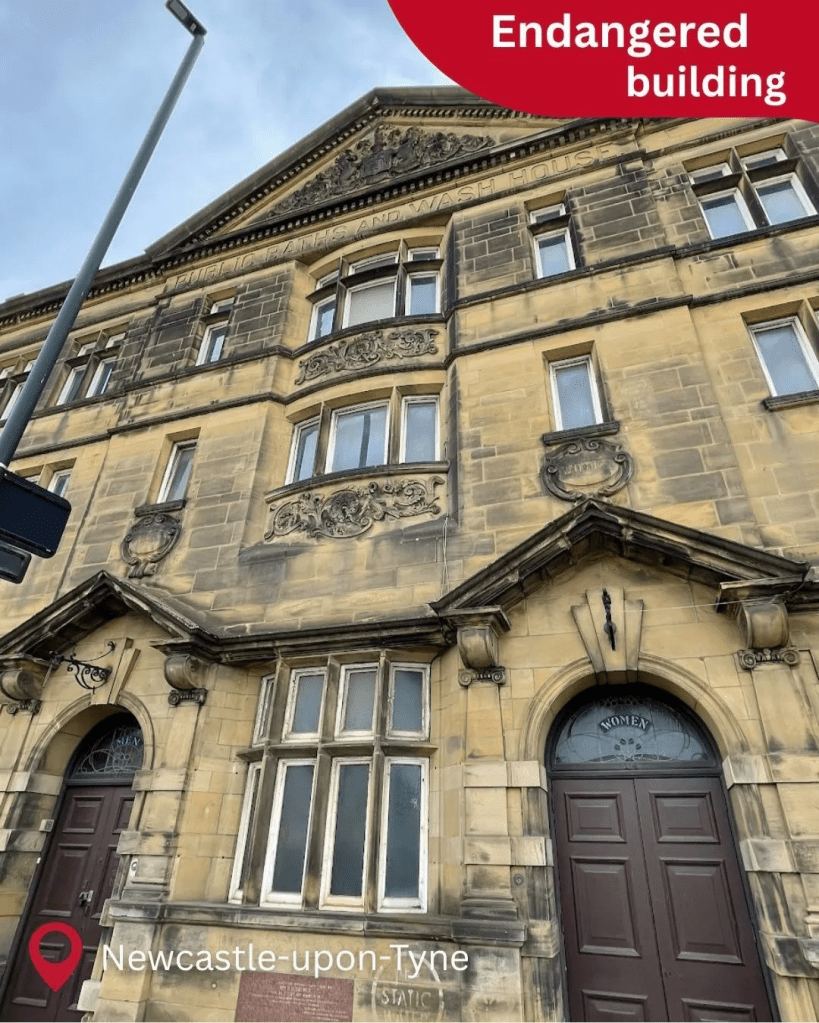
The Victorian Society’s national list of ‘Top Ten Endangered Buildings 2025’ features one building recognisable from regular visits down the decades to Newcastle upon Tyne.
Gibson Street Baths was built in the early 20th century under the 1846 Public Baths and Wash-houses Act that was still in force.
Photo: Graham Tyrrell/Instagram.
A weekly visit to such buildings was part of everyday life for many families including earlier generations of mine.
Now Grade 2 listed, Gibson Street Baths has lain dormant since 2016 and, according to the Victorian Society, “needs a sensitive reuse before restoration costs escalate further.”
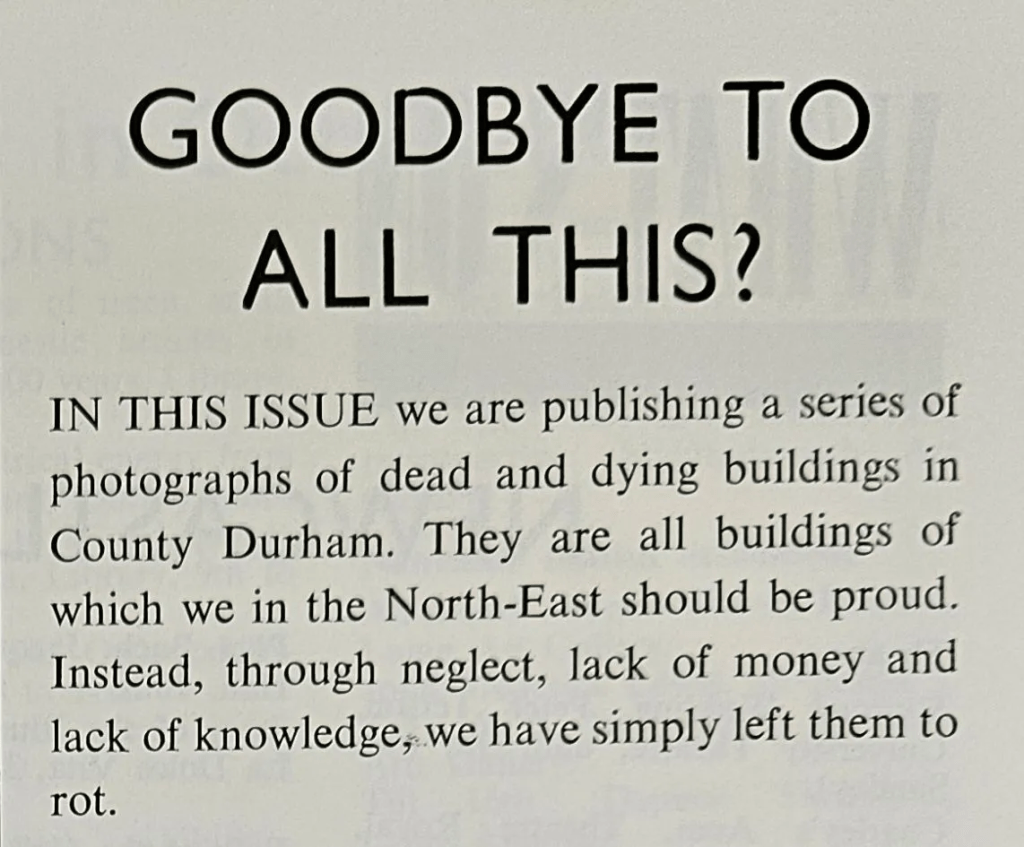
It’s a theme that has echoed down the years as revealed by a 1971 article that recently joined the Pressphotoman collection.
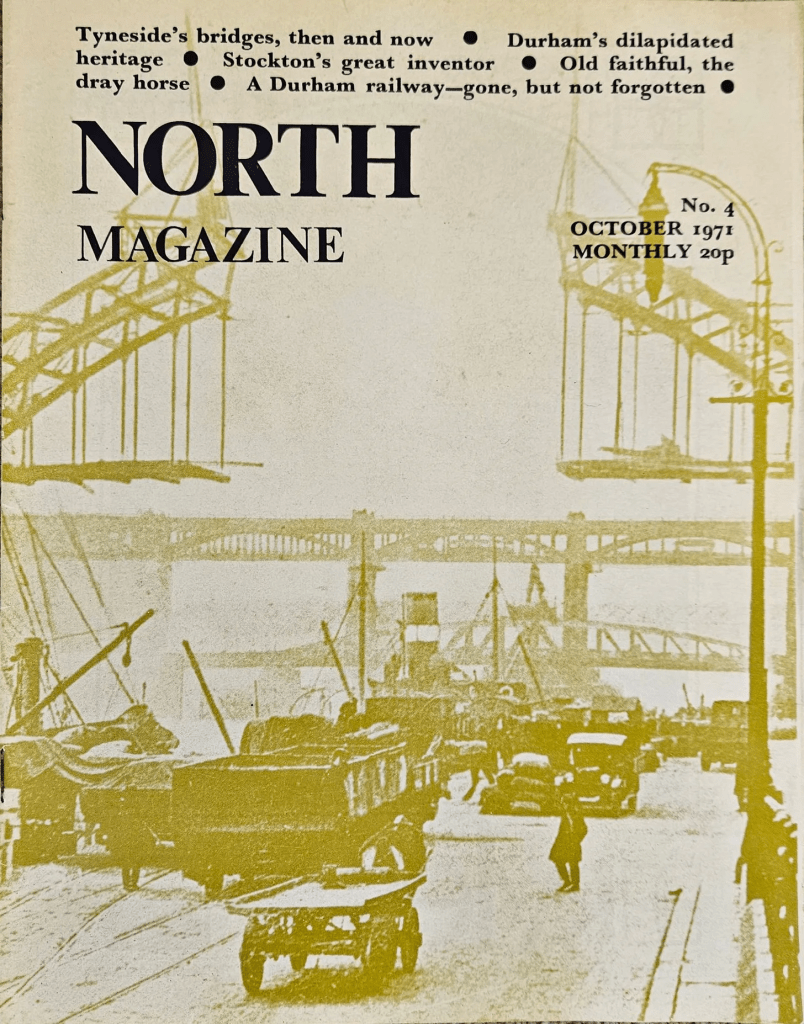
North Magazine was a monthly publication for ‘Durham, Northumberland and North Yorkshire’ edited by the journalist and author Leslie Geddes-Brown (1942-2020).
The cover of the October 1971 issue (vol. 1, no. 4) featured an eye-catching photograph of the Tyne Bridge, which is currently undergoing major renovation as it approaches its centenary in 2028.
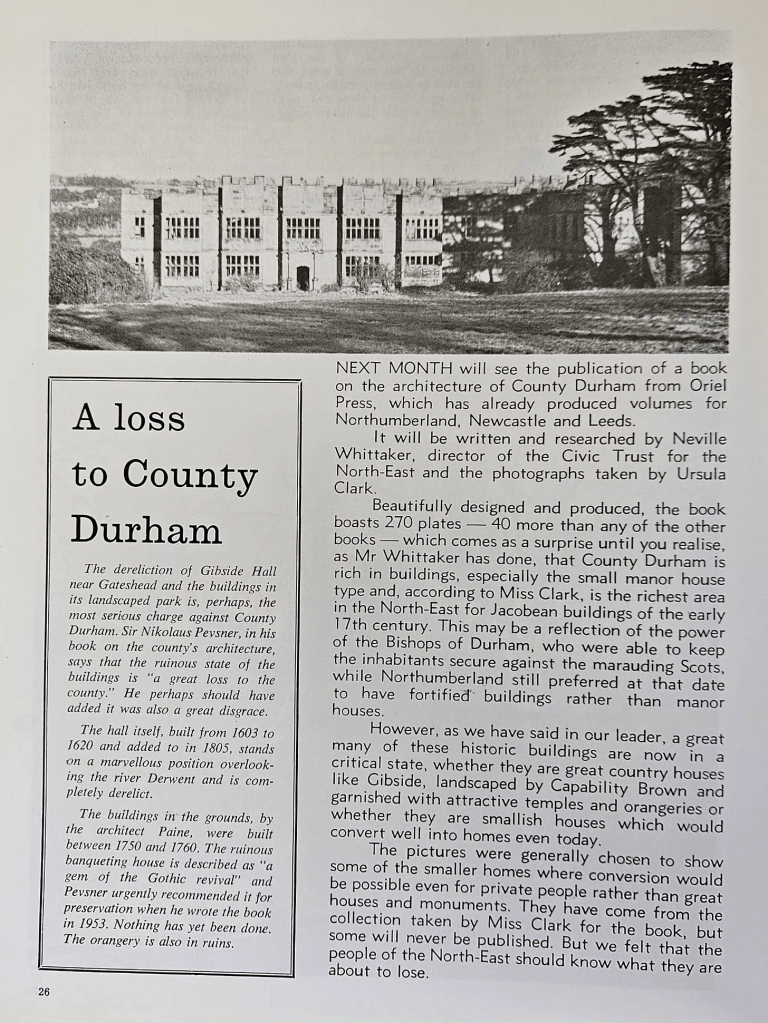
The series of photographs referred to came from Historic Architecture of County Durham by Neville Whittaker and Ursula Clark (Oriel Press) that was about to be published.
Regular readers will recognise the name of Ursula Clark (1940-2000) as the architectural photographer, who featured in my recent talk for the RPS Historical Group marking the 25th anniversary of her death.
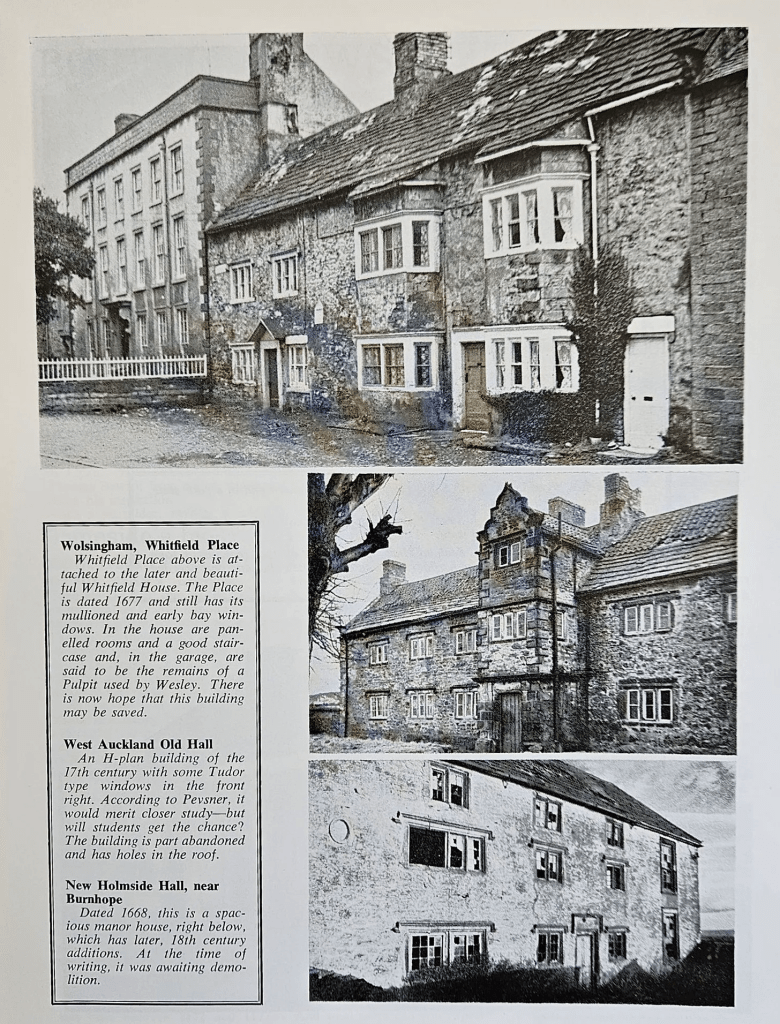
The three-page North Magazine article devoted much of its space to Ursula’s photographs and it is instructive to trace what has happened to the featured buildings in the half century since.
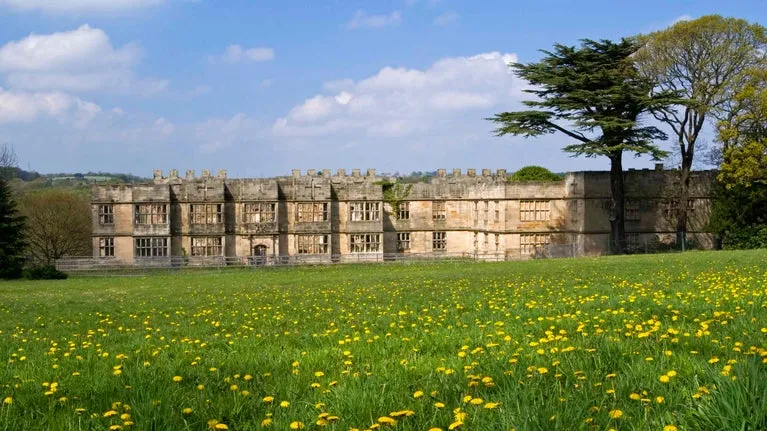
In the years since, all three of the featured properties – Whitfield Place, Wolsingham; West Auckland Old Hall; and New Holmside Hall, near Burnhope – have been lovingly restored to their former glory.
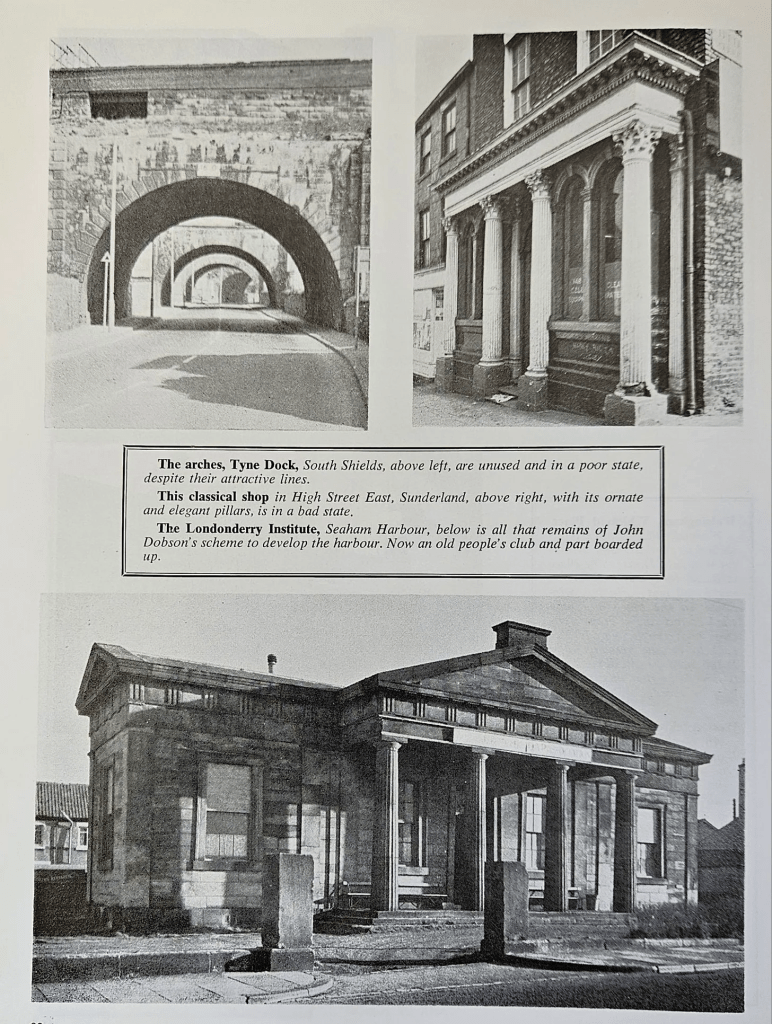
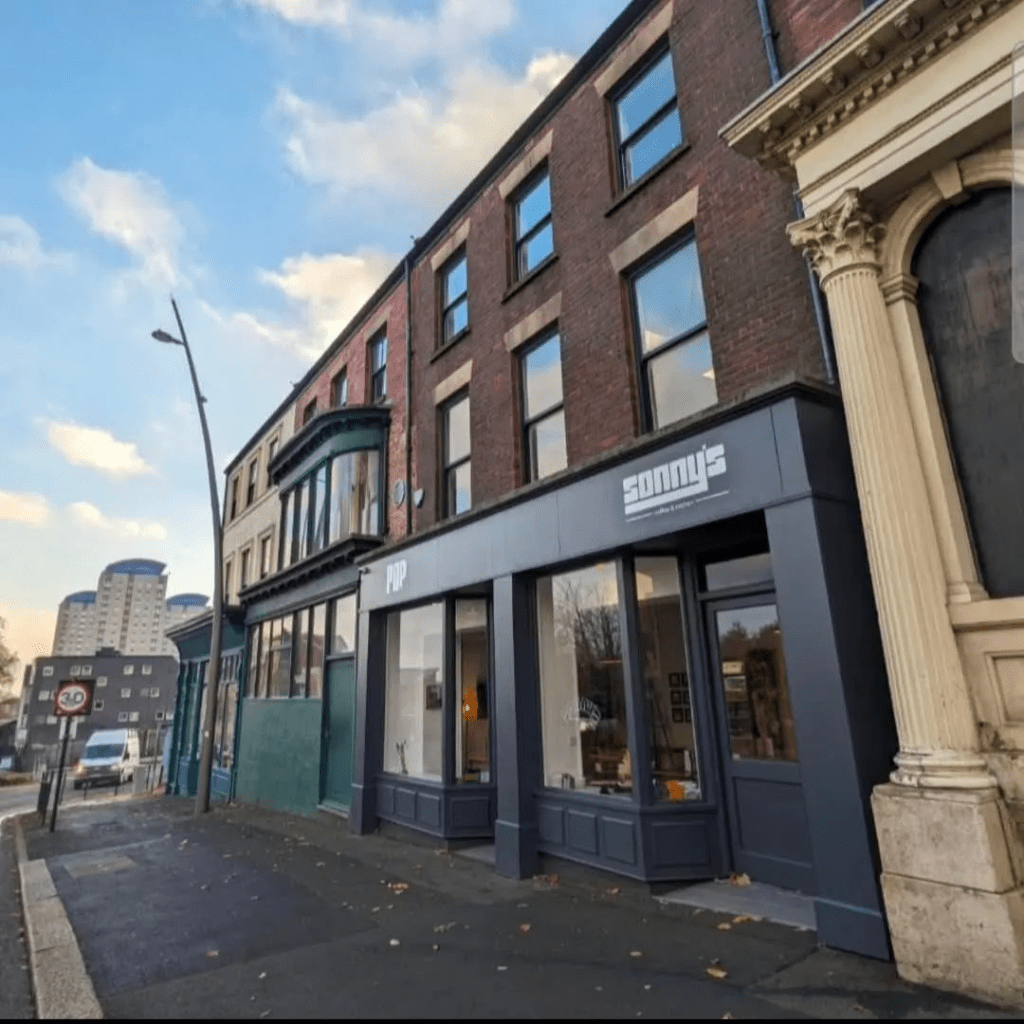
Perhaps the most stunning transformation though is the classical shop front in High Street East, Sunderland (top right below) with its “ornate and elegant pillars” described in 1971 as “in a bad state.”
Thanks to becoming part of Sunderland’s Heritage Action Zone (HAZ), the adjoining terrace initially built as merchants’ houses in the late 18th century is now home to Pop Recs, a café, music and arts venue and community hub.
Photo from Pop Recs Facebook page.
These restorations and reinventions confirm that there is hope for the current crop of endangered buildings of which Newcastle’s Gibson Street Baths is just one.
An article featuring my research about the architectural photographer Ursula Clark (1940-2000) has just been published by The PhotoHistorian (Spring 2025, no. 201).
It follows a recent talk about Ursula’s photography for the Royal Photographic Society Historical Group.
A YouTube recording is fast approaching 4,000 views and has attracted an audience far beyond the niche one anticipated.
‘Ursula Clark: Architectural Photographer’ for RPS Historical Group. 28th February 2025.
As a result of social media interest and wider publicity, I am now following up various research threads, which I hope to share in future Pressphotoman posts.
Around 2,000 of Ursula’s images have been digitised by the Historic England Archive from what is the largest of its collections created by a woman photographer.
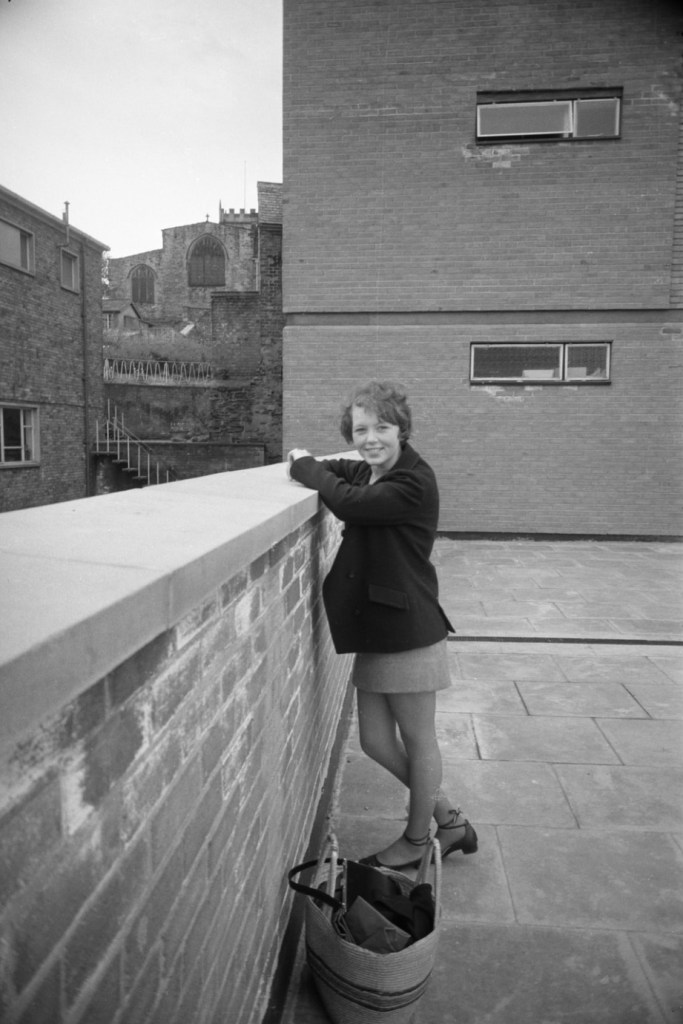
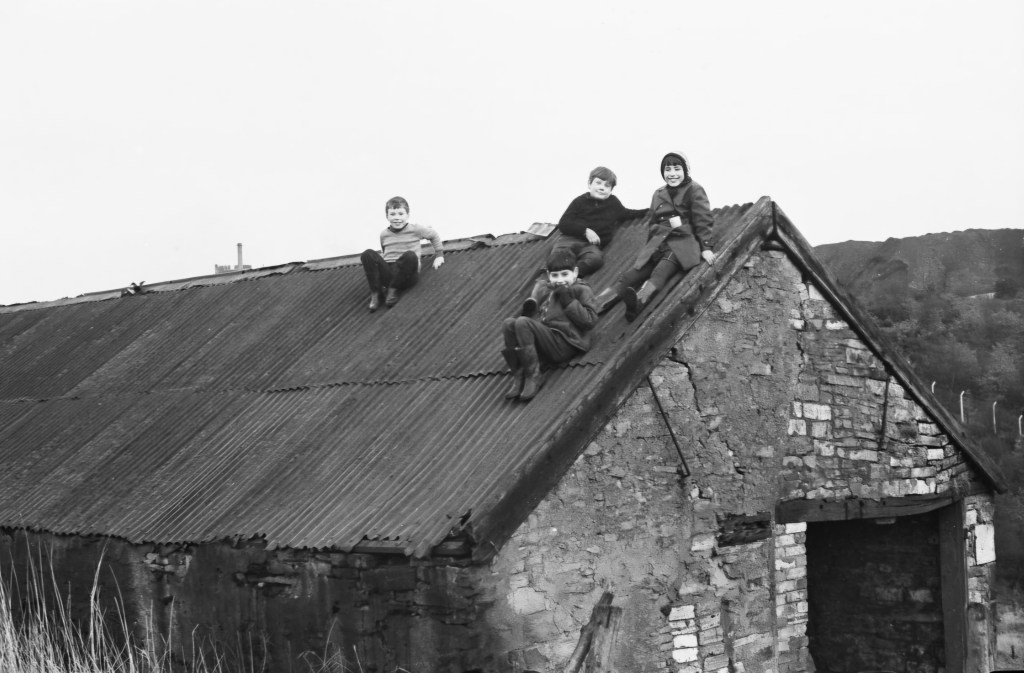
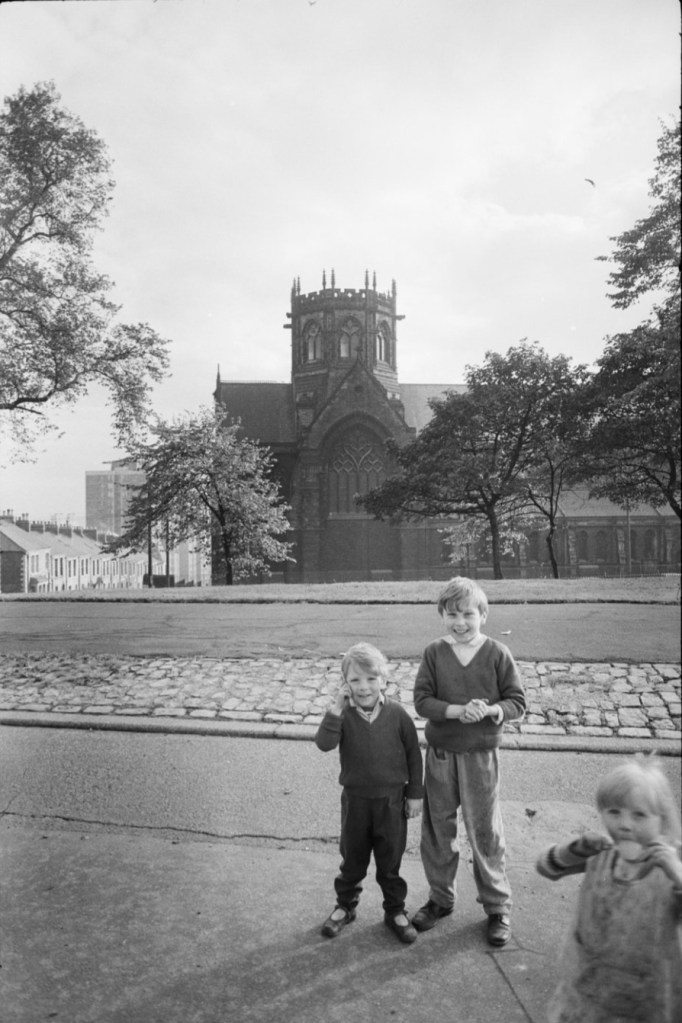
Update 5th March 2025: Billy Embleton informs me: “That little girl is Ellen Parkin with her Uncle Jimmy Anderson in the burger van in 1965. She identified herself in 2021 when I posted the photo on Facebook. She’s now known as Ellen Przybylska.”
In my talk, I argued that these images echo those of other female photographers working during the same period such as Sirkka-Liisa Konttinen (born 1948) and Tish Murtha (1956-2013).
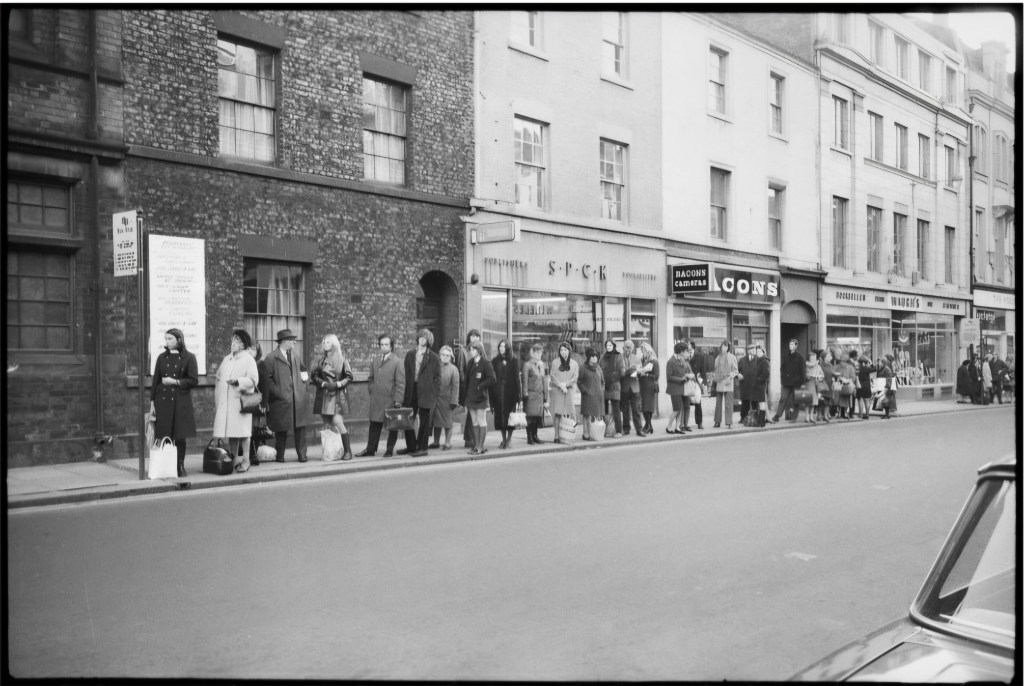
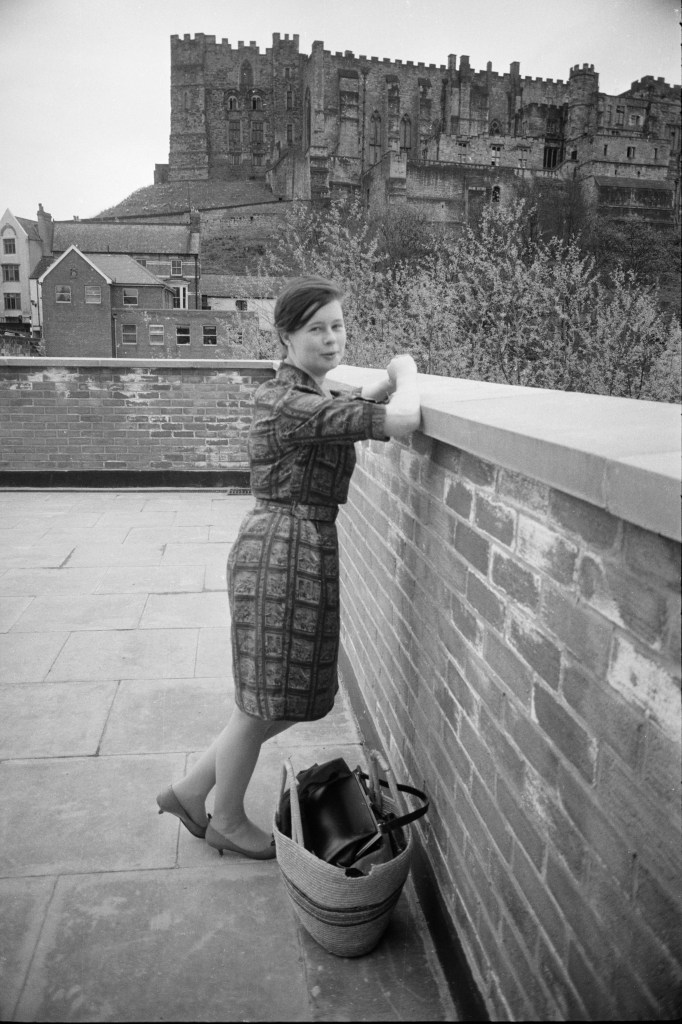
It would be wonderful to put names to the faces in these photographs and learn more about long ago interactions with a photographer, who clearly had a rapport with flesh-and-blood subjects too.
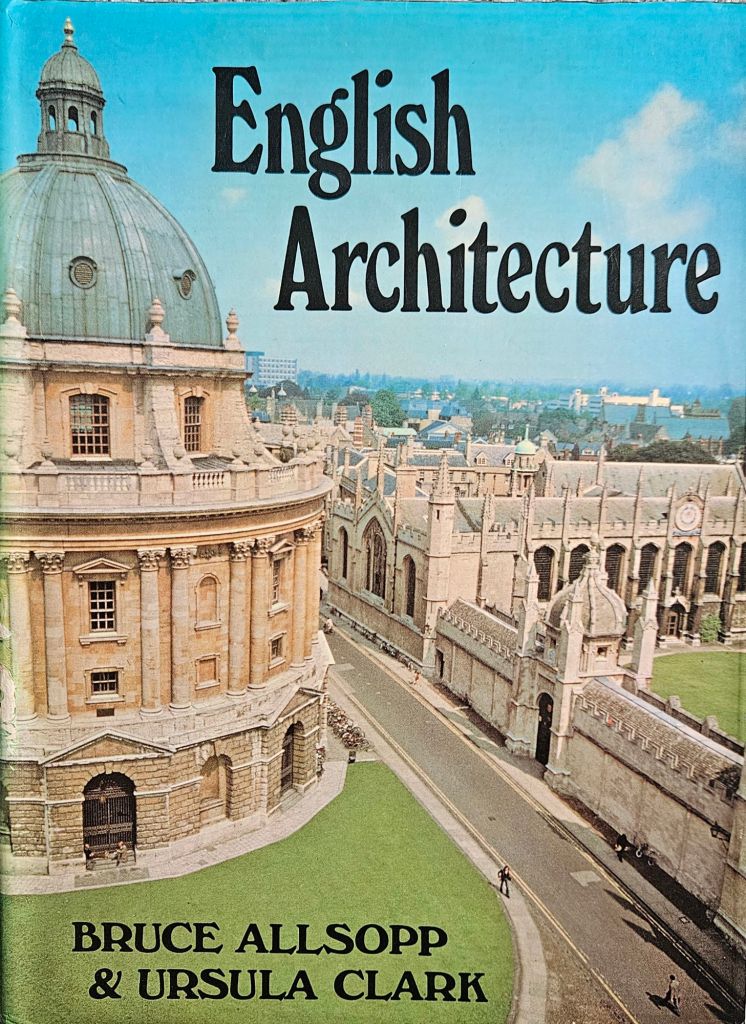
Through two decades, Allsopp & Clark collaborated with other leading authors on a series of popular architectural history guides.
English Architecture (Oriel Press, 1979).
These featured areas of Britain such as Northumberland and County Durham; cities like Newcastle upon Tyne and Leeds; and countries from England and Scotland to France, Italy and Spain.
To mark the 25th anniversaries of Allsopp & Clark’s deaths in 2000, I am presenting a talk later this month about Oriel Press with particular focus on Ursula Clark’s role as a photographer and photographic editor.
The talk will draw on her archive of 20,000 black-and-white negatives now in the care of Historic England.




Leave a Reply