Since the advent of photography, certain locations have proved popular with landscape and architectural photographers.
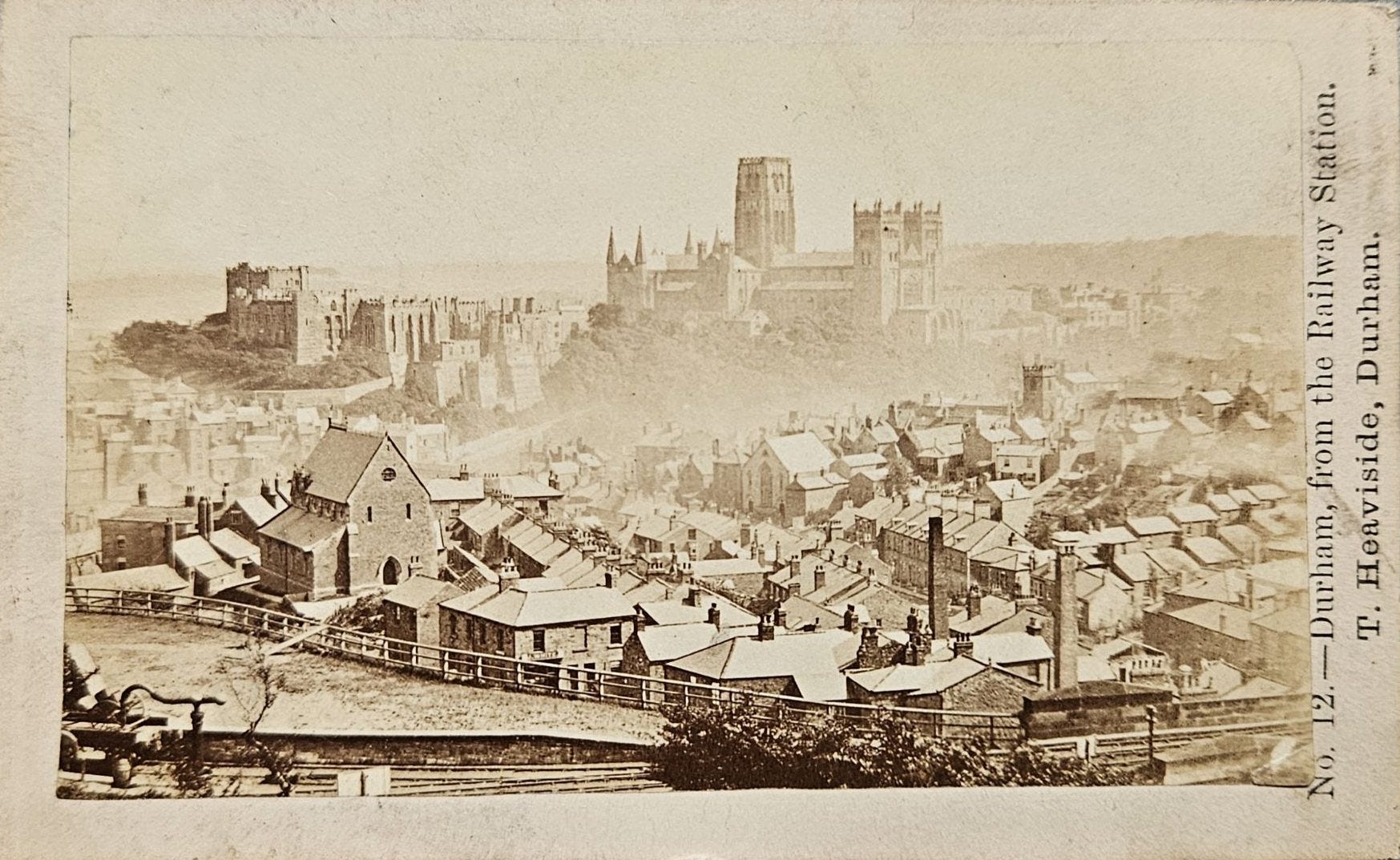
One enduring ‘view’ is the skyline of Durham in North East England with its distinctive castle and cathedral dating back to Norman times.
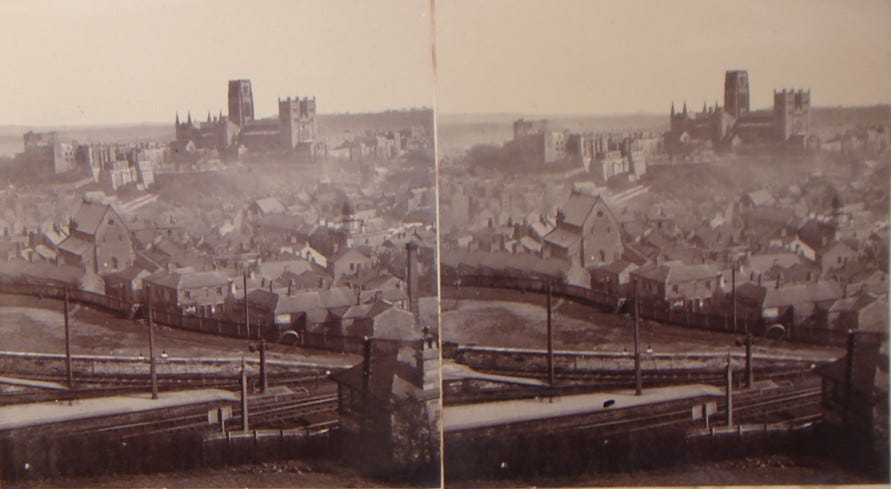
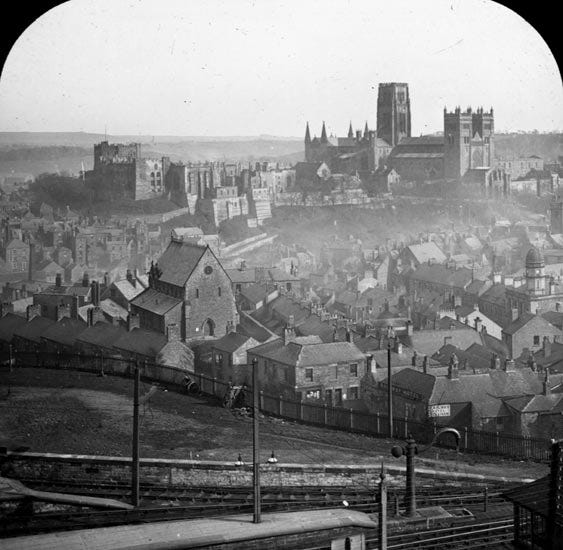
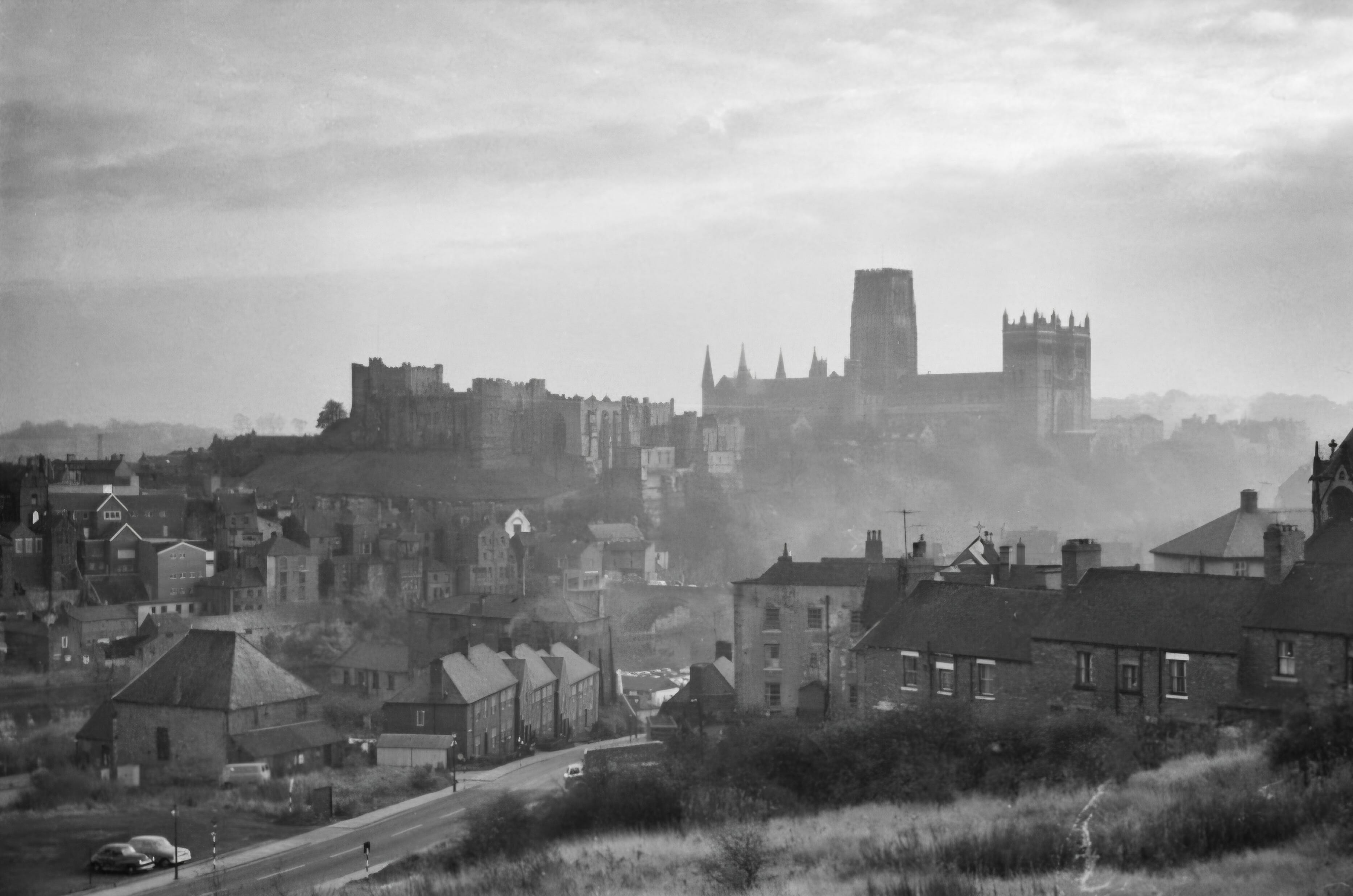
Down the years, successive generations have placed their tripods in roughly the same spot and unfailingly produced a successful shot.
A popular location has proved to be Durham railway station, opened in 1857, and which today continues to offer train passengers a panoramic vista as they travel on the East Coast line.
During the late-1860s, Thomas Heaviside (1828-1886), Durham’s first professional photographer, produced this carte de visite as number 12 in a set featuring views of his home city.
If you wish to spend time looking at these three images more closely, visit my Instagram account @pressphotoman where you can swipe between them and travel through time.
Ongoing research into the career of the architectural photographer Ursula Clark (1940-2000) has identified another project featuring her images.
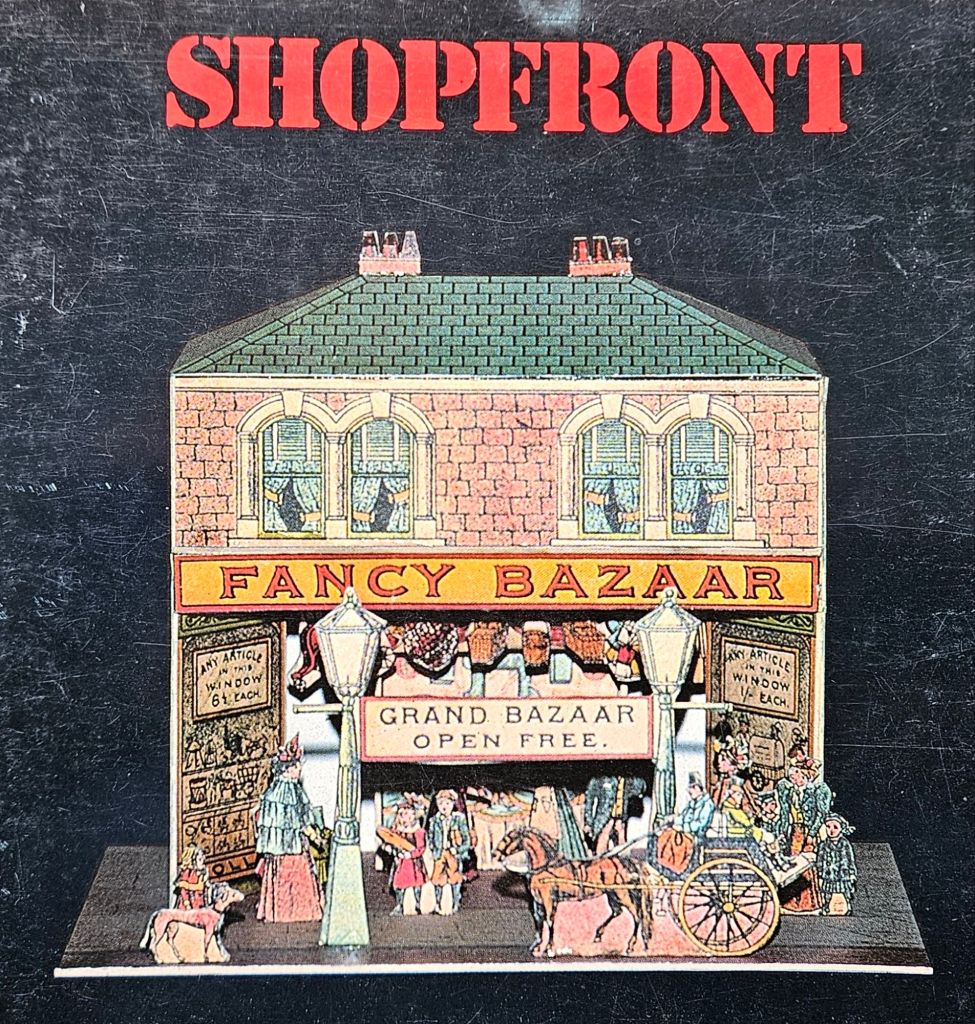
Shopfront (1980) produced by the Civic Trust for the North East (of England) was a call to treat the design of shopfronts on our high streets “with care, sympathy and understanding.”
The Introduction continued: “Too many of our shopping streets, particularly in the older towns, are spoiled by ill considered and badly executed shopfronts.
“By treating them well, not solely as a means to merchandise … our streets and our towns will become better and pleasanter places.”
To illustrate the booklet’s argument, its author Neville Whittaker OBE (1932-2008) used a series of colour and black-and-white photographs.
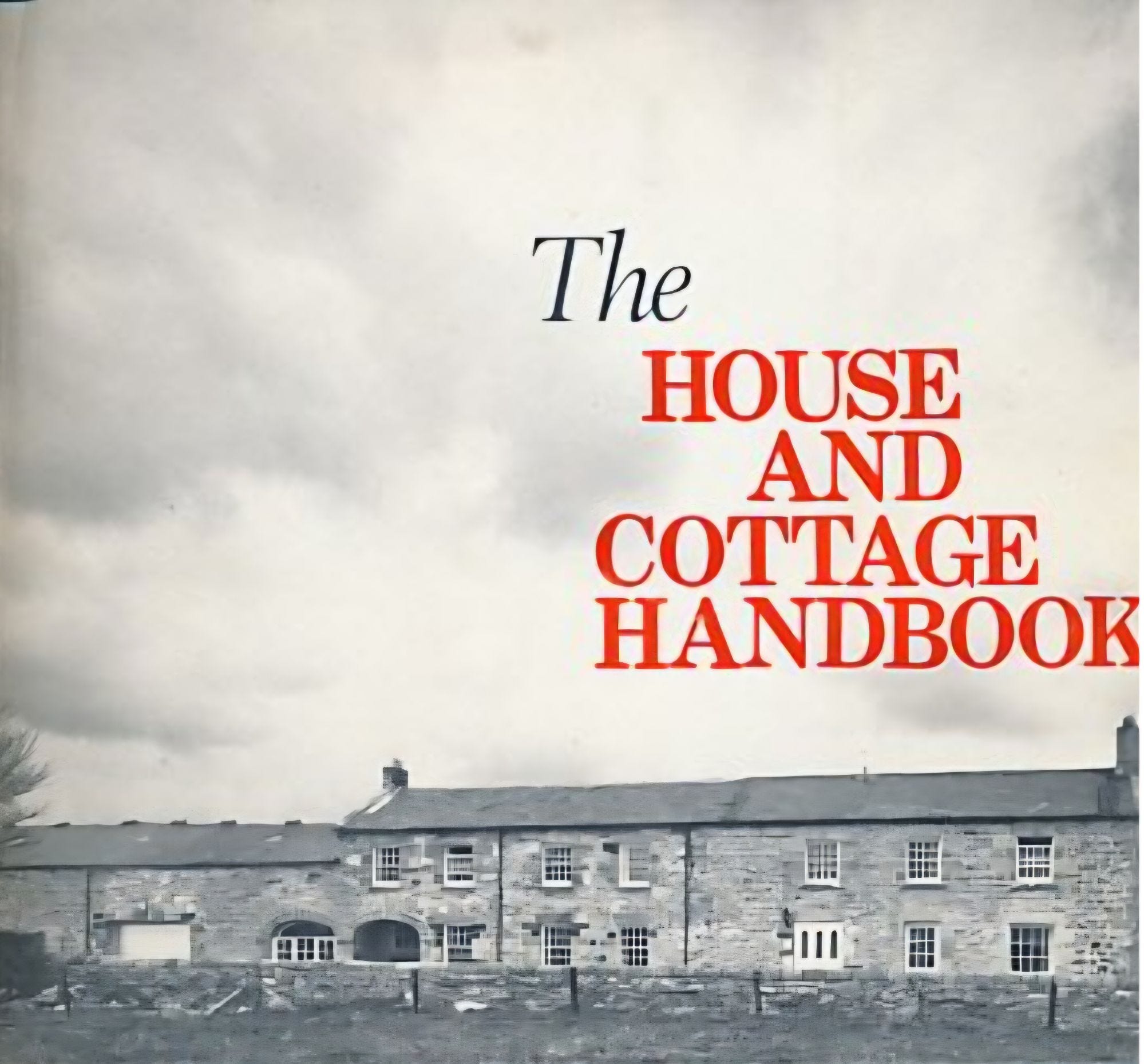
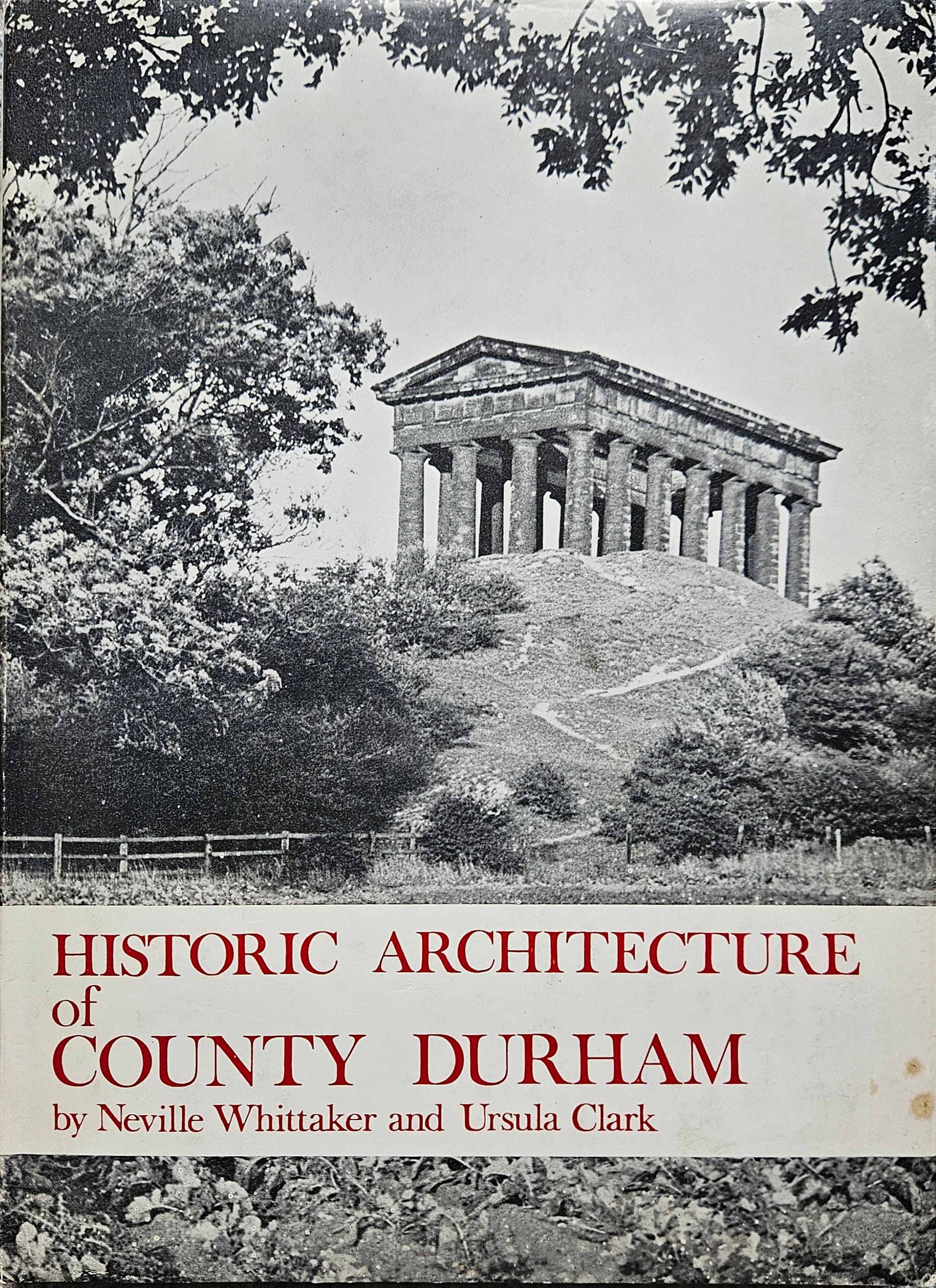
One of the photographers he turned to was Ursula Clark with whom he had previously collaborated on Historic Architecture of County Durham (Oriel Press, 1971) and The House and Cottage Handbook (North East Civic Trust, 1976).
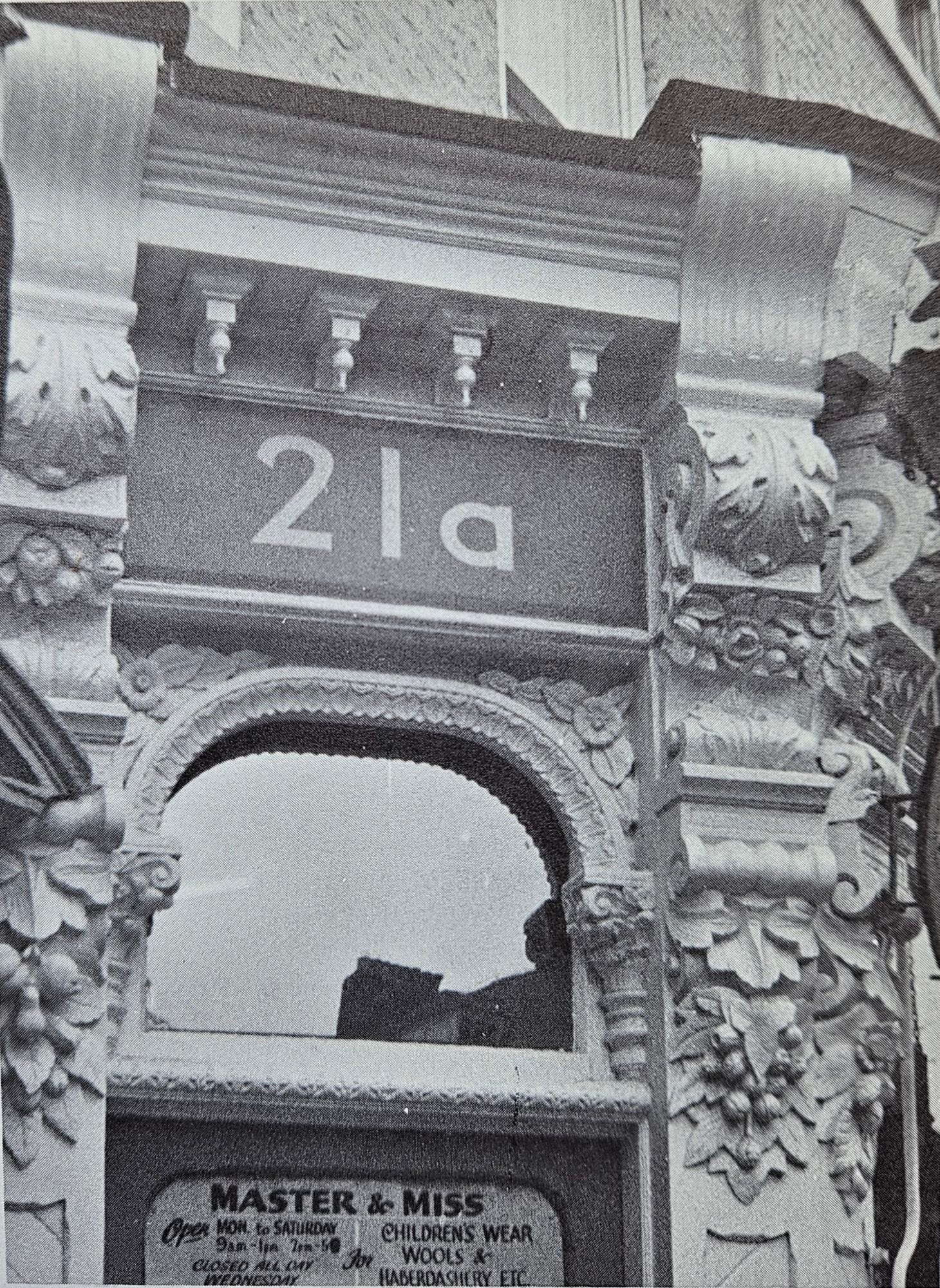
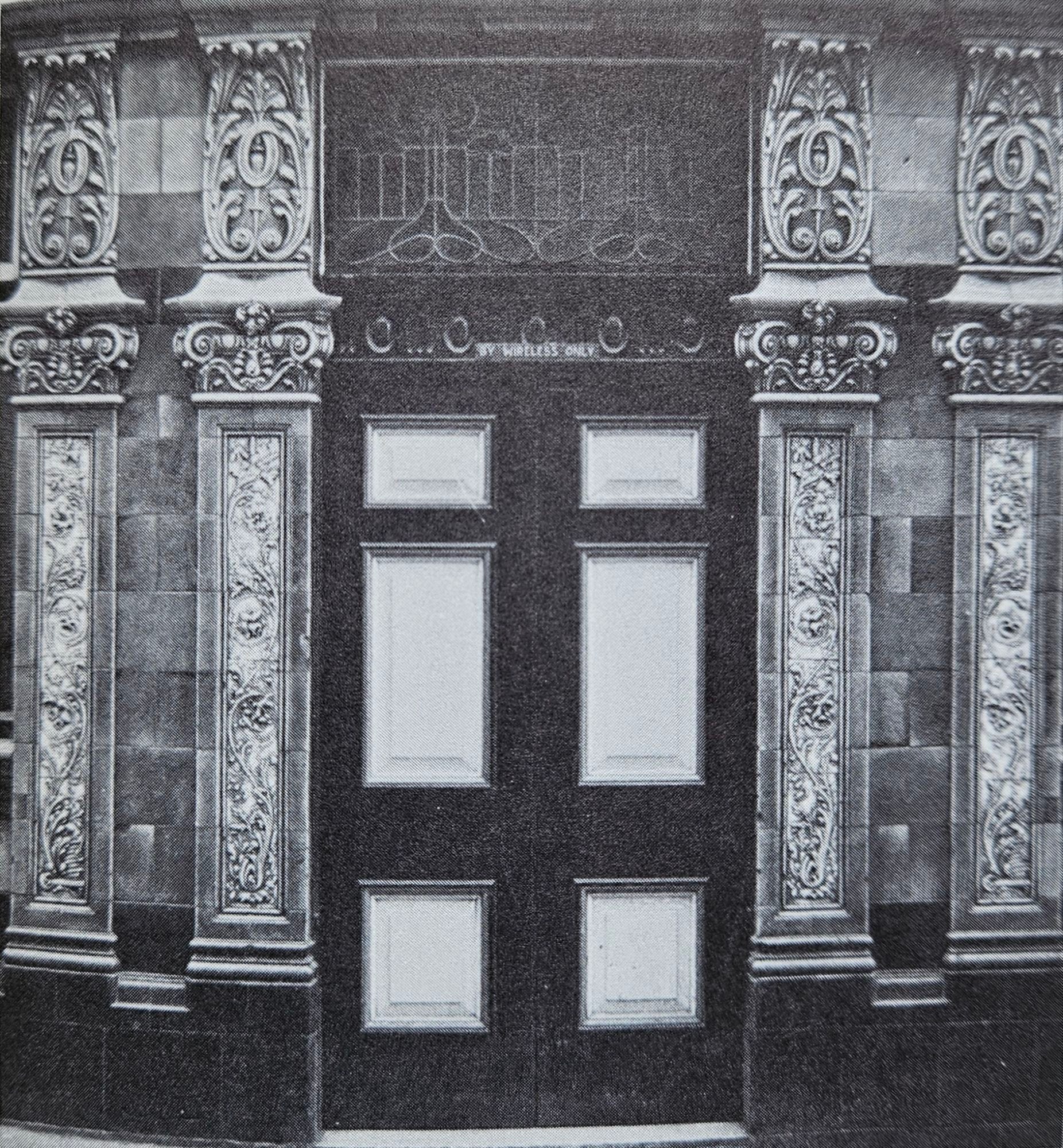
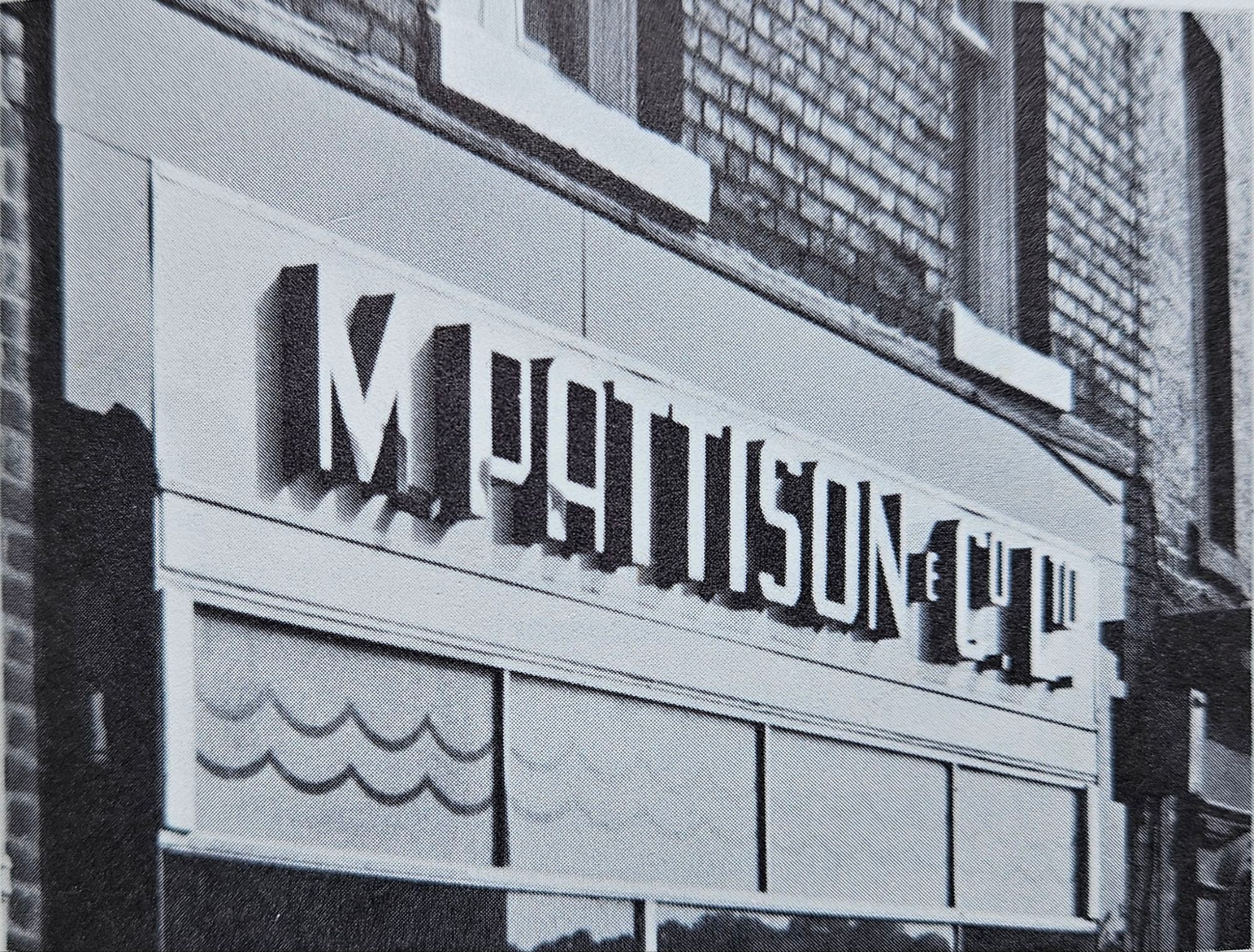
Page 27 of Shopfront was devoted to three of Ursula’s images celebrating what Whittaker called “the flamboyance and quality of Victorian shopfront decoration” which he described as “impressive.”
First was ‘street sculpture at Front Street, Tynemouth, Tyne and Wear,’ a shopfront which survives today in what is a conservation area.
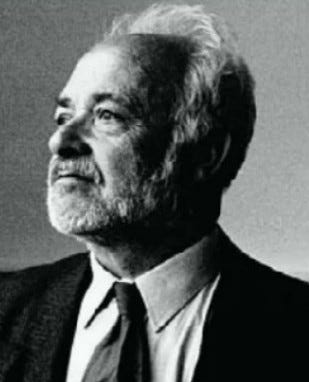
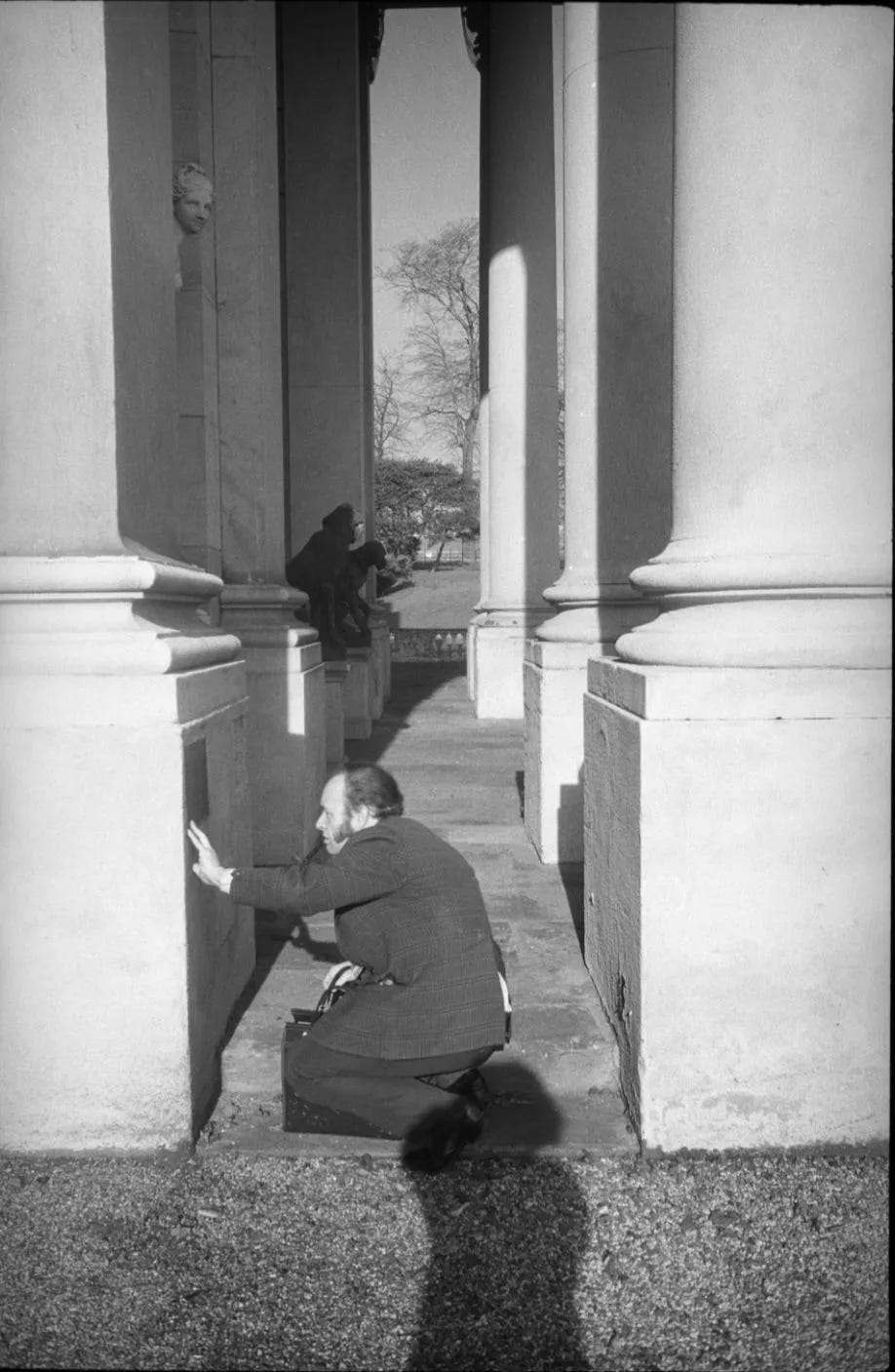
Like The House and Cottage Handbook, Shopfront was also mentioned in Whittaker’s obituary in The Independent newspaper together with a striking uncredited photograph.
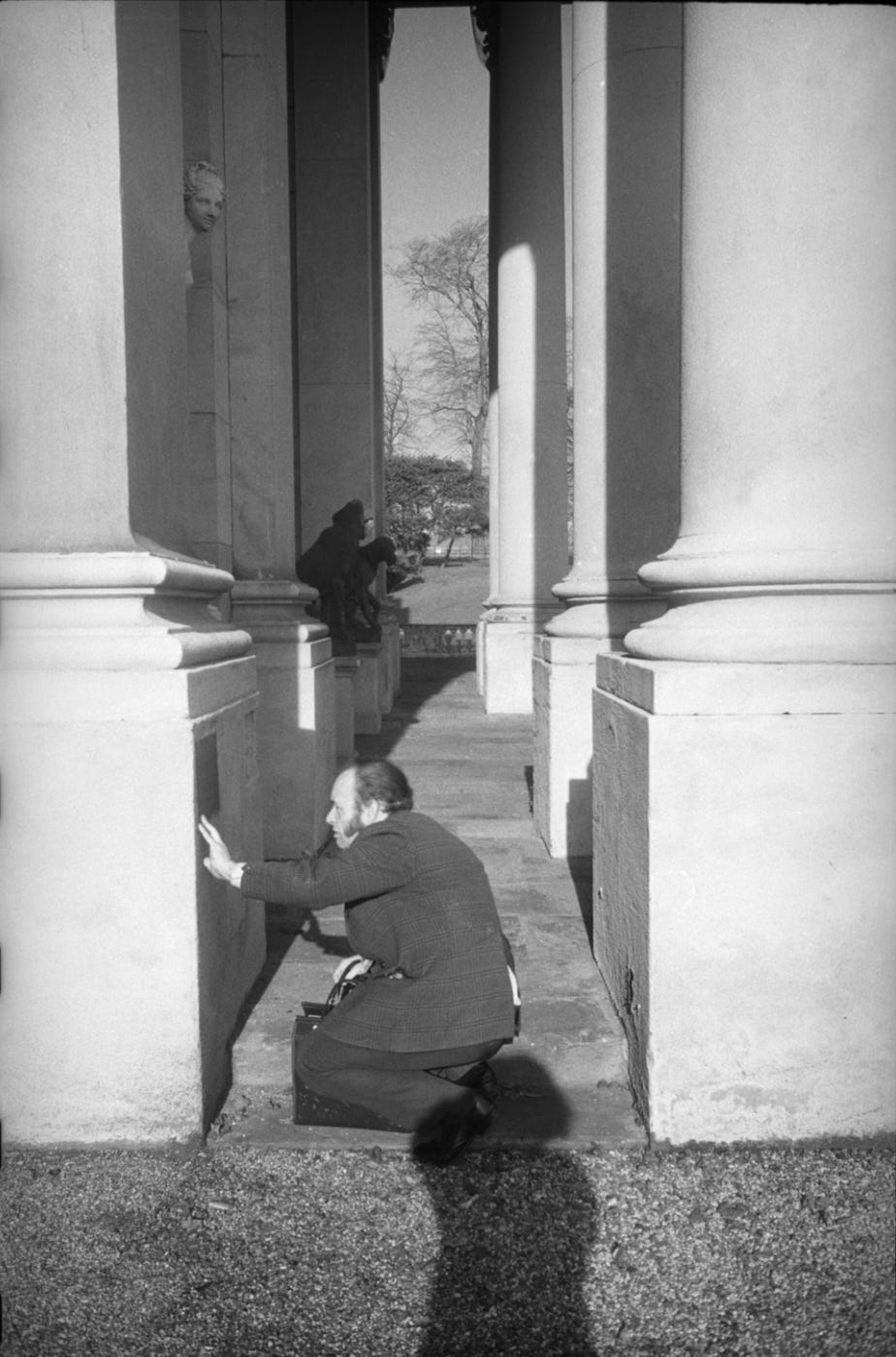
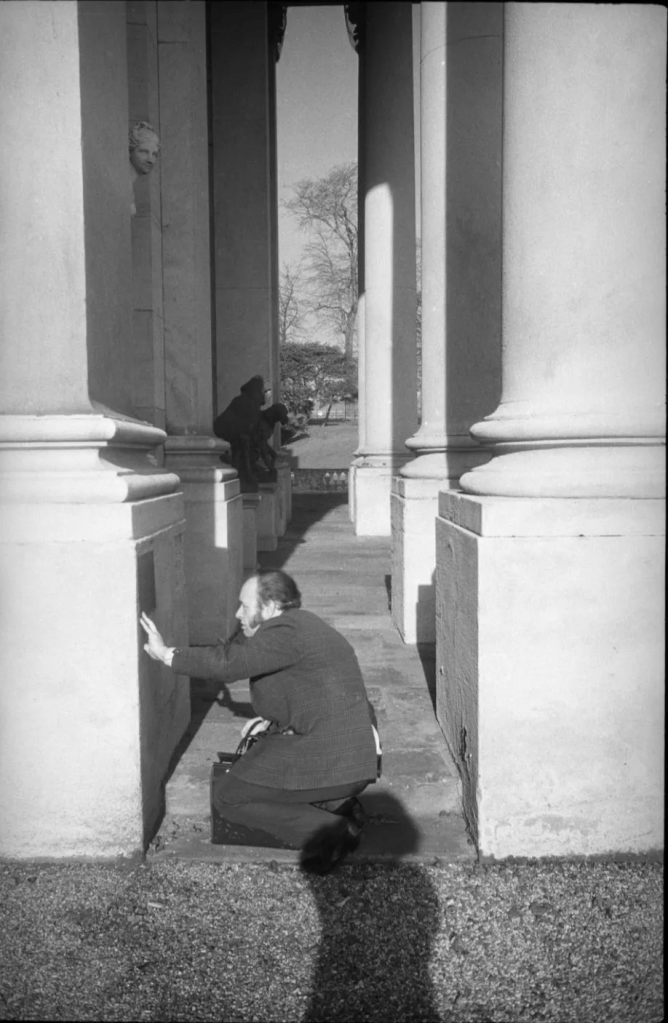
Whether Ursula Clark was responsible for this portrait, it complements the one she took while shooting images for Historic Architecture of County Durham.
Property programmes on British television have become a popular genre in the 21st century.
From Location Location Location and Kirstie and Phil’s Love It Or List It to Grand Designs and George Clarke’s Amazing Spaces, dreams of creating the perfect home are shared by millions of viewers.
However, the perils of transforming an old building of whatever age have long been known.
In 1976, the Civic Trust of North East England published The House and Cottage Handbook, which proved a popular seller.
In its sights were the “rural cottages, terraces of orderly Victorian or Edwardian houses in our towns, an isolated farmhouse … ” that were described as “a national asset economically, visually and historically.”
The North East Civic Trust’s Director Neville Whitaker OBE (1932-2008) intended the handbook as “a simple attempt to induce thought and respect in the hope that would-be improvers will stop, think and try to understand before they act.”
According to his obituary in The Independent newspaper, it “had as its chief target the plastic doors, windows and false fanlights that have so altered the character of so many Georgian and Victorian townhouses.”
Amongst its chapters was one titled ‘What Not To Do.’
To illustrate his text, Whittaker credited a number of photographers including Ursula Clark (1940-2000) whose career continues to be the subject of ongoing research for this blog.
Whittaker and Clark had first collaborated as co-authors of Historic Architecture of County Durham published in 1971 by Oriel Press of Newcastle upon Tyne.
By the mid-1970s, Ursula’s role as photographic editor of Oriel Press had ended following a take-over, so research is continuing to learn more about her photography during the period that followed.
TheHouse and Cottage Handbook featured a total of eight of Ursula’s images.
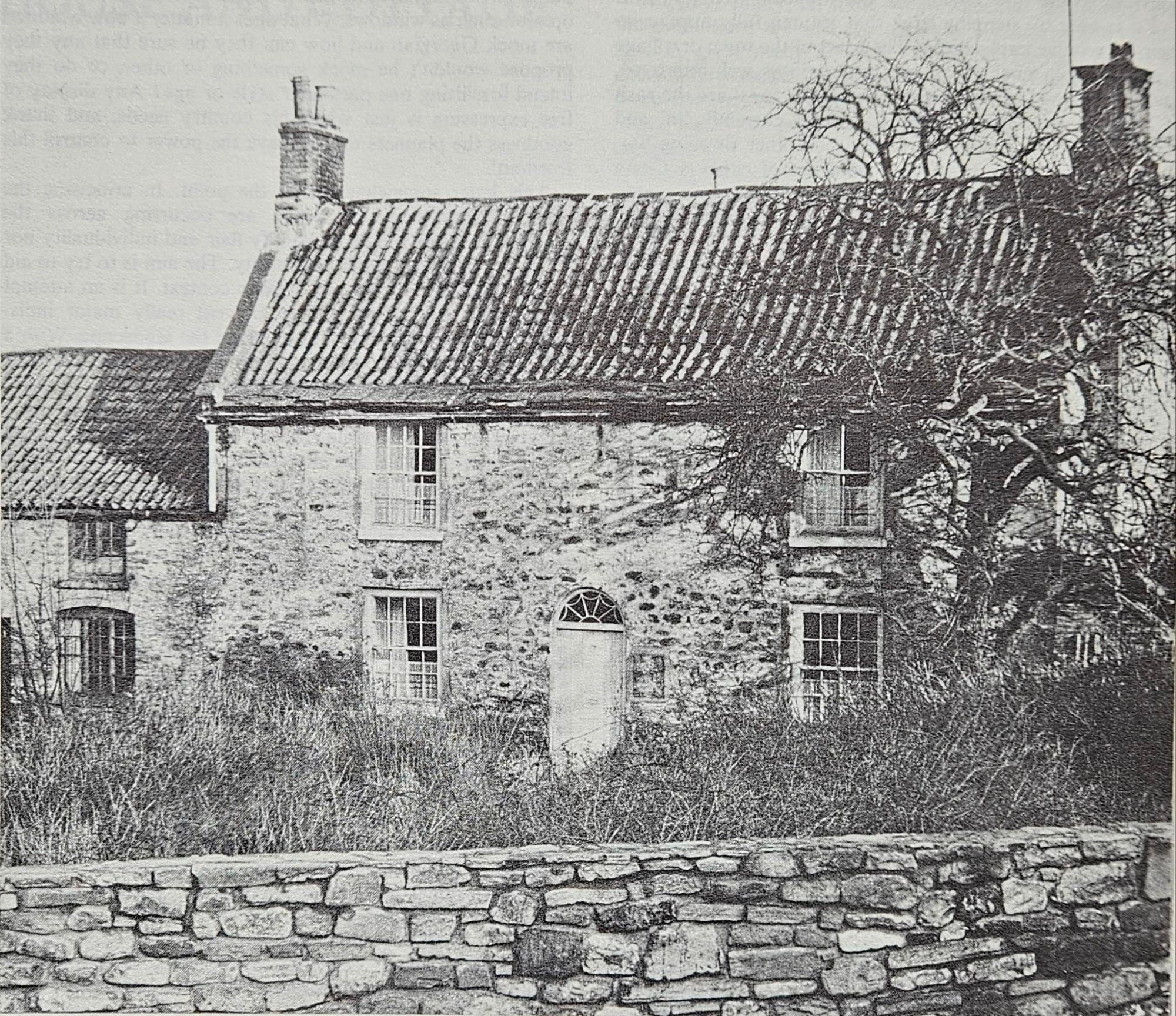
The first was captioned: ‘The vernacular basis – an unimproved stone and pantile farmhouse, County Durham.’
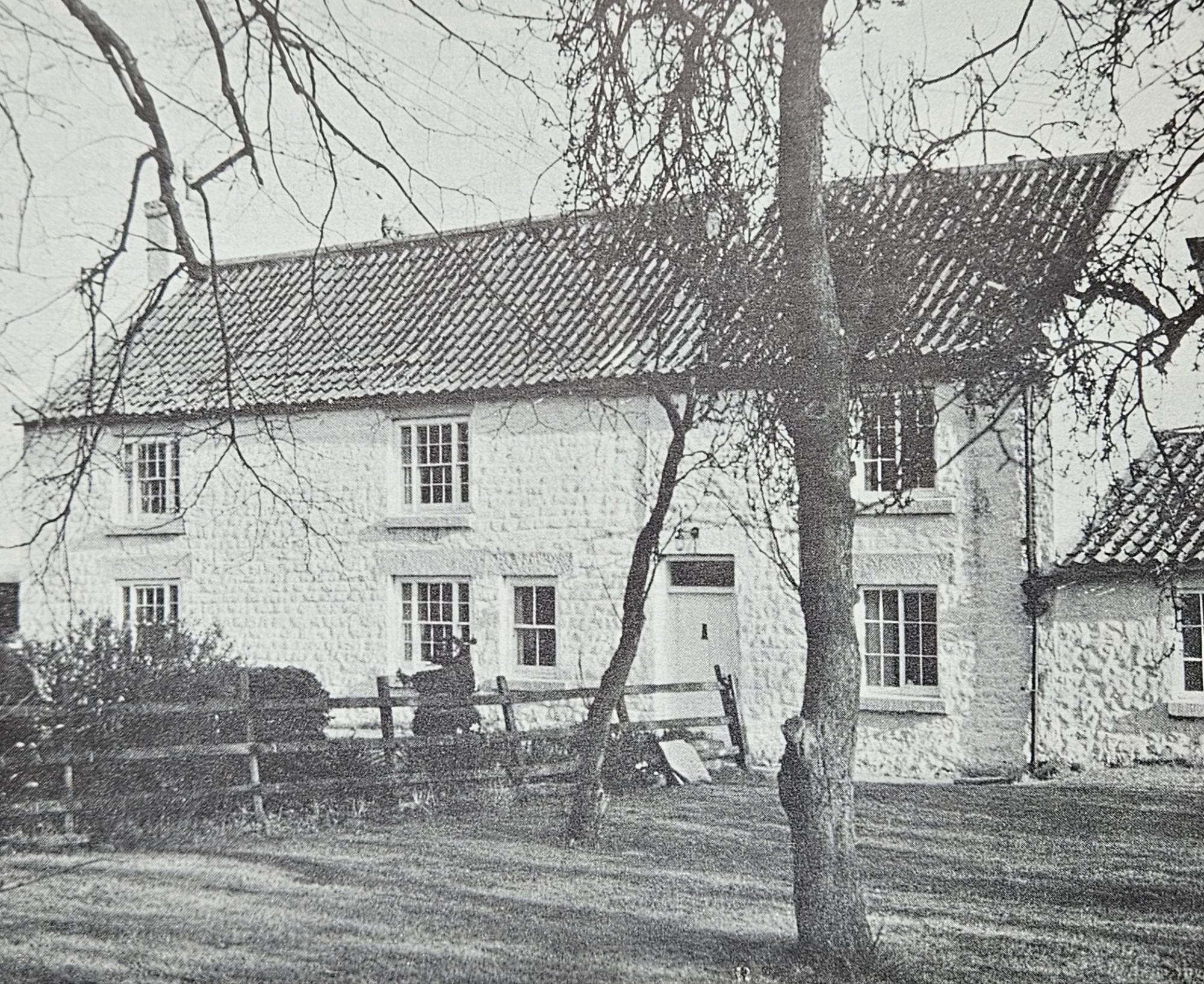
Her second contribution illustrated the tradition of using limewash as an exterior finish in large parts of North Yorkshire, Durham and the Lake District.
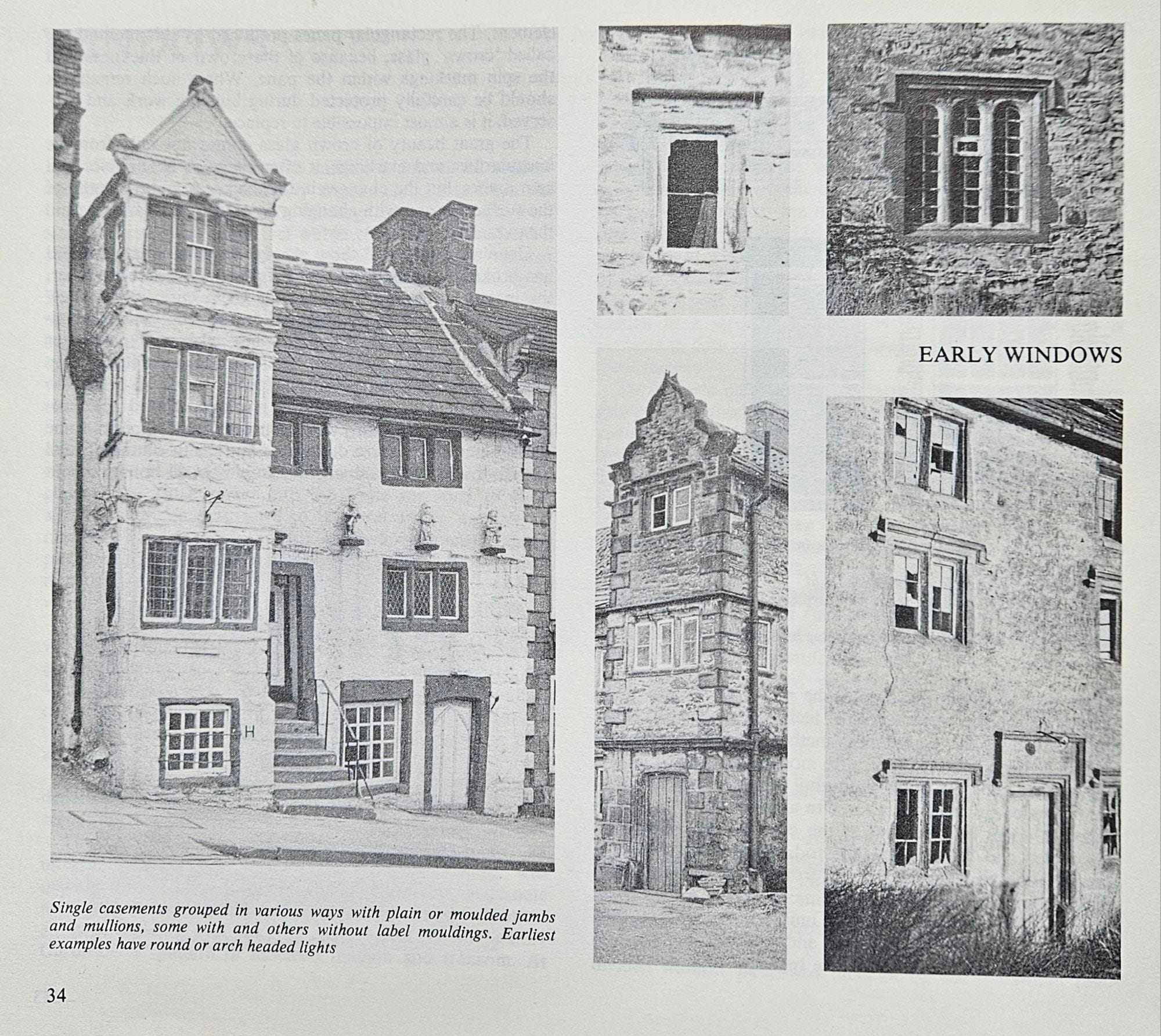
As to when these photographs were taken, identifiable locations suggest they were originally created for Oriel’s Historic Architecture of County Durham.
For instance, Early Windows includes The Bank, Blagroves House in Barnard Castle (left); a 17th century manor house in West Auckland (bottom middle); and New Holmside Hall (far right).
However, the farmhouse at an unknown location and cottage at Langton in County Durham may have been previously unpublished.
In the next Pressphotoman post, how Neville Whittaker created a book about modern shop fronts featuring more examples of Ursula Clark’s photography.
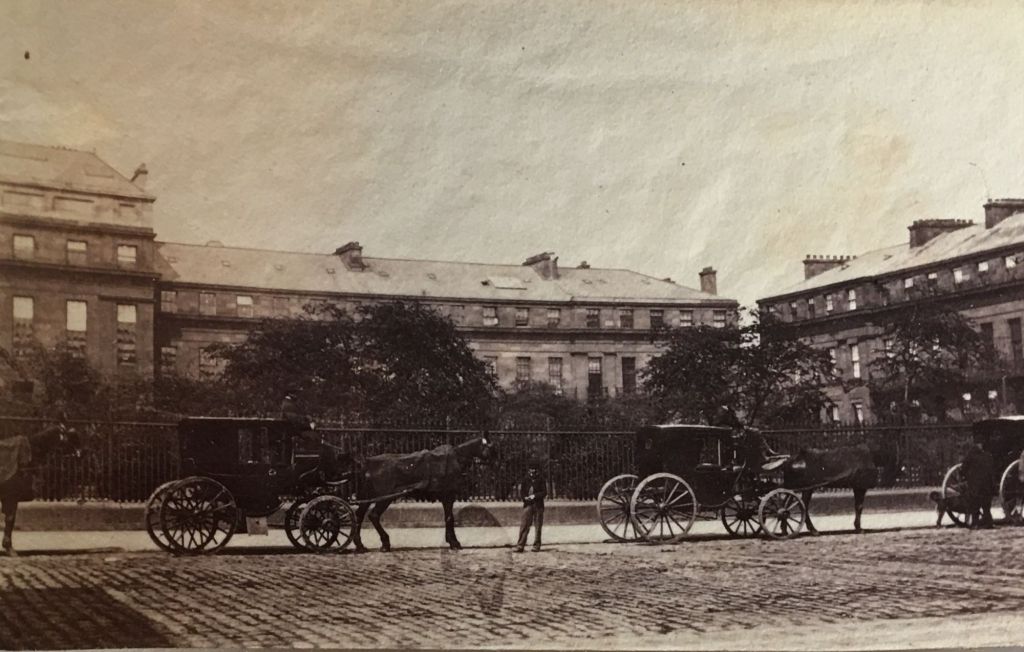
In the early 1860s, Newcastle upon Tyne’s Eldon Square was a hotbed of photographic activity.
Firms such as W. & D. Downey at number 9 and W.S. Parry at number 17 became go-to destinations for well-to-do clients wanting their portrait taken.
Eldon Square, Newcastle upon Tyne in the 1860s. Courtesy of Private Collection, Zurich.
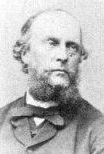
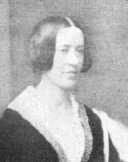
However, before they set up their respective studios, there is evidence that Edward and Eliza Charlton, who lived at number 7, may have been keen amateur stereographers.
Edward Charlton. Courtesy of John Edwards.Eliza Charlton. Courtesy of John Edwards.
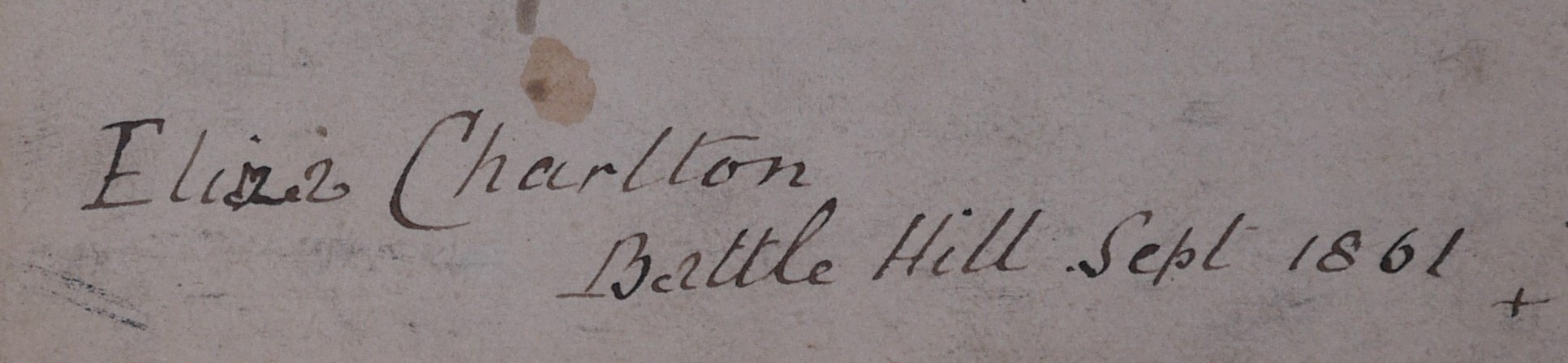
Their individual names featured on the verso of stereographs of Hexham Abbey that joined the Pressphotoman collection in 2024 and prompted a blogpost series about Eldon Square.
Given that women stereographers, in particular, were unusual in the early days of the medium, research has continued to uncover more examples of Eliza’s photography and learn more about her life.
Author’s collection.
Thanks to a recent discovery in one of my favourite second-hand bookshops, Slightly Foxed in Berwick-upon-Tweed, the latter aim has taken a huge step forward.
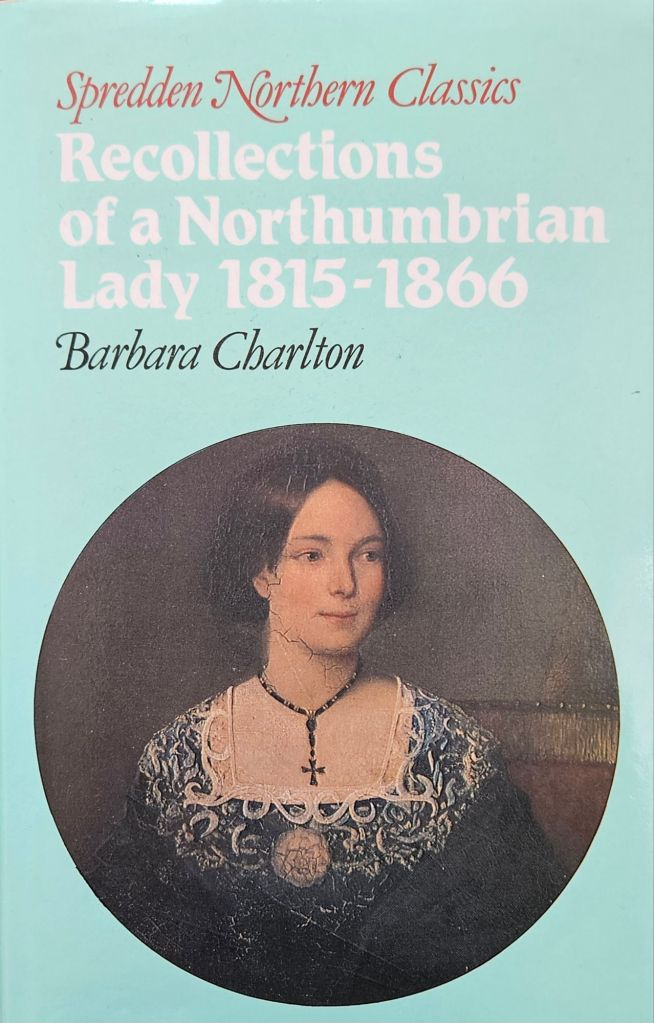
The book that caught my attention was titled Recollections of a Northumbrian Lady 1815-1866, first published in 1949 in London by Jonathan Cape and reprinted in a new edition in 1989.
Its author Barbara Charlton, pictured on the book’s front cover as a young married woman, was Edward and Eliza Charlton’s sister-in-law through marriage to Edward’s elder brother William Henry Charlton.
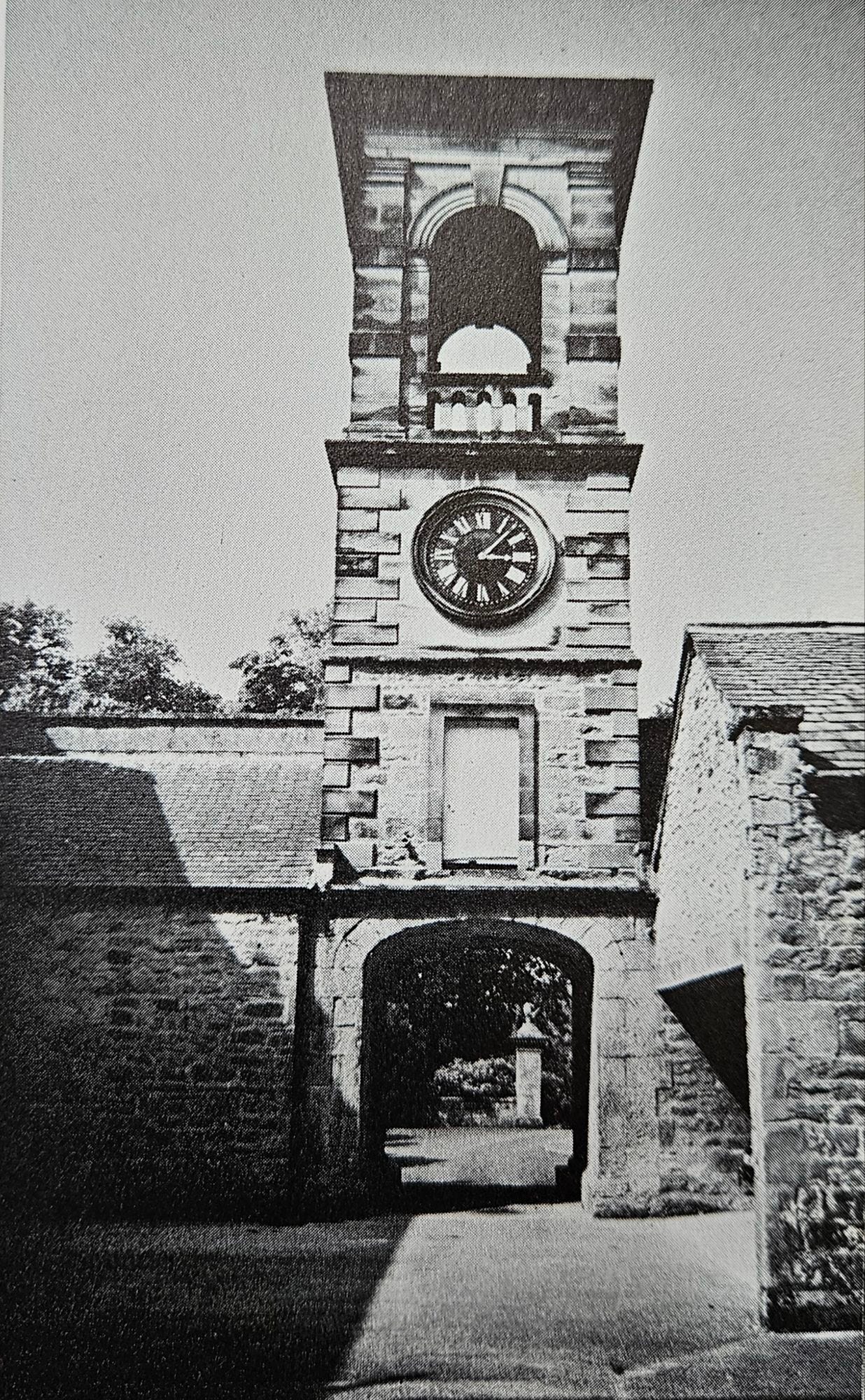
Barbara’s memoir offers a fascinating insight into life at Hesleyside in Northumberland, the ancestral home of the Border Reivers Charlton family for several hundred years.
Hesleyside Hall by Ursula Clark from The Historic Architecture of Northumberland (Newcastle upon Tyne: Oriel Press, 1969).
What was wonderful was that Recollections of a Northumbrian Lady featured numerous mentions of Eliza Charlton for whom Barbara had a particular affection and for “her many inestimable qualities.”
Whilst there is no mention of Eliza’s photography, there are accounts of her interest in matters artistic.
These included sending a “beautiful stained-glass window” for “our newly decorated chapel” to mark the christening in 1850 of the only surviving Charlton boy.
Later (due to the window being smashed by Henderson, the estate carpenter), Eliza supplied a replacement, “… an oak carved Saint Barbara, my patron saint, complete with tower, sword and crown, too massive for any drunkard to break.”
However, many of the references to Eliza relate to a decline in her health that was not untypical, even for those of her wealth and standing in society.
In May 1854, Barbara recalled how: “… Eliza Charlton came to stay with us at Hesleyside and for the first few days of her stay we walked and talked together, with the children running on before, in the most natural way possible.
“I remember her remarking how happy we all were, and that these years would be for me and them the most joyful in our lives.
“But by degrees, unaccountably and for no apparent cause, she fell off, at last taking to her bed and becoming seriously ill.
“I loved her so dearly I was only too happy to nurse her day and night.”
Given the Last Rites and Holy Communion every morning as befitted a Roman Catholic, Eliza recovered and convalesced.
In the summer of 1860, Barbara was visiting Paris with her three eldest children, recalling that on the way back, “… dear Eliza Charlton met our train at Newcastle, and again I noticed her flush and her unnaturally bright eyes.
“A month later, I went to Newcastle and found her lying on the sofa, a professional invalid and seeing no one.
“She confided to me that she had been examined by the doctors and that both lungs had been affected past recovery, and that, with great care, she had been given about two years to live.”
The dating of the stereo of Hexham Abbey attributable to Eliza Charlton to September 1861 suggests that, despite her health worries, she was able to pursue her hobby as a photographer.
However, the doctors’ predictions came true and she died at 7 Eldon Square on 10th May 1862, aged 46, whilst her sister-in-law was abroad.
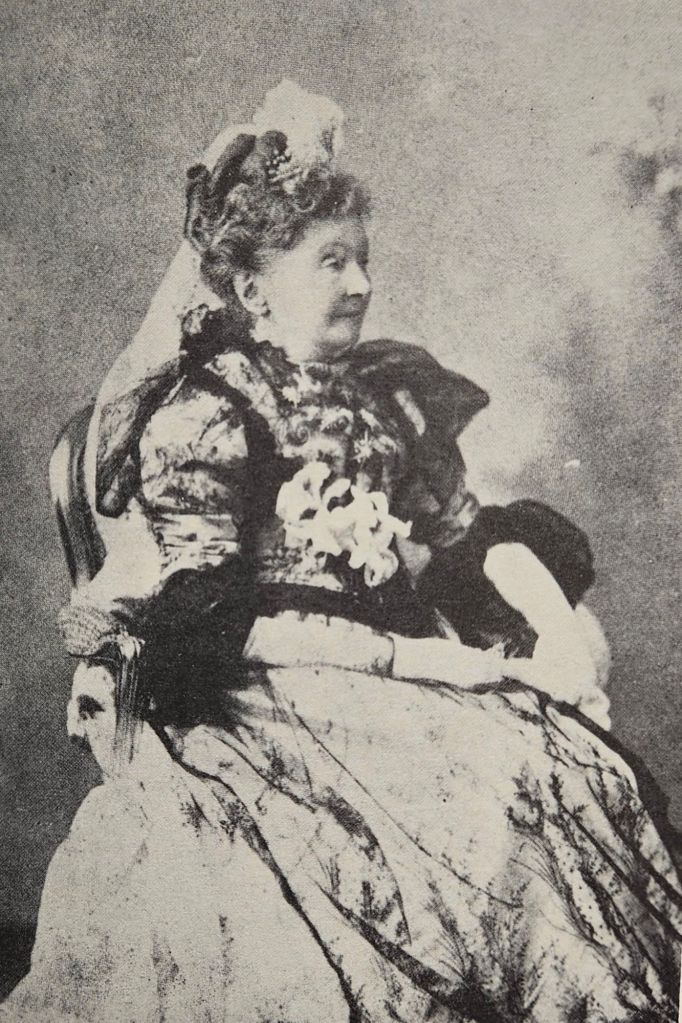
Barbara Charlton died in 1898, aged 83, having attended Queen Victoria’s final Drawing Room to mark her Diamond Jubilee.
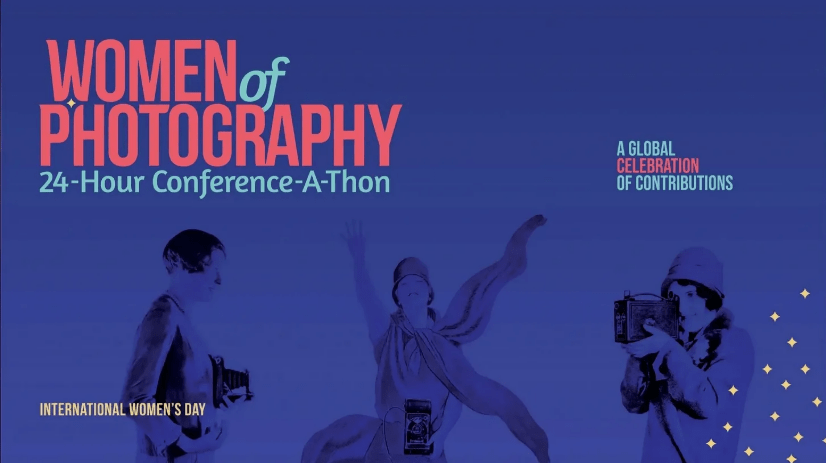
This weekend’s ‘Women of Photography’ 24-Hour Conference-A-Thon marking International Women’s Day (Sunday 8th March 2026) is a global celebration.
A line-up of 72 speakers will be highlighting the contributions of women to the medium from photography’s announcement in 1839 to today.
Registration for the event is free and the full programme offers a fascinating insight into the work of many women, whose work has until now received scant attention.
My pre-recorded contribution to the conference, ‘Ursula Clark: Architectural Photographer’, will be broadcast from 15:24-15:44 GMT and there will also be an opportunity to post questions in the Zoom chat.
Much of Ursula’s architectural photography features in books about Britain and Europe published by Oriel Press of Newcastle upon Tyne in North East England.
She worked for the company as its photographic editor from 1962 into the early-1970s.
However, new research for what has become an on-going project about Ursula’s career has identified a number of other publications, which feature her camera work.
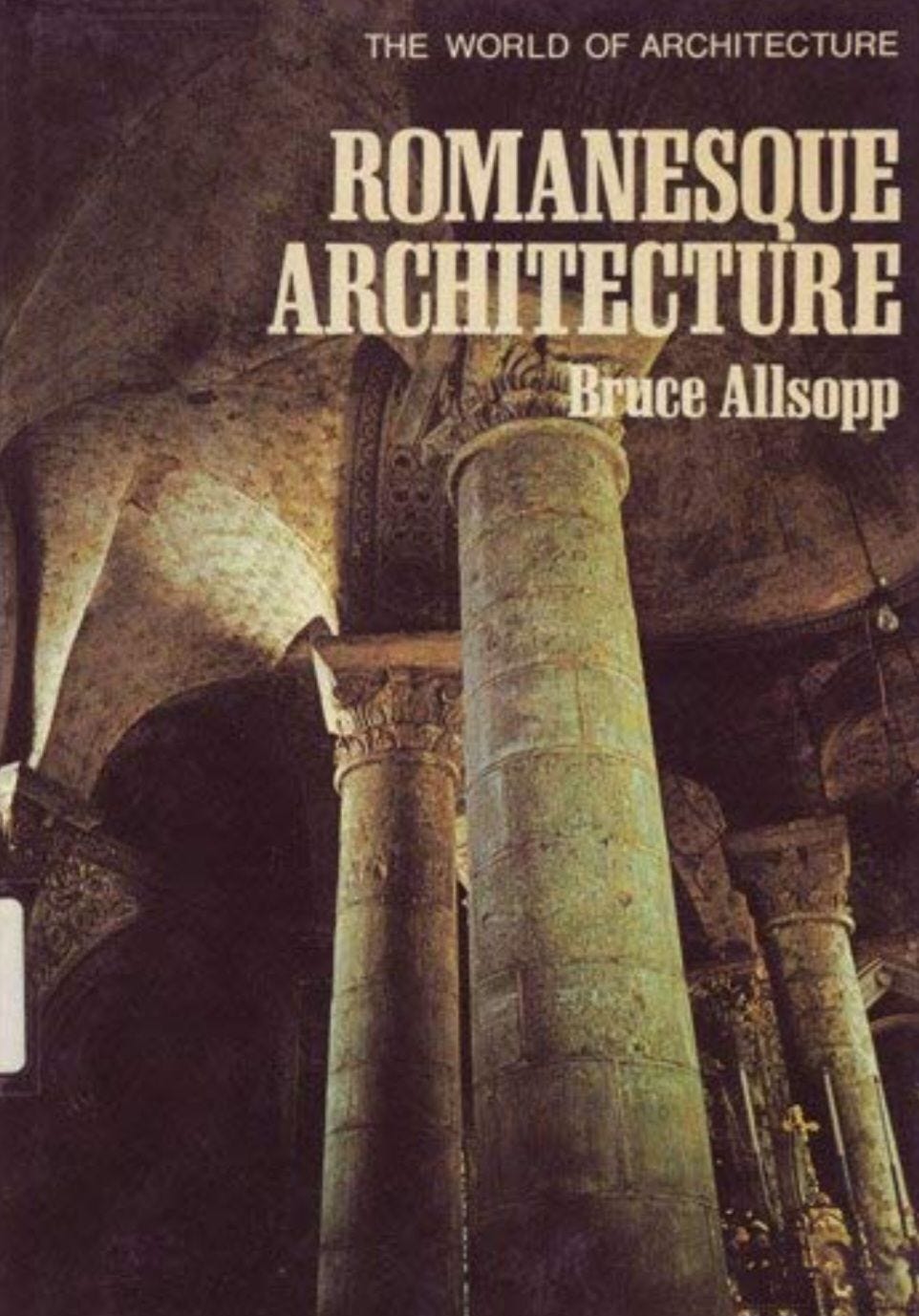
One example, Romanesque Architecture (London: Arthur Barker Ltd, 1971), was authored by Professor Bruce Allsopp, Senior Lecturer in Architecture at King’s College, Durham (later Newcastle) University, who set up Oriel Press and hired Ursula Clark.
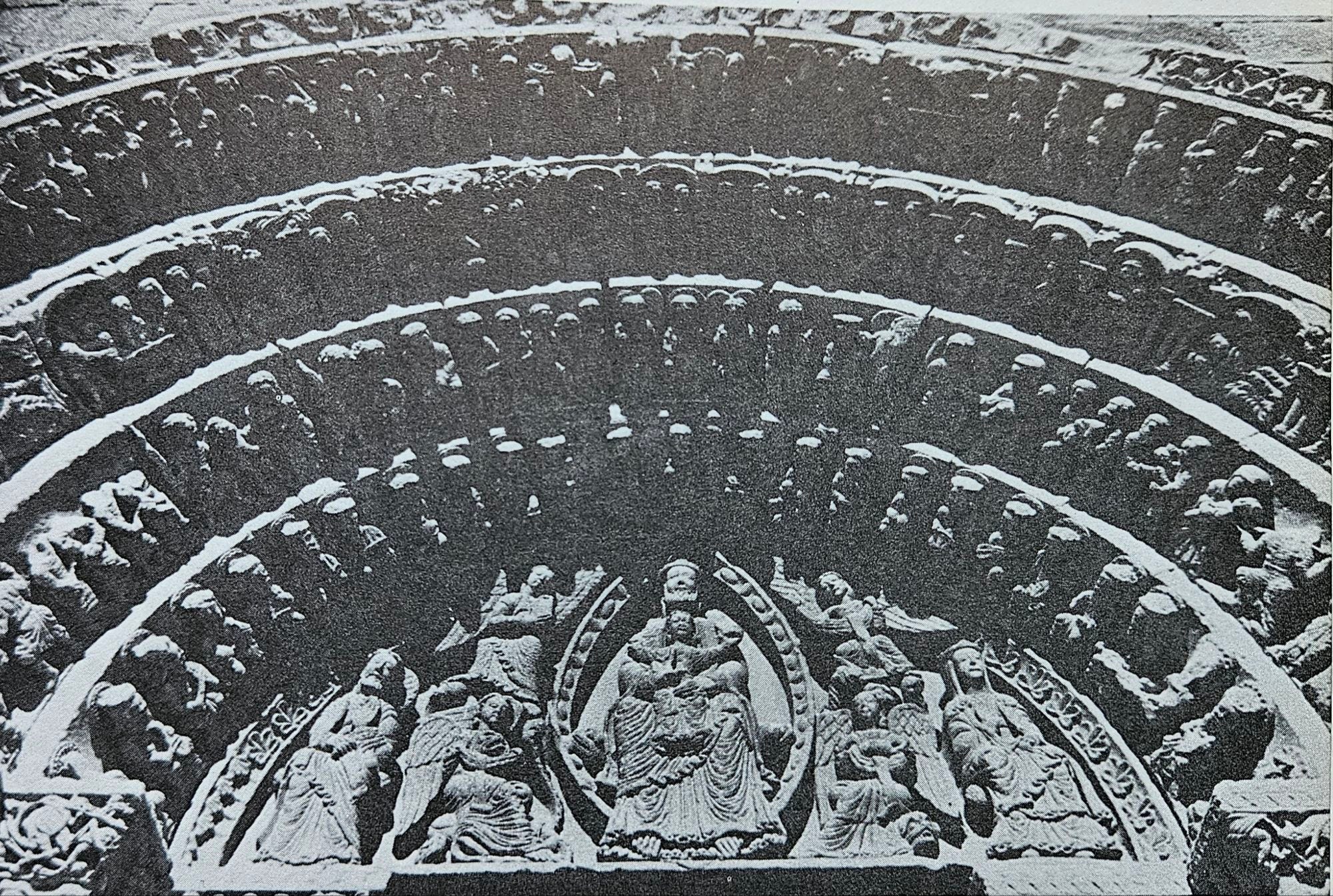
Whilst Allsopp’s own photography (including the front cover of Notre Dame la Grande, Poitiers, France) features throughout, seven of Ursula’s black-and-white images appear as halftones and are credited to her.
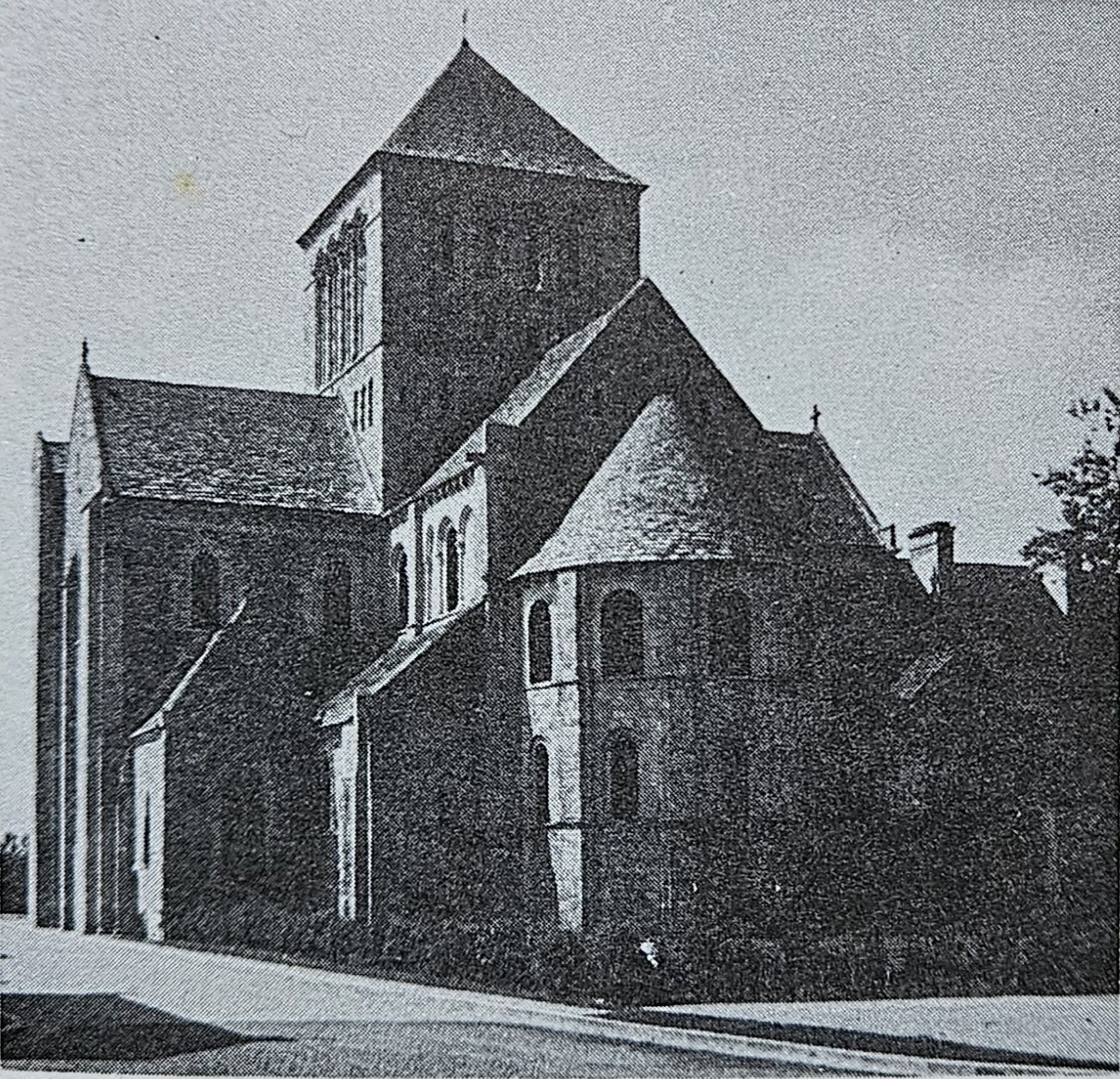
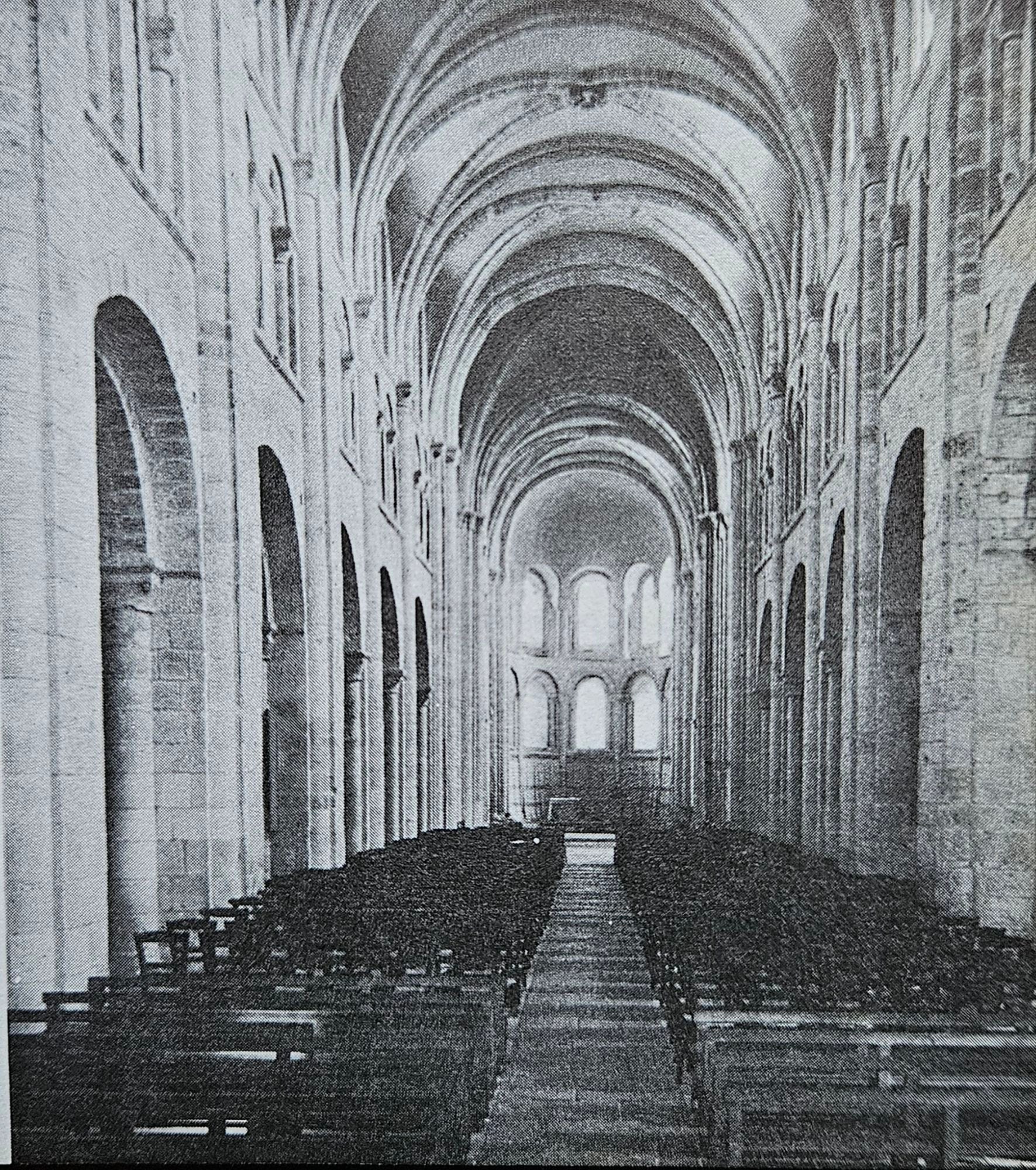
In a chapter titled ‘Romanesque in France,’ Lessay Abbey, one of the most important in Normandy, is portrayed in two images taken in the 1960s that illustrate its reconstruction after the Second World War.
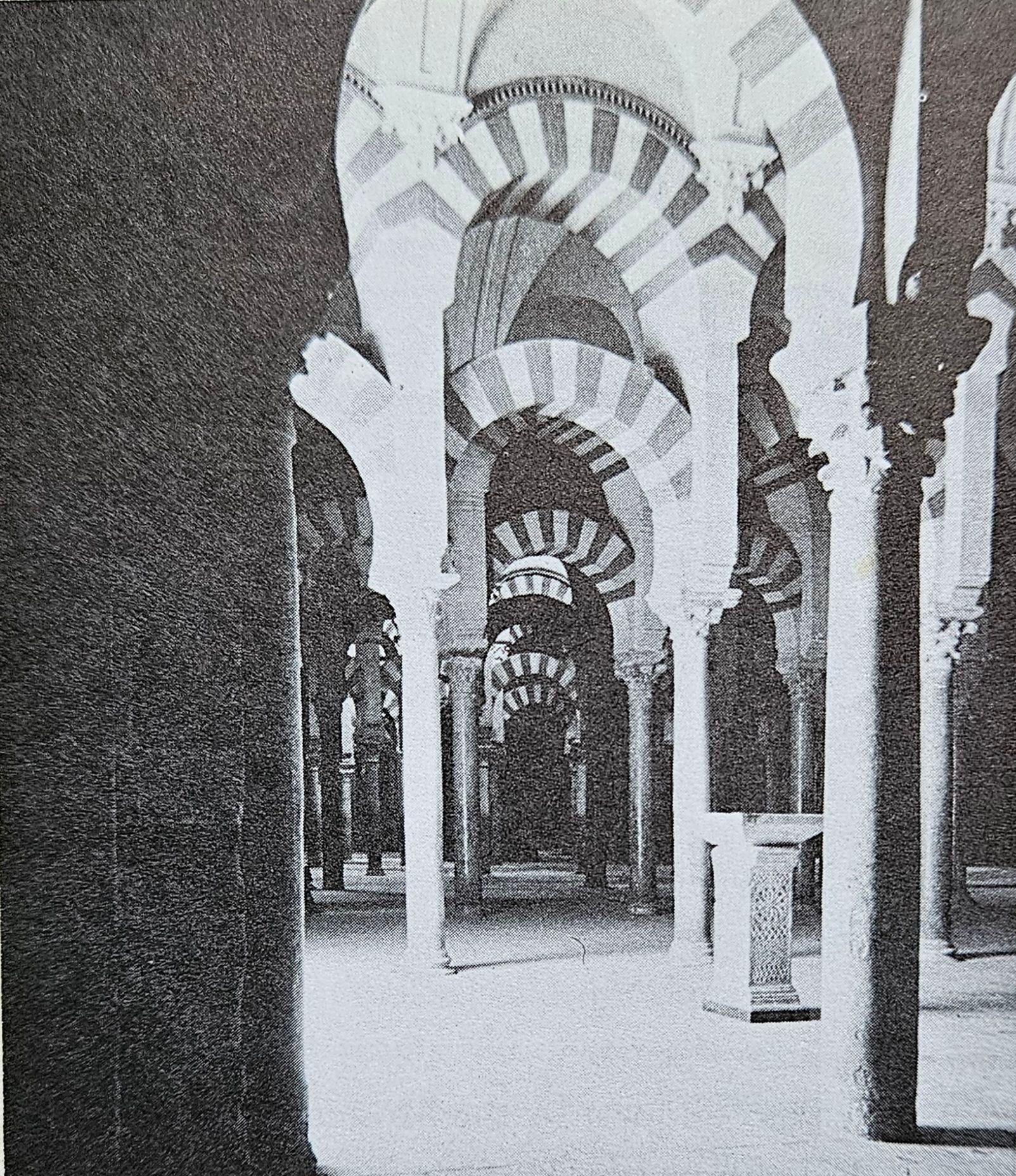
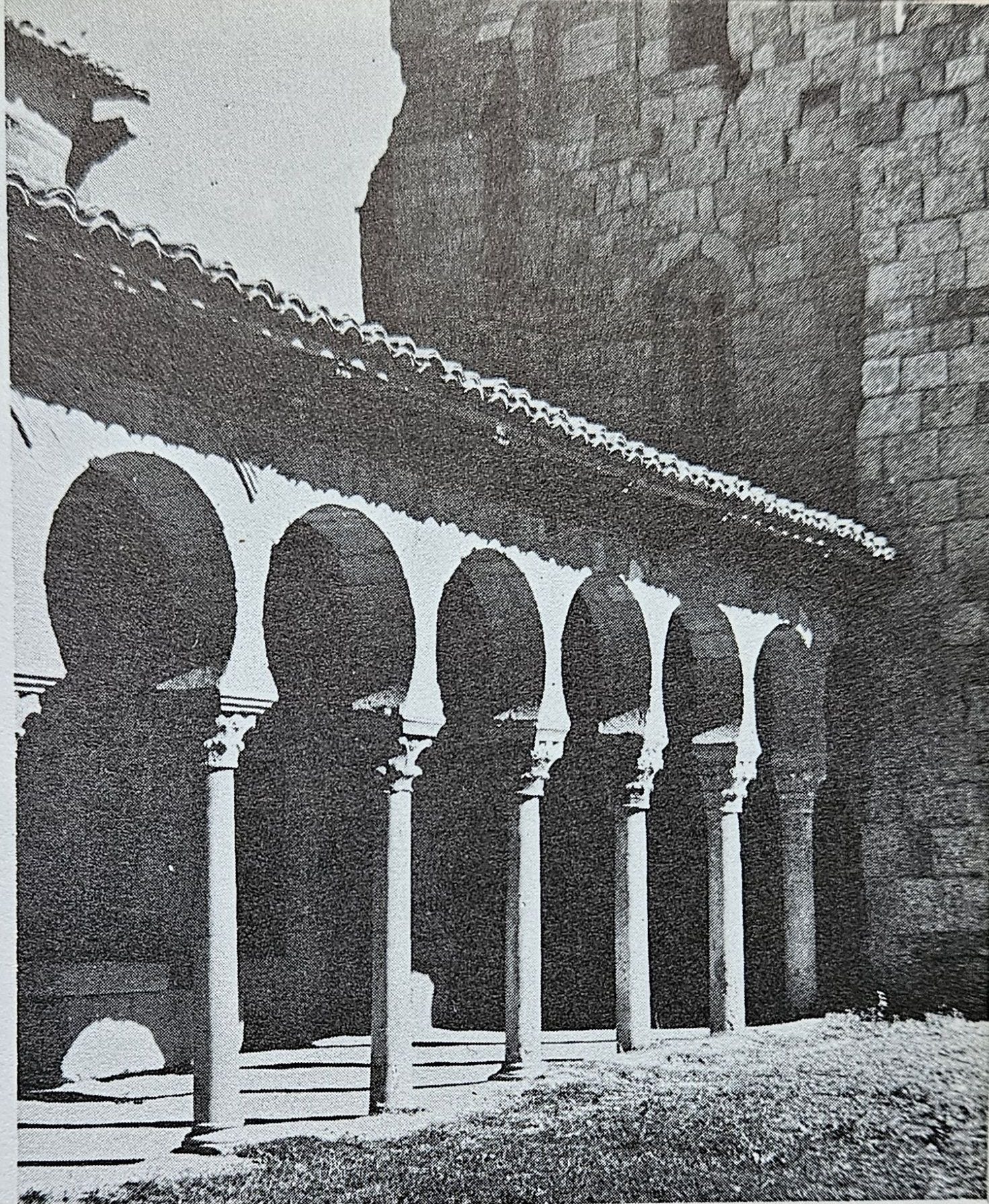
‘Romanesque in Spain’ features three striking images starting with the interior of the great mosque at Còrdoba that subsequently became a cathedral.
According to Bruce Allsopp’s caption, it combines “Moslem structural design with Roman-type columns” and “is a splendid example of Hellenesque architecture.”
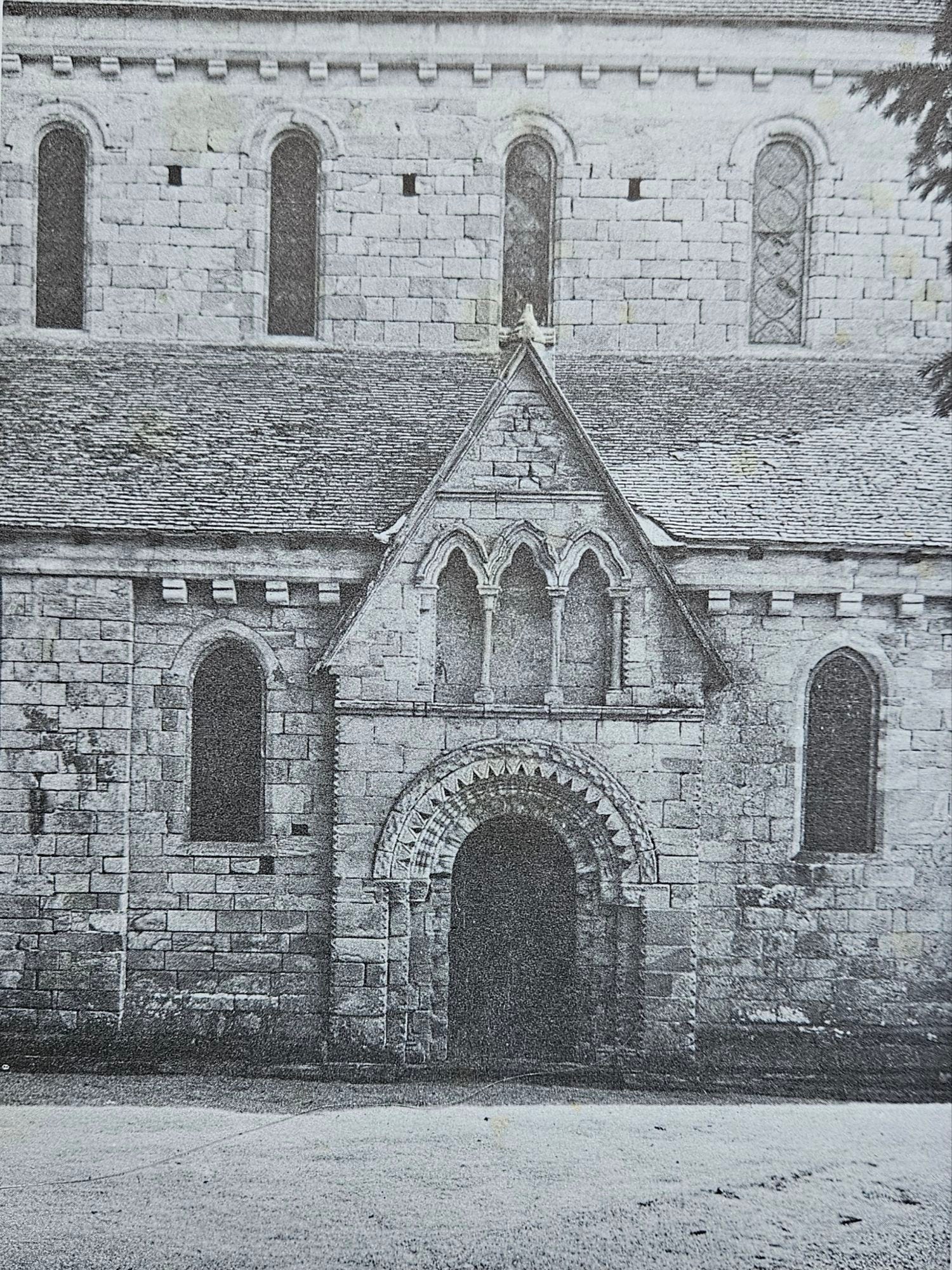
The first of her two contributions to ‘Romanesque in England after the Conquest’ returns the photographer to her native North East and Brinkburn Priory in Northumberland.
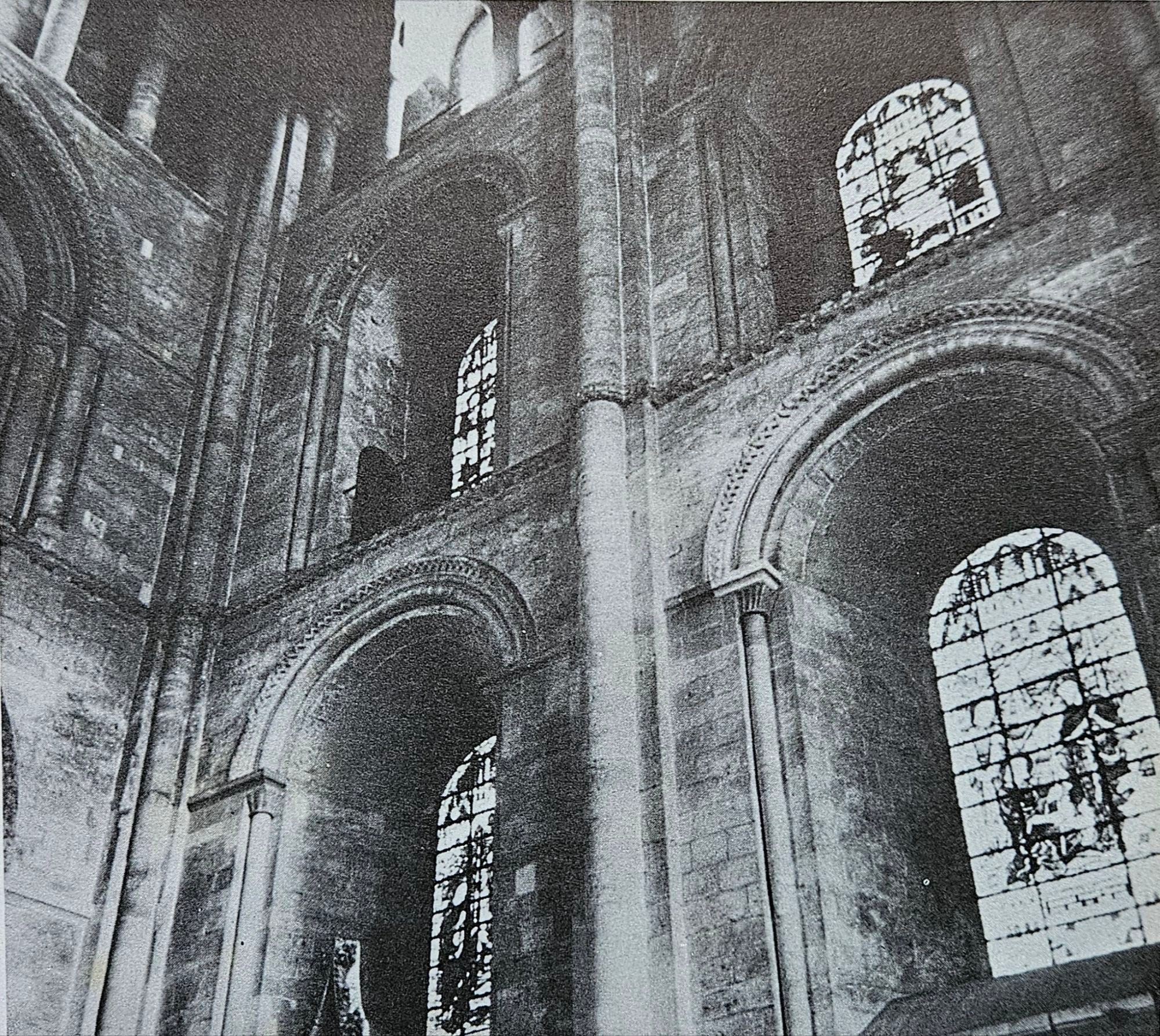
Finally, the south transept of Romsey Abbey in Hampshire illustrates what Bruce Allsopp calls “the formal qualities of Norman Architecture at its best.”
If you’re new to Ursula Clark’s photography, join me on Sunday 8th March 2026 (15:24-15:44 GMT) when I’ll be sharing newly digitised examples of her archive held by Historic England as well as images of Ursula herself.
The work of architectural photographer Ursula Clark (1940-2000) is primarily captured in publications produced by Oriel Press of Newcastle upon Tyne.
These include the series of Oriel Guides to England, Scotland, France, Italy and Spain (1963-1969) as well as its Historic Architecture of … series featuring Newcastle upon Tyne (1967), Northumberland (1969), Leeds (1969) and County Durham (1971).
However, these books, many co-authored with Oriel’s Bruce Allsopp, and the quality of Ursula Clark’s images attracted wider attention.
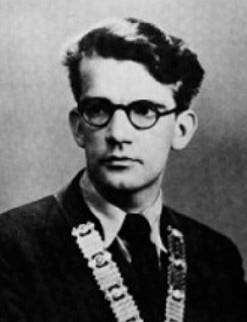
One of their admirers was the celebrated town planner Thomas Sharp (1901-1978) whose many books celebrated the heritage of British architecture.
Thomas Sharp (1901-1978).
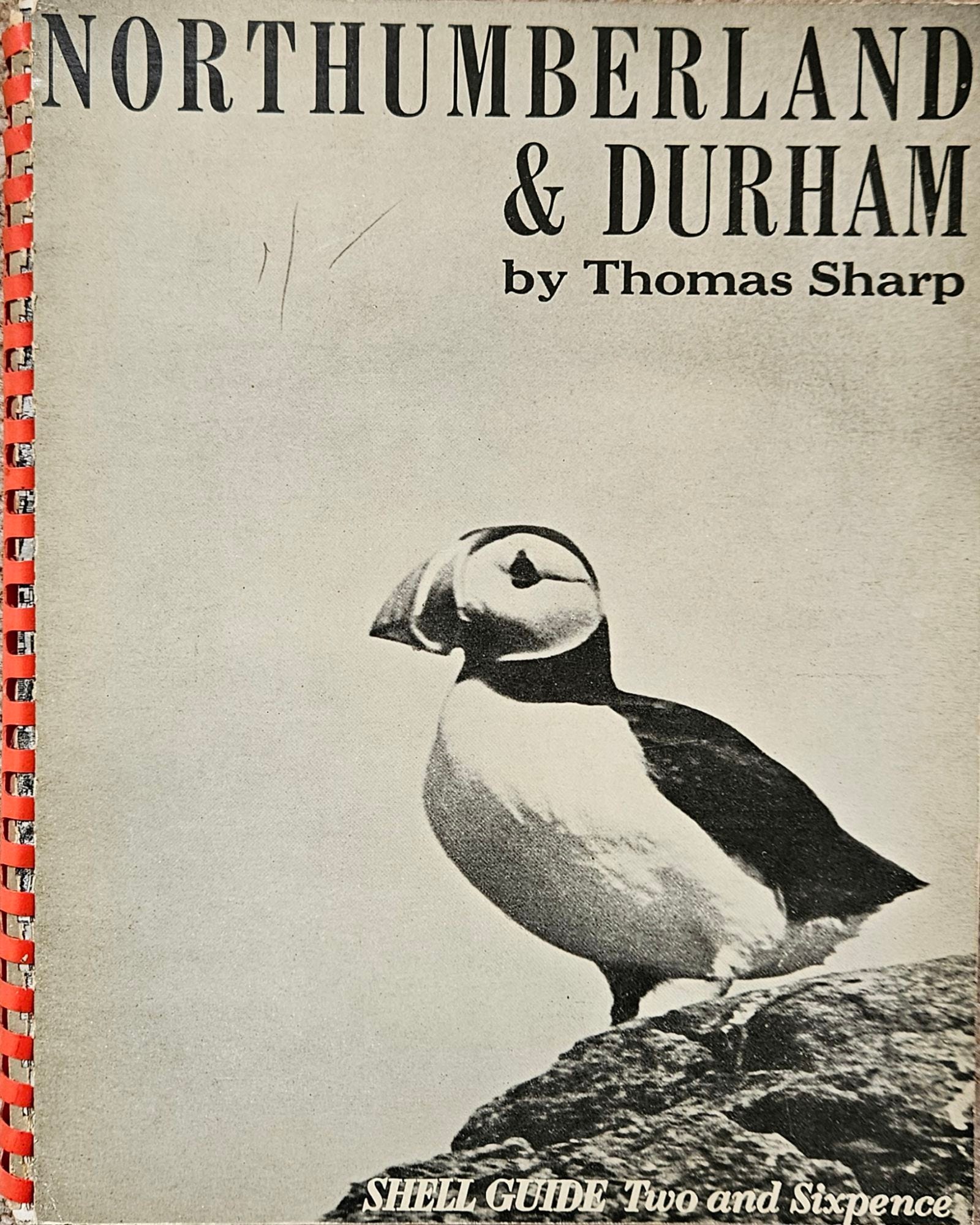
Aimed at motorists and tourists, Sharp had contributed Northumberland& Durham (1937) and Northumberland (1954) to the Shell Guides series masterminded by joint editors John Betjeman and John Piper.
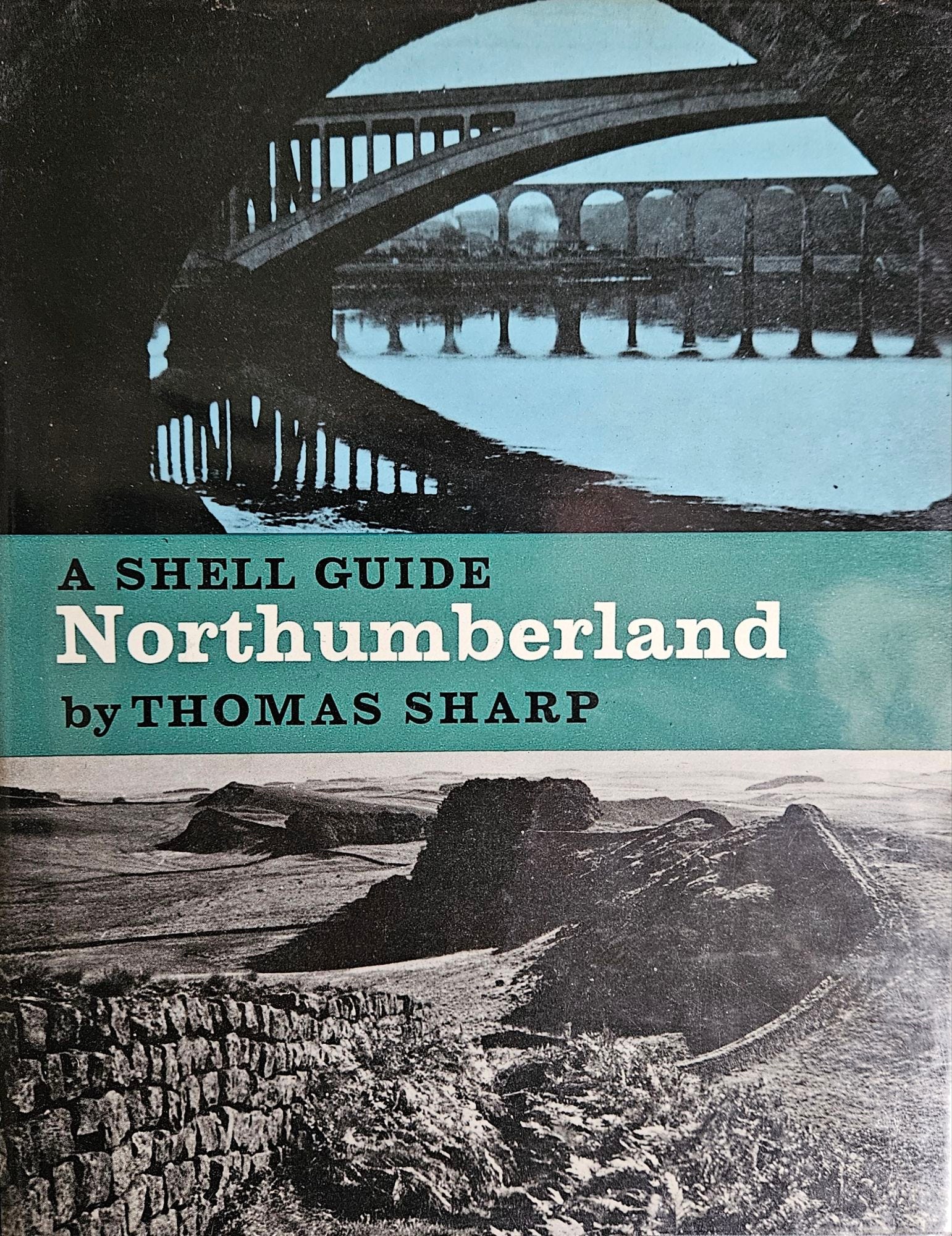
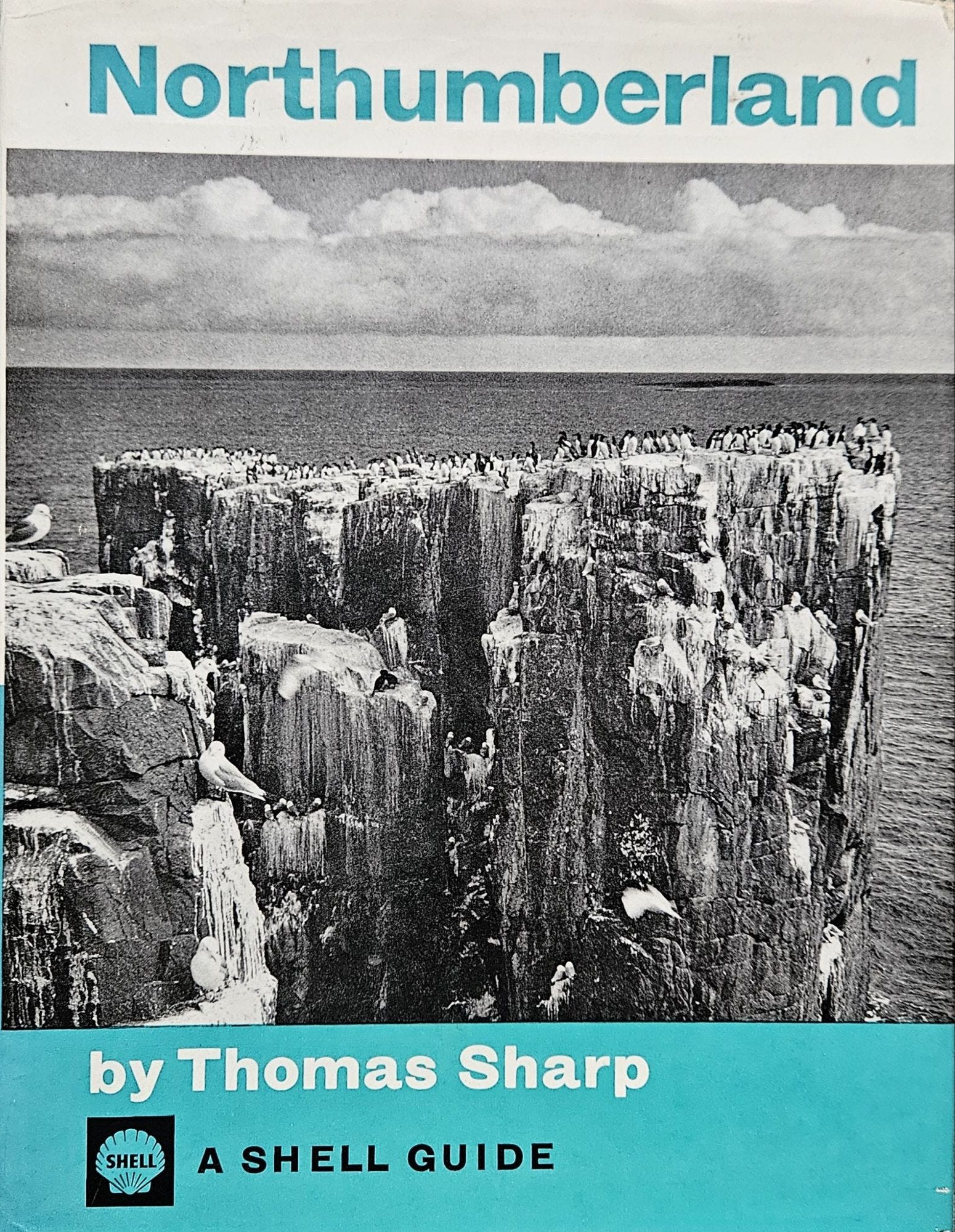
Piper became the series’ sole editor in 1967 and following a request from Faber & Faber, publisher of the Shell Guides, Sharp agreed to revise and update his Northumberland volume for a third edition.
However, correspondence in the Thomas Sharp Archive held by Newcastle University reveals that its production was hindered by a fundamental disagreement about the choice of photographs to be included.
Piper’s biographer Frances Spalding describes Sharp as being “greatly angered” by the issue (Oxford University Press: Oxford, 2009).
In particular, he was “deeply dissatisfied” with some of the proposed images featuring the historic heart of Newcastle upon Tyne which prior to 1974 was part of Northumberland.
In an effort to resolve what had become an impasse, Sharp wrote to Bruce Allsopp at Oriel Press with a photographic request.
“I am most anxious to obtain, as soon as possible, and to be given permission to reproduce, the following illustrations from Historic Architecture of Newcastle upon Tyne.”
He also took the opportunity to request a copy of the book which he described as “so good I should like to possess it” (THS 42.284).
The following day, Allsopp replied positively enclosing copies of the four glossy prints that Sharp had requested (THS 42.285).
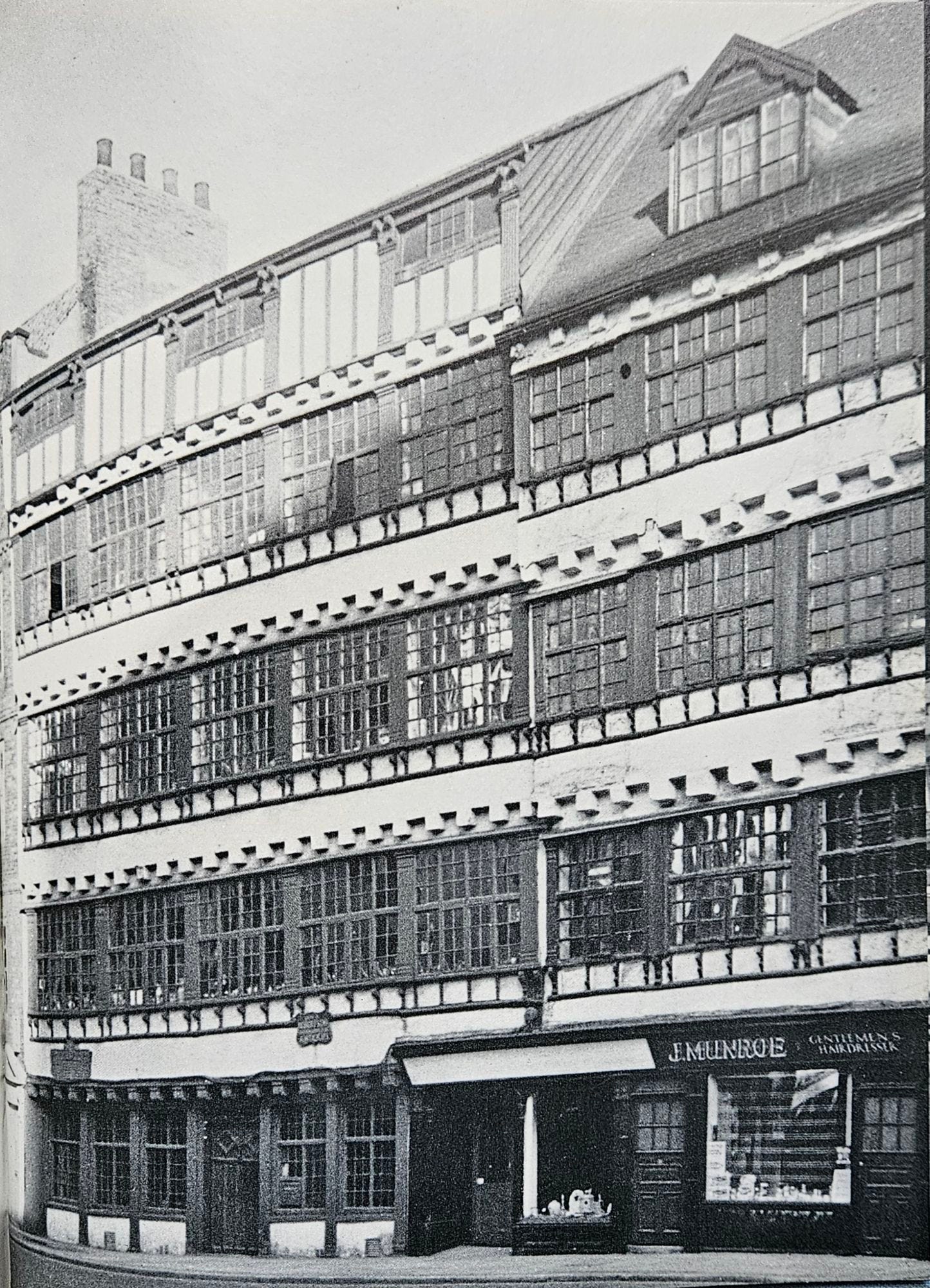
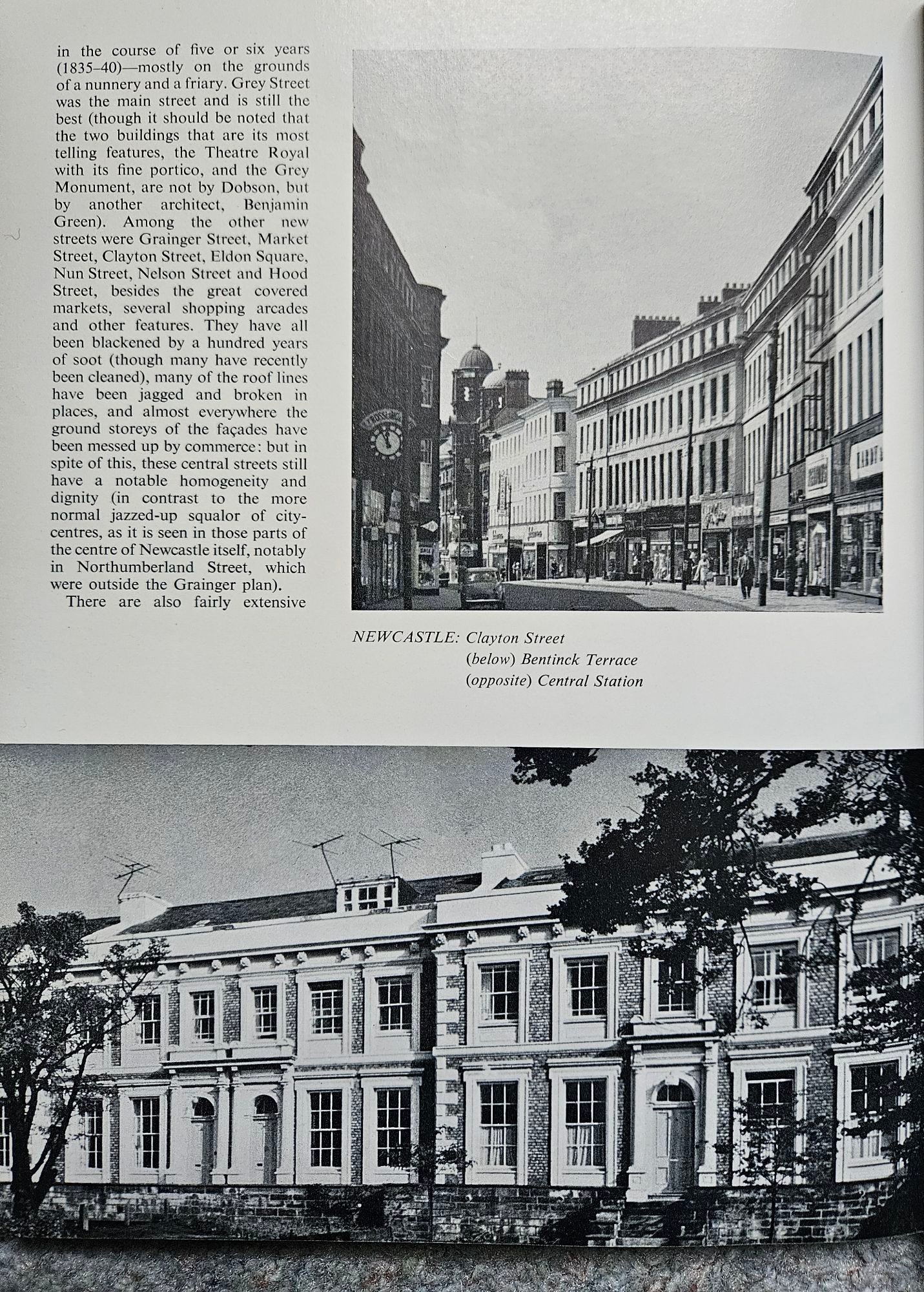
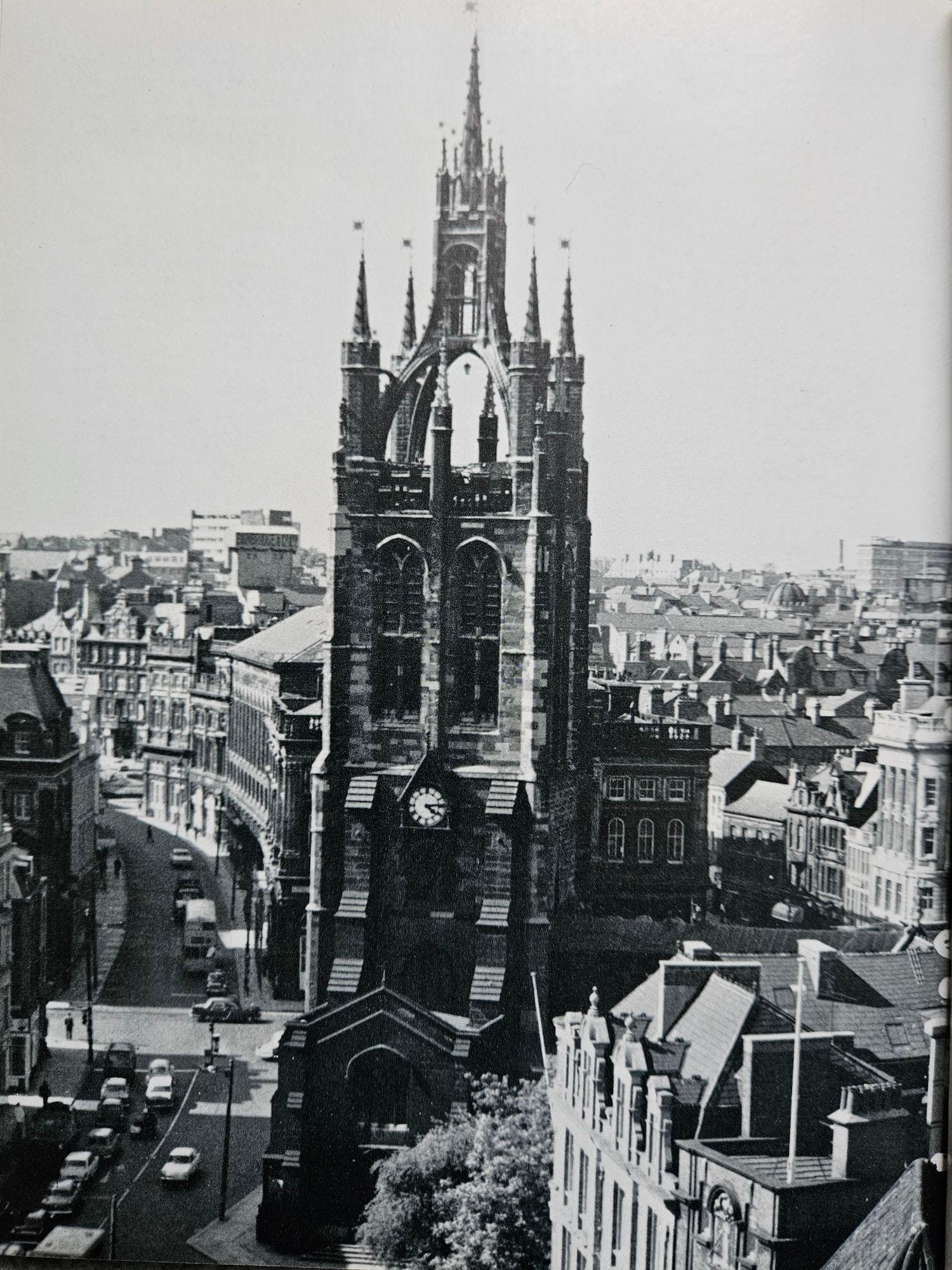
These featured Ursula Clark’s images of (Bessie) Surtees House, Clayton Street, Bentinck Terrace and St. Nicholas Cathedral.
When the book finally appeared, Sharp had succeeded in changing some of the images at the heart of his dispute with Piper including all those obtained from Oriel Press.
Two of Ursula’s shots were given full pages, whilst the other two shared a page with Sharp’s illuminating text.
(Bessie) Surtees House by Ursula Clark. From Northumberland: A Shell Guide by Thomas Sharp (London: Faber & Faber, 1969).Clayton Street and Bentinck Terrace by Ursula Clark. From Northumberland: A Shell Guide by Thomas Sharp (London: Faber & Faber, 1969).St. Nicholas Cathedral by Ursula Clark. From Northumberland: A Shell Guide by Thomas Sharp (London: Faber & Faber, 1969).
Sharp had also suggested an acknowledgement for Ursula Clark which duly appeared in his Prefatory Note alongside a mention for ‘Oriel Studios’ suggested by Bruce Allsopp.
However, the disagreement with John Piper as series’ editor surrounding the final choice of photographs for Northumberland: A Shell Guide continued into its publication.
At Sharp’s request, the following text appeared beneath the list of Illustrations.
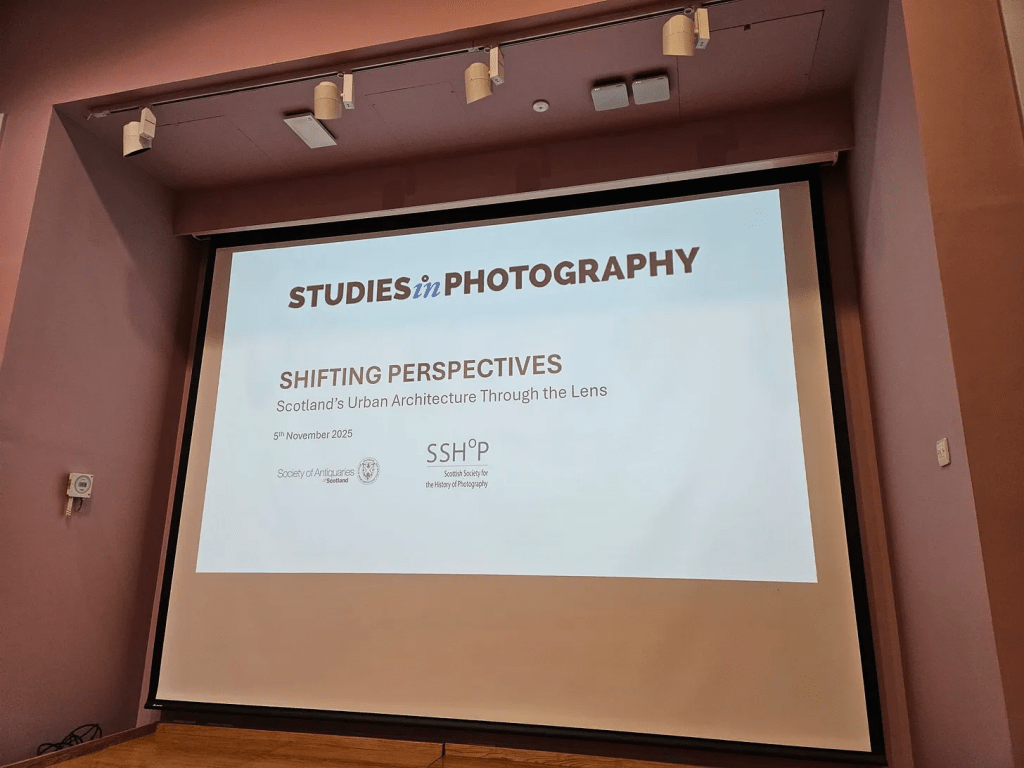
Earlier this month, a conference titled ‘Shifting Perspectives: Scotland’s Urban Architecture Through the Lens’ was held at the National Library of Scotland in Edinburgh.
This offered a welcome opportunity to share new research on the architectural photographer Ursula Clark (1940-2000) whose overlooked career has been celebrated on this blog throughout 2025.
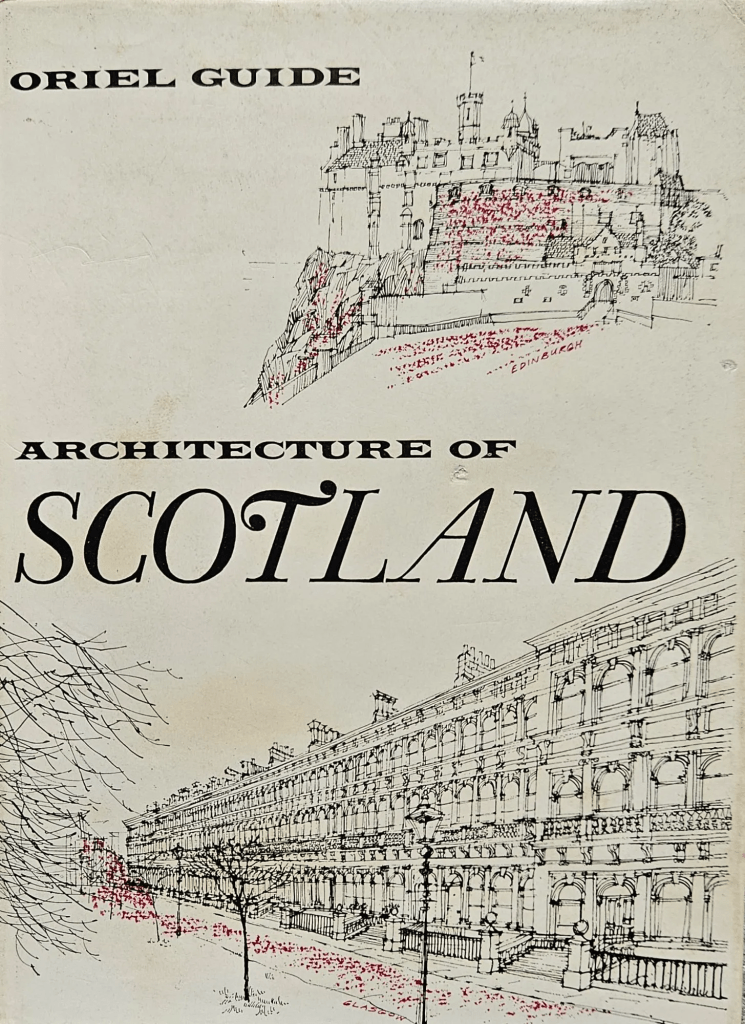
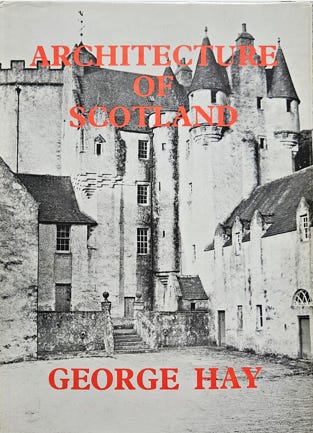
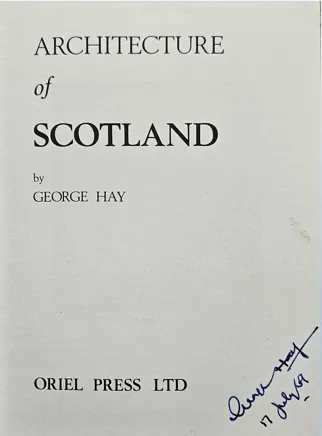
My paper focused on the Oriel Guide Architecture of Scotland (1969) for which Ursula was photographic editor and to which she contributed a number of photographs.
Front cover of Architecture of Scotland by George Hay (Newcastle upon Tyne: Oriel Press, 1969).
As regular readers will know, around 20,000 largely black-and-white negatives form the largest collection by a woman photographer in the care of Historic England.
Around 2,000 images in the Ursula Clark Collection have been digitised and show buildings in England that were previously under-represented including those from her native Newcastle-upon-Tyne and North East England.
However her Scotland images have remained unseen since first being published nearly 60 years ago.
In 1966, Architecture of Scotland was promoted as being “in preparation” by Ursula’s employer, the publisher Oriel Press of Newcastle upon Tyne, indicating the time period when the images were taken.
However, it was 1969 before the book appeared.
Its 96 pages feature nearly 250 photographs interwoven with text supplied by the Scottish architectural historian George Hay (1911-1986).
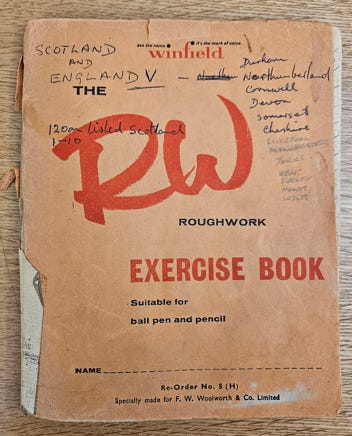
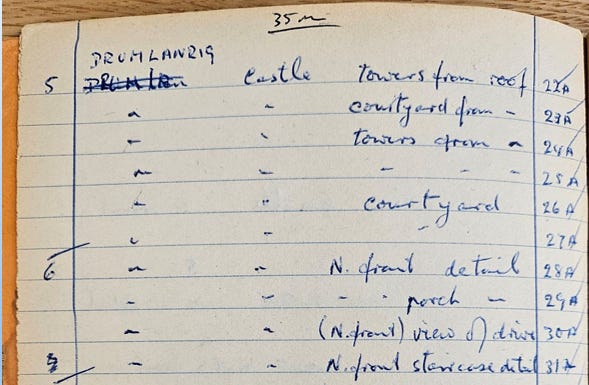
With the help of the team at Historic England’s archives in Swindon and using Ursula’s detailed shotlists, it has proved possible to identify a number of the Scottish locations that she photographed as well as the type of 35mm film she used.
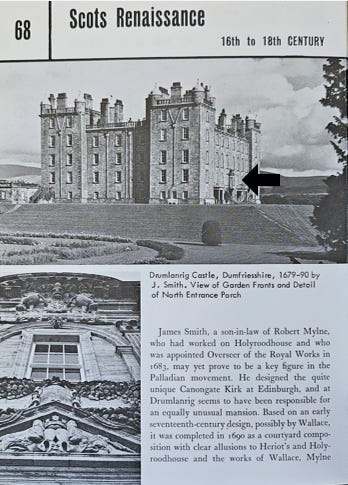
Amongst the entries was Drumlanrig Castle in Dumfriesshire (1679-1690) where a sequence was photographed featuring the building in both wide-shot and close-up.
One shot in particular stands out featuring the ‘North front porch detail’ (negative no. 29A), a perspective arrowed in the page below.
From Architecture of Scotland (Newcastle upon Tyne: Oriel Press, 1969).
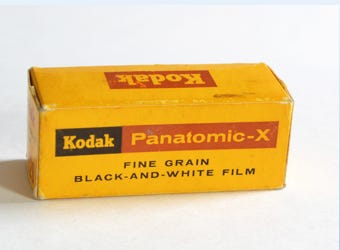
In this example, her use of Kodak Panatomic-X fine grain black-and-white film captures the intricacy of the stonework beautifully.
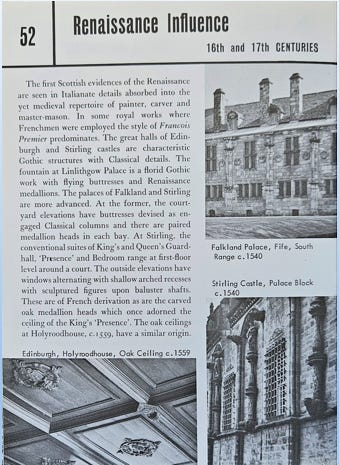
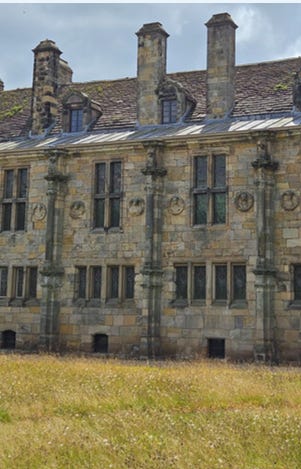
Another castle she photographed was Falkland Palace in Fife.
This summer, I had an opportunity to stand in Ursula’s footsteps and take a shot from a similar position of the South Range (top right below) using my Samsung camera phone
The main difference in the views taken 6 decades or so apart is the length of the adjoining grass.
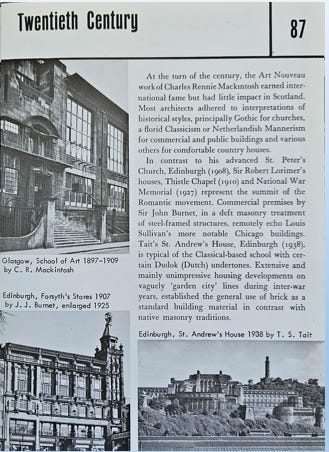
Such is the richness of Scotland’s architecture that comparatively few pages in the Oriel Guide are given over to recent buildings photographed by Ursula such as the Glasgow School of Art (1897-1909, top left) and St. Andrew’s House, Edinburgh (1938, bottom right).
From Architecture of Scotland (Oriel Press: Newcastle upon Tyne, 1969).
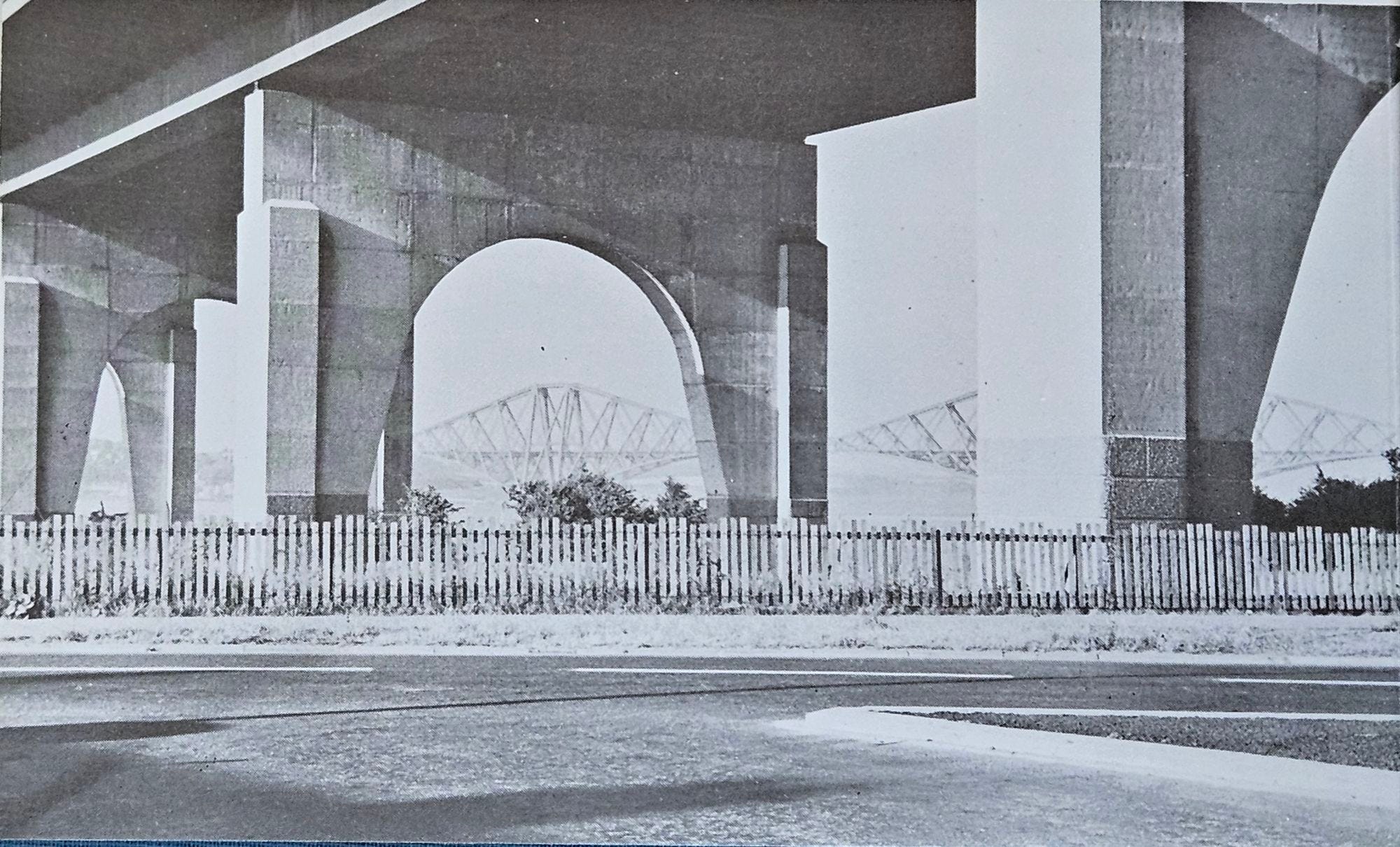
Perhaps my favourite Scotland shot of Ursula’s features a structure that emerged in the landscape as her architectural photography career was taking flight.
The shot list records a sequence featuring the Forth Road Bridge (1958-1964) and culminating in a shot that also features the railway bridge (1890) in the far distance.
When the book was published, Architecture of Scotland was well received by both critics and readers with the British Book News highlighting “Ursula Clark’s magic as photographic editor”.
Following Oriel Press’s takeover in 1973 by Routledge & Kegan Paul, a second enlarged and revised edition with a new cover featuring Midmar Castle (1570) was published four years later.
Second-hand copies of Architecture of Scotland in both editions can be spotted from time to time on book websites such as AbeBooks.
The first edition copy that I managed to obtain was even signed by George Hay on 17th July 1969, just a few days before the first moon landing.
Despite a lack of the co-credit that she received for several other Oriel Guides, the quality of Ursula Clark’s contribution to Architecture of Scotland still shines through.
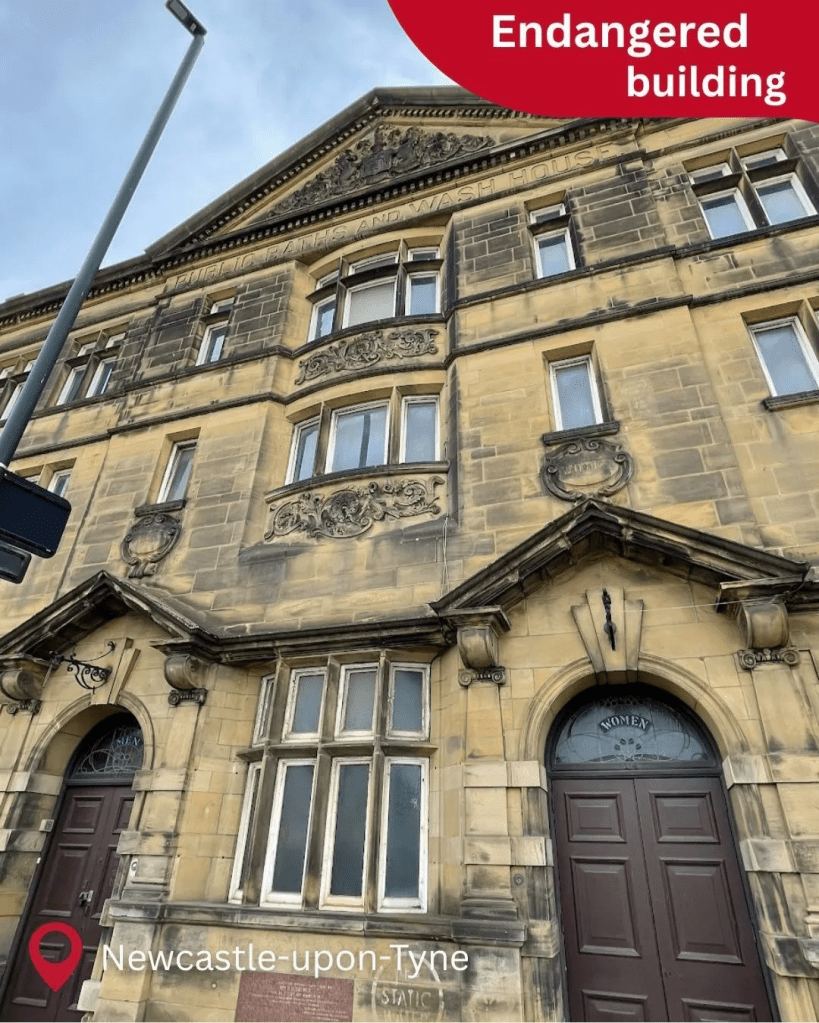
The Victorian Society’s national list of ‘Top Ten Endangered Buildings 2025’ features one building recognisable from regular visits down the decades to Newcastle upon Tyne.
Gibson Street Baths was built in the early 20th century under the 1846 Public Baths and Wash-houses Act that was still in force.
Photo: Graham Tyrrell/Instagram.
A weekly visit to such buildings was part of everyday life for many families including earlier generations of mine.
Now Grade 2 listed, Gibson Street Baths has lain dormant since 2016 and, according to the Victorian Society, “needs a sensitive reuse before restoration costs escalate further.”
It’s a theme that has echoed down the years as revealed by a 1971 article that recently joined the Pressphotoman collection.
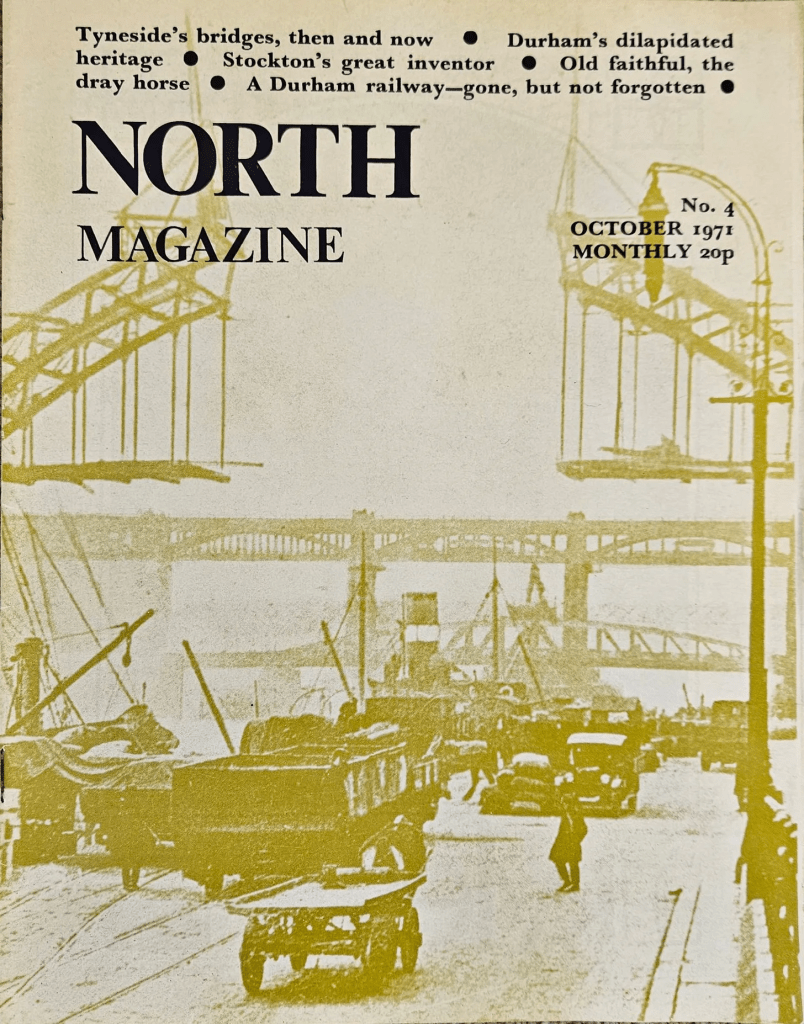
North Magazine was a monthly publication for ‘Durham, Northumberland and North Yorkshire’ edited by the journalist and author Leslie Geddes-Brown (1942-2020).
The cover of the October 1971 issue (vol. 1, no. 4) featured an eye-catching photograph of the Tyne Bridge, which is currently undergoing major renovation as it approaches its centenary in 2028.
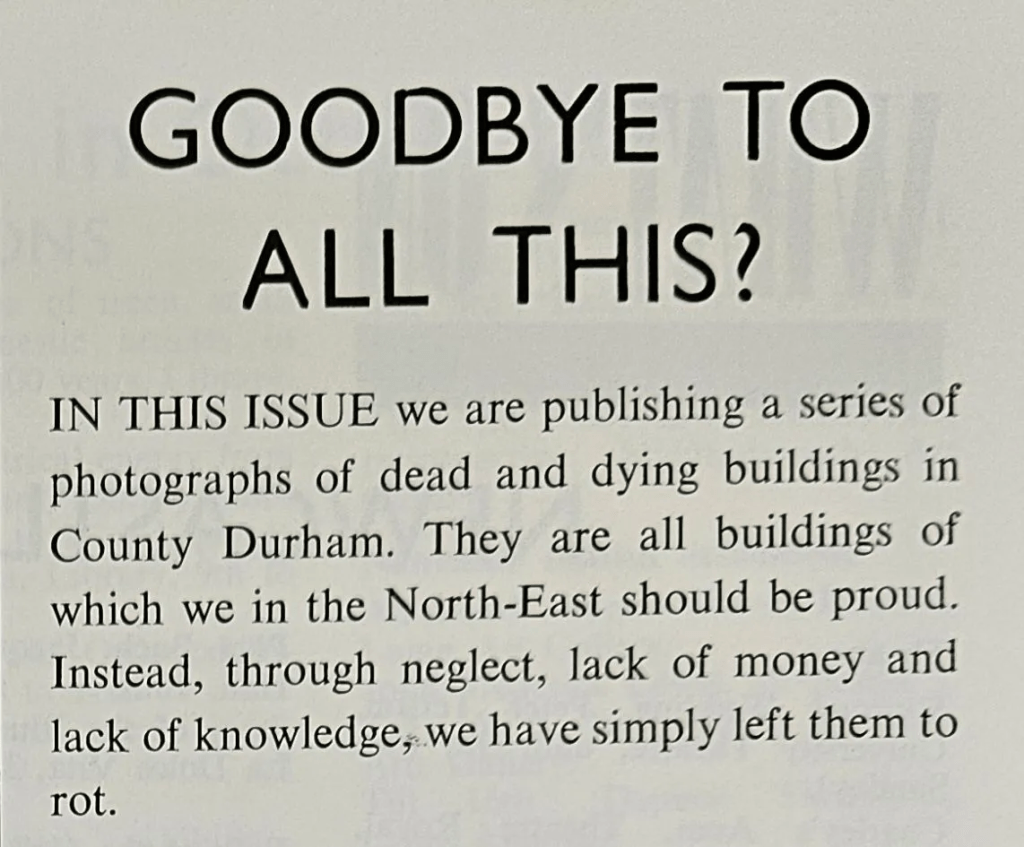
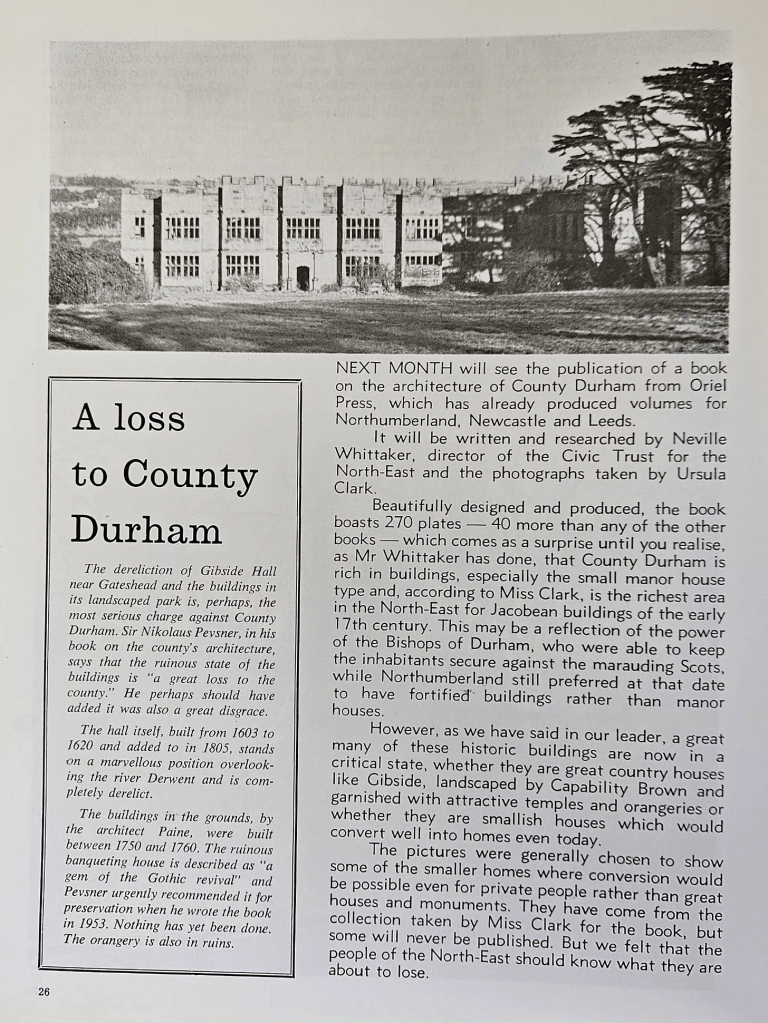
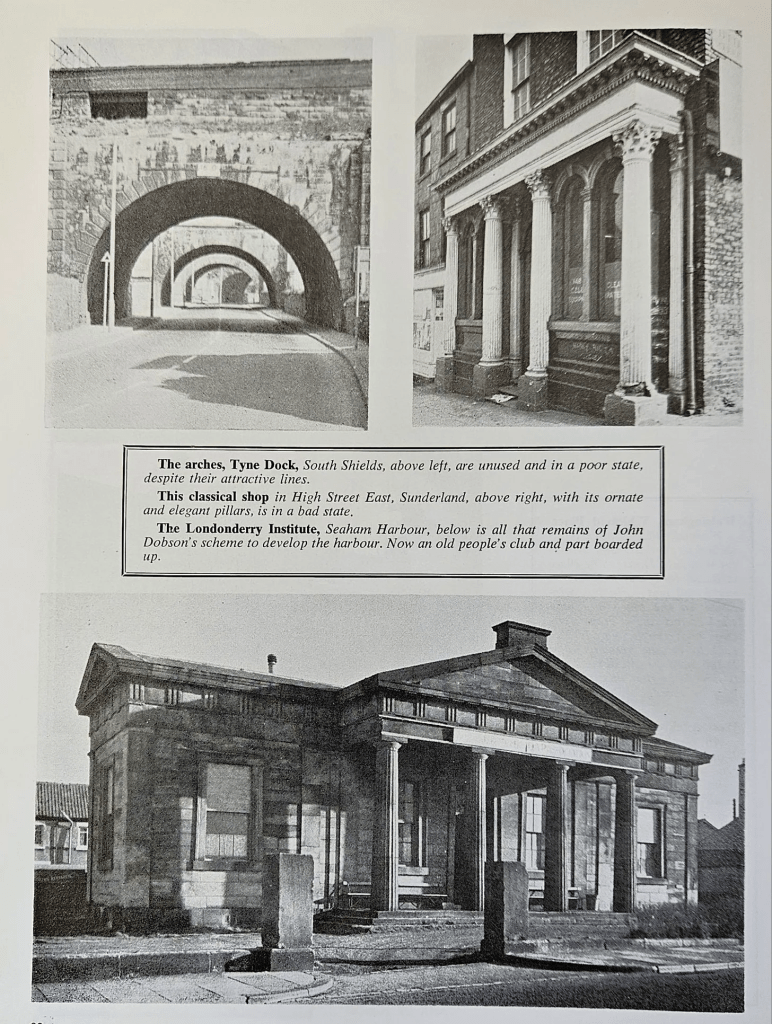
The series of photographs referred to came from Historic Architecture of County Durham by Neville Whittaker and Ursula Clark (Oriel Press) that was about to be published.
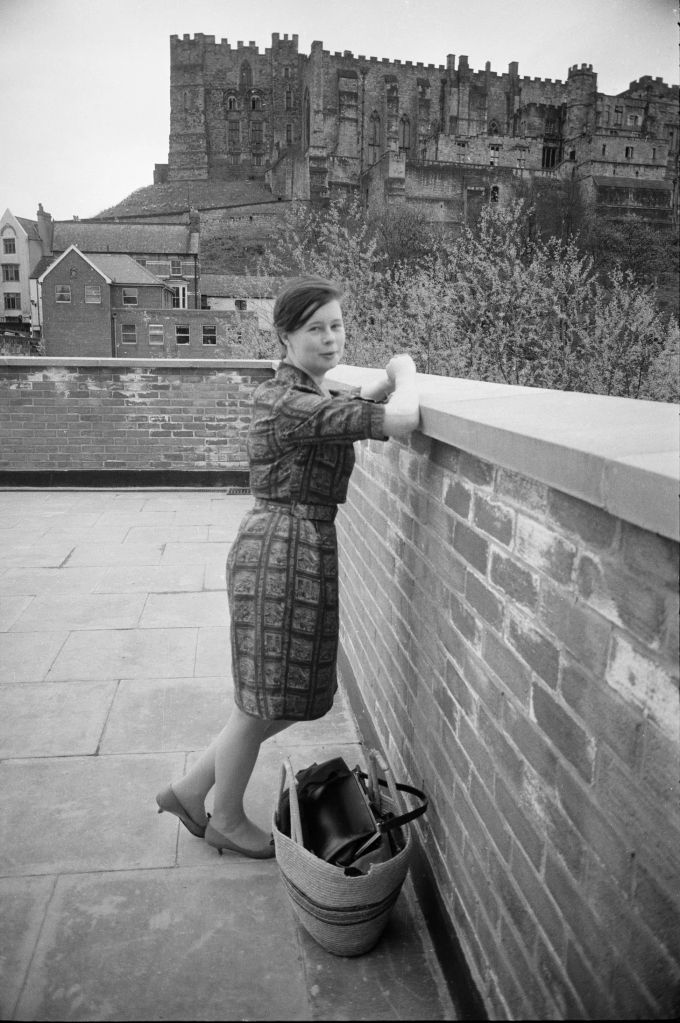
Regular readers will recognise the name of Ursula Clark (1940-2000) as the architectural photographer, who featured in my recent talk for the RPS Historical Group marking the 25th anniversary of her death.
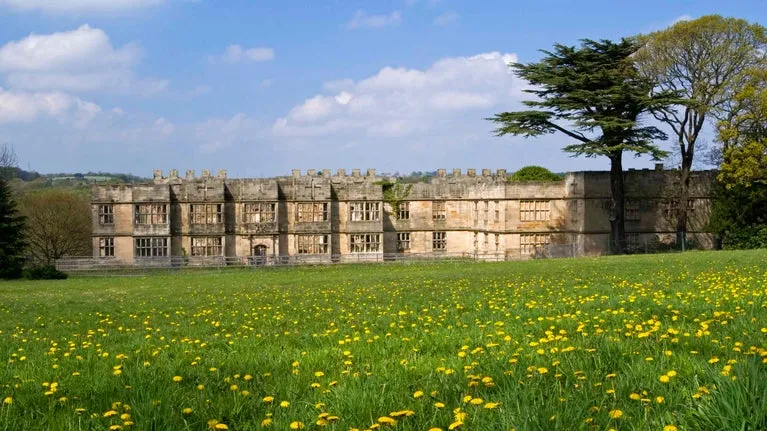
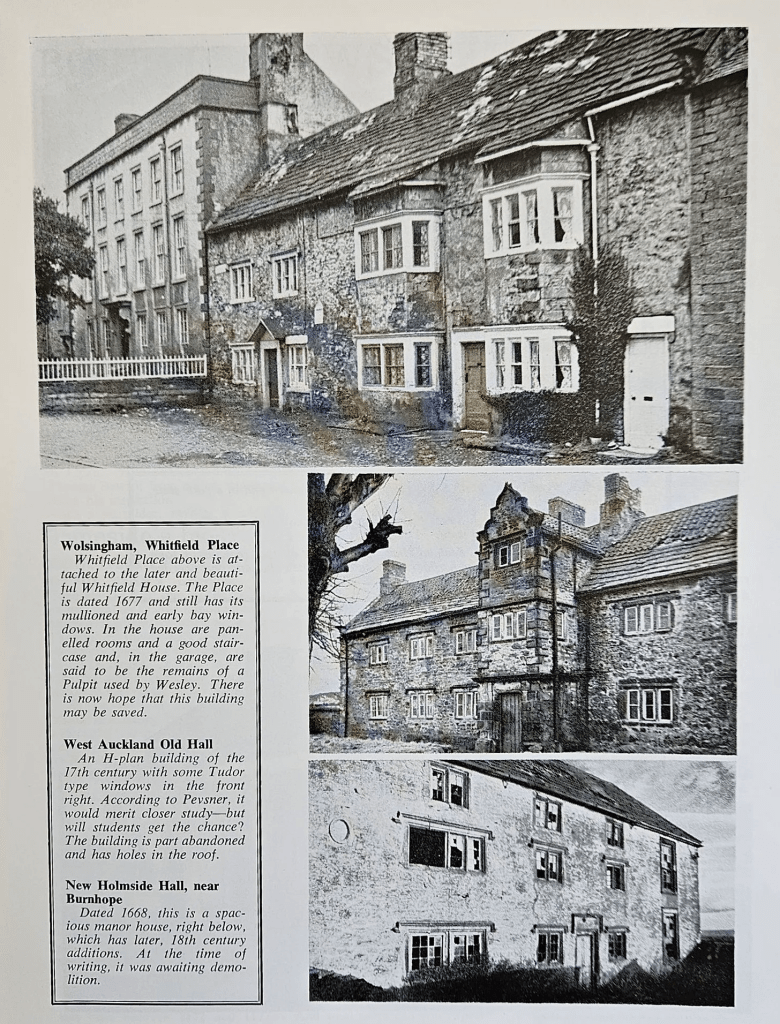
The three-page North Magazine article devoted much of its space to Ursula’s photographs and it is instructive to trace what has happened to the featured buildings in the half century since.
In the years since, all three of the featured properties – Whitfield Place, Wolsingham; West Auckland Old Hall; and New Holmside Hall, near Burnhope – have been lovingly restored to their former glory.
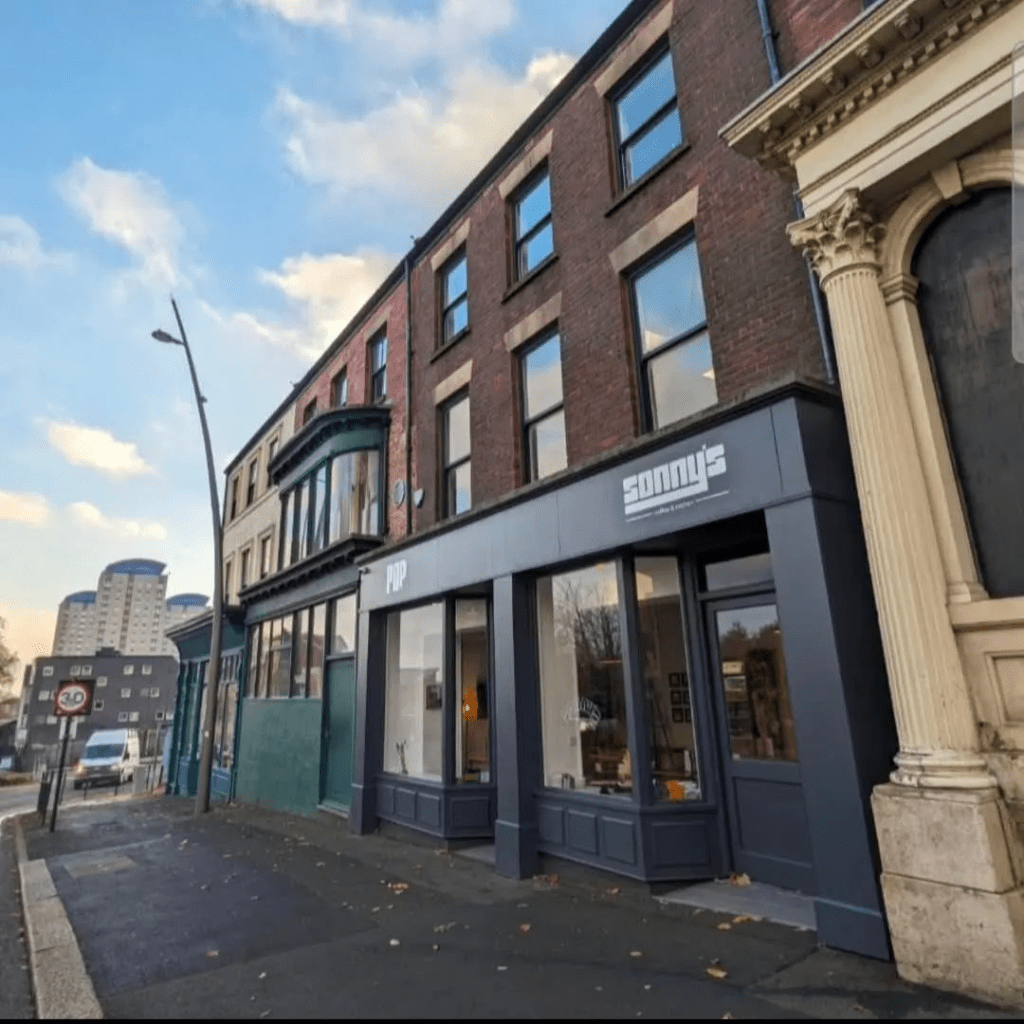
Perhaps the most stunning transformation though is the classical shop front in High Street East, Sunderland (top right below) with its “ornate and elegant pillars” described in 1971 as “in a bad state.”
Thanks to becoming part of Sunderland’s Heritage Action Zone (HAZ), the adjoining terrace initially built as merchants’ houses in the late 18th century is now home to Pop Recs, a café, music and arts venue and community hub.
Photo from Pop Recs Facebook page.
These restorations and reinventions confirm that there is hope for the current crop of endangered buildings of which Newcastle’s Gibson Street Baths is just one.





Leave a Reply