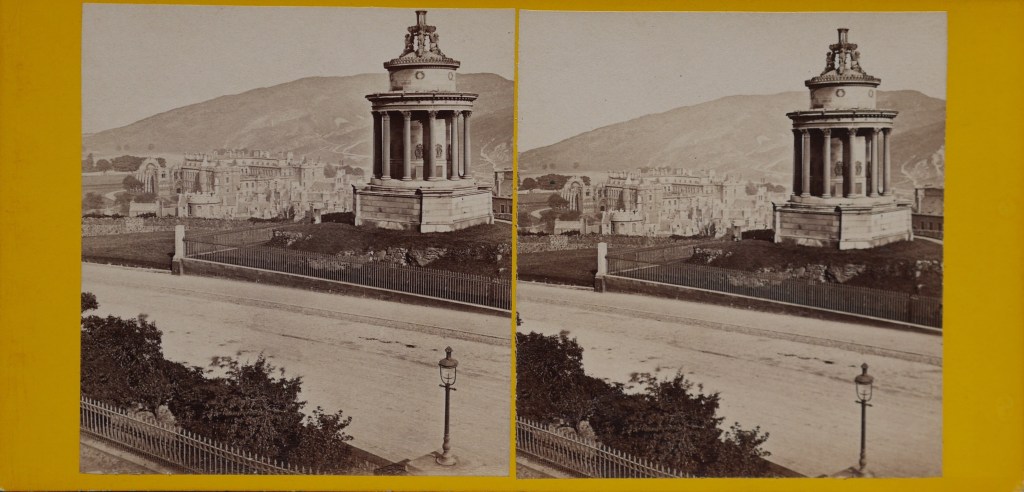
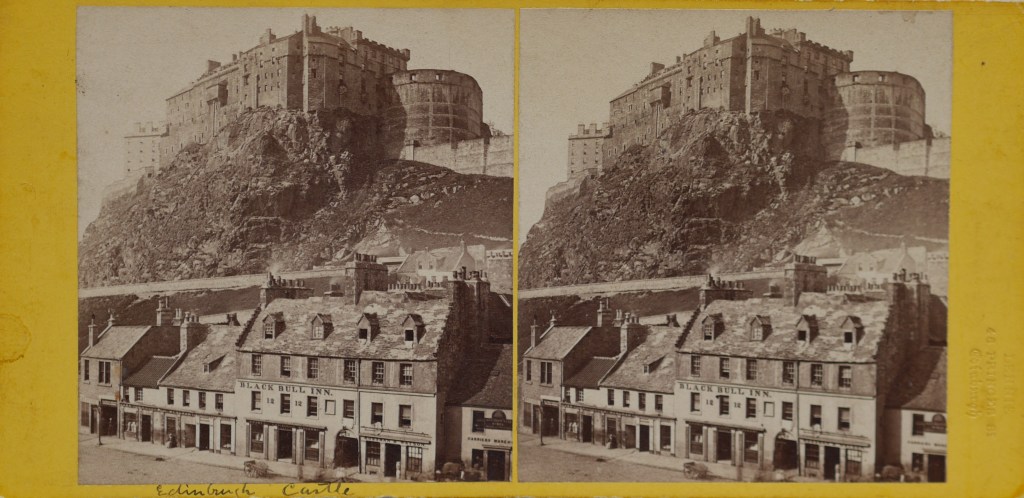
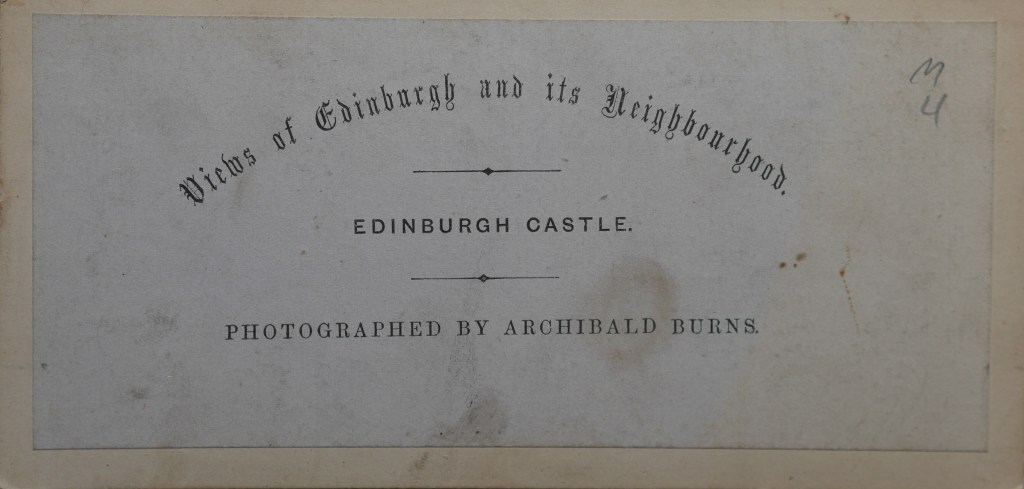
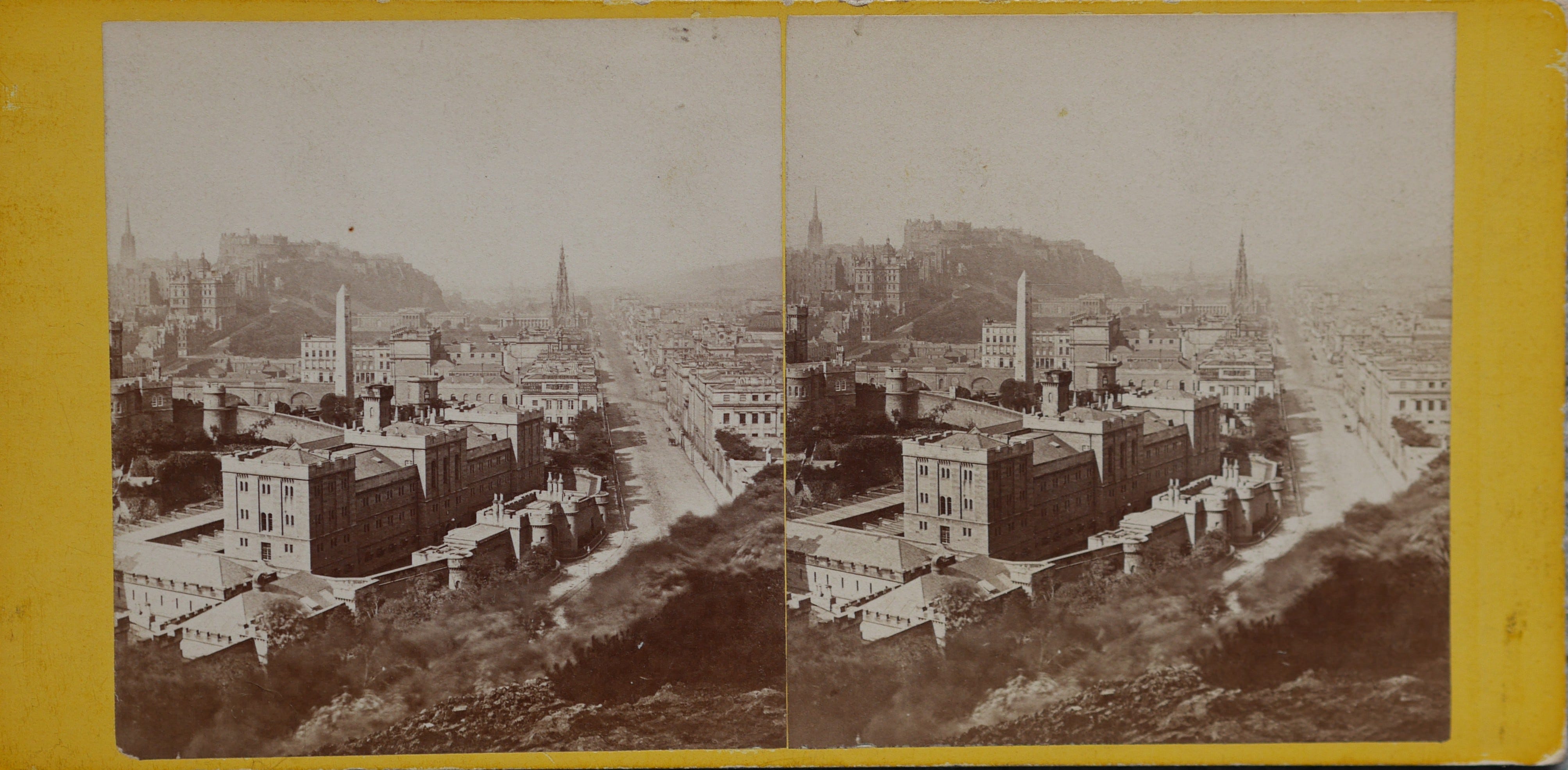
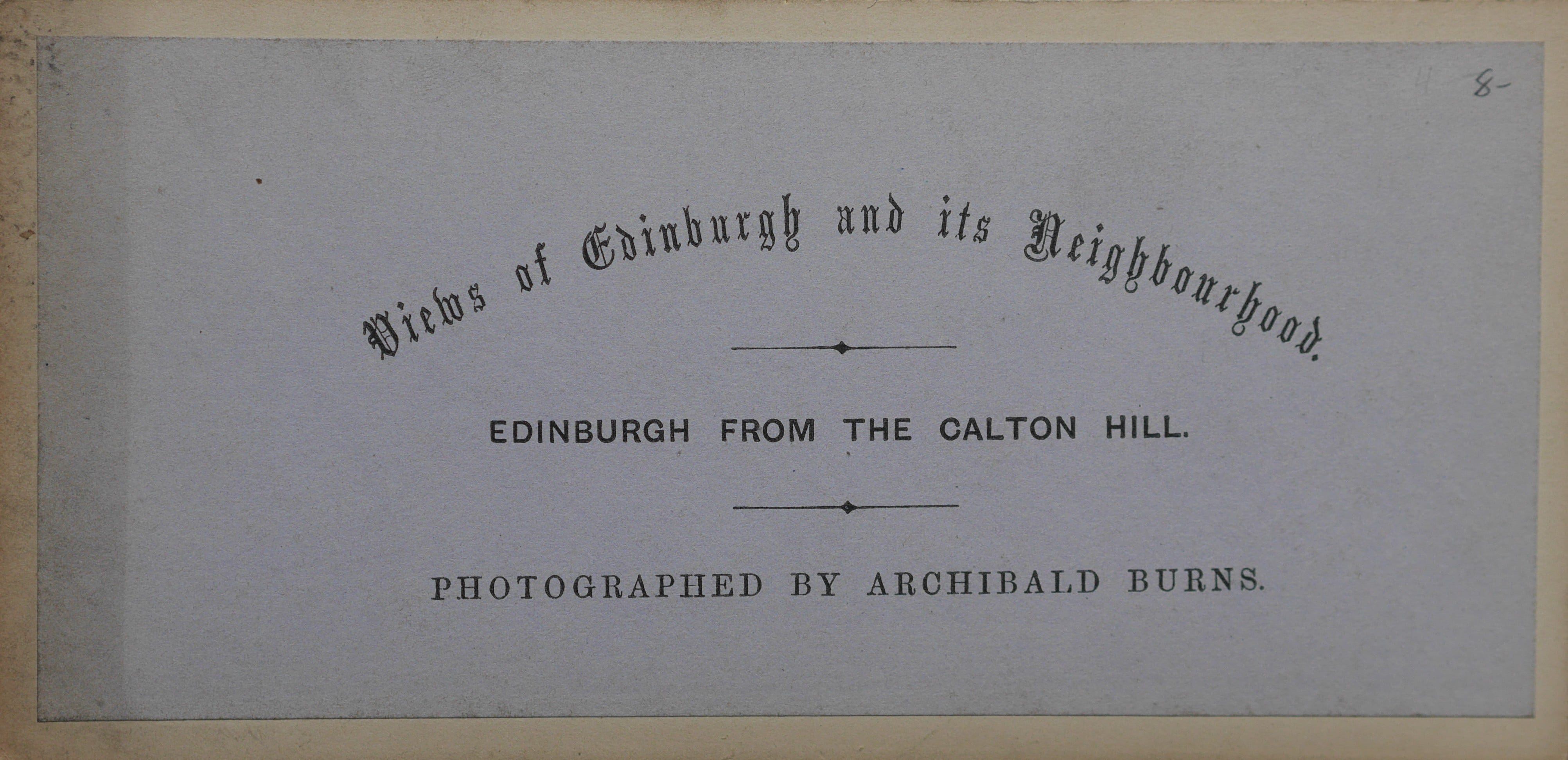
During the 1860s and 1870s, photographer Archibald Burns (1831-1880) produced a popular series of 3D ‘Views of Edinburgh and its Neighbourhood.’
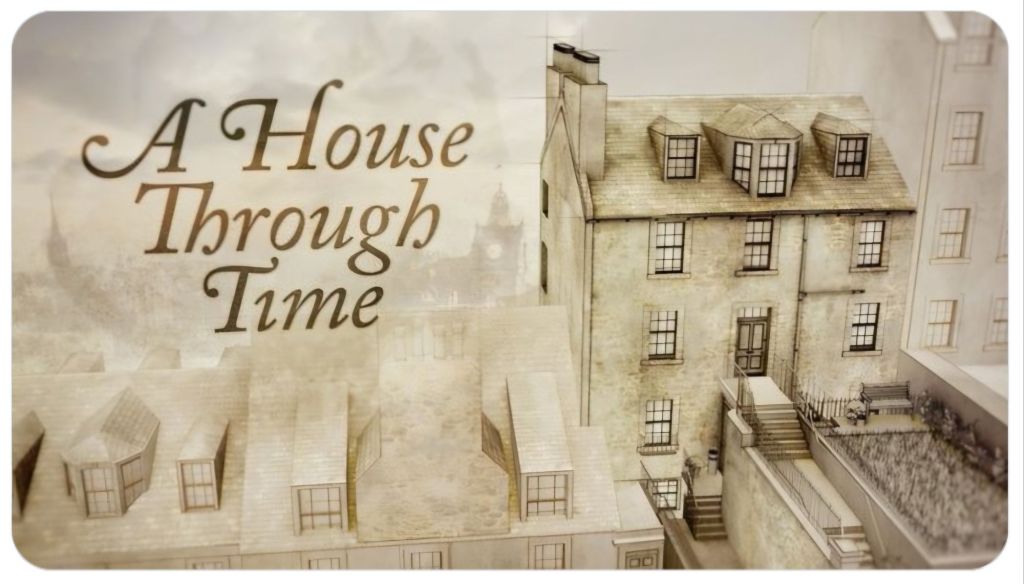
Burns’ story and examples of his stereoscopic photography feature in the latest series of the hit tv show A House Through Time presented by David Olusoga.
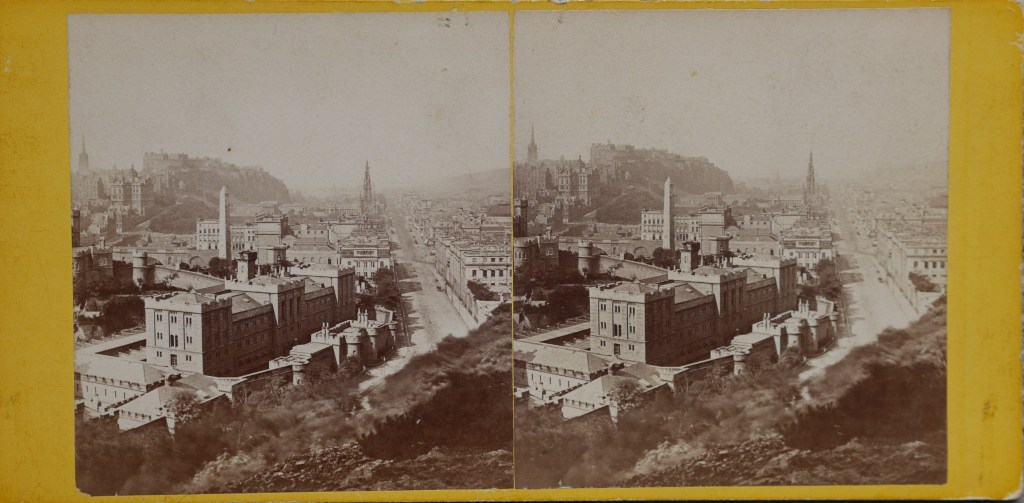
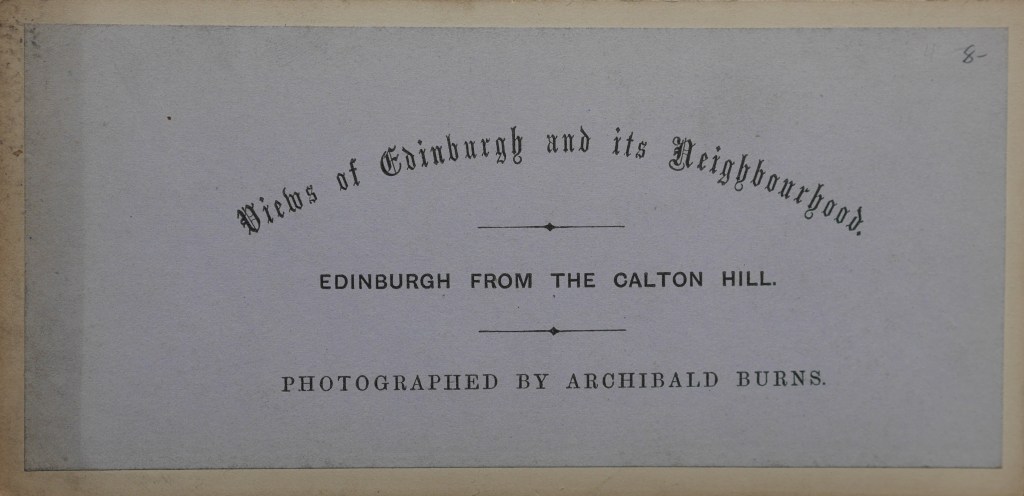
Last week’s Pressphotoman blogpost highlighted one of his best-known ‘views’ looking across the city of Edinburgh from Calton Hill where he lived with his wife Jane at number 22.
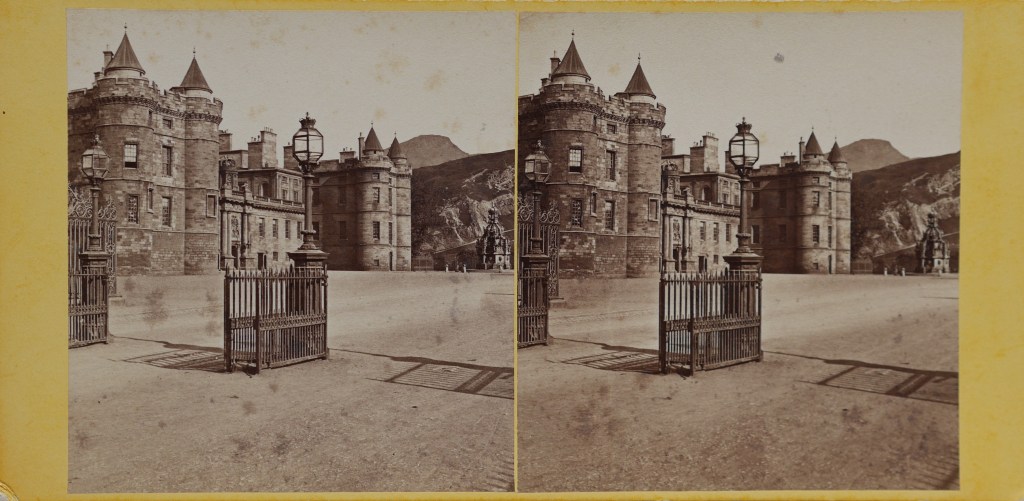
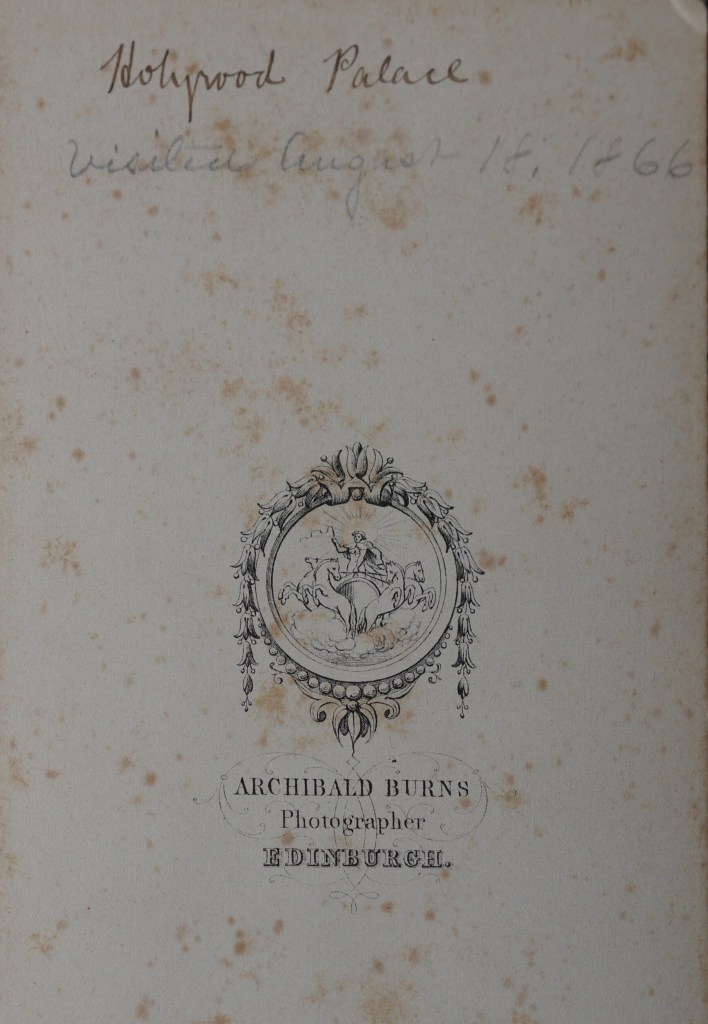
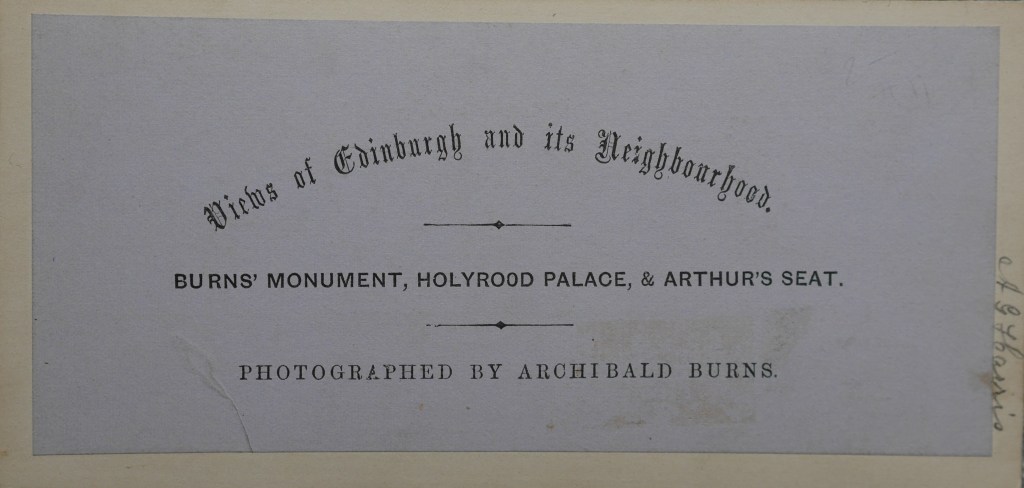
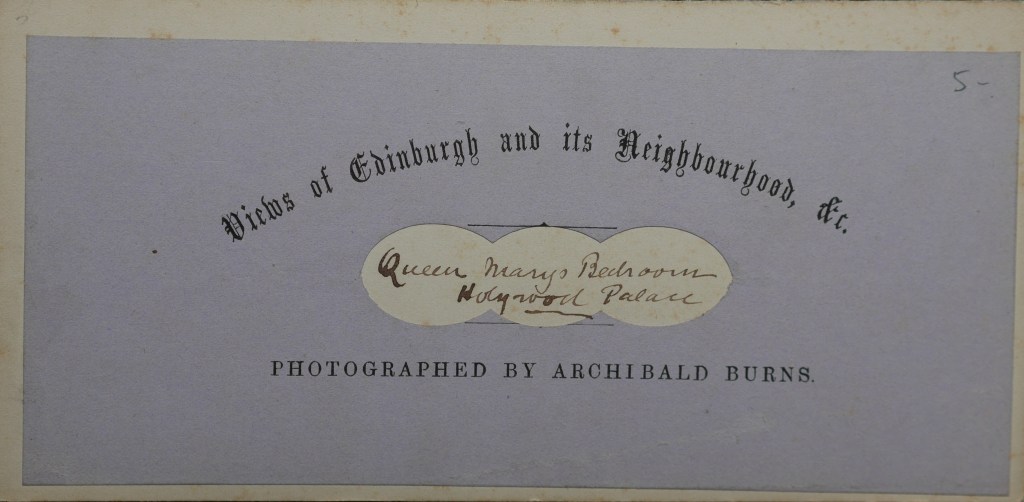
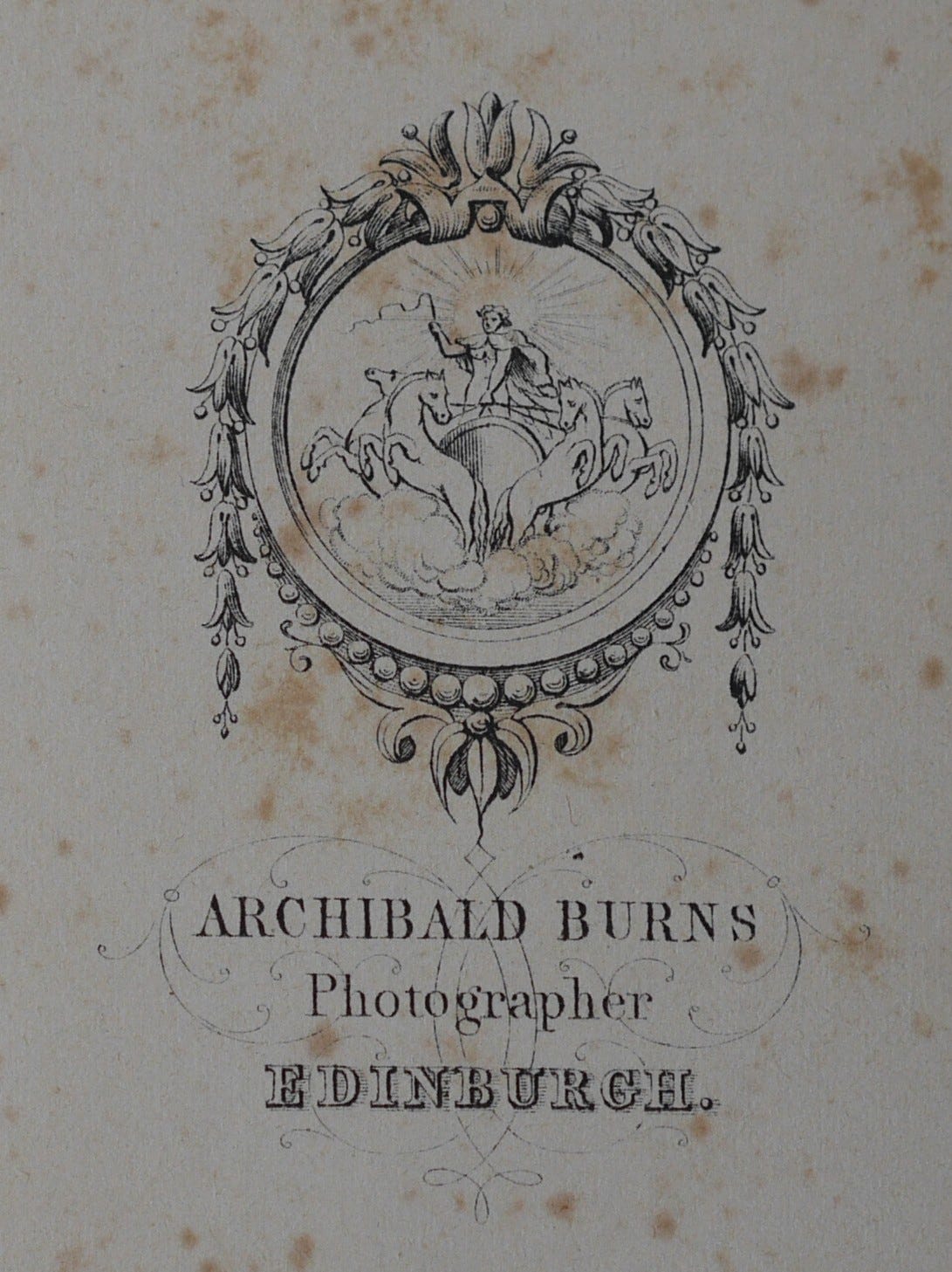
Evidence to support this idea comes from the verso featuring an elaborate stamp together with ‘Holyrood Palace’ handwritten in ink and ‘Visited August 18, 1866’ in another hand in pencil.
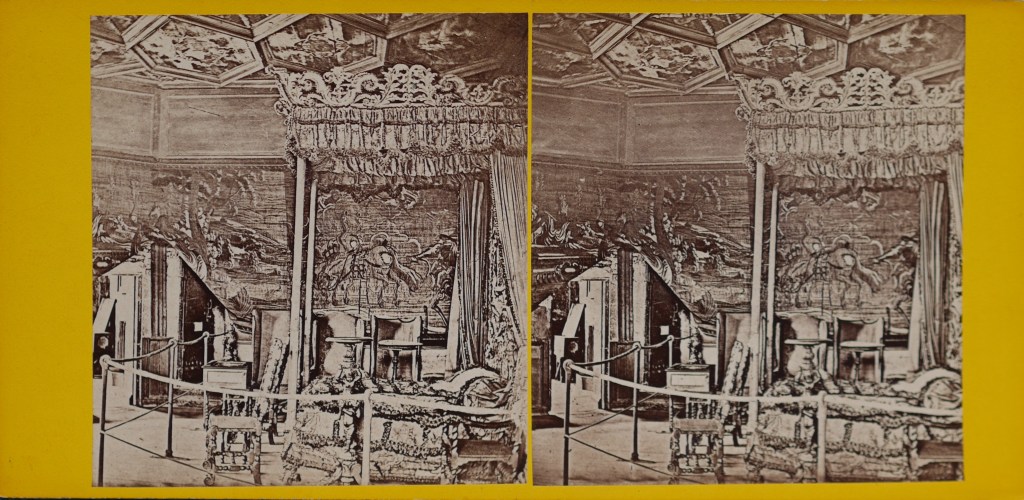
Burns then takes his camera and equipment inside Holyrood to stereograph the bedroom of Mary Queen of Scots, who lived at the palace from 1561 to 1567.
The stereo has an almost engraving-like quality which may be due to the low light levels he would have faced.
Another interesting aspect of the image’s verso is that a previous owner has created their own alternative handwritten title for the card’s verso – ‘Queen Marys Bedroom.’
If you enjoy Archibald Burns’ stereography, his work features in the collections of the National Galleries of Scotland, the V&A in London as well as museums around the world.
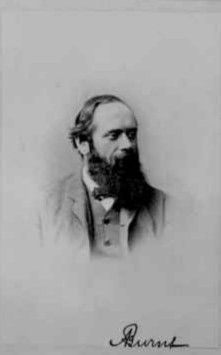
It features the celebrated Edinburgh photographer Archibald Burns (1831-1880), who in 1866 moved with his wife Jane into number 22 Calton Hill.
The programme traces his emergence in the late 1850s as an accomplished amateur photographer who worked by day as a bookseller’s clerk.
Copyright National Libraries of Scotland.
At this point, Burns was a regular correspondent of the weekly Photographic News published in London.
The paper had launched in 1858 and its market was the growing band of amateur photographers in Britain.
As one of its enthusiastic readers, Burns had a pivotal role in the first Stereoscopic Exchange Club launched by the paper the following year.
This aspect of his photographic life was uncovered by Rebecca Sharpe of the Brian May Archive of Stereoscopy (BMAS) in a recent article for Stereo World (volume 51, no. 3; Nov/Dec 2025).
As a keen and skilled stereographer, Burns was already living on Calton Hill where David Octavius Hill and John Adamson had set up their pioneering photographic studio in the 1840s.
This meant he was right at the heart of photographic activity in the city and was a founding member of the Edinburgh Photographic Society.
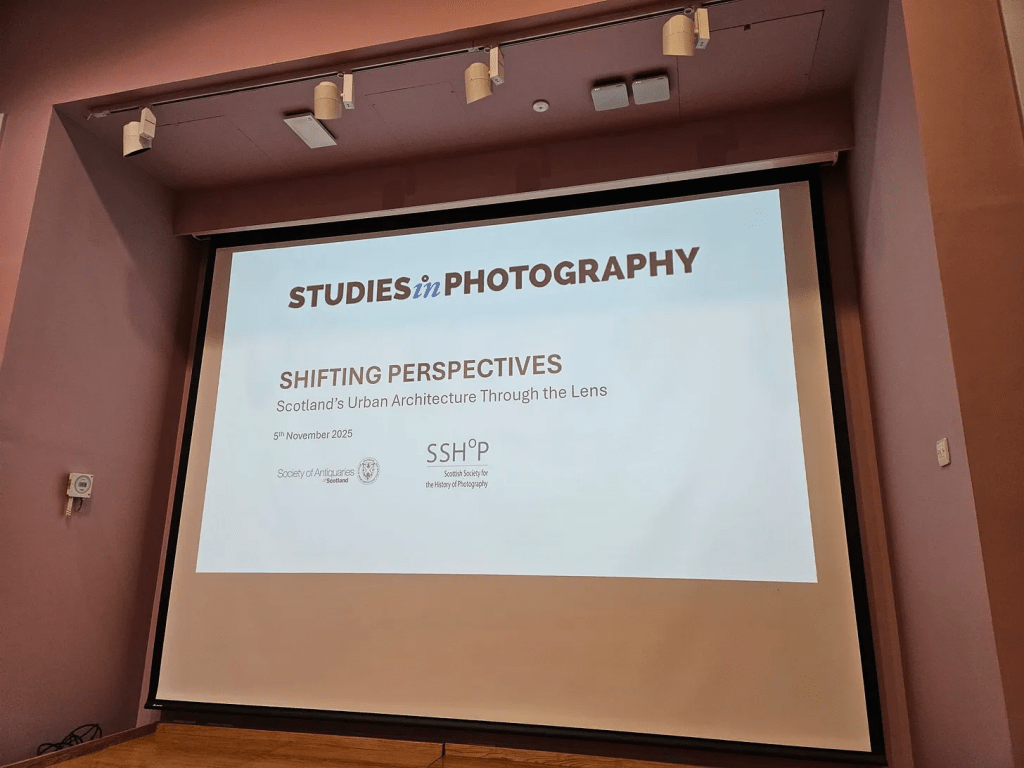
Earlier this month, a conference titled ‘Shifting Perspectives: Scotland’s Urban Architecture Through the Lens’ was held at the National Library of Scotland in Edinburgh.
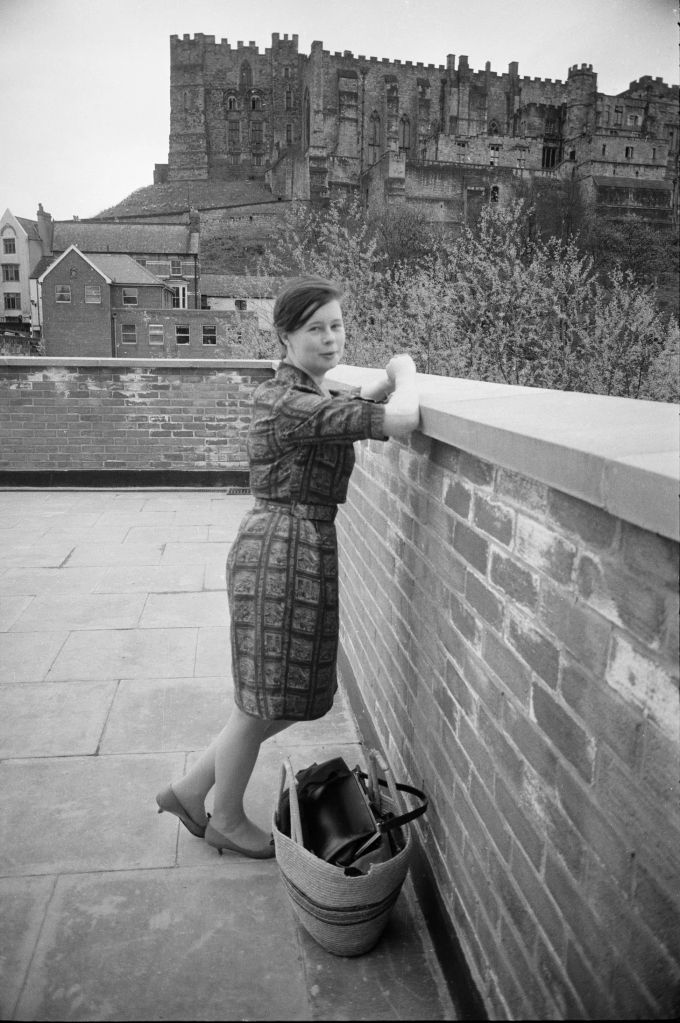
This offered a welcome opportunity to share new research on the architectural photographer Ursula Clark (1940-2000) whose overlooked career has been celebrated on this blog throughout 2025.
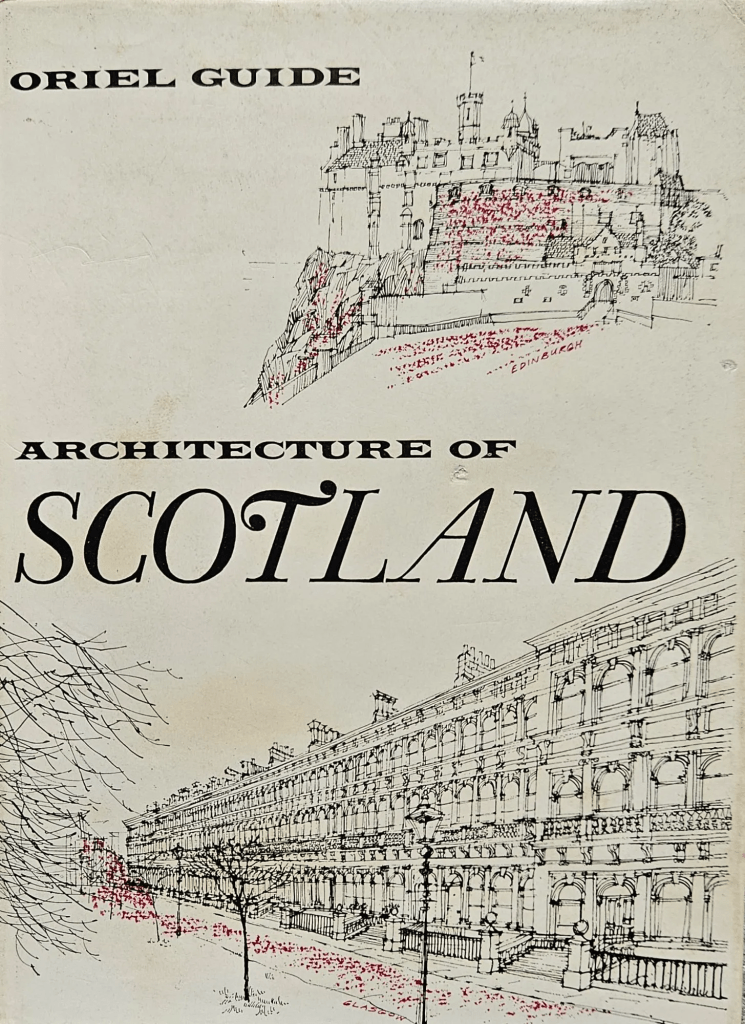
My paper focused on the Oriel Guide Architecture of Scotland (1969) for which Ursula was photographic editor and to which she contributed a number of photographs.
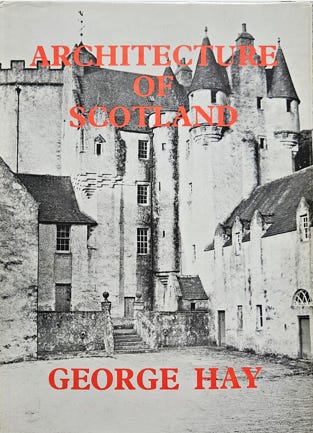
Front cover of Architecture of Scotland by George Hay (Newcastle upon Tyne: Oriel Press, 1969).
As regular readers will know, around 20,000 largely black-and-white negatives form the largest collection by a woman photographer in the care of Historic England.
Around 2,000 images in the Ursula Clark Collection have been digitised and show buildings in England that were previously under-represented including those from her native Newcastle-upon-Tyne and North East England.
However her Scotland images have remained unseen since first being published nearly 60 years ago.
In 1966, Architecture of Scotland was promoted as being “in preparation” by Ursula’s employer, the publisher Oriel Press of Newcastle upon Tyne, indicating the time period when the images were taken.
However, it was 1969 before the book appeared.
Its 96 pages feature nearly 250 photographs interwoven with text supplied by the Scottish architectural historian George Hay (1911-1986).
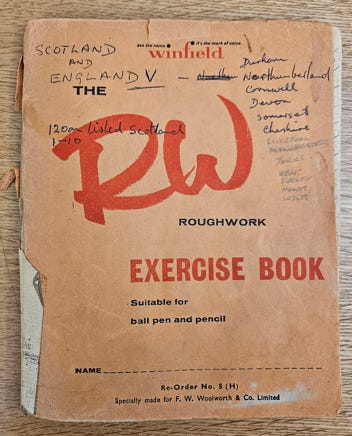
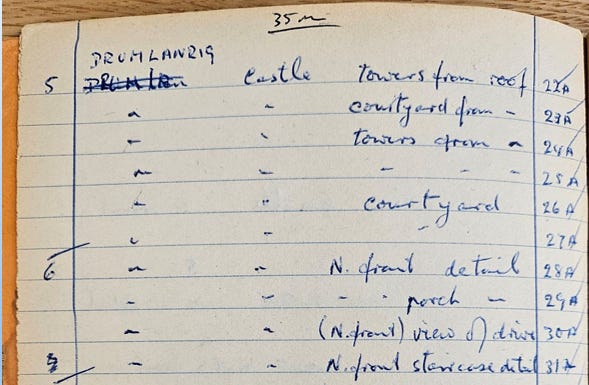
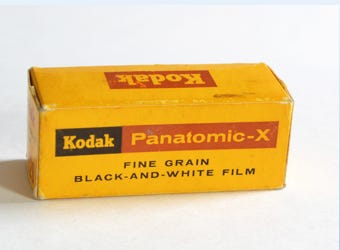
With the help of the team at Historic England’s archives in Swindon and using Ursula’s detailed shotlists, it has proved possible to identify a number of the Scottish locations that she photographed as well as the type of 35mm film she used.
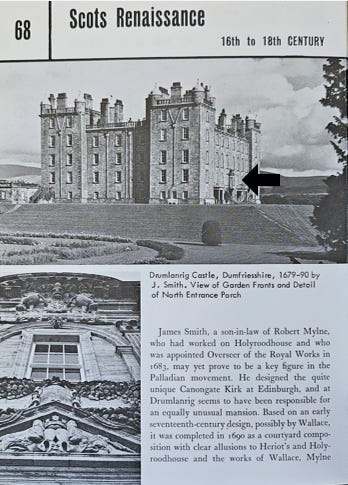
Amongst the entries was Drumlanrig Castle in Dumfriesshire (1679-1690) where a sequence was photographed featuring the building in both wide-shot and close-up.
One shot in particular stands out featuring the ‘North front porch detail’ (negative no. 29A), a perspective arrowed in the page below.
From Architecture of Scotland (Newcastle upon Tyne: Oriel Press, 1969).
In this example, her use of Kodak Panatomic-X fine grain black-and-white film captures the intricacy of the stonework beautifully.
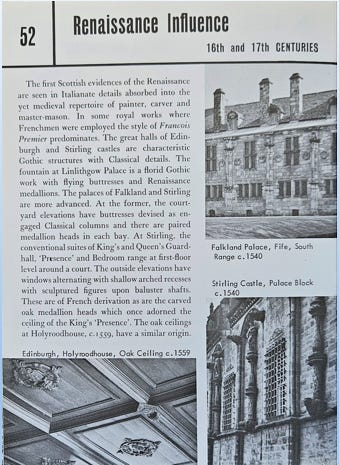
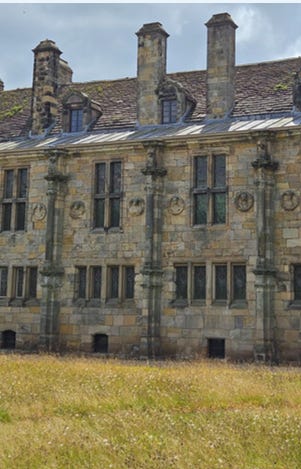
Another castle she photographed was Falkland Palace in Fife.
This summer, I had an opportunity to stand in Ursula’s footsteps and take a shot from a similar position of the South Range (top right below) using my Samsung camera phone
The main difference in the views taken 6 decades or so apart is the length of the adjoining grass.
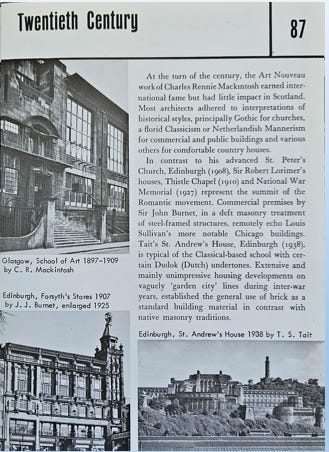
Such is the richness of Scotland’s architecture that comparatively few pages in the Oriel Guide are given over to recent buildings photographed by Ursula such as the Glasgow School of Art (1897-1909, top left) and St. Andrew’s House, Edinburgh (1938, bottom right).
From Architecture of Scotland (Oriel Press: Newcastle upon Tyne, 1969).
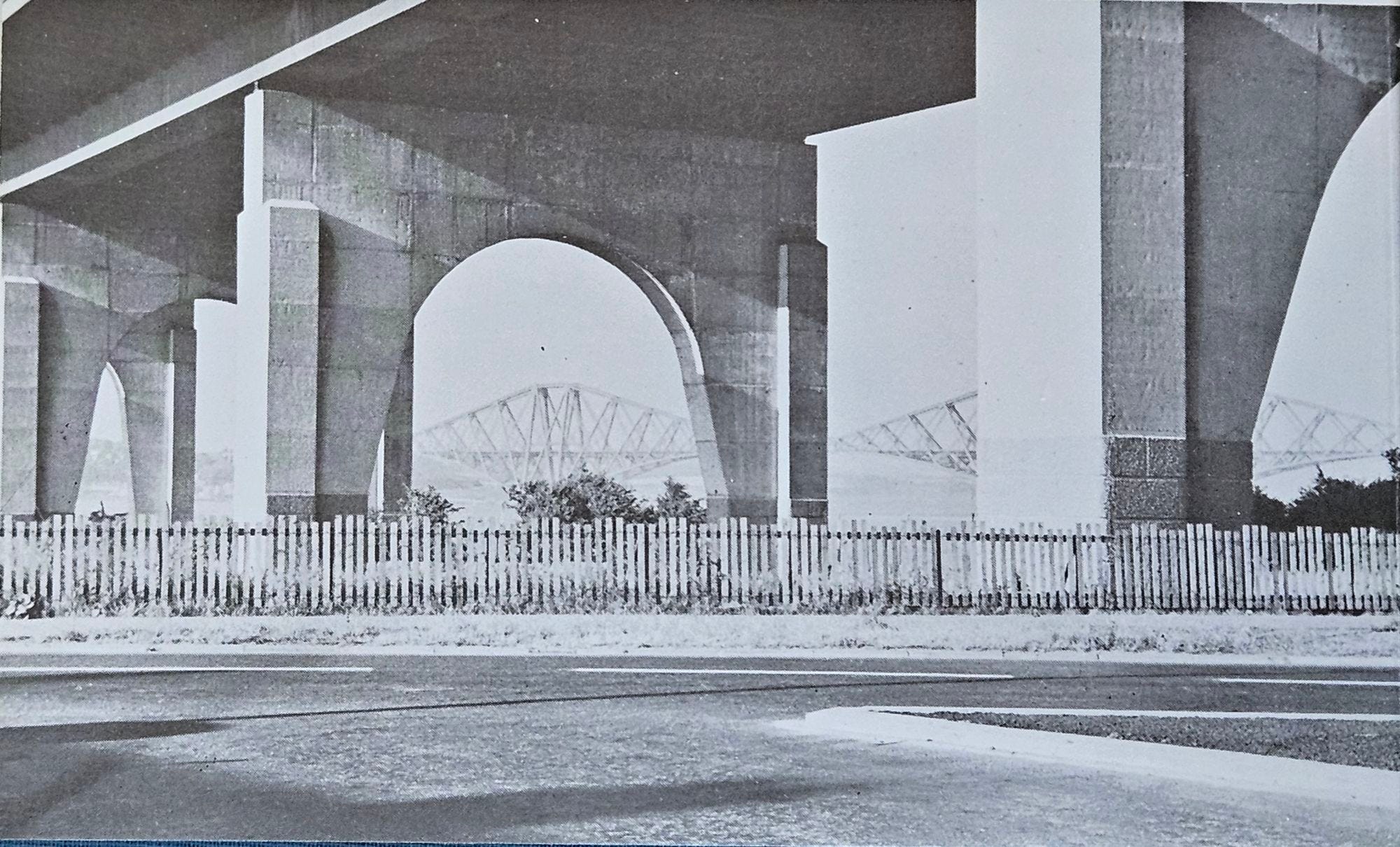
Perhaps my favourite Scotland shot of Ursula’s features a structure that emerged in the landscape as her architectural photography career was taking flight.
The shot list records a sequence featuring the Forth Road Bridge (1958-1964) and culminating in a shot that also features the railway bridge (1890) in the far distance.
When the book was published, Architecture of Scotland was well received by both critics and readers with the British Book News highlighting “Ursula Clark’s magic as photographic editor”.
Following Oriel Press’s takeover in 1973 by Routledge & Kegan Paul, a second enlarged and revised edition with a new cover featuring Midmar Castle (1570) was published four years later.
Second-hand copies of Architecture of Scotland in both editions can be spotted from time to time on book websites such as AbeBooks.
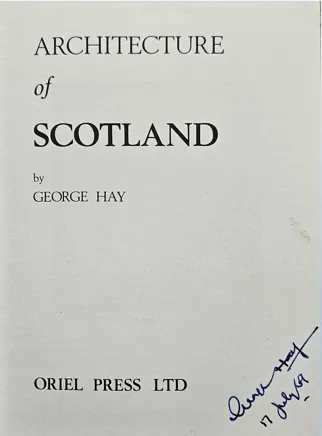
The first edition copy that I managed to obtain was even signed by George Hay on 17th July 1969, just a few days before the first moon landing.
Despite a lack of the co-credit that she received for several other Oriel Guides, the quality of Ursula Clark’s contribution to Architecture of Scotland still shines through.
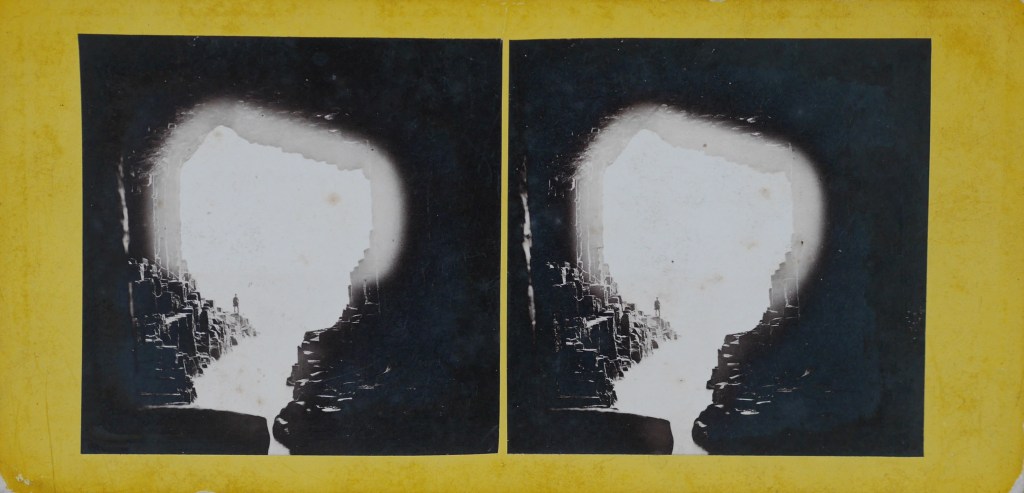
So it was perhaps written in the stars that the reverse view, an ‘Interior of Fingal’s Cave, Staffa,’ by the same G. W. Wilson of Aberdeen has now joined my collection.
To establish its provenance, I again consulted Roger Taylor’s authoritative study George Washington Wilson (1823-1893): Artist and Photographer (London Stereoscopic Company, 2018).
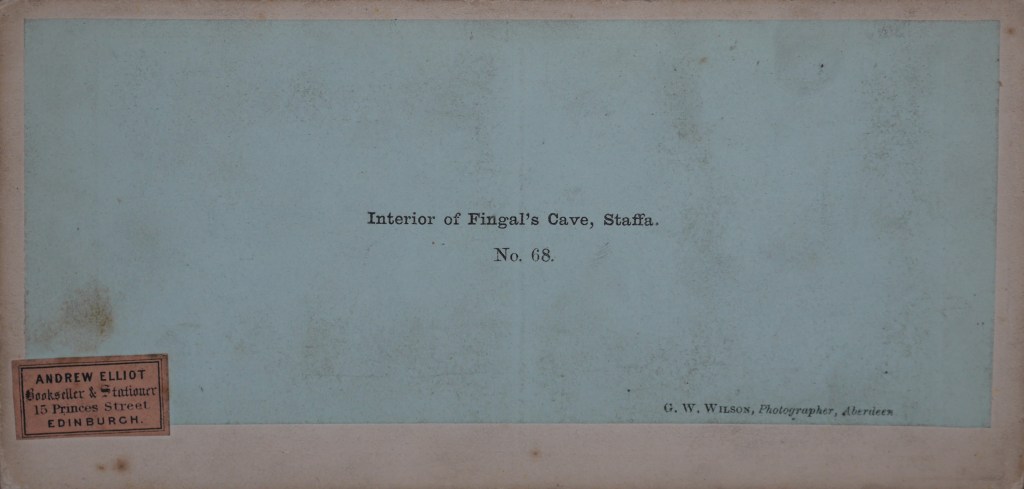
The title, listed as ‘No. 68,’ is included in ‘Wilson’s 1863 List of Stereoscopic and Album Views.’
Again, the verso featured the view’s title and number plus the stereographer’s credit.
Again, it uses blue coloured paper to stop the stereocard from curling.
The first thing that strikes the viewer is the technical challenge facing the stereographer in capturing this spectacular scene from the inside out.
Presumably, Wilson used all the available natural light to illuminate the vast space.
As in ‘Fingal’s Cave, Staffa,’ he positioned a human figure at the entrance to give a sense of scale.
Detail from ‘Interior of Fingal’s Cave, Staffa’ by G. W. Wilson, Aberdeen.
Though the card is the same size, the two albumen paper prints are slightly smaller, suggesting that Wilson may have used a different camera.
An added bonus for the photohistorian is the presence on this card’s verso of a seller’s stamp, that of ‘Andrew Elliot, Bookseller & Stationer, 15 Princes Street, Edinburgh.’
Seller’s stamp on verso of ‘Interior of Fingal’s Cave, Staffa’ by G. W. Wilson.
Trade directories reveal that his business began operating from one of the city’s most famous locations in the late-1850s.
Elliot’s shop, directly opposite Edinburgh’s Waverley railway station, offered easy access to visiting tourists, who were Wilson’s intended market for such stereos.
Andrew Elliot, who died in 1921 aged 92, was a significant figure in the history of Scottish photography.
A noted collector, his calotypes by pioneering Scottish photographers David Octavius Hill and Robert Adamson were used to illustrate the first monograph about their partnership published in 1928.
Elliot’s family subsequently bequeathed his remarkable photography collection to the National Galleries of Scotland in 1950.
Today’s stereo is titled “Entrance to Chapel Royal at Holyrood” and takes us to another set of abbey ruins.
This time, we’re in the grounds of the Palace of Holyroodhouse, the official residence of King Charles III in Edinburgh and home of Scottish Royal History.
Though there is no “J.E. Ellam” credit in evidence, the verso features the distinctive handwriting of James Edward Ellam (1857-1920) whose amateur stereos from the 1890s are the focus of this blogpost-a-day series.
As with “Furness Abbey and “Whitby Abbey” amongst others in this recently discovered cache of his work, James uses part of the surviving structure to act as a frame for the 3D view he is constructing.
In this instance, the weather has co-operated sufficiently to allow him to capture the effect of shadows on the ground in the middle distance.
It’s a timeless view that has been captured by many artists and photographers down the years and continues to be a popular tourist attraction.
The only indication that this stereo was taken in the mid-1890s are the two women in their full-length dresses looking at the memorials on the far wall.





Leave a Reply