When he married in 1861, Gibson’s stated profession was ‘photographer’ and he soon established his own business in Hexham offering portraits and local views.
Advertisement from Hexham Courant, 14th September 1864. From British Newspaper Archive.
One of the gems of Hexham is its abbey, a building dating back to the late 12th century that is well worth a visit.
Gibson was well aware of the abbey’s appeal and this carte de visite dating from the early years of his career captures the magnificence of one of its transepts.
Yevonde: Life and Colour at Newcastle’s Laing Art Gallery closes later this week, offering a last chance to view these eye-catching portrait photographs in the flesh.
Exterior of Laing Art Gallery, Newcastle upon Tyne. 12th April 2024. Author’s photograph.
Pressphotoman reviewed the exhibition when it opened in the North East last November after a highly-successful launch at the newly-refurbished National Portrait Gallery in London.
A few days ago, the exhibition’s curator Clare Freestone was at the Laing to present an illustrated talk about Yevonde’s career in photography and explain how the show came into being.
Among several highlights and behind-the-scenes revelations was a video clip from a 1973 Thames Television programme presented by David Frost on the theme of octogenarians.
Then aged 80 and among the show’s youngest participants, Yevonde was briefly interviewed by the celebrated presenter about three of her famous colour portraits.
These included one of the writer George Bernard Shaw taken in 1937 and which the studio audience immediately recognised as a familar face by shouting out his name in unison.
Two stills taken from the Frost programme featured in Ronald M. Callender’s article ‘Mrs Middleton: The Remarkable Lady” (The PhotoHistorian No. 195 / Spring 2023, p. 19).
So it was revelatory to hear Yevonde’s speaking voice for the first time and get a brief glimpse of her sense of humour and engaging personality in action.
Rights issues don’t allow the clip or any visuals to be reproduced here, but Clare’s talk was further proof that such events accompanying exhibitions are well worth seeking out for ‘exclusives.’
Yevonde: Life and Colour at the Laing Art Gallery, Newcastle upon Tyne closes on Saturday (20th April 2024).
A recent online talk by contemporary wet plate photographer Tony Richards for the Royal Photographic Society’s Historical Group happened at a timely moment.
His presentation (‘Contemporary Wet Plate Collodion Photography’ / 2nd April 2024) coincided with the arrival in my collection of a second-hand book titled Photographic Recipes and Formulae.
Photographic Recipes and Formulae published in 1907.
As its title suggests, the book published in 1907 informs photographers about the basic principles of chemistry integral to taking photographs from the medium’s earliest days.
Its contents page (annotated ‘Croydon Library’ in an unknown hand) lists a total of ten sections starting with “Developers for Plates and Films” and working its way through various photographic processes.
Contents page of Photographic Recipes and Formulae (1907).
Though traditional methods are an area of interest to photohistorians, mine in this particular book was prompted by a detail on its frontispiece: that of the credit ‘Compiled by Richard Penlake.’
Frontispiece of Photographic Receipes and Formulae (1907).
As regular readers of the Pressphotoman blog will be aware, ‘Richard Penlake’ was a pen-name used by the photographer and author Percy R. Salmon FRPS (1872-1959).
In its catalogue, the British Library lists six titles credited to Richard Penlake, but this particular one seems to have escaped the Deposit Library system and has now been added to our growing family collection of his publications.
This is slightly surprising as the BL catalogue does include a Richard Penlake title, Trick Photography, by the same publisher, Marshall, Brookes & Chalkley, Ltd., of Harp Alley, Farringdon Street, London, EC, that appeared the previous year (1906).
Indeed, an advertisement for Trick Photography billed as “an amusing and instructive book” appears on the flyleaf of Photographic Recipes & Formulae.
Advertisement for Trick Photography from flyleaf of Photographic Recipes & Formulae (1907).
This flurry of activity occurred at a point in Percy R. Salmon’s career when he had recently stepped down after five years as Editor of Photographic News, a weekly trade paper.
Instead, he was working as a freelance author producing articles and mass market handbooks aimed at amateur photographers.
It was a change that culminated in several popular titles including All About Photography (1925) published in multiple editions by Ward, Lock & Co., into the 1950s.
According to William C. Darrah’s ‘The World of Stereographs’ (1977, p. 187), twelve tissues illustrating the life of Jesus were published in France in the late 1860s.
He states that these paintings were copied as stereographs and then repeatedly reproduced as views in the decades that followed.
Darrah also adds that “great quantities of these were sold in the United States until 1915.”
The set in my collection features 24 scenes published by Underwood & Underwood (U&U) starting with ‘The Nativity’ and ending with ‘The Ascension.’
They came into my collection almost by accident, arriving unadvertised together with a wooden U&U ‘Perfecscope’ viewer that I purchased several years ago when my interest in stereoscopic photography was starting.
If you know more about the ‘Life of Christ’ stereo set and have seen examples produced by other publishers, please use the comments box below.
One of the joys of photo collecting is looking for clues that may help confirm the provenance of an image.
Last week’s blogpost about portraits of Mrs. Susan Davidson of Ridley Hall, Northumberland – one taken in Paris by Alexandre Ken and another by W. & D. Downey of South Shields – suggested further research questions.
What immediately caught my eye in both portraits was the distinctive armchair.
Such pieces of furniture were used to provide physical support to the standing “sitter” whilst the camera plate was being exposed and to avoid any blurring.
In addition, the floor covering in the immediate foreground of both photographs has a common pattern and design.
This evidence suggested that the same studio props were used by Downey for both portraits and (possibly) the same location too.
Armed with this information, I reviewed my collection of newspaper cuttings about Downey’s activities during its formative years.
According to the North & South Shields Gazette (6th September 1860), “Mr. J.A. Roebuck, Esq., MP” was amongst “the noblemen and gentlemen” photographed during Downey’s “first professional visit to London.”
To underline this, the National Portrait Gallery, London has another cdv of Mr. Roebuck attributed to Downey in its collection.
Visibly from the same London sitting, the MP’s cane is leant against the backdrop whilst his top hat sits nearby on a small table.
As previously described, the same armchair and floor covering are on view.
The NPG dates its Roebuck cdv as “early 1860s” and its location as “unknown place (photographers’ studio).”
Where this “unknown place” was located is difficult to say, though it may have been a space borrowed for the occasion.
Afterwards, the Downey brothers, William and Downey, returned to the North-East of England and, by Christmas 1860, were displaying portraits from their London visit in the South Shields premises that were their base.
By the following Spring, their Roebuck portrait was among a fresh range of carte-de-visite being sold to the public, permission having been obtained from some of their London sitters.
In contrast, Mrs. Davidson’s portrait, though possessing many physical similarities in style and presentation, appears to have involved a more private arrangement.
As her later Parisien portrait by Alexandre Ken suggests, she was clearly attuned to the latest trends in portrait photography.
Evidence obtained for this blogpost suggests that she may have taken advantage of Downey’s presence in London in September 1860 to make her own statement about image and status.
Celebrations marking International Women’s Day earlier this month revealed an intriguing French portrait photograph from the 1860s.
In Britain, the National Trust shone a spotlight on Susan Davidson (1796-1877) calling her a “Victorian Wonder Woman.”
Mrs. Davidson’s crowning achievement is Allen Banks and Staward Gorge, a woodland estate in rural Northumberland to which she devoted more than three decades of her life.
To celebrate International Women’s Day, the NT’s Allen Banks and Staward Gorge page on Facebook posted this photograph of Mrs. Davidson.
It was captioned with her full married name, Susan Hussey Elizabeth Davidson, together with the credit “A. Ken. Phot.”
Alexandre Ken (1828-1874) was a photographer with a studio in the Monmartre district of Paris, suggesting a visit by Mrs. Davidson to the French capital to have her portrait taken.
She was not alone. Ken’s portraits of British society figures and aristocracy feature in the National Portrait Gallery, London, and he is described as being “active in the 1860s and 1870s.”
His image of Mrs. Davidson caught my attention as I had previously come across a portrait in a similar style during my ongoing research into the photography firm of W. & D. Downey.
Titled “Mrs. Davidson of Ridley Hall,” the credit in the bottom left cited “W. & D. Downey, South Shields” as the photographer.
This information enables the portrait to be dated prior to October 1861 when the Downey brothers, William and Daniel, first opened a studio in neighbouring Newcastle upon Tyne.
Both images successfully capture a woman, then in her sixties, who was evidently a force of nature, shaping and managing the large Ridley Hall estate.
Tomorrow (12th March) marks the 152nd anniversary of the birth of photographer and author Percy R. Salmon FRPS (1872-1959).
In 2022, with the support of the Royal Photographic Society, a short video about his life and career was produced to mark his 150th.
For more than six decades, Mr. Salmon was both a member and fellow of the RPS, sharing his knowledge and expertise through the medium of books, illustrated lantern slide lectures and articles.
2022 video produced by the Royal Photographic Society about Percy R. Salmon FRPS (1872-1959).
During his lifetime, several eminent photographers turned their lenses on Mr. Salmon as a subject.
Among them was H.D. (Henry Donald) Halksworth Wheeler FRPS (1878-1937) known professionally as Halksworth Wheeler.
His studio in Folkestone, Kent produced this signed print of Mr. Salmon, probably during the 1920s.
Due to its age, the image has slightly oxidised, but it is still possible to enjoy the artful pictorialist style that Halksworth Wheeler brought to his photography.
The men’s paths are likely to have crossed as active members of the RPS including the society’s annual exhibitions which featured their work in both 1908 and 1914.
Halksworth Wheeler’s eminence as a photographer is more widely reflected in the collection of the National Portrait Gallery, London.
Over the weekend, a trip to the Glasshouse International Centre for Music (formerly Sage Gateshead) had a welcome photographic spin-off.
It offered an opportunity to look at Newcastle from across the River Tyne and see how much has changed since a stereographer captured the same scene in the 1860s.
Here’s that stereo from my collection. There is no identifying photographer or company credit on either front or verso.
From left to right, they are the Castle Keep with its crenellated battlements, the Greek Doric order Moot Hall opened as a courthouse in 1812 and St. Nicholas’ Church with its distinctive lantern tower.
On the quayside, a masted sailing ship is tied up alongside various smaller craft.
A dock crane is visible to the left and groups of people are huddled together amid wooden huts and stalls to the right.
The stereo, though difficult to date precisely, is similar in style and presentation to that of the Stephenson Memorial (unveiled in 1862) featured in a recent Pressphotoman blogpost (5th February 2024).
By way of comparison, here is a location photograph taken over the weekend from roughly the same position using a Samsung Galaxy phone.
View of Newcastle-upon-Tyne from the Glasshouse, Gateshead. Author’s photo. 2nd March 2024.
Still visible between the towers of the Tyne Bridge (opened in 1928) is St. Nicholas Church (now Cathedral), whilst the Castle Keep can also be glimpsed between the road and the curve of the metal girders above.
The Moot Hall, now a grade 1 listed building, is obscured by the bridge structure.
Down on the quayside, the sailing ships may have gone, but the buildings with their curved architectural sweep and topped by a white roof rotunda remain intact from the 1860s.
Much of the quayside area was devastated by a huge fire in 1854, so it is interesting to see buildings that survived, captured photographically around 160 years apart.
A new exhibition has just opened at the Photographers’ Gallery in London celebrating the career of photojournalist Bert Hardy (1913-1995).
Hardy is best-known for his work with the ground-breaking Picture Post and for images that still appear in newspapers, magazines and online.
What is exciting about the Photographers’ Gallery exhibition is that it offers an opportunity to see a range of photographs drawn from his entire career.
Promo video for “Bert Hardy: Photojournalism in War and Peace” at the Photographers’ Gallery, London.
One of the first Pressphotoman blogposts (15th December 2022) concerned The Picture Post Album, a copy picked up for a few pounds in a second-hand bookshop.
Published to mark the 50th anniversary of the paper’s founding, two of Hardy’s best-known shots were deployed front and back.
“Blackpool, 14th July 1951” by Bert Hardy. Hulton Archive/Getty Images.“The Forgotten Gorbals” by Bert Hardy. Hulton Archive/Getty Images.
Like a songwriter being asked in every interview about one or two of their hits, I wonder if Hardy ever tired of talking about those ‘classic’ shots of the women on Blackpool seafront and the young boys in Glasgow’s Gorbals?
The exhibition website features less well-known examples of his work, and anyone interested in photojournalism and social history will want to see the show in person before it closes on 2nd June 2024.
Fifty years ago tomorrow (20th February 1974), the Carpenters appeared at the Liverpool Empire during the British leg of their World Tour.
As a piece of music trivia, the significance of this anniversary lies only in the fact that it was my first pop/rock concert.
Memories of the occasion are sadly vague, though I do remember the support act was a Las Vegas-style comedy duo improbably named Skiles and Henderson.
Also, that I found myself in the front stalls thanks to a schoolfriend with a connection in the theatre’s box office.
As a result, I was within touching distance of Karen, Richard and their slick band of musicians as they celebrated “The Singles 1969-1973” reaching number 1 in the UK album chart.
What I didn’t realise until researching this blogpost was that a moment from their Liverpool visit had been captured by a local press photographer.
Backstage, Stephen Shakeshaft from the Liverpool Echo took this engaging photo of the brother-and sister duo.
Their casual but smart clothes suggest a photo shoot before they took to the stage for shows scheduled at 6.30pm and 8.30pm.
In the half century since, my answer to the question “what was your first pop/rock concert” has become a badge of pride.
The Carpenters music has stood the test of time and is a staple of radio and streaming around the globe.
Karen’s death in 1983 at the age of 32 is a tragedy that forms the backdrop to Lucy O’Brien’s latest book, “Lead Sister: The Story of Karen Carpenter.”
Recently published in paperback (Nine Eight Books £10.99), O’Brien seeks to capture what was special about a woman whose eating disorder has long overshadowed the story of “one of the greatest singers in popular music.”
Interestingly, the front cover of the book features an artist’s impression of Karen drumming while she sings, but nowhere among its 350+ pages will you find any photographs.
A sequence of images that captured her physical deterioration as the years went by would seem ill-judged in this context and undermine its focus on other neglected aspects of her life.
Looking at the press photo of the smiling couple taken backstage at the Liverpool Empire 50 years ago, I’m reminded how lucky I was to see the Carpenters at the top of their game.
A new exhibition opened over the weekend at Belsay Hall in Northumberland featuring work by the Turner Prize-nominated artist Ingrid Pollard.
“There is Light in the Fissures” features tree stumps and lumps of stone that form installations and interventions in Belsay’s spectacular Greek Revival house and quarry gardens.
Belsay was the brainchild of Sir Charles Miles Lambert Monck (1779-1867), who was a Whig MP during the early 19th century and also served as a magistrate.
Now in the care of English Heritage, the property that Monck shaped to mirror his own artistic vision has inspired Ingrid Pollard in her role as EH’s first visual art fellow.
Monck’s role in the creation of Belsay is celebrated on the English Heritage website in the “History of Belsay” section.
There, it uses this uncredited portrait photograph captioned “Sir Charles Monck in 1865 at the age of 86.”
“Sir Charles Monck in 1865 at the age of 86.” Taken from the English Heritage website for Belsay Hall, Castle and Gardens.
The website entry goes on: “He refused to have his portrait painted, but was interested in ‘the new medium of photography.’”
Given Monck’s enthusiasm, I wondered if it was possible to identify the photographer responsible for his portrait.
My research revealed a small ad placed in the Newcastle Daily Journal by “W. & D. Downey, Photographers, 9 Eldon Square, Newcastle-Upon-Tyne.”
There “Sir Chas. M.L. Monck, Bart” featured amongst a list of well-known names in its forthcoming “Series of Portraits of Eminent Men.”
Small ad placed by W. & D. Downey for its “Series of Portraits of Eminent Men” including Sir Charles Monck. From British Newspaper Archive.
However, the ad’s dating of “March 4, 1862” in the bottom line did not align with the 1865 date given by English Heritage on its Belsay Hall website.
So was this a reference to the same Monck portrait?
Confirmation that it is one and the same comes from this 1908 reproduction of an engraving of Downey’s photograph of Monck that I recently added to my collection.
The same engraving features in the collection of the British Museum where it is attributed to Joseph Brown (1809-1887) “after a photograph by Downey” and dated to 1862 when it first appeared in Baily’s Magazine.
Preparations are well underway in the UK for events during 2025 to mark the 200th anniversary of railway passenger travel.
On 27th September 1825, the Stockton & Darlington Railway opened with passengers being pulled in carriages behind a steam locomotive designed by George Stephenson (1781-1848).
In his native North East of England, Stephenson’s achievements as inventor and engineer are memorialised in various buildings and plaques.
Perhaps the best-known is the Stephenson Memorial in the heart of Newcastle-upon-Tyne.
It can be viewed today as you leave the city’s Central Station and is within a stone’s throw of the pioneering engineering works that bore Stephenson’s name.
When the statue was unveiled to the public in October 1862, photographers were on hand to record the moment for posterity.
At the base of the statue, the Newcastle Daily Journal identified three of the city’s photography firms together with their equipment, observing “Messrs. Downey, Warren and Laws – pursuing their peaceful and interesting vocation.”
The photograph below taken from an elevated position can be attributed to W. & D. Downey, who advertised prints for sale in various sizes the following day.
Another view of the Stephenson Memorial comes from this stereocard, which I recently added to my collection and which bears evidence of its age and frequent handling in a stereoscope.
The lamp standard (right of frame) is viewable in the Downey image above, though the metal railings appear to have replaced the wooden palisade that originally surrounded the statue.
Whilst there is no photographer’s stamp or credit, the verso does feature a slightly-faded sticker for “Allan” whose Newcastle business sold stereocards and carte-de-visites during this period.
After a week in which the health of King Charles III has hit the headlines, an article in the latest issue of The PhotoHistorian (No. 197/Winter 2023) sheds light on earlier media relationships with the monarchy.
In an essay titled “Photographers to Her Majesty,” Roger Taylor provides a fascinating insight into the relationship between photographers and Queen Victoria.
He describes how a system of Royal Warrants granted to approved companies proved difficult to enforce and, as a result, was widely abused.
Warrants were issued on the principle that “the tradesman must have supplied, on a regular basis, goods or services ordered and paid for by a department of the Royal Household.”
However, many businesses, not only photographers, falsely claimed royal patronage and displayed the royal arms without permission.
In reality, only 51 photography firms were granted Royal Warrants in the years 1849 to 1900, some on more than one occasion.
As a result, those operating without a warrant with its privileged access to royal personages faced a number of challenges to create photographs featuring the Queen and members of her family.
These are well described in an 1899 article written by PR Salmon, FRPS (1872-1959), details of whose life and career feature elsewhere on this website.
At the time, he was working as a travelling stereoscopic photographer for the 3D company Lévy et ses Fils of Paris, and filing reports as a journalist to the British press and trade papers.
In “With Queen and Camera at Cimiez” (British Journal of Photography, 21st April 1899), Salmon (using the pen-name ‘Richard Penlake’) described his attempts to photograph Queen Victoria during her annual visit to the South of France.
The brief from his French employer was to “stay one week and get what was possible,” however this proved a less than straightforward assignment.
To begin with, security was tight with sentries posted in the grounds and inside the Hotel Regina where the Queen was based.
According to Salmon’s account, photographers were more in fear of “Monsieur Paoli and his large corps of plain clothes officials, which includes some of the sharpest men from the detective force of Paris.”
Their modus operandi included wearing disguises and giving off an air of noncholant disinterest until anyone with a camera started behaving suspiciously.
Using a 7.5″ x 5″ (stereoscopic) hand camera, Salmon was advised by the Queen’s Courier in “a nicely worded letter” that photography was strictly forbidden in the Royal apartments and in the grounds.
Despite this, thanks to a permit obtained from the hotel manager, he was able to photograph in its grounds, where he had observed guests and visitors moving about freely.
This meant, he states: “I was able to add considerably to my stock of pictures, and, moreover, could get an excellent ‘pitch’ when the Queen left the hotel for her afternoon drives.”
Whilst PR Salmon was relying on his wits and ingenuity to obtain a royal photo, research for this piece has revealed that another stereographer was present during that week in Cimiez.
The difference between the two men was that the other was a Royal Warrant holder.
Edinburgh-born AL (Alexander Lamont) Henderson (1838-1907) ran a successful portrait photography business in the second half of the 19th century.
As revealed by this carte-de-visite verso, ‘A.L. Henderson’ operated studios at two locations in London endorsed by his impeccable royal credentials.
As a Royal Warrant holder, Henderson was also able to take advantage of other opportunities that arose from his privileged position.
In 1897, 3D giants Underwood & Underwood published his stereo of “Her Majesty Queen Victoria at Breakfast …” issued to mark the Queen’s Diamond Jubilee.
The image had actually been taken two years earlier during the Queen’s annual South of France sojourn, but was re-branded “in the 60th year of her reign” to cash in on the Jubilee celebrations.
Like PR Salmon, AL Henderson was photographically active during Queen Victoria’s stay at Cimiez during April 1899.
This news photo was published in London by the Penny Illustrated Paper and credited to “AL Henderson, Photographer Royal.”
Penny Illustrated Paper (22nd April 1899). From the British Newspaper Archive.
Though the photo did not feature the Queen herself, the accompanying report bore evidence of Henderson’s inside knowledge of the Royal Household.
It named the kilted attendants as Sandy Rankin and Willie Brown, who had been in the Queen’s service for 18 years and 5 years respectively, and Mr. Bullen, the groom, who had clocked up 17 years.
The donkey pulling the carriage was named as Zora, “an Egyptian, but born at Windsor,” whilst Turin, the small white dog (sat in the carriage) was a Pomeranian from Italy, and the collie, Rob Roy, (by the wall) was called Roy for short.
As Salmon was also working as a journalist and knew Henderson through their photographic activities, it maybe that the pair collaborated on the Penny Illustrated Paper report.
To conclude, photographs featuring photographers themselves tend to be the exception, so I was pleased to come across these images of AL Henderson and PR Salmon that were new to me.
Fleet Street titles led by the tabloid Daily Mirror had begun to employ their own staff photographers, but also relied upon agencies to meet the growing demand for illustrative material of all types.
Standard practice at the time was to credit the agency who supplied a news photo rather than its photographer.
As a result, identifying early press photographers and linking them to the images they produced is challenging for researchers.
One such figure that this blog has identified and who “had been associated with the London News Agency Photos, Ltd, for many years” was James Edward Ellam (1857-1920).
James’s speciality was stereoscopic or 3D photography whereby a single print taken from one half of a stereo negative was produced for press use.
This had been his approach since operating as an amateur stereographer in Yorkshire covering news events such as rail crashes.
Stereo of “Scotch Express” crash scene, Northallerton by J.E. Ellam, October 1894. Courtesy of Stephanie Richardson.
During September 2023, a Pressphotoman blogpost-a-day series explored 30 recently-discovered stereos that can be attributed to James Edward Ellam.
Many bear examples of his distinctive handwriting captured on copyright forms he filled out and which are held by the National Archives at Kew.
So you can imagine my excitement when a leading auction site recently offered two stereos branded “London News Agency Photos, Limited, Stereoscopic Photographers, 46, Fleet Street, E.C.”
Not only that, but both were captioned in James’s handwriting.
Reference to the “Battle of Malplaquet 1709” pointed to these stereos being taken during an event staged in June and July 1910 in the grounds of Fulham Palace, London.
The Army Pageant featured around 5,000 performers and The Times estimated that its 21 shows were witnessed by 100,000 people, though it incurred huge financial loses.
According to the Historical Pageants in Britain website, the event “featured a disparate selection of episodes that illustrated the development of military conflict and the British armed forces.”
One of these episodes was the Battle of Malplaquet during the War of the Spanish Succession.
In September 1709, an Anglo-Dutch-Austrian army of 100,000 men led by the Duke of Marlborough defeated a 90,000-strong French force at Malplaquet on the France/Belgium border.
The Army Pageant programme described how “Lottum’s blue-coated Prussians enter, followed by guns, and then Schulemberg’s white-coated Austrians.”
Looking at James’s stereos, they seemed to be from this part of the event, captured as a sequence by his 3D camera.
Given this, did the stereographer and his photo agency employer succeed in placing any prints from this assignment with Fleet Street’s illustrated newspapers?
Certainly, media interest in the event was considerable and publications including The Sphere, The Graphic and The Sketch captured the visual spectacle in page upon page of captioned photos.
But it was from a 4-page photo spread in the Illustrated London News (25th June 1910) that an interesting possibility emerged.
On a page headlined “Great Battles Re-Fought: From Malplaquet to Badajos,” one photo (top left, figure 1) was captioned “The Battle of Malplaquet … English troops capturing a French gun.”
“Great Battles Re-Fought: From Malplaquet to Badajos,” Illustrated London News (25th June 1910). From British Newspaper Archive.
At the bottom of the page, credits for the photographs were attributed to three agencies; “Sport and General, L.N.A., and Illustrations General.”
Was it possible then that James, working for London News Agency Photos (L.N.A.), was responsible for a photo credited to the agency and published by the Illustrated London News?
Placing one half of his stereo (left) alongside the Battle of Malplaquet photo (right) highlights both the clarity of the 3D image and the poorer quality of the half-tone photo.
However, what is noticeable is that the same line of trees is visible in the background of both shots.
Part of a stereo (left) and news photo from ILN (right), possibly by JE Ellam.
This visual evidence suggests that both shots were the work of a camera operator using the same position.
By placing James at the Army Pageant with his stereoscopic camera, is it also possible to credit him with other photographs used by the Illustrated London News in the same issue?
In a further full-page photo spread headlined “The Art of War: From the Brythons to the Conqueror,” London News Agency Photos (L.N.A.) was among four agencies credited with supplying the 8 images on view.
“The Art of War: From the Brythons to the Conqueror,” Illustrated London News (25th June 1910). From British Newspaper Archive.
Deciding which of the 8 was taken by James is impossible, though some of the shots do appear to have been composed with 3D in mind.
Another interesting point arising from this research is that London News Agency Photos promoted itself as being “stereoscopic photographers.”
By 1910, stereoscopic photography companies like Underwood & Underwood were already big players in the press photo market.
Indeed, James had worked for the Underwood company for several years prior to joining London News Agency Photos, so perhaps his new employer was hoping to secure a share of a growing market.
Tomorrow (16th January) marks the anniversary of the Hartley Pit Disaster in SE Northumberland, which claimed the lives of more than two hundred men and boys in 1862.
Photographically, the ‘catastrophe’ was recorded by the Newcastle firm of W. & D. Downey, who sent a selection of images taken at the pithead to Queen Victoria.
The firm’s celebrated photographs of William Coulson and his team of sinkers, who led the rescue efforts, plus mine owner Charles Carr and pit manager Joseph Humble now feature in the Royal Collection.
Twelve months ago, this blog presented new evidence raising doubts about the accepted dating of Downey’s Hartley photographs.
A few weeks after publishing this research, I was fortunate enough to see and handle a set of carte-de-visite published by Downey in the aftermath of the disaster.
They form part of the Mining Institute Collection housed at the Common Room in Newcastle and include images in addition to those sent to Queen Victoria.
These cdvs were included in my 2023 talk for the Royal Photographic Society’s Historical Group about the early years of the Downey company in the north-east of England.
You can view them at 31′ 30″ in the ‘1862’ section of the talk which includes a more detailed look at Downey’s photography of the Hartley Pit Disaster.
‘W. & D. Downey, Photographers: The Road to Balmoral’ for the Royal Photographic Society Historical Group. 15th March 2023.
If portrait photography and historical fiction are among your interests, a recently-published novel by Zadie Smith (Hamish Hamilton/£20) might be worth further investigation.
Front cover of The Fraud by Zadie Smith (Hamish Hamilton/Penguin Books).
As I am about to start reading The Fraud, you’ll be pleased to hear that this first Pressphotoman blogpost of 2024 does not contain any spoilers.
But like me, you might wish to do a little research if tempted to dive into its 454 pages.
The novel’s plot centres on a celebrated 19th century English court case known as “The Tichborne Trial.”
At the heart of the case was a portrait photograph that featured a man with a contested claim to a family fortune.
Was or was he not the aristocrat he claimed to be, and did the photograph support or invalidate his true identity?
Thanks to the BBC Radio 3 series The Essay, you can learn all about the intriguing case of Arthur Orton (1834-1898), who became known as the “Tichborne Claimant” in a 13-minute podcast.
Presented by Professor Jennifer Tucker of Wesleyan University, Connecticut, it featured in the series “A photograph that (you didn’t know) changed everything” first broadcast in 2015.
Since then, Prof. Tucker has presented further research on the Tichborne case, exploring the rising use and circulation of photographs for gathering evidence and witness testimony during the 1860s and 1870s.
Her latest research featured in “Moving Beyond the ‘Mug Shot,’” the bi-annual Hurter and Driffield Memorial Lecture for the Royal Photographic Society presented in 2022.
“Tichborne Blended Photograph,” reproduced in William S. Mathews, Admeasurement of Photographs, as Applied to the Case of Sir Roger Tichborne (London, 1873). Private Collection.
Such was Victorian public’s fascination with the Tichborne case that Arthur Orton became a celebrity figure and featured in a range of best-selling carte-de-visite and cabinet cards.
Among them was this cdv produced by W. & D. Downey, a photographic firm who regular readers of this blog will be familiar with.
If all this background has whetted your appetite to learn more, you might also enjoy listening to a recent episode of the chart-topping podcast The Rest Is History.
In it, the novelist Zadie Smith can be heard in conversation about The Fraud with historians Tom Holland and Dominic Sandbrook.
The world of newspapers and magazines has long relied upon ‘Special Offers’ to attract new customers and retain the loyalty of existing readers.
As Christmas approaches, those publications featuring a ‘free’ gift or money off with your first year’s subscription are everywhere.
Nearly 30 years ago, I took up a newspaper promotion that most definitely fell into the ‘value for money’ category.
One Sunday in September 1995 whilst reading The Observer, my attention was drawn to a feature article about The Beatles prompted by the band’s then about-to-be-released Anthology project.
The Observer, 24th September 1995. From Newspapers.com
Under the sub-heading But Will We Still Need Them?, the music writer and critic Ian MacDonald (1948-2003) pondered what the next century would make of the Fab Four.
Today, following the recent re-release of the Red and Blue ‘hits’ albums along with what was billed as the final Beatles track ‘Now and Then,’ we perhaps have a better idea.
Photographically, the 1995 Observer double-page spread was lavishly illustrated by four photographs, each featuring a member of the band.
They were taken in November 1963 at a cinema in London’s East Ham by the paper’s celebrated photographer Jane Bown (1925-2014).
Beatlemania was at its height and, for the article, she recalled being smuggled into the venue, which was beseiged by fans.
Using a Rolleiflex camera, she took more photographs than usual while the band counted down the hours backstage before their concert.
Apart from the intimate portraits of John, Paul, George and Ringo, what particularly caught my eye was tucked away at the bottom of the article.
Under the sub-heading “Exclusive Beatles picture offer,” readers were given the opportunity to own an original print from Jane Bown’s 1963 Beatles pictures.
Taken from The Observer, 24th September 1995. From Newspapers.com
Available as a set of 6 for £49 “including postage and packing,” the 12″ x 9.5″ black and white glosy [sic] prints were to be handprinted by the photographer’s printers.
Whether it was the price tag or a lack of information about the two unpublished photos in the set, I decided to send for a single print of John Lennon for £15.
I was also half-hoping that I would be lucky enough to get one of the first 1000 copies “individually signed by Jane Bown and issued on a first-come, first-served basis.”
With fingers crossed, I filled out the accompanying cut-out coupon and sent it along with a £15 cheque to a postal address for The Observer in Bushey, Hertfordshire.
At this point, I am able to look up from my laptop and see that I was successful in obtaining a print of John Lennon signed by Jane Bown.
Unfortunately, the “letter of authentication and introduction from The Observer” that accompanied the photo had vanished by the time the print returned from being framed.
But it’s a photograph that continues to give pleasure and initiated an interest in Jane Bown’s work as a photographer.
Researching this post, I came across a portrait of Jane Bown I had not seen before.
It was taken in 1967 by Yevonde, another pioneering figure in the history of the medium and the subject of a recent Pressphotoman post (27th November 2023).
It’s not everyday that you come across a pile of old newspapers from the middle of the 19th century.
But that was the sight that greeted me in a second-hand bookshop recently within a few steps of the entrance.
The first thing I noticed was the familiar masthead of the Newcastle Courant with its wonderful slogan ‘General Hue and Cry.’
Launched in 1711, the Courant was published as a weekly newspaper for approaching 200 years in Newcastle, North and South Shields, Sunderland, Durham and the “Northern Counties of England.” (British Newspaper Archive).
At the top right-hand corner of each newspaper was the handwritten name ‘Mrs. Dickson,’ who I presumed might be their first owner.
A single-column advertisement informed readers that “Mr. Sarony will take no more portraits in Newcastle after Saturday, the 26th June.”
Mr. Sarony’s was a name that I had come across before during research into pioneering portrait photographers in Newcastle and the North-East of England during the 1850s.
According to the National Portrait Gallery in London, Oliver François Xavier Sarony (1820-1879) was born in Quebec and trained as a daguerreotypist in New York before travelling to England.
A brother of the better-known celebrity portrait photographer Napoleon Sarony (1821-1896), Oliver “was one of the most successful provincial photographers of his time” (NPG website).
Press reports and newspaper advertisements from the period paint a fascinating portrait of a man establishing his reputation.
Shortly before Christmas 1857, the Newcastle Journal announced that “the celebrated American photographer, late of Cambridge, Norwich and Scarborough” would be taking photographic portraits at 69 Blackett Street.
Advertisement from Newcastle Journal, 12th December 1857. From the British Newspaper Archive.
Mr. Sarony’s six month residency in Newcastle upon Tyne may have been brief.
But, as this advertisement reveals, he embedded himself at the heart of the city’s fast-growing photographic community in Blackett Street and neighbouring Grey Street.
I was delighted to find a supporting article on the paper’s back page revealing more details of the photographer’s collaborative approach to business.
Headlined ‘Mr. Sarony,’ it described his success in Newcastle as “truly astonishing.”
It then went on to highlight how the photographer had “at the solicitation of a few friends arranged with T. Carrick, Esq., of London, the well-known and distinguished miniature painter, to colour a few heads for him in this town.”
The said Thomas Heathfield Carrick (1802-1874) was indeed “well-known and distinguished.”
A regular exhibitor at the Royal Academy in London, his miniature portraits were popularised in the form of engravings and mezzotint prints.
However, like many of his artist contemporaries, Carrick’s career was cut short by the arrival of photography.
In that context, Carrick’s advertised collaboration with Oliver Sarony at this point in both their careers can be viewed as a watershed moment for art and photography.
As a result of the aforementioned bookshop visit, two issues of the Newcastle Courant from June and August 1858 now feature in my collection of old newspapers. My bank account is slightly less healthy.
A few days ago, a window opened on my laptop to announce that it was 12 months since the first Pressphotoman blogpost was published.
In the spirit of annual reviews that fill newspaper and magazine websites at this time of year, here is a selection of six favourite photos from the past 12 months along with links to the posts that accompanied them.
London’s National Portrait Gallery re-opened in June 2023 after an extensive multi-million pound refurbishment with two blockbuster photography exhibitions.
Paul McCartney Photographs 1963-64: Eyes of the Storm featured images taken by Macca during The Beatles meteoric rise to worldwide fame, whilst Yevonde: Life and Colour celebrated the vibrant photography of a less celebrated though important figure in the history of the medium.
It is the latter exhibition celebrating the work of Yevonde (1893-1975) that has made a welcome transfer to the Laing Art Gallery in Newcastle upon Tyne (until 20th April 2024).
Born Yevonde Cumbers in Streatham, London, she established her first studio in 1914 and embraced opportunities offered by the vibrant illustrated press to publish and promote her distinctive celebrity portraits.
However, it is her pioneering work from the 1930s with the tri-colour Vivex process that is celebrated in this engaging exhibition.
From the moment you step into the Laing, your attention is immediately grabbed by the life-size posters promoting the show.
Poster for Yevonde: Life and Colour, Laing Art Gallery, Newcastle. Author’s photo.Poster for Yevonde: Life and Colour, Laing Art Gallery, Newcastle. Author’s photo.
Such blockbuster shows are invariably over-crowded, making it difficult to enjoy the works on view and fully digest the information boards and labels.
But due to a time-consuming search for a parking space on a busy pre-Christmas Saturday, the exhibition was only an hour from closing when this customer arrived.
An unexpected bonus was that the Laing’s generously-sized rooms were quieter than expected and the 150 or so exhibits could be viewed close-up in greater detail.
Detail from Room 1, Yevonde: Life and Colour, Laing Art Gallery, Newcastle. Author’s photo.
Highlights were the wall devoted to Yevonde’s early monochrome work and her experiments with innovative double and triple portraits that appeared in publications like The Tatler and The Sketch.
Wall display from Yevonde: Life and Colour, Laing Art Gallery, Newcastle. Author’s photo.
The exhibition’s design, employing a variety of colours and painted effects as the backgrounds to Yevonde’s larger-than-life photographs, also worked effectively.
Wall display and cabinet from Yevonde: Life and Colour, Laing Art Gallery, Newcastle. Author’s photo.
Clare Freestone, the exhibition’s curator, features in a short film made to promote its London opening that underlines Yevonde’s pioneering role as a female photographer marrying commerce and art.
Clare Freestone presents “Meeting Yevonde,” June 2023.
If you are within driving distance or a train journey away from Newcastle this Winter, I highly recommend a visit to Yevonde: Life and Colour.
Following Tish’s death in 2013, her daughter Ella has made it her mission to share that photography with as wide an audience as possible.
As a result, photographs from “Elswick Kids” (1978), “Juvenile Jazz Bands” (1979) and “Youth Unemployment” (1981) are now part of the permanent collection at Tate Britain in London.
Ella plays a key role in Tish interviewing family, friends and documentary photographers about the woman she refers to throughout as “my mam.”
The resulting film tells a haunting and moving story and is one that I would thoroughly recommend seeking out if it visits a cinema near you.
Twelve months ago, I presented new research on the early years of the celebrated photography firm W. &. D. Downey of South Shields, Newcastle-upon-Tyne and later London.
For its trip to Newcastle in November 2022, the Historical Group of the Royal Photographic Society visited locations with strong links to the early decades of photography in the North-East of England.
In the morning, the Literary and Philosophical Society (known as the Lit & Phil) hosted a talk about Sir Joseph Swan by fellow group member Paul Cordes in its Westgate Road headquarters.
Then in the afternoon, we moved to the Anglican Cathedral of St. Nicholas with its distinctive lantern tower where I presented an illustrated talk on Downey’s activities in the 1850s and 1860s.
St. Nicholas Church, Newcastle c. mid-1860s. From carte-de-visite by W. & D. Downey. Author’s collection.
This was repeated as a livestream event in March 2023 that can be viewed in the “Video Talks” section of this website.
As my Downey research is ongoing, this anniversary seemed a timely opportunity to share new findings from recent months about the company’s first decade.
One discovery in particular has added further detail to how and when the Downey brothers, William (1829-1915) and Daniel (1831-1881), began taking photographic portraits in the Northumberland port of Blyth.
The first mention in the press of their activities that I had previously found came in the North and South Shields Gazette (5th June 1856).
A brief article credited to “Correspondent” described Downey’s Crystal Palace Portrait Gallery as “a handsome, commodious, and substantial wood building” in the yard of the Star and Garter Inn, Blyth.
North & South Shields Gazette, 5th June 1856. From British Newspaper Archive.
However, a recent newspaper archive search has now revealed an earlier report in the Newcastle Guardian published on 10th May 1856.
It described how “Messrs. Downey Brothers of South Shields” had been taking photographic portraits “for several weeks past” at another pub in Blyth, the Ridley Arms Inn.
In addition, “Mr. W. Alder, bookseller” was named as providing a shop window where Downey’s “portraits of several public characters and others” could be seen.
The Newcastle Guardian, 10th May 1856. From British Newspaper Archive.
The revelation that Downey’s residency at the Ridley Arms pre-dated its time at the Star and Garter adds further detail to its beginnings as a photography enterprise.
Records held at Blyth Library reveal that the Ridley Arms started life in the 1770s as a private house and was one of the town’s original public houses.
By 1846, a “Mr. Grimson” was its landlord and “ran the daily post coaches to North Shields,” a service gradually replaced by the railways in most provincial towns in Britain during the 1850s.
In Northumberland, the Blyth and Tyne Railway (B&TR) began life in 1853, largely transporting coal from the area’s collieries.
These details about the evolution of mid-19th century transport links in the region shed further light on how the Downey’s maintained communication with their native South Shields fifteen miles to the south.
What is less clear is how the brothers processed their wet plate negatives and then produced prints for sale to the general public.
The mention of “Mr. W. Alder, bookseller” in the Newcastle Guardian article provides a clue.
The 1858 Post Office Directory for Blyth lists William Alder as “printer, bookseller, bookbinder, stationer and news agent.”
William Alder’s shop premises (left) from Blyth Through Time by Gordon Smith (2012).
Access to printing facilities in Blyth would have been helpful to producing Downey’s “life-like portraits” that were “much admired for their correctness.”
In identifying William Alder (1829-1883) as a suitable collaborator in their fledgling business, the Downey brothers chose well.
He went on to become a significant figure in Blyth, notably in publishing and printing The Blyth Illustrated Weekly News from 1874.
Masthead from an early issue of The Blyth Illustrated Weekly News published by William Alder.
The ultimate for Downey collectors is to find examples of the brothers’ early portraits produced in Blyth or from their photographic van during its tour of country towns and villages in Northumberland during the summer of 1856.
Newspaper adverts are a great fund of information about the early decades of photography, especially when other primary sources such as company records have vanished.
The ongoing digitisation of newspaper archives has brought previously unavailable collections into the public domain and made them more easily accessible.
For the researcher, searchable commercial websites such as the British Newspaper Archive, Find My Past, and Newspapers.com by My Ancestry are well worth regular visits in search of new discoveries.
As regular readers will be aware, the American stereoscopic photography company of Underwood & Underwood (U&U) continues to interest this researcher.
During the 1890s, its activities in Britain were chronicled by the photographic and trade press.
Until recently though, I had found little trace in the regional press of the network of agents so essential to the company’s successful business model.
This involved agents employing canvassers working door-to-door who took orders for stereoscopes and views, returning later to deliver the goods.
To begin with, U&U imported its products through the transatlantic port of Liverpool where it established an office in late 1890/early 1891.
After initially lodging in the city, co-founder Bert Underwood and his wife Susie set up home at 19 Oxford Street in the Mount Pleasant district of the city which acted as the U&U office.
It was at this address that their first child, Elmer Roy Underwood, was born on 8th May 1891.
Birth certificate for Elmer Roy Underwood, born 8th May 1891 at 19 Oxford Street, Liverpool.
It’s notable that Bert listed his profession as “photographic agent.”
Within a few months, the company’s import of stereoscopes and stereocards into Liverpool was in full swing.
This newspaper advert from the Liverpool Mercury reveals the initial scale of U&U’s operation.
Advertisement from Liverpool Mercury, 12th October 1891.
By 1894, it had reportedly shipped three million views and 16,000 stereoscopes through Liverpool into Britain.
At this point, Underwood sold cards produced by more established stereoscopic publishers, notably C. Bierstadt of Niagara Falls; the Littleton View Company of New Hampshire; and J.F. Jarvis of Washington, DC.
According to the Getty Museum, this Bierstadt view originally dates from 1869. In U&U’s version, “Liverpool” features in the list of Underwood offices on the right-hand side of the card.
With supplies of its 3D wares at hand, the company began establishing a sales network of the type that had proved so successful in America during the previous decade.
To help achieve this objective, advertisements were placed in local newspapers such as this one from The Hinckley Times in Leicestershire published in January 1892.
It announced that “Mr. P. Payne” at the “Free Library” had been given “the sole right to sell” U&U’s stereoscopes and views in “Hinckley and District.”
Advertisement from The Hinckley Times, 30th January 1892.
According to trade directories, Peter Payne was the town’s librarian and its “Free Library and News Room,” maintained at an annual subscription of £40, boasted 1500 volumes.
Given the Underwood company’s later promotion of stereoscopy as an educational aid, it is interesting that a library was pinpointed as a suitable location for one of its representatives.
Within a few months, Hinckley had another sole agent offering U&U’s 3D products.
This newspaper advertisement from The Nuneaton Observer lists the prices of the company’s stereoscopes and stereocards (slides), and promotes its views “from all parts of the world” as “the finest in the world.”
Advertisement from The Nuneaton Observer, 22nd April 1892.
According to Wright’s Directory for Leicestershire for 1892, Abraham Farndon operated from 7 Castle Street, Hinckley as a “coal merchant and bicycle, glass and china dealer.”
During this period, U&U were also making inroads into the rapidly expanding world of photographic societies.
Such groups thrived all over Britain as the medium reached new practitioners and audiences, in part through Kodak’s “you press the button, we do the rest” cameras.
The Eastbourne Chronicle (7th May 1892) reported how at a meeting of the Lewes Photographic Society, “some stereoscopic views by Messrs. Underwood & Underwood were shown and much admired by those present.”
The public’s renewed appetite for 3D seemed insatiable as this double-column advertisement placed in The Workington Star in January 1893 underlined.
“Have you, or do you want, a STEREOSCOPE!”, the ad proclaimed before describing a range of attractive offers for those purchasing U&U products in bulk.
Quantities of a gross (144 views) or half gross (72 views) came with a “PLUSH CABINET.”
This product echoed the revolving cabinet in which to store multiple sets of views that the company heavily promoted around 1900. Free stereocopes were also included.
Advertisement from The Workington Star, 20th January 1893.
In this advertisement, there was no mention of Underwood’s Liverpool office, but “Baltimore, Ottawa, Kansas and New York” were highlighted, adding an air of international glamour to proceedings.
John P. Mossop, the named “sole agent,” was listed in the 1891 Census for Workington as a 28 year-old grocer.
Another U&U “agent” based in York was less forthcoming about his personal details, but confidently offered customers “the cheapest and finest views in the world.”
Advertisement from The Yorkshire Gazette, 4th February 1893.
The handful of adverts featured in this piece offer a glimpse of U&U’s activities during the early 1890s when it began to expand its business from America into Europe and beyond.
What is more significant perhaps is that by the close of 1893, two of the featured traders, Messrs. Farndon and Mossop, had encountered financial problems that, according to press reports, led to them being declared bankrupt.
In America, 1893 also marked a financial panic that led to one of the most severe economic depressions in US history, which had worldwide ramifications.
This might also explain why in August of that year, Bert Underwood, his wife Susie and their by then three year-old son Roy left Liverpool and returned to the United States.
As U&U’s later history indicates, this unforeseen set of circumstances marked only a temporary blip in its inexorable rise to eventual pre-dominance in the 3D market.
The name of John Mawson (1815-1867) is one that has featured in earlier posts on this blog, notably ‘The Hartley Catastrophe’ (16th January 2023).
As a chemist and druggist in Newcastle-upon-Tyne in the 1850s, Mawson was well placed to supply the needs of those taking up photography in the North East of England.
They included the fledgling company of W. & D. Downey of South Shields, Newcastle and later London whose activities I continue to research.
In 1854, Mawson was able to announce in the press that he held the sole license from William Fox Talbot for “the practice of photographic portraiture in Newcastle and neighbourhood.”
Advertisement from Durham Chronicle, 19th May 1854.
Mawson & Swan, the company formed with his brother-in-law Joseph (later Sir Joseph) Swan, went on to establish itself as a leading supplier of the collodion products that revolutionised wet-plate photography.
Their address at 13 Mosley Street, Newcastle-upon-Tyne became known around the world and a plaque on the building marks some of their achievements.
Memorial plaque outside 13 Mosley Street, Newcastle upon Tyne. Author’s photograph October 2022.
Locating actual photographs featuring such pioneering figures in the medium’s evolution often proves surprisingly difficult.
During my ongoing Downey research, I have previously come across only one photograph of John Mawson.
Taken on 26th June 1862 by the London-based portraitist Camille Silvy (1834-1910), it features in the collection of the National Portrait Gallery, London.
At some point in its history, “Mr. John Mawson” has been written in pencil along the bottom of the card.
In the process, the credit, “W. & D. Downey. Phot.,” together with the word “copyright” have been partially obscured.
Aside from it being evidence of another photographic collaboration between Messrs. Mawson and Downey, the card’s verso contained the additional notation “Sheriff of Newcastle,” apparently in the same hand.
According to the Newcastle Daily Chronicle (7th October 1867), John Mawson was elected to the post of Sheriff after serving as a member of Newcastle Council for nine years.
Soon afterwards though, his life came to a tragic end.
As described by Roger Taylor in Impressed By Light (2007, p. 347): “Mawson, in his role as sheriff, was called in to dispose of barrels of nitroglycerin found in the basement of pub in the heart of Newcastle.
“Tragically, he and seven others were killed in the process.”
Whether this carte-de-visite was issued by Downey to mark Mawson’s appointment as Sheriff or following his death, it is a fine portrait with a natural quality lacking in the more formal posed version by Silvy.
The informality of this carte-de-visite may have reflected the long-standing relationship between the Downey brothers, William and Daniel, their studio and its staff and John Mawson.
Finally, another aspect of the card’s verso picks up a question first raised in my blogpost “If photographs could speak” (7th December 2023).
What is the explanation for the appearance of 4 Eldon Square as Downey’s Newcastle studio address rather than number 9 where the company’s best-known location in the city opened in March 1862?
Since writing my original post, I have seen several other Downey examples featuring the 4 Eldon Square verso together with the same list of “illustrious and eminent persons.”
That list, with its inclusion of “H.M. the Queen ” and “H.R.H the Prince and Princess of Wales,” who were first photographed by Downey in the Autumn of 1866, points to 4 Eldon Square cards being issued after that point.
Despite extensive searching, I have yet to come across a newspaper advert placed by Downey in the late 1860s or an article about the company from that period that features number 4 in any context.
Of the theories put forward in the earlier post, that suggesting human error, involving a mis-reading of “4” as “9” in the order for a batch of cards produced by a third-party printer, is fast gaining momentum.
My blogpost-a-day series during September on 3D stereos views attributable to early press photographer James Edward Ellam (1857-1920) involved a certain amount of time travel.
Not only did it mean inhabiting the years he spent in the North Yorkshire town of Yarm during the 1890s.
It also required me to revisit research that I first conducted five years ago.
On a sunny Autumn day earlier this month, I retraced those steps, armed with a great deal more information about James’s life and career than I had back then.
First port of call was Preston Park Museum on the outskirts of Yarm where I re-examined its collection of 20 of his stereocards.
As I remembered from an earlier visit, the majority were stamped “J.E. Ellam, Yarm” on their versos and many were titled in James’s distinctive handwriting.
Preston Park Museum, near Yarm. 12th October 2023.
Back in 2018, James was one of many research threads that I was exploring for what became my PhD on the influence of stereoscopy on early press photography.
As a result, I welcomed another opportunity to view the cards more closely and record each of the 20 stereos in greater detail
(** My thanks to Collections Officer Christine Hutchinson and Collections Assistant Samantha Hallwood for their assistance).
Among the subjects James stereographed were the town’s Gala, its Regatta, the nearby River Tees as well as groups including the “Hartlepools Boys Brigade,” the “Railway Servants Mission” and “The Recreation Football Team.”
One of Preston Park’s Ellam collection also shed further light on a stereo that featured in my blogpost-a-day series and one I had titled “Triangle Greenhouse” (4th September 2023).
However, what I had read on the verso as “Triangle” turned out to be “Friarage,” a reference to The Friarage in Yarm, built c. 1770 on the site of a Dominican Friary.
Home to Edward Meynell and his family, its gardens were open to the public from the early 1800s and visiting became a popular thing to do for the town’s rich and poor (from A Brief History of Yarm published by Stockton Reference Library).
Rather wonderfully, a photograph dated to the 1890s on the Picture Stockton Archive website shows The Friarage complete with an adjoining greenhouse structure.
Since becoming a photohistorian, visiting the physical locations connected with the photographer I am studying has invariably been valuable.
So it proved with this latest visit to Yarm.
The town’s High Street (below) boasts many fine Georgian buildings, which today are listed and retain a wealth of original features including shop fronts.
High Street (east side), Yarm. 12th October 2023.
At number 44, Strickland & Holt (established 1854) where James worked as a chemist’s assistant is still a thriving business with a branch of Boots next door continuing that tradition.
Strickland and Holt, 44 High Street, Yarm. 12th October 2023.
A short walk across the cobbles to the left is located Yarm Town Hall which has recently been renovated as a Heritage Centre.
It is part of a £20 million Levelling Up Fund project and is due to open to the public later this year.
Yarm Town Hall Heritage Centre. 12th October 2023.
Built in the Dutch style in 1710, the distinctive building featured in my blogpost-a-day series as it was stereographed by James when the nearby River Tees flooded the town in October 1893.
Viewing the stereo more closely, it is evident that it was taken from an elevated position.
From my latest visit to Yarm, I now realise that James probably used an upper floor of Strickland and Holt’s premises to obtain the best vantage point.
Alternatively, he could have used the tailors business of William Bradley & Son, where he lodged during his years in Yarm, which was a few doors further along the High Street.
Another important aspect of James’s life that has become apparent during my ongoing research was his commitment to the activities of Anglican churches in the communities where he lived.
In Yarm, it was St. Mary Magdalene Church which occupies the site of a Norman building and was re-built in 1730 after a disastrous fire.
St. Mary Magdalene Church, Yarm. 12th October 2023.
James’s years in the town coincided with the rectorship of Rev. John Winpenny, who held the post from 1840 until his retirement in 1895 at the age of 84.
As a member of the church choir, it would appear that James had a fine singing voice.
In January 1891, the Northern Echo reported that “members of the choir of the Parish Church, Yarm, gave their first annual concert in the schoolroom on Tuesday night.”
James’s contribution was to join Mrs. Burton, who was “possessed of a brilliant soprano voice,” in singing a duet from Verdi’s Il Trovatore.
Such details, though somewhat removed from hands-on photography, help paint a fuller picture of the person behind the camera.
St. Mary Magdalene Church, Yarm. 12th October 2023.
As more information about James’s life and career comes to light, I’ll post further updates.
In December 1860, the Newcastle Journal devoted a short article to what it called “the beautiful art of photography.”
It described how photography was making rapid strides, not only in Newcastle-upon-Tyne, but in neighbouring Sunderland, Durham, North and South Shields.
It continued: “… in all of which towns, portraits of friends and relatives may be had at prices ranging from sixpence to as many guineas.”
I came across the article whilst researching the early years of the celebrated photographic company W. & D. Downey.
Downey began life as a travelling “portrait gallery” in Northumberland and established its first studio in South Shields in 1856.
In drawing attention to Downey’s accomplishments, the Journal article went on to list four Newcastle photographers that it was “unnecessary to call attention to the productions of … as their achievements are well known.”
The four were named as “Turner, Warren, Worden or [sic] Parry.”
For the past few years, I’ve kept an eye out for examples of their carte-de-visite or cdv portraits from the late 1850s when the format was first popularised.
But it’s only in the past few days that, thanks to a well-known auction site, I’ve managed to complete my set.
It was the first-named “Turner” that proved the most difficult to track down.
“Warren,” namely George Christopher Warren (1829-1918), featured in my talk about W. & D. Downey for the Royal Photographic Society Historical Group (see this blog’s Video Talks, 15th March 2023).
“Worden,” namely Thomas Worden, first established a photographic business in Newcastle in 1854. By the close of the decade, he advertised three city centre locations including a “private studio.”
Finally, “Parry,” namely William Softley Parry (1826-1915), who like the other studios was integral to the development of commercial photography in Newcastle and the North-East of England.
Now the set is complete, it has prompted an idea for future research projects about their activities.
And here to conclude this post are carte-de-visite portraits produced by the studios of Turner, Warren, Worden and Parry featuring subjects that still meet our eye 160 years later.
Since first writing up what I knew about the life and career of James Edward Ellam (Press Photo Pioneer – 28th April 2023), I’ve been fortunate enough to locate 30 examples of his 3D views.
That’s resulted in this blogpost-a-day series, which has appeared throughout September, attracting ‘likes’ and ‘follows’ and interest from other photohistorians.
Those who’ve followed my daily posts will have worked out that today, by including two of James’s stereos in “The Great Gale” (23rd September 2023), I’m a stereo short.
So I thought I would conclude the series with a few reflections on what more I’ve learned about James and how his amateur stereoscopy in Yorkshire fed into his later life as a Fleet Street photographer.
As comments like “wow,” “beautiful” and “amazing” in response to various posts have underlined, James was a fine stereoscopic photographer.
He was also well-travelled as the range of locations he stereographed in England, Scotland, Wales and continental Europe bear out.
The role of amateur societies in popularising photography in the latter part of the 19th century is currently the focus of a number of academic research projects.
In James’s case, summer excursions organised by the Stockton Photographic Society, of which he was Secretary, played a significant part in his development as a 3D practitioner.
As one newspaper report noted (Stockton Herald, 7th February 1891), “Stereoscopic work is one of the principal branches of the Society’s operations” and added that “the roll of the Society … now numbers nearly sixty.”
A visit I made in 2018 to Preston Park Museum, near Yarm, which has a collection of around 20 of James’s stereocards, enabled me to make an important link.
I was able to place one that I saw there, featuring a flood in Yarm dated October 1893, alongside one of my 30 with the same title from a different viewpoint.
This illustrated how James shot sequences in 3D, a skill that would come in useful when he began supplying photographs to illustrated newspapers in Fleet Street.
It was also evident in the two stereos that I wrote about in “The Great Gale” featuring the effects of a storm in Scotland in October 1898 that created headline news.
Another formative influence was James’s job as a chemist’s assistant with Strickland & Holt in Yarm where he lived in the first half of the 1890s.
Back in 2018, Stephanie Richardson, whose family co-founded the business nearly 170 years ago, shared with me several examples of James’s stereo views.
As a result, I was able to recognise the “J.E. Ellam, Yarm” stamp which features on the verso on the first half-a-dozen or so cards I blogged about.
Stephanie also showed me a stereo illustrating an outdoor portrait studio used by Strickland & Holt customers in the 1890s.
Outdoor portrait studio at Strickland & Holt, Yarm. Courtesy of Stephanie Richardson.
What I know realise is that the bearded man on the left (above) bears a resemblance to Henry Bradley (below), with whose family James lodged during his years in Yarm and later in Dunmow, Essex.
Henry was also active in the Stockton Photographic Society as a committee member and later as a vice-president.
The 3D portrait of the Bradley family that featured in the cache of 30 was another breakthrough moment in my research project.
Looking at census records, I was able to put names to faces in the stereo, notably Henry, who I had previously seen featured in a promotional postcard for his outfitters business, his wife Dorothy, and some of their children.
Viewing the stereo, I wondered if the youngest of the girls featured was their daughter Marguerita?
I knew that in the 1911 England Census, Henry recorded the “personal occupation” of Marguerita Annie Bradley, or “Mab” as she was known throughout her life, as a “Retoucher” working “at home.”
By that point in his professional life, James was working for London News Agency Photos at 46 Fleet Street.
Though he lived in London during the week, he returned to Dunmow at weekends and stayed with the Bradley family.
Could it be that in 1911, Miss “Mab” Bradley, then aged 22, was earning a living by retouching photographic negatives, including James’s, to improve their quality?
Further research into Mab’s photographic career has confirmed that she too was an accomplished photographer.
The 1921 Census records her living in Dunmow with her parents and sisters Clare and Feodora, but more importantly, her “personal occupation” is recorded as “photographer.”
For example, she is credited with photographs that feature in local history publications including Dunmow and Its Charters (1923) and A Short History of Great Dunmow Church (1926).
From A Short History of Great Dunmow Church (1926).
Both publications feature in the British Library and both post-date James’s death in an accident involving an omnibus in Fleet Street in 1920, so it appears that Mab’s photography continued to flourish.
One last thought occurs to me.
Perhaps the cache of 30 stereos that have formed the basis of this blogpost-a-day series once belonged to Miss Mab Bradley (1889-1979).
The donation of the 30 stereos to a charity in Essex before reaching a well-known auction website would indicate that this thought is worth further investigation.
In an earlier post (“St. Anton” – 24th September 2023), I suggested that James Edward Ellam (1857-1920) worked for 3D giants Underwood & Underwood as a travel views photographer.
A cache of 30 stereos from the 1890s that are attributable to him, and about which I’ve written this month, includes a second stereo that supports this idea.
Captioned “At Bruneck” in James’s hand, it features a 3D view taken through an archway into the street beyond.
Today the medieval town of Bruneck, its German name, is part of the South Tyrol province of Northern Italy where it is known as Brunico.
As with “St. Anton,” the stereo uses a light-coloured card suggesting it comes from the same time period.
In researching this series of blogposts about James, I had previously failed to identify a photograph of him.
In 2022, I used social media to try and locate one, but without success.
Yesterday’s stereo captioned “His Majesty” raised the possibility that it featured James.
Perhaps it was taken by his fellow 3D photography enthusiast Henry Bradley with whose family James lodged for around three decades in Yorkshire and later Essex.
Of my 30 stereos attributable to him, the word “at” only appears in the title given to this particular view.
Here, its use could be read as meaning that I, James Edward Ellam, am “At Bruneck.”
I’ve spent many hours looking at both stereos detecting similarities between the men featured, particularly their moustaches, their height, and their stance in which the left foot is favoured.
I’ll leave you to decide whether or not you agree.
Throughout my research into the early press photographer James Edward Ellam (1857-1920), I have been on the look out for a photograph of him.
It was only when I obtained the 30 stereos attributable to him that have formed the subject of this month’s blogpost-a-day series that a contender emerged.
Captioned “His Majesty” in James’s hand, it features a man with a moustache in full Highland dress.
Though slightly faded due to age, the 3D effect is still intact.
Of all the stereocards that I have written about this month, it is the only one that uses an orange-coloured card, suggesting it was distinctive in some way.
The outfit which the man is wearing might also be significant when viewed in the context of one of James’s best-known stereos for the Underwood & Underwood company.
In September 1902, following the coronation of Edward VII, James and a court photographer from Russell & Sons were at Balmoral Castle in Scotland where members of the royal family were attending the annual Braemar Gathering.
With the castle walls as a backdrop, he took this 3D portrait of the King and his grandchildren including the future Edward VIII and George VI in their kilts and Glengarry bonnets.
In the “His Majesty” stereo, the use of that title perhaps suggests a keen sense of humour at play.
It is one that journalists and press photographers would certainly identify with.
For James, who only a few years earlier had been a keen amateur stereographer in Yorkshire, the mere idea of being in close proximity to the monarch on such an occasion must have seemed faintly ridiculous.
Of the 30 stereos attributable to the early press photographer James Edward Ellam (1857-1920) and featured in this blogpost-a-day series, today’s posed the greatest challenge in identifying its subject.
As has been the pattern in recent posts, there is no identifying credit or title in James’s distinctive handwriting.
All we really have to go on to suggest its provenance is the circumstantial evidence of its presence in the cache of 30.
This stereo, featuring a floral wreath in the shape of a crown and placed on a multi-sided table, needed closer inspection of the label to confirm what it was.
The most readable text in capitals features the words “King Charles.”
But it took a high-quality magnifying glass to reveal the rest.
This reads: “Dedicated To The Immortal Memory of His Most Sacred Majesty.”
The word “Executed” followed by a barely legible date and place points to this being a floral tribute to the late King Charles I (1625-1649).
He was beheaded in a public execution on 30th January 1649 outside the Banqueting House in London’s Whitehall following his trial in the House of Commons for treason.
Each year, the anniversary of his execution is marked with floral tributes being laid at the scene of his death by organisations that are sympathetic to him.
In the context of early press photography around 1900, this stereo offered both a 3D view and a print taken from it that could be offered to newspapers as an effective commemorative image.
This view also offers a classic example of how early press photographers like James Edward Ellam, who used stereoscopic cameras, constructed shots with 3D at the forefront of their minds.
The resulting image makes particular use of the label in the immediate foreground, the flower heads in the middle distance, and embraces the depth of field offered by the multi-sided table.
Following “The Wheatear” yesterday, a second stereo featuring birdlife in this blogpost-a-day series can be attributed to James Edward Ellam (1857-1920).
Evidenced by James’s familiar handwriting in ink on the verso, this stereo is titled “A (blue) tit robbing the Pears.”
The subjects stereographed by James Edward Ellam (1857-1920) during the 1890s and featured in this series of daily blogposts have been wide-ranging.
As examples of his craft, many pre-date his professional working relationship with the 3D photography giants Underwood & Underwood.
But they well illustrate the commercial possibilities offered by stereography for consumption by late-19th and early-20th century audiences.
For example, a few years ago, I saw an Underwood & Underwood boxed set for sale titled “Birds Nests Through the Stereoscope” copyrighted and dated to 1899.
Today and tomorrow, birdlife as seen through James’s 3D camera seen at close quarters takes centre-stage.
First up is a study of “The Wheatear” as it is described on the verso of the card in pencil in James’s hand.
A small ground-dwelling robin-sized bird, it is billed as “one of the world’s great migrants” (RSPB Pocket Guide to British Birds by Simon Harrap 2012).
The description on the card verso also includes details about the location of the Wheatear’s nest (“? wood”), the colour of its eggs (“bright blue”) and the nest materials used (“hay mixed with feathers”).
Looking at examples of male and female Wheatears, the bird featured here most closely resembles the markings of a female.
Through the stereoscope, the scene comes to life in 3D and the viewer appears to be almost within touching distance of its subject.
However, to my eyes, the bird’s legs are hard to discern, making it appear suspended in mid-air as if stuffed or separately edited into the shot.
Whether James was a keen bird-watcher, or this stereo was a technical challenge that he set himself, the result is slightly unnerving.
The relationship between James Edward Ellam and the Underwood & Underwood company (U&U) flourished from 1897 when he stereographed Queen Victoria’s Diamond Jubilee Celebrations.
Five years later, his exclusive 3D portrait of King Edward VII and Queen Alexandra in their coronation robes provided U&U with both a press photo and a highly commercial stereocard.
Captioned “St. Anton” in James’s hand, it features a view of a town in the Austrian Alps known the world over as a legendary ski resort.
However, it was only towards the end of the 19th century, when alpinists used a new railway to reach St. Anton, that skiers were first spotted on the surrounding slopes.
Dating this stereo to the mid-to-late 1890s places it at a time of transition for St. Anton from an economy based on agriculture to one centred on tourism.
At this point in its evolution, the stereoscopic photography company Underwood & Underwood of New York and London was expanding the list of countries its customers could visit virtually via the stereoscope.
Their big idea was to publish box sets of 3D views, accompanied by maps and guidebooks, that allowed customers to travel as virtual tourists without leaving home.
Stereoscopic photographers, who could deliver high-quality views, were essential to the success of its business model.
A typical example is “Picturesque Innsbruck, the capital of Tyrol, Austria …”
By 1897, James Edward Ellam (1857-1920) had established a working relationship with the stereoscopic photography company Underwood & Underwood (U&U) and had relocated from Yorkshire to Essex.
From his new base, he was well placed to pursue his career as a photographer servicing newspapers in London’s Fleet Street with images.
Identifying the work of early press photographers such as James is difficult.
They were rarely credited individually by name and their work, in James’s case for 3D companies like U&U, was covered by a catch-all credit such as “taken from a stereograph by Underwood & Underwood.”
So I was delighted to come across these two stereos among the cache of 30 about which I have written this month.
There is no “J.E. Ellam” credit present or a title sticker featuring his distinctive handwriting, so there is only circumstantial evidence of their presence in this cache to point to James as their author.
Both stereos show signs of ageing, but their 3D qualities are largely intact.
They are presented on different coloured cards of light grey and black, both of which we have seen during this blogpost-a-day series.
The 3D images relate to what was billed by The Scotsman newspaper as “The Great Gale” which swept across Scotland in mid-October 1898.
I’ve captioned them below with the text typed onto their versos.
This style of caption will be familiar to anyone who has encountered press photographs, particularly in the pre-digital era.
They provided a sub-editor with information to enable an image to be correctly captioned.
In this case though, the different spellings used for the Norwegian schooner would have triggered a double-check to verify it was, in fact, Alfen.
Whether James supplied these stereos to Underwood & Underwood, or he was working in a freelance capacity, is not known.
However, their existence provides an insight into the cross-pollination between 3D photography and the illustrated press either side of 1900.
“The Great Gale” was certainly a newsworthy story as is evidenced by The Sketch which published a photo of the wreck of the Alfen (2nd November, 1898), which was published without credit.
From The Sketch (2nd November 1898).
So far, the locations visited by James and featured in this series of blogposts have been confined to England, Scotland and Wales
But as we will see in tomorrow’s post, stereoscopic photography companies like Underwood & Underwood were interested in helping their customers travel the world in 3D.
This blogpost-a-day series about a cache of stereos attributable to James Edward Ellam (1857-1920) has so far revealed a wide range of subjects from cathedrals and castles to floods and snow.
But today’s stereo marks a change and is an example of the sort of comic or sentimental 3D cards that were hugely popular with late-Victorian and Edwardian audiences.
Titled “Darby & Joan,” two children dressed in Scottish-themed tartan outfits appear as the hero and heroine of the mid-18th century ballad by Henry Woodfall.
The term “Darby & Joan” has come to signify a loving, virtuous married couple, so the use of young children to convey its theme adds a twist that was presumably intended to increase its commercial appeal.
Looking at the faded title written in ink, it strongly resembles James’s handwriting indicating, as with other stereos from posts this week, that he may have been the stereographer responsible.
As we learned yesterday, James lodged with fellow photography enthusiast Henry Bradley, his wife Dorothy and their five children in Yarm, Yorkshire and then when they moved to Dunmow, Essex in 1896 (“The Bradley Family” – 21st September 2023).
Given this domestic arrangement, it is possible that two of the younger Bradleys posed as models for this 3D portrait.
As evidence for this, it’s noticeable that a particular style of shoe with an ankle strapping is present in both the Bradley family portrait and “Darby & Joan.”
Further evidence of James’s embryonic relationship with the stereoscopic photography company Underwood & Underwood (U&U) is revealed by the verso.
It boasts a typed sticker featuring the Underwood company’s London address from the mid-1890s of 26 Red Lion Square.
Verso of “Darby & Joan” featuring Underwood & Underwood sticker.
Here, a little company history is helpful.
U&U began life in Ottawa, Kansas in the early 1880s, but as the company expanded beyond America, an office was opened in Liverpool in 1890 to handle its transatlantic trade.
By the mid-1890s, 26 Red Lion Square in London was the hub of its UK operation as the company developed new markets for its 3D products in Europe and beyond.
Whether James submitted “Darby & Joan” for publication by U&U, the card’s verso indicates a connection with the company at some point in its life.
James’s relationship with the Underwood company was certainly up and running by June 1897 when U&U published his views of the Thanksgiving Service for Queen Victoria’s Diamond Jubilee.
And with London’s Fleet Street demanding photos to illustrate its news stories, James was well placed to help service that demand.
During his years living and working in the small Yorkshire town of Yarm, James Edward Ellam (1857-1920) lodged with Henry Bradley and his family who ran its tailors and outfitters.
Whilst James was Honorary Secretary of the nearby Stockton Photographic Society, Henry was a Vice-President.
In July 1896, the local press reported that James and Henry would be leaving the society and the district.
Their joint destination was Dunmow in Essex where the Bradleys took over another outfitters’ business and James again lodged with the family.
It was a domestic arrangement that lasted until the photographer’s death in 1920.
With London only 30 miles away by train, James was able to pursue his photographic ambitions during the week before returning to Dunmow at weekends.
Today’s uncaptioned stereo, taken from a cache of 30 3D cards by him that are the subject of this blogpost-a-day series, almost took my breath away when I viewed it for the first time.
If features an unnamed family group, posing outdoors, in which I recognised the bearded figure of Henry Bradley (1852-1937).
Researching the Bradley family’s years in Dunmow, I came across a postcard Henry produced to promote his new business that included a self-portrait at its heart.
Promotional postcard featuring Henry Bradley from Dunmow in Old Picture Postcards by Stan Jarvis (1986).
Using census records, I learned more about the Bradley family.
The woman to his right in the stereo is likely to be his wife Dorothy (1853-1931).
They are pictured together with three children.
Their eldest Clare Isabel was born in 1884 followed by Ellinor Pauline (1886), Feodora Alice (1887) and Marguerita Annie (1889).
The 1911 England Census records that another child had died by that point.
Parish records for Yarm reveal that a child named Rita Bradley, aged “24 hours,” was buried on 18th July 1883, so perhaps their last-born Marguerita was named partly in tribute to her sister.
Given this biographical information, and if the girl standing between her parents is their eldest, Clare Isabel, the stereo would appear to date from around the time the family left Yarm and moved south to Essex.
Whilst the stereo has no credit or markings on its verso, it would hardly be stretching credibility to think that it was taken by their lodger, James Edward Ellam.
More significantly, it was among the cache of 30 stereos which, I have recently learned, came into my hands via a donation to a charity … in Essex.
Looking through a cache of 30 undiscovered James Edward Ellam stereos from the 1890s, a eureka moment occurred when I saw this stereo titled “Fountains Abbey.”
There, along with James’s familiar handwriting recordinging the stereo’s title in ink, was a pencil addition in his hand of “Underwood & Underwood.”
Those who’ve been following my daily blogposts will be aware of James’s stereos for the Underwood company (U&U) at the celebrations in June 1897 to mark Queen Victoria’s Diamond Jubilee.
What this stereo offers is evidence suggesting he had an embryonic relationship with U&U in the preceding years.
Whether he thought this view of Fountains Abbey was worthy of publication, and perhaps even sent it to them for consideration, is not clear.
His choice of a light-coloured card is perhaps significant as it mirrored that being used by the Underwood company in the mid-1890s.
By the summer of 1896, James was sufficiently confident about the quality of his photography, stereography in particular, to leave Yarm and Yorkshire behind.
His ultimate destination was London where U&U and other leading stereo companies were based.
In the absence of a “J.E. Ellam” credit or any of the bordered stickers seen in previous stereos by him, we are left with a sample of his distinctive handwriting to verify its provenance.
As to the composition of the stereo, it is almost painterly with the use of reflections, adding to the sense of stillness created.
By placing the rowing boats in the immediate foreground along with the wooden fence post and row of nettles, the viewer’s eye is led slowly towards the bridge itself in a classic example of stereo composition.
The worn away edges of the card suggest it was a much-used and perhaps much-appreciated example of his 3D craft.
As we will see in tomorrow’s post, around this time, James Edward Ellam’s 3D photography came to the attention of the American stereoscopic photography company Underwood & Underwood, who opened an office in London in the mid-1890s.
After yesterday’s visit to the Chapel Royal at Holyrood in Edinburgh, our stereoscopic tour of Scotland continues in the company of photographer James Edward Ellam (1857-1920).
Today’s location is Barnbougle Castle, a 13th century structure rebuilt in the 1880s by the 5th Earl of Rosebery, a Prime Minster of the United Kingdom (1894-1895).
Rosebery wanted Barnbougle to be a retreat for study and contemplation, hence it boasted six libraries, a single bedroom and a barrel-vaulted Banqueting Hall where he practised his parliamentary speeches.
Today’s stereo is titled “Entrance to Chapel Royal at Holyrood” and takes us to another set of abbey ruins.
This time, we’re in the grounds of the Palace of Holyroodhouse, the official residence of King Charles III in Edinburgh and home of Scottish Royal History.
Though there is no “J.E. Ellam” credit in evidence, the verso features the distinctive handwriting of James Edward Ellam (1857-1920) whose amateur stereos from the 1890s are the focus of this blogpost-a-day series.
As with “Furness Abbey and “Whitby Abbey” amongst others in this recently discovered cache of his work, James uses part of the surviving structure to act as a frame for the 3D view he is constructing.
In this instance, the weather has co-operated sufficiently to allow him to capture the effect of shadows on the ground in the middle distance.
It’s a timeless view that has been captured by many artists and photographers down the years and continues to be a popular tourist attraction.
The only indication that this stereo was taken in the mid-1890s are the two women in their full-length dresses looking at the memorials on the far wall.
Today’s stereo by James Edward Ellam (1857-1920) taken from a recently-discovered cache of his work is the last that boasts a “J.E. Ellam” sticker on its verso.
Reflecting his passion for stereographing religious buildings, it features Jervaulx Abbey in North Yorkshire, one of the largest privately-owned Cistercian buildings in England.
Owned by the Burdon family since 1971, its ruins are only around 30 miles from Yarm where James lived from around 1890 to 1896 when he left the town.
As a stereo, it is particularly successful.
The large tree along with the fence and post in the immediate foreground help provide depth and lead the eye to the River Ure with its gently-sloping banks.
This acts as the visual prelude to the abbey ruins in the distance and the buildings to its left, visible through the undergrowth.
Though it’s hard to be certain, the ground appears to be covered in frost or a light dusting of snow suggesting a wintery excursion to this location.
From this point, the attribution of the remaining 14 cards in this series to “J.E. Ellam” involves detective work that I look forward to sharing.
We’re now at the September mid-point of this blogpost-a-day series on my recently discovered cache of amateur stereos by the press photo pioneer James Edward Ellam (1857-1920).
With this particular stereo, titled “Forth Bridge showing the tubular construction,” I recognised a familiar view.
The Forth Bridge, spanning the Firth of Forth and linking Fife and Edinburgh in Scotland, is the oldest multispan cantilever railway bridge in the world.
Today it is a UNESCO World Heritage Site and has been a popular subject with photographers since it opened in 1890.
Looking at the “J.E. Ellam” sticker on the verso of James’s stereo together with its separate handwritten title pasted onto a black card, a date in the mid-1890s suggests itself.
What is interesting is that commercial companies produced stereocards of this exact same view around this time.
For example, James’s stereo is remarkably similar in conception to one sold by Underwood & Underwood (U&U) of New York and London.
Using its Strohmeyer & Wyman imprint, U&U’s card was captioned “Looking Through the Great Forth Bridge (8,300 feet long), Scotland.” It was copyrighted and dated 1896.
The significant difference in the Strohmeyer & Wyman/Underwood & Underwood version is that an elderly gent has been positioned to the right of frame to give a sense of scale.
Also, its camera has been positioned further back than James’s allowing more of the tubular steelwork to be visible.
As to James’s own relationship with Underwood & Underwood, it appears to have crystallised during celebrations to mark Queen Victoria’s Diamond Jubilee in the following year of 1897.
On 22nd June, he and his stereoscopic camera were positioned outside St. Paul’s Cathedral in London during the Thanksgiving Service to mark the monarch’s 70 years on the throne.
A number of his views were produced by U&U, this time using its J.F. Jarvis imprint.
And a print taken from another of his stereos was published by The Graphic in its Diamond Jubilee Celebration Number (28th Jine 1897) and credited to U&U.
However, as we will see in future posts, there are indications from other Ellam stereos in my recently discovered cache of 30 of an embryonic relationship with the Underwood company in the years before 1897.
In this case, James’s “Forth Bridge” stereo suggests that he was well aware of the sort of 3D images that would have a wider commercial market.
Given the opportunity, he perhaps thought he could successfully produce what would be required from a major publisher like Underwood & Underwood.
The beauty of viewing a series of stereos, as with these taken by James Edward Ellam, is that we’re able to view his development as a 3D photographer over several years.
Whereas “The First Fall” (3rd September 2023) was from the early 1890s, “Winter” can be traced to a few years later.
By the middle of the decade, he had started using a vertical “J.E. Ellam” sticker on the verso and discarded from his credit “Yarm,” the Yorkshire town where he lived and worked.
Following yesterday’s “Sheep Shearing,” he again uses a title that succinctly describes what a viewer will see.
In this case, a nattily-dressed golfer is apparently about to putt the ball towards the hole watched by a small crowd of men and boys.
In terms of the fashions on view, the majority are wearing caps, but two men on the extreme left of shot stand out because their bowler hats. One even has a bow-tie.
There is also an impressive display of golf clubs and bags.
What is significant about James’s stereo is that he recorded the game of golf at a formative moment in Britain.
During the 1890s, more and more golf courses opened, terms like “par” and “bogey” entered the language and the Ladies Golf Union was formed (1893).
Here, James has used a lighter grey card on which to mount his prints which are approximately 2.75″ x 3″.
The prints themselves shows signs of slight fading, but the overall 3D effect is still very much intact.
In today’s stereo by the press photo pioneer James Edward Ellam (1857-1920), we return to the Pictorialist style with which I began this series of blogposts (“On The Look Out – 1st September 2023).
Here, James has carefully staged a familiar rural scene he’s titled “Sheep Shearing.”
In the immediate foreground, a group of sheep are enclosed in a pen made of wooden hurdles with a few waiting patiently close by.
In the middle distance, a shearer, hard at work with a set of hand clippers, is flanked by a pile of fleeces to his right at the base of a tree.
If you look closely, you will see a bearded man together with a young child hiding behind the tree, but failing to avoid being caught on camera.
Again, James has used a black card mount and the vertical “J.E. Ellam” sticker with its handwritten title on the verso suggests this stereo was taken in the middle 1890s.
James Edward Ellam was still living and working in the Yorkshire town of Yarm when he photographed the Cloisters of Durham Cathedral in 1894.
As one of the finest examples of Norman architecture in England and with its links to St. Cuthbert and the Venerable Bede, Durham Cathedral must have been high on James’s list of must-visit locations.
When I saw the subject of this particular stereo for the first time, I was reminded of another of James’s stereos that I had seen during my PhD research project.
“View of Durham from the railway station” by J.E. Ellam. Courtesy of Stephanie Richardson.
It’s possible that he took both stereos during the same visit. Thirty miles from Yarm, Durham was easily reached by train.
It seems that the view of Durham Cathedral from the railway station was also a favourite of his.
I located a lantern slide version of the same scene, marked “Yarm 6” and credited to “J.E. Ellam,” in the collection of Shropshire Museums in Ludlow. How and why it came to be there is not known.
“View of Durham from the railway station.” Glass lantern slide. Shropshire Museums. SHYMS: P/2005/1215
The numbering “Yarm 6” is interesting as it suggests it was part of a lantern slide show, perhaps featuring a sequence of locations close to Yarm such as Durham.
Returning to “The Cloisters, Durham Cathedral,” James’s stereo makes effective use of the light which enables the viewer to appreciate the wooden ceiling with its three-dimensional decoration.
In the 1920s, the celebrated photographer E.O (Emil Otto) Hoppé (1878-1972) visited the same location and produced a photogravure print which I have seen on various websites.
Hoppé might have enjoyed better weather conditions than James as he managed to capture the shadows of the arched windows falling along the length of the stone corridor.
When James visited during the 1890s, it boasted an iron bridge that had been built two decades before for a visit by Queen Victoria.
A replacement bridge was installed in 2010, but it too had to be replaced and a new structure opened earlier this year, giving visitors access to the stepped waterfall formed by the Keltie Water.
For his 1890s stereo, James made use of the figures standing on the bridge in the far distance to give a sense of scale.
And such is the 3D effect, you can almost hear the water tumbling down the falls.
For the first time, there is no mention of “Yarm” on the stereo’s verso, and “J.E. Ellam” is used vertically on a sticker within a two-lined border where the title is recorded alongside in James’s handwriting.
Perhaps, the omission of “Yarm” signified a change in how he perceived himself as a stereographer, operating on a national rather than local level.
In October 1894, James produced prints as “Ellam of Yarm” taken from his stereos of the aftermath of the “Scotch Express” rail crash near Northallerton.
A few weeks later, he copyrighted images including “The Second Engine and Tender” reflecting his success in placing it with the Illustrated London News and other papers.
As we will see in future posts, the type of “J.E Ellam” sticker featured on “Bracklinn Falls, Callander” appears on the verso of a number of his stereos.
These can dated to the years either side of 1896 when he left Yarm to pursue a new career in London’s Fleet Street.
Furness Abbey on the outskirts of Barrow in Cumbria was another historic religious site that James Edward Ellam (1857-1920) visited with his stereoscopic camera.
Founded in the early 12th century by Stephen, later King of England, its ruins inspired both William Wordsworth and JMW Turner and are today owned by the conservation body English Heritage.
For his stereo portrait, James featured a group of women and children in the middle distance to help viewers gain perspective on the size of the surrounding structure.
Furness Abbey was more than 100 miles from Yarm in North Yorkshire where he lived and worked during the first half of the 1890s.
So perhaps his visit was part of a holiday or a trip organised by the Stockton Photographic Society of which he was Secretary between 1890 and 1896.
The type of printed sticker on the verso featuring his credit – “J.E. Ellam, Yarm” – is unique among the 30 stereos in my collection of his work, but his handwriting with its distinctive letter “F” is again present.
His stereo taken through the West Window acts as a frame for the view beyond creating a strong 3D effect.
Adding to this are the assorted pieces of stone that appear to have been strategically placed at the bottom of the window.
This creates a miniature time capsule of sorts for a building which dated back to the 13th century.
In the far distance, there is evidence of what appear to be a number of wooden beams, helping to support the structure.
The verso of James’s stereo features the same style of sticker as “The Flood, Yarm October 1893” (5th September 2023) crediting “J.E. Ellam, Yarm” accompanied by the title in his distinctive handwriting.
Whitby Abbey was only a few miles south of Runswick Bay (“On The Look Out” – 1st September 2023) on the Yorkshire coast, offering the inhabitants of Yarm an attractive set of locations for visits and holidays.
As we’ll see in future posts, James, a keen churchgoer, Sunday School teacher and choir member, was particularly drawn to religious buildings as subjects for his stereoscopy.
The last of the stereocards in my collection stamped “J.E. Ellam, Yarm” with a handwritten title on the verso features another example of a stereographer experimenting with 3D.
In “Rose Hill Gardens,” James has located his camera at the end of a grass pathway and positioned a child and then other figures in receding planes along its length.
The stereo effect is enhanced by the tree located in the near foreground whilst the composition effectively uses the matching white dresses and hats worn by the featured children.
The prints are again different in size. In this example, they are two-and-three-quarter inches square perhaps suggesting that yet another camera was being used.
Again, James uses black card on which to present his stereos, a style which he adopted in the following years.
Here though the images are mounted within the card rather than being pasted directly on to it.
As to location, the Historic England website features a listed building in Yarm named “Old Rosehill” so perhaps this featured a garden that was open to the Victorian public.
Today’s stereo, attributable to the pioneering press photographer James Edward Ellam (1857-1920), was one that I immediately recognised.
It captures a significant news story in the small town of Yarm where he lived and worked in the first half of the 1890s.
Dated “October 1893,” the stereo shows the effect of the nearby River Tees bursting its banks, inundating the High Street and its distinctive Town Hall.
It was a scene familiar to me from another stereo with the same caption that I saw during my PhD research in 2018.
That Ellam stereo (T68105) is part of the collection at Preston Park Museum located a few miles from Yarm.
Its dating, I now realise, has been mis-recorded at some point as “1892” because the final figure on its caption in James’s hand looks at first glance more like a “2” than a “3.”
This stereo shows the flooded High Street from the southern end of Yarm with the Town Hall visible in the far distance.
In the middle distance, someone appears to be paddling towards the camera in a small craft.
The “J.E. Ellam, Yarm” stereo now in my collection and taken from the northern end of the town captures a similarly desolate scene.
According to the Town Hall clock, it is shortly before a quarter past four in the afternoon though the flooding might have caused it to stop working.
Having blogged so far about James’s amateur stereos of beauty spots and posed scenes, “The Flood, Yarm. October 1893” marks a significant moment in his photographic life.
For the residents of Yarm, the River Tees bursting its banks and flooding the town and the surrounding area was a frequent occurrence, most notably in 1881, creating headlines in local newspapers.
Photographically, James makes good use of the reflections on the water capturing the Town Hall’s arches.
He also noticed another intrepid soul on the water, this time to the right of the building , who appears to be piloting a cart down the middle of the flooded street.
In the far distance, you can make out a few figures taking in the scene from a slightly elevated position.
As a stereo, it certainly captures the reality of flooding with the river’s eddies rippling the water to the left of the Town Hall building.
In addition to capturing the scene as a photographic observer, the flood would have affected James personally as both his home and work place were on Yarm High Street.
Looking at his subsequent career as both a royal stereographer and news agency photographer servicing Fleet Street, this stereo from 1893 looks to be a pivotal moment.
In this example, a number of different flower and shrub varieties are visible, notably hydrangeas in pots, fuchsias towards the back and a resplendent lily in the top right-hand corner.
Stereos produced by commercial companies during this period featuring similar subject matter were sometimes hand-tinted to show off the rainbow of colours on display.
The most noticeable change in this Ellam stereo is the slightly larger size of print used suggesting a change of camera.
Here it’s a quarter of an inch larger than the first three examples about which I’ve blogged.
Judging by the verso stamp and handwriting combination, this time in pencil rather than ink, all four date from the early 1890s.
Whether it’s the larger sizing or other factors, “Triangle Greenhouse” appears to be a less successful stereo with, for example, some of the petals in the foreground being slightly out of focus.
Experimentation might be one explanation for this during a period when James was gaining experience of working with the stereoscopic format.
The where regarding this stereo is not known, but in any part of Britain, the arrival of the first snow each year marks a significant moment in the weather cycle.
Again, the prints are sized 3″ by 2.75″ and he used a light-coloured card on which to present his stereo.
Photographically, James set himself a technical challenge to capture a 3D black and white scene in black and white.
He achieved this using a section of fencing in the immediate foreground to provide a visual trigger.
But it’s in the stereoscope that the view really comes alive with the delicate snow-covered branches caught hanging in mid-air, apparently defying gravity.
Founded in 1132, Fountains Abbey was a casualty of Henry VIII’s Dissolution of the Monasteries (1539) after which the estate was sold, remaining in private hands until the 1960s.
Since 1983, the site has been owned by the National Trust and, together with the adjoining Studley Royal Water Garden, is now a UNESCO World Heritage site.
As James’s stereo well illustrates, “The Surprise View” is the climax of a walk around water gardens that were created more than 200 years ago.
Glimpsing the abbey ruins in the distance was designed to provoke a sharp intake of breath from visitors as they came across it as it does today.
What is noticeable in James’s 3D version is the lack of water on view when compared with a contemporary photo taken at the same spot.
Victorian stereos and Edwardian postcards featuring “The Surprise View” show the same water level as that above, so why might it be absent in James’s version?
A couple of explanations spring to mind.
Perhaps the effect was caused by a severe summer drought (trees framing the view are visibly in leaf) or, alternatively, maintenance work was underway that led to the water garden being drained.
Either way, it suggests that even at this point in his photographic career, James had an eye for the unusual news angle, even when contemplating a vista that would have been familiar to other Victorian photographers.
Throughout September, I’ll be blogging about a series of stereocards that I recently purchased as part of my ongoing research into the influence of 3D on early press photography.
The significance of the cards I’ll be looking at is that they can be attributed to James Edward Ellam (1857-1920), an amateur stereographer from Yorkshire who enjoyed a successful career in London as a news agency photographer servicing Fleet Street.
He is best-known for his stereos for the Underwood & Underwood company of King Edward VII & Queen Alexandra in their Coronation robes, King Edward with his grandchildren at Balmoral (both in the National Portrait Gallery, London) and a set featuring Pope Pius X at the Vatican in Rome.
As there are 30 of his amateur stereos, I thought I would write a blogpost-a-day this month about each of the cards.
In the process, I hope to shed further light on a period of James’s career when he was making the transition, like other aspiring press photographers, from amateur to freelance/professional status.
The earliest cards date from the first half of the 1890s, a period when he was living in the Yorkshire town of Yarm and working as a chemist’s assistant for Strickland & Holt on the High Street.
Principally a wine merchants, the business (established in 1854) also offered photographic services including developing negatives and the use of an outdoor studio.
By this point, James was Secretary of the Stockton Photographic Society. It had around 60 members and its speciality was stereoscopic photography, so these stereos can be seen within the context of an amateur practising his craft.
The first stereo boasts a stamp on its verso – “J.E. Ellam, Yarm” – and a handwritten title and location – “On the look out. Runswick Bay. ”
The handwriting with its extravagant flourishes was familiar to me from examining various copyright forms he completed and which are now part of the National Archives in Kew.
Also familiar was the printed stamp in blue ink, which I had seen on other examples of his work in museum and private collections. This appears to be the earliest method of accreditation he used in the years prior to 1893.
As for the stereo itself, it’s a study featuring three children in a Pictorialist style that was popular during the late-Victorian period among both amateurs and professionals.
Two of the children are more prominent. Both stand on a large rock, whilst the third, seated in the background to their immediate left, seems a more reluctant participant.
As to whether the children were known to the stereographer, the image offers few clues, but the two on the rock appear to have responded to direction to help achieve the theme of “On the look out.”
The location of Runswick Bay (pronounced Run-zick) on the North Yorkshire coast meant James had journeyed about 30 miles from his home in Yarm.
As it does today, the location offered a spectacular spot for photographers with both its sandy beach and rocky headland.
As we will see in coming posts, “J.E. Ellam, Yarm” used different cameras during this period. In this example, each stereo photo measures 3″ x 2.75.” He also used a variety of coloured cards, in this case a lighter cream.
Despite being around a hundred and twenty years old, the prints are remarkably clear and there is only minimal foxing to the card.
Tomorrow: “The Surprise View. Fountains Abbey.”
If you’re new to stereoscopy, I’d recommend investing a few pounds in a Lite OWL, invented by Sir Brian May of Queen-fame, so you can view each post in all its dimensions.
Throughout September, I’ll be blogging each day about a recently-discovered cache of 30 stereos that can be attributed to the photographer James Edward Ellam (1857-1920).
In a previous post (Press Photo Pioneer – 28th April 2023), I distilled what I knew at that point about his life and career.
But in recent months, further research and a fortunate discovery via Ebay have yielded 30 of his stereos dating from the 1890s.
If you are new to stereoscopy and wish to enjoy his work in 3D, the Lite OWL, invented by Sir Brian May, can be purchased for a few pounds and will enhance your viewing experience.
Sir Brian May introduces the Lite OWL for viewing stereocards.
The National Stereoscopic Association, which celebrates all things 3D, holds an annual convention for its members each summer in an American city.
This year the 49th event took place in Buffalo in upstate New York, and I was pleased to attend and present my latest research on the influence of stereoscopy on early press photography.
Front cover of brochure for 3D-Con 2023.
“Sessions of the History of Stereoscopic Photography IV” occupied a whole morning and a total of 7 speakers covered a range of topics.
Programme of talks for “Sessions on the History of Stereoscopy IV.”
These included presentations on Carleton Watkins, Napoleon III, Arizona, George Barker, Underwood & Underwood and the Banjo.
After speaking at conferences in the UK, it was my first overseas presentation to an international audience made up of attendees from all over the world.
My talk, “Stereoscopic Pioneer: James Edward Ellam and the Press Photo Revolution,” looked at the path followed by one amateur stereographer from Yorkshire to Fleet Street where he enjoyed a successful career as a press photographer.
Title slide of my presentation to 3D-Con 2023.
Regular readers of this blog will recognise the name James Edward Ellam from an earlier post (April 28, 2023: Press Photo Pioneer).
However, my 3D-Con talk was greatly informed by a recent discovery I made of a cache of Ellam stereos on a well-known auction website. They largely date from his time in the Yorkshire town of Yarm in the 1890s.
Many bore his name, “J.E. Ellam,” on printed stickers alongside his handwritten titles on the verso.
It’s handwriting that I recognised from various copyright forms I have seen in recent years in the National Archives at Kew that had been filled out and signed by him.
Most exciting of all was that two of the stereos indicated links with Underwood & Underwood with whom he had a productive working relationship as his stereos for U&U featuring Queen Victoria, King Edward VII & Queen Alexandra, and Pope Pius X testify.
Given that there are around 30 stereos, it seems that September offers an ideal opportunity to share these Ellam images day-by-day via this blog with a few new insights that I have learned by viewing them more closely.
One of the joys of photo collecting is the discovery of an item for which you’ve been searching and that suddenly appears for sale.
In my case, my research into the firm of W. & D. Downey of South Shields, Newcastle and London introduced me to its carte-de-visites, a format in which it excelled from the late-1850s.
But whilst I’ve known it produced ‘3D’ stereoscopic views from about the same point in its history, I’ve never seen any examples of its stereocards.
That is until this week when two emerged for sale on a well-known auction site.
Hardly able to believe my good fortune, they were both captioned on the verso “St. Mary’s Cathedral, Newcastle-upon-Tyne” and boasted the credit “W. & D. Downey, Photographers, 9 Eldon Square, Newcastle-upon-Tyne.”
I wrote an earlier blogpost about a Downey carte-de-visite of the city’s Anglican cathedral church, St. Nicholas, with its distinctive lantern tower (December 7th 2022).
But before this week, I knew little its Catholic counterpart, St. Mary’s, apart from having walked past it a few times on exiting Newcastle central railway station.
Opened in 1844, St. Mary’s was designed by the architect Augustus Welby Northmore Pugin (1812-1852).
Pugin is perhaps best-known for his work on the interior of the House of Commons in the Palace of Westminster.
The first of the Downey stereos I have purchased features the Rood Screen and Crucifix at St, Mary’s which date from 1853.
The second is taken beyond the Rood Screen and is a close-up of the altar with its highly ornate design.
The likely dating of these stereos points towards the summer of 1864 when Downey copyrighted a number of photographs of St. Mary’s.
Then followed advertisements in the local press offering both stereos and carte size photos of “Newcastle: Its Streets, Churches and Public Buildings.”
Advert from the Newcastle Daily Journal, July 15th, 1864. Courtesy of British Newspaper Archive.
Naturally, I’m delighted to add these Downey stereos to my collection of the company’s photography and look forward to learning more about its 3D endeavours.
This Thursday sees the start of The Open Championship, an event so sure of its status that its name makes no reference to what its openness might refer.
The oldest golf tournament in the world is being staged for the 151st time, on this occasion at the Royal Liverpool course at Hoylake.
As someone whose formative years were spent not far from Hoylake, it seems curious that this links course is not actually in Liverpool.
Rather, it’s a short ferry ride across the River Mersey on the Wirral peninsula.
For the past few weeks, this blog has had to take a back seat as a combination of a holiday break and work on a new research paper have taken precedence.
So it’s pleasing that The Open offers a link to that research paper and to this stereoscopic photograph titled “Golf” that I have recently added to my collection.
It was taken by J.E. (James Edward) Ellam, one of the stereographers involved in the development of early press photography either side of 1900.
I wrote a blog about Mr. Ellam (Press Photo Pioneer – April 28, 2023), but since then I have become the owner of 30 stereos that can be attributed to him.
“Golf” with its “J.E. Ellam” credit stamp on the verso is one these stereos.
In future weeks, I’ll be blogging about these Ellam stereos and how they further inform understanding of how an amateur stereographer from Yorkshire became a Fleet Street press professional.
On FA Cup Final day 1977, I smuggled a Kodak Pocket Instamatic camera inside the old Wembley Stadium in London.
From my wooden bench seat amid supporters of both teams, I saw Manchester United (in red) beat Liverpool (in white) 2-1.
I was present thanks to a ticket Dad got as a “thank you” from the Football Association for his services during the season as an amateur referee.
The ticket warned that photography in the stadium was forbidden, hence the borrowed pocket camera that I sheepishly produced whenever it felt safe to do so.
Interestingly, I only managed one “action” photo during the 90 minutes.
Liverpool (in white) playing Manchester United in the FA Cup Final, 21st May 1977. Author’s copyright.
But the sequence I shot 46 years ago rekindles memories of a day down Wembley Way that I will never forget.
Fans making their way along Wembley Way, 21st May 1977. Author’s copyrightThe pre-match FA Cup Final “entertainment,” Wembley Stadium, 21st May 1977. Author’s copyright.Liverpool fans applauding their losing team, Wembley Stadium, 21st May 1977. Author’s copyright.Manchester United players parading the FA Cup, Wembley Stadium, 21st May 1977. Author’s copyright.
The recent release of the first full 3D scan of the wreck of Titanic generated worldwide interest.
Magellan, a deep sea mapping company, completed the first full £D scan of Titanic on the ocean floor.
The sinking of Titanic is a story that continues to fascinate and one that wove its way into my recently-published doctoral thesis on early press photography.
By 1912, Underwood & Underwood (U&U), the 3D photography company that provided the case study for my thesis, was supplying news photos to newspapers and magazines across the world.
A story I was unaware of before beginning my research was the company’s role in securing a series a Titanic photographs taken by 17 year-old Bernice “Bernie” Palmer using a Kodak Brownie.
Bernice was a passenger on Carpathia, the ship that rescued passengers from Titanic. She was able to photograph both the iceberg involved as well as survivors recovering on deck in the days following the disaster.
The details are well described and illustrated in a blogpost featuring her remarkable snapshots put together by the Smithsonian Institution in Washington, DC.
According to the National Museum of American History’s account, Bernice was approached on her return to New York by a “newsman” working for Underwood & Underwood who offered to develop, print and return the pictures to her along with $10.
As a result, U&U copyrighted the resulting images and was able to widely distribute her photographs making front-page headlines in the process.
Front page of The Call, San Francisco, 24th April 1912, ten days after the sinking of Titanic. Image provided by University of California, Riverside, CA. Courtesy of Chronicling America.
Note the credit caption at the bottom of the page which states: “This photograph was purchased for The Call and copyrighted by Underwood & Underwood, New York.”
During a research trip to the Smithsonian in 2020, I was fortunate enough to be able to handle and view Underwood & Underwood’s original contractual agreement with Bernice dated 8th February 1913.
As this was several months after the sinking, it is reasonable to assume that by that point, the company had maximised the immediate commercial potential of its “exclusive” photos and and was willing to return the copyright to its owner.
The Epilogue to my thesis explores this sequence of events in more detail and examines some of the questionable behaviour that resulted in pursuit of a journalistic scoop.
If you wish to read more about the role played by stereoscopic 3D photography in shaping press illustration in the decades either side of 1900, you will find a link to the full thesis in my blogpost “Doctoral thesis” (13th May 2023).
The current touring exhibition The English Cathedral features photographs taken at each of the country’s 42 Anglican cathedrals.
A few weeks ago, I visited the exhibition during its stay in Newcastle (until Thursday 24th May 2023), stop number 13 in its pilgrimage to each of the featured locations.
Entrance to The English Cathedral exhibition. Newcastle Cathedral, 9th May 2023. Author’s photo.
It features the work of Peter Marlow (1952-2016) who was originally commissioned by the Post Office in 2008 to photograph six English cathedrals to feature in a set of commemorative stamps.
He was so inspired by the project that he determined to visit the remaining 36 and this touring exhibition is the result.
Part of The English Cathedral exhibition. Newcastle Cathedral, 9th May 2023. Author’s photo.
Each of the photographs takes the same viewpoint, looking down the nave from west to east.
The result is a wonderfully rich and varied record of the architecture of buildings whose histories span hundreds of years.
If you get the opportunity to visit the exhibition during its tour, I would highly recommended that you do so. Dates for the rest of 2023 are on the link below.
In the past, England’s cathedrals have been photographed many times by both professionals and amateurs.
Among the professionals was my wife’s great great uncle Percy R. Salmon FRPS (1872-1959) whose life and career feature elsewhere on this blog.
From around 1897 to 1899, he worked as a travelling photographer for the stereoscopic 3-D photography company of Lévy et Ses Fils of Paris (or Lévy Fils et Cie as it is also known).
According to the Leeds Mercury (3rd June 1899), one of his commissions involved stereographing “all the English cathedrals.”
Inspired by visiting The English Cathedral and seeing Peter Marlow’s work, I wondered if it might be possible to identify any of Mr. Salmon’s cathedral stereos.
My first port of call was the website of the Roger-Viollet Collection in Paris whose archive features stereos he took for Lévy during an 1898 expedition to Egypt, Palestine, Turkey and Greece.
A “cathedrals” search yielded a sequence of six (3448-10 to 3448-15) that, like those from his 1898 trip, were colourised at some point by Lévy using gouache, a water-soluble paint.
Dated by Roger-Viollet to between 1895 and 1900, the circumstantial evidence suggests that they could be the work of Percy R. Salmon.
Three feature Westminster Abbey, scene of the recent Coronation of King Charles III but, as I learned from visiting The English Cathedral exhibition, not in fact a cathedral and so not photographed by Peter Marlow.
Another shows the interior of St. Paul’s Cathedral whilst the remaining two in the sequence feature Buckingham Palace (taken from an unusual side-on angle) and St. James’s Palace, both in London.
On this occasion, the cost of obtaining high-resolution versions of these stereos for publication is beyond my budget, but I hope you will enjoy viewing this watermarked version of the interior of
St. Paul’s, possibly by Percy R. Salmon.
London (England). St Paul’s Cathedral, inside. Possibly by Percy R. Salmon FRPS.
You can view the other stereos identified in this blogpost by inputting the reference numbers (eg. 3448-10 3448-11, etc) in sequence into the Roger- Viollet website’s search engine.
Encouraged by the existence of these stereos and armed with the knowledge that Lévy also produced postcard versions, I spent time on Ebay to see if I could find any of them.
That search continues, but I have been able to purchase this black-and-white stereo postcard of the interior of Canterbury Cathedral produced by “Lévy Fils et Cie, Paris” and bearing its signature “L.L.” branding.
Stereoscopic postcard of the interior of Canterbury Cathedral. Possibly by Percy R. Salmon FRPS.Company credit from verso of stereoscopic postcard above.
Is this the work of Percy R. Salmon FRPS? If he was commissioned by the company to stereograph “all the English cathedrals” during 1897, it is certainly a possibility worth considering.
Meanwhile, our Percy R. Salmon research project continues.
If you are a postcard collector or have examples of Lévy stereos or lantern slides, please use the comments box below to contact me.
“It is the first study devoted to analysing how stereoscopic 3D photography became integral to daily newspapers, illustrated weeklies, and magazines.”
My doctoral thesis, Another Dimension: Stereoscopic Photography and the Press, c.1896-1911, funded by the Arts and Humanities Research Council (AHRC) is now available via this link.
Underwood & Underwood were the pre-eminent supplier of press photos “taken from stereographs.” From National Geographic archives, Washington, DC.The company’s Illustration Department supplied the press with millions of photos taken from its stereos. From New York Public Library Digital Collections. b11652262.
On the eve of the 1902 Coronation of Edward VII and Alexandra, a photo call took place at Lambeth Palace in London.
Present were key players in the following day’s ceremony at Westminster Abbey, notably the Archbishops of Canterbury and York who were to crown the King and Queen respectively.
As the first coronation in Britain for 65 years, this 1902 timeline has echoes of 2023, but there is another significant fact. The 1902 Coronation was the first such occasion since the arrival of photography.
As a result, still and moving cameras were out in force during that coronation summer to record every official function and its participants.
Among the companies involved was Underwood & Underwood of New York, one of the era’s leading stereoscopic ‘3D’ photographers.
This U&U stereo, featuring Frederick Temple (1821-1902), Archbishop of Canterbury, and William Dalrymple Maclagan (1826-1910), Archbishop of York, was issued as part of a coronation-themed set.
‘Archbishops of Canterbury (to left) and York (to right) in Coronation Robes – ready to crown Edward VII, King – London, England.’ Copyright 1902 by Underwood & Underwood. Author’s collection.
The stereo also featured in the company’s short-lived magazine The Stereoscopic Photograph (September 1902) as part of an article promoting its products titled “The Crowning of the King.”
There, it was given an alternative title of “The Archbishops of Canterbury and York in Coronation Robes, with their Sons, London.”
Of course, this additional piece of information, “with their Sons,” provides both context and pointers as to the identity of the other figures portrayed in the stereo.
Here were the two most senior clergy in the Church of England being photographed with members of their families ahead of perhaps the biggest moment of their clerical lives.
Further research has revealed that the U&U stereo featured both a future Archbishop of Canterbury and an influential Director of the Victoria and Albert Museum in London.
Frederick Temple’s son William (back left) pursued a career in the church and followed in his father’s footsteps during the years 1942 to 1944. William Maclagan’s son Eric (back right, later Sir Eric) was an art historian who led the V & A from 1924 to 1945.
Another photograph taken on this occasion is part of the Royal Collection.
As well as the Archbishops of Canterbury and York, it features another participant in the 1902 Coronation service.
At this point, Randall Davidson (1848-1930) was Bishop of Winchester, succeeding Frederick Temple as Archbishop of Canterbury when he died a few months after the ceremony.
On the Royal Collection Trust website, the photographer of this portrait is credited as “unknown person.” (Update 18th May 2023: the Royal Collection Trust has amended its website and attributed the photograph to James Russell & Sons to reflect the research outlined below).
However, evidence identified by this blog points towards that person being John Lemmon Russell (1846-1915), head of the firm of J. Russell & Sons who held a royal warrant as photographers to Queen Victoria.
In an interview published by the weekly illustrated paper Black & White (27th December 1902), Russell described the photo call in some detail.
“The day before the Coronation, I had the pleasure of photographing the Archbishops of Canterbury and York and the Bishop of Winchester in their coronation robes at Lambeth Palace.”
He continued: “An American photographer, a representative of Messrs. Underwood and Underwood, was very anxious to accompany me, and I mentioned to the Archbishop of Canterbury the fact that he was present.
“‘I should very much like to speak to the American gentleman,’ said the Archbishop. On being introduced, Dr. Temple proceeded to say what a keen sympathy he had for the American nation. He delivered quite a little speech to my friend, who was exceedingly gratified by this honour.”
The American gentleman was U&U’s co-founder Bert Underwood, and this account helps explain how the company produced its “Archbishops and their sons” stereo.
The collaborative photographic relationship between U&U and Russell during the Coronation summer of 1902 is one that I explore in the current issue of The PhotoHistorian, the journal of the Royal Photographic Society Historical Group.
A free download of that article is available below with the usual credit protocols.
Annual subscriptions for The PhotoHistorian are available for £60 (UK based) or £75 (overseas) to museums, galleries and academic institutions. Contact the editor at PhotoHistorian@rps.org
For photohistorians, the Coronation of Charles III has provided an opportunity to revisit similar royal events and examine how they were recorded photographically.
The Coronation of 1902 is an occasion that prompted my recent article for The PhotoHistorian, the journal of the Royal Photographic Society Historical Group (available as a free download via this blog).
The article looked at how the American stereoscopic photography company Underwood & Underwood (U&U) secured a 3D exclusive featuring King Edward VII and Queen Alexandra in their robes and crowns.
“The Crowned King, Edward VII, and Queen Alexandra in Coronation Robes, Buckingham Palace, London” by James Edward Ellam. Author’s collection.
One of the figures who emerged from the shadows during my research was the British man who stereographed the royal couple on that occasion for U&U. His name was James Edward Ellam.
This blogpost draws on public records, newspaper reports and local history sources to highlight his previously under-studied role in the evolution of early press photography. It also includes previously unpublished examples of his work.
Born in Lindley, Huddersfield in the summer of 1857, James came from a large family. His father, Firth Ellam, was a cloth dresser in the textile industry and held the elected post of Guardian for the Huddersfield Poor Law Union.
James’s apparent non-appearance in the 1881 England Census leaves a gap in our knowledge about his years as a young adult.
However, in April 1885, newspapers in Hudderfield reported that “Mr. J.E. Ellam” was leaving the town, bringing an end to a long connection with the High Street Sunday School. Involvement in church activities was to be a recurrent theme in his life.
James’s career as a pioneering press photographer started to take shape when he relocated to Yarm, near Stockton-on-Tees. There, he lodged with the Bradley family who ran a long-established tailors and drapers shop. It was a domestic relationship that was to endure for the rest of his life.
By 1890, James was secretary of the Stockton Photographic Society, involved in organising talks, exhibitions and conversaziones where members photographs were exhibited.
By day, he worked in Yarm as a chemist’s assistant for Strickland & Holt, founded in 1854 and still in business in 2023.
As more of its customers started taking their own photographs, James helped develop their negatives, producing high-quality prints. The business on Yarm High Street also featured an outdoor portrait studio.
Strickland & Holt’s outdoor portrait studio, Yarm c. 1890s. Courtesy of Stephanie Richardson.
James’s speciality and that of the Stockton Photographic Society was stereoscopic 3D photography.
The illusion of three dimensions, which our eyes produce naturally, is created when two slightly different images captured on camera are viewed side-by-side in a stereoscope.
Initially, James trained his stereo camera on local happenings such as the flooding of Yarm, a regular occurrence when the nearby River Tees burst its banks.
Flood, Yarm High Street, October 1893 by J.E. Ellam. Courtesy of Preston Park Museum. T68105.
His stereos, such as “Temporary Bridge over the Tees at Yarm Gala 1891,” featured the stamp “J.E. Ellam, Yarm” on the verso.
Verso of 1891 stereo stamped “J.E. Ellam, Yarm.” Courtesy of Preston Park Museum. T63093.
And he captured local ‘views’ such as this stereo of Durham taken from the town’s railway station with the cathedral in the distance.
“View of Durham from the railway station” by J.E. Ellam c. early 1890s. Courtesy of Stephanie Richardson.
The same ‘view’ was produced as a glass lantern slide credited to J.E. Ellam that is now part of the collection of Shropshire Museums. The slide is marked “Yarm 6,” suggesting that it was part of a lantern slide lecture.
The presence on his stereos of “J.E. Ellam, Yarm,” some with printed labels and titles, indicates that they might have been sold commercially.
At this point, an opportunity arose which allowed James to share his photography with a wider audience.
In October 1894, he supplied photographs to the national press of the aftermath of a fatal train crash involving the “Scotch Express” at nearby Northallerton.
Stereo of “Scotch Express” crash scene by J.E. Ellam, October 1894. Courtesy of Stephanie Richardson.
The following month, James registered the copyright of his rail accident photographs in order to protect his commercial interests.
These included “The Second Engine & Tender,” which the Illustrated London News had published uncredited in its report of the accident (“The Railway Accident at Northallerton,” 13th October 1894, p. 460).
“The Second Engine and Tender” by James Edward Ellam, October 1894. COPY 1/418/366, National Archives, Kew.
Apparently intent on pursuing a career in photography, James left Yarm in the summer of 1896. His timing was auspicious as the illustrated press had begun to adopt half-tone printing. This process allowed photographs to be reproduced and required a regular supply of news pictures.
In London, James’s 3D work came to the attention of a leading American stereoscopic company, Underwood & Underwood (U&U). The company had an office close to Fleet Street and was already supplying prints to the press taken from one half of a stereo negative.
Among James’s first assignments was stereographing the Diamond Jubilee of Queen Victoria in June 1897. A set of stereos issued by U&U included a number taken in front of St. Paul’s Cathedral where the Queen attended a Thanksgiving Service.
These illustrate the prime location that James occupied and how events unfolded in front of his stereo camera over a number of hours. The lamppost located in the middle of the shots illustrates how the scene changed as he waited for the Queen to arrive.
“The Clergy waiting for the Queen in front of St. Paul’s, Diamond Jubilee Ceremonies, London, England” by James Edward Ellam. Author’s collection.“Singing the National Anthem in the presence of Her Majesty in front of St. Paul’s, Jubilee Day” by James Edward Ellam. Author’s collection.
In the second stereo, Queen Victoria (left of frame towards the top of shot) is visible in her carriage. It was positioned at the foot of the cathedral steps which she was unable to climb due to infirmity.
A few days after the event, a print taken from another of James’s stereos, “Ambassadors and Royalties witness the Thanksgiving Service,” was placed by U&U with The Graphic, a leading illustrated weekly paper, and credited to U&U, “Publishers of Stereoscopic Views.”
“Ambassadors and Royalties Witnessing …” Print taken from stereo. COPY 1/431/772, National Archives, Kew.
It was a significant moment for both James in his new career and for U&U in its pioneering efforts to establish a press photography service.
The copyright forms for these stereoscopic photographs refer to an agreement between U&U and “James Edward Ellam of Dunmow, Essex.” Dunmow was the town to which the Bradley family, with whom James had lodged in Yarm for several years, had also relocated.
Henry Bradley, a fellow committee member with James in the Stockton Photographic Society, took over a tailors and outfitters business in Dunmow which he ran together with his wife Dorothy and their daughters.
As an entrepreneur, Henry used his own amateur photography to produce promotional postcards for his business featuring scenes around Dunmow.
Postcard produced by Henry Bradley to promote his business. From Dunmow in old picture postcards by Stan Jarvis (1986). Author’s collection.
As a commuter, James worked in London and stayed with the Bradleys at weekends where the England censuses of 1901 and 1911 recorded his presence as a “visitor.”
His working relationship with U&U continued, coinciding with a worldwide revival of interest in buying and collecting sets of 3D ‘views.’
During the summer of 1902, the company’s co-founder Bert Underwood (1862-1943) was in London to supervise U&U’s stereo set celebrating the coronation of Edward VII.
As one of Underwood’s trusted stereographers, James was involved in a project which involved covering various society events. It may have been partly enabled by a connection supplied by James himself.
In Dunmow, he was a near neighbour of the Countess of Warwick. Frances Evelyn Maynard, or “Daisy” as she was known, inherited her family estate at Easton Lodge near Dunmow at the age of 21.
In the 1880s and 1890s, the estate was the scene of extravagant weekend house parties, attended by society figures including the Prince of Wales, the future King Edward VII.
During that coronation summer of 1902, “Daisy” hosted society events at Warwick Castle, her husband’s family seat.
A week before the coronation, U&U photographed a “lavish fete” there attended by “Indian Princes and Colonial Premiers.” Given his Dunmow connections, it seems possible that James accompanied Bert Underwood who recorded this assignment in an unpublished memoir.
On Saturday 9th August, James was at Buckingham Palace to stereograph the King and Queen Alexandra in their coronation robes and crowns.
Alternate version of U&U’s “coronation robes and crowns” stereo by James Edward Ellam. Author’s collection.
A few weeks later, he travelled to Balmoral, the royal family’s Scottish home. This time he stereographed the King surrounded by his grandchildren including the future Edward VIII and George VI. Again, the image appeared in the illustrated press credited to U&U.
“Edward VII and his grandchildren, Balmoral Castle, Scotland” by James Edward Ellam. Author’s collection.
At another event that coronation summer, a photograph known to show Bert Underwood with his stereo camera atop a set of ladders featured another figure stood alongside him with an equipment bag at their feet.
Courtesy of George Eastman Museum. Detail from 1988.0202.0007.
Could this be James Edward Ellam? If so, it is the only photo of James that research for this blogpost has identified.
The following year, permission was given to U&U to create a set of 36 stereos featuring the new Pope, Pius X.
James was among the Underwood team who journeyed from London to the Vatican in Rome to create A Pilgrimage to See the Holy Father through the Stereoscope.
Such was the project’s global success that U&U later received a Silver Medal from the Pope to mark the occasion.
“His Holiness Pius X … enthroned in the Vatican” by James Edward Ellam. Author’s collection.
By now, daily newspapers such as the tabloid Daily Mirror, launched in 1904, were primarily using photographs rather than drawings to illustrate the news, and photography became integral to the press.
With his considerable experience, James was well placed to further develop his career. Around 1908, he began work as a staff photographer for the newly-established London News Agency Photos at 46 Fleet Street, one of many set up to meet the insatiable demand from the press for images.
Letterhead for London News Agency Photos Ltd c. 1921. Authors’ collection.
Among his colleagues was Alfred James Robinson whose family compiled a 2014 blogpost about his career which includes some wonderful photos and information about the agency.
Alongside this professional role, James continued to be active in the world of amateur photography from which his own career had emerged.
In 1908, he exhibited a print titled “A Sea of Steps,” a much photographed scene from Wells Cathedral, at the West London Photographic Society’s 19th annual exhibition.
The following year, as a member of the United Stereoscopic Society, his work was exhibited by the Royal Photographic Society at its 45th annual exhibition in London.
Small details of James’s day-to-day life during these years are also revealed by public records. London electoral rolls for 1910 and 1912 record him paying six shillings a week to live in an unfurnished room on the second floor of a terraced house in Hammersmith.
In Dunmow, he continued to be actively involved in the life of St. Mary’s Parish Church where he was superintendent of the Sunday School, sang in the choir and was a server to the vicar.
Between 1905 and 1915, the vicar was the Reverend John Evans and a postcard featuring the church’s interior together with his portrait was published during his incumbency.
Postcard of St. Mary’s, Dunmow featuring the Rev. John Evans. c. 1910. Author’s collection.
Whether or not James, or perhaps Henry Bradley, was involved in its conception, it certainly has stereoscopic qualities, using the rows of pews and the light fitting in the foreground to add a sense of depth.
Research has revealed little about James’s life in the years either side of the First World War.
However, in January 1920, his life came to a tragic end. Its circumstances were reported by many national and local newspapers.
As The Times stated in its News in Brief column: “Mr. James Edward Ellam, who had been associated with the London News Agency Photos, Limited, for many years was knocked down and killed by an omnibus in Fleet-street on Saturday morning.”
After the accident, James was taken less than half a mile to St. Bartholomew’s Hospital, but the internal injuries he sustained in the accident proved fatal. An inquest later recorded a verdict of “accidental death” (City of London Coroners Court CLA/041/IQ/04/03/001/015).
The Essex Chronicle report of his funeral service at St. Mary’s Church, Dunmow described how Henry Bradley was notified by police about the accident. That same day, he travelled to London to identify James whose death brought to an end a relationship with the Bradley family that spanned at least 30 years.
In October 1921, an oak prayer desk paid for by “friends, choirmen and Sunday School scholars” at St. Mary’s was dedicated to James’s memory.
Oak prayer desk (right) St. Mary’s Church Dunmow. Courtesy of Catherine Salmon. Dedication on oak prayer desk, St. Mary’s Church, Dunmow. Courtesy of Catherine Salmon.
In the years since, James’s most celebrated photographs have taken their place in public collections, notably his royal stereos for U&U in the National Portrait Gallery, London.
Further examples of his work as an agency press photographer are more difficult to identify as individuals were rarely if ever credited for their work.
Given his career with London News Agency Photos between 1908 and 1920, and his work prior to that for Underwood & Underwood, James Edward Ellam is deserving of greater recognition for his contribution to early press photography.
** The author would be pleased to hear from anyone with further information about James’s life and photographic career via the comments box below.
James Edward Ellam (1857-1920) is buried in the churchyard of St. Mary’s, Dunmow. Postcard c. 1920.James Edward Ellam’s gravestone May 2023. Courtesy of Catherine Salmon.
My latest carte-de-visite purchase via a well-known auction site caught my eye for a number of reasons.
The gentleman featured in this full-length portrait has a magnificent beard, is wearing a smart suit and waistcoat complete with watch chain and is carrying a silk top hat which has caught the light.
But it was actually the painted background in front of which the gentleman is standing that particularly attracted my attention.
Detail from carte-de-visite.
Those familiar with Newcastle and the north east of England will recognise it as the lantern tower of the anglican Newcastle Cathedral, England’s most northerly.
Until 1882, it was known as St. Nicholas’ parish church, but the building’s distinctive lantern tower has been part of the city’s skyline since the 15th century.
The verso of the cdv confirms it to be by “W. & D. Downey of 9 Eldon Square, Newcastle upon Tyne” and states the firm is “Patronized By Her Majesty.”
This locates it to a period between March 1862 when Downey opened its studio in Eldon Square, and September 1866 when the firm took its first portrait of Queen Victoria.
After this point, it used the slogan “Photographers to Her Majesty” on its products even though its first Royal Warrant was not granted until 1879.
What I hadn’t realised until looking at the cathedral’s website is that in 1865, the celebrated architect Sir George Gilbert Scott was commissioned to underpin and rebuild the lantern tower after it started to lean as a result of nearby building work.
This dating suggests that Downey’s use of the landmark in its branding was not merely a sign of its arrival in Newcastle from nearby South Shields where it started in 1856.
Work to correct the leaning lantern tower would have meant St. Nicholas Church was a talking-point and customers having their portrait taken may have wished to mark their connection with Newcastle and its revitalised skyline accordingly.
It also might inform the dating in the mid-1860s of another Downey cdv in my collection (erroneously titled by an unknown hand in pencil as “St. Peter’s”) in which the then St. Nicholas’ Church takes centre stage.
Cdv of St. Nicholas’ Church, Newcastle by W. & D. Downey.
Today’s unveiling of details of the forthcoming Coronation of King Charles III seems like a good moment to share research on the photography of a previous royal occasion.
My article about 3D stereography of the 1902 Coronation of King Edward VII and Queen Alexandra appears in the latest issue of The PhotoHistorian, the journal of the Royal Photographic Society Historical Group.
It’s available here as a free download with the usual credit protocols.
Annual subscriptions for The PhotoHistorian are available for £60 (UK based) or £75 (overseas) to museums, galleries and academic institutions. Contact the editor
The Slightly Foxed bookshop in nearby Berwick upon Tweed has already provided inspiration for this blog (see ‘Cartoon Dickens,’ 29th December 2022; and ‘Picture Post Memories,’ 15th December 2022).
But on my latest visit, I wasn’t expecting to connect with a significant chapter in photographic history.
Whilst browsing the shop’s ‘Photography’ section, I came across a copy of ‘Photographic Facts and Formulas’ by E.J Wall, FRPS published by Chapman and Hall, London in 1927.
Photographic Facts and Formulas by E.J. Wall, FRPS (London: Chapman & Hall, 1927).
Edward John Wall (1860-1928) was a name known to me from family research into the life and career of Percy R. Salmon, FRPS, my wife’s great great uncle.
As indicated by the FRPS initials, both were Fellows of the Royal Photographic Society and their lives had overlapped at various points.
In 1901, Salmon succeeded Wall as Editor of Photographic News and later, they collaborated on a number of projects including Cassell’s Cyclopaedia of Photography published in 1911.
Over and above their text and illustrations, old books often yield wonderful surprises within their pages and this second-hand book by E.J. Wall was no exception.
Title page, Photographic Facts and Formulas by E.J. Wall.
The title page boasted a stamp for one of its previous owners, the Department of Geography at Cambridge University. The ‘cancelled’ stamp suggested, at some point, that the department found the volume to be surplus to requirement.
But there was also an undated signature on the inside flyleaf, ‘P.A.L. Brunney.’
Those who know about the history of photography in Cambridge will recognise the name of Philip Alexander Lake Brunney (1913-2003).
In the mid-1930s, he had joined the female photography firm of Ramsey & Muspratt in Post Office Terrace.
Founded by Lettice Ramsey (1898-1985) and Helen Muspratt (1907-2001), Brunney later served as a director of the company before working as an industrial and scientific photographer for Aero Research, later Ciba Geigy,
In recent years, the remarkable story of Ramsey & Muspratt has been celebrated in books, talks and exhibitions and Brunney’s role in the firm’s success features prominently.
How my copy of EJ Wall’s book found its way to Philip Brunney via Cambridge University’s geography department is one that may remain a mystery though I’d be pleased to hear from anyone who knows.
However, in the meantime, here is a 2022 talk for the RPS by Mary Burgess about the Post Office Terrace photographic studio.
It includes a section on Ramsey & Muspratt and their collaboration with Philip Brunney starting at 16′ 46.”
My recent talk on W. & D. Downey for the Royal Photographic Society Historical Group prompted responses both to the ‘live’ event and to the recording via social media (see blogpost, 16th March 2023).
The company’s successful activities over several decades are reflected in the extensive photo collections held by museums and galleries around the world.
Thanks to digitisation, these portraits are now viewable online, often with supporting text and information.
So it has been pleasing to be able to share my research findings about Downey’s early years with the National Portrait Gallery in London (due to re-open in June 2023), which has nearly 1,000 portraits credited to the company.
My thanks to Clare Freestone, Curator of Photography, and her NPG colleagues for amending the online company entry for W. & D. Downey.
Last night, I was delighted to accept an invitation from the Royal Photographic Society Historical Group to present new research on royal photographers W. & D. Downey of South Shields and Newcastle.
The talk is now available to view on the RPS YouTube channel and starts at 3′ 42″ into the recording.
Today marks the 151st birthday of the photographer and writer Percy R. Salmon, FRPS (1872-1959).
A year ago, his life and career were celebrated in a short film commissioned by the Royal Photographic Society.
The RPS is an organisation with which he was connected for more than 60 years as a member, fellow and finally as an honorary member.
RPS film about Percy R. Salmon, FRPS: Photographer, photography journalist and writer (2022).
In the past 12 months, members of our family (Mr. Salmon’s great nephew Stephen Martin and my wife Helen Barber, his great great niece) have been following up various research threads.
Some were prompted by responses to the film. Others were previously unexplored.
One was a letter dated 26th April 1950 written by Mr. Salmon to the RPS donating five photographic objects to what was then its museum.
That collection is now part of the Victoria & Albert Museum in London alongside some 800,000 other photographic items.
Unsurprisingly given its size and scope, much of this material has yet to be researched and catalogued.
However, as we discovered on a recent family visit to the V&A, one of the donated photographs has been given a catalogue number.
The photograph featuring two women is framed within an arched shaped mount, edged in gold and black. The object is approximately 4 inches wide by 6 inches long.
One of the women is seated holding a wide-brimmed hat. The second is standing next to her, a hand resting on the other woman’s shoulder. They are posed against a painted landscape backdrop featuring buildings, a woodland, and distant hills.
A caption in Mr. Salmon’s hand attached to the verso provides more information about the photograph and its provenance.
It reads: ‘Photo Taken At A Village Feast (Little Abington, Cambs.) About 1860.’ Another hand has added ‘Glass Positive. Tinted.’
Verso of a framed portrait photograph donated to the RPS by Percy R. Salmon, FRPS in 1950.
The photograph is intriguing on several levels.
Firstly, what was it about this object that Mr. Salmon, an expert in early photographic processes, deemed significant enough to donate it to the RPS?
In the letter that accompanied the donation, he described it as ‘a collodion portrait of two ladies’ and highlighted what he described as ‘a trace of colouring.’
The colouring can be seen in the dress worn by the woman on the right of frame which has a blue-ish tinge whilst the trees in the background have a green-ish hue.
Secondly, his donation letter added the telling phrase ‘Particulars Not Known,’ but was there anything about the portrait that gave it particular meaning to Mr. Salmon?
The reference in the verso label to ‘Little Abington, Cambs.’ relates to a village 8 miles south-east of Cambridge and provides a direct family connection.
His wife Eliza Salmon (née Dickerson) was born at Little Abington in 1863. Her father James, a thatcher, and his wife Lydia had four other young children at that point.
How Eliza, the couple’s youngest daughter and known within the family as ‘Tottie,’ met her future husband is uncertain, but Cambridge University seems to have played a part.
New family research has revealed that Alma Dickerson, Eliza’s elder sister, was a member of the domestic staff of Edward Byles Cowell (1826-1903), the university’s first Professor of Sanskrit.
Census records and newspaper reports confirm that Eliza was Cowell’s cook at the same time as Mr. Salmon was his footman at 10 Scroope Terrace, Cambridge from the mid-1880s to the early 1890s.
In due course, the relationship between Percy R. Salmon and Eliza Dickerson flourished and in July 1901, the couple were married in the parish church at Little Abington.
Given this information, does it yield any clues that might help identify the ‘two ladies’ featured in the photographic portrait donated to the RPS by Mr. Salmon?
His dating of the portrait to ‘around 1860’ would place his wife Eliza’s mother Lydia Dickerson in her late-20s, so perhaps she is a candidate. Or perhaps there is no direct family connection at all.
As to where the portrait was taken, ‘Feasts’ were celebrated throughout the 19th century in many English villages.
During this period, itinerant photographers proliferated, so it is possible that one or more were among the attractions on offer at the Little Abington Feast.
A mobile studio, complete with painted backdrop and offering a selection of suitable clothes to wear with ‘assistance for ladies,’ would have provided an opportunity to have a portrait photograph captured for posterity.
Fashion historians might also be able to shed light on the dresses being worn and the hairstyles on view.
The ‘comments box’ below welcomes your thoughts.
Catalogue label for V&A portrait photograph XRG 932.
‘Glean’ is an exhibition at the City Art Centre, Edinburgh celebrating 14 women photographers and film-makers working in Scotland during the first half of the 20th century.
Poster for ‘Glean’ at the City Art Centre, Edinburgh until 12th March 2023.
The exhibition is wonderful, so it’s great to see that The Guardian has created a gallery/photo essay on its website showcasing some of the women, notably Margaret Fay Shaw, MEM (Mary Ethel Muir) Donaldson, Dr. Beatrice Garvie, Margaret Watkins, Johanna Kissling and Jenny Gilbertson.
Another of the featured photographers is Christina Broom (1862-1939) whose work I had come across in my research into early press photography.
Born in Edinburgh, she is best-known for her images portraying the suffragettes.
Panel for Christina Broom (1862-1939) in the ‘Glean’ exhibition.
But what is best about projects such as ‘Glean’ is that you become aware of photographers and artists of whom you had not heard or knew very little.
The result is that word spreads and other people contribute their knowledge of a particular figure who has been forgotten or relegated to the margins of photo history.
For example, a recent online ‘Zoom’ talk about Violet Banks, another of the featured women presented by the ‘Glean’ exhibition curator Jenny Brownrigg, produced an amazing moment.
In passing, Jenny mentioned that she thought Violet Banks had produced ceramics during her career.
Much to everyone’s delight, one of the attendees in Brussels then produced a piece of Banks’ ceramic work and displayed it on camera.
Then last night, my wife who is a knitting enthusiast booked into a talk by the writer Esther Rutter about ‘how the fishing communities of Scotland’s west coast influenced knitting traditions across the world.’
And there among her illustrations of the links between knitting and the sea were photographs of fishing communities taken by several of the women featured in ‘Glean.’
If any of this floats your boat, there is a further free online talk on Thursday 9th March titled ‘Margaret Fay Shaw, Hebridean Female Crofters in Sharp Focus.’
I’m aware that it’s been a little quiet on here in recent weeks.
The main reason for this is that I’ve been pulling together a 3,000-word journal article due for publication in the Spring (details to follow).
As a result, there hasn’t been much time left to write blogposts of the kind that have featured here since the turn of the year.
As you might imagine, both ‘The Hartley Catastrophe’ (16th January 2023) and ‘Excelsior Stereoscopic Tours’ (25th January 2023, updated 6th February 2023) involved a lot of research and writing up.
However, I’m pleased to report that they have prompted others interested in photo history to contact me with comments and additional information, which is the whole point of ‘pressphotoman.’
In the meantime, during a walk earlier today, my eye was caught by this old post box down by the pier at Berwick-upon-Tweed.
Wall post box, Berwick upon Tweed.
Strangely, it offered a visual clue to the subject of my forthcoming journal article.
More to the point, it also injected a welcome burst of colour into a cold and windy winter’s day.
All over the world, Scots and those of Scottish heritage are today celebrating the birth of Robert Burns, the man widely regarded as their national Bard.
The cottage in Alloway, near Ayr where Burns was born on 25th January 1759 has long been a place of pilgrimage and is still popular today.
The cottage features in this stereoscopic view from 1897, part of my own collection of 3D stereocards that were popular with Victorian and Edwardian audiences.
Its publisher, Excelsior Stereoscopic Tours, was the brainchild of ‘M.E. Wright,’ who is credited as the image’s copyrightholder.
But who was ‘M.E. Wright,’ and how did Excelsior’s stereoviews become so popular that they feature today in museum and photography collections all over the world?
Milford Elsworth Wright was American, born in 1861 in Perry, Ohio, on the shores of Lake Erie. One of nine children, the 1880 US Census recorded him living in Perry with family members, including his twin Mildred, and working as a ‘farm labourer.’
Stereocard featuring the Wright family at their homestead in Perry, Ohio. Date unknown.
The story of how Milford became involved in stereo photography and developed a successful career in the ‘views’ business is one that I researched further after coming across him during work for my PhD.
During the 1880s, the firm of Underwood & Underwood (U&U) launched a successful business in Ottawa, Kansas, selling 3D stereocards and hand-held viewers door-to-door, state-to-state.
By the end of the decade, the Underwood brothers, Elmer and Bert, had developed plans to grow their stereo business beyond the United States.
It was a plan that led in time to U&U becoming one of the world’s most successful and influential photography firms.
The plan took a major step forward in 1890 when the company put together a team of salesmen to expand its operations into Europe and beyond.
One of those chosen to make the trip from New York across the Atlantic was Milford E. Wright.
Travelling with Bert Underwood and his wife Susie, the party’s destination was the bustling port city of Liverpool where an office was established in a house (since demolished) in Oxford Street in the Mount Pleasant district.
A flavour of the life of a U&U sales agent following that pioneering Liverpool trip is provided by one of Milford’s colleagues.
Writing later in a U&U company brochure, one JLD Chandler described earning upwards of $50 a month in sales commission, travelling through Belgium, Switzerland, Germany, Italy and France as well as to Palestine and Egypt.
Initially, Milford seems to have concentrated on selling stereocards to the UK market.
A few months after arriving in Britain, he was in Wales lodging with a family in Cardiff. The 1891 Census recorded his ‘profession or occupation’ as ‘sailor,’ though this may well have been a mishearing of the term ‘salesman.’
Like other U&U salesmen, Milford became an accomplished stereoscopic photographer himself. ‘Excelsior Stereoscopic Tours’ was the brand he used to market his 3D photographs such as that of Robert Burns’s Cottage.
His exact movements during the 1890s are sketchy, but he made at least one return trip to the United States and a family photograph of him taken during this period suggests that he spent time in Scotland.
Milford E. Wright wearing a Highland outfit c. 1890s. By David Proctor of King Street, Dundee.
By the end of the decade, he had settled in the Lancashire mill town of Burnley where he had a photographic studio, and recorded his ‘profession or occupation’ as ‘publisher of stereo views’ in the 1901 Census.
The same year, he married Isabella Davidson from Alloa in Scotland and their growing family soon featured three sons and a daughter.
In contrast to international stereo companies like U&U, whose cards featured cities such as New York and London where they had offices, ‘Excelsior’ stereos featured the Wright family’s home address in Burnley.
With a growing family to provide for, Milford went on the road, selling his ‘Excelsior’ cards with stereoscopes manufactured by H.S. Walbridge & Co. of Bennington, Vermont.
Perhaps the highpoint of Milford’s stereo photography career came in May 1906 in Madrid when he captured the aftermath of an assassination attempt on King Alfonso XIII and Queen Victoria of Spain on their wedding day.
A bomb concealed in a bouquet of flowers was thrown at the couple’s carriage by an anarchist positioned at an upper-storey window.
Exploding in mid-air, it caused the deaths of more than 25 by-standers as well as horses taking part in the wedding procession.
In the immediate aftermath of the explosion, Milford took a sequence of images at the scene using his stereo camera and later produced as Excelsior cards.
These included the body of one of the horses lying in a pool of blood that was so graphic, I decided not to re-publish it here.
Instead, I’ve used another shot from the same sequence in which the horse’s body is visible through the legs of the mules in the foreground.
Despite its explicit nature, the dead horse image was reproduced in The Graphic (9th June 1906) by one of its special artists. The full-page illustration was accompanied by the credit ‘photographed by the Excelsior Stereoscopic Tours Company, Burnley.’
Another image from the wedding parade prior to the bomb going off also appeared, again reproduced by a Graphic artist, but was incorrectly credited to another company. A correction duly appeared in the following week’s edition.
While stereoscopy’s popularity began to wane in the years before the First World War, it seems Milford continued to be as photographically active as ever.
In February 1915 when he applied for a new passport at the US Embassy in London, he recorded his occupation as ‘photographer.’
An official noted on his form: ‘Applicant has identified himself many times at this embassy and has received several passports issued to him here.’
Milford E. Wright’s 1915 US passport photo.
When Milford died from the effects of flu and acute bronchitis in December 1918, aged 57, the Burnley Express headlined its report ‘Expert Photographer.’
It stated that ‘he had travelled to many remote places in the world, and his collection of stereoscopic views and lantern slides is a very remarkable one.’
If you have any more information about Milford E. Wright or have Excelsior Stereoscopic Tours cards in your photo collection, I’d be interested to hear from you via the comment box below.
* Thanks to Milford E. Wright’s family, notably his grandson John Milford Wright and great-grandson Edward Wright, for additional information and photographs.
* Update Monday 6th February 2023.
Readers will find responses to this blogpost via the British Photographic History website.
On this day in 1862, an accident at the Hartley Pit in Northumberland led to the deaths of 204 men and boys.
Around 11 o’clock in the morning, a wooden engine beam snapped sending more than 20 tons of winding gear and equipment down the shaft at the colliery about ten miles north-east of Newcastle-upon-Tyne.
Those working the coal seams below were effectively trapped and, despite heroic rescue efforts, died in the aftermath of the accident from a build-up of gas.
Following the tragedy, an Act of Parliament was passed requiring that, in future, no pit would rely on a single shaft as its only means of access.
Hartley Pit Disaster Memorial, St. Alban’s churchyard, Earsdon. Photo taken by author 16th January 2023.
In terms of photographic history, the disaster was also significant.
This is graphically described and illustrated in Roger Taylor’s essay ‘The Hartley pit disaster, January 1862’ in Crown & Camera: The Royal Family and Photography 1842-1910 (London, Penguin Books, 1987), 60-63.
The article showcased a series of location photographs taken following the disaster by the firm of W. & D. Downey of Newcastle-upon-Tyne.
The photographs’ inclusion in the Royal Collection came about because the images were sent to Queen Victoria by the company.
The monarch was grieving following the death of her own husband Prince Albert a few weeks earlier, and she wrote to the pit owner, Charles Carr, expressing concern for the fate of the miners and their families.
Once the bodies of those involved were discovered, the Queen headed the list of subscribers to a public relief fund set up to support the women and orphans made destitute.
Today, Downey’s ‘Hartley Colliery’ photographs can be viewed on the Royal Collection website in an online version of its 1987 ‘Crown & Camera’ exhibition.
However, research for this blog raises a key question about the photographs: were they taken on 30th January 1862 as stated in the article and on the website?
The first photograph, measuring 8 inches by 6 inches, is a group shot (RCIN 2935021) featuring Charles Carr, the pit’s owner, its manager Joseph Humble, and master sinker William Coulson alongside other members of the rescue team.
Two further photographs, again 8″ x 6″, were taken of the pit-head ‘after the accident.’ The first (RCIN 2935024) features the letter ‘A’ visible above ‘the Engine House’ and figures arranged along a walkway.
The second pit-head view (RCIN 2935022) is accompanied by a handwritten note that uses the letters A-E to identify all the significant buildings and features of the landscape.
The note also states ‘photographed January 30th 1862 and most respectfully forwarded by W. & D. Downey.’
The dating of 30th January is one that I researched recently for a talk presented to the Royal Photographic Society Historical Group about the Downey company’s early years on Tyneside.
What I discovered from reading contemporary newspapers is that there is evidence that calls into question its accuracy.
Before looking at this evidence, how did Downey’s ‘Hartley pit disaster’ photographs come to be in the Royal Collection in the first place?
By way of background, W. & D. Downey, led by brothers William and Daniel, established its photographic business in and around the port of South Shields in the mid-1850s.
The company thrived and quickly established a reputation for high quality photographic portraits and as a supplier of news images to the illustrated press which appeared as engravings.
In October 1861, according to press reports, it opened its first ‘photographic rooms’ in Northumberland Street, Newcastle, several miles west from South Shields along the River Tyne.
It was a town-centre location that proved popular with ‘nobility, clergy and gentry.’
In January 1862, the firm began placing regular adverts in the Newcastle Daily Journal in a prized position on the front page at the top of the left-hand column.
This strategy made readers aware of its latest carte-de-visites portraits including ‘most of the public men of the north.’
It was a regular pattern that continued until Tuesday 28th January, twelve days after the disaster, when a marked change occurred in the advert’s wording.
Headed ‘The Hartley Colliery Calamity,’ it offered for sale ‘A Photographic View of the Engine-House, Machinery and Pit-Heap sent to any address, album size, for 13 Postage Stamps.’
The ad continued: ‘Those on a larger scale sent on receipt of 30 postage stamps by W. and D. Downey, 111 Northumberland Street, Newcastle-upon-Tyne. The above may also be obtained from Mr. John Mawson, 13 Mosley Street.’
Mawson was a successful chemist at the heart of Newcastle’s contribution to early photography and someone with whom Downey regularly collaborated.
Further down the same column, Mawson used one of his own regular ads in the paper to advertise a ‘photographic view of the engine-house and machinery.’ Indeed, it was one he had first placed there in the previous day’s paper.
The photographs on sale, as described by both Downey and Mawson, suggest they were the ‘after the accident’ images in the Royal Collection highlighted above.
The next day, Wednesday 29th January, the same Downey and Mawson ads re-appeared alongside one placed by another leading Newcastle photographer, ‘Mr. R. Turner of the Fine Arts Repository, Grey Street.’
His advert headed ‘The Heroes of Hartley! Preparing For Immediate Publication’ referenced the human-interest story at the heart of the disaster.
For 7 shillings and 6 pence, it promised ‘a large, beautiful photographic picture of Mr. William Coulson, Master Sinker, and his brave workmen, who so nobly risked their Lives in the perilous Shaft for Ten Successive Days and Nights, endeavouring to save the Two Hundred and Four poor Colliers buried alive in the New Hartley Pit, Jan. 16th, 1862.’
Unlike the group photo in the Royal Collection credited to Downey, there is no mention of Mr. Carr, the mine owner, and Mr. Humble, the pit manager.
Taken together, these adverts suggest that all the photographs being offered for sale were more likely to have been taken, not on Thursday 30th January, but earlier that week.
By that point, the bodies of those who died in the disaster had been successfully brought to the surface and funeral services for its 204 victims had taken place.
So by Monday 27th, for example, a photo-call involving the key participants with access to the pit-head would have been viable.
Such a revised timeline is supported by a brief report that appeared in the Newcastle Daily Journal on Friday 31st January.
On page 2, the paper reported in its news columns:
‘Messrs. W. and D. Downey, the justly celebrated photographers of 111, Northumberland Street, in this town, last night [my italics] received a letter from Sir Charles Phipps, Osborne, thanking them for forwarding to Her Majesty the photographic views of Hartley New Colliery, the scene of the late terrible catastrophe.’
Phipps, Queen Victoria’s private secretary, was writing from the Queen’s residence on the Isle of Wight where she had retreated following the death of Prince Albert.
If the report in the Newcastle Daily Journal is accurate and to fulfill the statement ‘photographed January 30th,’ the following sequence of events happened in the course of a single day.
* First, photographs were taken on location at the Hartley Colliery.
* Prints, made by Downey from its negatives, were then dispatched to the Isle of Wight more than 400 miles away.
* And Sir Charles Phipps’ letter of thanks not only reached Downey back in Newcastle, but its contents were communicated to the Newcastle Daily Journal before its presses rolled.
Even allowing for the speed and reliability of the Victorian postal service, this seems unlikely.
What then might explain the ‘photographed Jan 30th, 1862’ inscription attached to Downey’s photographs in the Royal Collection?
That is a question that you may wish to speculate upon in the ‘comment’ box below this post.
Certainly, by the following Monday, 3rd February, Downey’s regular advert in the Newcastle Daily Journal offered a new and more detailed sales pitch.
‘The Hartley Catastrophe. Now Ready. A Series of Photographs, illustrative of the above Sad Calamity, taken upon the Spot, by W. and D. Downey, Photographers, No. 111, Northumberland Street, Newcastle-upon-Tyne.’
The ad then listed a number of images.
‘No. 1. Photographic portraits of Mr. Coulson and his Heroic Band of Sinkers, preparing to descend the shaft.’
‘No. 2. Mr. Coulson.’
‘No. 3. Johnny, the Tally Boy.’ This may refer to a portrait of a 12 year-old boy named as ‘Mark Bell’ by the Newcastle Courant (news report, 31st January 1862). He helped identify the bodies as his job entailed handing a tally to each miner who descended the shaft and collecting it again at the end of the shift.
‘No. 4. A general view of the Pit, Machinery, &c.’
‘No. 5. The Broken Beam.’
Each photograph was priced at one shilling, 1s 6d, or five shillings for a larger size print that could be bought from either Downey or John Mawson as before.
Accounts of this episode elsewhere state that W. & D. Downey were commissioned by Queen Victoria to take the photographs they did.
I have found no evidence to support this idea.
Rather, the use of the wording ‘most respectfully forwarded by W. & D. Downey’ in the Royal Collection archive suggests that the firm followed its own instincts in response to the Queen’s evident interest in the tragedy.
From a commercial viewpoint, it was soon able to use the slogan ‘Patronized By Her Majesty’ on the verso of its carte-de-visites whilst also promoting its new portrait rooms in Newcastle at 9 Eldon Square which opened in early March.
Given the wider public interest in the Hartley Pit disaster and the business opportunity foreseen by W. & D. Downey, it is intriguing to note that these celebrated photographs and larger size print versions referred to in this blogpost rarely appear for auction.
Perhaps they remain treasured momentos of those in the wider community of the North-East of England whose lives were so cruelly affected by events on that January day 161 years ago.
New Hartley Memorial Garden. Photo taken by author 16th January 2023.
The Christmas/New Year holiday offers an opportunity to enjoy another treasure from my recent visit to ‘Slightly Foxed,’ a second-hand bookshop in Berwick.
‘The Pickwick Papers’ is a Charles Dickens that I haven’t read before.
Apart from the brilliance of the writing and story-telling, the copy I bought (along with ‘The Picture Post Album’ – see December 15th, 2022 post) came with an instantly recognisable Quentin Blake cover.
‘The Pickwick Papers’ by Charles Dickens (Nelson Classics). Cover illustration by Quentin Blake c. 1971.
It dates from about 1971, the year Britain went decimal, as the price sticker has both 13 shillings and 65 pence.
Blake, now 90 and still active as an artist and illustrator, has an informative website that is well worth a visit.
A few years back, when I bought my first vintage stereocard 3D viewer, it came with a surprise.
Enclosed within the carefully-wrapped package from Germany was a set of 24 cards portraying ‘The Life of Christ.’
As a series of dramatised scenes from the Nativity to the Ascension, the set was published in the early 1900s by the stereoscopic photography company Underwood & Underwood of New York.
My subsequent interest in Underwood’s activities as a supplier of press photographs ‘taken from stereographs’ led to my doctoral thesis (due to be published in May 2023).
Each card comes with a text taken from The Bible, in this case the Gospel according to Luke, chapter 2 verse 16 – ‘And they went with haste, and found Mary and Joseph, and the babe lying in a manger’ (Revised Standard Version).
On the verso, there follows a brief description of the scene followed by the card’s title in English, French, German, Spanish, Swedish and Russian.
This gives an indication of the scope of the international market at which such stereocards were aimed.
It seems Underwood were not the only stereoscopic company marketing this 3D ‘Life of Christ’ at the turn of the 20th century, presumably because of its commercial appeal.
I’ve seen other examples of the same set including colourised versions and one marketed by Sears, Roebuck & Company, the American mail order giant.
Close inspection of the nativity scene in its half-stereo version adds to the mystery of what we are being invited to witness.
Is it a painted scene? Or were individually figures placed against a painted backdrop? Or is the tableau the result of a stereographer working with a cast of actors?
It was timely that ‘The Mystery of the Nativity’ (Sky Arts, 20th December 2022), presented by the art historian Waldemar Januszczak, helped shed light on the tradition of scenes depicting the birth of Jesus Christ.
What he ably demonstrated was how little the Bible has to say about events at Bethlehem and how much artists down the centuries have used their imagination to portray the Nativity.
That would help explain the presence in the Underwood stereo of the ‘girl, carrying a basket upon her head’ who, the verso text explains, is ‘an attendant bringing refreshments from the inn.’
If you know any more about the ‘Life of Christ’ stereocard set and its history, I for one would be very interested to learn more about it.
Amid the avalanche of news stories from the past week, there was one in particular that stood out for our family.
It involved Cambridge University PhD student Rishi Rajpopat, who attracted headlines worldwide for solving a grammatical puzzle that has long perplexed scholars of the ancient language of Sanskrit.
Earlier this year, it was Sanskrit that made an unexpected appearance while I was researching a film, commissioned by the Royal Photographic Society, marking the 150th birthday of Percy R. Salmon, FRPS.
As a teenager in the 1880s, Salmon served for several years on the domestic staff of Professor E.B. (Edward Byles) Cowell, Cambridge University’s first Professor of Sanskrit.
The 1891 UK Census records that Salmon, my wife’s great-great-uncle, had risen to the rank of ‘footman.’
He left the city soon afterwards and embarked on a long and successful career as a photographer, journalist and author.
Sadly, our research failed to shed any further light on the working relationship between Messrs. Salmon and Cowell.
However, we did make a pilgrimage to Scroope Terrace, a grade 2 listed terrace of Cambridge townhouses, where Cowell lived as a Fellow of Corpus Christi College.
Scroope Terrace, Cambridge (formerly the Royal Cambridge Hotel). Photograph by author November 2021.
Though the house numbering system may have changed in the years since Prof. Cowell lived at number 10, counting the surviving doors along the terrace brings you to this section of the terrace.
(Possibly) 10 Scroope Terrace, Cambridge. Photograph by author November 2021.
It gives an idea of the elegant and grand circumstances in which Prof. Cowell lived as a Cambridge don and the location of Percy R. Salmon’s working life as a young man.
Street sign for Scroope Terrace, Cambridge. Photograph by author March 2022.
The RPS film about Percy R. Salmon’s life contains a section covering his time in Cambridge (beginning at 2.38).
A Royal Photographic Society film to mark the 150th birthday of Percy R. Salmon, FRPS (1872-1959).
The ‘Photography’ sections of second-hand bookshops are usually confined to just a couple of shelves.
But it never ceases to amaze me what can be purchased for just a few pounds.
So you can imagine my excitement when a pre-Christmas explore of the wonderfully-named (and wonderful) ‘Slightly Foxed’ in Berwick upon Tweed yielded this title.
The Picture Post Album: A 50th Anniversary Collection by Robert Kee first published in 1989.
Not only that, but there was a choice of copies as two had found their way to the shop.
As a former newspaper journalist and someone interested in the history of press photography, I’m looking forward to curling up with my newly-acquired purchase.
An illustrated talk that I presented recently for the Royal Photographic Society’s Historical Group set me thinking about one image in particular.
The subject of the talk was the photography firm of W. & D. Downey and its first decade in the North-East of England in the 1850s and 1860s.
Downey’s celebrated image of Alexandra as Princess of Wales carrying her daughter Louise on her back featured in an earlier post (2nd December 2022).
In the past year, I’ve started collecting Downey carte-de-visites. Such was their ubiquity that many thousands are still in circulation.
The carte-de-visite format appeared in the late-1850s and immediately proved popular with the public.
Aside from its affordability, a carte-de-visite by design nestles conveniently in the palm of your hand
As the talk took place at Newcastle Cathedral, I was pleased to track down a card that featured the building’s distinctive ‘lantern tower’ and then included it in my presentation.
Confusingly though, at some point in its life, an unknown hand has written ‘St Peters’ in pencil on the front of the card, a point that members of my North-East audience were quick to point out.
In fact, the cathedral’s patron saint is St. Nicholas and not St. Peter.
However, that’s not the only aspect of the photograph that prompted a little head scratching.
When you turn the card over (to its ‘verso’), it lists ‘W. & D. Downey. Photographers’ as being based at ‘4 Eldon Square, Newcastle on Tyne.’
As proclaimed in regular adverts for its wares in the local press, the company’s studio in the city from 1862 to the late 1880s was at 9 Eldon Square rather than at number 4.
What then might be the explanation for this apparent anomaly?
Eldon Square, a group of impressive townhouses created by the eminent architect John Dobson between 1825 and 1831, became one of the most fashionable addresses in Newcastle by the mid-19th century.
Public records reveal that 4 Eldon Square was home to one ‘Thomas Humble MD,’ a physician who features in both the 1861 and 1871 censuses for that address.
According to a notice he placed in the Newcastle Courant (1st March 1867), Dr. Humble served the Newcastle Dispensary, a medical charity treating the city’s poor and destitute, for nearly 38 years. He was resigning the position, he said, due to his ‘increasing engagements.’
Given this background, is it possible that he needed to let out rooms to his photographer neighbour to earn additional income?
Downey’s photographic business was certainly booming and extra capacity to accommodate its growing clientele may well have been welcome, if only on a temporary basis.
This scenario is partly supported by other information on the card’s verso.
It lists ‘illustrious and eminent persons’ the firm had photographed including Her Majesty Queen Victoria.
This dates the card’s likely production to late 1866/early 1867 by which point Downey had recently photographed the Queen at Balmoral for the first time.
On the other hand, human error might have been responsible.
Simply put, a batch of carte-de-visite produced for Downey were printed with the wrong address featuring number 4 rather than number 9 Eldon Square.
Despite this error, they were used anyway and sold to a public whose main interest lay in a carte-de-visite photograph rather than its ‘advert’ verso.
There is one remaining possibility though and one that needs to be considered by collectors of all kinds of objects.
That the card is a fake.
If so, it’s a very convincing one.
The faker has even gone to the trouble of attaching a sales sticker for Allan, a bookseller, stationer and news agent in 1860s Newcastle, known to have been one of Downey’s sales outlets.
Alexandra – Britain’s Queen of Hearts, a 70-minute documentary broadcast this week in the UK on Channel 5, was a veritable feast for photohistorians.
The programme featured photo after photo of the woman who was Princess of Wales from 1863 to 1901 and then Queen Consort to her husband as King Edward VII during his 9-year reign.
Various eminent royal historians made a persuasive case for Alexandra, now a largely forgotten figure, creating the template for the royal women who followed in her footsteps.
They included subsequent Princesses of Wales such as Diana and Kate as well as Sophie, Countess of Wessex.
As the documentary’s photographic riches revealed, photographers clearly adored Alexandra as a subject and the camera loved her in return.
But given its role in both her story and that of photographic history, it is surprising that one photograph in particular did not feature.
In September 1868, the firm of W. & D. Downey of Newcastle-on-Tyne photographed Alexandra carrying her baby daughter, Princess Louise, on her back.
According to Frances Dimond’s Developing the Picture: Queen Alexandra and the Art of Photography (Royal Collection Publications, 2004), the informal pose was unusual, especially for a member of the royal family.
Dimond argues it was designed to show that the then Princess of Wales had made a good recovery from a long illness caused by a severe attack of rheumatic fever.
When made available to the public, the ‘mother and baby’ photo proved a popular seller, clocking up reported sales of around 300,000 making it among the best-selling carte-de-visite of the era.
Given its widespread circulation, the card features occasionally on Ebay.
Recently, I was able to purchase one for just a few pounds (rather than the tens or hundreds as is sometimes requested by sellers around the world).
This was largely because the seller had described the item as ‘woman with baby on her back.’
It was a transaction that rather underlined the fact that Alexandra, once one of the most famous women in the world thanks to photography, is less recognised in the 21st century.
Documentaries such as Channel 5’s may help rectify that situation.
It’s curious though that the ‘screen grab’ advertising the programme on the channel’s My5 site features what appears to be a shot of Princess Alexandra of Kent, a cousin of the late Queen Elizabeth II.

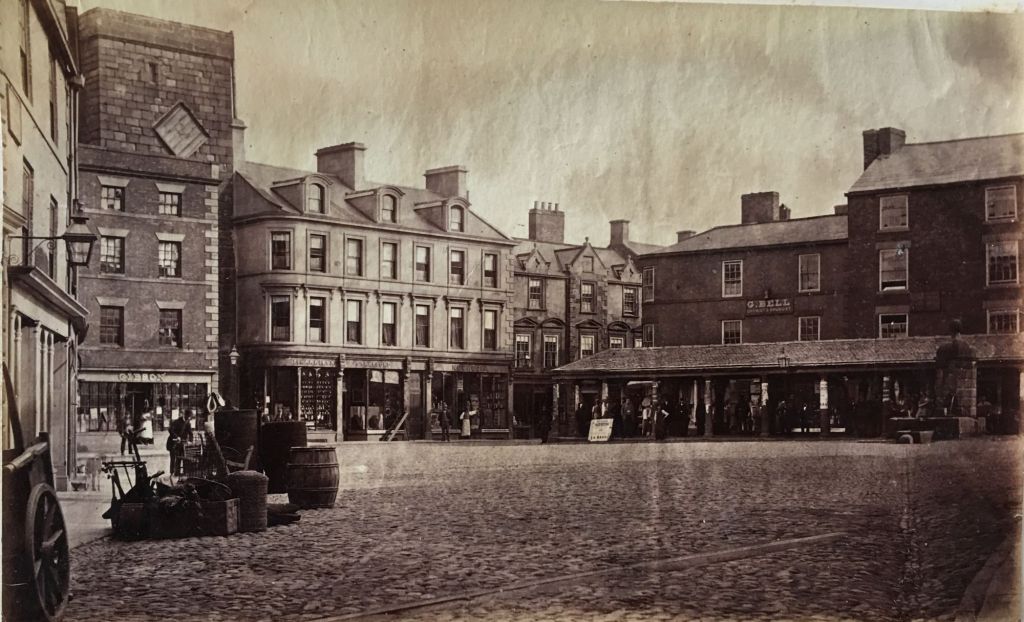
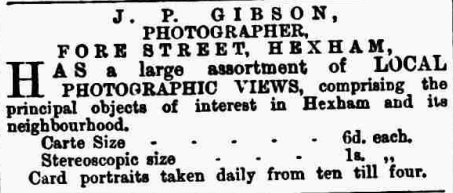


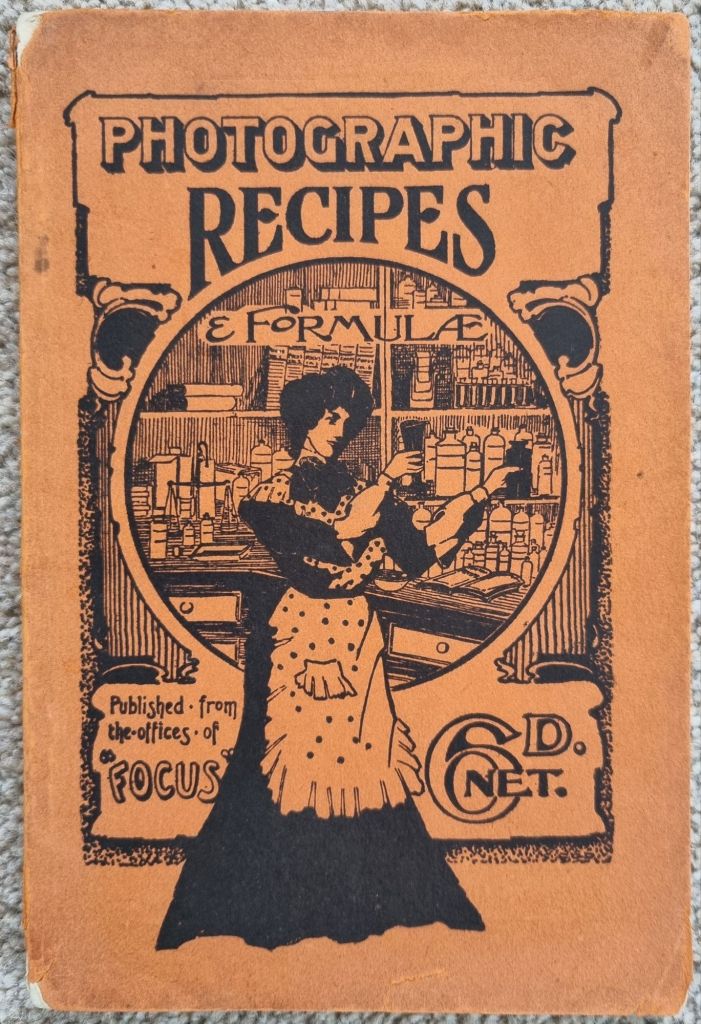
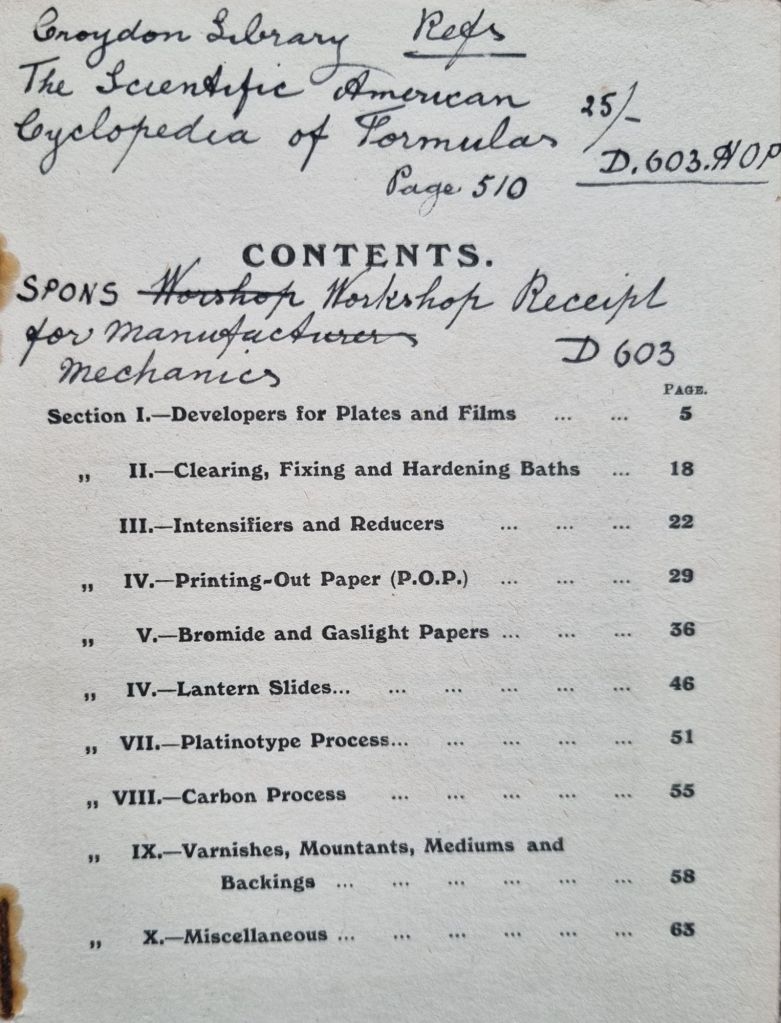
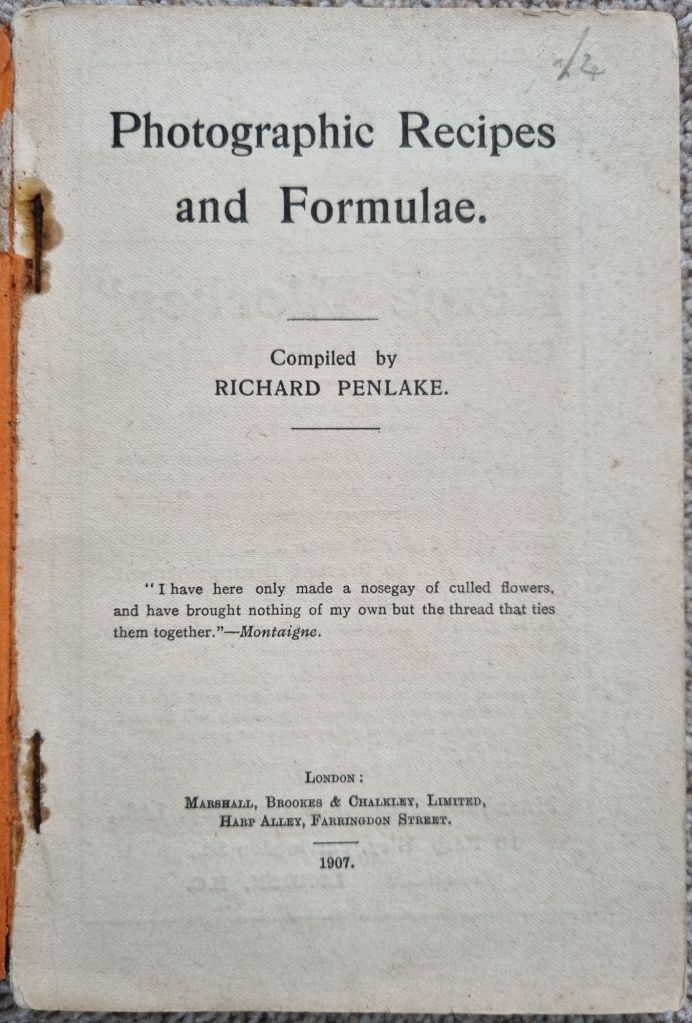
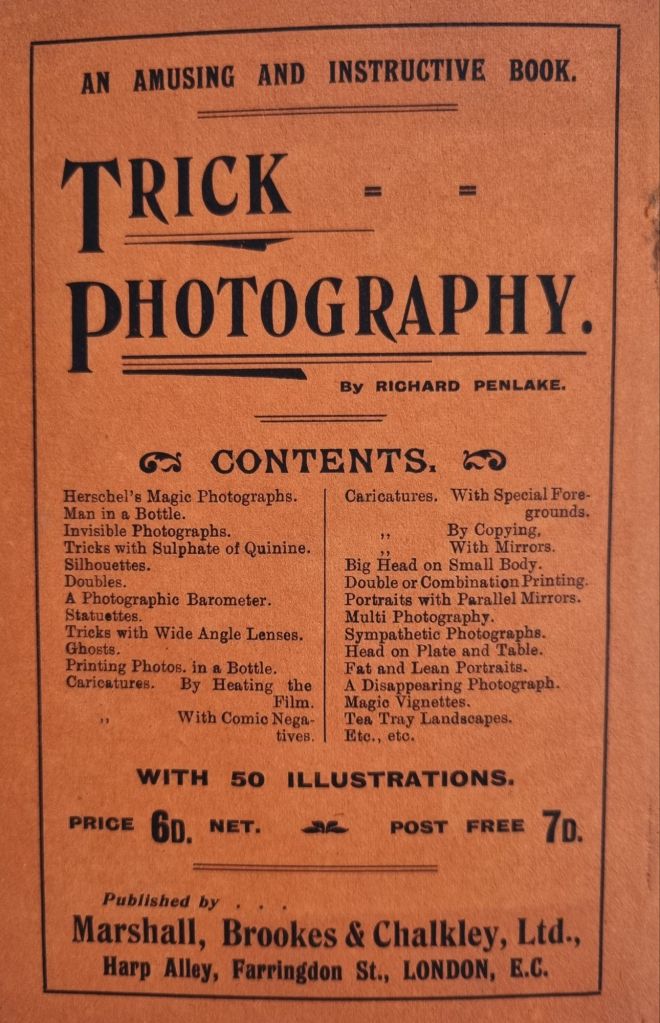
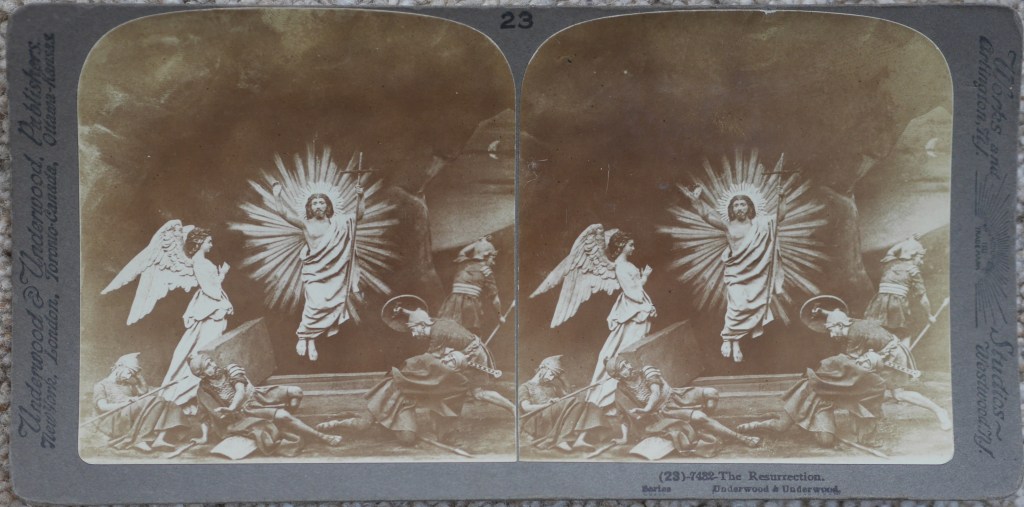
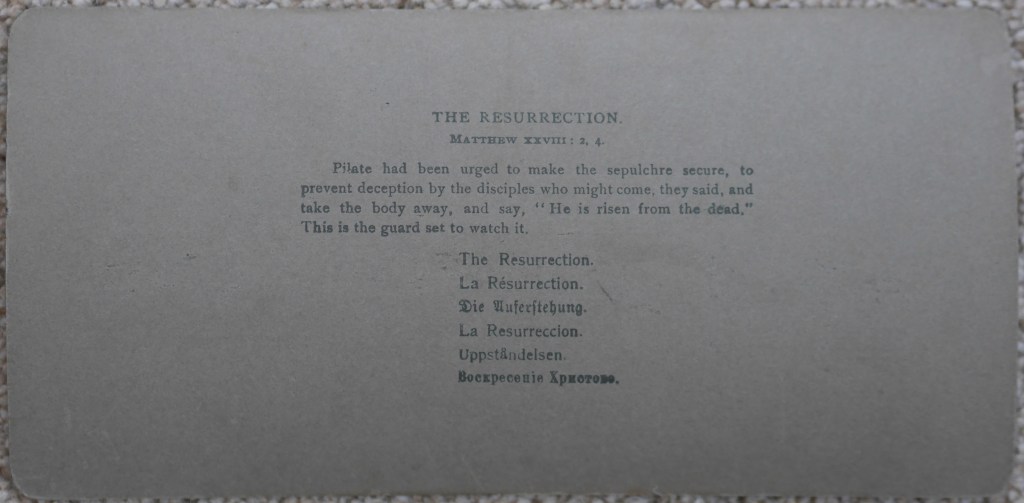
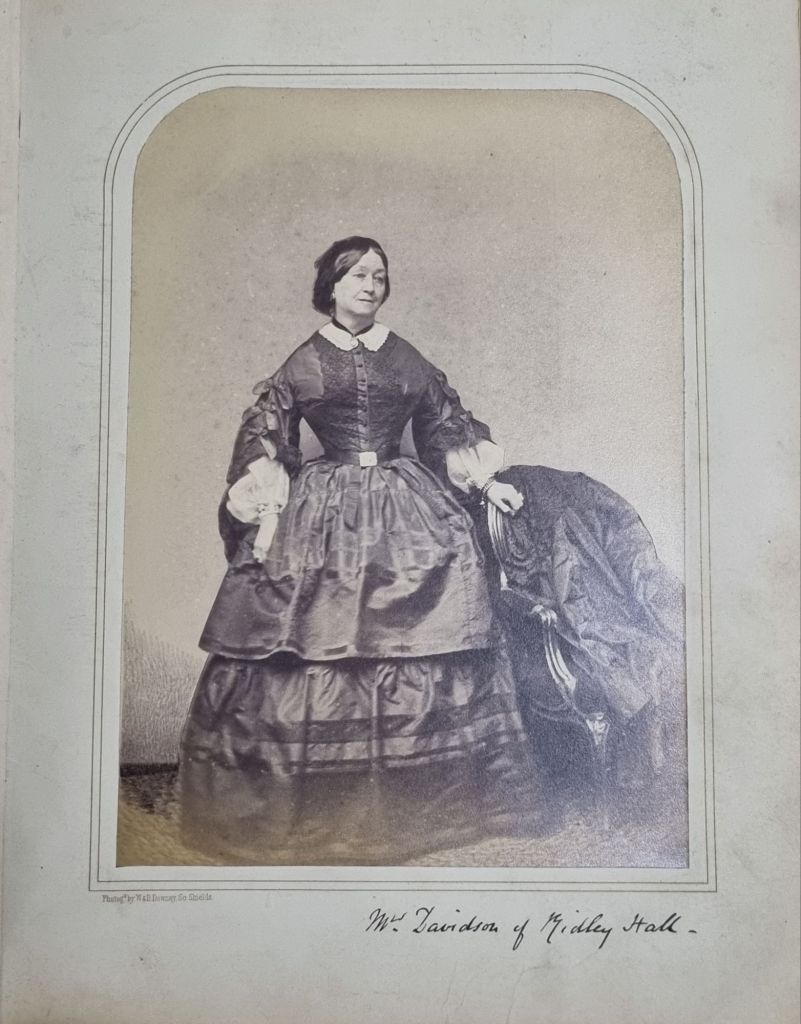
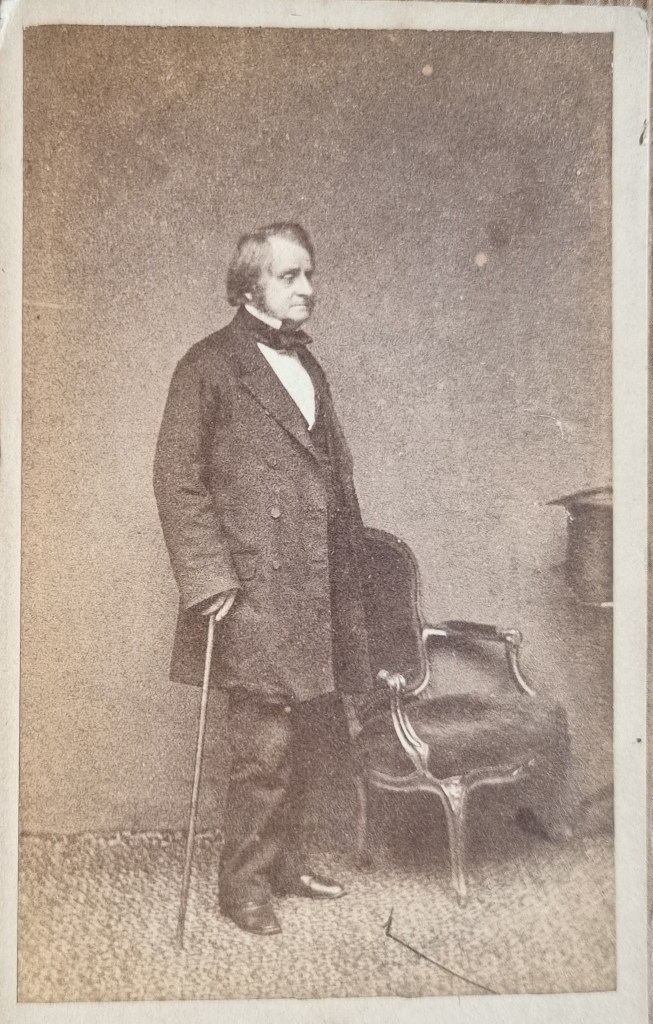

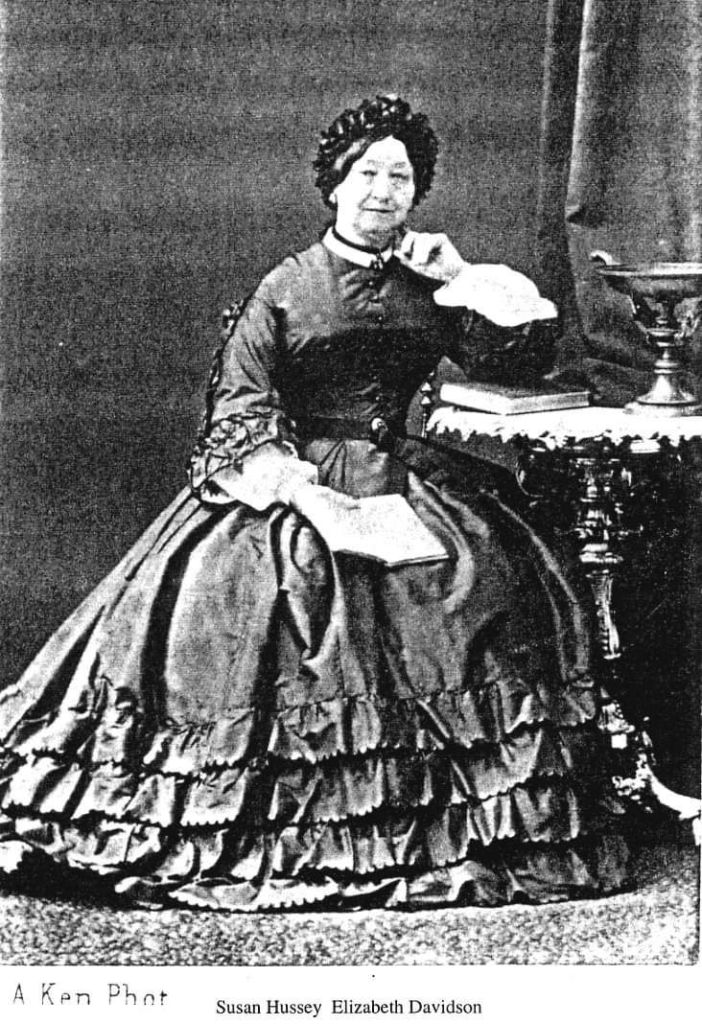
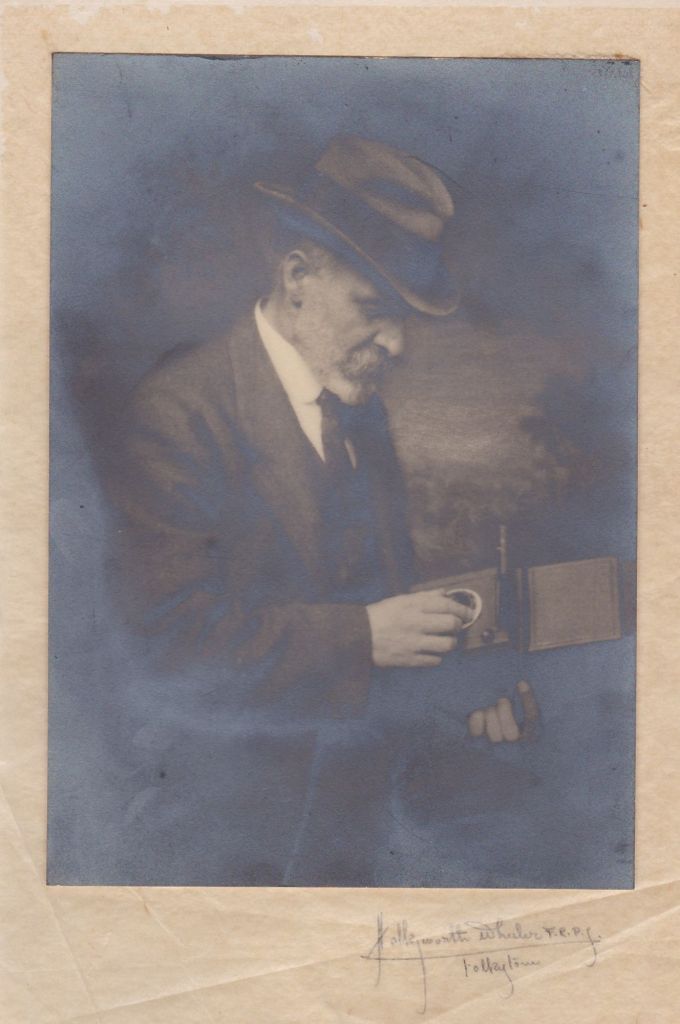

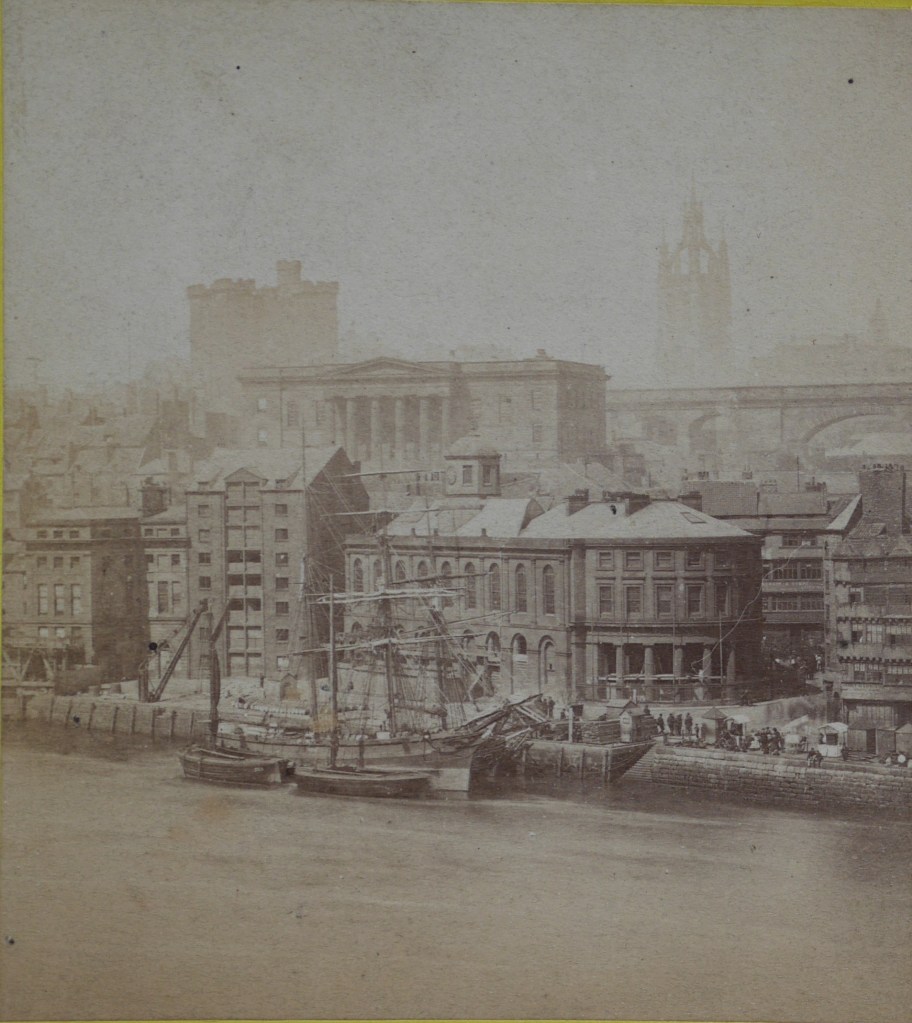
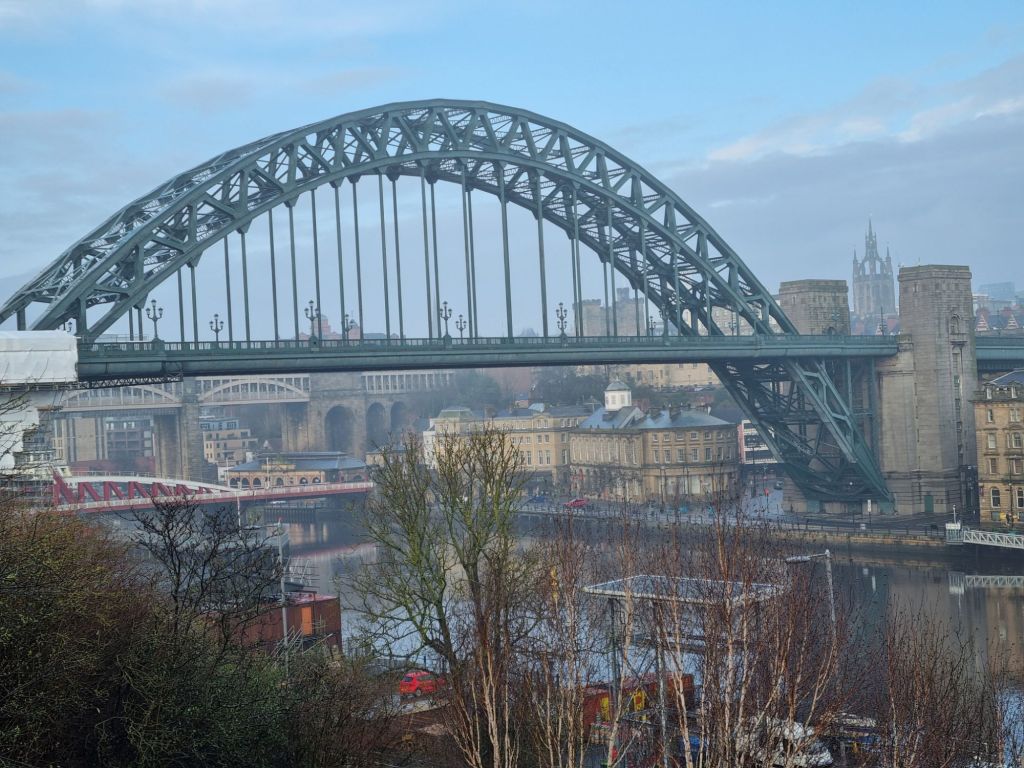
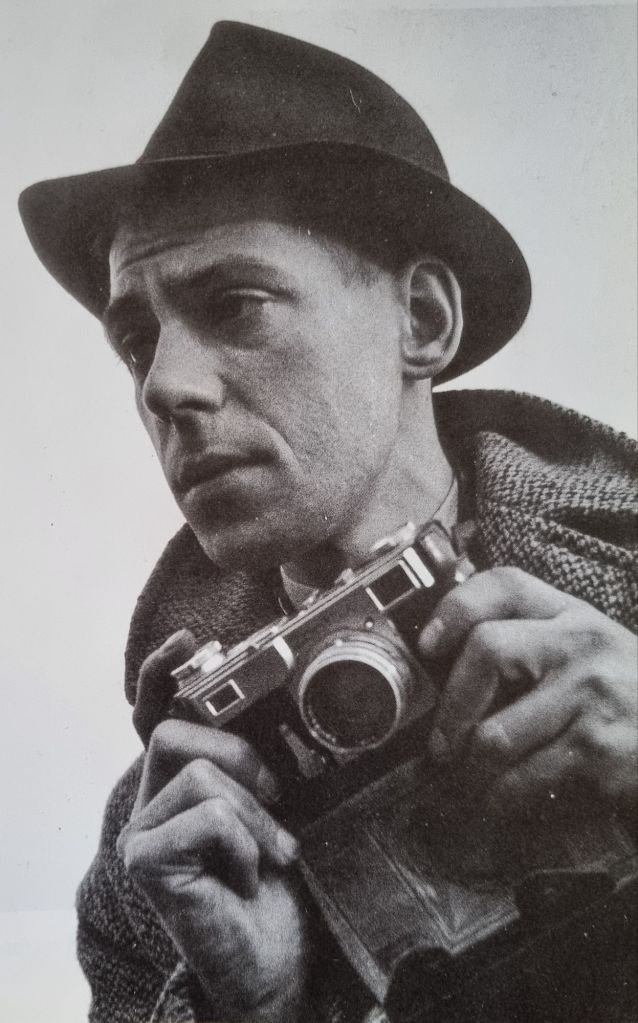
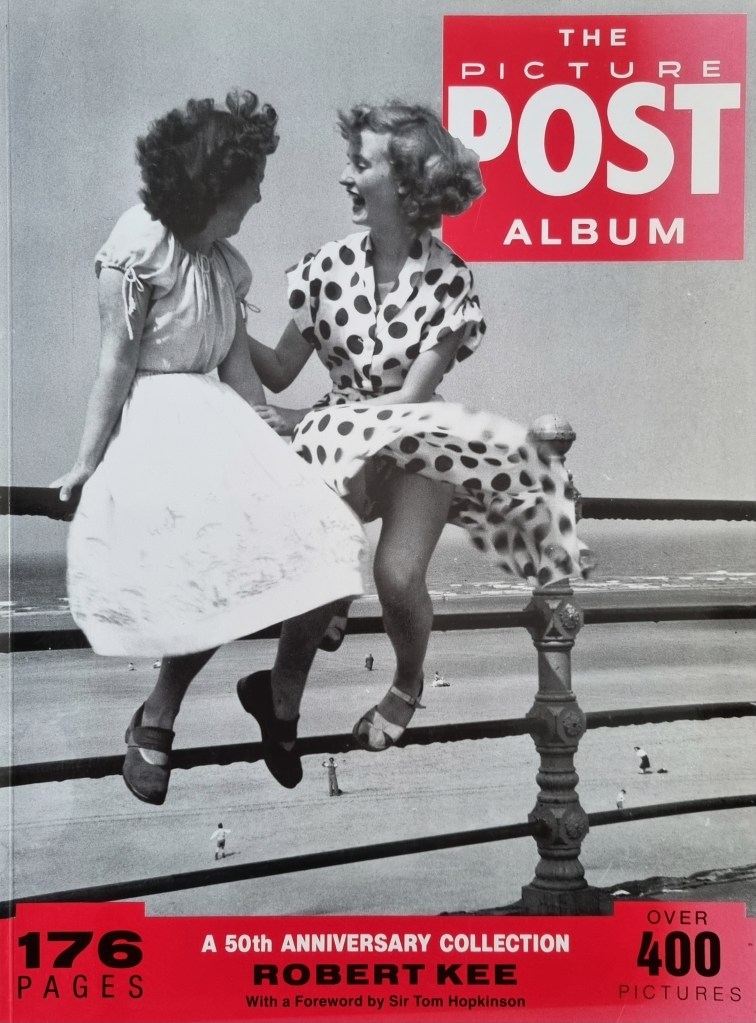

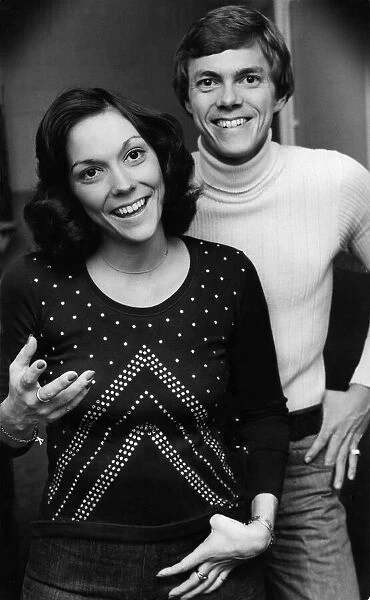

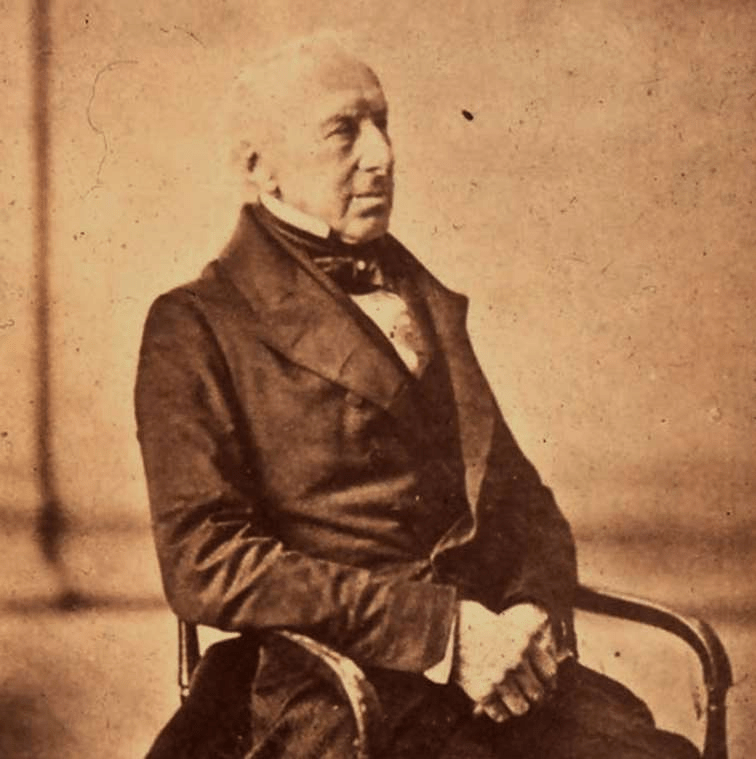
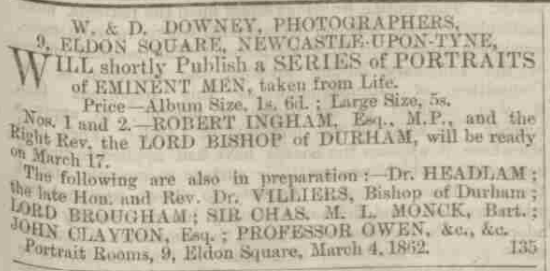
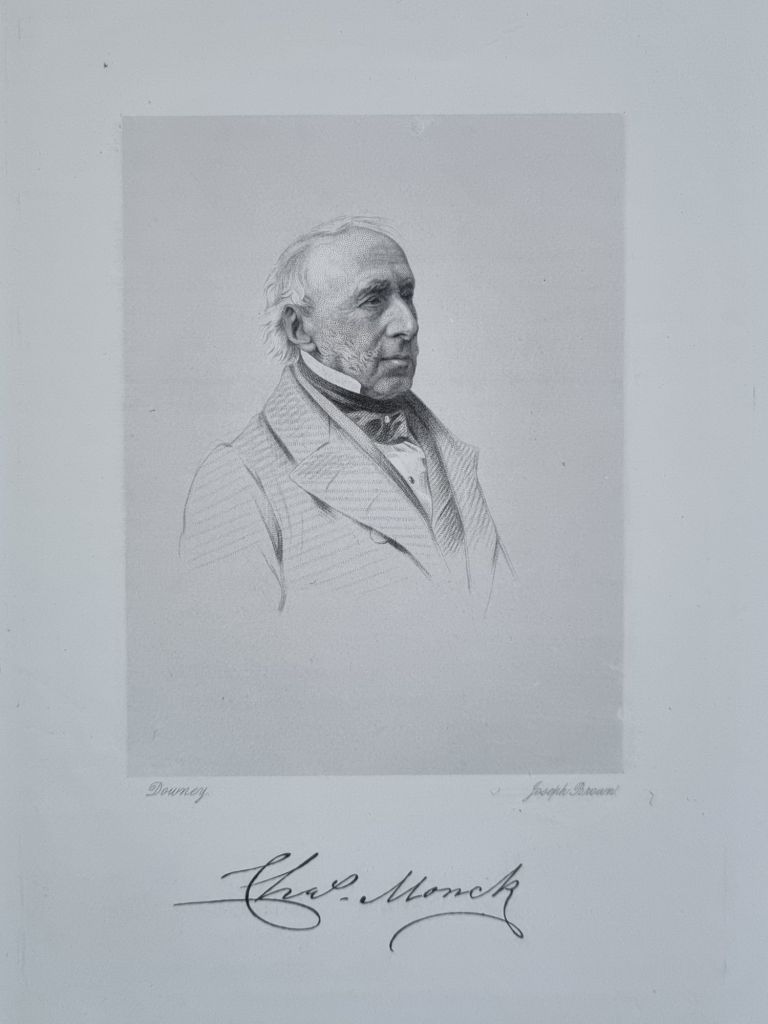
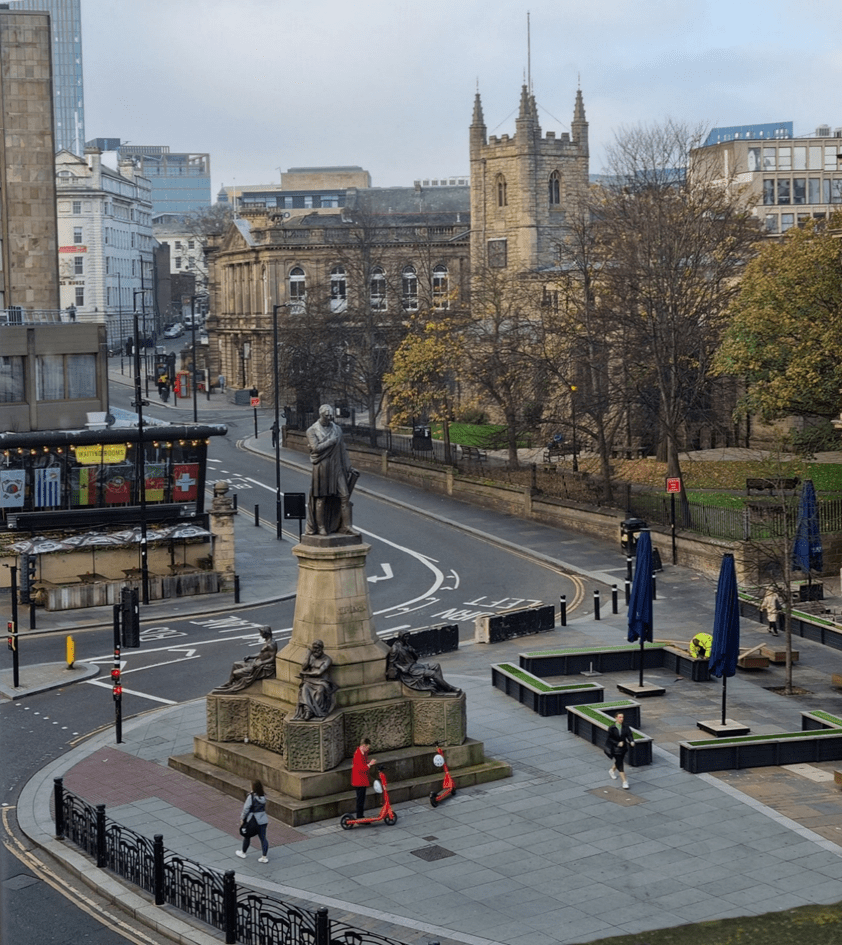
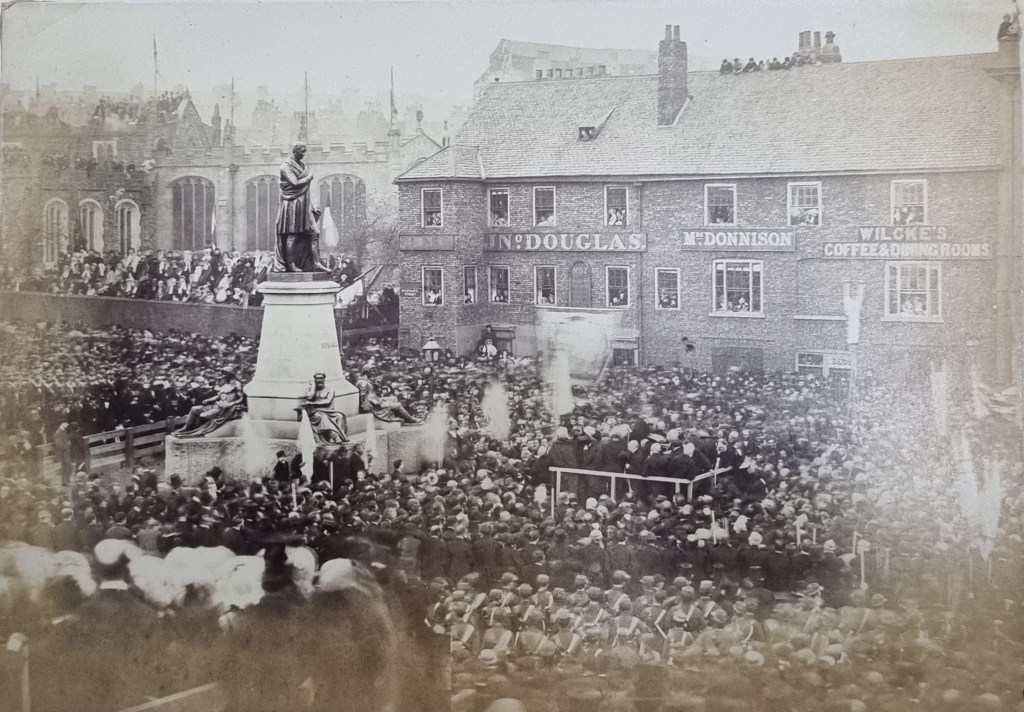
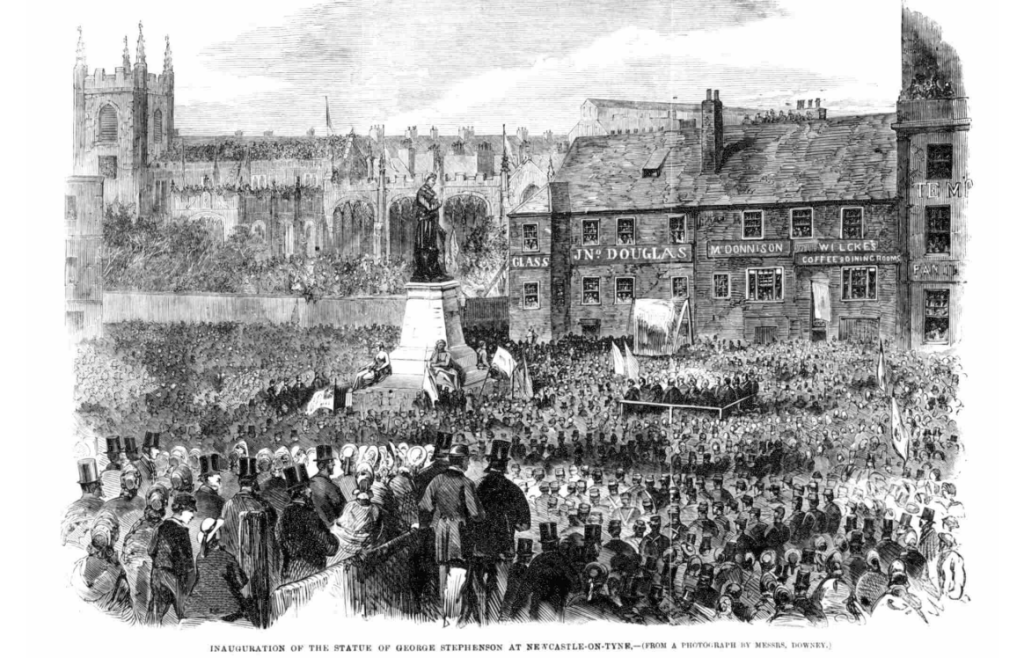
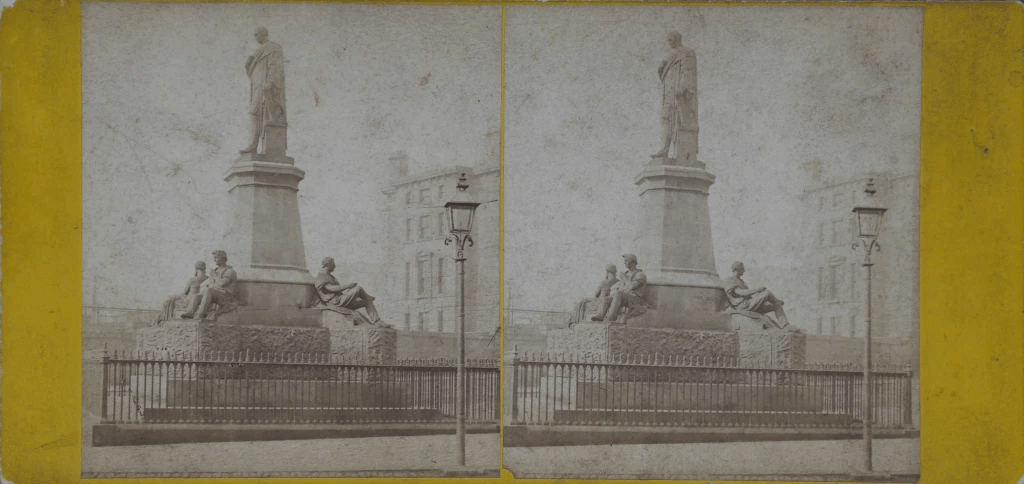

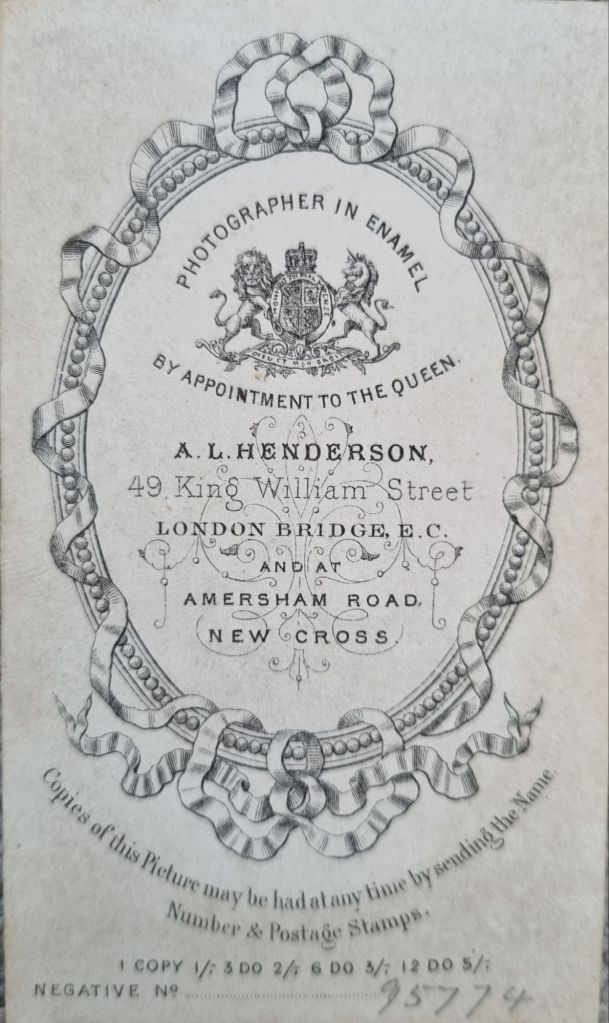
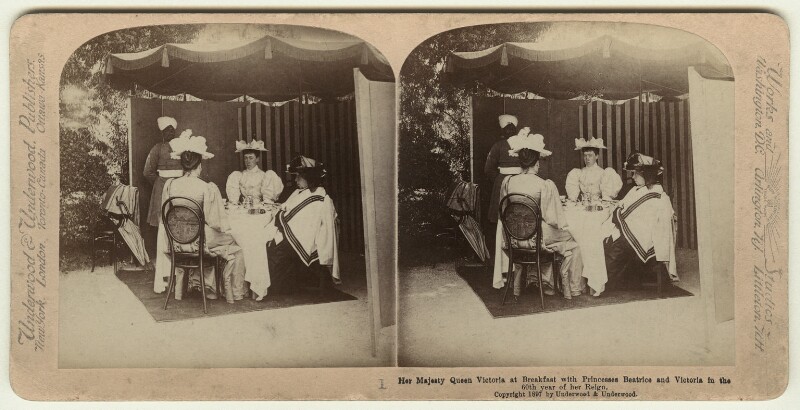

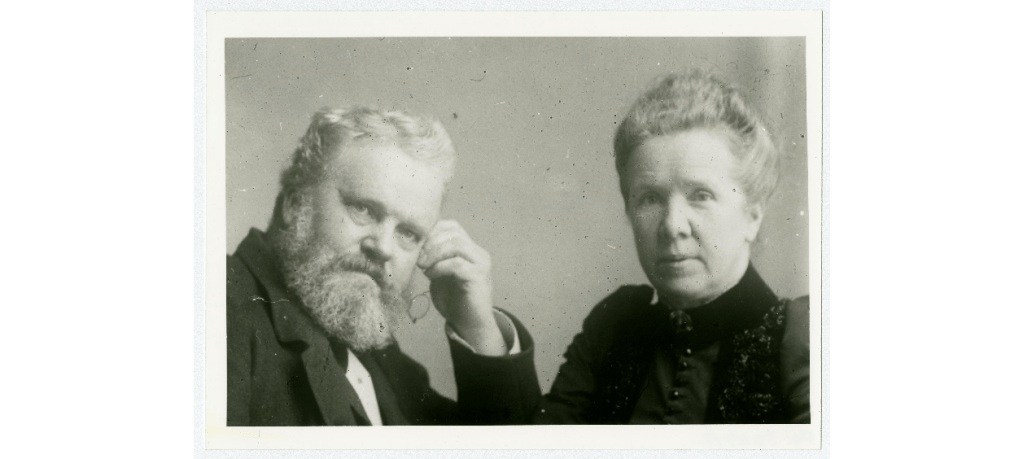

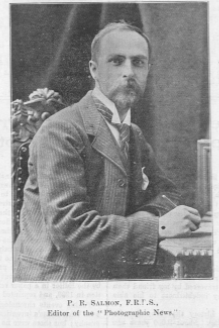

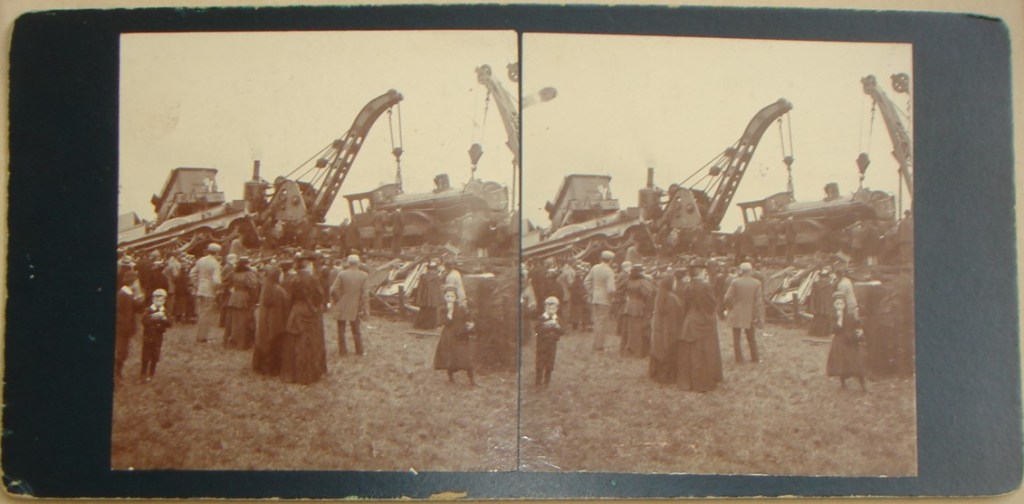


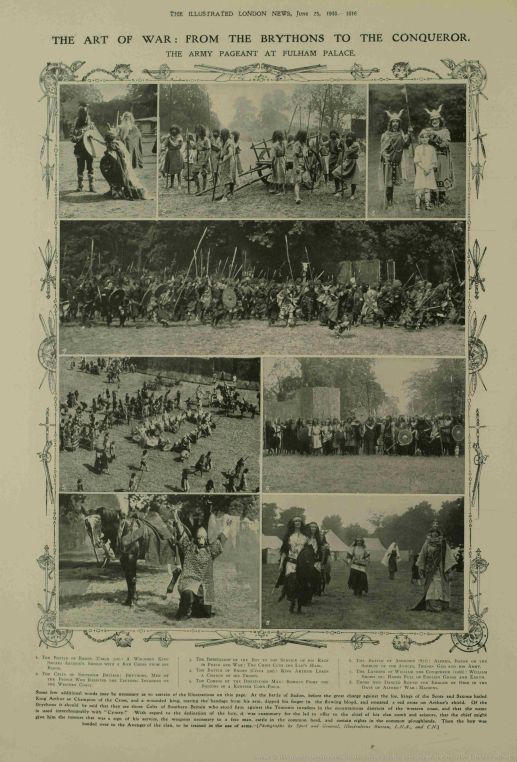
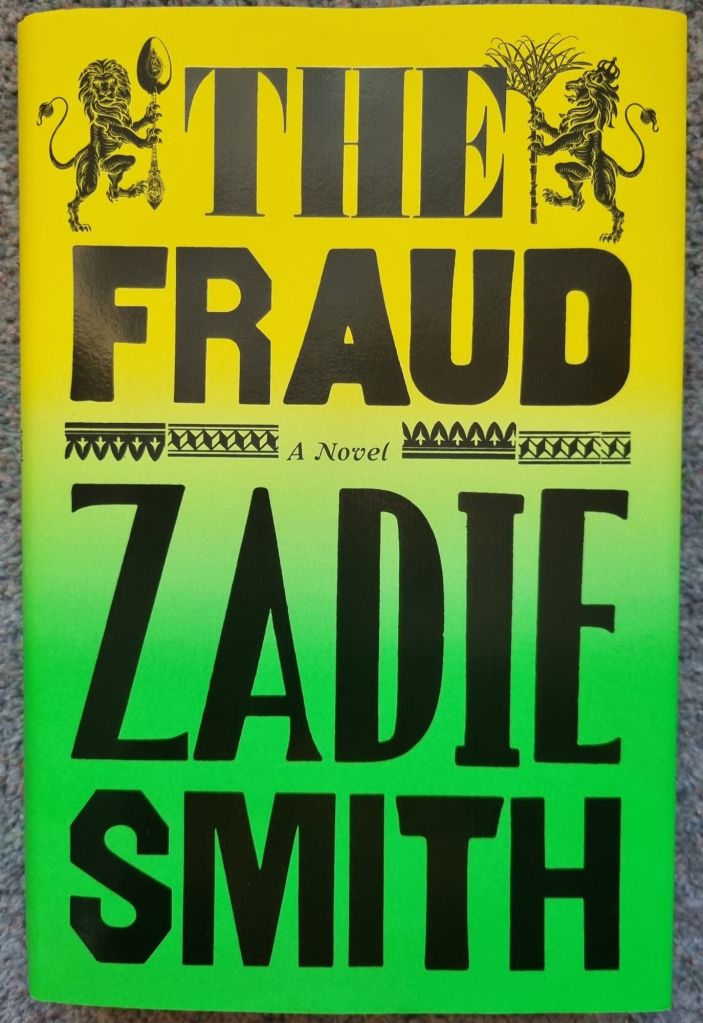

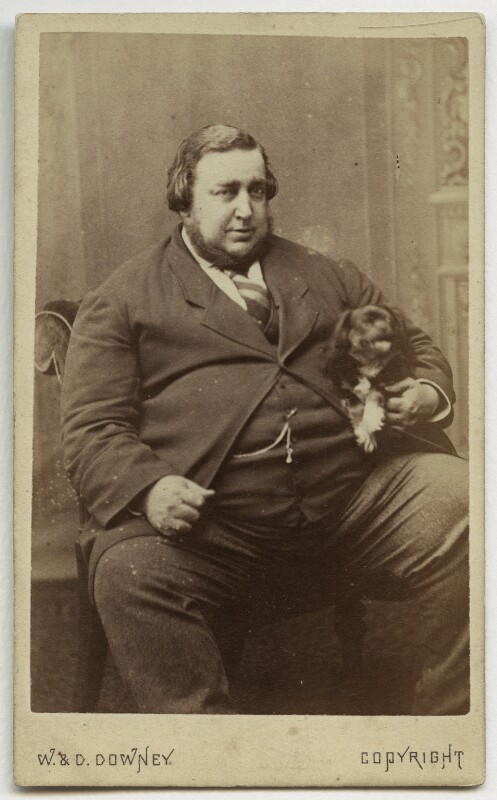
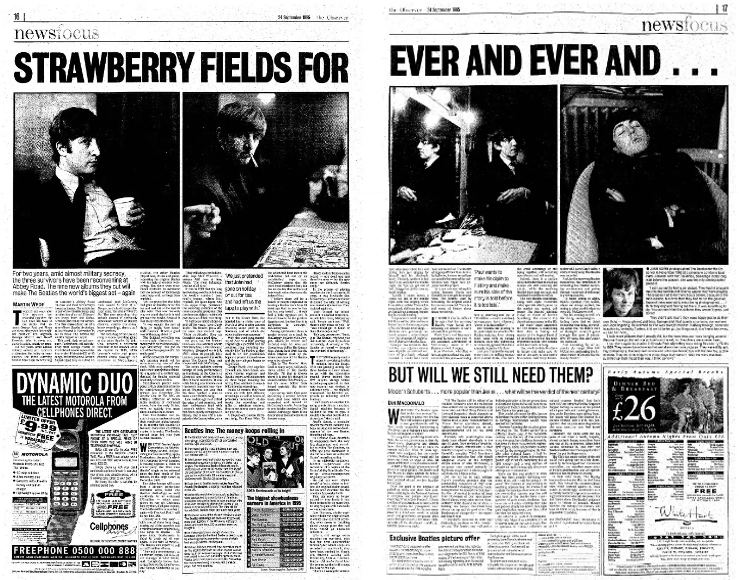

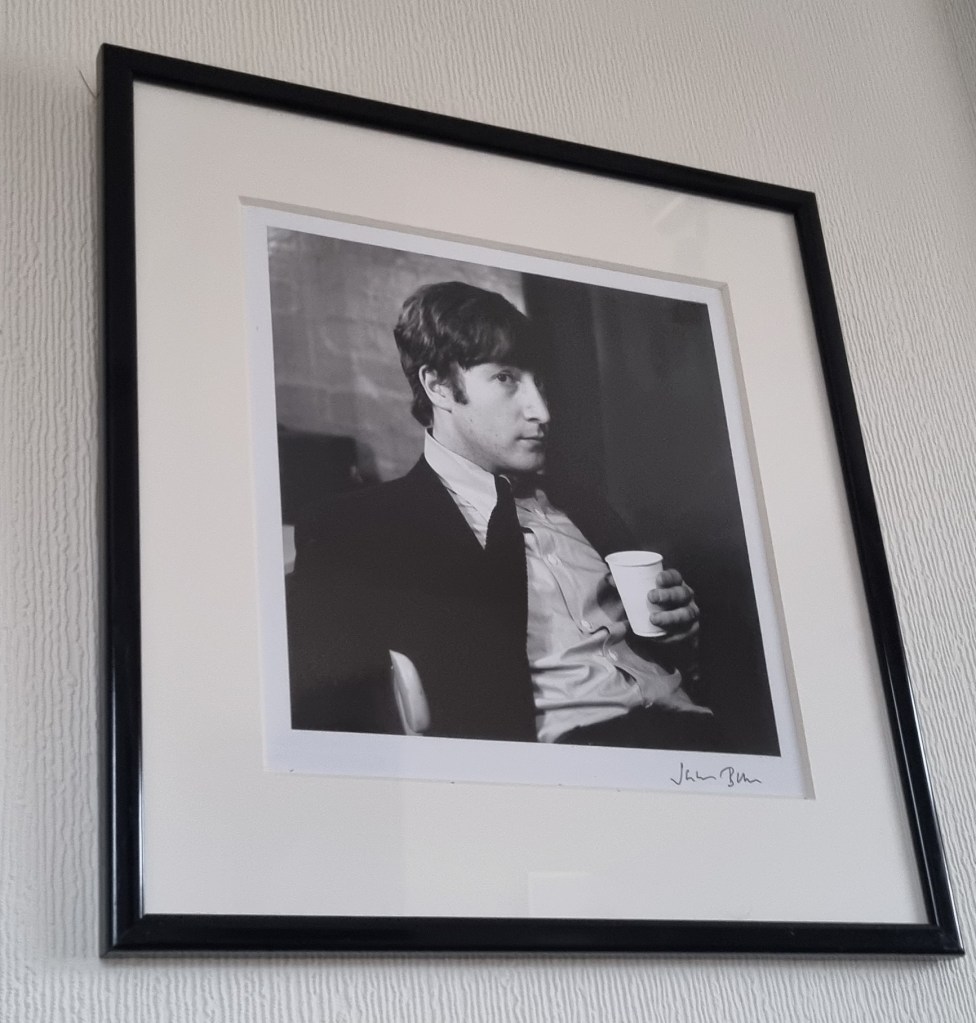



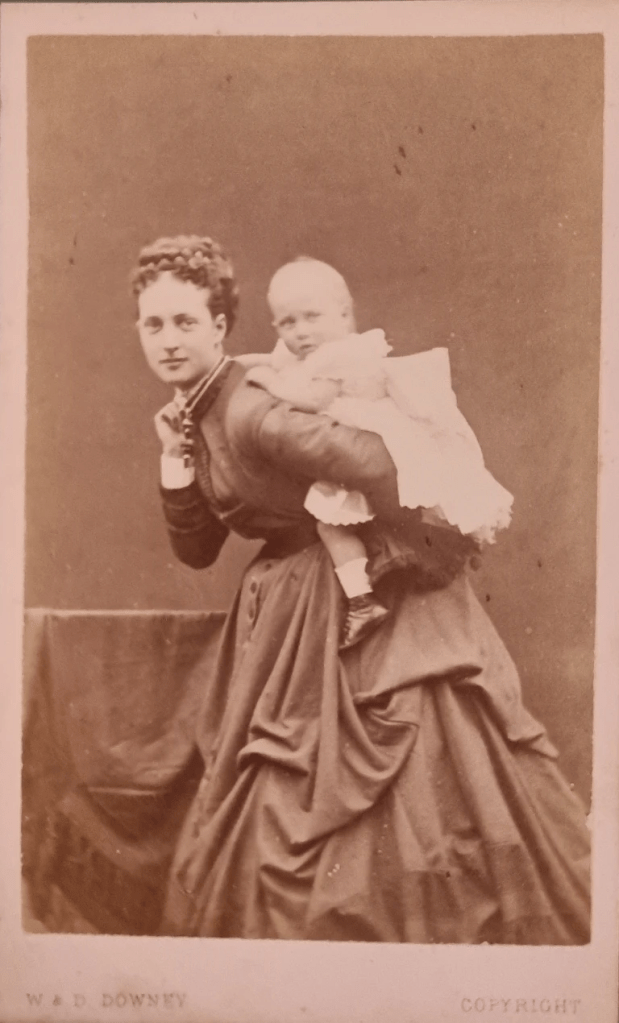
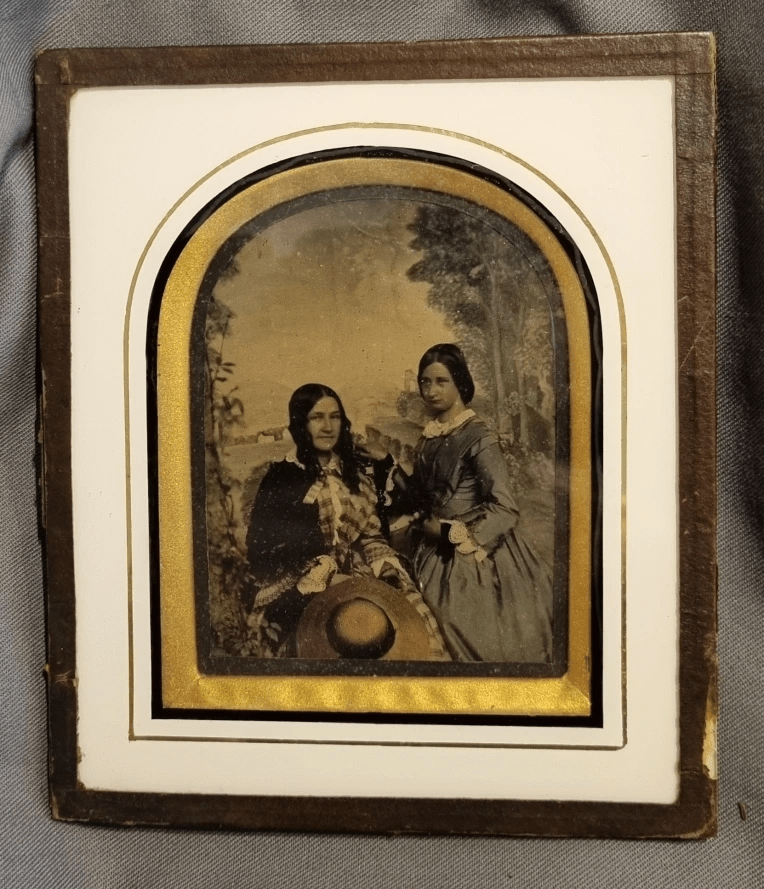


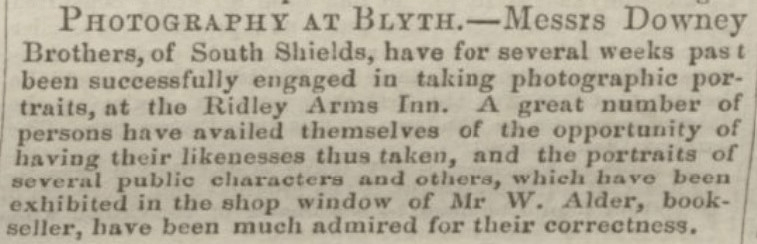
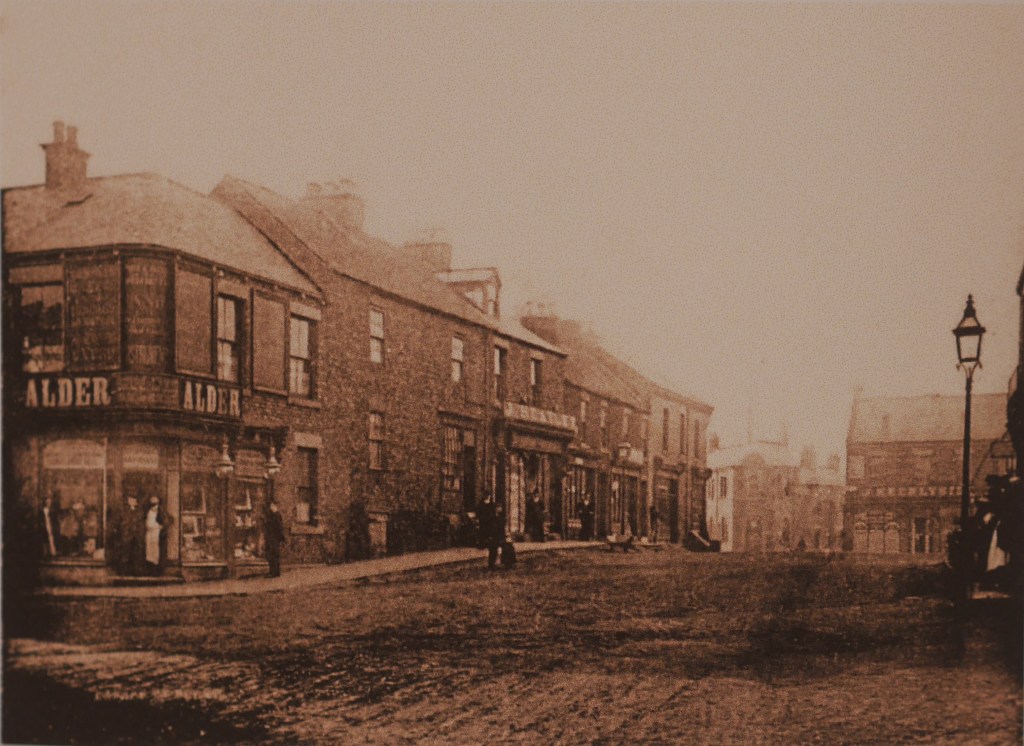
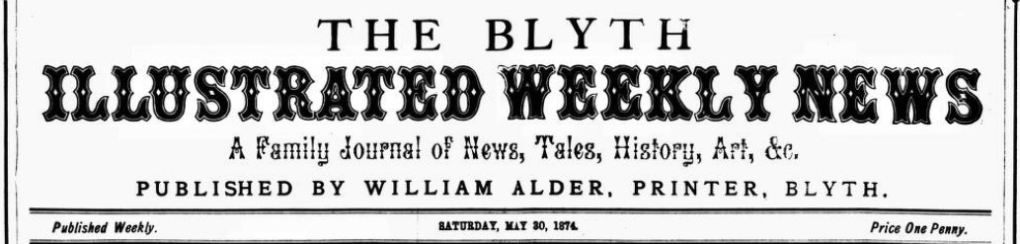

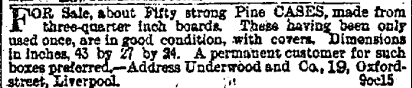


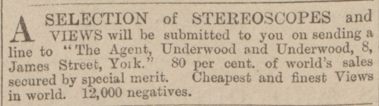


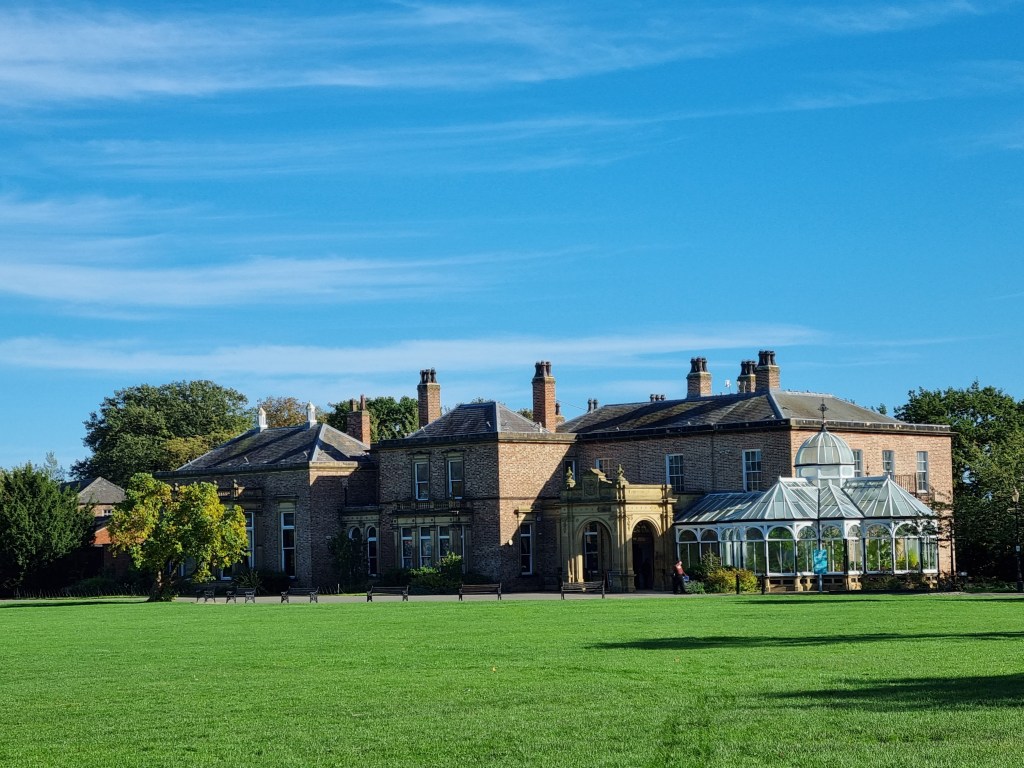

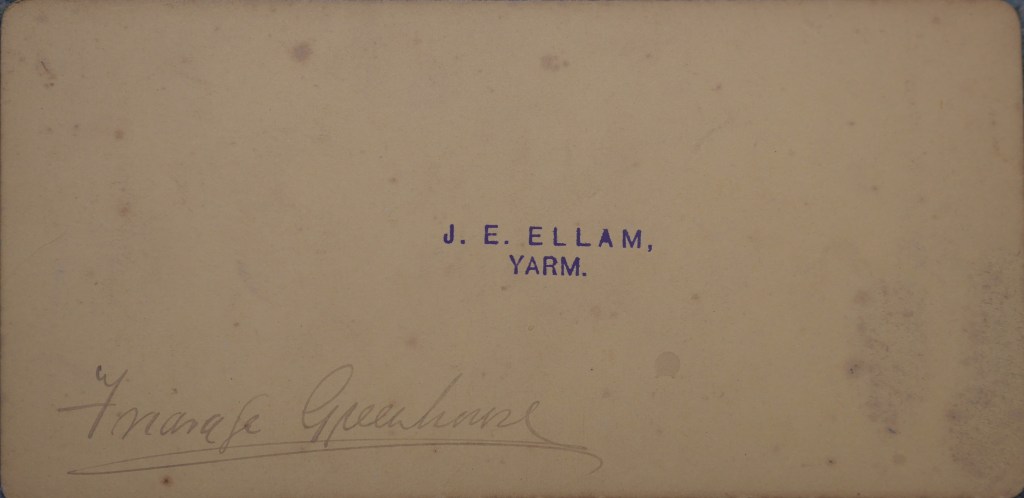


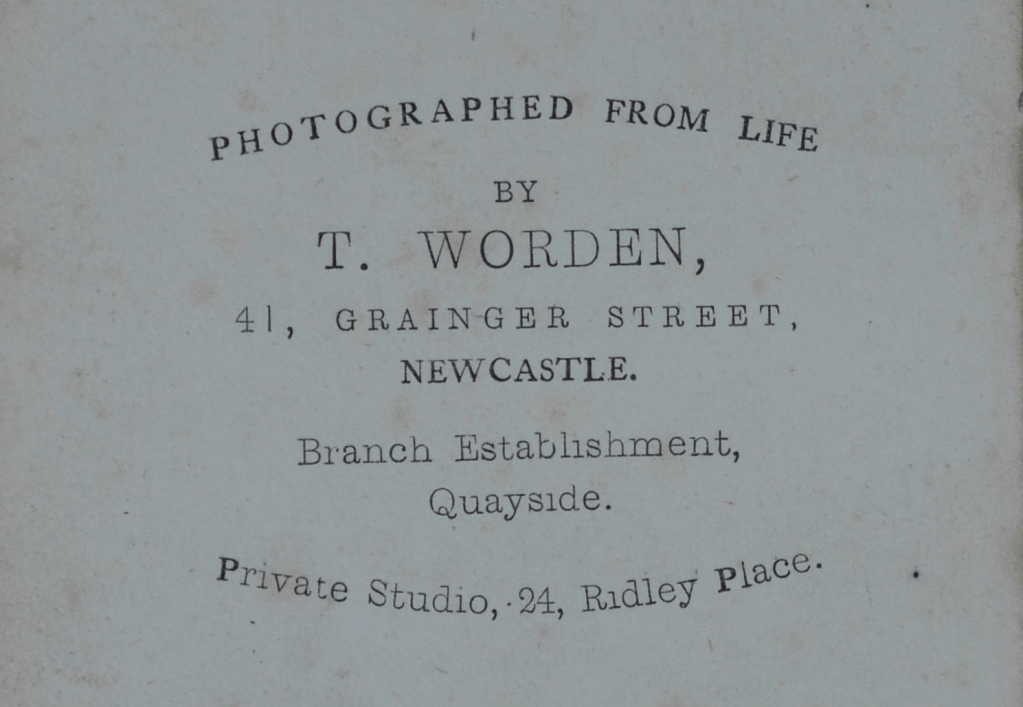
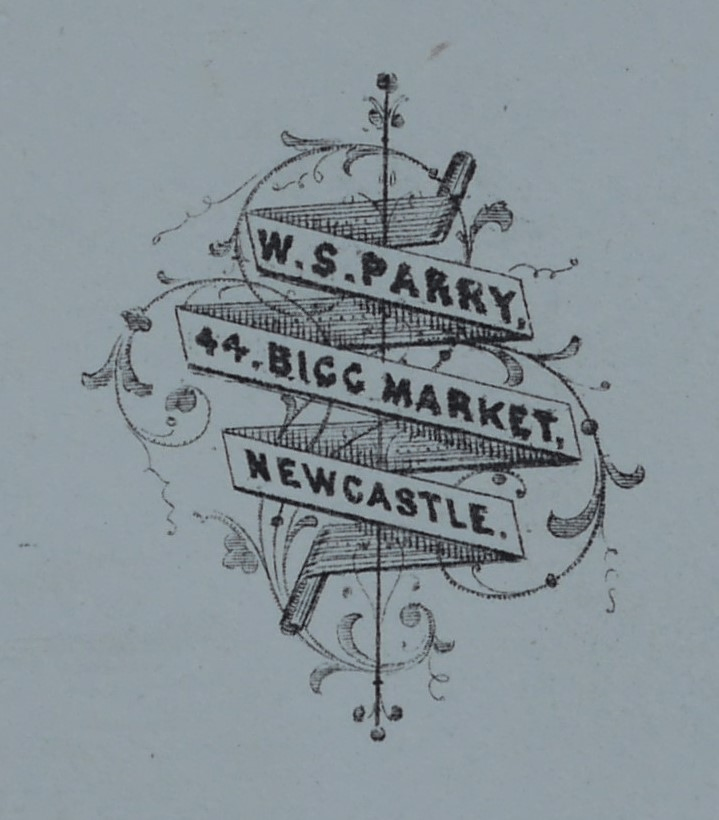
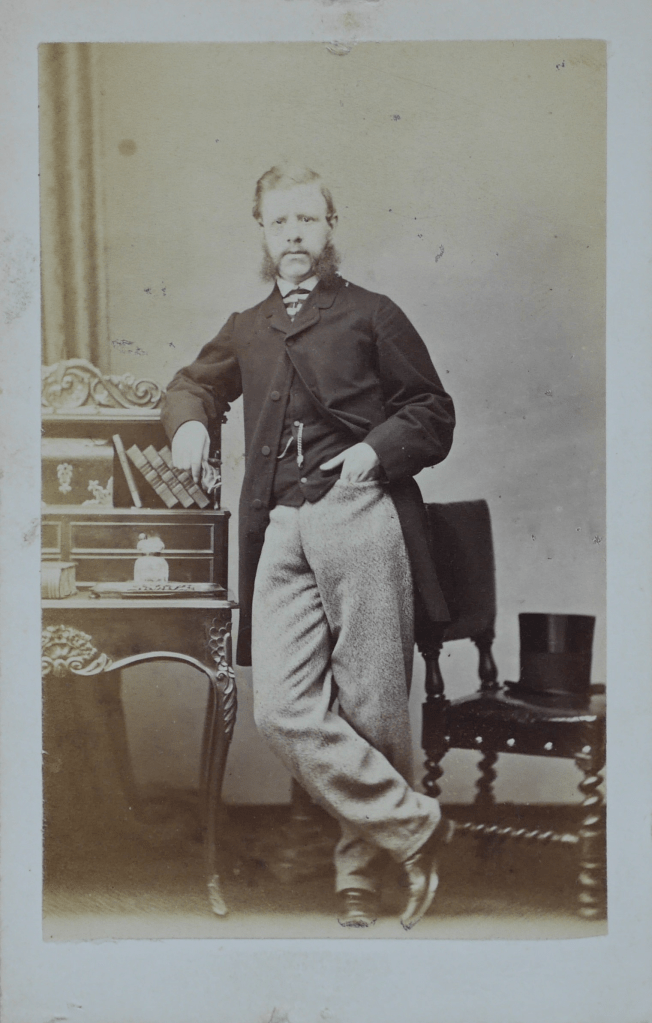

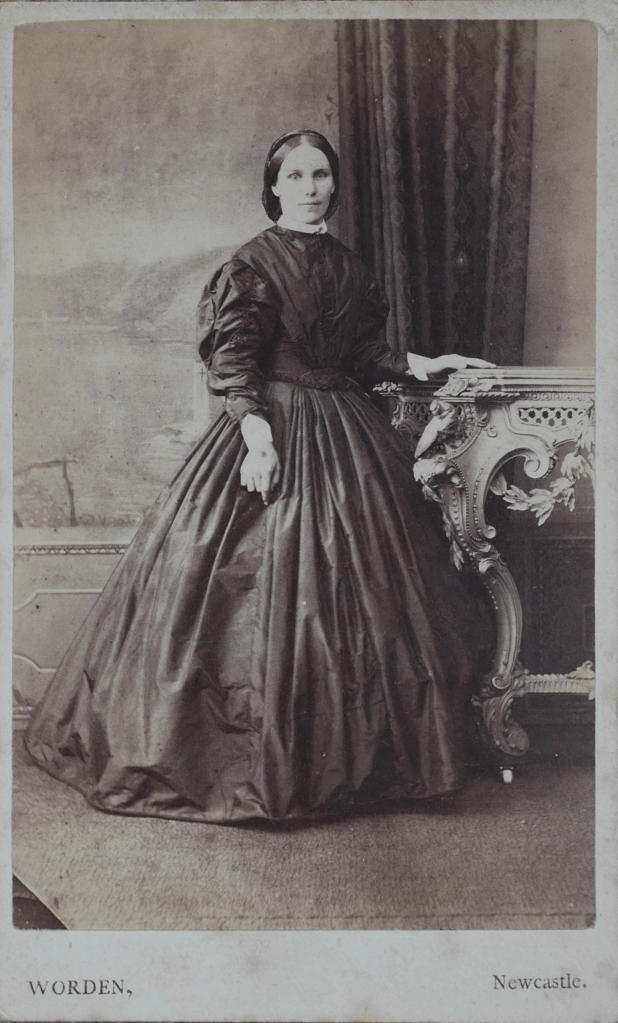


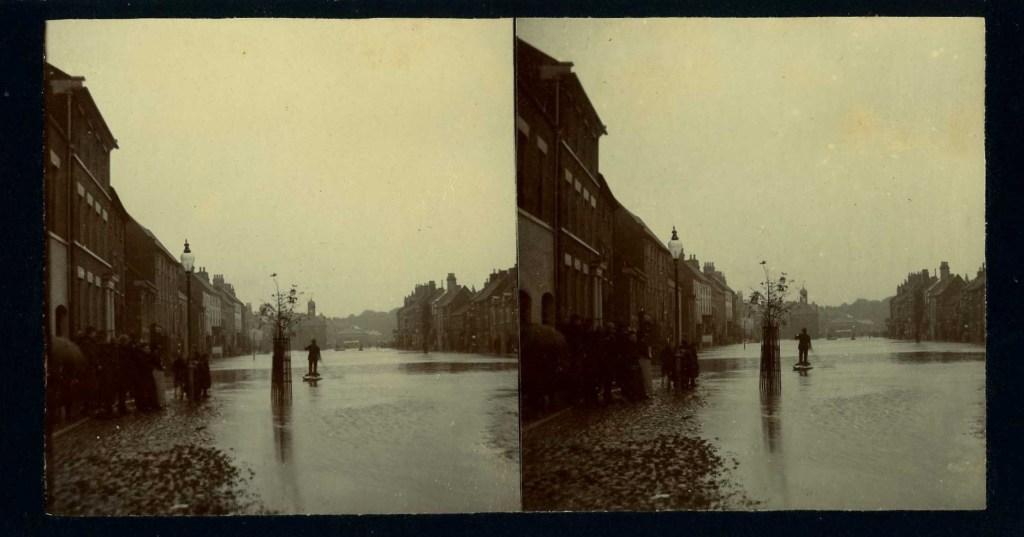
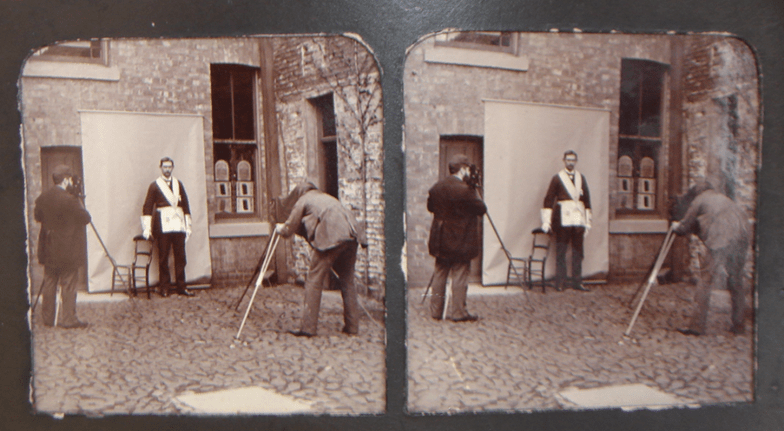
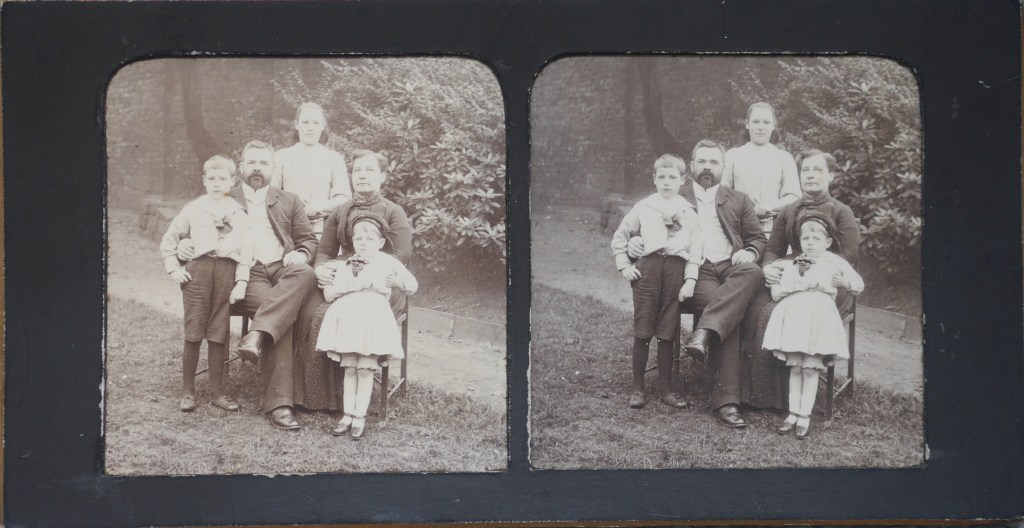

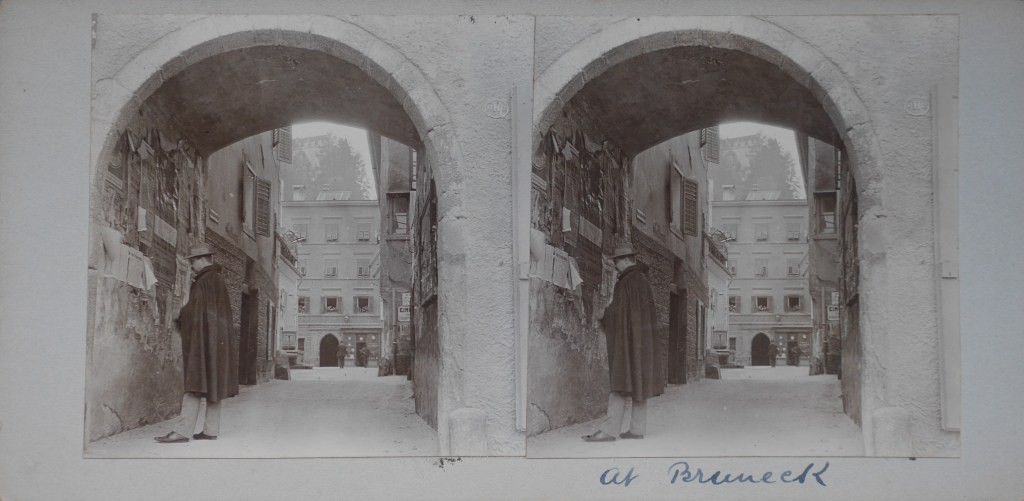


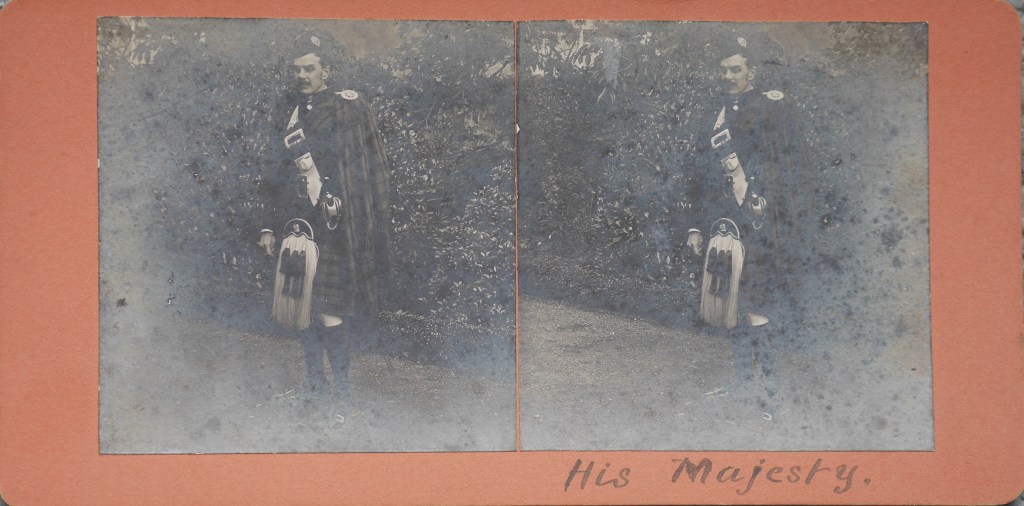

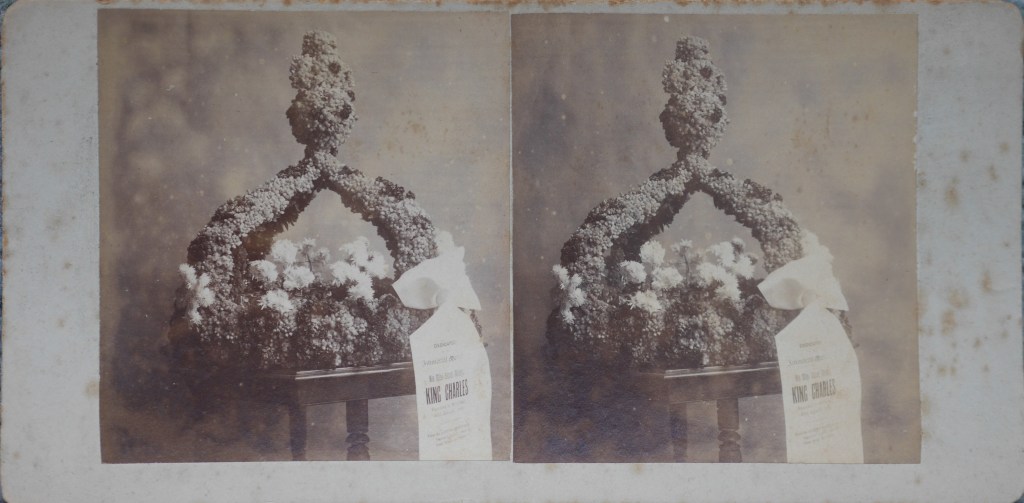

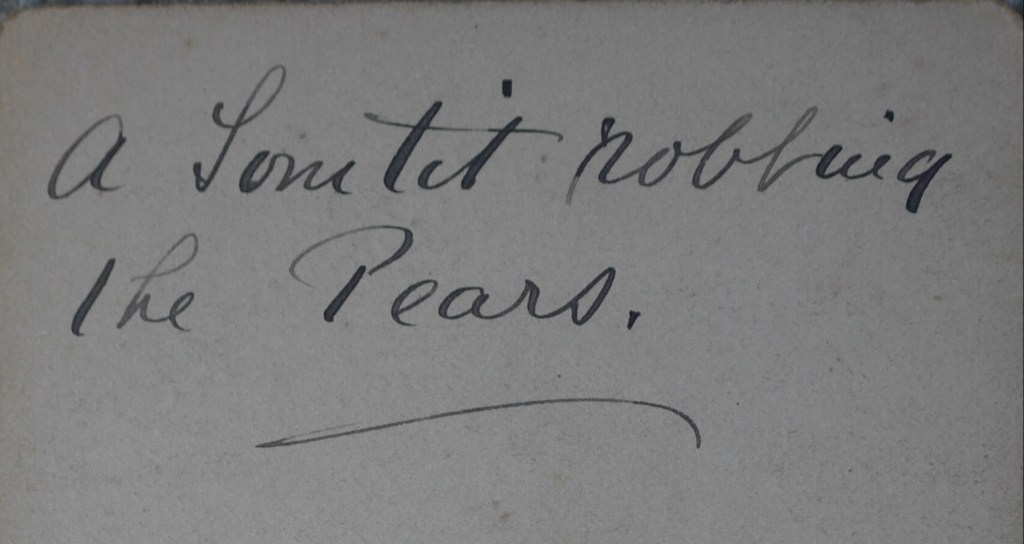

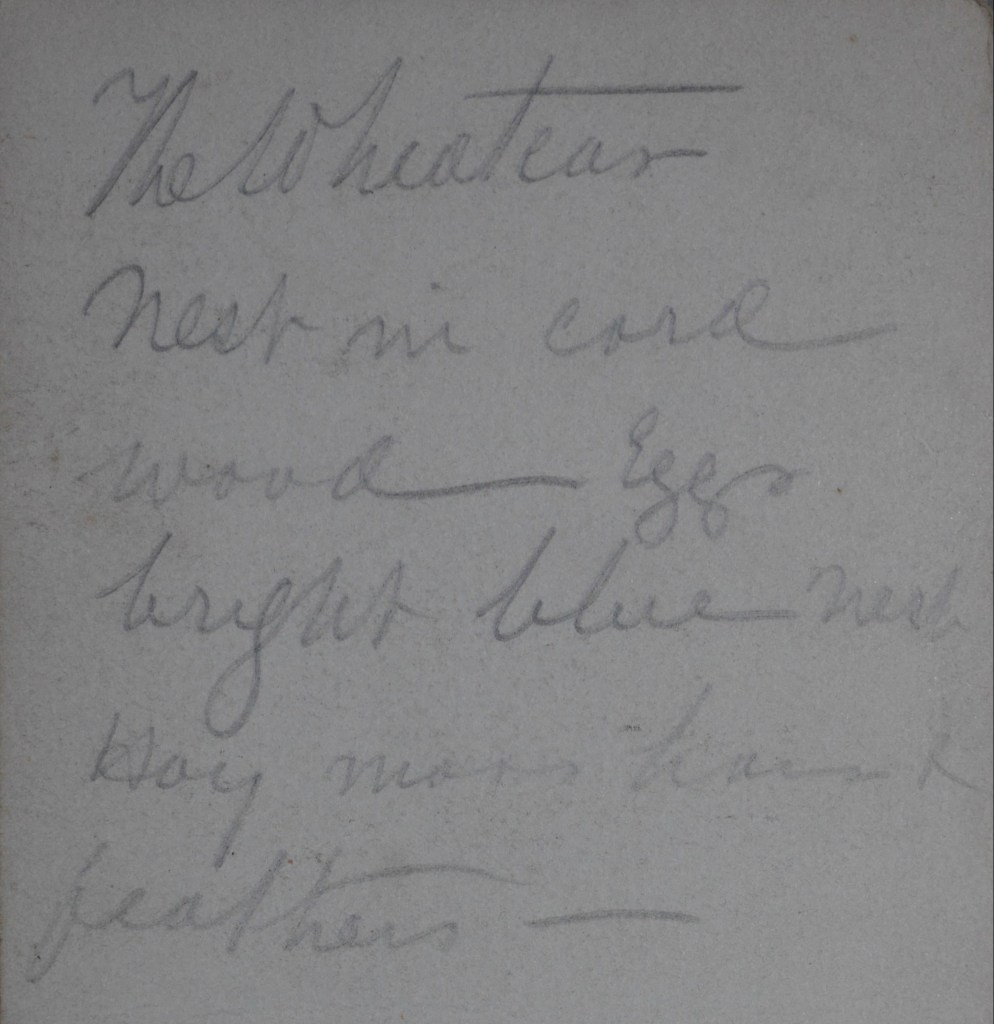
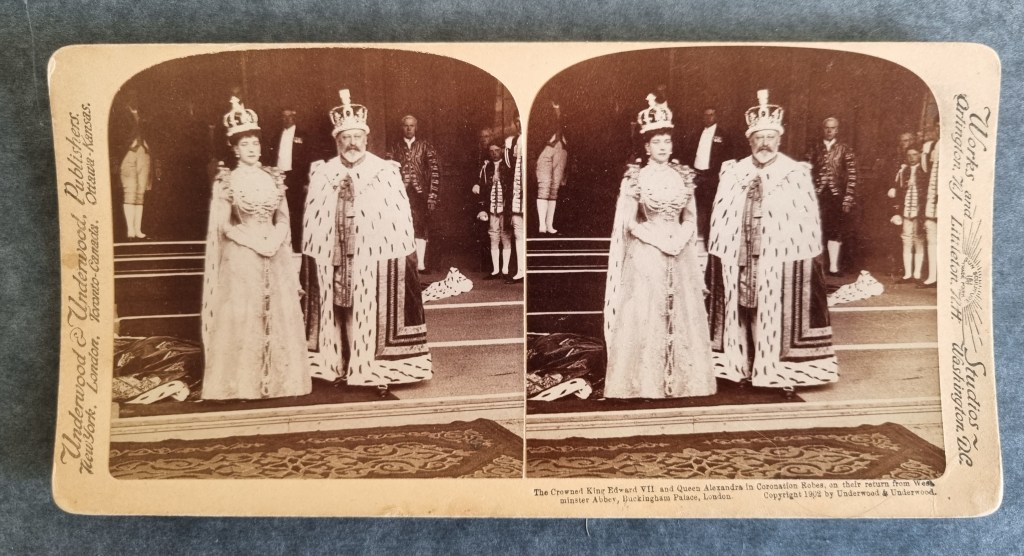


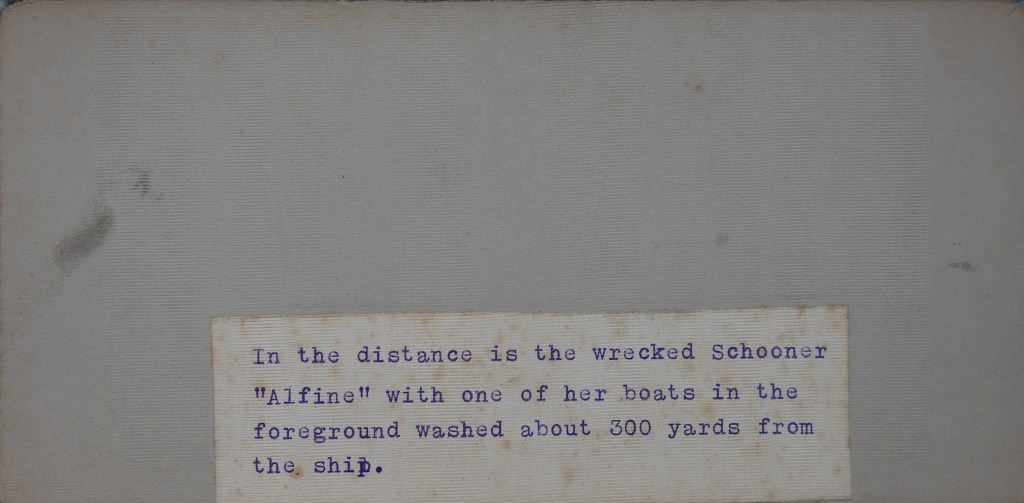


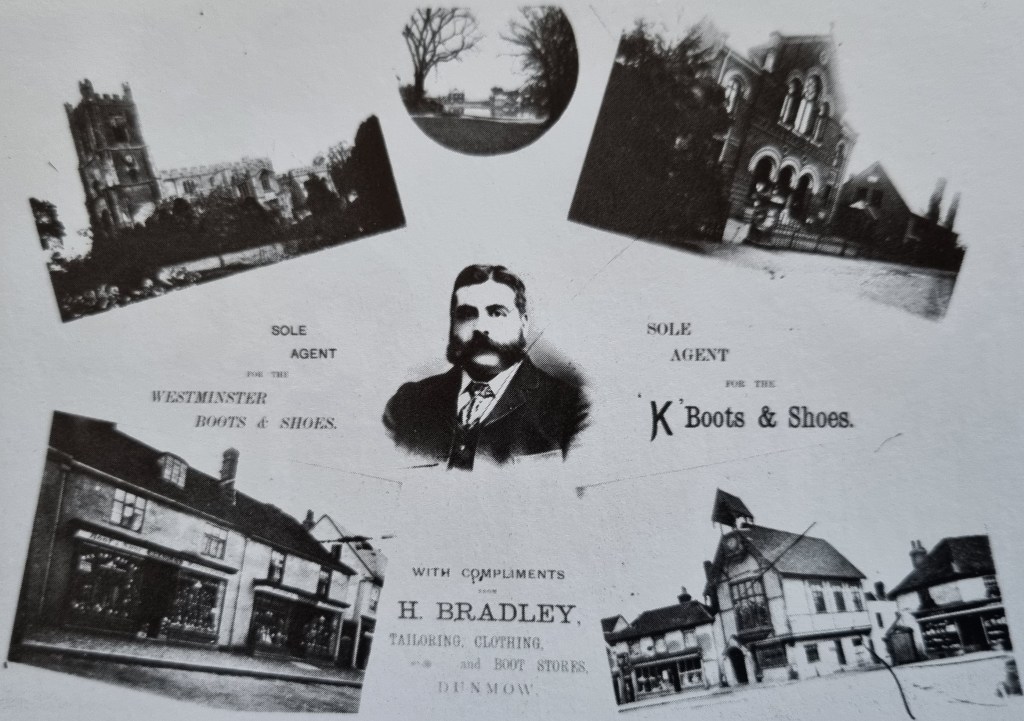


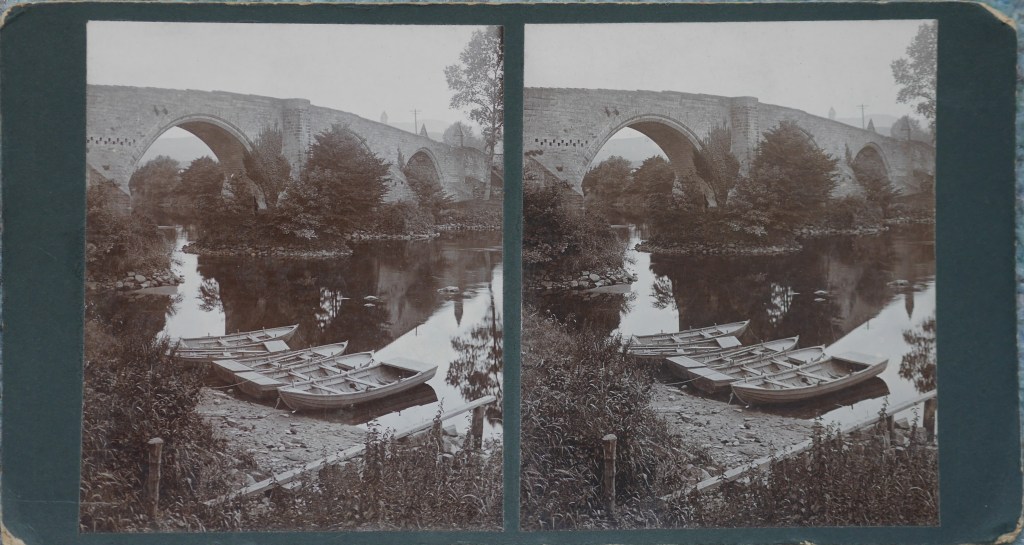
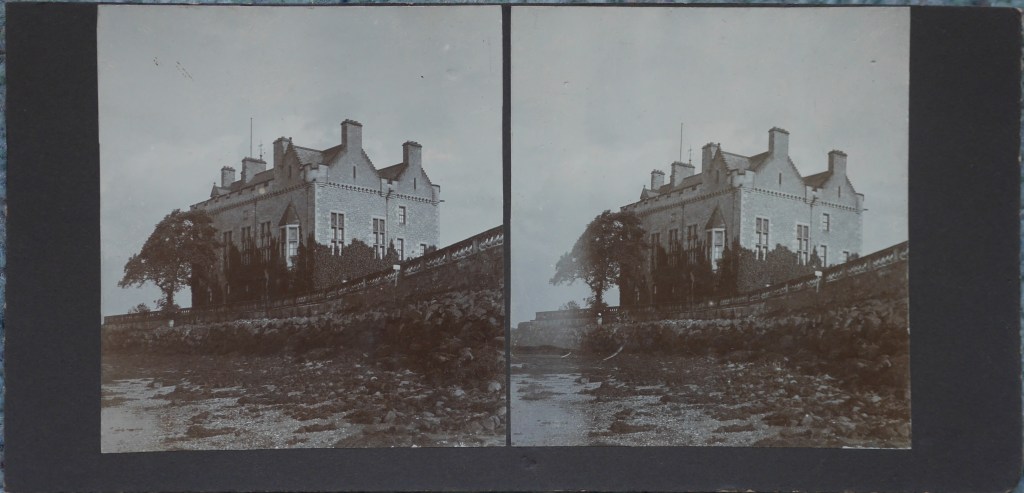


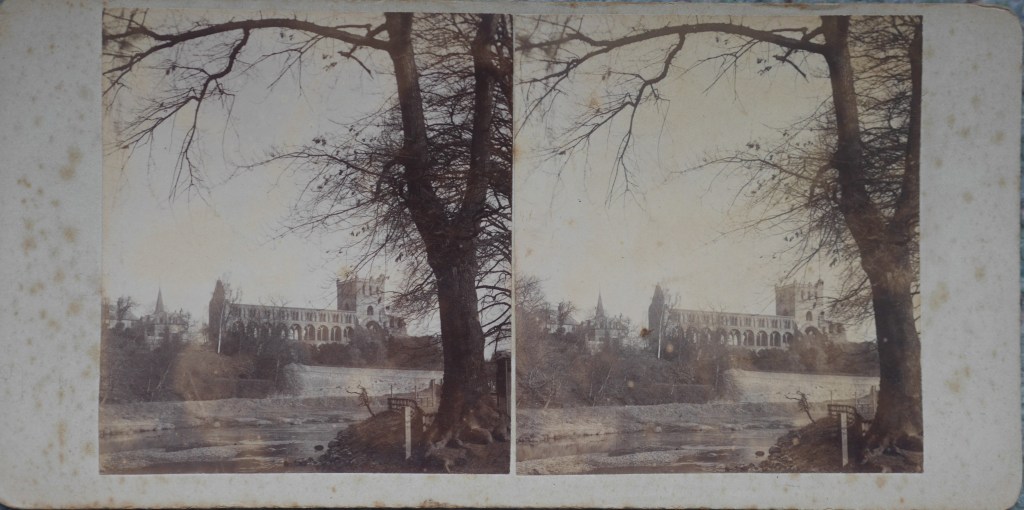


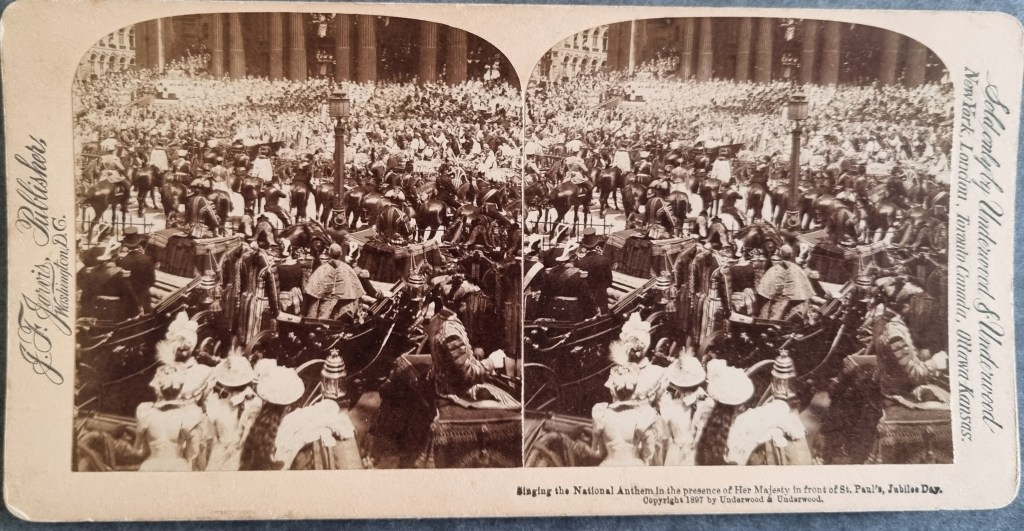



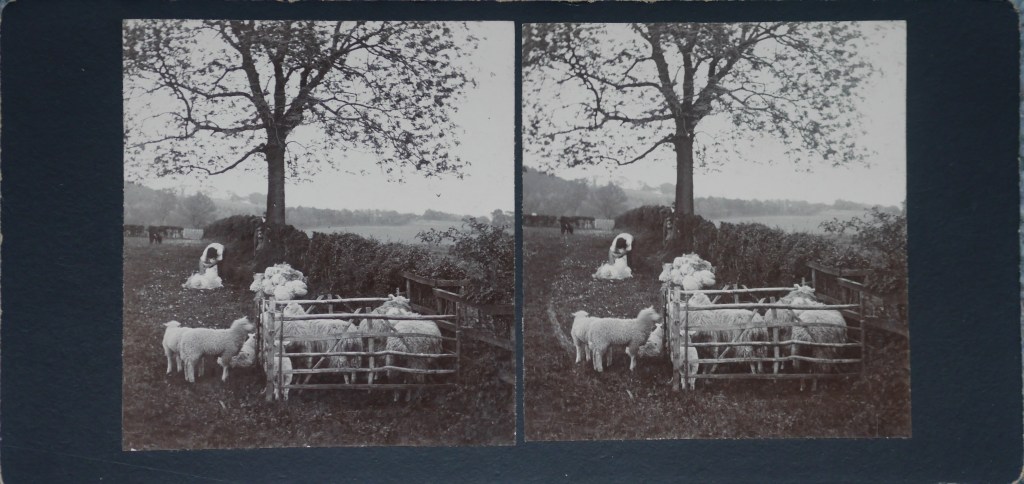


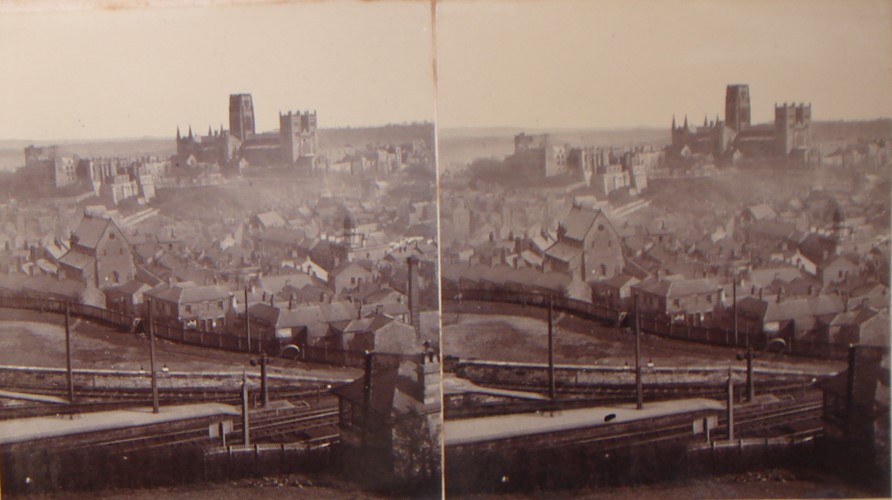

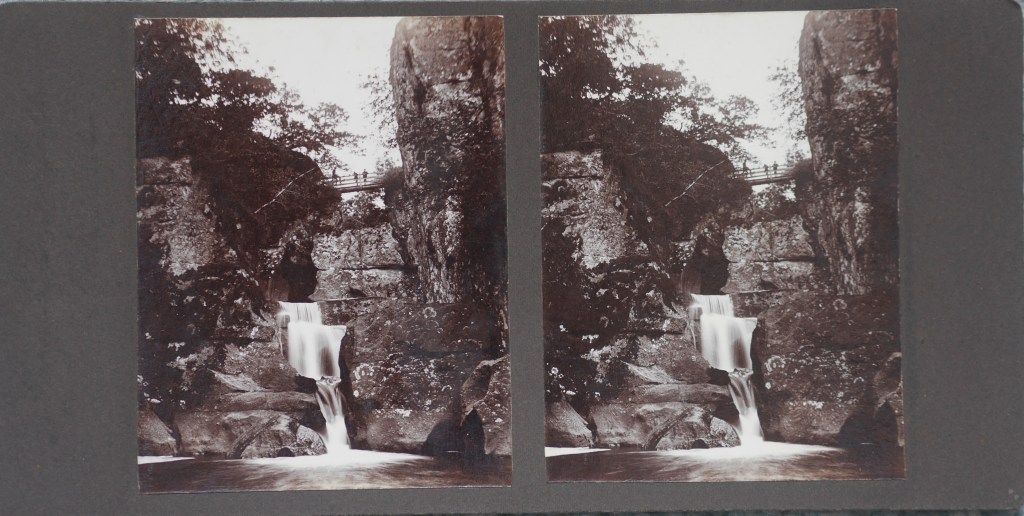

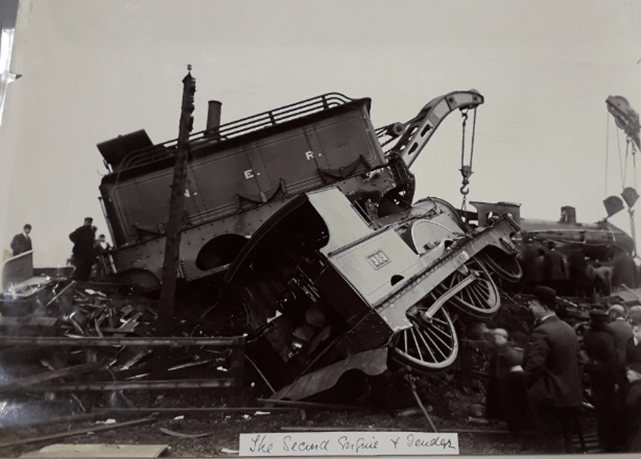




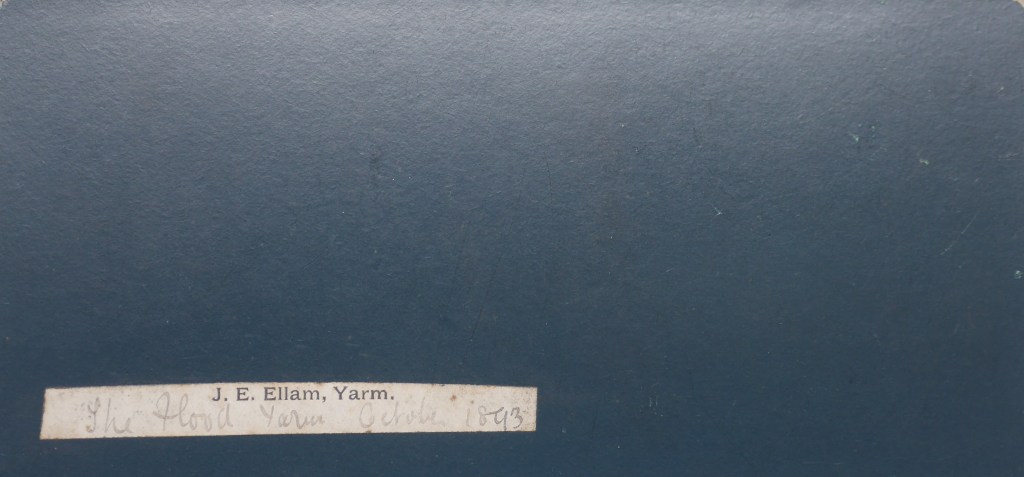
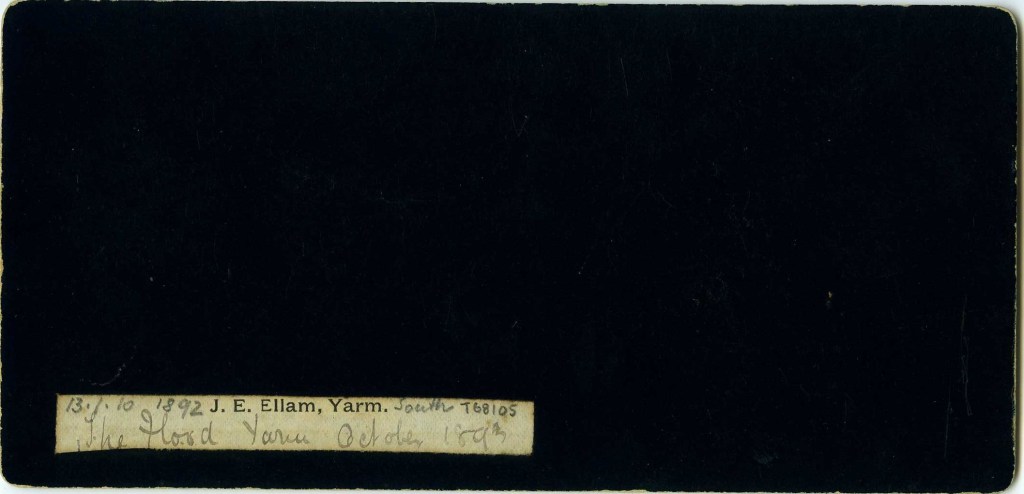

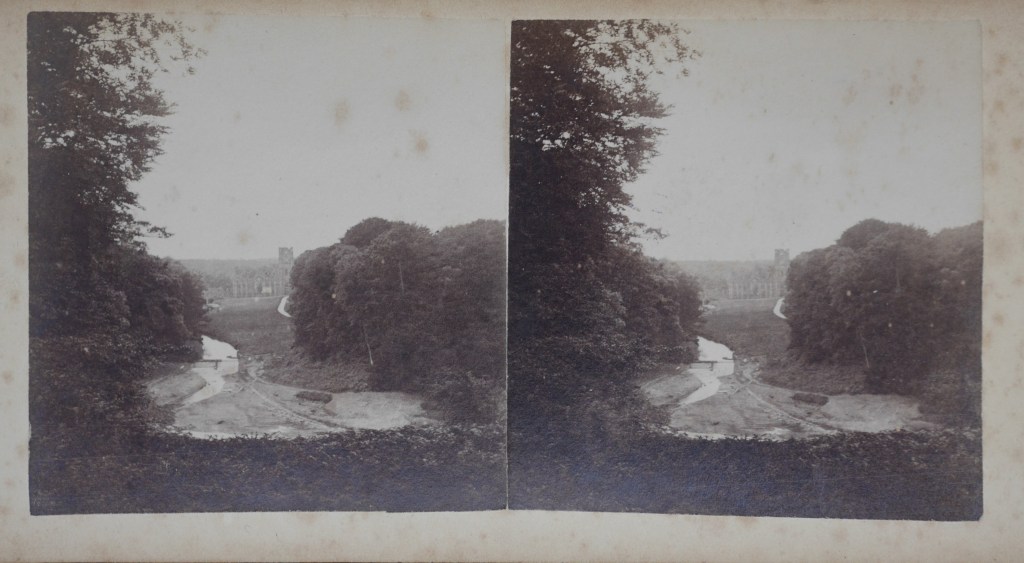


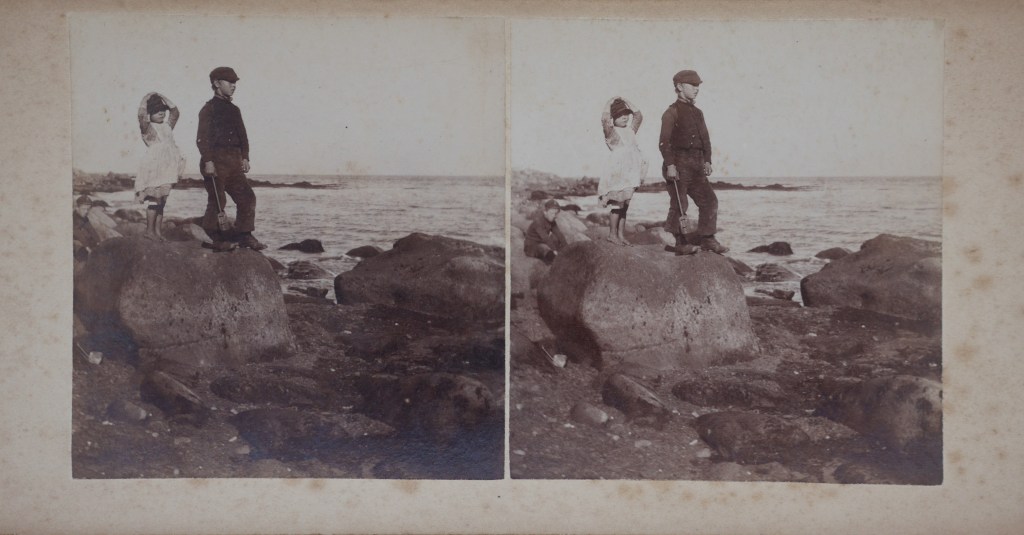

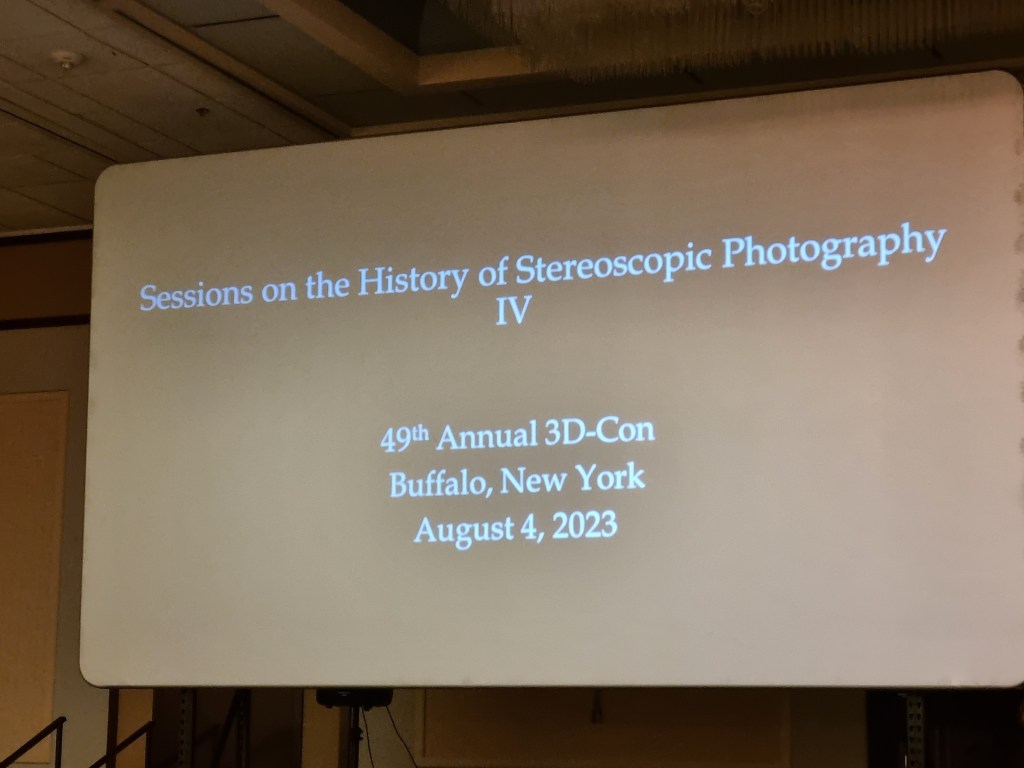
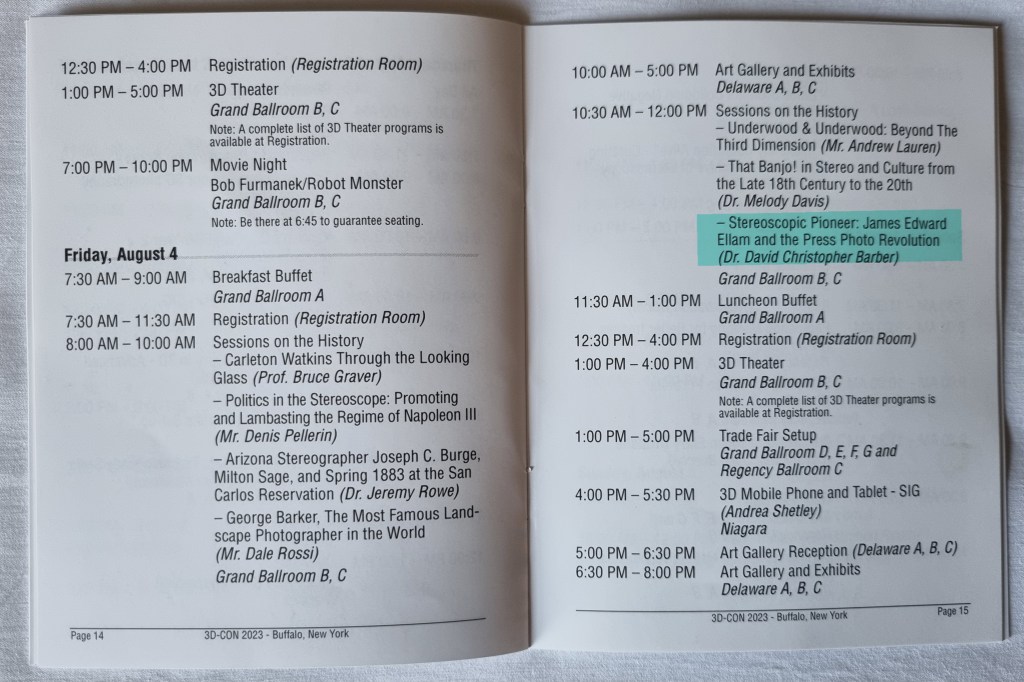


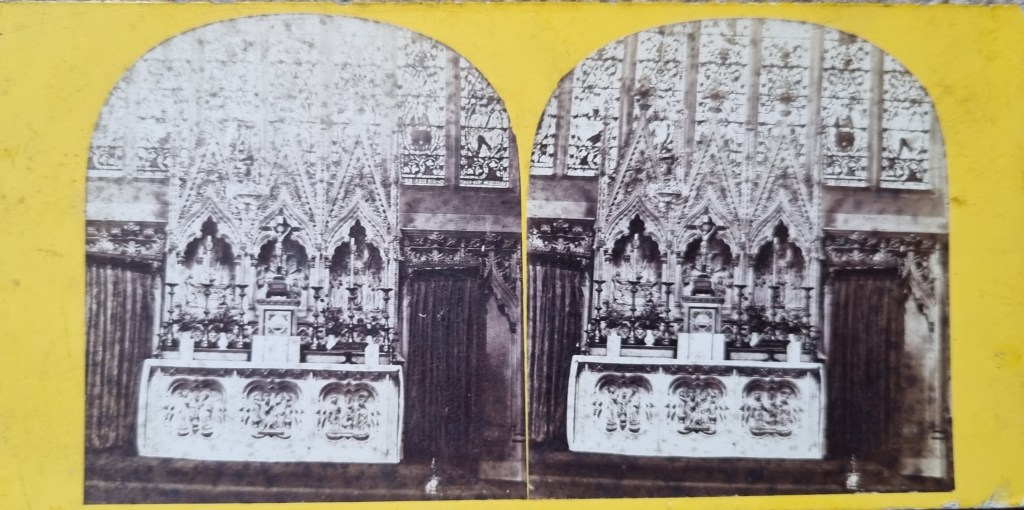





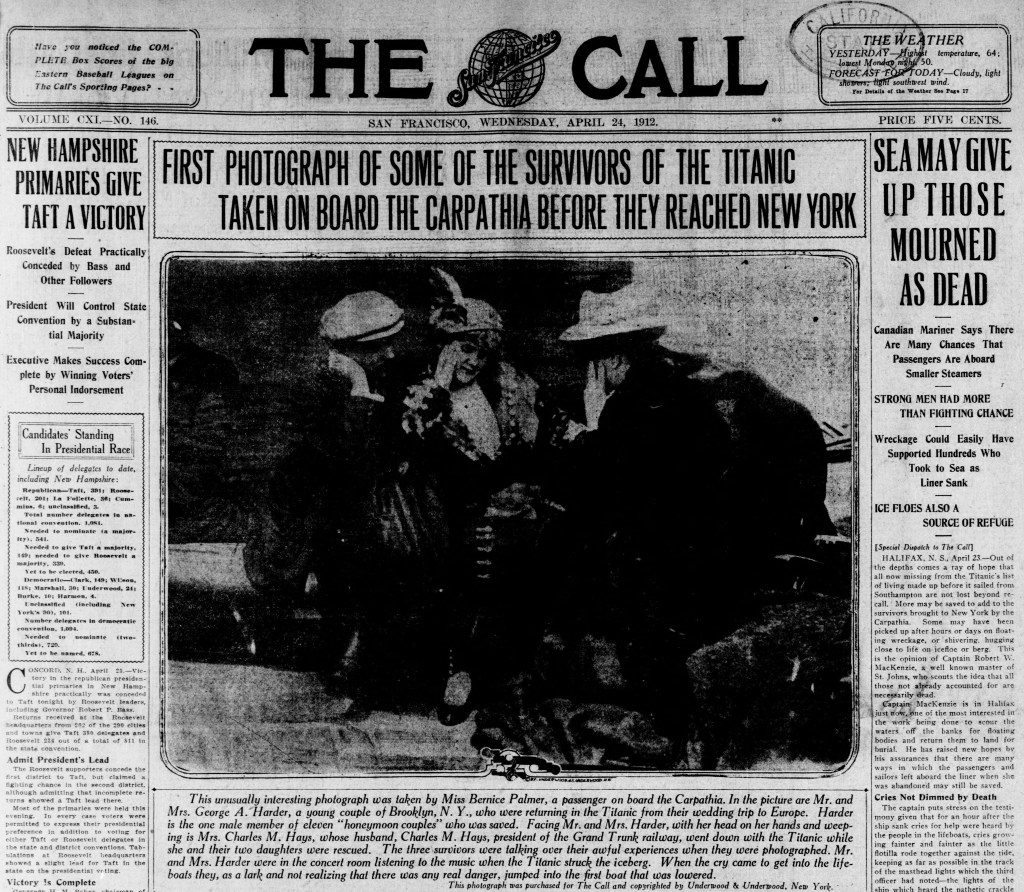
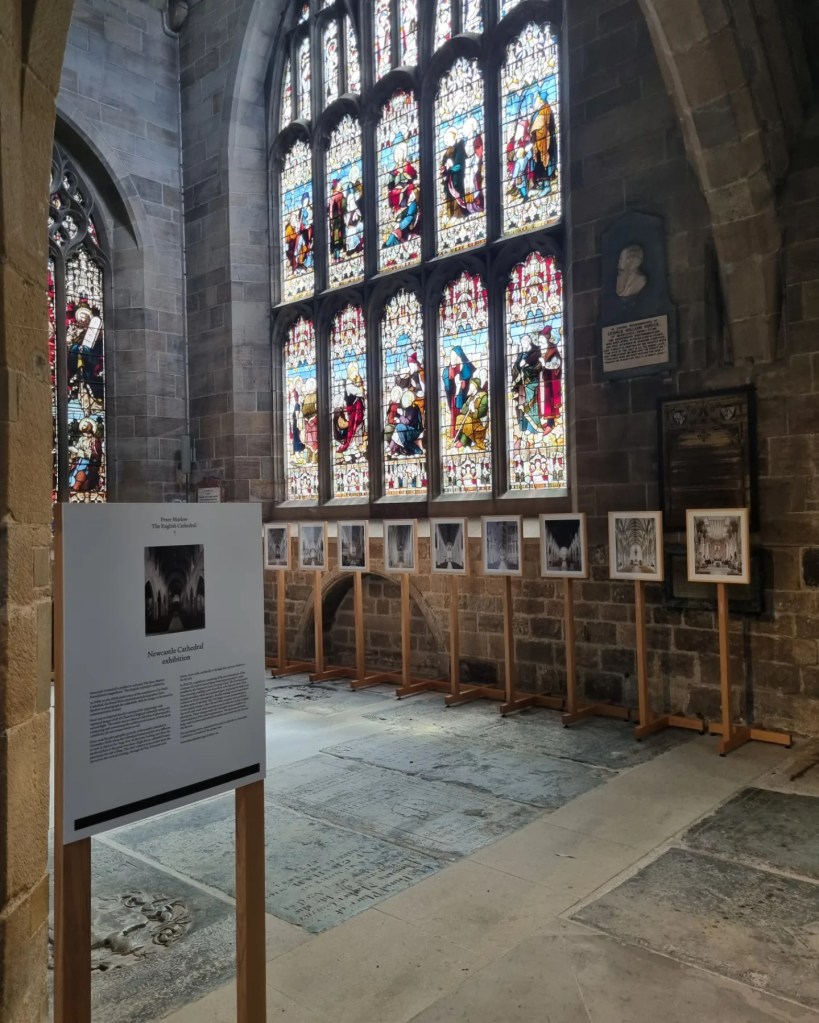

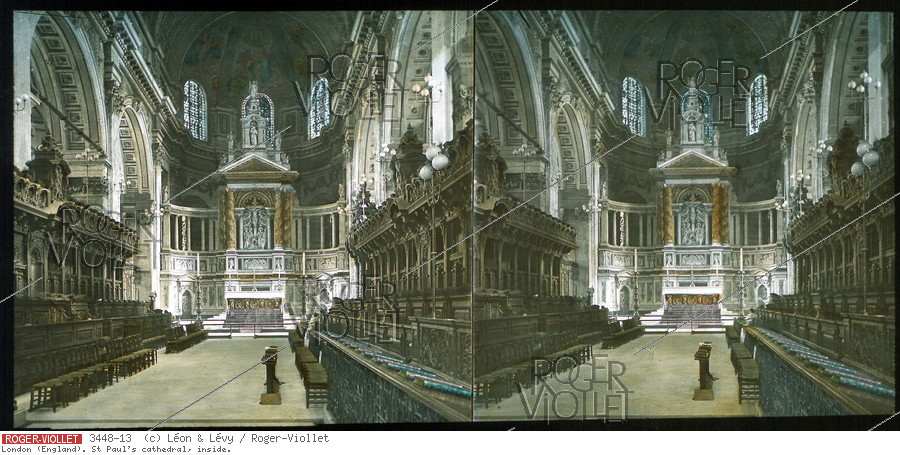


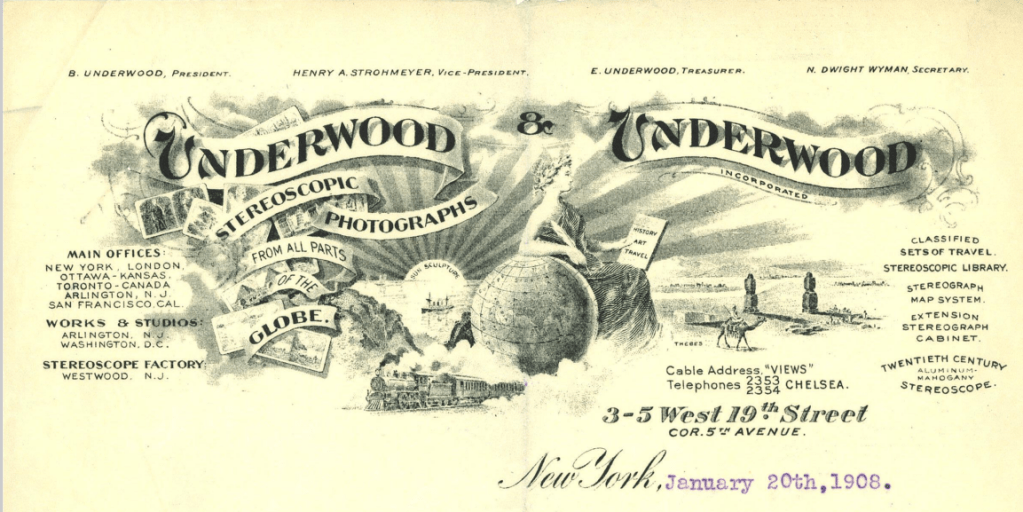


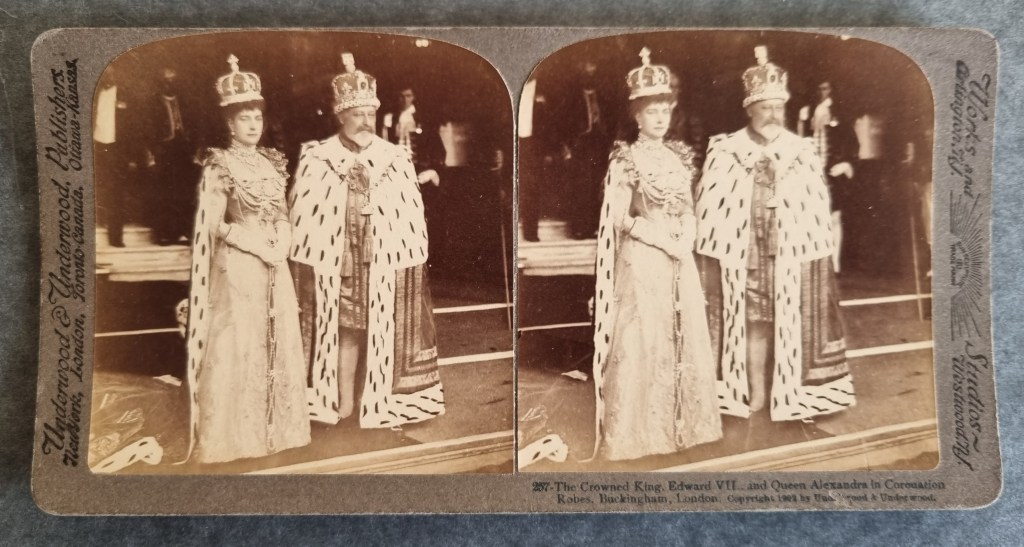
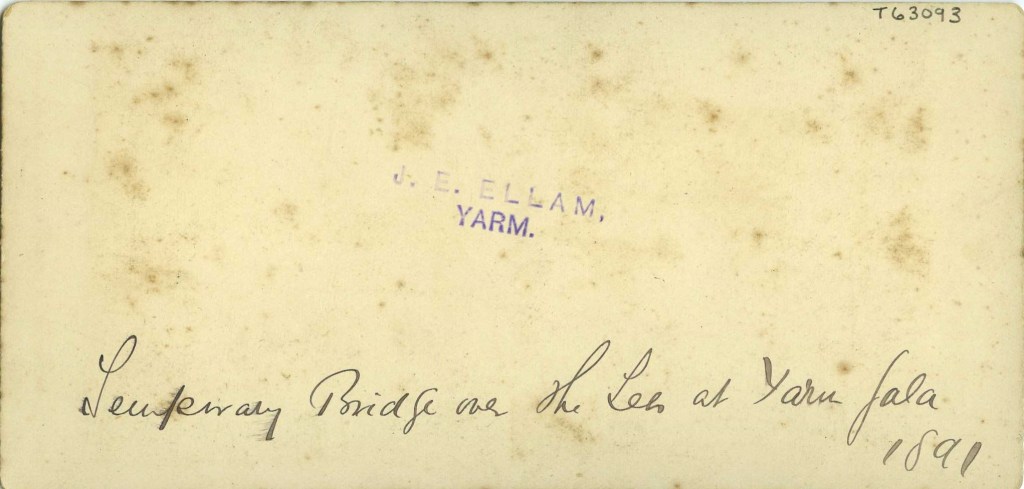
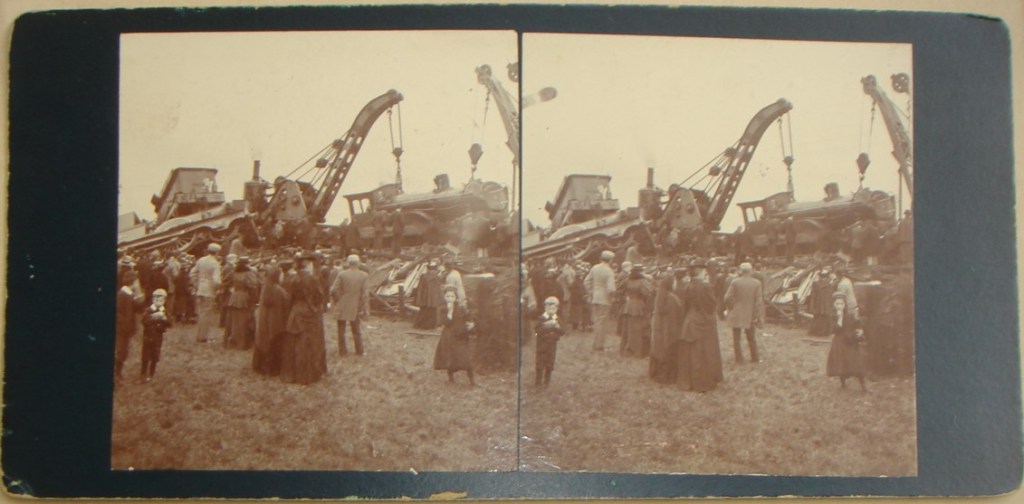
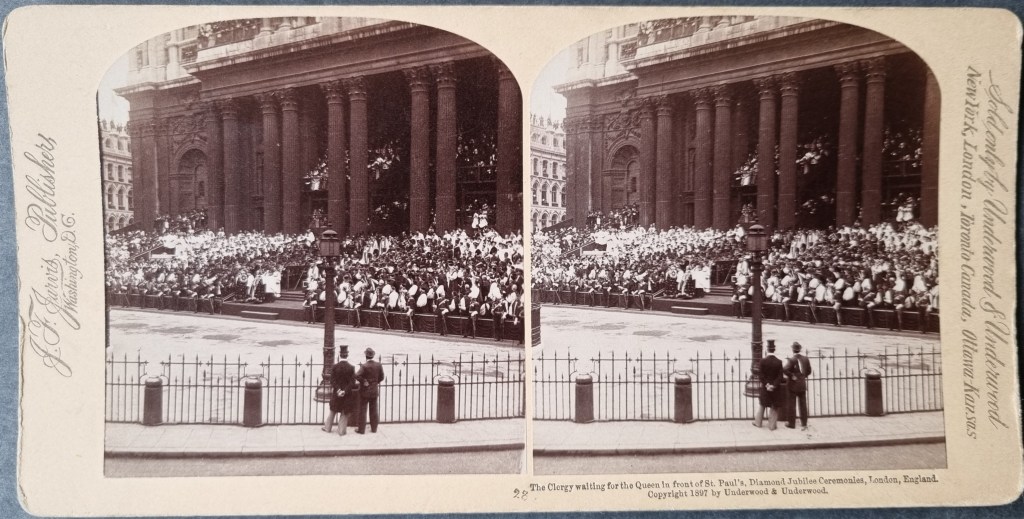
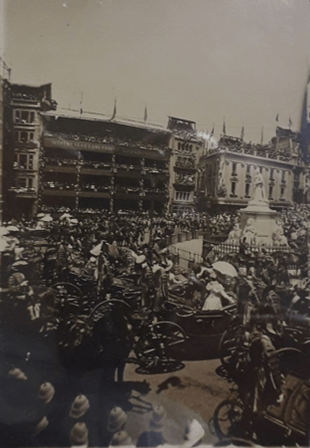

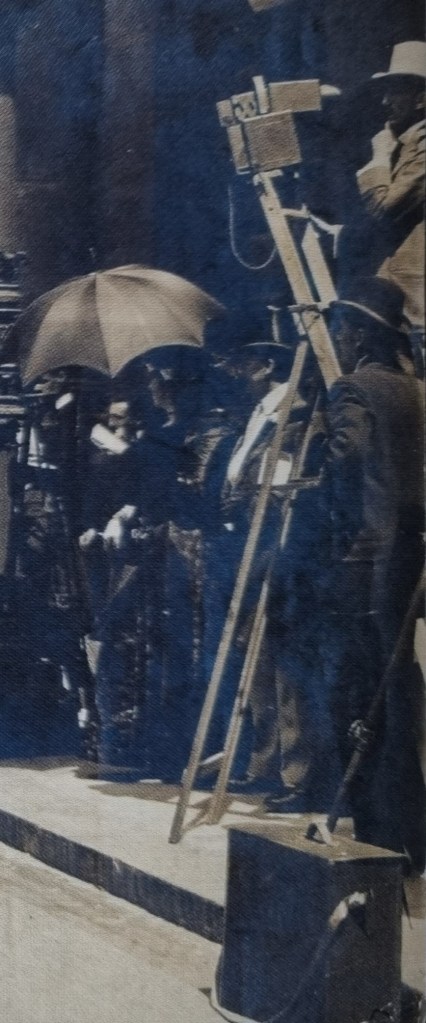
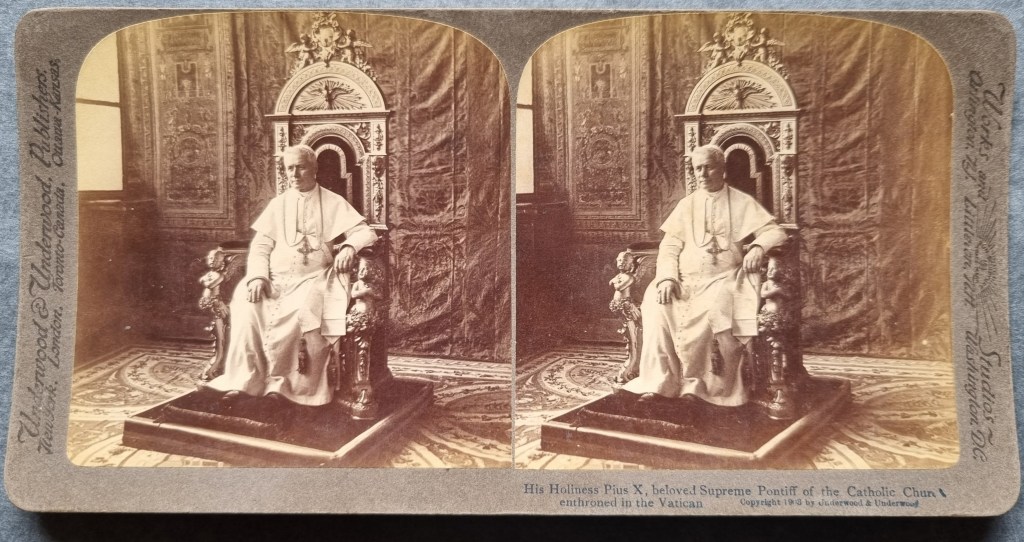
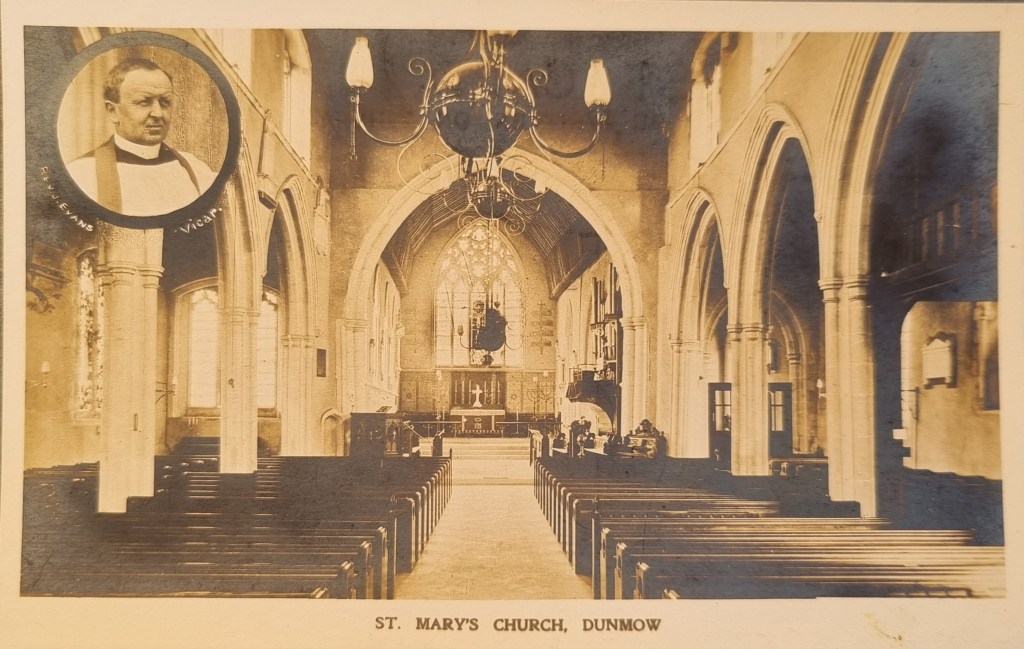


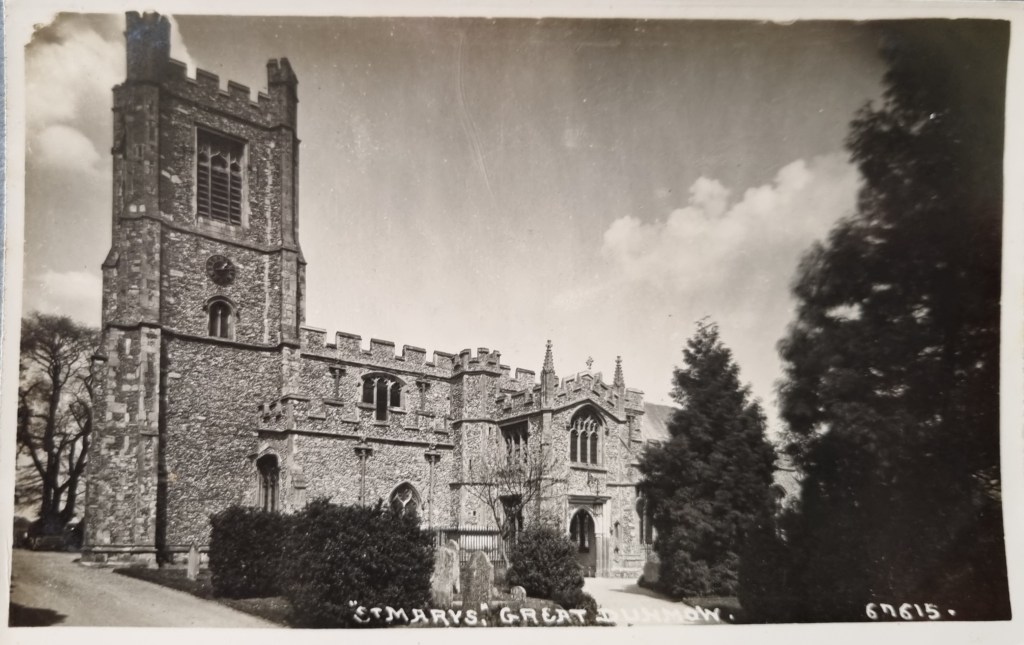
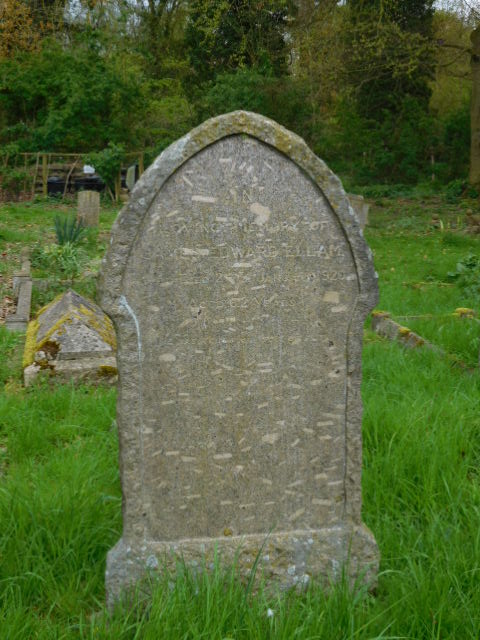
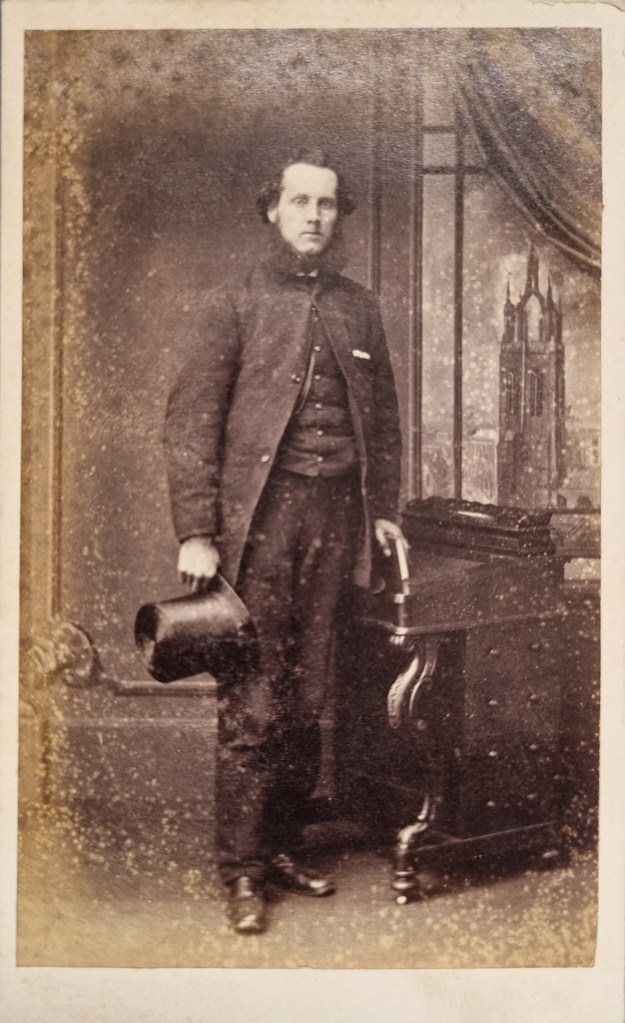

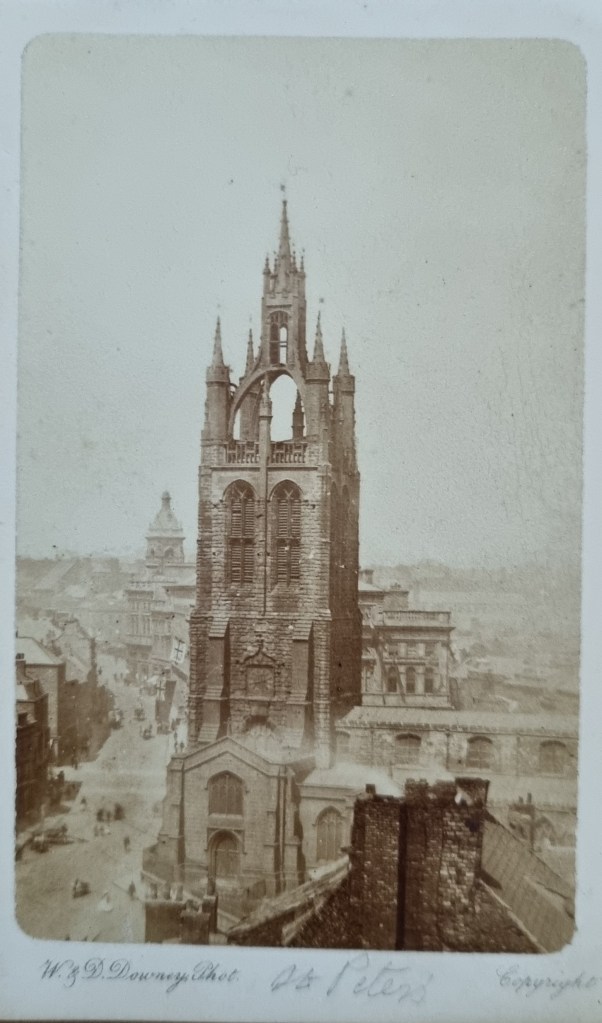



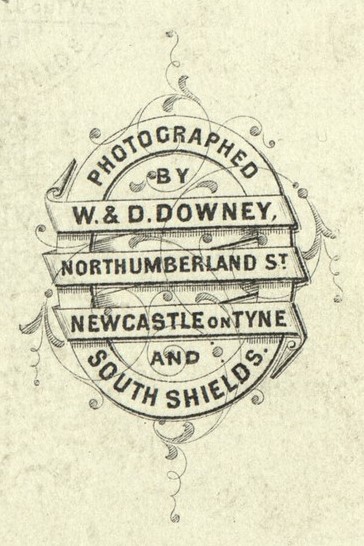




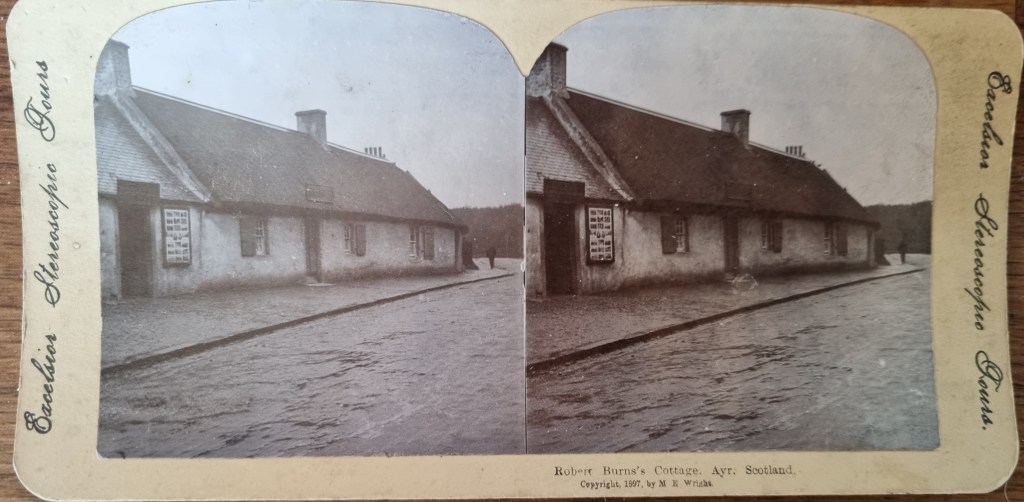

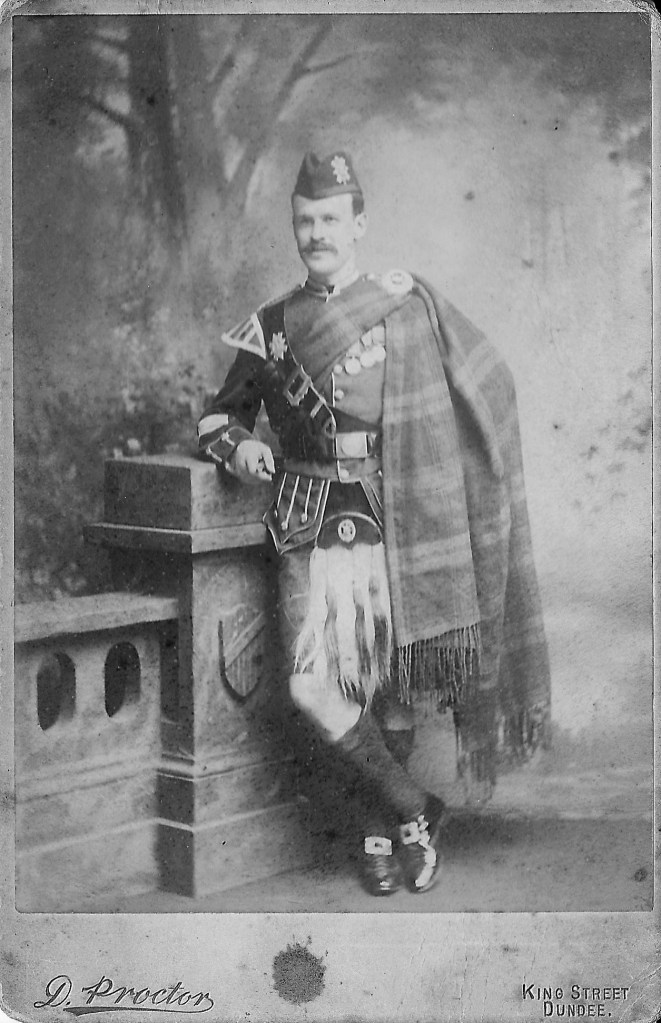


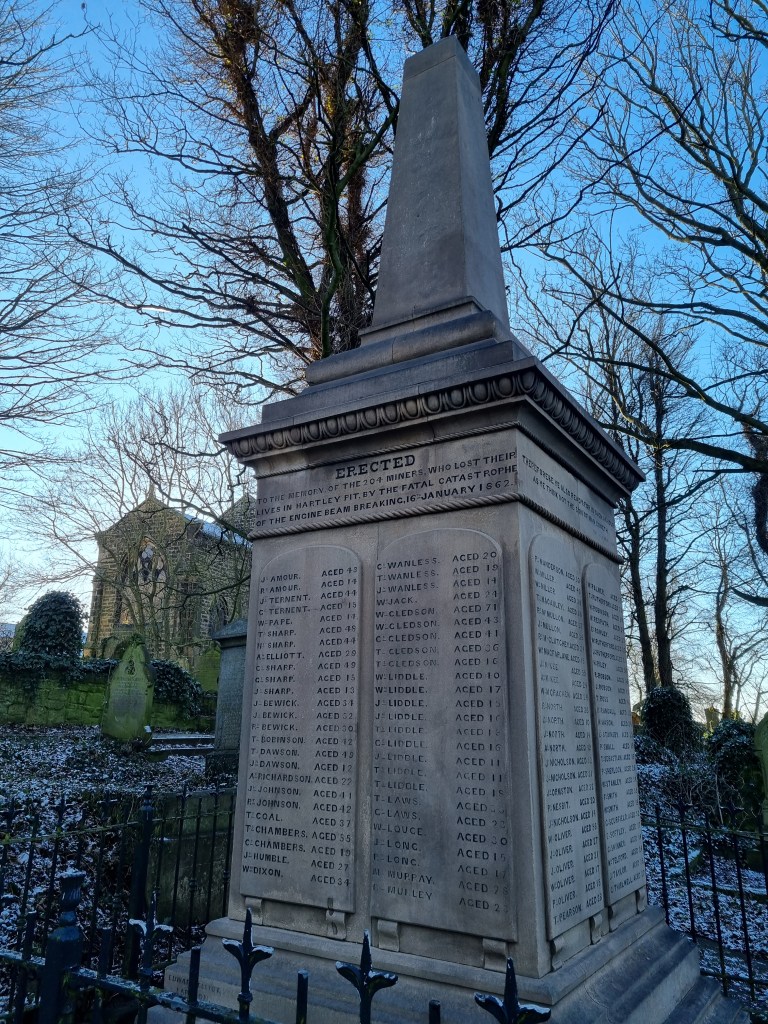
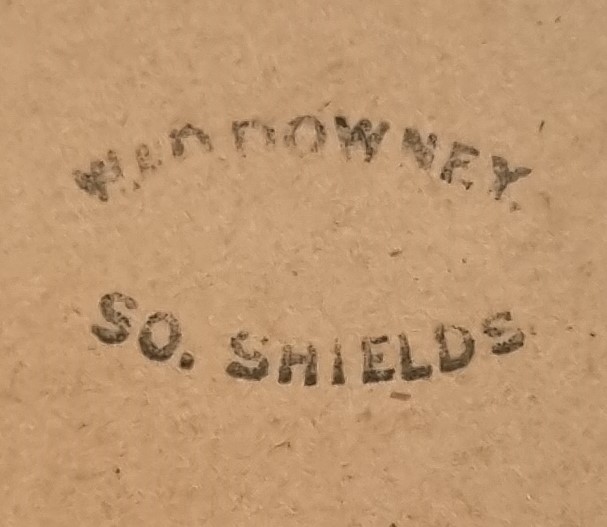
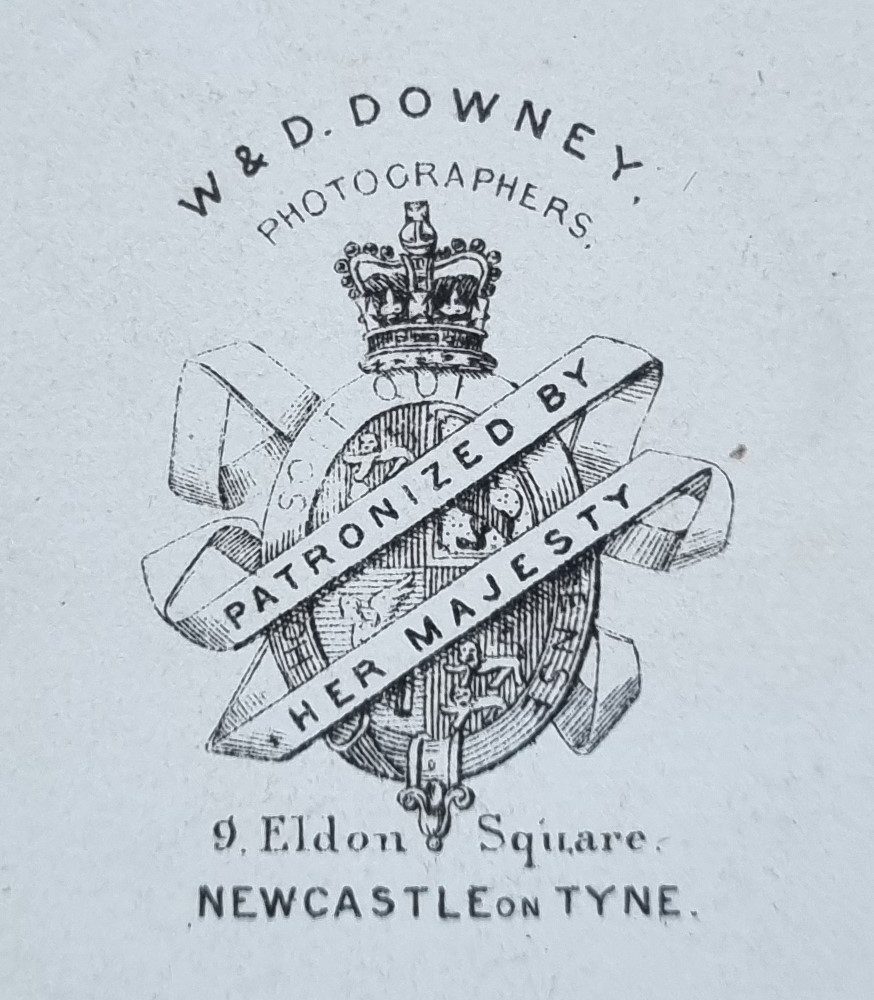


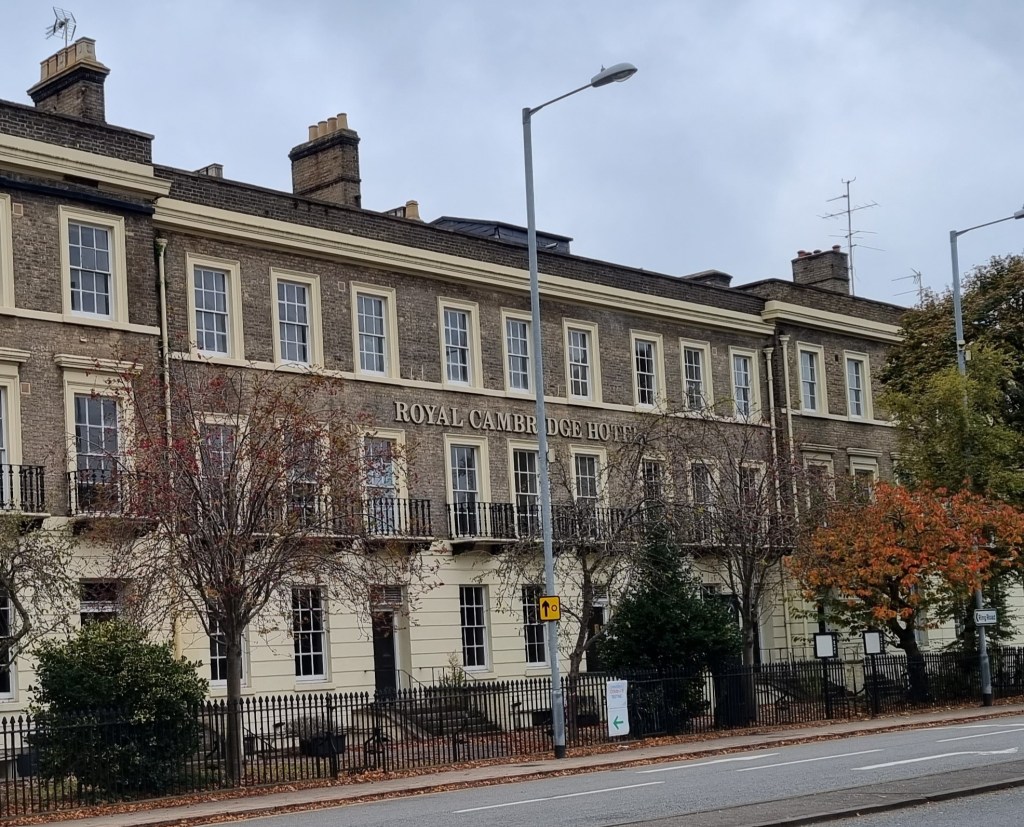

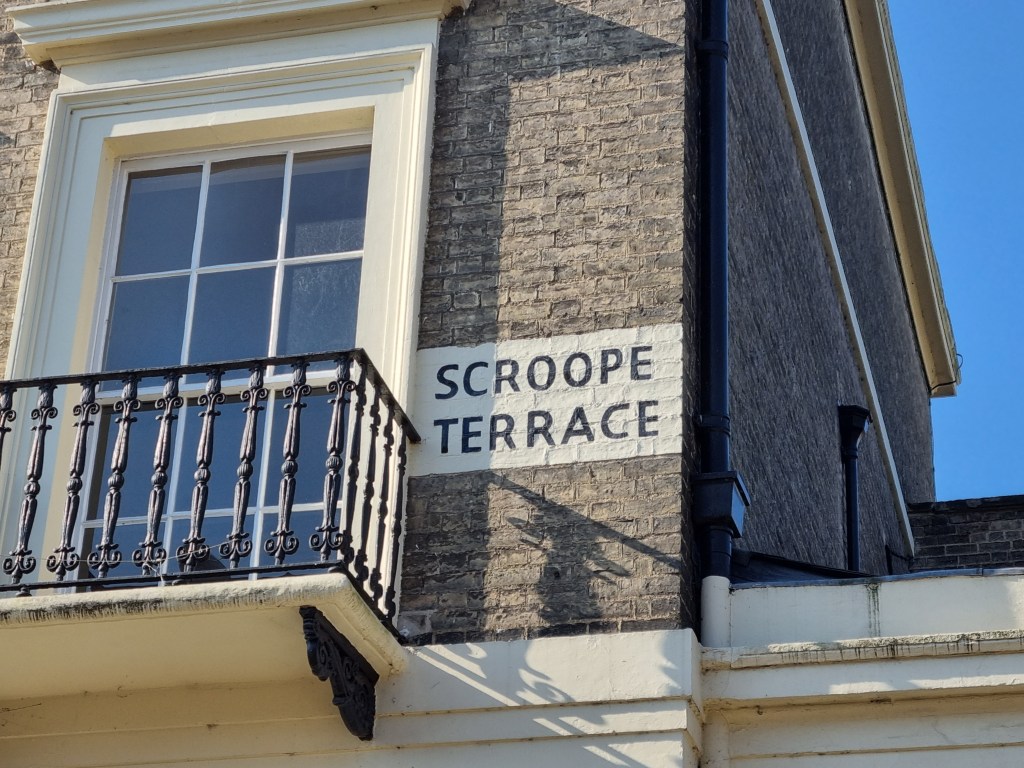


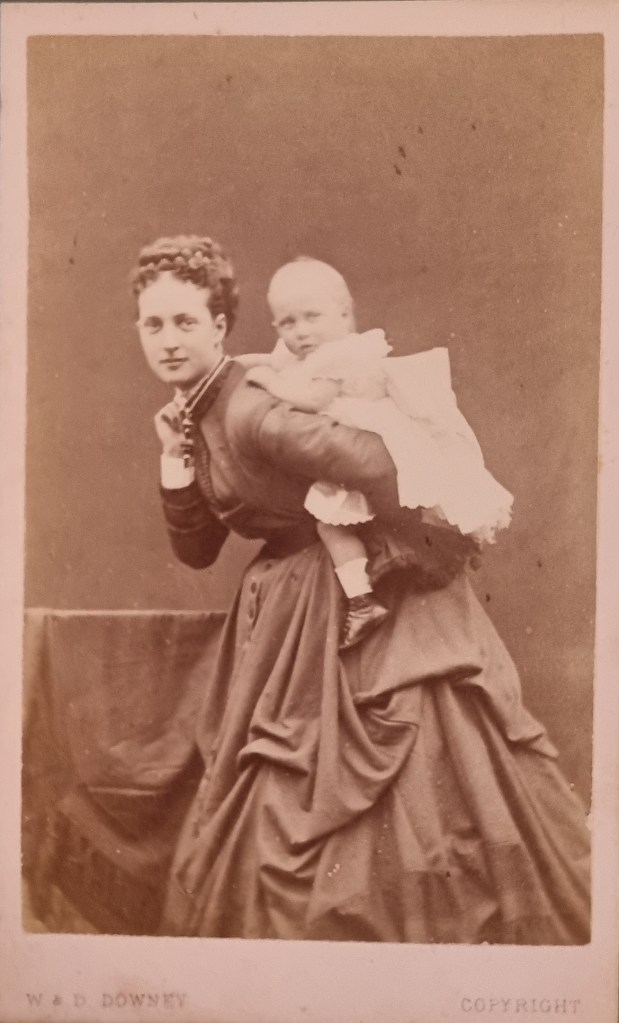

 Pressphotoman
Leave a comment