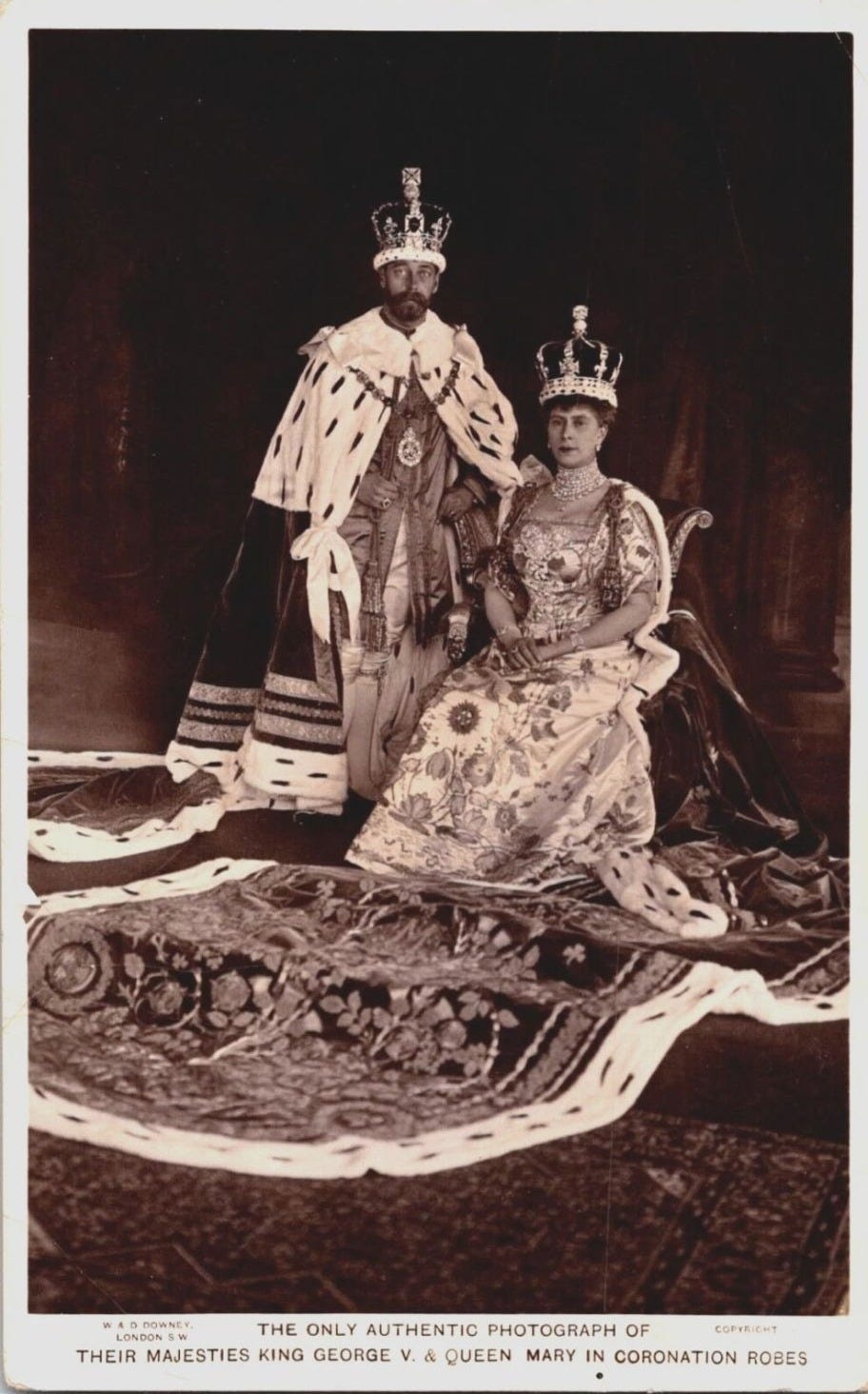
On 22nd June 1911, the coronation of King George V and Queen Mary took place at Westminster Abbey in London.
Jane Ridley’s biography George V: Never A Dull Moment (London: Chatto & Windus, 2021) described how the couple returned to Buckingham Palace in the state coach shortly before three o’clock.
Soon afterwards, they made a balcony appearance for the waiting crowds when “popular emotion was mostly deeply stirred” (The Times).
The appearance lasted all of three minutes after which they “… were photographed in their robes and crowns by the royal photographer Downey …”
For the photohistorian researching the W. & D. Downey company, this sentence lacks one important detail; namely, the identity of the photographer.
Founded in 1855 by South Shields brothers William (1829-1915) and Daniel (1831-1881), Downey carried out a similar ‘robes and crowns’ assignment for King Edward VII and Queen Alexandra following their coronation in 1902.
On that occasion, according to copyright records, the honour fell to William Downey’s eldest son, William Edward Downey (1855-1908), who had taken over the running of the business from his ageing father.
However, following his unexpected death at the age of 54, the role of company manager passed to his half-brother Arthur James Hope Downey (1877-1943).
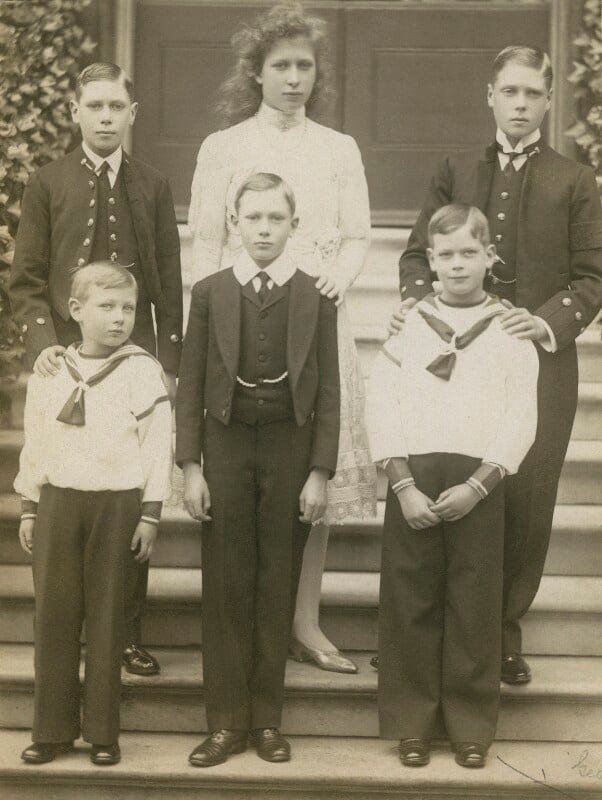
As well as the 1911 Coronation portrait, he is credited with more than 100 royal portraits including this one featuring George V and Queen Mary’s children in the collection of the National Portrait Gallery, London.
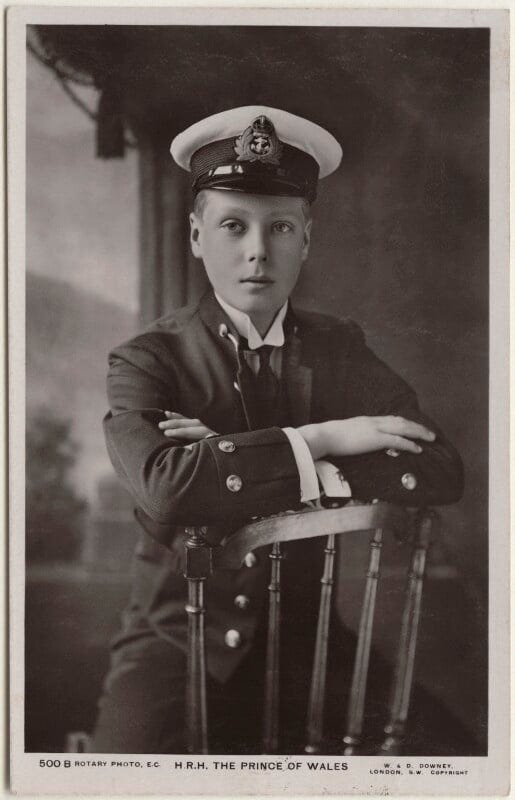
Another is a ‘real photograph’ postcard featuring Prince Edward as Duke of Windsor (later Edward VIII) published by the Rotary Photographic Company Ltd.
And he was also the photographer for ‘Nine Sovereigns at Windsor for the funeral of King Edward VII’ featuring George V and a selection of European sovereigns to whom he was related by blood or marriage.
Like the royal family who they photographed through several decades, the Downey family played a significant role in recording such moments in history for posterity.
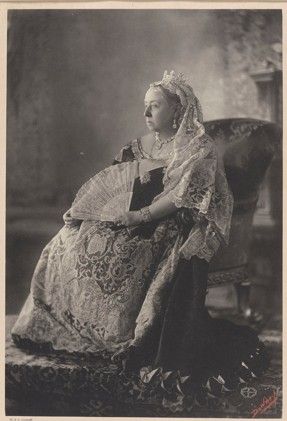
The brothers’ firm, W. & D. Downey, went on to become known worldwide for its portraits of Queen Victoria and the British royal family.
Diamond Jubilee portrait of Queen Victoria by W. & D. Downey. Copyright Royal Collection Trust / King Charles III.
As well as commercial photographers, skilled amateurs were also active in South Shields as revealed in new research by Rebecca Sharpe, co-curator of the Brian May Archive of Stereoscopy (Stereo World, vol. 51, no. 3 / Nov-Dec 2025 and no. 4 / Jan-Feb 2026).
In March 1859, Thomas Crookes, editor of ThePhotographic News, put forward to readers the idea of exchanging stereoscopic (or 3D) views.
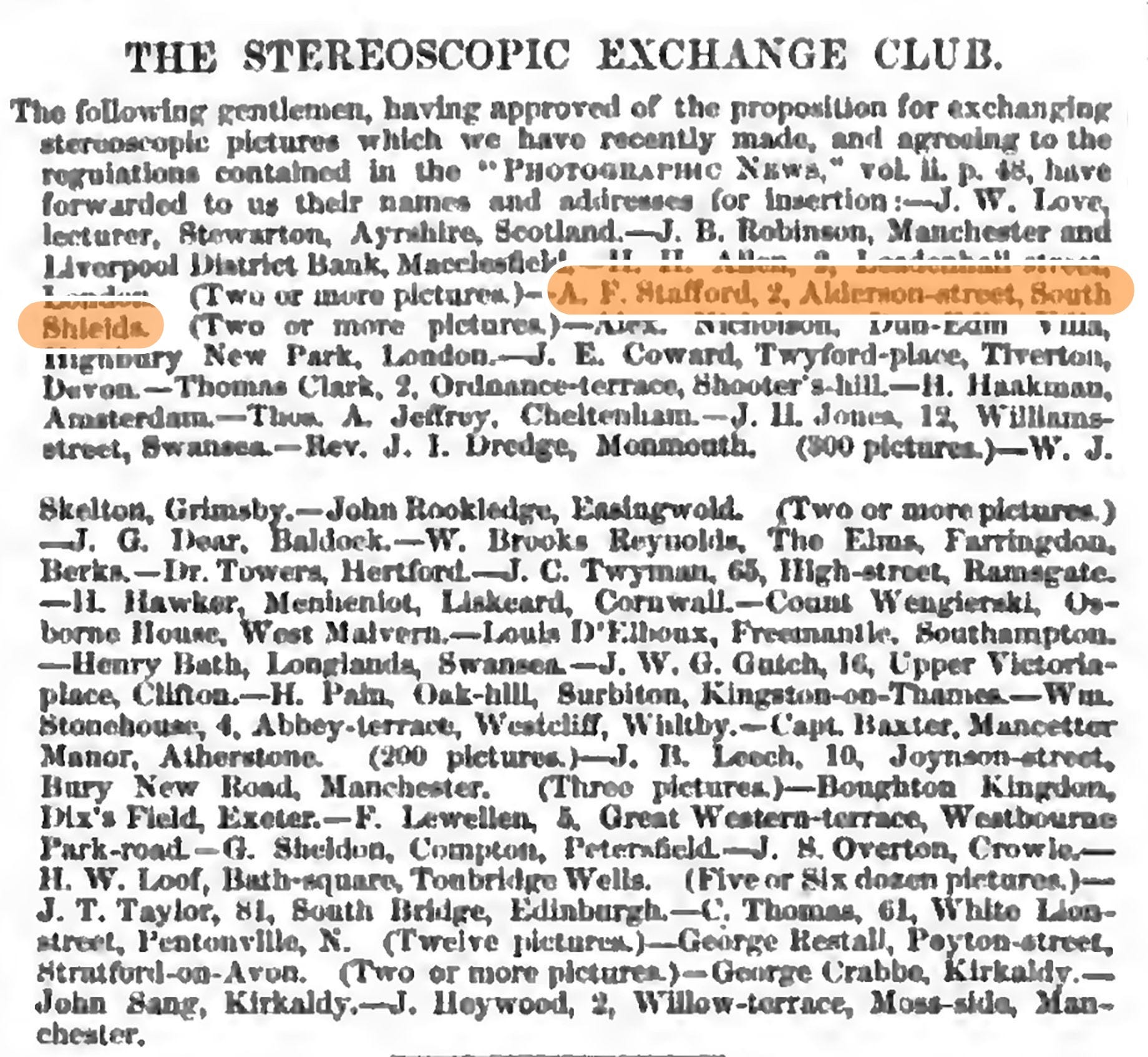
The following month, a list of gentlemen’s names was published as willing participants in what became known as ‘The Stereoscopic Exchange Club.’
Among its founding members was ‘A.F. Stafford of 2 Alderson Street, South Shields.’
First members list of the Stereoscopic Exchange Club (8th April 1859). From The Photographic News. Courtesy of Rebecca Sharpe.
According to the 1861 Census, Anthony Ford Stafford (1822-1910) was a ‘ship builder’s agent’ living with his wife Maria in the Westoe district of the town.
As to his photography, the columns of The Photographic News reveal that he was both knowledgeable and accomplished.
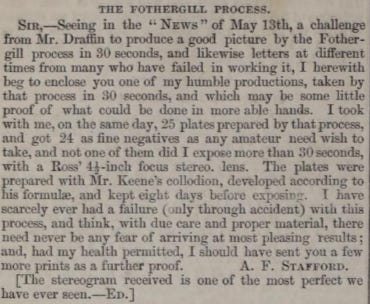
In a contribution to the paper’s ‘Photographic Notes and Queries’ column (5th August 1859), Stafford described his experience of using the newly-announced dry plate Fothergill Process.
This account also reveals important details about his photographic practice including his use of a “Ross 4 1/2 inch focus stereo lens.”
First members list of the Stereoscopic Exchange Club (8th April 1859). From The Photographic News. Courtesy of Rebecca Sharpe.
In a note at its conclusion, editor Thomas Crookes added: “The stereogram received is one of the most perfect we have ever seen” though no mention of the subject was given.
In what might be a complete coincidence, a W. & D. Downey newspaper advert appeared the very next day offering for sale “stereoscopic views of the village of Westoe.”.
North & South Shields Gazette (6th August 1859). From British Newspaper Archive.
Taken together though, these two pieces of evidence at least raise the possibility that A.F. Stafford was supplying Downey’s with high-quality stereoscopic views.
As to whether they knew each other, their paths may well have crossed in other roles they undertook in the South Shields community
For example, Stafford was secretary of the Mechanics Institute whilst both Downey brothers were committee members of the Working Men’s Institute.
Within a few years though, their lives had moved in different directions.
In March 1863, South Shields celebrated the royal wedding of the Prince and Princess of Wales with a public ball in the hall of the Mechanics Institute that A.F. Stafford helped organise.
By contrast, the Downey brothers had opened a studio in Newcastle upon Tyne and were soon photographing members of the royal family such as Alexandra, Princess of Wales with her daughter Louise.
In the search for more clues about A.F. Stafford’s photography, I was delighted to locate a cache of his personal papers in the collection of the Tyne & Wear Archives (DX1016).
This reveals more about his business dealings centred around shipping on the River Tyne, but sadly there was no further evidence or any examples of his photography.
As for the Stereoscopic Exchange Club of which Stafford had been a founding member, it continued for a few years until running out of steam.
If this post has whetted your appetite, Rebecca Sharpe’s research about the Stereoscopic Exchange Club with examples of its members’ stereos features in a talk she gave last week for the Royal Photographic Society Historical Group.
She shared the event with Julie Gibb of National Museums Scotland whose research into the United Stereoscopic Society featured in an earlier Pressphotoman post (Jigsaw Pieces – 8th December 2025).
From the 1860s, photographers W. & D. Downey were among Queen Victoria’s favourites and produced defining royal images into the early decades of the 20th century.
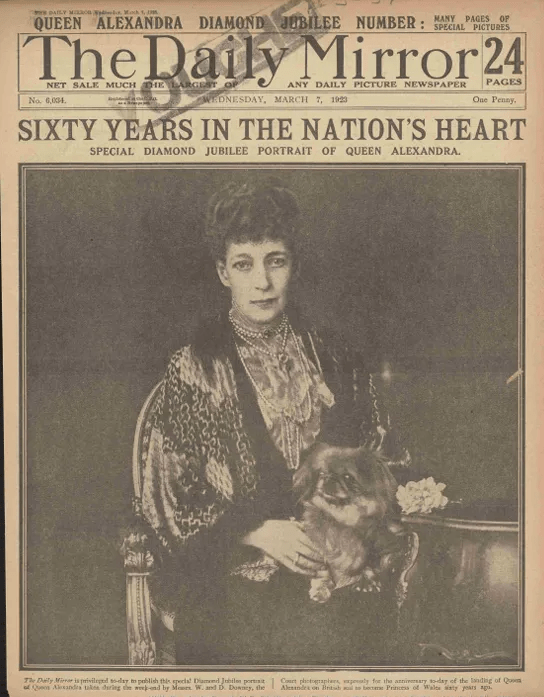
However, by the time the Daily Mirror published this front page Downey portrait of Queen Alexandra marking her Diamond Jubilee in 1923, the company’s fortunes were already in decline.
Daily Mirror (7th March 1923). From British Newspaper Archive.
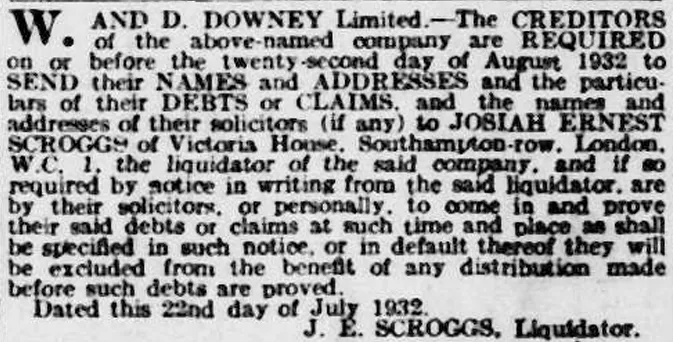
By July 1932, according to a notice that appeared in the Daily Telegraph, liquidators were called in and creditors asked to make claims on any outstanding debts.
Daily Telegraph (25th July 1932). From British Newspaper Archive.
That, one might have assumed, was the end of the W. & D. Downey story.
However, new research reveals that both the company name and its famous address of 61 Ebury Street in London’s Belgravia lived on.
The photographer responsible was Miss Sarah Partridge (1868-1955) whose career as a high society portraitist was celebrated in last week’s Pressphotoman blogpost.
By the time of Downey’s liquidation, she had a long and illustrious CV in the photography business.
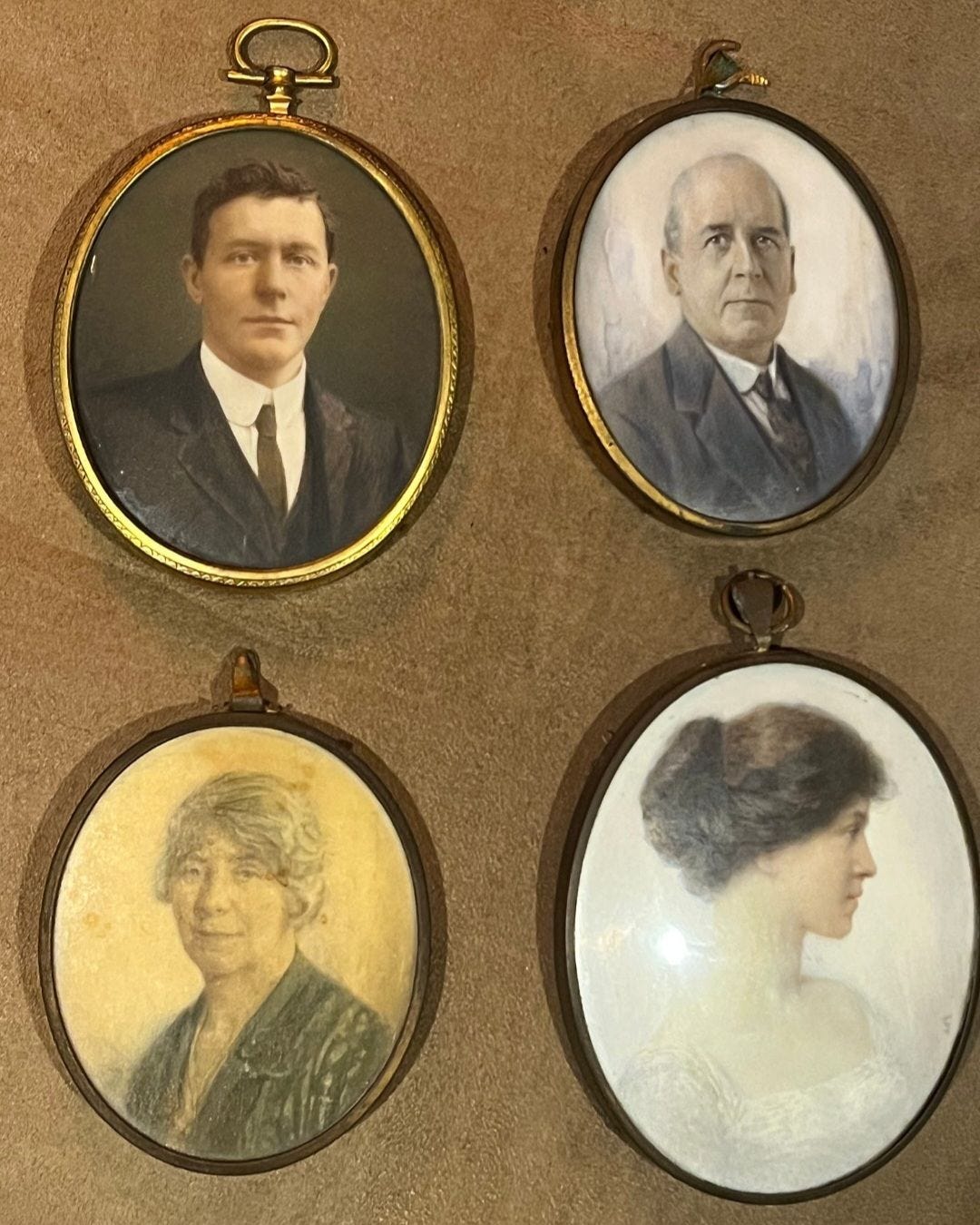
Examples of Sarah’s photography have been shared with this blog by Jennie Gray, her great great niece who lives in Australia.
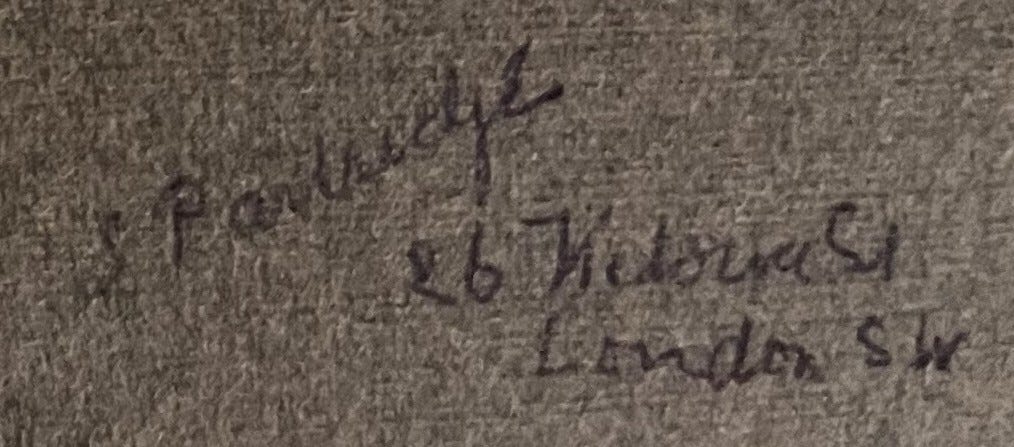
These untitled examples are both signed ‘S. Partridge’ with a London address at ‘26 Victoria Street, SW’ from where she operated in 1920, according to the London telephone directory.
Untitled by Sarah Partridge (1868-1955). Courtesy of Jennie Gray.Untitled by Sarah Partridge (1868-1955). Courtesy of Jennie Gray.. Signature of Sarah Partridge (1868—1955). Courtesy of Jennie Gray.
When the 1921 Census was taken, Sarah was recorded as a self-employed ‘photographic finisher’, working from home in the Surrey suburb of Croydon where she lived with her sister Lillie Kerswill and her family.
Sarah’s work for Bruton Studios in London’s Mayfair alongside society photographer Robert Johnson (1856-1926) seems to have lasted for around a decade into the early 1930s.
Examples of portraits by Sarah Partridge (1868-1955). Courtesy of Jennie Gray.
The details of how she then became connected with the W. & D. Downey company name after its liquidation are not known.
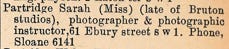
However, by 1935, ‘Sarah Partridge (Miss) (late of Bruton Studios)’ was operating as a ‘photographer & photographic instructor’ from Downey’s long-established London address at 61 Ebury Street in Belgravia.
1935 London Telephone Directory. From My Ancestry.
Trade directories reveal that she was sharing the premises with, amongst others, a cabinetmakers and a handicrafts business.
Examples of Sarah’s photography during this period have not survived, but she was using the company name as late as 1940 when this telephone directory listing was published.
1940 London Telephone Directory. From My Ancestry.
The following year, ‘W. & D. Downey’ is again listed in a London Post Office directory at 61 Ebury Street, but on this occasion there’s no mention of Sarah Partridge.
It’s at this point that the research trail goes cold, though the Royal Collection Trust website which features nearly 1,500 examples of the company’s photography, confirms that 1941 was Downey’s last year of operation.
Entry for W. & D. Downey from Royal Collection Trust website.
The lack of any surviving company archives by way of glass plate negatives or prints and written records suggests that the London Blitz may have had a hand in the company’s eventual fate.
What can be celebrated though with more certainty is the overlooked career of Miss Sarah Partridge who can now be recognised as a talented portrait photographer.
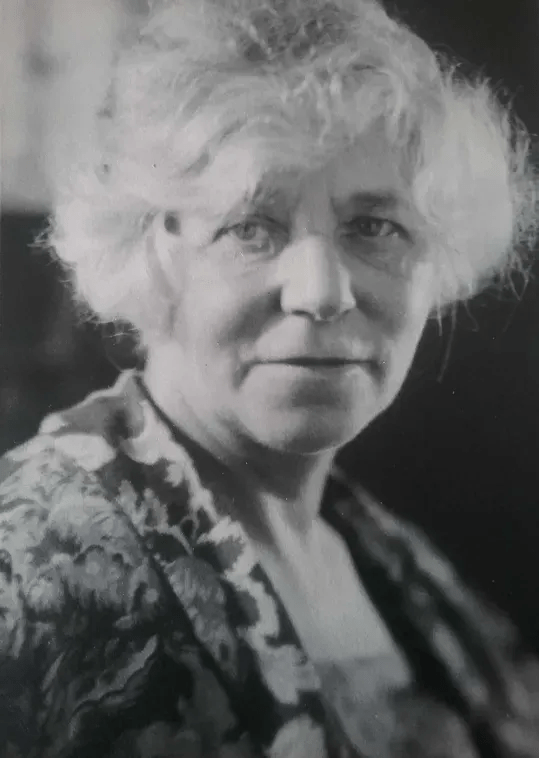
Sarah Treneman Partridge (1868-1955). Courtesy of Jennie Gray.
The search to discover more examples of her work and uncover more information about the final days of W. &. D. Downey continues.
Photohistory sometimes takes the researcher down less travelled byways and throws up unexpected connections that take the breath away.
That is certainly the case with the photographer Sarah Partridge (1868-1955) whose career is fleetingly captured in a series of public records and press cuttings.
Sarah Treneman Partridge (1868-1955) in later life. Courtesy of Jennie Gray.
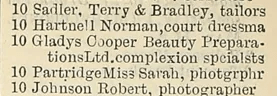
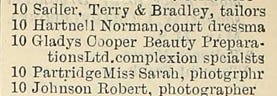
The first ‘wow’ moment in trying to learn more about her photography was provided by an entry in a 1925 London Street Directory for 10 Bruton Street in the Mayfair district.
Two names in particular stood out: ‘Norman Hartnell’ and ‘Gladys Cooper’.
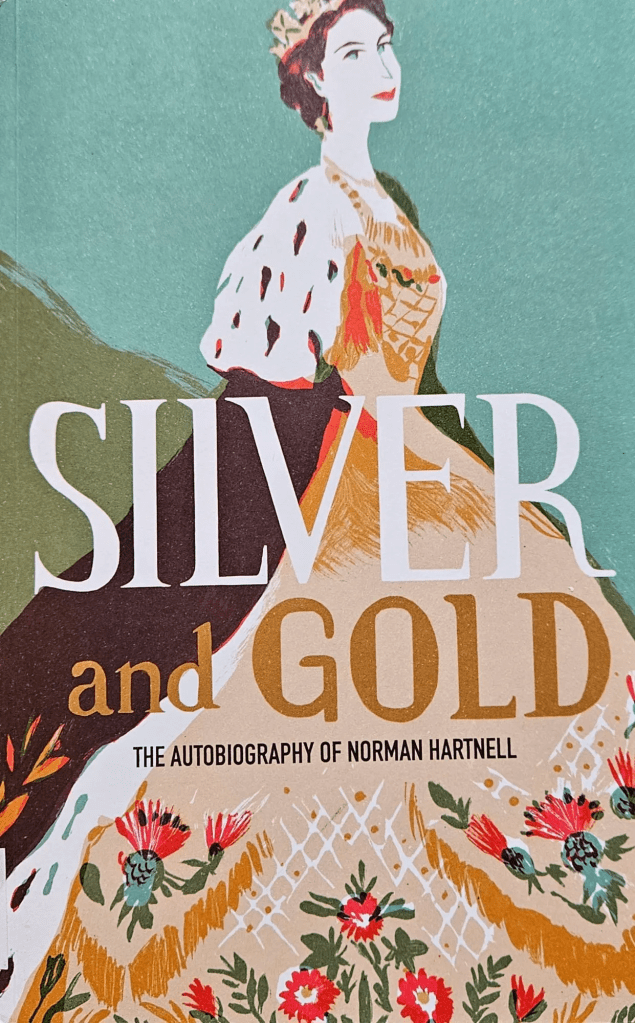
As revealed in his 1955 autobiography Silver and Gold, the fashion designer Norman Hartnell (1901-1979) opened his first haute de couture at 10 Bruton Street in April 1923.
According to Hartnell, “no house was ever started in a more unprofessional, amateurish way” (London: V&A Publishing, 2019 reissue).
Despite this, Hartnell was soon earning rave reviews in Paris and by the mid-1930s, he was designing clothes for the Royal Family.
It was a relationship that culminated in Princess Elizabeth’s wedding dress in 1947 and her magnificent Coronation dress six years later.
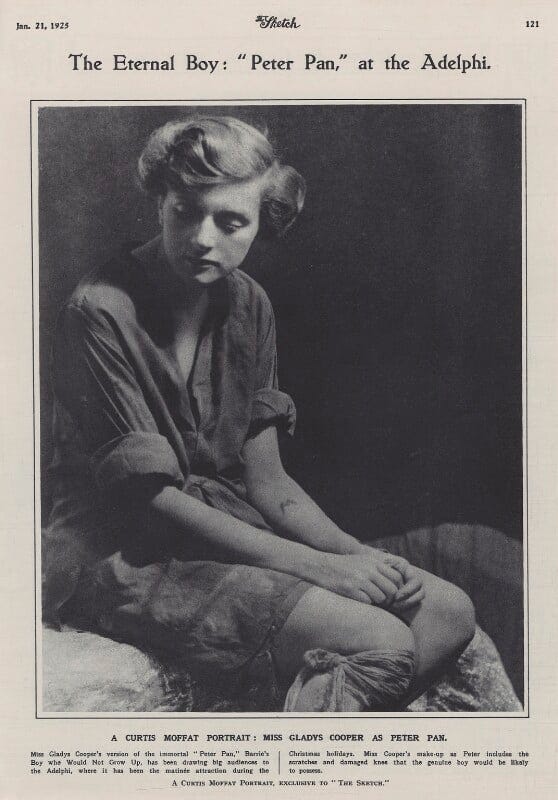
Also occupying commercial premises in the Georgian building at 10 Bruton Street was the celebrated actress Gladys Cooper (1888-1971).
At this point in her theatrical career, Gladys (later Dame Glad2ys) was the darling of the tabloid and illustrated press as demonstrated in this 1925 portrait from The Sketch.
Her ‘beauty preparations’ business chimes with Hartnell’s recollection of Cooper being the first person he knew who followed a diet (milk and potatoes, two days a week) to stay slim.
However, what Hartnell’s account omitted to mention were the two photographers also operating from 10 Bruton Street, ‘Robert Johnson’ and the subject of this blogpost ‘Miss Sarah Partridge’.
Using the business name ‘Bruton Studios’, both were well connected in the world of royalty and high society.
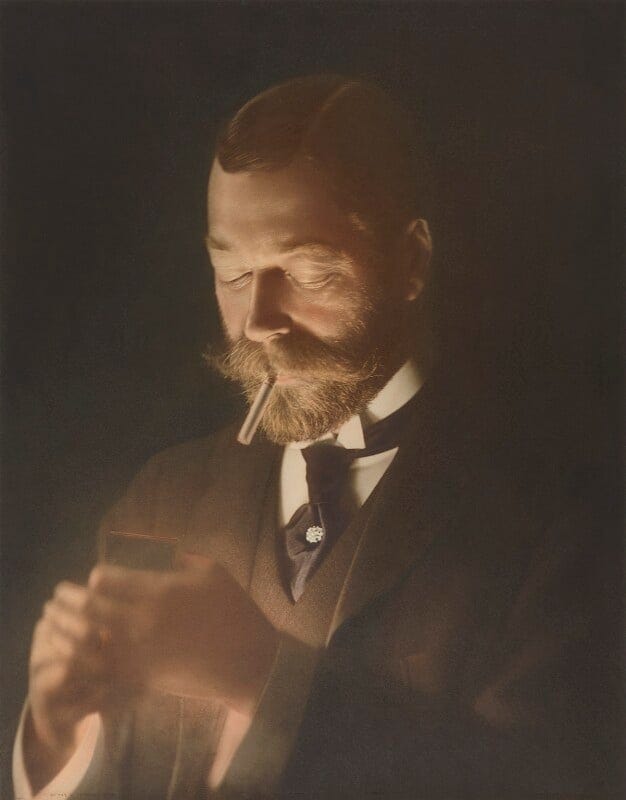
Robert Johnson (1856-1926) created this striking colourised portrait in the late 1890s when the future George V was Duke of York.
It is one of three of images credited to him in the National Portrait Gallery, London that underline his credentials as a portrait photographer.
Like Johnson, Sarah Partridge began working in photography during the later decades of the 19th century.
First as a photographer’s assistant and then photographic re-toucher, the 1911 Census recorded her ‘personal occupation’ as ‘photographer’s artist’.
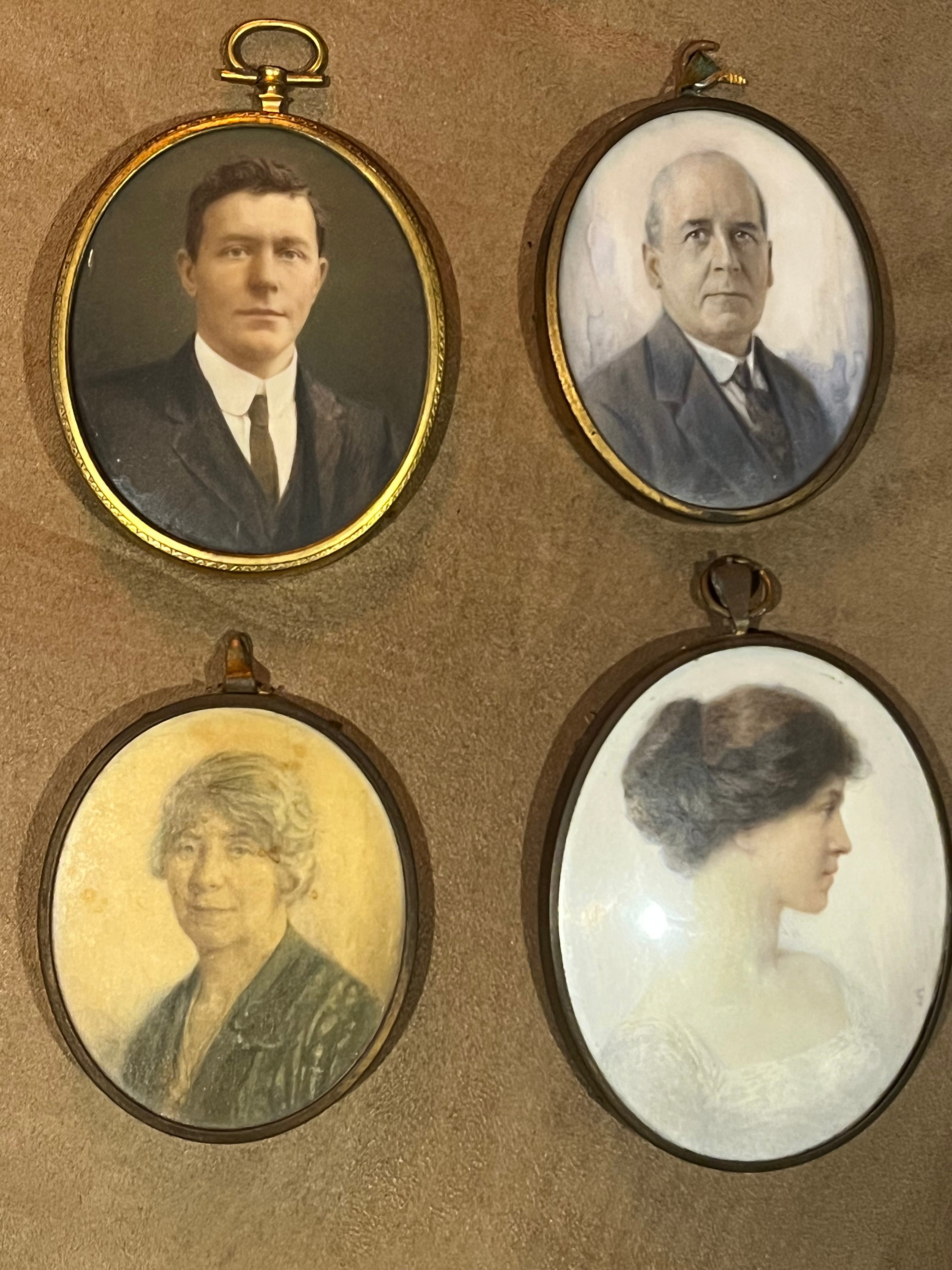
Her artistry is evident in examples of her work shared with this blog by her great great niece Jennie Gray, who lives in Australia.
Examples of portraits by Miss Sarah Partridge (1868-1955). Courtesy of Jennie Gray.
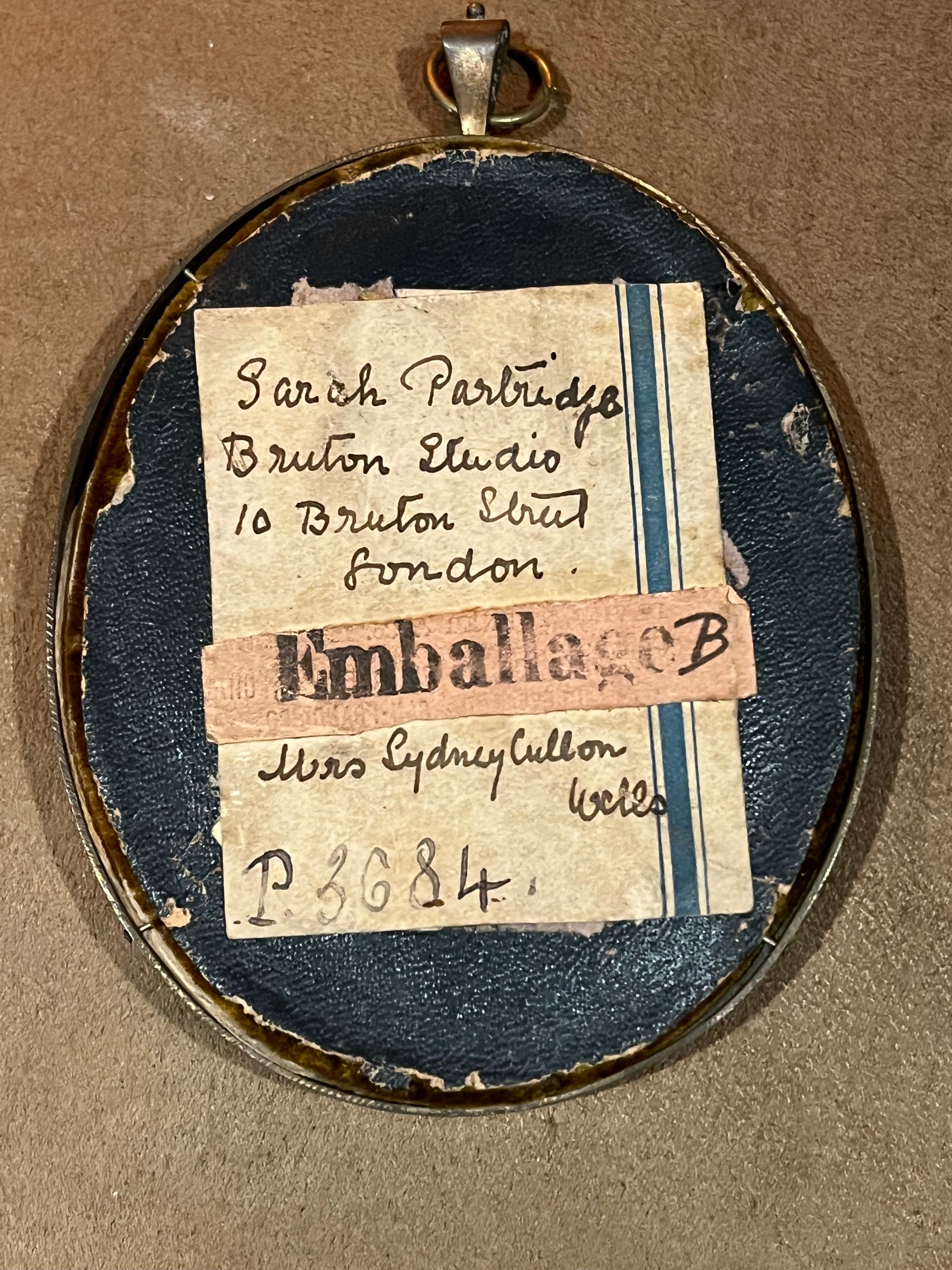
The verso of the portrait (above bottom right) identifies its subject as ‘Mrs. Sydney Cullon Wells’.
Verso of ‘P3684’. Courtesy of Jennie Gray.
‘P3684’ may relate to the thousands of similar portraits that Sarah was responsible for creating for a wealthy list of clients.
In the second part of this blogpost, I’ll share further research about Sarah’s photography that culminates in her role during the final days of royal photographers W. & D. Downey.
Over the past few days, a significant anniversary in the history of the British monarchy and the media was passed.
On 3rd October 1896, Queen Victoria together with other members of the royal family were filmed for the first time.
Frame taken from cinefilm of Queen Victoria (3rd October 1896).
Keeping pace with the Queen’s passionate interest in all matters photographic, the shoot took place only ten months after the Lumiére brothers unveiled their first cinematograph films in Paris.
The firm of W. & D. Downey, often regarded as Victoria’s favourite portrait photographers, was tasked with recording the first moving pictures of her.
Given the importance of the assignment, members of the extended Downey photographic family travelled to the Scottish Highlands where the Queen was in residence at Balmoral.
Leading the filming project was William Edward Downey (1855-1908), who by this point had taken over day-to-day running of the firm co-founded in the mid-1850s by his father William (1829-1915).
Mr. W.E. Downey. From The Professional Photographer (1906).
He was joined by his cousins James John Downey (1854-1902) and Frederick Downey (1862-1936), who both travelled from Tyneside where the original Downey business had its roots.
By the 1890s, their own firm, J.J. & F. Downey based in South Shields, was a thriving photographic concern in its own right.
Details of filming at Balmoral and its aftermath can be gleaned from a variety of contemporary sources.
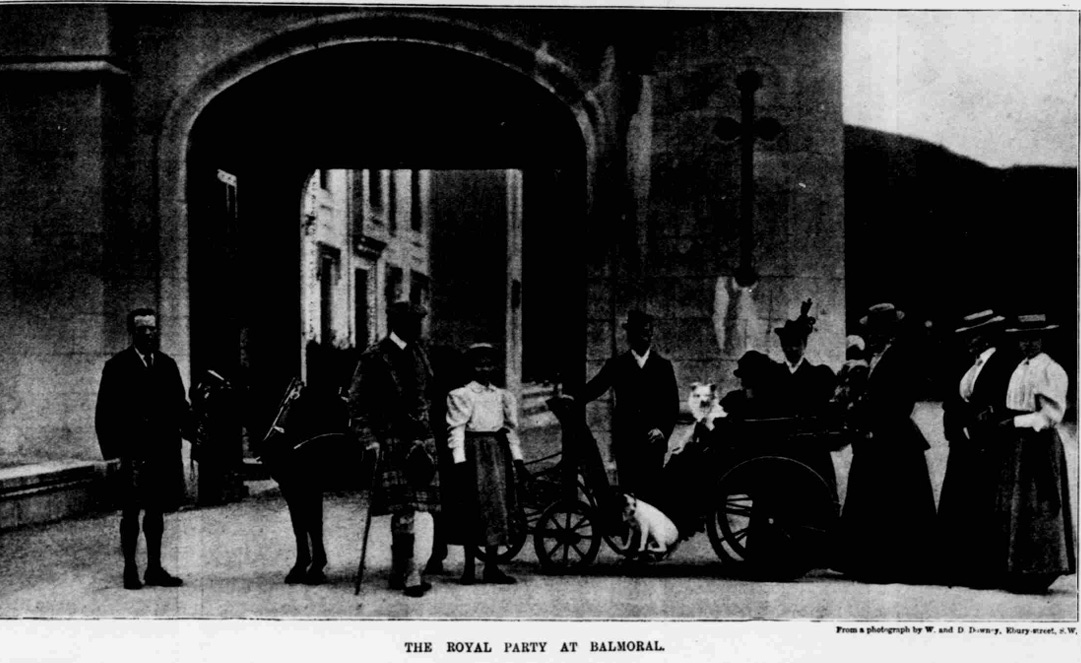
‘From a photograph by W. and D. Downey, Ebury Street, W’.
According to Queen Victoria’s Journals, 3rd October 1896 was “A lovely morning. — Nicky & Arthur breakfasted with us. — At 12 went down to below the Terrace, near the Ball Room, & were all photographed by Downey by the new cinematograph process, which makes moving pictures by winding off a reel of films.”
She continued: “We were walking up & down & the children jumping about. Then took a turn in the pony chair.”
Staying with the Queen were Tsar Nicholas II (known as Nicky) and his wife Tsarina Alexandra of Russia, who added additional glamour and international appeal to the occasion.
Recent research has revealed that unfamiliarity of working with the new technology meant the film was incorrectly loaded into the camera.
This resulted in an unstable image featuring “a severe vertical jumping motion and blurring of the picture.”
Using copies of the footage held by the BFI National Archive and Movietone News, the National Library of Scotland undertook a digitisation project in 2021 that has greatly improved the viewing experience.
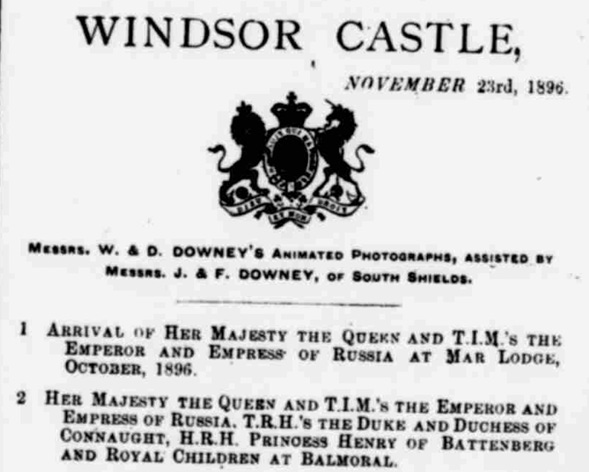
Several weeks later, the national press reported how footage shot by W. & D. Downey, described as ‘animated photographs’, had been shown to the Queen and royal family members during a film and lantern slide show held at Windsor Castle.
Illustrated newspapers and magazines had only recently begun to employ halftone reproductions alongside engravings.
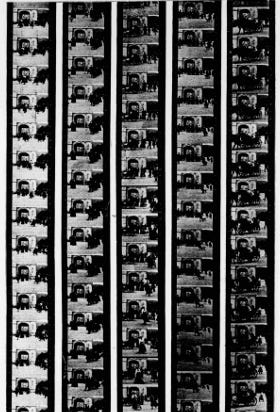
So to provide readers with an impression of watching moving pictures, Lady’s Pictorial used the latest printing technology to reproduce three pages of frames taken from the film footage.
Lady’s Pictorial Supplement (5th December 1896). From British Newspaper Archive.
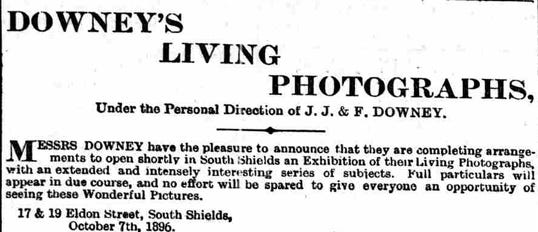
Back on Tyneside, J.J. & F. Downey wasted little time in placing an advert in their local paper, the Shields Daily Gazette, offering the chance to view what they branded ‘Downey’s Living Photographs’.
Shields Daily Gazette (8th October 1896). From British Newspaper Archive.
It was to prove a fruitful avenue for theirs and other photographic businesses in the years that followed as moving pictures took over from portrait galleries and lantern slide shows as forms of mass entertainment.
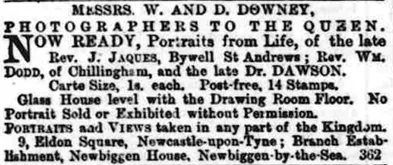
During the summer of 1866, the celebrated photographic firm of W. & D. Downey named after its founding brothers William and Daniel placed a series of advertisements in the regional press.
These announced that they had opened a ‘branch establishment’ in the Northumberland seaside resort of Newbiggin by the Sea (last line below).
Newcastle Weekly Chronicle (16th June 1866). From British Newspaper Archive.
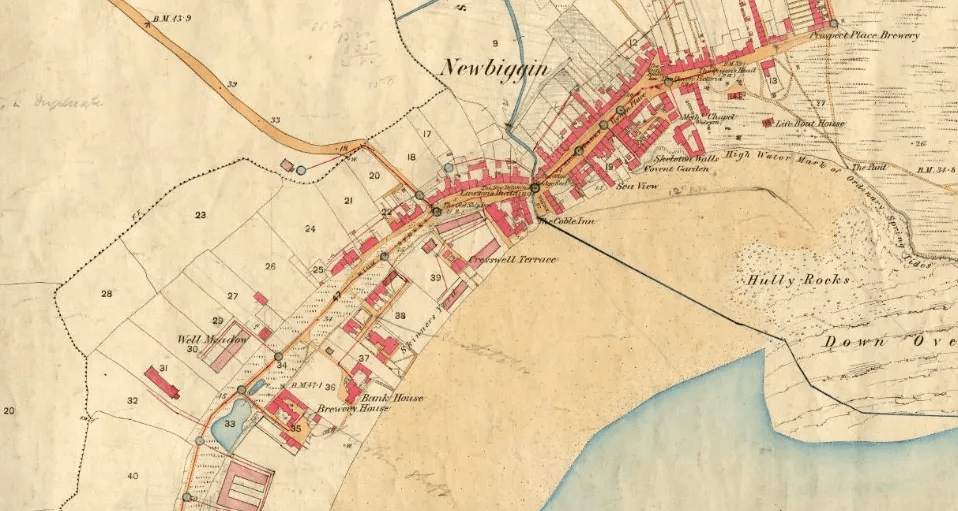
The choice of Newbiggin, fifteen miles along the North Sea coast from Downey’s main studio in Newcastle upon Tyne, was rooted in a significant family moment.
It was in Newbiggin that on 18th April 1866, Daniel Downey’s wife Elizabeth gave birth to a daughter.
Shields Daily News (20th April 1866). From British Newspaper Archive.
The couple’s choice of location for the baby’s delivery may well have been informed by the health benefits of escaping the pollution of an industrial city where child mortality rates were high.
Indeed, the couple, who married in 1863, had lost their first child, a boy named William Daniel, early the following year.
The safe arrival of Elizabeth Jane Downey was followed by a period of entrepreneurial photographic activity that characterised the firm throughout its long history.
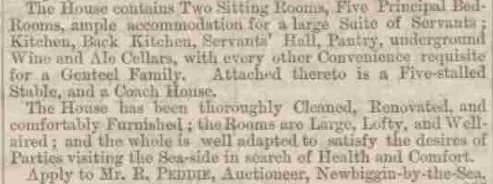
Newspaper adverts reveal that by mid-July, the Downey’s had moved their seaside studio to Monck House, a property once occupied by Sir Charles Monck of Belsay.
A leading aristocrat in the region, Monck had previously sat for the Downey’s at Belsay Hall and was part of their expanding network of influential figures.
Monck House was certainly more in keeping with the facilities on offer at their 9 Eldon Square base in Newcastle as this newspaper advert confirms.
Newcastle Daily Journal (3rd August 1861). From British Newspaper Archive.
On 14th July 1866, an advert carried by the Morpeth Herald announced that Downey’s Newbiggin branch, now with its Monck House address, was open “for a short season, for the convenience of visitors to this beautiful watering place.”
It also advised that “to prevent disappointment, or having to wait, it will be better to make an appointment.”
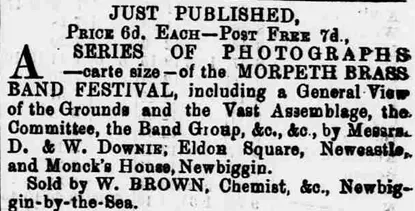
Together with a series of views of “Newcastle, Woodhorn and Newbiggin-by-the-Sea”, another of the paper’s small ads made its readers aware of yet more Downey product that could be purchased in the resort.
Morpeth Herald (14th July 1866). From British Newspaper Archive.
Apart from mis-spelling its surname, the use of ‘Messrs. D & W.’ reversing the usual order of ‘W. & D.’ suggests that Daniel was combining his duties as a new father with this varied photographic schedule.
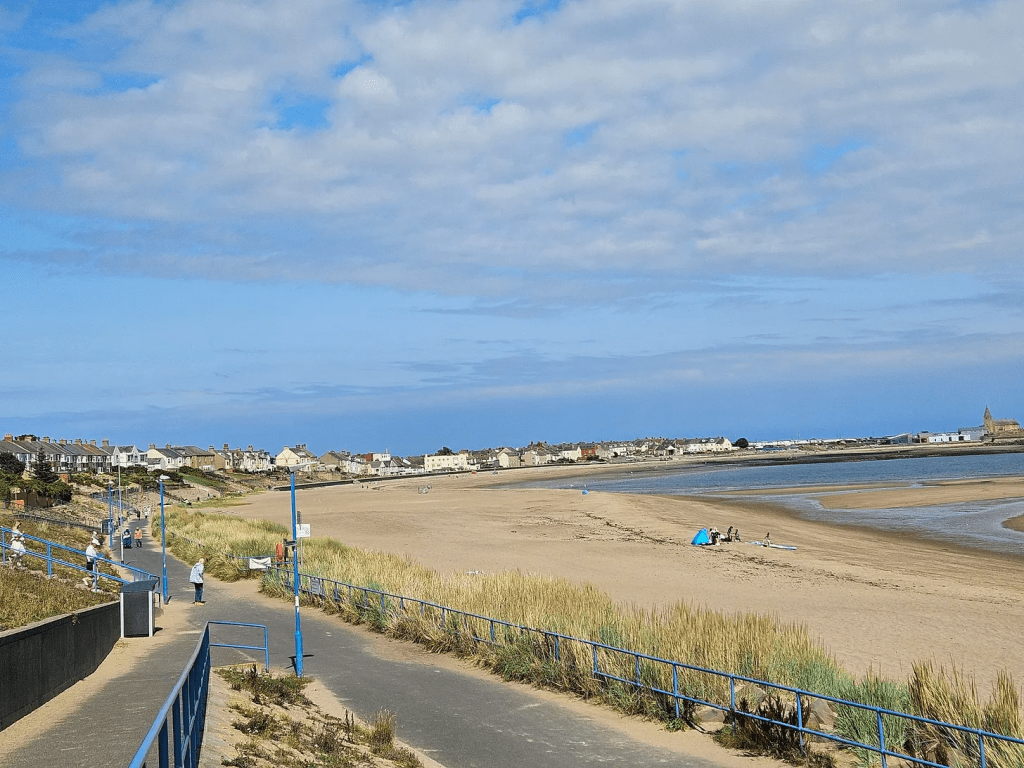
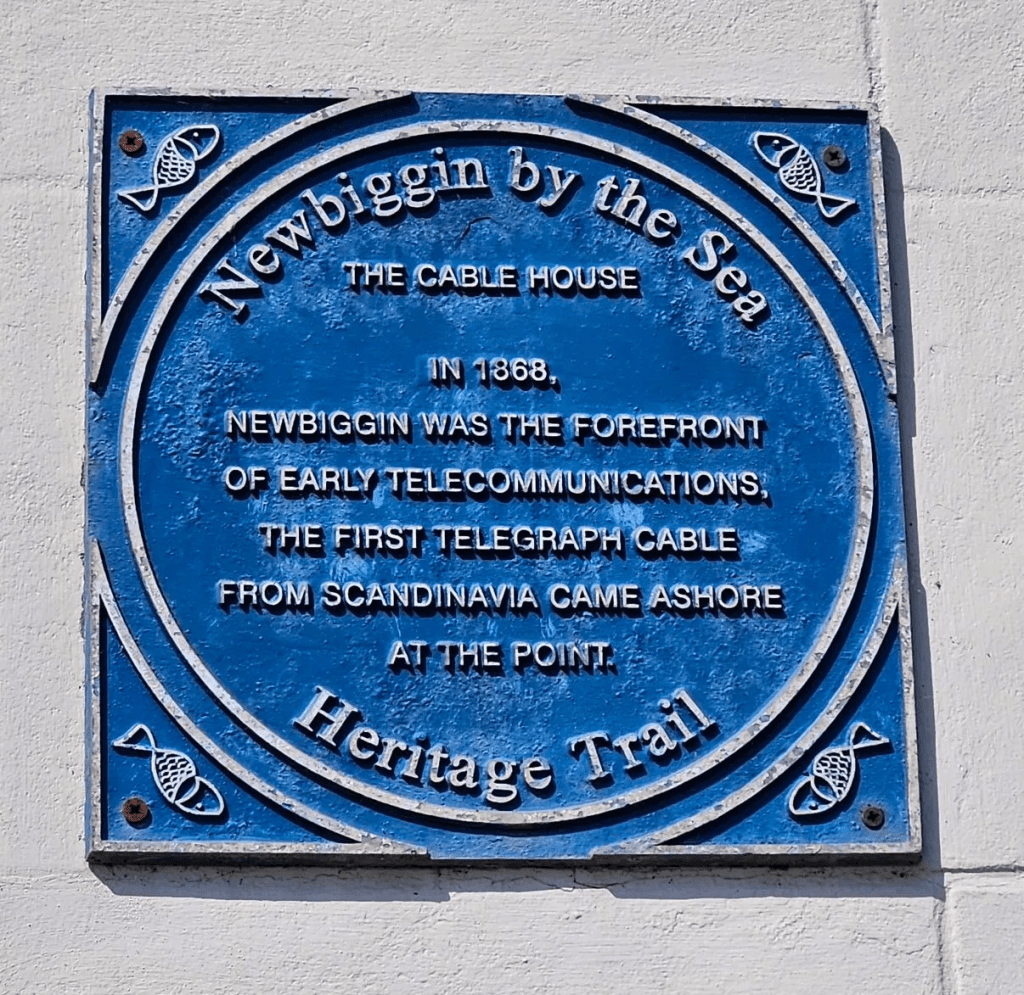
What a recent Pressphotoman visit to Newbiggin revealed was that the mid-1860s were pivotal years in the resort’s development.
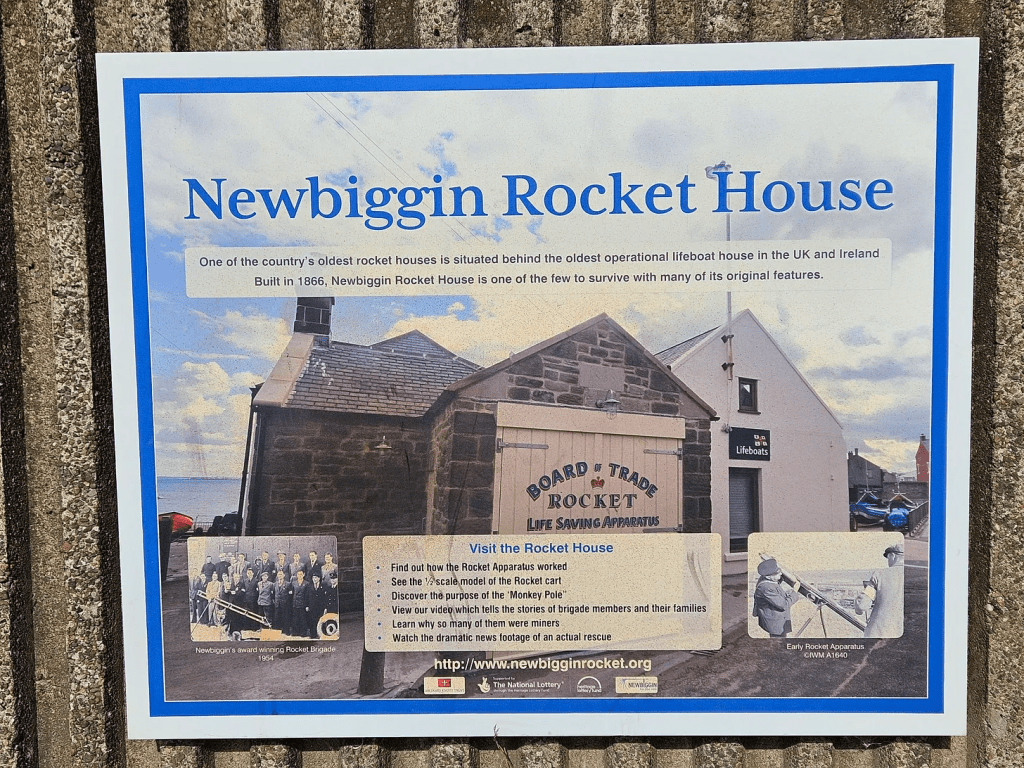
1866 itself saw the building of Newbiggin Rocket House, one of Britain’s oldest and one that was involved in life-saving ship rescues well into the 20th century.
Within weeks of their summer season at Newbiggin by the Sea, the Downey brothers began a ground-breaking new chapter in their firm’s illustrious history.
For the first time, they were summoned by Queen Victoria to Balmoral where her diary for Saturday 22nd September 1866 records that “on coming home was photographed by a very good photographer Downey from Newcastle”.
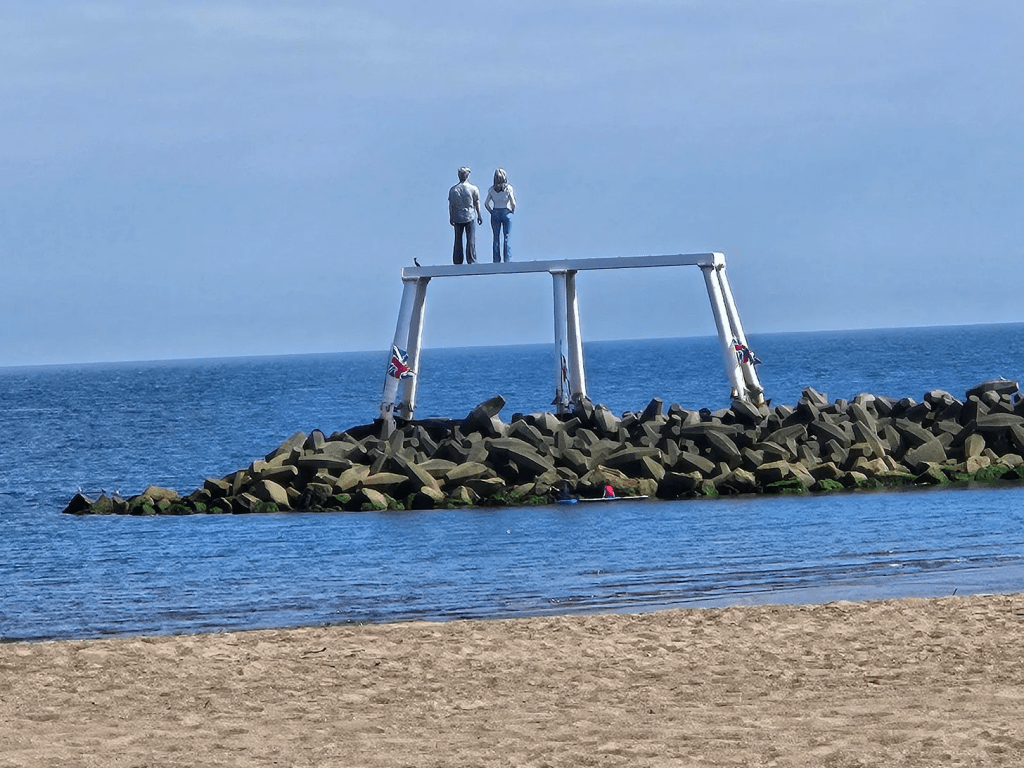
Like the couple featured in a giant sculpture that watches over Newbiggin by the Sea today, the Downey’s never looked back.
The very first Pressphotoman post published in December 2022 featured a Channel 5 tv documentary about Queen Alexandra.
Portraying “the little celebrated and long-suffering wife” of King Edward VII, I questioned why a 70-minute programme rich in archive photographs had ignored one particular celebrated carte de visite portrait.
The resulting carte reportedly sold around 300,000 copies at a time when photography offered the public an affordable outlet for their fascination with the royal family.
That fascination continues as evidenced by another royal tv documentary broadcast in Britain last week.
Again, it offered an unmissable opportunity to utilise well-known carte de visite portraits of its subjects.
This time the programme makers did not disappoint.
Titled ‘Queen Victoria: Secret Marriage? Secret Child?’, Dr. Fern Riddell presented new evidence revealing a romantic relationship between Queen Victoria and her Highland servant John Brown.
As its title hinted, this included the claim that they not only married, but even had a child together.
Photohistorians have long pored over carte de visite portraits of the couple that were produced during the 1860s and 1870s.
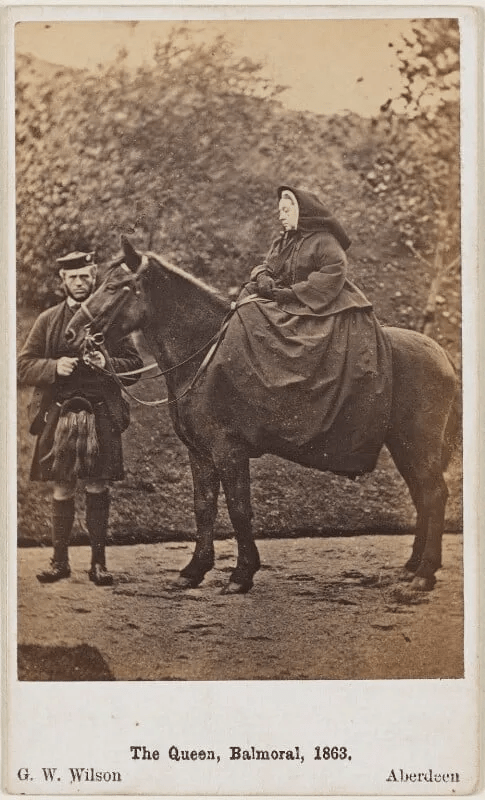
Among the earliest was taken by the Aberdeen photographer George Washington Wilson at the Queen’s Balmoral estate in October 1863.
Marking the anniversary of her last Highland ride with Prince Albert, Victoria together with her pony ‘Fyvie’ were flanked by two of her servants, John Brown and John Grant.
However, when the photograph was published as a commercial carte, Grant was edited out of the shot leaving Brown and the Queen together.
The photograph later became symbolic of the monarch’s deep mourning for her late husband and her relationship with Brown that was already the subject of much gossip.
Sales during the following year were just short of 13,000 copies of this and other portraits made on the same occasion though the ‘Fyvie’ carte was the most popular.
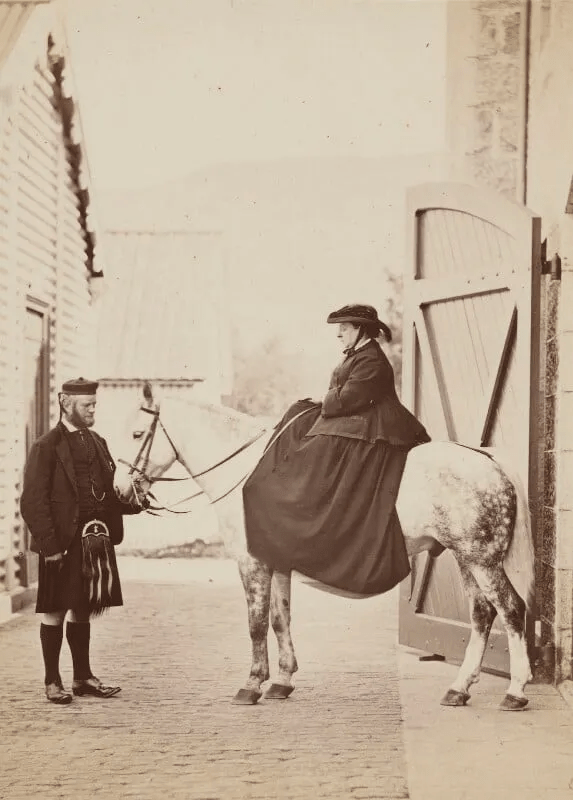
The documentary also made great use of a similar portrait of Victoria and Brown taken five years later.
In the documentary, it was used to provide physical evidence for its argument that the Queen had given birth to a child with Brown the previous year.
Photographers like the Downey brothers and George Washington Wilson were no doubt privy to all kinds of interactions between the Queen and members of the royal household.
Exactly what they knew and saw would no doubt have interested today’s royal documentary makers.
What these intimate photographs capture only adds to the mystery surrounding Victoria and Brown.
Our third subject is someone who Messrs. Mendelssohn and Edwards are likely to have known during their years with Downey.
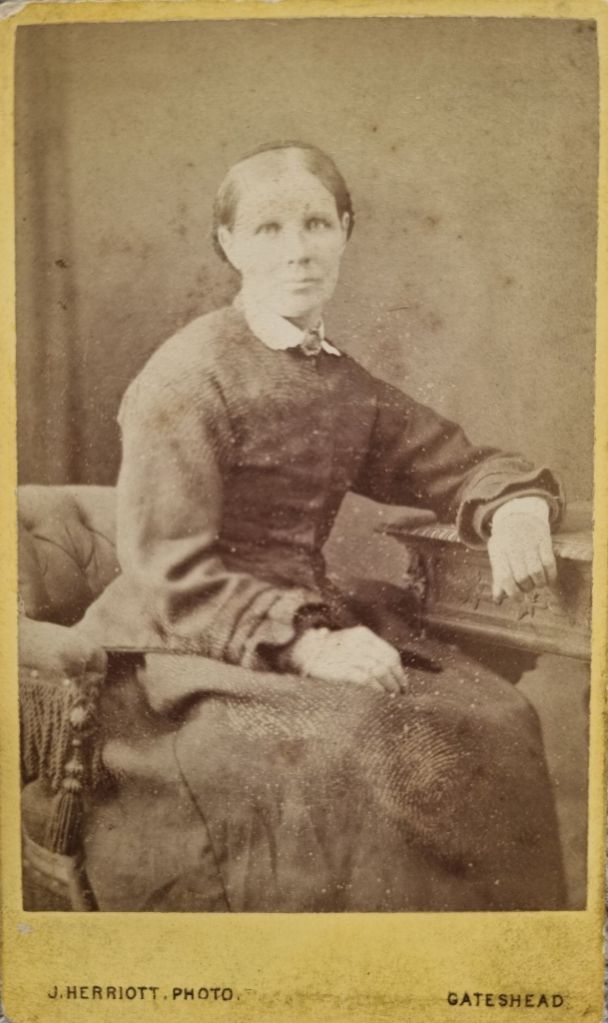
James Herriott was born in 1846 in Blaydon, a town on the Tyne, a few miles across the river from Newcastle.
By his mid-twenties, he was married with a baby daughter and living in nearby Gateshead.
But he had already made valuable connections in the photographic business.
During his teens, he was apprenticed to Mawson & Swan of Newcastle on Tyne, who supplied firms like W. & D. Downey with the latest photographic equipment and chemicals.
Given this background, it’s perhaps unsurprising that James Herriott’s own career in photography was soon underway in Gateshead.
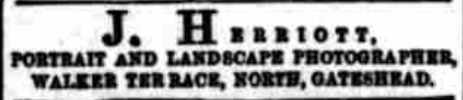
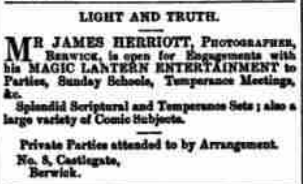
The 1871 census recorded his ‘rank, profession or occupation’ as ‘photographic artist,’ and the following year, a newspaper advertisement described him as a ‘portrait and landscape photographer.’
Advertisement from Gateshead Observer (1st June 1872). From British Newspaper Archive.
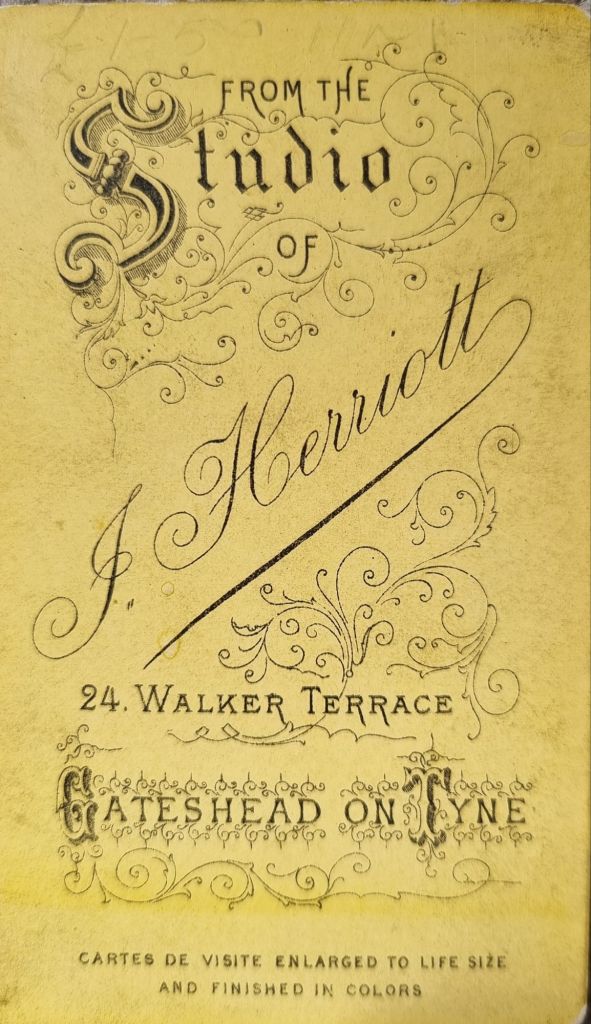
In terms of portraits, he offered customers ‘cartes de visite enlarged to life size and finished in colours.’
Whether his business hit financial or other difficulties, a notice published in the Newcastle Journal in April 1875 signalled a change of direction.
After closing for alterations, the notice stated, the business would re-open ‘under the named management of Downey and Herriott’ and ‘they will be prepared to do the highest class of work in the Art.’
The named ‘Mr. Downey, late of Oxford Street, Newcastle’ was photographer John Downey (1823-1906), elder brother of William and Daniel.
As described in part 1 of this mini-series, John Downey was previously in partnership for two years (1872-73) with Hayman Seleg (H.S.) Mendelssohn, another Downey apprentice.
The Downey & Herriott partnership though appears to have been even more short-lived.
Within a year or so, James Herriott was again advertising his Gateshead business, now with a second studio address in the centre of Newcastle.
Meanwhile, John Downey had set up ‘J & C. Downey, Photo Artists’ with his eldest son Cornelius at a separate address in Gateshead.
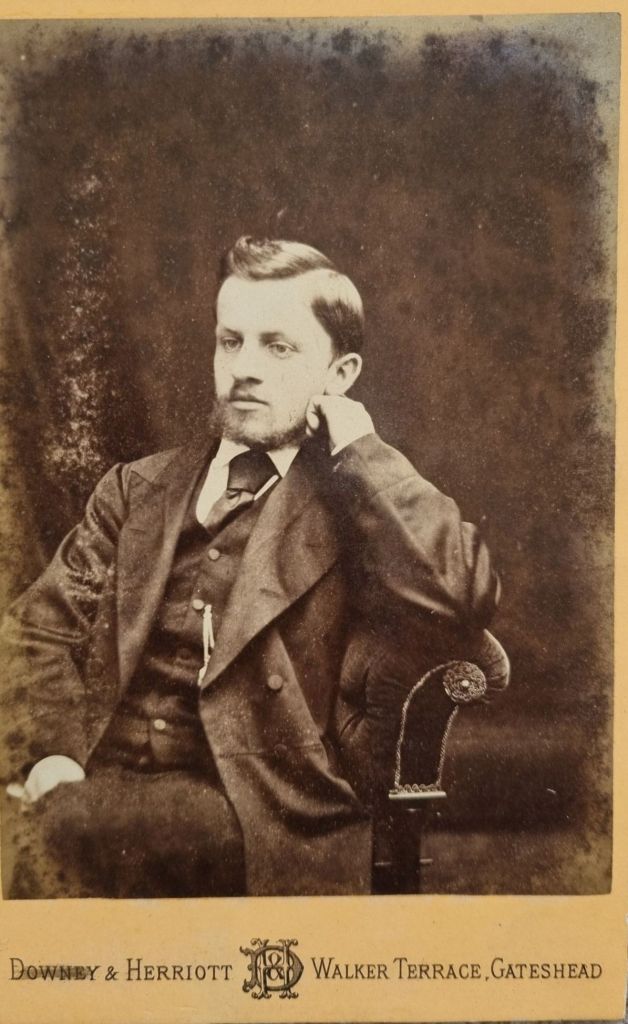
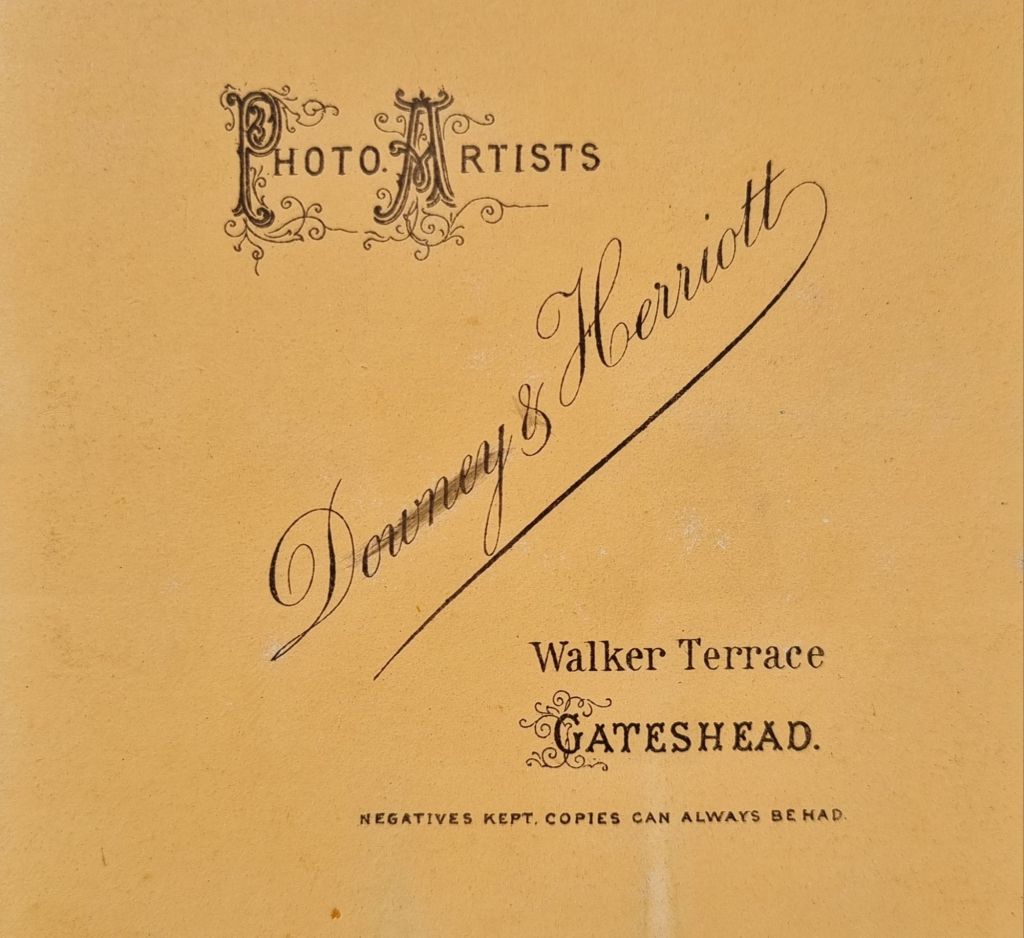
Downey & Herriott portraits are hard to track down, however, this cabinet card is unusual in that it shows the name ‘Downey’ crossed out on both front and the verso.
One explanation might be that card stock printed for the Downey & Herriott partnership was later used by James Herriott alone, perhaps because finances were still tight.
It’s also noticeable that both Downey & Herriott and Downey & Mendelssohn used the same distinctive orange-coloured card for their products.
Herriott’s involvement with the Downey photographic empire points to a long-running relationship.
It was one that perhaps began in the late-1860s following his Mawson & Swan apprenticeship and before opening his own Gateshead studio.
In a 1920s newspaper interview recalling ‘the days of his apprenticeship to W. and D. Downey,’ he recalled assisting ‘Mr. Downey’ in photographing both Queen Victoria and the Prince of Wales (later Edward VII) on separate occasions.
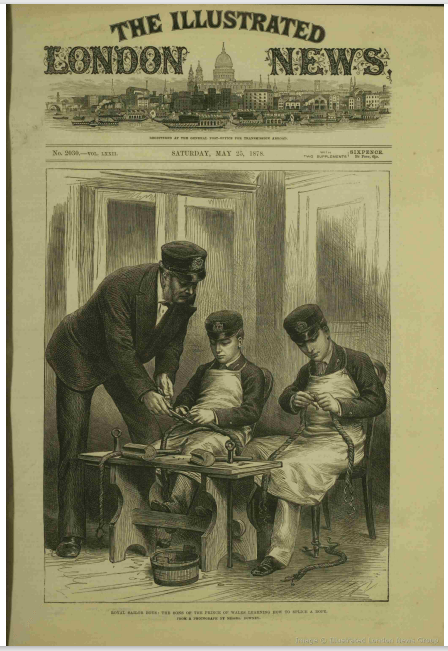
Another memory of a Downey assignment involved photographing Prince Albert (known as Eddy) and Prince George (the future George V) ‘while learning to splice rope’ during naval training aboard HMS Britannia.
In May 1878, the resulting photograph credited to ‘Messrs. Downey’ was reproduced as an engraving by the Illustrated London News.
Supplement to Illustrated London News (25th May 1878). From British Newspaper Archive.
The dating of 1878, at a point when James Herriott was running his own photographic business, reinforces the idea that he was a trusted Downey associate.
Within a few years though, the Tyneside chapter of his life came to an end.
In March 1882, the Berwick Advertiser listed ‘James Herriott, photographer’ among ‘incomers’ to Berwick on Tweed.
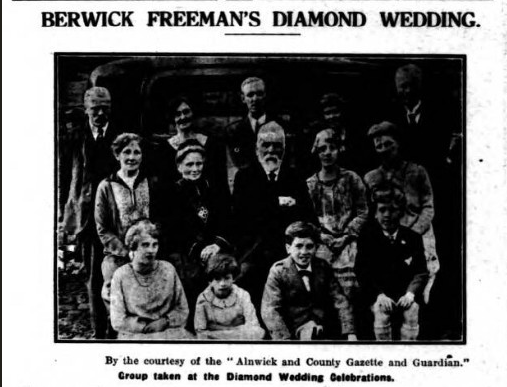
This move together with his wife Martha and their four children might be explained by James’s parents originating from Berwick, the northernmost town in England, where James had become a Freeman at the age of 21.
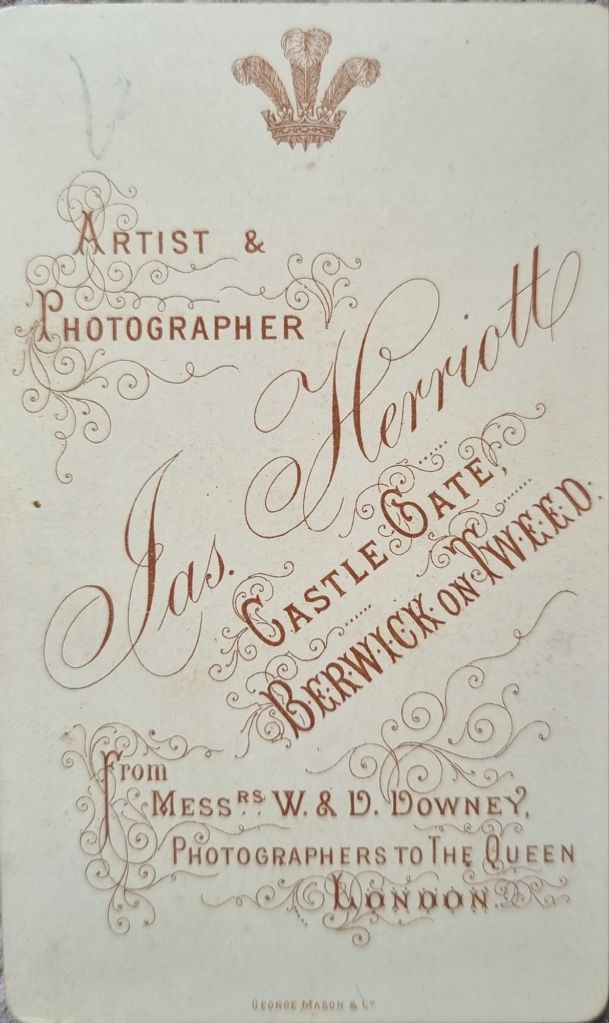
Resuming his photography, he opened a studio in the town’s Castlegate offering a range of portraits.
The verso of his products also took the opportunity to highlight his professional link to ‘Messrs. W. &. D. Downey, Photographers to the Queen, London.’
Today’s unveiling of details of the forthcoming Coronation of King Charles III seems like a good moment to share research on the photography of a previous royal occasion.
My article about 3D stereography of the 1902 Coronation of King Edward VII and Queen Alexandra appears in the latest issue of The PhotoHistorian, the journal of the Royal Photographic Society Historical Group.
It’s available here as a free download with the usual credit protocols.
Annual subscriptions for The PhotoHistorian are available for £60 (UK based) or £75 (overseas) to museums, galleries and academic institutions. Contact the editor
Last night, I was delighted to accept an invitation from the Royal Photographic Society Historical Group to present new research on royal photographers W. & D. Downey of South Shields and Newcastle.
The talk is now available to view on the RPS YouTube channel and starts at 3′ 42″ into the recording.
Alexandra – Britain’s Queen of Hearts, a 70-minute documentary broadcast this week in the UK on Channel 5, was a veritable feast for photohistorians.
The programme featured photo after photo of the woman who was Princess of Wales from 1863 to 1901 and then Queen Consort to her husband as King Edward VII during his 9-year reign.
Various eminent royal historians made a persuasive case for Alexandra, now a largely forgotten figure, creating the template for the royal women who followed in her footsteps.
They included subsequent Princesses of Wales such as Diana and Kate as well as Sophie, Countess of Wessex.
As the documentary’s photographic riches revealed, photographers clearly adored Alexandra as a subject and the camera loved her in return.
But given its role in both her story and that of photographic history, it is surprising that one photograph in particular did not feature.
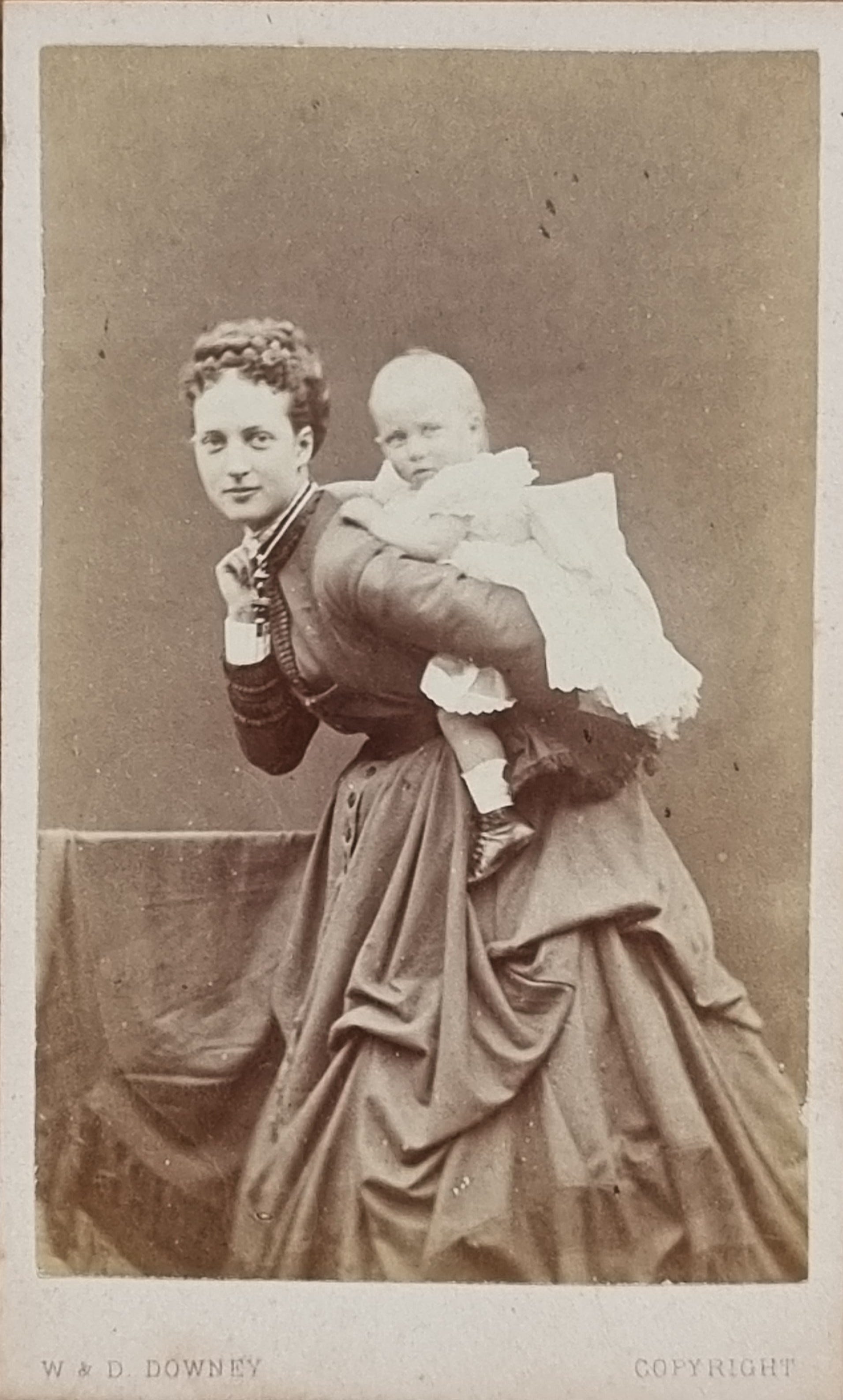
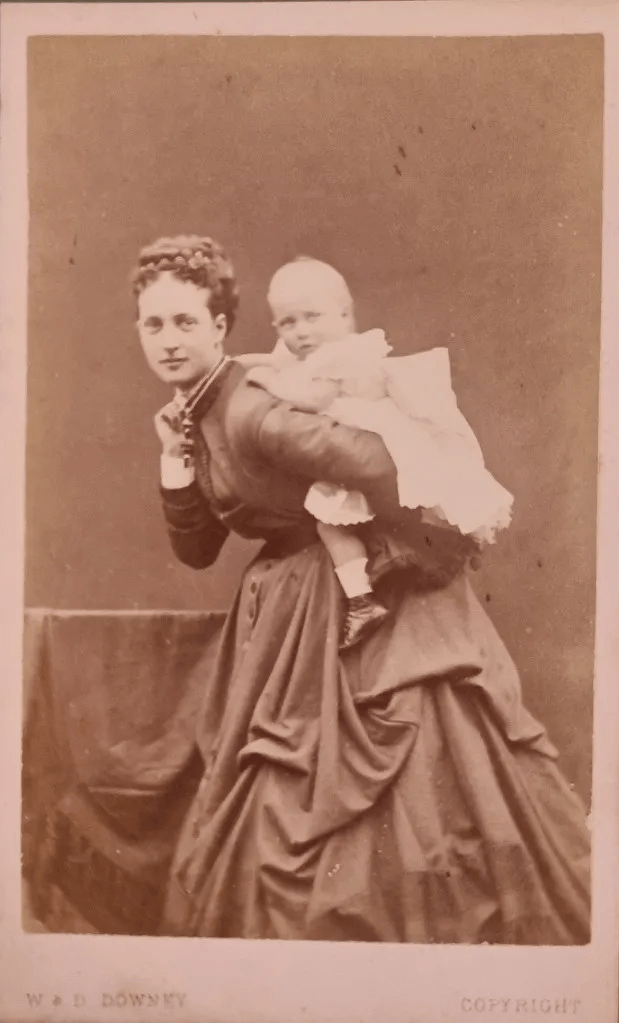
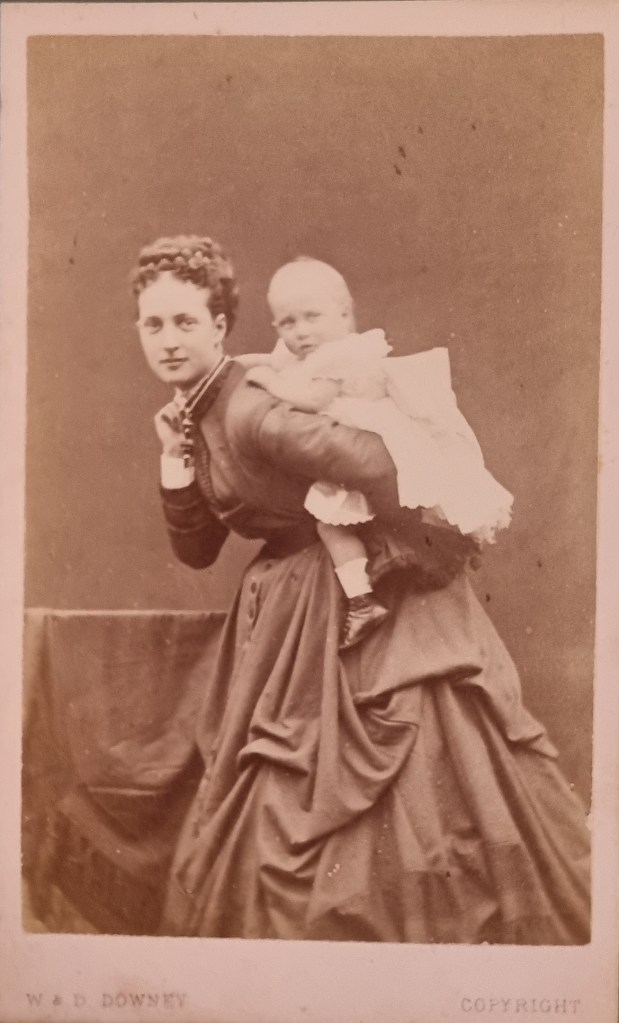
In September 1868, the firm of W. & D. Downey of Newcastle-on-Tyne photographed Alexandra carrying her baby daughter, Princess Louise, on her back.
According to Frances Dimond’s Developing the Picture: Queen Alexandra and the Art of Photography (Royal Collection Publications, 2004), the informal pose was unusual, especially for a member of the royal family.
Dimond argues it was designed to show that the then Princess of Wales had made a good recovery from a long illness caused by a severe attack of rheumatic fever.
When made available to the public, the ‘mother and baby’ photo proved a popular seller, clocking up reported sales of around 300,000 making it among the best-selling carte-de-visite of the era.
Given its widespread circulation, the card features occasionally on Ebay.
Recently, I was able to purchase one for just a few pounds (rather than the tens or hundreds as is sometimes requested by sellers around the world).
This was largely because the seller had described the item as ‘woman with baby on her back.’
It was a transaction that rather underlined the fact that Alexandra, once one of the most famous women in the world thanks to photography, is less recognised in the 21st century.
Documentaries such as Channel 5’s may help rectify that situation.
It’s curious though that the ‘screen grab’ advertising the programme on the channel’s My5 site features what appears to be a shot of Princess Alexandra of Kent, a cousin of the late Queen Elizabeth II.












Leave a comment