This weekend’s ‘Women of Photography’ 24-Hour Conference-A-Thon marking International Women’s Day (Sunday 8th March 2026) is a global celebration.
A line-up of 72 speakers will be highlighting the contributions of women to the medium from photography’s announcement in 1839 to today.
Registration for the event is free and the full programme offers a fascinating insight into the work of many women, whose work has until now received scant attention.
My pre-recorded contribution to the conference, ‘Ursula Clark: Architectural Photographer’, will be broadcast from 15:24-15:44 GMT and there will also be an opportunity to post questions in the Zoom chat.
Much of Ursula’s architectural photography features in books about Britain and Europe published by Oriel Press of Newcastle upon Tyne in North East England.
She worked for the company as its photographic editor from 1962 into the early-1970s.
However, new research for what has become an on-going project about Ursula’s career has identified a number of other publications, which feature her camera work.
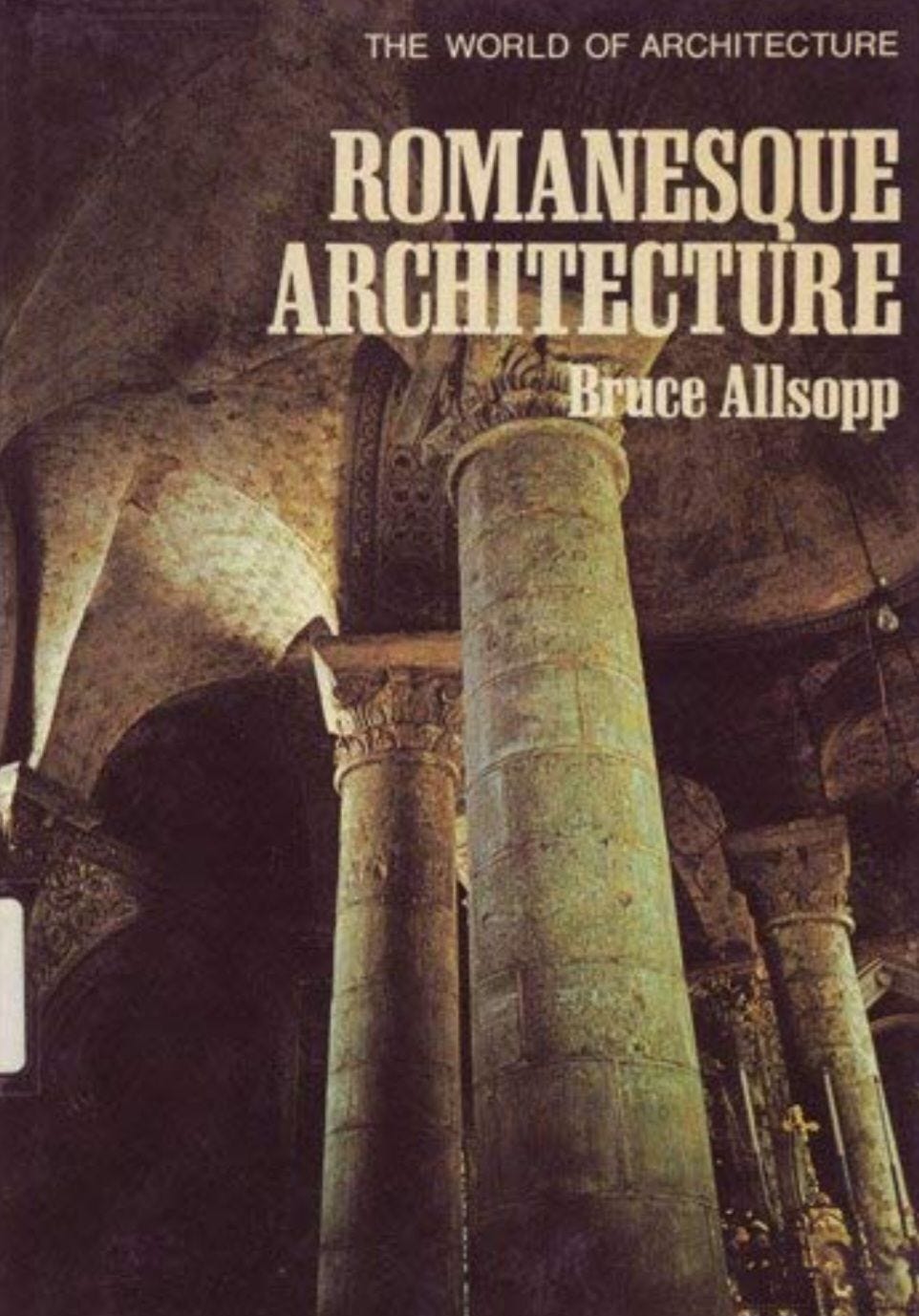
One example, Romanesque Architecture (London: Arthur Barker Ltd, 1971), was authored by Professor Bruce Allsopp, Senior Lecturer in Architecture at King’s College, Durham (later Newcastle) University, who set up Oriel Press and hired Ursula Clark.
Whilst Allsopp’s own photography (including the front cover of Notre Dame la Grande, Poitiers, France) features throughout, seven of Ursula’s black-and-white images appear as halftones and are credited to her.
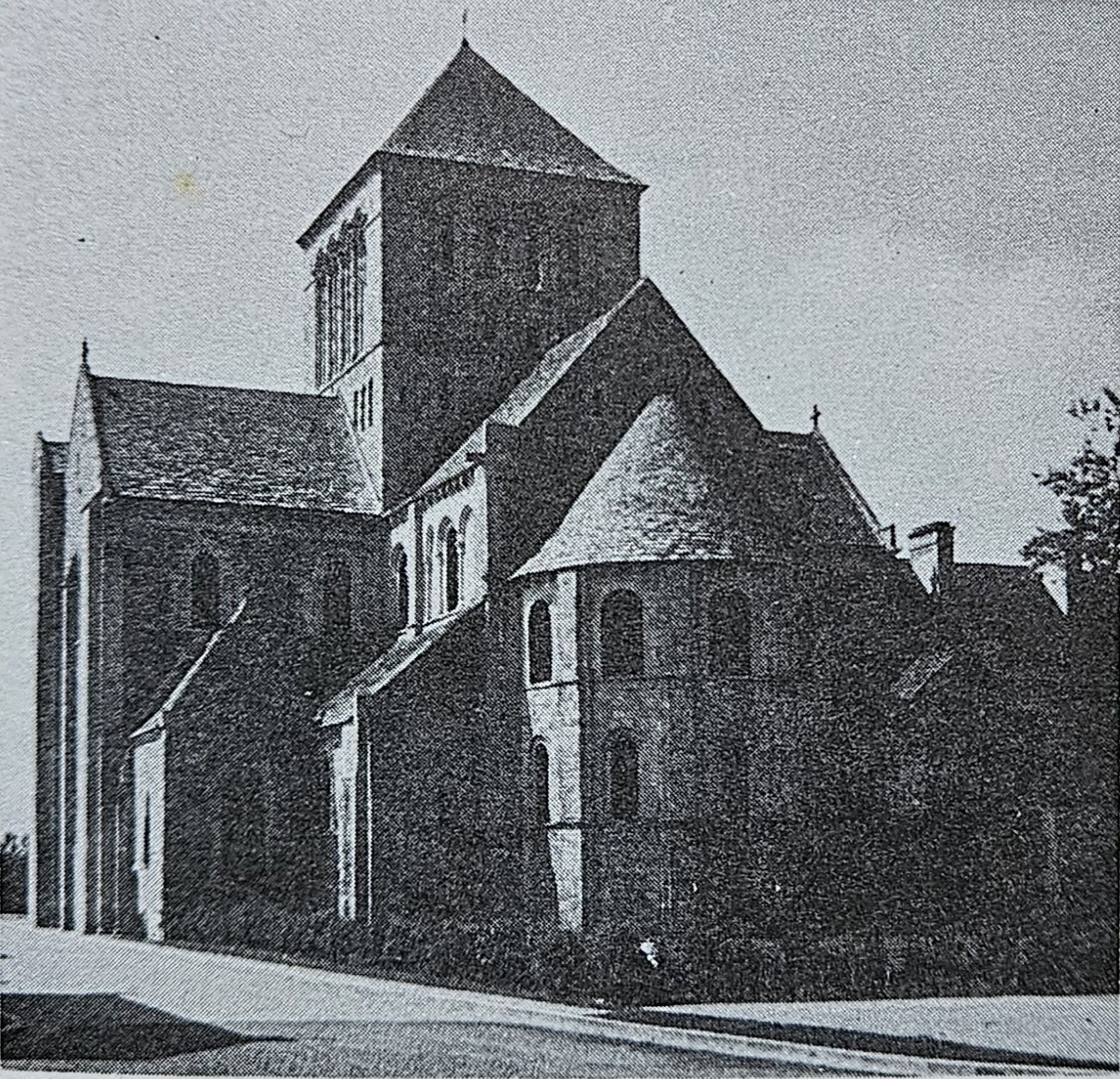
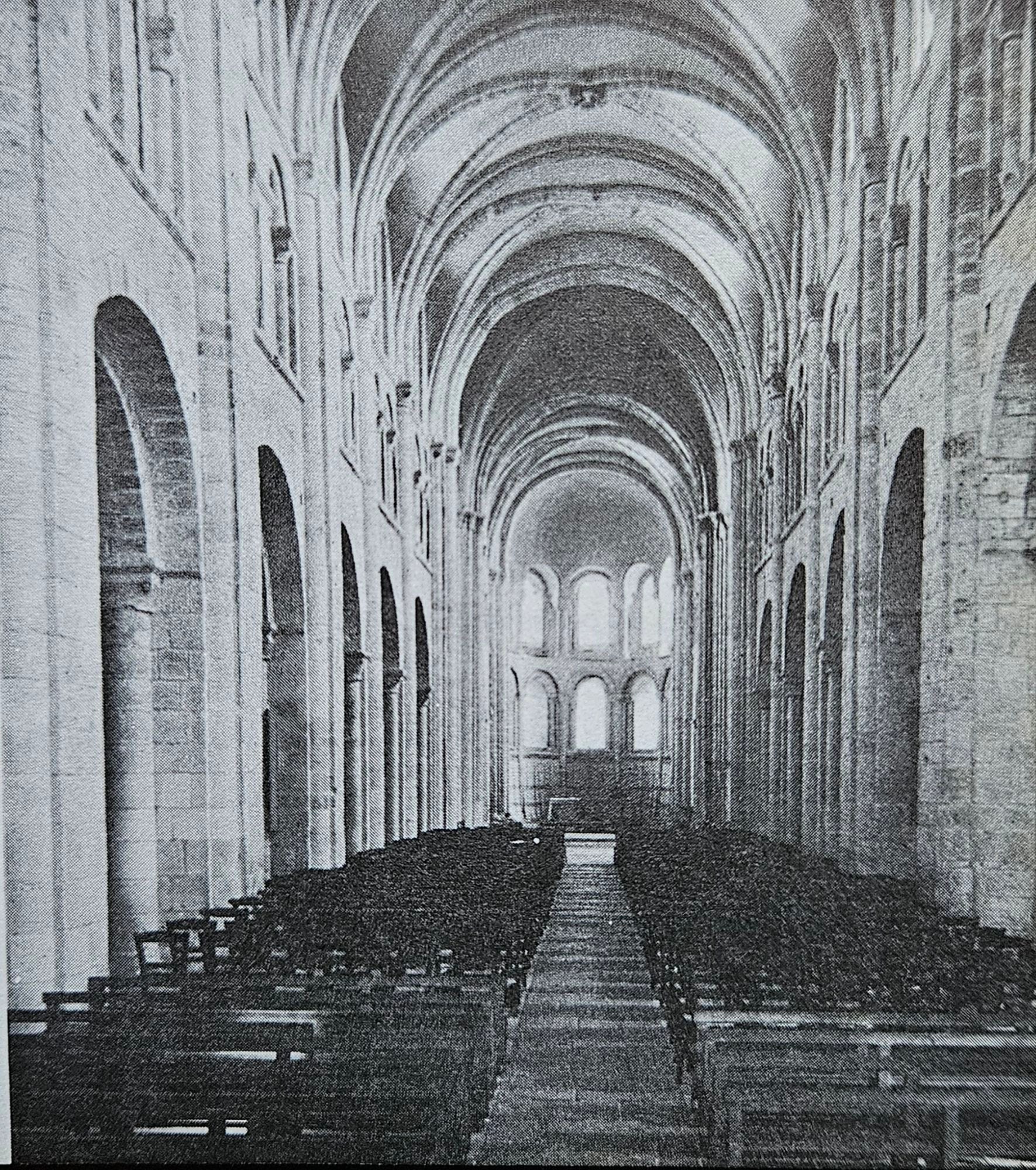
In a chapter titled ‘Romanesque in France,’ Lessay Abbey, one of the most important in Normandy, is portrayed in two images taken in the 1960s that illustrate its reconstruction after the Second World War.
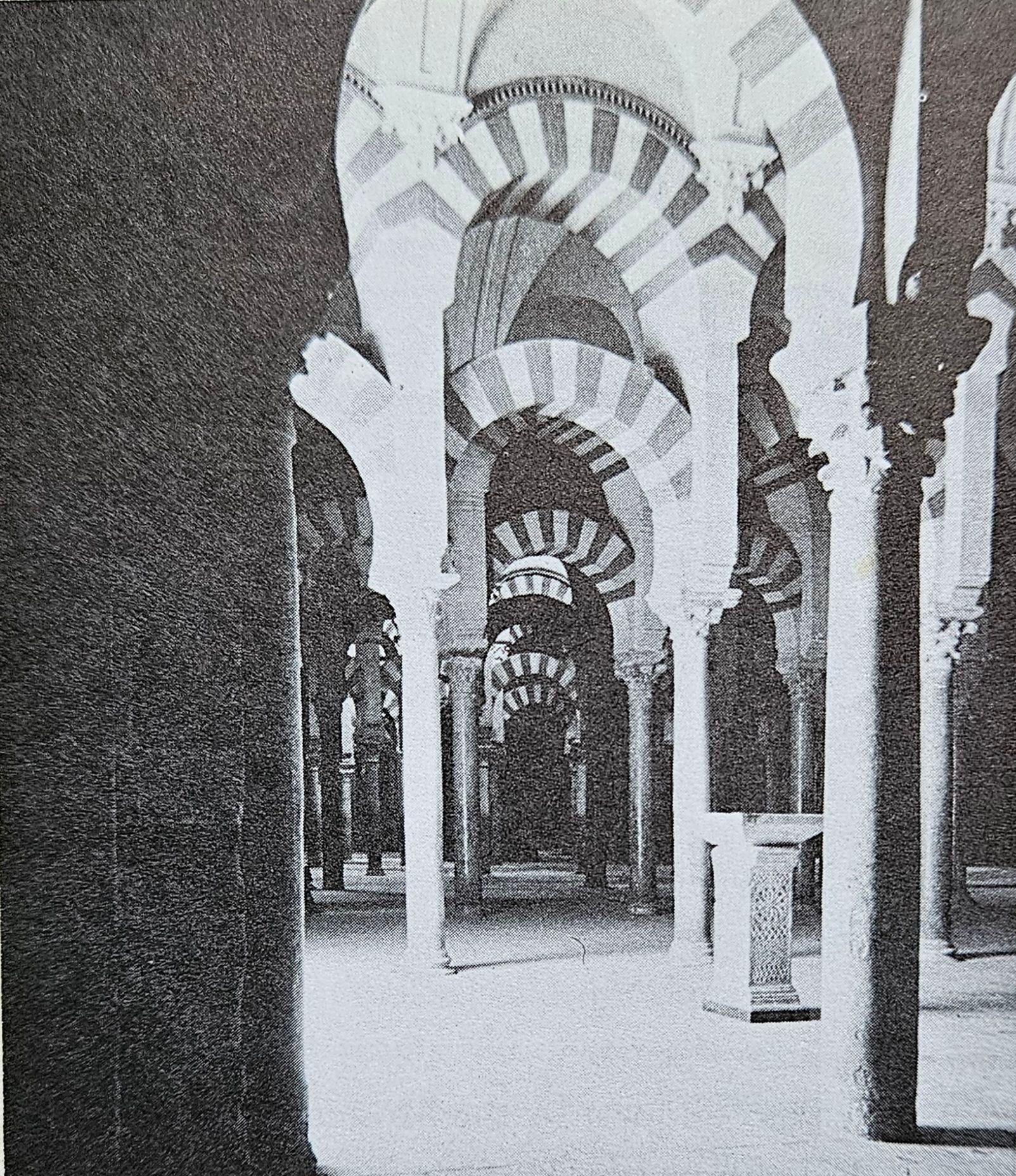
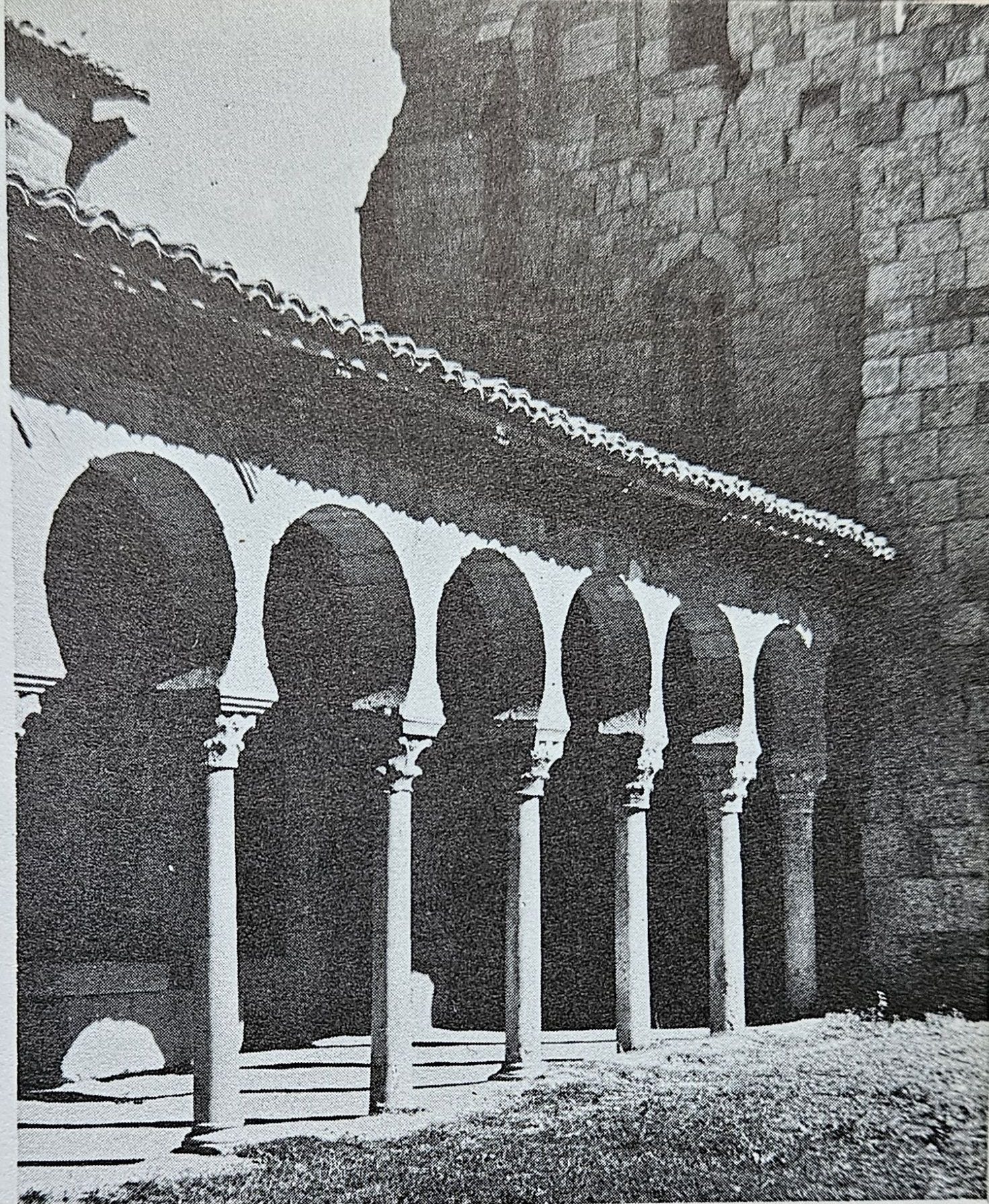
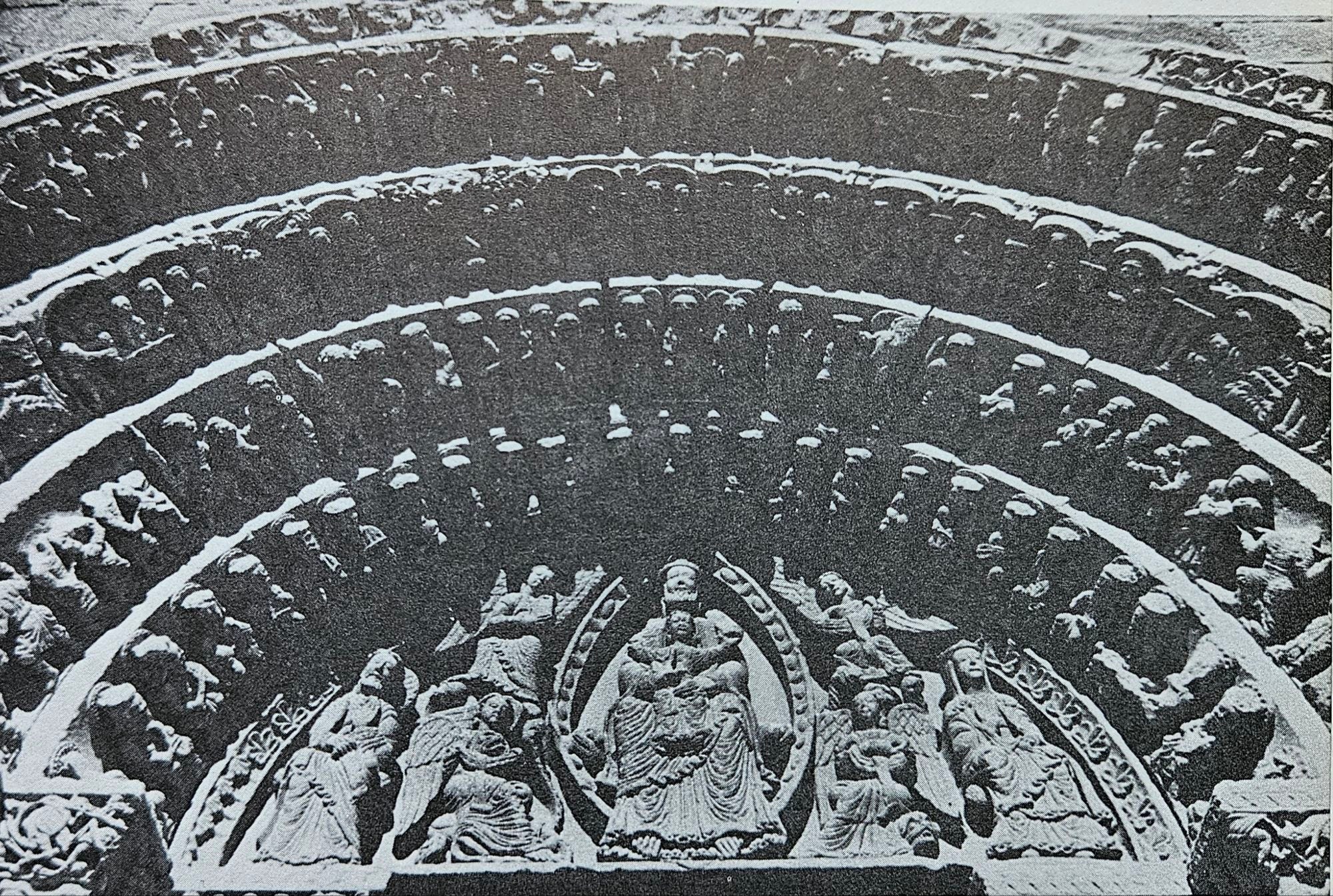
‘Romanesque in Spain’ features three striking images starting with the interior of the great mosque at Còrdoba that subsequently became a cathedral.
According to Bruce Allsopp’s caption, it combines “Moslem structural design with Roman-type columns” and “is a splendid example of Hellenesque architecture.”
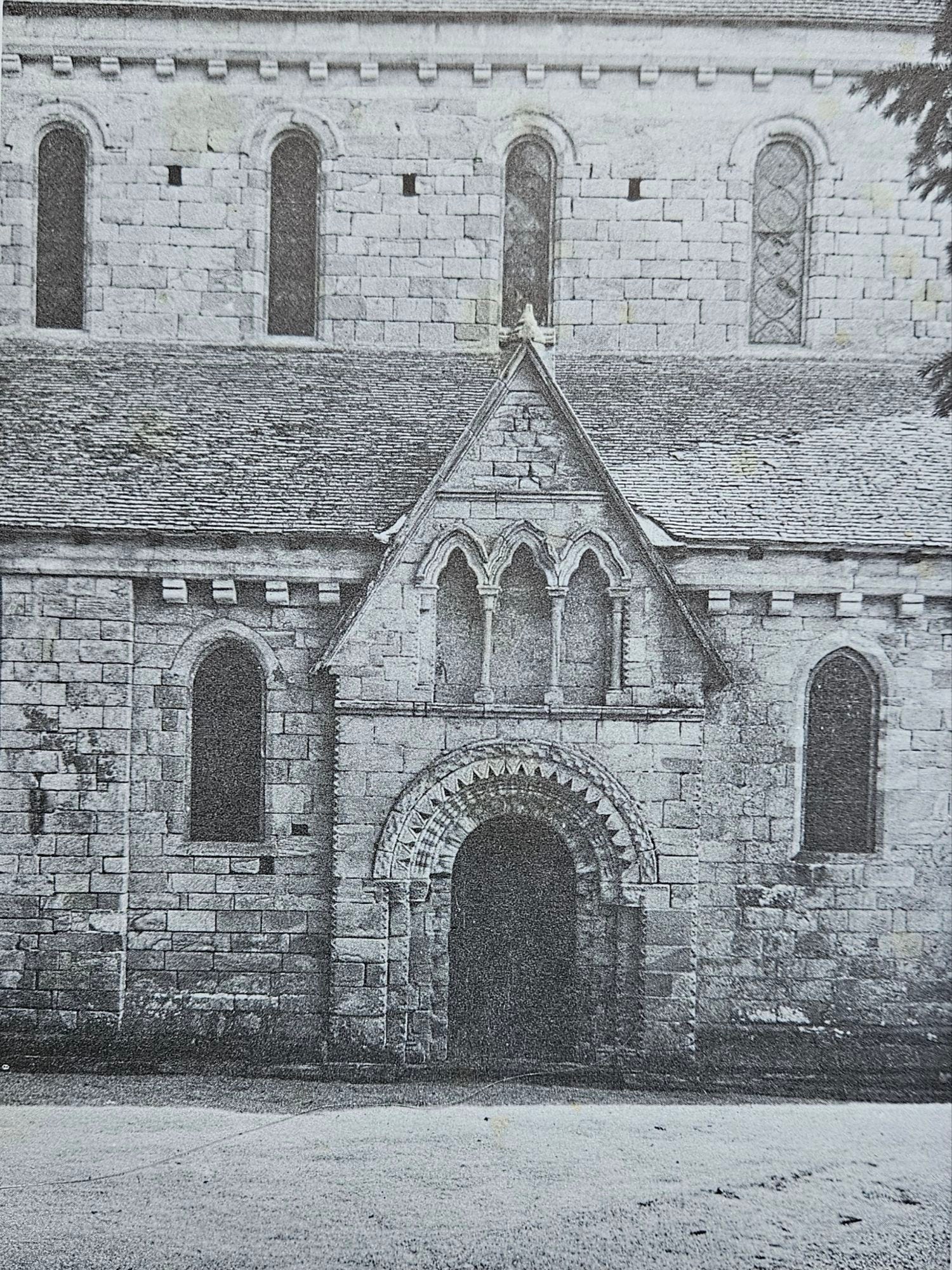
The first of her two contributions to ‘Romanesque in England after the Conquest’ returns the photographer to her native North East and Brinkburn Priory in Northumberland.
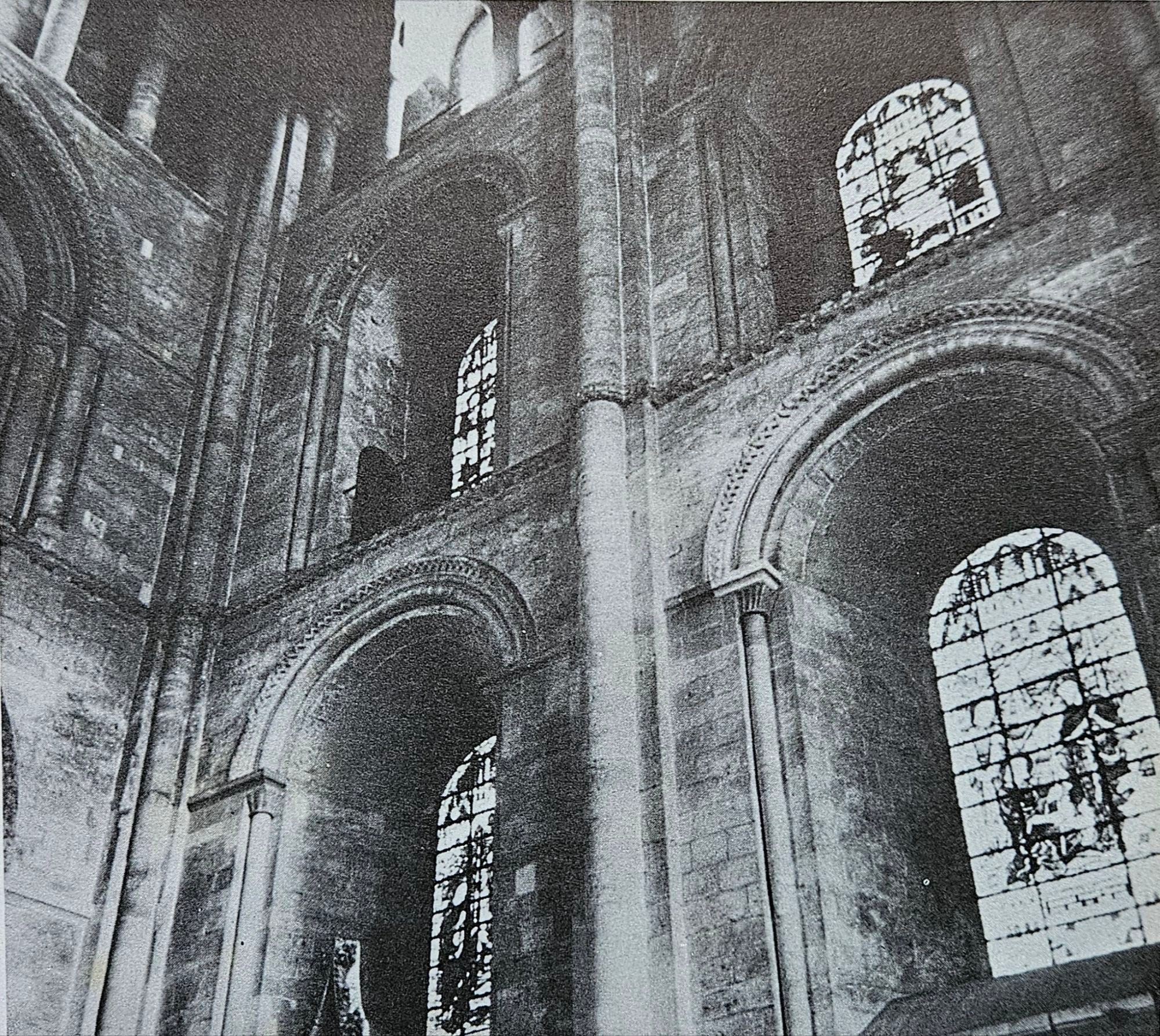
Finally, the south transept of Romsey Abbey in Hampshire illustrates what Bruce Allsopp calls “the formal qualities of Norman Architecture at its best.”
If you’re new to Ursula Clark’s photography, join me on Sunday 8th March 2026 (15:24-15:44 GMT) when I’ll be sharing newly digitised examples of her archive held by Historic England as well as images of Ursula herself.
Last week’s post featuring William Tyler’s photographic journey along the River Thames around 1896 drew a number of admiring comments about his prints.
Part 2 features another five that he registered for copyright in January 1897 and are part of the National Archives at Kew.
Their pristine condition suggests that they have lain unseen for over a century.
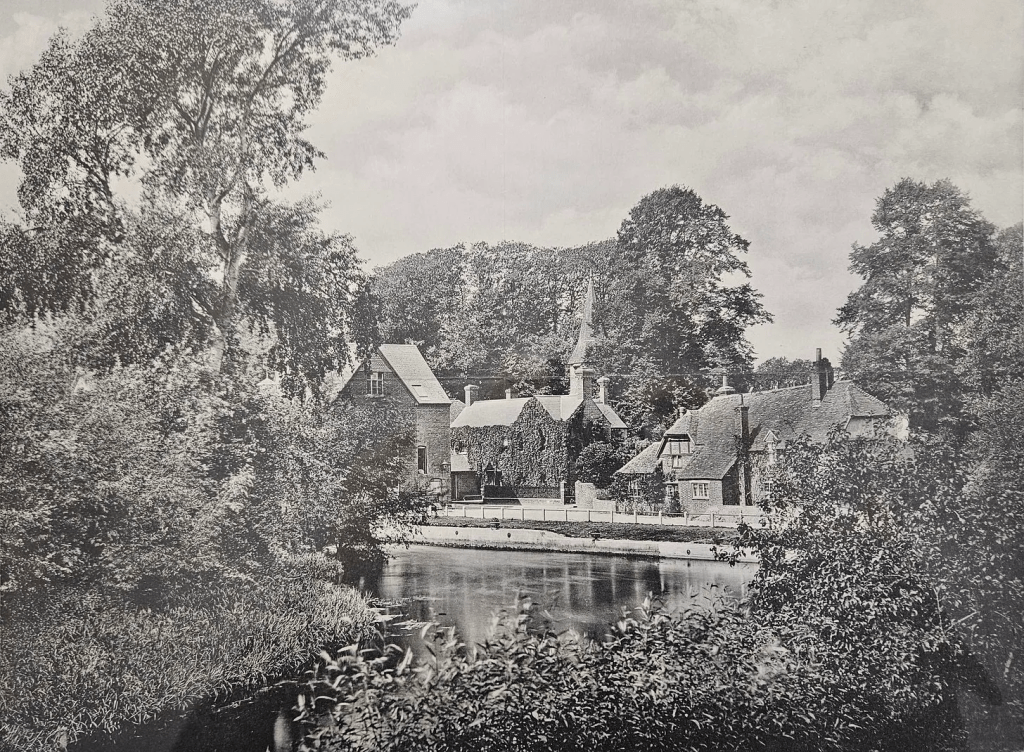
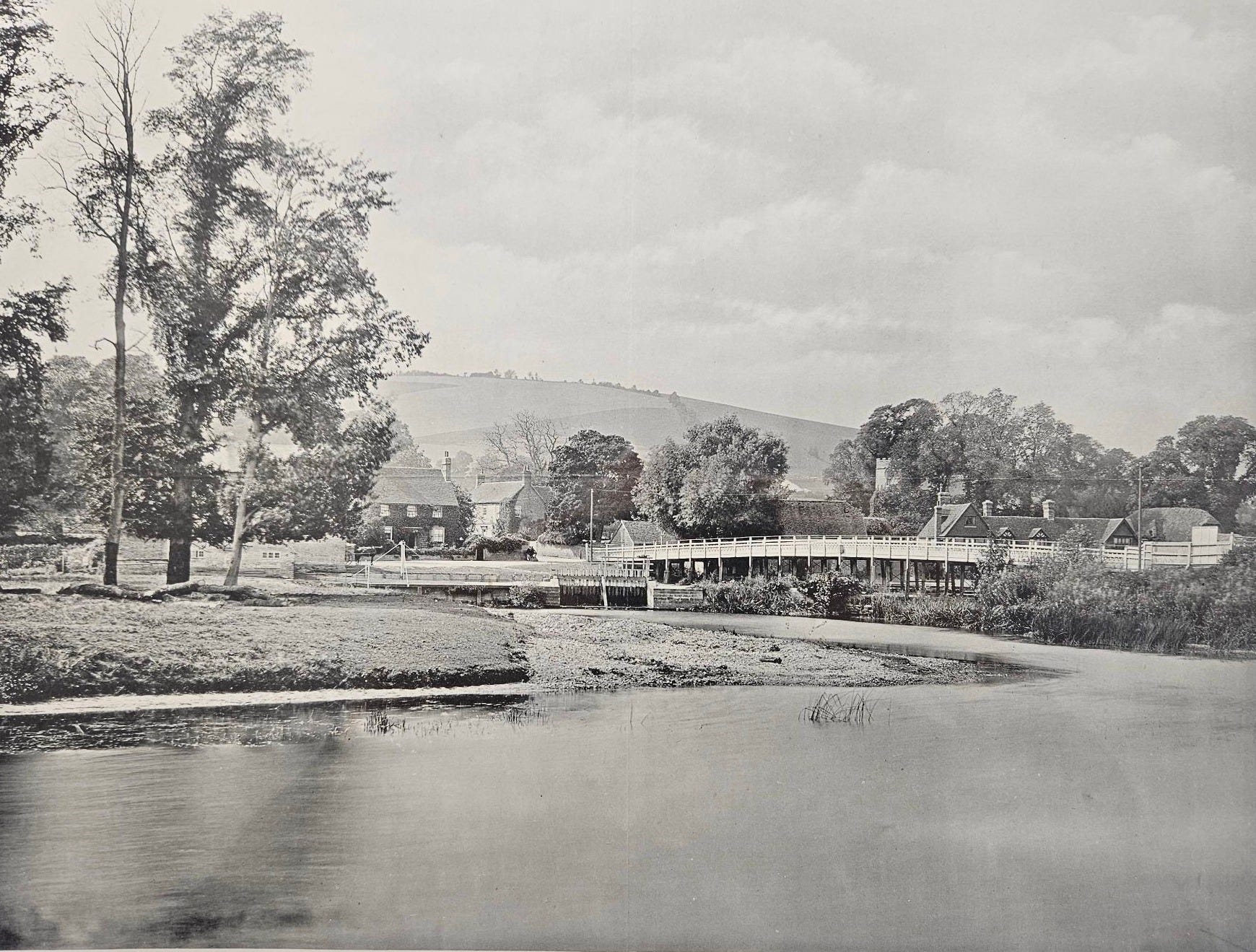
Tylar’s view of the South Oxfordshire village of Whitchurch on Thames includes the steeple of St. Mary’s Church in the centre of the shot and Whitchurch Mill to its left.
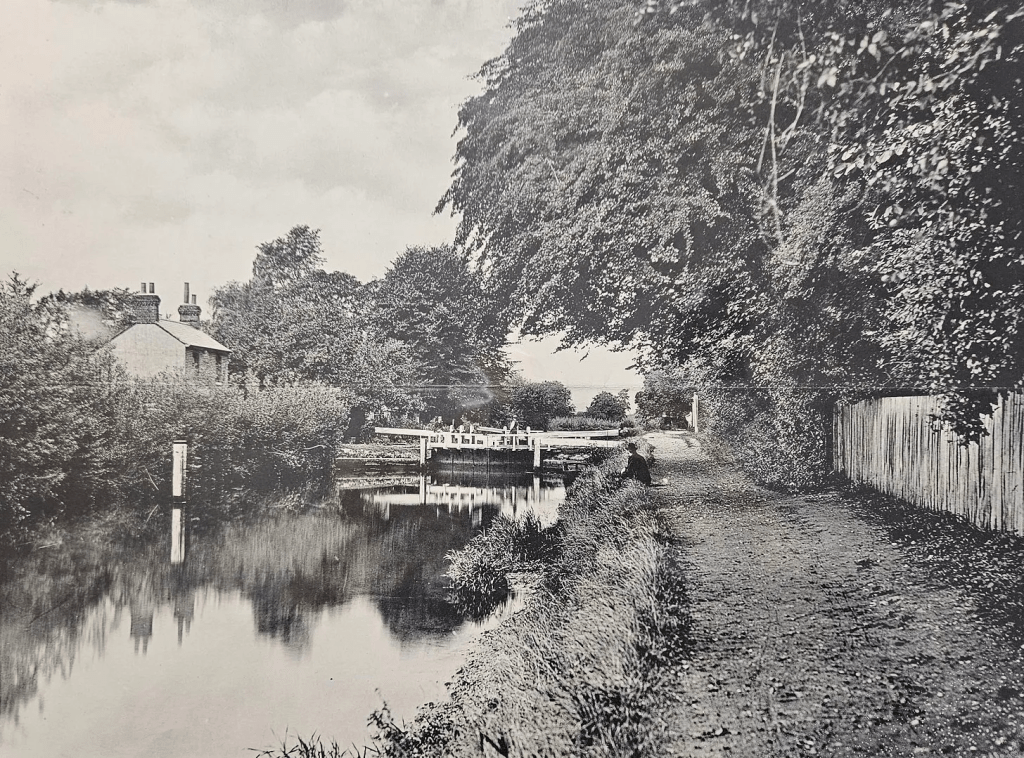
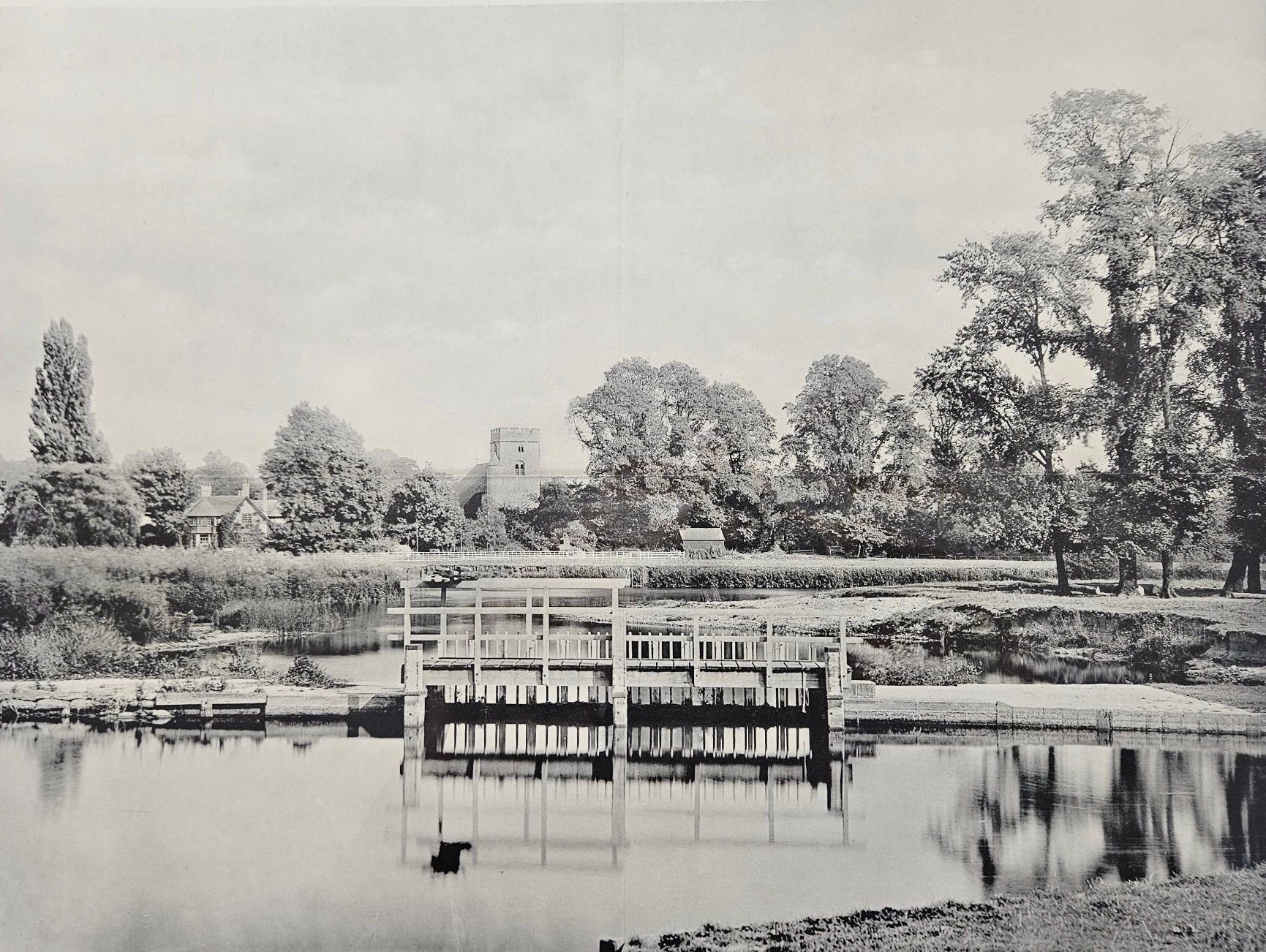
Sonning Lock to the east of Reading has been rebuilt three times since its first appearance in 1773 and now features steel gates that replaced the original wood at the start of the 21st century.
In this portrait, Tylar has managed to capture a group navigating a craft through the lock, a bowler-hatted man sat on the riverbank and another figure walking towards camera in the far distance.
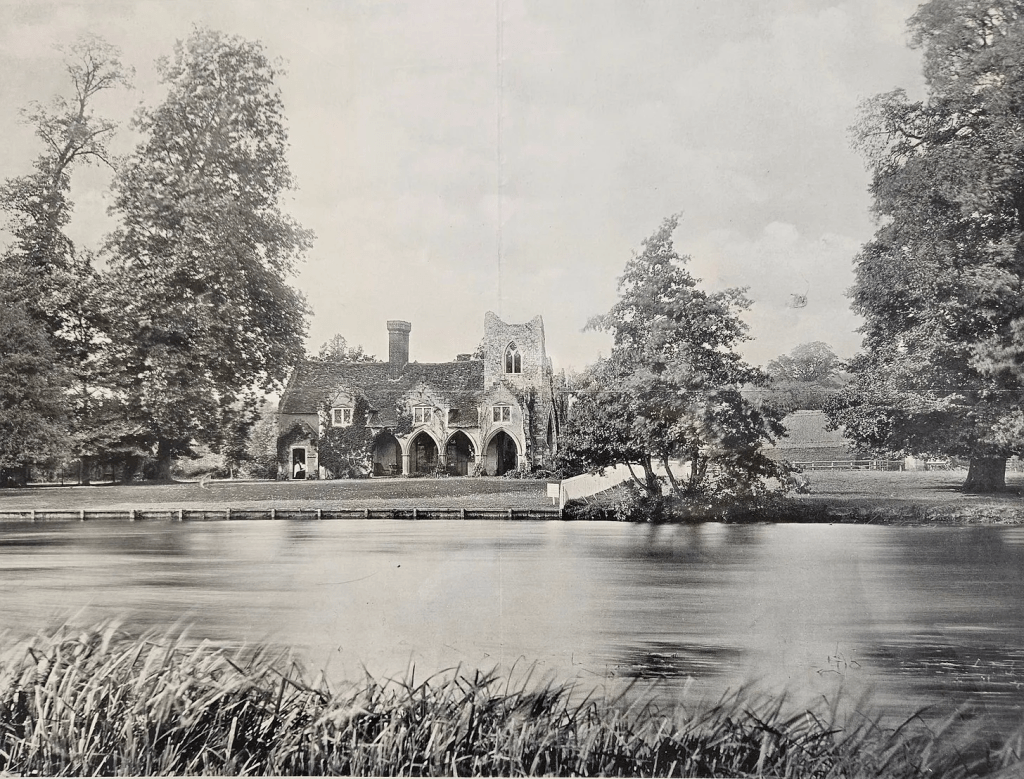
Medmenham Abbey, misspelled by Tylar as ‘Medenham’ on both his copyright form and the photograph’s original caption, occupies the site of what was once a Cistercian monastery.
Its history includes hosting the infamous Hellfire Club during the 18th century when Sir Francis Dashwood and his followers “socialised”.
Today it is a grade 2 listed mansion that is privately owned.
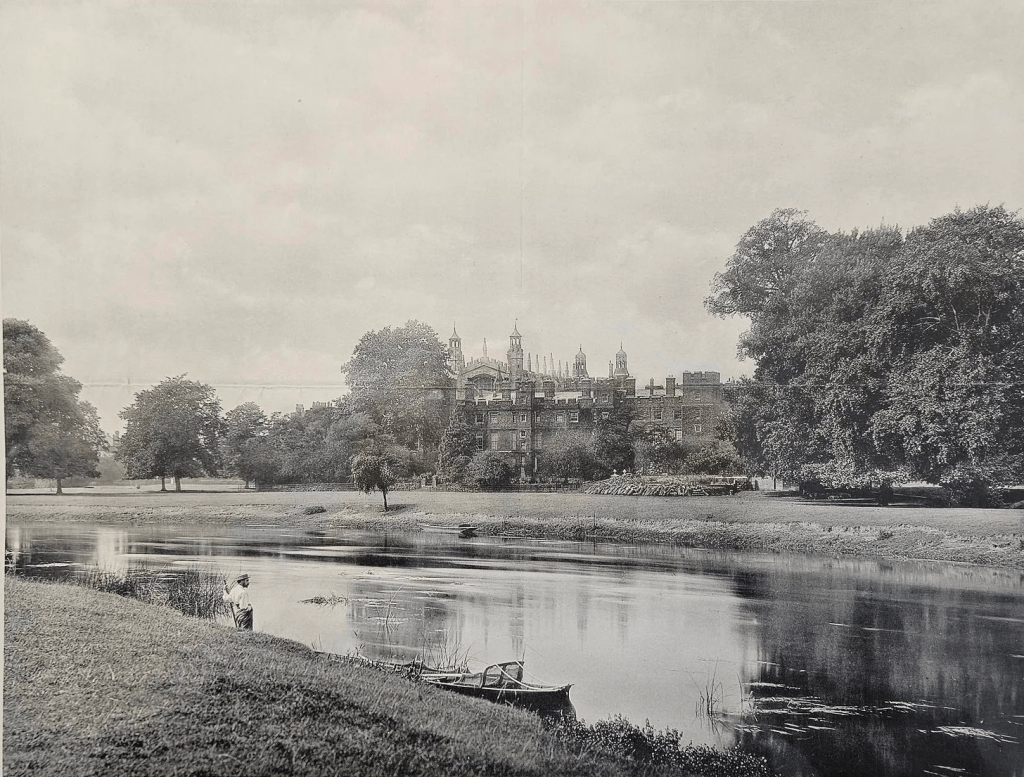
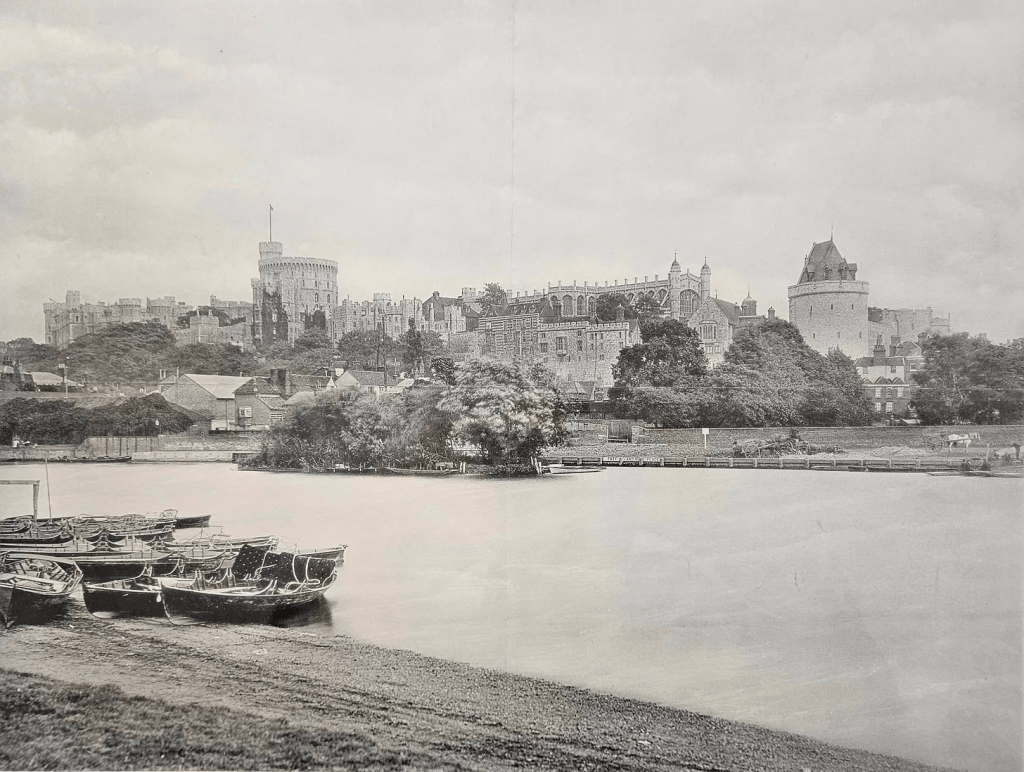
Tylar’s final two prints need little introduction as they feature Eton College, one of Britain’s best-known public schools, and Windsor Castle, the oldest and largest occupied castle in the world.
Both scenes are being observed not only by their cameraman.
A man in a punt is enjoying the view across the river to Eton College whilst a white horse with cart in tow is taking a rest amid harvest time in the shadow of Windsor Castle.
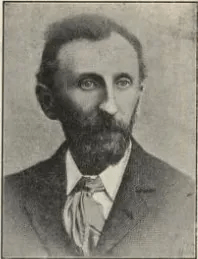
William Tylar (1859-1929). Courtesy of British Library.
According to copyright forms (COPY 1/428/397-405, 410) that he submitted in January 1897, Tylar photographed a sequence of well-known Thames locations between Oxford and Windsor.
What I wasn’t prepared for when viewing the ‘Copy Attached’ to each of the forms was both the size and quality of the ten black-and-white prints he produced.
They were approximately 16” x 20” (40cms x 50cms), framed in card mounts and presumably intended for display or exhibition.
Judging by their pristine condition, they had lain unviewed for well over a century.
To rectify this unintended neglect, this week’s post and next will be devoted to sharing these wonderful images
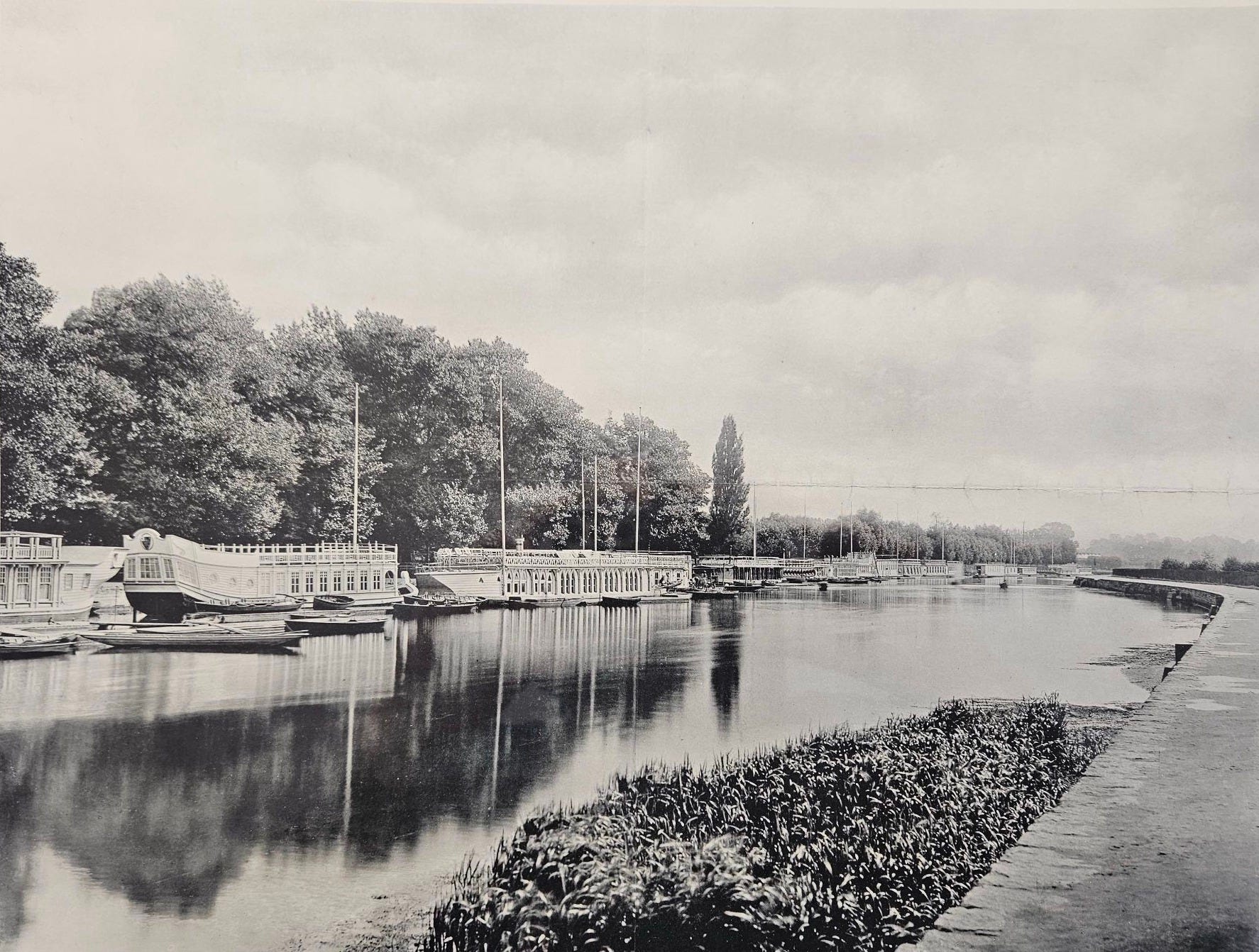
The sequence starts in Oxford with a scene featuring university barges moored along the river, also known as Isis, at Christ Church Meadows.
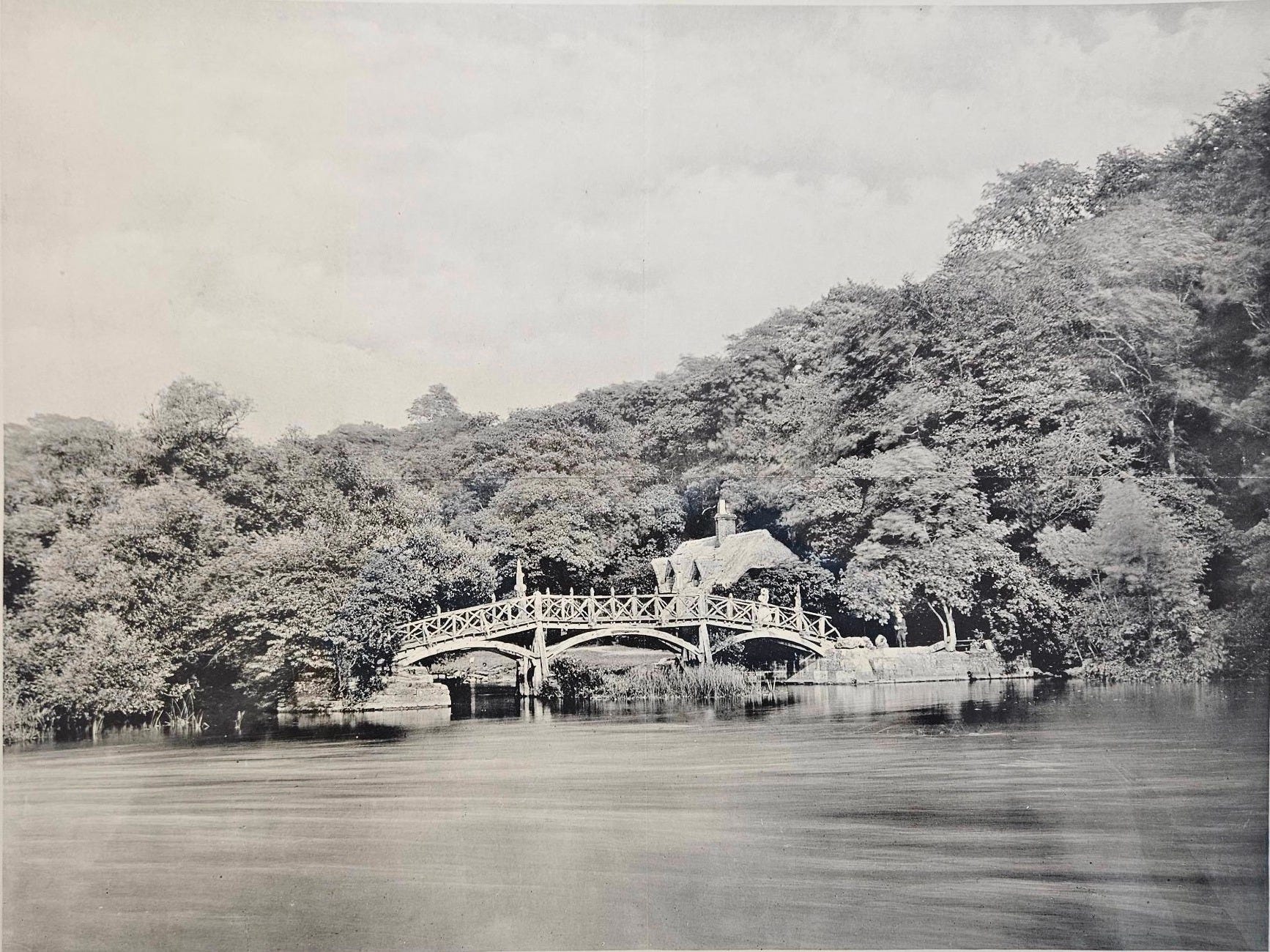
They were constructed in the 1770s as part of Capability Brown’s landscaping scheme for the Harcourt family’s estate.
During the 1920s, both the cottages and wooden bridge are thought to have fallen into disrepair and demolished during the Second World War when Nuneham Courtnay House was used by the RAF.
UPDATE: Andrew Crosby writes on Facebook: “The lock cottage at Nuneham there is still partly extant. Only a few bricks and a wall, but it’s not gone completely. The bridge to the island is not to be seen, but it is clear where it was originally located.”
One of the Thames most scenic spots is occupied by the villages of Goring in Oxfordshire and Streatley in Berkshire which lie opposite each other.
Tylar’s prints manage to capture the beauty and peace of both locations, partly because he chose a time to set up his camera when no-one was around.
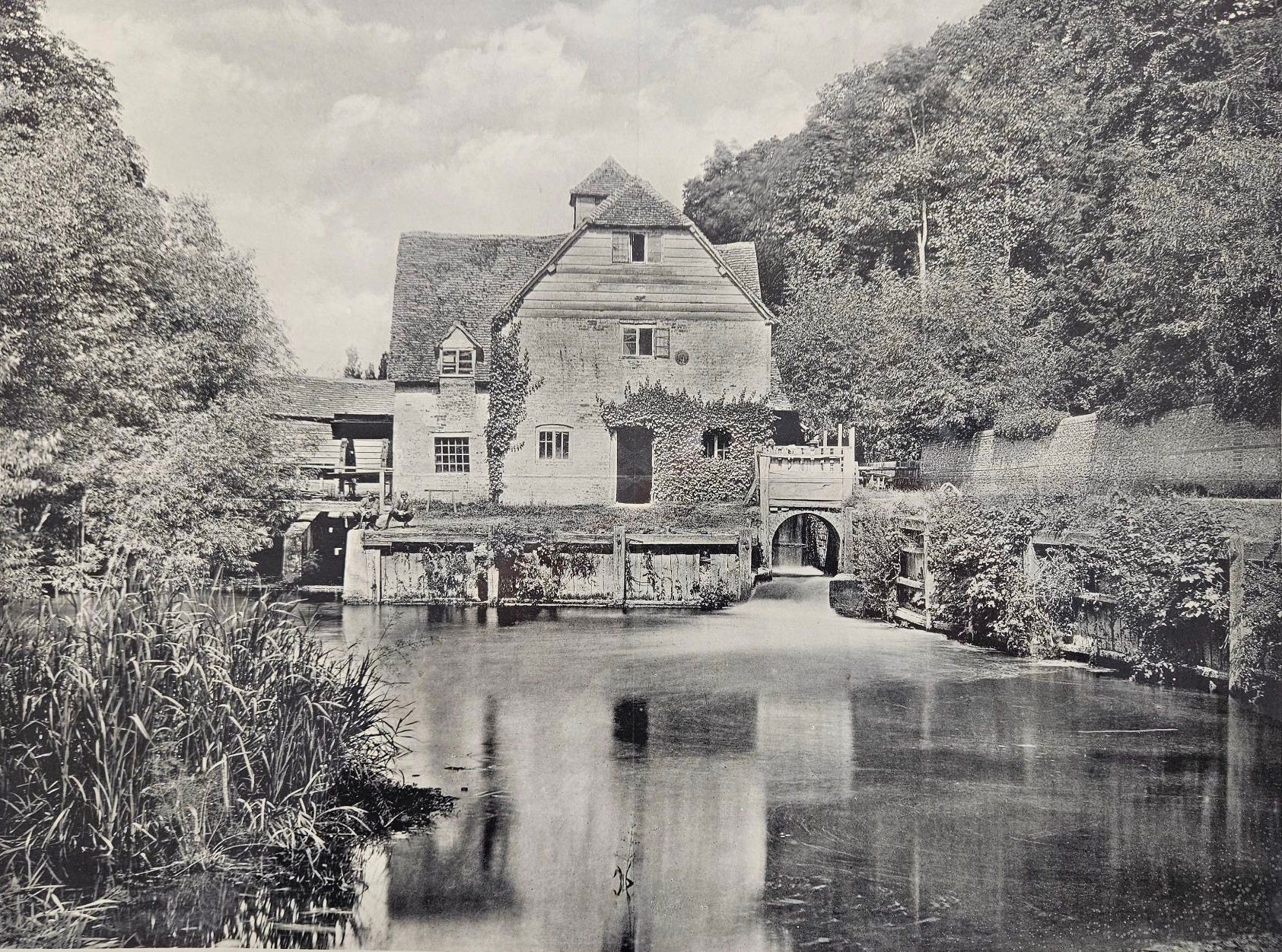
Continuing his river trip, Tylar’s view of Mapledurham Mill near Reading is equally calm and tranquil though two young boys can be seen kneeling to the front left of the mill building.
Dating from 1626, the watermill is pictured here prior to the years between 1947 and 1977 when it was out of operation and had to be restored.
Next week, another five of William Tylar’s prints from his expedition along the River Thames in the summer of 1896 including Windsor Castle and Eton College.
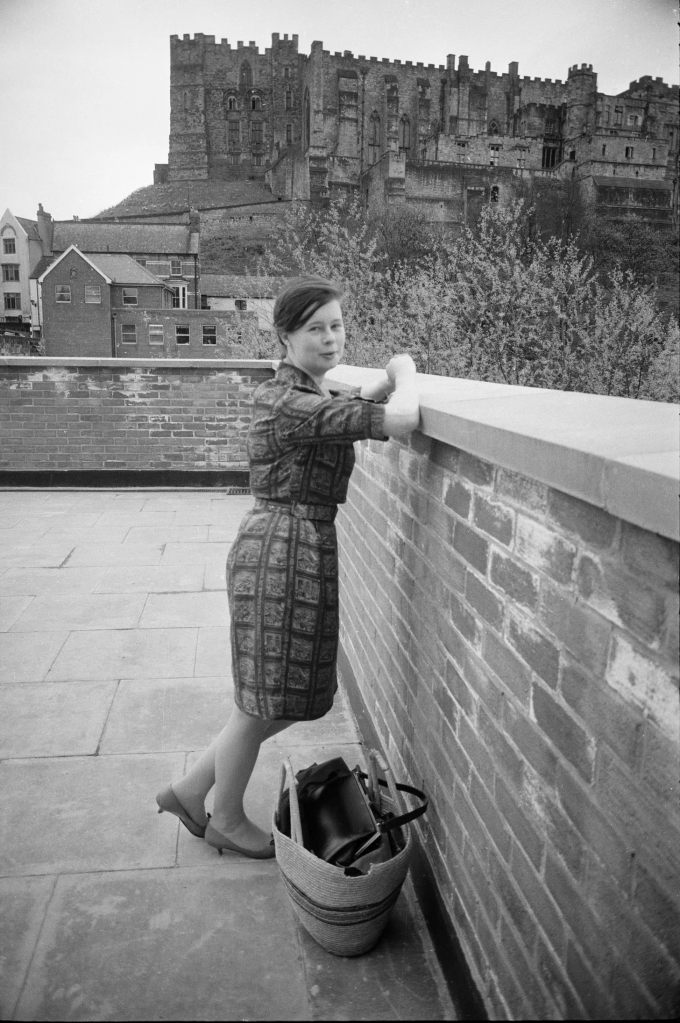
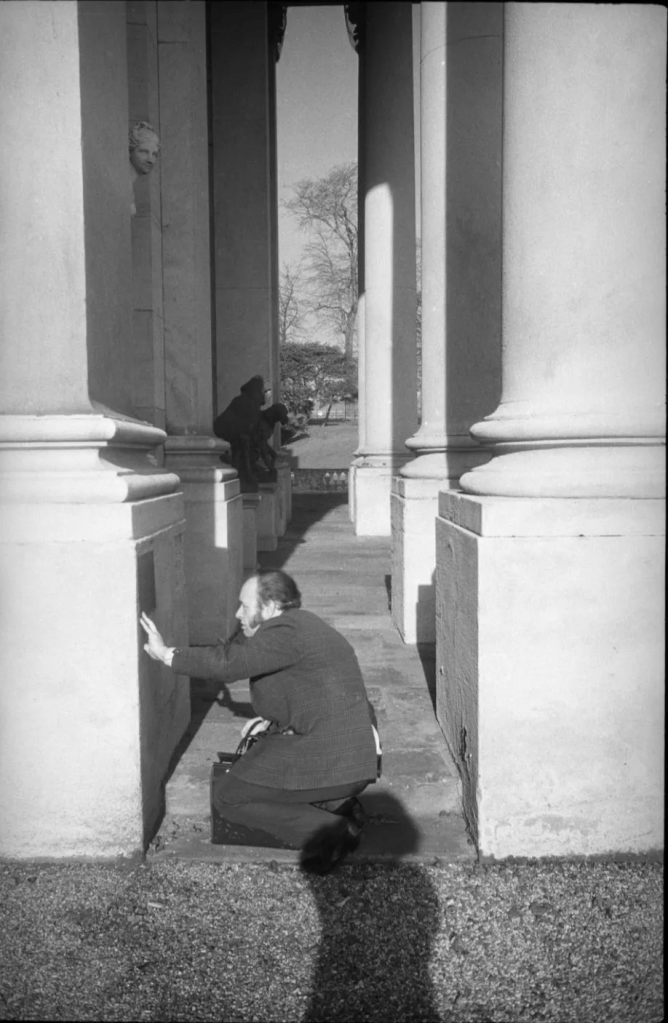
The architectural photographer Ursula Clark (1940-2000) is best-known for an archive of around 20,000 largely black-and-white images held by Historic England.
They were created by the Newcastle upon Tyne publisher Oriel Press during the 1960s and 1970s for a series of architecture guides featuring buildings in Britain and continental Europe.
Earlier this year, the Royal Photographic Society Historical Group hosted a talk in which I presented original research about Ursula Clark and her pioneering role in photographic history.
That research is ongoing and has focused recently on non-Oriel Press books and illustrated magazines where her architectural photographs were also published.
From visiting the Historic England archive in Swindon, I was aware that a proportion of her output involved colour photography.
Two of her exercise book shot lists are titled ‘Colour Copies’, suggesting that Oriel Press intended to reproduce images in colour.
Perhaps, given the company’s later financial difficulties which led to a corporate take-over by Routledge Kegan Paul in 1973, any plans proved too expensive to realise.
Given this background, it’s a pleasure to share colour versions of Ursula’s 35 mm photography in this latest Pressphotoman post about her photographic career.
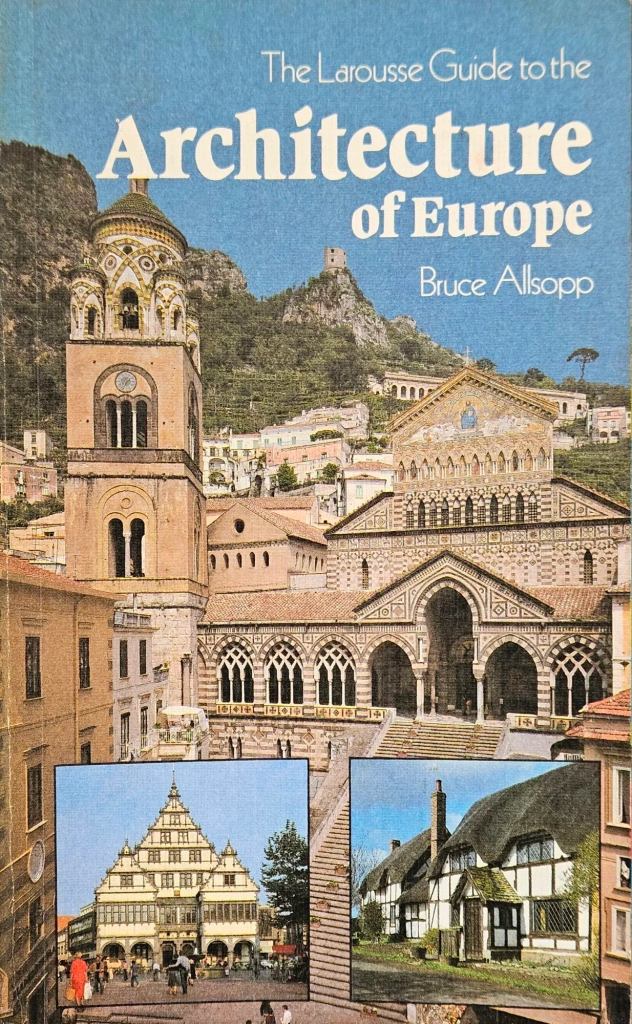
These images were discovered in Architecture of Europe, a guide published in 1985 in Britain by Newnes Books and by Larousse in the United States.
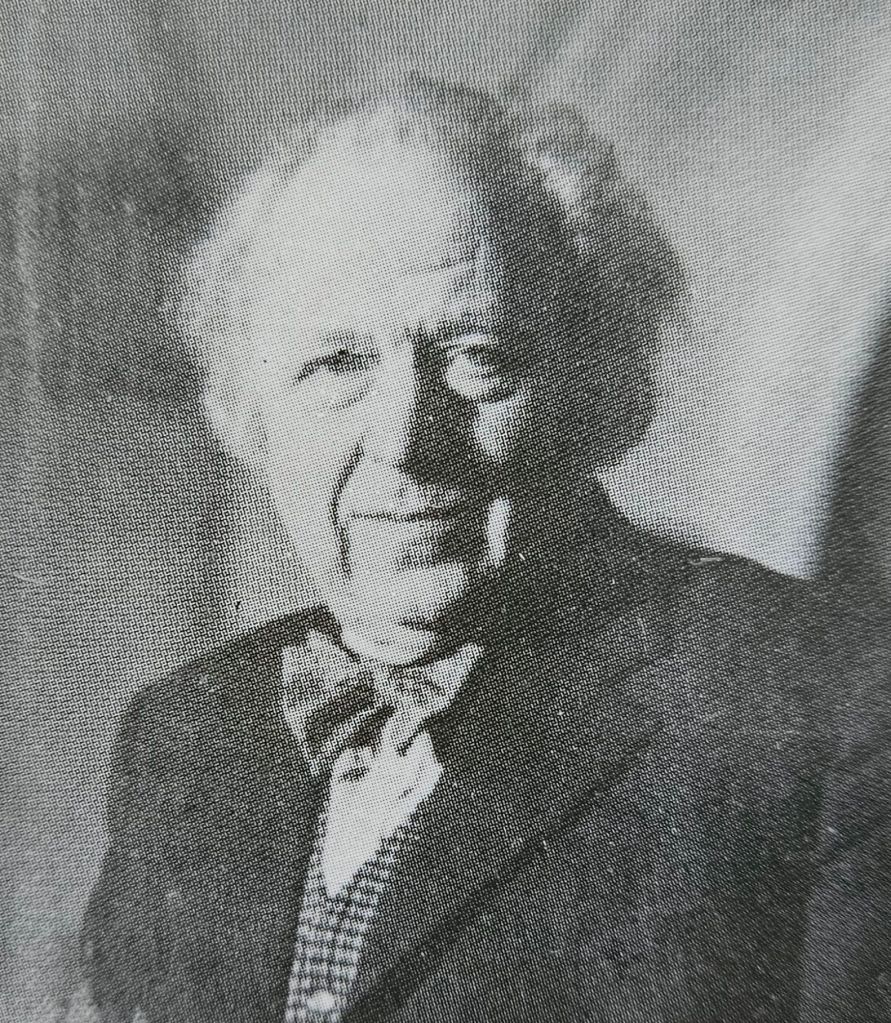
The guide was authored by Bruce Allsopp (1912-2000), who was Ursula’s chief collaborator at Oriel Press and hired her on its launch as the publisher’s photographic editor in 1962.
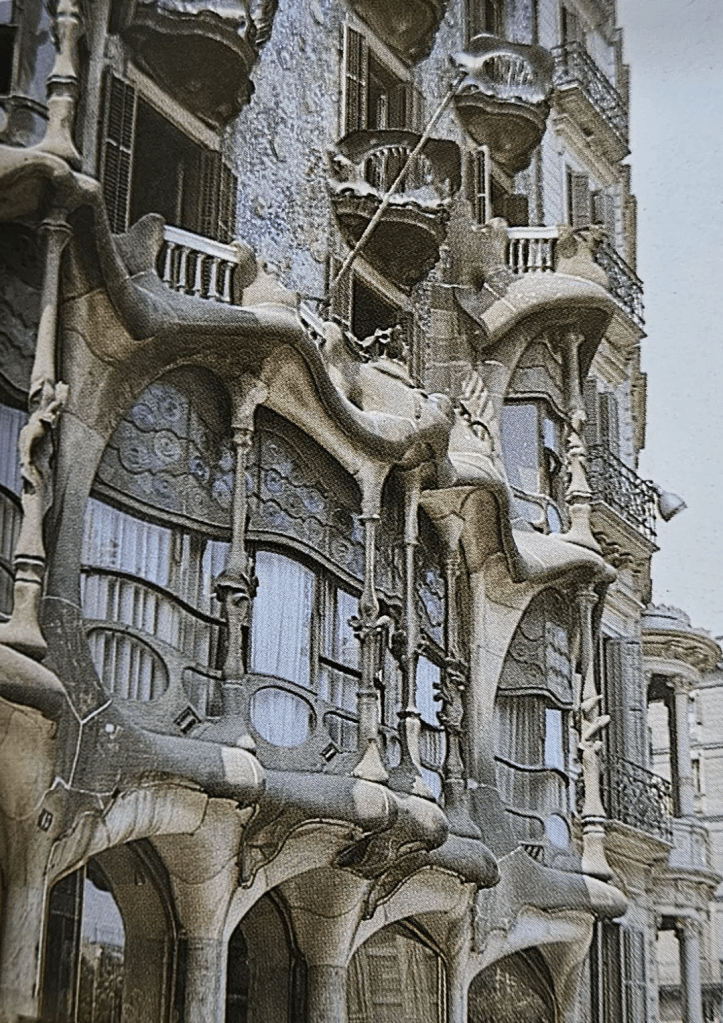
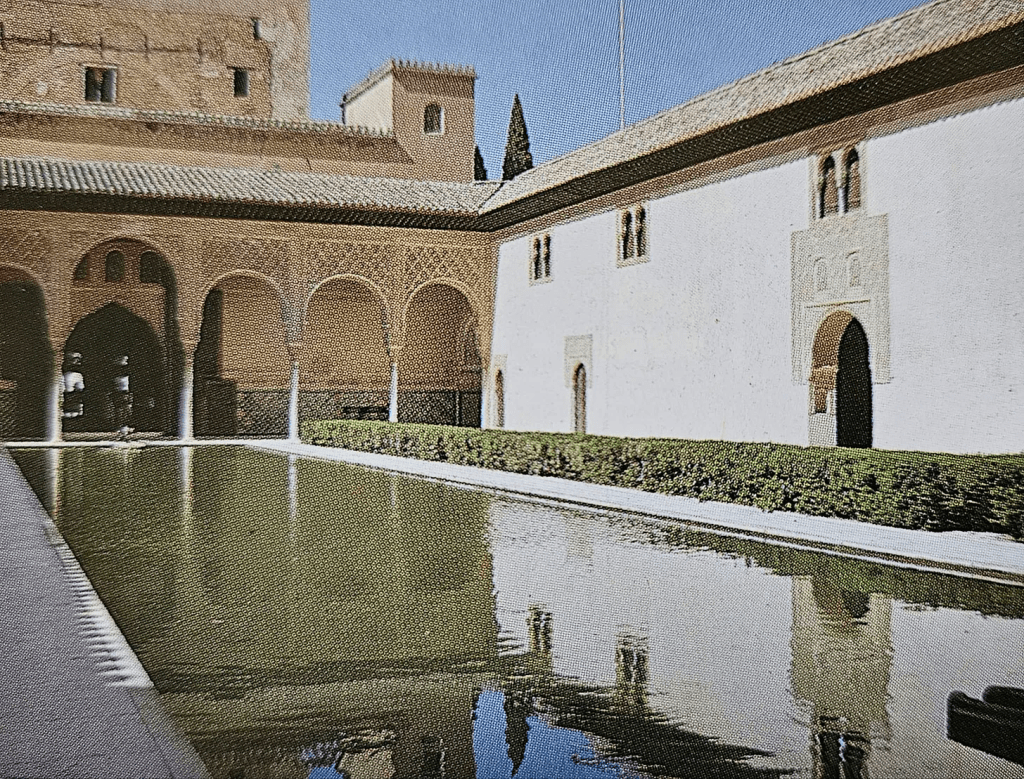
Colour photographs credited to ‘Ursula Clark’ illustrate a section of Architecture of Europe devoted to Spain and Portugal.
It appears that some were first published as black-and-white illustrations in Oriel’s Architecture of Spain and The Great Tradition of Western Architecture (both 1966).
This information helps date these images as being taken during a period when Ursula was in her mid-twenties.
The sequence starts with a striking image of Barcelona’s ‘Facade of the Casa Battló’ (1905-07) by Antoni Gaudi, perhaps best-known for the catholic cathedral Segrada Familia, also in Barcelona that is due to be completed in 2026.
Then a double page is devoted to Ursula’s photographs with a brief accompanying explanatory text to point out significant features or historical information.
I reproduce them in the order they appear with a caption identifying each location.
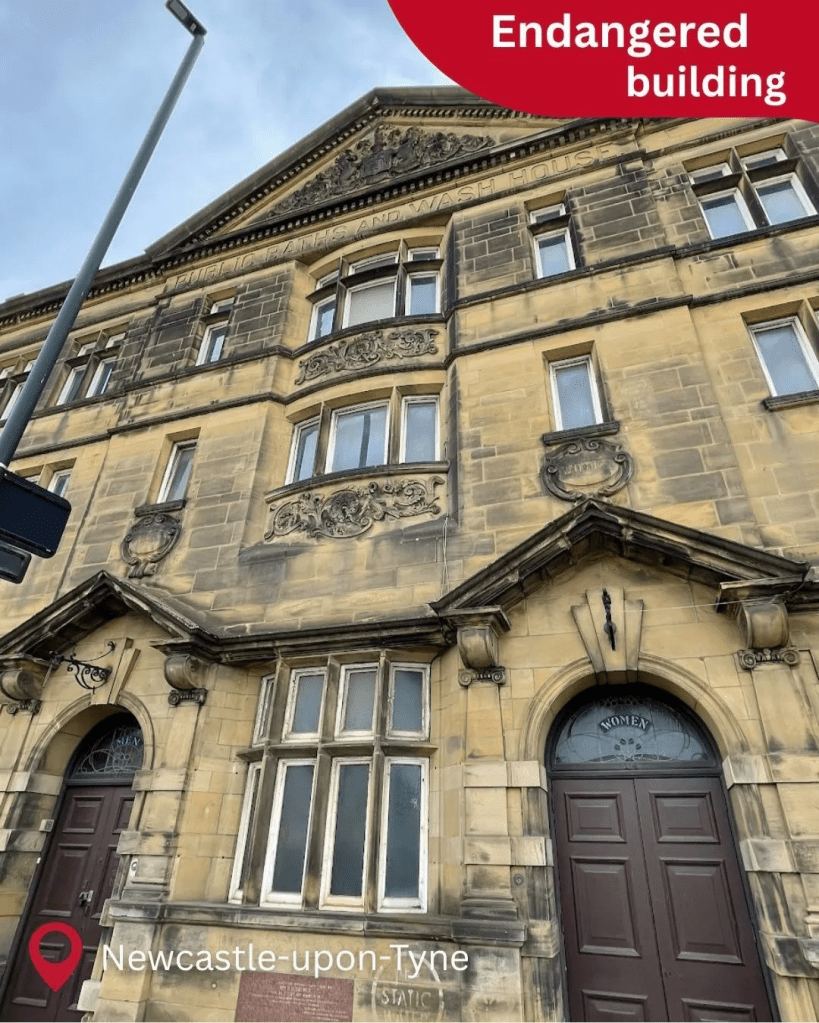
The Victorian Society’s national list of ‘Top Ten Endangered Buildings 2025’ features one building recognisable from regular visits down the decades to Newcastle upon Tyne.
Gibson Street Baths was built in the early 20th century under the 1846 Public Baths and Wash-houses Act that was still in force.
Photo: Graham Tyrrell/Instagram.
A weekly visit to such buildings was part of everyday life for many families including earlier generations of mine.
Now Grade 2 listed, Gibson Street Baths has lain dormant since 2016 and, according to the Victorian Society, “needs a sensitive reuse before restoration costs escalate further.”
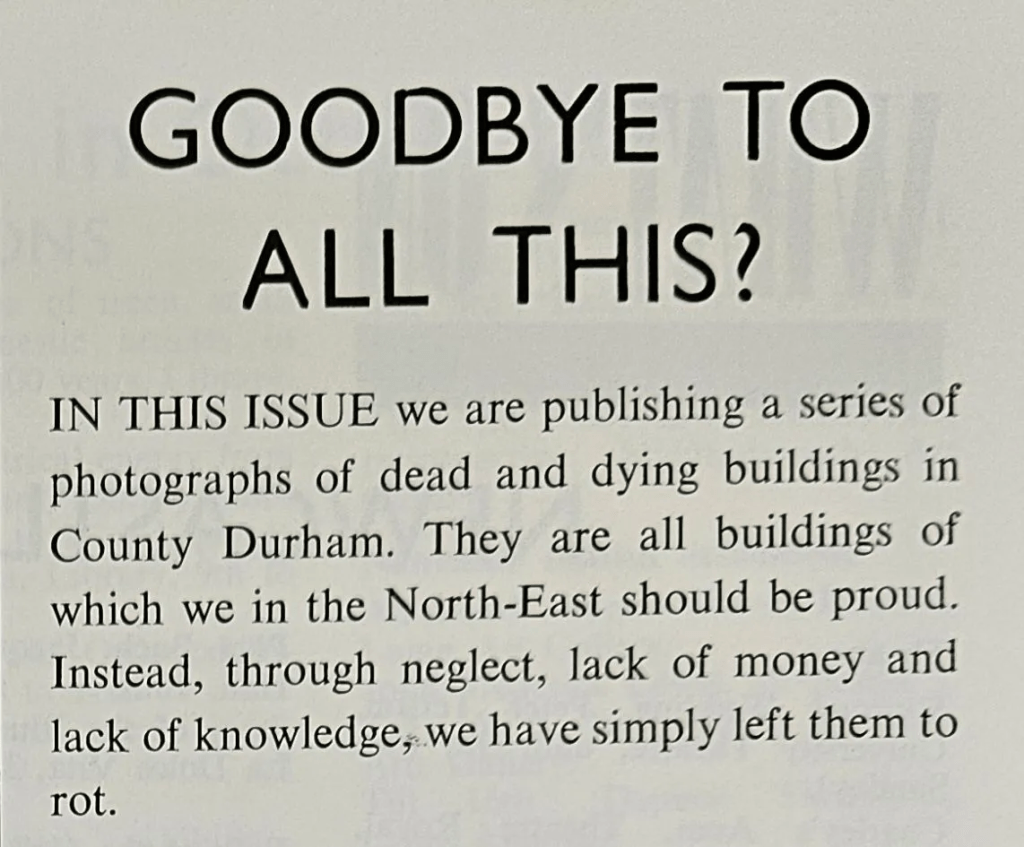
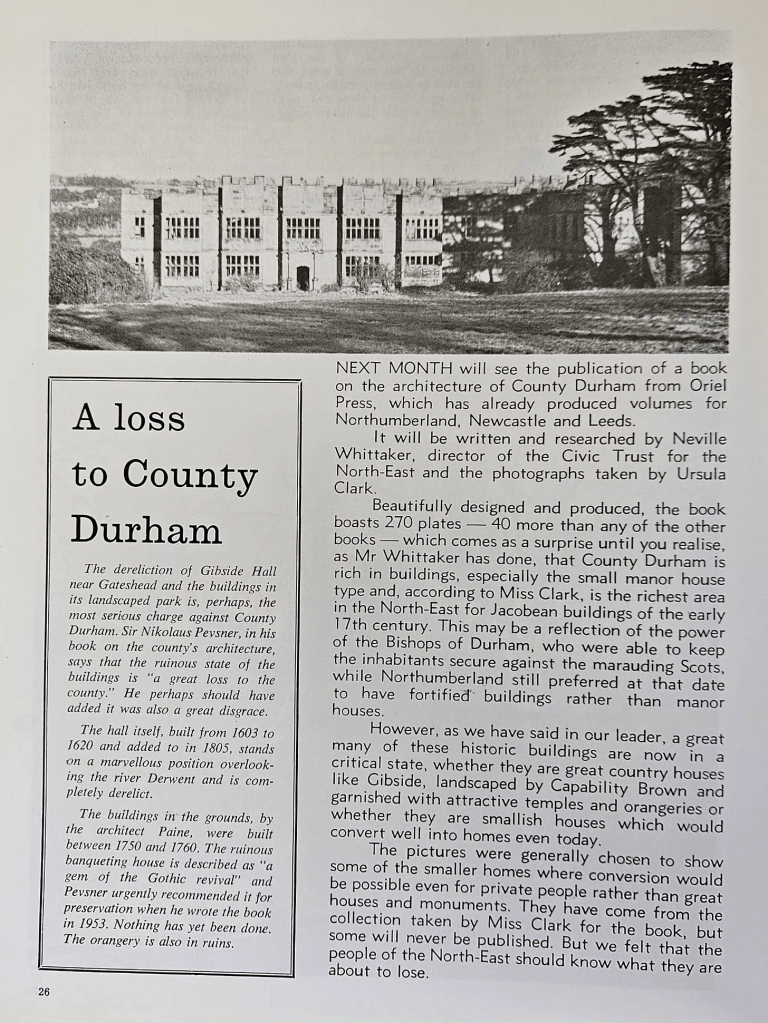
It’s a theme that has echoed down the years as revealed by a 1971 article that recently joined the Pressphotoman collection.
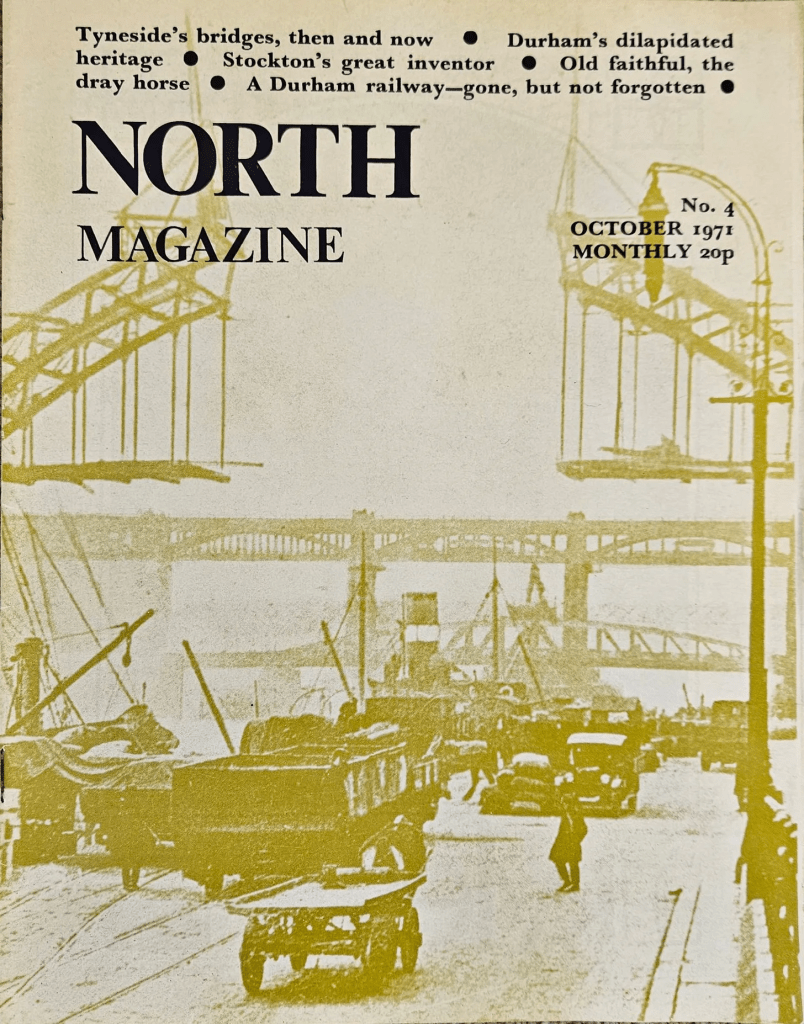
North Magazine was a monthly publication for ‘Durham, Northumberland and North Yorkshire’ edited by the journalist and author Leslie Geddes-Brown (1942-2020).
The cover of the October 1971 issue (vol. 1, no. 4) featured an eye-catching photograph of the Tyne Bridge, which is currently undergoing major renovation as it approaches its centenary in 2028.
The series of photographs referred to came from Historic Architecture of County Durham by Neville Whittaker and Ursula Clark (Oriel Press) that was about to be published.
Regular readers will recognise the name of Ursula Clark (1940-2000) as the architectural photographer, who featured in my recent talk for the RPS Historical Group marking the 25th anniversary of her death.
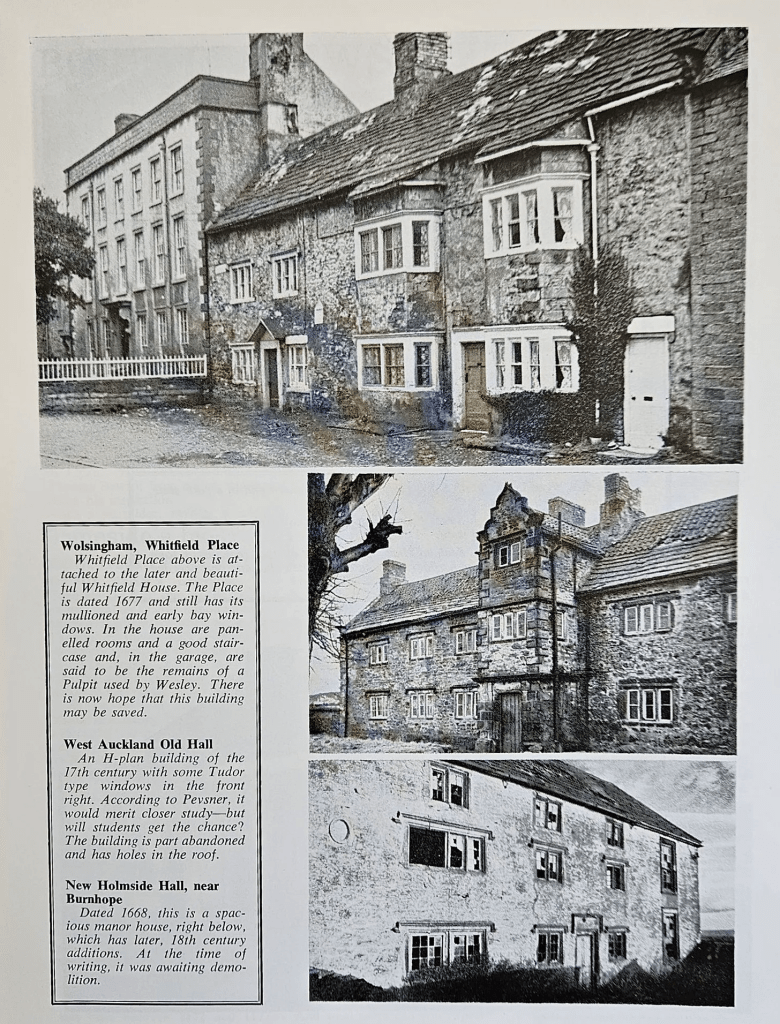
The three-page North Magazine article devoted much of its space to Ursula’s photographs and it is instructive to trace what has happened to the featured buildings in the half century since.
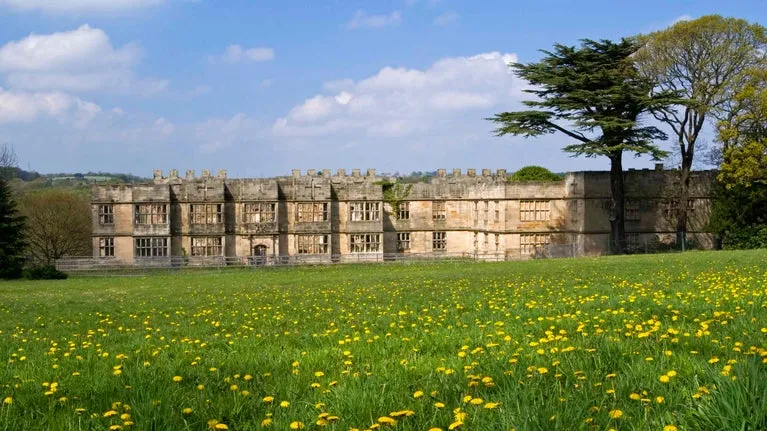
In the years since, all three of the featured properties – Whitfield Place, Wolsingham; West Auckland Old Hall; and New Holmside Hall, near Burnhope – have been lovingly restored to their former glory.
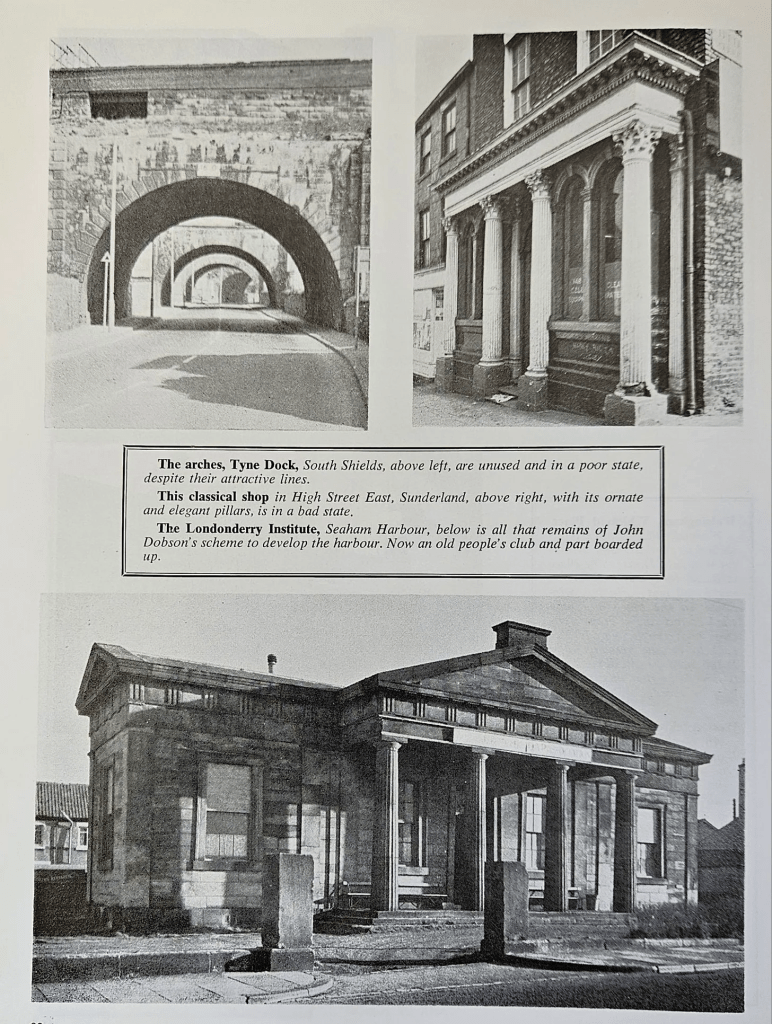
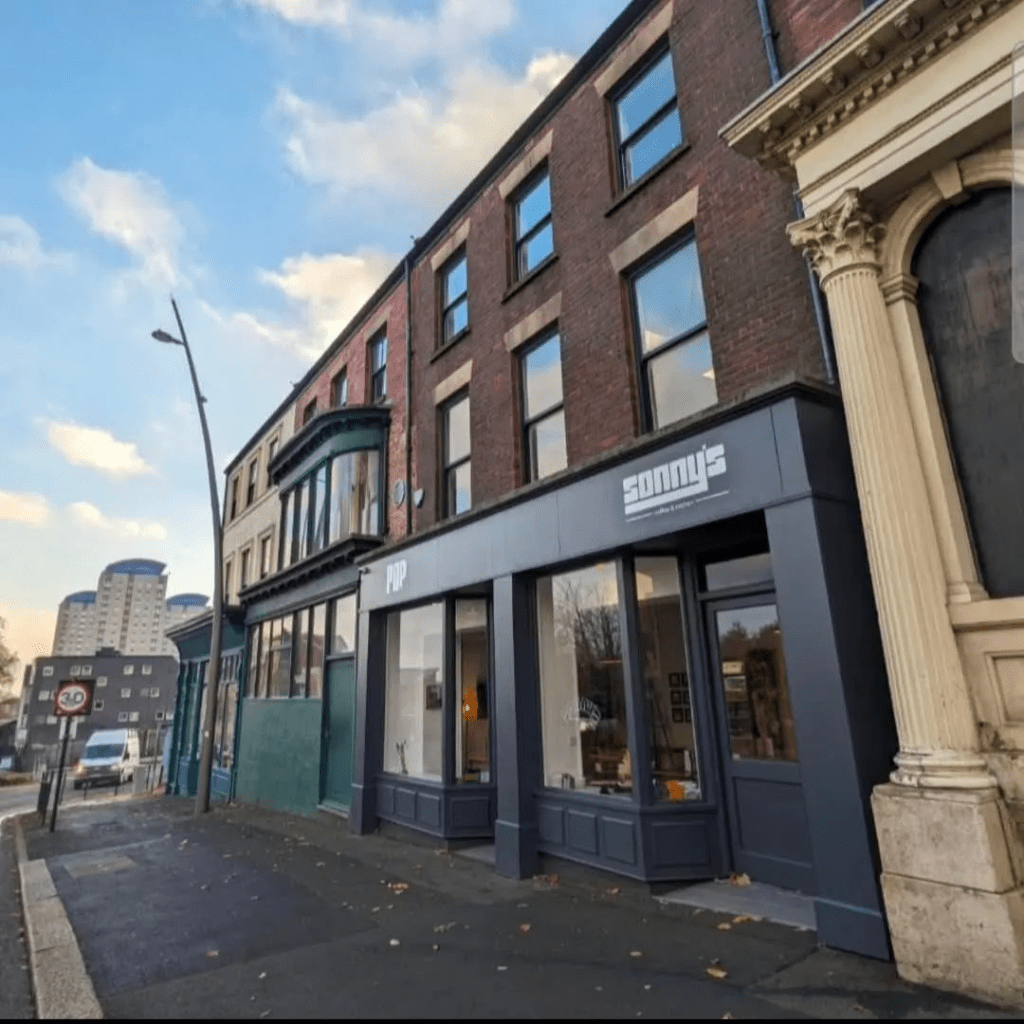
Perhaps the most stunning transformation though is the classical shop front in High Street East, Sunderland (top right below) with its “ornate and elegant pillars” described in 1971 as “in a bad state.”
Thanks to becoming part of Sunderland’s Heritage Action Zone (HAZ), the adjoining terrace initially built as merchants’ houses in the late 18th century is now home to Pop Recs, a café, music and arts venue and community hub.
Photo from Pop Recs Facebook page.
These restorations and reinventions confirm that there is hope for the current crop of endangered buildings of which Newcastle’s Gibson Street Baths is just one.
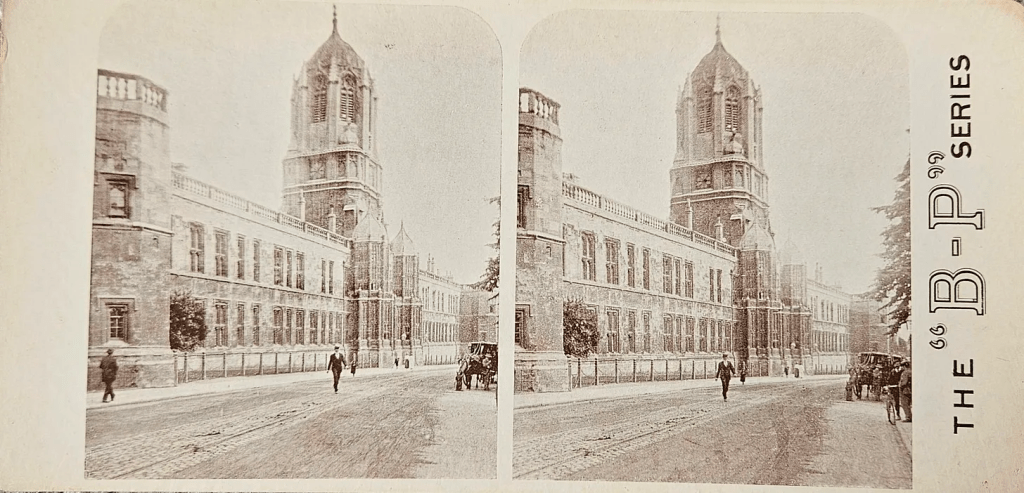
Who, it asked, was behind this ambitious photographic enterprise; one that offered 3D views in sets of 12 taken around England and the Isle of Man complete with pocket viewer?
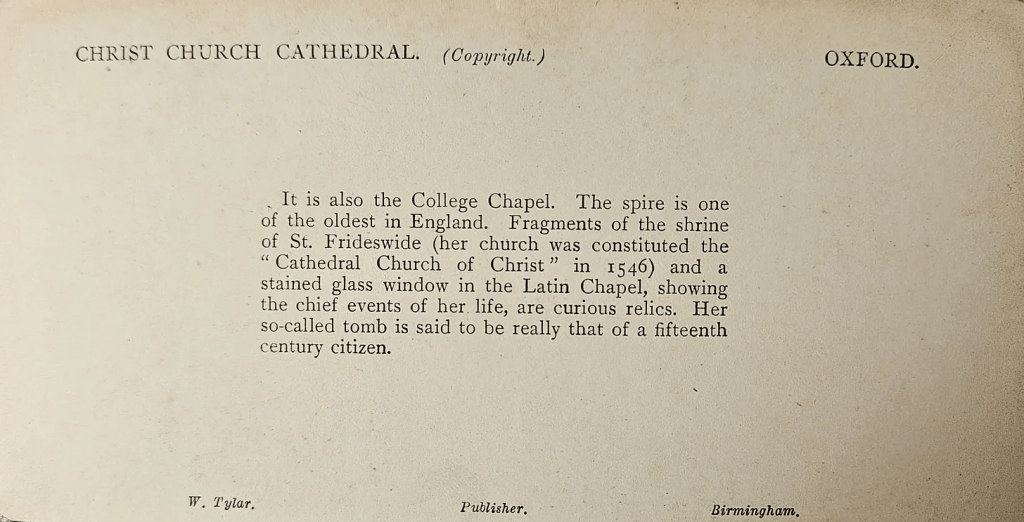
The answer was revealed at the bottom of the verso of the featured cards: ‘W. Tylar, Publisher, Birmingham.’
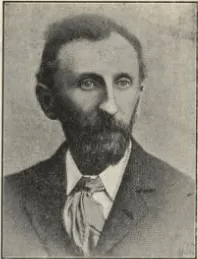
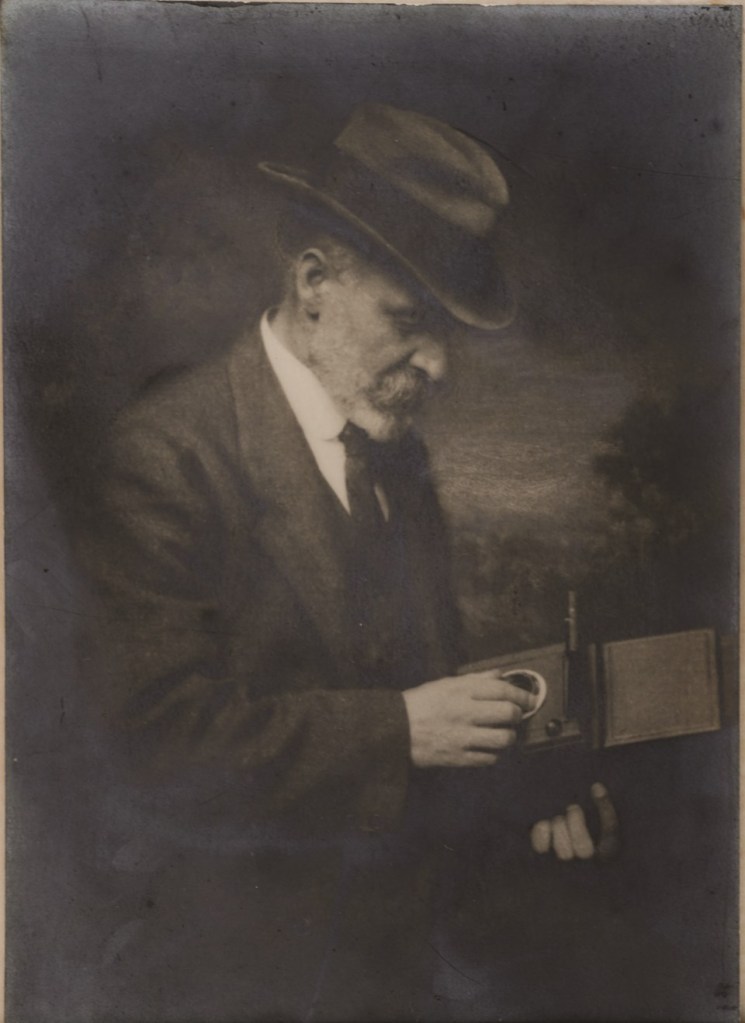
William Tylar (1859-1929) was born in Lincolnshire and by his early twenties was working as a photographer in Birmingham.
William Tylar (1859-1929). Courtesy of the British Library.
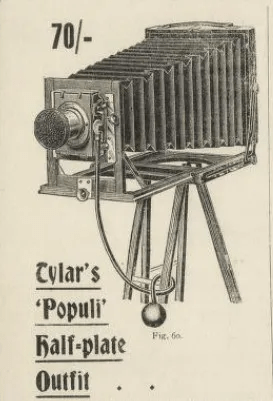
By the 1890s, he had established a thriving business in the Aston district of the city that specialised in inventing and supplying photographic equipment.
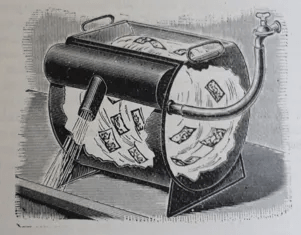
A typical example was Tylar’s P.O.P Washer described in 1896 by the British Journal of Photography as “a thoroughly useful and efficacious addition to the amateur’s outfit.”
From British Journal of Photography (3rd April 1896). Courtesy of the British Library.
The following year, Tylar copyrighted several photographs taken in and around Oxford and the River Thames.
This suggests that his “B-P” stereo series may have been just one of his commercial photography spin-offs.
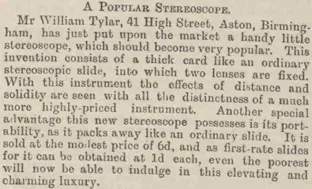
Tylar also had an entrepreneur’s instinct for publicity and “a popular stereoscope” he invented attracted attention from the national press.
The People’s Friend (8th January 1900). From British Newspaper Archive.
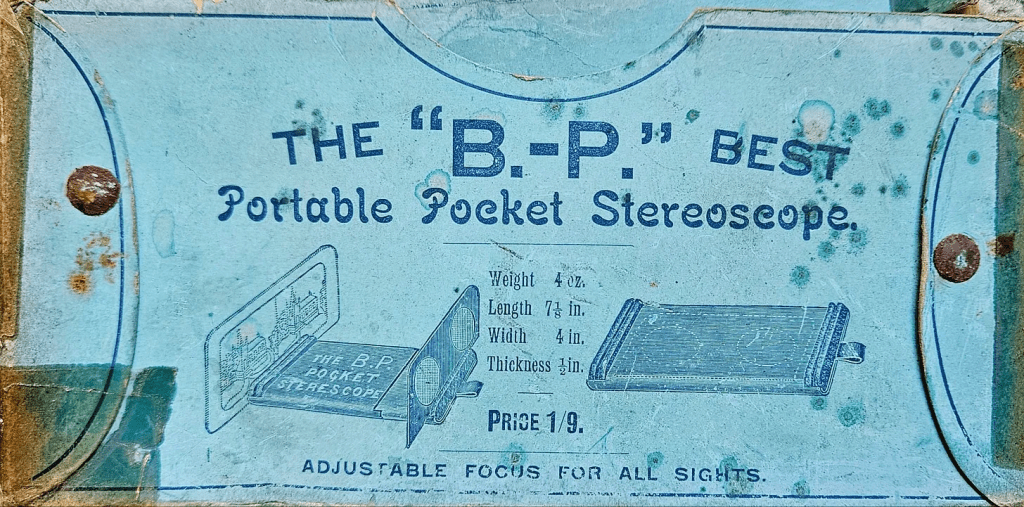
This would appear to be the forerunner of a more sophisticated and expensive version of his invention that later accompanied his “B-P” Series of stereo views.
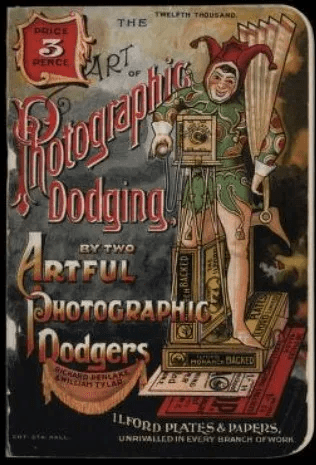
Early in the 20th century, a showcase for William Tylar’s business was published as The Art of Photographic Dodging with its eye-catching front cover advertising Ilford Plates and Papers.
Courtesy of the Bodleian Library, Oxford.
Co-author Richard Penlake will be known to regular readers of this blog as the pen-name of Percy R. Salmon FRPS (1872-1959).
A respected author of several books aimed at amateurs photographers, Salmon was editor of the weekly paper Photographic News between 1901 and 1905.
Rather wonderfully, The Art of Photographic Dodging has been digitised by the Getty Research Institute.
A glimpse inside reveals “Tylar’s tit-bits to tyros turning their troubles to triumphs : tested tips tersely told” alongside nearly 70 pages of advertisements extolling the virtues of his many and varied products.
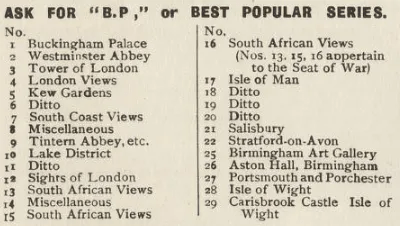
One of the ads also reveals that sets of 12 “B-P” stereoscopic views cost one shilling and sixpence and that “B-P” stood for ‘Best Popular.’
However, as is sometimes the case with photographers and photographic businesses highlighted by Pressphotoman, Tylar’s fortunes took a downward path.
In 1907, failing health led him to convert his business into a private limited company.
This offered an opportunity to his employees as well as friends and customers to purchase shares in it.
Sadly for him, this idea failed to take flight.
Instead, in June 1908, his company secretary, a Mr. J. T. Roberts, was arrested by police after forging a series of cheques signed by Tylar as the company’s managing director.
Over a six month period, Roberts, a previously trusted employee, drew around £80 (over £8,000 in today’s money) from the company’s bank account. He was jailed for six months with hard labour.
Birmingham Daily Mail (2nd June 1909). From British Newspaper Archive.
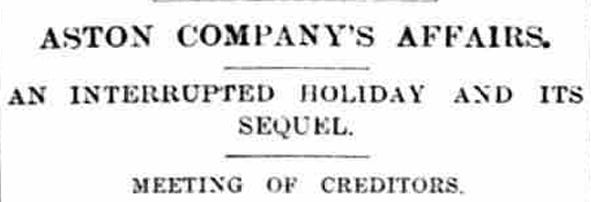
In August 1909, a few months after Roberts was imprisoned, a creditors meeting of William Tylar Limited, “photographic equipment manufacturers and dealers,” was held.
Birmingham Daily Mail (October 1909). From British Newspaper Archive.
The meeting heard that Tylar learned of his company secretary’s dishonesty whilst enjoying “a change of air” in Bournemouth suggested by his doctor.
As reported by the Birmingham Daily Mail, the business had failed due to “bad trade, keen competition, and the cost of getting orders” and a liquidator was appointed.
In the face of this set back, Tylar still recorded his occupation in the 1911 Census as a “Factor of Photographic Goods.”
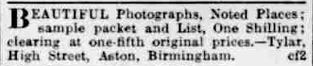
However, a newspaper small ad placedin the same year was perhaps a truer reflection of his position.
Stowmarket Weekly Post (19th January 1911). From British Newspaper Archive.
In 1929, William Tylar, who had settled in Bournemouth, died in hospital in Christchurch, Hampshire aged 71.
An article featuring my research about the architectural photographer Ursula Clark (1940-2000) has just been published by The PhotoHistorian (Spring 2025, no. 201).
It follows a recent talk about Ursula’s photography for the Royal Photographic Society Historical Group.
A YouTube recording is fast approaching 4,000 views and has attracted an audience far beyond the niche one anticipated.
‘Ursula Clark: Architectural Photographer’ for RPS Historical Group. 28th February 2025.
As a result of social media interest and wider publicity, I am now following up various research threads, which I hope to share in future Pressphotoman posts.
This week (12th March) marks 153 years since the birth of photographer, author and journalist Percy R. Salmon FRPS (1872-1959).
His life and career were celebrated in 2022 in a short film produced by the Royal Photographic Society marking his contribution as a fellow and society member for more than half a century.
Since then, Pressphotoman has continued research into different aspects of PRS’s life in photography and then shared the findings with readers around the anniversary of his birth.
Percy R. Salmon FRPS (1872-1959) by HD Halksworth Wheeler (1878-1937). Courtesy of Stephen Martin.
A recent discovery is that he was a key figure in the arrival in Britain of the Autochrome, the first accessible colour photography process.
This involved coating a glass plate with varnish.
Then with a randomly mixed layer of red, blue and green dyed potato starch, with around five million grains per square inch, painting the glass plate with an orthochromatic emulsion.
A complex programme followed of developing, washing, bleaching, redeveloping, fixing and more washing.
The stipled colour result was soft and subtle and is still regarded today as “the most beautiful of the colour processes” (Pam Roberts, The Royal Photographic Society Collection, 1994, p. 62).
The Lumière brothers, Auguste and Louis, patented their Autochrome on 17th December 1903 and publicly unveiled their invention at the Académie des Sciences in Paris at the end of March 1904.
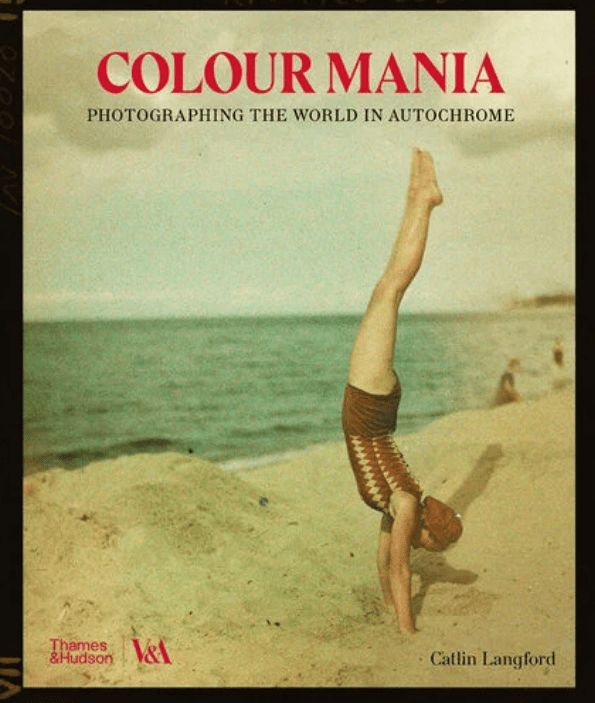
However, it was not until June 1907 that it was released commercially in France (Catlin Langford, Colour Mania: Photographing The World In Autochrome, Thames & Hudson/V&A, 2022, p. 18).
By August, the Autochrome was being excitedly referred to in the British photographic press, which is where Percy R. Salmon comes into the story.
On 5th September, an ‘informal meeting’ about ‘the Autochrome colour-plate’ took place at the Royal Photographic Society in London.
The Morning Post newspaper (7th September 1907) reported that ‘Mr. P.R. Salmon’ was named “among those who showed examples” at the meeting of what it called “that new toy.”
Morning Post (7th September 1907). From British Newspaper Archive.
Also referred to in the report were ‘Mr. J. McIntosh,’ secretary of the RPS (1905-1921) and ‘Mr. Francis T. Beeson,’ who had been an RPS Fellow since 1897.
According to Langford (2022, p.19), “the first [Autochrome] plates arrived in Britain in October 1907, but only in small quantities.”
This would suggest that RPS members attending the ‘informal meeting’ in early September had privileged access to an alternative supply.
In Salmon’s case, this may well have been through contacts he had established in Paris while working as a travelling stereoscopic (3D) photographer for Lévy et ses Fils between 1897 and 1900.
He was also well connected through his years as Editor of Photographic News (1901-1905), a popular weekly newspaper established in Britain in 1858.
Events seems to have moved swiftly as what was described as a ‘Section’ at the annual RPS Exhibition, which opened on 19th September at the New Gallery in Regent Street, London, was devoted to ‘The Autochrome.’
Morning Post (26th September 1907). From British Newspaper Archive.
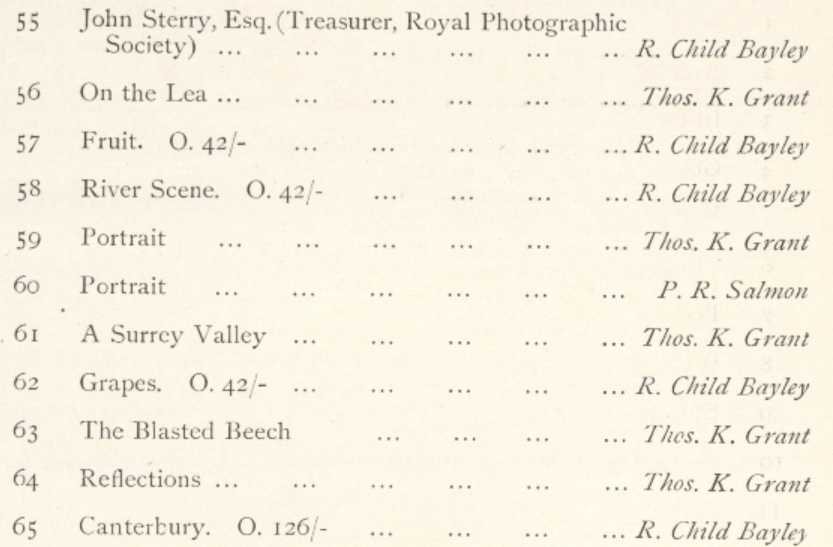
The exhibition catalogue records that ‘P.R. Salmon’ exhibited a portrait, listed as no. 60.
The Autochrome Section had been “collected and arranged by R. Child Bayley and Thos. K. Grant by invitation from the [RPS] Council,” so Salmon found himself sandwiched between several examples produced by its two organisers.
The exhibition proved very popular and each day (until it closed on 26th October), a selection of the Autochromes on display were “shown on the lantern screen” (Morning Post, 19th September 1907).
By early November, a meeting of the RPS that featured an Autochrome demonstration broke all attendance records (Langford, 2022, p.19).
Efforts to locate Mr. Salmon’s Autochrome portrait from the 1907 Exhibition or any other Autochromes he produced have so far proved unsuccessful.
However, increased research activity into this eye-catching process and its early history suggests that all hope is not lost.
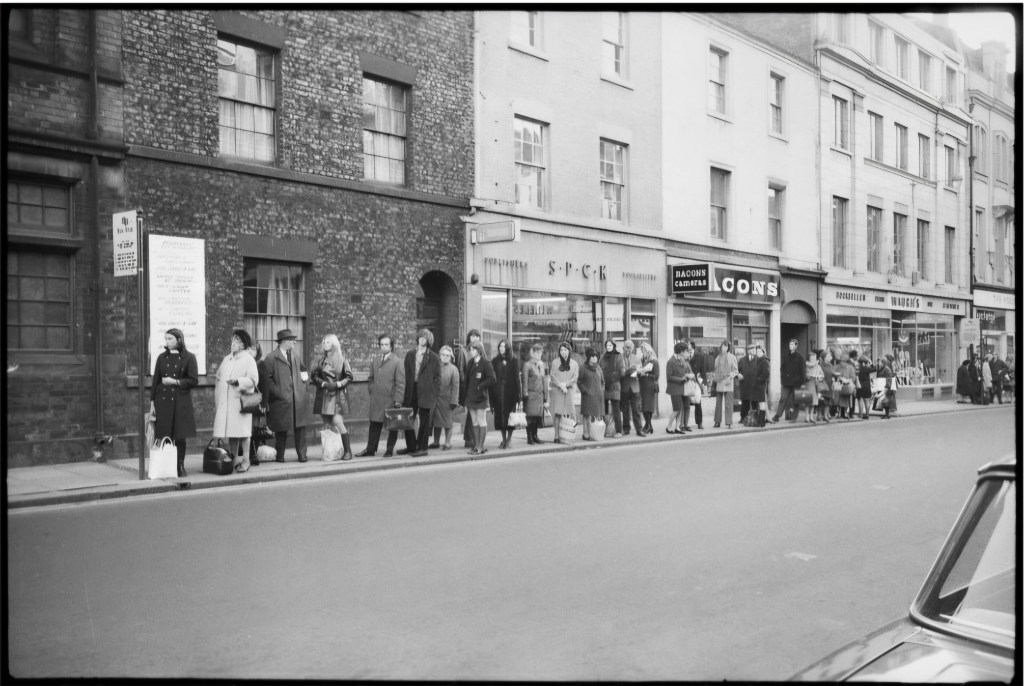
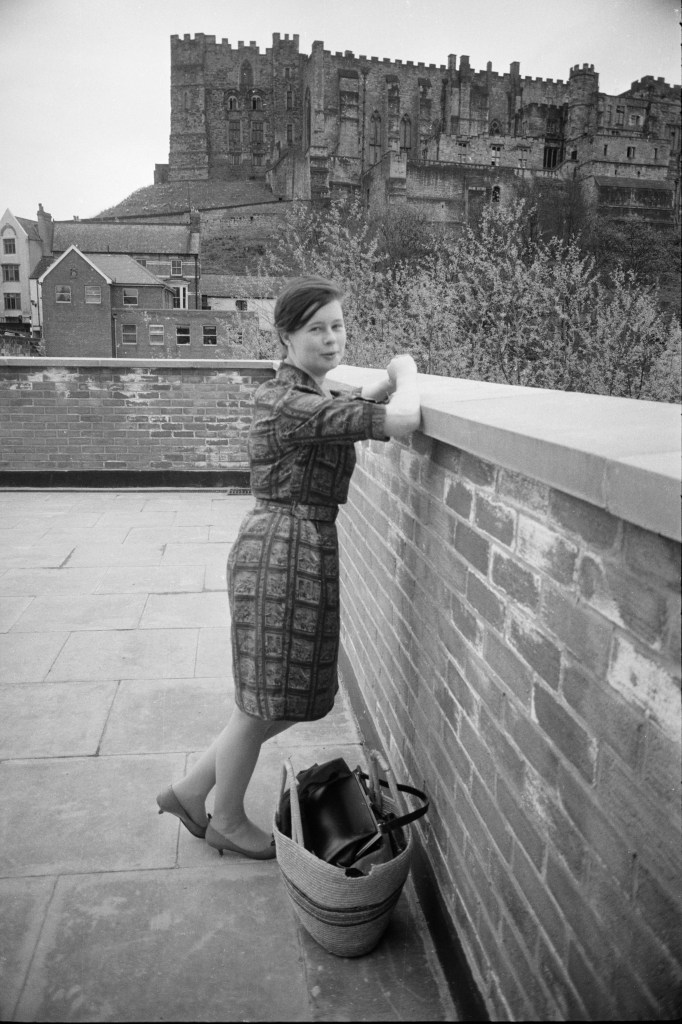
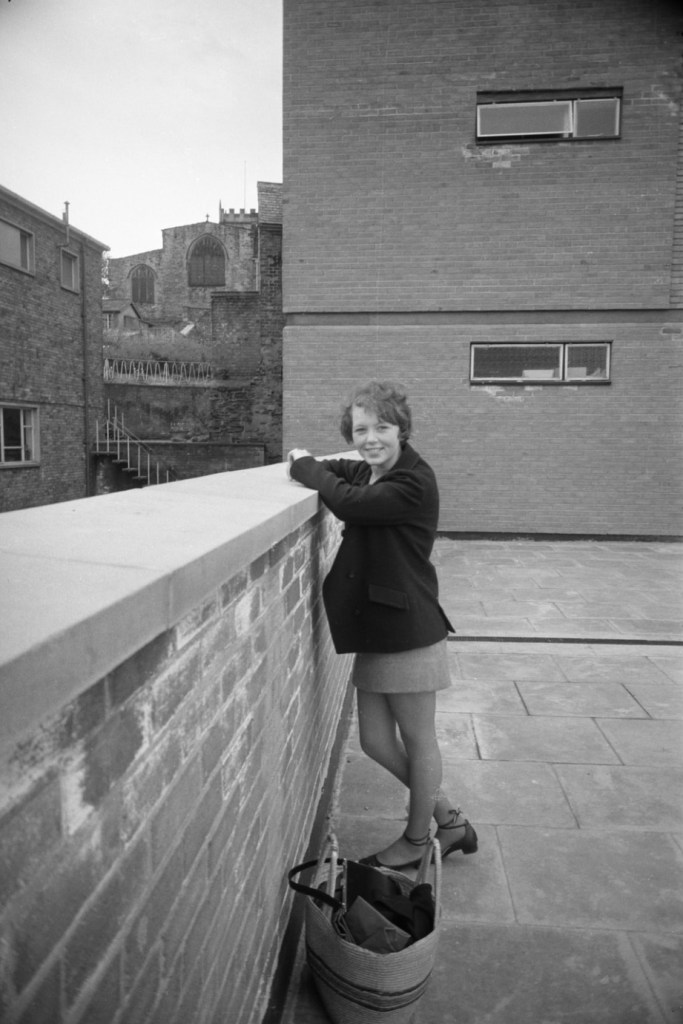
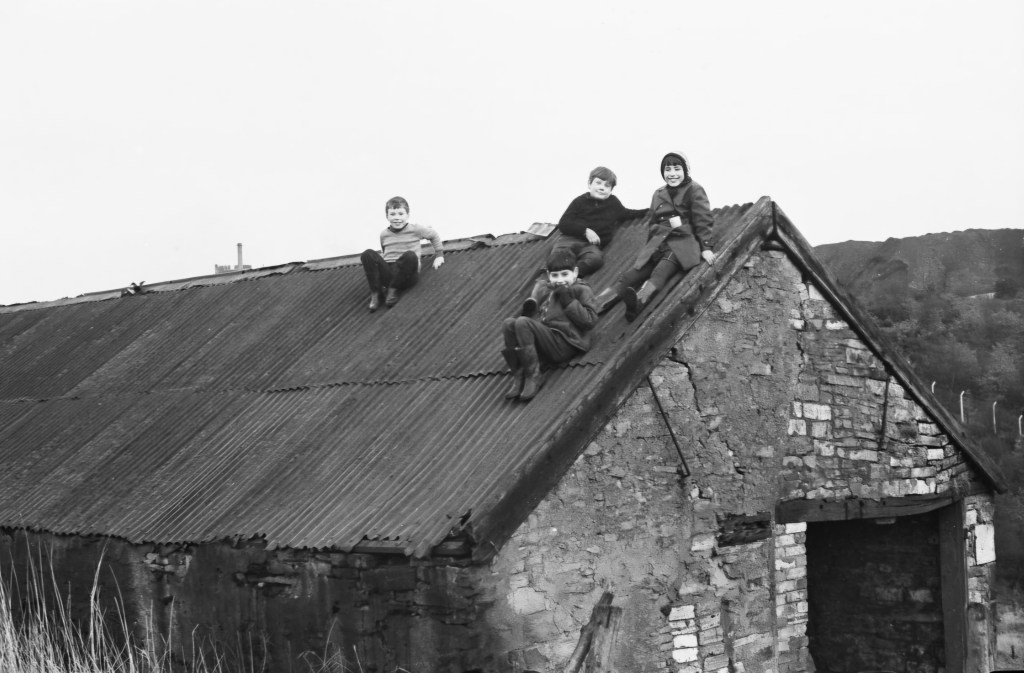
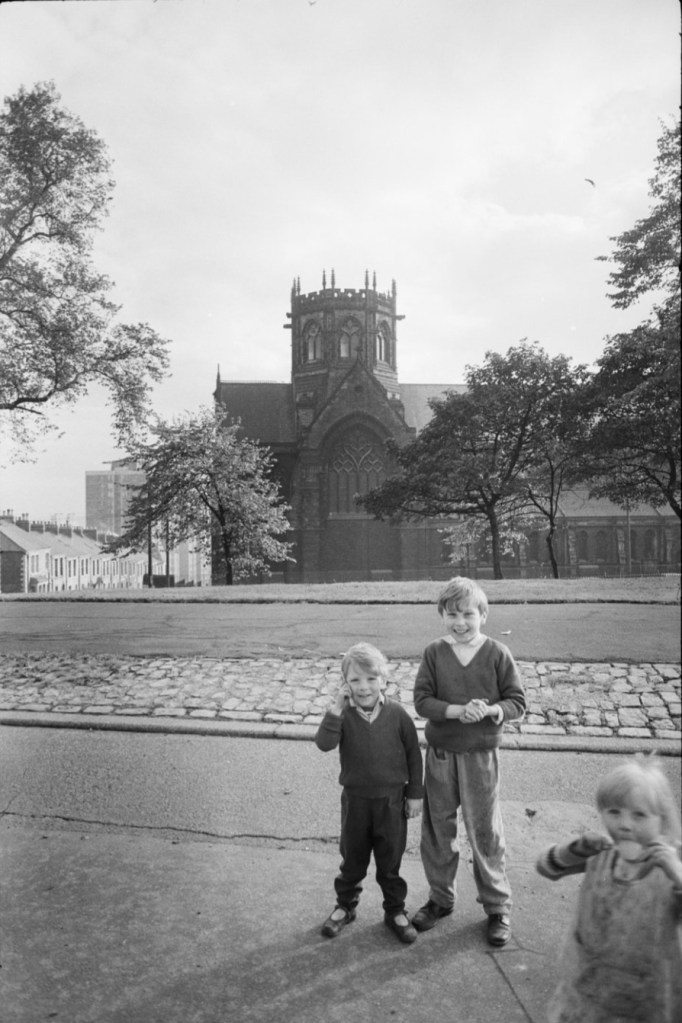
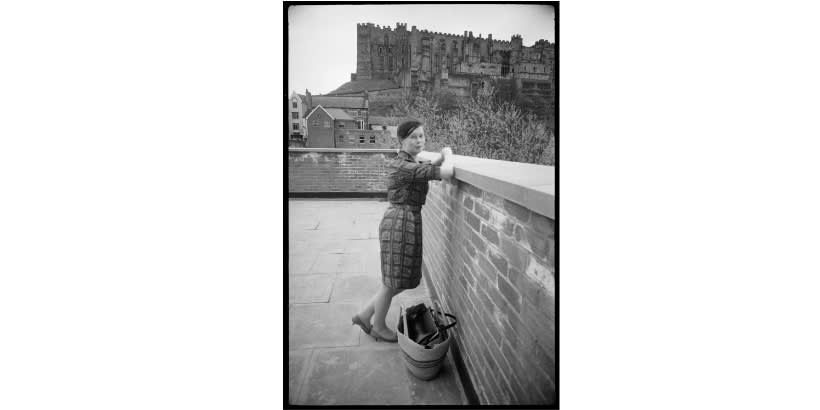
Around 2,000 of Ursula’s images have been digitised by the Historic England Archive from what is the largest of its collections created by a woman photographer.
Update 5th March 2025: Billy Embleton informs me: “That little girl is Ellen Parkin with her Uncle Jimmy Anderson in the burger van in 1965. She identified herself in 2021 when I posted the photo on Facebook. She’s now known as Ellen Przybylska.”
In my talk, I argued that these images echo those of other female photographers working during the same period such as Sirkka-Liisa Konttinen (born 1948) and Tish Murtha (1956-2013).
It would be wonderful to put names to the faces in these photographs and learn more about long ago interactions with a photographer, who clearly had a rapport with flesh-and-blood subjects too.
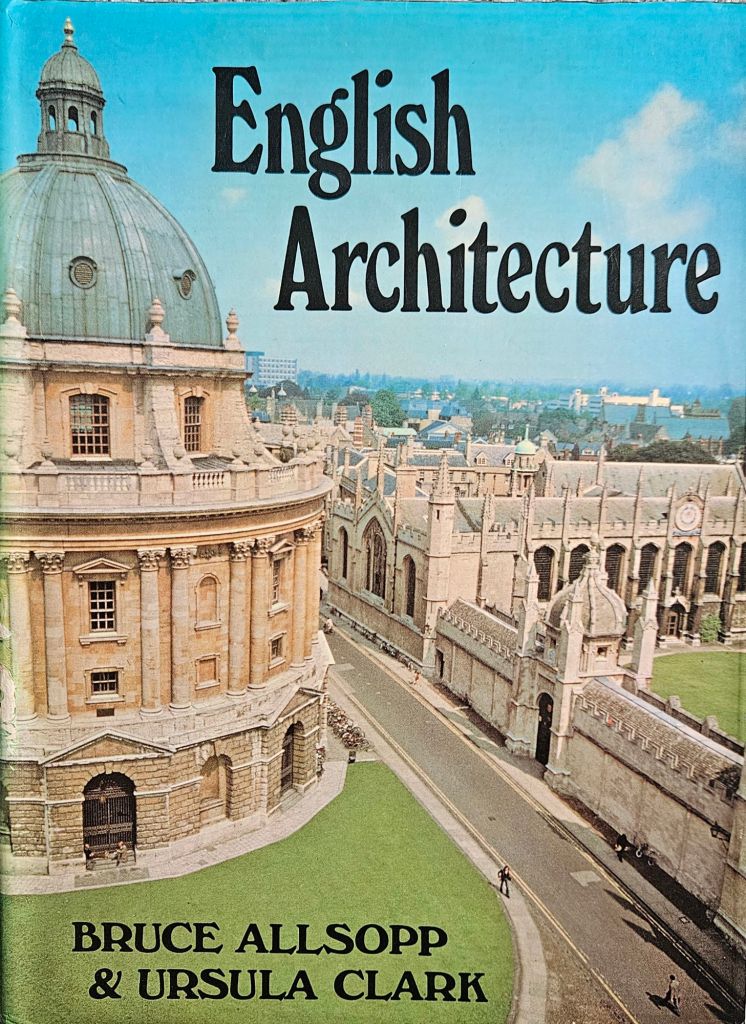
Through two decades, Allsopp & Clark collaborated with other leading authors on a series of popular architectural history guides.
English Architecture (Oriel Press, 1979).
These featured areas of Britain such as Northumberland and County Durham; cities like Newcastle upon Tyne and Leeds; and countries from England and Scotland to France, Italy and Spain.
To mark the 25th anniversaries of Allsopp & Clark’s deaths in 2000, I am presenting a talk later this month about Oriel Press with particular focus on Ursula Clark’s role as a photographer and photographic editor.
The talk will draw on her archive of 20,000 black-and-white negatives now in the care of Historic England.
One of the joys of blogwriting is connecting with readers who’ve discovered one of your posts, particularly when several months have passed since it first appeared.
It’s all the more exciting when that reader turns out to be a direct descendent of a subject of your photohistory research.
That was the case recently when I was contacted by Chris Parry whose great great grandfather was the subject of this Pressphotoman post in May 2024.
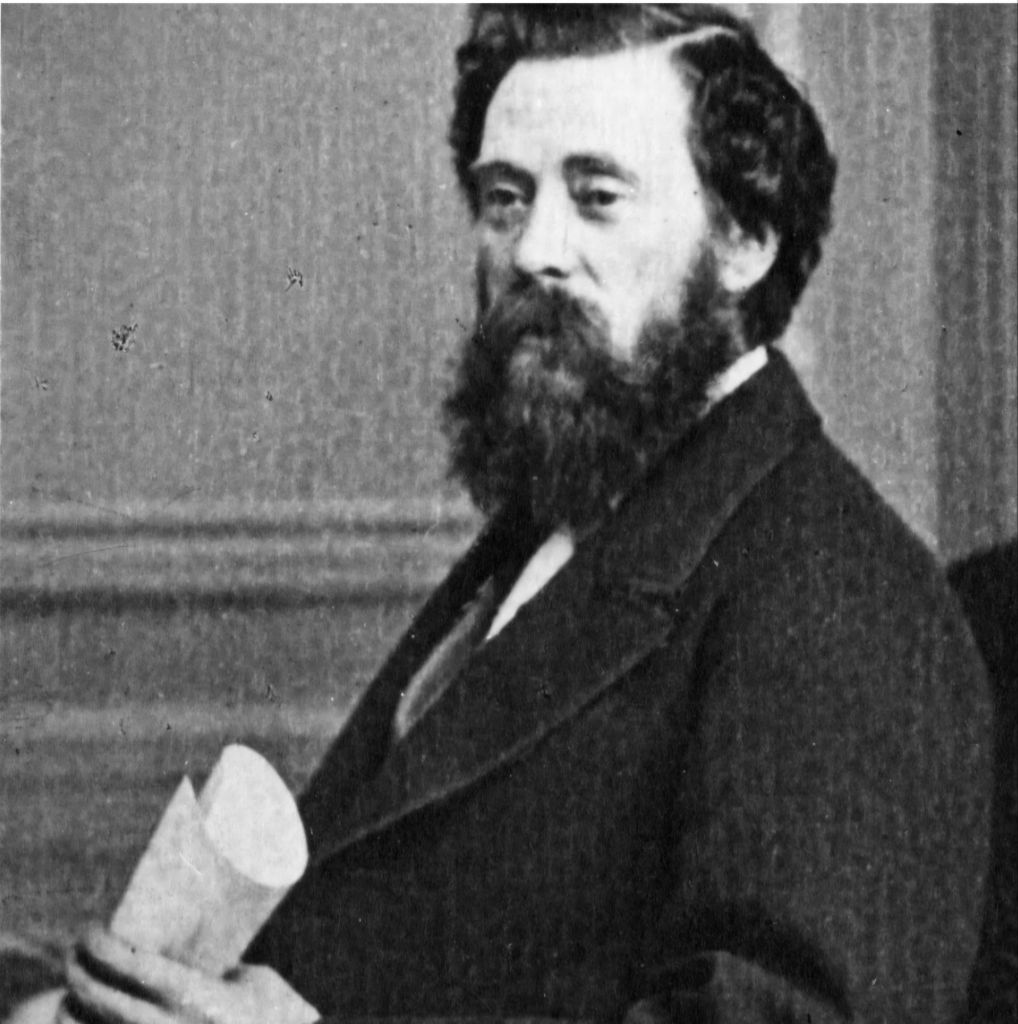
William Softley Parry (1826-1915) was a leading portrait photographer in Newcastle in the 1850s and 1860s.
But until Chris contacted me, I had never seen a portrait of WS Parry let alone one taken outside his photography business.
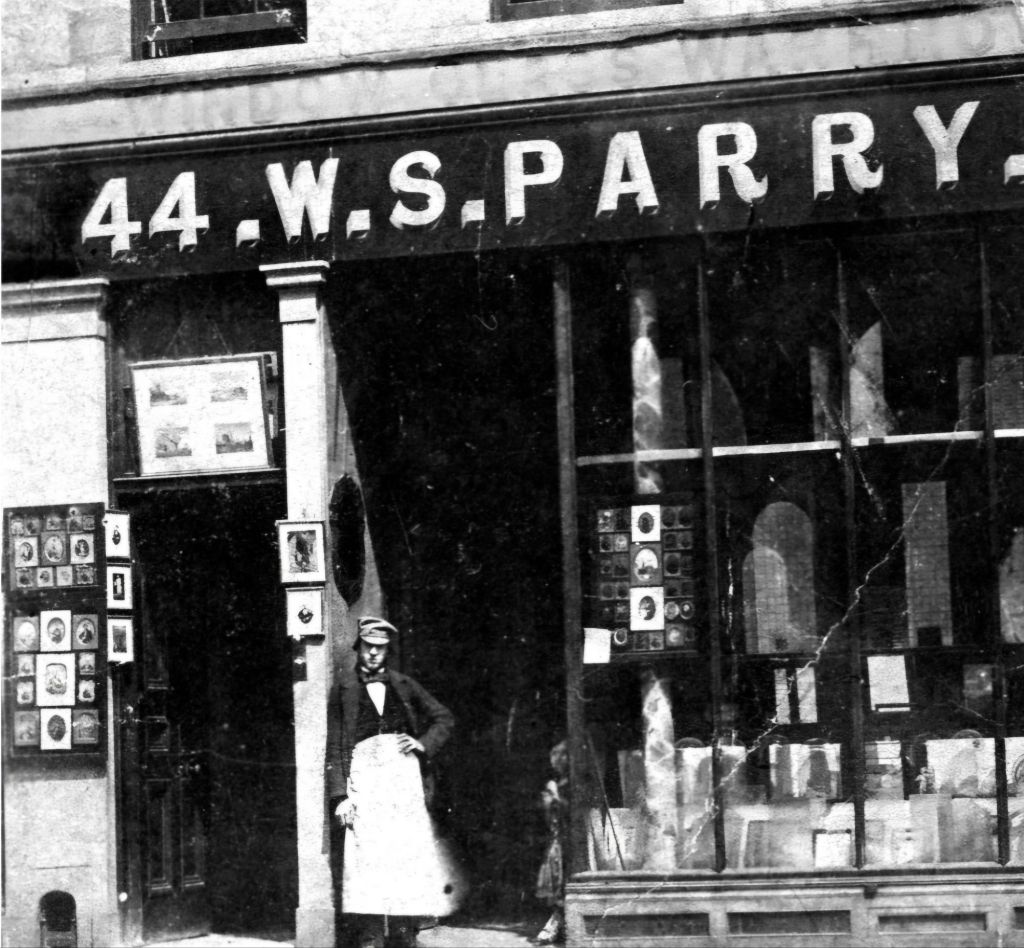
William Softley Parry (1826-1915). Courtesy of Chris Parry/South Tyneside Libraries.WS Parry outside his photography business. Courtesy of Chris Parry/South Tyneside Libraries.
What’s particularly interesting about the second image is whether it was taken outside his premises at 44 Newgate Street (1855-1858) or 44 Bigg Market (1858-1864).
The photographs may well have been taken by his wife, Christiana, who ran the shop’s Ladies Department.
I particularly love the examples of their portraiture displayed outside in various sizes and frames.
If you look very closely, you’ll glimpse a small child, possibly a girl, huddled in the doorway to Mr. Parry’s right, but still managing to look towards the camera.
The Parry’s eldest daughter Euphemia died aged 5 in 1862, so if the little girl is her, the location may well be 44 Bigg Market.
Chris Parry has written a Substack post about his fascinating family down the generations and kindly included some of my research about his great great grandfather.
Scrolling on my phone the other day (I know, I know …), one of my all-time favourite photographs suddenly appeared.
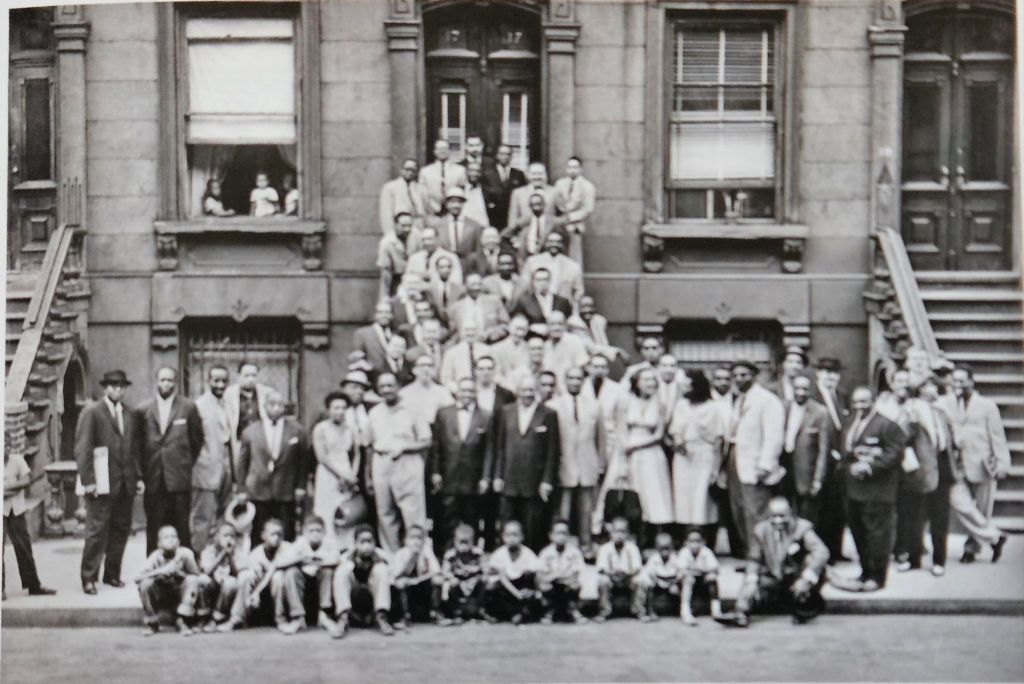
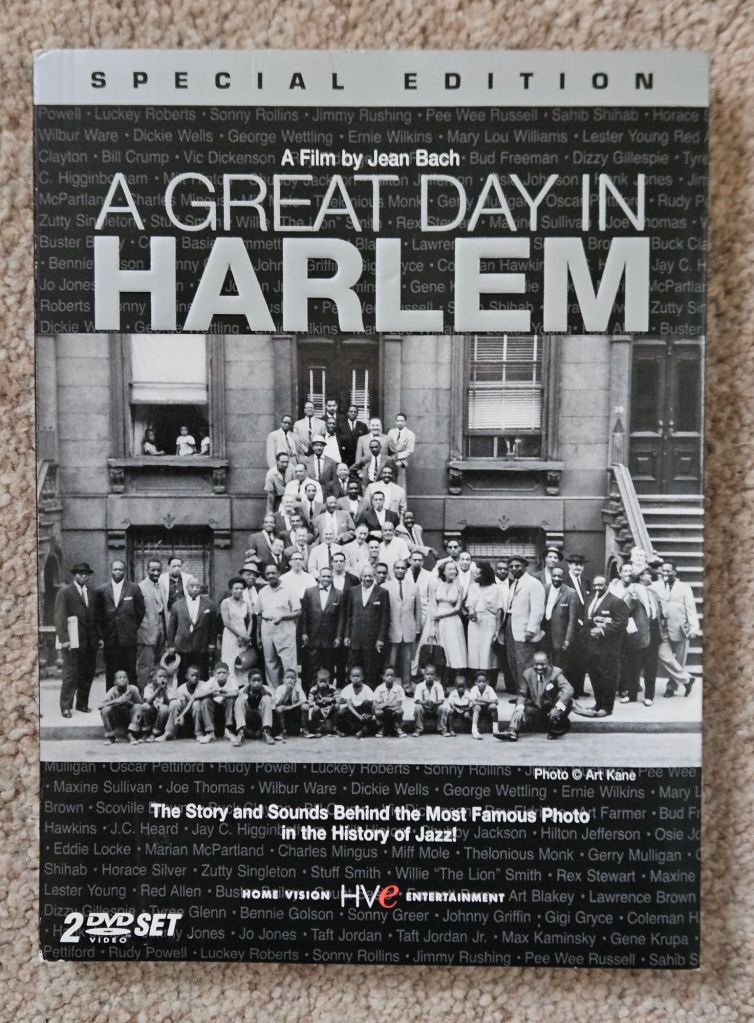
Originally titled ‘Harlem 1958,’ it was reputedly the first professional shot taken by the legendary photographer Art Kane (1925-1995).
It features nearly 60 famous and not-so-famous jazz musicians gathered outside a brownstone in New York on an August morning.
What caught my attention on social media was a New York Times interactive article about the photograph, of which more shortly.
My own relationship with the image reaches back thirty years.
During the London Jazz Festival, I went to a cinema screening of a new documentary about the photograph and how it came to be created.
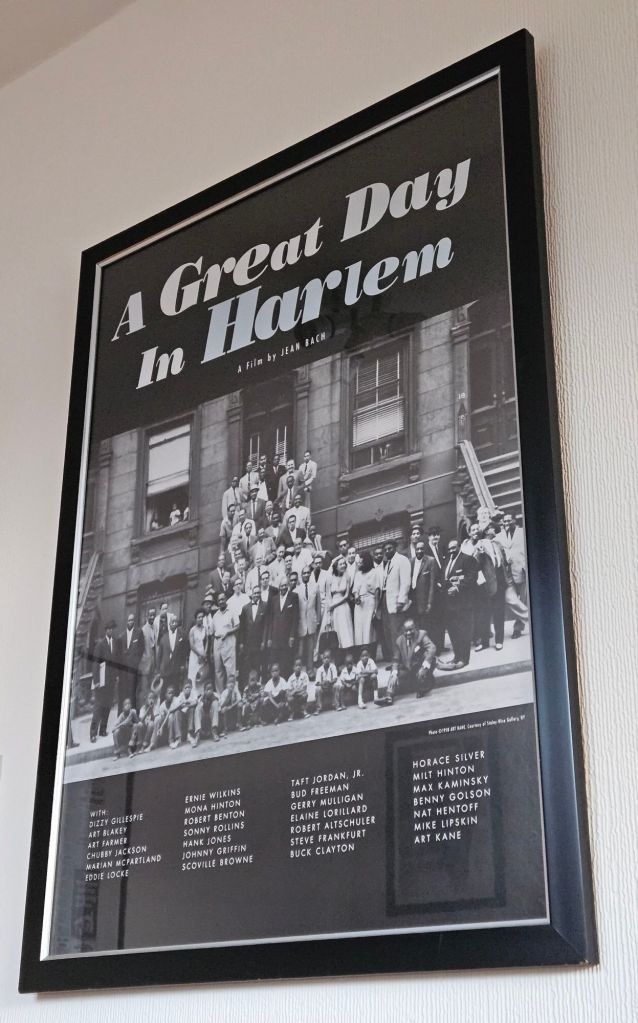
Titled ‘A Great Day in Harlem,’ the hour-long film with narration by Quincy Jones told an enthralling story.
I was not alone in loving it and it received an Oscar nomination for Best Documentary.
When the film was released on video (VHS), there was a cut-out form inside the accompanying booklet, offering the chance to own ‘A Great Day in Harlem’ poster.
Mine duly arrived, was framed at a local art gallery run by a couple of jazz enthusiasts and hangs today on my study wall.
Sub-titled ‘A Film by Jean Bach,’ it was only when the film was released on DVD in the noughties that I learned about its producer’s determined efforts to bring her idea to the screen.
Jean Bach (1918-2013) was a radio producer and jazz fan, who tracked down surviving members of the group in the photograph and interviewed them.
As any researcher will agree, many of their recollections, even down to identifying who actually featured in the shot, turned out to be wildly inaccurate.
So it was a joy to discover the New York Times interactive article.
Its angle was that saxophonist Sonny Rollins, now aged 94, is the only survivor from that Great Day in Harlem photograph.
Last Spring, an exhibition titled Vein by the contemporary artist Matilda Bevan was staged at The Granary, Berwick upon Tweed.
It drew its inspiration from the Northumberland landscape and the work of the British artist and writer Thomas Hennell (1903-1945).
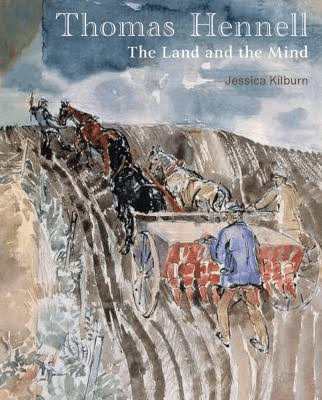
Alongside the exhibition, Jessica Kilburn presented a talk featuring material from her lavishly illustrated book about Hennell published in 2021.
Thomas Hennell: The Land and the Mind by Jessica Kilburn (Pimpernel Press, 2021).
Hennell’s art and life story were new to me and it’s been a real pleasure to discover more about him.
One unexpected revelation came in the chapter titled ‘A War Artist in Iceland,’ which pointed to a surprising connection with our family.
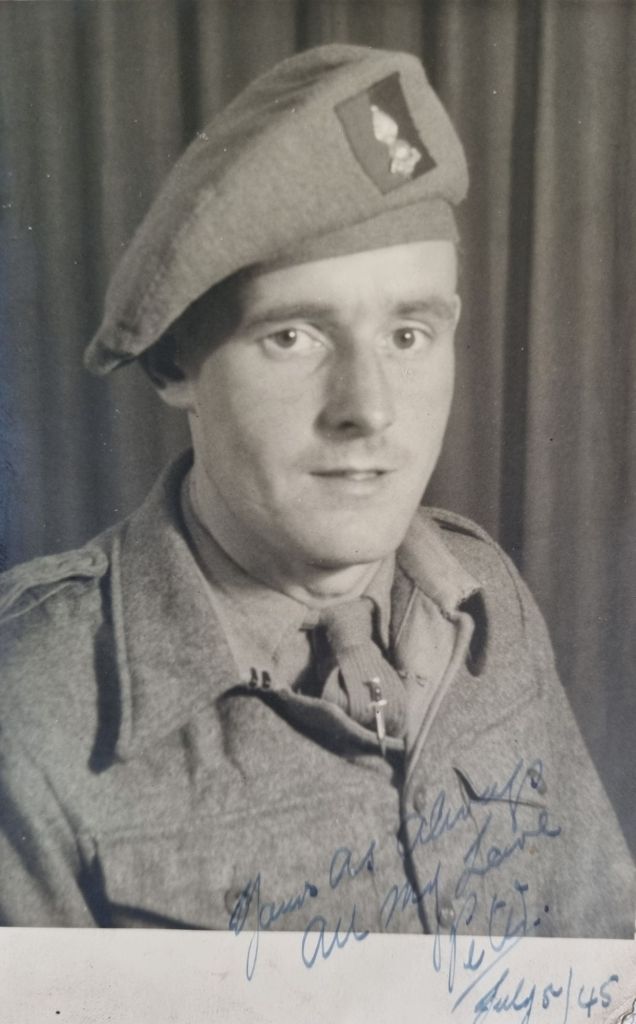
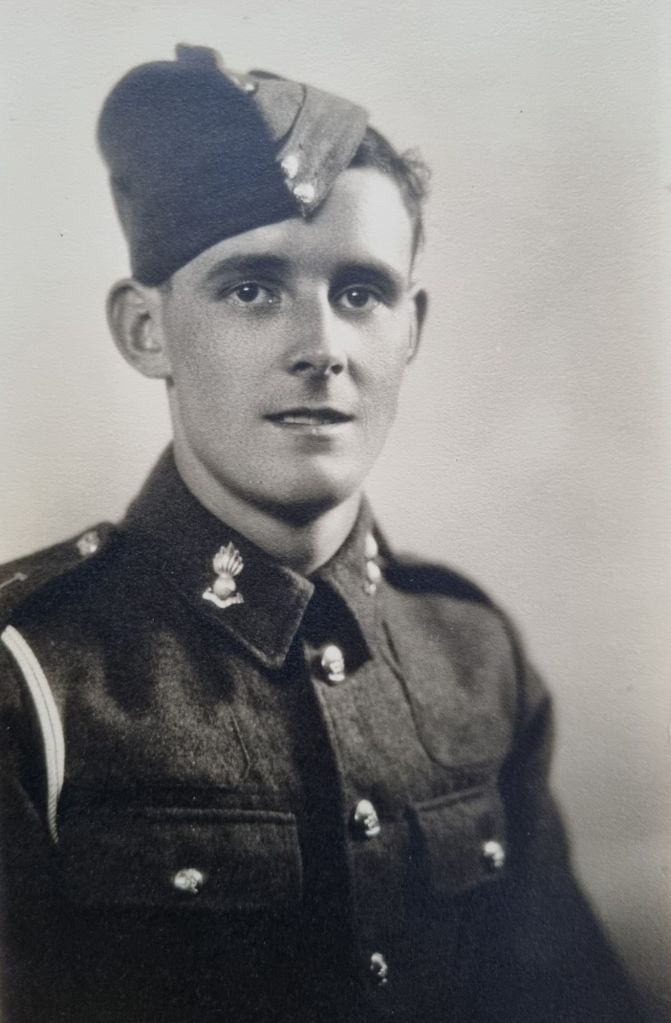
Hennell arrived in Iceland in the summer of 1943 by which point the British garrison including our Dad, Gunner Peter Barber, had been relieved by American troops.
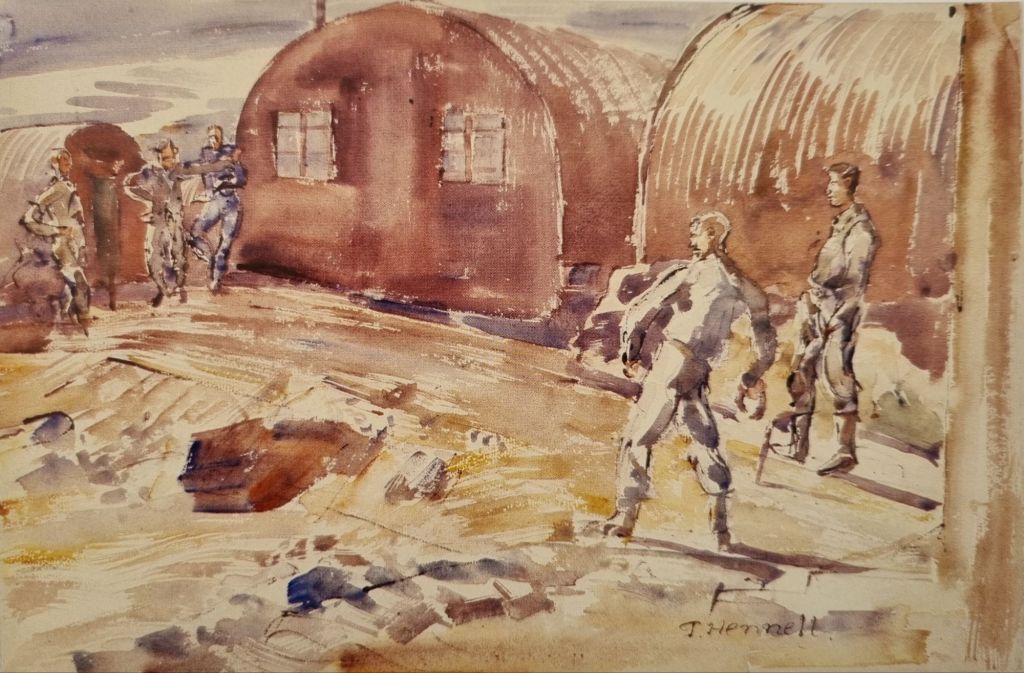
It was this Hennell watercolour dated 1st August 1943 and its accompanying text that made me do a double-take.
‘American Troops Playing Horseshoe and Peg (Barnyard Golf), Skipton Camp, Reykjavik’ by Thomas Hennell (1903-1945). Watercolour. Imperial War Museum, London.
The accompanying text read: “Hennell shows the Nissen huts of Camp Skipton, built as barracks by the 49th (West Riding) Infantry Division in 1940 …”
From his military service record, I knew Dad served in Iceland between July 1940 and September 1942 as a member of 69th Royal Artillery field regiment, part of the 49th Division.
The West Riding of Yorkshire was where the division’s troops were recruited from, hence ‘Camp Skipton’ named after a town in the county.
Then the penny dropped.
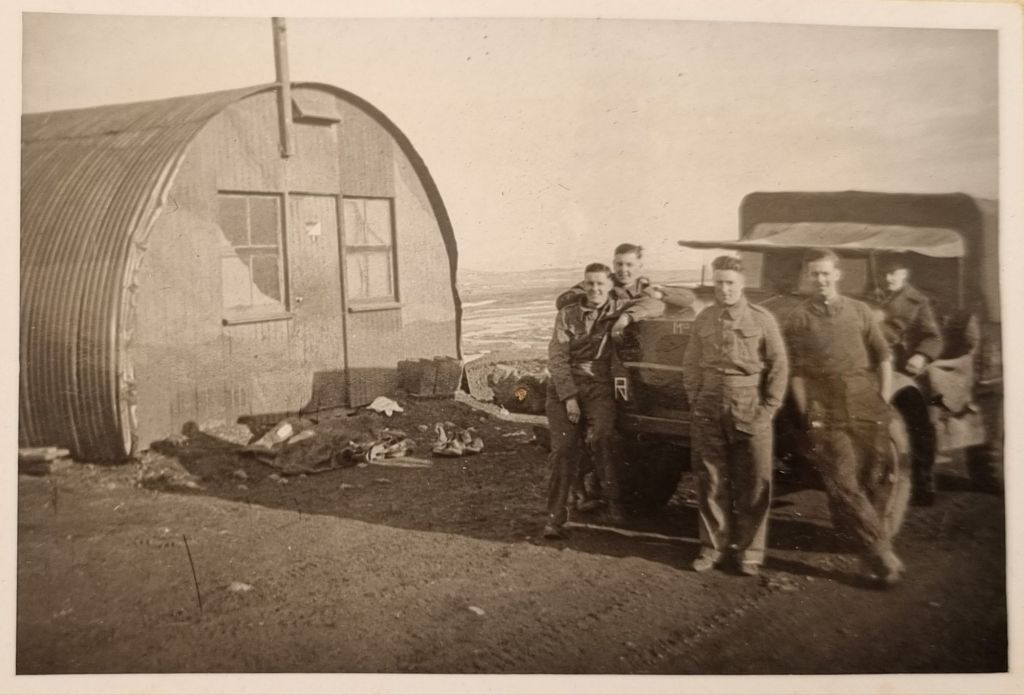
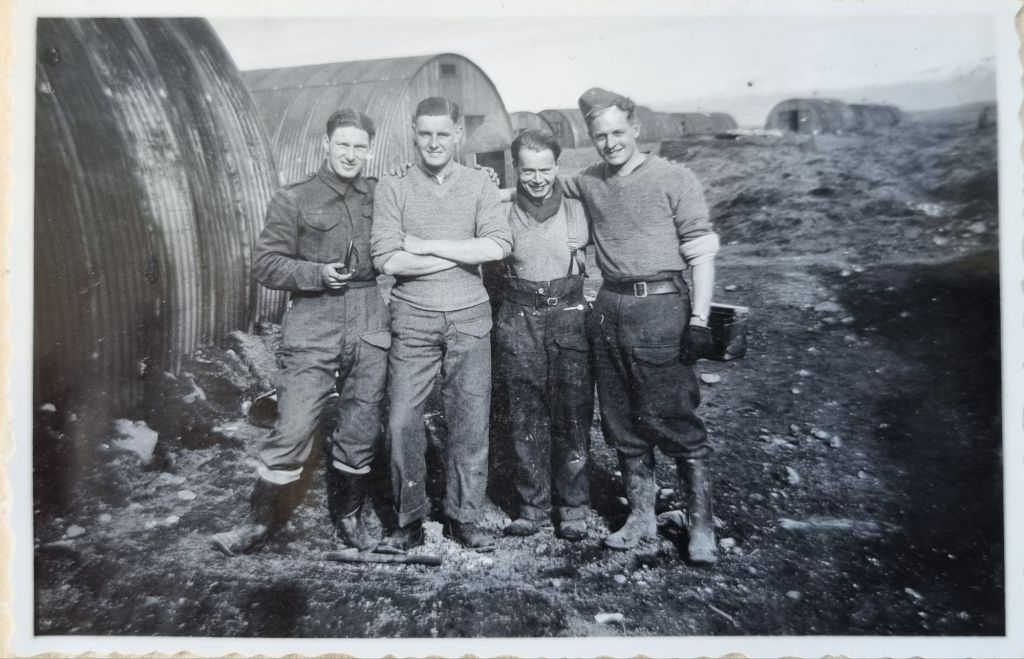
I had previously seen Nissen huts like those in Hennell’s painting in Dad’s battered wartime photograph album.
Earlier this summer, I wrote about its ‘Germany’ pages to mark the 80th anniversary of D-Day and the Normandy landings.
Designed to accommodate 24 men, the Nissen hut with its distinctive corrugated iron shell was designed during the First World War and billed as ‘cool in summer and warm in winter.’
Keeping warm must have been a challenge.
Indeed, Thomas Hennell described conditions during a visit he made to northern Iceland in September 1943 as “violently cold.”
This snapshot, possibly taken by Dad, suggests that the barracks were far from luxurious and privacy would have been at a premium.
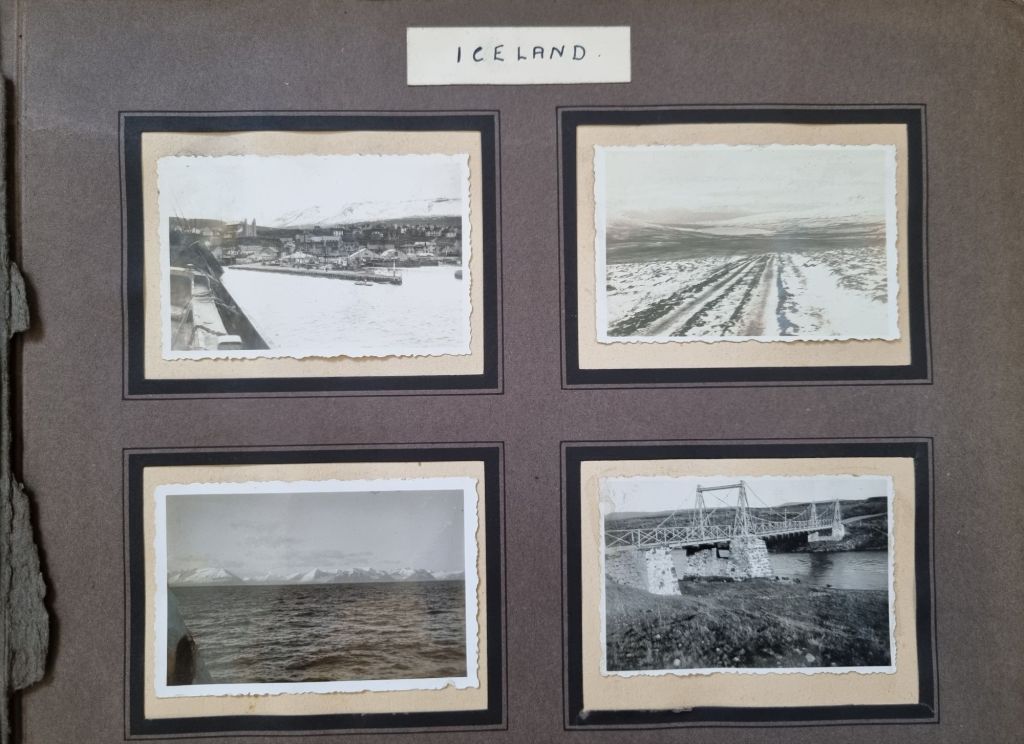
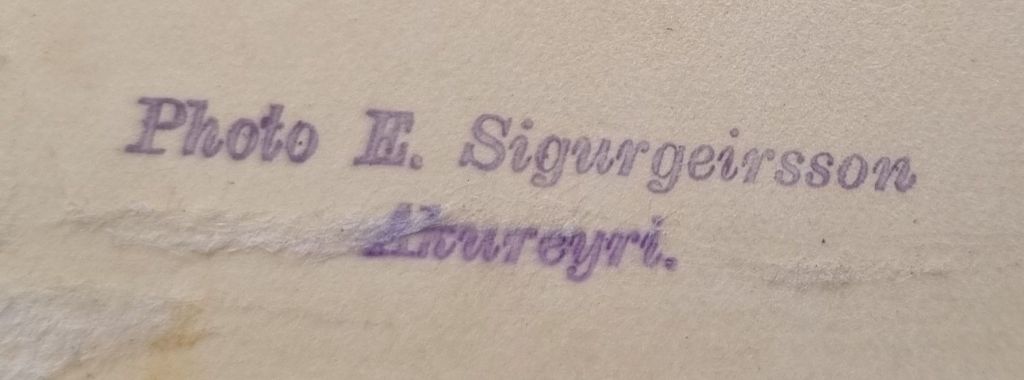
As a photohistorian, the backs of photographs are invariably of equal interest to the fronts and so it proved with the ‘Iceland’ section of Dad’s album.
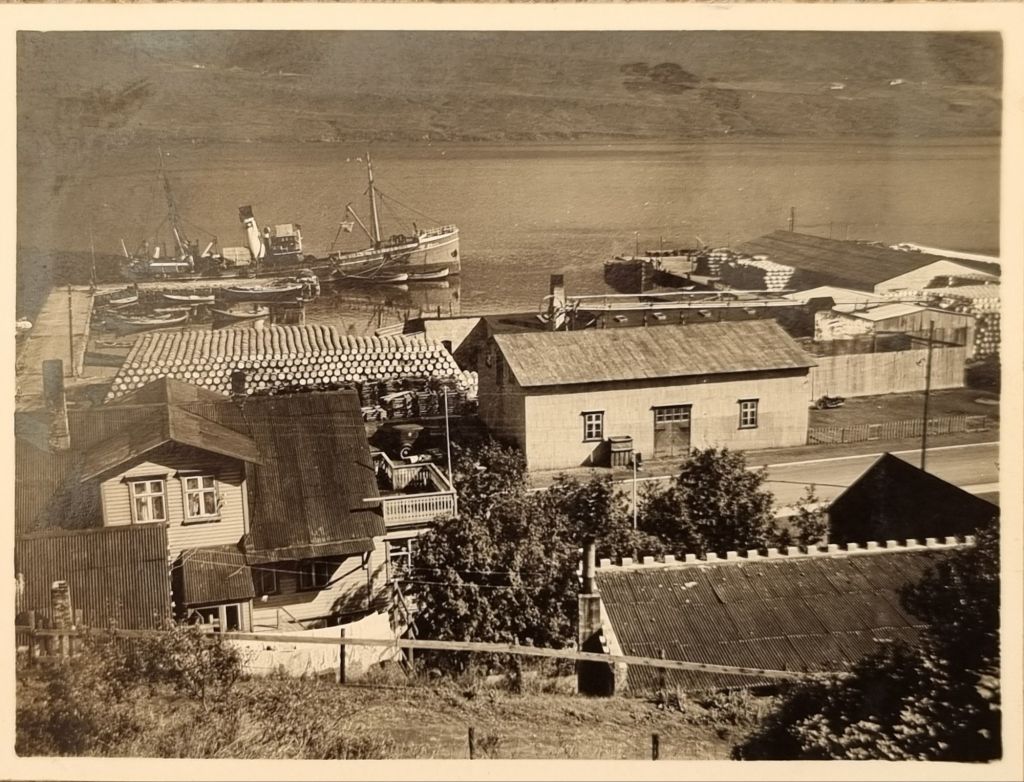
For more than two years, he and his colleagues were based at Akureyri on the northern Icelandic coast from where a photographer named E. Sigurgeirsson operated.
His stamp features on the verso of a small number of the album’s images, which portray Icelandic scenes including the fishing port of Akureyri, a key base for the allies.
Sadly, further information about ‘E. Sigurgeirsson’ has proved impossible to track down though postcards bearing his name occasionally surface on Ebay.
As a war artist, Thomas Hennell survived the Normandy landings, but disappeared in Java in October 1945 and was presumed dead.
Dad was one of the lucky ones who survived the hostilities, and his wartime photograph album continues to speak down the decades.
Visiting bookshops to browse through shelves of new or second-hand titles has long been a favourite pastime.
During trips away with more time to spare, it’s a particular pleasure, on the look-out for that next ‘holiday read.’
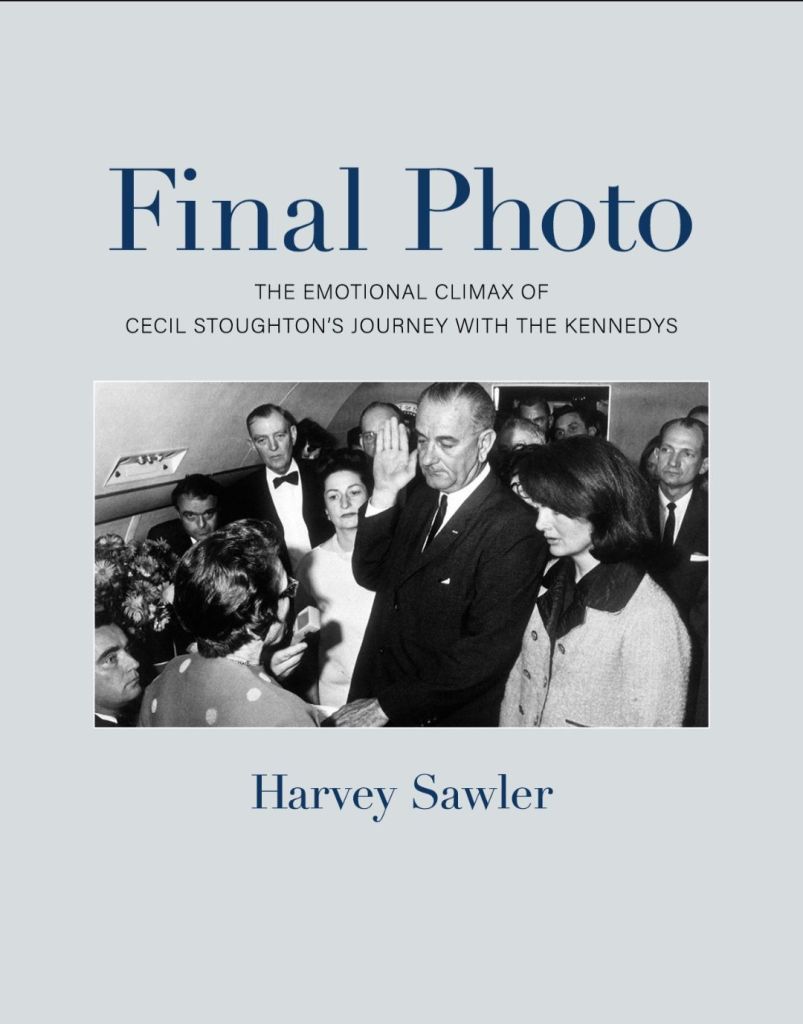
During a recent visit to Prince Edward Island on Canada’s east coast, my eye was caught by a book featuring a familiar image.
Front cover of Final Photo by Harvey Sawler (2024, iImagine).
The ‘Final Photo’ referred to in the title was taken on 22nd November 1963.
Captured only hours after the assassination of John F. Kennedy, it features Vice-President Lyndon B. Johnson being sworn in as JFK’s successor.
What I didn’t know was the name of the man behind the camera.
From the book, I learned it was Cecil W. Stoughton (1920-2008), the first official White House photographer.
In that capacity, he was present aboard Air Force One to record the moment when LBJ became the 36th President of the United States.
Right-hand raised amidst still visibly-shocked witnesses, Johnson was flanked by his wife Lady Bird and JFK’s widow Jackie, her outfit still spotted with blood from events earlier that day.
Final Photo explores Stoughton’s career and how a working relationship with the Kennedys offered him unprecedented photographic access to America’s First Family.
Cecil W. Stoughton showing John F. Kennedy Junior one of his cameras. Credit: Photographer unknown.
Reading the author’s Foreword, the 70-page book is clearly a passion project, privately published in 2024 and dedicated ‘For the Stoughton Family.’
The reason I came across it in Prince Edward Island, in the ‘Local Interest’ section of the bookshop I was browsing in, was that the author lives there.
As the photographer’s ‘authorized biographer,’ Harvey Sawler recounts how he (and his then non-fiction literary agent) pitched a project to publishers to mark the 50th anniversary of Kennedy’s assassination.
In a story that might strike a chord with writers and creatives everywhere, the idea did see the light of day, but not in the form originally envisaged.
Portrait of Camelot: A Thousand Days in the Kennedy White House (Abrams, New York) is a sumptuous 350-page hard-cover, coffee-table book published in 2010.
To my surprise, I was able to snap up a second-hand copy complete with dvd for just a few pounds on my return to the UK from holiday.
Portrait of Camelot showcases a selection of the 8,000 colour and black-and-white pictures taken by Stoughton during the Kennedy presidency plus a dvd of ‘Never-Before-Seen Kennedy Film Footage’ set to well-chosen jazz and dance band music.
However, as the book’s front cover reveals, it was Richard Reeves, a ‘noted author and presidential historian’ assigned to the project by the publisher, who was credited as the author.
Harvey Sawler was credited as secondary author.
Reflecting that billing, Sawler’s contribution to Portrait of Camelot, a short essay titled ‘Cecil W. Stoughton: The President’s Photographer,’ was relegated to two pages illustrated by a single photo towards the back.
In Final Photo, he reflects how the resulting book “re-celebrated Stoughton’s mass of work, but unfortunately and sadly, left Stoughton’s story sitting on my desktop.”
As a photohistorian, much of my time in recent years has been spent in the mid-19th and early 20th centuries.
So my latest second-hand book purchase might, at first glance, seem a little off kilter.
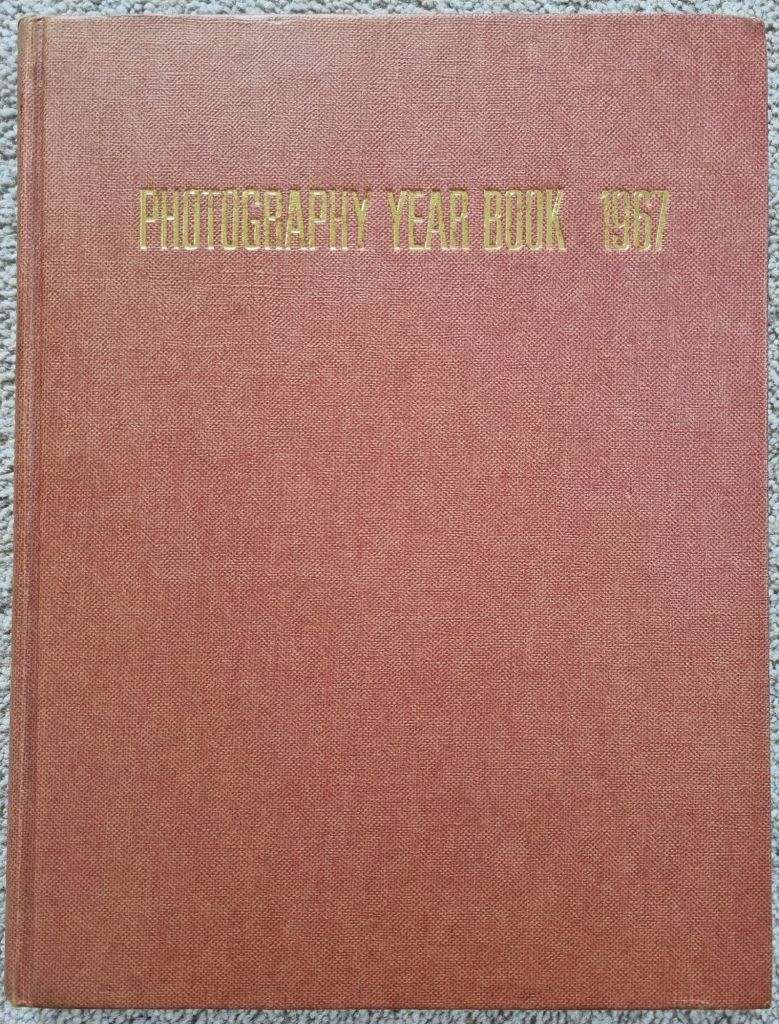
The Photography Year Book 1967 showcases more than 170 images, both colour and black-and-white, featured in Photography magazine during the previous 12 months.
Photography Year Book 1967 Edited by Derek Stevens and Richard Gee, Fountain Press Ltd.
Photography billed itself as ‘Britain’s best photo magazine’ thanks to ‘the world’s best photographers.’
Judging by the contents of its Year Book 1967, this seems a justifiable claim.
As its index reveals, my copy is minus its original colour cover.
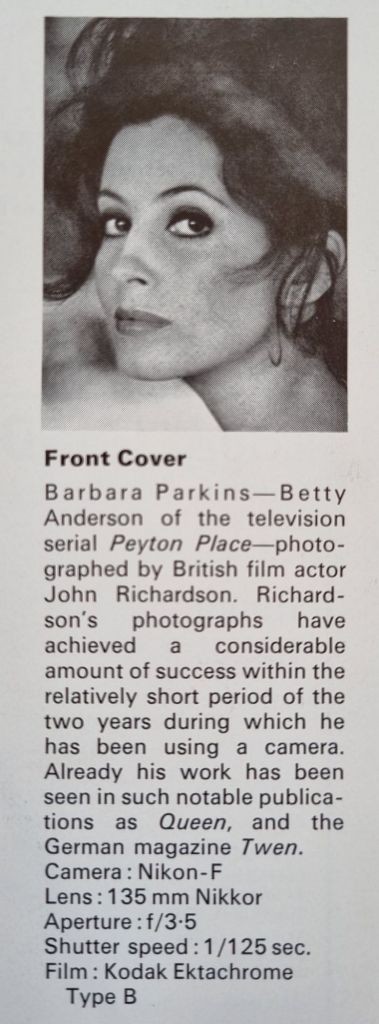
In the mid-60s, Barbara Parkins became a household name thanks to Peyton Place, a hit US tv show of the era.
Being a photography magazine aimed at practitioners, the accompanying ‘Front Cover’ text featured ‘technical data & notes’ about the photograph of her (here in black and white) and its creation.
Illustrated description of ‘Front Cover.’ Photography Year Book 1967.
Viewed from 2024, what is predictable about the Photography Year Book1967, is that the featured contributors, both professional and amateur, are overwhelmingly male.
It’s an editorial approach repeated in its choice of five ‘star photographers.’
They were Jesper Hom, David Moore, Choi Min Shik, Bert Stern and Robert Lebeck, all of whose work you will find today in collections and galleries around the world.
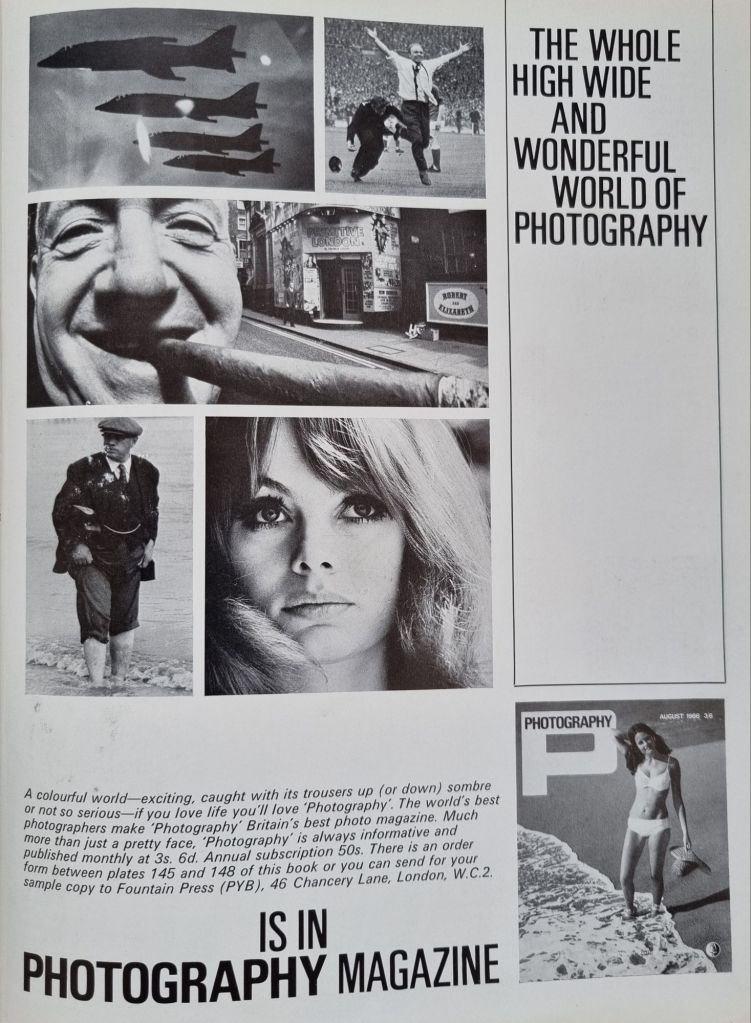
Amidst all the admittedly wonderful photographs are eye-catching trade advertisements for assorted cameras and photographic equipment.
Many employ a 60s psychedelic vibe.
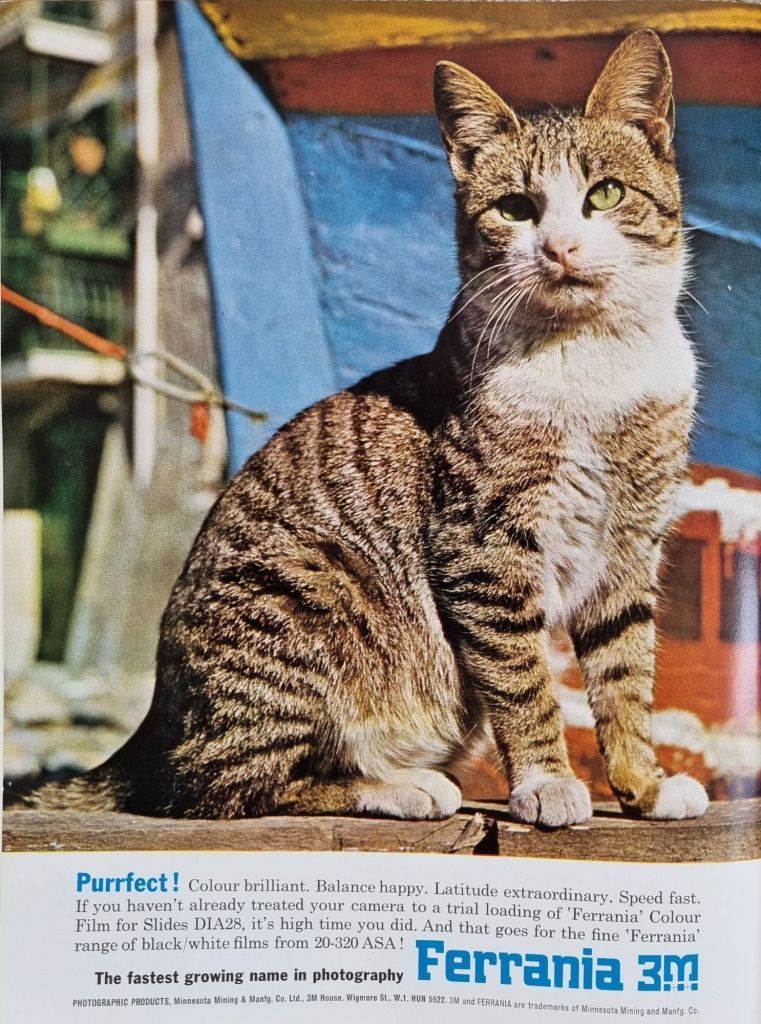
Advertisement from Photography Year Book 1967.Advertisement from Photography Year Book 1967.
My favourite though, promoting Ferrania 3M colour film, calls on a tried-and-tested photographic formula.
Following D-Day, his last artillery regiment reached its ultimate objective in April 1945, and Dad was then based in Germany until his ‘demob’ the following February.
It’s only in the decades since his death that I’ve discovered details of Dad’s war service, culminating in D-Day and the events that followed.
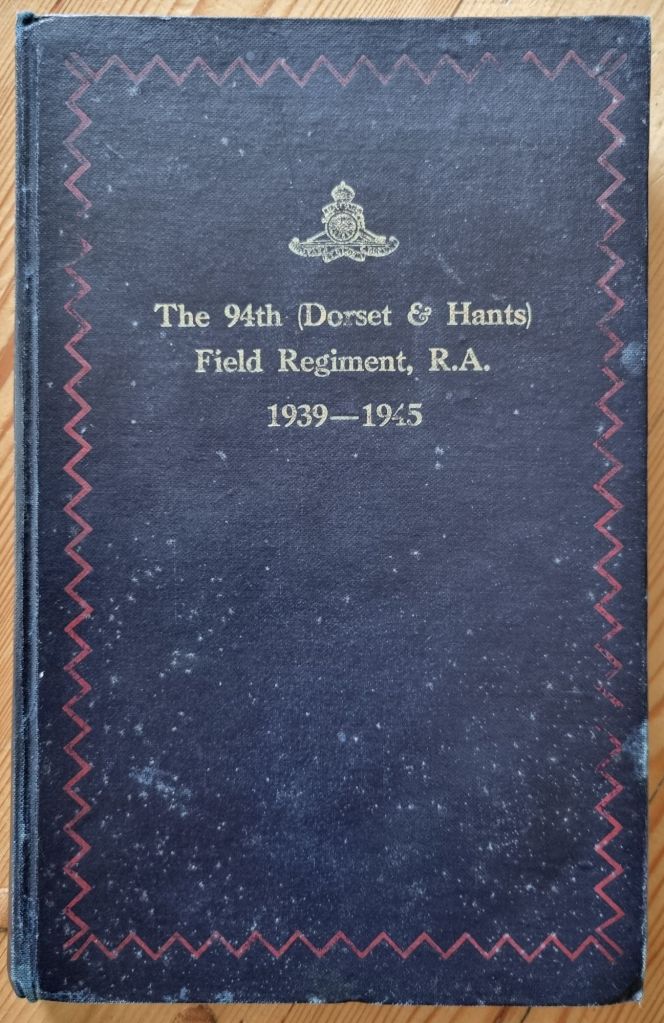
Two regimental histories proved invaluable.
‘Mike Target’ by John Mercer (The Book Guild, 1990) vividly describes the build-up to 6th June 1944.
Dad and his fellow West Yorkshiremen in 185 Field Regiment, R.A., were due to land in Normandy on D +7.
Cover of Mike Target by John Mercer (The Book Guild, 1990).
Following anxious days aboard a ship anchored off the French coast and night-time visits from the Luftwaffe, the regiment finally disembarked on D +13.
As to his part in the Normandy campaign, Dad only ever recounted one incident that illustrated the random nature of warfare.
It happened to him during a shift change from one field gun crew to another.
Within seconds of handing over his place to a colleague, Dad’s replacement was killed by incoming fire.
By the end of 1944, numbers in his regiment were so low that he and his fellow survivors were dispersed to other artillery units.
The story of his subsequent spell with the 94th (Dorset & Hants) Field Regiment, R.A., is re-told by Peter Whately-Smith in a regimental history published in 1948.
Once hostilities ended, the author describes how the “small pretty village” of Burgdorf, 15 miles north-east of the city of Hanover, became the regimental base from mid-May 1945.
There, Dad and his colleagues were “engaged in rounding up and disarming German troops … and combing large areas of countryside for enemy weapons and warlike stores.”
Then “began a period of hard grinding work. Guards, guards and more guards, escort parties, security patrols.”
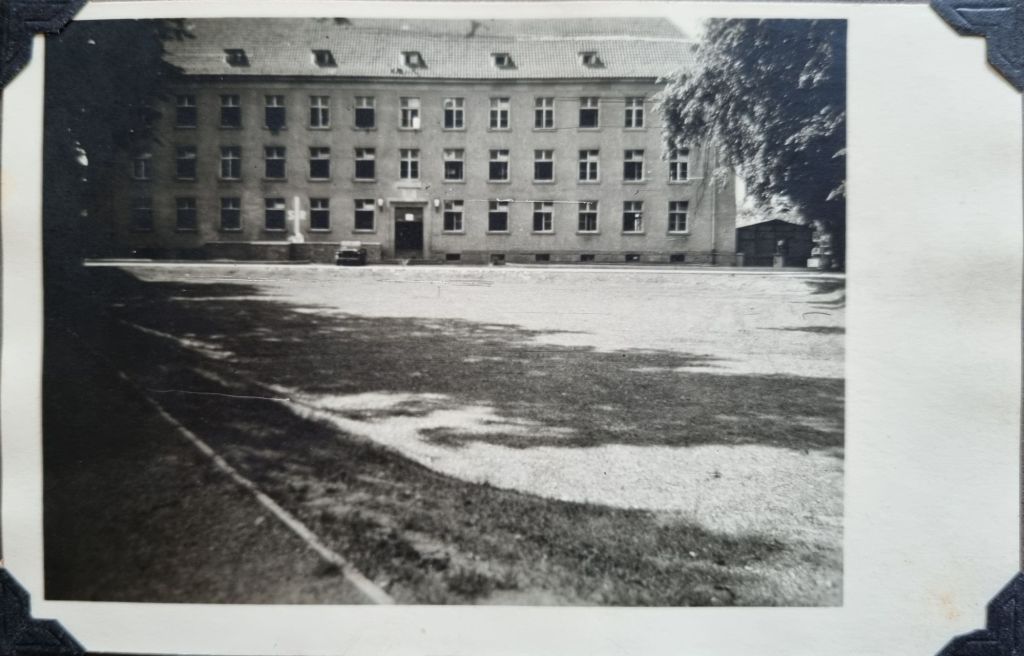
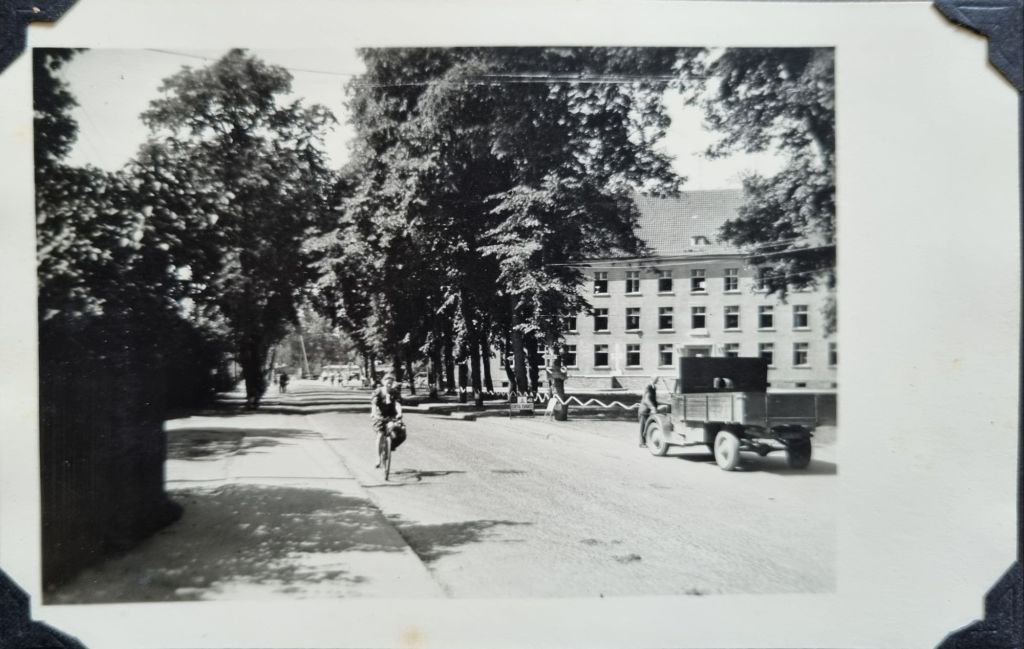
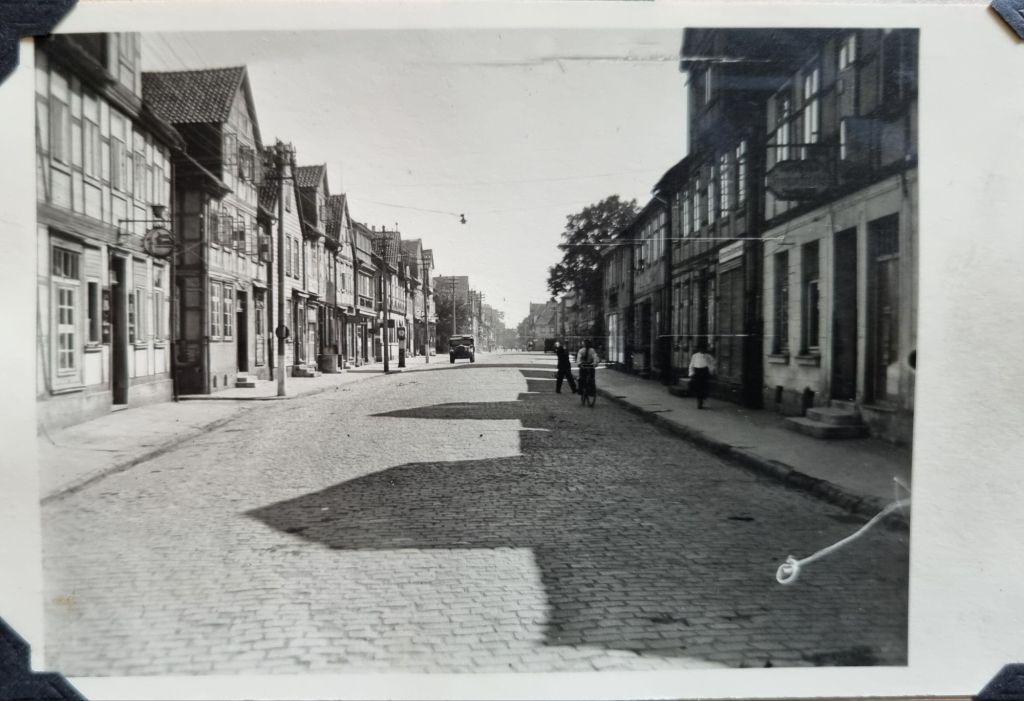
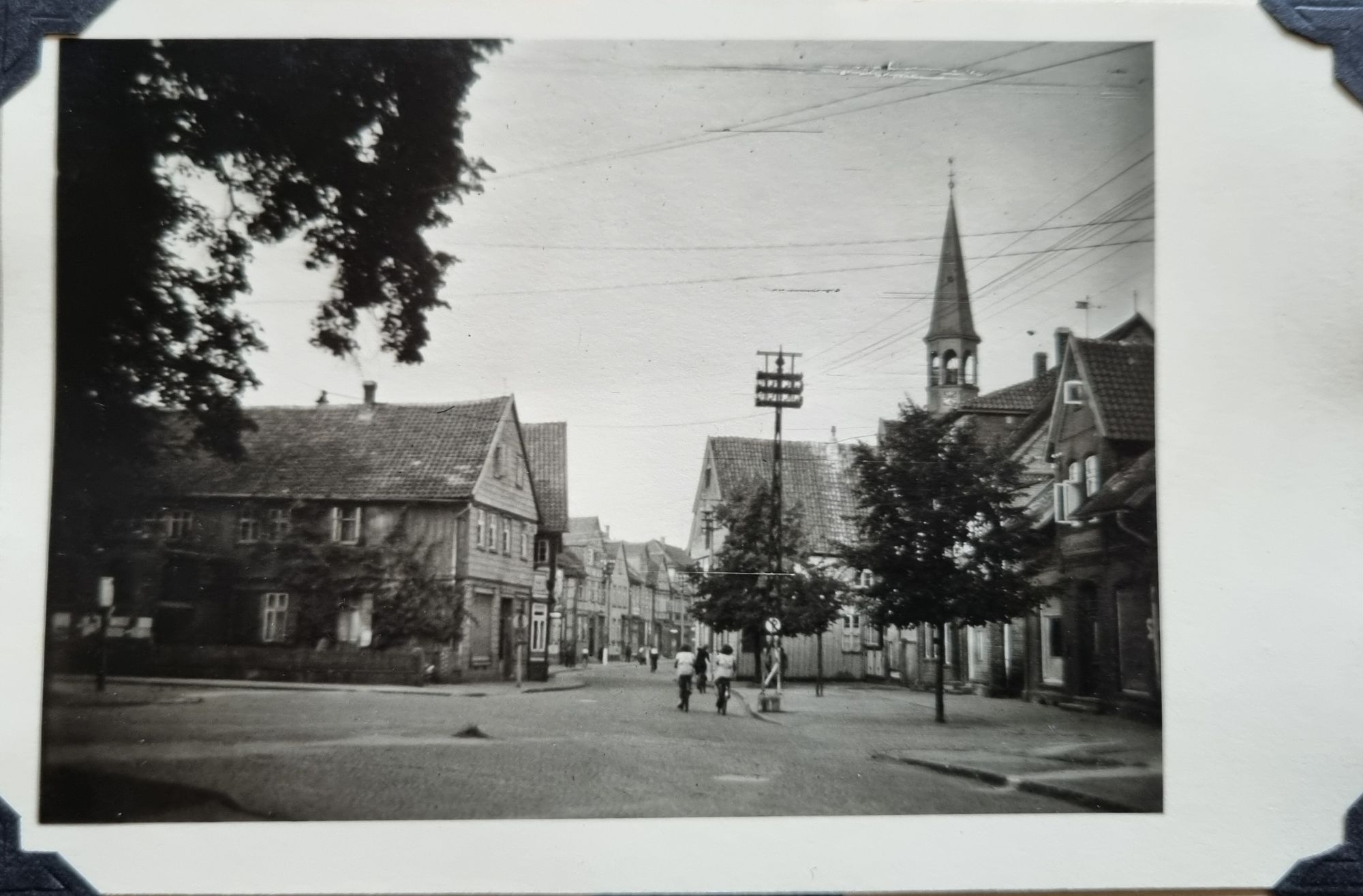
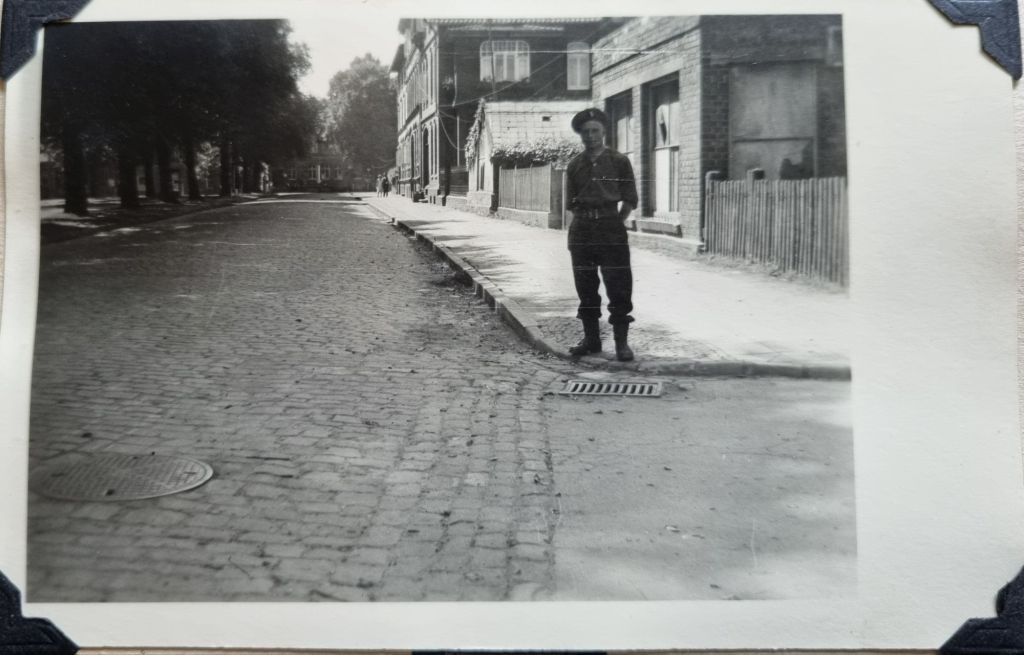
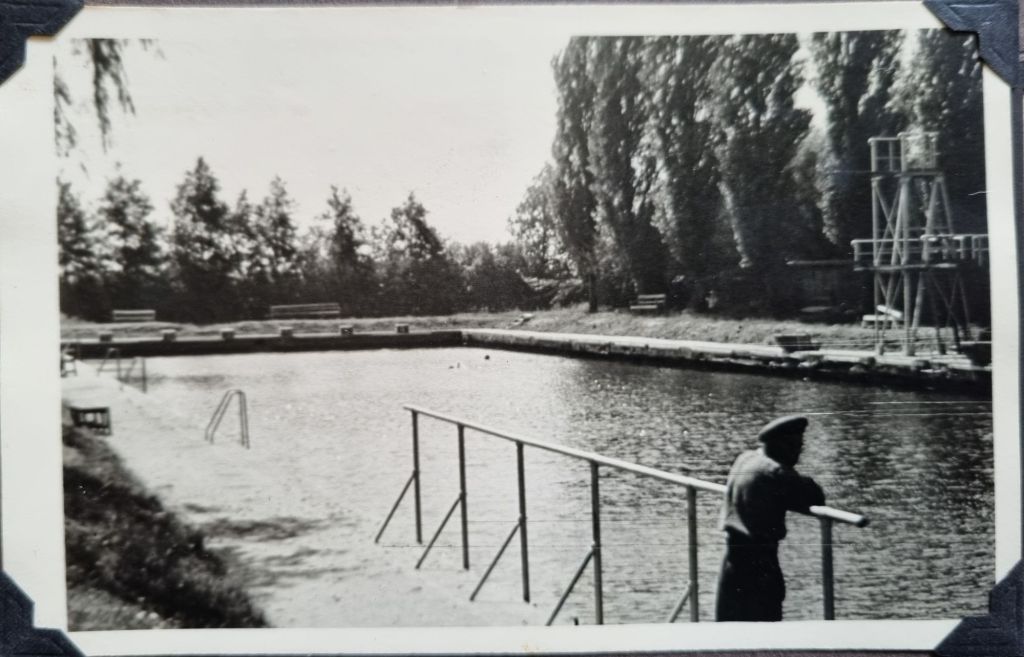
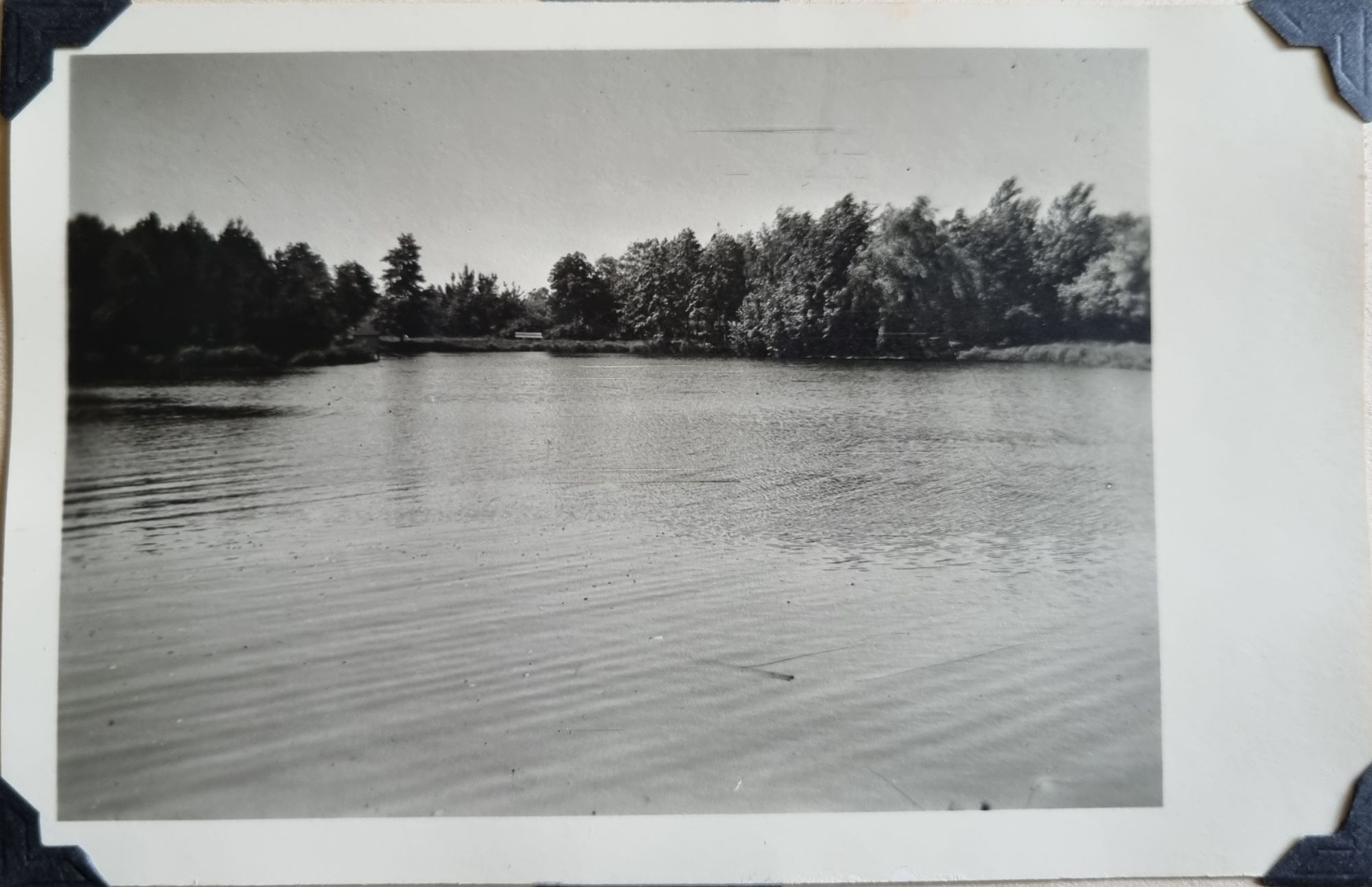
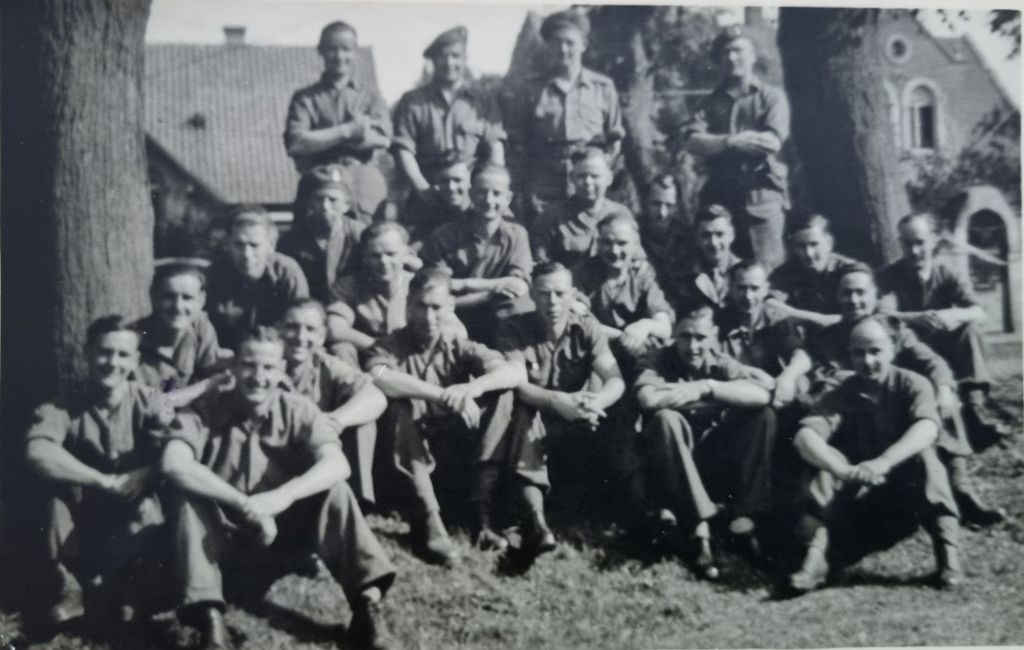
Burgdorf was “unscathed by war” and that fact is reflected in the handful of photographs that form the ‘Germany’ section of Dad’s war-time photo album.
In stark contrast to images usually associated with war-time, its black-and-white shots capture the peace that had been so hard won.
In one, a building features with a jeep parked to the left of the entrance, possibly the regimental HQ.
The third photo features a manicured grass lawn and planted border, perhaps fronting one of the buildings featured earlier, surrounded by trees in full leaf.
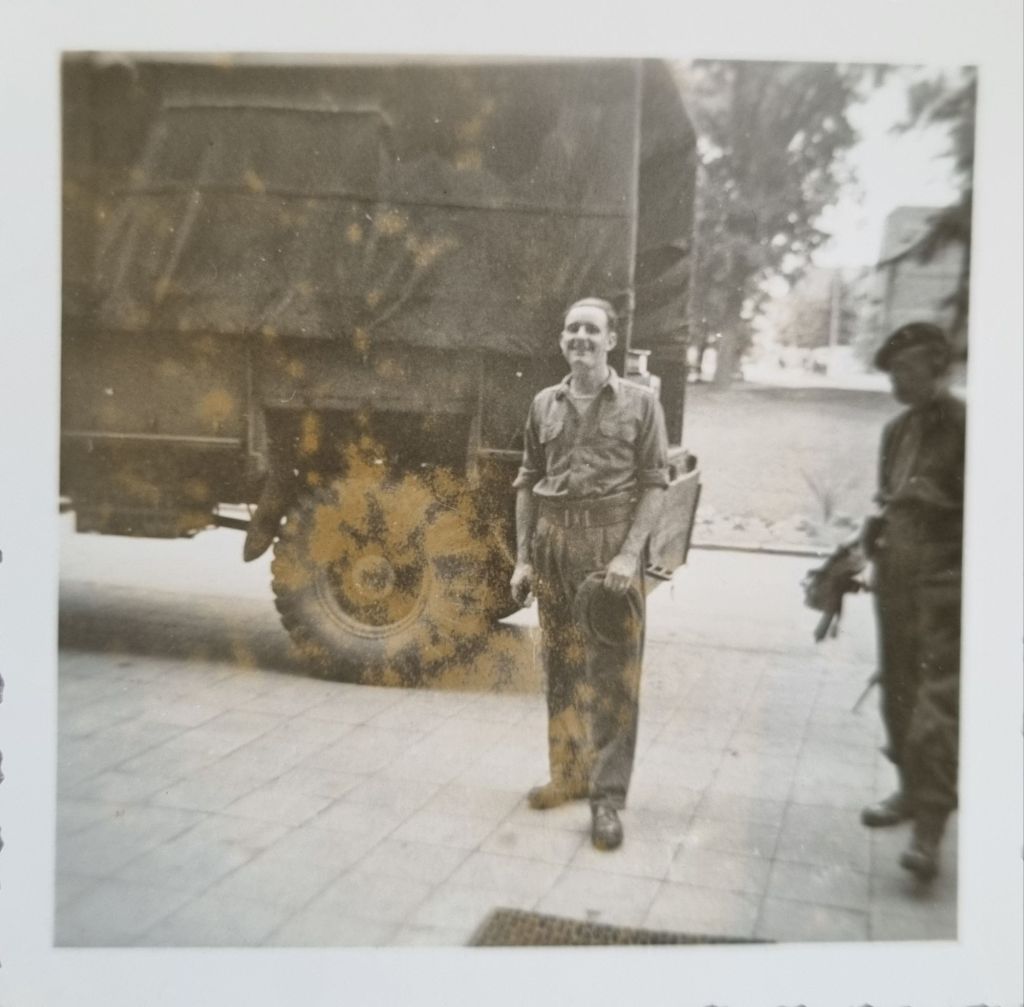
His Soldier’s Release Book records that he had been “employed in the Quarter-Masters Department as clerks store manager.”
This was a testimonial that helped prepare him for life after the forces, and in 1947, he secured a clerk’s job in civvy street with a Leeds-based soap manufacturer.
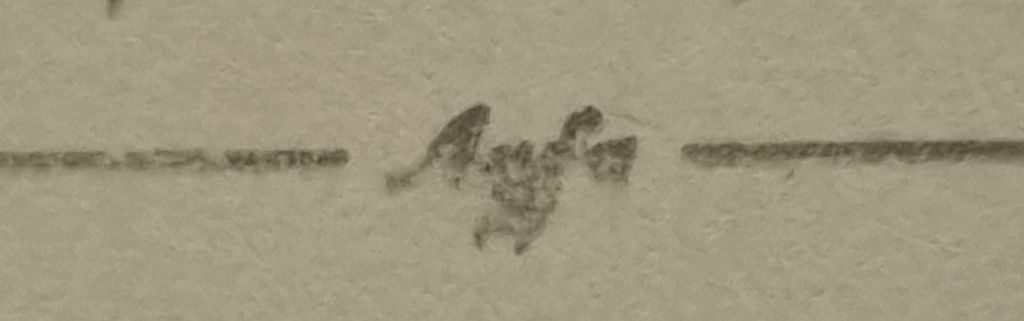
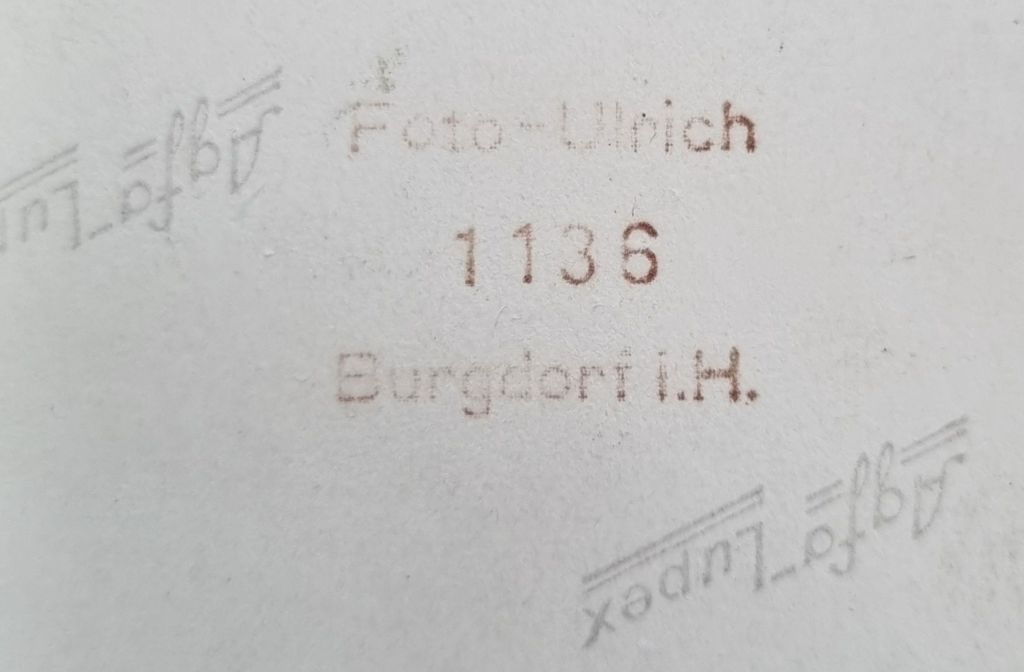
The verso of the ‘at work’ snapshot bears the stamp of the branded photo paper used – ‘Agfa Lupex’ – and the photo shop in Burgdorf that produced the resulting print.
Best of all, it shows Dad with a smile on his face.
It was one that must have reflected how he felt after the ordeal of an arduous campaign that began on D-Day and a global conflict that consumed nearly seven years of his young adult life.
A recent online talk by contemporary wet plate photographer Tony Richards for the Royal Photographic Society’s Historical Group happened at a timely moment.
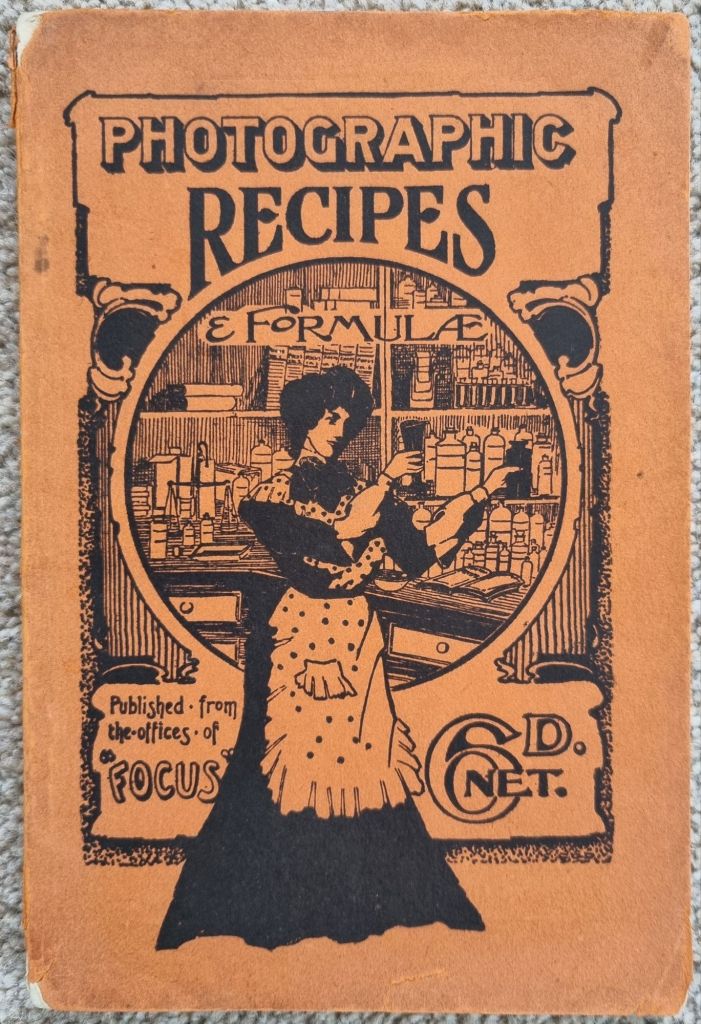
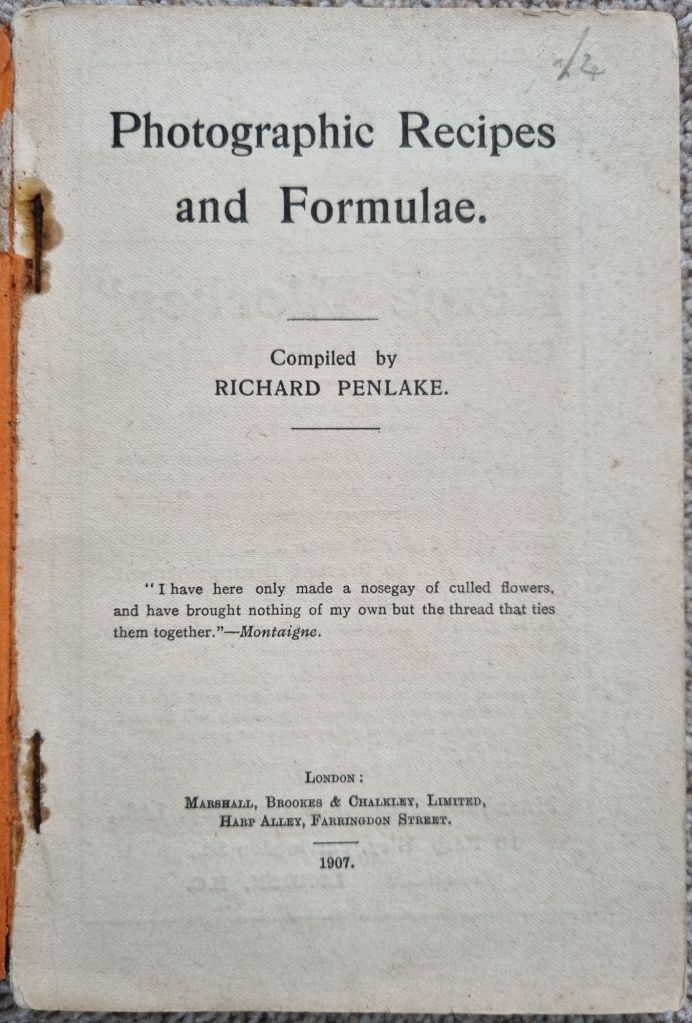
His presentation (‘Contemporary Wet Plate Collodion Photography’ / 2nd April 2024) coincided with the arrival in my collection of a second-hand book titled Photographic Recipes and Formulae.
Photographic Recipes and Formulae published in 1907.
As its title suggests, the book published in 1907 informs photographers about the basic principles of chemistry integral to taking photographs from the medium’s earliest days.
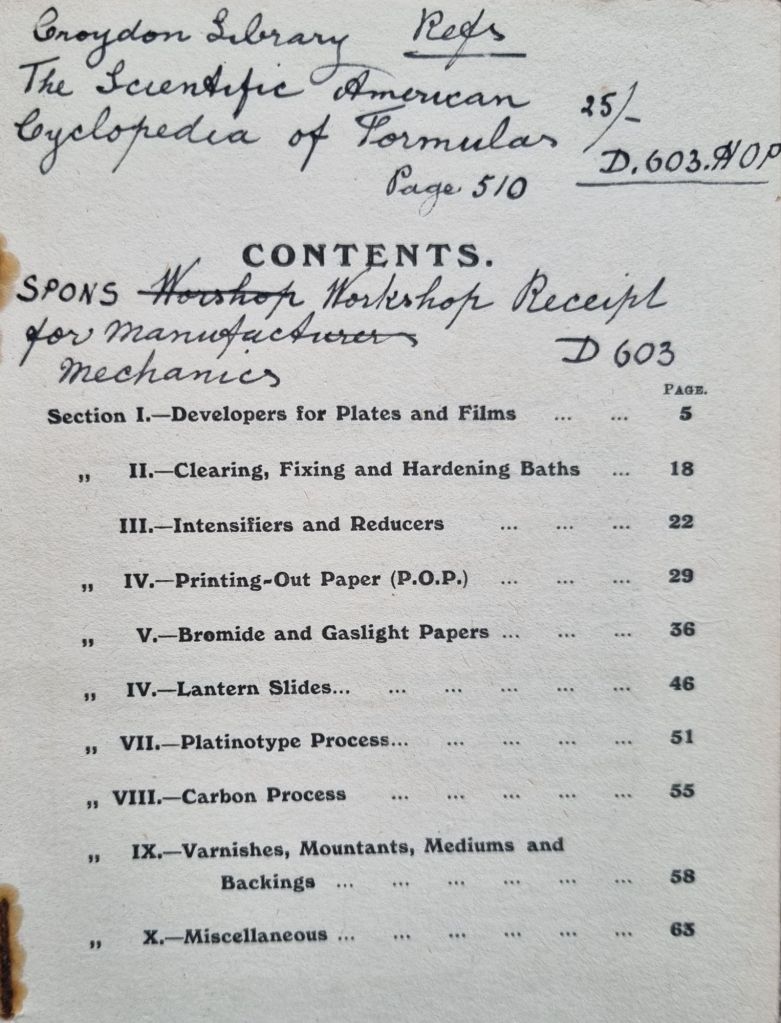
Its contents page (annotated ‘Croydon Library’ in an unknown hand) lists a total of ten sections starting with “Developers for Plates and Films” and working its way through various photographic processes.
Contents page of Photographic Recipes and Formulae (1907).
Though traditional methods are an area of interest to photohistorians, mine in this particular book was prompted by a detail on its frontispiece: that of the credit ‘Compiled by Richard Penlake.’
Frontispiece of Photographic Receipes and Formulae (1907).
As regular readers of the Pressphotoman blog will be aware, ‘Richard Penlake’ was a pen-name used by the photographer and author Percy R. Salmon FRPS (1872-1959).
In its catalogue, the British Library lists six titles credited to Richard Penlake, but this particular one seems to have escaped the Deposit Library system and has now been added to our growing family collection of his publications.
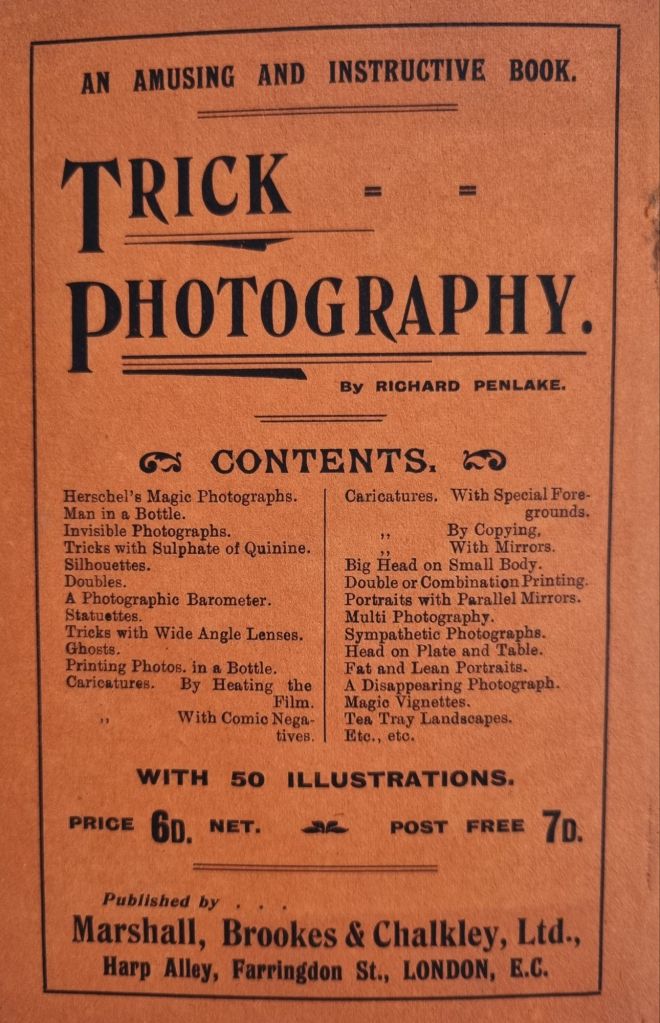
This is slightly surprising as the BL catalogue does include a Richard Penlake title, Trick Photography, by the same publisher, Marshall, Brookes & Chalkley, Ltd., of Harp Alley, Farringdon Street, London, EC, that appeared the previous year (1906).
Indeed, an advertisement for Trick Photography billed as “an amusing and instructive book” appears on the flyleaf of Photographic Recipes & Formulae.
Advertisement for Trick Photography from flyleaf of Photographic Recipes & Formulae (1907).
This flurry of activity occurred at a point in Percy R. Salmon’s career when he had recently stepped down after five years as Editor of Photographic News, a weekly trade paper.
Instead, he was working as a freelance author producing articles and mass market handbooks aimed at amateur photographers.
It was a change that culminated in several popular titles including All About Photography (1925) published in multiple editions by Ward, Lock & Co., into the 1950s.
The world of newspapers and magazines has long relied upon ‘Special Offers’ to attract new customers and retain the loyalty of existing readers.
As Christmas approaches, those publications featuring a ‘free’ gift or money off with your first year’s subscription are everywhere.
Nearly 30 years ago, I took up a newspaper promotion that most definitely fell into the ‘value for money’ category.
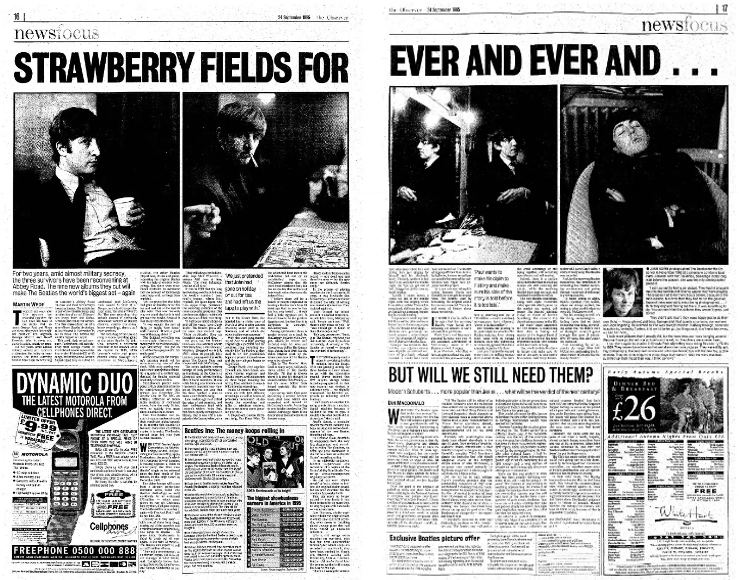
One Sunday in September 1995 whilst reading The Observer, my attention was drawn to a feature article about The Beatles prompted by the band’s then about-to-be-released Anthology project.
The Observer, 24th September 1995. From Newspapers.com
Under the sub-heading But Will We Still Need Them?, the music writer and critic Ian MacDonald (1948-2003) pondered what the next century would make of the Fab Four.
Today, following the recent re-release of the Red and Blue ‘hits’ albums along with what was billed as the final Beatles track ‘Now and Then,’ we perhaps have a better idea.
Photographically, the 1995 Observer double-page spread was lavishly illustrated by four photographs, each featuring a member of the band.
They were taken in November 1963 at a cinema in London’s East Ham by the paper’s celebrated photographer Jane Bown (1925-2014).
Beatlemania was at its height and, for the article, she recalled being smuggled into the venue, which was beseiged by fans.
Using a Rolleiflex camera, she took more photographs than usual while the band counted down the hours backstage before their concert.
Apart from the intimate portraits of John, Paul, George and Ringo, what particularly caught my eye was tucked away at the bottom of the article.
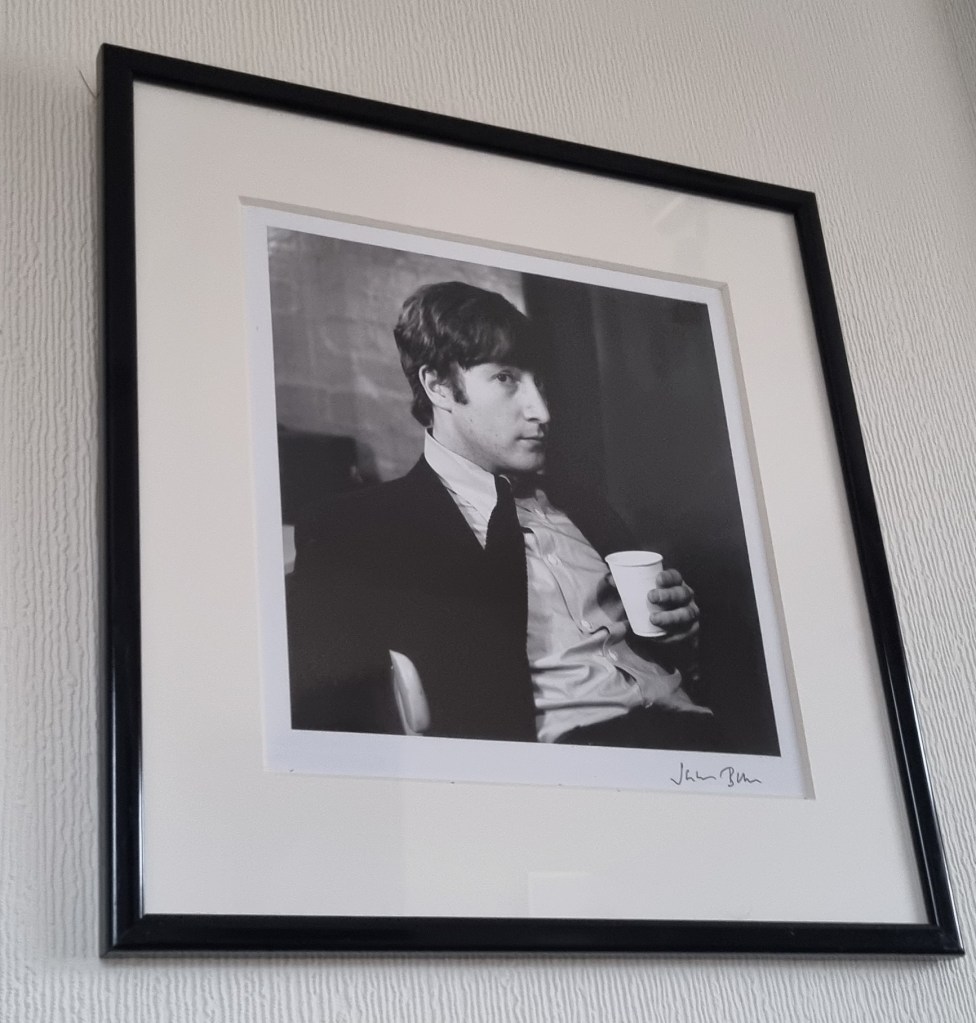
Under the sub-heading “Exclusive Beatles picture offer,” readers were given the opportunity to own an original print from Jane Bown’s 1963 Beatles pictures.
Taken from The Observer, 24th September 1995. From Newspapers.com
Available as a set of 6 for £49 “including postage and packing,” the 12″ x 9.5″ black and white glosy [sic] prints were to be handprinted by the photographer’s printers.
Whether it was the price tag or a lack of information about the two unpublished photos in the set, I decided to send for a single print of John Lennon for £15.
I was also half-hoping that I would be lucky enough to get one of the first 1000 copies “individually signed by Jane Bown and issued on a first-come, first-served basis.”
With fingers crossed, I filled out the accompanying cut-out coupon and sent it along with a £15 cheque to a postal address for The Observer in Bushey, Hertfordshire.
At this point, I am able to look up from my laptop and see that I was successful in obtaining a print of John Lennon signed by Jane Bown.
Unfortunately, the “letter of authentication and introduction from The Observer” that accompanied the photo had vanished by the time the print returned from being framed.
But it’s a photograph that continues to give pleasure and initiated an interest in Jane Bown’s work as a photographer.
Researching this post, I came across a portrait of Jane Bown I had not seen before.
It was taken in 1967 by Yevonde, another pioneering figure in the history of the medium and the subject of a recent Pressphotoman post (27th November 2023).
It’s not everyday that you come across a pile of old newspapers from the middle of the 19th century.
But that was the sight that greeted me in a second-hand bookshop recently within a few steps of the entrance.
The first thing I noticed was the familiar masthead of the Newcastle Courant with its wonderful slogan ‘General Hue and Cry.’
Launched in 1711, the Courant was published as a weekly newspaper for approaching 200 years in Newcastle, North and South Shields, Sunderland, Durham and the “Northern Counties of England.” (British Newspaper Archive).
At the top right-hand corner of each newspaper was the handwritten name ‘Mrs. Dickson,’ who I presumed might be their first owner.
A single-column advertisement informed readers that “Mr. Sarony will take no more portraits in Newcastle after Saturday, the 26th June.”
Mr. Sarony’s was a name that I had come across before during research into pioneering portrait photographers in Newcastle and the North-East of England during the 1850s.
According to the National Portrait Gallery in London, Oliver François Xavier Sarony (1820-1879) was born in Quebec and trained as a daguerreotypist in New York before travelling to England.
A brother of the better-known celebrity portrait photographer Napoleon Sarony (1821-1896), Oliver “was one of the most successful provincial photographers of his time” (NPG website).
Press reports and newspaper advertisements from the period paint a fascinating portrait of a man establishing his reputation.
Shortly before Christmas 1857, the Newcastle Journal announced that “the celebrated American photographer, late of Cambridge, Norwich and Scarborough” would be taking photographic portraits at 69 Blackett Street.
Advertisement from Newcastle Journal, 12th December 1857. From the British Newspaper Archive.
Mr. Sarony’s six month residency in Newcastle upon Tyne may have been brief.
But, as this advertisement reveals, he embedded himself at the heart of the city’s fast-growing photographic community in Blackett Street and neighbouring Grey Street.
I was delighted to find a supporting article on the paper’s back page revealing more details of the photographer’s collaborative approach to business.
Headlined ‘Mr. Sarony,’ it described his success in Newcastle as “truly astonishing.”
It then went on to highlight how the photographer had “at the solicitation of a few friends arranged with T. Carrick, Esq., of London, the well-known and distinguished miniature painter, to colour a few heads for him in this town.”
The said Thomas Heathfield Carrick (1802-1874) was indeed “well-known and distinguished.”
A regular exhibitor at the Royal Academy in London, his miniature portraits were popularised in the form of engravings and mezzotint prints.
However, like many of his artist contemporaries, Carrick’s career was cut short by the arrival of photography.
In that context, Carrick’s advertised collaboration with Oliver Sarony at this point in both their careers can be viewed as a watershed moment for art and photography.
As a result of the aforementioned bookshop visit, two issues of the Newcastle Courant from June and August 1858 now feature in my collection of old newspapers. My bank account is slightly less healthy.
A few days ago, a window opened on my laptop to announce that it was 12 months since the first Pressphotoman blogpost was published.
In the spirit of annual reviews that fill newspaper and magazine websites at this time of year, here is a selection of six favourite photos from the past 12 months along with links to the posts that accompanied them.
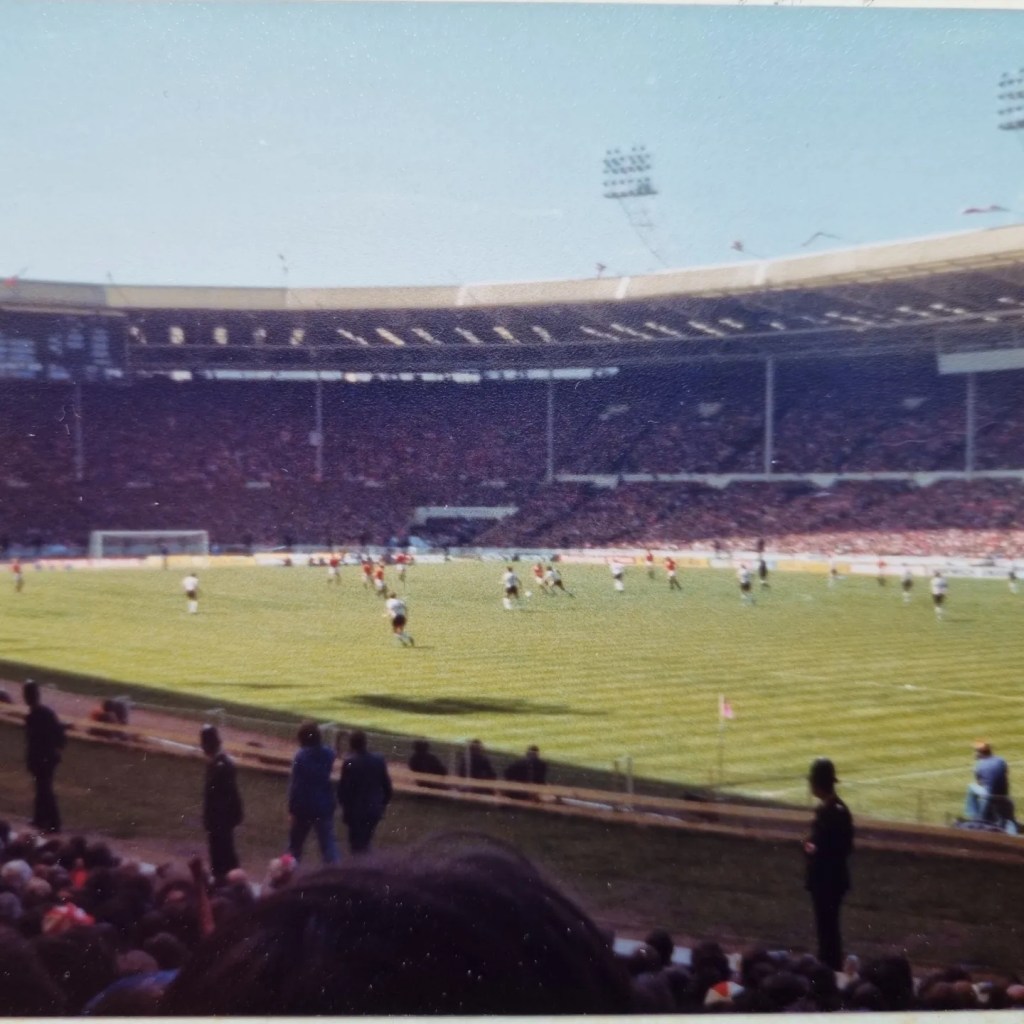
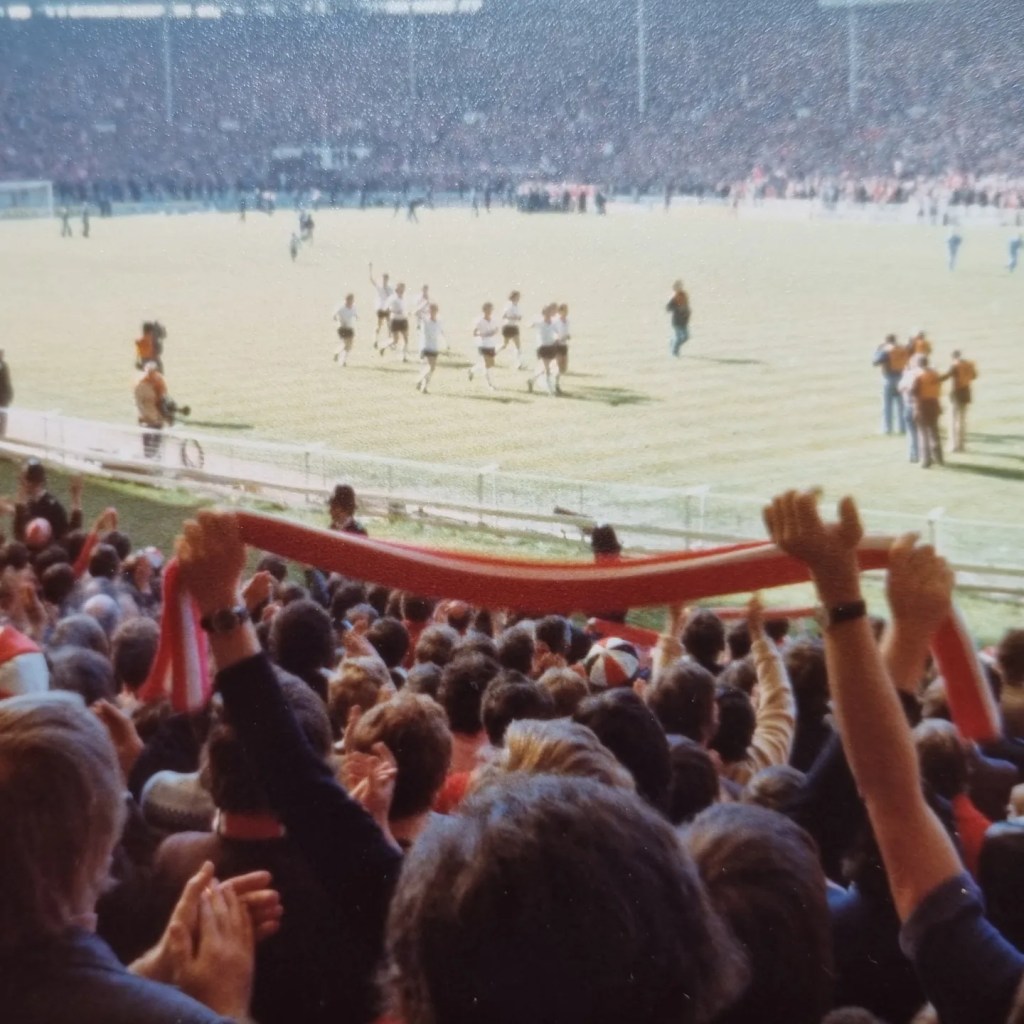
On FA Cup Final day 1977, I smuggled a Kodak Pocket Instamatic camera inside the old Wembley Stadium in London.
From my wooden bench seat amid supporters of both teams, I saw Manchester United (in red) beat Liverpool (in white) 2-1.
I was present thanks to a ticket Dad got as a “thank you” from the Football Association for his services during the season as an amateur referee.
The ticket warned that photography in the stadium was forbidden, hence the borrowed pocket camera that I sheepishly produced whenever it felt safe to do so.
Interestingly, I only managed one “action” photo during the 90 minutes.
Liverpool (in white) playing Manchester United in the FA Cup Final, 21st May 1977. Author’s copyright.
But the sequence I shot 46 years ago rekindles memories of a day down Wembley Way that I will never forget.
Fans making their way along Wembley Way, 21st May 1977. Author’s copyrightThe pre-match FA Cup Final “entertainment,” Wembley Stadium, 21st May 1977. Author’s copyright.Liverpool fans applauding their losing team, Wembley Stadium, 21st May 1977. Author’s copyright.Manchester United players parading the FA Cup, Wembley Stadium, 21st May 1977. Author’s copyright.
The Slightly Foxed bookshop in nearby Berwick upon Tweed has already provided inspiration for this blog (see ‘Cartoon Dickens,’ 29th December 2022; and ‘Picture Post Memories,’ 15th December 2022).
But on my latest visit, I wasn’t expecting to connect with a significant chapter in photographic history.
Whilst browsing the shop’s ‘Photography’ section, I came across a copy of ‘Photographic Facts and Formulas’ by E.J Wall, FRPS published by Chapman and Hall, London in 1927.
Photographic Facts and Formulas by E.J. Wall, FRPS (London: Chapman & Hall, 1927).
Edward John Wall (1860-1928) was a name known to me from family research into the life and career of Percy R. Salmon, FRPS, my wife’s great great uncle.
As indicated by the FRPS initials, both were Fellows of the Royal Photographic Society and their lives had overlapped at various points.
In 1901, Salmon succeeded Wall as Editor of Photographic News and later, they collaborated on a number of projects including Cassell’s Cyclopaedia of Photography published in 1911.
Over and above their text and illustrations, old books often yield wonderful surprises within their pages and this second-hand book by E.J. Wall was no exception.
Title page, Photographic Facts and Formulas by E.J. Wall.
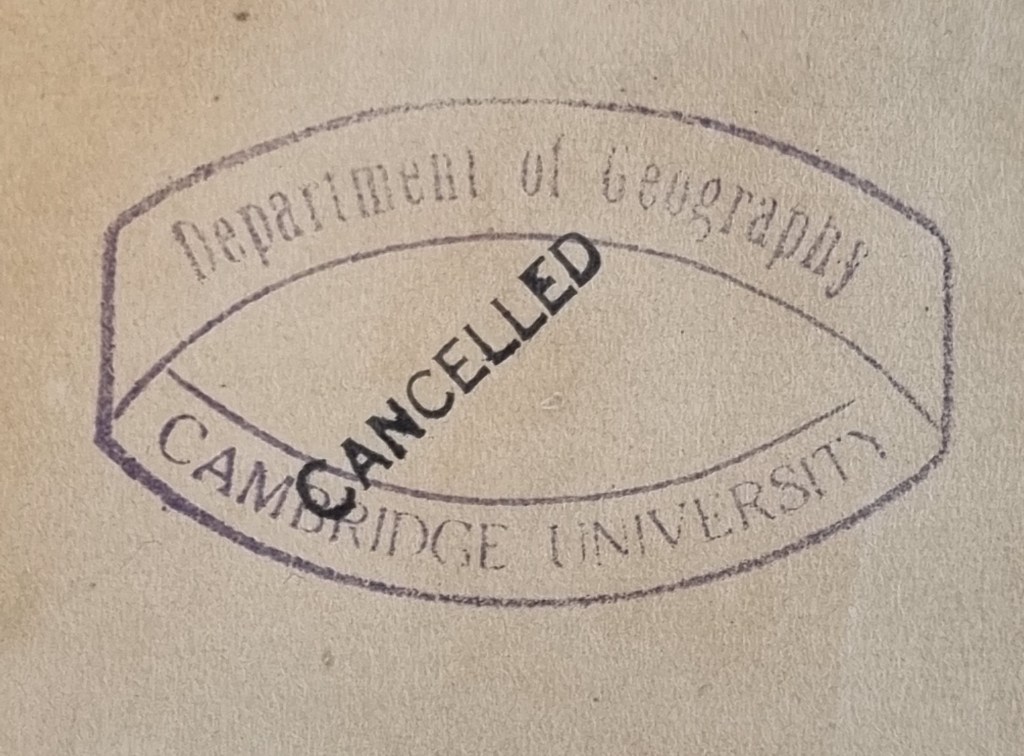
The title page boasted a stamp for one of its previous owners, the Department of Geography at Cambridge University. The ‘cancelled’ stamp suggested, at some point, that the department found the volume to be surplus to requirement.
But there was also an undated signature on the inside flyleaf, ‘P.A.L. Brunney.’
Those who know about the history of photography in Cambridge will recognise the name of Philip Alexander Lake Brunney (1913-2003).
In the mid-1930s, he had joined the female photography firm of Ramsey & Muspratt in Post Office Terrace.
Founded by Lettice Ramsey (1898-1985) and Helen Muspratt (1907-2001), Brunney later served as a director of the company before working as an industrial and scientific photographer for Aero Research, later Ciba Geigy,
In recent years, the remarkable story of Ramsey & Muspratt has been celebrated in books, talks and exhibitions and Brunney’s role in the firm’s success features prominently.
How my copy of EJ Wall’s book found its way to Philip Brunney via Cambridge University’s geography department is one that may remain a mystery though I’d be pleased to hear from anyone who knows.
However, in the meantime, here is a 2022 talk for the RPS by Mary Burgess about the Post Office Terrace photographic studio.
It includes a section on Ramsey & Muspratt and their collaboration with Philip Brunney starting at 16′ 46.”
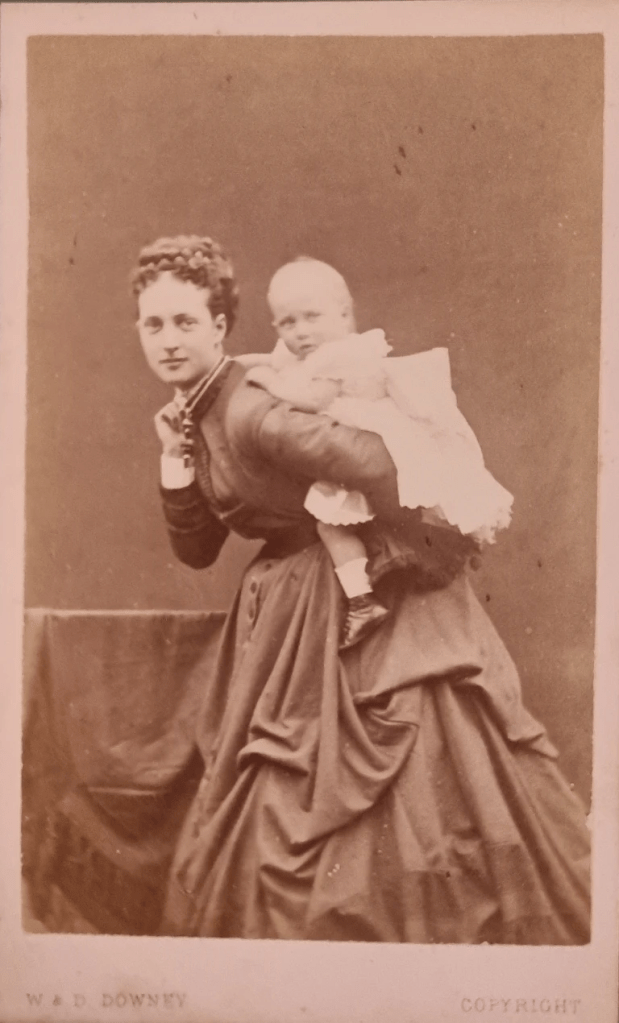
My recent talk on W. & D. Downey for the Royal Photographic Society Historical Group prompted responses both to the ‘live’ event and to the recording via social media (see blogpost, 16th March 2023).
The company’s successful activities over several decades are reflected in the extensive photo collections held by museums and galleries around the world.
Thanks to digitisation, these portraits are now viewable online, often with supporting text and information.
So it has been pleasing to be able to share my research findings about Downey’s early years with the National Portrait Gallery in London (due to re-open in June 2023), which has nearly 1,000 portraits credited to the company.
My thanks to Clare Freestone, Curator of Photography, and her NPG colleagues for amending the online company entry for W. & D. Downey.
Today marks the 151st birthday of the photographer and writer Percy R. Salmon, FRPS (1872-1959).
A year ago, his life and career were celebrated in a short film commissioned by the Royal Photographic Society.
The RPS is an organisation with which he was connected for more than 60 years as a member, fellow and finally as an honorary member.
RPS film about Percy R. Salmon, FRPS: Photographer, photography journalist and writer (2022).
In the past 12 months, members of our family (Mr. Salmon’s great nephew Stephen Martin and my wife Helen Barber, his great great niece) have been following up various research threads.
Some were prompted by responses to the film. Others were previously unexplored.
One was a letter dated 26th April 1950 written by Mr. Salmon to the RPS donating five photographic objects to what was then its museum.
That collection is now part of the Victoria & Albert Museum in London alongside some 800,000 other photographic items.
Unsurprisingly given its size and scope, much of this material has yet to be researched and catalogued.
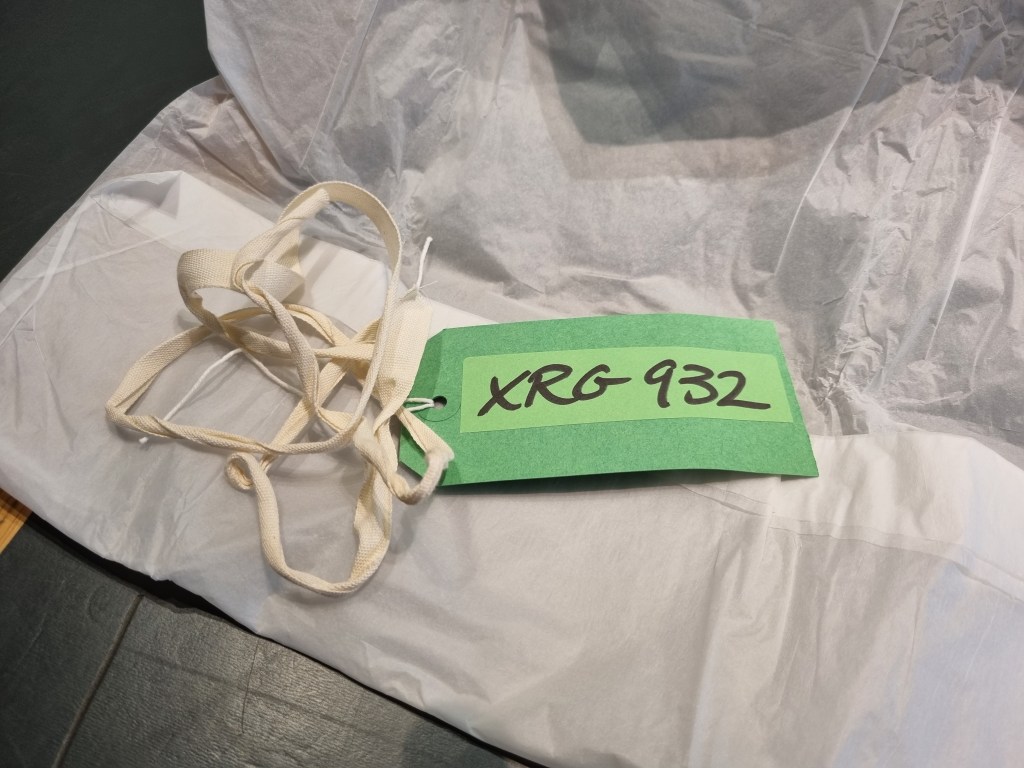
However, as we discovered on a recent family visit to the V&A, one of the donated photographs has been given a catalogue number.
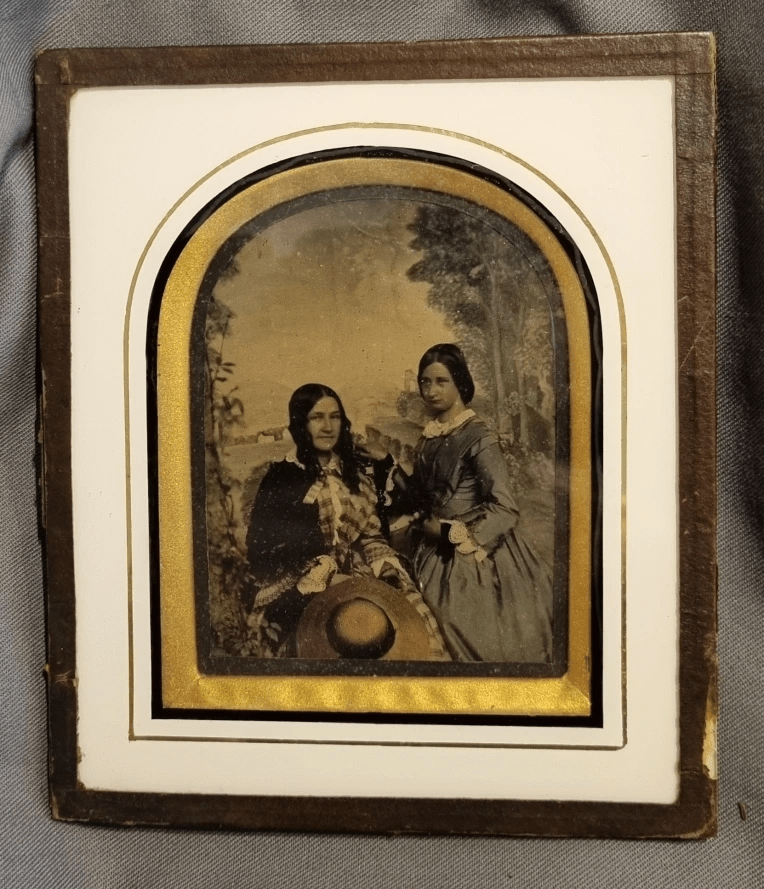
The photograph featuring two women is framed within an arched shaped mount, edged in gold and black. The object is approximately 4 inches wide by 6 inches long.
One of the women is seated holding a wide-brimmed hat. The second is standing next to her, a hand resting on the other woman’s shoulder. They are posed against a painted landscape backdrop featuring buildings, a woodland, and distant hills.
A caption in Mr. Salmon’s hand attached to the verso provides more information about the photograph and its provenance.
It reads: ‘Photo Taken At A Village Feast (Little Abington, Cambs.) About 1860.’ Another hand has added ‘Glass Positive. Tinted.’
Verso of a framed portrait photograph donated to the RPS by Percy R. Salmon, FRPS in 1950.
The photograph is intriguing on several levels.
Firstly, what was it about this object that Mr. Salmon, an expert in early photographic processes, deemed significant enough to donate it to the RPS?
In the letter that accompanied the donation, he described it as ‘a collodion portrait of two ladies’ and highlighted what he described as ‘a trace of colouring.’
The colouring can be seen in the dress worn by the woman on the right of frame which has a blue-ish tinge whilst the trees in the background have a green-ish hue.
Secondly, his donation letter added the telling phrase ‘Particulars Not Known,’ but was there anything about the portrait that gave it particular meaning to Mr. Salmon?
The reference in the verso label to ‘Little Abington, Cambs.’ relates to a village 8 miles south-east of Cambridge and provides a direct family connection.
His wife Eliza Salmon (née Dickerson) was born at Little Abington in 1863. Her father James, a thatcher, and his wife Lydia had four other young children at that point.
How Eliza, the couple’s youngest daughter and known within the family as ‘Tottie,’ met her future husband is uncertain, but Cambridge University seems to have played a part.
New family research has revealed that Alma Dickerson, Eliza’s elder sister, was a member of the domestic staff of Edward Byles Cowell (1826-1903), the university’s first Professor of Sanskrit.
Census records and newspaper reports confirm that Eliza was Cowell’s cook at the same time as Mr. Salmon was his footman at 10 Scroope Terrace, Cambridge from the mid-1880s to the early 1890s.
In due course, the relationship between Percy R. Salmon and Eliza Dickerson flourished and in July 1901, the couple were married in the parish church at Little Abington.
Given this information, does it yield any clues that might help identify the ‘two ladies’ featured in the photographic portrait donated to the RPS by Mr. Salmon?
His dating of the portrait to ‘around 1860’ would place his wife Eliza’s mother Lydia Dickerson in her late-20s, so perhaps she is a candidate. Or perhaps there is no direct family connection at all.
As to where the portrait was taken, ‘Feasts’ were celebrated throughout the 19th century in many English villages.
During this period, itinerant photographers proliferated, so it is possible that one or more were among the attractions on offer at the Little Abington Feast.
A mobile studio, complete with painted backdrop and offering a selection of suitable clothes to wear with ‘assistance for ladies,’ would have provided an opportunity to have a portrait photograph captured for posterity.
Fashion historians might also be able to shed light on the dresses being worn and the hairstyles on view.
The ‘comments box’ below welcomes your thoughts.
Catalogue label for V&A portrait photograph XRG 932.
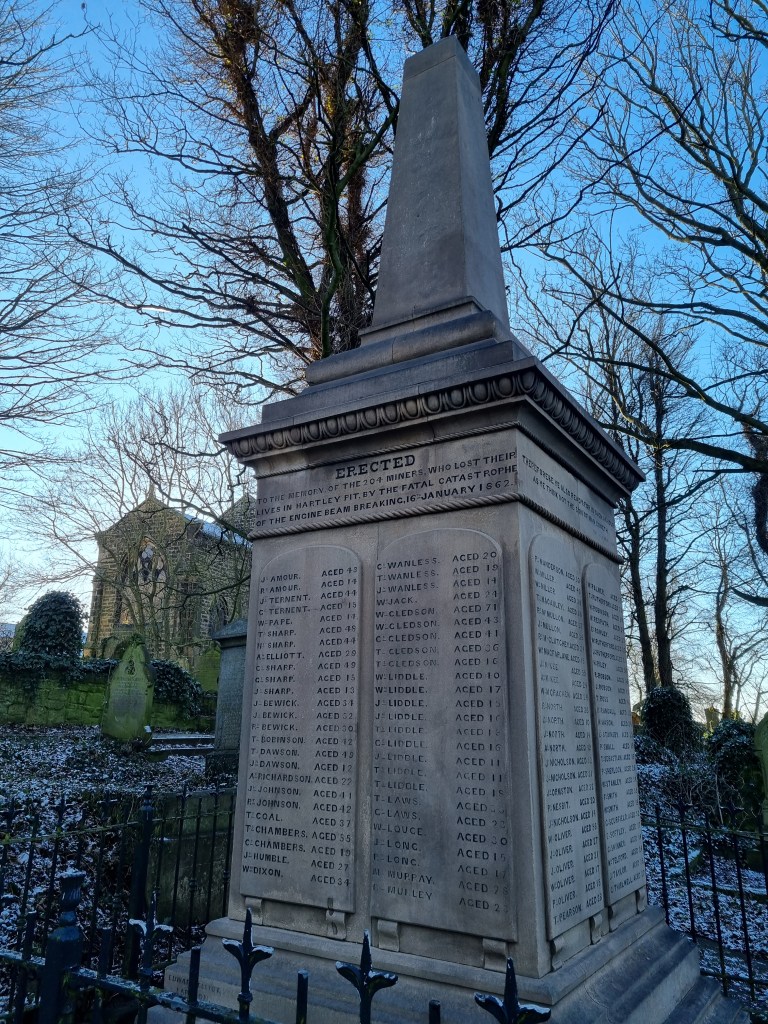
On this day in 1862, an accident at the Hartley Pit in Northumberland led to the deaths of 204 men and boys.
Around 11 o’clock in the morning, a wooden engine beam snapped sending more than 20 tons of winding gear and equipment down the shaft at the colliery about ten miles north-east of Newcastle-upon-Tyne.
Those working the coal seams below were effectively trapped and, despite heroic rescue efforts, died in the aftermath of the accident from a build-up of gas.
Following the tragedy, an Act of Parliament was passed requiring that, in future, no pit would rely on a single shaft as its only means of access.
Hartley Pit Disaster Memorial, St. Alban’s churchyard, Earsdon. Photo taken by author 16th January 2023.
In terms of photographic history, the disaster was also significant.
This is graphically described and illustrated in Roger Taylor’s essay ‘The Hartley pit disaster, January 1862’ in Crown & Camera: The Royal Family and Photography 1842-1910 (London, Penguin Books, 1987), 60-63.
The article showcased a series of location photographs taken following the disaster by the firm of W. & D. Downey of Newcastle-upon-Tyne.
The photographs’ inclusion in the Royal Collection came about because the images were sent to Queen Victoria by the company.
The monarch was grieving following the death of her own husband Prince Albert a few weeks earlier, and she wrote to the pit owner, Charles Carr, expressing concern for the fate of the miners and their families.
Once the bodies of those involved were discovered, the Queen headed the list of subscribers to a public relief fund set up to support the women and orphans made destitute.
Today, Downey’s ‘Hartley Colliery’ photographs can be viewed on the Royal Collection website in an online version of its 1987 ‘Crown & Camera’ exhibition.
However, research for this blog raises a key question about the photographs: were they taken on 30th January 1862 as stated in the article and on the website?
The first photograph, measuring 8 inches by 6 inches, is a group shot (RCIN 2935021) featuring Charles Carr, the pit’s owner, its manager Joseph Humble, and master sinker William Coulson alongside other members of the rescue team.
Two further photographs, again 8″ x 6″, were taken of the pit-head ‘after the accident.’ The first (RCIN 2935024) features the letter ‘A’ visible above ‘the Engine House’ and figures arranged along a walkway.
The second pit-head view (RCIN 2935022) is accompanied by a handwritten note that uses the letters A-E to identify all the significant buildings and features of the landscape.
The note also states ‘photographed January 30th 1862 and most respectfully forwarded by W. & D. Downey.’
The dating of 30th January is one that I researched recently for a talk presented to the Royal Photographic Society Historical Group about the Downey company’s early years on Tyneside.
What I discovered from reading contemporary newspapers is that there is evidence that calls into question its accuracy.
Before looking at this evidence, how did Downey’s ‘Hartley pit disaster’ photographs come to be in the Royal Collection in the first place?
By way of background, W. & D. Downey, led by brothers William and Daniel, established its photographic business in and around the port of South Shields in the mid-1850s.
The company thrived and quickly established a reputation for high quality photographic portraits and as a supplier of news images to the illustrated press which appeared as engravings.
In October 1861, according to press reports, it opened its first ‘photographic rooms’ in Northumberland Street, Newcastle, several miles west from South Shields along the River Tyne.
It was a town-centre location that proved popular with ‘nobility, clergy and gentry.’
In January 1862, the firm began placing regular adverts in the Newcastle Daily Journal in a prized position on the front page at the top of the left-hand column.
This strategy made readers aware of its latest carte-de-visites portraits including ‘most of the public men of the north.’
It was a regular pattern that continued until Tuesday 28th January, twelve days after the disaster, when a marked change occurred in the advert’s wording.
Headed ‘The Hartley Colliery Calamity,’ it offered for sale ‘A Photographic View of the Engine-House, Machinery and Pit-Heap sent to any address, album size, for 13 Postage Stamps.’
The ad continued: ‘Those on a larger scale sent on receipt of 30 postage stamps by W. and D. Downey, 111 Northumberland Street, Newcastle-upon-Tyne. The above may also be obtained from Mr. John Mawson, 13 Mosley Street.’
Mawson was a successful chemist at the heart of Newcastle’s contribution to early photography and someone with whom Downey regularly collaborated.
Further down the same column, Mawson used one of his own regular ads in the paper to advertise a ‘photographic view of the engine-house and machinery.’ Indeed, it was one he had first placed there in the previous day’s paper.
The photographs on sale, as described by both Downey and Mawson, suggest they were the ‘after the accident’ images in the Royal Collection highlighted above.
The next day, Wednesday 29th January, the same Downey and Mawson ads re-appeared alongside one placed by another leading Newcastle photographer, ‘Mr. R. Turner of the Fine Arts Repository, Grey Street.’
His advert headed ‘The Heroes of Hartley! Preparing For Immediate Publication’ referenced the human-interest story at the heart of the disaster.
For 7 shillings and 6 pence, it promised ‘a large, beautiful photographic picture of Mr. William Coulson, Master Sinker, and his brave workmen, who so nobly risked their Lives in the perilous Shaft for Ten Successive Days and Nights, endeavouring to save the Two Hundred and Four poor Colliers buried alive in the New Hartley Pit, Jan. 16th, 1862.’
Unlike the group photo in the Royal Collection credited to Downey, there is no mention of Mr. Carr, the mine owner, and Mr. Humble, the pit manager.
Taken together, these adverts suggest that all the photographs being offered for sale were more likely to have been taken, not on Thursday 30th January, but earlier that week.
By that point, the bodies of those who died in the disaster had been successfully brought to the surface and funeral services for its 204 victims had taken place.
So by Monday 27th, for example, a photo-call involving the key participants with access to the pit-head would have been viable.
Such a revised timeline is supported by a brief report that appeared in the Newcastle Daily Journal on Friday 31st January.
On page 2, the paper reported in its news columns:
‘Messrs. W. and D. Downey, the justly celebrated photographers of 111, Northumberland Street, in this town, last night [my italics] received a letter from Sir Charles Phipps, Osborne, thanking them for forwarding to Her Majesty the photographic views of Hartley New Colliery, the scene of the late terrible catastrophe.’
Phipps, Queen Victoria’s private secretary, was writing from the Queen’s residence on the Isle of Wight where she had retreated following the death of Prince Albert.
If the report in the Newcastle Daily Journal is accurate and to fulfill the statement ‘photographed January 30th,’ the following sequence of events happened in the course of a single day.
* First, photographs were taken on location at the Hartley Colliery.
* Prints, made by Downey from its negatives, were then dispatched to the Isle of Wight more than 400 miles away.
* And Sir Charles Phipps’ letter of thanks not only reached Downey back in Newcastle, but its contents were communicated to the Newcastle Daily Journal before its presses rolled.
Even allowing for the speed and reliability of the Victorian postal service, this seems unlikely.
What then might explain the ‘photographed Jan 30th, 1862’ inscription attached to Downey’s photographs in the Royal Collection?
That is a question that you may wish to speculate upon in the ‘comment’ box below this post.
Certainly, by the following Monday, 3rd February, Downey’s regular advert in the Newcastle Daily Journal offered a new and more detailed sales pitch.
‘The Hartley Catastrophe. Now Ready. A Series of Photographs, illustrative of the above Sad Calamity, taken upon the Spot, by W. and D. Downey, Photographers, No. 111, Northumberland Street, Newcastle-upon-Tyne.’
The ad then listed a number of images.
‘No. 1. Photographic portraits of Mr. Coulson and his Heroic Band of Sinkers, preparing to descend the shaft.’
‘No. 2. Mr. Coulson.’
‘No. 3. Johnny, the Tally Boy.’ This may refer to a portrait of a 12 year-old boy named as ‘Mark Bell’ by the Newcastle Courant (news report, 31st January 1862). He helped identify the bodies as his job entailed handing a tally to each miner who descended the shaft and collecting it again at the end of the shift.
‘No. 4. A general view of the Pit, Machinery, &c.’
‘No. 5. The Broken Beam.’
Each photograph was priced at one shilling, 1s 6d, or five shillings for a larger size print that could be bought from either Downey or John Mawson as before.
Accounts of this episode elsewhere state that W. & D. Downey were commissioned by Queen Victoria to take the photographs they did.
I have found no evidence to support this idea.
Rather, the use of the wording ‘most respectfully forwarded by W. & D. Downey’ in the Royal Collection archive suggests that the firm followed its own instincts in response to the Queen’s evident interest in the tragedy.
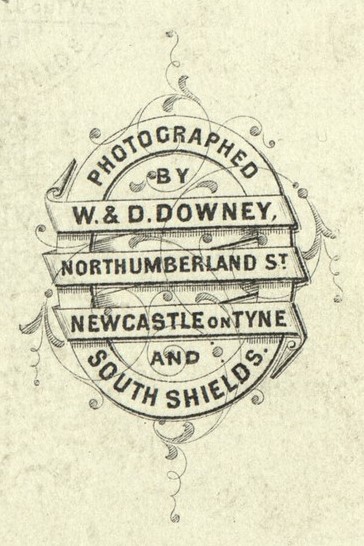
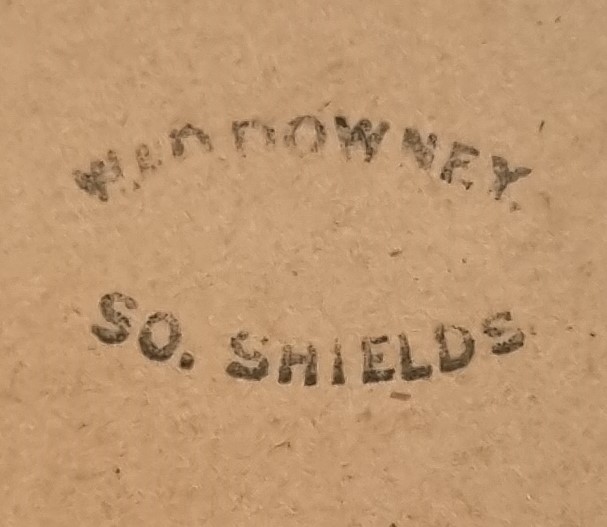
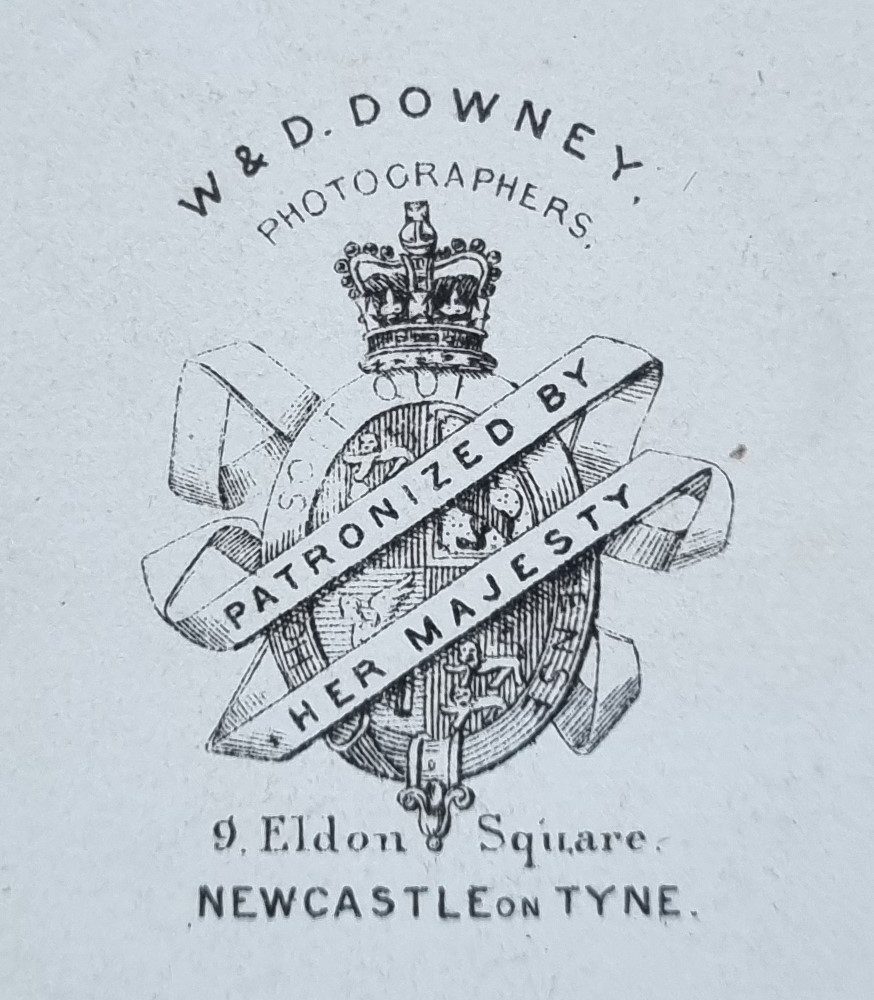
From a commercial viewpoint, it was soon able to use the slogan ‘Patronized By Her Majesty’ on the verso of its carte-de-visites whilst also promoting its new portrait rooms in Newcastle at 9 Eldon Square which opened in early March.
Given the wider public interest in the Hartley Pit disaster and the business opportunity foreseen by W. & D. Downey, it is intriguing to note that these celebrated photographs and larger size print versions referred to in this blogpost rarely appear for auction.
Perhaps they remain treasured momentos of those in the wider community of the North-East of England whose lives were so cruelly affected by events on that January day 161 years ago.
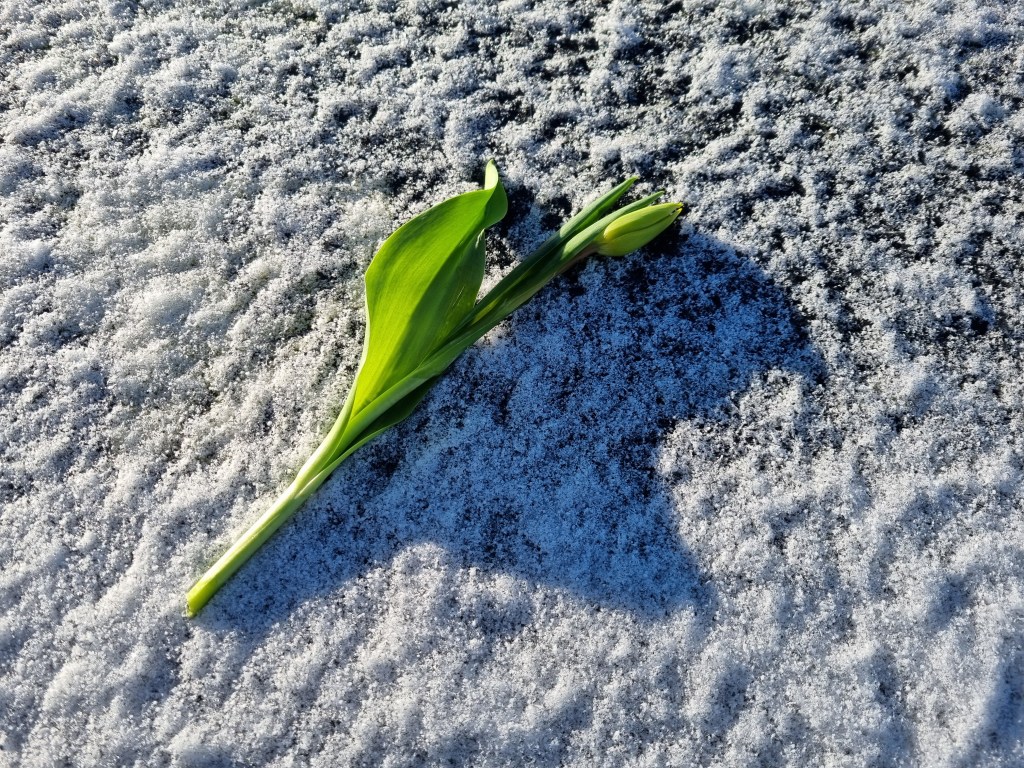
New Hartley Memorial Garden. Photo taken by author 16th January 2023.
Amid the avalanche of news stories from the past week, there was one in particular that stood out for our family.
It involved Cambridge University PhD student Rishi Rajpopat, who attracted headlines worldwide for solving a grammatical puzzle that has long perplexed scholars of the ancient language of Sanskrit.
Earlier this year, it was Sanskrit that made an unexpected appearance while I was researching a film, commissioned by the Royal Photographic Society, marking the 150th birthday of Percy R. Salmon, FRPS.
As a teenager in the 1880s, Salmon served for several years on the domestic staff of Professor E.B. (Edward Byles) Cowell, Cambridge University’s first Professor of Sanskrit.
The 1891 UK Census records that Salmon, my wife’s great-great-uncle, had risen to the rank of ‘footman.’
He left the city soon afterwards and embarked on a long and successful career as a photographer, journalist and author.
Sadly, our research failed to shed any further light on the working relationship between Messrs. Salmon and Cowell.
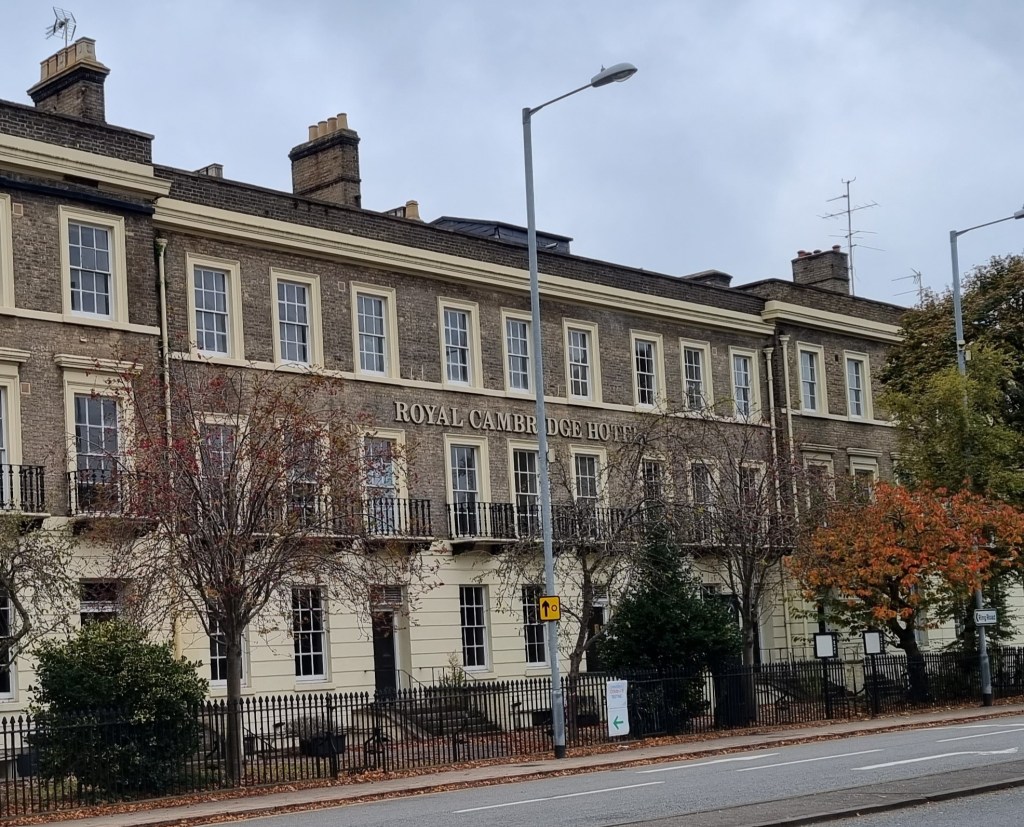
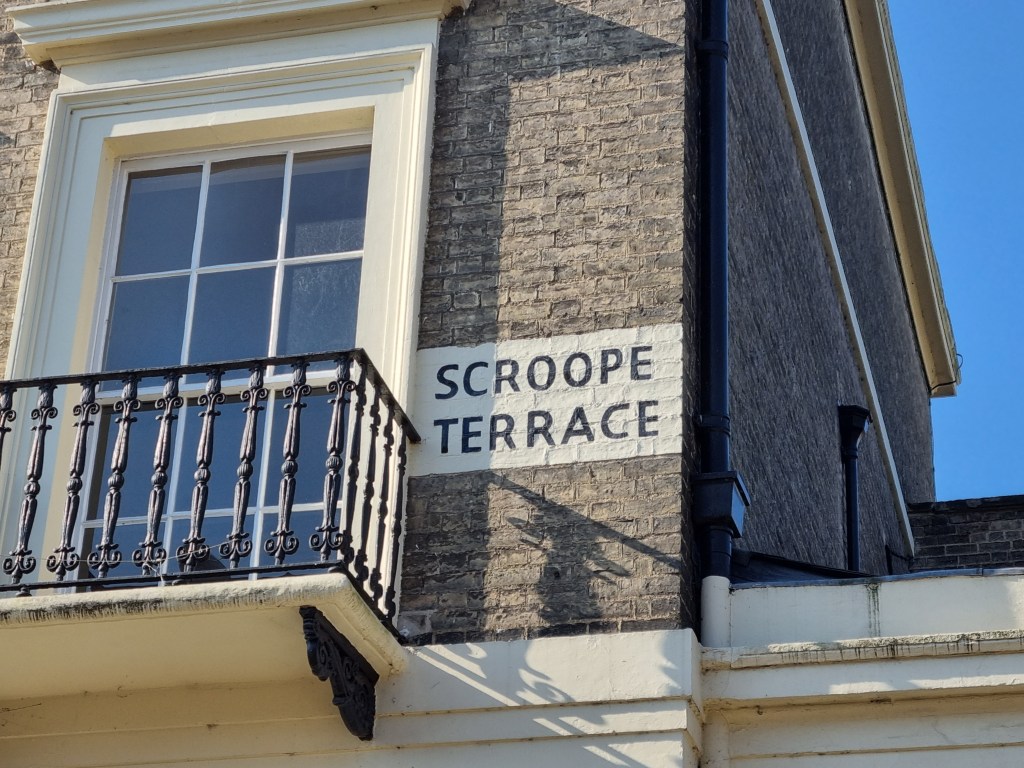
However, we did make a pilgrimage to Scroope Terrace, a grade 2 listed terrace of Cambridge townhouses, where Cowell lived as a Fellow of Corpus Christi College.
Scroope Terrace, Cambridge (formerly the Royal Cambridge Hotel). Photograph by author November 2021.
Though the house numbering system may have changed in the years since Prof. Cowell lived at number 10, counting the surviving doors along the terrace brings you to this section of the terrace.
(Possibly) 10 Scroope Terrace, Cambridge. Photograph by author November 2021.
It gives an idea of the elegant and grand circumstances in which Prof. Cowell lived as a Cambridge don and the location of Percy R. Salmon’s working life as a young man.
Street sign for Scroope Terrace, Cambridge. Photograph by author March 2022.
The RPS film about Percy R. Salmon’s life contains a section covering his time in Cambridge (beginning at 2.38).
A Royal Photographic Society film to mark the 150th birthday of Percy R. Salmon, FRPS (1872-1959).



























 Pressphotoman
Leave a comment