
Undertaking lengthy railway journeys in the UK can leave the traveller with a range of emotions.
Their state of mind can be significantly affected by a number of factors.
Amongst them, whether the scheduled trains run to time, whether connections are met, and whether your pre-booked seat is available.
However, it’s hard to resist the romance of photographs produced during the Golden Age of Steam.
One classic postcard image came to mind as my cross-country diesel train made its way through Newcastle upon Tyne in North East England
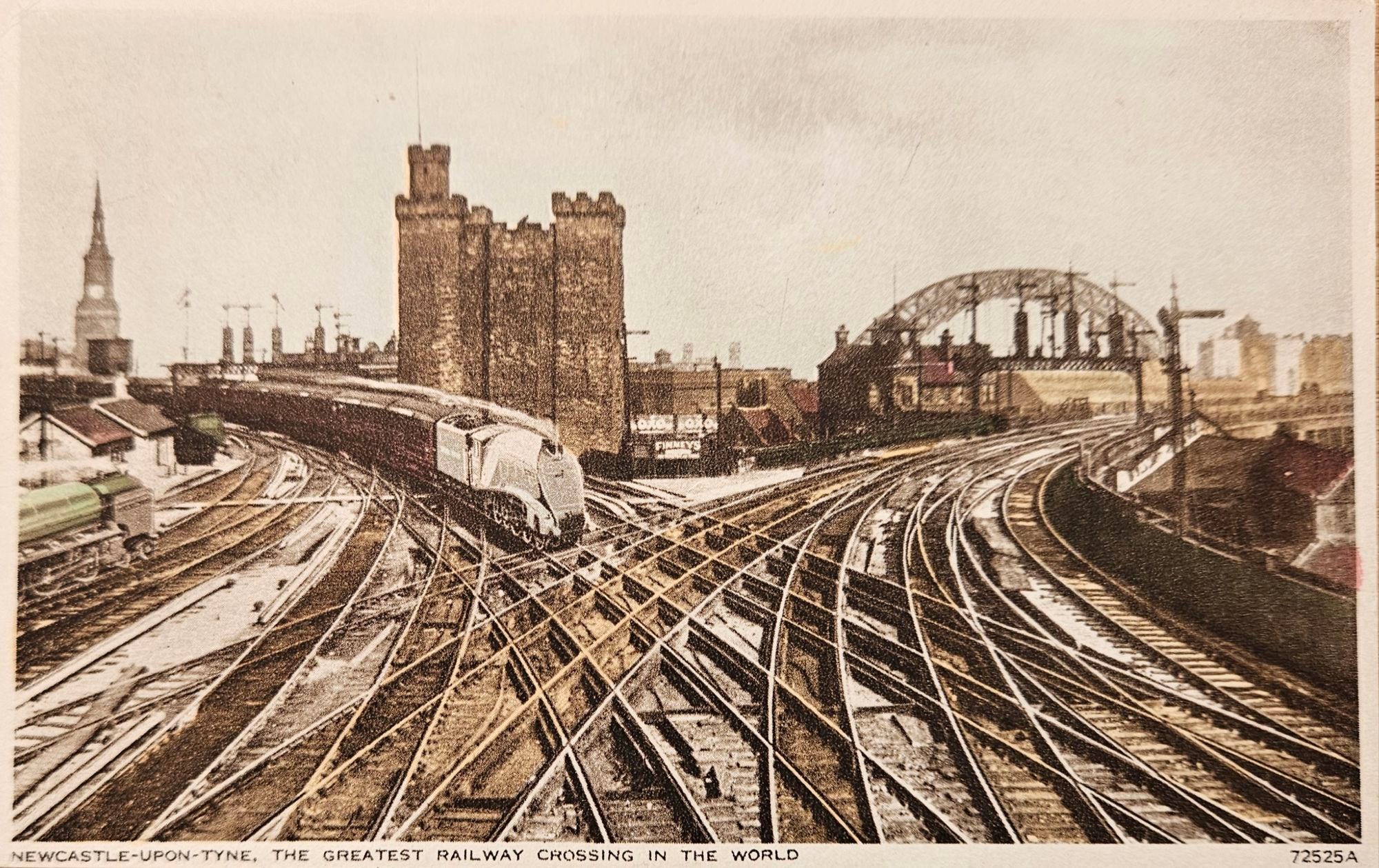
Produced by the prolific Photochrom Company of Tunbridge Wells, Kent during the mid-1930s, the postcard was understatedly captioned ‘The Greatest Railway Crossing In the World.’
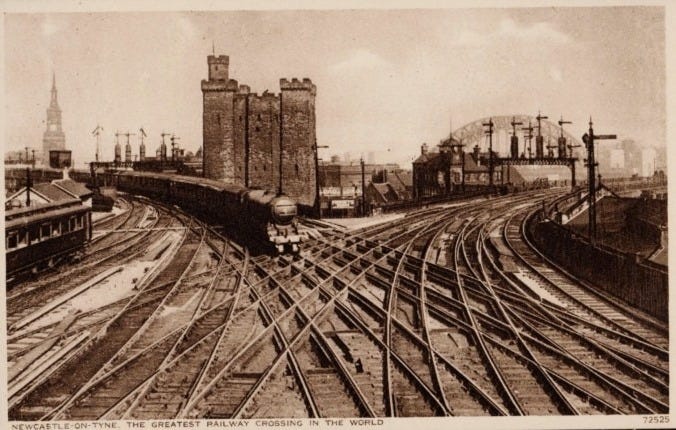

With Newcastle’s medieval Castle Keep and newly-opened Tyne Bridge in the background, it’s hard to argue with the claim.
For railway buffs, the image captured an intricate pattern of intersecting rail lines being negotiated by a steam train heading north.
The resulting postcard portrayed a celebrated location as well as the background ephemera of bill posters advertising ‘Finlay’s’ and the warming beverage ‘Oxo.’
For a budget price, purchasers also received an object of almost artistic beauty.
The photographer responsible may well have felt the trouble involved in securing such a perilous vantage point warranted more than one shot.
Hence the production of ‘72525A’ which repeats the scene captured in ‘72525’ but, judging by the distinctive shape of the front of the oncoming train, featured an A4 Class locomotive.
Designed by Sir Nigel Gresley, the A4 is immortalised in the famous LNER locomotive ‘Mallard’ that can be seen on static display further down the East Coast line at the National Railway Museum in York.
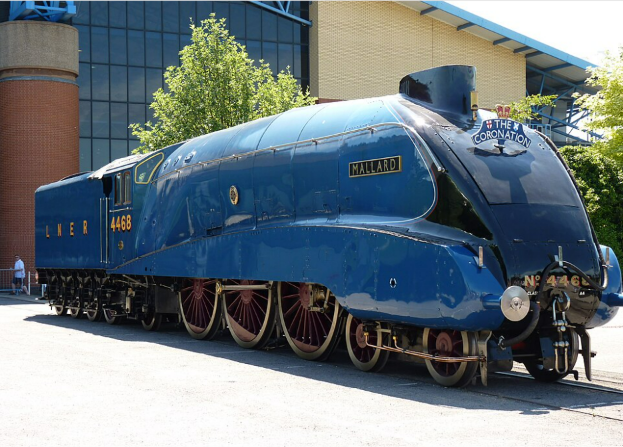
With its distinctive blue livery, ‘Mallard’ became the world’s fastest steam engine by clocking up a record speed of 126 miles per hour in 1938.
Now that would have been a journey to savour.


Leave a Reply