
Newcastle on Tyne in the 1860s was home to a bewildering array of photographic studios all competing for business.
Into this environment arrived ‘Mr. Carrick and the Misses Carrick,’ who billed themselves as offering ‘miniature and photographic portraits.’
For those who knew about the Carrick family, this was headline news.
The Newcastle Daily Journal did know and it devoted nearly half a column to a feature article about the Carrick’s new business (6th May 1868).
Newcastle was the city where Thomas Heathfield Carrick (1802-1874) first made his reputation as a miniature portrait painter, pioneering the technique of using watercolour on marble rather than ivory.
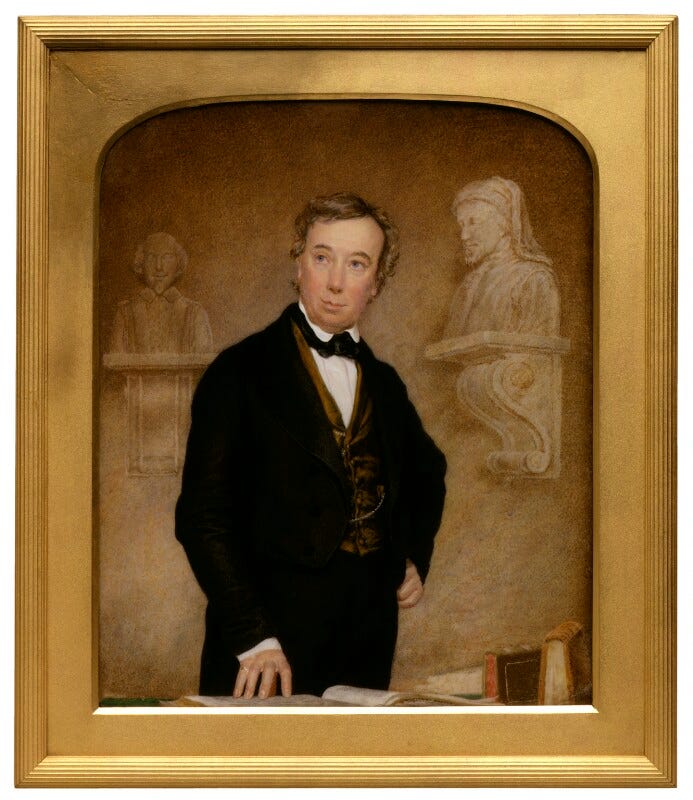
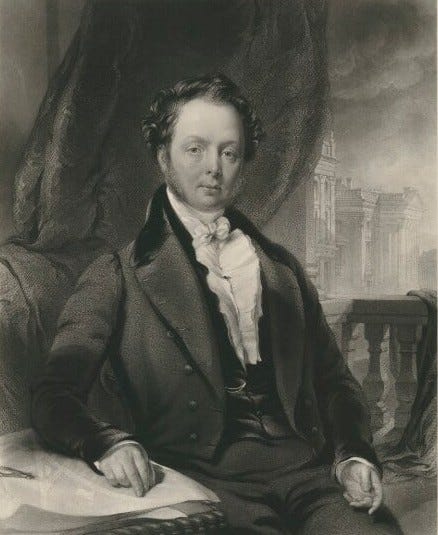
Among his many sitters was Richard Grainger (1797-1861) who, together with a group of other architects, had designed and built many of Newcastle’s finest buildings and streets.
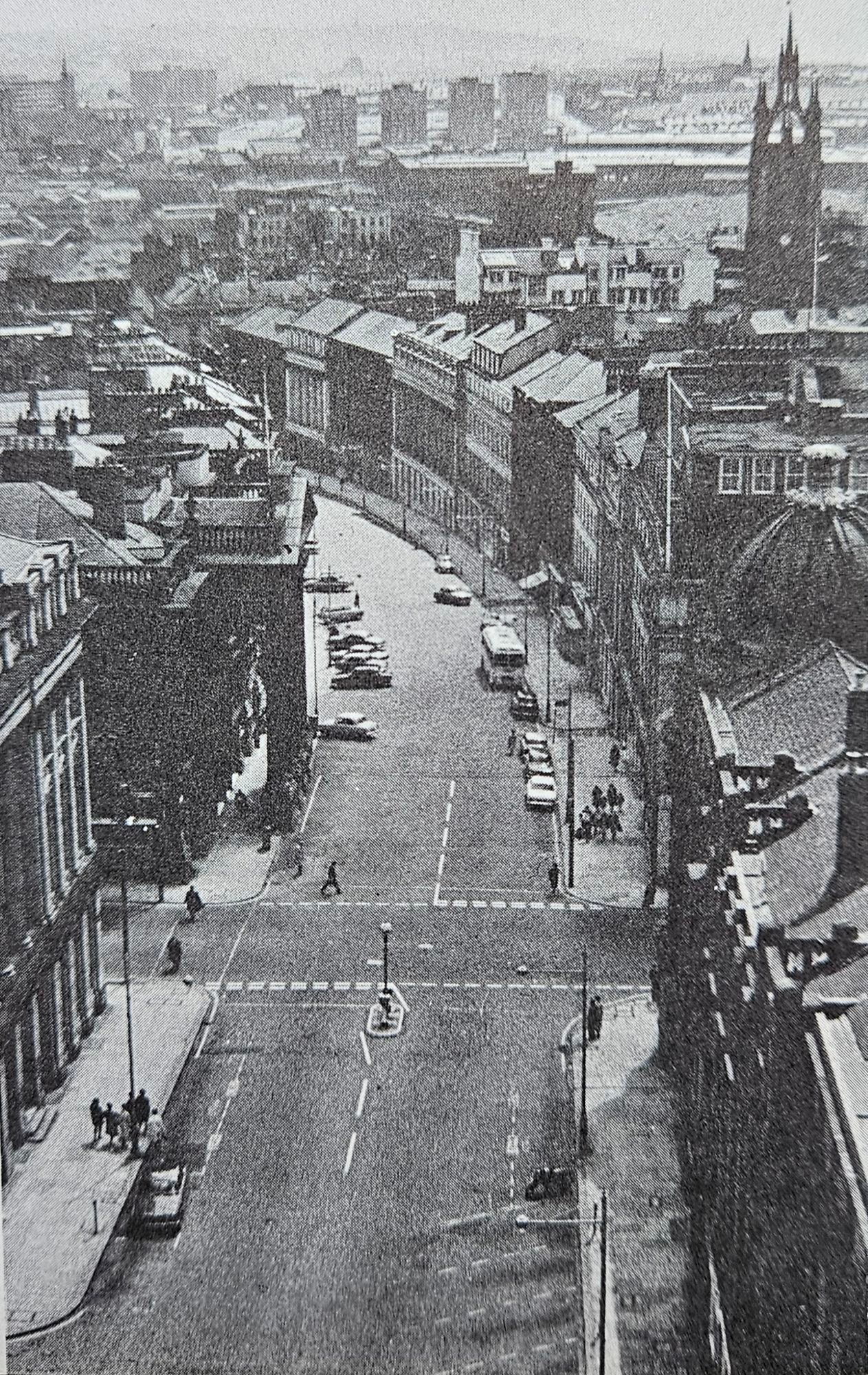
One of those streets was Grey Street, later described by Pevsner as “the best of Grainger’s city streets, and one of the best … in England” (The Buildings of England: Yale University Press, 2002).
The Carrick’s studio at number 14 was on the left-hand side of Grey Street with its gentle curve downhill towards the River Tyne.
During the Carrick family’s London years, they operated from prestigious addresses such as Portman Square and Regent Street.
However, Thomas Carrick’s career had been adversely affected by the arrival of photography and his painting commissions all but dried up.
The new medium offered an alternative way of earning a living and was enthusiastically embraced by ‘The Misses Carrick,’ namely his daughters Jane and Mary (known as Minnie).
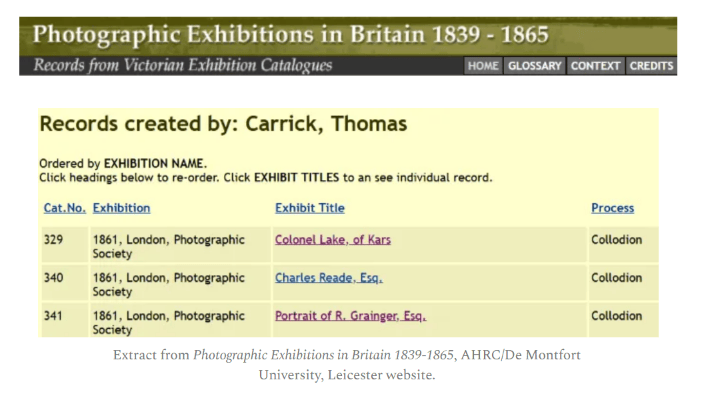
Records for the Photographic Society in London reveal that ‘Thomas Carrick’ contributed a total of 36 collodion portraits to its annual exhibitions in 1861 and 1863.
This included ‘Portrait of R. Grainger, Esq.’ (cat. no. 341, 1861 exhibition).
Given his daughters’ photographic credentials, it’s not unreasonable to conclude that they assisted their father in this endeavour and that, like many women during this period, their contribution went uncredited.
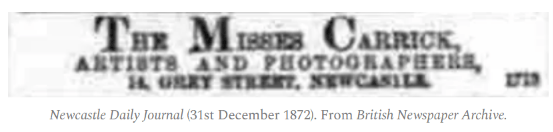
Once back in Newcastle and with their father’s health in terminal decline, the sisters continued to place regular adverts in the press to attract custom.
These emphasised their skills as both ‘artists and photographers.’
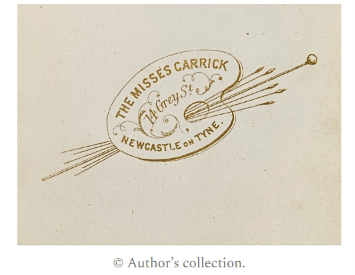
Appropriately, the logo found on the verso of the carte de visite portrait photographs they produced featured an artist’s palette and paintbrushes.
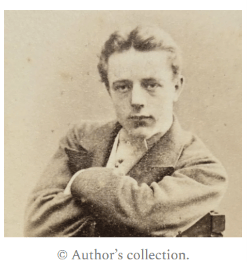
Whilst examples of their photography are now hard to find, this portrait in the Pressphotoman collection is evidence of their style and approach.
When Thomas Carrick died in 1874 at the age of 72, he left ‘under £50’ in his will amounting to only a few thousand pounds in today’s money.
Soon afterwards, his daughters Jane and Minnie moved out of 14 Grey Street and a neighbouring property at number 16 where they had lived together with their father and a servant.
At this point, their art and photography business faced an uncertain future.
In the next Pressphotoman post, discover how Jane Carrick played a key role in the use of photography by a celebrated American painter during his 18 month stay in North East England.


Leave a comment