
Exploring archives and their often uncatalogued contents is at the heart of this blog and the work of other photohistorians.
When the stars align, fascinating stories that are rich in human interest can be revealed.
However, institutional archives and private collections are not the only source of such wonders.
Occasionally, pure chance puts in an appearance as it did when a stash of glass plate negatives were discovered under the floorboards of a house in Whitley Bay, North Tyneside.
Credited to ‘John Lawson Adamson of the Whitley Art Studio,’ a selection of the resulting ‘Edwardian Portraits’ have been posted online and were the subject of a recent Instagram post that caught my attention.
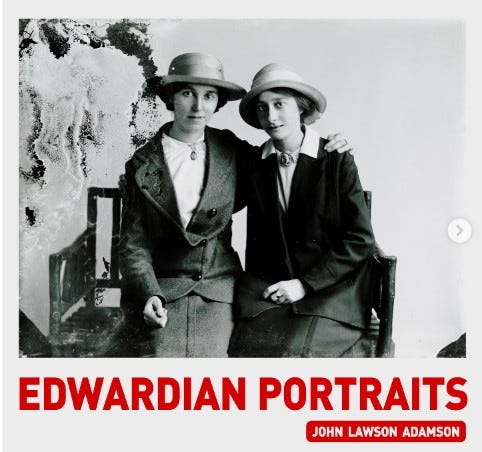
What was evident from the digitised selection curated by the AmberSide Collection is that the photographer responsible was skilled at putting sitters at ease.
‘Edwardian Portraits’ – AmberSide Collection
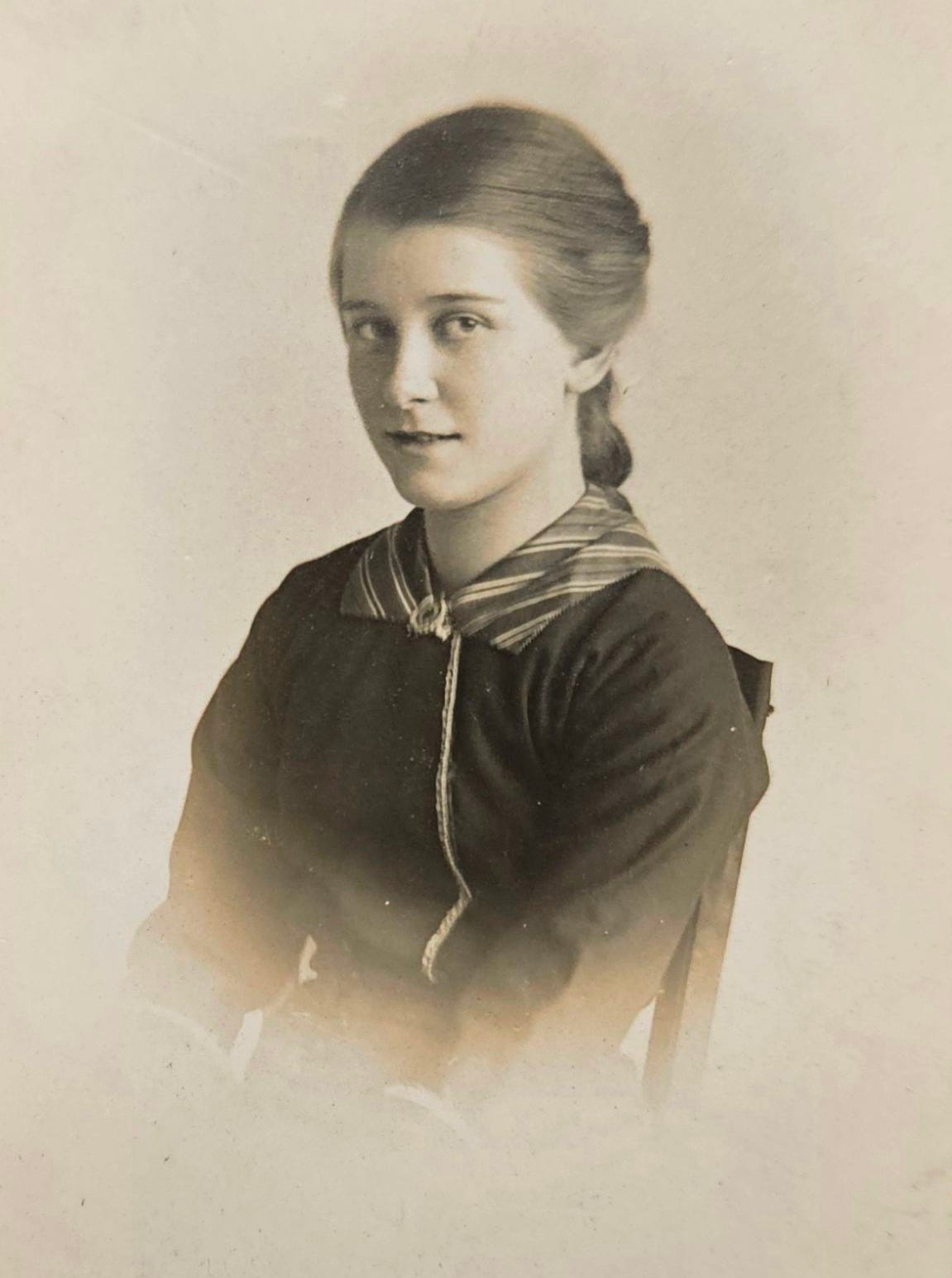
Inspired to look for more portraits from ‘Whitley Art Studio,’ the Pressphotoman collection now boasts two examples that shed more light on its practice.
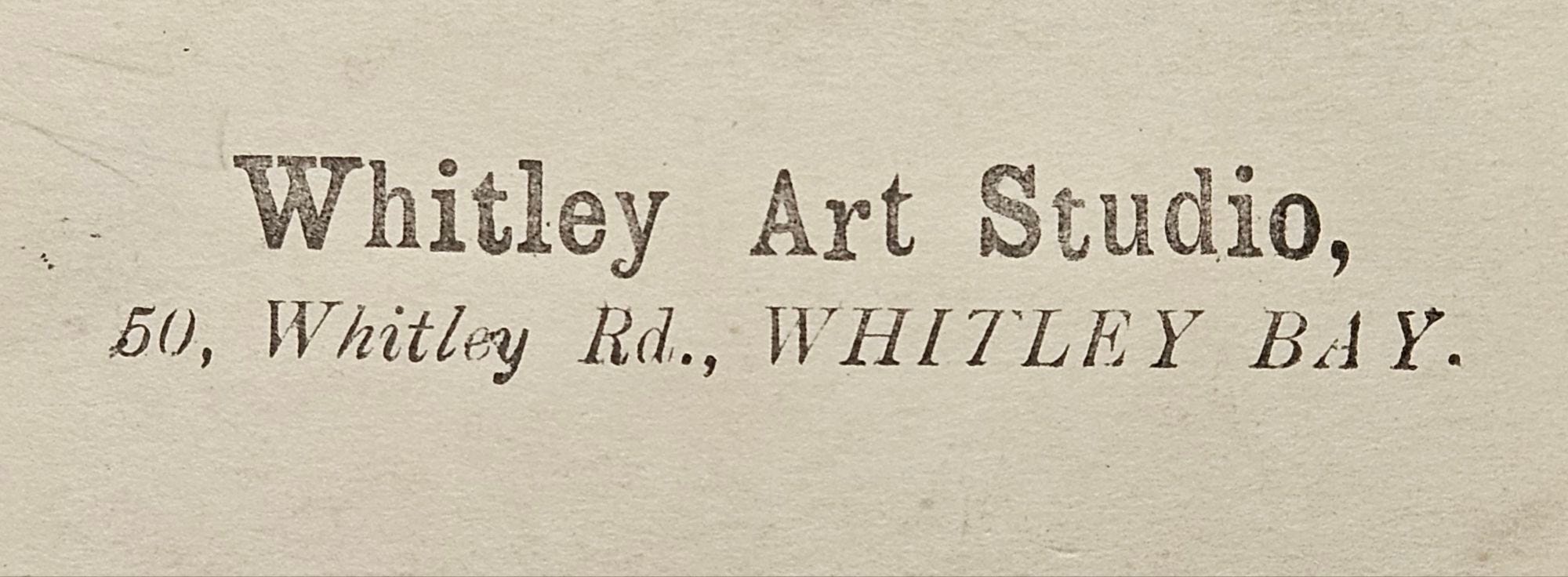
The first of a young girl is the size of a carte de visite and features the studio’s logo and address – 50 Whitley Road, Whitley Bay – on the verso.
The second portrays a well-dressed woman wearing pince nez glasses and a fabulous hat posed against a painted backdrop.
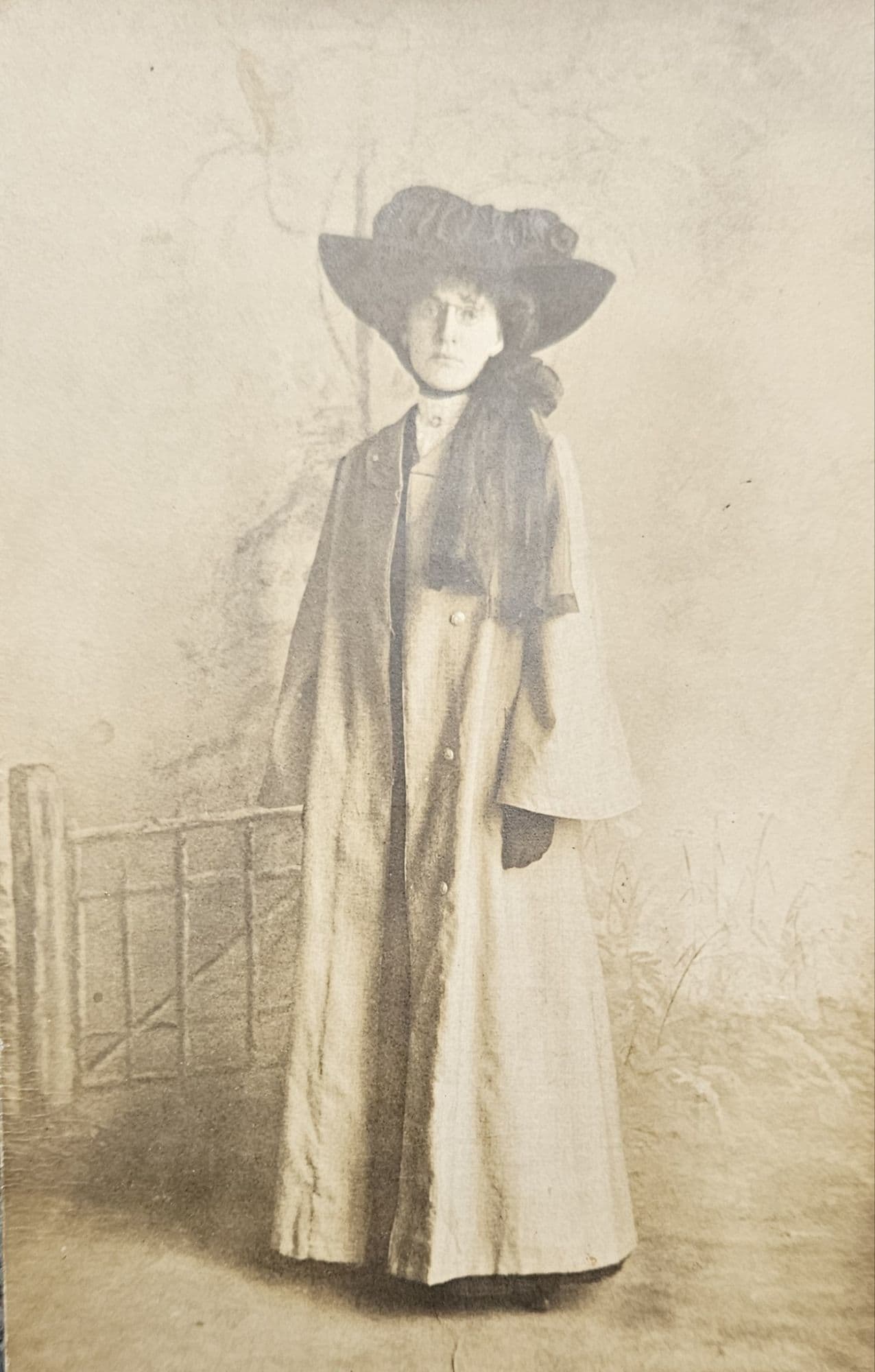
The verso, featuring a postcard format branded ‘Whitley Art Studio, Whitley Bay’ and postmarked ‘December 3, 1906,’ has a brief message that reads ‘With best wishes for Christmas.’
What’s intriguing about the photographer credited with the online ‘Edwardian Portraits’ is that public records offer an alternative identity for ‘John Lawson Adamson.’
Born in Newcastle upon Tyne in 1874, Lawson Dunn Adamson was a ‘photographer’s assistant’ in the city from his teens.
There he worked alongside AD (Alexander Denholm) Lewis at his North of England Photo Institute in Newcastle’s Scotswood Road.
By 1901, Lawson was living with two of his sisters in Linden Terrace, Whitley Bay and recorded his ‘profession or occupation’ as ‘photographer.’
Linden Terrace was just a stone’s throw from 50 Whitley Road, a terraced house that was to become home to the ‘Whitley Art Studio’ for more than three decades.
At one point, Lawson’s sister Margaret worked alongside him in the business as a ‘photographer’s assistant,’ offering the possibility that she may have taken some of the ‘Edwardian Portraits.’
By the time the 1939 Register was taken, Lawson Dunn Adamson again recorded his ‘personal occupation’ as ‘photographer’ and was still living with his sisters in Linden Terrace. He died three years later aged 68.
As to the name ‘John Lawson,’ it appears in trade directories throughout the period and is the one he seems to have used professionally.

The explanation for this may lay in the presence of another more celebrated portrait photographer who also had a studio in Whitley Bay at the same time, and is the subject of next week’s blogpost.


Leave a Reply