
It’s always exciting when you come across a photographer’s name in your research that is new to you.
That was the case during a recent visit to the Howarth-Loomes Collection at National Museums Scotland in Edinburgh.
What caught my eye initially was a beautifully composed stereo on yellow card that was captioned on the violet-coloured verso ‘Durham, From Framwellgate Bridge. Photographed by T. Heaviside.’
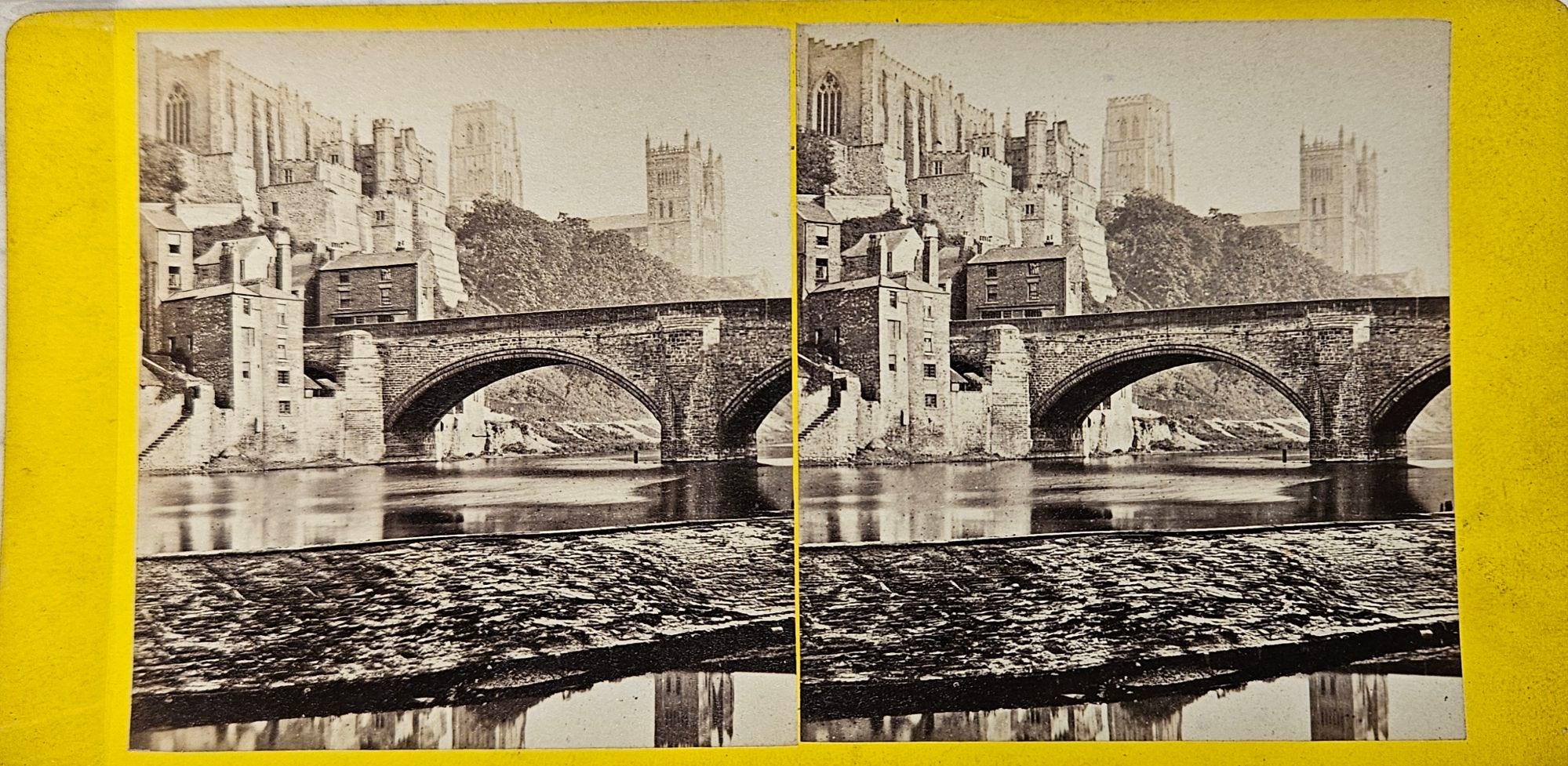
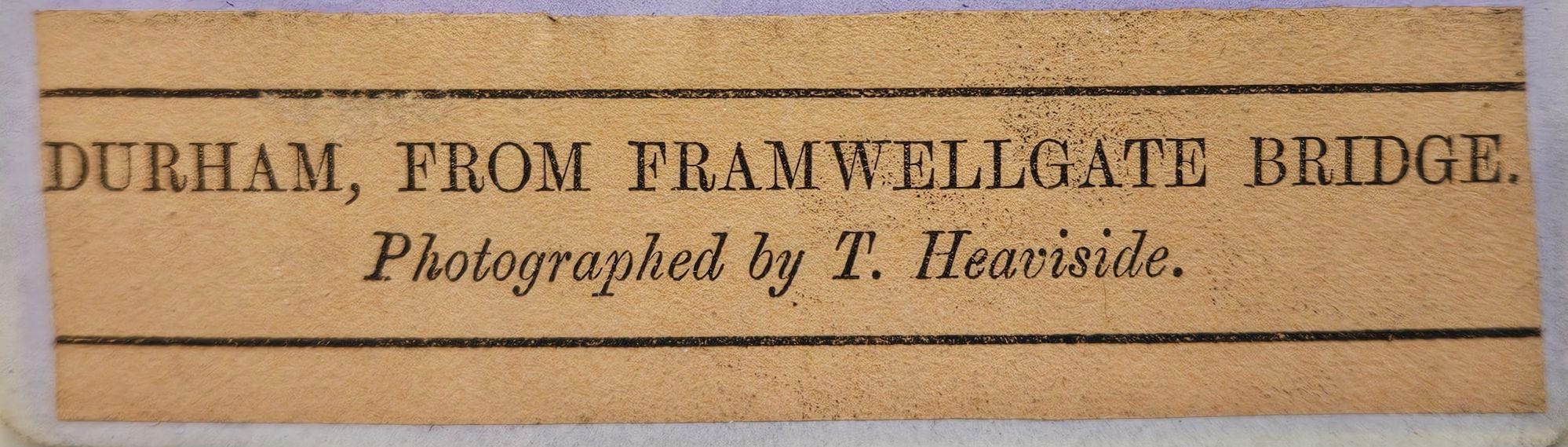
Who then, I wondered, was T. Heaviside?
The answer was Thomas Heaviside (1828-1886), described in Michael Richardson’s book Lost Durham (Amberley Publishing: Stroud, 2019) as its “first professional photographer.”
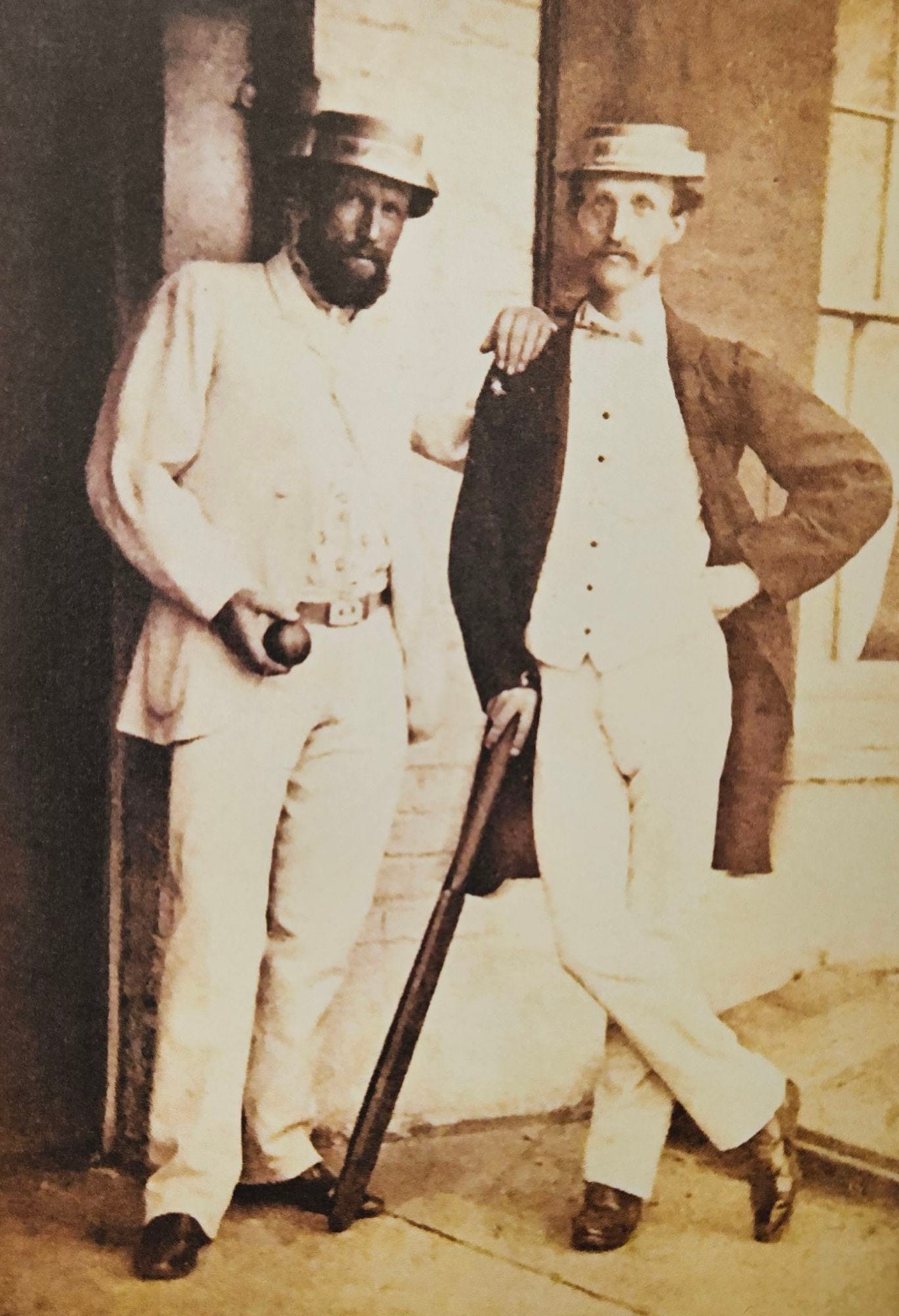
The book even featured a rare photograph of him “pictured in his (cricket) whites with a friend” though it’s unclear from the published caption which of the two men is which.
As to his biography, Thomas Heaviside was born in Durham and the 1851 Census recorded his ‘rank, profession or education’ as that of a 22 year-old ‘coach trimmer.’
By the middle of the decade, he had changed direction and set up in business as a ‘photographic artist.’
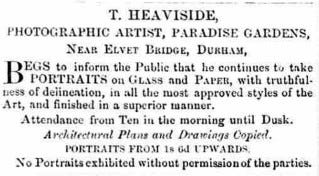
This newspaper ad from 1857 gives an indication of the range of photographic services that he offered.
By late 1862, he had moved from Paradise Gardens to “more commodious premises” in Queen Street where his studio operated successfully until his death nearly a quarter of a century later.
Reporting his death after a brief illness, the Durham County Advertiser (29th January 1886) stated that “his reputation as a photographic artist reached far and wide, he being regarded … as one of the best photographers in this part of the country.”
The inclusion of T. Heaviside’s 3D work in the Bernard Howarth-Loomes Collection made up of many thousands of high-quality stereocards suggests that this was an understatement.
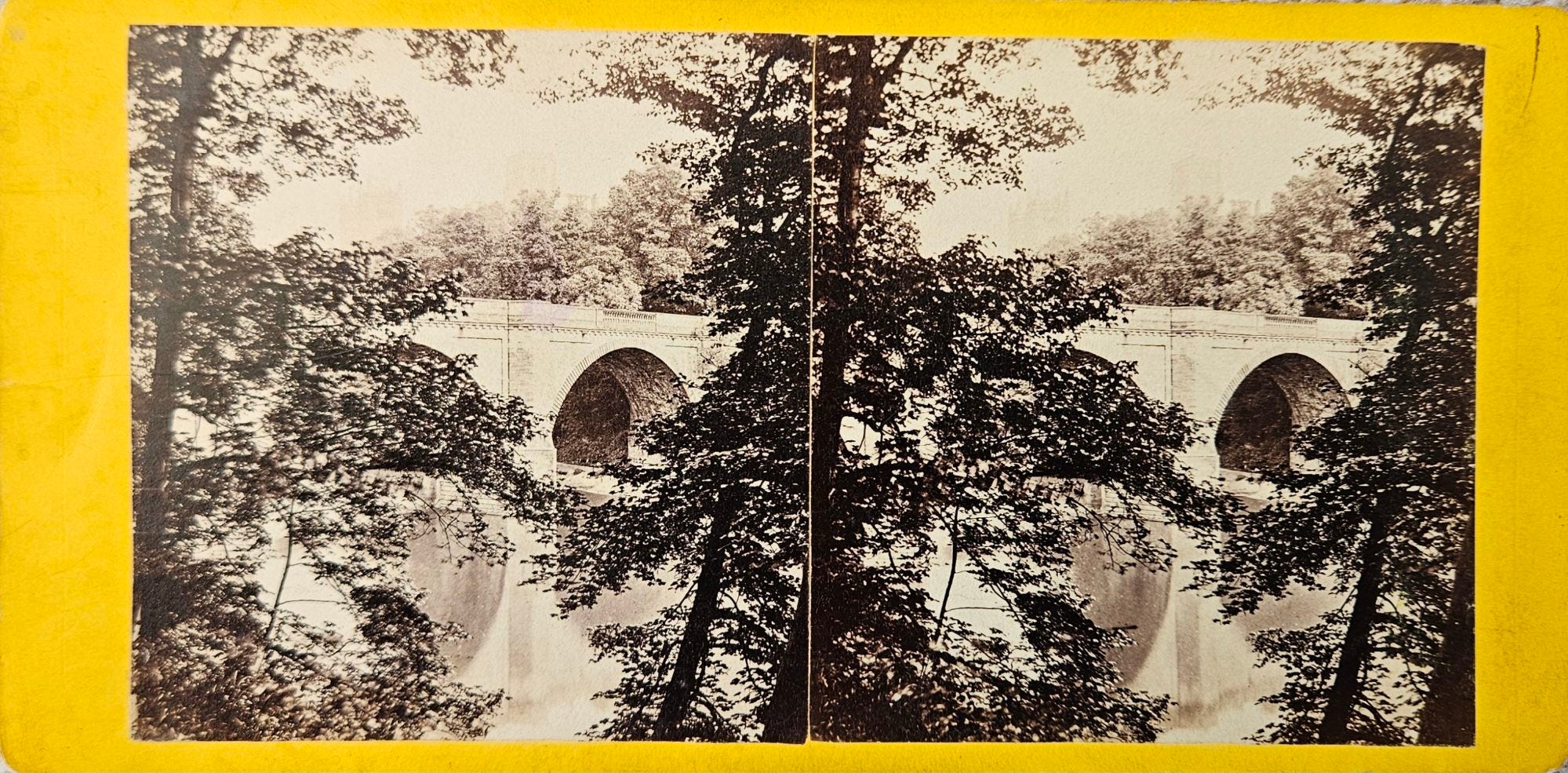
In search of more examples of his stereoscopy, this view of ‘Prebend’s Bridge, Durham’ with the cathedral faintly visible in the distance has recently been added to the Pressphotoman collection.
In next week’s blogpost, how a series of Heaviside carte de visites of Durham made their way into institutional photographic collections across the Atlantic.


Leave a Reply