
Ebury Street in Belgravia was the London address associated with portrait photographers W. & D. Downey for much of its long history.
It first featured in the 1871 census when ‘photographer’ William Downey (1829-1915) was recorded as living at number 61, a Georgian townhouse that no longer exists.
A decade later, number 61 was home to the Downey photography business (‘no person sleeping’) whilst William, his second wife Lucy and their young family lived two doors away at number 57.
As the company’s reputation grew and grew, W. & D. Downey and Ebury Street became synonymous.
For decades, the Belgravia address graced their products from cabinet cards and photogravures to picture postcards and press photos.
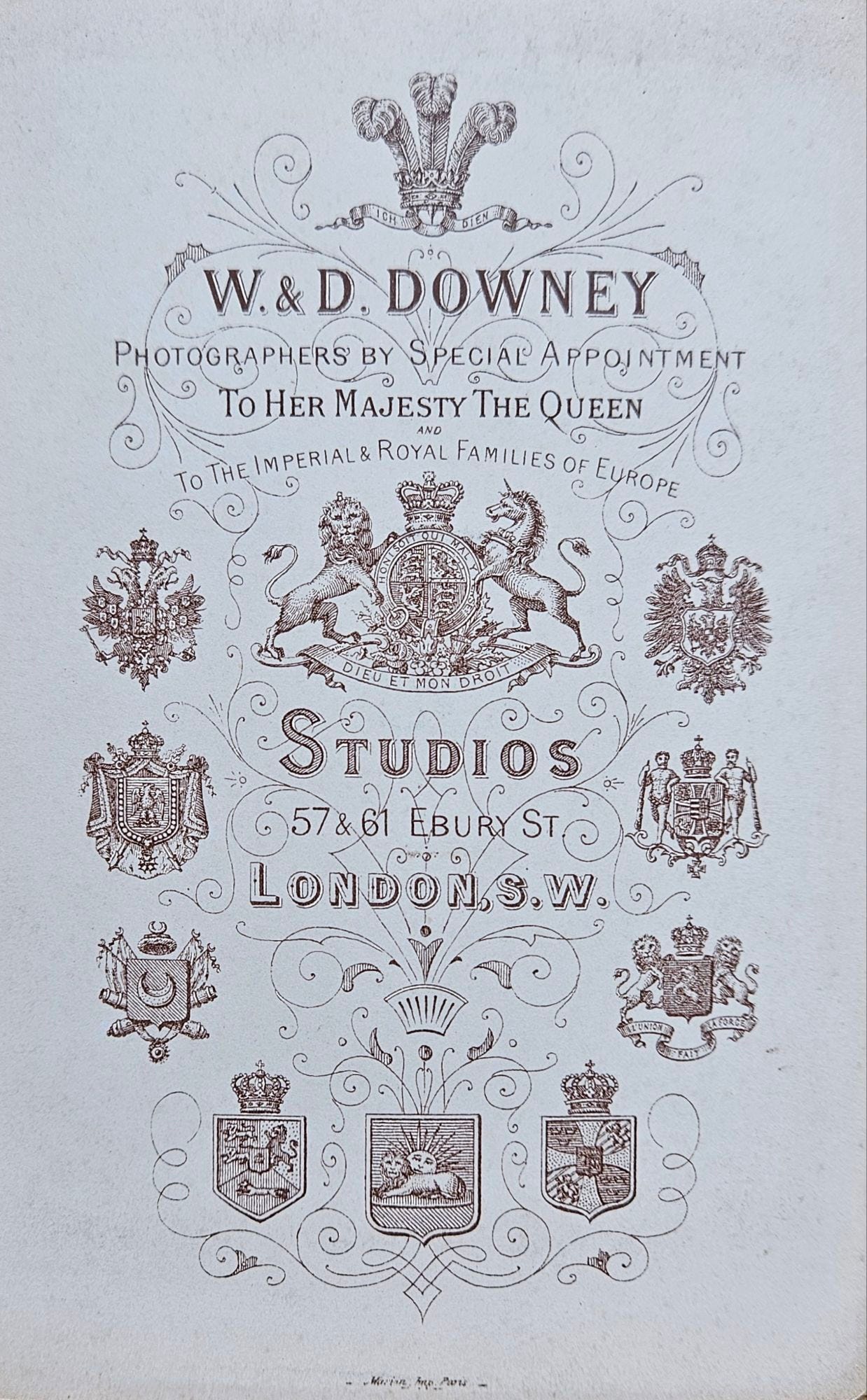
© Author’s collection.
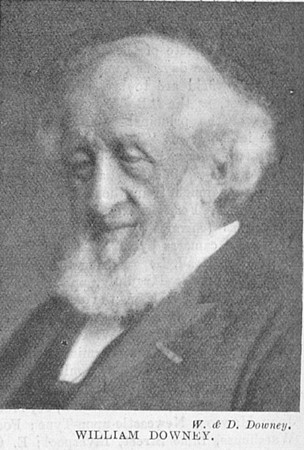
From British Journal of Photography (19th June 1914).
Courtesy of Michael Pritchard.
Following William’s death in 1915, the company continued to operate until the early 1930s when the wonderfully-named liquidator J. E. (Josiah Earnest) Scroggs was called in to wind up its affairs.
Despite this apparent setback, both W. & D. Downey and 61 Ebury Street lived on as revealed in an earlier Pressphotoman blogpost identifying Sarah Treneman Partridge (1868-1955) as ‘Downey’s Last Photographer,’
Downey’s Last Photographer blogpost – 20th October 2025
As had been the case when William Downey first moved into 61 Ebury Street, Miss Partridge shared the premises with others.
As revealed in the 1939 Electoral Register for the Victoria Ward in Westminster, ‘Crampton, Albert Henry’ also ran his business from number 61 whilst living elsewhere.

That business was rooted in Crampton’s background as a specialist in the art and craft of making baskets and cane and wicker furniture.
Albert H. Crampton (1882-1958) came from a Leicester family of basket weavers, best-known for their work with the city’s Dryad firm founded in 1907.
Inspired by the Arts and Crafts movement, Dryad produced chairs and other furniture that were popular in the first half of the 20th century and are highly collectable today.
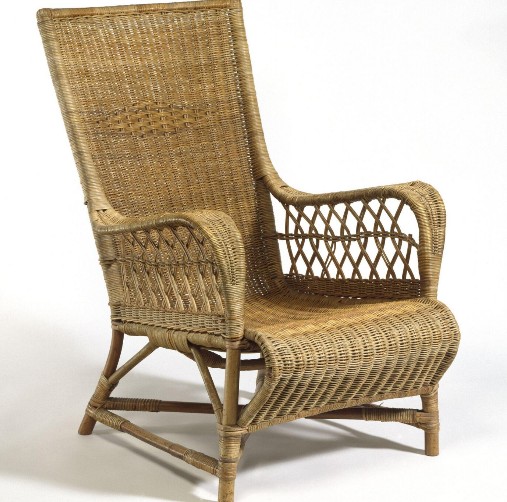
The popularity of such crafts was captured by Albert H. Crampton in a text for the Warne’s Useful Books series published in 1930.
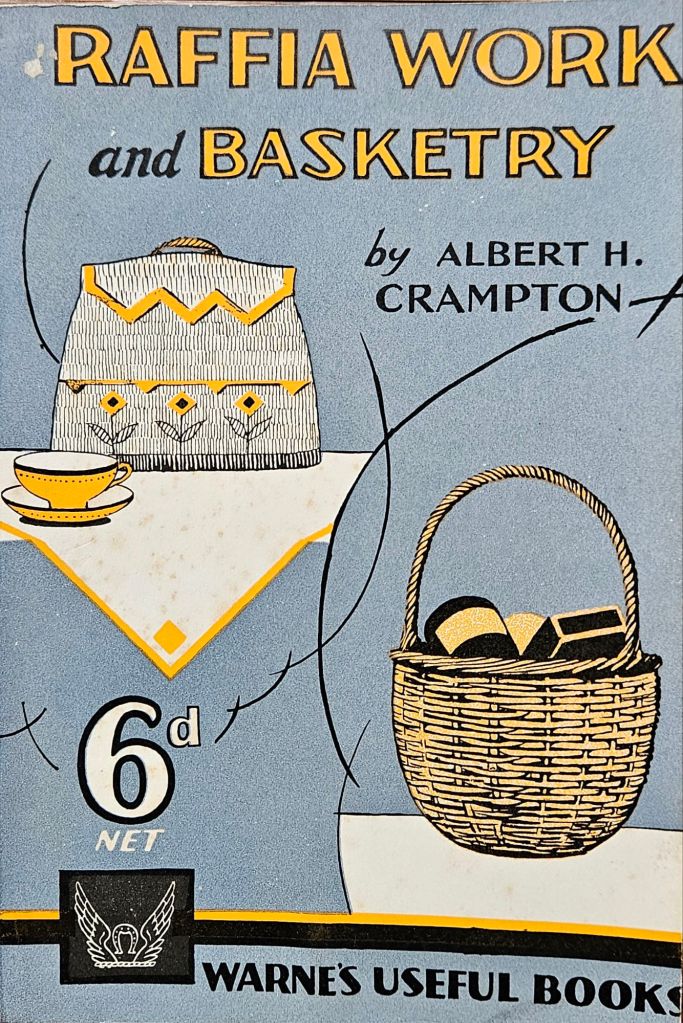
The book’s verso publicised his ‘Handicraft House’ business that promised “Everything For The Basketmaker and Everything Of The Best.”
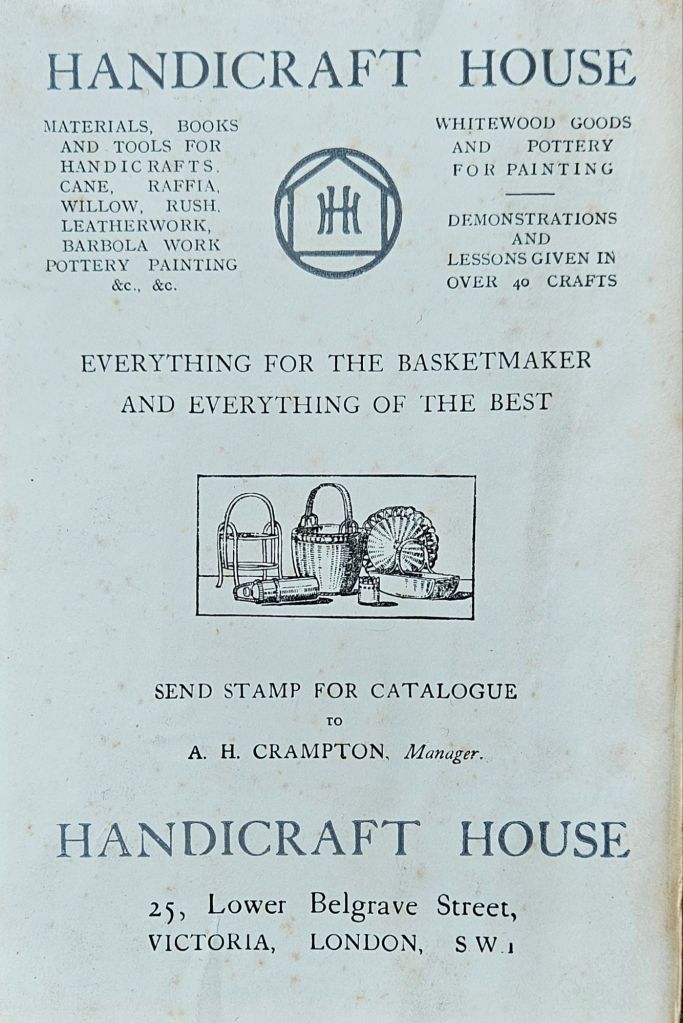
Albert later moved his operation to 61 Ebury Street where his customers rubbed shoulders with those wanting their portrait taken by Sarah Partridge in the W. & D. Downey studio.
In part two of this blogpost, we meet their residential neighbour at 61 Ebury Street with a photographic connection to the Royal Family.


Leave a Reply