
Over the past few days, a significant anniversary in the history of the British monarchy and the media was passed.
On 3rd October 1896, Queen Victoria together with other members of the royal family were filmed for the first time.
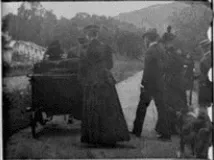
Keeping pace with the Queen’s passionate interest in all matters photographic, the shoot took place only ten months after the Lumiére brothers unveiled their first cinematograph films in Paris.
The firm of W. & D. Downey, often regarded as Victoria’s favourite portrait photographers, was tasked with recording the first moving pictures of her.
Given the importance of the assignment, members of the extended Downey photographic family travelled to the Scottish Highlands where the Queen was in residence at Balmoral.
Leading the filming project was William Edward Downey (1855-1908), who by this point had taken over day-to-day running of the firm co-founded in the mid-1850s by his father William (1829-1915).
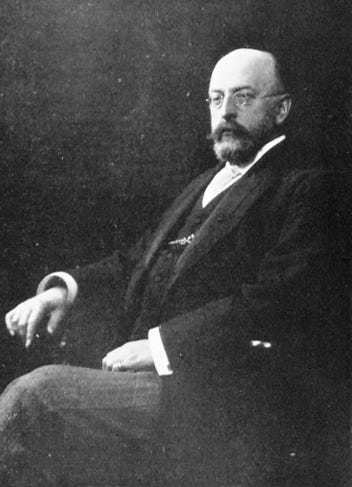
He was joined by his cousins James John Downey (1854-1902) and Frederick Downey (1862-1936), who both travelled from Tyneside where the original Downey business had its roots.
By the 1890s, their own firm, J.J. & F. Downey based in South Shields, was a thriving photographic concern in its own right.
Details of filming at Balmoral and its aftermath can be gleaned from a variety of contemporary sources.
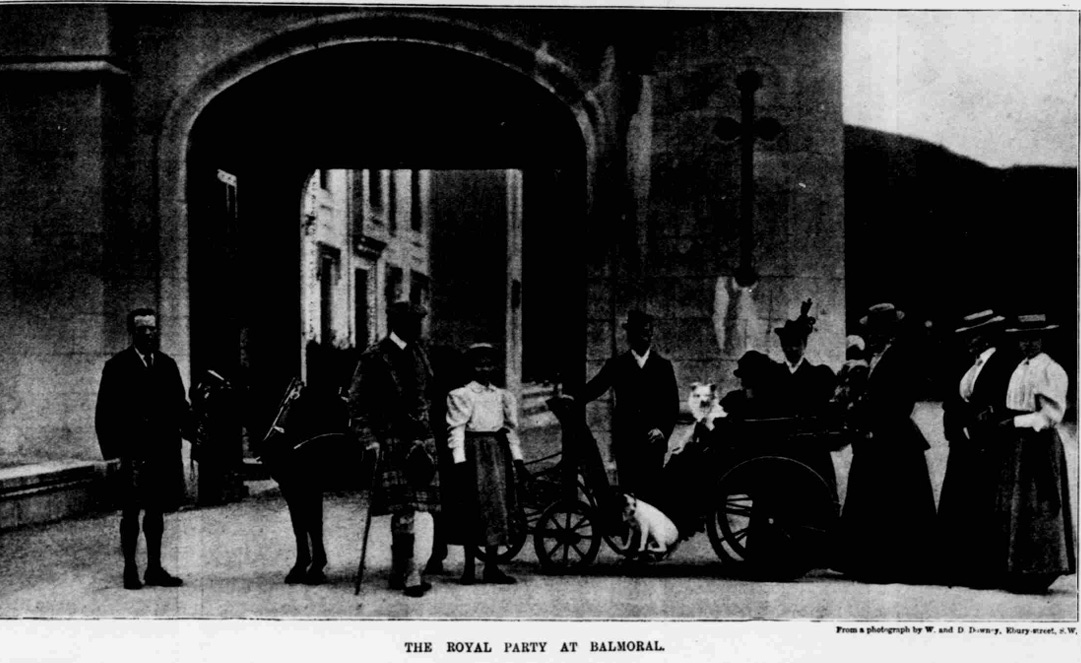
According to Queen Victoria’s Journals, 3rd October 1896 was “A lovely morning. — Nicky & Arthur breakfasted with us. — At 12 went down to below the Terrace, near the Ball Room, & were all photographed by Downey by the new cinematograph process, which makes moving pictures by winding off a reel of films.”
She continued: “We were walking up & down & the children jumping about. Then took a turn in the pony chair.”
Staying with the Queen were Tsar Nicholas II (known as Nicky) and his wife Tsarina Alexandra of Russia, who added additional glamour and international appeal to the occasion.
Recent research has revealed that unfamiliarity of working with the new technology meant the film was incorrectly loaded into the camera.
This resulted in an unstable image featuring “a severe vertical jumping motion and blurring of the picture.”
Using copies of the footage held by the BFI National Archive and Movietone News, the National Library of Scotland undertook a digitisation project in 2021 that has greatly improved the viewing experience.
Scenes at Balmoral (1896) – NLS Moving Image and Sound Collections
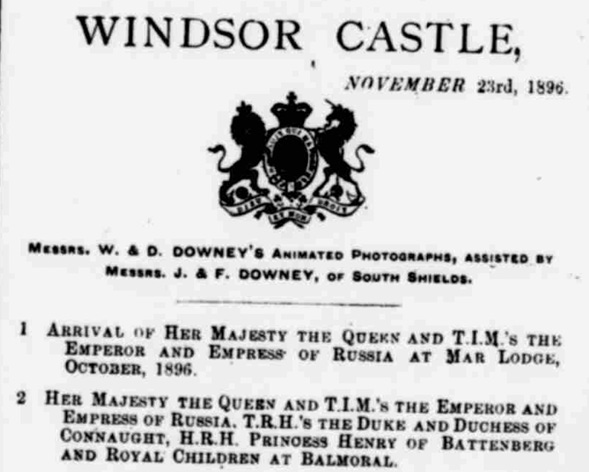
Several weeks later, the national press reported how footage shot by W. & D. Downey, described as ‘animated photographs’, had been shown to the Queen and royal family members during a film and lantern slide show held at Windsor Castle.
Illustrated newspapers and magazines had only recently begun to employ halftone reproductions alongside engravings.
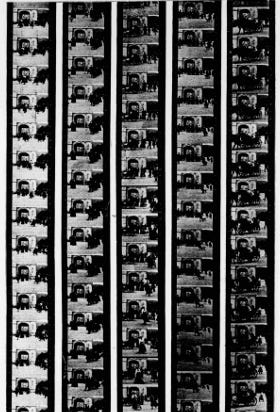
So to provide readers with an impression of watching moving pictures, Lady’s Pictorial used the latest printing technology to reproduce three pages of frames taken from the film footage.
Back on Tyneside, J.J. & F. Downey wasted little time in placing an advert in their local paper, the Shields Daily Gazette, offering the chance to view what they branded ‘Downey’s Living Photographs’.
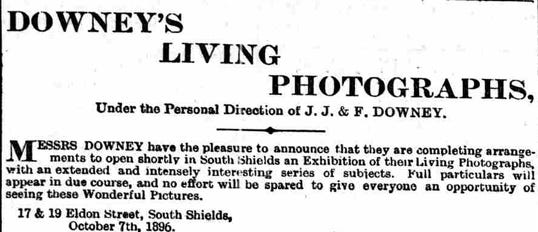
It was to prove a fruitful avenue for theirs and other photographic businesses in the years that followed as moving pictures took over from portrait galleries and lantern slide shows as forms of mass entertainment.
 Pressphotoman
Leave a comment