
During the summer of 1866, the celebrated photographic firm of W. & D. Downey named after its founding brothers William and Daniel placed a series of advertisements in the regional press.

These announced that they had opened a ‘branch establishment’ in the Northumberland seaside resort of Newbiggin by the Sea (last line below).
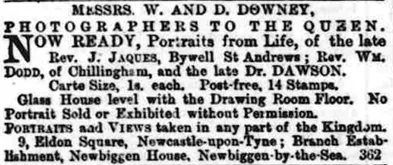
The choice of Newbiggin, fifteen miles along the North Sea coast from Downey’s main studio in Newcastle upon Tyne, was rooted in a significant family moment.
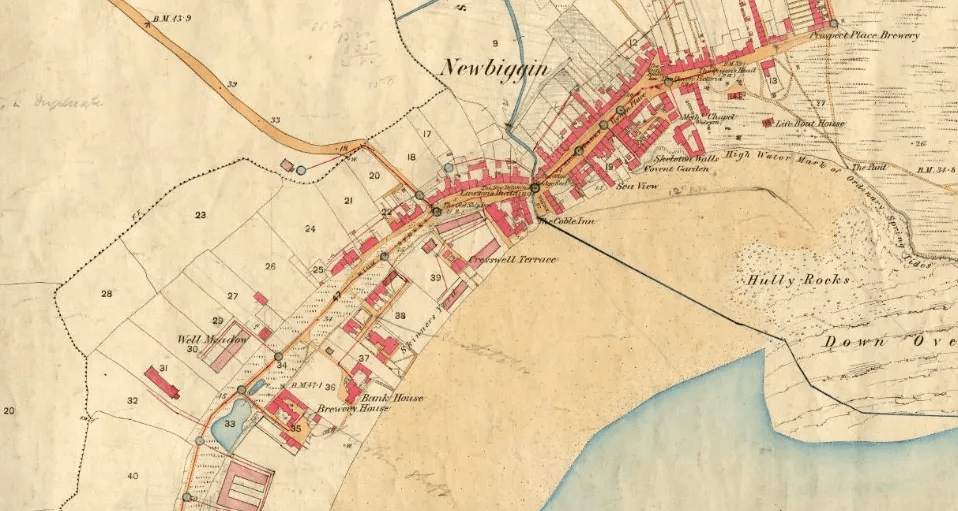
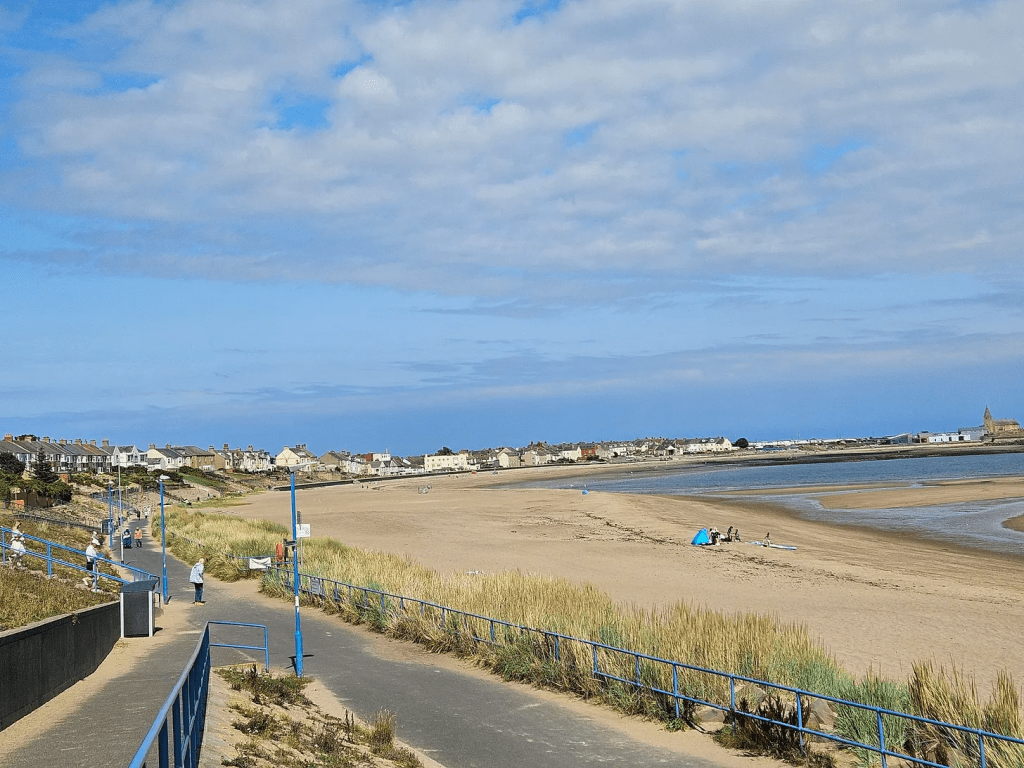
It was in Newbiggin that on 18th April 1866, Daniel Downey’s wife Elizabeth gave birth to a daughter.

The couple’s choice of location for the baby’s delivery may well have been informed by the health benefits of escaping the pollution of an industrial city where child mortality rates were high.
Indeed, the couple, who married in 1863, had lost their first child, a boy named William Daniel, early the following year.
The safe arrival of Elizabeth Jane Downey was followed by a period of entrepreneurial photographic activity that characterised the firm throughout its long history.
Newspaper adverts reveal that by mid-July, the Downey’s had moved their seaside studio to Monck House, a property once occupied by Sir Charles Monck of Belsay.
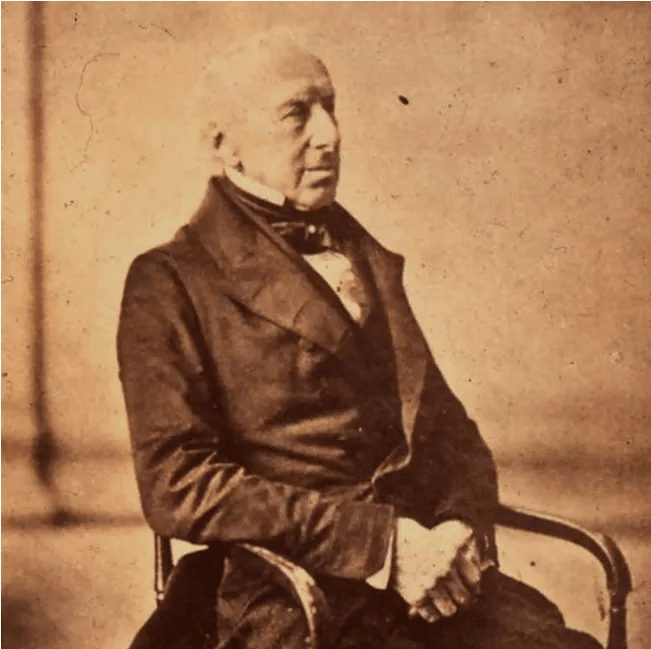
A leading aristocrat in the region, Monck had previously sat for the Downey’s at Belsay Hall and was part of their expanding network of influential figures.
Monck House was certainly more in keeping with the facilities on offer at their 9 Eldon Square base in Newcastle as this newspaper advert confirms.
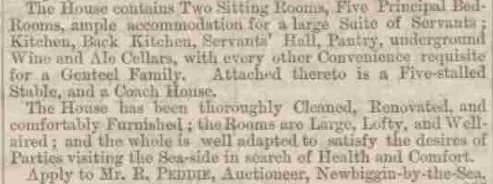
On 14th July 1866, an advert carried by the Morpeth Herald announced that Downey’s Newbiggin branch, now with its Monck House address, was open “for a short season, for the convenience of visitors to this beautiful watering place.”
It also advised that “to prevent disappointment, or having to wait, it will be better to make an appointment.”
Together with a series of views of “Newcastle, Woodhorn and Newbiggin-by-the-Sea”, another of the paper’s small ads made its readers aware of yet more Downey product that could be purchased in the resort.
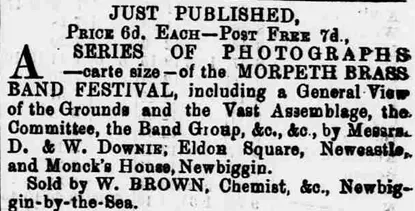
Apart from mis-spelling its surname, the use of ‘Messrs. D & W.’ reversing the usual order of ‘W. & D.’ suggests that Daniel was combining his duties as a new father with this varied photographic schedule.
What a recent Pressphotoman visit to Newbiggin revealed was that the mid-1860s were pivotal years in the resort’s development.
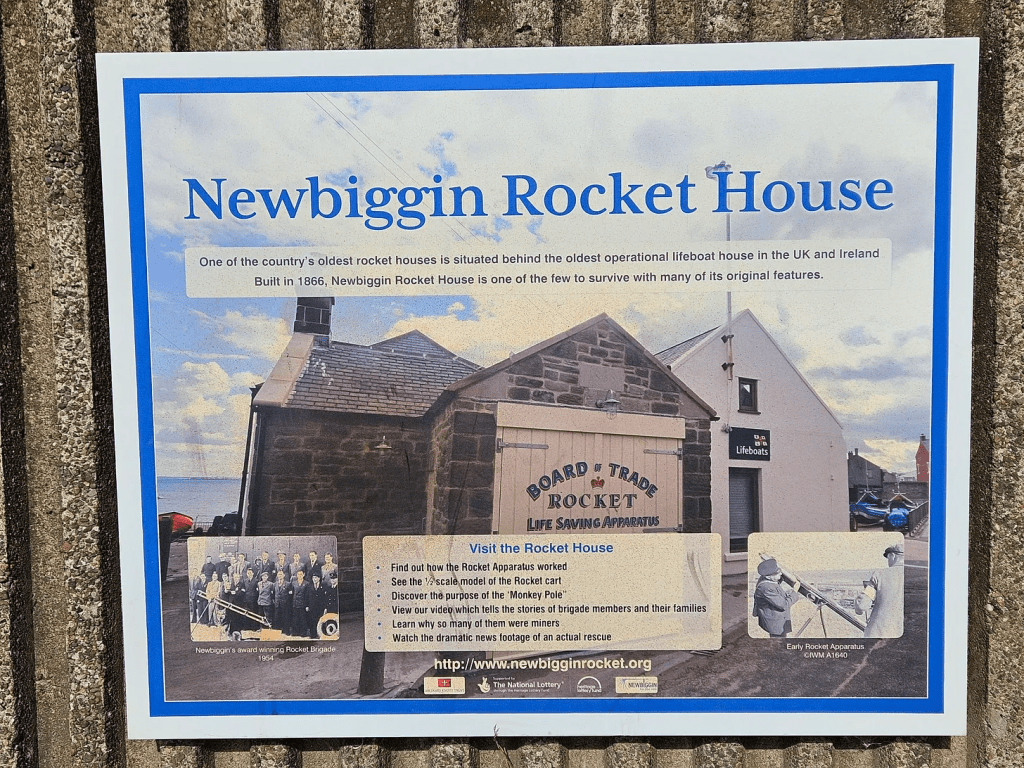
1866 itself saw the building of Newbiggin Rocket House, one of Britain’s oldest and one that was involved in life-saving ship rescues well into the 20th century.
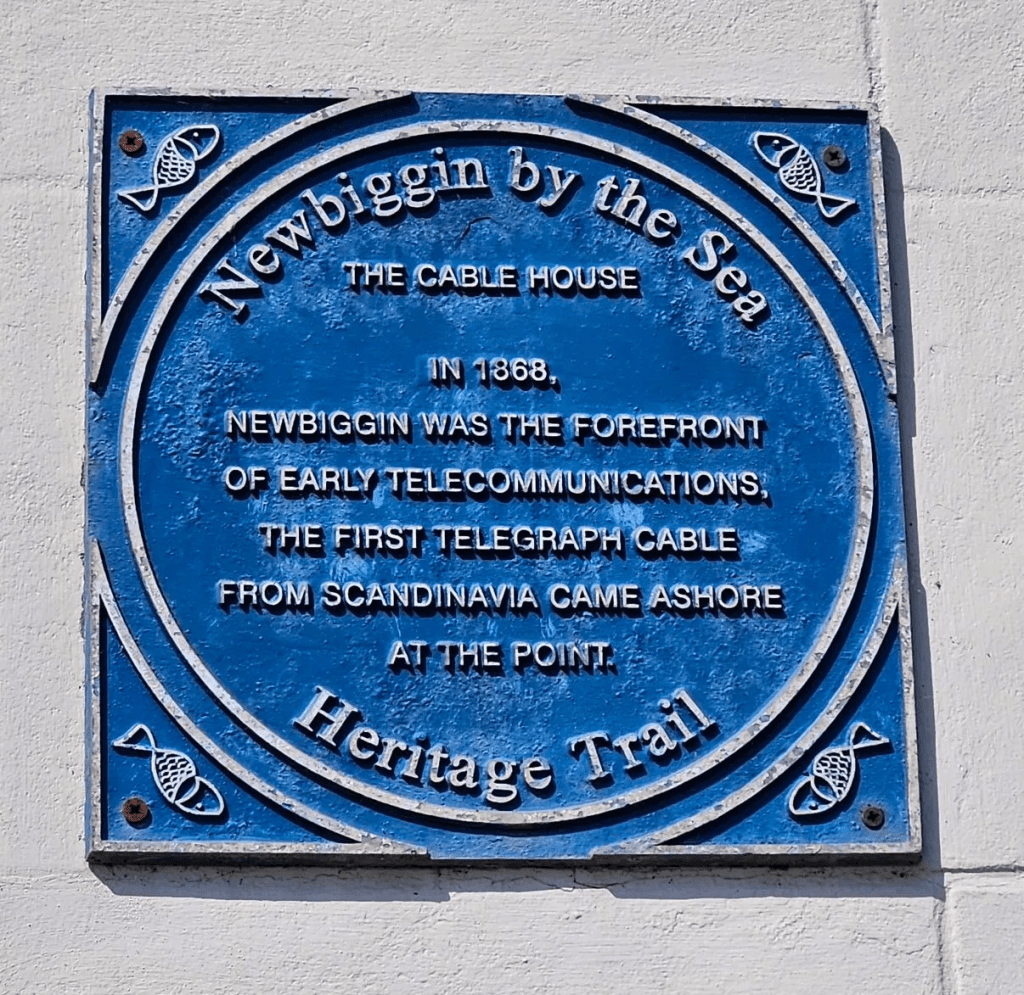
Further along the promenade stands the Cable House with a blue plaque marking its role two years later in pioneering telegraphic communications.
Within weeks of their summer season at Newbiggin by the Sea, the Downey brothers began a ground-breaking new chapter in their firm’s illustrious history.
For the first time, they were summoned by Queen Victoria to Balmoral where her diary for Saturday 22nd September 1866 records that “on coming home was photographed by a very good photographer Downey from Newcastle”.
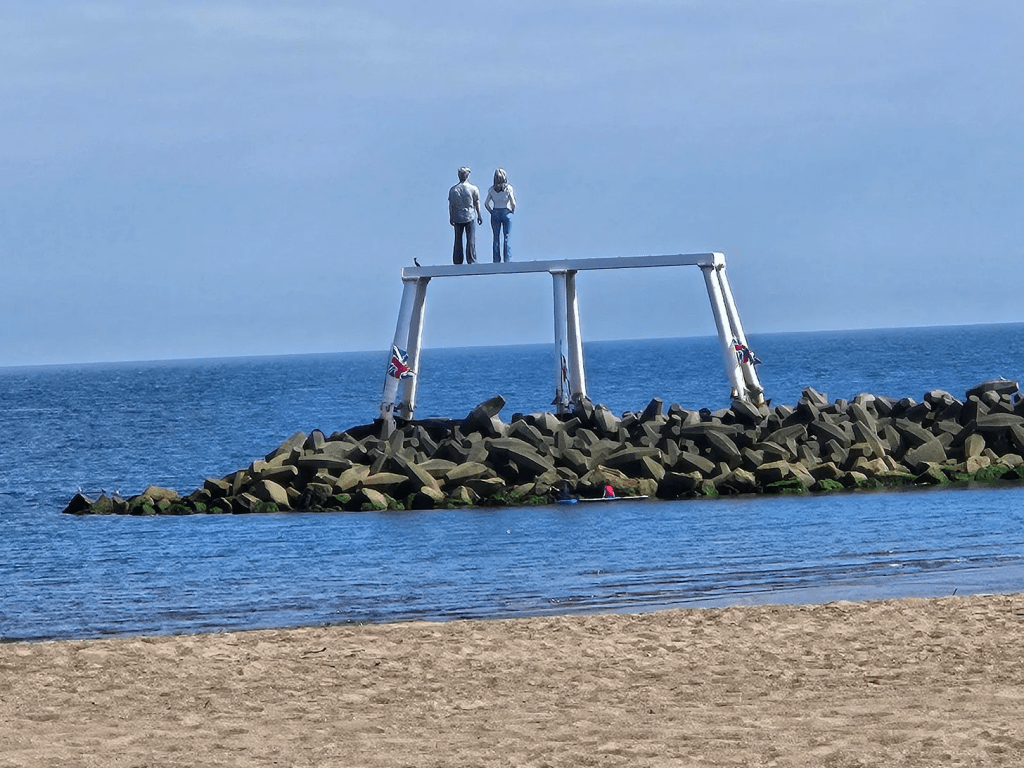
Like the couple featured in a giant sculpture that watches over Newbiggin by the Sea today, the Downey’s never looked back.
 Pressphotoman
Leave a comment