
The very first Pressphotoman post published in December 2022 featured a Channel 5 tv documentary about Queen Alexandra.
Portraying “the little celebrated and long-suffering wife” of King Edward VII, I questioned why a 70-minute programme rich in archive photographs had ignored one particular celebrated carte de visite portrait.
Taken in 1868, it featured the then Princess of Wales carrying her young daughter Louise on her back.
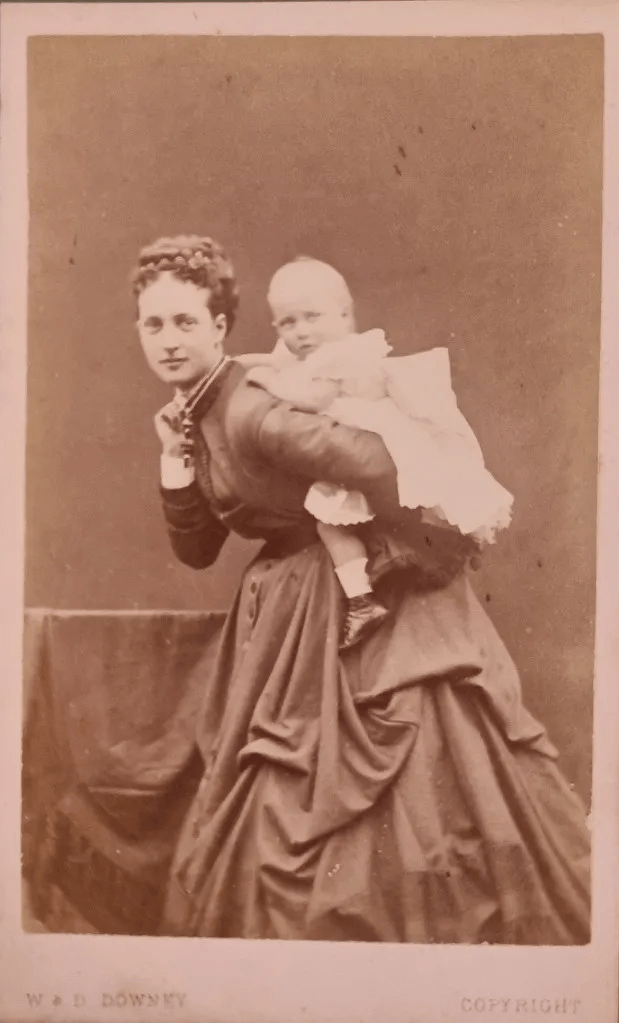
© Author’s collection.
The resulting carte reportedly sold around 300,000 copies at a time when photography offered the public an affordable outlet for their fascination with the royal family.
That fascination continues as evidenced by another royal tv documentary broadcast in Britain last week.
Again, it offered an unmissable opportunity to utilise well-known carte de visite portraits of its subjects.
This time the programme makers did not disappoint.
Titled ‘Queen Victoria: Secret Marriage? Secret Child?’, Dr. Fern Riddell presented new evidence revealing a romantic relationship between Queen Victoria and her Highland servant John Brown.
As its title hinted, this included the claim that they not only married, but even had a child together.
Photohistorians have long pored over carte de visite portraits of the couple that were produced during the 1860s and 1870s.
Among the earliest was taken by the Aberdeen photographer George Washington Wilson at the Queen’s Balmoral estate in October 1863.
Marking the anniversary of her last Highland ride with Prince Albert, Victoria together with her pony ‘Fyvie’ were flanked by two of her servants, John Brown and John Grant.
However, when the photograph was published as a commercial carte, Grant was edited out of the shot leaving Brown and the Queen together.
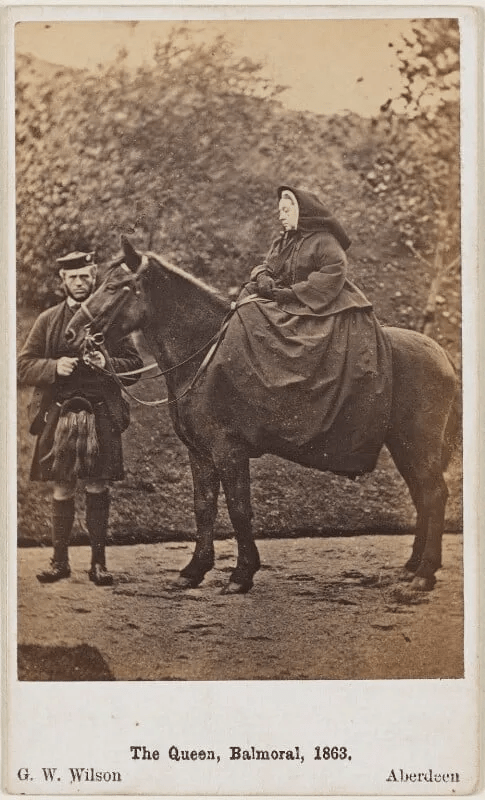
The photograph later became symbolic of the monarch’s deep mourning for her late husband and her relationship with Brown that was already the subject of much gossip.
Sales during the following year were just short of 13,000 copies of this and other portraits made on the same occasion though the ‘Fyvie’ carte was the most popular.
The documentary also made great use of a similar portrait of Victoria and Brown taken five years later.
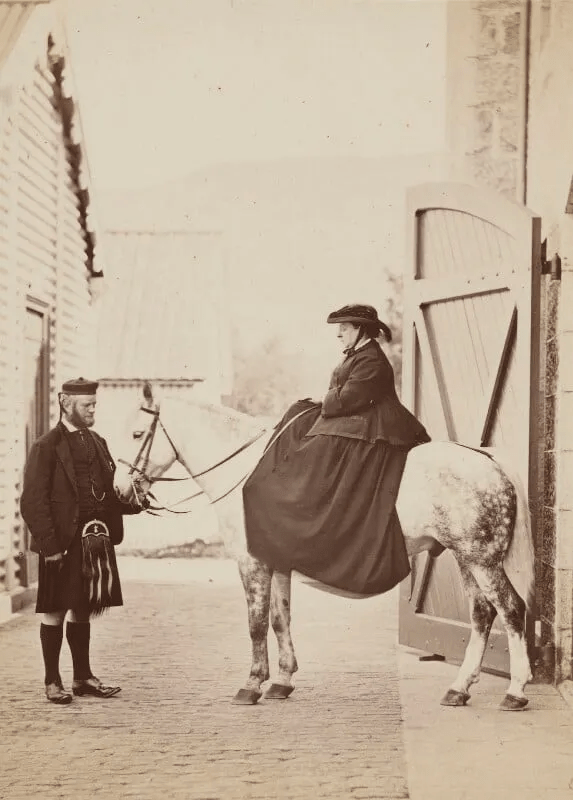
It was taken by W. & D. Downey described by the Queen on their first meeting at Balmoral in 1866 as “a very good photographer … from Newcastle.”
The documentary also employed another Downey portrait featuring Victoria and her dog Sharp from that same visit.
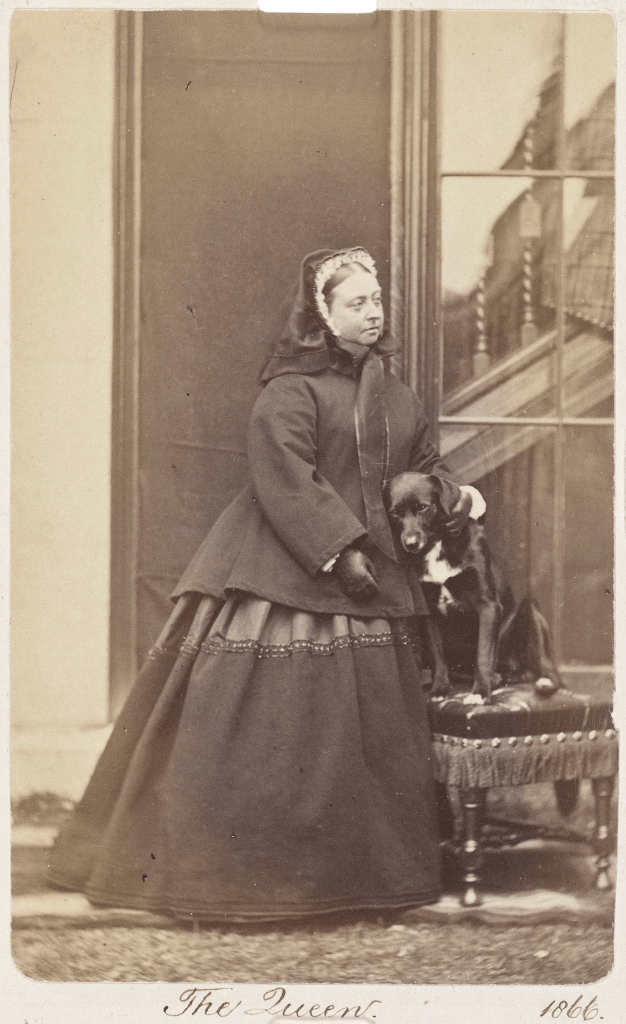
In the documentary, it was used to provide physical evidence for its argument that the Queen had given birth to a child with Brown the previous year.
Photographers like the Downey brothers and George Washington Wilson were no doubt privy to all kinds of interactions between the Queen and members of the royal household.
Exactly what they knew and saw would no doubt have interested today’s royal documentary makers.
What these intimate photographs capture only adds to the mystery surrounding Victoria and Brown.
 Pressphotoman
Leave a comment