
In the 1860s, Newcastle upon Tyne’s Eldon Square was home to two rival commercial photography firms.
As described in parts 1 and 2 of this mini-series of blogposts, W. & D. Downey had a studio at no. 9 whilst W.S. Parry run by William Softley Parry and his wife Christiana were their neighbours at no. 17.
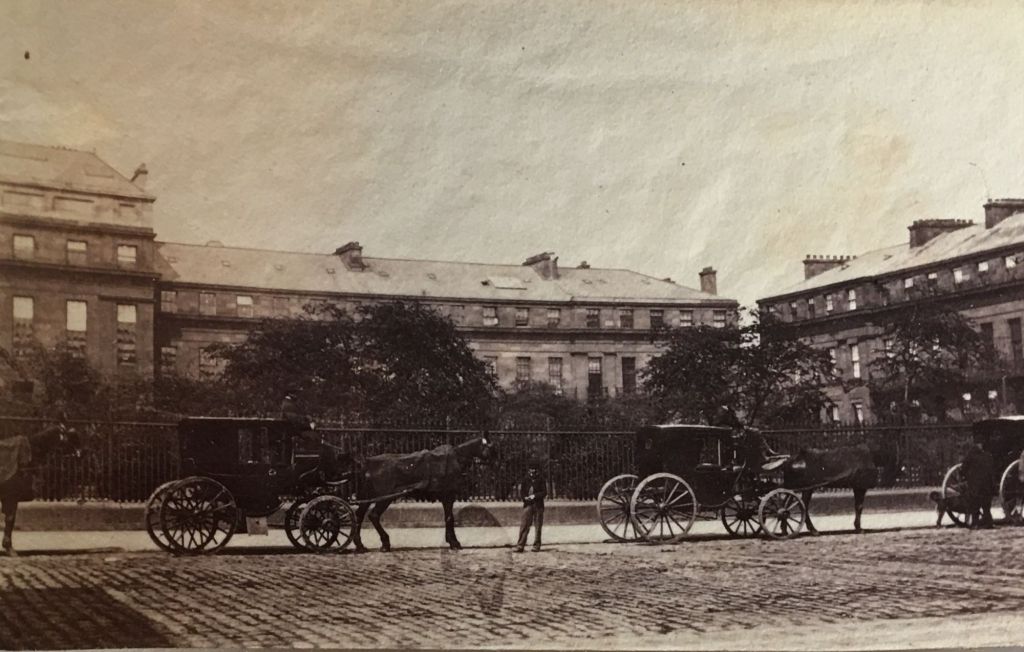
However, photography in one of the city’s most prestigious locations may not have been limited to companies competing for business.
Two stereoscopic ‘3D’ cards recently arrived in the Pressphotoman collection that raise the possibility of other Eldon Square residents being active photographers.
The couple involved were Edward and Eliza Charlton, who married in 1842 uniting two of the region’s prominent Roman Catholic families.
By 1851, the Charltons were living at no. 7 Eldon Square with a ‘groom, cook, house maid and lady’s maid’ and were still there a decade later.
Dr. Edward Charlton was a well-respected medical figure in Newcastle upon Tyne, who had also established a reputation as a ‘scholar, scientist and antiquary.’
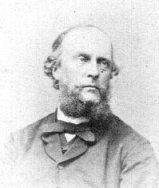
Courtesy of John Edwards.
He was a member and later vice-president of the Literary and Philosophical Society of Newcastle upon Tyne known as the Lit & Phil.
In that capacity, it is likely his path would have crossed those of William and Daniel Downey and William Softley Parry.
Both the Downeys and Parry were regular exhibitors of their photography at the Lit & Phil’s Conversaziones whilst Dr. Edward Charlton presented several lectures during his three decades of involvement with the society.
As to Eliza Charlton, Edward’s wife, she was from a prosperous family in the Northumberland town of Hexham, 20 miles west of Newcastle.
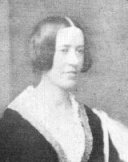
Courtesy of John Edwards.
There, her father James Gibson Kirsopp (1775-1836) built a magnificant Georgian mansion on the Spital Estate that today is a Grade 1 listed building and home to Hexham Golf Club.
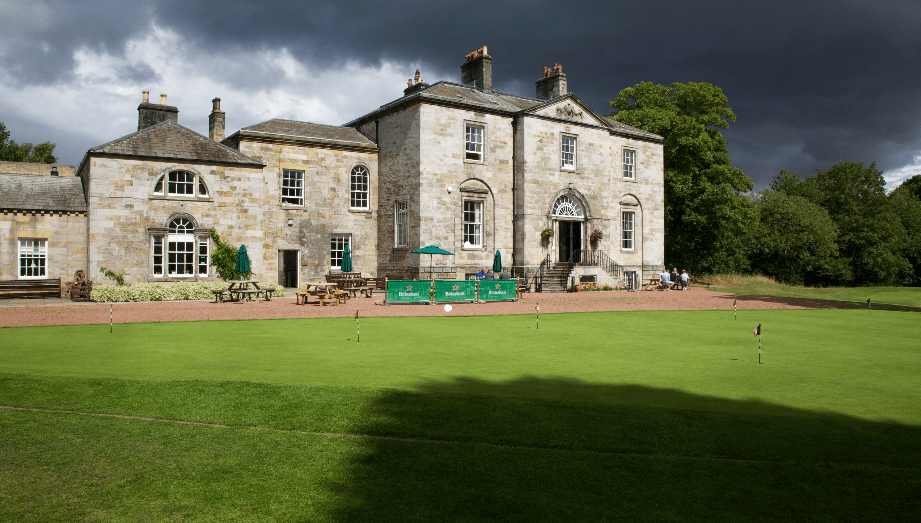
From Hexham Golf Club website.
It is from Hexham that evidence has emerged of the Charlton’s involvement in photography.
The first stereo linked to the couple is titled ‘The Chapter House, Hexham Abbey Church.’

Viewing the card, various archways and window frames are employed to reveal the view’s three dimensions in multiple layers.
This suggests it was taken by someone with a good eye and the necessary stereoscopic photography skills.
On the verso, the stereo is credited ‘Edward Charlton M.D., Battle Hill, Hexham’ and is dated ‘Sept. 28th 1861.’

As to its location, Battle Hill is one of the town’s historic principal streets, offering access to nearby Hexham Abbey.
The specific dating – ‘Sept. 28th 1861 – suggests that Edward, if he was the photographer responsible, took the stereo at that location on that particular date.
The second stereo is titled ‘Hexham Abbey Church’ and is another effectively composed three-dimensional shot.

Lines of hazel poles in the foreground lead the eye up the garden path to the historic abbey building in the distance.
On the verso, it is credited with the same location – ‘Battle Hill’ – and the same month and year – ‘September 1861’ – but in this case, the name ‘Eliza Charlton’ appears.
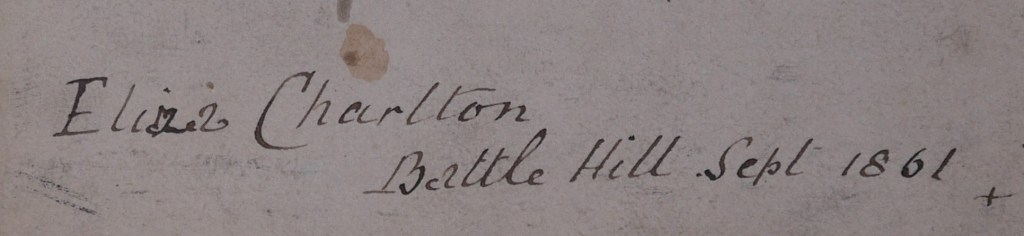
If Eliza was the person responsible for creating the stereo, she clearly was a talented photographer with an eye for 3D.
Sadly, like Christiana Parry in part 2, Eliza died prematurely, in her case in May 1862 at the age of 46 at the Charlton’s home, no.7 Eldon Square.
Further research is required to fully confirm that Edward and Eliza Charlton were indeed the couple responsible for taking these stereos.
But their discovery brings forward two more images of Hexham Abbey Church shortly after its east end had undergone rebuilding works.
Interestingly, the person responsible for the works was John Dobson, who designed Newcastle upon Tyne’s Eldon Square thirty years earlier and the subject of this blogpost mini-series.
If you missed parts 1 and 2, check out the links below.
 Pressphotoman
Leave a comment