
My blogpost-a-day series during September on 3D stereos views attributable to early press photographer James Edward Ellam (1857-1920) involved a certain amount of time travel.
Not only did it mean inhabiting the years he spent in the North Yorkshire town of Yarm during the 1890s.
It also required me to revisit research that I first conducted five years ago.
On a sunny Autumn day earlier this month, I retraced those steps, armed with a great deal more information about James’s life and career than I had back then.
First port of call was Preston Park Museum on the outskirts of Yarm where I re-examined its collection of 20 of his stereocards.
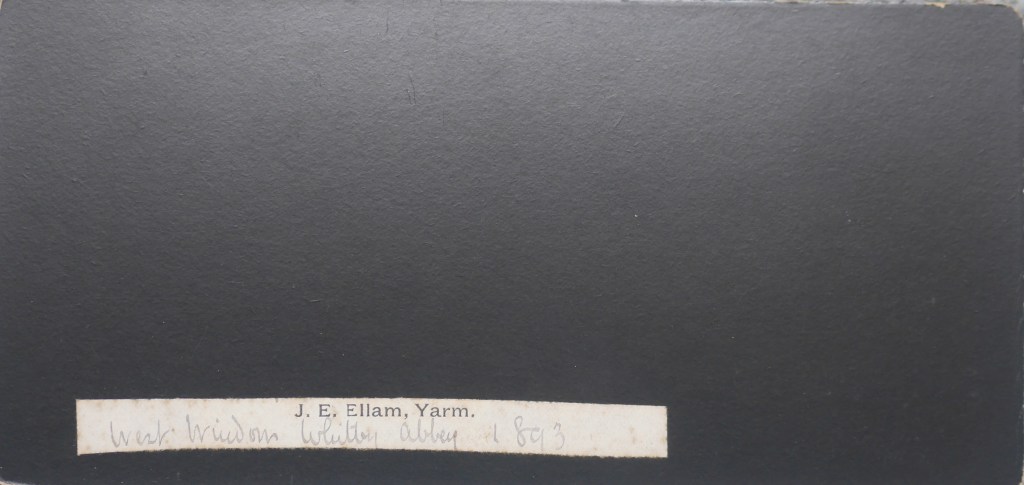
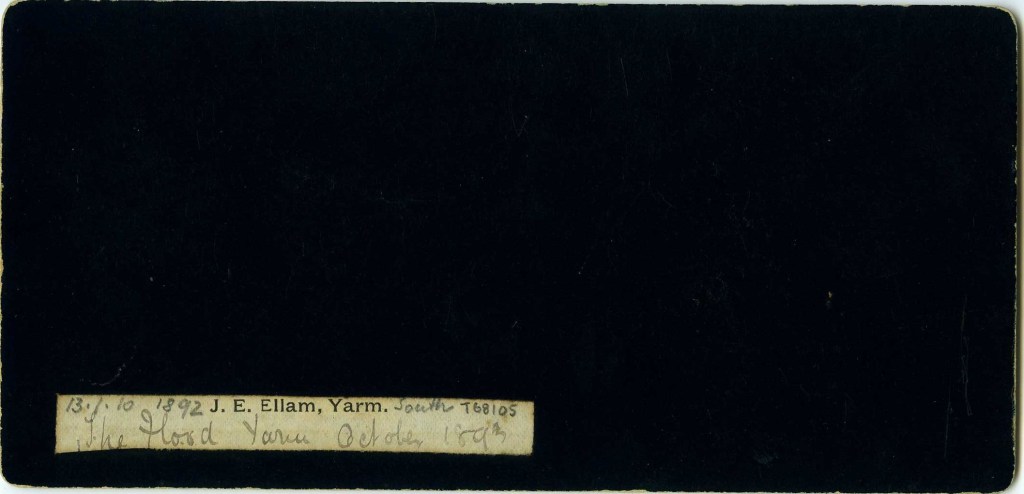
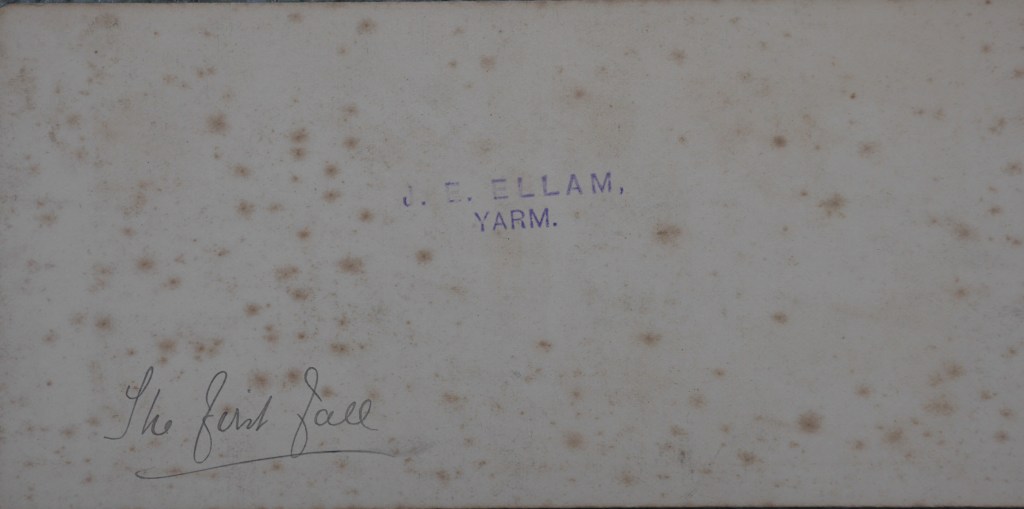
As I remembered from an earlier visit, the majority were stamped “J.E. Ellam, Yarm” on their versos and many were titled in James’s distinctive handwriting.
Back in 2018, James was one of many research threads that I was exploring for what became my PhD on the influence of stereoscopy on early press photography.
As a result, I welcomed another opportunity to view the cards more closely and record each of the 20 stereos in greater detail
(** My thanks to Collections Officer Christine Hutchinson and Collections Assistant Samantha Hallwood for their assistance).
Among the subjects James stereographed were the town’s Gala, its Regatta, the nearby River Tees as well as groups including the “Hartlepools Boys Brigade,” the “Railway Servants Mission” and “The Recreation Football Team.”
One of Preston Park’s Ellam collection also shed further light on a stereo that featured in my blogpost-a-day series and one I had titled “Triangle Greenhouse” (4th September 2023).

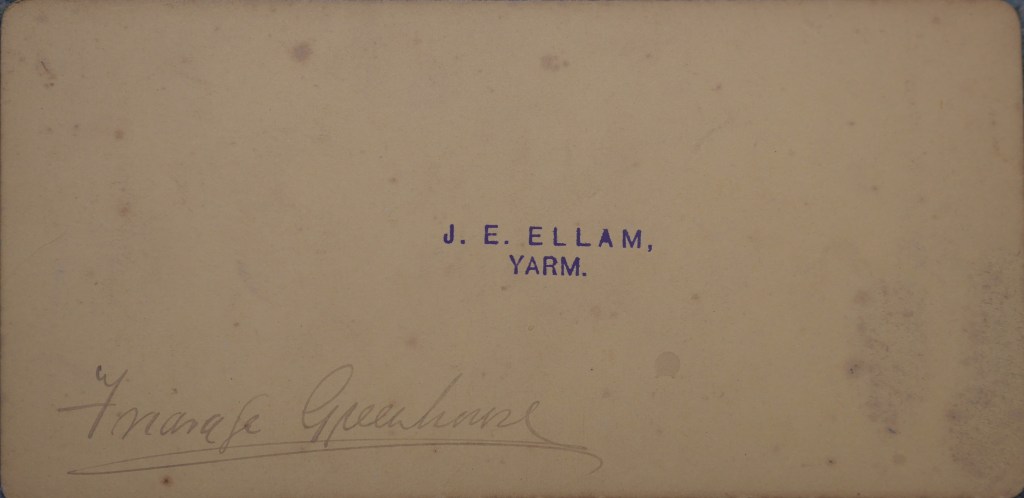
However, what I had read on the verso as “Triangle” turned out to be “Friarage,” a reference to The Friarage in Yarm, built c. 1770 on the site of a Dominican Friary.
Home to Edward Meynell and his family, its gardens were open to the public from the early 1800s and visiting became a popular thing to do for the town’s rich and poor (from A Brief History of Yarm published by Stockton Reference Library).
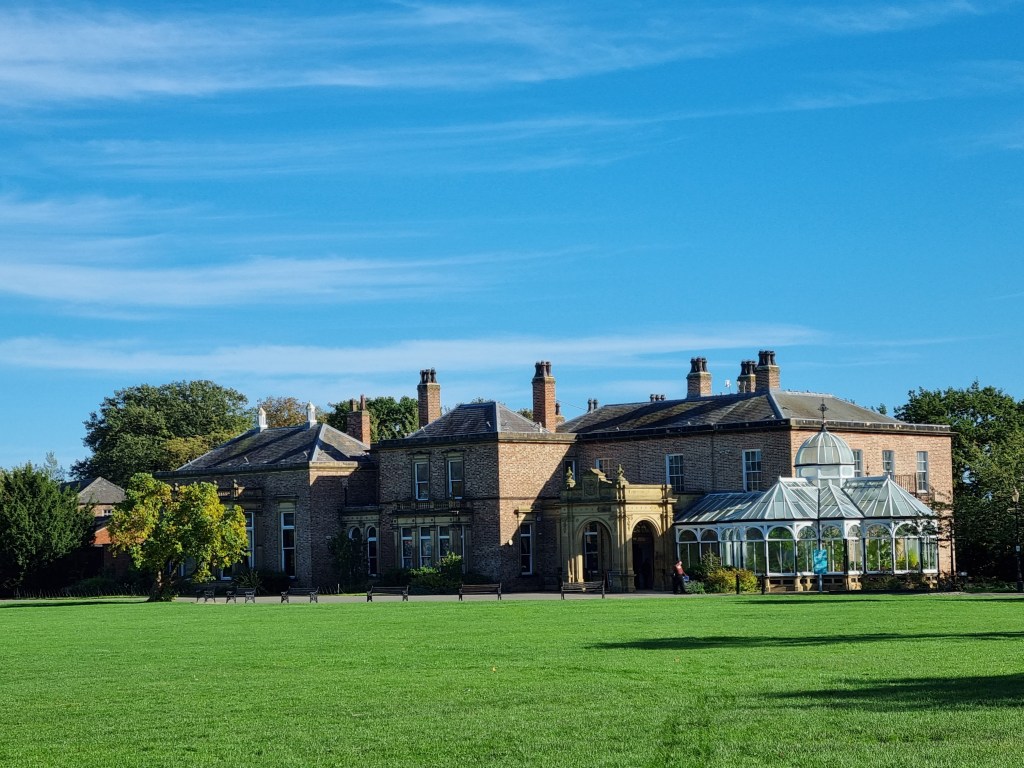
Rather wonderfully, a photograph dated to the 1890s on the Picture Stockton Archive website shows The Friarage complete with an adjoining greenhouse structure.
Since becoming a photohistorian, visiting the physical locations connected with the photographer I am studying has invariably been valuable.
So it proved with this latest visit to Yarm.
The town’s High Street (below) boasts many fine Georgian buildings, which today are listed and retain a wealth of original features including shop fronts.

At number 44, Strickland & Holt (established 1854) where James worked as a chemist’s assistant is still a thriving business with a branch of Boots next door continuing that tradition.

A short walk across the cobbles to the left is located Yarm Town Hall which has recently been renovated as a Heritage Centre.
It is part of a £20 million Levelling Up Fund project and is due to open to the public later this year.

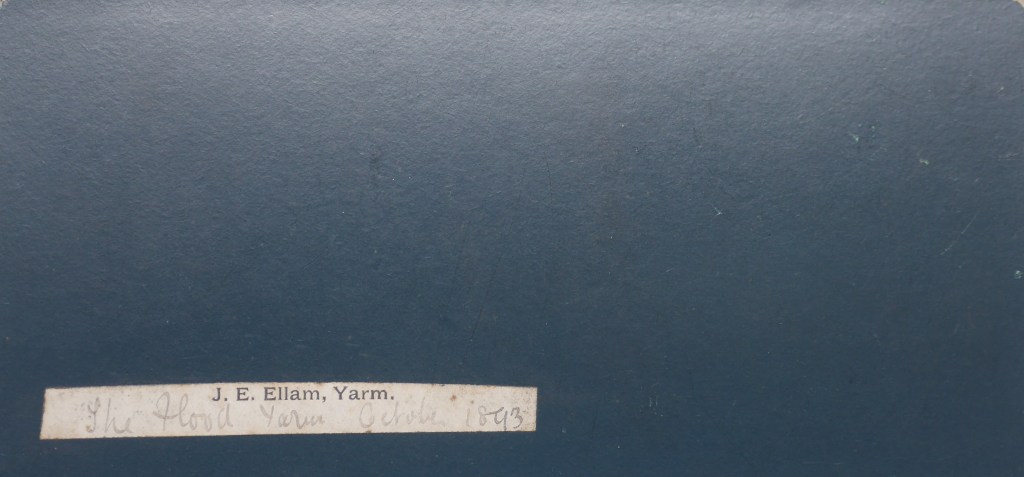
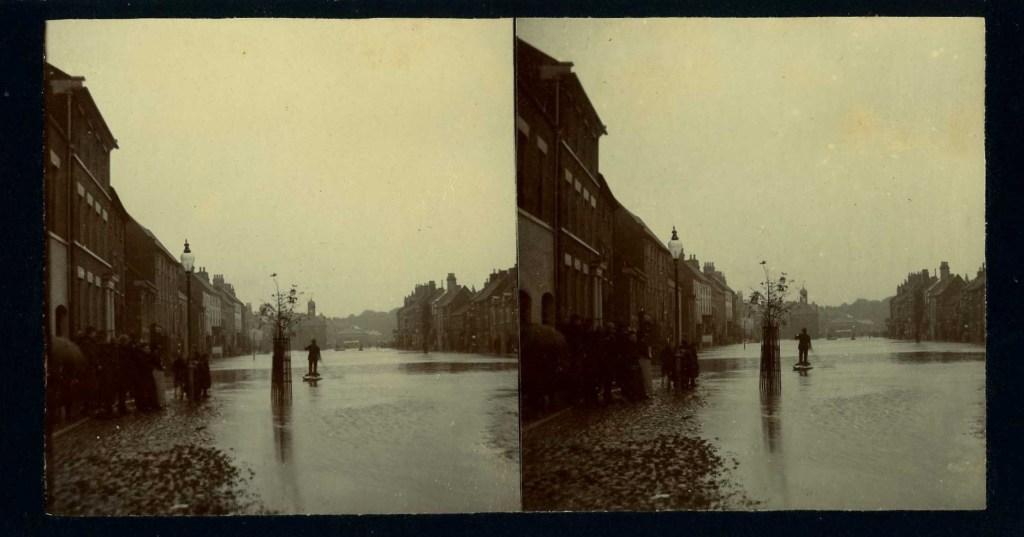
Built in the Dutch style in 1710, the distinctive building featured in my blogpost-a-day series as it was stereographed by James when the nearby River Tees flooded the town in October 1893.

Viewing the stereo more closely, it is evident that it was taken from an elevated position.
From my latest visit to Yarm, I now realise that James probably used an upper floor of Strickland and Holt’s premises to obtain the best vantage point.
Alternatively, he could have used the tailors business of William Bradley & Son, where he lodged during his years in Yarm, which was a few doors further along the High Street.
Another important aspect of James’s life that has become apparent during my ongoing research was his commitment to the activities of Anglican churches in the communities where he lived.
In Yarm, it was St. Mary Magdalene Church which occupies the site of a Norman building and was re-built in 1730 after a disastrous fire.

James’s years in the town coincided with the rectorship of Rev. John Winpenny, who held the post from 1840 until his retirement in 1895 at the age of 84.
As a member of the church choir, it would appear that James had a fine singing voice.
In January 1891, the Northern Echo reported that “members of the choir of the Parish Church, Yarm, gave their first annual concert in the schoolroom on Tuesday night.”
James’s contribution was to join Mrs. Burton, who was “possessed of a brilliant soprano voice,” in singing a duet from Verdi’s Il Trovatore.
Such details, though somewhat removed from hands-on photography, help paint a fuller picture of the person behind the camera.

As more information about James’s life and career comes to light, I’ll post further updates.





 Pressphotoman
Leave a comment