Photohistory research often resembles a large jigsaw puzzle in which the pieces are randomly scattered around the world
It’s then the researcher’s job to try and locate pieces that have survived the passage of time and reassemble what remains of the puzzle until some sort of understandable picture emerges.
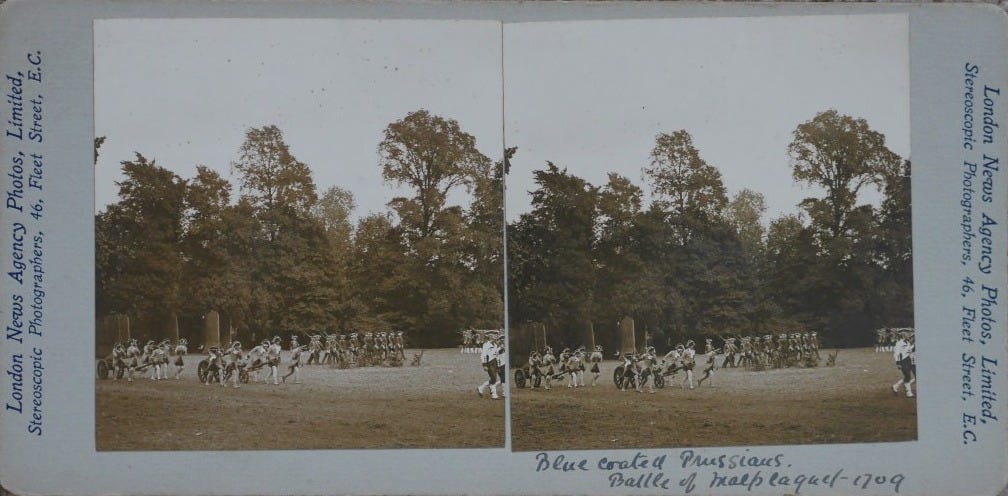
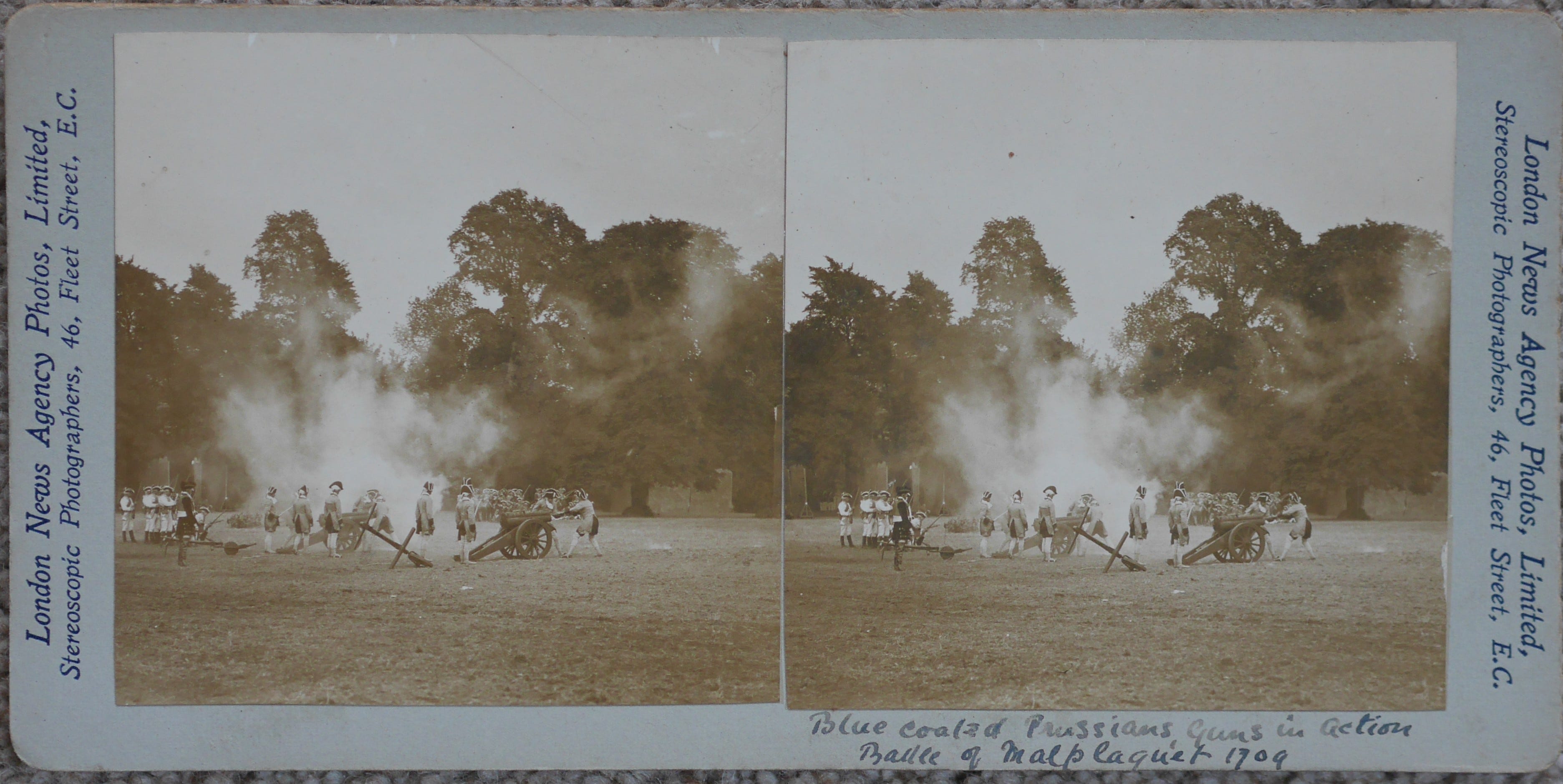
Nearly two years have passed since a couple of 3D stereoscopic images produced by London News Agency Photos (LNA) of 46 Fleet Street came to my attention on a well-known online auction site.
At the time, I made a case for the stereos taken at the 1910 Army Pageant at Fulham Palace being the work of early press photographer James Edward Ellam (1857-1920) whose career I continue to explore.
Then out of the blue, a recent email exchange with Julie Gibb from National Museums Scotland yielded yet more pieces of this particular jigsaw.
She curates the Bernard Howarth-Loomes Collection of around 11,000 stereos.
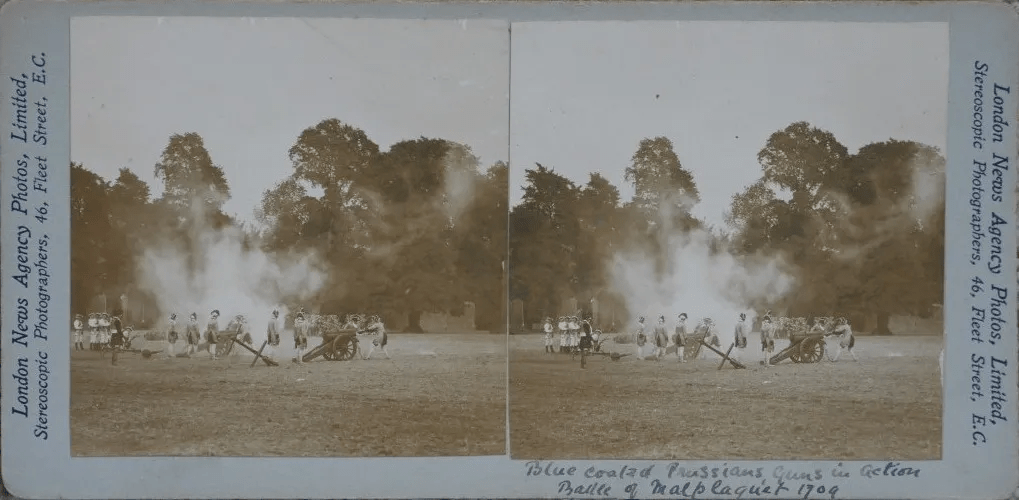
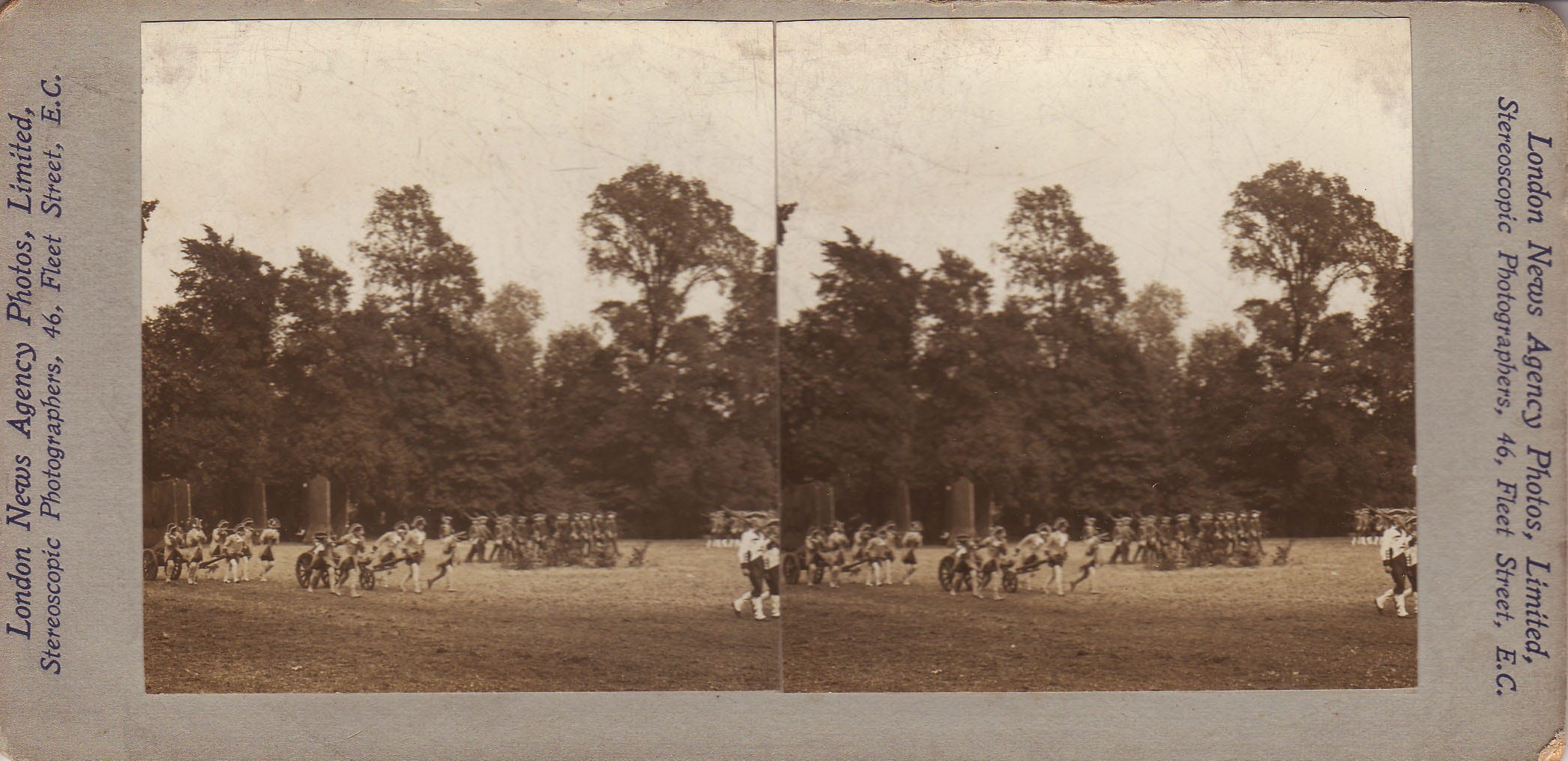
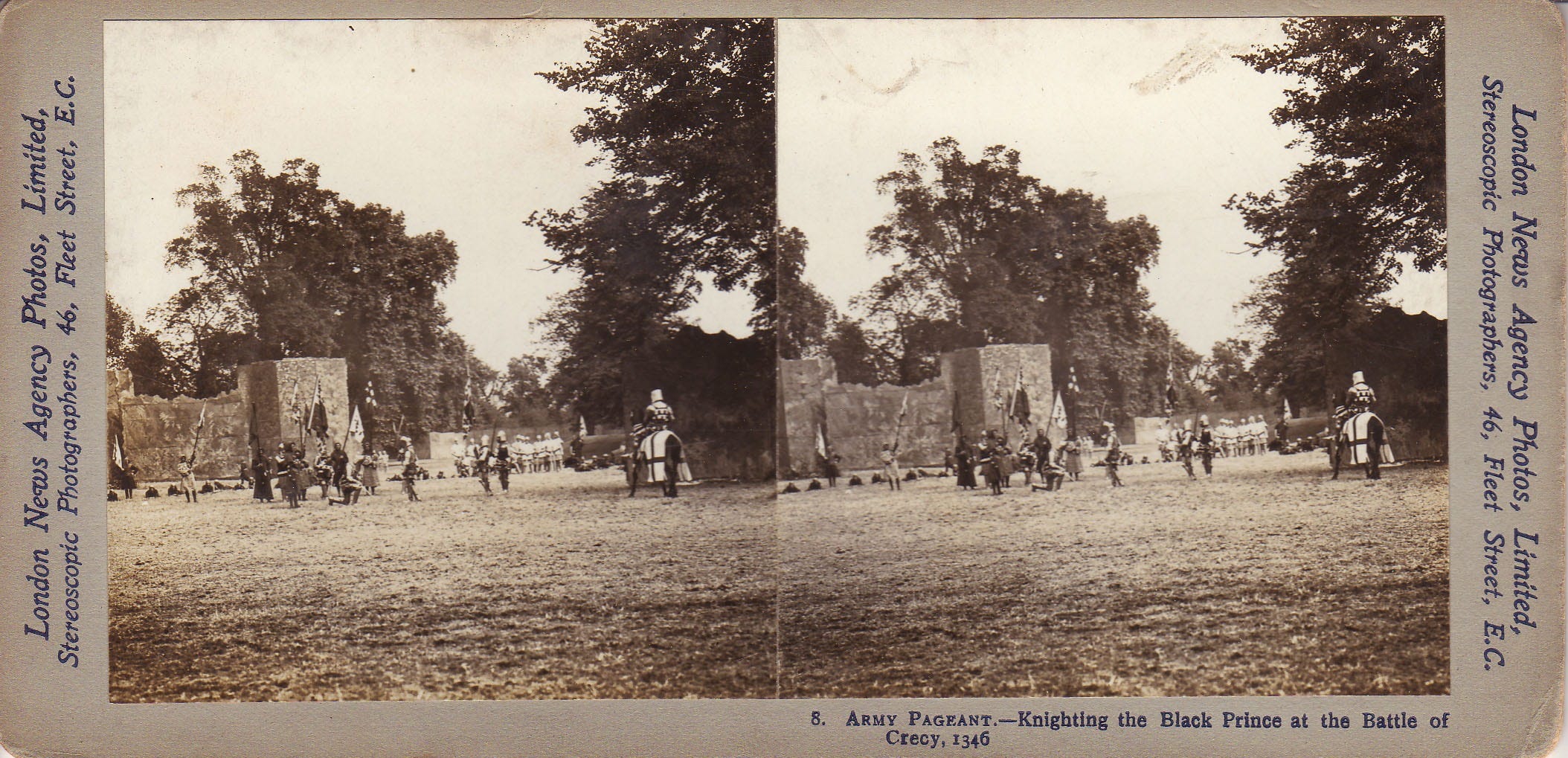
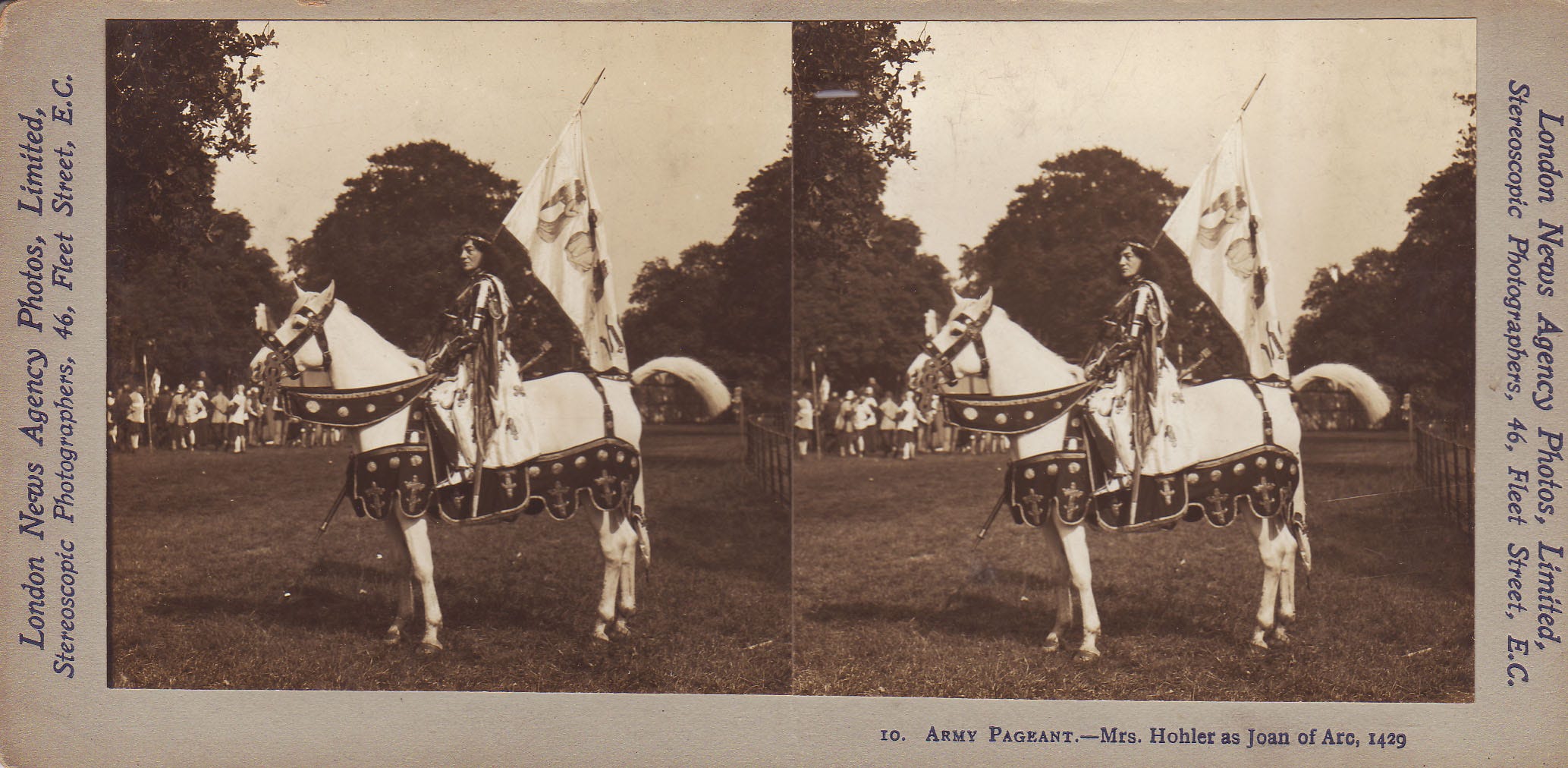
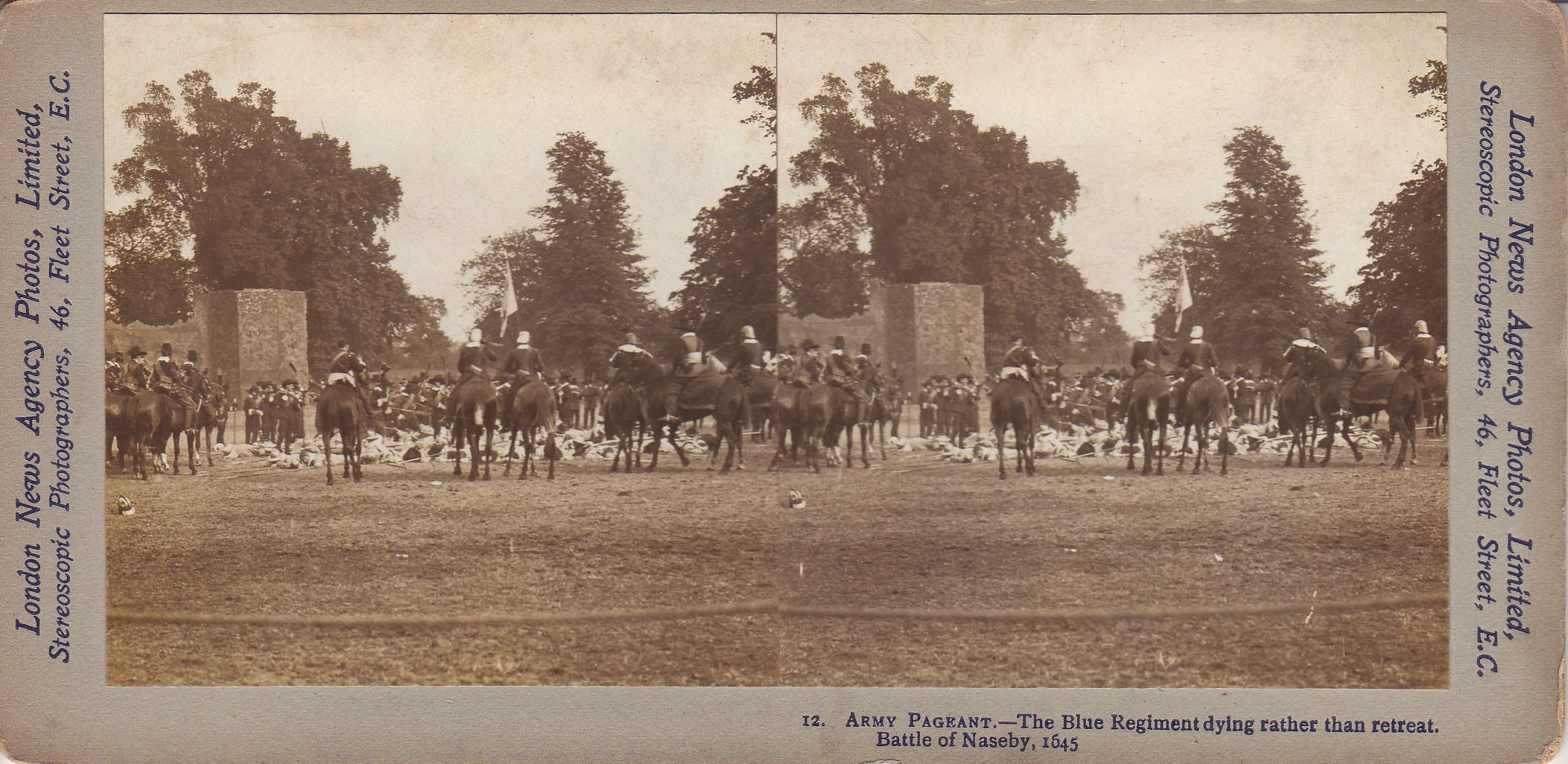
Unbeknownst to me, it included a set of five featuring the self-same 1910 Army Pageant and also published by London News Agency Photos
What was more exciting was that one of the Bernard Howarth-Loomes images matched the second one that that I obtained from Ebay in 2024 minus its handwritten caption as supplied by JE Ellam.
What is apparent from the further four LNA stereos in the Bernard Howarth-Loomes Collection is that they were published as a commercial set complete with printed captions.
This echoes the approach taken during the same era by Underwood & Underwood, a fellow stereoscopic photography company with a London office near Fleet Street.
Like LNA, they too published sets of stereocards featuring news events and supplied the images from the same assignment to newspapers and magazines.
To complete the picture, James Edward Ellam worked for the Underwood company for a decade from 1897 before joining London News Agency Photos after it began life in 1908.
These new LNA stereos featuring the 1910 Army Pageant add further weight to the case for them being Ellam’s work.
My thanks to Julie Gibb for permission to reproduce the following LNA stereos from the Bernard Howarth-Loomes Collection in this blogpost.
In September 2023, a blog-a-day series of Pressphotoman posts featuring stereographs mostly attributable to the early press photographer James Edward Ellam (1857-1920) concluded with a question.
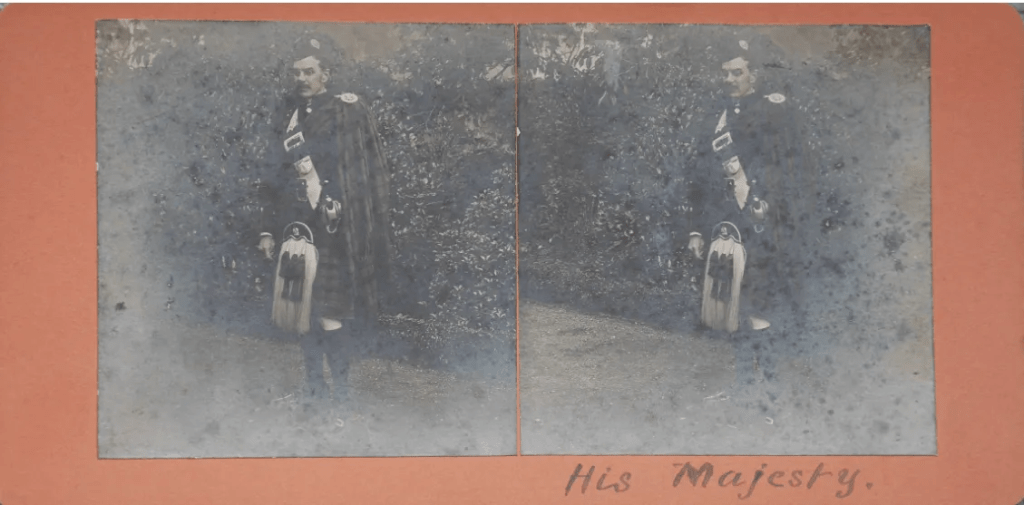
Was Ellam the man portrayed in one of the newly-discovered cache of stereos?
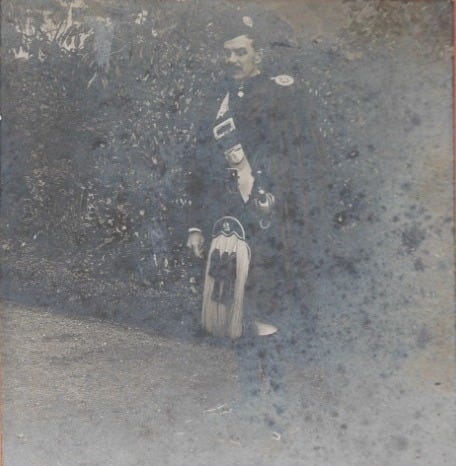
Though faded with age, a figure in full Highland dress pictured with a garden backdrop was captioned ‘His Majesty.’
The handwriting was immediately recognisable from the multiple copyright forms that Ellam completed during his career, whilst the title ‘His Majesty’ appeared to be a humorous reference to one of his best-known images.
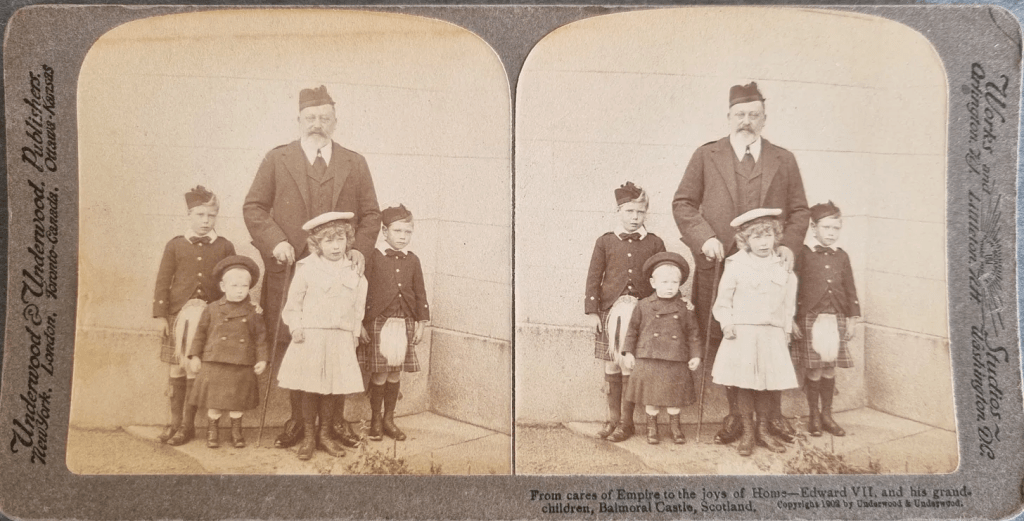
Taken for Underwood & Underwood, it featured Edward VII and his grandchildren (including the future Edward VIII and George VI) at Balmoral following the King’s Coronation in August 1902.
These pieces of evidence seemed to point strongly, but not conclusively, in one direction.
For the past couple of years, Pressphotoman has been on the look out for photographic evidence that might corroborate this theory.
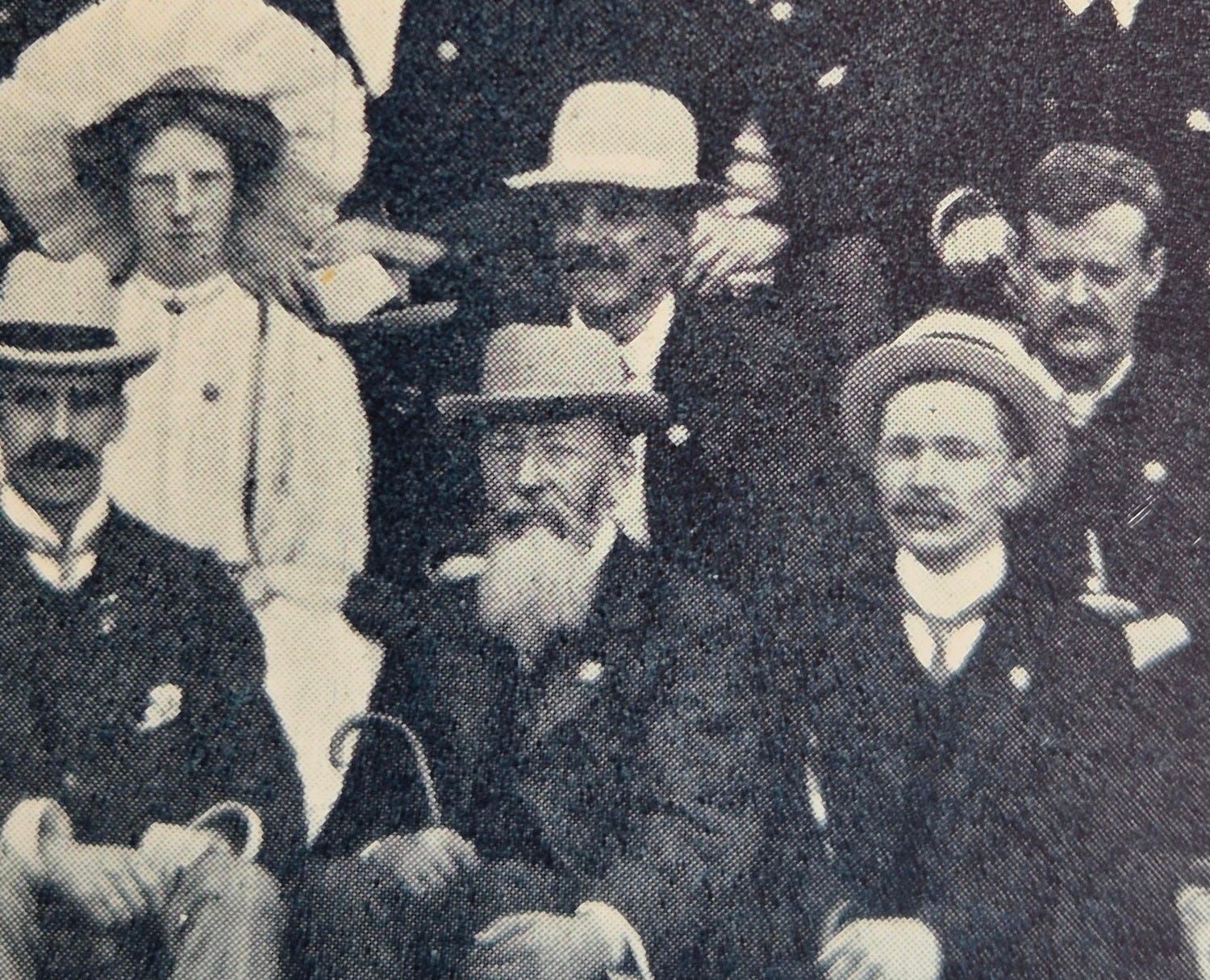
Thanks to Dr. Michael Pritchard, editor of the British Photographic History blog and The PhotoHistorian, journal of the Royal Photographic Society Historical Group, another photograph featuring Ellam has emerged.
It was taken in July 1908 when around 300 photographers, both professional and amateurs, gathered in Brussels for the 23rd Photographic Convention of the United Kingdom.
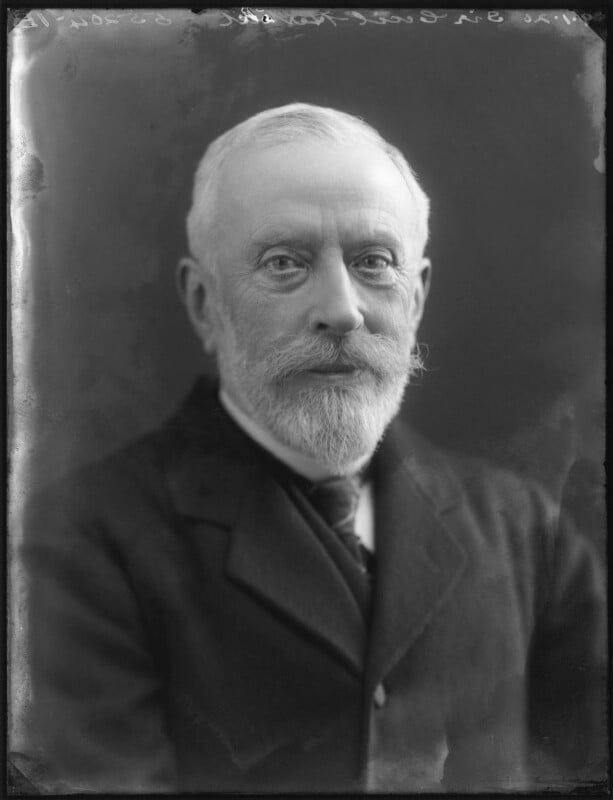
The choice of location was informed by the Convention president Sir Cecil Hertslet FRPS (1850-1934) who was His Majesty’s Consul-General to Belgium from 1903 to 1919.
At this point in his career as a professional photographer, Ellam was nearing the end of a decade-long working relationship with 3D giants Underwood & Underwood based in London’s West End.
He had become a member of the Royal Photographic Society in 1907 and was also an active member of the West London Photographic Society, lecturing on stereoscopic photography at one of its meetings.
In 1909, as part of a display by the United Stereoscopic Society, he created a stereoscopic transparency displayed by lantern at the annual RPS exhibition.
By the following year, he was working for London News Agency Photos at 46 Fleet Street covering events like the Army Pageant of 1910 held in Fulham Palace Gardens.
The discovery of another photograph of Ellam helps bring a further dimension to several blogposts on this site that can be found by putting his surname into the search engine via the link below.
In 1905, the photographer James Edward Ellam was at a turning point in his professional career.
A skilled amateur stereographer in his native Yorkshire, he had journeyed south a decade earlier to pursue opportunities offered in London by the leading American 3D company Underwood & Underwood.
It was a decision that changed his life.
Ellam is best-known for a number of the stereos he took for the Underwood company.
Today they feature in museum collections around the world.
Among them are Queen Victoria’s Golden Jubilee celebrations (1897), King Edward VII and Queen Alexandra in their coronation robes (1902) and Pope Pius X in his pontifical robes in the Vatican’s Throne Room (1903).
Despite these achievements, Ellam’s career path into Fleet Street seems to have included a subsequent period where he created photographs with a distinctly local flavour.
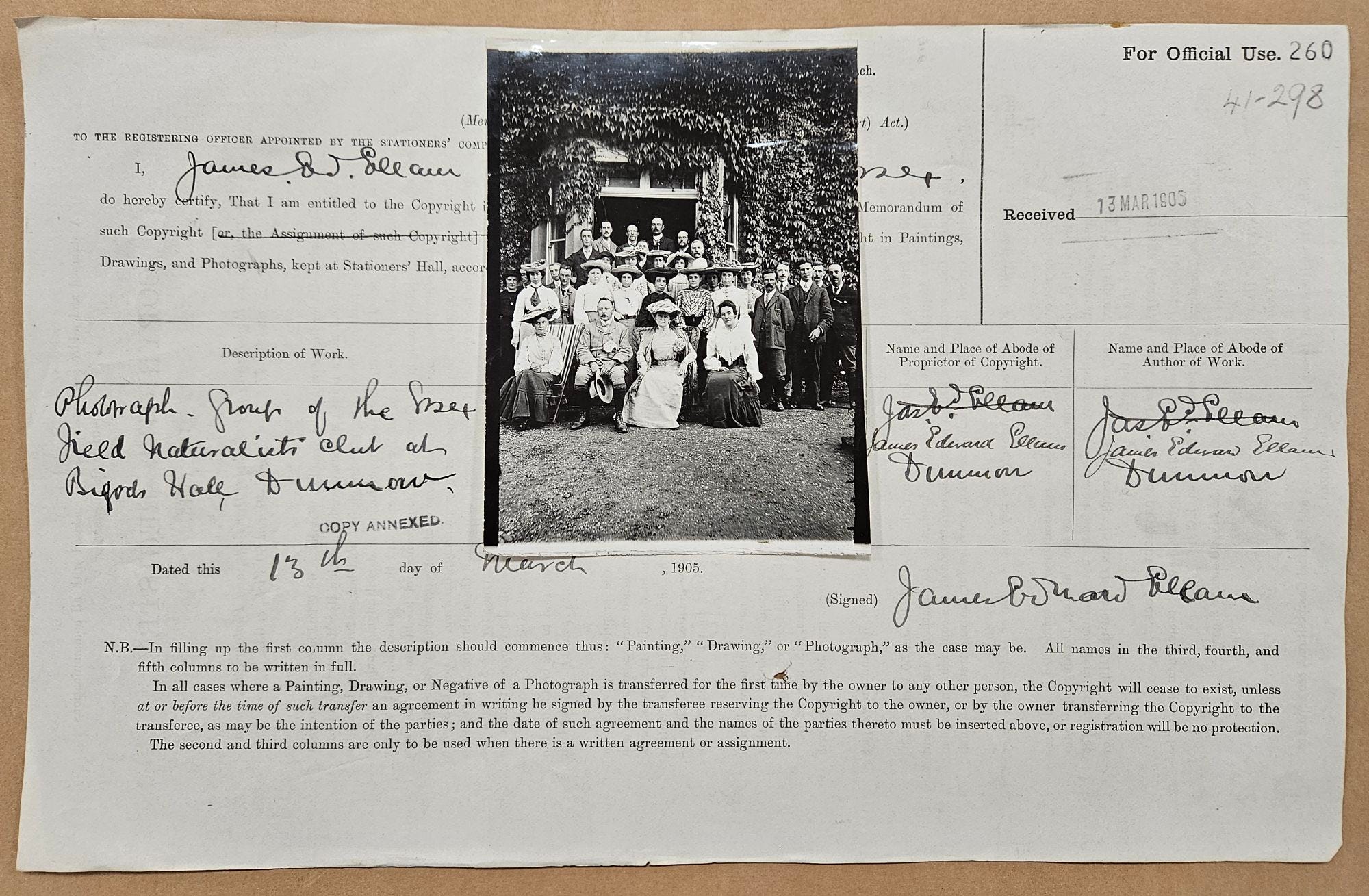
Hence, his decision to register the copyright of two images taken in or around the Essex town of Dunmow where he lodged at weekends.
Last week’s blogpost featured the first of these press photographs.
It portrayed the prospective Liberal Member of Parliament Barclay Heward (1853-1914) and his wife strolling along Dunmow High Street in the run-up to 1906 General Election.
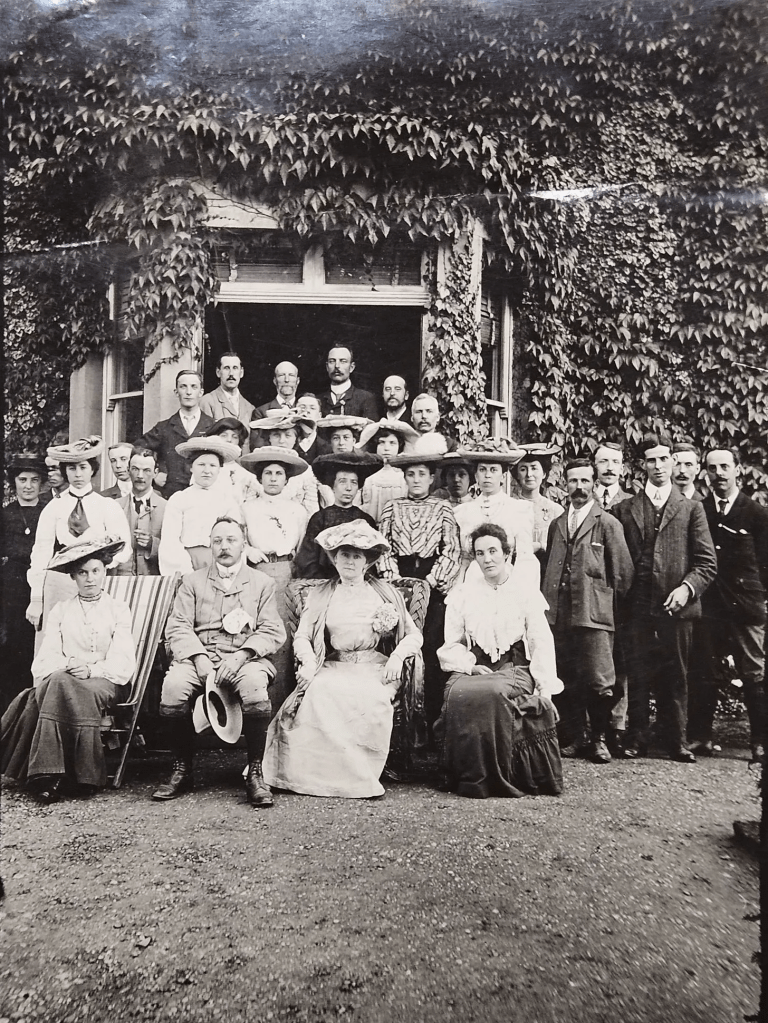
What he omitted to mention was that one of that group was one of the most famous women in the land.
Fashionably-dressed and seated on the front row in a wicker chair, Daisy, Countess of Warwick was a one-time mistress of King Edward VII.
She is pictured at a significant moment in her own life; one that was the subject of almost daily press attention.
During this period, Lady Warwick became actively engaged in politics as a member of the Social Democratic Federation.
However, unlike the Liberal candidate Barclay Heward, who featured in Ellam’s earlier photograph, she was increasingly active in promoting radical socialism ahead of the forthcoming General Election.
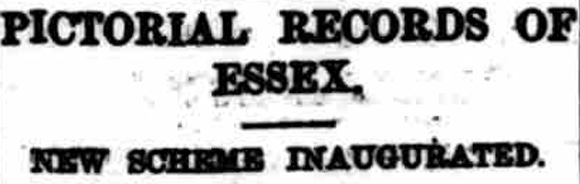
As to the photograph’s genesis, a press report in the East Anglian Daily Times and cited in the Essex Naturalist account of the club’s activities provides the background.
On Saturday 8th July 1905 at the invitation of the Earl and Countess of Warwick, “members of the club and many friends, about seventy in all, assembled … for the purpose of inaugurating ‘the Pictorial and Photographic Record of Essex.’”
The brief of the project was “to write the history of the county in pictures.”
East Anglian Times (10th July 1905). From British Newspaper Archive.
The report described how Lady Warwick presided at a luncheon held at Easton Lodge near Dunmow, her husband’s ancestral Essex home.
She first apologised for the absence of the Earl, who was “at Brest on a yachting cruise.”
After lunch, a meeting to discuss the photography project was held “in a commodious double tent amongst trees at the back of the house.”
Following the meeting, the group paid a visit to nearby Bigods Hall, which the Countess had established years earlier as a secondary and agricultural school.
Those present were then entertained to tea by the Principal, Mr. T. Hacking and Mrs. Hacking.
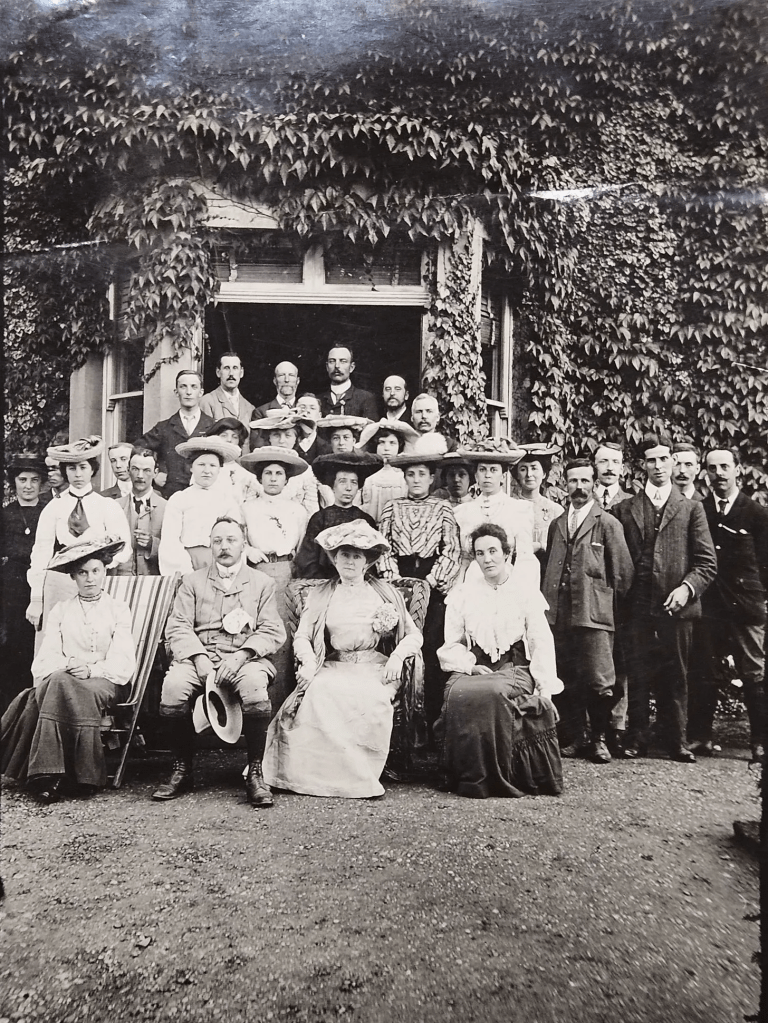
Though the report refers to “about seventy in all” attending the luncheon and meeting held at Easton Lodge, the smaller group pictured in the Bigods Hall photograph perhaps indicates that not everyone made the line-up.
What is particularly noteworthy is the presence of so many women in the picture, making up around half of the group.
At this point in the medium’s history, photography had become a popular and affordable pastime thanks to the advent of Kodak’s ‘you press the button, we do the rest’ range of cameras.
Ellam’s presence too may well have been directly linked to the photographic project being discussed.
Copyrighting the image does though suggest that he recognised that this photograph of the Essex Field Naturalists Club had a long-term value.
What is slightly confusing is that the copyright form completed by Ellam, with this photograph attached and held by the National Archives, is stamped and dated ‘13th March 1905.’
As the weather during the Bigods Hall visit was reported as “gloriously fine,” the dress of those appearing on camera does suggest a July day rather than one in March.
One explanation may be that the 13th March form referred to an earlier occasion.
Armed with a new photograph of the group featuring the media-friendly Lady Warwick, he simply substituted a copy of that taken on 8th July.
Whatever the explanation, the resulting photograph captures a moment in the changing world of Edwardian Britain.
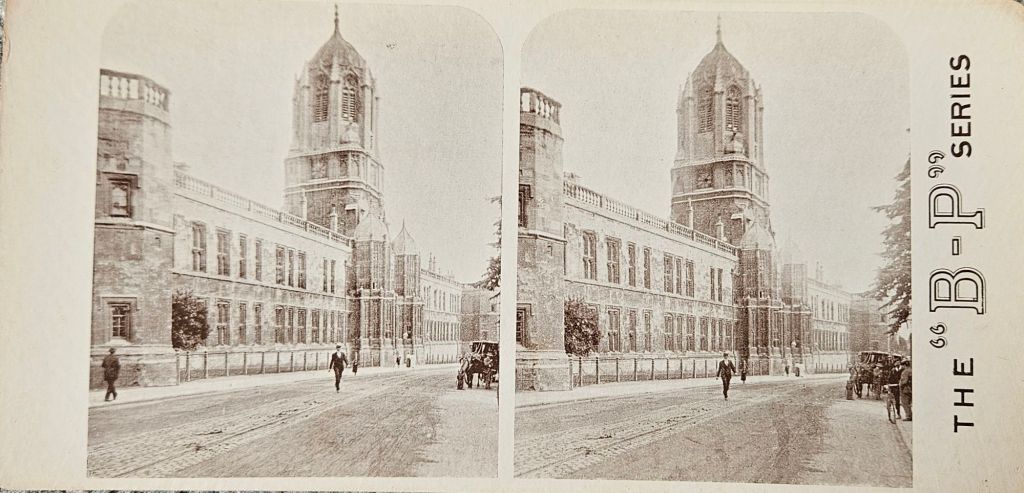
A smartly-dressed man is striding confidently across the road without fear of being run over.
To the extreme right, a male cyclist is in conversation with a man on the pavement whilst further down the road, a horse-drawn carriage can be glimpsed.
Closer inspection reveals a horse is enjoying a nosebag though its contents remain unknown.
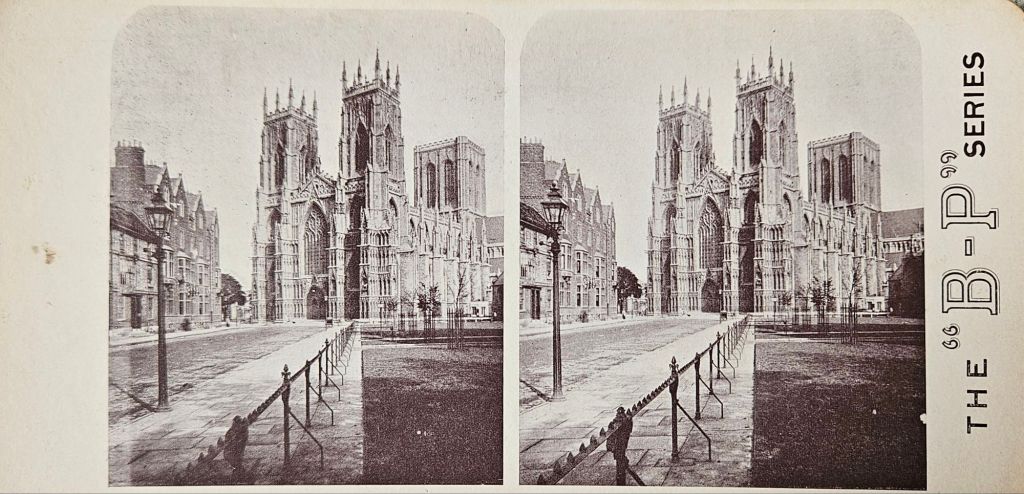
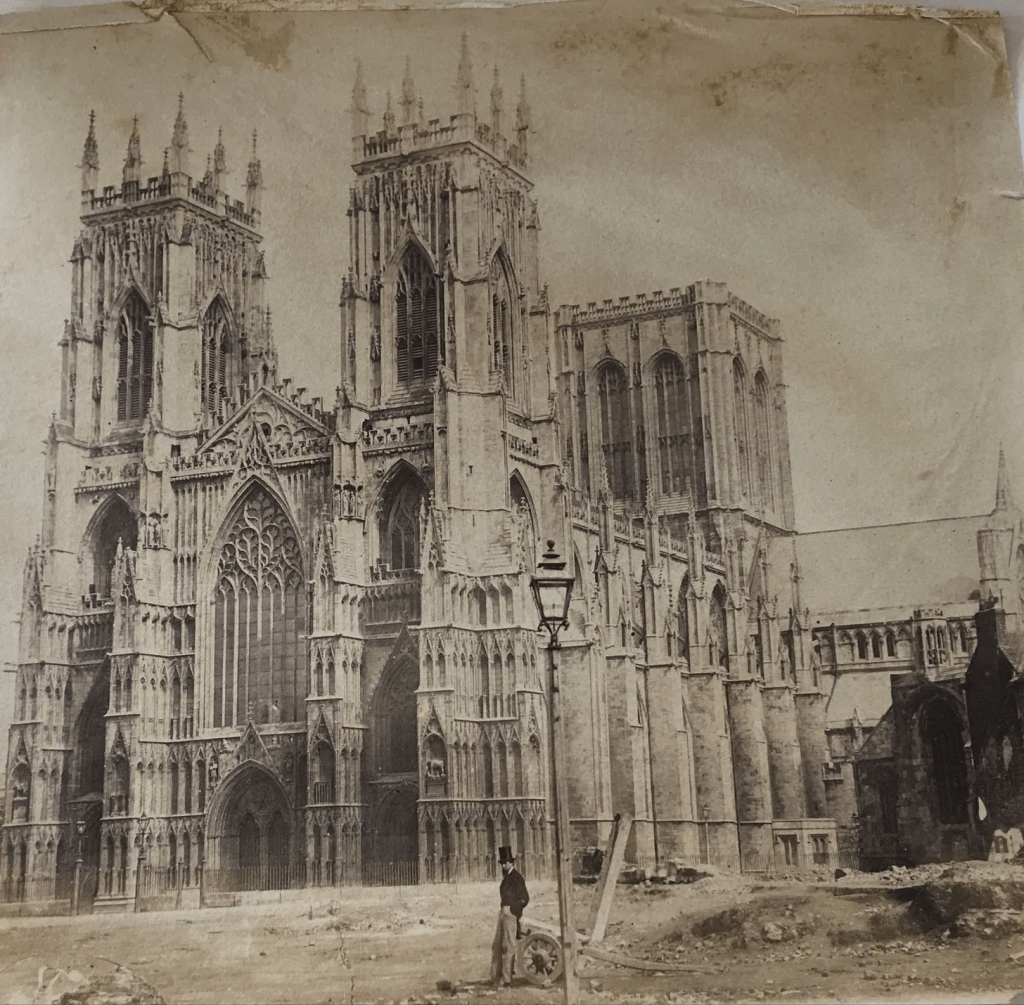
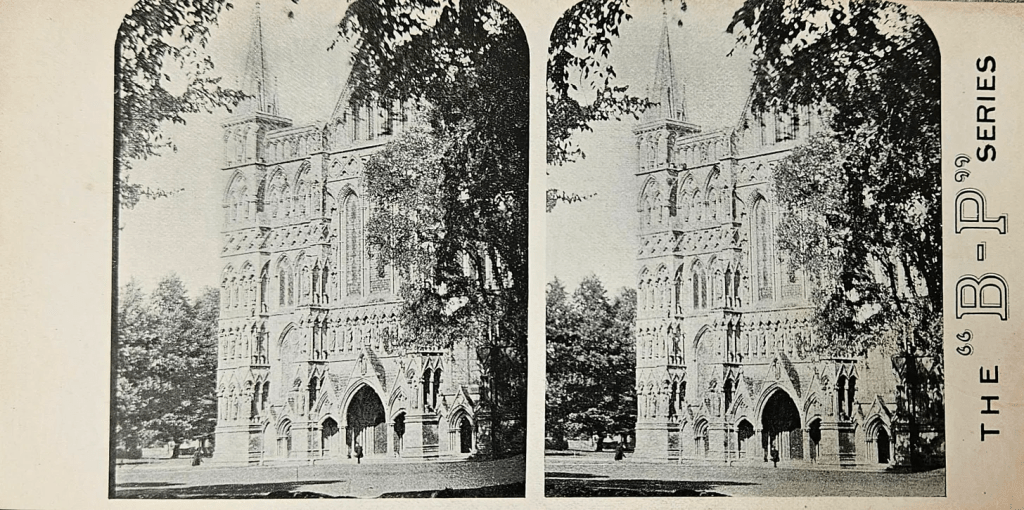
The third “B-P” Series stereocard reveals the west front of the cathedral at Salisbury.
Taken on a summer’s day complete with trees in full leaf and shadows in the immediate foreground, a figure in the doorway provides a sense of scale.
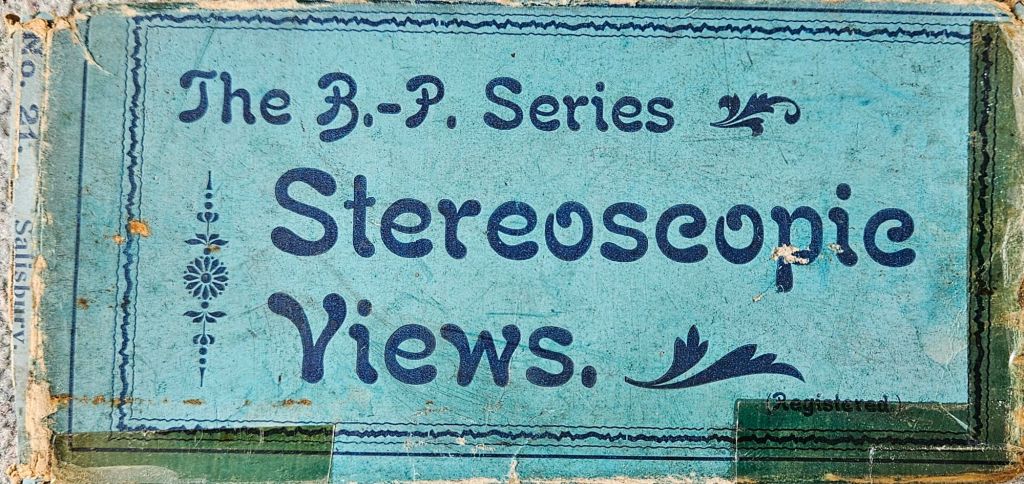
Thanks to a thoughtful eBay seller, these cards arrived complete with the blue-coloured cardboard envelopes in which they had originally been sold (and presumably stored) in the decades since.
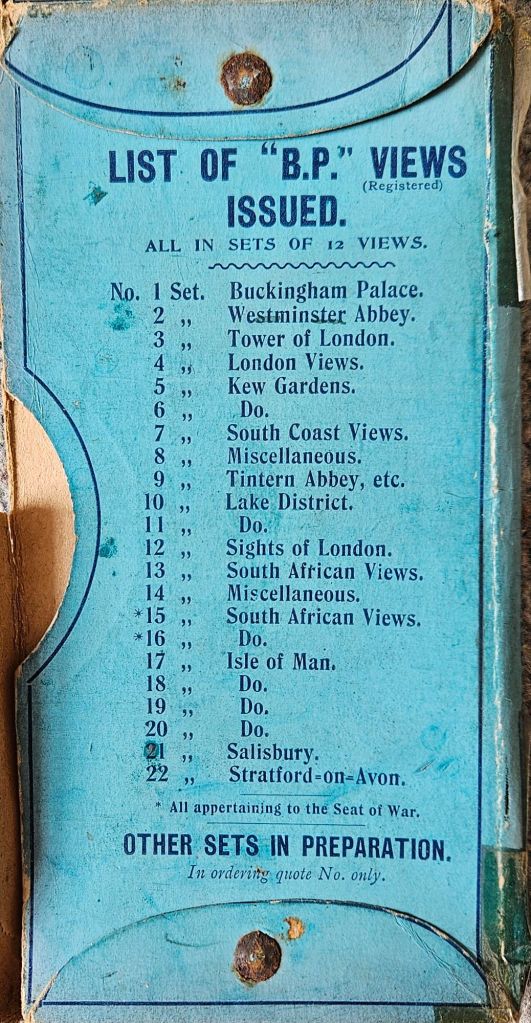
The verso of the box offering ‘No. 21 Salisbury’ revealed that views had been sold in sets of 12 offering a variety of English locations as well as four featuring the Isle of Man.
The presence of three sets of ‘South African Views’ (numbers 13, 15 and 16), including two that were advertised as “all appertaining to the Seat of War,” related to the conflict between the British and the Boers between 1899 and 1902.
This evidence helps pinpoint the dating of all three of the cathedral cards in this post to the turn of the 20th century.
As regular readers will already know, this was a moment when stereoscopic photography was undergoing one of its periodic revivals thanks to American companies like Underwood & Underwood and Keystone View.
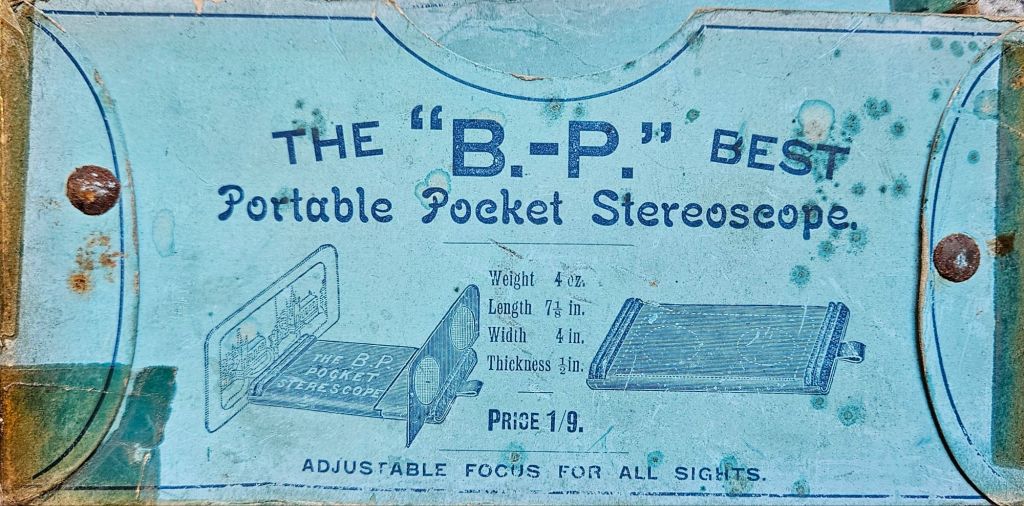
To be fully enjoyed, these cards needed a 3D viewer.
To complete their range of products, “B-P” offered a portable pocket stereoscope that, its manufacturers claimed, offered “adjustable focus for all sights.”
The recently-released film Conclave about the election of a new Pope is being touted as an Oscar contender.
This is largely because of the central performance by Ralph Fiennes for his portrayal of a “deeply-troubled Cardinal … at the centre of a murky Vatican plot” (Peter Bradshaw, The Guardian).
The film is the latest Papal subject to attract media attention and also that of this blog.
Last September’s Asia-Pacific tour by Pope Francis prompted a Pressphotoman post about a series of 3D stereoscopic portraits featuring one of his predecessors.
In an echo of the plot of Conclave, the stereos were published in 1904 following the election of Pope Pius X.
Given access to the Vatican, the leading stereoscopic company Underwood & Underwood produced a 36-card set titled A Pilgrimage to see the Holy Father through the Stereoscope.
The Underwood stereographer responsible was James Edward Ellam (1857-1920) whose career as a photojournalist is the subject of ongoing research by this blog.
A recent Pressphotoman acquisition adds another dimension to how these 3D images of Pius X were circulated in various formats and helped form the new Pope’s public image.
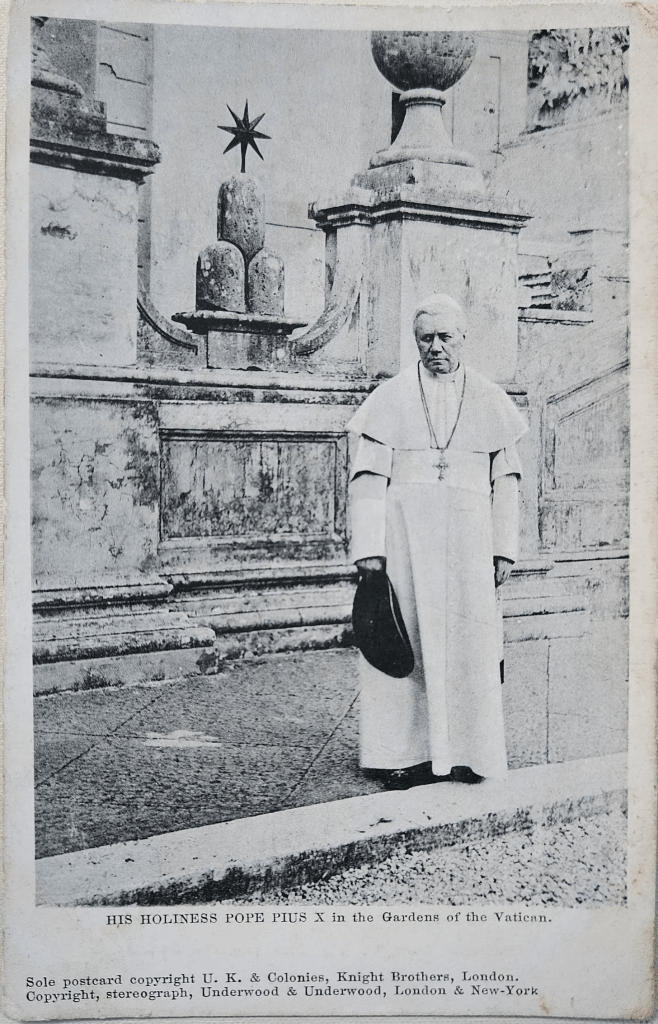
Titled “His Holiness Pope Pius X in the Gardens of the Vatican,” the credits on this picture postcard confirm that the image was taken from U&U’s original stereograph.
The ‘sole postcard copyright’ holder for the ‘U.K. & Colonies’ was identified as Knight Brothers of London.
They were certainly in the market for images to publish and sell to a worldwide audience.
The company was formed in 1904 by Watson and George Knight, who had previously worked for another London postcard publisher.
E. Wrench Ltd., launched by teenager John Evelyn Wrench, boomed spectacularly from 1900 as the picture postcard craze took hold.
But by 1906, the firm had crashed and burned amid financial difficulties.
Knight Brothers registered their trademark ‘knight’ in August 1905.
The number ‘1446’ on this postcard indicates that it may have been one of a series of Papal portraits secured from Underwood & Underwood.
Another point of note is that the card was ‘printed in Saxony’ which Wrench had first identified as home to a ‘veritable hotbed of good printers’ (Anthony Byatt, Picture Postcards and their Publishers, 1978).
Like Wrench before them though, Knight Brothers enjoyed short-lived success.
It became a limited company in 1906, but within a couple of years had ceased trading.
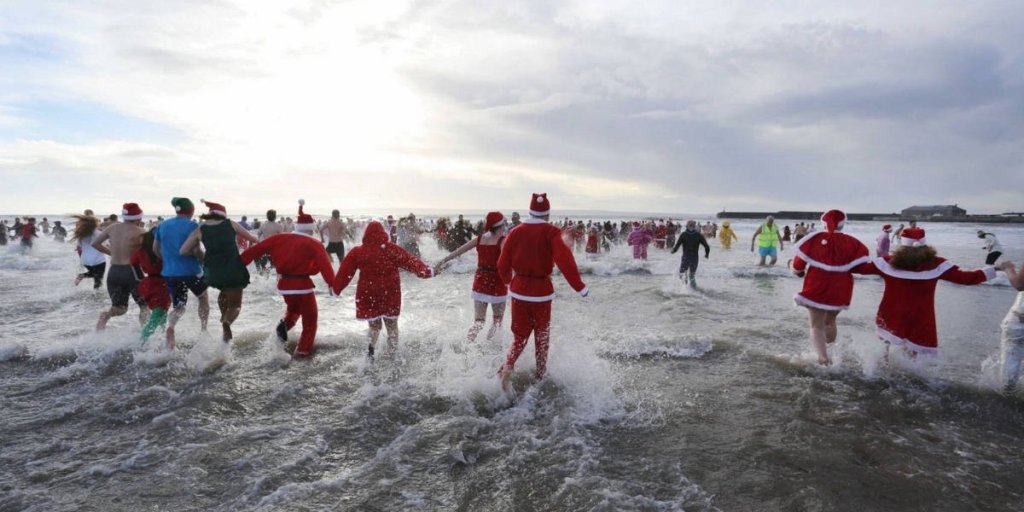
The tradition of taking a dip in the sea during the Christmas and New Year holidays is now firmly established in the seasonal calendar.
Each year, social and traditional media are swamped with images of figures dashing into the surf, many in colourful fancy dress outfits, braving the freezing temperatures for charity.
Little more than a century ago, the very idea of such a spectacle being contemplated, never mind taking place, would have seemed fanciful.
I have to thank Geoff Barker, Senior Curator of the State Library of New South Wales, for a recent LinkedIn post about a fellow Australian, who helped change public attitudes to swimwear.
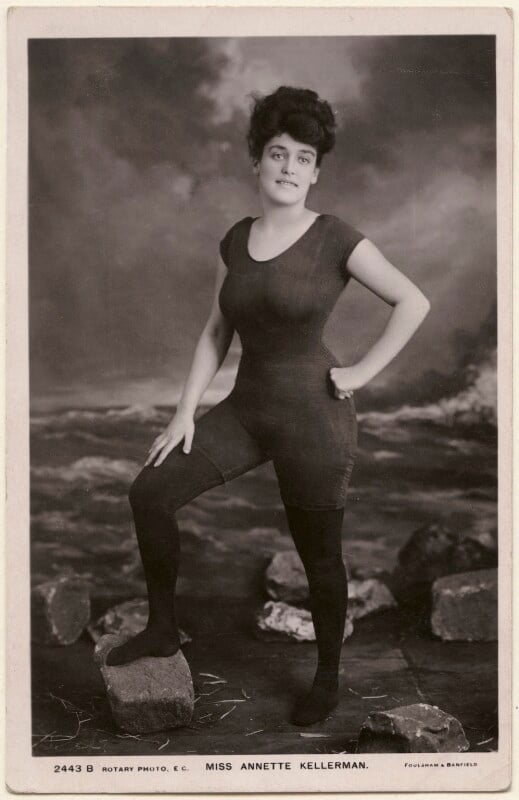
Annette Kellerman (1886-1975) was a professional athlete and later vaudeville and silent film star, who helped popularise the one-piece bathing suit.
I first learned about her whilst researching my doctoral thesis on the influence of stereoscopic 3D photography on press illustration.
Among her many accomplishments, she was the first woman to attempt to swim the English Channel (only officialdom stopped her completing the crossing).
She also took part in a number of highly-publicised river races in Paris and London.
The international media devoted many column inches to reporting her exploits and press photographers followed her every move.
This 1906 report from the Daily Mirror, Britain’s first tabloid newspaper, is typical of the coverage that Annette Kellerman attracted.
Daily Mirror (17th July 1906). From British Newspaper Archive.
The photographs reproduced in half-tone were supplied by Underwood & Underwood (U&U) whose photo agency soon became the largest in the world.
In a link with the Underwood company, the postcard of Miss Kellerman reproduced earlier in this post was published by the firm of Foulsham & Banfield.
Co-founder Frank Foulsham (1873-1939) had begun his photographic career as a stereographer.
He supplied images of politicians and music hall stars to U&U for publication in the press.
In time, Foulsham & Banfield’s name became synonymous with glossy postcard prints featuring a galaxy of music hall and vaudeville stars.
The National Portrait Gallery, London online archive features more images of Annette Kellerman including a number by H. Walter Barnett (1862-1934), a W & D. Downey alumni
The Asia-Pacific Tour currently being undertaken by Pope Francis is attracting a great deal of media attention.
Over the course of 12 days (2nd-13th September 2024), the 87 year-old pontiff is visiting Indonesia, Papua New Guinea, Timor-Leste and Singapore.
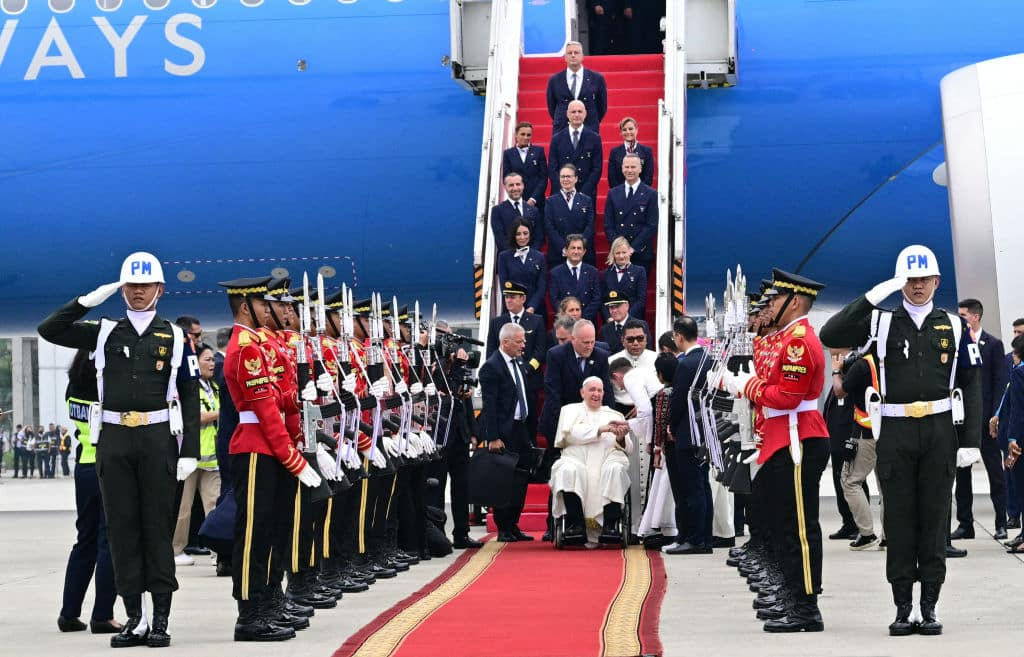
This news photo (below) from the start of the tour attracted my attention as it well illustrates the continuing influence of stereoscopic 3D photography on today’s visual media.
Pope Francis is greeted after his arrival at Soekarno Hatta International Airport, Jakarta, 3rd September 2024. Photo by TIZIANA FABI/AFP via Getty Images.
Shot between two lines of soldiers with the Pope in the distance, its use of different planes along the length of the red carpet and then up the aircraft steps would work perfectly if taken in three dimensions.
The fact that it was published in 2D without any comment underlines a factor in press and website illustration dating back to the turn of the 20th century.
At that point, newspapers and magazines first adopted half-tone printing.
This enabled a variety of publications to re-produce real photographs rather than using line drawings or engravings.
One of the leading players in servicing this demand was Underwood & Underwood of New York & London whose role was the subject of my 2021 doctoral thesis (see ‘Writings.’)
As 3D photographers, Underwood stereographed news events, which they then sold to customers in box sets.
In addition, the company offered prints taken from one-half of a stereo pair for publication by newspapers and magazines.
In time, Underwood’s press photos agency became the biggest in the world.
One of the company’s best-selling sets of 3D photos, published in 1904, was titled A Pilgrimage to see the Holy Father through the Stereoscope.
It featured 36 stereos and a guidebook with maps to shepherd the ‘pilgrim’ from location to location.
Within months of Pope Pius X’s election in the summer of 1903, Underwood sent a team from its London office led by the company’s European manager Eldon R. Ross.
As revealed by copyright forms in the National Archives at Kew (COPY 1/467/107-115), Underwood stereographer James Edward Ellam (1857-1920) took a number of the key images.
These included the new Pope in his pontifical robes in the Vatican’s Throne Room.
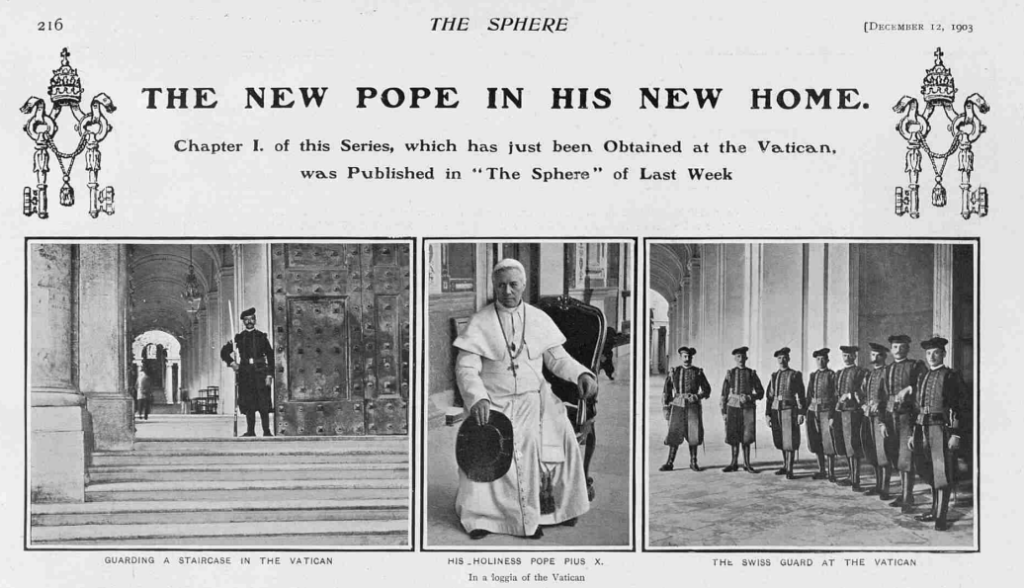
In recent months, two of Ellam’s papal stereos have joined my collection, both of which appeared as press photos in the then popular weekly illustrated paper The Sphere.
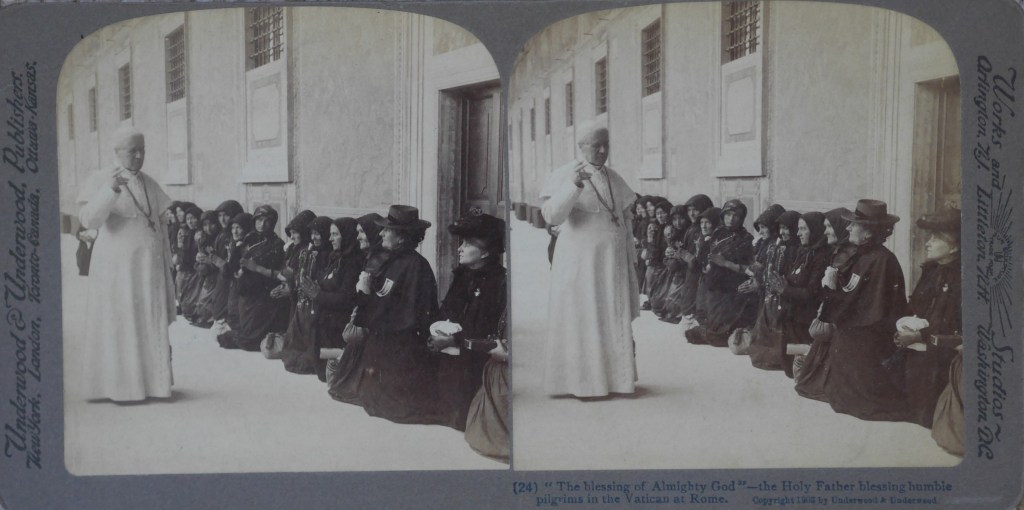
In the first, numbered ’24’ in Underwood’s stereo set, ‘the Holy Father’ is pictured ‘blessing humble pilgrims.’
Despite previously having used the standing version, The Sphere used a print of the sitting version in the following week’s issue.
From The Sphere (12th December 1903). From British Newspaper Archive.
As Pope Francis continues his Asia-Pacific Tour, the world’s media will no doubt continue to follow his every move.
This media attention replicates a phenomenon that saw the day-to-day activities of one of his predecessors being viewed for the first time in 3D, generating similar public interest.
This Friday (21st June) is Stereoscopy Day, the third annual global celebration of stereoscopic 3D.
Organised by Denis Pellerin and Rebecca Sharpe, co-curators of the Brian May Archive of Stereoscopy, Stereoscopy Day marks 186 years since Sir Charles Wheatstone first presented the stereoscope and his theory of binocular vision to the world.
It was more than a decade ago when I first became aware of Wheatstone’s discovery.
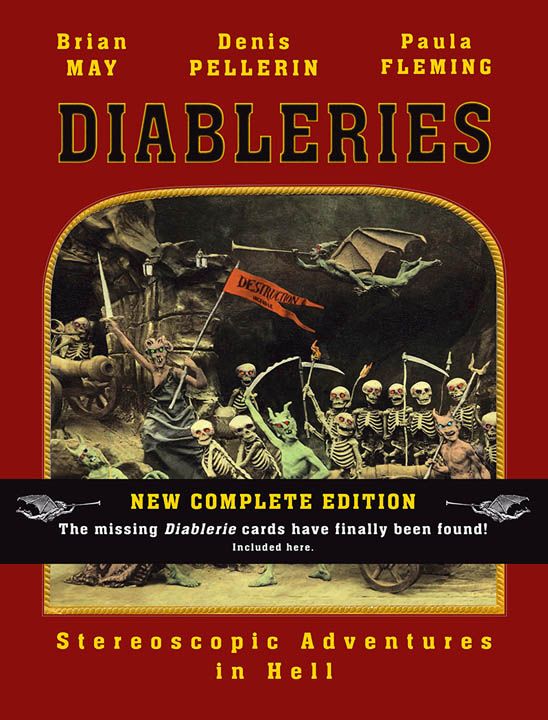
Studying for a Masters degree in Photographic History & Research at De Montfort University, Leicester, I was fortunate enough to attend a presentation by Brian May, Denis Pellerin and Paula Fleming about their book ‘Diableries: Stereoscopic Adventures in Hell.’
‘Diableries’ originally published in 2013.
For the first time, I heard terms like ‘stereocard,’ ‘stereoscope’ and ‘view’ and learned about the fascination that 3D held for the Victorians.
As it turned out, the presentation proved both inspirational and pertinent.
A few months later, my Masters research project took shape … and a professional stereographer, Percy R. Salmon FRPS (1872-1959), was at its heart.
2022 film celebrating the 150th birthday of Percy R. Salmon FRPS (1872-1959).
But there was only one problem.
However hard I tried, I could not see in 3D.
The reason lay in my ‘lazy’ right eye, diagnosed when I was 7 during a school medical.
My astigmatism has meant wearing glasses ever since.
Then one day, when I had almost given up all hope of seeing in 3D, I looked at a stereocard through a hand-held stereoscope for the umpteenth time – and the two images fused into one.
I could see the promised 3D ‘view.’
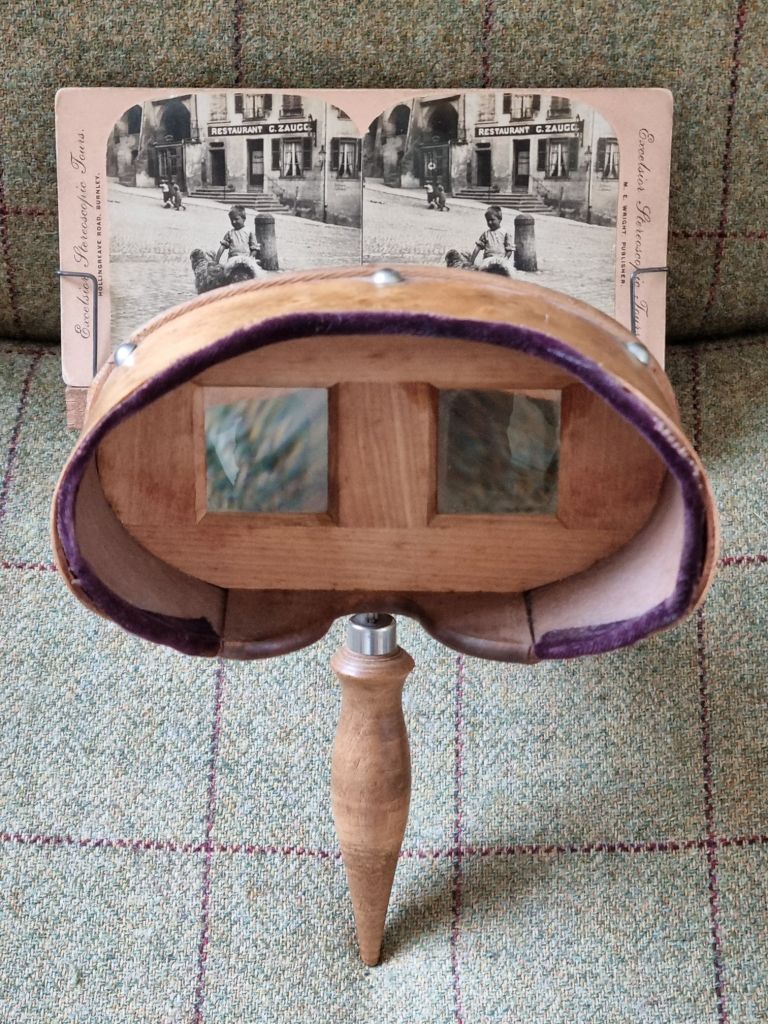
My first hand-held stereocard viewer, ‘The Perfecscope’ c. 1895.
Since then, stereoscopy has transformed my life, leading to a doctorate that investigated 3D’s influence on early press photography (see ‘Writings’).
It’s also improved my eye-sight, prompting my optician to wonder how this was possible given I am getting older.
What started as a handful of stereocards is now a growing collection.
It largely features the Underwood & Underwood company (1880s-1920s); plus Excelsior Stereoscopic Tours of Burnley, Lancashire; press stereographer James Edward Ellam (1857-1920); plus early stereos by W. & D. Downey and amateurs like Edward and Eliza Charlton, all featured elsewhere on this blog.
If you haven’t tried stereoscopy before, hunt down a few cards on Ebay and purchase an ‘Owl’ viewer designed by Brian May.
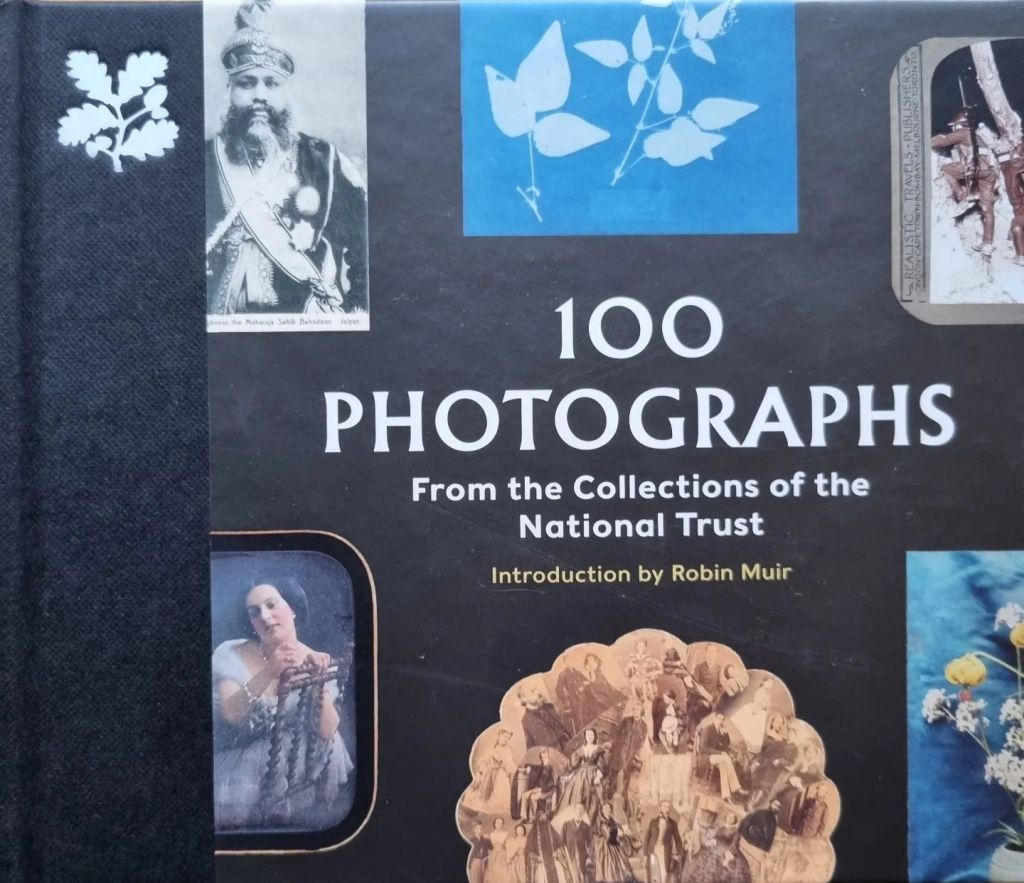
Since it was published last month, ‘100 Photographs From the Collections of the National Trust’ has been on Pressphotoman’s shopping list.
Front cover of ‘100 Photographs …’ (National Trust Cultural Heritage Publishing 2024).
The book features images taken from the NT’s collections of more than half a million photographic objects held at its properties in England and Wales.
National Curator of Photography Anna Sparham had the (un)enviable task of choosing the featured images, which are accompanied by illuminating background texts.
‘100 Photographs’ takes a chronological approach, introducing us to lesser-known or overlooked names behind the camera and giving many images their public debut.
Safe to say, the book is a veritable treasure trove for photohistorians and those interested in how the medium has reflected and continues to reflect the world around us.
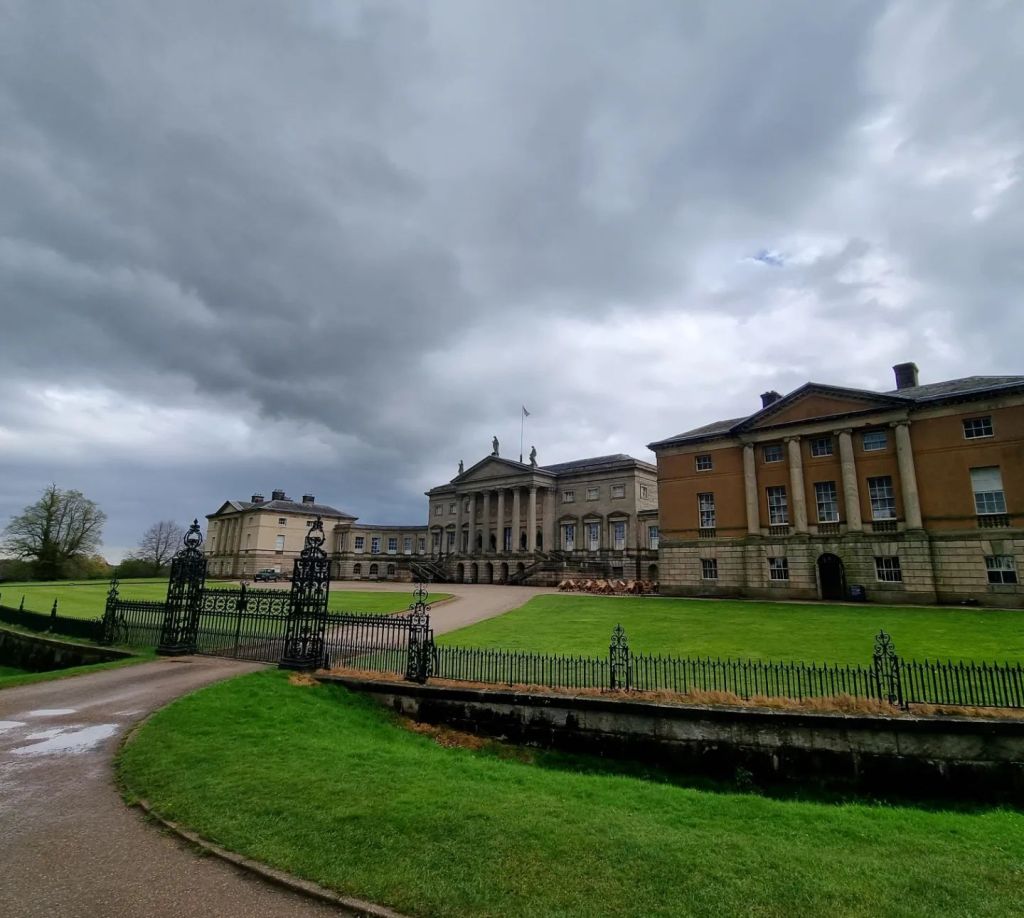
My copy was purchased during a holiday visit to Kedleston Hall near Derby, a National Trust property whose photographic collection is amongst those reflected in the 100 chosen images.
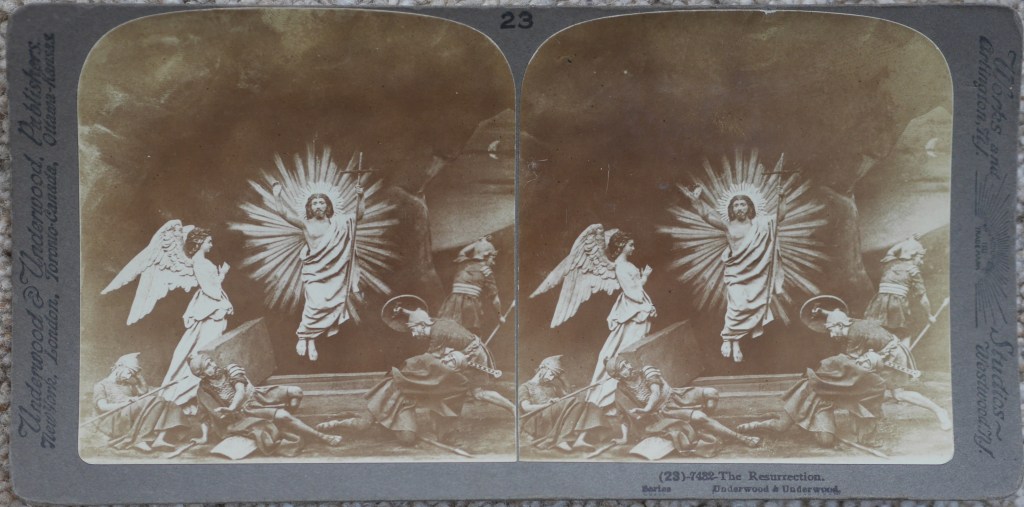
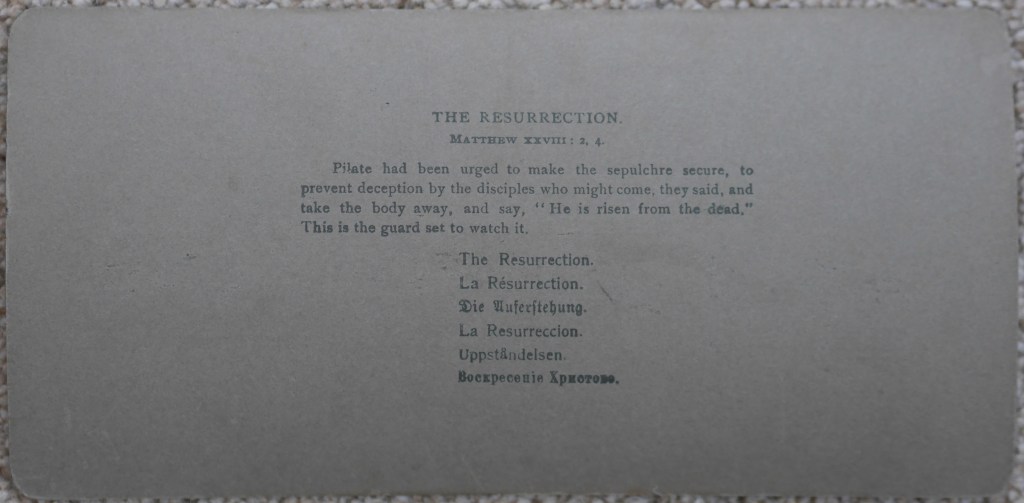
According to William C. Darrah’s ‘The World of Stereographs’ (1977, p. 187), twelve tissues illustrating the life of Jesus were published in France in the late 1860s.
He states that these paintings were copied as stereographs and then repeatedly reproduced as views in the decades that followed.
Darrah also adds that “great quantities of these were sold in the United States until 1915.”
The set in my collection features 24 scenes published by Underwood & Underwood (U&U) starting with ‘The Nativity’ and ending with ‘The Ascension.’
They came into my collection almost by accident, arriving unadvertised together with a wooden U&U ‘Perfecscope’ viewer that I purchased several years ago when my interest in stereoscopic photography was starting.
If you know more about the ‘Life of Christ’ stereo set and have seen examples produced by other publishers, please use the comments box below.
Newspaper adverts are a great fund of information about the early decades of photography, especially when other primary sources such as company records have vanished.
The ongoing digitisation of newspaper archives has brought previously unavailable collections into the public domain and made them more easily accessible.
For the researcher, searchable commercial websites such as the British Newspaper Archive, Find My Past, and Newspapers.com by My Ancestry are well worth regular visits in search of new discoveries.
As regular readers will be aware, the American stereoscopic photography company of Underwood & Underwood (U&U) continues to interest this researcher.
During the 1890s, its activities in Britain were chronicled by the photographic and trade press.
Until recently though, I had found little trace in the regional press of the network of agents so essential to the company’s successful business model.
This involved agents employing canvassers working door-to-door who took orders for stereoscopes and views, returning later to deliver the goods.
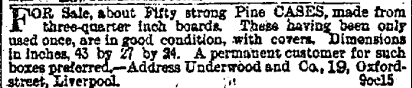
To begin with, U&U imported its products through the transatlantic port of Liverpool where it established an office in late 1890/early 1891.
After initially lodging in the city, co-founder Bert Underwood and his wife Susie set up home at 19 Oxford Street in the Mount Pleasant district of the city which acted as the U&U office.
It was at this address that their first child, Elmer Roy Underwood, was born on 8th May 1891.
Birth certificate for Elmer Roy Underwood, born 8th May 1891 at 19 Oxford Street, Liverpool.
It’s notable that Bert listed his profession as “photographic agent.”
Within a few months, the company’s import of stereoscopes and stereocards into Liverpool was in full swing.
This newspaper advert from the Liverpool Mercury reveals the initial scale of U&U’s operation.
Advertisement from Liverpool Mercury, 12th October 1891.
By 1894, it had reportedly shipped three million views and 16,000 stereoscopes through Liverpool into Britain.
At this point, Underwood sold cards produced by more established stereoscopic publishers, notably C. Bierstadt of Niagara Falls; the Littleton View Company of New Hampshire; and J.F. Jarvis of Washington, DC.
According to the Getty Museum, this Bierstadt view originally dates from 1869. In U&U’s version, “Liverpool” features in the list of Underwood offices on the right-hand side of the card.
With supplies of its 3D wares at hand, the company began establishing a sales network of the type that had proved so successful in America during the previous decade.
To help achieve this objective, advertisements were placed in local newspapers such as this one from The Hinckley Times in Leicestershire published in January 1892.
It announced that “Mr. P. Payne” at the “Free Library” had been given “the sole right to sell” U&U’s stereoscopes and views in “Hinckley and District.”
Advertisement from The Hinckley Times, 30th January 1892.
According to trade directories, Peter Payne was the town’s librarian and its “Free Library and News Room,” maintained at an annual subscription of £40, boasted 1500 volumes.
Given the Underwood company’s later promotion of stereoscopy as an educational aid, it is interesting that a library was pinpointed as a suitable location for one of its representatives.
Within a few months, Hinckley had another sole agent offering U&U’s 3D products.
This newspaper advertisement from The Nuneaton Observer lists the prices of the company’s stereoscopes and stereocards (slides), and promotes its views “from all parts of the world” as “the finest in the world.”
Advertisement from The Nuneaton Observer, 22nd April 1892.
According to Wright’s Directory for Leicestershire for 1892, Abraham Farndon operated from 7 Castle Street, Hinckley as a “coal merchant and bicycle, glass and china dealer.”
During this period, U&U were also making inroads into the rapidly expanding world of photographic societies.
Such groups thrived all over Britain as the medium reached new practitioners and audiences, in part through Kodak’s “you press the button, we do the rest” cameras.
The Eastbourne Chronicle (7th May 1892) reported how at a meeting of the Lewes Photographic Society, “some stereoscopic views by Messrs. Underwood & Underwood were shown and much admired by those present.”
The public’s renewed appetite for 3D seemed insatiable as this double-column advertisement placed in The Workington Star in January 1893 underlined.
“Have you, or do you want, a STEREOSCOPE!”, the ad proclaimed before describing a range of attractive offers for those purchasing U&U products in bulk.
Quantities of a gross (144 views) or half gross (72 views) came with a “PLUSH CABINET.”
This product echoed the revolving cabinet in which to store multiple sets of views that the company heavily promoted around 1900. Free stereocopes were also included.
Advertisement from The Workington Star, 20th January 1893.
In this advertisement, there was no mention of Underwood’s Liverpool office, but “Baltimore, Ottawa, Kansas and New York” were highlighted, adding an air of international glamour to proceedings.
John P. Mossop, the named “sole agent,” was listed in the 1891 Census for Workington as a 28 year-old grocer.
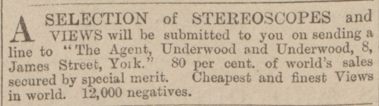
Another U&U “agent” based in York was less forthcoming about his personal details, but confidently offered customers “the cheapest and finest views in the world.”
Advertisement from The Yorkshire Gazette, 4th February 1893.
The handful of adverts featured in this piece offer a glimpse of U&U’s activities during the early 1890s when it began to expand its business from America into Europe and beyond.
What is more significant perhaps is that by the close of 1893, two of the featured traders, Messrs. Farndon and Mossop, had encountered financial problems that, according to press reports, led to them being declared bankrupt.
In America, 1893 also marked a financial panic that led to one of the most severe economic depressions in US history, which had worldwide ramifications.
This might also explain why in August of that year, Bert Underwood, his wife Susie and their by then three year-old son Roy left Liverpool and returned to the United States.
As U&U’s later history indicates, this unforeseen set of circumstances marked only a temporary blip in its inexorable rise to eventual pre-dominance in the 3D market.
Since first writing up what I knew about the life and career of James Edward Ellam (Press Photo Pioneer – 28th April 2023), I’ve been fortunate enough to locate 30 examples of his 3D views.
That’s resulted in this blogpost-a-day series, which has appeared throughout September, attracting ‘likes’ and ‘follows’ and interest from other photohistorians.
Those who’ve followed my daily posts will have worked out that today, by including two of James’s stereos in “The Great Gale” (23rd September 2023), I’m a stereo short.
So I thought I would conclude the series with a few reflections on what more I’ve learned about James and how his amateur stereoscopy in Yorkshire fed into his later life as a Fleet Street photographer.
As comments like “wow,” “beautiful” and “amazing” in response to various posts have underlined, James was a fine stereoscopic photographer.
He was also well-travelled as the range of locations he stereographed in England, Scotland, Wales and continental Europe bear out.
The role of amateur societies in popularising photography in the latter part of the 19th century is currently the focus of a number of academic research projects.
In James’s case, summer excursions organised by the Stockton Photographic Society, of which he was Secretary, played a significant part in his development as a 3D practitioner.
As one newspaper report noted (Stockton Herald, 7th February 1891), “Stereoscopic work is one of the principal branches of the Society’s operations” and added that “the roll of the Society … now numbers nearly sixty.”
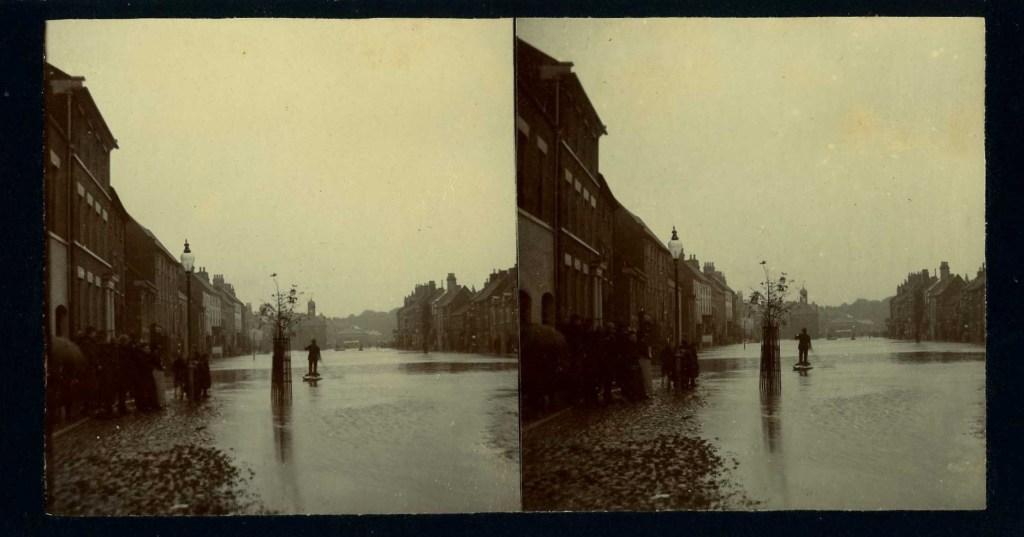
A visit I made in 2018 to Preston Park Museum, near Yarm, which has a collection of around 20 of James’s stereocards, enabled me to make an important link.
I was able to place one that I saw there, featuring a flood in Yarm dated October 1893, alongside one of my 30 with the same title from a different viewpoint.
This illustrated how James shot sequences in 3D, a skill that would come in useful when he began supplying photographs to illustrated newspapers in Fleet Street.
It was also evident in the two stereos that I wrote about in “The Great Gale” featuring the effects of a storm in Scotland in October 1898 that created headline news.
Another formative influence was James’s job as a chemist’s assistant with Strickland & Holt in Yarm where he lived in the first half of the 1890s.
Back in 2018, Stephanie Richardson, whose family co-founded the business nearly 170 years ago, shared with me several examples of James’s stereo views.
As a result, I was able to recognise the “J.E. Ellam, Yarm” stamp which features on the verso on the first half-a-dozen or so cards I blogged about.
Stephanie also showed me a stereo illustrating an outdoor portrait studio used by Strickland & Holt customers in the 1890s.
Outdoor portrait studio at Strickland & Holt, Yarm. Courtesy of Stephanie Richardson.
What I know realise is that the bearded man on the left (above) bears a resemblance to Henry Bradley (below), with whose family James lodged during his years in Yarm and later in Dunmow, Essex.
Henry was also active in the Stockton Photographic Society as a committee member and later as a vice-president.
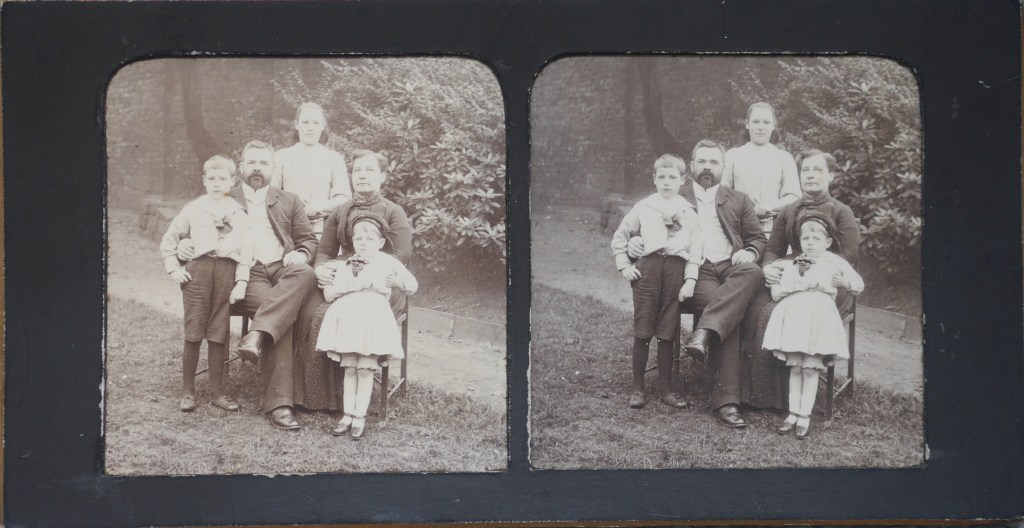
The 3D portrait of the Bradley family that featured in the cache of 30 was another breakthrough moment in my research project.
Looking at census records, I was able to put names to faces in the stereo, notably Henry, who I had previously seen featured in a promotional postcard for his outfitters business, his wife Dorothy, and some of their children.
Viewing the stereo, I wondered if the youngest of the girls featured was their daughter Marguerita?
I knew that in the 1911 England Census, Henry recorded the “personal occupation” of Marguerita Annie Bradley, or “Mab” as she was known throughout her life, as a “Retoucher” working “at home.”
By that point in his professional life, James was working for London News Agency Photos at 46 Fleet Street.
Though he lived in London during the week, he returned to Dunmow at weekends and stayed with the Bradley family.
Could it be that in 1911, Miss “Mab” Bradley, then aged 22, was earning a living by retouching photographic negatives, including James’s, to improve their quality?
Further research into Mab’s photographic career has confirmed that she too was an accomplished photographer.
The 1921 Census records her living in Dunmow with her parents and sisters Clare and Feodora, but more importantly, her “personal occupation” is recorded as “photographer.”
For example, she is credited with photographs that feature in local history publications including Dunmow and Its Charters (1923) and A Short History of Great Dunmow Church (1926).
From A Short History of Great Dunmow Church (1926).
Both publications feature in the British Library and both post-date James’s death in an accident involving an omnibus in Fleet Street in 1920, so it appears that Mab’s photography continued to flourish.
One last thought occurs to me.
Perhaps the cache of 30 stereos that have formed the basis of this blogpost-a-day series once belonged to Miss Mab Bradley (1889-1979).
The donation of the 30 stereos to a charity in Essex before reaching a well-known auction website would indicate that this thought is worth further investigation.
In an earlier post (“St. Anton” – 24th September 2023), I suggested that James Edward Ellam (1857-1920) worked for 3D giants Underwood & Underwood as a travel views photographer.
A cache of 30 stereos from the 1890s that are attributable to him, and about which I’ve written this month, includes a second stereo that supports this idea.
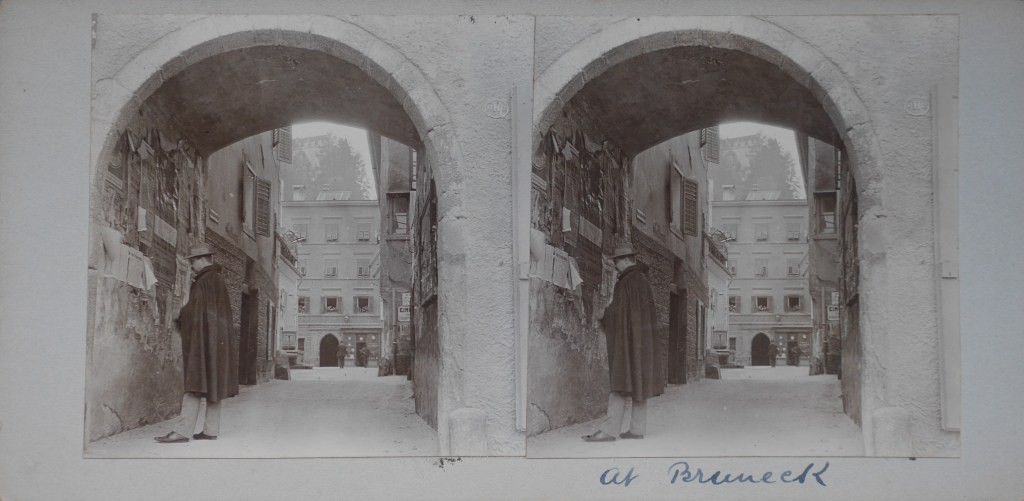
Captioned “At Bruneck” in James’s hand, it features a 3D view taken through an archway into the street beyond.
Today the medieval town of Bruneck, its German name, is part of the South Tyrol province of Northern Italy where it is known as Brunico.
As with “St. Anton,” the stereo uses a light-coloured card suggesting it comes from the same time period.
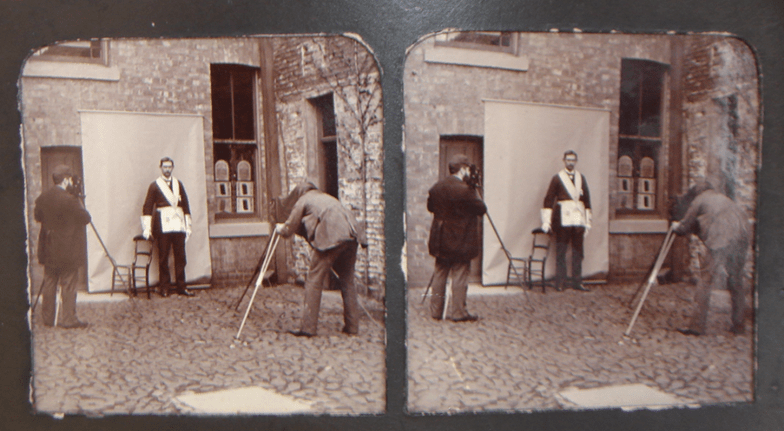
In researching this series of blogposts about James, I had previously failed to identify a photograph of him.
In 2022, I used social media to try and locate one, but without success.
Yesterday’s stereo captioned “His Majesty” raised the possibility that it featured James.
Perhaps it was taken by his fellow 3D photography enthusiast Henry Bradley with whose family James lodged for around three decades in Yorkshire and later Essex.
Of my 30 stereos attributable to him, the word “at” only appears in the title given to this particular view.
Here, its use could be read as meaning that I, James Edward Ellam, am “At Bruneck.”
I’ve spent many hours looking at both stereos detecting similarities between the men featured, particularly their moustaches, their height, and their stance in which the left foot is favoured.
I’ll leave you to decide whether or not you agree.
The relationship between James Edward Ellam and the Underwood & Underwood company (U&U) flourished from 1897 when he stereographed Queen Victoria’s Diamond Jubilee Celebrations.
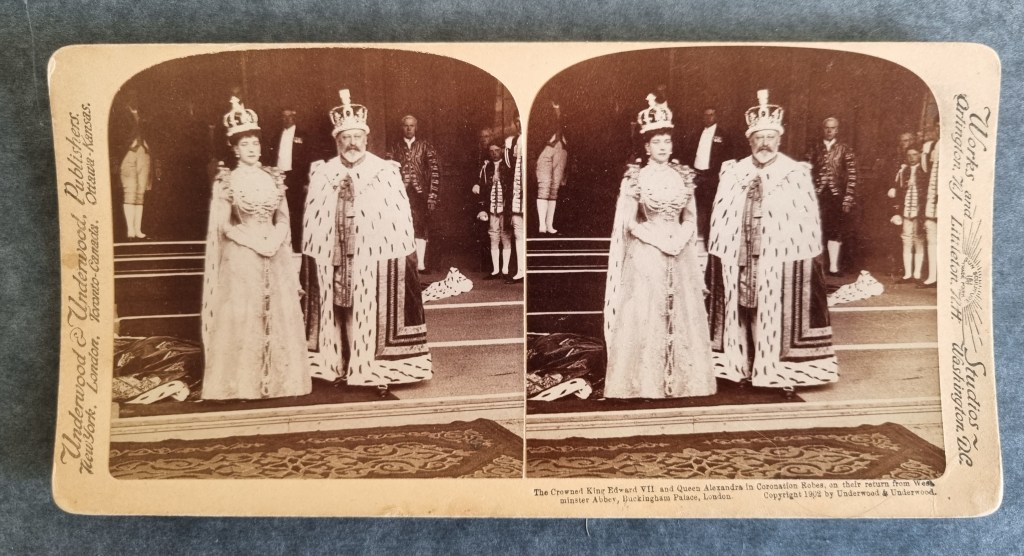
Five years later, his exclusive 3D portrait of King Edward VII and Queen Alexandra in their coronation robes provided U&U with both a press photo and a highly commercial stereocard.
Captioned “St. Anton” in James’s hand, it features a view of a town in the Austrian Alps known the world over as a legendary ski resort.
However, it was only towards the end of the 19th century, when alpinists used a new railway to reach St. Anton, that skiers were first spotted on the surrounding slopes.
Dating this stereo to the mid-to-late 1890s places it at a time of transition for St. Anton from an economy based on agriculture to one centred on tourism.
At this point in its evolution, the stereoscopic photography company Underwood & Underwood of New York and London was expanding the list of countries its customers could visit virtually via the stereoscope.
Their big idea was to publish box sets of 3D views, accompanied by maps and guidebooks, that allowed customers to travel as virtual tourists without leaving home.
Stereoscopic photographers, who could deliver high-quality views, were essential to the success of its business model.
A typical example is “Picturesque Innsbruck, the capital of Tyrol, Austria …”
This blogpost-a-day series about a cache of stereos attributable to James Edward Ellam (1857-1920) has so far revealed a wide range of subjects from cathedrals and castles to floods and snow.
But today’s stereo marks a change and is an example of the sort of comic or sentimental 3D cards that were hugely popular with late-Victorian and Edwardian audiences.
Titled “Darby & Joan,” two children dressed in Scottish-themed tartan outfits appear as the hero and heroine of the mid-18th century ballad by Henry Woodfall.
The term “Darby & Joan” has come to signify a loving, virtuous married couple, so the use of young children to convey its theme adds a twist that was presumably intended to increase its commercial appeal.
Looking at the faded title written in ink, it strongly resembles James’s handwriting indicating, as with other stereos from posts this week, that he may have been the stereographer responsible.
As we learned yesterday, James lodged with fellow photography enthusiast Henry Bradley, his wife Dorothy and their five children in Yarm, Yorkshire and then when they moved to Dunmow, Essex in 1896 (“The Bradley Family” – 21st September 2023).
Given this domestic arrangement, it is possible that two of the younger Bradleys posed as models for this 3D portrait.
As evidence for this, it’s noticeable that a particular style of shoe with an ankle strapping is present in both the Bradley family portrait and “Darby & Joan.”
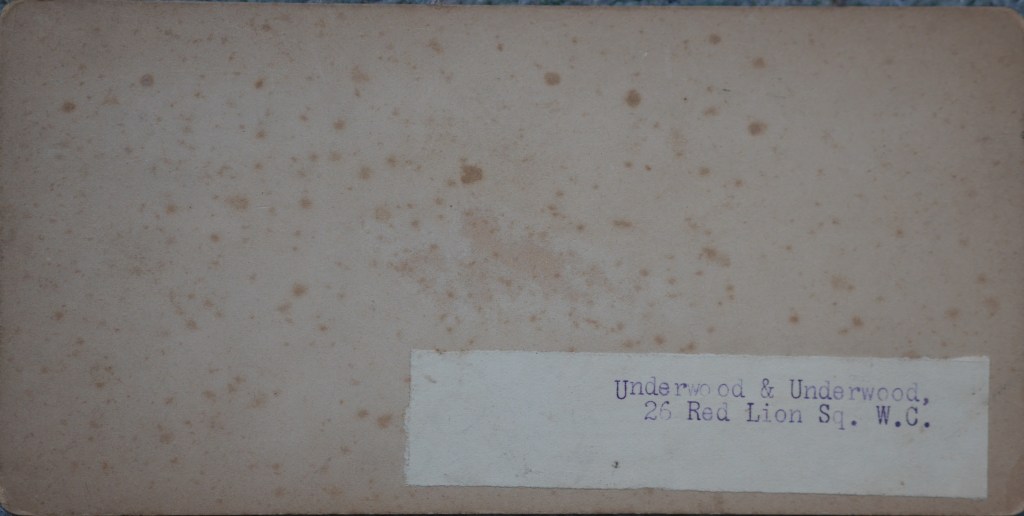
Further evidence of James’s embryonic relationship with the stereoscopic photography company Underwood & Underwood (U&U) is revealed by the verso.
It boasts a typed sticker featuring the Underwood company’s London address from the mid-1890s of 26 Red Lion Square.
Verso of “Darby & Joan” featuring Underwood & Underwood sticker.
Here, a little company history is helpful.
U&U began life in Ottawa, Kansas in the early 1880s, but as the company expanded beyond America, an office was opened in Liverpool in 1890 to handle its transatlantic trade.
By the mid-1890s, 26 Red Lion Square in London was the hub of its UK operation as the company developed new markets for its 3D products in Europe and beyond.
Whether James submitted “Darby & Joan” for publication by U&U, the card’s verso indicates a connection with the company at some point in its life.
James’s relationship with the Underwood company was certainly up and running by June 1897 when U&U published his views of the Thanksgiving Service for Queen Victoria’s Diamond Jubilee.
And with London’s Fleet Street demanding photos to illustrate its news stories, James was well placed to help service that demand.
Looking through a cache of 30 undiscovered James Edward Ellam stereos from the 1890s, a eureka moment occurred when I saw this stereo titled “Fountains Abbey.”
There, along with James’s familiar handwriting recordinging the stereo’s title in ink, was a pencil addition in his hand of “Underwood & Underwood.”
Those who’ve been following my daily blogposts will be aware of James’s stereos for the Underwood company (U&U) at the celebrations in June 1897 to mark Queen Victoria’s Diamond Jubilee.
What this stereo offers is evidence suggesting he had an embryonic relationship with U&U in the preceding years.
Whether he thought this view of Fountains Abbey was worthy of publication, and perhaps even sent it to them for consideration, is not clear.
His choice of a light-coloured card is perhaps significant as it mirrored that being used by the Underwood company in the mid-1890s.
By the summer of 1896, James was sufficiently confident about the quality of his photography, stereography in particular, to leave Yarm and Yorkshire behind.
His ultimate destination was London where U&U and other leading stereo companies were based.
The National Stereoscopic Association, which celebrates all things 3D, holds an annual convention for its members each summer in an American city.
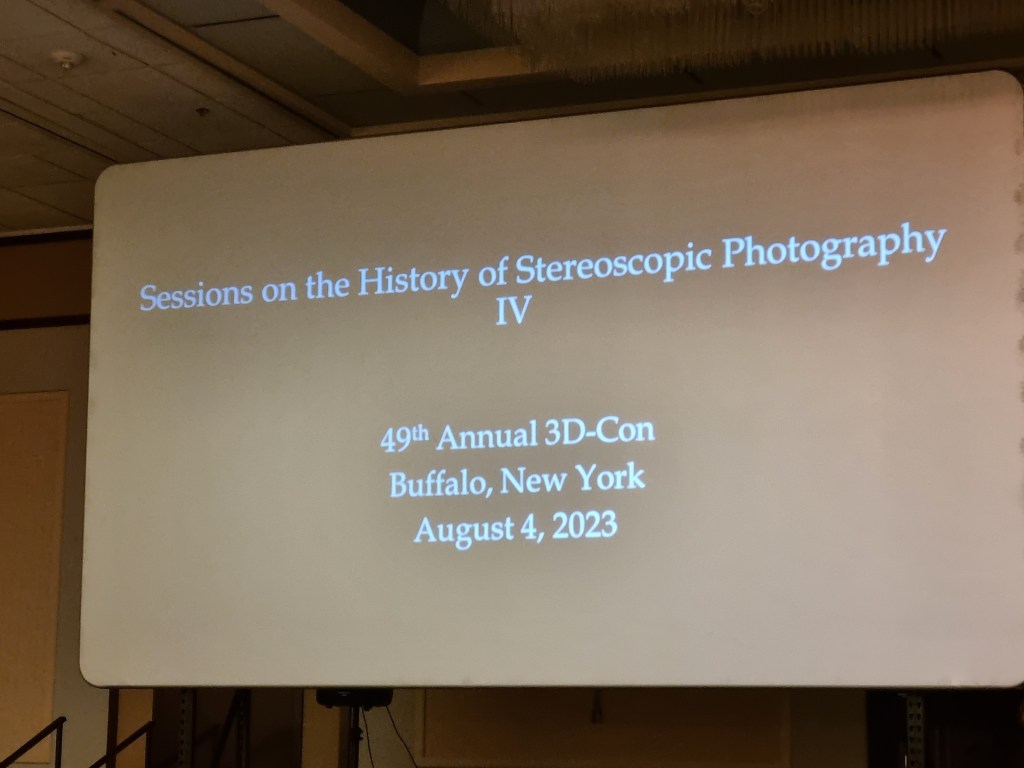
This year the 49th event took place in Buffalo in upstate New York, and I was pleased to attend and present my latest research on the influence of stereoscopy on early press photography.
Front cover of brochure for 3D-Con 2023.
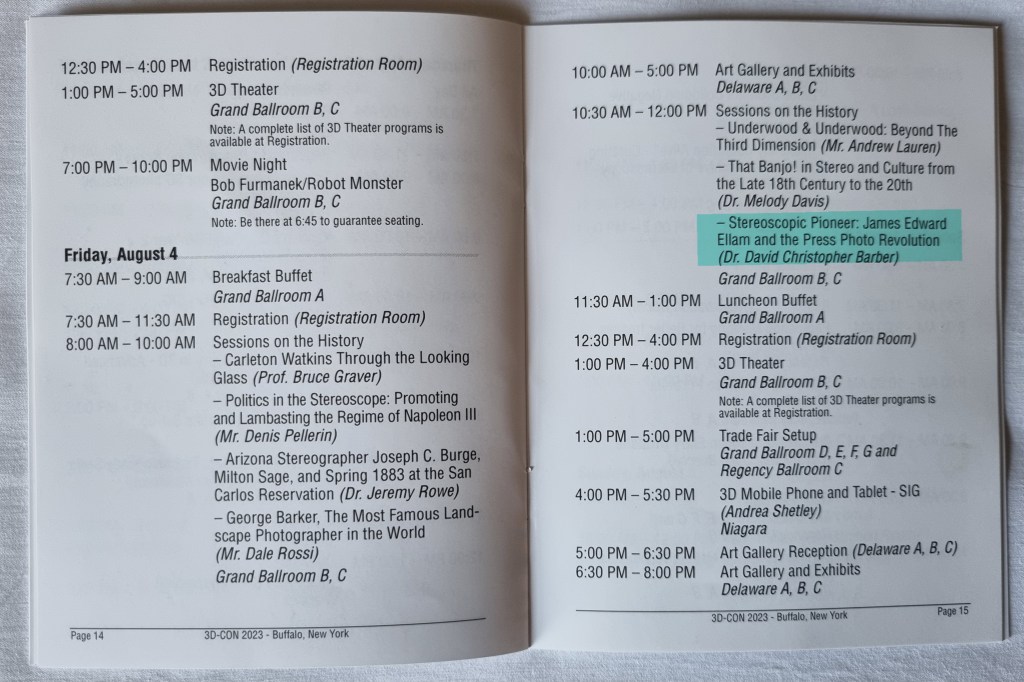
“Sessions of the History of Stereoscopic Photography IV” occupied a whole morning and a total of 7 speakers covered a range of topics.
Programme of talks for “Sessions on the History of Stereoscopy IV.”
These included presentations on Carleton Watkins, Napoleon III, Arizona, George Barker, Underwood & Underwood and the Banjo.
After speaking at conferences in the UK, it was my first overseas presentation to an international audience made up of attendees from all over the world.
My talk, “Stereoscopic Pioneer: James Edward Ellam and the Press Photo Revolution,” looked at the path followed by one amateur stereographer from Yorkshire to Fleet Street where he enjoyed a successful career as a press photographer.
Title slide of my presentation to 3D-Con 2023.
Regular readers of this blog will recognise the name James Edward Ellam from an earlier post (April 28, 2023: Press Photo Pioneer).
However, my 3D-Con talk was greatly informed by a recent discovery I made of a cache of Ellam stereos on a well-known auction website. They largely date from his time in the Yorkshire town of Yarm in the 1890s.
Many bore his name, “J.E. Ellam,” on printed stickers alongside his handwritten titles on the verso.
It’s handwriting that I recognised from various copyright forms I have seen in recent years in the National Archives at Kew that had been filled out and signed by him.
Most exciting of all was that two of the stereos indicated links with Underwood & Underwood with whom he had a productive working relationship as his stereos for U&U featuring Queen Victoria, King Edward VII & Queen Alexandra, and Pope Pius X testify.
Given that there are around 30 stereos, it seems that September offers an ideal opportunity to share these Ellam images day-by-day via this blog with a few new insights that I have learned by viewing them more closely.
The recent release of the first full 3D scan of the wreck of Titanic generated worldwide interest.
Magellan, a deep sea mapping company, completed the first full £D scan of Titanic on the ocean floor.
The sinking of Titanic is a story that continues to fascinate and one that wove its way into my recently-published doctoral thesis on early press photography.
By 1912, Underwood & Underwood (U&U), the 3D photography company that provided the case study for my thesis, was supplying news photos to newspapers and magazines across the world.
A story I was unaware of before beginning my research was the company’s role in securing a series a Titanic photographs taken by 17 year-old Bernice “Bernie” Palmer using a Kodak Brownie.
Bernice was a passenger on Carpathia, the ship that rescued passengers from Titanic. She was able to photograph both the iceberg involved as well as survivors recovering on deck in the days following the disaster.
The details are well described and illustrated in a blogpost featuring her remarkable snapshots put together by the Smithsonian Institution in Washington, DC.
According to the National Museum of American History’s account, Bernice was approached on her return to New York by a “newsman” working for Underwood & Underwood who offered to develop, print and return the pictures to her along with $10.
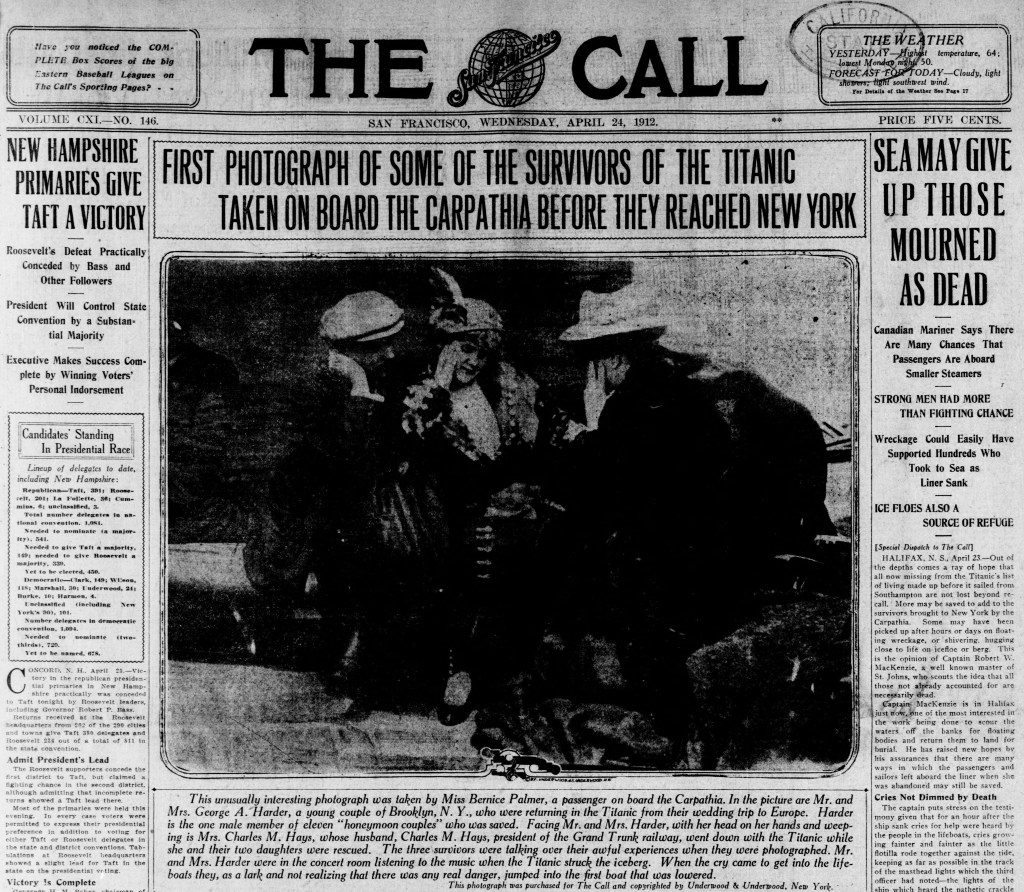
As a result, U&U copyrighted the resulting images and was able to widely distribute her photographs making front-page headlines in the process.
Front page of The Call, San Francisco, 24th April 1912, ten days after the sinking of Titanic. Image provided by University of California, Riverside, CA. Courtesy of Chronicling America.
Note the credit caption at the bottom of the page which states: “This photograph was purchased for The Call and copyrighted by Underwood & Underwood, New York.”
During a research trip to the Smithsonian in 2020, I was fortunate enough to be able to handle and view Underwood & Underwood’s original contractual agreement with Bernice dated 8th February 1913.
As this was several months after the sinking, it is reasonable to assume that by that point, the company had maximised the immediate commercial potential of its “exclusive” photos and and was willing to return the copyright to its owner.
The Epilogue to my thesis explores this sequence of events in more detail and examines some of the questionable behaviour that resulted in pursuit of a journalistic scoop.
If you wish to read more about the role played by stereoscopic 3D photography in shaping press illustration in the decades either side of 1900, you will find a link to the full thesis in my blogpost “Doctoral thesis” (13th May 2023).
“It is the first study devoted to analysing how stereoscopic 3D photography became integral to daily newspapers, illustrated weeklies, and magazines.”
My doctoral thesis, Another Dimension: Stereoscopic Photography and the Press, c.1896-1911, funded by the Arts and Humanities Research Council (AHRC) is now available via this link.
Underwood & Underwood were the pre-eminent supplier of press photos “taken from stereographs.” From National Geographic archives, Washington, DC.The company’s Illustration Department supplied the press with millions of photos taken from its stereos. From New York Public Library Digital Collections. b11652262.
On the eve of the 1902 Coronation of Edward VII and Alexandra, a photo call took place at Lambeth Palace in London.
Present were key players in the following day’s ceremony at Westminster Abbey, notably the Archbishops of Canterbury and York who were to crown the King and Queen respectively.
As the first coronation in Britain for 65 years, this 1902 timeline has echoes of 2023, but there is another significant fact. The 1902 Coronation was the first such occasion since the arrival of photography.
As a result, still and moving cameras were out in force during that coronation summer to record every official function and its participants.
Among the companies involved was Underwood & Underwood of New York, one of the era’s leading stereoscopic ‘3D’ photographers.
This U&U stereo, featuring Frederick Temple (1821-1902), Archbishop of Canterbury, and William Dalrymple Maclagan (1826-1910), Archbishop of York, was issued as part of a coronation-themed set.
‘Archbishops of Canterbury (to left) and York (to right) in Coronation Robes – ready to crown Edward VII, King – London, England.’ Copyright 1902 by Underwood & Underwood. Author’s collection.
The stereo also featured in the company’s short-lived magazine The Stereoscopic Photograph (September 1902) as part of an article promoting its products titled “The Crowning of the King.”
There, it was given an alternative title of “The Archbishops of Canterbury and York in Coronation Robes, with their Sons, London.”
Of course, this additional piece of information, “with their Sons,” provides both context and pointers as to the identity of the other figures portrayed in the stereo.
Here were the two most senior clergy in the Church of England being photographed with members of their families ahead of perhaps the biggest moment of their clerical lives.
Further research has revealed that the U&U stereo featured both a future Archbishop of Canterbury and an influential Director of the Victoria and Albert Museum in London.
Frederick Temple’s son William (back left) pursued a career in the church and followed in his father’s footsteps during the years 1942 to 1944. William Maclagan’s son Eric (back right, later Sir Eric) was an art historian who led the V & A from 1924 to 1945.
Another photograph taken on this occasion is part of the Royal Collection.
As well as the Archbishops of Canterbury and York, it features another participant in the 1902 Coronation service.
At this point, Randall Davidson (1848-1930) was Bishop of Winchester, succeeding Frederick Temple as Archbishop of Canterbury when he died a few months after the ceremony.
On the Royal Collection Trust website, the photographer of this portrait is credited as “unknown person.” (Update 18th May 2023: the Royal Collection Trust has amended its website and attributed the photograph to James Russell & Sons to reflect the research outlined below).
However, evidence identified by this blog points towards that person being John Lemmon Russell (1846-1915), head of the firm of J. Russell & Sons who held a royal warrant as photographers to Queen Victoria.
In an interview published by the weekly illustrated paper Black & White (27th December 1902), Russell described the photo call in some detail.
“The day before the Coronation, I had the pleasure of photographing the Archbishops of Canterbury and York and the Bishop of Winchester in their coronation robes at Lambeth Palace.”
He continued: “An American photographer, a representative of Messrs. Underwood and Underwood, was very anxious to accompany me, and I mentioned to the Archbishop of Canterbury the fact that he was present.
“‘I should very much like to speak to the American gentleman,’ said the Archbishop. On being introduced, Dr. Temple proceeded to say what a keen sympathy he had for the American nation. He delivered quite a little speech to my friend, who was exceedingly gratified by this honour.”
The American gentleman was U&U’s co-founder Bert Underwood, and this account helps explain how the company produced its “Archbishops and their sons” stereo.
The collaborative photographic relationship between U&U and Russell during the Coronation summer of 1902 is one that I explore in the current issue of The PhotoHistorian, the journal of the Royal Photographic Society Historical Group.
A free download of that article is available below with the usual credit protocols.
Annual subscriptions for The PhotoHistorian are available for £60 (UK based) or £75 (overseas) to museums, galleries and academic institutions. Contact the editor at PhotoHistorian@rps.org
A few years back, when I bought my first vintage stereocard 3D viewer, it came with a surprise.
Enclosed within the carefully-wrapped package from Germany was a set of 24 cards portraying ‘The Life of Christ.’
As a series of dramatised scenes from the Nativity to the Ascension, the set was published in the early 1900s by the stereoscopic photography company Underwood & Underwood of New York.
My subsequent interest in Underwood’s activities as a supplier of press photographs ‘taken from stereographs’ led to my doctoral thesis (due to be published in May 2023).
Each card comes with a text taken from The Bible, in this case the Gospel according to Luke, chapter 2 verse 16 – ‘And they went with haste, and found Mary and Joseph, and the babe lying in a manger’ (Revised Standard Version).
On the verso, there follows a brief description of the scene followed by the card’s title in English, French, German, Spanish, Swedish and Russian.
This gives an indication of the scope of the international market at which such stereocards were aimed.
It seems Underwood were not the only stereoscopic company marketing this 3D ‘Life of Christ’ at the turn of the 20th century, presumably because of its commercial appeal.
I’ve seen other examples of the same set including colourised versions and one marketed by Sears, Roebuck & Company, the American mail order giant.
Close inspection of the nativity scene in its half-stereo version adds to the mystery of what we are being invited to witness.
Is it a painted scene? Or were individually figures placed against a painted backdrop? Or is the tableau the result of a stereographer working with a cast of actors?
It was timely that ‘The Mystery of the Nativity’ (Sky Arts, 20th December 2022), presented by the art historian Waldemar Januszczak, helped shed light on the tradition of scenes depicting the birth of Jesus Christ.
What he ably demonstrated was how little the Bible has to say about events at Bethlehem and how much artists down the centuries have used their imagination to portray the Nativity.
That would help explain the presence in the Underwood stereo of the ‘girl, carrying a basket upon her head’ who, the verso text explains, is ‘an attendant bringing refreshments from the inn.’
If you know any more about the ‘Life of Christ’ stereocard set and its history, I for one would be very interested to learn more about it.






















 Pressphotoman
Leave a comment