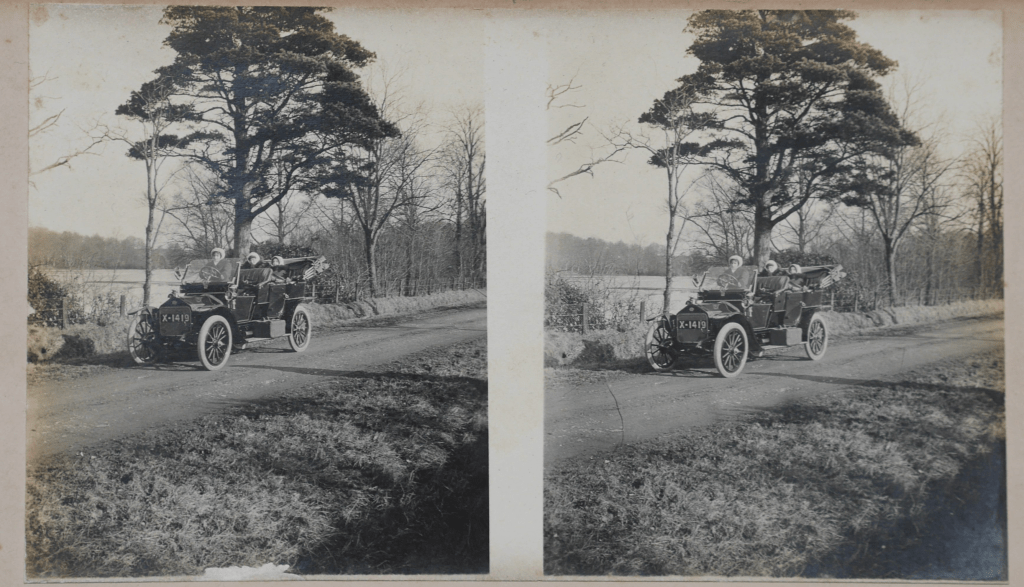
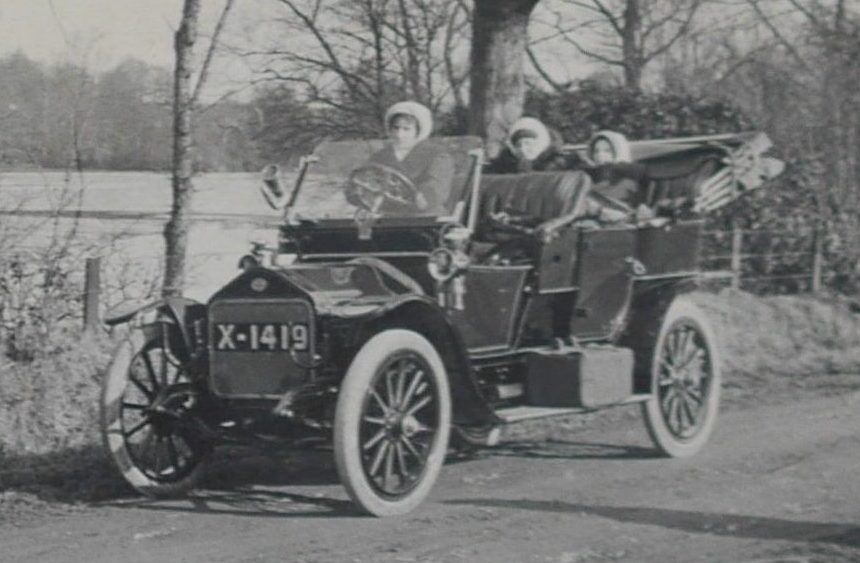
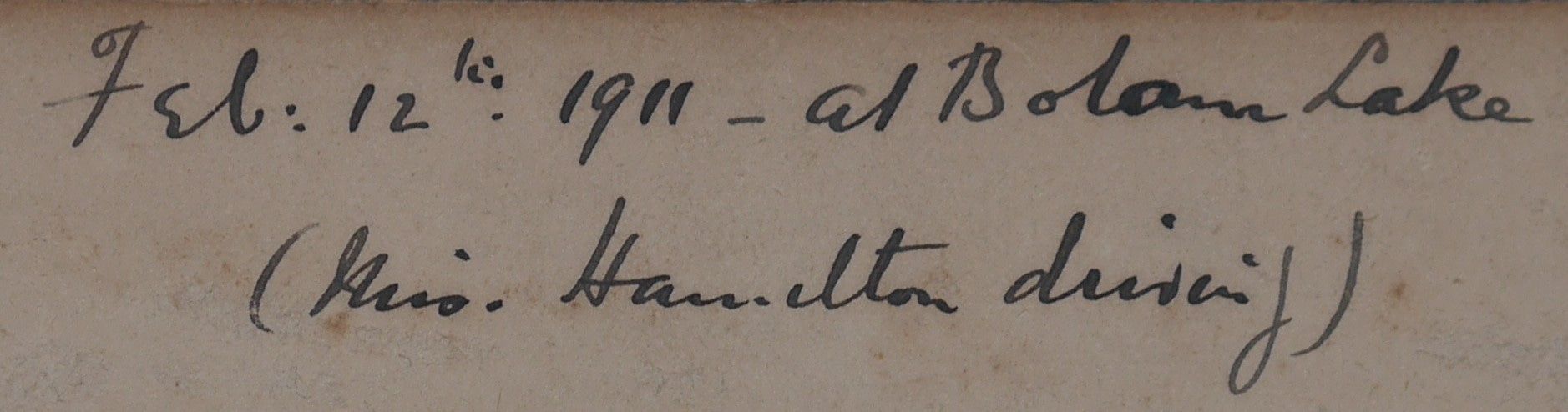
Bolam Lake in Northumberland was created in 1816 by John Dobson, the leading Newcastle upon Tyne architect, and today remains a popular spot with visitors.
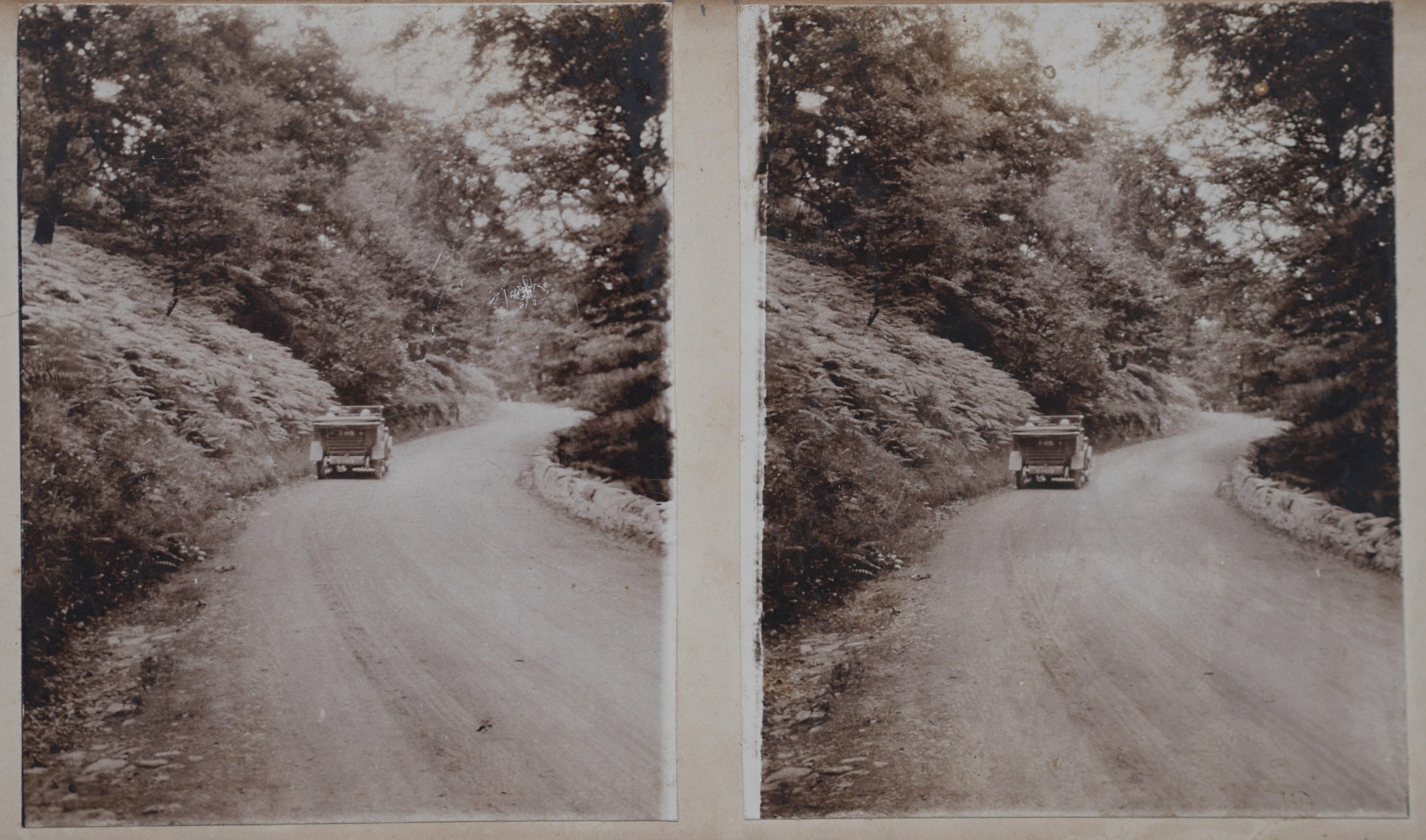
All this information led to a follow-up inquiry to the card seller as to whether more stereos from the same source were available.
The answer came back ‘yes’, so in coming weeks, Pressphotoman readers will be able to go on a scenic 3D car trip around the North of England during 1911.
This week’s Stereoscopy Day, an international celebration of stereoscopic 3D, is a wonderful opportunity for enthusiasts to share their passion for this form of photography.
21st June marks the anniversary of the day in 1838 when Sir Charles Wheatstone shared his revolutionary reflecting telescope with the Royal Society of London and demonstrated his theory of binocular vision.
In the past 12 months, my own collection of stereocards has grown in size as examples by commercial publishers and amateur photographers have come to my attention.
I’ve picked out a number of highlights with the accompanying Pressphotoman blogpost where you can learn more about each one.
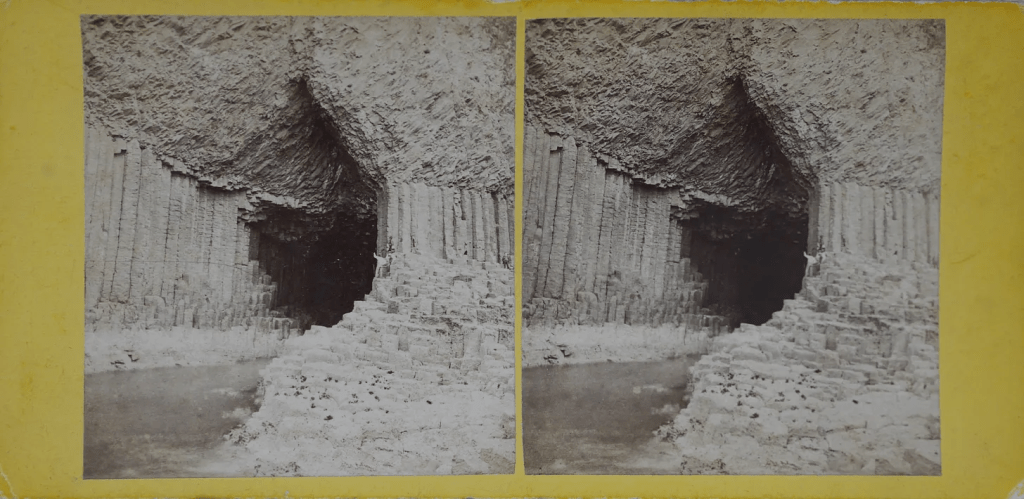
It starts with what was a chance discovery: a card by George Washington Wilson of Aberdeen that is now the oldest in my collection.
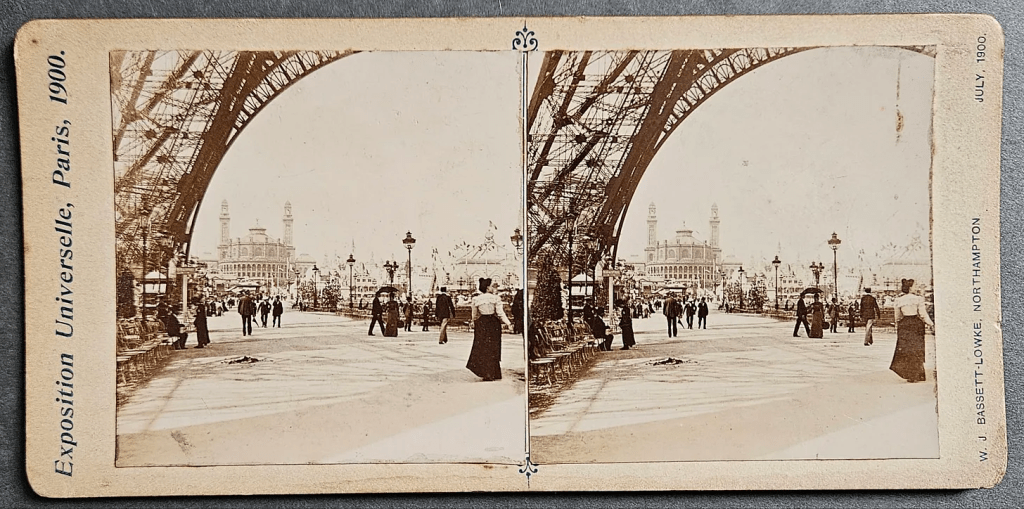
The second card comes from a collection created at the turn of the 20th century by the model toy designer and entrepreneur W. J. Bassett-Lowke (1877-1953) of Northampton, England.
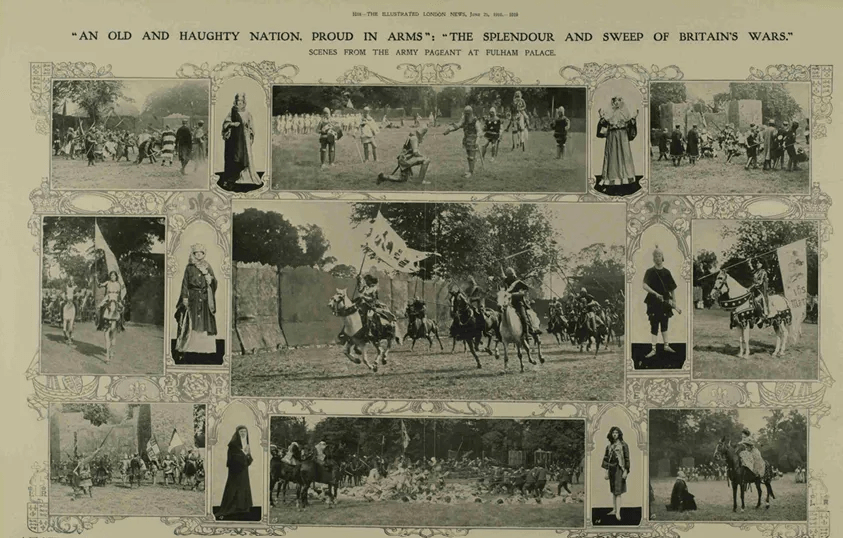
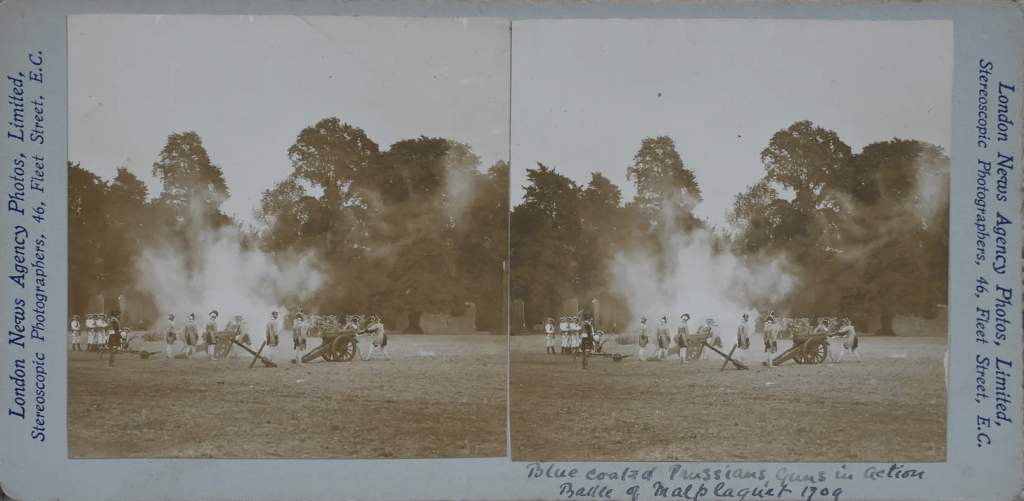
The Army Pageant staged during the summer of 1910 in the grounds of Fulham Palace, London was by all accounts quite a spectacle.
Advertisement from Illustrated London News (18th June 1910). From British Newspaper Archive.
It featured around 5,000 performers and was witnessed by an estimated 100,000 spectators during its 21-performance run, according to The Times.
The Historical Pageants in Britain website describes what pulled in the crowds as “a disparate selection of episodes that illustrated the development of military conflict and the British armed forces.”
Illustrated London News (25th June 1910). From British Newspaper Archive.
Among the press photographers on hand to record the action was James Edward Ellam (1857-1920), whose stereoscopic camera recorded various scenes for London News Agency Photos based in Fleet Street.
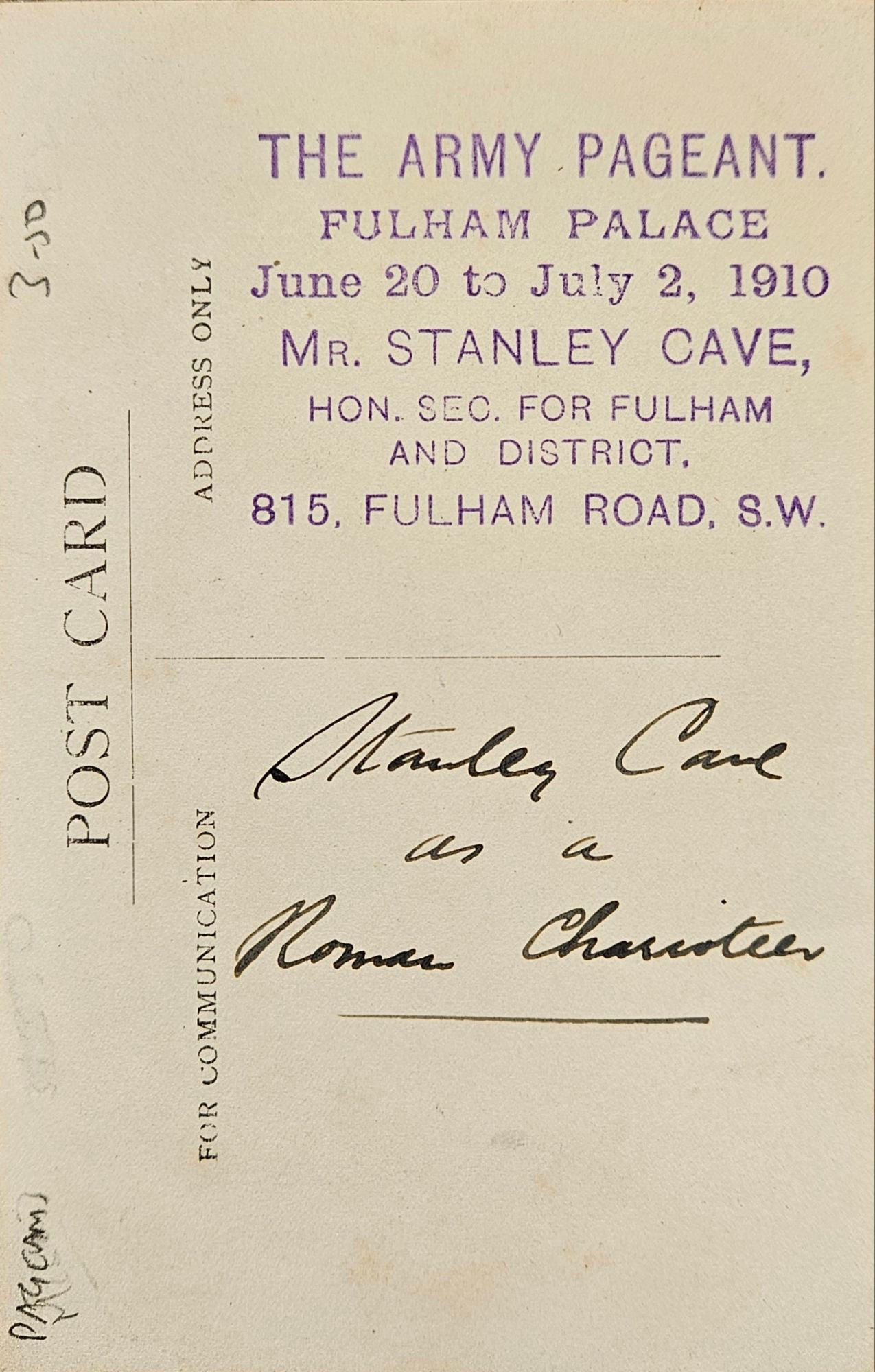
The Fulham and District organiser for the Army Pageant was Stanley Cave, a gentlemen’s outfitter with a shop at 815 Fulham Road, SW.
Interviewed earlier that year by the Fulham Chronicle, he explained that an estimated 600 local residents of all ages would be needed to stage its allocated Elizabethan episode.
As to costumes, they could be designed, cut and, if necessary, made to order under the supervision of Miss Lorna Burn-Murdoch, Mistress of the Robes.
Mr Cave went on to tell the paper: “The cost of the costumes will have to be borne by the players, who can spend practically what they like on them, from a few shillings to a few pounds.
He continued: “They will, of course, be the property of the wearers once the Pageant is over, and will serve as costumes for fancy dress balls and skating carnivals and will also be an interesting souvenir of the event.”
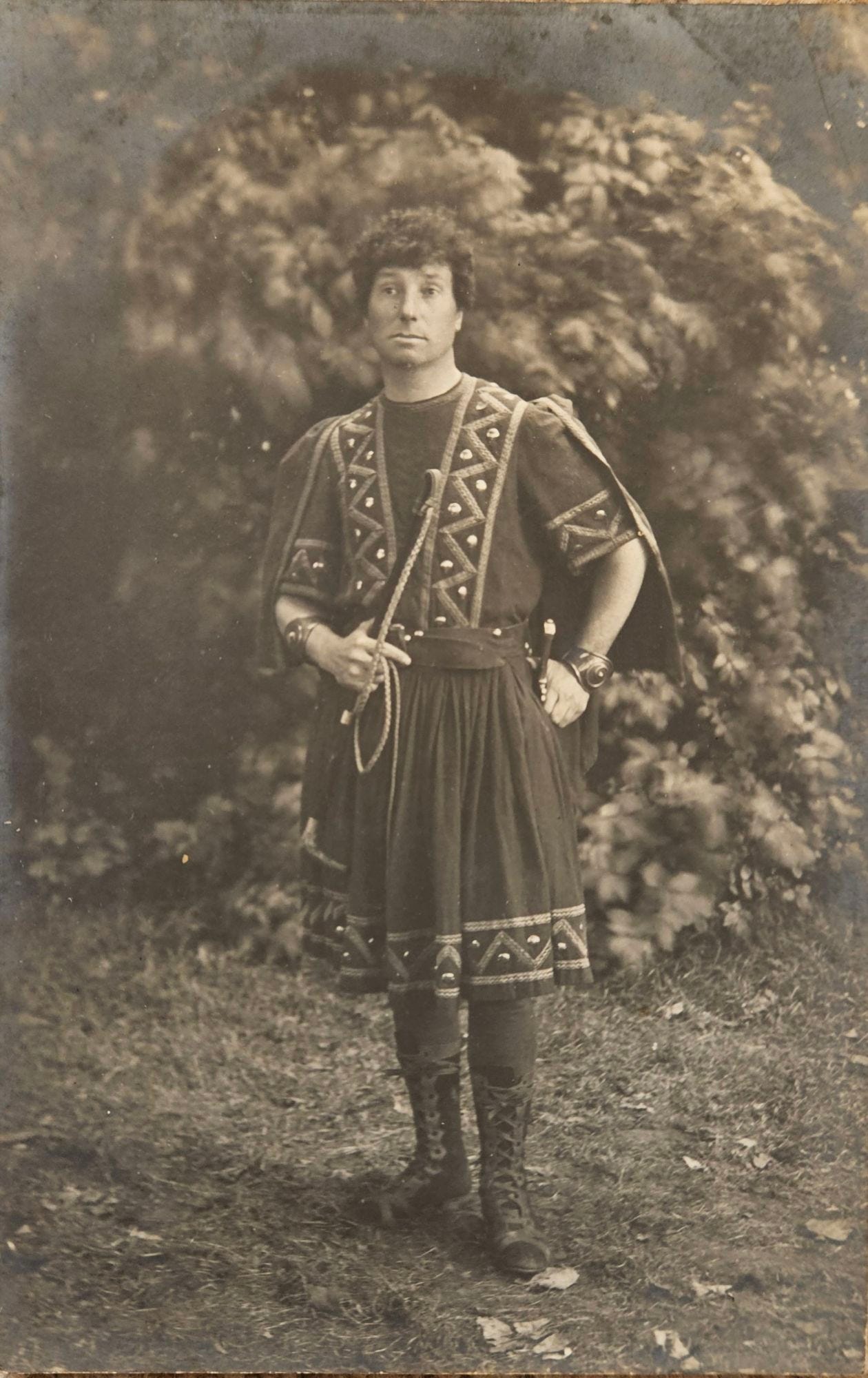
Press reports confirm that Mr. Cave took part in the Elizabethan episode of the pageant as one of the “Courtiers (mounted).”
However, a photographic postcard that recently joined the Pressphotoman collection suggests that his horse-riding skills may have led to another role too.
Aside from Mr. Cave’s splendid outfit, the photographer also captured his visibly distracted expression, which I initially put down to the pressures of helping organise such a huge undertaking.
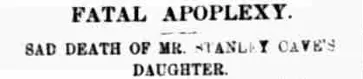
However, a press report, again taken from the Fulham Chronicle, revealed how a few weeks earlier, Stanley Cave had suffered a family tragedy.
Fulham Chronicle (3rd June 1910). From British Newspaper Archive.
An inquest heard how his ten year-old daughter Ellen had died from a cerebral haemorrhage whilst she slept.
A week later, the paper reported on her funeral “amidst many manifestations of grief and sympathy.”
In the years that followed, members of the Cave family took an active part in many more pageants staged in Fulham raising money for local charities.
When Mr. Cave’s youngest daughter Mary married in 1931, the Fulham Chronicle described how she had taken the role of Anne Boleyn on several occasions playing opposite her father’s Henry VIII.
The death of Pope Francis aged 88 followed by his funeral over the weekend attracted the focus of the world’s media.
Speculation about who his successor will be is well underway.
By way of marking this latest chapter in papal history, I’m republishing research into an ambitious 3D photographic project featuring one of Pope Francis’s predecessors.
Following a conclave in 1903, Giuseppe Melchiorre Sarto was appointed Pope as Pius X.
Within months, the leading stereoscopic photography company Underwood & Underwood sent a team from its London offices to produce what became a popular series of 36 stereocards.
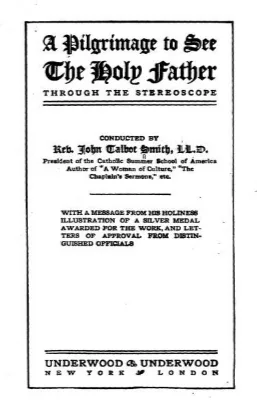
These were published the following year as A Pilgrimage to see the Holy Father through the Stereoscope.
Frontispiece of A Pilgrimage to see the Holy FatherThrough the Stereoscope (1904).
The images, which capture the Pope in relaxed and intimate settings around the Vatican, were reproduced by the press around the world and made available to the public as picture postcards.
Taken together, they highlight the importance of photography more than a century ago as an influential medium of mass communication to a global audience.
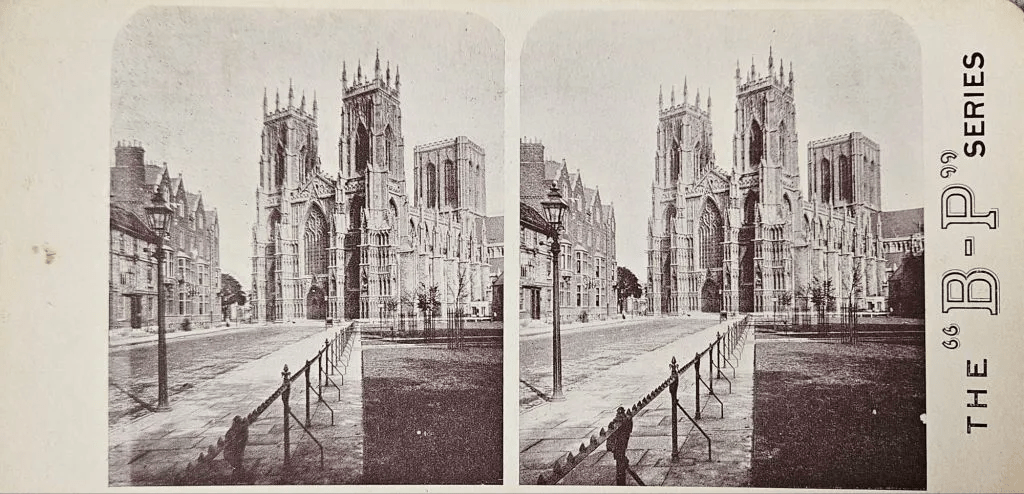
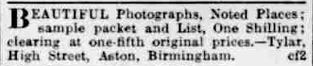
Who, it asked, was behind this ambitious photographic enterprise; one that offered 3D views in sets of 12 taken around England and the Isle of Man complete with pocket viewer?
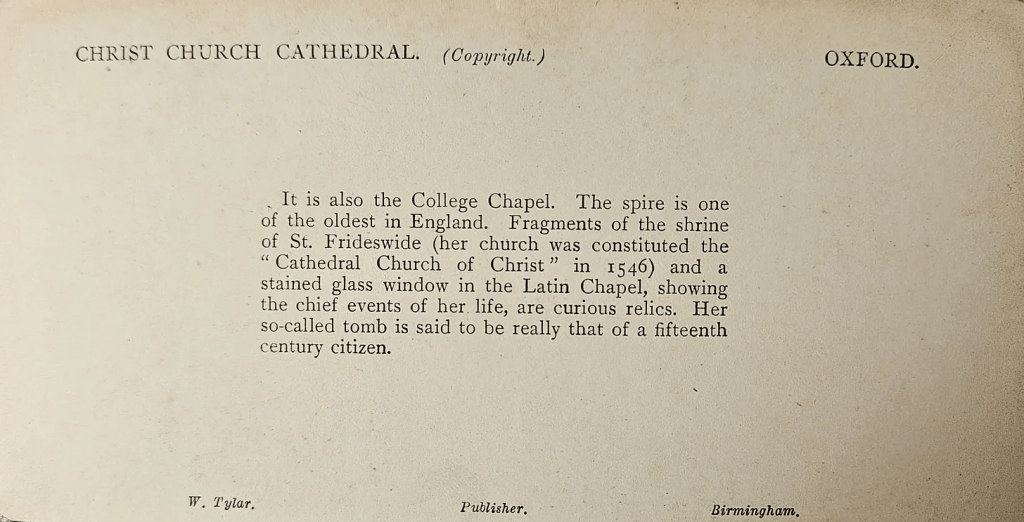
The answer was revealed at the bottom of the verso of the featured cards: ‘W. Tylar, Publisher, Birmingham.’
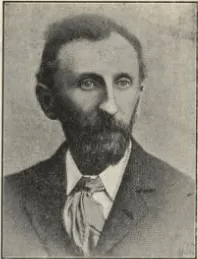
William Tylar (1859-1929) was born in Lincolnshire and by his early twenties was working as a photographer in Birmingham.
William Tylar (1859-1929). Courtesy of the British Library.
By the 1890s, he had established a thriving business in the Aston district of the city that specialised in inventing and supplying photographic equipment.
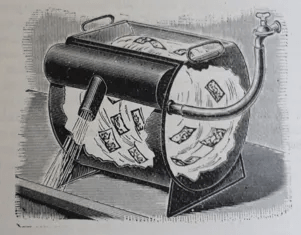
A typical example was Tylar’s P.O.P Washer described in 1896 by the British Journal of Photography as “a thoroughly useful and efficacious addition to the amateur’s outfit.”
From British Journal of Photography (3rd April 1896). Courtesy of the British Library.
The following year, Tylar copyrighted several photographs taken in and around Oxford and the River Thames.
This suggests that his “B-P” stereo series may have been just one of his commercial photography spin-offs.
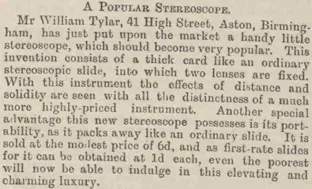
Tylar also had an entrepreneur’s instinct for publicity and “a popular stereoscope” he invented attracted attention from the national press.
The People’s Friend (8th January 1900). From British Newspaper Archive.
This would appear to be the forerunner of a more sophisticated and expensive version of his invention that later accompanied his “B-P” Series of stereo views.
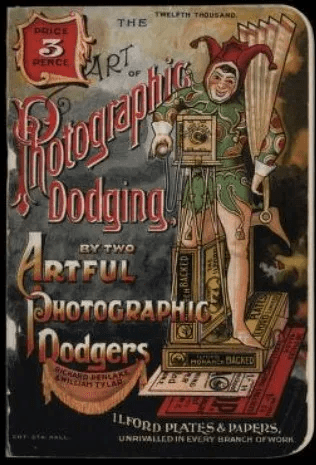
Early in the 20th century, a showcase for William Tylar’s business was published as The Art of Photographic Dodging with its eye-catching front cover advertising Ilford Plates and Papers.
Courtesy of the Bodleian Library, Oxford.
Co-author Richard Penlake will be known to regular readers of this blog as the pen-name of Percy R. Salmon FRPS (1872-1959).
A respected author of several books aimed at amateurs photographers, Salmon was editor of the weekly paper Photographic News between 1901 and 1905.
Rather wonderfully, The Art of Photographic Dodging has been digitised by the Getty Research Institute.
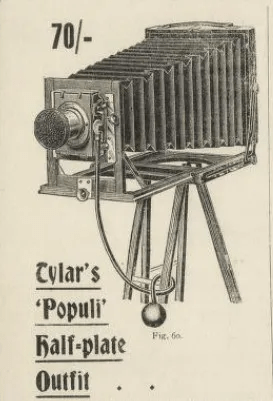
A glimpse inside reveals “Tylar’s tit-bits to tyros turning their troubles to triumphs : tested tips tersely told” alongside nearly 70 pages of advertisements extolling the virtues of his many and varied products.
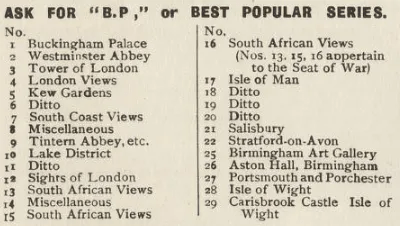
One of the ads also reveals that sets of 12 “B-P” stereoscopic views cost one shilling and sixpence and that “B-P” stood for ‘Best Popular.’
However, as is sometimes the case with photographers and photographic businesses highlighted by Pressphotoman, Tylar’s fortunes took a downward path.
In 1907, failing health led him to convert his business into a private limited company.
This offered an opportunity to his employees as well as friends and customers to purchase shares in it.
Sadly for him, this idea failed to take flight.
Instead, in June 1908, his company secretary, a Mr. J. T. Roberts, was arrested by police after forging a series of cheques signed by Tylar as the company’s managing director.
Over a six month period, Roberts, a previously trusted employee, drew around £80 (over £8,000 in today’s money) from the company’s bank account. He was jailed for six months with hard labour.
Birmingham Daily Mail (2nd June 1909). From British Newspaper Archive.
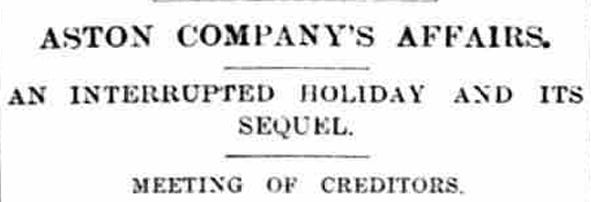
In August 1909, a few months after Roberts was imprisoned, a creditors meeting of William Tylar Limited, “photographic equipment manufacturers and dealers,” was held.
Birmingham Daily Mail (October 1909). From British Newspaper Archive.
The meeting heard that Tylar learned of his company secretary’s dishonesty whilst enjoying “a change of air” in Bournemouth suggested by his doctor.
As reported by the Birmingham Daily Mail, the business had failed due to “bad trade, keen competition, and the cost of getting orders” and a liquidator was appointed.
In the face of this set back, Tylar still recorded his occupation in the 1911 Census as a “Factor of Photographic Goods.”
However, a newspaper small ad placedin the same year was perhaps a truer reflection of his position.
Stowmarket Weekly Post (19th January 1911). From British Newspaper Archive.
In 1929, William Tylar, who had settled in Bournemouth, died in hospital in Christchurch, Hampshire aged 71.
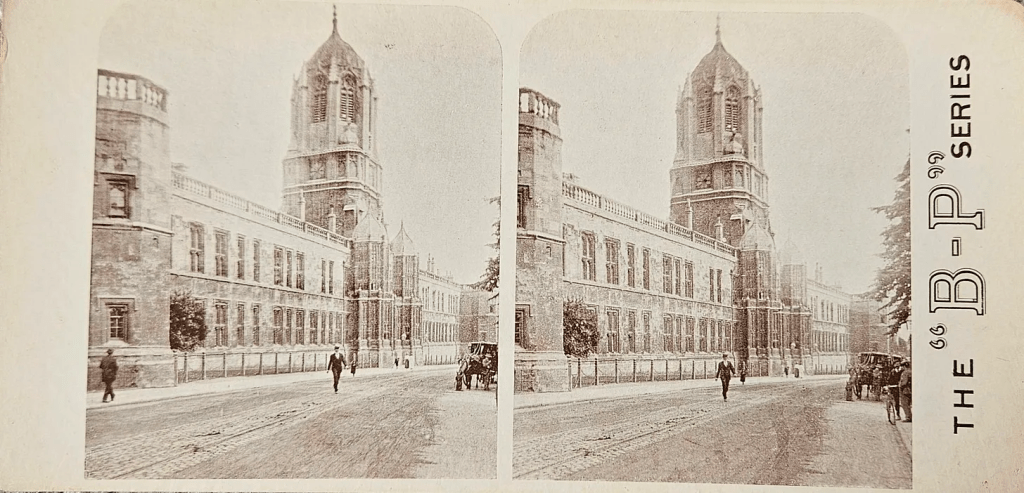
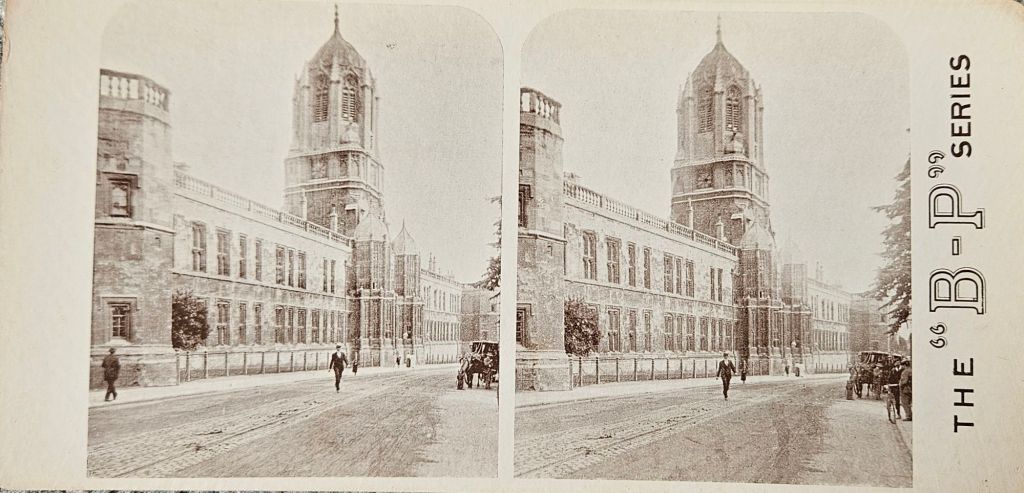
A smartly-dressed man is striding confidently across the road without fear of being run over.
To the extreme right, a male cyclist is in conversation with a man on the pavement whilst further down the road, a horse-drawn carriage can be glimpsed.
Closer inspection reveals a horse is enjoying a nosebag though its contents remain unknown.
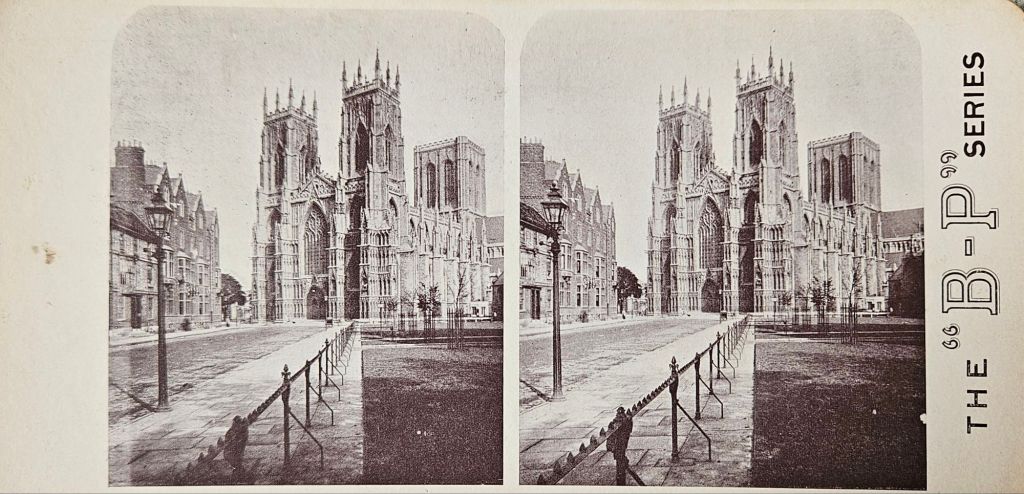
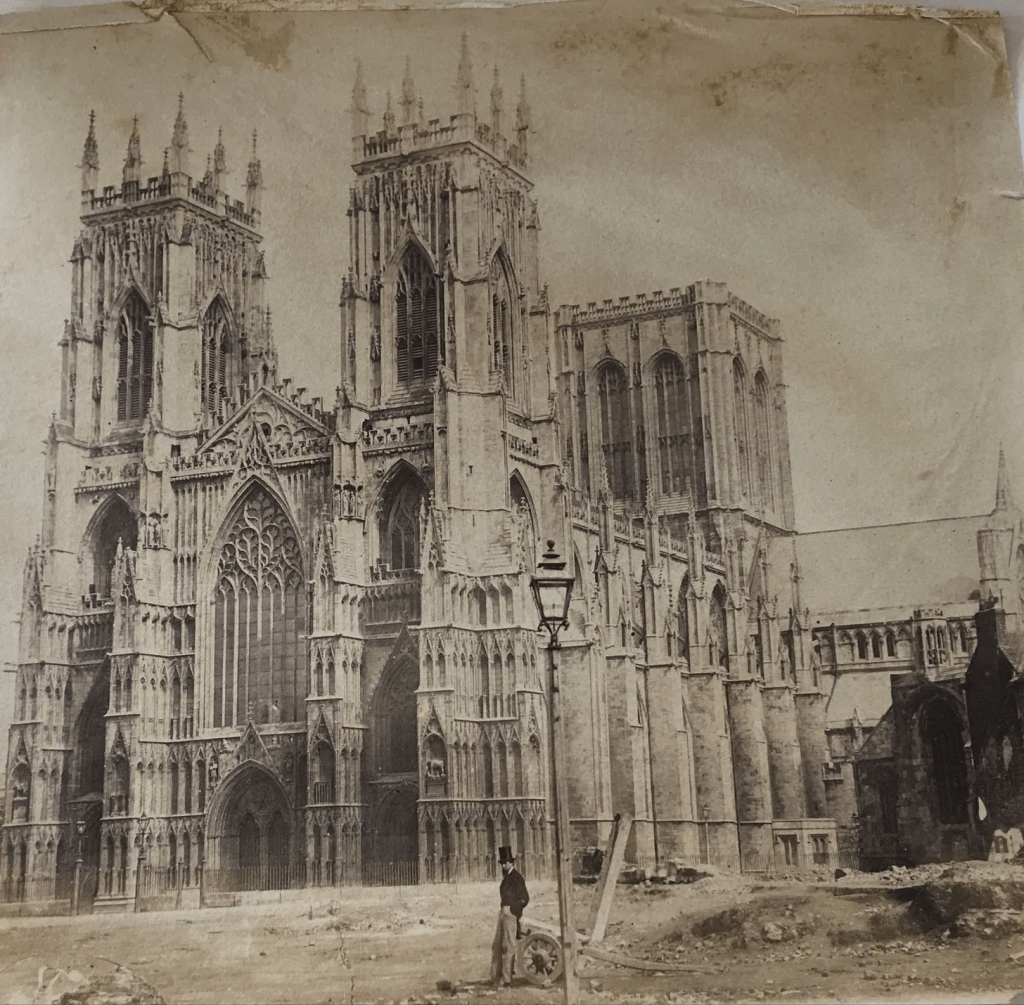
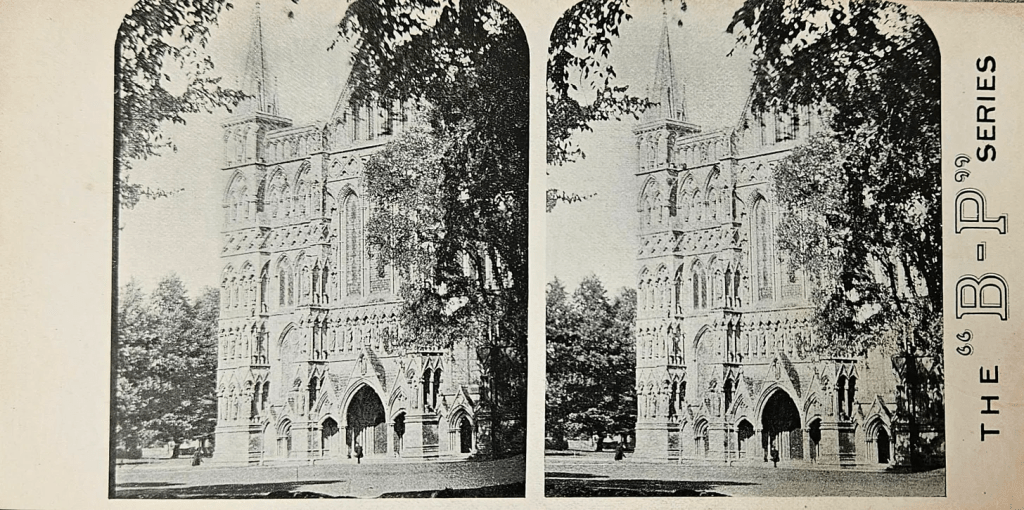
The third “B-P” Series stereocard reveals the west front of the cathedral at Salisbury.
Taken on a summer’s day complete with trees in full leaf and shadows in the immediate foreground, a figure in the doorway provides a sense of scale.
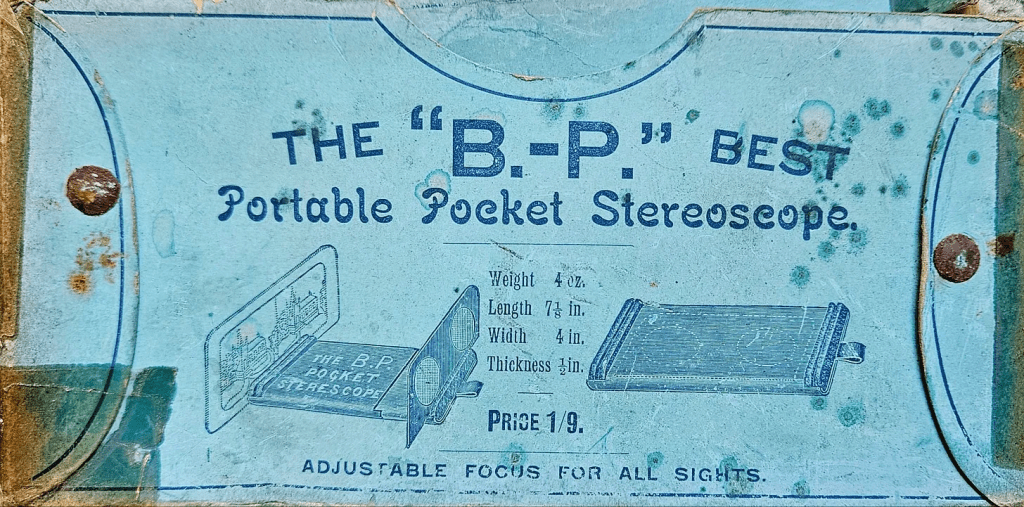
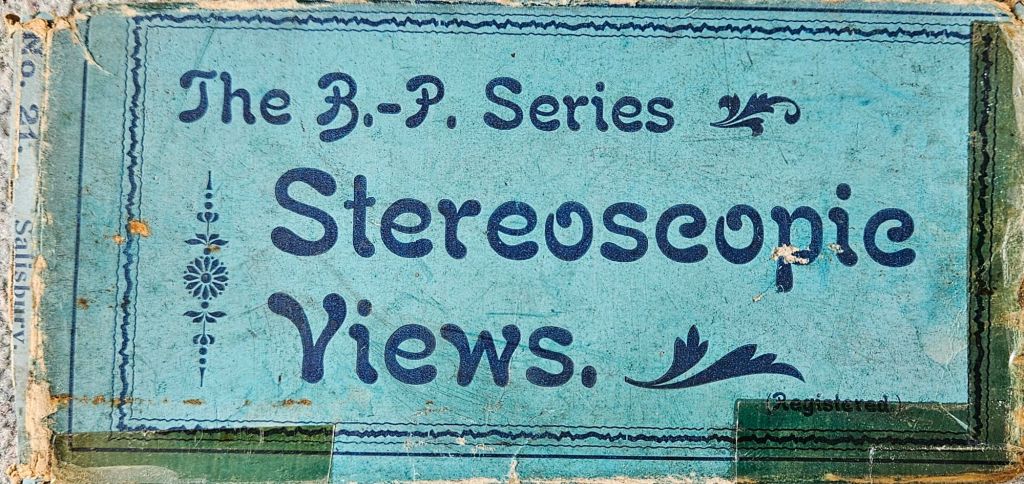
Thanks to a thoughtful eBay seller, these cards arrived complete with the blue-coloured cardboard envelopes in which they had originally been sold (and presumably stored) in the decades since.
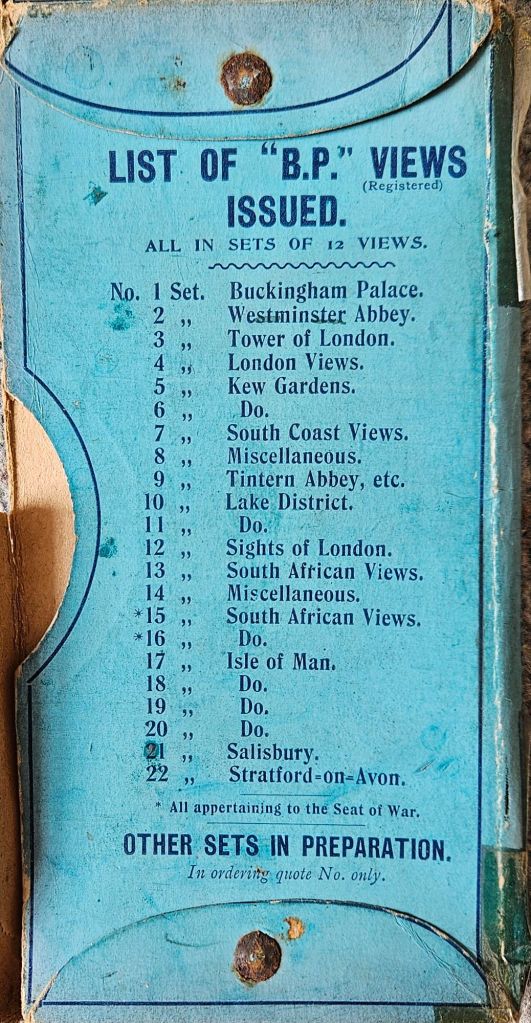
The verso of the box offering ‘No. 21 Salisbury’ revealed that views had been sold in sets of 12 offering a variety of English locations as well as four featuring the Isle of Man.
The presence of three sets of ‘South African Views’ (numbers 13, 15 and 16), including two that were advertised as “all appertaining to the Seat of War,” related to the conflict between the British and the Boers between 1899 and 1902.
This evidence helps pinpoint the dating of all three of the cathedral cards in this post to the turn of the 20th century.
As regular readers will already know, this was a moment when stereoscopic photography was undergoing one of its periodic revivals thanks to American companies like Underwood & Underwood and Keystone View.
To be fully enjoyed, these cards needed a 3D viewer.
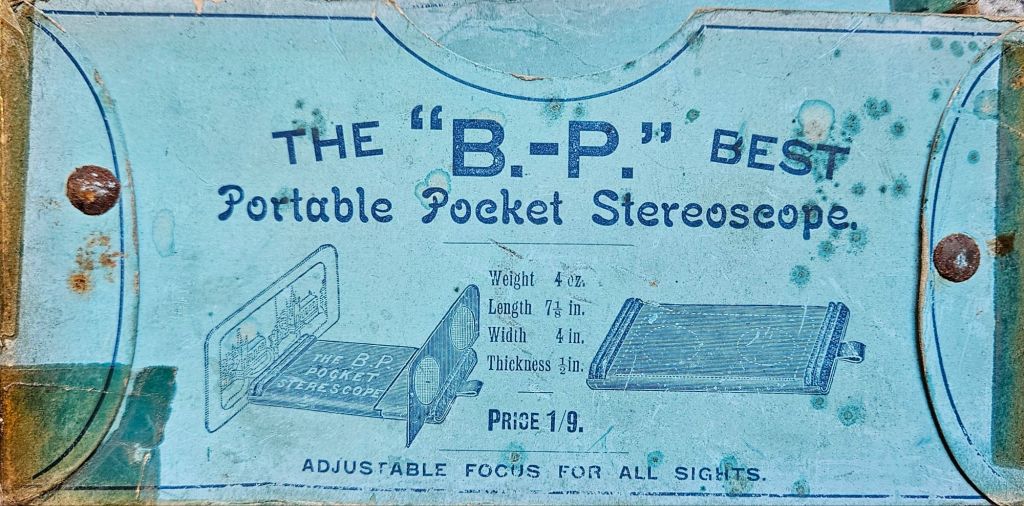
To complete their range of products, “B-P” offered a portable pocket stereoscope that, its manufacturers claimed, offered “adjustable focus for all sights.”
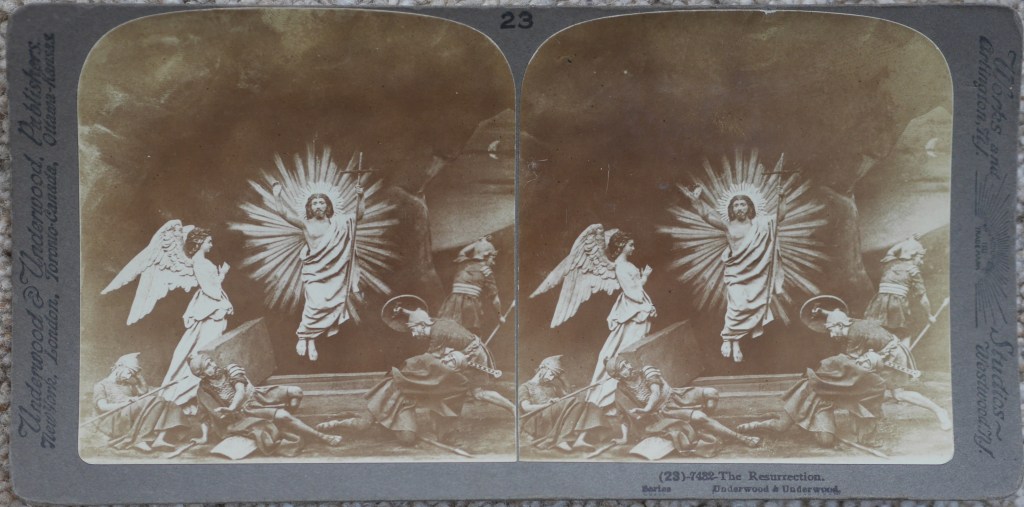
According to William C. Darrah’s ‘The World of Stereographs’ (1977, p. 187), twelve tissues illustrating the life of Jesus were published in France in the late 1860s.
He states that these paintings were copied as stereographs and then repeatedly reproduced as views in the decades that followed.
Darrah also adds that “great quantities of these were sold in the United States until 1915.”
The set in my collection features 24 scenes published by Underwood & Underwood (U&U) starting with ‘The Nativity’ and ending with ‘The Ascension.’
They came into my collection almost by accident, arriving unadvertised together with a wooden U&U ‘Perfecscope’ viewer that I purchased several years ago when my interest in stereoscopic photography was starting.
If you know more about the ‘Life of Christ’ stereo set and have seen examples produced by other publishers, please use the comments box below.
Preparations are well underway in the UK for events during 2025 to mark the 200th anniversary of railway passenger travel.
On 27th September 1825, the Stockton & Darlington Railway opened with passengers being pulled in carriages behind a steam locomotive designed by George Stephenson (1781-1848).
In his native North East of England, Stephenson’s achievements as inventor and engineer are memorialised in various buildings and plaques.
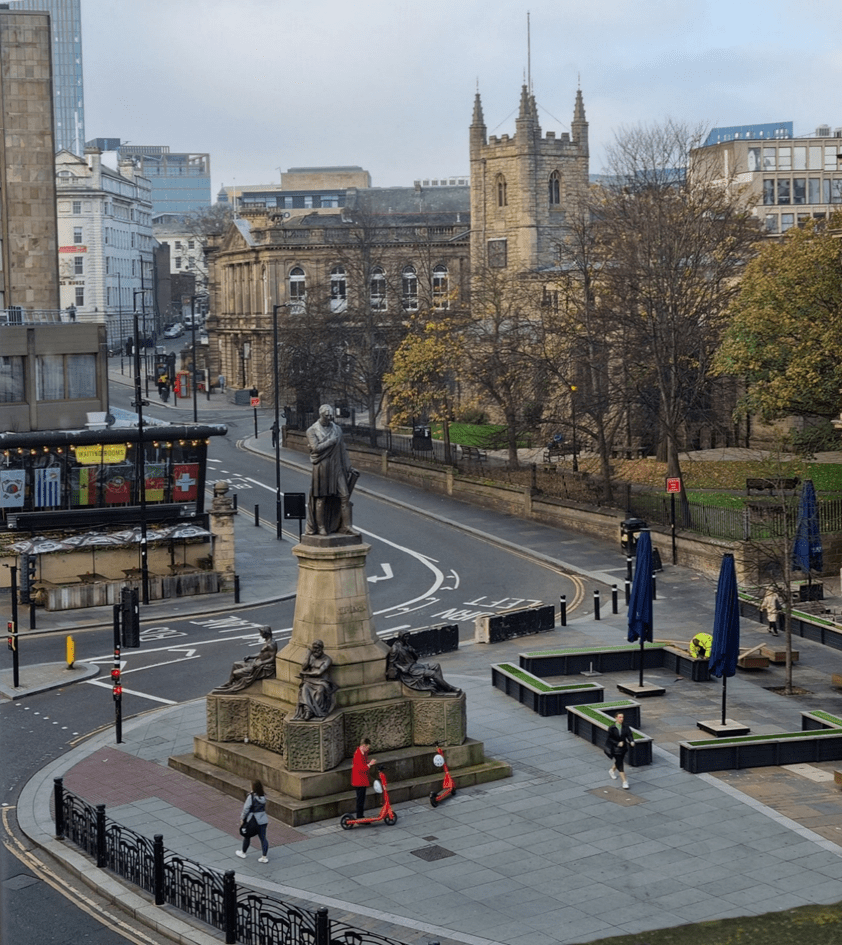
Perhaps the best-known is the Stephenson Memorial in the heart of Newcastle-upon-Tyne.
It can be viewed today as you leave the city’s Central Station and is within a stone’s throw of the pioneering engineering works that bore Stephenson’s name.
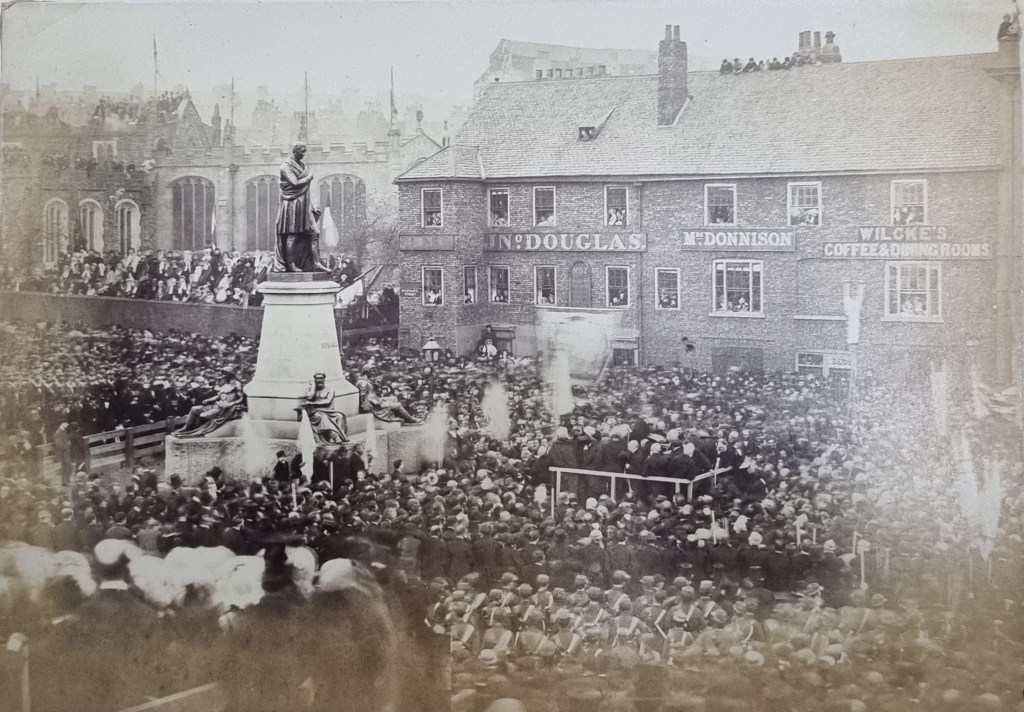
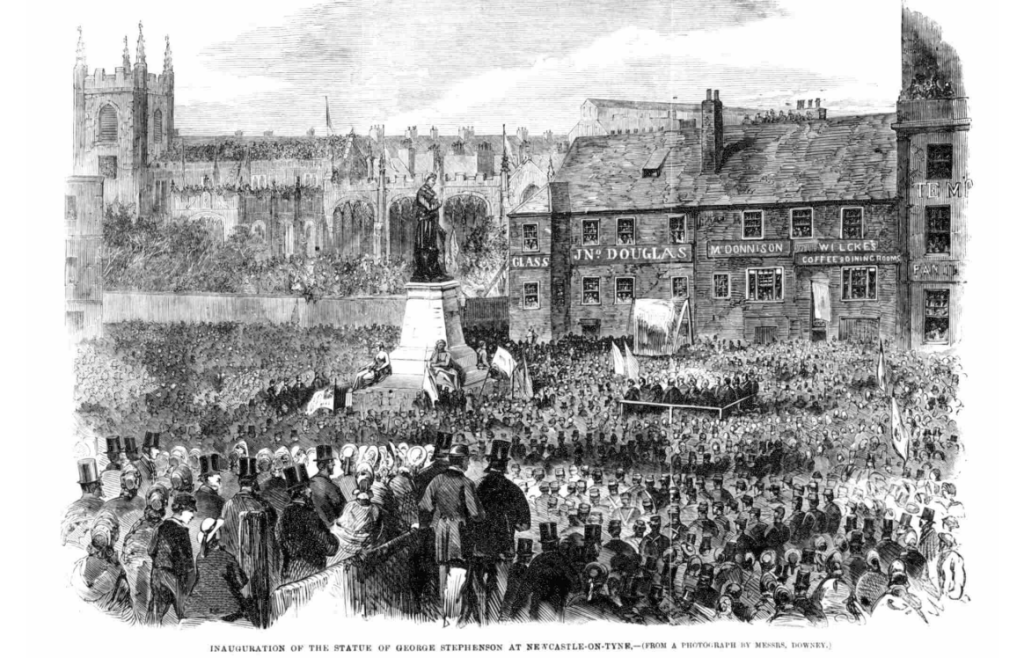
When the statue was unveiled to the public in October 1862, photographers were on hand to record the moment for posterity.
At the base of the statue, the Newcastle Daily Journal identified three of the city’s photography firms together with their equipment, observing “Messrs. Downey, Warren and Laws – pursuing their peaceful and interesting vocation.”
The photograph below taken from an elevated position can be attributed to W. & D. Downey, who advertised prints for sale in various sizes the following day.
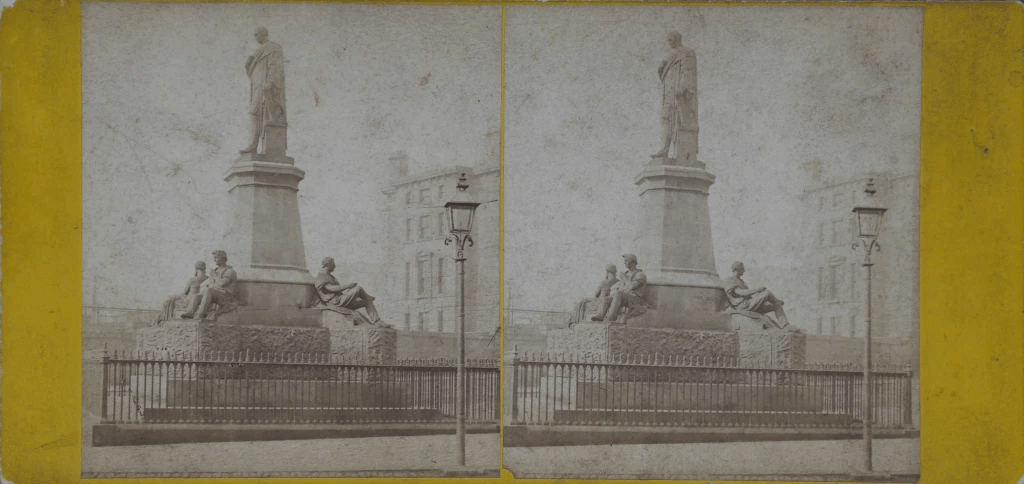
Another view of the Stephenson Memorial comes from this stereocard, which I recently added to my collection and which bears evidence of its age and frequent handling in a stereoscope.
The lamp standard (right of frame) is viewable in the Downey image above, though the metal railings appear to have replaced the wooden palisade that originally surrounded the statue.
Whilst there is no photographer’s stamp or credit, the verso does feature a slightly-faded sticker for “Allan” whose Newcastle business sold stereocards and carte-de-visites during this period.
One of the joys of photo collecting is the discovery of an item for which you’ve been searching and that suddenly appears for sale.
In my case, my research into the firm of W. & D. Downey of South Shields, Newcastle and London introduced me to its carte-de-visites, a format in which it excelled from the late-1850s.
But whilst I’ve known it produced ‘3D’ stereoscopic views from about the same point in its history, I’ve never seen any examples of its stereocards.
That is until this week when two emerged for sale on a well-known auction site.
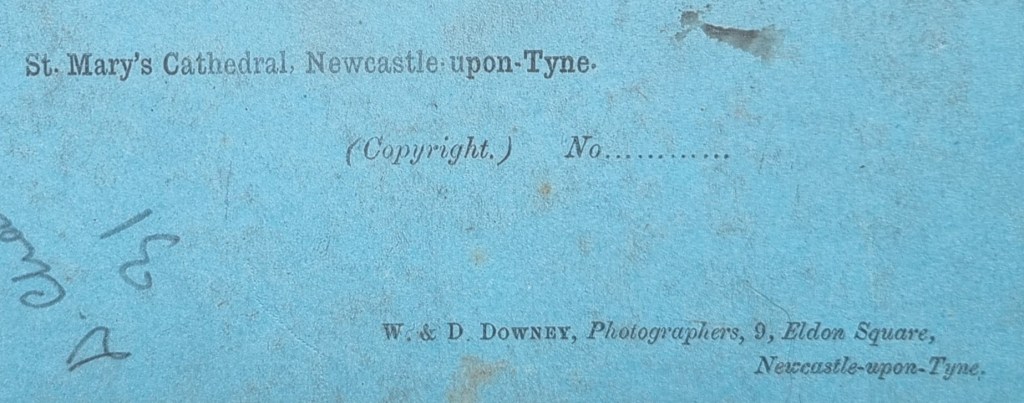
Hardly able to believe my good fortune, they were both captioned on the verso “St. Mary’s Cathedral, Newcastle-upon-Tyne” and boasted the credit “W. & D. Downey, Photographers, 9 Eldon Square, Newcastle-upon-Tyne.”
I wrote an earlier blogpost about a Downey carte-de-visite of the city’s Anglican cathedral church, St. Nicholas, with its distinctive lantern tower (December 7th 2022).
But before this week, I knew little its Catholic counterpart, St. Mary’s, apart from having walked past it a few times on exiting Newcastle central railway station.
Opened in 1844, St. Mary’s was designed by the architect Augustus Welby Northmore Pugin (1812-1852).
Pugin is perhaps best-known for his work on the interior of the House of Commons in the Palace of Westminster.
The first of the Downey stereos I have purchased features the Rood Screen and Crucifix at St, Mary’s which date from 1853.
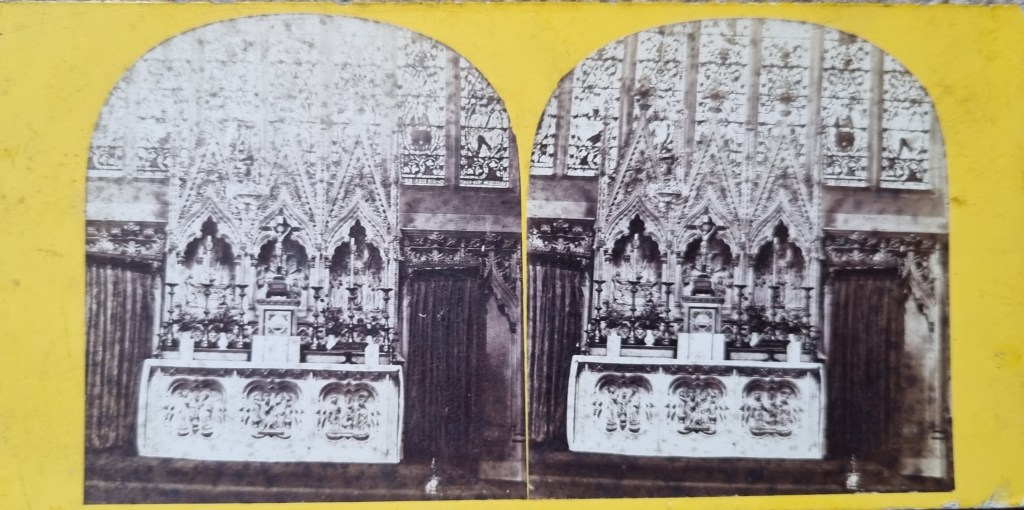
The second is taken beyond the Rood Screen and is a close-up of the altar with its highly ornate design.
The likely dating of these stereos points towards the summer of 1864 when Downey copyrighted a number of photographs of St. Mary’s.
Then followed advertisements in the local press offering both stereos and carte size photos of “Newcastle: Its Streets, Churches and Public Buildings.”
Advert from the Newcastle Daily Journal, July 15th, 1864. Courtesy of British Newspaper Archive.
Naturally, I’m delighted to add these Downey stereos to my collection of the company’s photography and look forward to learning more about its 3D endeavours.
For photohistorians, the Coronation of Charles III has provided an opportunity to revisit similar royal events and examine how they were recorded photographically.
The Coronation of 1902 is an occasion that prompted my recent article for The PhotoHistorian, the journal of the Royal Photographic Society Historical Group (available as a free download via this blog).
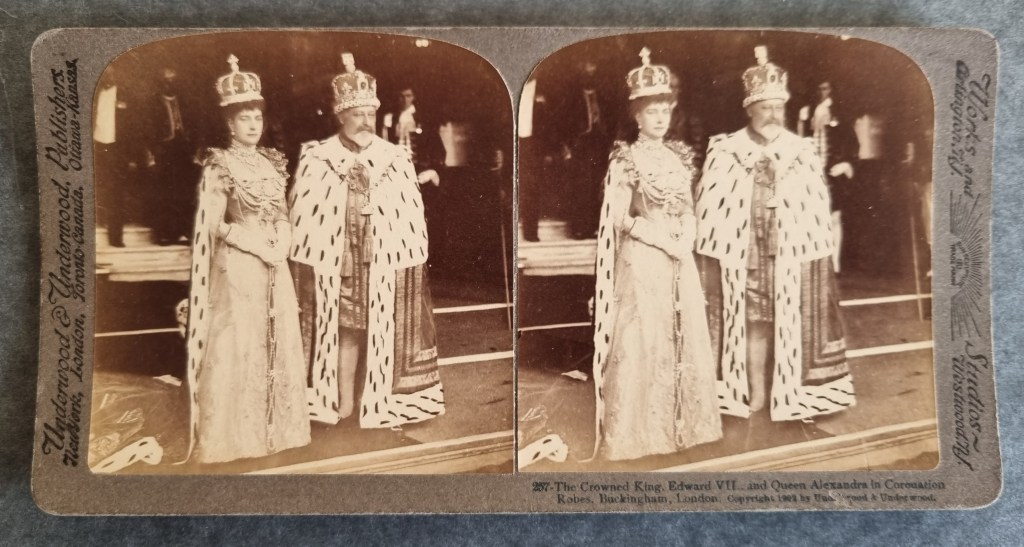
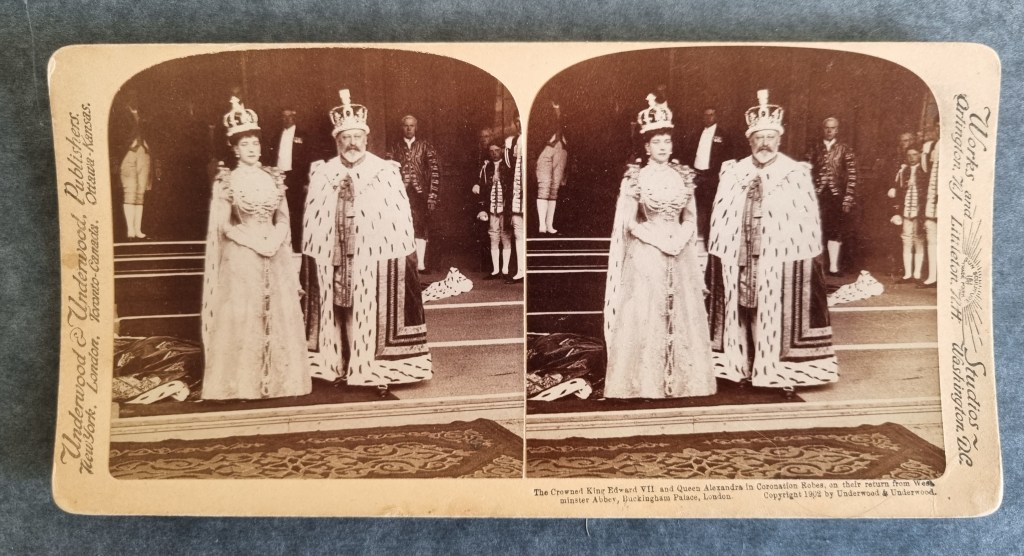
The article looked at how the American stereoscopic photography company Underwood & Underwood (U&U) secured a 3D exclusive featuring King Edward VII and Queen Alexandra in their robes and crowns.
“The Crowned King, Edward VII, and Queen Alexandra in Coronation Robes, Buckingham Palace, London” by James Edward Ellam. Author’s collection.
One of the figures who emerged from the shadows during my research was the British man who stereographed the royal couple on that occasion for U&U. His name was James Edward Ellam.
This blogpost draws on public records, newspaper reports and local history sources to highlight his previously under-studied role in the evolution of early press photography. It also includes previously unpublished examples of his work.
Born in Lindley, Huddersfield in the summer of 1857, James came from a large family. His father, Firth Ellam, was a cloth dresser in the textile industry and held the elected post of Guardian for the Huddersfield Poor Law Union.
James’s apparent non-appearance in the 1881 England Census leaves a gap in our knowledge about his years as a young adult.
However, in April 1885, newspapers in Hudderfield reported that “Mr. J.E. Ellam” was leaving the town, bringing an end to a long connection with the High Street Sunday School. Involvement in church activities was to be a recurrent theme in his life.
James’s career as a pioneering press photographer started to take shape when he relocated to Yarm, near Stockton-on-Tees. There, he lodged with the Bradley family who ran a long-established tailors and drapers shop. It was a domestic relationship that was to endure for the rest of his life.
By 1890, James was secretary of the Stockton Photographic Society, involved in organising talks, exhibitions and conversaziones where members photographs were exhibited.
By day, he worked in Yarm as a chemist’s assistant for Strickland & Holt, founded in 1854 and still in business in 2023.
As more of its customers started taking their own photographs, James helped develop their negatives, producing high-quality prints. The business on Yarm High Street also featured an outdoor portrait studio.
Strickland & Holt’s outdoor portrait studio, Yarm c. 1890s. Courtesy of Stephanie Richardson.
James’s speciality and that of the Stockton Photographic Society was stereoscopic 3D photography.
The illusion of three dimensions, which our eyes produce naturally, is created when two slightly different images captured on camera are viewed side-by-side in a stereoscope.
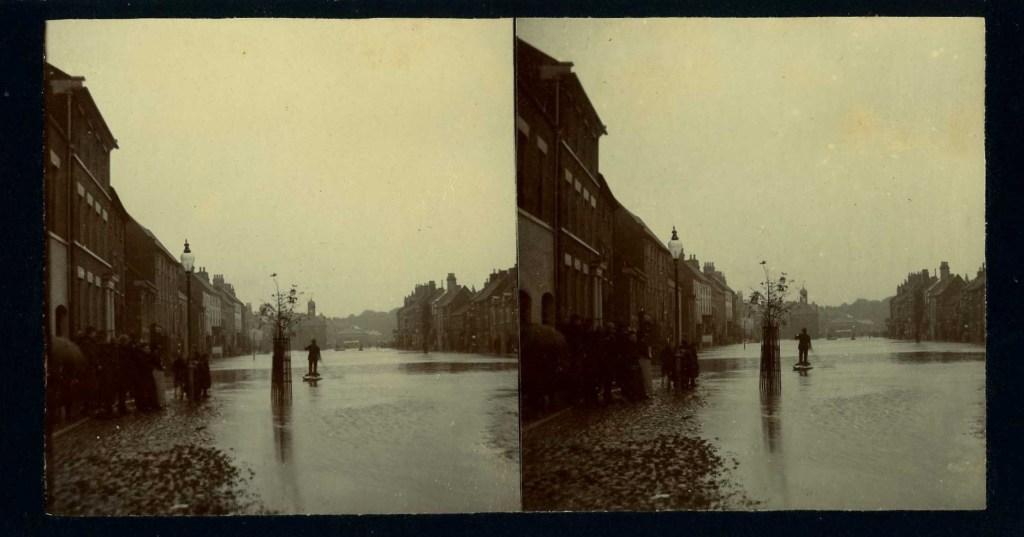
Initially, James trained his stereo camera on local happenings such as the flooding of Yarm, a regular occurrence when the nearby River Tees burst its banks.
Flood, Yarm High Street, October 1893 by J.E. Ellam. Courtesy of Preston Park Museum. T68105.
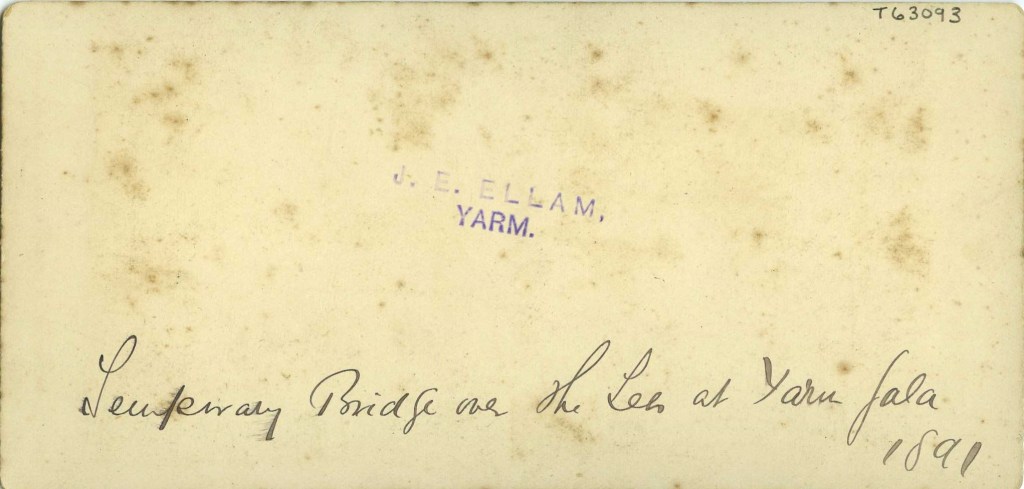
His stereos, such as “Temporary Bridge over the Tees at Yarm Gala 1891,” featured the stamp “J.E. Ellam, Yarm” on the verso.
Verso of 1891 stereo stamped “J.E. Ellam, Yarm.” Courtesy of Preston Park Museum. T63093.
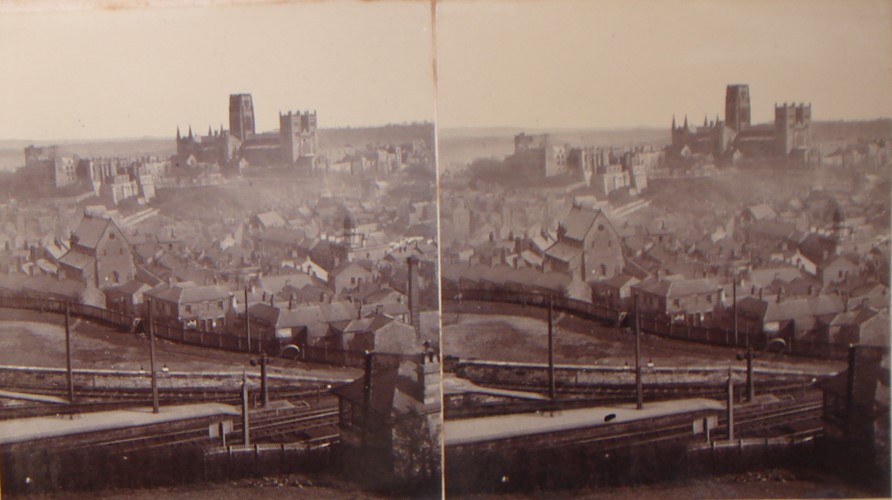
And he captured local ‘views’ such as this stereo of Durham taken from the town’s railway station with the cathedral in the distance.
“View of Durham from the railway station” by J.E. Ellam c. early 1890s. Courtesy of Stephanie Richardson.
The same ‘view’ was produced as a glass lantern slide credited to J.E. Ellam that is now part of the collection of Shropshire Museums. The slide is marked “Yarm 6,” suggesting that it was part of a lantern slide lecture.
The presence on his stereos of “J.E. Ellam, Yarm,” some with printed labels and titles, indicates that they might have been sold commercially.
At this point, an opportunity arose which allowed James to share his photography with a wider audience.
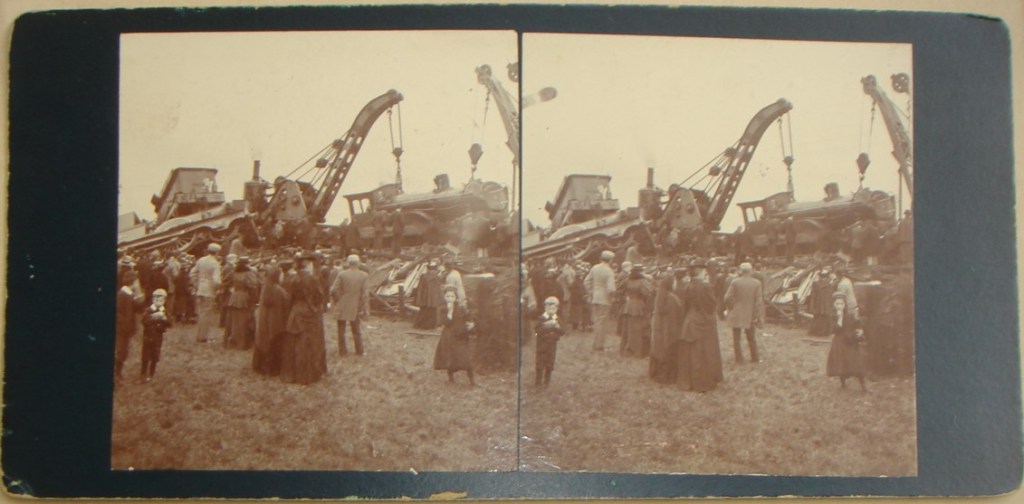
In October 1894, he supplied photographs to the national press of the aftermath of a fatal train crash involving the “Scotch Express” at nearby Northallerton.
Stereo of “Scotch Express” crash scene by J.E. Ellam, October 1894. Courtesy of Stephanie Richardson.
The following month, James registered the copyright of his rail accident photographs in order to protect his commercial interests.
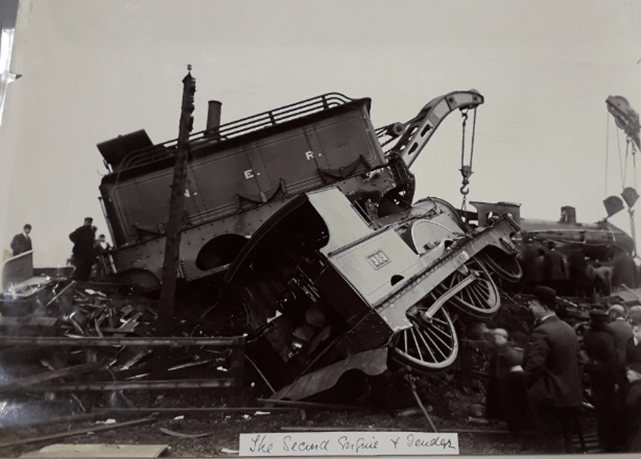
These included “The Second Engine & Tender,” which the Illustrated London News had published uncredited in its report of the accident (“The Railway Accident at Northallerton,” 13th October 1894, p. 460).
“The Second Engine and Tender” by James Edward Ellam, October 1894. COPY 1/418/366, National Archives, Kew.
Apparently intent on pursuing a career in photography, James left Yarm in the summer of 1896. His timing was auspicious as the illustrated press had begun to adopt half-tone printing. This process allowed photographs to be reproduced and required a regular supply of news pictures.
In London, James’s 3D work came to the attention of a leading American stereoscopic company, Underwood & Underwood (U&U). The company had an office close to Fleet Street and was already supplying prints to the press taken from one half of a stereo negative.
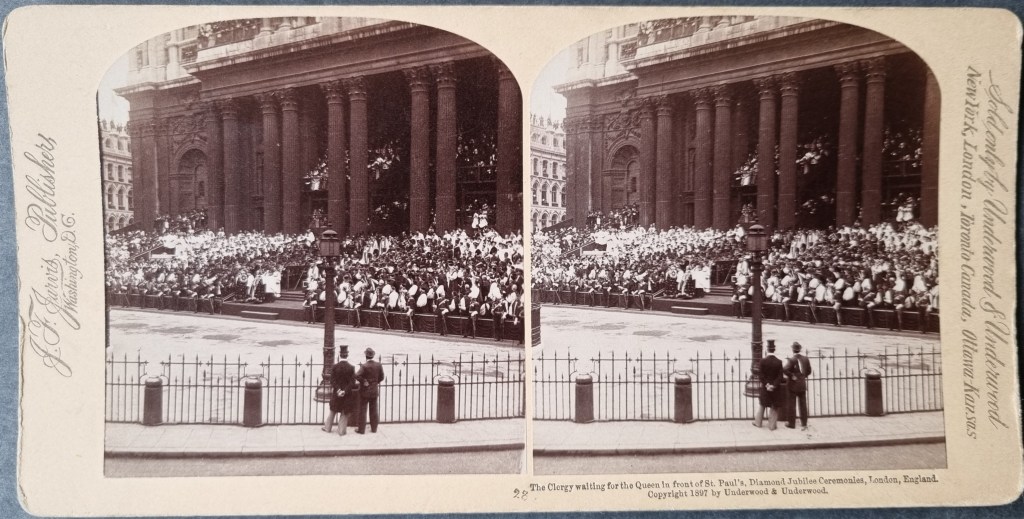
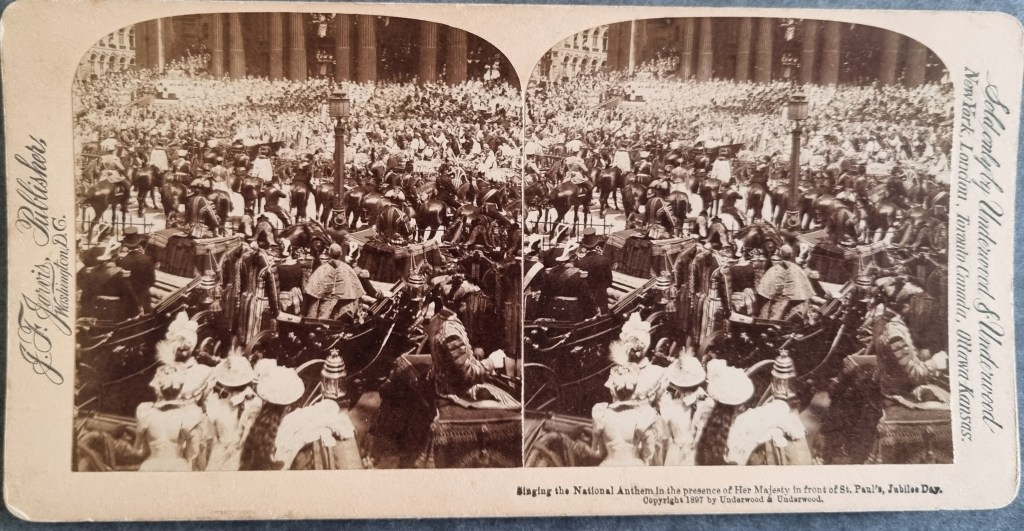
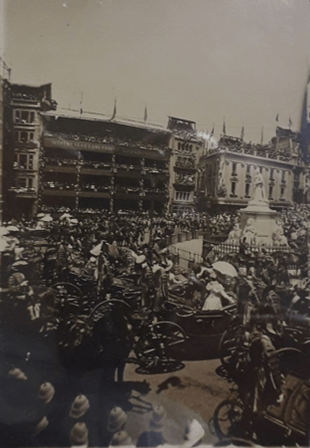
Among James’s first assignments was stereographing the Diamond Jubilee of Queen Victoria in June 1897. A set of stereos issued by U&U included a number taken in front of St. Paul’s Cathedral where the Queen attended a Thanksgiving Service.
These illustrate the prime location that James occupied and how events unfolded in front of his stereo camera over a number of hours. The lamppost located in the middle of the shots illustrates how the scene changed as he waited for the Queen to arrive.
“The Clergy waiting for the Queen in front of St. Paul’s, Diamond Jubilee Ceremonies, London, England” by James Edward Ellam. Author’s collection.“Singing the National Anthem in the presence of Her Majesty in front of St. Paul’s, Jubilee Day” by James Edward Ellam. Author’s collection.
In the second stereo, Queen Victoria (left of frame towards the top of shot) is visible in her carriage. It was positioned at the foot of the cathedral steps which she was unable to climb due to infirmity.
A few days after the event, a print taken from another of James’s stereos, “Ambassadors and Royalties witness the Thanksgiving Service,” was placed by U&U with The Graphic, a leading illustrated weekly paper, and credited to U&U, “Publishers of Stereoscopic Views.”
“Ambassadors and Royalties Witnessing …” Print taken from stereo. COPY 1/431/772, National Archives, Kew.
It was a significant moment for both James in his new career and for U&U in its pioneering efforts to establish a press photography service.
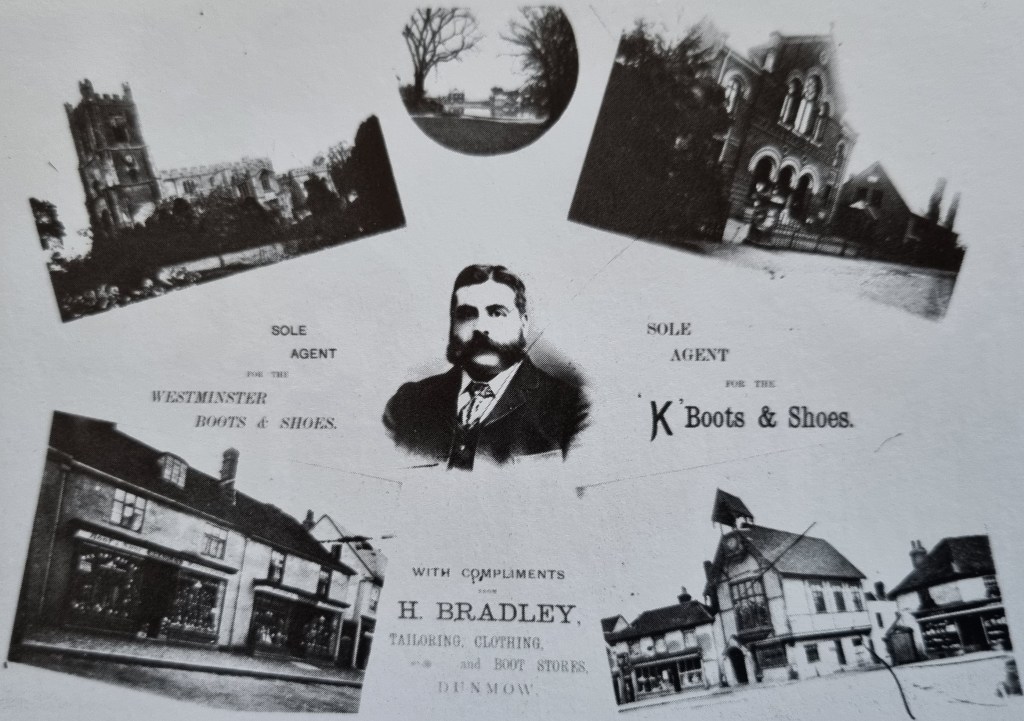
The copyright forms for these stereoscopic photographs refer to an agreement between U&U and “James Edward Ellam of Dunmow, Essex.” Dunmow was the town to which the Bradley family, with whom James had lodged in Yarm for several years, had also relocated.
Henry Bradley, a fellow committee member with James in the Stockton Photographic Society, took over a tailors and outfitters business in Dunmow which he ran together with his wife Dorothy and their daughters.
As an entrepreneur, Henry used his own amateur photography to produce promotional postcards for his business featuring scenes around Dunmow.
Postcard produced by Henry Bradley to promote his business. From Dunmow in old picture postcards by Stan Jarvis (1986). Author’s collection.
As a commuter, James worked in London and stayed with the Bradleys at weekends where the England censuses of 1901 and 1911 recorded his presence as a “visitor.”
His working relationship with U&U continued, coinciding with a worldwide revival of interest in buying and collecting sets of 3D ‘views.’
During the summer of 1902, the company’s co-founder Bert Underwood (1862-1943) was in London to supervise U&U’s stereo set celebrating the coronation of Edward VII.
As one of Underwood’s trusted stereographers, James was involved in a project which involved covering various society events. It may have been partly enabled by a connection supplied by James himself.
In Dunmow, he was a near neighbour of the Countess of Warwick. Frances Evelyn Maynard, or “Daisy” as she was known, inherited her family estate at Easton Lodge near Dunmow at the age of 21.
In the 1880s and 1890s, the estate was the scene of extravagant weekend house parties, attended by society figures including the Prince of Wales, the future King Edward VII.
During that coronation summer of 1902, “Daisy” hosted society events at Warwick Castle, her husband’s family seat.
A week before the coronation, U&U photographed a “lavish fete” there attended by “Indian Princes and Colonial Premiers.” Given his Dunmow connections, it seems possible that James accompanied Bert Underwood who recorded this assignment in an unpublished memoir.
On Saturday 9th August, James was at Buckingham Palace to stereograph the King and Queen Alexandra in their coronation robes and crowns.
Alternate version of U&U’s “coronation robes and crowns” stereo by James Edward Ellam. Author’s collection.
A few weeks later, he travelled to Balmoral, the royal family’s Scottish home. This time he stereographed the King surrounded by his grandchildren including the future Edward VIII and George VI. Again, the image appeared in the illustrated press credited to U&U.
“Edward VII and his grandchildren, Balmoral Castle, Scotland” by James Edward Ellam. Author’s collection.
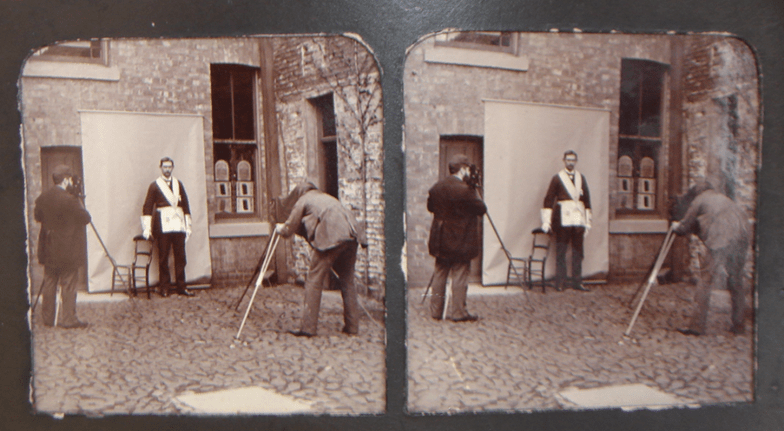
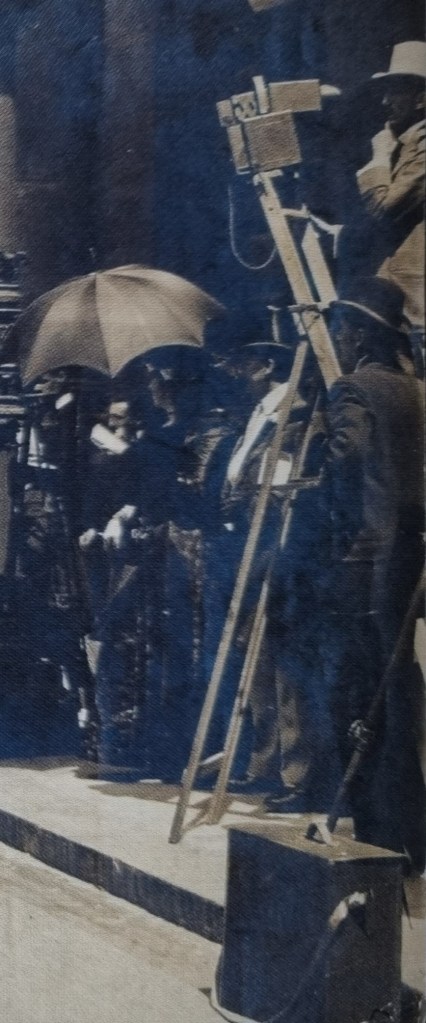
At another event that coronation summer, a photograph known to show Bert Underwood with his stereo camera atop a set of ladders featured another figure stood alongside him with an equipment bag at their feet.
Courtesy of George Eastman Museum. Detail from 1988.0202.0007.
Could this be James Edward Ellam? If so, it is the only photo of James that research for this blogpost has identified.
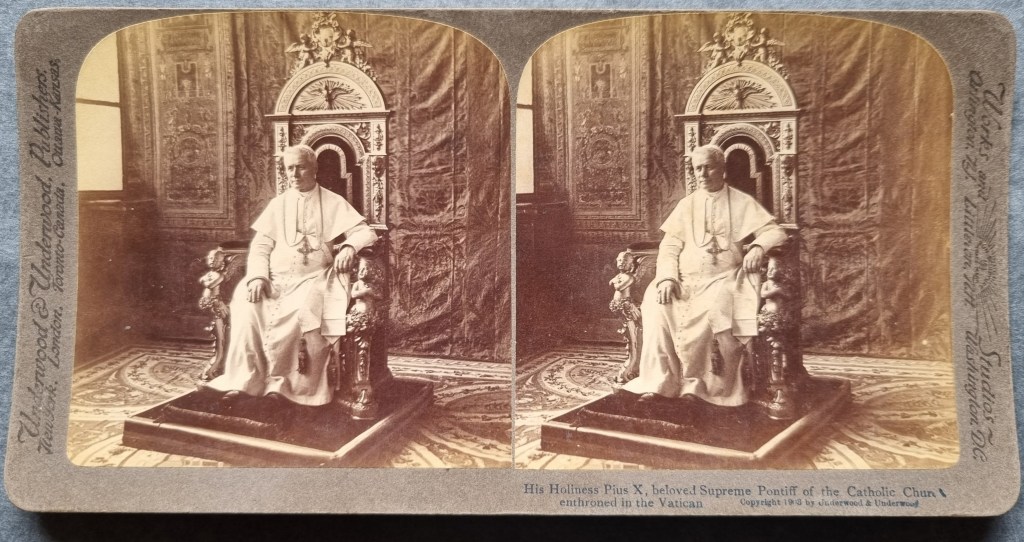
The following year, permission was given to U&U to create a set of 36 stereos featuring the new Pope, Pius X.
James was among the Underwood team who journeyed from London to the Vatican in Rome to create A Pilgrimage to See the Holy Father through the Stereoscope.
Such was the project’s global success that U&U later received a Silver Medal from the Pope to mark the occasion.
“His Holiness Pius X … enthroned in the Vatican” by James Edward Ellam. Author’s collection.
By now, daily newspapers such as the tabloid Daily Mirror, launched in 1904, were primarily using photographs rather than drawings to illustrate the news, and photography became integral to the press.
With his considerable experience, James was well placed to further develop his career. Around 1908, he began work as a staff photographer for the newly-established London News Agency Photos at 46 Fleet Street, one of many set up to meet the insatiable demand from the press for images.
Letterhead for London News Agency Photos Ltd c. 1921. Authors’ collection.
Among his colleagues was Alfred James Robinson whose family compiled a 2014 blogpost about his career which includes some wonderful photos and information about the agency.
Alongside this professional role, James continued to be active in the world of amateur photography from which his own career had emerged.
In 1908, he exhibited a print titled “A Sea of Steps,” a much photographed scene from Wells Cathedral, at the West London Photographic Society’s 19th annual exhibition.
The following year, as a member of the United Stereoscopic Society, his work was exhibited by the Royal Photographic Society at its 45th annual exhibition in London.
Small details of James’s day-to-day life during these years are also revealed by public records. London electoral rolls for 1910 and 1912 record him paying six shillings a week to live in an unfurnished room on the second floor of a terraced house in Hammersmith.
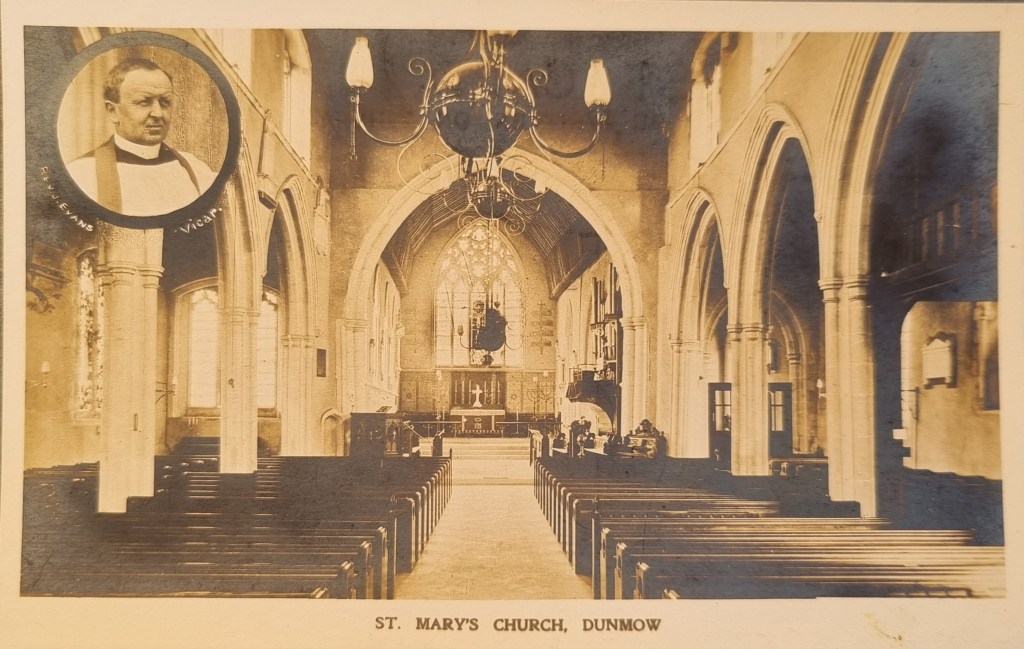
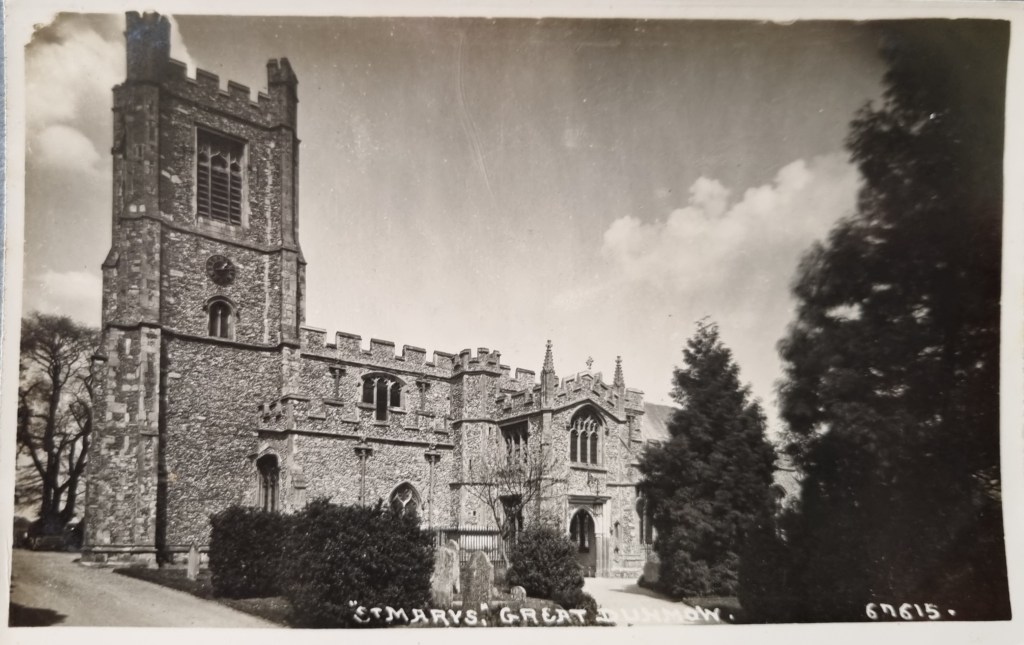
In Dunmow, he continued to be actively involved in the life of St. Mary’s Parish Church where he was superintendent of the Sunday School, sang in the choir and was a server to the vicar.
Between 1905 and 1915, the vicar was the Reverend John Evans and a postcard featuring the church’s interior together with his portrait was published during his incumbency.
Postcard of St. Mary’s, Dunmow featuring the Rev. John Evans. c. 1910. Author’s collection.
Whether or not James, or perhaps Henry Bradley, was involved in its conception, it certainly has stereoscopic qualities, using the rows of pews and the light fitting in the foreground to add a sense of depth.
Research has revealed little about James’s life in the years either side of the First World War.
However, in January 1920, his life came to a tragic end. Its circumstances were reported by many national and local newspapers.
As The Times stated in its News in Brief column: “Mr. James Edward Ellam, who had been associated with the London News Agency Photos, Limited, for many years was knocked down and killed by an omnibus in Fleet-street on Saturday morning.”
After the accident, James was taken less than half a mile to St. Bartholomew’s Hospital, but the internal injuries he sustained in the accident proved fatal. An inquest later recorded a verdict of “accidental death” (City of London Coroners Court CLA/041/IQ/04/03/001/015).
The Essex Chronicle report of his funeral service at St. Mary’s Church, Dunmow described how Henry Bradley was notified by police about the accident. That same day, he travelled to London to identify James whose death brought to an end a relationship with the Bradley family that spanned at least 30 years.
In October 1921, an oak prayer desk paid for by “friends, choirmen and Sunday School scholars” at St. Mary’s was dedicated to James’s memory.
Oak prayer desk (right) St. Mary’s Church Dunmow. Courtesy of Catherine Salmon. Dedication on oak prayer desk, St. Mary’s Church, Dunmow. Courtesy of Catherine Salmon.
In the years since, James’s most celebrated photographs have taken their place in public collections, notably his royal stereos for U&U in the National Portrait Gallery, London.
Further examples of his work as an agency press photographer are more difficult to identify as individuals were rarely if ever credited for their work.
Given his career with London News Agency Photos between 1908 and 1920, and his work prior to that for Underwood & Underwood, James Edward Ellam is deserving of greater recognition for his contribution to early press photography.
** The author would be pleased to hear from anyone with further information about James’s life and photographic career via the comments box below.
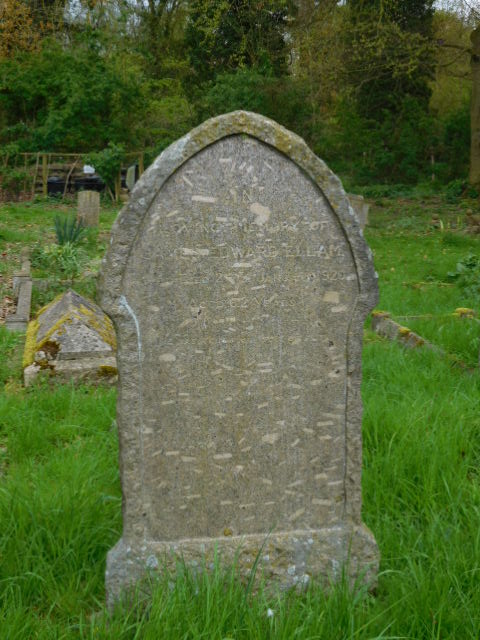
James Edward Ellam (1857-1920) is buried in the churchyard of St. Mary’s, Dunmow. Postcard c. 1920.James Edward Ellam’s gravestone May 2023. Courtesy of Catherine Salmon.
A few years back, when I bought my first vintage stereocard 3D viewer, it came with a surprise.
Enclosed within the carefully-wrapped package from Germany was a set of 24 cards portraying ‘The Life of Christ.’
As a series of dramatised scenes from the Nativity to the Ascension, the set was published in the early 1900s by the stereoscopic photography company Underwood & Underwood of New York.
My subsequent interest in Underwood’s activities as a supplier of press photographs ‘taken from stereographs’ led to my doctoral thesis (due to be published in May 2023).
Each card comes with a text taken from The Bible, in this case the Gospel according to Luke, chapter 2 verse 16 – ‘And they went with haste, and found Mary and Joseph, and the babe lying in a manger’ (Revised Standard Version).
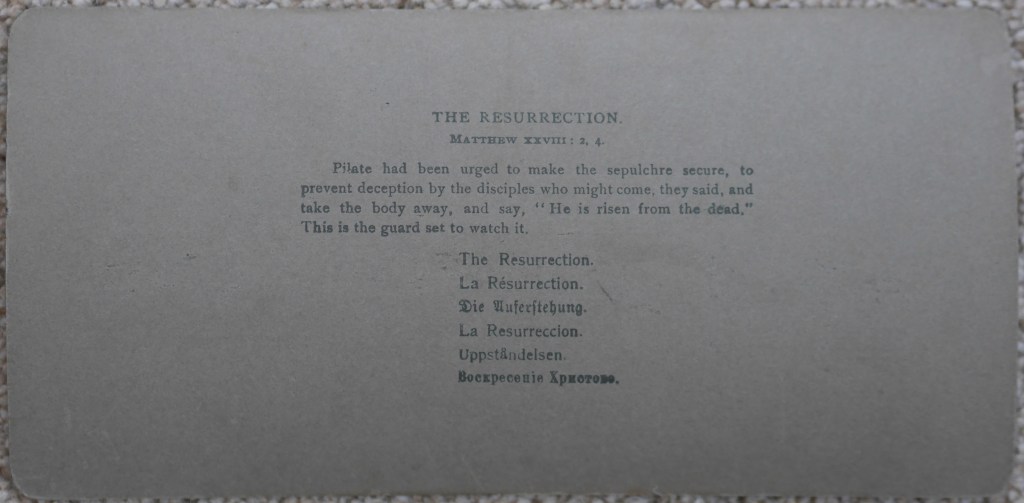
On the verso, there follows a brief description of the scene followed by the card’s title in English, French, German, Spanish, Swedish and Russian.
This gives an indication of the scope of the international market at which such stereocards were aimed.
It seems Underwood were not the only stereoscopic company marketing this 3D ‘Life of Christ’ at the turn of the 20th century, presumably because of its commercial appeal.
I’ve seen other examples of the same set including colourised versions and one marketed by Sears, Roebuck & Company, the American mail order giant.
Close inspection of the nativity scene in its half-stereo version adds to the mystery of what we are being invited to witness.
Is it a painted scene? Or were individually figures placed against a painted backdrop? Or is the tableau the result of a stereographer working with a cast of actors?
It was timely that ‘The Mystery of the Nativity’ (Sky Arts, 20th December 2022), presented by the art historian Waldemar Januszczak, helped shed light on the tradition of scenes depicting the birth of Jesus Christ.
What he ably demonstrated was how little the Bible has to say about events at Bethlehem and how much artists down the centuries have used their imagination to portray the Nativity.
That would help explain the presence in the Underwood stereo of the ‘girl, carrying a basket upon her head’ who, the verso text explains, is ‘an attendant bringing refreshments from the inn.’
If you know any more about the ‘Life of Christ’ stereocard set and its history, I for one would be very interested to learn more about it.












 Pressphotoman
Leave a comment