
The Church of St. Aidan in the Northumberland coastal village of Bamburgh is “one of the largest, and in many respects one of the finest in the country.”
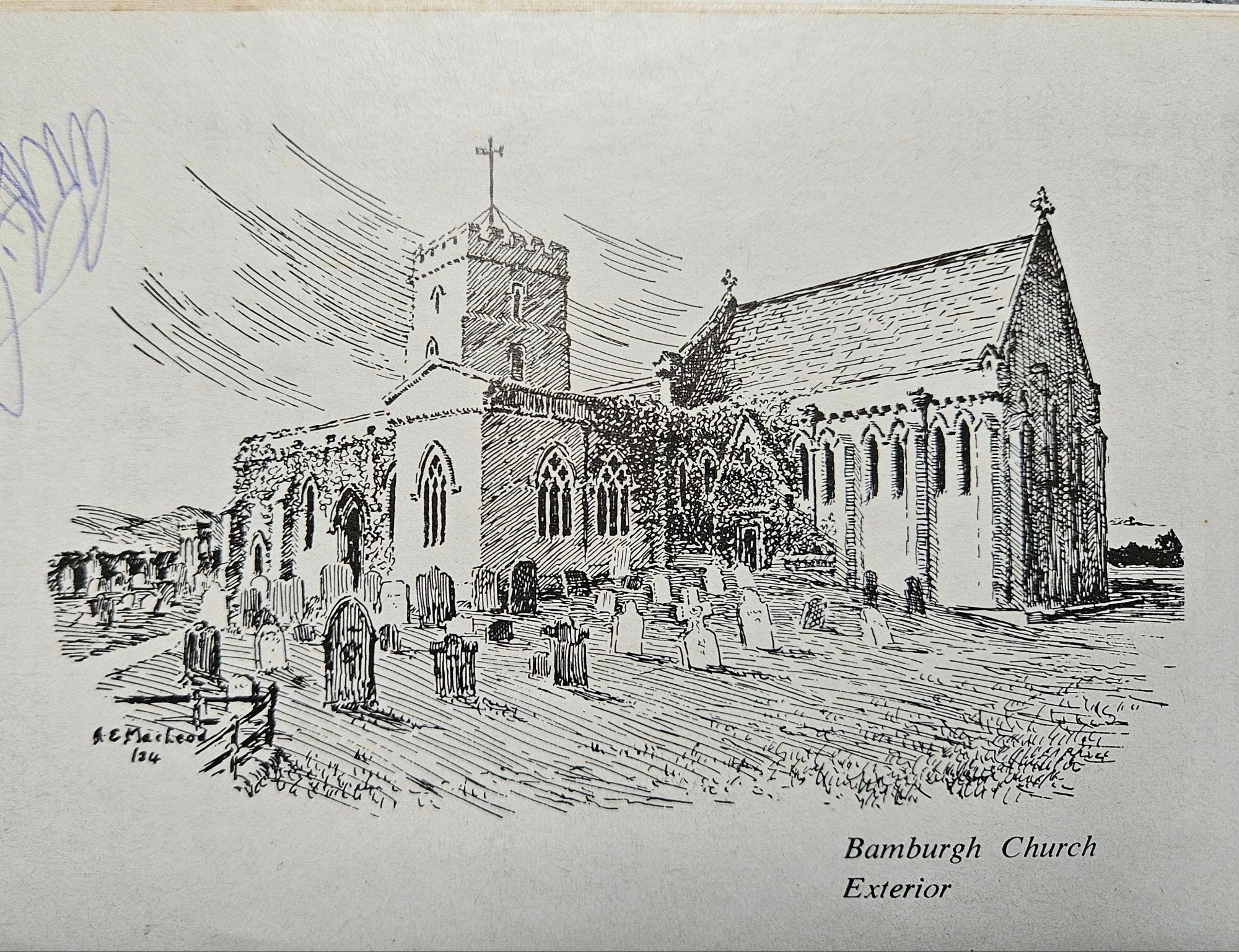
That’s the verdict of Mrs. A.E. MacLeod’s illustrated account simply titled Bamburgh first published in the 1930s.
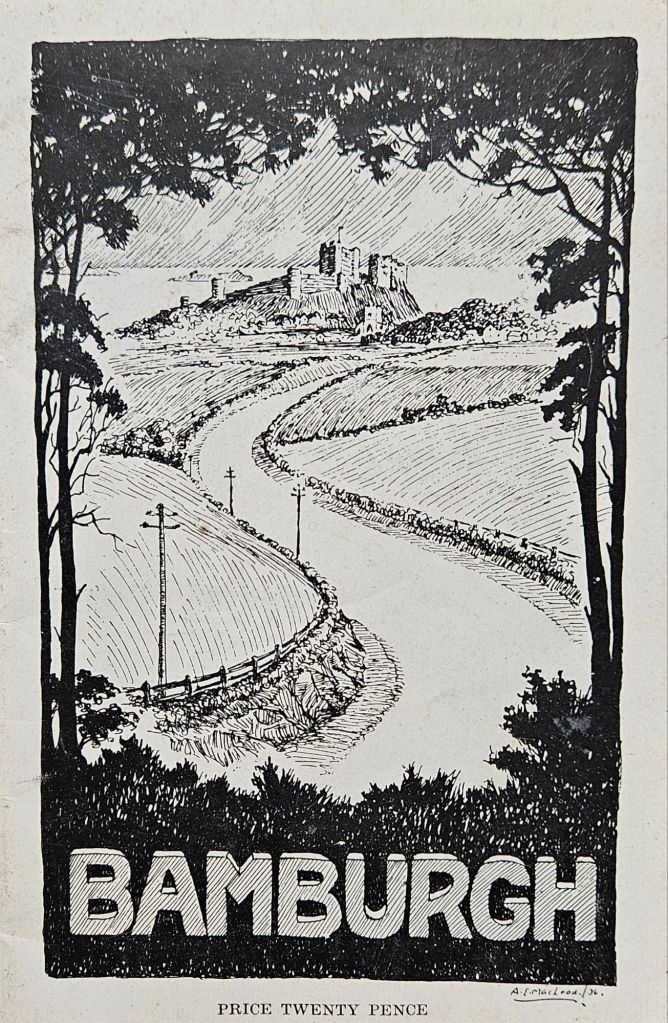
Alongside Bamburgh’s spectacular castle, the book’s other prime focus is the historic church that has long gripped the imagination of visitors.
Pen and ink drawings illuminate the story of St. Aidan who helped spread the Christian gospel from Iona to nearby Lindisfarne and beyond in the 7th century CE.
In more recent times, the building plays a part in the story of Grace Darling whose grave is located in the churchyard.
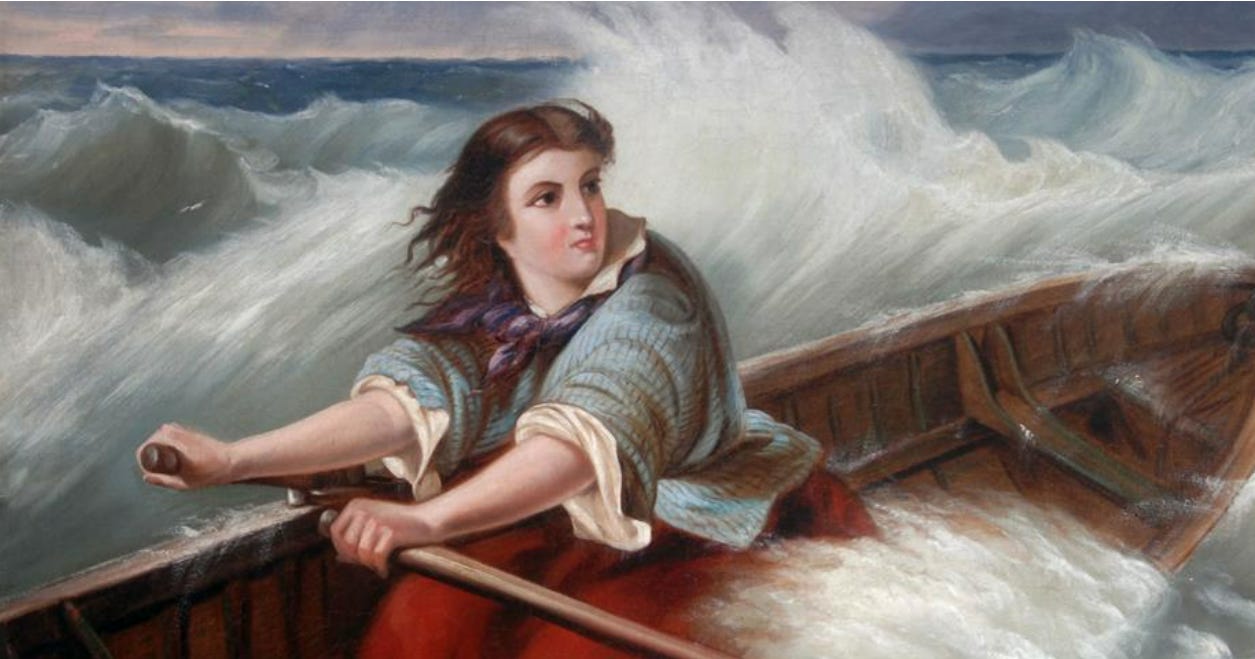
In 1838, together with her lighthouse keeper father, she rescued 9 sailors from the stricken SS Forfarshire aground on Big Harcar in the Farne Islands.
Proclaimed a national heroine, Grace’s bravery was immortalised by artists and is celebrated today in the RNLI Grace Darling Museum directly opposite St. Aidan’s.
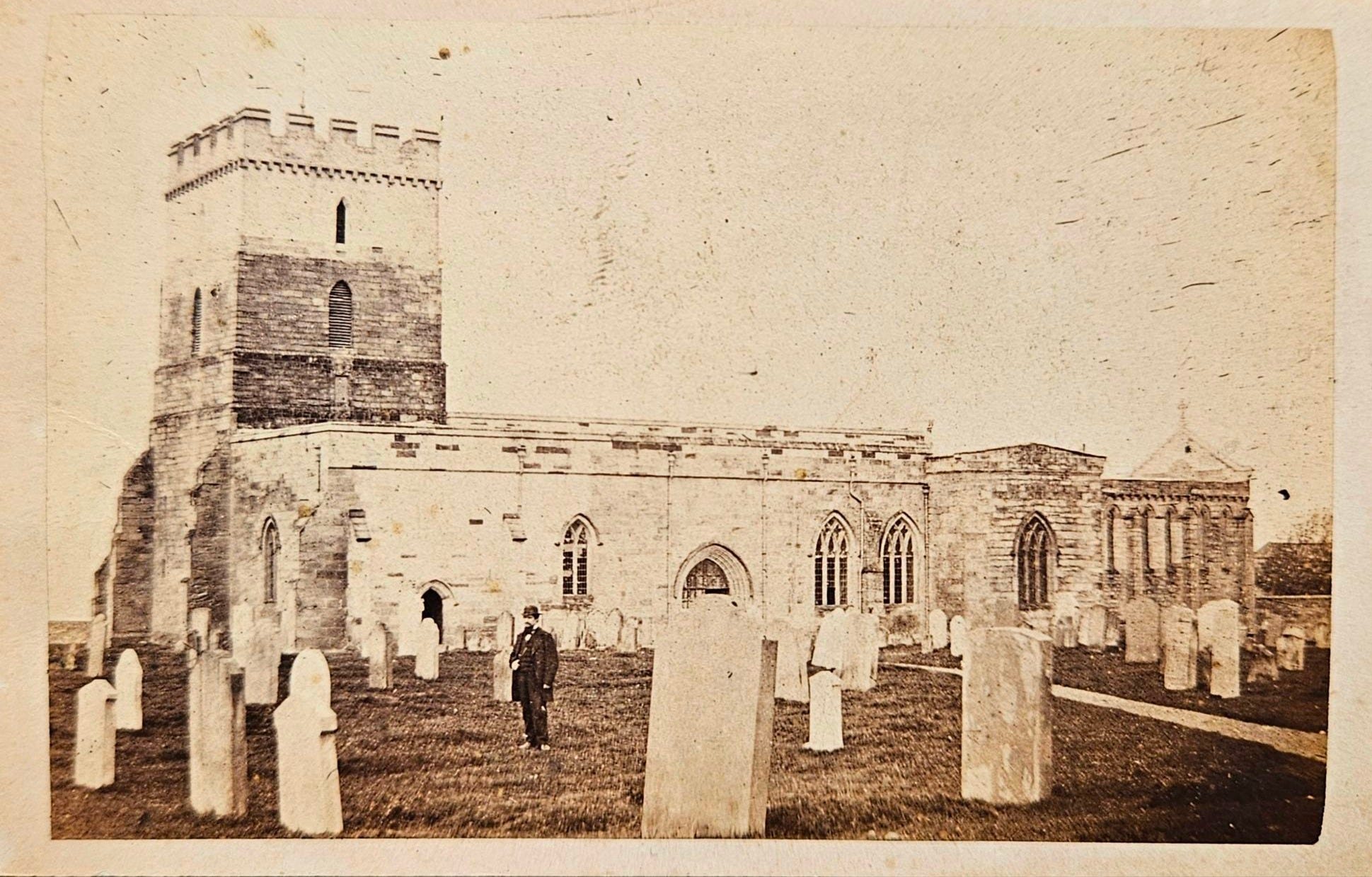
Photographers too have taken inspiration from the church as the latest addition to the Pressphotoman collection confirms.
It’s a carte de visite notated ‘Bamburgh Church, Northumberland’ on the verso in an unknown hand with a stamp for ‘J. Borthwick, Photographer, 61 Bondgate Street, Alnwick.’
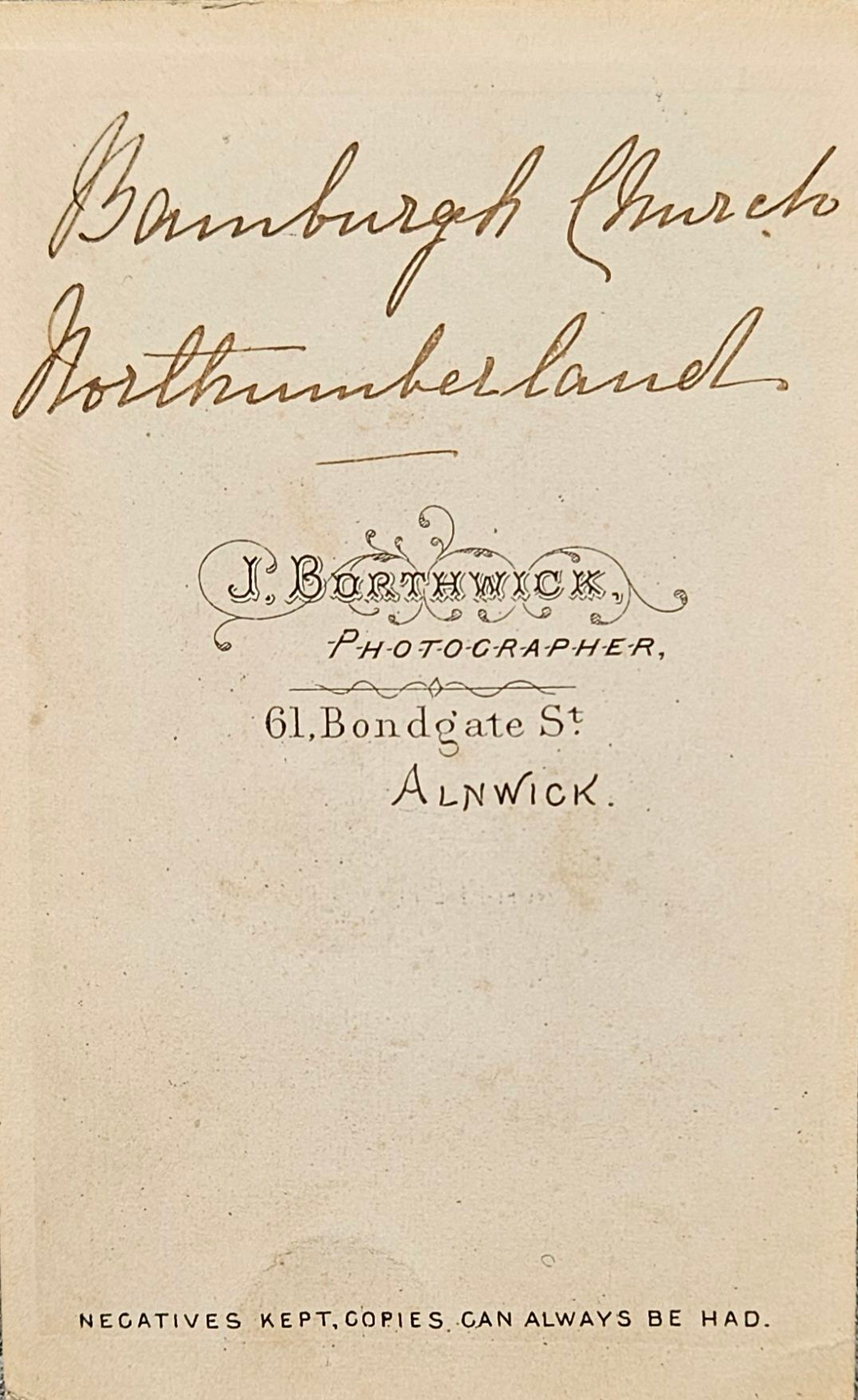
Photographer Joseph Borthwick (1830-1894) was a fixture in the nearby neighbouring town of Alnwick for nearly four decades.
The Borthwick family ran a grocer’s shop and Joseph trained as a cabinet maker and joiner.
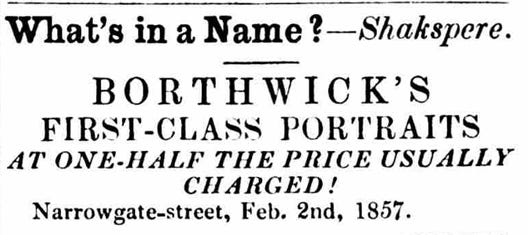
As to his photography, this newspaper advert from the Alnwick Mercury suggests that during his twenties, he was taking portraits, perhaps using a camera he had built.
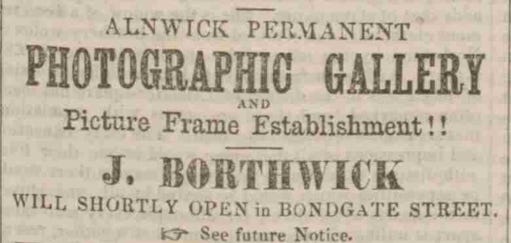
Still listed as a cabinetmaker in the 1861 Census, Joseph used the Alnwick Mercury to announce in March 1863 that his ‘Permanent Photographic Gallery and Picture Frame Establishment!! … will shortly open in Bondgate Street.’
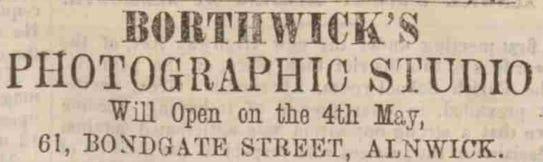
Two months later, ‘Borthwick’s Photographic Studio’ opened to the public and Joseph continued in business as a photographer and picture framer at various Alnwick town centre addresses into the 1890s.
As to when Borthwick’s carte de visite of St. Aidan’s Church, Bamburgh, was taken, the lack of a roof at the right-hand side of the building offers a clue.
According to Mrs. MacLeod’s Bamburgh guide, the church was roofless at one point and in 1857, a new roof was pitched and covered in lead.
Closer examination of Borthwick’s carte de visite confirms that the roof was missing at the point the photograph was taken.
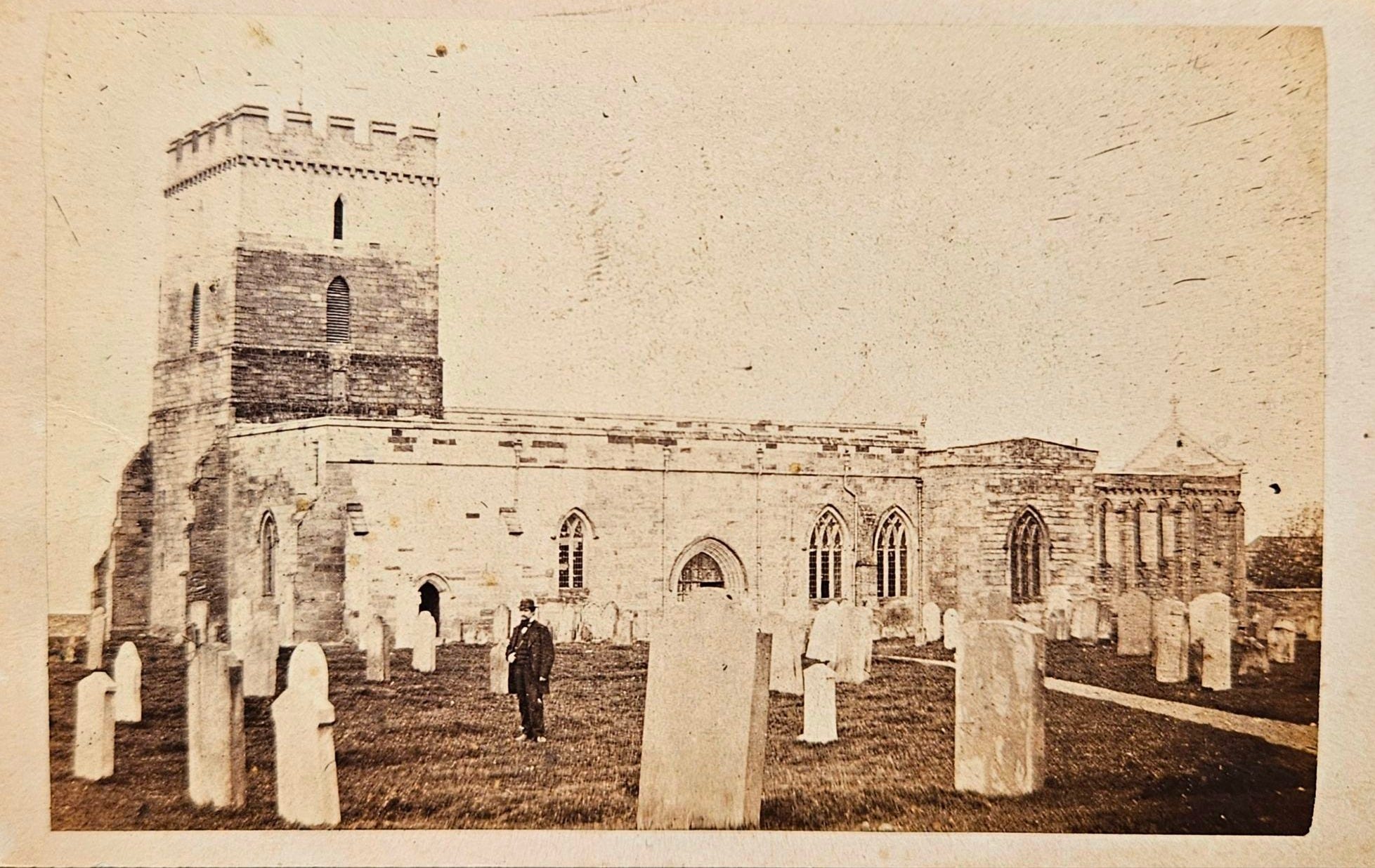
If 1857 is the correct date for the church’s re-roofing, it must have been taken earlier in the decade, perhaps when Joseph Borthwick was an amateur photographer creating images for pleasure.
Subsequently, the image may well have ended up in his archive and been called in to service when his 61 Bondgate Street studio needed attractive ‘new’ images to sell to customers.
As to the unidentified figure in the churchyard, he’s been deliberately positioned in the foreground to give a sense of scale.
Taking all this information into account, the resulting photograph is a valuable relic of an important period in the long history of St. Aidan’s Church, Bamburgh.
 Pressphotoman
Leave a comment