
Earlier this month, a conference titled ‘Shifting Perspectives: Scotland’s Urban Architecture Through the Lens’ was held at the National Library of Scotland in Edinburgh.
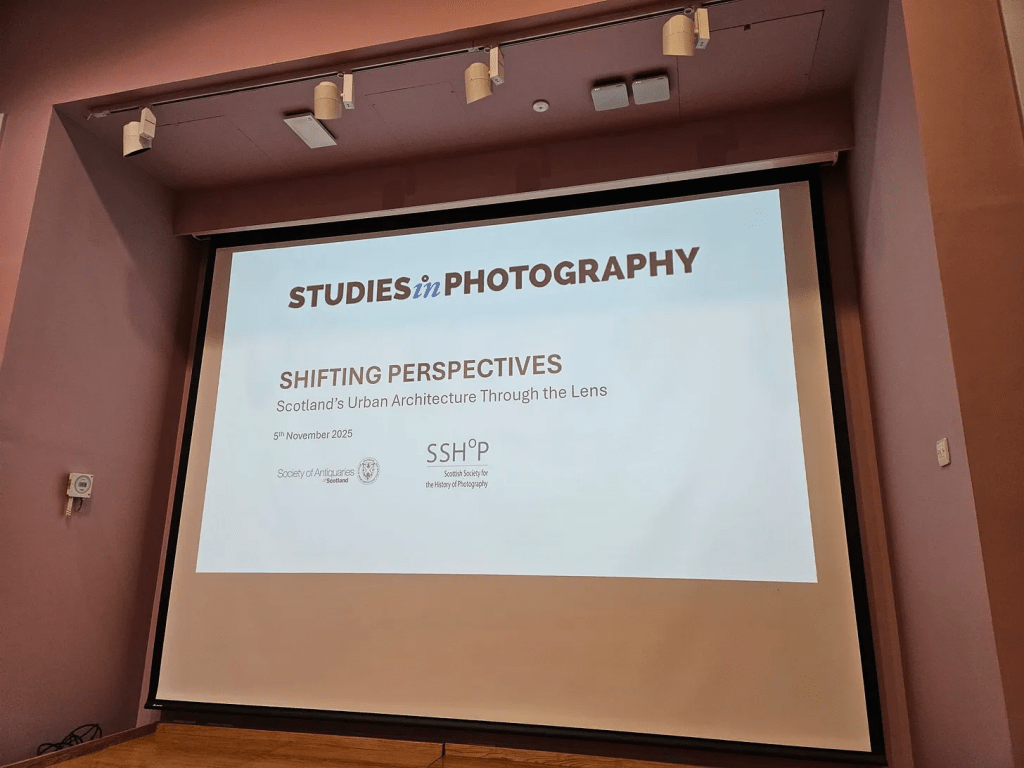
This offered a welcome opportunity to share new research on the architectural photographer Ursula Clark (1940-2000) whose overlooked career has been celebrated on this blog throughout 2025.
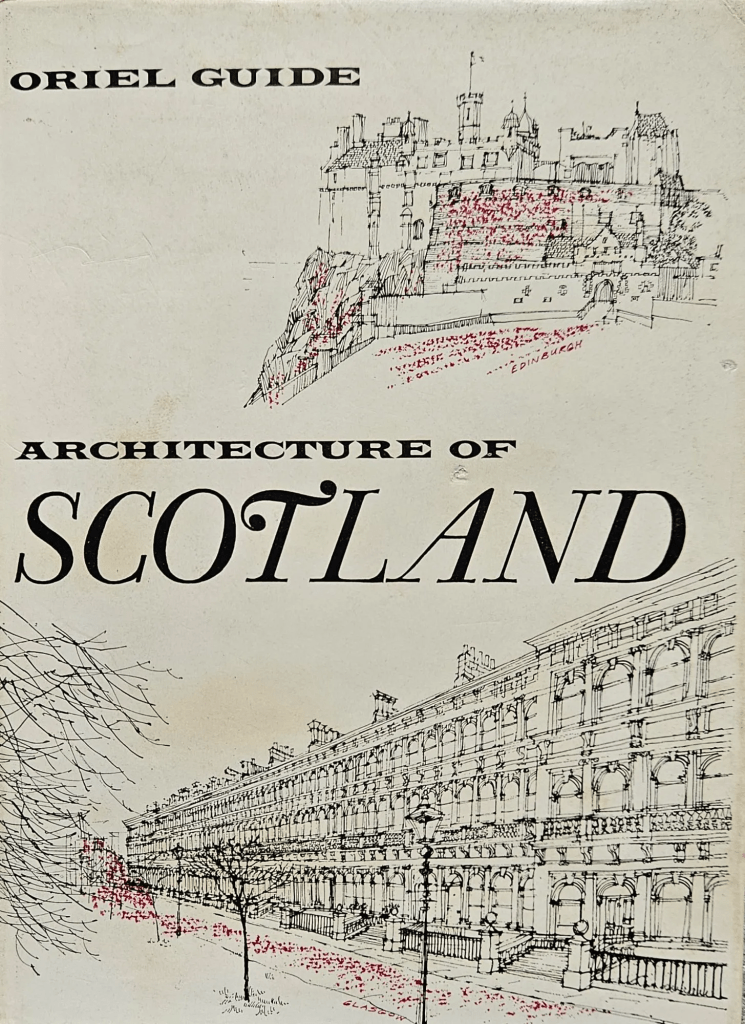
My paper focused on the Oriel Guide Architecture of Scotland (1969) for which Ursula was photographic editor and to which she contributed a number of photographs.
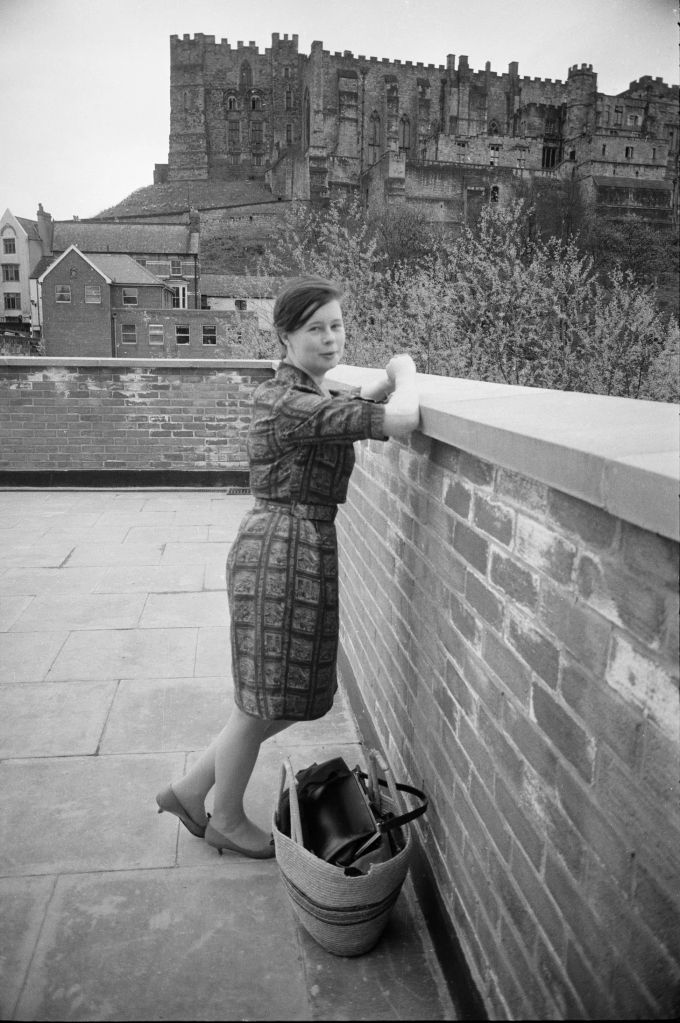
As regular readers will know, around 20,000 largely black-and-white negatives form the largest collection by a woman photographer in the care of Historic England.
Around 2,000 images in the Ursula Clark Collection have been digitised and show buildings in England that were previously under-represented including those from her native Newcastle-upon-Tyne and North East England.
However her Scotland images have remained unseen since first being published nearly 60 years ago.
In 1966, Architecture of Scotland was promoted as being “in preparation” by Ursula’s employer, the publisher Oriel Press of Newcastle upon Tyne, indicating the time period when the images were taken.
However, it was 1969 before the book appeared.
Its 96 pages feature nearly 250 photographs interwoven with text supplied by the Scottish architectural historian George Hay (1911-1986).
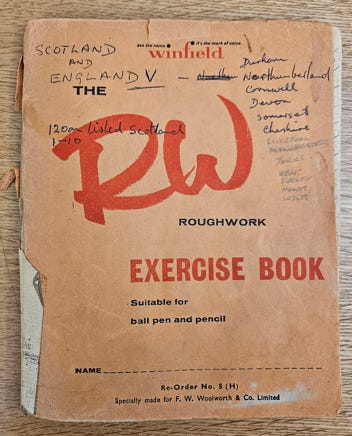
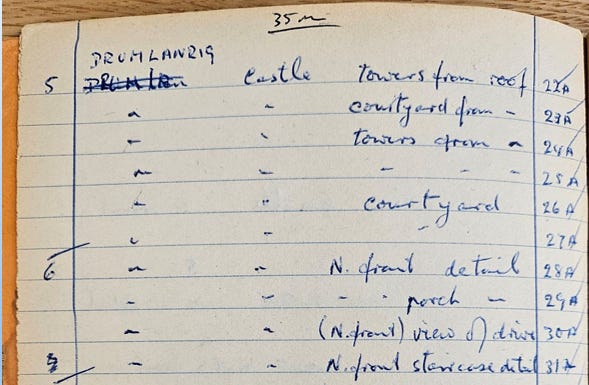
With the help of the team at Historic England’s archives in Swindon and using Ursula’s detailed shotlists, it has proved possible to identify a number of the Scottish locations that she photographed as well as the type of 35mm film she used.
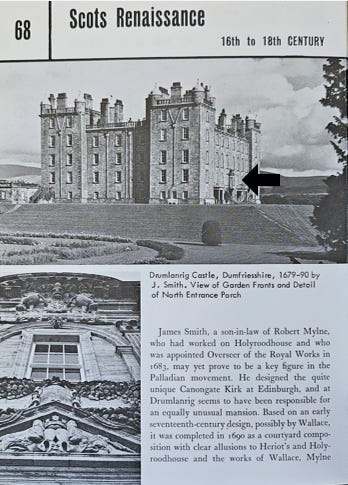
Amongst the entries was Drumlanrig Castle in Dumfriesshire (1679-1690) where a sequence was photographed featuring the building in both wide-shot and close-up.
One shot in particular stands out featuring the ‘North front porch detail’ (negative no. 29A), a perspective arrowed in the page below.
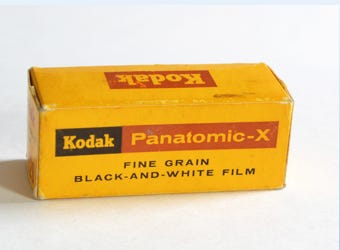
In this example, her use of Kodak Panatomic-X fine grain black-and-white film captures the intricacy of the stonework beautifully.
Another castle she photographed was Falkland Palace in Fife.
This summer, I had an opportunity to stand in Ursula’s footsteps and take a shot from a similar position of the South Range (top right below) using my Samsung camera phone
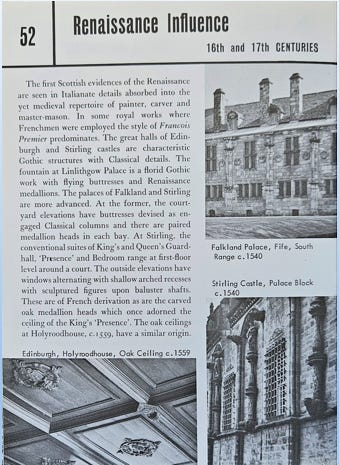
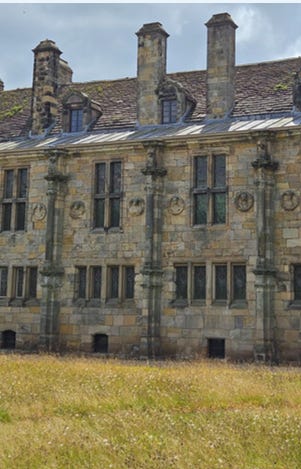
The main difference in the views taken 6 decades or so apart is the length of the adjoining grass.
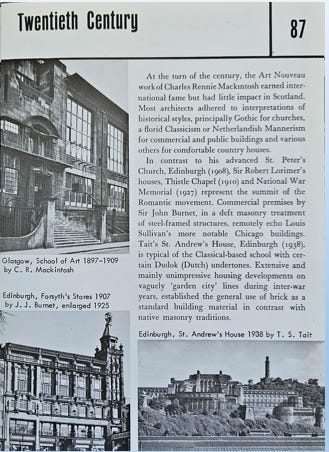
Such is the richness of Scotland’s architecture that comparatively few pages in the Oriel Guide are given over to recent buildings photographed by Ursula such as the Glasgow School of Art (1897-1909, top left) and St. Andrew’s House, Edinburgh (1938, bottom right).
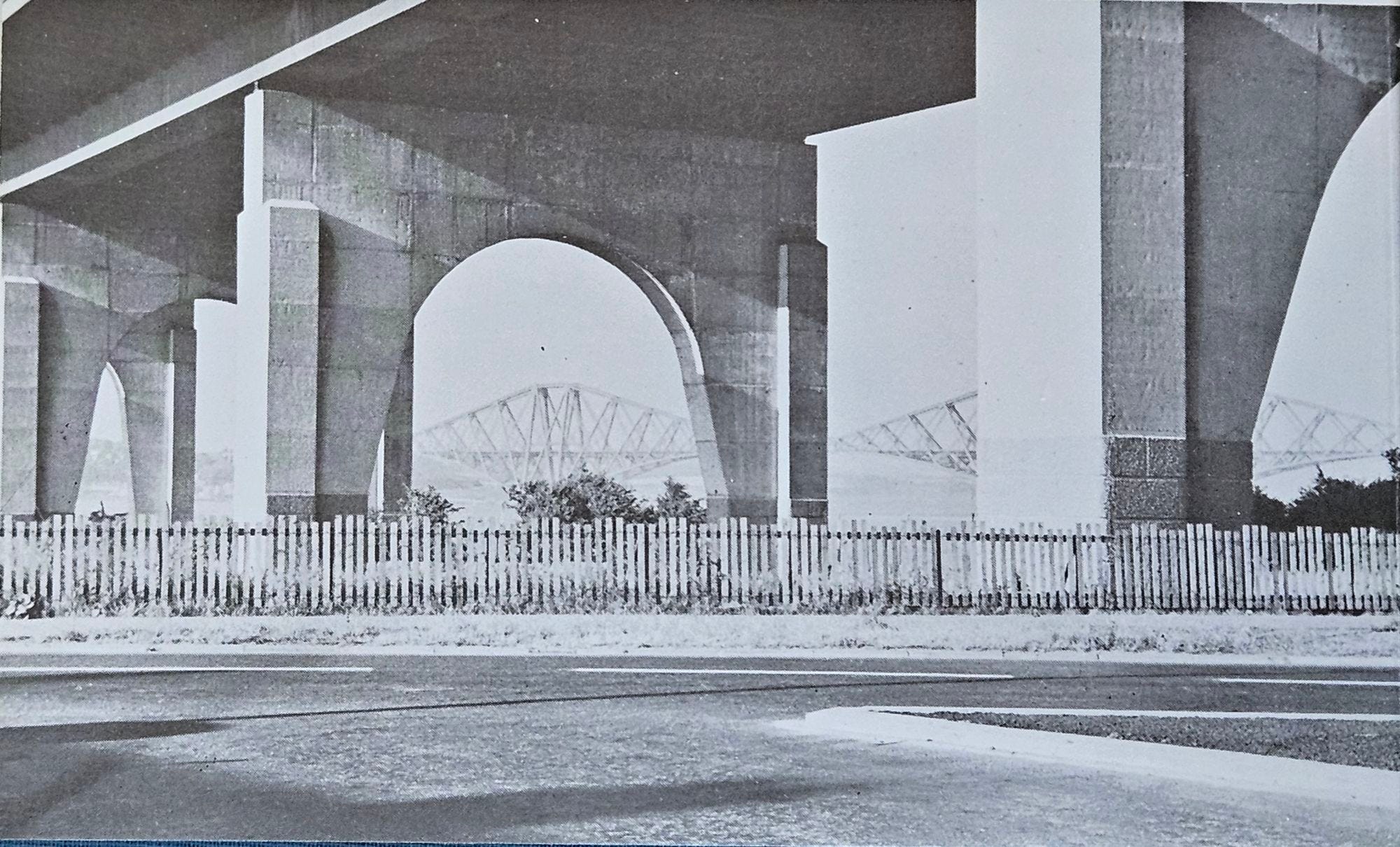
Perhaps my favourite Scotland shot of Ursula’s features a structure that emerged in the landscape as her architectural photography career was taking flight.
The shot list records a sequence featuring the Forth Road Bridge (1958-1964) and culminating in a shot that also features the railway bridge (1890) in the far distance.

When the book was published, Architecture of Scotland was well received by both critics and readers with the British Book News highlighting “Ursula Clark’s magic as photographic editor”.
Following Oriel Press’s takeover in 1973 by Routledge & Kegan Paul, a second enlarged and revised edition with a new cover featuring Midmar Castle (1570) was published four years later.
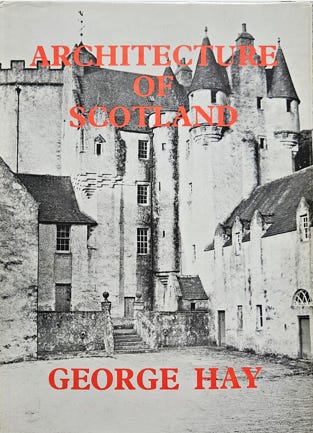
Second-hand copies of Architecture of Scotland in both editions can be spotted from time to time on book websites such as AbeBooks.
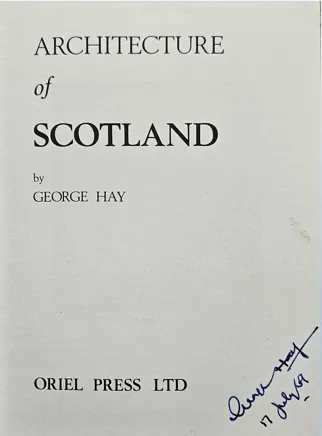
The first edition copy that I managed to obtain was even signed by George Hay on 17th July 1969, just a few days before the first moon landing.
Despite a lack of the co-credit that she received for several other Oriel Guides, the quality of Ursula Clark’s contribution to Architecture of Scotland still shines through.


 Pressphotoman
Leave a comment