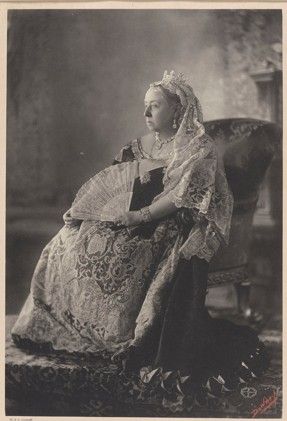
The brothers’ firm, W. & D. Downey, went on to become known worldwide for its portraits of Queen Victoria and the British royal family.
Diamond Jubilee portrait of Queen Victoria by W. & D. Downey. Copyright Royal Collection Trust / King Charles III.
As well as commercial photographers, skilled amateurs were also active in South Shields as revealed in new research by Rebecca Sharpe, co-curator of the Brian May Archive of Stereoscopy (Stereo World, vol. 51, no. 3 / Nov-Dec 2025 and no. 4 / Jan-Feb 2026).
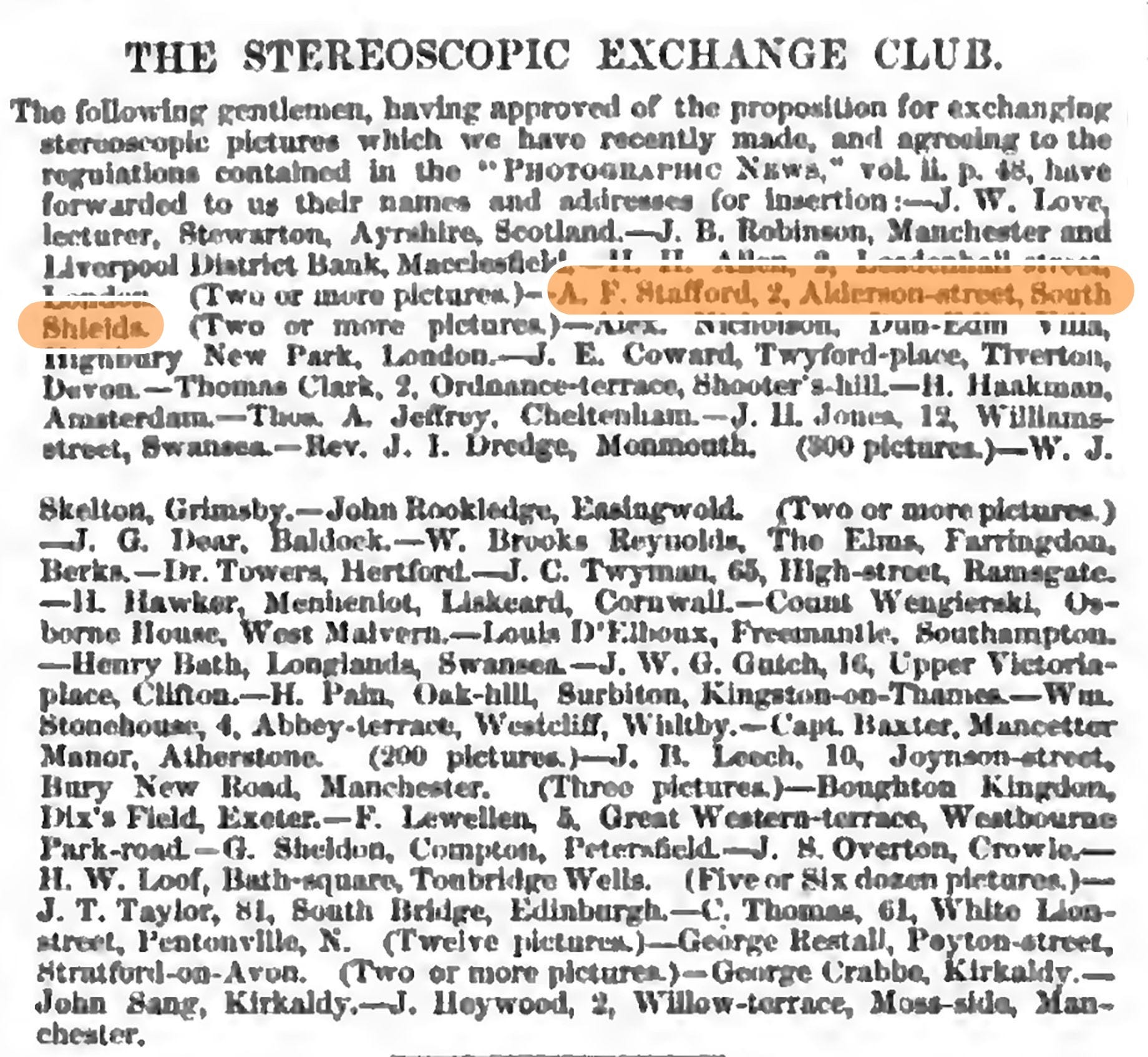
In March 1859, Thomas Crookes, editor of ThePhotographic News, put forward to readers the idea of exchanging stereoscopic (or 3D) views.
The following month, a list of gentlemen’s names was published as willing participants in what became known as ‘The Stereoscopic Exchange Club.’
Among its founding members was ‘A.F. Stafford of 2 Alderson Street, South Shields.’
First members list of the Stereoscopic Exchange Club (8th April 1859). From The Photographic News. Courtesy of Rebecca Sharpe.
According to the 1861 Census, Anthony Ford Stafford (1822-1910) was a ‘ship builder’s agent’ living with his wife Maria in the Westoe district of the town.
As to his photography, the columns of The Photographic News reveal that he was both knowledgeable and accomplished.
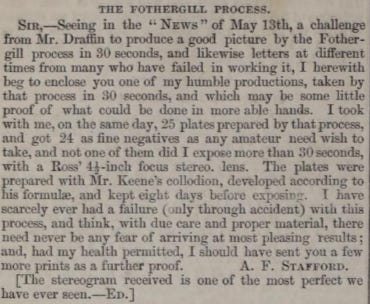
In a contribution to the paper’s ‘Photographic Notes and Queries’ column (5th August 1859), Stafford described his experience of using the newly-announced dry plate Fothergill Process.
This account also reveals important details about his photographic practice including his use of a “Ross 4 1/2 inch focus stereo lens.”
First members list of the Stereoscopic Exchange Club (8th April 1859). From The Photographic News. Courtesy of Rebecca Sharpe.
In a note at its conclusion, editor Thomas Crookes added: “The stereogram received is one of the most perfect we have ever seen” though no mention of the subject was given.
In what might be a complete coincidence, a W. & D. Downey newspaper advert appeared the very next day offering for sale “stereoscopic views of the village of Westoe.”.
North & South Shields Gazette (6th August 1859). From British Newspaper Archive.
Taken together though, these two pieces of evidence at least raise the possibility that A.F. Stafford was supplying Downey’s with high-quality stereoscopic views.
As to whether they knew each other, their paths may well have crossed in other roles they undertook in the South Shields community
For example, Stafford was secretary of the Mechanics Institute whilst both Downey brothers were committee members of the Working Men’s Institute.
Within a few years though, their lives had moved in different directions.
In March 1863, South Shields celebrated the royal wedding of the Prince and Princess of Wales with a public ball in the hall of the Mechanics Institute that A.F. Stafford helped organise.
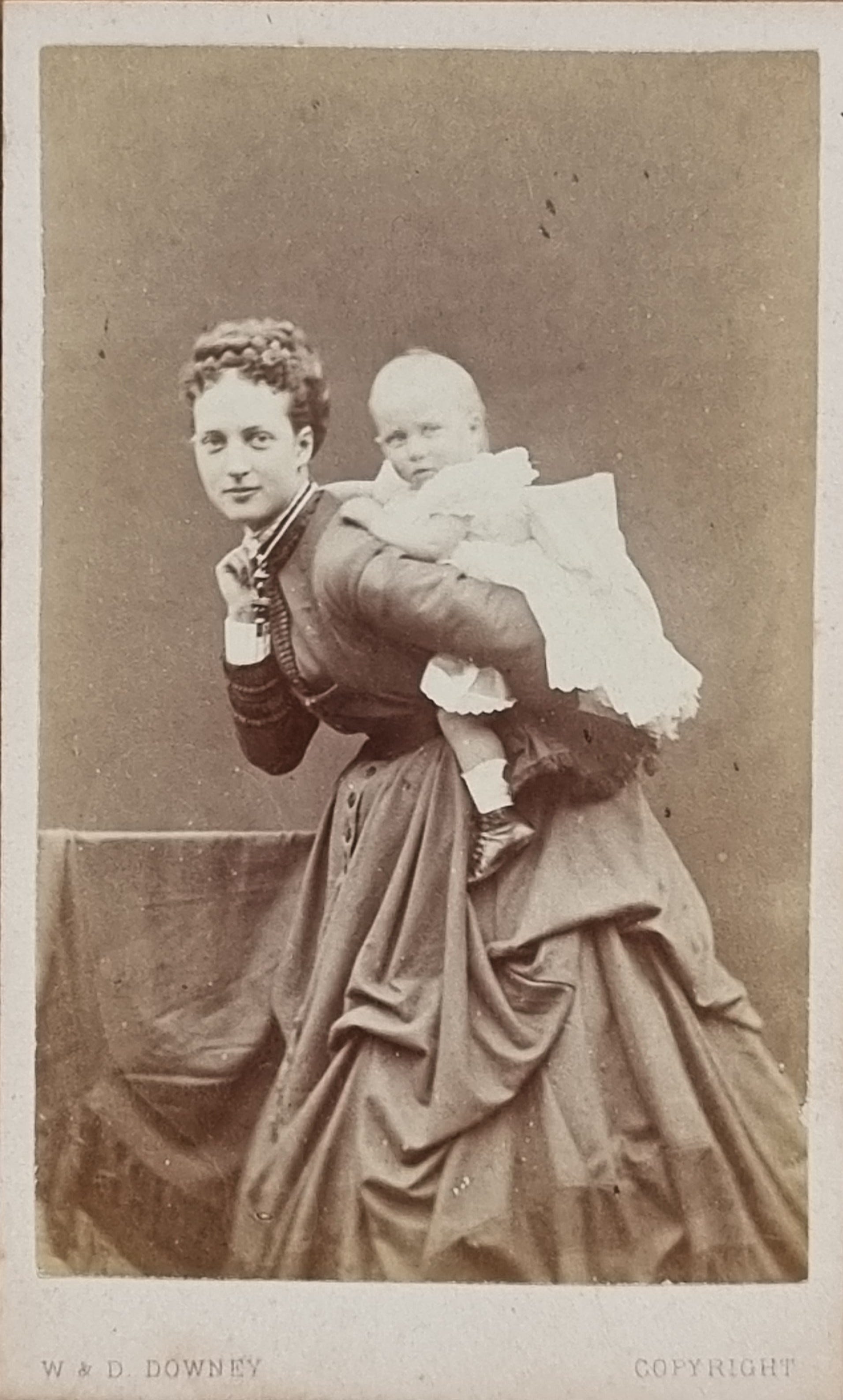
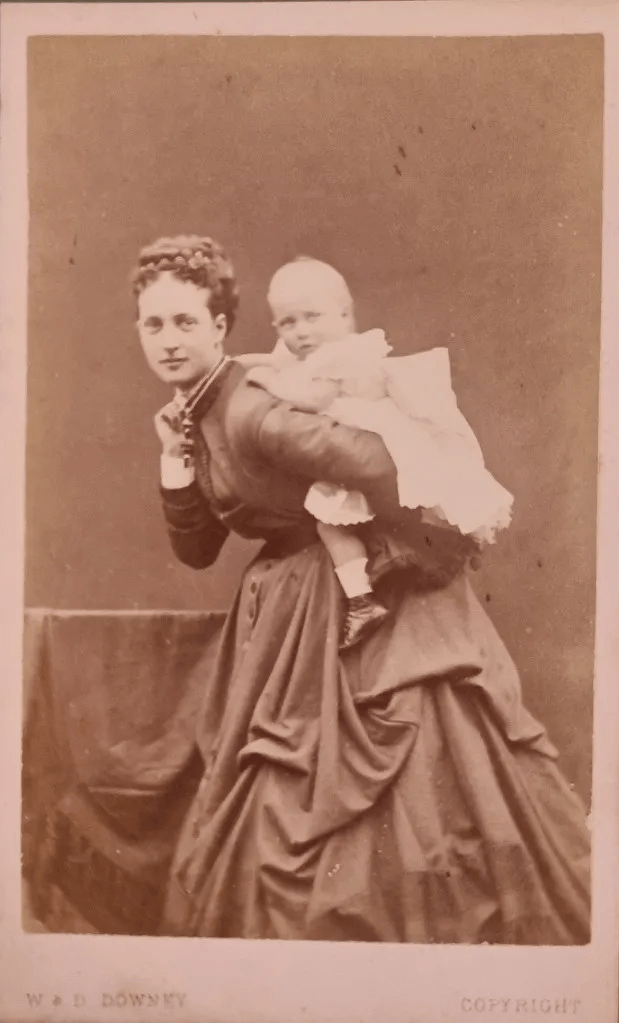
By contrast, the Downey brothers had opened a studio in Newcastle upon Tyne and were soon photographing members of the royal family such as Alexandra, Princess of Wales with her daughter Louise.
In the search for more clues about A.F. Stafford’s photography, I was delighted to locate a cache of his personal papers in the collection of the Tyne & Wear Archives (DX1016).
This reveals more about his business dealings centred around shipping on the River Tyne, but sadly there was no further evidence or any examples of his photography.
As for the Stereoscopic Exchange Club of which Stafford had been a founding member, it continued for a few years until running out of steam.
If this post has whetted your appetite, Rebecca Sharpe’s research about the Stereoscopic Exchange Club with examples of its members’ stereos features in a talk she gave last week for the Royal Photographic Society Historical Group.
She shared the event with Julie Gibb of National Museums Scotland whose research into the United Stereoscopic Society featured in an earlier Pressphotoman post (Jigsaw Pieces – 8th December 2025).
Over the past few days, a significant anniversary in the history of the British monarchy and the media was passed.
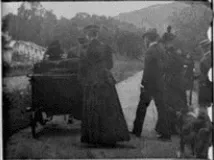
On 3rd October 1896, Queen Victoria together with other members of the royal family were filmed for the first time.
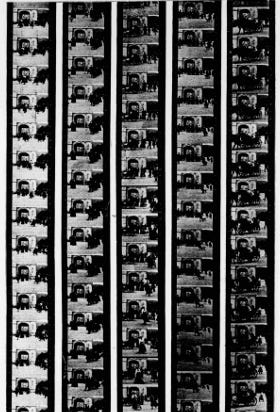
Frame taken from cinefilm of Queen Victoria (3rd October 1896).
Keeping pace with the Queen’s passionate interest in all matters photographic, the shoot took place only ten months after the Lumiére brothers unveiled their first cinematograph films in Paris.
The firm of W. & D. Downey, often regarded as Victoria’s favourite portrait photographers, was tasked with recording the first moving pictures of her.
Given the importance of the assignment, members of the extended Downey photographic family travelled to the Scottish Highlands where the Queen was in residence at Balmoral.
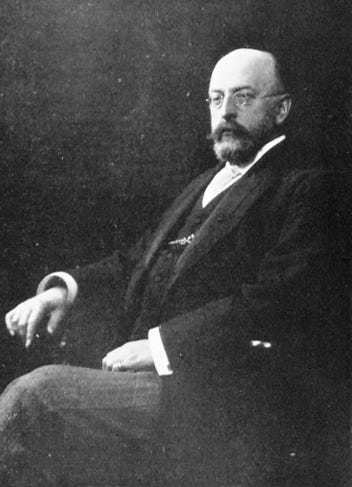
Leading the filming project was William Edward Downey (1855-1908), who by this point had taken over day-to-day running of the firm co-founded in the mid-1850s by his father William (1829-1915).
Mr. W.E. Downey. From The Professional Photographer (1906).
He was joined by his cousins James John Downey (1854-1902) and Frederick Downey (1862-1936), who both travelled from Tyneside where the original Downey business had its roots.
By the 1890s, their own firm, J.J. & F. Downey based in South Shields, was a thriving photographic concern in its own right.
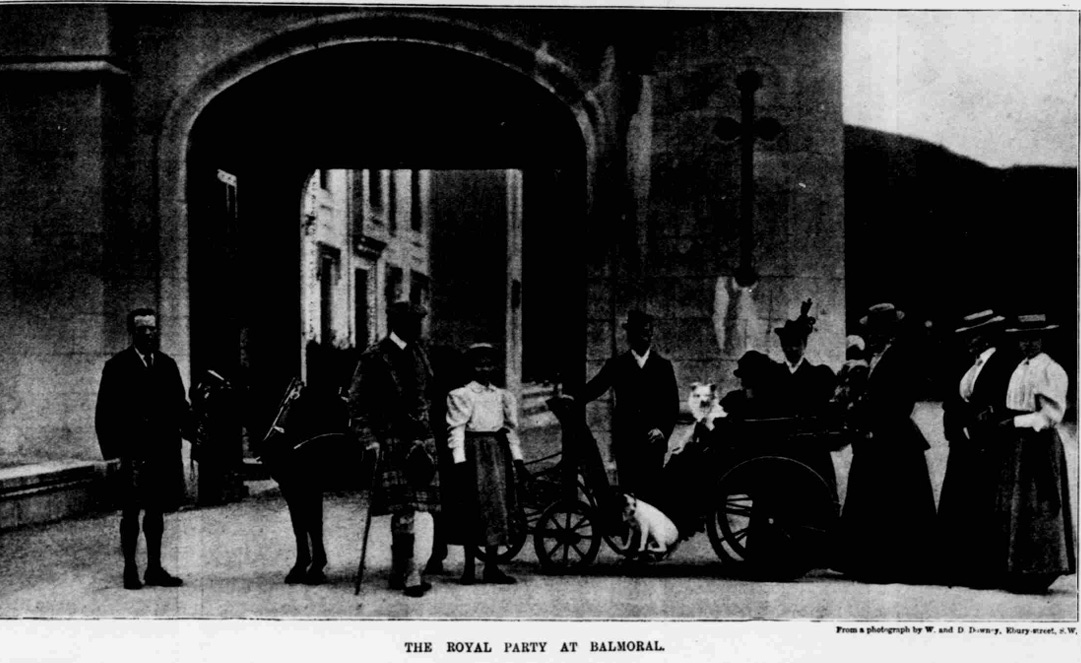
Details of filming at Balmoral and its aftermath can be gleaned from a variety of contemporary sources.
‘From a photograph by W. and D. Downey, Ebury Street, W’.
According to Queen Victoria’s Journals, 3rd October 1896 was “A lovely morning. — Nicky & Arthur breakfasted with us. — At 12 went down to below the Terrace, near the Ball Room, & were all photographed by Downey by the new cinematograph process, which makes moving pictures by winding off a reel of films.”
She continued: “We were walking up & down & the children jumping about. Then took a turn in the pony chair.”
Staying with the Queen were Tsar Nicholas II (known as Nicky) and his wife Tsarina Alexandra of Russia, who added additional glamour and international appeal to the occasion.
Recent research has revealed that unfamiliarity of working with the new technology meant the film was incorrectly loaded into the camera.
This resulted in an unstable image featuring “a severe vertical jumping motion and blurring of the picture.”
Using copies of the footage held by the BFI National Archive and Movietone News, the National Library of Scotland undertook a digitisation project in 2021 that has greatly improved the viewing experience.
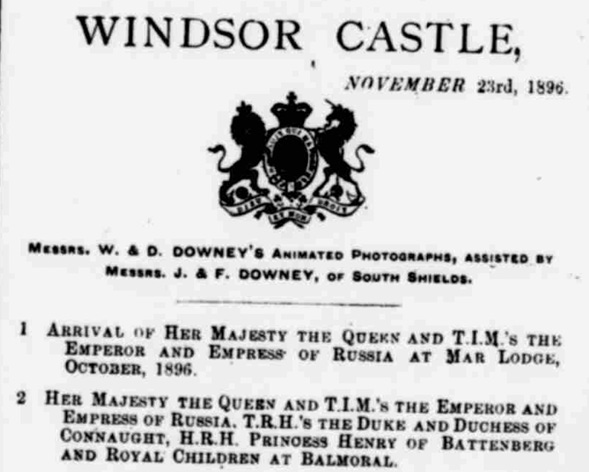
Several weeks later, the national press reported how footage shot by W. & D. Downey, described as ‘animated photographs’, had been shown to the Queen and royal family members during a film and lantern slide show held at Windsor Castle.
Illustrated newspapers and magazines had only recently begun to employ halftone reproductions alongside engravings.
So to provide readers with an impression of watching moving pictures, Lady’s Pictorial used the latest printing technology to reproduce three pages of frames taken from the film footage.
Lady’s Pictorial Supplement (5th December 1896). From British Newspaper Archive.
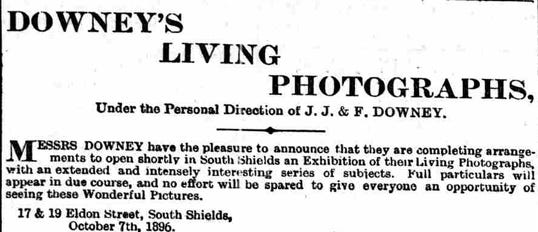
Back on Tyneside, J.J. & F. Downey wasted little time in placing an advert in their local paper, the Shields Daily Gazette, offering the chance to view what they branded ‘Downey’s Living Photographs’.
Shields Daily Gazette (8th October 1896). From British Newspaper Archive.
It was to prove a fruitful avenue for theirs and other photographic businesses in the years that followed as moving pictures took over from portrait galleries and lantern slide shows as forms of mass entertainment.
The very first Pressphotoman post published in December 2022 featured a Channel 5 tv documentary about Queen Alexandra.
Portraying “the little celebrated and long-suffering wife” of King Edward VII, I questioned why a 70-minute programme rich in archive photographs had ignored one particular celebrated carte de visite portrait.
The resulting carte reportedly sold around 300,000 copies at a time when photography offered the public an affordable outlet for their fascination with the royal family.
That fascination continues as evidenced by another royal tv documentary broadcast in Britain last week.
Again, it offered an unmissable opportunity to utilise well-known carte de visite portraits of its subjects.
This time the programme makers did not disappoint.
Titled ‘Queen Victoria: Secret Marriage? Secret Child?’, Dr. Fern Riddell presented new evidence revealing a romantic relationship between Queen Victoria and her Highland servant John Brown.
As its title hinted, this included the claim that they not only married, but even had a child together.
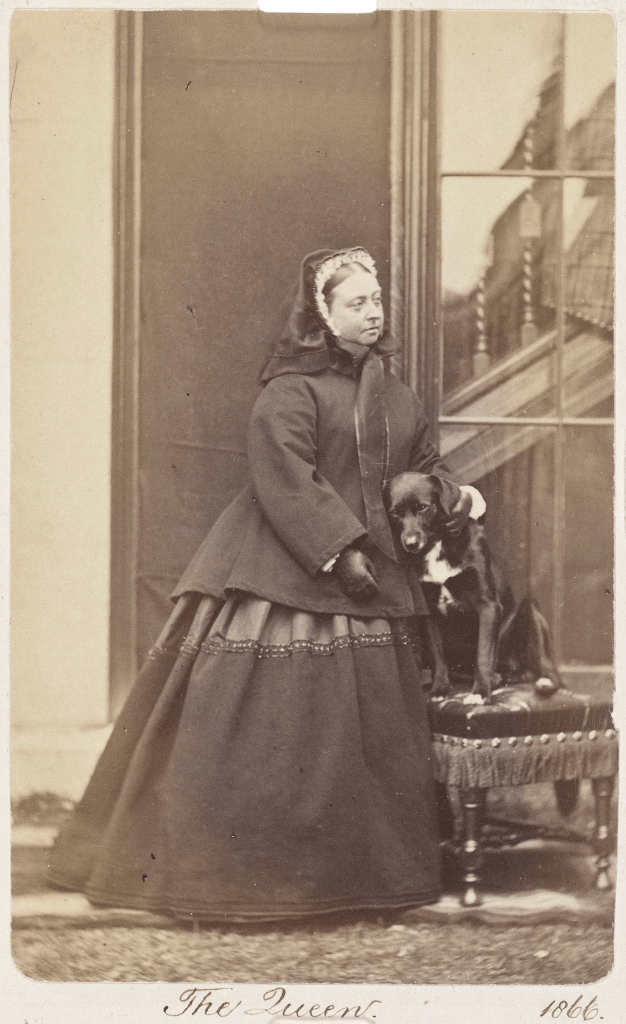
Photohistorians have long pored over carte de visite portraits of the couple that were produced during the 1860s and 1870s.
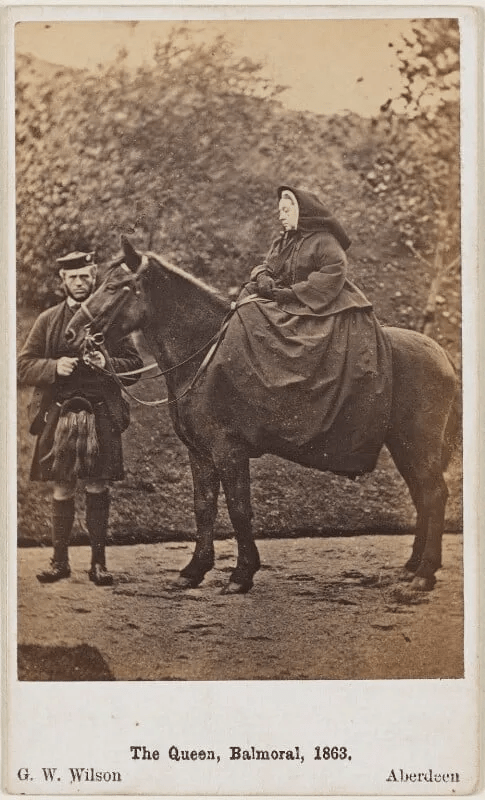
Among the earliest was taken by the Aberdeen photographer George Washington Wilson at the Queen’s Balmoral estate in October 1863.
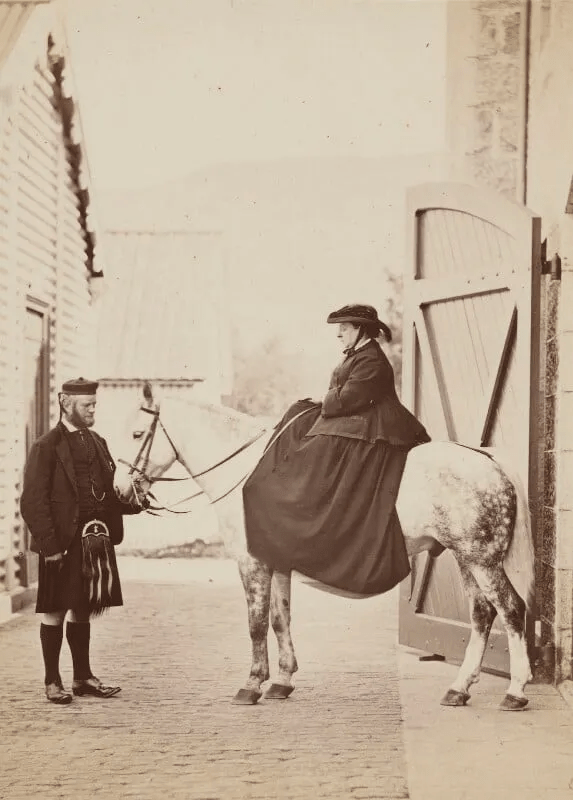
Marking the anniversary of her last Highland ride with Prince Albert, Victoria together with her pony ‘Fyvie’ were flanked by two of her servants, John Brown and John Grant.
However, when the photograph was published as a commercial carte, Grant was edited out of the shot leaving Brown and the Queen together.
The photograph later became symbolic of the monarch’s deep mourning for her late husband and her relationship with Brown that was already the subject of much gossip.
Sales during the following year were just short of 13,000 copies of this and other portraits made on the same occasion though the ‘Fyvie’ carte was the most popular.
The documentary also made great use of a similar portrait of Victoria and Brown taken five years later.
In the documentary, it was used to provide physical evidence for its argument that the Queen had given birth to a child with Brown the previous year.
Photographers like the Downey brothers and George Washington Wilson were no doubt privy to all kinds of interactions between the Queen and members of the royal household.
Exactly what they knew and saw would no doubt have interested today’s royal documentary makers.
What these intimate photographs capture only adds to the mystery surrounding Victoria and Brown.
One of the intriguing aspects of photography’s commercialisation in the middle of the 19th century is its impact on the established medium of art.
It’s a collision that continues to fascinate researchers who spend time investigating the 1850s and 1860s.
The new invention of photography offered an affordable alternative at a time when artists still dominated the portraiture market.
A figure who epitomises the emergence of the ‘Photo Artist’ is the subject of this blogpost.
Pressphotoman first came across Edward Sawyer (1828-1902) during research into the early days of W. & D. Downey of South Shields, Newcastle upon Tyne and London.
After touring Northumberland and Durham in a horse-drawn van christened “Downey’s Crystal Place Portrait Gallery,” brothers William (1829-1915) and Daniel (1831-1881) were rapidly expanding their business.
North & South Shields Gazette, 11th April 1857. From British Newspaper Archive.
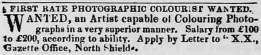
Shortly after this advert’s appearance in April 1857, Downey’s announced they had secured a “First Class Artist for Colouring Photographs” adding that “Photography Like Nature Needs A Handmaid.”
Edward Sawyer, a native of neighbouring North Shields across the River Tyne, had established a local reputation for his artistic skills.
With Sawyer on the payroll, Downey again used the columns of the North & South Shields Gazette (8th July 1857), this time to report a “royal” commission.
“Mr. Moffet of the Queen’s Head Inn, North Shields, has just had painted, at the Photographic Establishment of Messrs. W and D. Downey, South Shields, by their artist, Mr. Edward Sawyers [sic], a beautiful full-length portrait of her Majesty.”
This royal likeness of Queen Victoria, the paper informed its readers, had been placed by the landlord “in front of his house on the Tynemouth Road.”
Whether this portrait was an up-market hand-painted pub sign, it was followed by a recognisably photographic assignment.
Downey’s had produced “a fine negative” of the Mayor of South Shields “sitting in the civic chair in his official robes.”
Some of the copies taken from this were then “coloured in oil in a superior style by Messrs. Downey’s artist” (North & South Shields Gazette, 29th July 1857).
This was highly-skilled work and early photographic portrait studios successfully combined the new and established forms of visual media.
How long Edward Sawyer worked for the Downey brothers is not known, but the 1861 Census recorded he was living in Sunderland with his wife and young family and that his occupation was “portrait painter and photographic colourist.”
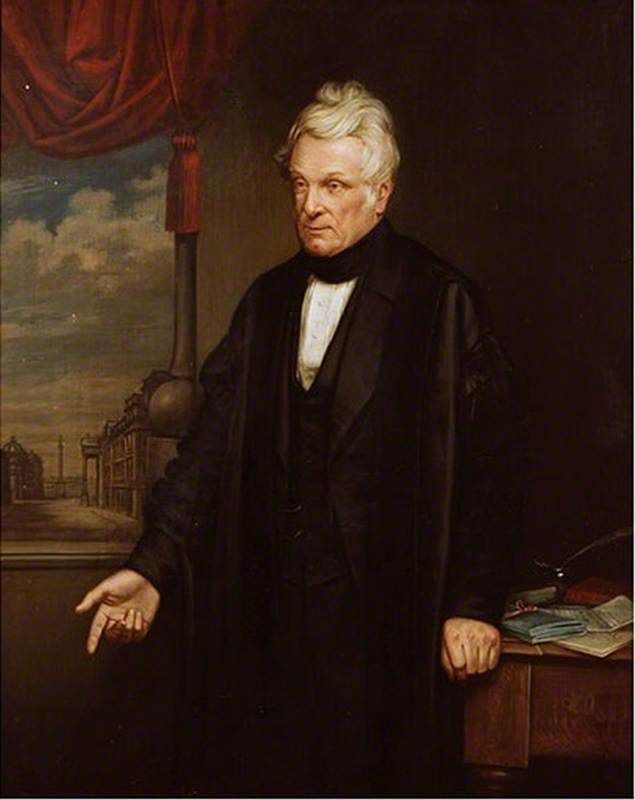
By then, his commissions had moved into another league as demonstrated by this portrait dated by various sources to 1862.
It features John Clayton (1792-1890), the then long-serving town clerk of Newcastle upon Tyne and a man who is widely credited with saving Hadrian’s Wall.
In the background of the portrait can be glimpsed prominent Newcastle landmarks including Grey’s Monument, the Theatre Royal and Grey Street itself.
Because of his background, it’s possible that Sawyer used a photograph of his illustrious client as the basis for the portrait .
Around this time, the artist set up his own business at 40 Grey Street, arguably the city’s most prestigious address.
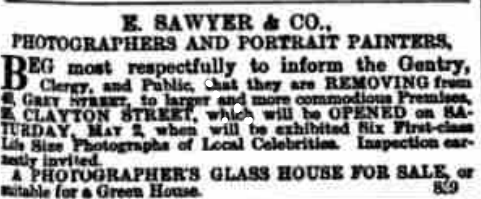
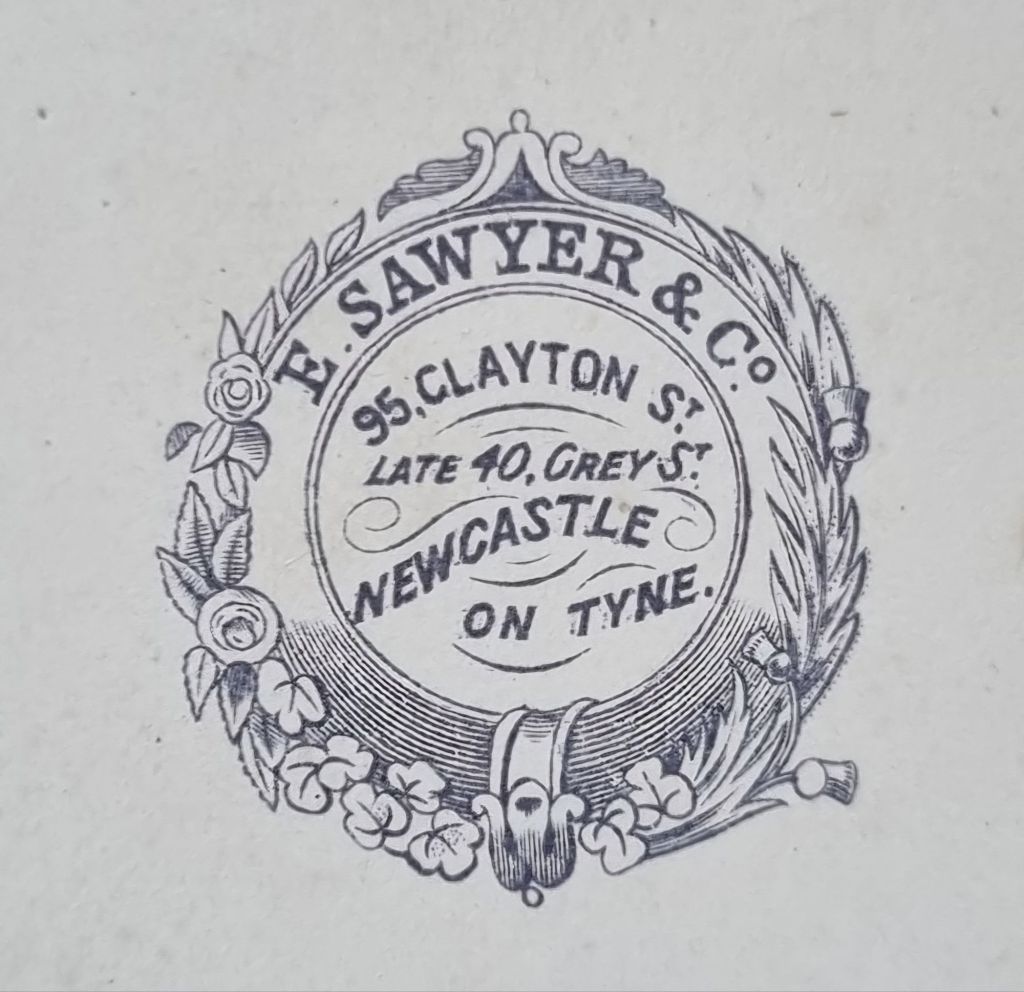
By the spring of 1863, E. Sawyer & Co had moved to 95 Clayton Street, a neighbouring Newcastle thoroughfare named after the subject of the portrait above.
Advertisement from Newcastle Daily Chronicle, 28th April 1863. From British Newspaper Archive.
As this newspaper advertisement confirms, Sawyer’s company was offering its services as both “photographers and portrait painters” whilst offering customers the opportunity to view “Six First-class Life Size Photographs of Local Celebrities.”
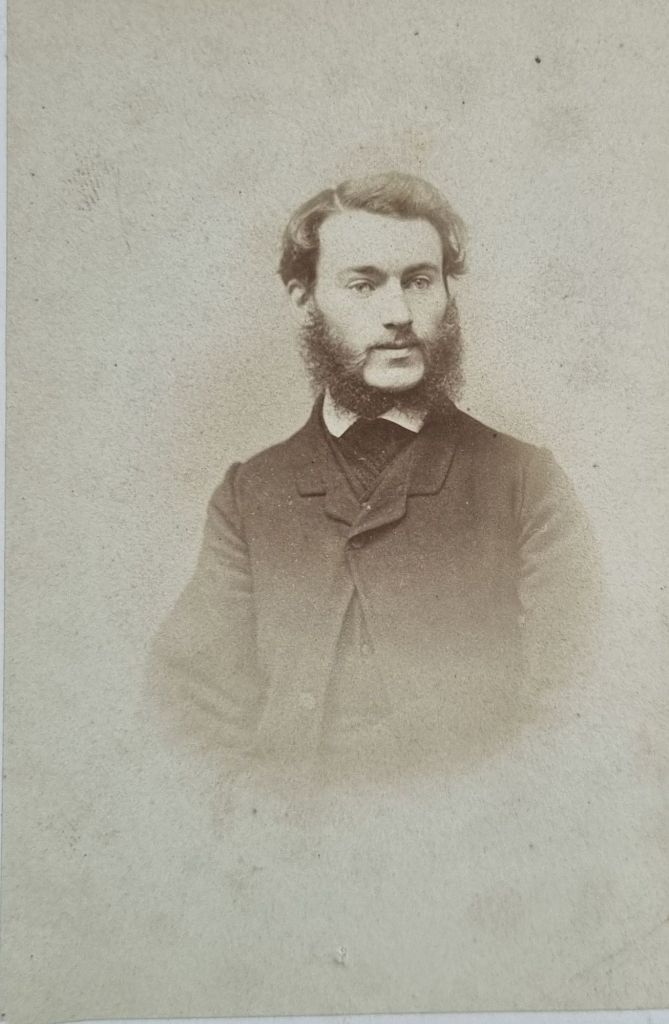
As demonstrated by the carte de visite from which this company logo is taken,’ E. Sawyer & Co’ produced affordable photographic portraits such as this one in a style that appealed to a range of customers.
The dividing line between portraits produced by photography and those produced by art is difficult to pinpoint.
But as far as Edward Sawyer was concerned, the marriage between photography and art produced a successful business empire.
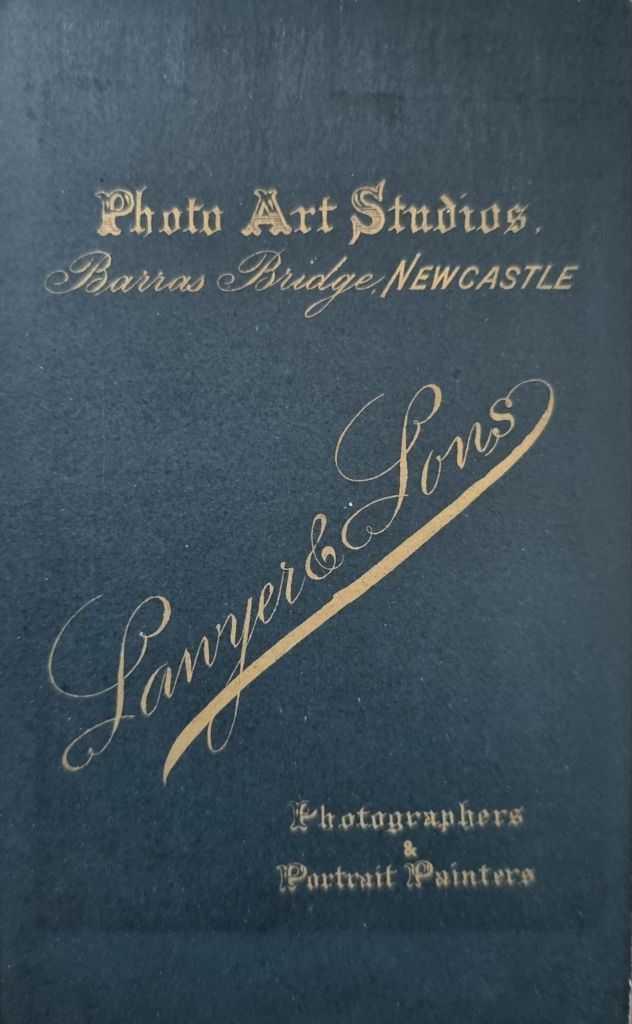
By the 1870s, Sawyer senior was joined in running his ‘Photo Art Studios’ business on Barras Bridge, Newcastle by his eldest son Lyddell (1856-1927) and other Sawyer siblings.
Known as ‘Lyd,’ Lyddell Sawyer’s international reputation as an art photographer and member of the Linked Ring means that he is better known today than his father.
If you are interested in the Sawyer dynasty and, in particular, viewing examples of Lyddell Sawyer’s art photography, I can recommend ‘Don’t look at the Camera’ by Geoff Lowe published in 2017.
In the meantime, Pressphotoman’s research into the early years of Edward Sawyer’s career and his working relationship with the Downey brothers continues.
After a week in which the health of King Charles III has hit the headlines, an article in the latest issue of The PhotoHistorian (No. 197/Winter 2023) sheds light on earlier media relationships with the monarchy.
In an essay titled “Photographers to Her Majesty,” Roger Taylor provides a fascinating insight into the relationship between photographers and Queen Victoria.
He describes how a system of Royal Warrants granted to approved companies proved difficult to enforce and, as a result, was widely abused.
Warrants were issued on the principle that “the tradesman must have supplied, on a regular basis, goods or services ordered and paid for by a department of the Royal Household.”
However, many businesses, not only photographers, falsely claimed royal patronage and displayed the royal arms without permission.
In reality, only 51 photography firms were granted Royal Warrants in the years 1849 to 1900, some on more than one occasion.
As a result, those operating without a warrant with its privileged access to royal personages faced a number of challenges to create photographs featuring the Queen and members of her family.
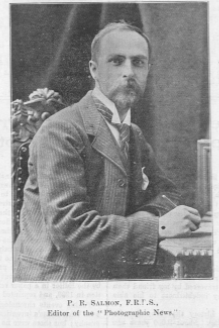
These are well described in an 1899 article written by PR Salmon, FRPS (1872-1959), details of whose life and career feature elsewhere on this website.
At the time, he was working as a travelling stereoscopic photographer for the 3D company Lévy et ses Fils of Paris, and filing reports as a journalist to the British press and trade papers.
In “With Queen and Camera at Cimiez” (British Journal of Photography, 21st April 1899), Salmon (using the pen-name ‘Richard Penlake’) described his attempts to photograph Queen Victoria during her annual visit to the South of France.
The brief from his French employer was to “stay one week and get what was possible,” however this proved a less than straightforward assignment.
To begin with, security was tight with sentries posted in the grounds and inside the Hotel Regina where the Queen was based.
According to Salmon’s account, photographers were more in fear of “Monsieur Paoli and his large corps of plain clothes officials, which includes some of the sharpest men from the detective force of Paris.”
Their modus operandi included wearing disguises and giving off an air of noncholant disinterest until anyone with a camera started behaving suspiciously.
Using a 7.5″ x 5″ (stereoscopic) hand camera, Salmon was advised by the Queen’s Courier in “a nicely worded letter” that photography was strictly forbidden in the Royal apartments and in the grounds.
Despite this, thanks to a permit obtained from the hotel manager, he was able to photograph in its grounds, where he had observed guests and visitors moving about freely.
This meant, he states: “I was able to add considerably to my stock of pictures, and, moreover, could get an excellent ‘pitch’ when the Queen left the hotel for her afternoon drives.”
Whilst PR Salmon was relying on his wits and ingenuity to obtain a royal photo, research for this piece has revealed that another stereographer was present during that week in Cimiez.
The difference between the two men was that the other was a Royal Warrant holder.
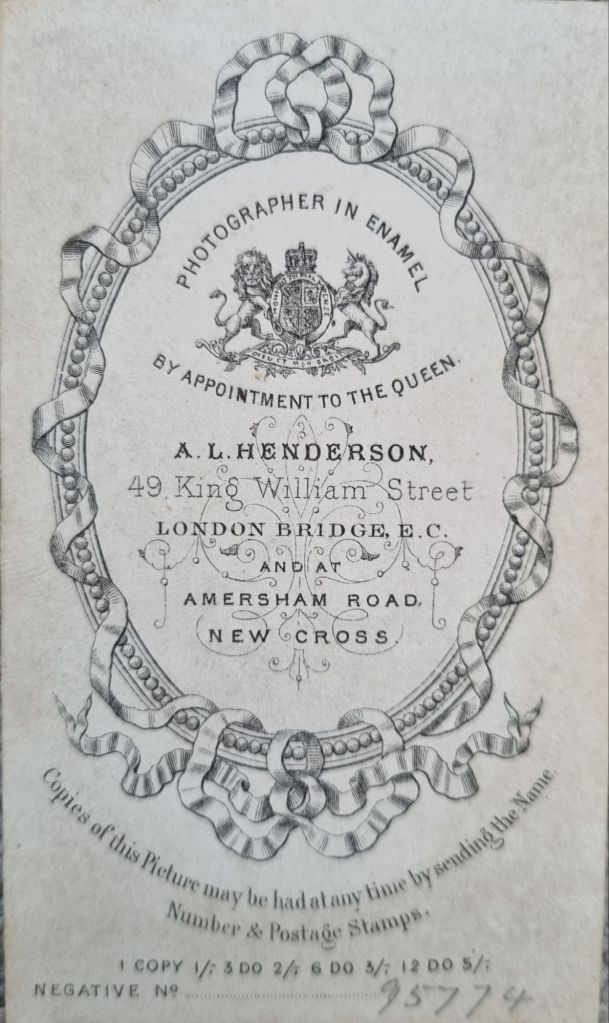
Edinburgh-born AL (Alexander Lamont) Henderson (1838-1907) ran a successful portrait photography business in the second half of the 19th century.
As revealed by this carte-de-visite verso, ‘A.L. Henderson’ operated studios at two locations in London endorsed by his impeccable royal credentials.
As a Royal Warrant holder, Henderson was also able to take advantage of other opportunities that arose from his privileged position.
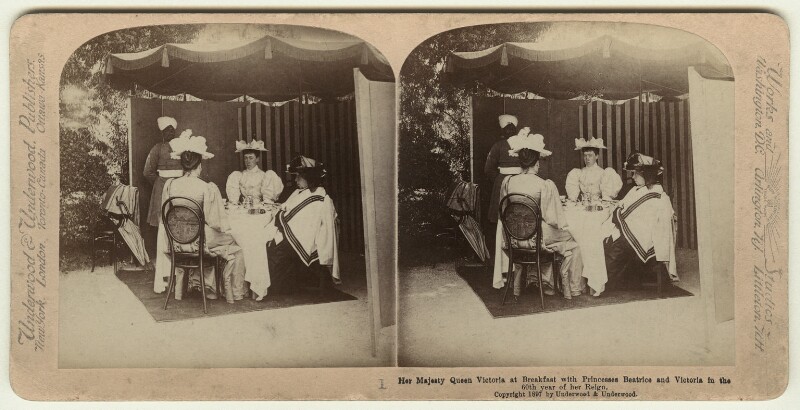
In 1897, 3D giants Underwood & Underwood published his stereo of “Her Majesty Queen Victoria at Breakfast …” issued to mark the Queen’s Diamond Jubilee.
The image had actually been taken two years earlier during the Queen’s annual South of France sojourn, but was re-branded “in the 60th year of her reign” to cash in on the Jubilee celebrations.
Like PR Salmon, AL Henderson was photographically active during Queen Victoria’s stay at Cimiez during April 1899.
This news photo was published in London by the Penny Illustrated Paper and credited to “AL Henderson, Photographer Royal.”
Penny Illustrated Paper (22nd April 1899). From the British Newspaper Archive.
Though the photo did not feature the Queen herself, the accompanying report bore evidence of Henderson’s inside knowledge of the Royal Household.
It named the kilted attendants as Sandy Rankin and Willie Brown, who had been in the Queen’s service for 18 years and 5 years respectively, and Mr. Bullen, the groom, who had clocked up 17 years.
The donkey pulling the carriage was named as Zora, “an Egyptian, but born at Windsor,” whilst Turin, the small white dog (sat in the carriage) was a Pomeranian from Italy, and the collie, Rob Roy, (by the wall) was called Roy for short.
As Salmon was also working as a journalist and knew Henderson through their photographic activities, it maybe that the pair collaborated on the Penny Illustrated Paper report.
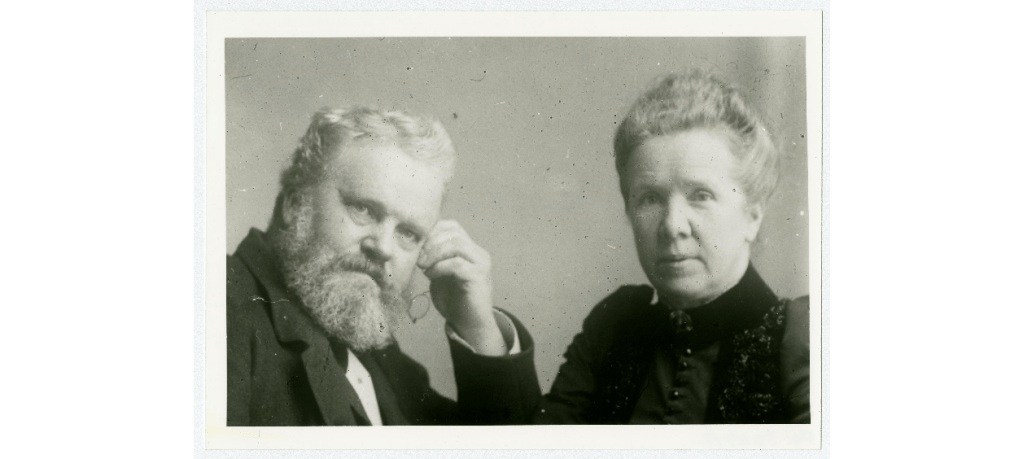
To conclude, photographs featuring photographers themselves tend to be the exception, so I was pleased to come across these images of AL Henderson and PR Salmon that were new to me.
Tomorrow (16th January) marks the anniversary of the Hartley Pit Disaster in SE Northumberland, which claimed the lives of more than two hundred men and boys in 1862.
Photographically, the ‘catastrophe’ was recorded by the Newcastle firm of W. & D. Downey, who sent a selection of images taken at the pithead to Queen Victoria.
The firm’s celebrated photographs of William Coulson and his team of sinkers, who led the rescue efforts, plus mine owner Charles Carr and pit manager Joseph Humble now feature in the Royal Collection.
Twelve months ago, this blog presented new evidence raising doubts about the accepted dating of Downey’s Hartley photographs.
A few weeks after publishing this research, I was fortunate enough to see and handle a set of carte-de-visite published by Downey in the aftermath of the disaster.
They form part of the Mining Institute Collection housed at the Common Room in Newcastle and include images in addition to those sent to Queen Victoria.
These cdvs were included in my 2023 talk for the Royal Photographic Society’s Historical Group about the early years of the Downey company in the north-east of England.
You can view them at 31′ 30″ in the ‘1862’ section of the talk which includes a more detailed look at Downey’s photography of the Hartley Pit Disaster.
‘W. & D. Downey, Photographers: The Road to Balmoral’ for the Royal Photographic Society Historical Group. 15th March 2023.
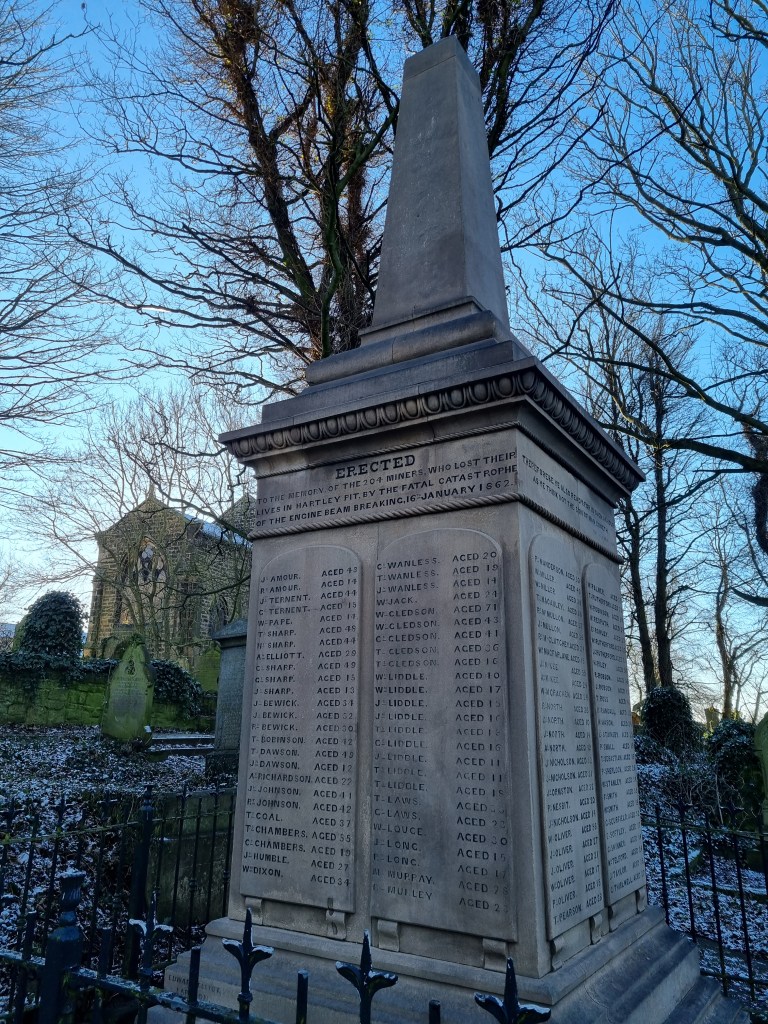
On this day in 1862, an accident at the Hartley Pit in Northumberland led to the deaths of 204 men and boys.
Around 11 o’clock in the morning, a wooden engine beam snapped sending more than 20 tons of winding gear and equipment down the shaft at the colliery about ten miles north-east of Newcastle-upon-Tyne.
Those working the coal seams below were effectively trapped and, despite heroic rescue efforts, died in the aftermath of the accident from a build-up of gas.
Following the tragedy, an Act of Parliament was passed requiring that, in future, no pit would rely on a single shaft as its only means of access.
Hartley Pit Disaster Memorial, St. Alban’s churchyard, Earsdon. Photo taken by author 16th January 2023.
In terms of photographic history, the disaster was also significant.
This is graphically described and illustrated in Roger Taylor’s essay ‘The Hartley pit disaster, January 1862’ in Crown & Camera: The Royal Family and Photography 1842-1910 (London, Penguin Books, 1987), 60-63.
The article showcased a series of location photographs taken following the disaster by the firm of W. & D. Downey of Newcastle-upon-Tyne.
The photographs’ inclusion in the Royal Collection came about because the images were sent to Queen Victoria by the company.
The monarch was grieving following the death of her own husband Prince Albert a few weeks earlier, and she wrote to the pit owner, Charles Carr, expressing concern for the fate of the miners and their families.
Once the bodies of those involved were discovered, the Queen headed the list of subscribers to a public relief fund set up to support the women and orphans made destitute.
Today, Downey’s ‘Hartley Colliery’ photographs can be viewed on the Royal Collection website in an online version of its 1987 ‘Crown & Camera’ exhibition.
However, research for this blog raises a key question about the photographs: were they taken on 30th January 1862 as stated in the article and on the website?
The first photograph, measuring 8 inches by 6 inches, is a group shot (RCIN 2935021) featuring Charles Carr, the pit’s owner, its manager Joseph Humble, and master sinker William Coulson alongside other members of the rescue team.
Two further photographs, again 8″ x 6″, were taken of the pit-head ‘after the accident.’ The first (RCIN 2935024) features the letter ‘A’ visible above ‘the Engine House’ and figures arranged along a walkway.
The second pit-head view (RCIN 2935022) is accompanied by a handwritten note that uses the letters A-E to identify all the significant buildings and features of the landscape.
The note also states ‘photographed January 30th 1862 and most respectfully forwarded by W. & D. Downey.’
The dating of 30th January is one that I researched recently for a talk presented to the Royal Photographic Society Historical Group about the Downey company’s early years on Tyneside.
What I discovered from reading contemporary newspapers is that there is evidence that calls into question its accuracy.
Before looking at this evidence, how did Downey’s ‘Hartley pit disaster’ photographs come to be in the Royal Collection in the first place?
By way of background, W. & D. Downey, led by brothers William and Daniel, established its photographic business in and around the port of South Shields in the mid-1850s.
The company thrived and quickly established a reputation for high quality photographic portraits and as a supplier of news images to the illustrated press which appeared as engravings.
In October 1861, according to press reports, it opened its first ‘photographic rooms’ in Northumberland Street, Newcastle, several miles west from South Shields along the River Tyne.
It was a town-centre location that proved popular with ‘nobility, clergy and gentry.’
In January 1862, the firm began placing regular adverts in the Newcastle Daily Journal in a prized position on the front page at the top of the left-hand column.
This strategy made readers aware of its latest carte-de-visites portraits including ‘most of the public men of the north.’
It was a regular pattern that continued until Tuesday 28th January, twelve days after the disaster, when a marked change occurred in the advert’s wording.
Headed ‘The Hartley Colliery Calamity,’ it offered for sale ‘A Photographic View of the Engine-House, Machinery and Pit-Heap sent to any address, album size, for 13 Postage Stamps.’
The ad continued: ‘Those on a larger scale sent on receipt of 30 postage stamps by W. and D. Downey, 111 Northumberland Street, Newcastle-upon-Tyne. The above may also be obtained from Mr. John Mawson, 13 Mosley Street.’
Mawson was a successful chemist at the heart of Newcastle’s contribution to early photography and someone with whom Downey regularly collaborated.
Further down the same column, Mawson used one of his own regular ads in the paper to advertise a ‘photographic view of the engine-house and machinery.’ Indeed, it was one he had first placed there in the previous day’s paper.
The photographs on sale, as described by both Downey and Mawson, suggest they were the ‘after the accident’ images in the Royal Collection highlighted above.
The next day, Wednesday 29th January, the same Downey and Mawson ads re-appeared alongside one placed by another leading Newcastle photographer, ‘Mr. R. Turner of the Fine Arts Repository, Grey Street.’
His advert headed ‘The Heroes of Hartley! Preparing For Immediate Publication’ referenced the human-interest story at the heart of the disaster.
For 7 shillings and 6 pence, it promised ‘a large, beautiful photographic picture of Mr. William Coulson, Master Sinker, and his brave workmen, who so nobly risked their Lives in the perilous Shaft for Ten Successive Days and Nights, endeavouring to save the Two Hundred and Four poor Colliers buried alive in the New Hartley Pit, Jan. 16th, 1862.’
Unlike the group photo in the Royal Collection credited to Downey, there is no mention of Mr. Carr, the mine owner, and Mr. Humble, the pit manager.
Taken together, these adverts suggest that all the photographs being offered for sale were more likely to have been taken, not on Thursday 30th January, but earlier that week.
By that point, the bodies of those who died in the disaster had been successfully brought to the surface and funeral services for its 204 victims had taken place.
So by Monday 27th, for example, a photo-call involving the key participants with access to the pit-head would have been viable.
Such a revised timeline is supported by a brief report that appeared in the Newcastle Daily Journal on Friday 31st January.
On page 2, the paper reported in its news columns:
‘Messrs. W. and D. Downey, the justly celebrated photographers of 111, Northumberland Street, in this town, last night [my italics] received a letter from Sir Charles Phipps, Osborne, thanking them for forwarding to Her Majesty the photographic views of Hartley New Colliery, the scene of the late terrible catastrophe.’
Phipps, Queen Victoria’s private secretary, was writing from the Queen’s residence on the Isle of Wight where she had retreated following the death of Prince Albert.
If the report in the Newcastle Daily Journal is accurate and to fulfill the statement ‘photographed January 30th,’ the following sequence of events happened in the course of a single day.
* First, photographs were taken on location at the Hartley Colliery.
* Prints, made by Downey from its negatives, were then dispatched to the Isle of Wight more than 400 miles away.
* And Sir Charles Phipps’ letter of thanks not only reached Downey back in Newcastle, but its contents were communicated to the Newcastle Daily Journal before its presses rolled.
Even allowing for the speed and reliability of the Victorian postal service, this seems unlikely.
What then might explain the ‘photographed Jan 30th, 1862’ inscription attached to Downey’s photographs in the Royal Collection?
That is a question that you may wish to speculate upon in the ‘comment’ box below this post.
Certainly, by the following Monday, 3rd February, Downey’s regular advert in the Newcastle Daily Journal offered a new and more detailed sales pitch.
‘The Hartley Catastrophe. Now Ready. A Series of Photographs, illustrative of the above Sad Calamity, taken upon the Spot, by W. and D. Downey, Photographers, No. 111, Northumberland Street, Newcastle-upon-Tyne.’
The ad then listed a number of images.
‘No. 1. Photographic portraits of Mr. Coulson and his Heroic Band of Sinkers, preparing to descend the shaft.’
‘No. 2. Mr. Coulson.’
‘No. 3. Johnny, the Tally Boy.’ This may refer to a portrait of a 12 year-old boy named as ‘Mark Bell’ by the Newcastle Courant (news report, 31st January 1862). He helped identify the bodies as his job entailed handing a tally to each miner who descended the shaft and collecting it again at the end of the shift.
‘No. 4. A general view of the Pit, Machinery, &c.’
‘No. 5. The Broken Beam.’
Each photograph was priced at one shilling, 1s 6d, or five shillings for a larger size print that could be bought from either Downey or John Mawson as before.
Accounts of this episode elsewhere state that W. & D. Downey were commissioned by Queen Victoria to take the photographs they did.
I have found no evidence to support this idea.
Rather, the use of the wording ‘most respectfully forwarded by W. & D. Downey’ in the Royal Collection archive suggests that the firm followed its own instincts in response to the Queen’s evident interest in the tragedy.
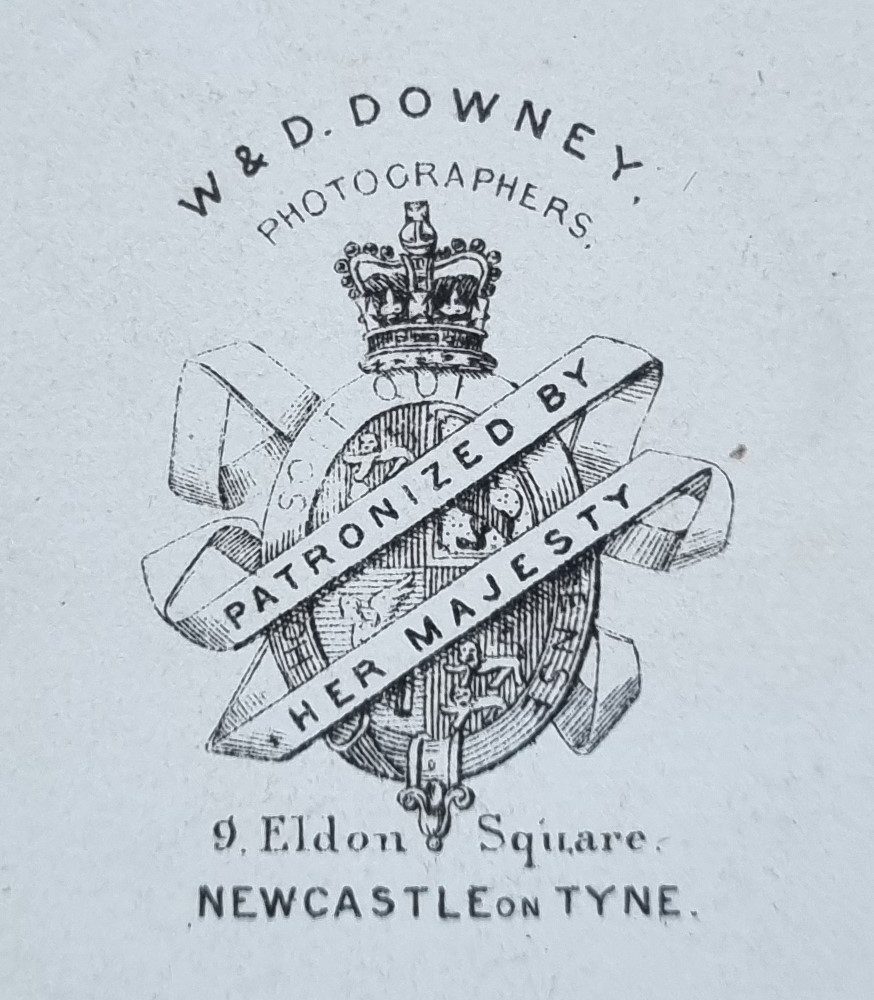
From a commercial viewpoint, it was soon able to use the slogan ‘Patronized By Her Majesty’ on the verso of its carte-de-visites whilst also promoting its new portrait rooms in Newcastle at 9 Eldon Square which opened in early March.
Given the wider public interest in the Hartley Pit disaster and the business opportunity foreseen by W. & D. Downey, it is intriguing to note that these celebrated photographs and larger size print versions referred to in this blogpost rarely appear for auction.
Perhaps they remain treasured momentos of those in the wider community of the North-East of England whose lives were so cruelly affected by events on that January day 161 years ago.
New Hartley Memorial Garden. Photo taken by author 16th January 2023.




 Pressphotoman
Leave a comment