Photohistory research often resembles a large jigsaw puzzle in which the pieces are randomly scattered around the world
It’s then the researcher’s job to try and locate pieces that have survived the passage of time and reassemble what remains of the puzzle until some sort of understandable picture emerges.
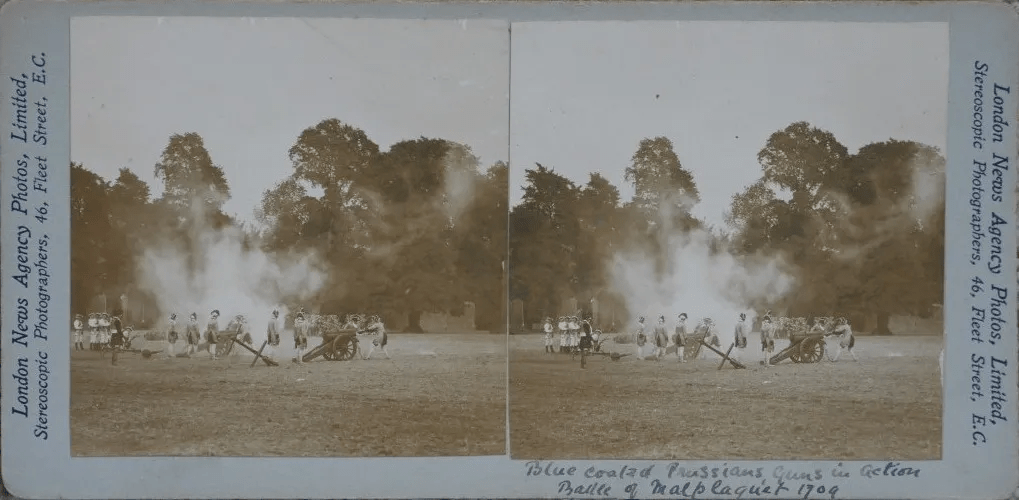
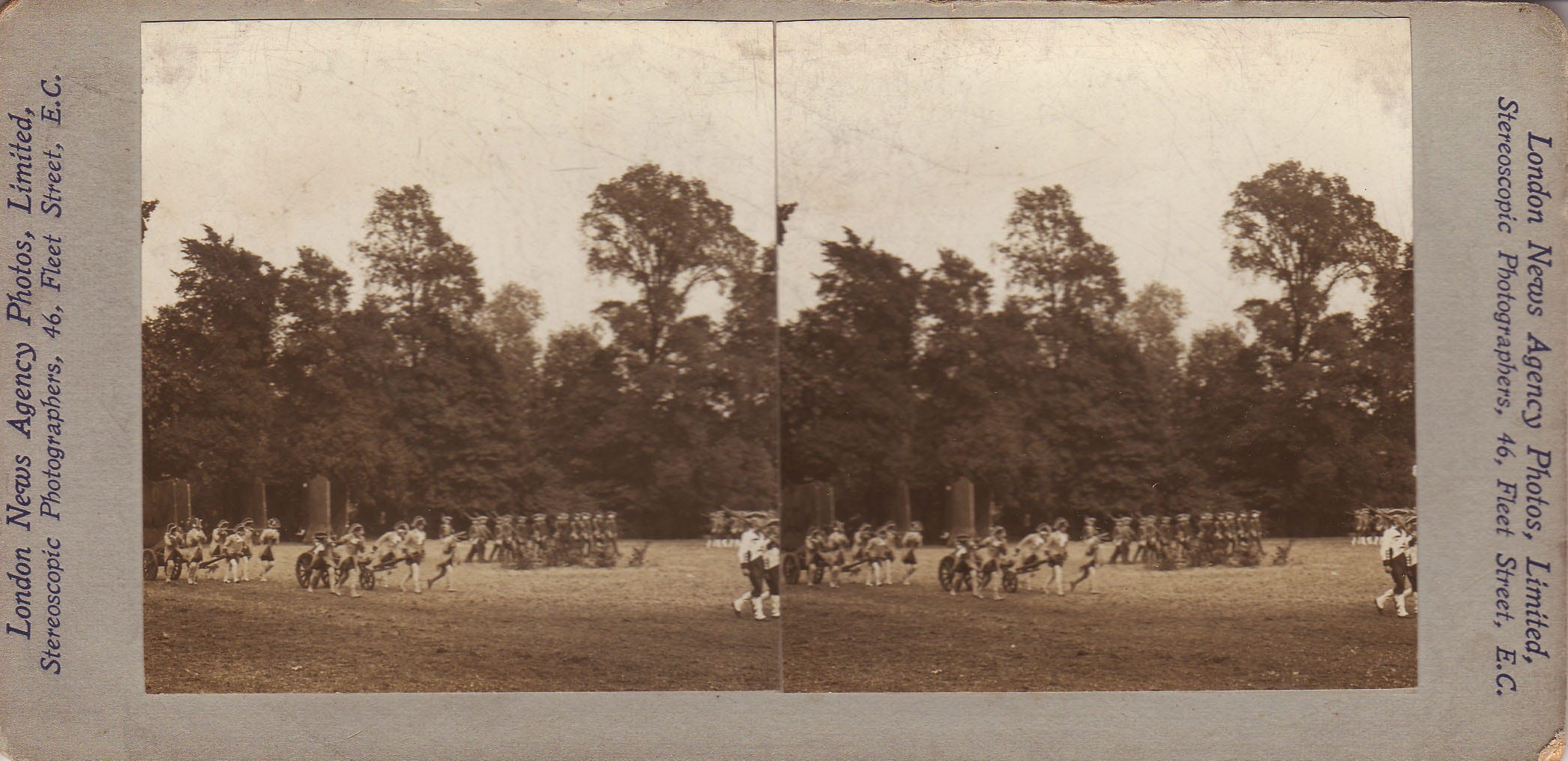
Nearly two years have passed since a couple of 3D stereoscopic images produced by London News Agency Photos (LNA) of 46 Fleet Street came to my attention on a well-known online auction site.
At the time, I made a case for the stereos taken at the 1910 Army Pageant at Fulham Palace being the work of early press photographer James Edward Ellam (1857-1920) whose career I continue to explore.
Then out of the blue, a recent email exchange with Julie Gibb from National Museums Scotland yielded yet more pieces of this particular jigsaw.
She curates the Bernard Howarth-Loomes Collection of around 11,000 stereos.
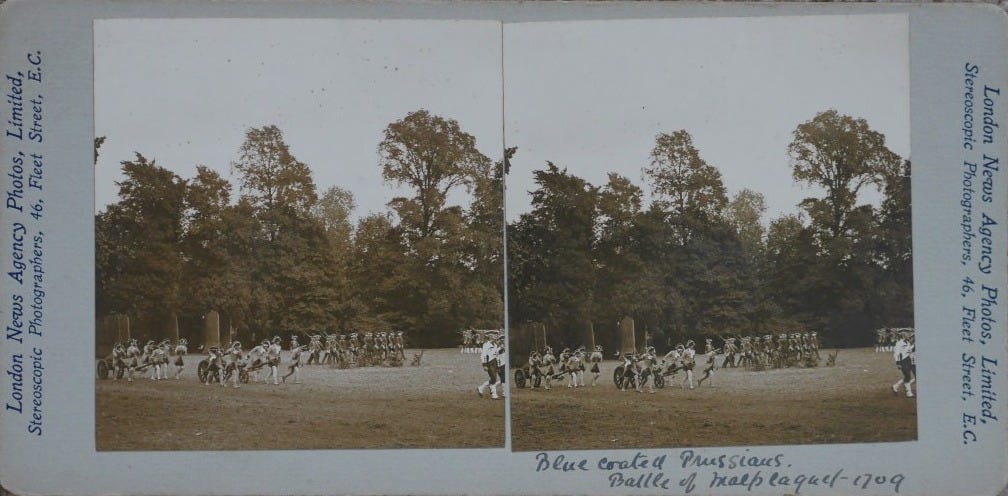
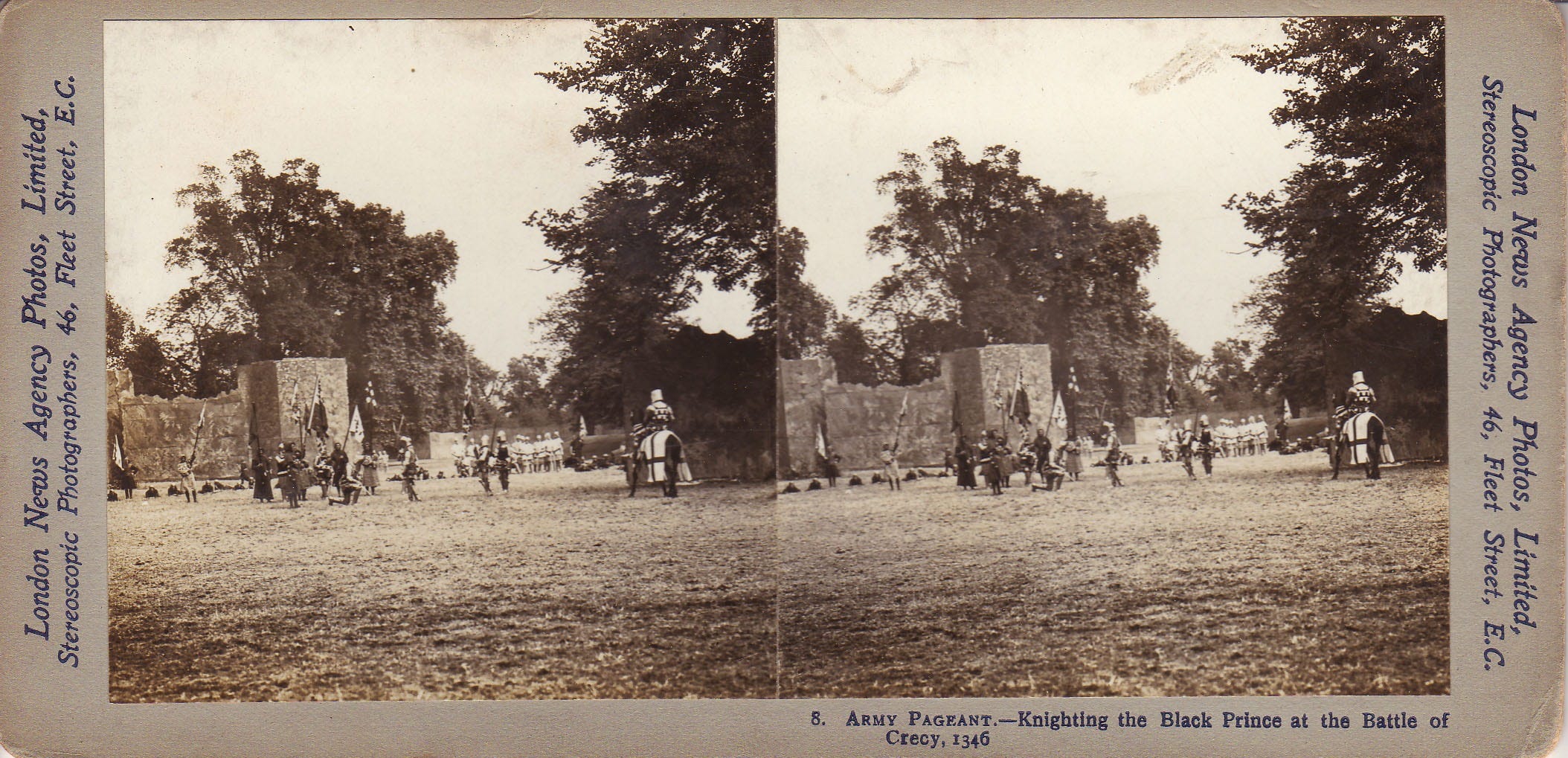
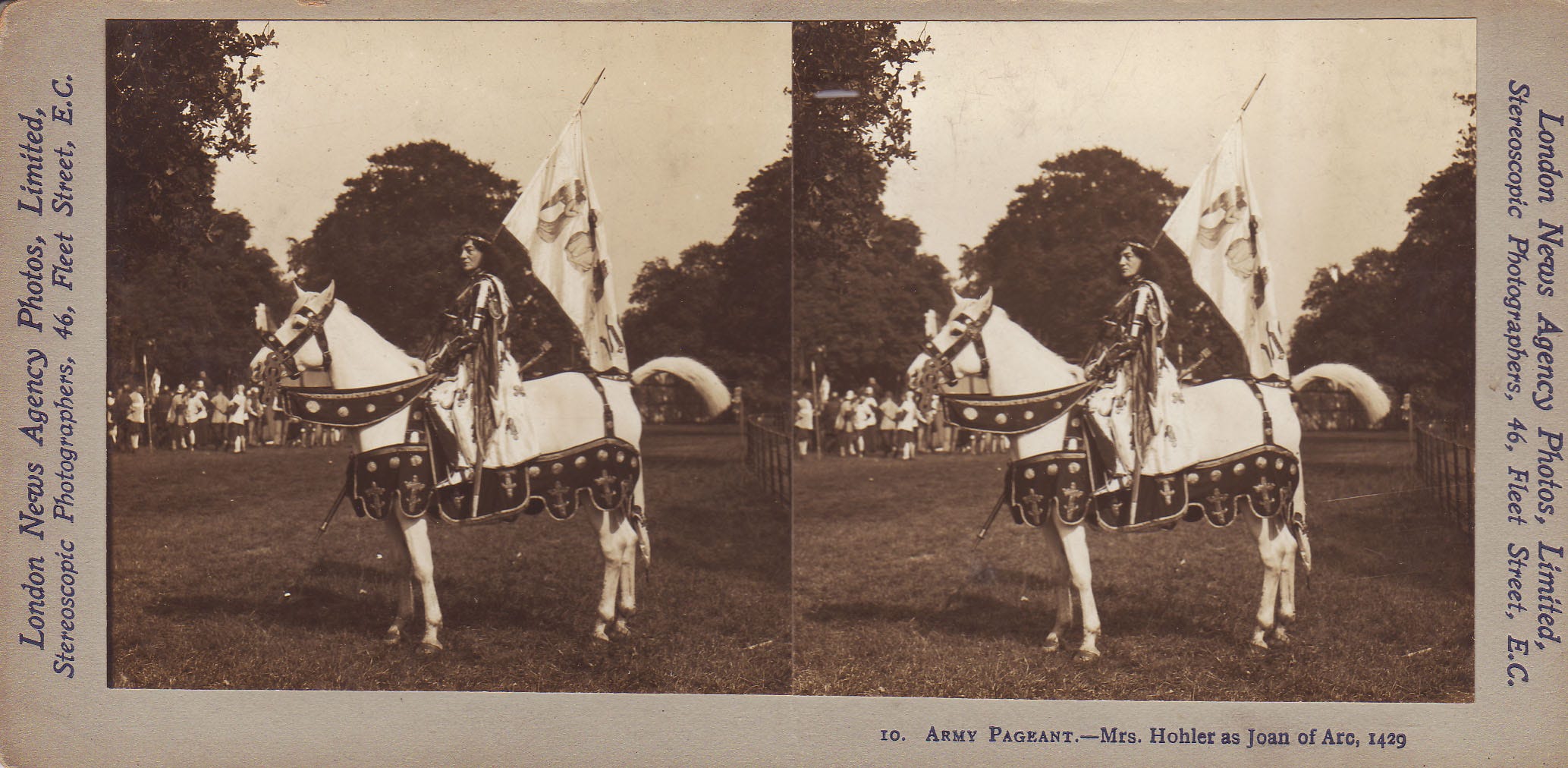
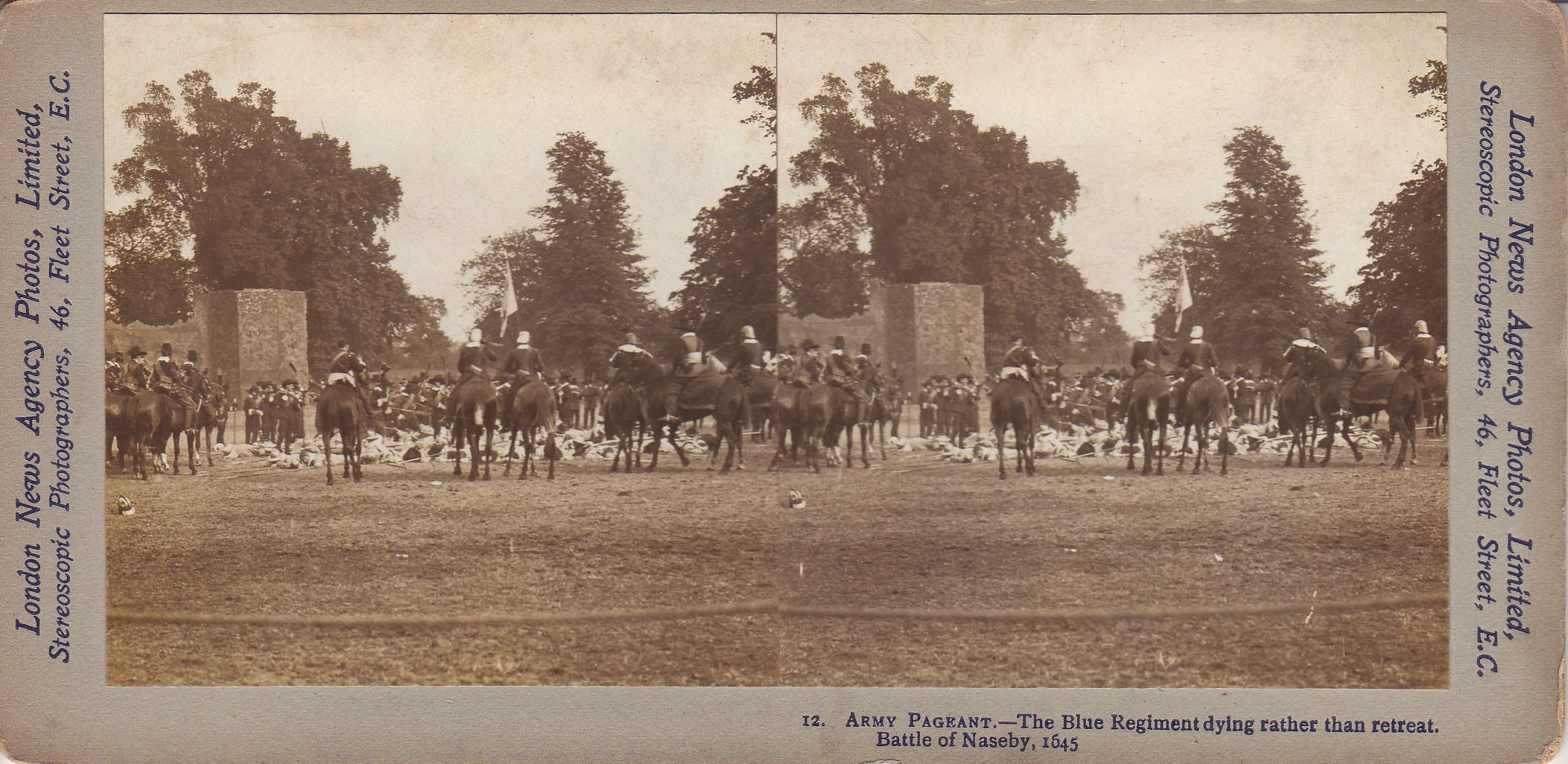
Unbeknownst to me, it included a set of five featuring the self-same 1910 Army Pageant and also published by London News Agency Photos
What was more exciting was that one of the Bernard Howarth-Loomes images matched the second one that that I obtained from Ebay in 2024 minus its handwritten caption as supplied by JE Ellam.
What is apparent from the further four LNA stereos in the Bernard Howarth-Loomes Collection is that they were published as a commercial set complete with printed captions.
This echoes the approach taken during the same era by Underwood & Underwood, a fellow stereoscopic photography company with a London office near Fleet Street.
Like LNA, they too published sets of stereocards featuring news events and supplied the images from the same assignment to newspapers and magazines.
To complete the picture, James Edward Ellam worked for the Underwood company for a decade from 1897 before joining London News Agency Photos after it began life in 1908.
These new LNA stereos featuring the 1910 Army Pageant add further weight to the case for them being Ellam’s work.
My thanks to Julie Gibb for permission to reproduce the following LNA stereos from the Bernard Howarth-Loomes Collection in this blogpost.
Fleet Street titles led by the tabloid Daily Mirror had begun to employ their own staff photographers, but also relied upon agencies to meet the growing demand for illustrative material of all types.
Standard practice at the time was to credit the agency who supplied a news photo rather than its photographer.
As a result, identifying early press photographers and linking them to the images they produced is challenging for researchers.
One such figure that this blog has identified and who “had been associated with the London News Agency Photos, Ltd, for many years” was James Edward Ellam (1857-1920).
James’s speciality was stereoscopic or 3D photography whereby a single print taken from one half of a stereo negative was produced for press use.
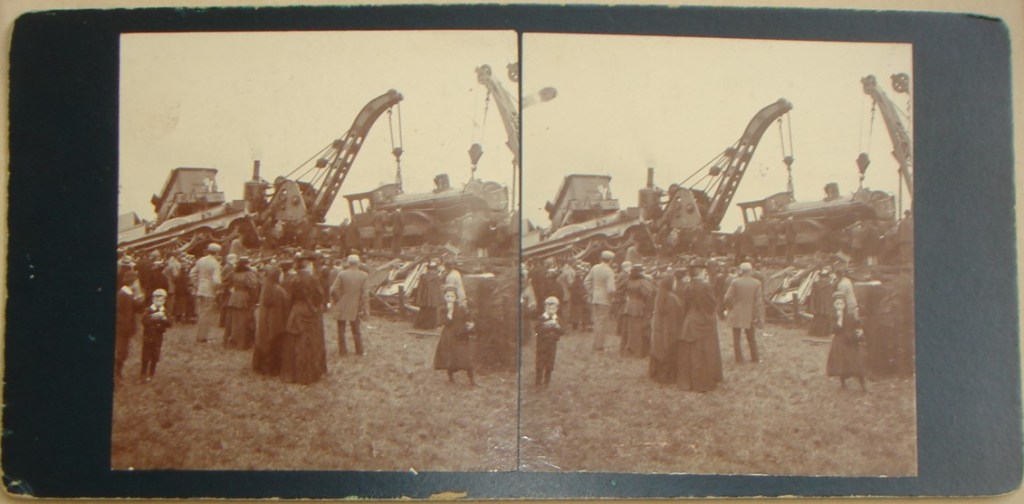
This had been his approach since operating as an amateur stereographer in Yorkshire covering news events such as rail crashes.
Stereo of “Scotch Express” crash scene, Northallerton by J.E. Ellam, October 1894. Courtesy of Stephanie Richardson.
During September 2023, a Pressphotoman blogpost-a-day series explored 30 recently-discovered stereos that can be attributed to James Edward Ellam.
Many bear examples of his distinctive handwriting captured on copyright forms he filled out and which are held by the National Archives at Kew.
So you can imagine my excitement when a leading auction site recently offered two stereos branded “London News Agency Photos, Limited, Stereoscopic Photographers, 46, Fleet Street, E.C.”
Not only that, but both were captioned in James’s handwriting.
Reference to the “Battle of Malplaquet 1709” pointed to these stereos being taken during an event staged in June and July 1910 in the grounds of Fulham Palace, London.
The Army Pageant featured around 5,000 performers and The Times estimated that its 21 shows were witnessed by 100,000 people, though it incurred huge financial loses.
According to the Historical Pageants in Britain website, the event “featured a disparate selection of episodes that illustrated the development of military conflict and the British armed forces.”
One of these episodes was the Battle of Malplaquet during the War of the Spanish Succession.
In September 1709, an Anglo-Dutch-Austrian army of 100,000 men led by the Duke of Marlborough defeated a 90,000-strong French force at Malplaquet on the France/Belgium border.
The Army Pageant programme described how “Lottum’s blue-coated Prussians enter, followed by guns, and then Schulemberg’s white-coated Austrians.”
Looking at James’s stereos, they seemed to be from this part of the event, captured as a sequence by his 3D camera.
Given this, did the stereographer and his photo agency employer succeed in placing any prints from this assignment with Fleet Street’s illustrated newspapers?
Certainly, media interest in the event was considerable and publications including The Sphere, The Graphic and The Sketch captured the visual spectacle in page upon page of captioned photos.
But it was from a 4-page photo spread in the Illustrated London News (25th June 1910) that an interesting possibility emerged.
On a page headlined “Great Battles Re-Fought: From Malplaquet to Badajos,” one photo (top left, figure 1) was captioned “The Battle of Malplaquet … English troops capturing a French gun.”
“Great Battles Re-Fought: From Malplaquet to Badajos,” Illustrated London News (25th June 1910). From British Newspaper Archive.
At the bottom of the page, credits for the photographs were attributed to three agencies; “Sport and General, L.N.A., and Illustrations General.”
Was it possible then that James, working for London News Agency Photos (L.N.A.), was responsible for a photo credited to the agency and published by the Illustrated London News?
Placing one half of his stereo (left) alongside the Battle of Malplaquet photo (right) highlights both the clarity of the 3D image and the poorer quality of the half-tone photo.
However, what is noticeable is that the same line of trees is visible in the background of both shots.
Part of a stereo (left) and news photo from ILN (right), possibly by JE Ellam.
This visual evidence suggests that both shots were the work of a camera operator using the same position.
By placing James at the Army Pageant with his stereoscopic camera, is it also possible to credit him with other photographs used by the Illustrated London News in the same issue?
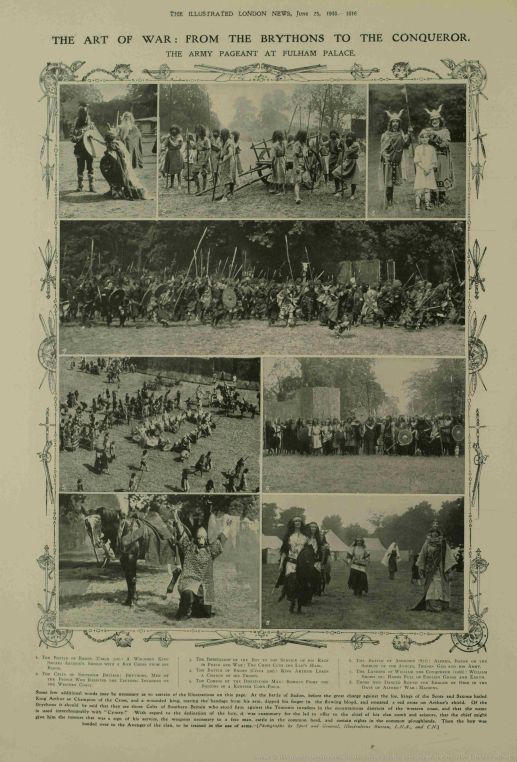
In a further full-page photo spread headlined “The Art of War: From the Brythons to the Conqueror,” London News Agency Photos (L.N.A.) was among four agencies credited with supplying the 8 images on view.
“The Art of War: From the Brythons to the Conqueror,” Illustrated London News (25th June 1910). From British Newspaper Archive.
Deciding which of the 8 was taken by James is impossible, though some of the shots do appear to have been composed with 3D in mind.
Another interesting point arising from this research is that London News Agency Photos promoted itself as being “stereoscopic photographers.”
By 1910, stereoscopic photography companies like Underwood & Underwood were already big players in the press photo market.
Indeed, James had worked for the Underwood company for several years prior to joining London News Agency Photos, so perhaps his new employer was hoping to secure a share of a growing market.





 Pressphotoman
Leave a comment