Photohistory research often resembles a large jigsaw puzzle in which the pieces are randomly scattered around the world
It’s then the researcher’s job to try and locate pieces that have survived the passage of time and reassemble what remains of the puzzle until some sort of understandable picture emerges.
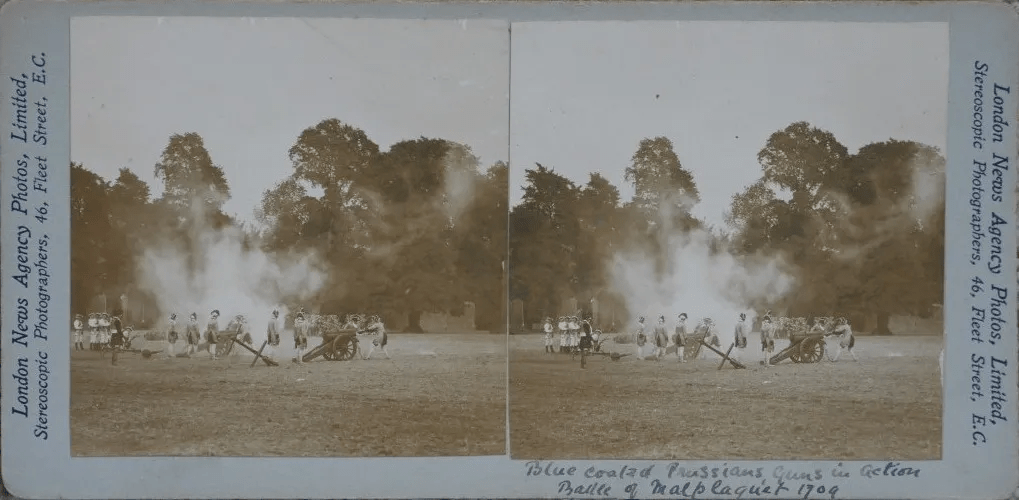
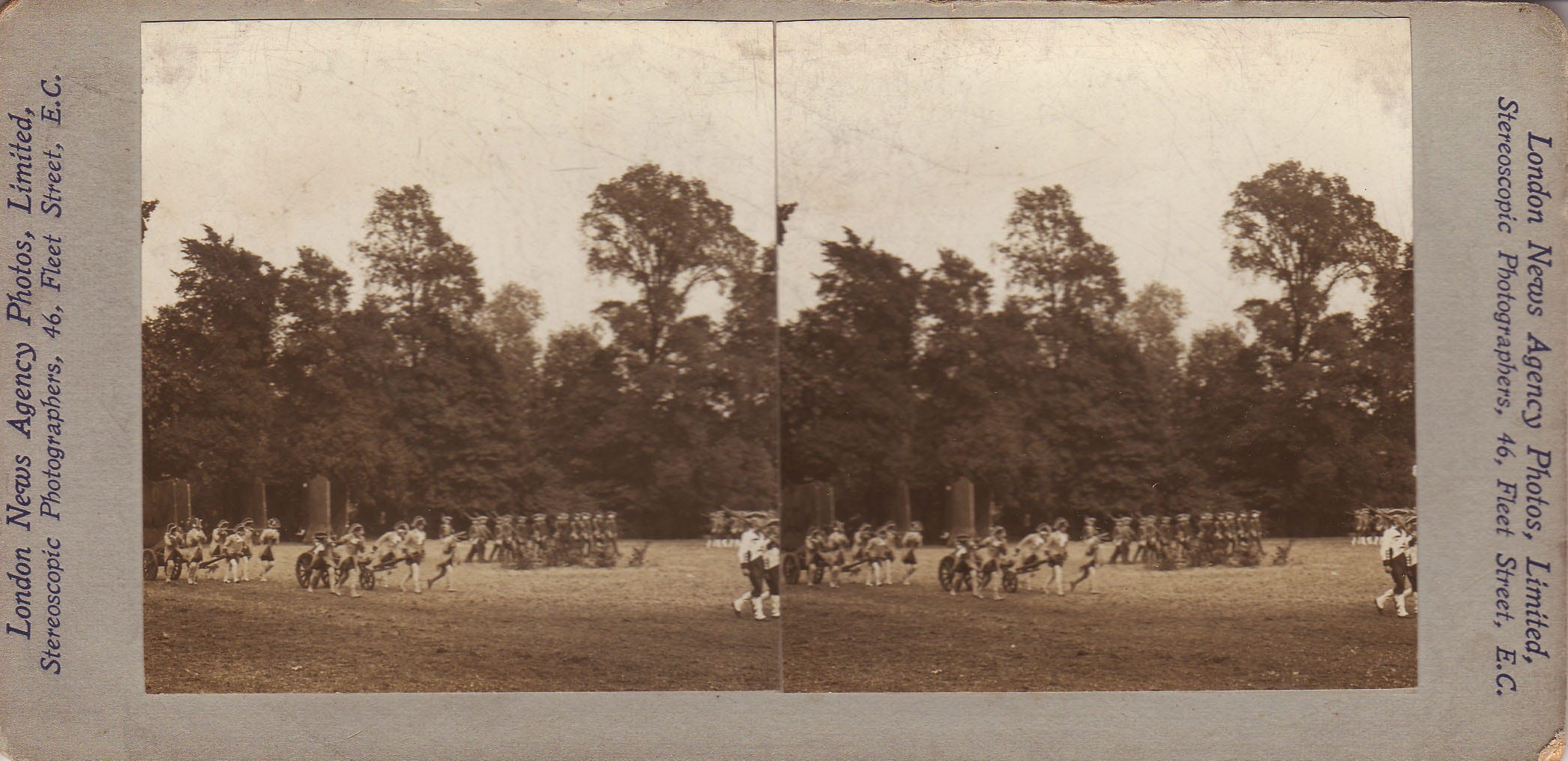
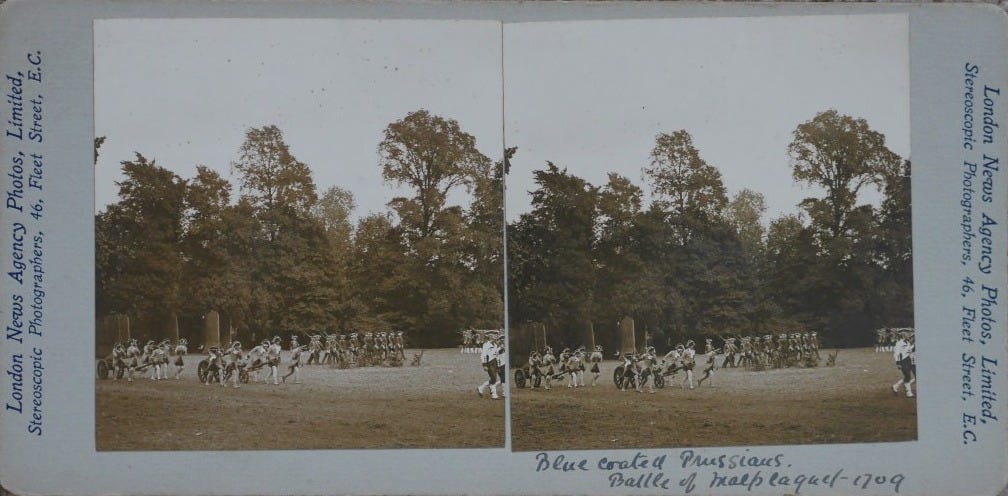
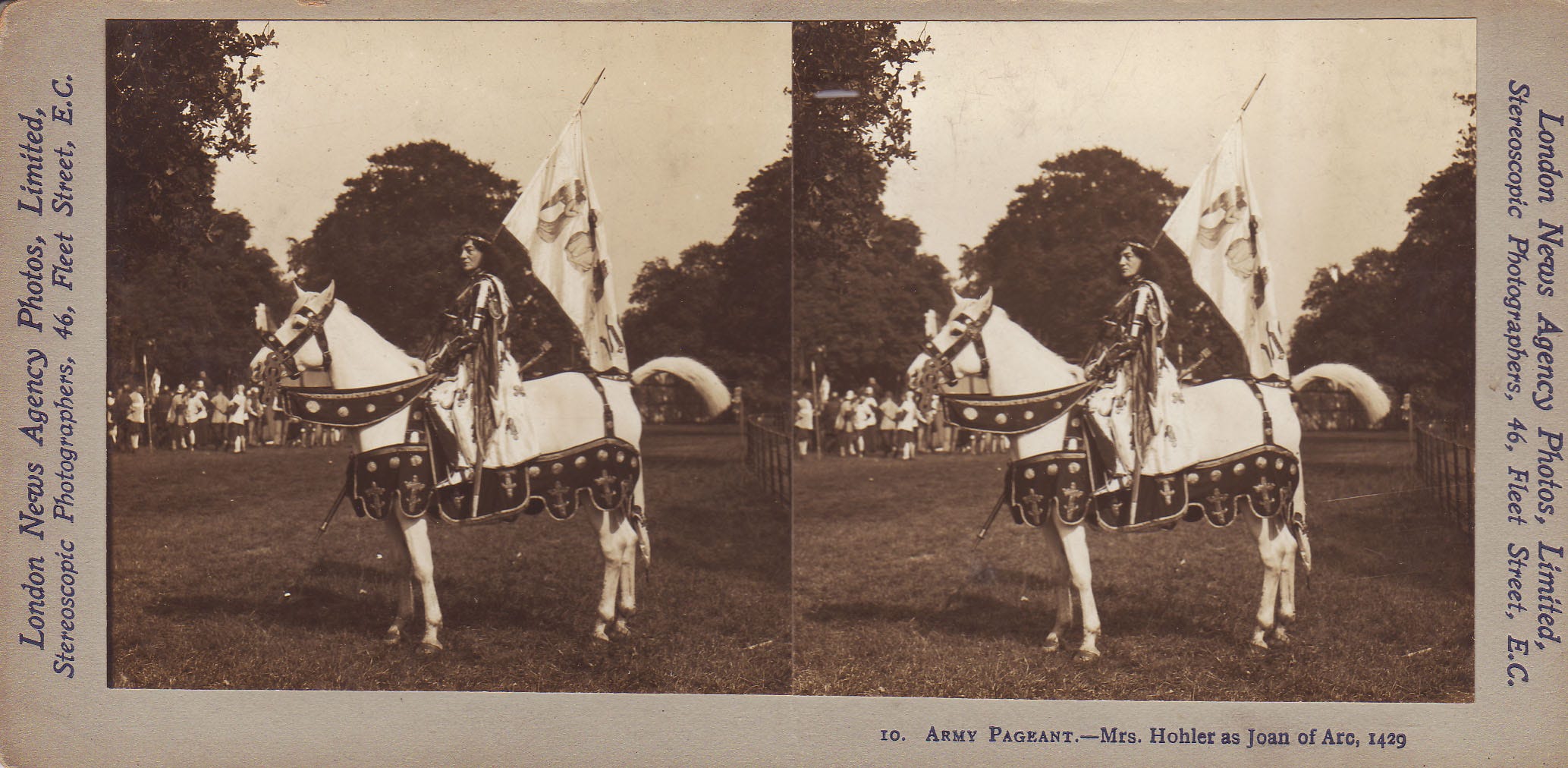
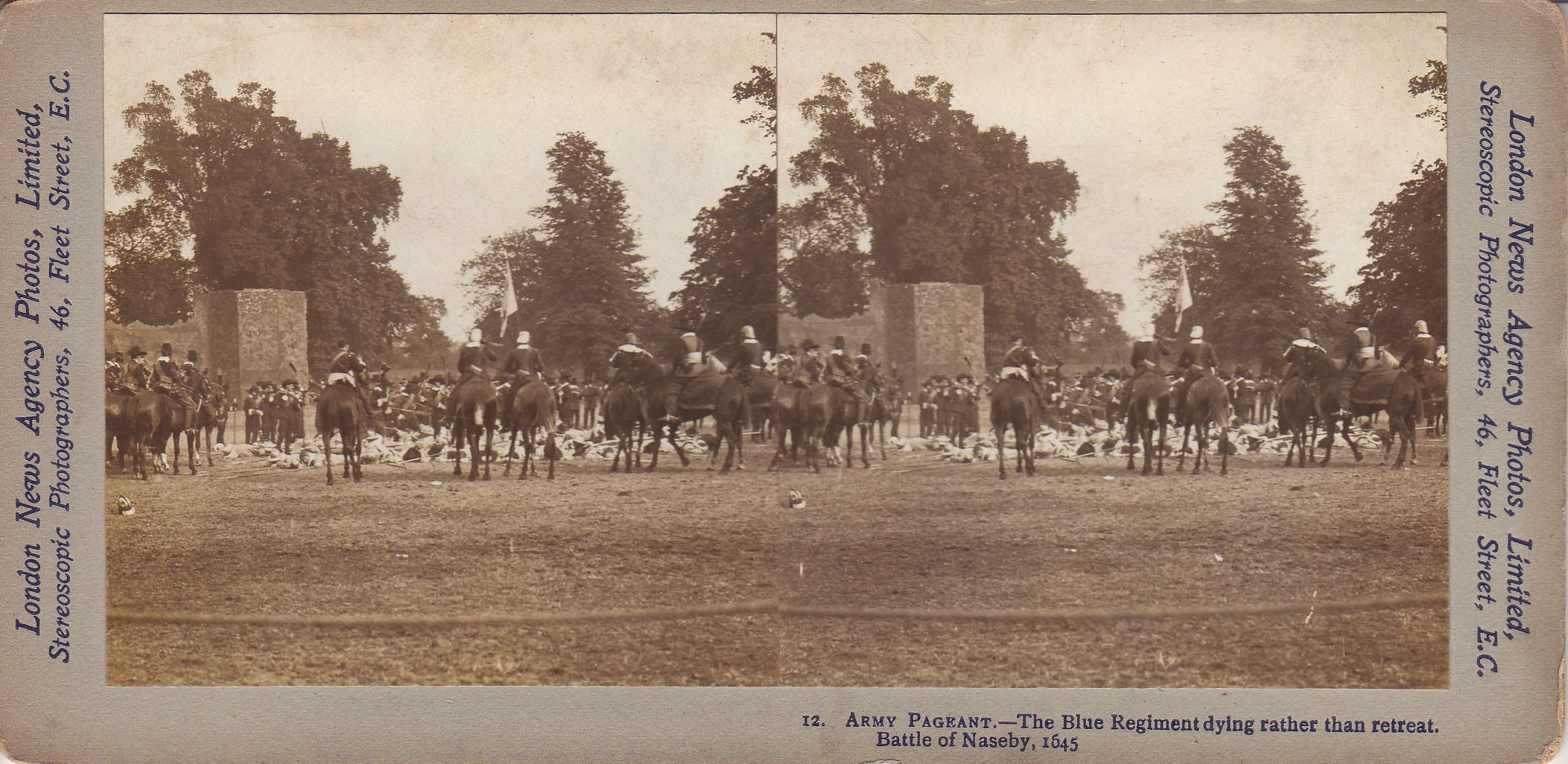
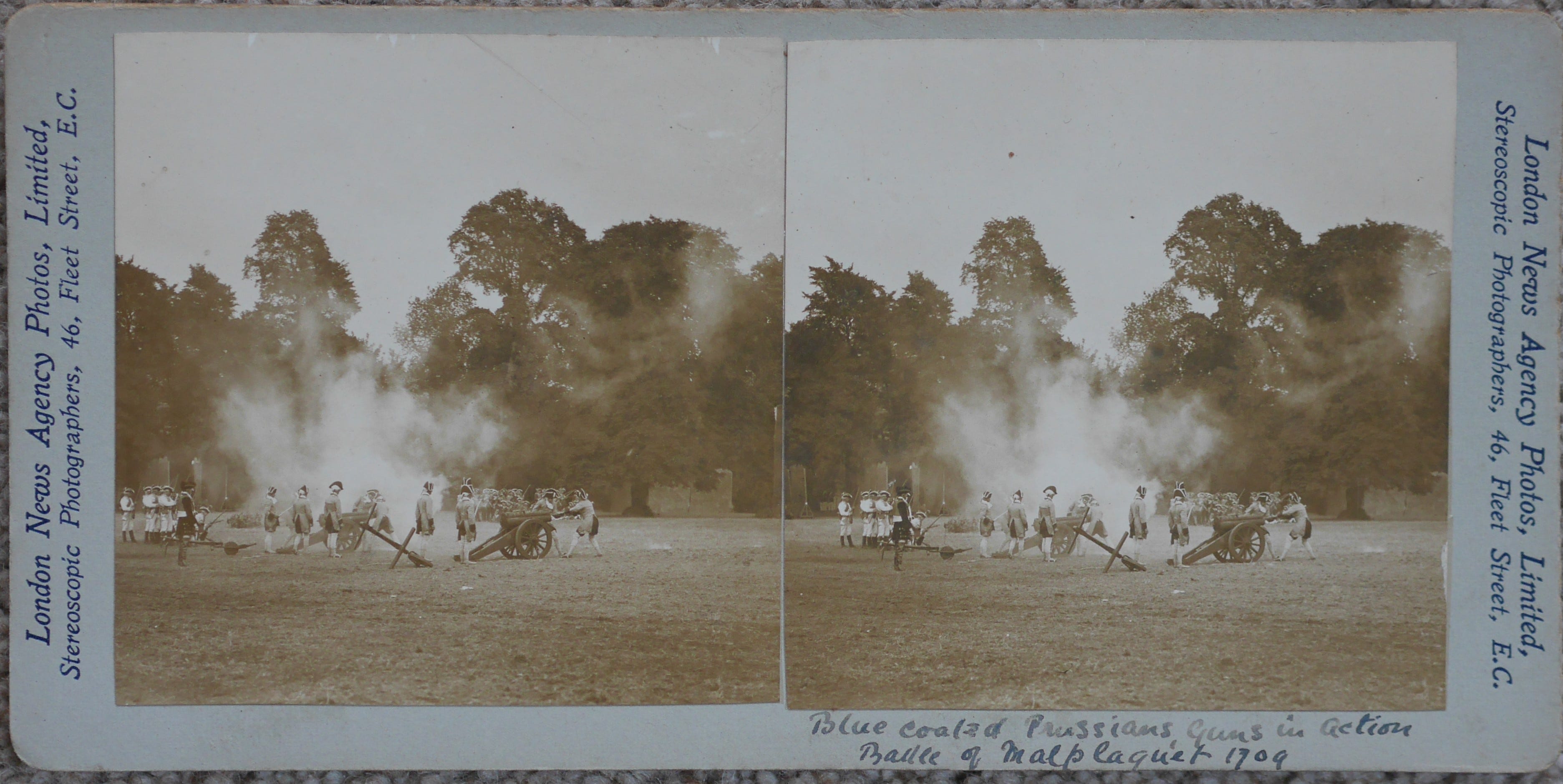
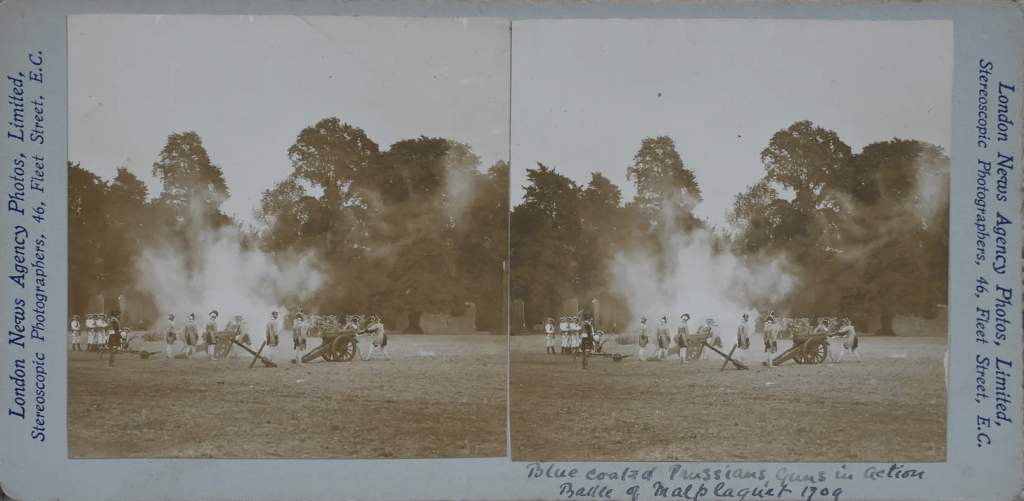
Nearly two years have passed since a couple of 3D stereoscopic images produced by London News Agency Photos (LNA) of 46 Fleet Street came to my attention on a well-known online auction site.
At the time, I made a case for the stereos taken at the 1910 Army Pageant at Fulham Palace being the work of early press photographer James Edward Ellam (1857-1920) whose career I continue to explore.
Then out of the blue, a recent email exchange with Julie Gibb from National Museums Scotland yielded yet more pieces of this particular jigsaw.
She curates the Bernard Howarth-Loomes Collection of around 11,000 stereos.
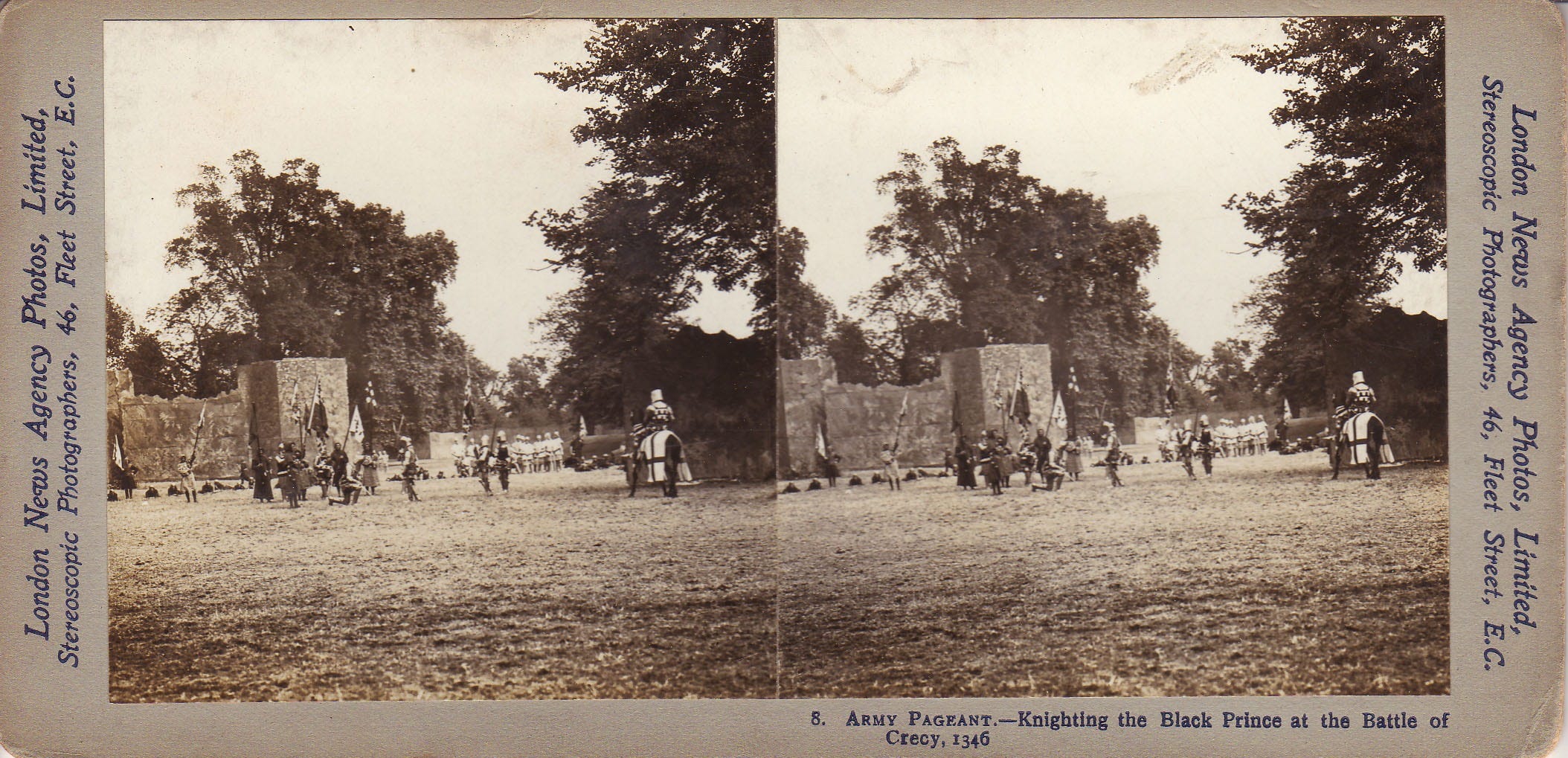
Unbeknownst to me, it included a set of five featuring the self-same 1910 Army Pageant and also published by London News Agency Photos
What was more exciting was that one of the Bernard Howarth-Loomes images matched the second one that that I obtained from Ebay in 2024 minus its handwritten caption as supplied by JE Ellam.
What is apparent from the further four LNA stereos in the Bernard Howarth-Loomes Collection is that they were published as a commercial set complete with printed captions.
This echoes the approach taken during the same era by Underwood & Underwood, a fellow stereoscopic photography company with a London office near Fleet Street.
Like LNA, they too published sets of stereocards featuring news events and supplied the images from the same assignment to newspapers and magazines.
To complete the picture, James Edward Ellam worked for the Underwood company for a decade from 1897 before joining London News Agency Photos after it began life in 1908.
These new LNA stereos featuring the 1910 Army Pageant add further weight to the case for them being Ellam’s work.
My thanks to Julie Gibb for permission to reproduce the following LNA stereos from the Bernard Howarth-Loomes Collection in this blogpost.
In September 2023, a blog-a-day series of Pressphotoman posts featuring stereographs mostly attributable to the early press photographer James Edward Ellam (1857-1920) concluded with a question.
Was Ellam the man portrayed in one of the newly-discovered cache of stereos?
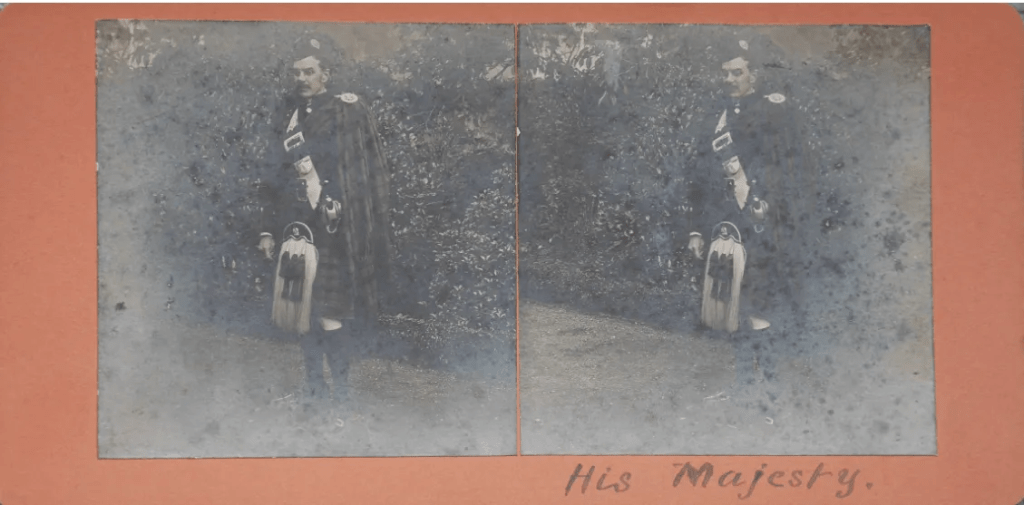
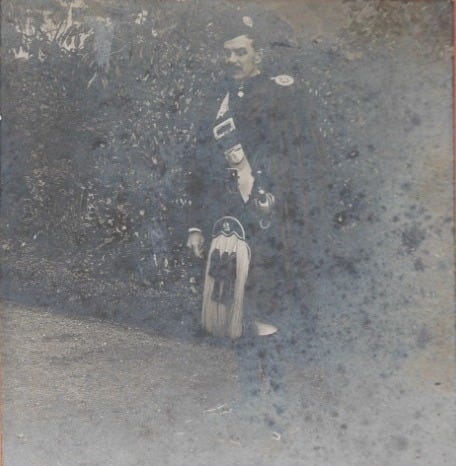
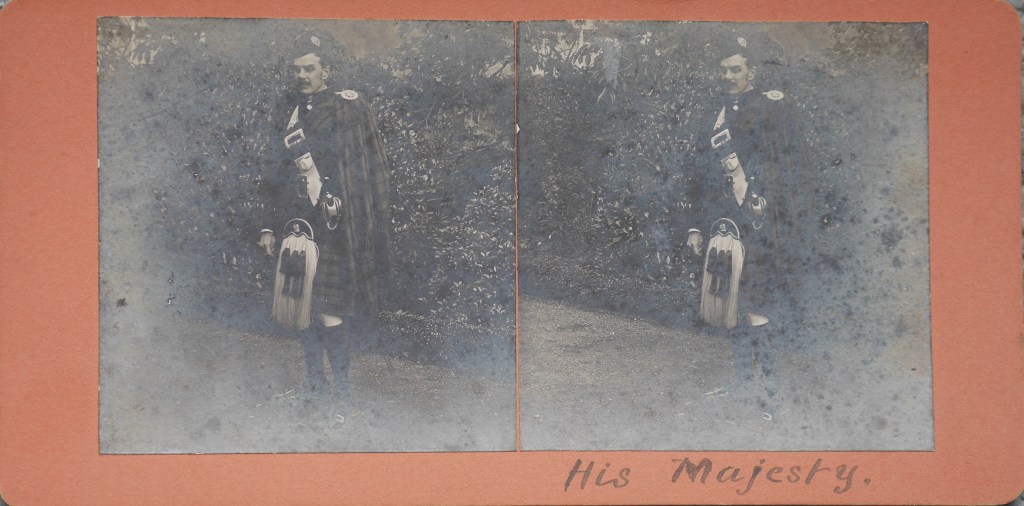
Though faded with age, a figure in full Highland dress pictured with a garden backdrop was captioned ‘His Majesty.’
The handwriting was immediately recognisable from the multiple copyright forms that Ellam completed during his career, whilst the title ‘His Majesty’ appeared to be a humorous reference to one of his best-known images.
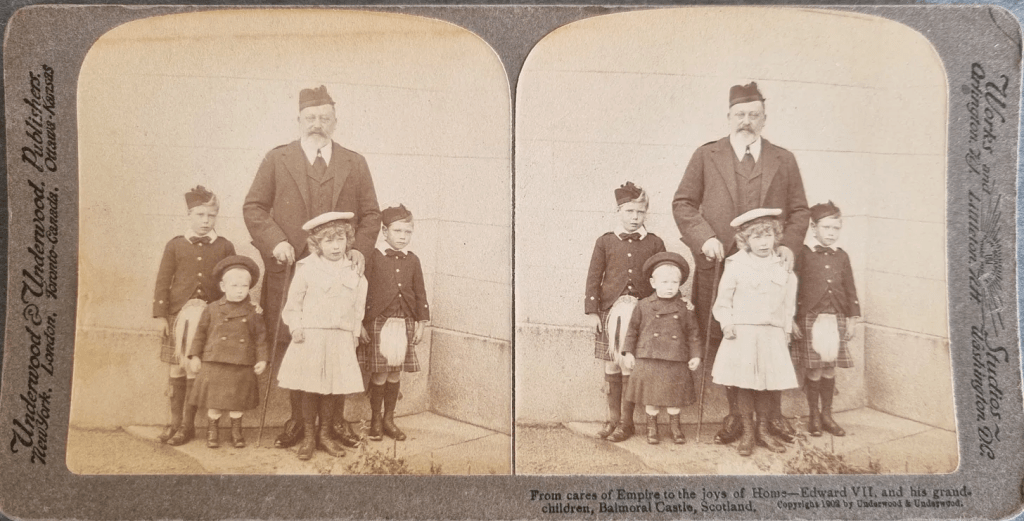
Taken for Underwood & Underwood, it featured Edward VII and his grandchildren (including the future Edward VIII and George VI) at Balmoral following the King’s Coronation in August 1902.
These pieces of evidence seemed to point strongly, but not conclusively, in one direction.
For the past couple of years, Pressphotoman has been on the look out for photographic evidence that might corroborate this theory.
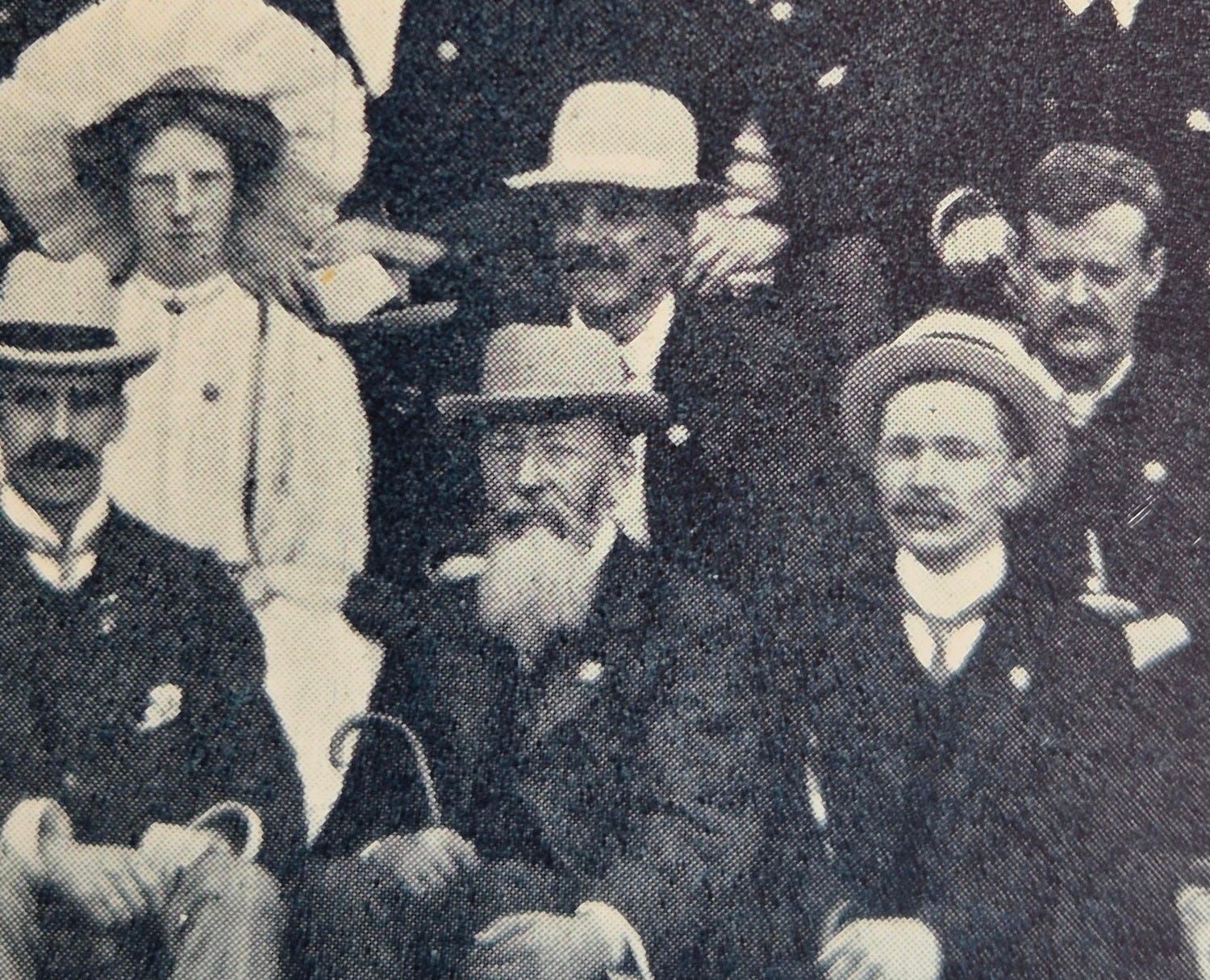
Thanks to Dr. Michael Pritchard, editor of the British Photographic History blog and The PhotoHistorian, journal of the Royal Photographic Society Historical Group, another photograph featuring Ellam has emerged.
It was taken in July 1908 when around 300 photographers, both professional and amateurs, gathered in Brussels for the 23rd Photographic Convention of the United Kingdom.
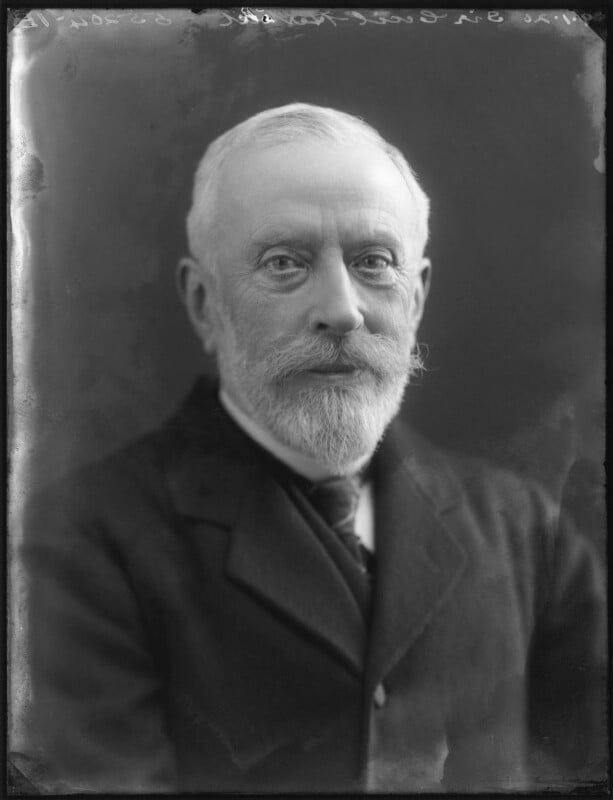
The choice of location was informed by the Convention president Sir Cecil Hertslet FRPS (1850-1934) who was His Majesty’s Consul-General to Belgium from 1903 to 1919.
At this point in his career as a professional photographer, Ellam was nearing the end of a decade-long working relationship with 3D giants Underwood & Underwood based in London’s West End.
He had become a member of the Royal Photographic Society in 1907 and was also an active member of the West London Photographic Society, lecturing on stereoscopic photography at one of its meetings.
In 1909, as part of a display by the United Stereoscopic Society, he created a stereoscopic transparency displayed by lantern at the annual RPS exhibition.
By the following year, he was working for London News Agency Photos at 46 Fleet Street covering events like the Army Pageant of 1910 held in Fulham Palace Gardens.
The discovery of another photograph of Ellam helps bring a further dimension to several blogposts on this site that can be found by putting his surname into the search engine via the link below.
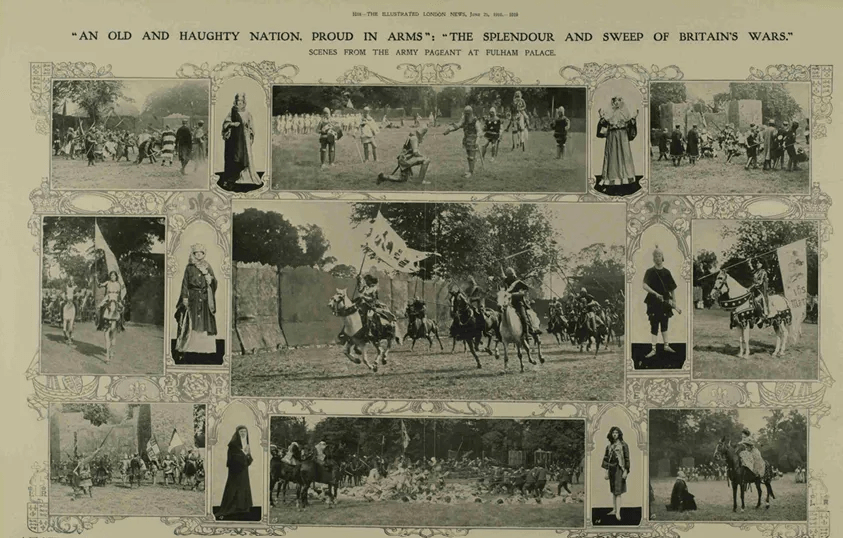
The Army Pageant staged during the summer of 1910 in the grounds of Fulham Palace, London was by all accounts quite a spectacle.
Advertisement from Illustrated London News (18th June 1910). From British Newspaper Archive.
It featured around 5,000 performers and was witnessed by an estimated 100,000 spectators during its 21-performance run, according to The Times.
The Historical Pageants in Britain website describes what pulled in the crowds as “a disparate selection of episodes that illustrated the development of military conflict and the British armed forces.”
Illustrated London News (25th June 1910). From British Newspaper Archive.
Among the press photographers on hand to record the action was James Edward Ellam (1857-1920), whose stereoscopic camera recorded various scenes for London News Agency Photos based in Fleet Street.
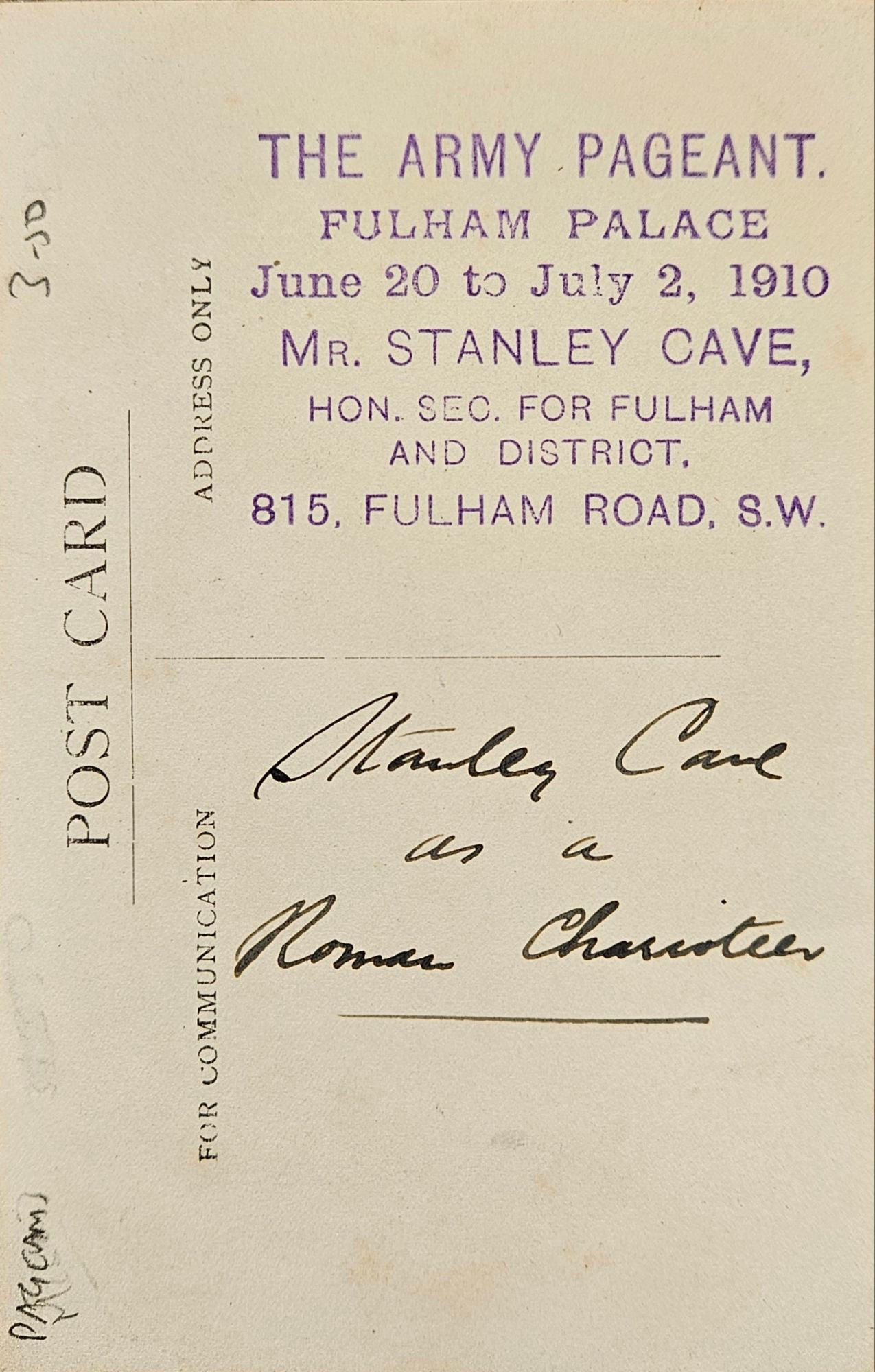
The Fulham and District organiser for the Army Pageant was Stanley Cave, a gentlemen’s outfitter with a shop at 815 Fulham Road, SW.
Interviewed earlier that year by the Fulham Chronicle, he explained that an estimated 600 local residents of all ages would be needed to stage its allocated Elizabethan episode.
As to costumes, they could be designed, cut and, if necessary, made to order under the supervision of Miss Lorna Burn-Murdoch, Mistress of the Robes.
Mr Cave went on to tell the paper: “The cost of the costumes will have to be borne by the players, who can spend practically what they like on them, from a few shillings to a few pounds.
He continued: “They will, of course, be the property of the wearers once the Pageant is over, and will serve as costumes for fancy dress balls and skating carnivals and will also be an interesting souvenir of the event.”
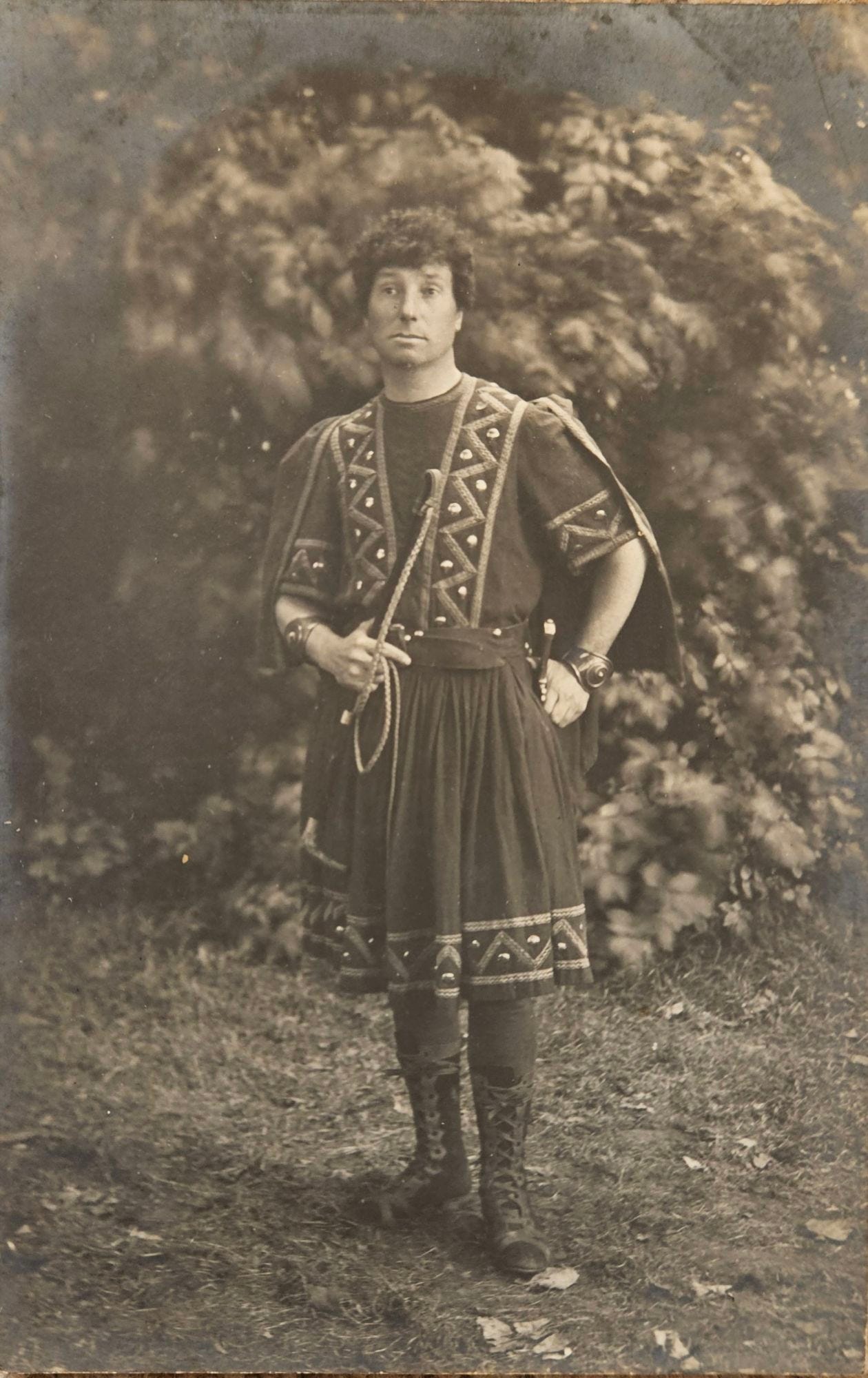
Press reports confirm that Mr. Cave took part in the Elizabethan episode of the pageant as one of the “Courtiers (mounted).”
However, a photographic postcard that recently joined the Pressphotoman collection suggests that his horse-riding skills may have led to another role too.
Aside from Mr. Cave’s splendid outfit, the photographer also captured his visibly distracted expression, which I initially put down to the pressures of helping organise such a huge undertaking.
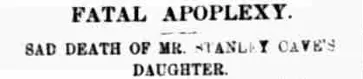
However, a press report, again taken from the Fulham Chronicle, revealed how a few weeks earlier, Stanley Cave had suffered a family tragedy.
Fulham Chronicle (3rd June 1910). From British Newspaper Archive.
An inquest heard how his ten year-old daughter Ellen had died from a cerebral haemorrhage whilst she slept.
A week later, the paper reported on her funeral “amidst many manifestations of grief and sympathy.”
In the years that followed, members of the Cave family took an active part in many more pageants staged in Fulham raising money for local charities.
When Mr. Cave’s youngest daughter Mary married in 1931, the Fulham Chronicle described how she had taken the role of Anne Boleyn on several occasions playing opposite her father’s Henry VIII.
In 1905, the photographer James Edward Ellam was at a turning point in his professional career.
A skilled amateur stereographer in his native Yorkshire, he had journeyed south a decade earlier to pursue opportunities offered in London by the leading American 3D company Underwood & Underwood.
It was a decision that changed his life.
Ellam is best-known for a number of the stereos he took for the Underwood company.
Today they feature in museum collections around the world.
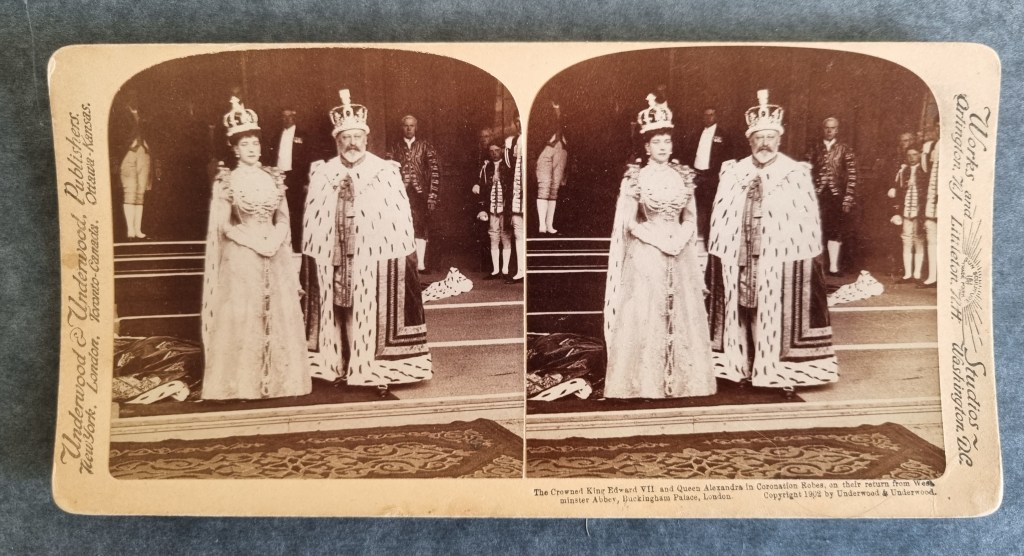
Among them are Queen Victoria’s Golden Jubilee celebrations (1897), King Edward VII and Queen Alexandra in their coronation robes (1902) and Pope Pius X in his pontifical robes in the Vatican’s Throne Room (1903).
Despite these achievements, Ellam’s career path into Fleet Street seems to have included a subsequent period where he created photographs with a distinctly local flavour.
Hence, his decision to register the copyright of two images taken in or around the Essex town of Dunmow where he lodged at weekends.
Last week’s blogpost featured the first of these press photographs.
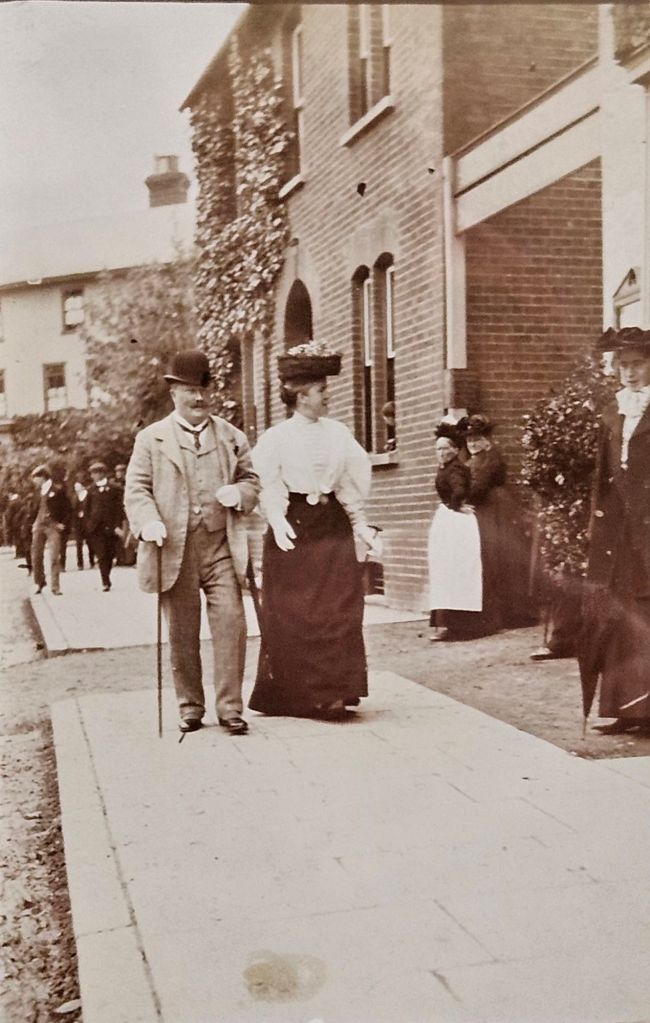
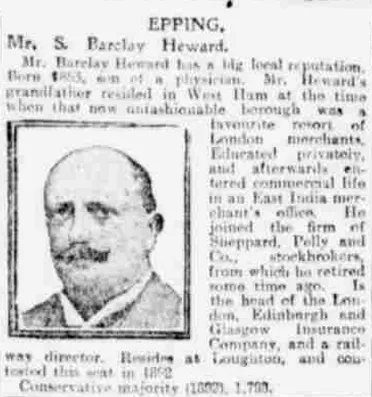
It portrayed the prospective Liberal Member of Parliament Barclay Heward (1853-1914) and his wife strolling along Dunmow High Street in the run-up to 1906 General Election.
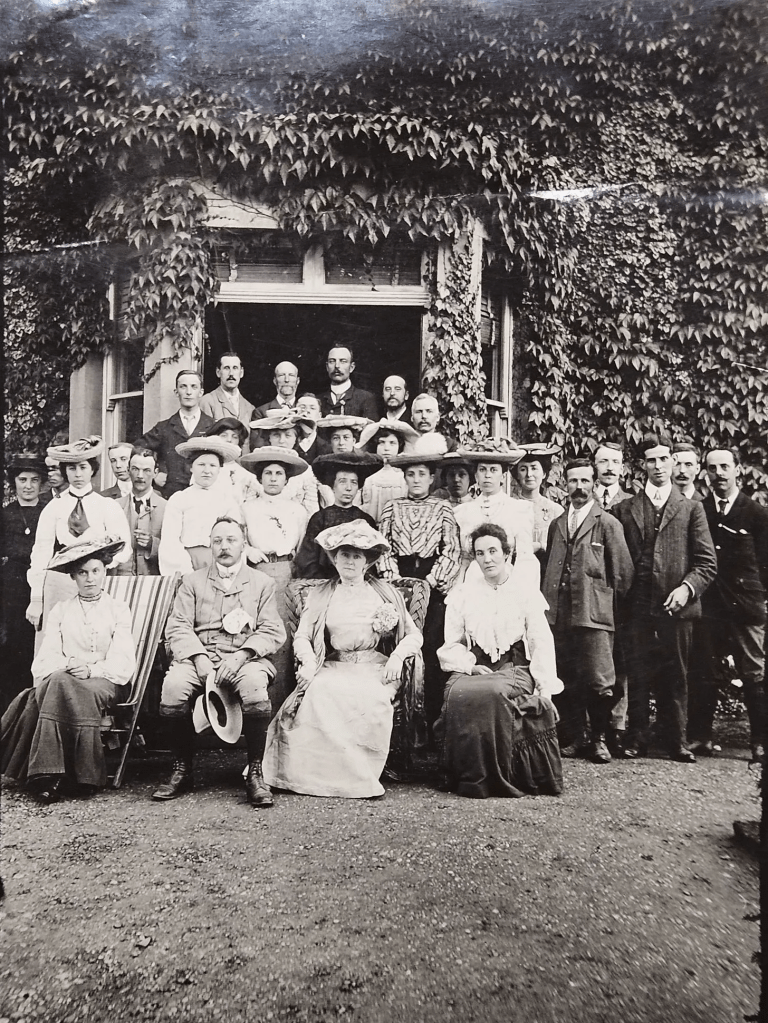
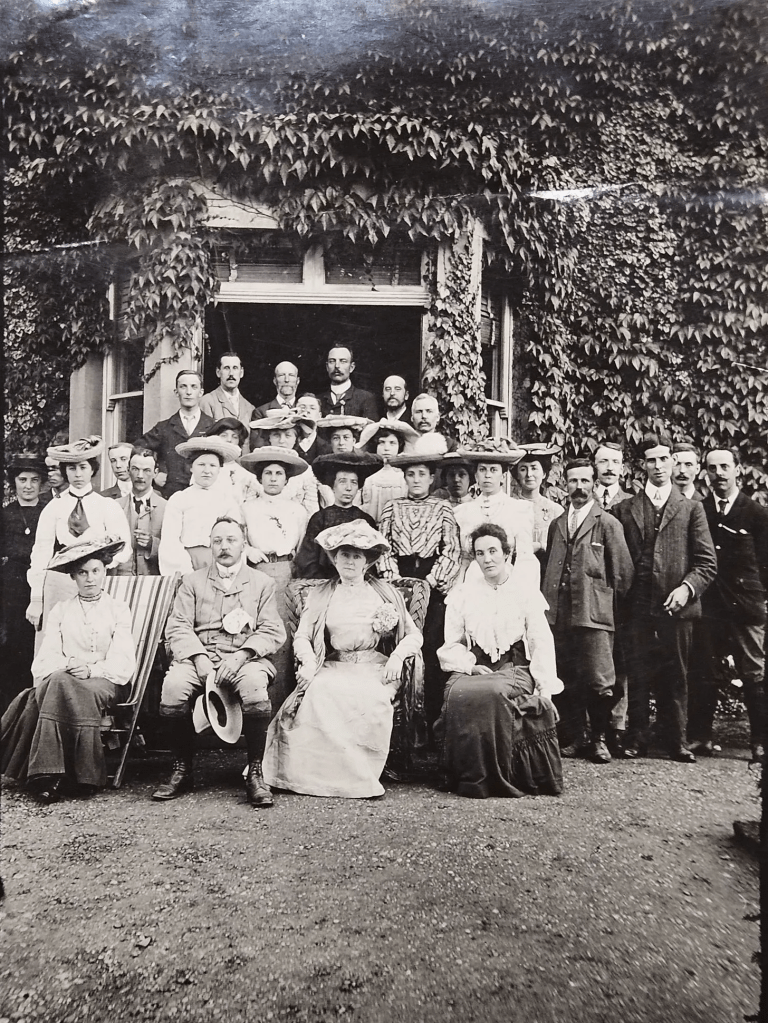
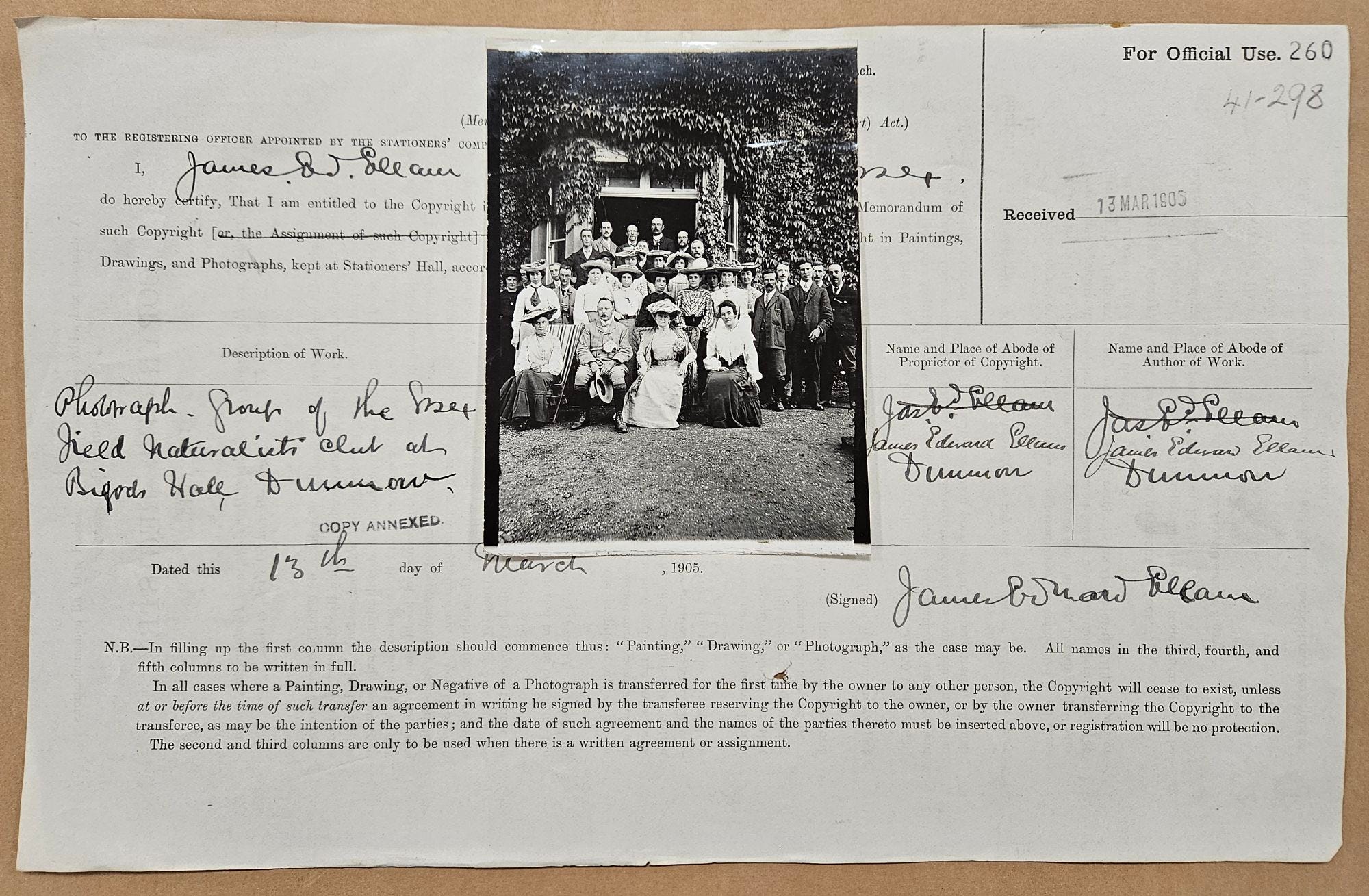
What he omitted to mention was that one of that group was one of the most famous women in the land.
Fashionably-dressed and seated on the front row in a wicker chair, Daisy, Countess of Warwick was a one-time mistress of King Edward VII.
She is pictured at a significant moment in her own life; one that was the subject of almost daily press attention.
During this period, Lady Warwick became actively engaged in politics as a member of the Social Democratic Federation.
However, unlike the Liberal candidate Barclay Heward, who featured in Ellam’s earlier photograph, she was increasingly active in promoting radical socialism ahead of the forthcoming General Election.
As to the photograph’s genesis, a press report in the East Anglian Daily Times and cited in the Essex Naturalist account of the club’s activities provides the background.
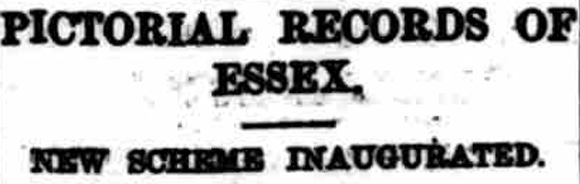
On Saturday 8th July 1905 at the invitation of the Earl and Countess of Warwick, “members of the club and many friends, about seventy in all, assembled … for the purpose of inaugurating ‘the Pictorial and Photographic Record of Essex.’”
The brief of the project was “to write the history of the county in pictures.”
East Anglian Times (10th July 1905). From British Newspaper Archive.
The report described how Lady Warwick presided at a luncheon held at Easton Lodge near Dunmow, her husband’s ancestral Essex home.
She first apologised for the absence of the Earl, who was “at Brest on a yachting cruise.”
After lunch, a meeting to discuss the photography project was held “in a commodious double tent amongst trees at the back of the house.”
Following the meeting, the group paid a visit to nearby Bigods Hall, which the Countess had established years earlier as a secondary and agricultural school.
Those present were then entertained to tea by the Principal, Mr. T. Hacking and Mrs. Hacking.
Though the report refers to “about seventy in all” attending the luncheon and meeting held at Easton Lodge, the smaller group pictured in the Bigods Hall photograph perhaps indicates that not everyone made the line-up.
What is particularly noteworthy is the presence of so many women in the picture, making up around half of the group.
At this point in the medium’s history, photography had become a popular and affordable pastime thanks to the advent of Kodak’s ‘you press the button, we do the rest’ range of cameras.
Ellam’s presence too may well have been directly linked to the photographic project being discussed.
Copyrighting the image does though suggest that he recognised that this photograph of the Essex Field Naturalists Club had a long-term value.
What is slightly confusing is that the copyright form completed by Ellam, with this photograph attached and held by the National Archives, is stamped and dated ‘13th March 1905.’
As the weather during the Bigods Hall visit was reported as “gloriously fine,” the dress of those appearing on camera does suggest a July day rather than one in March.
One explanation may be that the 13th March form referred to an earlier occasion.
Armed with a new photograph of the group featuring the media-friendly Lady Warwick, he simply substituted a copy of that taken on 8th July.
Whatever the explanation, the resulting photograph captures a moment in the changing world of Edwardian Britain.
Political elections and their outcomes are a talking point at the moment particularly in England, Canada and Australia where voters have recently gone to the polls.
Down the centuries, press and media coverage of such landmark events has evolved as demonstrated by this photograph.
More about the photograph’s subjects, its location and how it came to be taken shortly.
As to the photographer responsible, the image was created by James Edward Ellam (1857-1920) whose career as a stereographer and later press photographer is a continuing research thread for this blog.
The photograph’s existence is entirely due to the UK National Archives, formerly the Public Record Office.
The Fine Arts Copyright Act of 1862 required that anyone registering a photograph for copyright needed to complete a form with a copy of the image attached though not everyone did as they were required.
Today, those copyright records are stored in sturdy grey archival boxes in the National Archives building at Kew in London.
Each box contains a stack of forms preserved in see-through sleeves.
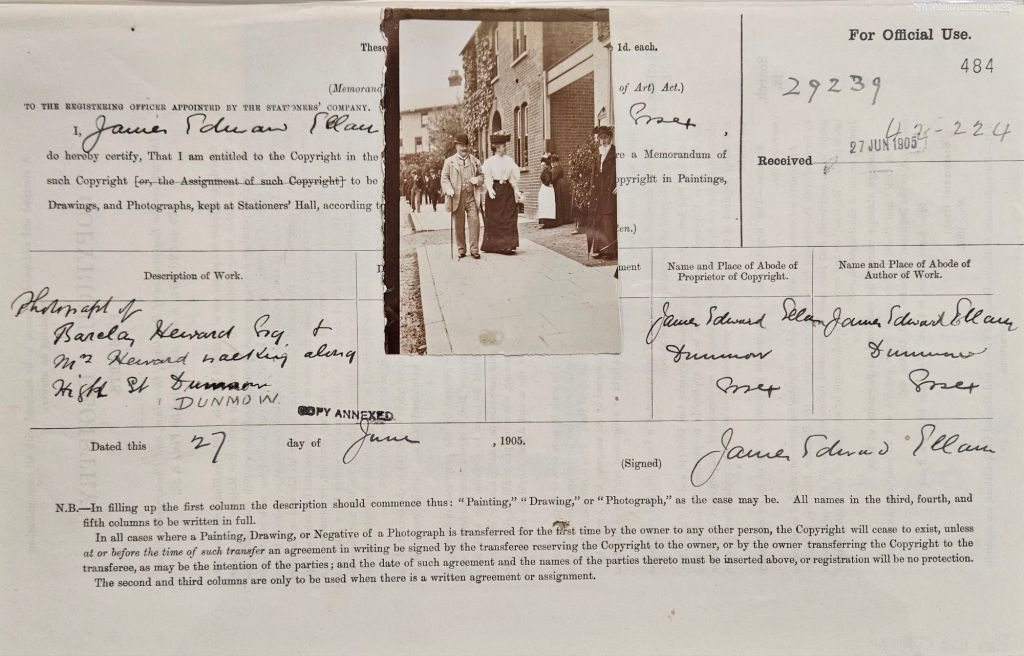
Fortunately for this researcher, Mr. Ellam’s form dated 27th June 1905 and signed by him together with the photograph it related to were intact.
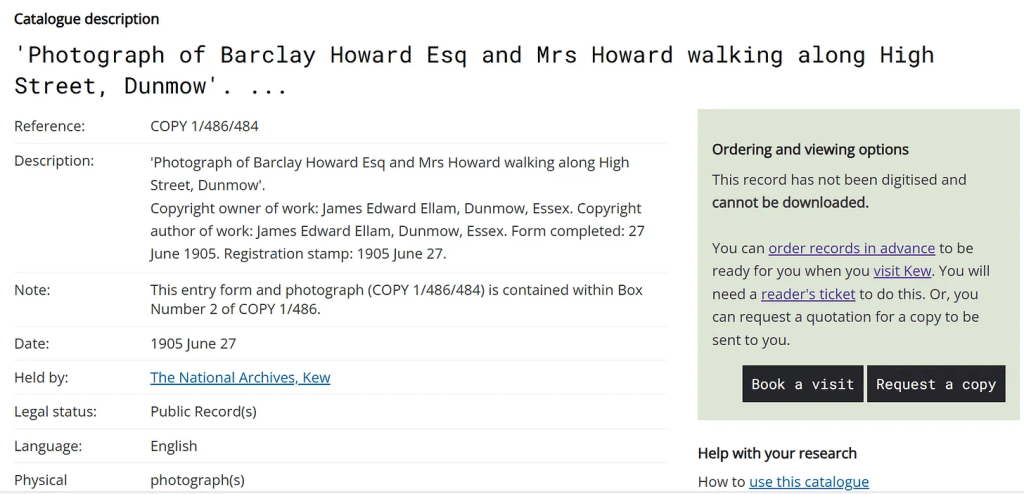
Helpfully, the National Archives have created a digital record of these copyright forms and their contents.
But the contents of the forms are not always accurately recorded and so can send the researcher down a few dead ends as it did in this case.
On further investigation, what the catalogue listed as ‘Photograph of Barclay Howard Esq and Mrs. Howard walking along High Street, Dunmow’ turned out to have mis-spelt the couple’s surname.
Mr and Mrs. Heward (rather than Howard) were Spencer Barclay Heward (1853-1914) and his wife Lina Emily née Sewell, who had married in 1879.
The reason that James Edward Ellam had taken their photograph on a June day in 1905 was all down to politics.
Mr. Heward was a candidate in the forthcoming United Kingdom General Election that took place over several days in late January and early February 1906.
This wasn’t Heward’s first attempt to become a Member of Parliament.
A retired stockbroker, he had stood unsuccessfully in 1892 as the Liberal candidate for the Epping constituency in Essex.
Stratford Express (16th July 1892). From British Newspaper Archive.
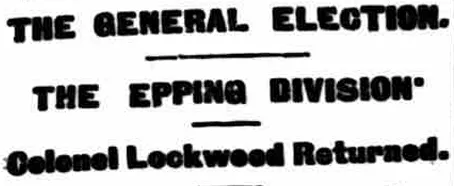
In November 1904, he was again selected to fight the seat for the Liberals in a bid to unseat the same Conservative opponent, Colonel Lockwood.
Ellam’s photograph of Mr. and Mrs. Heward captures the couple striding confidently along the pavement, attracting the attention of various onlookers.
One particular point of interest is the photograph’s location as stated on the copyright form: ‘High Street, Dunmow.’
Whilst working during the week as a press photographer servicing London’s Fleet Street, Ellam lodged at weekends with Henry Bradley and his family at their outfitters business on Dunmow High Street in Essex.
Whether the photoshoot with the Hewards had been pre-arranged or came from Ellam’s quick-thinking, it resulted in an image with topical news value.
There was a growing market for such photos among newspapers and magazines.
These though were early days as far as press photography were concerned and even national newspapers previewing the General Election predominantly used line drawings as illustrations.
London Daily Chronicle (1st January 1906). From British Newspaper Archive.
They were early days too for Ellam, who was operating at this point in his career as a freelance press photographer with an eye to selling his images to multiple customers.
Claiming copyright for his work provided a degree of protection for any financial benefits that might accrue if the photograph was reproduced by the press.
On this occasion though, and despite the Liberal landslide result across the UK, Ellam’s journalistic instinct went unrewarded at the polls.
The Woodford Times (26th January 1906). From British Newspaper Archive.
Also in 1905, Ellam created another photograph aimed at the press that he again copyrighted, which is the subject of the next Pressphotoman blogpost.
The recently-released film Conclave about the election of a new Pope is being touted as an Oscar contender.
This is largely because of the central performance by Ralph Fiennes for his portrayal of a “deeply-troubled Cardinal … at the centre of a murky Vatican plot” (Peter Bradshaw, The Guardian).
The film is the latest Papal subject to attract media attention and also that of this blog.
Last September’s Asia-Pacific tour by Pope Francis prompted a Pressphotoman post about a series of 3D stereoscopic portraits featuring one of his predecessors.
In an echo of the plot of Conclave, the stereos were published in 1904 following the election of Pope Pius X.
Given access to the Vatican, the leading stereoscopic company Underwood & Underwood produced a 36-card set titled A Pilgrimage to see the Holy Father through the Stereoscope.
The Underwood stereographer responsible was James Edward Ellam (1857-1920) whose career as a photojournalist is the subject of ongoing research by this blog.
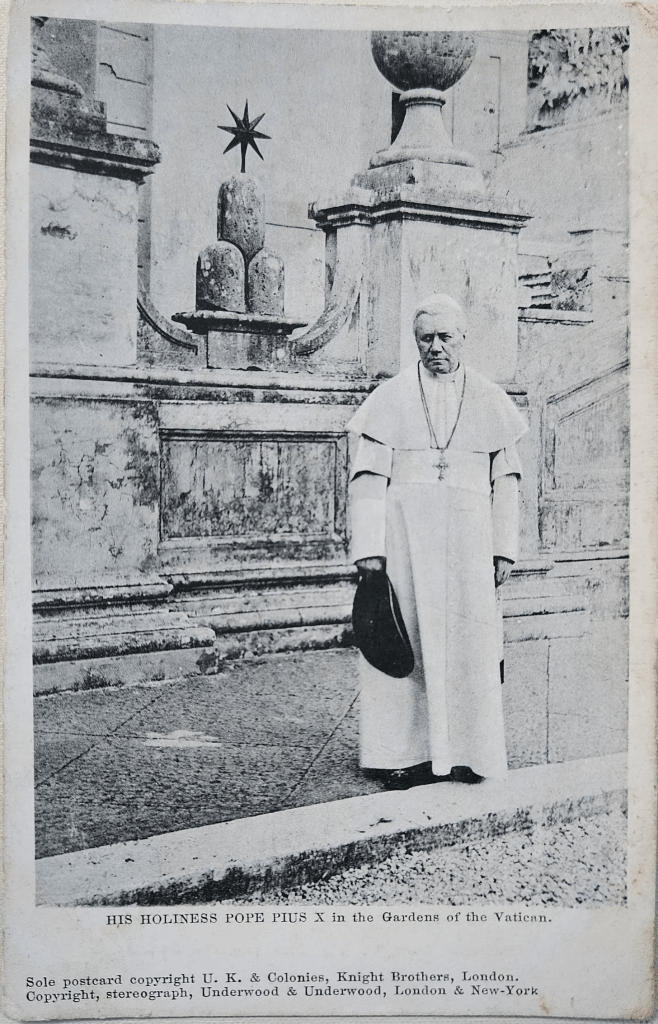
A recent Pressphotoman acquisition adds another dimension to how these 3D images of Pius X were circulated in various formats and helped form the new Pope’s public image.
Titled “His Holiness Pope Pius X in the Gardens of the Vatican,” the credits on this picture postcard confirm that the image was taken from U&U’s original stereograph.
The ‘sole postcard copyright’ holder for the ‘U.K. & Colonies’ was identified as Knight Brothers of London.
They were certainly in the market for images to publish and sell to a worldwide audience.
The company was formed in 1904 by Watson and George Knight, who had previously worked for another London postcard publisher.
E. Wrench Ltd., launched by teenager John Evelyn Wrench, boomed spectacularly from 1900 as the picture postcard craze took hold.
But by 1906, the firm had crashed and burned amid financial difficulties.
Knight Brothers registered their trademark ‘knight’ in August 1905.
The number ‘1446’ on this postcard indicates that it may have been one of a series of Papal portraits secured from Underwood & Underwood.
Another point of note is that the card was ‘printed in Saxony’ which Wrench had first identified as home to a ‘veritable hotbed of good printers’ (Anthony Byatt, Picture Postcards and their Publishers, 1978).
Like Wrench before them though, Knight Brothers enjoyed short-lived success.
It became a limited company in 1906, but within a couple of years had ceased trading.
This Friday (21st June) is Stereoscopy Day, the third annual global celebration of stereoscopic 3D.
Organised by Denis Pellerin and Rebecca Sharpe, co-curators of the Brian May Archive of Stereoscopy, Stereoscopy Day marks 186 years since Sir Charles Wheatstone first presented the stereoscope and his theory of binocular vision to the world.
It was more than a decade ago when I first became aware of Wheatstone’s discovery.
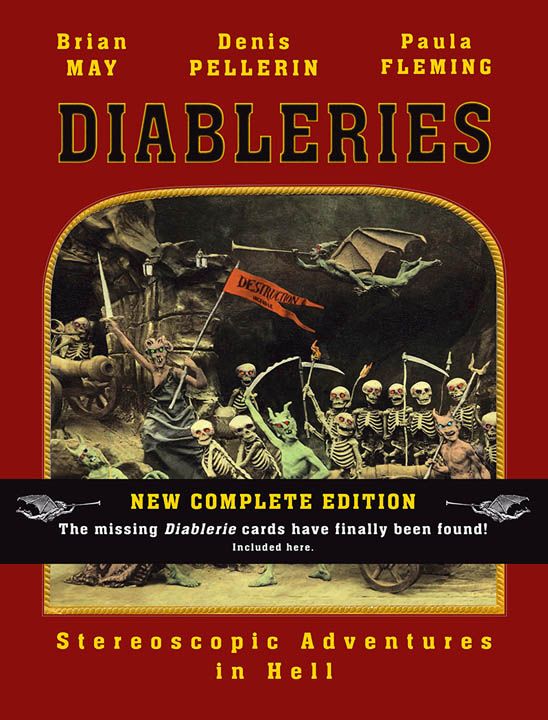
Studying for a Masters degree in Photographic History & Research at De Montfort University, Leicester, I was fortunate enough to attend a presentation by Brian May, Denis Pellerin and Paula Fleming about their book ‘Diableries: Stereoscopic Adventures in Hell.’
‘Diableries’ originally published in 2013.
For the first time, I heard terms like ‘stereocard,’ ‘stereoscope’ and ‘view’ and learned about the fascination that 3D held for the Victorians.
As it turned out, the presentation proved both inspirational and pertinent.
A few months later, my Masters research project took shape … and a professional stereographer, Percy R. Salmon FRPS (1872-1959), was at its heart.
2022 film celebrating the 150th birthday of Percy R. Salmon FRPS (1872-1959).
But there was only one problem.
However hard I tried, I could not see in 3D.
The reason lay in my ‘lazy’ right eye, diagnosed when I was 7 during a school medical.
My astigmatism has meant wearing glasses ever since.
Then one day, when I had almost given up all hope of seeing in 3D, I looked at a stereocard through a hand-held stereoscope for the umpteenth time – and the two images fused into one.
I could see the promised 3D ‘view.’
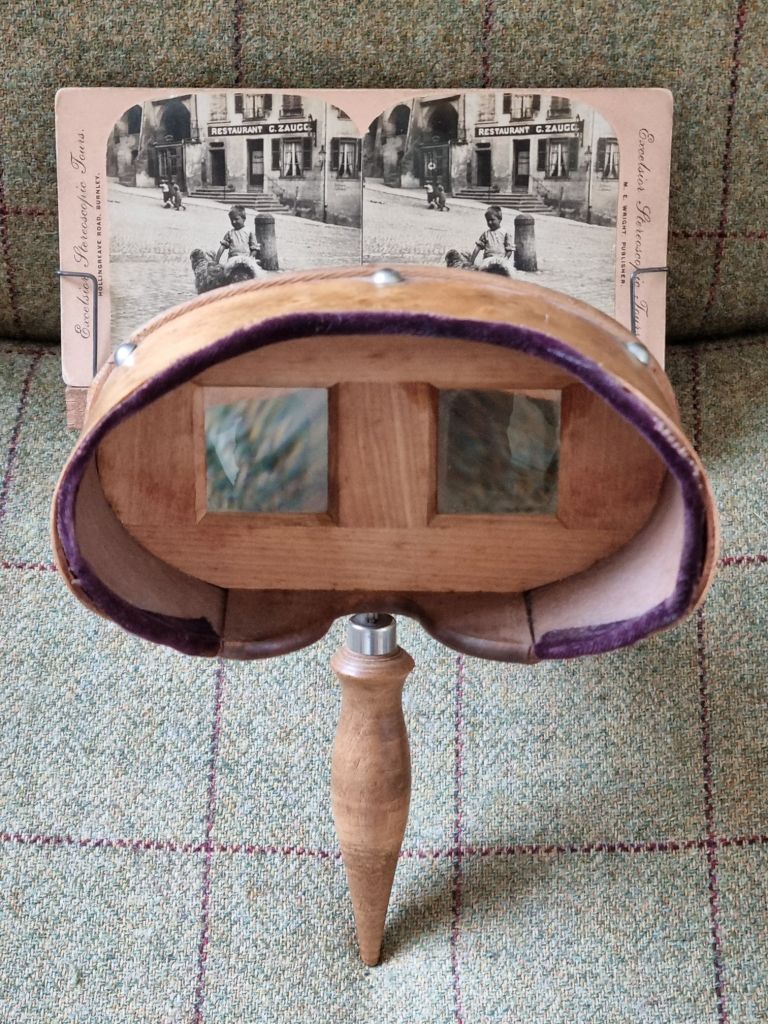
My first hand-held stereocard viewer, ‘The Perfecscope’ c. 1895.
Since then, stereoscopy has transformed my life, leading to a doctorate that investigated 3D’s influence on early press photography (see ‘Writings’).
It’s also improved my eye-sight, prompting my optician to wonder how this was possible given I am getting older.
What started as a handful of stereocards is now a growing collection.
It largely features the Underwood & Underwood company (1880s-1920s); plus Excelsior Stereoscopic Tours of Burnley, Lancashire; press stereographer James Edward Ellam (1857-1920); plus early stereos by W. & D. Downey and amateurs like Edward and Eliza Charlton, all featured elsewhere on this blog.
If you haven’t tried stereoscopy before, hunt down a few cards on Ebay and purchase an ‘Owl’ viewer designed by Brian May.
My blogpost-a-day series during September on 3D stereos views attributable to early press photographer James Edward Ellam (1857-1920) involved a certain amount of time travel.
Not only did it mean inhabiting the years he spent in the North Yorkshire town of Yarm during the 1890s.
It also required me to revisit research that I first conducted five years ago.
On a sunny Autumn day earlier this month, I retraced those steps, armed with a great deal more information about James’s life and career than I had back then.
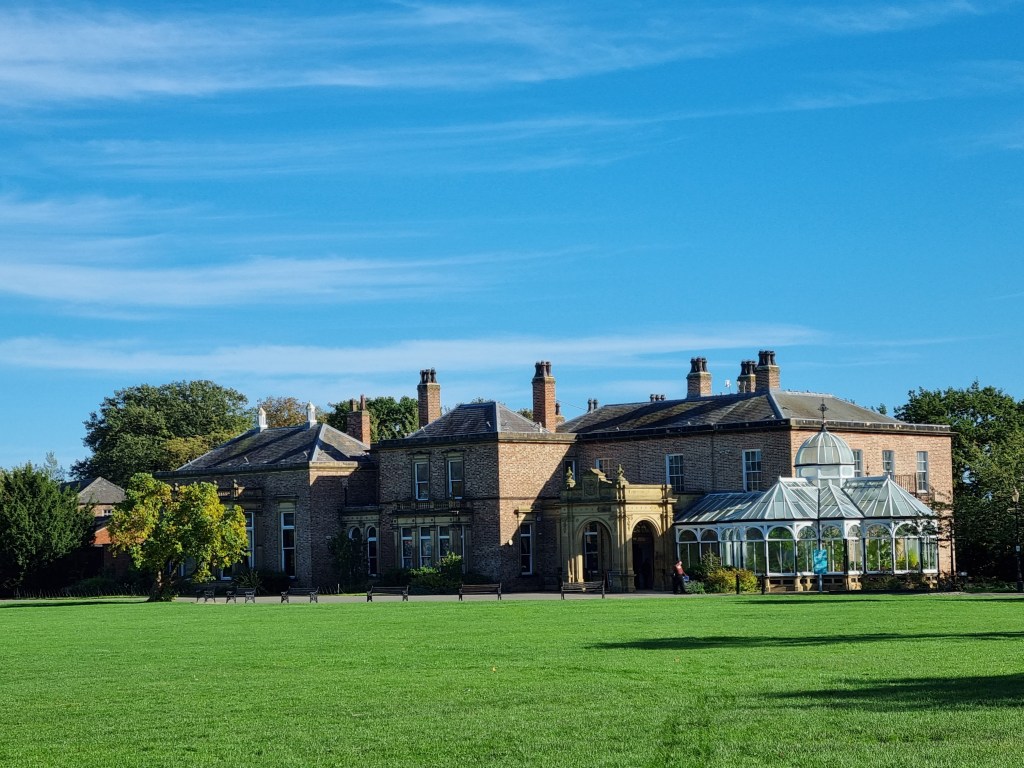
First port of call was Preston Park Museum on the outskirts of Yarm where I re-examined its collection of 20 of his stereocards.
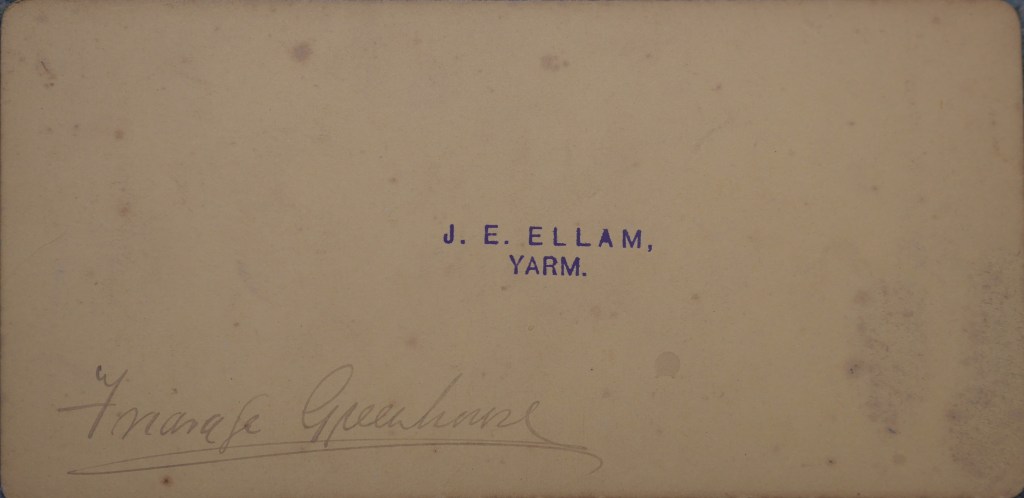
As I remembered from an earlier visit, the majority were stamped “J.E. Ellam, Yarm” on their versos and many were titled in James’s distinctive handwriting.
Preston Park Museum, near Yarm. 12th October 2023.
Back in 2018, James was one of many research threads that I was exploring for what became my PhD on the influence of stereoscopy on early press photography.
As a result, I welcomed another opportunity to view the cards more closely and record each of the 20 stereos in greater detail
(** My thanks to Collections Officer Christine Hutchinson and Collections Assistant Samantha Hallwood for their assistance).
Among the subjects James stereographed were the town’s Gala, its Regatta, the nearby River Tees as well as groups including the “Hartlepools Boys Brigade,” the “Railway Servants Mission” and “The Recreation Football Team.”
One of Preston Park’s Ellam collection also shed further light on a stereo that featured in my blogpost-a-day series and one I had titled “Triangle Greenhouse” (4th September 2023).
However, what I had read on the verso as “Triangle” turned out to be “Friarage,” a reference to The Friarage in Yarm, built c. 1770 on the site of a Dominican Friary.
Home to Edward Meynell and his family, its gardens were open to the public from the early 1800s and visiting became a popular thing to do for the town’s rich and poor (from A Brief History of Yarm published by Stockton Reference Library).
Rather wonderfully, a photograph dated to the 1890s on the Picture Stockton Archive website shows The Friarage complete with an adjoining greenhouse structure.
Since becoming a photohistorian, visiting the physical locations connected with the photographer I am studying has invariably been valuable.
So it proved with this latest visit to Yarm.
The town’s High Street (below) boasts many fine Georgian buildings, which today are listed and retain a wealth of original features including shop fronts.
High Street (east side), Yarm. 12th October 2023.
At number 44, Strickland & Holt (established 1854) where James worked as a chemist’s assistant is still a thriving business with a branch of Boots next door continuing that tradition.
Strickland and Holt, 44 High Street, Yarm. 12th October 2023.
A short walk across the cobbles to the left is located Yarm Town Hall which has recently been renovated as a Heritage Centre.
It is part of a £20 million Levelling Up Fund project and is due to open to the public later this year.
Yarm Town Hall Heritage Centre. 12th October 2023.
Built in the Dutch style in 1710, the distinctive building featured in my blogpost-a-day series as it was stereographed by James when the nearby River Tees flooded the town in October 1893.
Viewing the stereo more closely, it is evident that it was taken from an elevated position.
From my latest visit to Yarm, I now realise that James probably used an upper floor of Strickland and Holt’s premises to obtain the best vantage point.
Alternatively, he could have used the tailors business of William Bradley & Son, where he lodged during his years in Yarm, which was a few doors further along the High Street.
Another important aspect of James’s life that has become apparent during my ongoing research was his commitment to the activities of Anglican churches in the communities where he lived.
In Yarm, it was St. Mary Magdalene Church which occupies the site of a Norman building and was re-built in 1730 after a disastrous fire.
St. Mary Magdalene Church, Yarm. 12th October 2023.
James’s years in the town coincided with the rectorship of Rev. John Winpenny, who held the post from 1840 until his retirement in 1895 at the age of 84.
As a member of the church choir, it would appear that James had a fine singing voice.
In January 1891, the Northern Echo reported that “members of the choir of the Parish Church, Yarm, gave their first annual concert in the schoolroom on Tuesday night.”
James’s contribution was to join Mrs. Burton, who was “possessed of a brilliant soprano voice,” in singing a duet from Verdi’s Il Trovatore.
Such details, though somewhat removed from hands-on photography, help paint a fuller picture of the person behind the camera.
St. Mary Magdalene Church, Yarm. 12th October 2023.
As more information about James’s life and career comes to light, I’ll post further updates.
Since first writing up what I knew about the life and career of James Edward Ellam (Press Photo Pioneer – 28th April 2023), I’ve been fortunate enough to locate 30 examples of his 3D views.
That’s resulted in this blogpost-a-day series, which has appeared throughout September, attracting ‘likes’ and ‘follows’ and interest from other photohistorians.
Those who’ve followed my daily posts will have worked out that today, by including two of James’s stereos in “The Great Gale” (23rd September 2023), I’m a stereo short.
So I thought I would conclude the series with a few reflections on what more I’ve learned about James and how his amateur stereoscopy in Yorkshire fed into his later life as a Fleet Street photographer.
As comments like “wow,” “beautiful” and “amazing” in response to various posts have underlined, James was a fine stereoscopic photographer.
He was also well-travelled as the range of locations he stereographed in England, Scotland, Wales and continental Europe bear out.
The role of amateur societies in popularising photography in the latter part of the 19th century is currently the focus of a number of academic research projects.
In James’s case, summer excursions organised by the Stockton Photographic Society, of which he was Secretary, played a significant part in his development as a 3D practitioner.
As one newspaper report noted (Stockton Herald, 7th February 1891), “Stereoscopic work is one of the principal branches of the Society’s operations” and added that “the roll of the Society … now numbers nearly sixty.”
A visit I made in 2018 to Preston Park Museum, near Yarm, which has a collection of around 20 of James’s stereocards, enabled me to make an important link.
I was able to place one that I saw there, featuring a flood in Yarm dated October 1893, alongside one of my 30 with the same title from a different viewpoint.
This illustrated how James shot sequences in 3D, a skill that would come in useful when he began supplying photographs to illustrated newspapers in Fleet Street.
It was also evident in the two stereos that I wrote about in “The Great Gale” featuring the effects of a storm in Scotland in October 1898 that created headline news.
Another formative influence was James’s job as a chemist’s assistant with Strickland & Holt in Yarm where he lived in the first half of the 1890s.
Back in 2018, Stephanie Richardson, whose family co-founded the business nearly 170 years ago, shared with me several examples of James’s stereo views.
As a result, I was able to recognise the “J.E. Ellam, Yarm” stamp which features on the verso on the first half-a-dozen or so cards I blogged about.
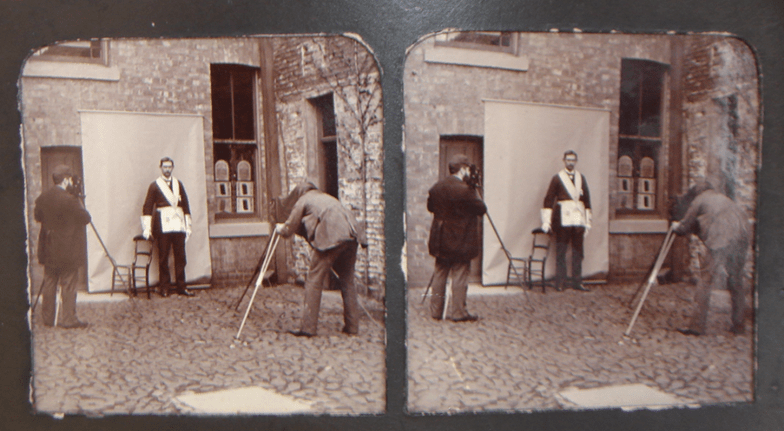
Stephanie also showed me a stereo illustrating an outdoor portrait studio used by Strickland & Holt customers in the 1890s.
Outdoor portrait studio at Strickland & Holt, Yarm. Courtesy of Stephanie Richardson.
What I know realise is that the bearded man on the left (above) bears a resemblance to Henry Bradley (below), with whose family James lodged during his years in Yarm and later in Dunmow, Essex.
Henry was also active in the Stockton Photographic Society as a committee member and later as a vice-president.
The 3D portrait of the Bradley family that featured in the cache of 30 was another breakthrough moment in my research project.
Looking at census records, I was able to put names to faces in the stereo, notably Henry, who I had previously seen featured in a promotional postcard for his outfitters business, his wife Dorothy, and some of their children.
Viewing the stereo, I wondered if the youngest of the girls featured was their daughter Marguerita?
I knew that in the 1911 England Census, Henry recorded the “personal occupation” of Marguerita Annie Bradley, or “Mab” as she was known throughout her life, as a “Retoucher” working “at home.”
By that point in his professional life, James was working for London News Agency Photos at 46 Fleet Street.
Though he lived in London during the week, he returned to Dunmow at weekends and stayed with the Bradley family.
Could it be that in 1911, Miss “Mab” Bradley, then aged 22, was earning a living by retouching photographic negatives, including James’s, to improve their quality?
Further research into Mab’s photographic career has confirmed that she too was an accomplished photographer.
The 1921 Census records her living in Dunmow with her parents and sisters Clare and Feodora, but more importantly, her “personal occupation” is recorded as “photographer.”
For example, she is credited with photographs that feature in local history publications including Dunmow and Its Charters (1923) and A Short History of Great Dunmow Church (1926).
From A Short History of Great Dunmow Church (1926).
Both publications feature in the British Library and both post-date James’s death in an accident involving an omnibus in Fleet Street in 1920, so it appears that Mab’s photography continued to flourish.
One last thought occurs to me.
Perhaps the cache of 30 stereos that have formed the basis of this blogpost-a-day series once belonged to Miss Mab Bradley (1889-1979).
The donation of the 30 stereos to a charity in Essex before reaching a well-known auction website would indicate that this thought is worth further investigation.
In an earlier post (“St. Anton” – 24th September 2023), I suggested that James Edward Ellam (1857-1920) worked for 3D giants Underwood & Underwood as a travel views photographer.
A cache of 30 stereos from the 1890s that are attributable to him, and about which I’ve written this month, includes a second stereo that supports this idea.
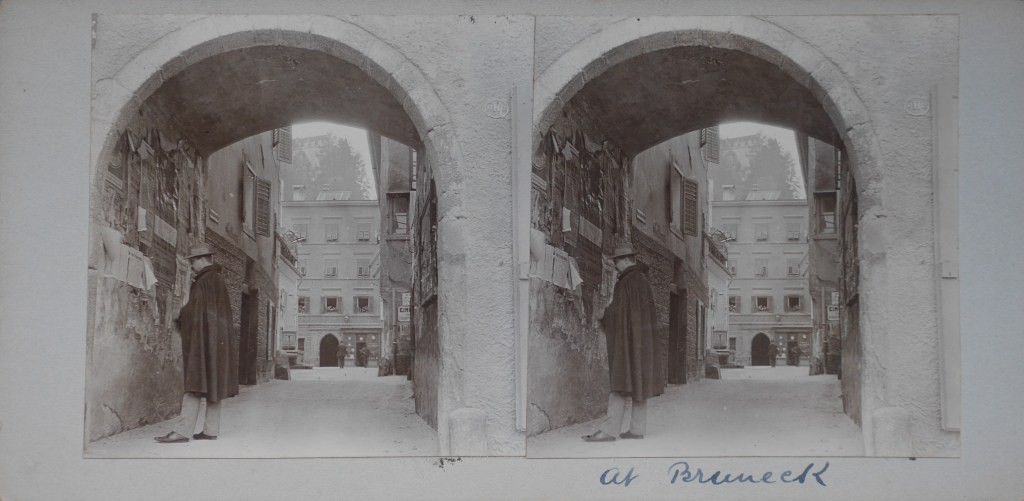
Captioned “At Bruneck” in James’s hand, it features a 3D view taken through an archway into the street beyond.
Today the medieval town of Bruneck, its German name, is part of the South Tyrol province of Northern Italy where it is known as Brunico.
As with “St. Anton,” the stereo uses a light-coloured card suggesting it comes from the same time period.
In researching this series of blogposts about James, I had previously failed to identify a photograph of him.
In 2022, I used social media to try and locate one, but without success.
Yesterday’s stereo captioned “His Majesty” raised the possibility that it featured James.
Perhaps it was taken by his fellow 3D photography enthusiast Henry Bradley with whose family James lodged for around three decades in Yorkshire and later Essex.
Of my 30 stereos attributable to him, the word “at” only appears in the title given to this particular view.
Here, its use could be read as meaning that I, James Edward Ellam, am “At Bruneck.”
I’ve spent many hours looking at both stereos detecting similarities between the men featured, particularly their moustaches, their height, and their stance in which the left foot is favoured.
I’ll leave you to decide whether or not you agree.
Throughout my research into the early press photographer James Edward Ellam (1857-1920), I have been on the look out for a photograph of him.
It was only when I obtained the 30 stereos attributable to him that have formed the subject of this month’s blogpost-a-day series that a contender emerged.
Captioned “His Majesty” in James’s hand, it features a man with a moustache in full Highland dress.
Though slightly faded due to age, the 3D effect is still intact.
Of all the stereocards that I have written about this month, it is the only one that uses an orange-coloured card, suggesting it was distinctive in some way.
The outfit which the man is wearing might also be significant when viewed in the context of one of James’s best-known stereos for the Underwood & Underwood company.
In September 1902, following the coronation of Edward VII, James and a court photographer from Russell & Sons were at Balmoral Castle in Scotland where members of the royal family were attending the annual Braemar Gathering.
With the castle walls as a backdrop, he took this 3D portrait of the King and his grandchildren including the future Edward VIII and George VI in their kilts and Glengarry bonnets.
In the “His Majesty” stereo, the use of that title perhaps suggests a keen sense of humour at play.
It is one that journalists and press photographers would certainly identify with.
For James, who only a few years earlier had been a keen amateur stereographer in Yorkshire, the mere idea of being in close proximity to the monarch on such an occasion must have seemed faintly ridiculous.
Of the 30 stereos attributable to the early press photographer James Edward Ellam (1857-1920) and featured in this blogpost-a-day series, today’s posed the greatest challenge in identifying its subject.
As has been the pattern in recent posts, there is no identifying credit or title in James’s distinctive handwriting.
All we really have to go on to suggest its provenance is the circumstantial evidence of its presence in the cache of 30.
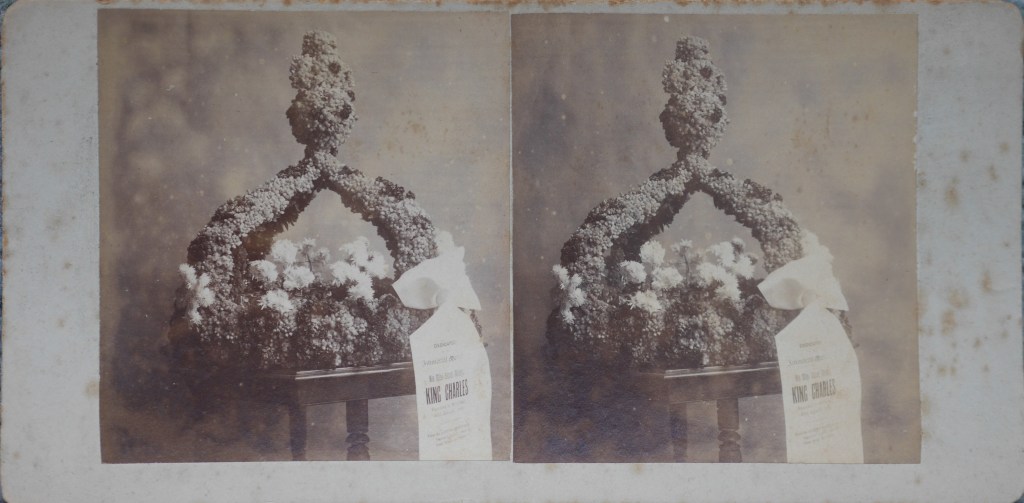
This stereo, featuring a floral wreath in the shape of a crown and placed on a multi-sided table, needed closer inspection of the label to confirm what it was.
The most readable text in capitals features the words “King Charles.”
But it took a high-quality magnifying glass to reveal the rest.
This reads: “Dedicated To The Immortal Memory of His Most Sacred Majesty.”
The word “Executed” followed by a barely legible date and place points to this being a floral tribute to the late King Charles I (1625-1649).
He was beheaded in a public execution on 30th January 1649 outside the Banqueting House in London’s Whitehall following his trial in the House of Commons for treason.
Each year, the anniversary of his execution is marked with floral tributes being laid at the scene of his death by organisations that are sympathetic to him.
In the context of early press photography around 1900, this stereo offered both a 3D view and a print taken from it that could be offered to newspapers as an effective commemorative image.
This view also offers a classic example of how early press photographers like James Edward Ellam, who used stereoscopic cameras, constructed shots with 3D at the forefront of their minds.
The resulting image makes particular use of the label in the immediate foreground, the flower heads in the middle distance, and embraces the depth of field offered by the multi-sided table.
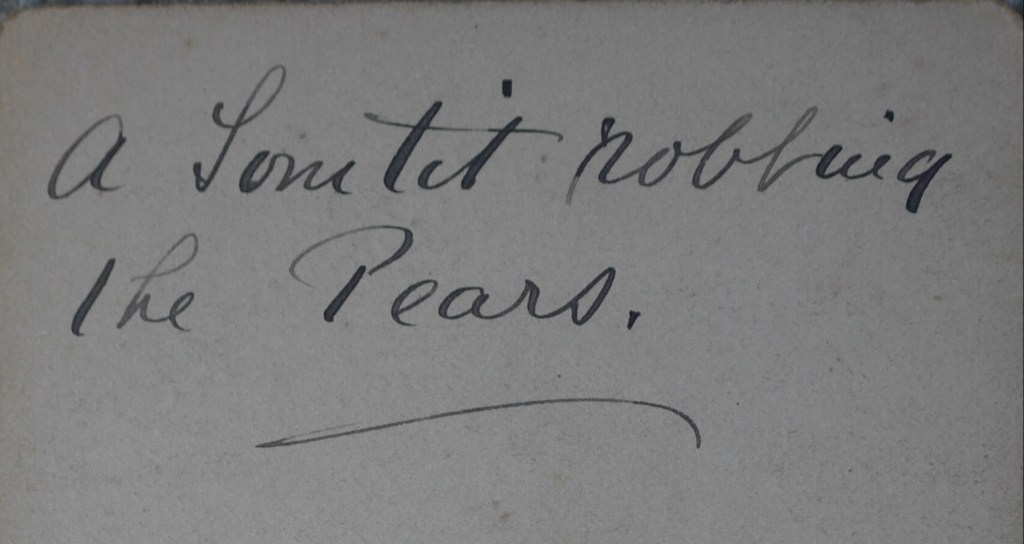
Following “The Wheatear” yesterday, a second stereo featuring birdlife in this blogpost-a-day series can be attributed to James Edward Ellam (1857-1920).
Evidenced by James’s familiar handwriting in ink on the verso, this stereo is titled “A (blue) tit robbing the Pears.”
The subjects stereographed by James Edward Ellam (1857-1920) during the 1890s and featured in this series of daily blogposts have been wide-ranging.
As examples of his craft, many pre-date his professional working relationship with the 3D photography giants Underwood & Underwood.
But they well illustrate the commercial possibilities offered by stereography for consumption by late-19th and early-20th century audiences.
For example, a few years ago, I saw an Underwood & Underwood boxed set for sale titled “Birds Nests Through the Stereoscope” copyrighted and dated to 1899.
Today and tomorrow, birdlife as seen through James’s 3D camera seen at close quarters takes centre-stage.
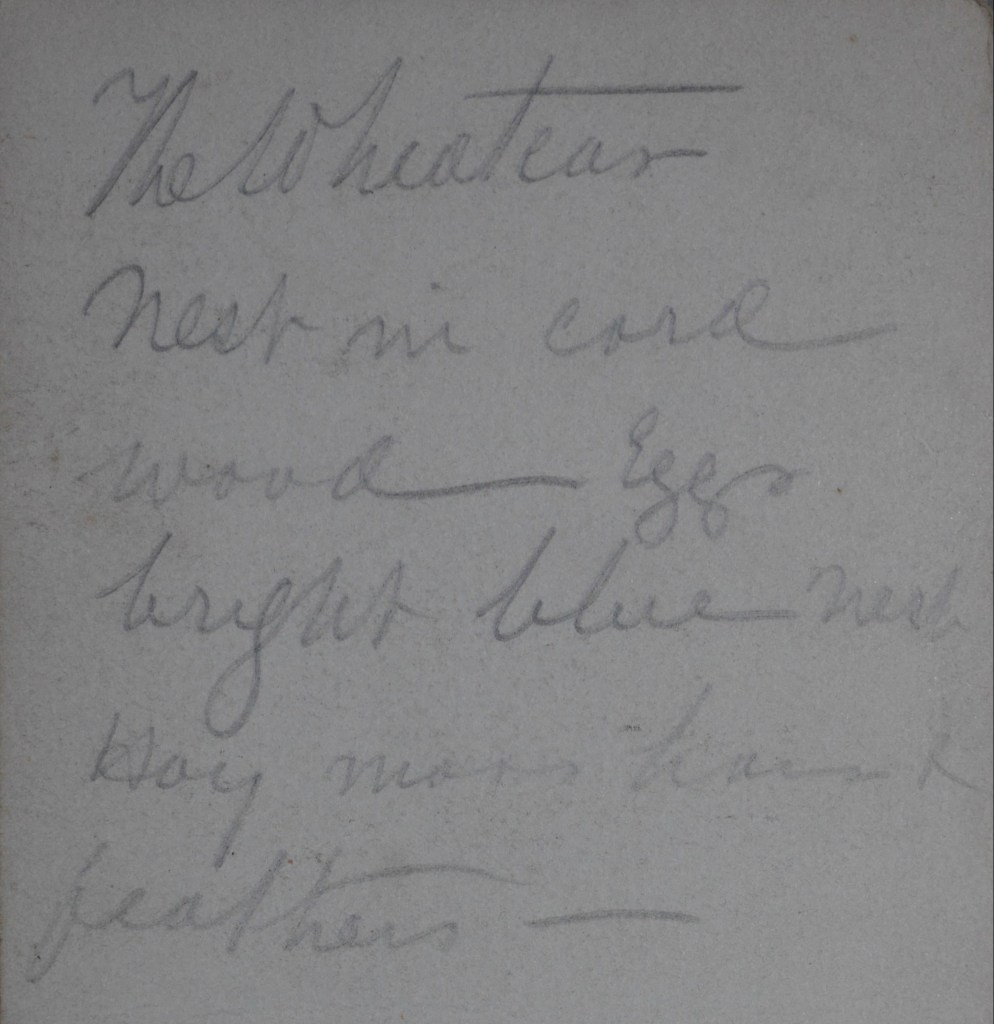
First up is a study of “The Wheatear” as it is described on the verso of the card in pencil in James’s hand.
A small ground-dwelling robin-sized bird, it is billed as “one of the world’s great migrants” (RSPB Pocket Guide to British Birds by Simon Harrap 2012).
The description on the card verso also includes details about the location of the Wheatear’s nest (“? wood”), the colour of its eggs (“bright blue”) and the nest materials used (“hay mixed with feathers”).
Looking at examples of male and female Wheatears, the bird featured here most closely resembles the markings of a female.
Through the stereoscope, the scene comes to life in 3D and the viewer appears to be almost within touching distance of its subject.
However, to my eyes, the bird’s legs are hard to discern, making it appear suspended in mid-air as if stuffed or separately edited into the shot.
Whether James was a keen bird-watcher, or this stereo was a technical challenge that he set himself, the result is slightly unnerving.
The relationship between James Edward Ellam and the Underwood & Underwood company (U&U) flourished from 1897 when he stereographed Queen Victoria’s Diamond Jubilee Celebrations.
Five years later, his exclusive 3D portrait of King Edward VII and Queen Alexandra in their coronation robes provided U&U with both a press photo and a highly commercial stereocard.
Captioned “St. Anton” in James’s hand, it features a view of a town in the Austrian Alps known the world over as a legendary ski resort.
However, it was only towards the end of the 19th century, when alpinists used a new railway to reach St. Anton, that skiers were first spotted on the surrounding slopes.
Dating this stereo to the mid-to-late 1890s places it at a time of transition for St. Anton from an economy based on agriculture to one centred on tourism.
At this point in its evolution, the stereoscopic photography company Underwood & Underwood of New York and London was expanding the list of countries its customers could visit virtually via the stereoscope.
Their big idea was to publish box sets of 3D views, accompanied by maps and guidebooks, that allowed customers to travel as virtual tourists without leaving home.
Stereoscopic photographers, who could deliver high-quality views, were essential to the success of its business model.
A typical example is “Picturesque Innsbruck, the capital of Tyrol, Austria …”
By 1897, James Edward Ellam (1857-1920) had established a working relationship with the stereoscopic photography company Underwood & Underwood (U&U) and had relocated from Yorkshire to Essex.
From his new base, he was well placed to pursue his career as a photographer servicing newspapers in London’s Fleet Street with images.
Identifying the work of early press photographers such as James is difficult.
They were rarely credited individually by name and their work, in James’s case for 3D companies like U&U, was covered by a catch-all credit such as “taken from a stereograph by Underwood & Underwood.”
So I was delighted to come across these two stereos among the cache of 30 about which I have written this month.
There is no “J.E. Ellam” credit present or a title sticker featuring his distinctive handwriting, so there is only circumstantial evidence of their presence in this cache to point to James as their author.
Both stereos show signs of ageing, but their 3D qualities are largely intact.
They are presented on different coloured cards of light grey and black, both of which we have seen during this blogpost-a-day series.
The 3D images relate to what was billed by The Scotsman newspaper as “The Great Gale” which swept across Scotland in mid-October 1898.
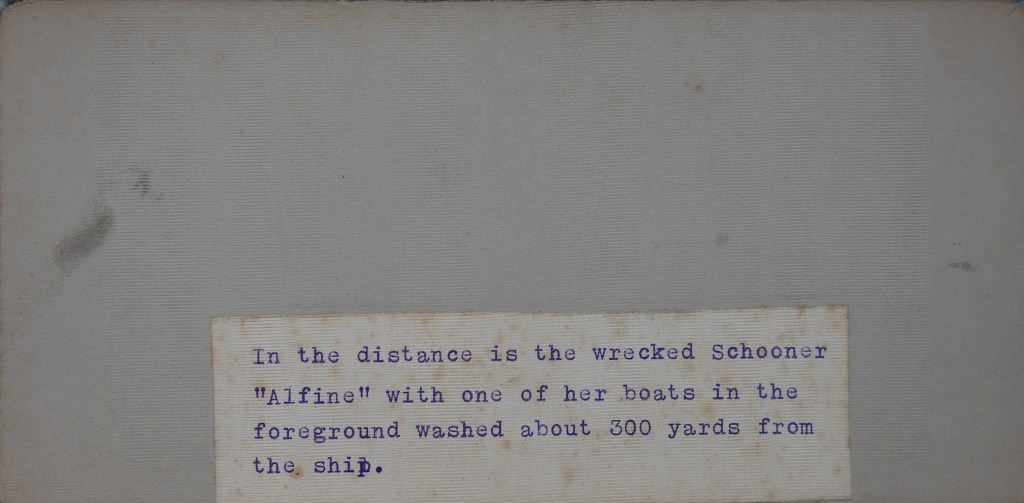
I’ve captioned them below with the text typed onto their versos.
This style of caption will be familiar to anyone who has encountered press photographs, particularly in the pre-digital era.
They provided a sub-editor with information to enable an image to be correctly captioned.
In this case though, the different spellings used for the Norwegian schooner would have triggered a double-check to verify it was, in fact, Alfen.
Whether James supplied these stereos to Underwood & Underwood, or he was working in a freelance capacity, is not known.
However, their existence provides an insight into the cross-pollination between 3D photography and the illustrated press either side of 1900.
“The Great Gale” was certainly a newsworthy story as is evidenced by The Sketch which published a photo of the wreck of the Alfen (2nd November, 1898), which was published without credit.
From The Sketch (2nd November 1898).
So far, the locations visited by James and featured in this series of blogposts have been confined to England, Scotland and Wales
But as we will see in tomorrow’s post, stereoscopic photography companies like Underwood & Underwood were interested in helping their customers travel the world in 3D.
This blogpost-a-day series about a cache of stereos attributable to James Edward Ellam (1857-1920) has so far revealed a wide range of subjects from cathedrals and castles to floods and snow.
But today’s stereo marks a change and is an example of the sort of comic or sentimental 3D cards that were hugely popular with late-Victorian and Edwardian audiences.
Titled “Darby & Joan,” two children dressed in Scottish-themed tartan outfits appear as the hero and heroine of the mid-18th century ballad by Henry Woodfall.
The term “Darby & Joan” has come to signify a loving, virtuous married couple, so the use of young children to convey its theme adds a twist that was presumably intended to increase its commercial appeal.
Looking at the faded title written in ink, it strongly resembles James’s handwriting indicating, as with other stereos from posts this week, that he may have been the stereographer responsible.
As we learned yesterday, James lodged with fellow photography enthusiast Henry Bradley, his wife Dorothy and their five children in Yarm, Yorkshire and then when they moved to Dunmow, Essex in 1896 (“The Bradley Family” – 21st September 2023).
Given this domestic arrangement, it is possible that two of the younger Bradleys posed as models for this 3D portrait.
As evidence for this, it’s noticeable that a particular style of shoe with an ankle strapping is present in both the Bradley family portrait and “Darby & Joan.”
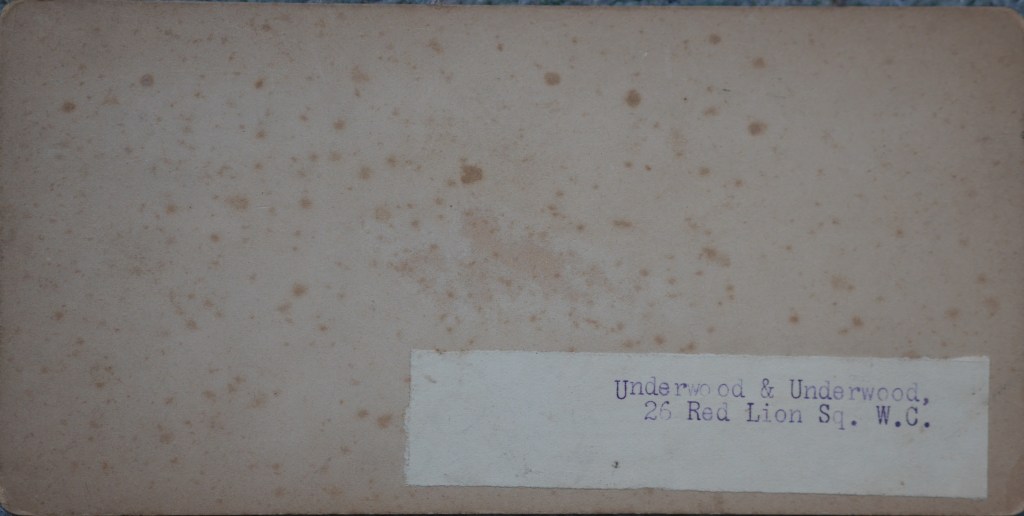
Further evidence of James’s embryonic relationship with the stereoscopic photography company Underwood & Underwood (U&U) is revealed by the verso.
It boasts a typed sticker featuring the Underwood company’s London address from the mid-1890s of 26 Red Lion Square.
Verso of “Darby & Joan” featuring Underwood & Underwood sticker.
Here, a little company history is helpful.
U&U began life in Ottawa, Kansas in the early 1880s, but as the company expanded beyond America, an office was opened in Liverpool in 1890 to handle its transatlantic trade.
By the mid-1890s, 26 Red Lion Square in London was the hub of its UK operation as the company developed new markets for its 3D products in Europe and beyond.
Whether James submitted “Darby & Joan” for publication by U&U, the card’s verso indicates a connection with the company at some point in its life.
James’s relationship with the Underwood company was certainly up and running by June 1897 when U&U published his views of the Thanksgiving Service for Queen Victoria’s Diamond Jubilee.
And with London’s Fleet Street demanding photos to illustrate its news stories, James was well placed to help service that demand.
During his years living and working in the small Yorkshire town of Yarm, James Edward Ellam (1857-1920) lodged with Henry Bradley and his family who ran its tailors and outfitters.
Whilst James was Honorary Secretary of the nearby Stockton Photographic Society, Henry was a Vice-President.
In July 1896, the local press reported that James and Henry would be leaving the society and the district.
Their joint destination was Dunmow in Essex where the Bradleys took over another outfitters’ business and James again lodged with the family.
It was a domestic arrangement that lasted until the photographer’s death in 1920.
With London only 30 miles away by train, James was able to pursue his photographic ambitions during the week before returning to Dunmow at weekends.
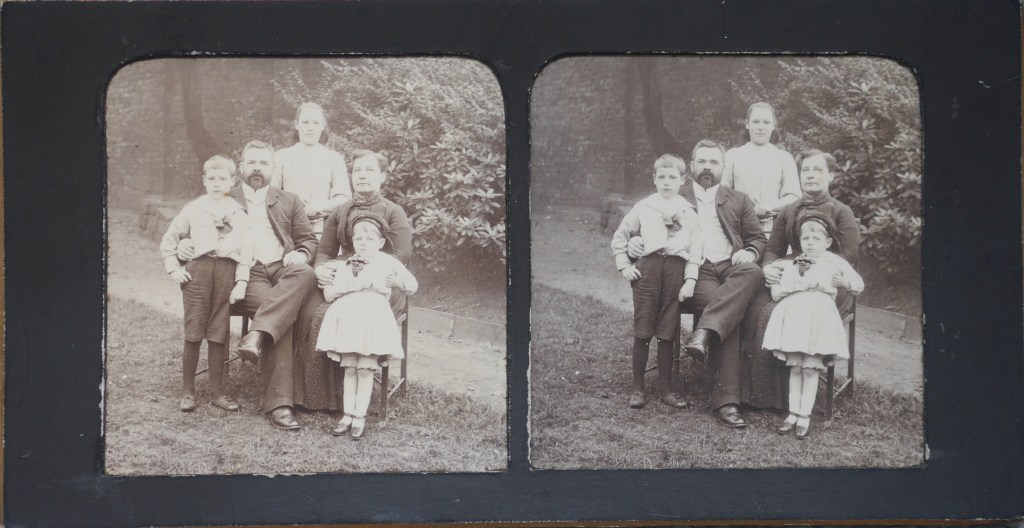
Today’s uncaptioned stereo, taken from a cache of 30 3D cards by him that are the subject of this blogpost-a-day series, almost took my breath away when I viewed it for the first time.
If features an unnamed family group, posing outdoors, in which I recognised the bearded figure of Henry Bradley (1852-1937).
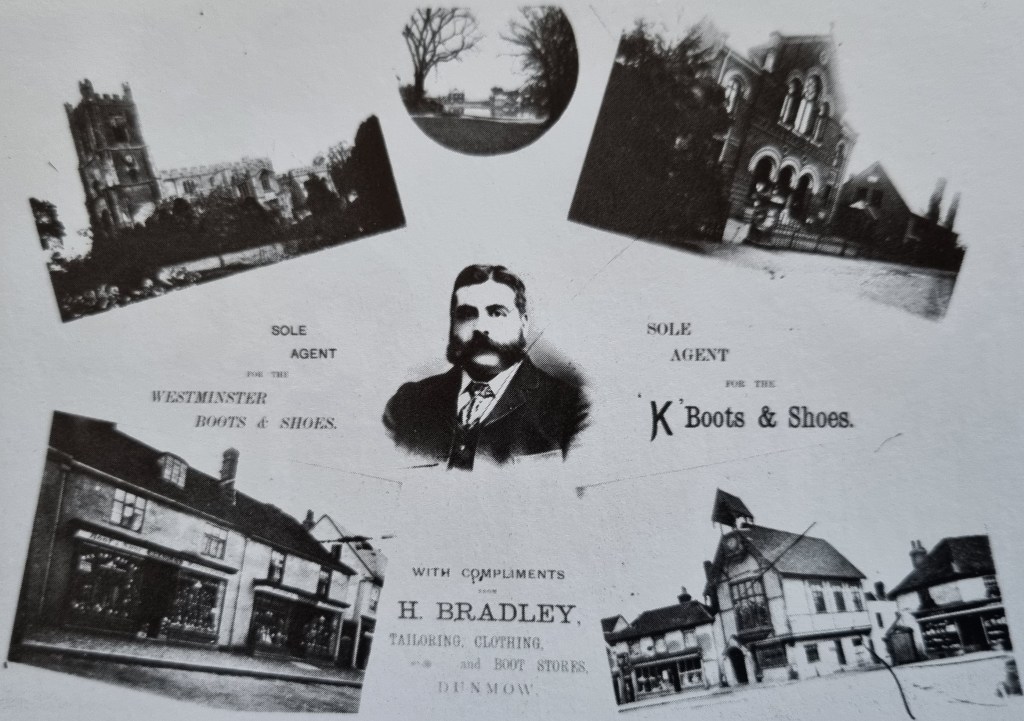
Researching the Bradley family’s years in Dunmow, I came across a postcard Henry produced to promote his new business that included a self-portrait at its heart.
Promotional postcard featuring Henry Bradley from Dunmow in Old Picture Postcards by Stan Jarvis (1986).
Using census records, I learned more about the Bradley family.
The woman to his right in the stereo is likely to be his wife Dorothy (1853-1931).
They are pictured together with three children.
Their eldest Clare Isabel was born in 1884 followed by Ellinor Pauline (1886), Feodora Alice (1887) and Marguerita Annie (1889).
The 1911 England Census records that another child had died by that point.
Parish records for Yarm reveal that a child named Rita Bradley, aged “24 hours,” was buried on 18th July 1883, so perhaps their last-born Marguerita was named partly in tribute to her sister.
Given this biographical information, and if the girl standing between her parents is their eldest, Clare Isabel, the stereo would appear to date from around the time the family left Yarm and moved south to Essex.
Whilst the stereo has no credit or markings on its verso, it would hardly be stretching credibility to think that it was taken by their lodger, James Edward Ellam.
More significantly, it was among the cache of 30 stereos which, I have recently learned, came into my hands via a donation to a charity … in Essex.
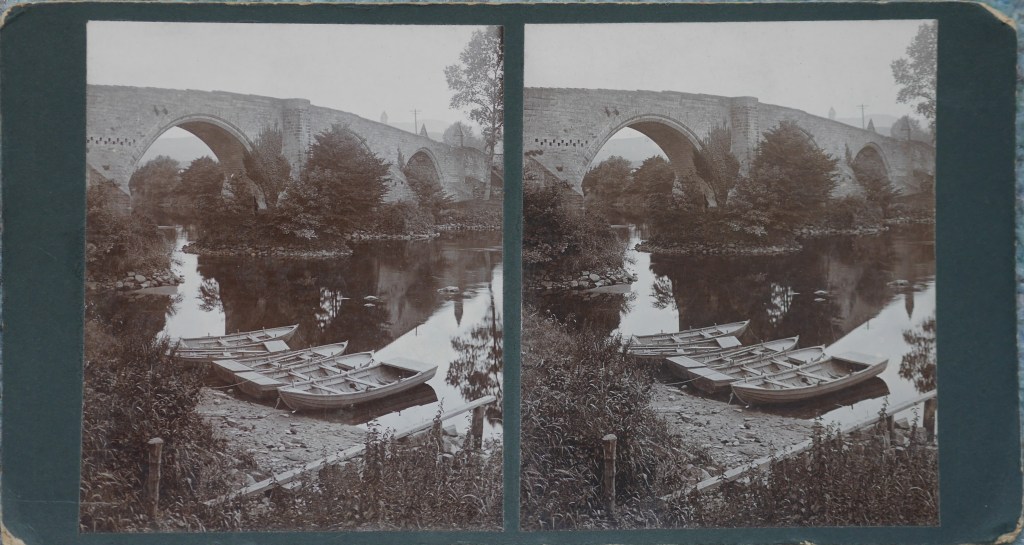
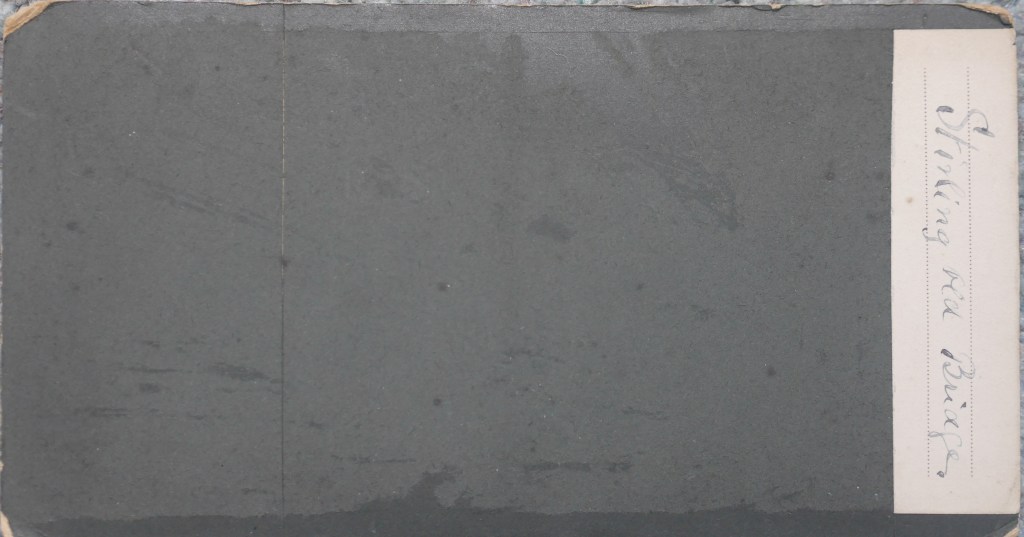
Looking through a cache of 30 undiscovered James Edward Ellam stereos from the 1890s, a eureka moment occurred when I saw this stereo titled “Fountains Abbey.”
There, along with James’s familiar handwriting recordinging the stereo’s title in ink, was a pencil addition in his hand of “Underwood & Underwood.”
Those who’ve been following my daily blogposts will be aware of James’s stereos for the Underwood company (U&U) at the celebrations in June 1897 to mark Queen Victoria’s Diamond Jubilee.
What this stereo offers is evidence suggesting he had an embryonic relationship with U&U in the preceding years.
Whether he thought this view of Fountains Abbey was worthy of publication, and perhaps even sent it to them for consideration, is not clear.
His choice of a light-coloured card is perhaps significant as it mirrored that being used by the Underwood company in the mid-1890s.
By the summer of 1896, James was sufficiently confident about the quality of his photography, stereography in particular, to leave Yarm and Yorkshire behind.
His ultimate destination was London where U&U and other leading stereo companies were based.
In the absence of a “J.E. Ellam” credit or any of the bordered stickers seen in previous stereos by him, we are left with a sample of his distinctive handwriting to verify its provenance.
As to the composition of the stereo, it is almost painterly with the use of reflections, adding to the sense of stillness created.
By placing the rowing boats in the immediate foreground along with the wooden fence post and row of nettles, the viewer’s eye is led slowly towards the bridge itself in a classic example of stereo composition.
The worn away edges of the card suggest it was a much-used and perhaps much-appreciated example of his 3D craft.
As we will see in tomorrow’s post, around this time, James Edward Ellam’s 3D photography came to the attention of the American stereoscopic photography company Underwood & Underwood, who opened an office in London in the mid-1890s.
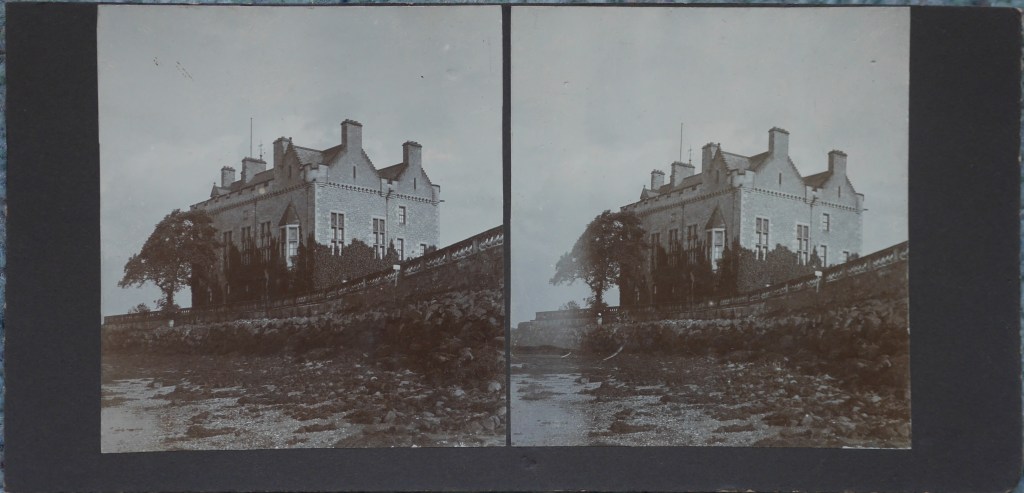
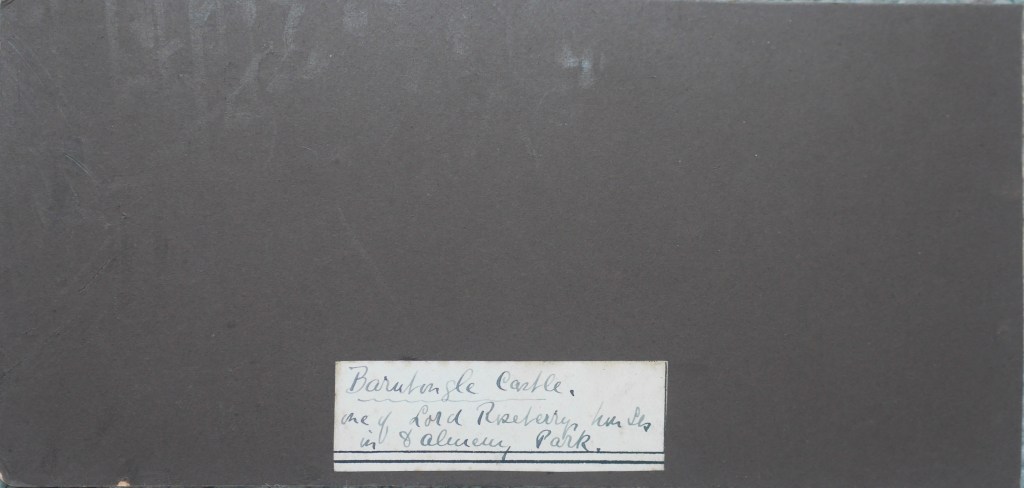
After yesterday’s visit to the Chapel Royal at Holyrood in Edinburgh, our stereoscopic tour of Scotland continues in the company of photographer James Edward Ellam (1857-1920).
Today’s location is Barnbougle Castle, a 13th century structure rebuilt in the 1880s by the 5th Earl of Rosebery, a Prime Minster of the United Kingdom (1894-1895).
Rosebery wanted Barnbougle to be a retreat for study and contemplation, hence it boasted six libraries, a single bedroom and a barrel-vaulted Banqueting Hall where he practised his parliamentary speeches.
Today’s stereo is titled “Entrance to Chapel Royal at Holyrood” and takes us to another set of abbey ruins.
This time, we’re in the grounds of the Palace of Holyroodhouse, the official residence of King Charles III in Edinburgh and home of Scottish Royal History.
Though there is no “J.E. Ellam” credit in evidence, the verso features the distinctive handwriting of James Edward Ellam (1857-1920) whose amateur stereos from the 1890s are the focus of this blogpost-a-day series.
As with “Furness Abbey and “Whitby Abbey” amongst others in this recently discovered cache of his work, James uses part of the surviving structure to act as a frame for the 3D view he is constructing.
In this instance, the weather has co-operated sufficiently to allow him to capture the effect of shadows on the ground in the middle distance.
It’s a timeless view that has been captured by many artists and photographers down the years and continues to be a popular tourist attraction.
The only indication that this stereo was taken in the mid-1890s are the two women in their full-length dresses looking at the memorials on the far wall.
Today’s stereo by James Edward Ellam (1857-1920) taken from a recently-discovered cache of his work is the last that boasts a “J.E. Ellam” sticker on its verso.
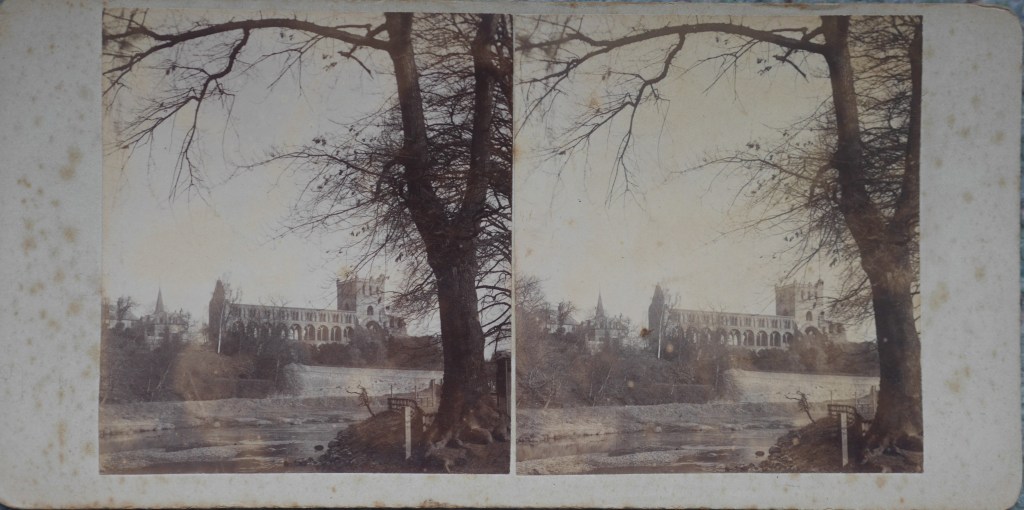
Reflecting his passion for stereographing religious buildings, it features Jervaulx Abbey in North Yorkshire, one of the largest privately-owned Cistercian buildings in England.
Owned by the Burdon family since 1971, its ruins are only around 30 miles from Yarm where James lived from around 1890 to 1896 when he left the town.
As a stereo, it is particularly successful.
The large tree along with the fence and post in the immediate foreground help provide depth and lead the eye to the River Ure with its gently-sloping banks.
This acts as the visual prelude to the abbey ruins in the distance and the buildings to its left, visible through the undergrowth.
Though it’s hard to be certain, the ground appears to be covered in frost or a light dusting of snow suggesting a wintery excursion to this location.
From this point, the attribution of the remaining 14 cards in this series to “J.E. Ellam” involves detective work that I look forward to sharing.
We’re now at the September mid-point of this blogpost-a-day series on my recently discovered cache of amateur stereos by the press photo pioneer James Edward Ellam (1857-1920).
With this particular stereo, titled “Forth Bridge showing the tubular construction,” I recognised a familiar view.
The Forth Bridge, spanning the Firth of Forth and linking Fife and Edinburgh in Scotland, is the oldest multispan cantilever railway bridge in the world.
Today it is a UNESCO World Heritage Site and has been a popular subject with photographers since it opened in 1890.
Looking at the “J.E. Ellam” sticker on the verso of James’s stereo together with its separate handwritten title pasted onto a black card, a date in the mid-1890s suggests itself.
What is interesting is that commercial companies produced stereocards of this exact same view around this time.
For example, James’s stereo is remarkably similar in conception to one sold by Underwood & Underwood (U&U) of New York and London.
Using its Strohmeyer & Wyman imprint, U&U’s card was captioned “Looking Through the Great Forth Bridge (8,300 feet long), Scotland.” It was copyrighted and dated 1896.
The significant difference in the Strohmeyer & Wyman/Underwood & Underwood version is that an elderly gent has been positioned to the right of frame to give a sense of scale.
Also, its camera has been positioned further back than James’s allowing more of the tubular steelwork to be visible.
As to James’s own relationship with Underwood & Underwood, it appears to have crystallised during celebrations to mark Queen Victoria’s Diamond Jubilee in the following year of 1897.
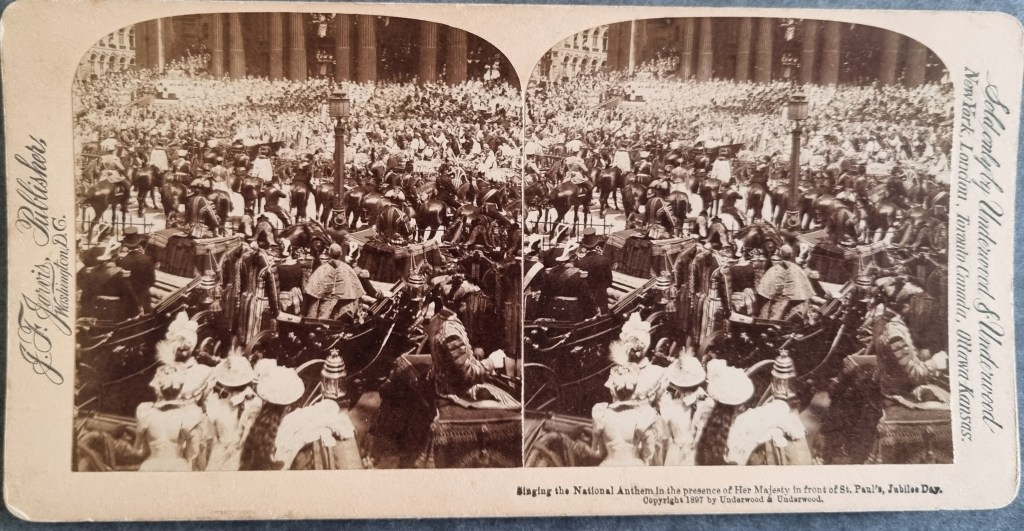
On 22nd June, he and his stereoscopic camera were positioned outside St. Paul’s Cathedral in London during the Thanksgiving Service to mark the monarch’s 70 years on the throne.
A number of his views were produced by U&U, this time using its J.F. Jarvis imprint.
And a print taken from another of his stereos was published by The Graphic in its Diamond Jubilee Celebration Number (28th Jine 1897) and credited to U&U.
However, as we will see in future posts, there are indications from other Ellam stereos in my recently discovered cache of 30 of an embryonic relationship with the Underwood company in the years before 1897.
In this case, James’s “Forth Bridge” stereo suggests that he was well aware of the sort of 3D images that would have a wider commercial market.
Given the opportunity, he perhaps thought he could successfully produce what would be required from a major publisher like Underwood & Underwood.
The beauty of viewing a series of stereos, as with these taken by James Edward Ellam, is that we’re able to view his development as a 3D photographer over several years.
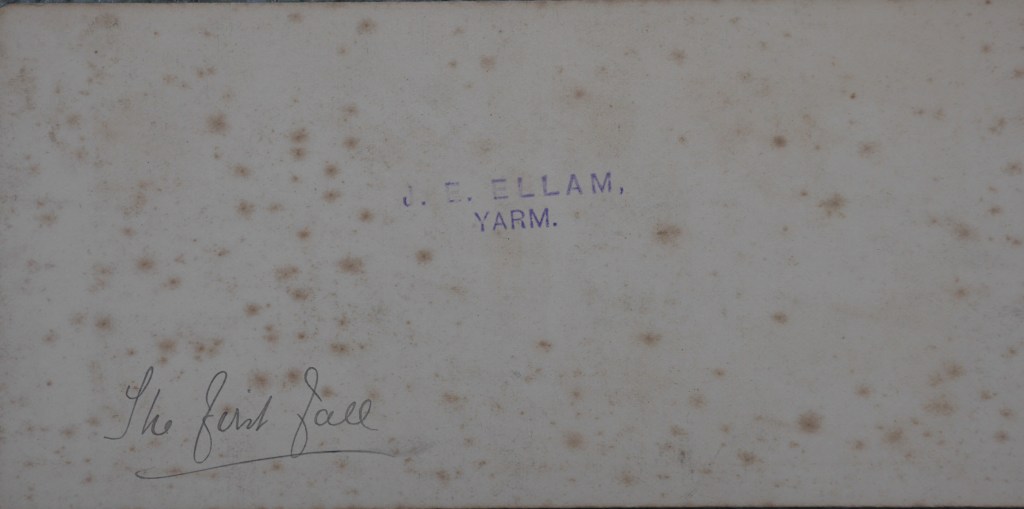
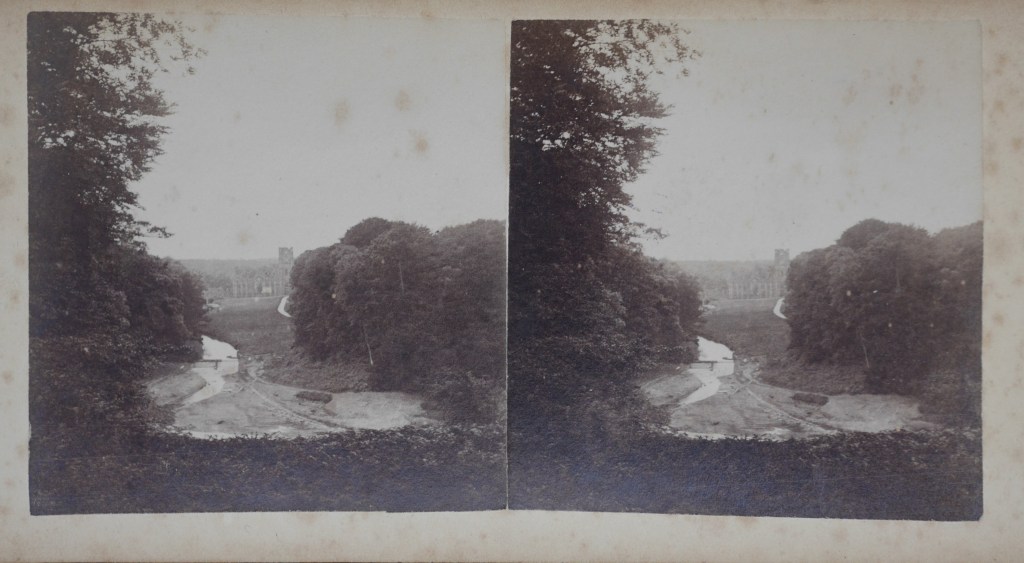
Whereas “The First Fall” (3rd September 2023) was from the early 1890s, “Winter” can be traced to a few years later.
By the middle of the decade, he had started using a vertical “J.E. Ellam” sticker on the verso and discarded from his credit “Yarm,” the Yorkshire town where he lived and worked.
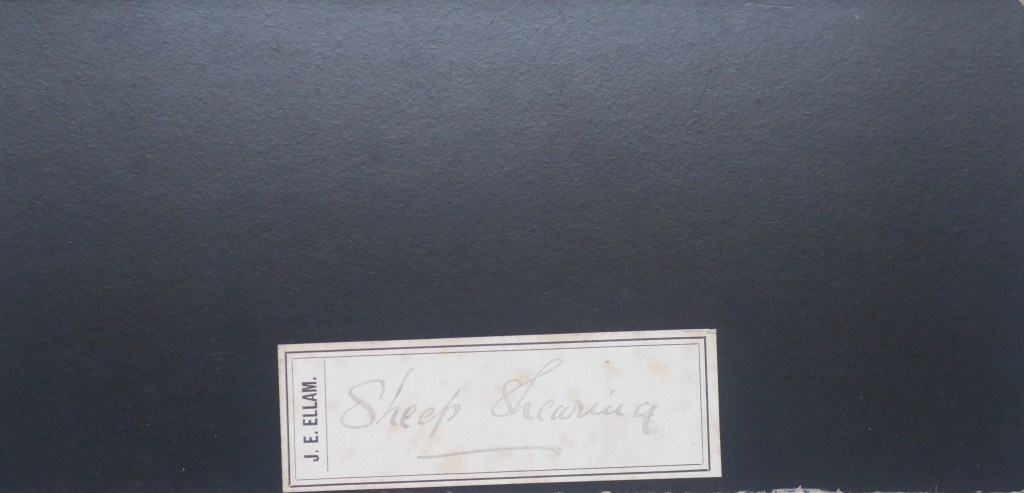
Following yesterday’s “Sheep Shearing,” he again uses a title that succinctly describes what a viewer will see.
In this case, a nattily-dressed golfer is apparently about to putt the ball towards the hole watched by a small crowd of men and boys.
In terms of the fashions on view, the majority are wearing caps, but two men on the extreme left of shot stand out because their bowler hats. One even has a bow-tie.
There is also an impressive display of golf clubs and bags.
What is significant about James’s stereo is that he recorded the game of golf at a formative moment in Britain.
During the 1890s, more and more golf courses opened, terms like “par” and “bogey” entered the language and the Ladies Golf Union was formed (1893).
Here, James has used a lighter grey card on which to mount his prints which are approximately 2.75″ x 3″.
The prints themselves shows signs of slight fading, but the overall 3D effect is still very much intact.
In today’s stereo by the press photo pioneer James Edward Ellam (1857-1920), we return to the Pictorialist style with which I began this series of blogposts (“On The Look Out – 1st September 2023).
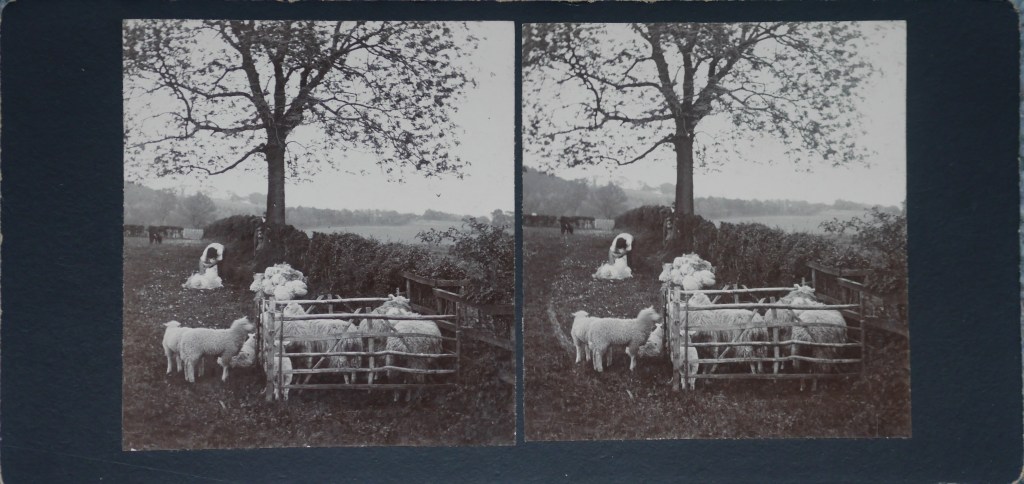
Here, James has carefully staged a familiar rural scene he’s titled “Sheep Shearing.”
In the immediate foreground, a group of sheep are enclosed in a pen made of wooden hurdles with a few waiting patiently close by.
In the middle distance, a shearer, hard at work with a set of hand clippers, is flanked by a pile of fleeces to his right at the base of a tree.
If you look closely, you will see a bearded man together with a young child hiding behind the tree, but failing to avoid being caught on camera.
Again, James has used a black card mount and the vertical “J.E. Ellam” sticker with its handwritten title on the verso suggests this stereo was taken in the middle 1890s.
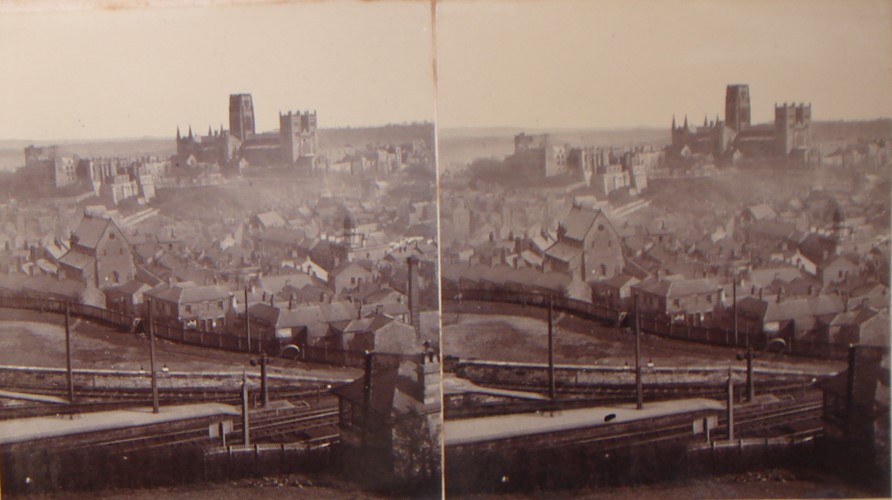
James Edward Ellam was still living and working in the Yorkshire town of Yarm when he photographed the Cloisters of Durham Cathedral in 1894.
As one of the finest examples of Norman architecture in England and with its links to St. Cuthbert and the Venerable Bede, Durham Cathedral must have been high on James’s list of must-visit locations.
When I saw the subject of this particular stereo for the first time, I was reminded of another of James’s stereos that I had seen during my PhD research project.
“View of Durham from the railway station” by J.E. Ellam. Courtesy of Stephanie Richardson.
It’s possible that he took both stereos during the same visit. Thirty miles from Yarm, Durham was easily reached by train.
It seems that the view of Durham Cathedral from the railway station was also a favourite of his.
I located a lantern slide version of the same scene, marked “Yarm 6” and credited to “J.E. Ellam,” in the collection of Shropshire Museums in Ludlow. How and why it came to be there is not known.
“View of Durham from the railway station.” Glass lantern slide. Shropshire Museums. SHYMS: P/2005/1215
The numbering “Yarm 6” is interesting as it suggests it was part of a lantern slide show, perhaps featuring a sequence of locations close to Yarm such as Durham.
Returning to “The Cloisters, Durham Cathedral,” James’s stereo makes effective use of the light which enables the viewer to appreciate the wooden ceiling with its three-dimensional decoration.
In the 1920s, the celebrated photographer E.O (Emil Otto) Hoppé (1878-1972) visited the same location and produced a photogravure print which I have seen on various websites.
Hoppé might have enjoyed better weather conditions than James as he managed to capture the shadows of the arched windows falling along the length of the stone corridor.
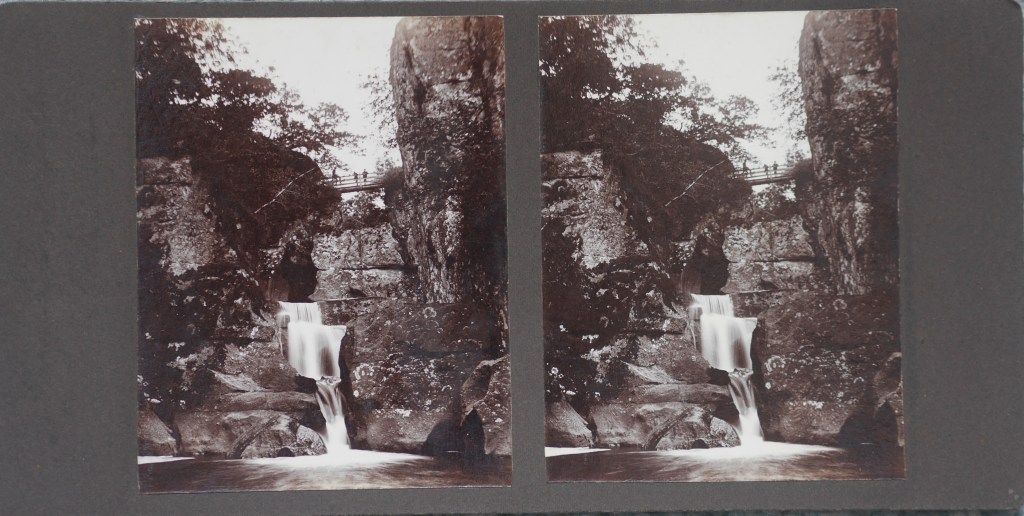
When James visited during the 1890s, it boasted an iron bridge that had been built two decades before for a visit by Queen Victoria.
A replacement bridge was installed in 2010, but it too had to be replaced and a new structure opened earlier this year, giving visitors access to the stepped waterfall formed by the Keltie Water.
For his 1890s stereo, James made use of the figures standing on the bridge in the far distance to give a sense of scale.
And such is the 3D effect, you can almost hear the water tumbling down the falls.
For the first time, there is no mention of “Yarm” on the stereo’s verso, and “J.E. Ellam” is used vertically on a sticker within a two-lined border where the title is recorded alongside in James’s handwriting.
Perhaps, the omission of “Yarm” signified a change in how he perceived himself as a stereographer, operating on a national rather than local level.
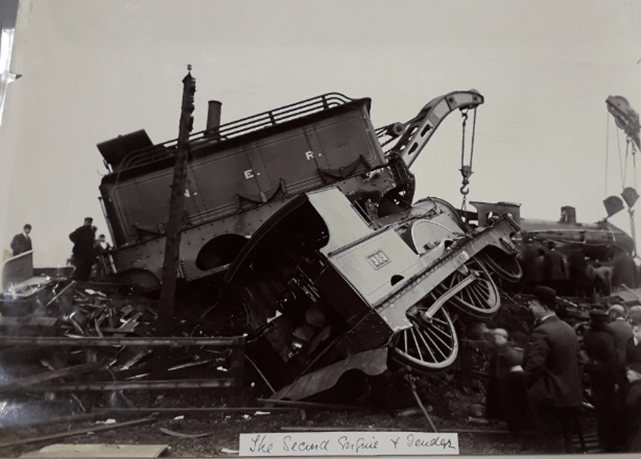
In October 1894, James produced prints as “Ellam of Yarm” taken from his stereos of the aftermath of the “Scotch Express” rail crash near Northallerton.
A few weeks later, he copyrighted images including “The Second Engine and Tender” reflecting his success in placing it with the Illustrated London News and other papers.
As we will see in future posts, the type of “J.E Ellam” sticker featured on “Bracklinn Falls, Callander” appears on the verso of a number of his stereos.
These can dated to the years either side of 1896 when he left Yarm to pursue a new career in London’s Fleet Street.
The last of the stereocards in my collection stamped “J.E. Ellam, Yarm” with a handwritten title on the verso features another example of a stereographer experimenting with 3D.
In “Rose Hill Gardens,” James has located his camera at the end of a grass pathway and positioned a child and then other figures in receding planes along its length.
The stereo effect is enhanced by the tree located in the near foreground whilst the composition effectively uses the matching white dresses and hats worn by the featured children.
The prints are again different in size. In this example, they are two-and-three-quarter inches square perhaps suggesting that yet another camera was being used.
Again, James uses black card on which to present his stereos, a style which he adopted in the following years.
Here though the images are mounted within the card rather than being pasted directly on to it.
As to location, the Historic England website features a listed building in Yarm named “Old Rosehill” so perhaps this featured a garden that was open to the Victorian public.
Today’s stereo, attributable to the pioneering press photographer James Edward Ellam (1857-1920), was one that I immediately recognised.
It captures a significant news story in the small town of Yarm where he lived and worked in the first half of the 1890s.
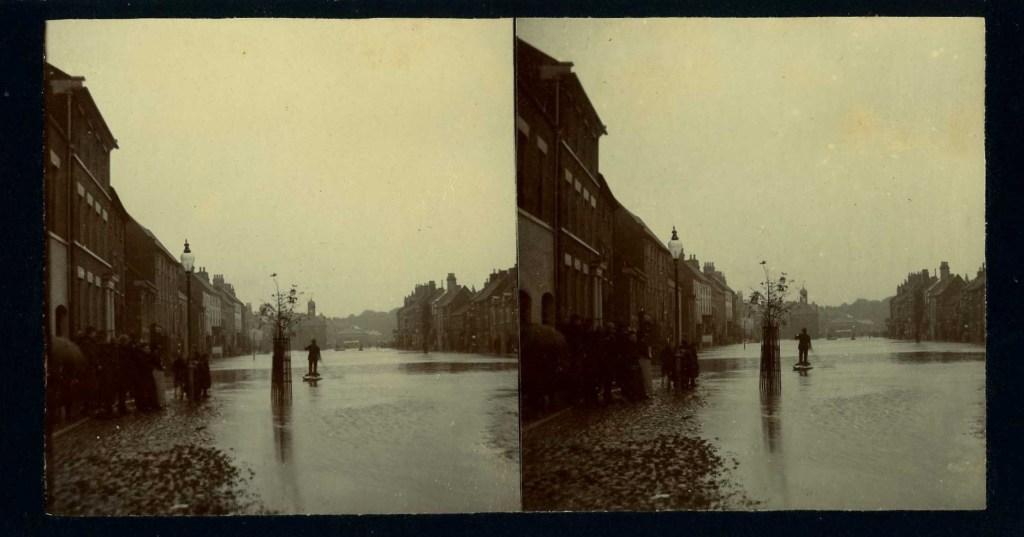
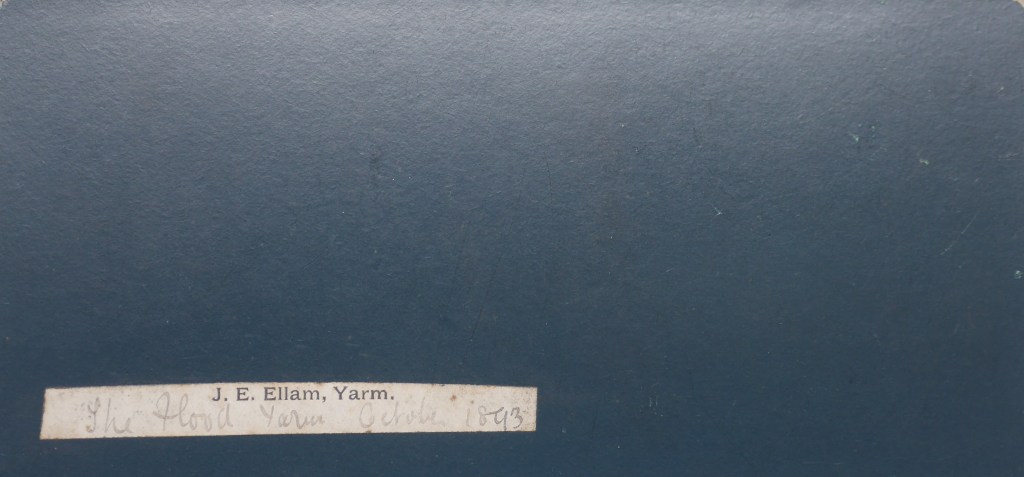
Dated “October 1893,” the stereo shows the effect of the nearby River Tees bursting its banks, inundating the High Street and its distinctive Town Hall.
It was a scene familiar to me from another stereo with the same caption that I saw during my PhD research in 2018.
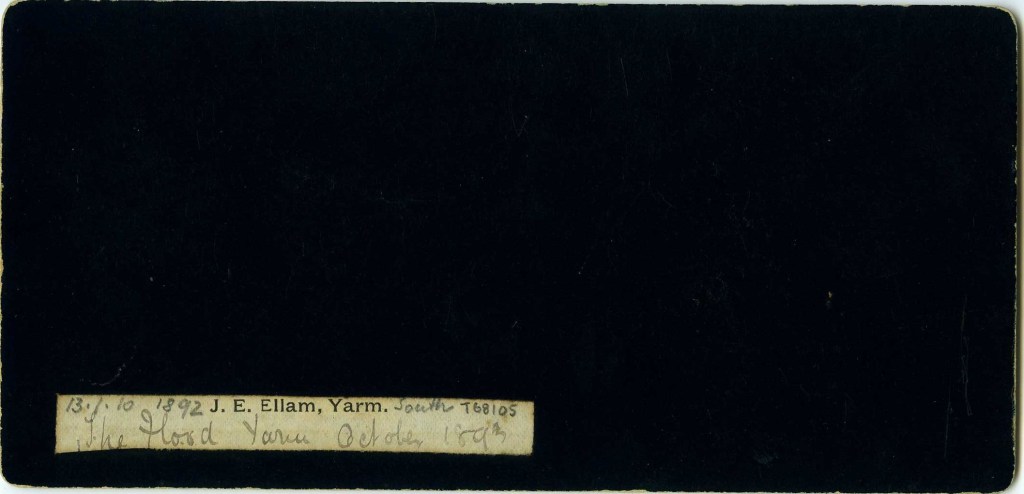
That Ellam stereo (T68105) is part of the collection at Preston Park Museum located a few miles from Yarm.
Its dating, I now realise, has been mis-recorded at some point as “1892” because the final figure on its caption in James’s hand looks at first glance more like a “2” than a “3.”
This stereo shows the flooded High Street from the southern end of Yarm with the Town Hall visible in the far distance.
In the middle distance, someone appears to be paddling towards the camera in a small craft.
The “J.E. Ellam, Yarm” stereo now in my collection and taken from the northern end of the town captures a similarly desolate scene.
According to the Town Hall clock, it is shortly before a quarter past four in the afternoon though the flooding might have caused it to stop working.
Having blogged so far about James’s amateur stereos of beauty spots and posed scenes, “The Flood, Yarm. October 1893” marks a significant moment in his photographic life.
For the residents of Yarm, the River Tees bursting its banks and flooding the town and the surrounding area was a frequent occurrence, most notably in 1881, creating headlines in local newspapers.
Photographically, James makes good use of the reflections on the water capturing the Town Hall’s arches.
He also noticed another intrepid soul on the water, this time to the right of the building , who appears to be piloting a cart down the middle of the flooded street.
In the far distance, you can make out a few figures taking in the scene from a slightly elevated position.
As a stereo, it certainly captures the reality of flooding with the river’s eddies rippling the water to the left of the Town Hall building.
In addition to capturing the scene as a photographic observer, the flood would have affected James personally as both his home and work place were on Yarm High Street.
Looking at his subsequent career as both a royal stereographer and news agency photographer servicing Fleet Street, this stereo from 1893 looks to be a pivotal moment.
In this example, a number of different flower and shrub varieties are visible, notably hydrangeas in pots, fuchsias towards the back and a resplendent lily in the top right-hand corner.
Stereos produced by commercial companies during this period featuring similar subject matter were sometimes hand-tinted to show off the rainbow of colours on display.
The most noticeable change in this Ellam stereo is the slightly larger size of print used suggesting a change of camera.
Here it’s a quarter of an inch larger than the first three examples about which I’ve blogged.
Judging by the verso stamp and handwriting combination, this time in pencil rather than ink, all four date from the early 1890s.
Whether it’s the larger sizing or other factors, “Triangle Greenhouse” appears to be a less successful stereo with, for example, some of the petals in the foreground being slightly out of focus.
Experimentation might be one explanation for this during a period when James was gaining experience of working with the stereoscopic format.
The where regarding this stereo is not known, but in any part of Britain, the arrival of the first snow each year marks a significant moment in the weather cycle.
Again, the prints are sized 3″ by 2.75″ and he used a light-coloured card on which to present his stereo.
Photographically, James set himself a technical challenge to capture a 3D black and white scene in black and white.
He achieved this using a section of fencing in the immediate foreground to provide a visual trigger.
But it’s in the stereoscope that the view really comes alive with the delicate snow-covered branches caught hanging in mid-air, apparently defying gravity.
Founded in 1132, Fountains Abbey was a casualty of Henry VIII’s Dissolution of the Monasteries (1539) after which the estate was sold, remaining in private hands until the 1960s.
Since 1983, the site has been owned by the National Trust and, together with the adjoining Studley Royal Water Garden, is now a UNESCO World Heritage site.
As James’s stereo well illustrates, “The Surprise View” is the climax of a walk around water gardens that were created more than 200 years ago.
Glimpsing the abbey ruins in the distance was designed to provoke a sharp intake of breath from visitors as they came across it as it does today.
What is noticeable in James’s 3D version is the lack of water on view when compared with a contemporary photo taken at the same spot.
Victorian stereos and Edwardian postcards featuring “The Surprise View” show the same water level as that above, so why might it be absent in James’s version?
A couple of explanations spring to mind.
Perhaps the effect was caused by a severe summer drought (trees framing the view are visibly in leaf) or, alternatively, maintenance work was underway that led to the water garden being drained.
Either way, it suggests that even at this point in his photographic career, James had an eye for the unusual news angle, even when contemplating a vista that would have been familiar to other Victorian photographers.
Throughout September, I’ll be blogging about a series of stereocards that I recently purchased as part of my ongoing research into the influence of 3D on early press photography.
The significance of the cards I’ll be looking at is that they can be attributed to James Edward Ellam (1857-1920), an amateur stereographer from Yorkshire who enjoyed a successful career in London as a news agency photographer servicing Fleet Street.
He is best-known for his stereos for the Underwood & Underwood company of King Edward VII & Queen Alexandra in their Coronation robes, King Edward with his grandchildren at Balmoral (both in the National Portrait Gallery, London) and a set featuring Pope Pius X at the Vatican in Rome.
As there are 30 of his amateur stereos, I thought I would write a blogpost-a-day this month about each of the cards.
In the process, I hope to shed further light on a period of James’s career when he was making the transition, like other aspiring press photographers, from amateur to freelance/professional status.
The earliest cards date from the first half of the 1890s, a period when he was living in the Yorkshire town of Yarm and working as a chemist’s assistant for Strickland & Holt on the High Street.
Principally a wine merchants, the business (established in 1854) also offered photographic services including developing negatives and the use of an outdoor studio.
By this point, James was Secretary of the Stockton Photographic Society. It had around 60 members and its speciality was stereoscopic photography, so these stereos can be seen within the context of an amateur practising his craft.
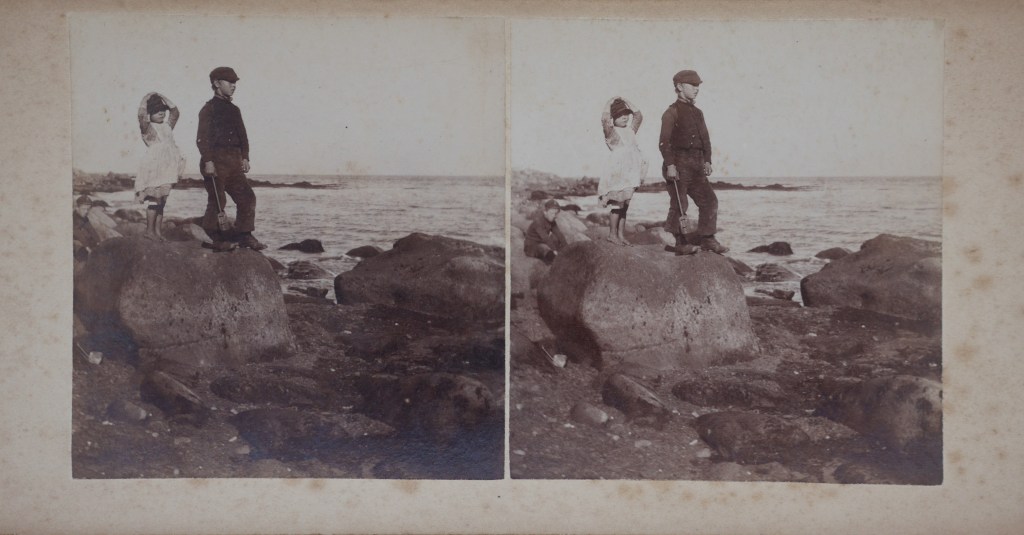
The first stereo boasts a stamp on its verso – “J.E. Ellam, Yarm” – and a handwritten title and location – “On the look out. Runswick Bay. ”
The handwriting with its extravagant flourishes was familiar to me from examining various copyright forms he completed and which are now part of the National Archives in Kew.
Also familiar was the printed stamp in blue ink, which I had seen on other examples of his work in museum and private collections. This appears to be the earliest method of accreditation he used in the years prior to 1893.
As for the stereo itself, it’s a study featuring three children in a Pictorialist style that was popular during the late-Victorian period among both amateurs and professionals.
Two of the children are more prominent. Both stand on a large rock, whilst the third, seated in the background to their immediate left, seems a more reluctant participant.
As to whether the children were known to the stereographer, the image offers few clues, but the two on the rock appear to have responded to direction to help achieve the theme of “On the look out.”
The location of Runswick Bay (pronounced Run-zick) on the North Yorkshire coast meant James had journeyed about 30 miles from his home in Yarm.
As it does today, the location offered a spectacular spot for photographers with both its sandy beach and rocky headland.
As we will see in coming posts, “J.E. Ellam, Yarm” used different cameras during this period. In this example, each stereo photo measures 3″ x 2.75.” He also used a variety of coloured cards, in this case a lighter cream.
Despite being around a hundred and twenty years old, the prints are remarkably clear and there is only minimal foxing to the card.
Tomorrow: “The Surprise View. Fountains Abbey.”
If you’re new to stereoscopy, I’d recommend investing a few pounds in a Lite OWL, invented by Sir Brian May of Queen-fame, so you can view each post in all its dimensions.
This Thursday sees the start of The Open Championship, an event so sure of its status that its name makes no reference to what its openness might refer.
The oldest golf tournament in the world is being staged for the 151st time, on this occasion at the Royal Liverpool course at Hoylake.
As someone whose formative years were spent not far from Hoylake, it seems curious that this links course is not actually in Liverpool.
Rather, it’s a short ferry ride across the River Mersey on the Wirral peninsula.
For the past few weeks, this blog has had to take a back seat as a combination of a holiday break and work on a new research paper have taken precedence.
So it’s pleasing that The Open offers a link to that research paper and to this stereoscopic photograph titled “Golf” that I have recently added to my collection.
It was taken by J.E. (James Edward) Ellam, one of the stereographers involved in the development of early press photography either side of 1900.
I wrote a blog about Mr. Ellam (Press Photo Pioneer – April 28, 2023), but since then I have become the owner of 30 stereos that can be attributed to him.
“Golf” with its “J.E. Ellam” credit stamp on the verso is one these stereos.
In future weeks, I’ll be blogging about these Ellam stereos and how they further inform understanding of how an amateur stereographer from Yorkshire became a Fleet Street press professional.







































 Pressphotoman
Leave a comment