The arrival each November of red poppies and collection boxes, both physical and digital, up and down the land is a poignant reminder of wars past and present.
2025 has seen a number of World War 2 anniversaries marking 80 years since VE Day and VJ Day.
As the decades go by, fewer and fewer of the original combatants are still alive and able to bear witness to the terrible consequences of such conflicts.
So it is left to those with a familial connection to share memories of their loved ones and the sacrifices made for succeeding generations.
A year ago, Remembrance Day (11th November) fell on a Monday.
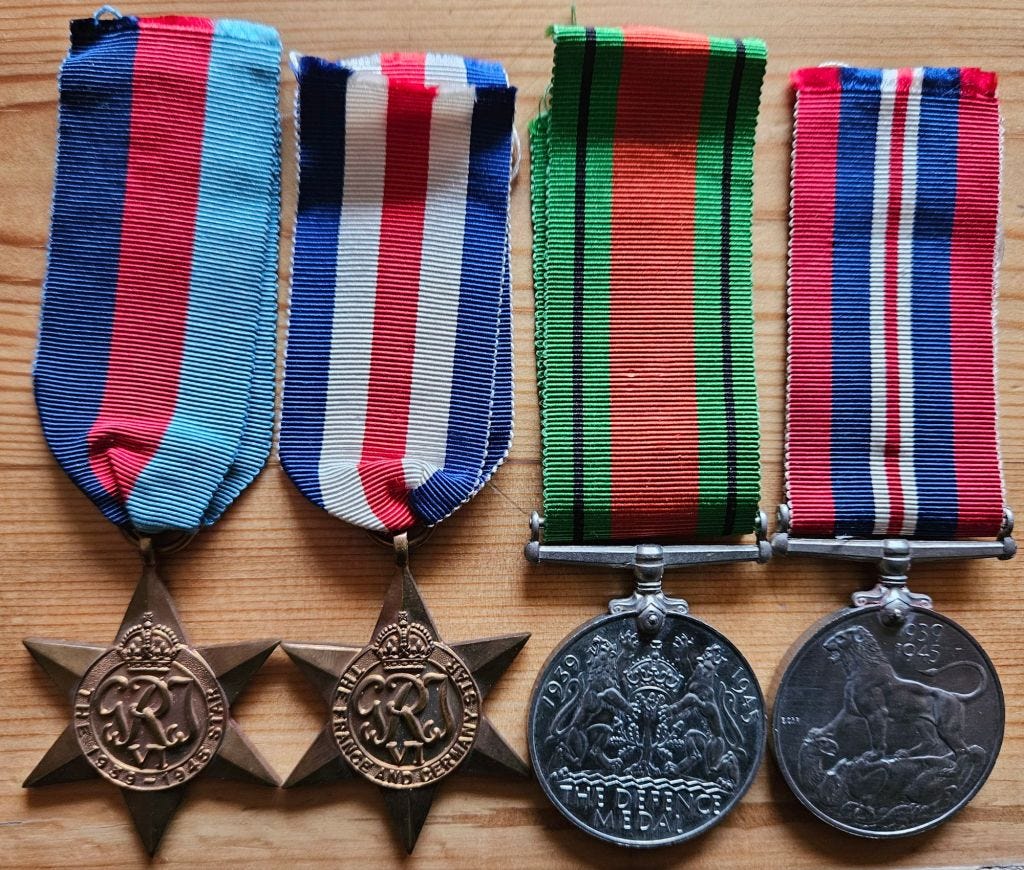
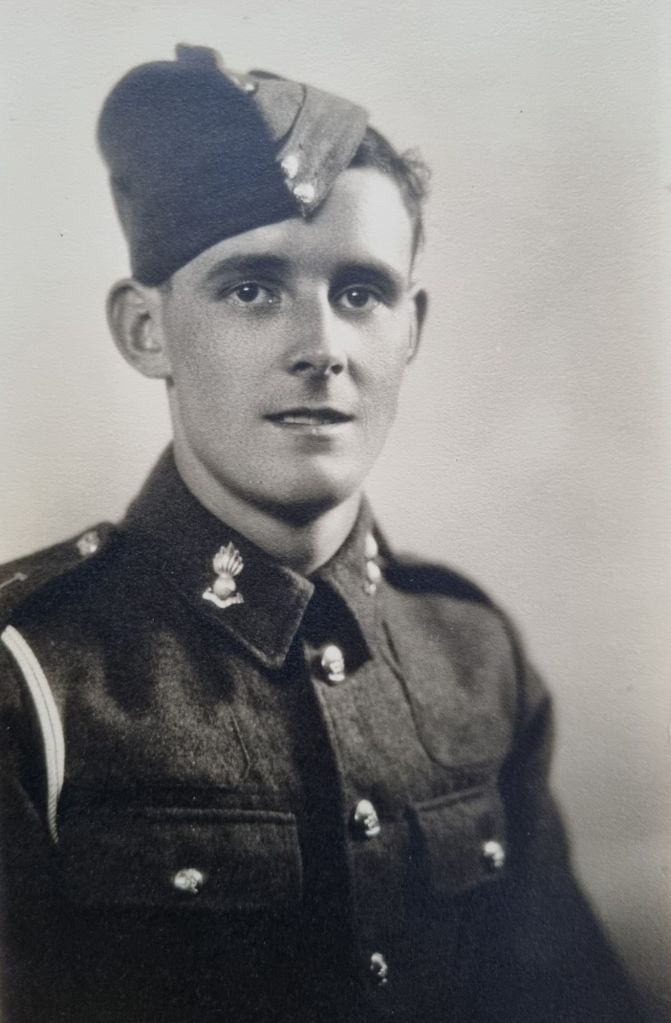
My regular Pressphotoman post then reflected on the medals awarded to Dad for his wartime service with the Royal Artillery that had lain untouched in a drawer for decades.
These covered the period from his call-up as a 20 year-old in September 1939 to his demob in February 1946.
The post also included links to two others from 2024 that centred on Dad’s album of snapshot photos from his time in Iceland (1940-1942) and following the North West Europe campaign of 1944/45 that began with D-Day.
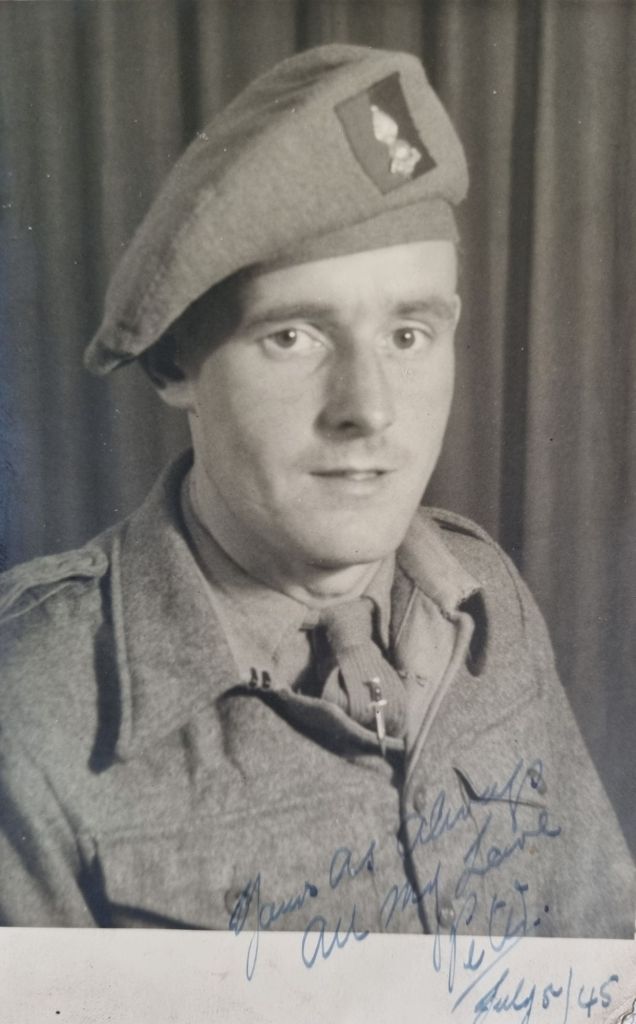
Following D-Day, his last artillery regiment reached its ultimate objective in April 1945, and Dad was then based in Germany until his ‘demob’ the following February.
It’s only in the decades since his death that I’ve discovered details of Dad’s war service, culminating in D-Day and the events that followed.
Two regimental histories proved invaluable.
‘Mike Target’ by John Mercer (The Book Guild, 1990) vividly describes the build-up to 6th June 1944.
Dad and his fellow West Yorkshiremen in 185 Field Regiment, R.A., were due to land in Normandy on D +7.
Cover of Mike Target by John Mercer (The Book Guild, 1990).
Following anxious days aboard a ship anchored off the French coast and night-time visits from the Luftwaffe, the regiment finally disembarked on D +13.
As to his part in the Normandy campaign, Dad only ever recounted one incident that illustrated the random nature of warfare.
It happened to him during a shift change from one field gun crew to another.
Within seconds of handing over his place to a colleague, Dad’s replacement was killed by incoming fire.
By the end of 1944, numbers in his regiment were so low that he and his fellow survivors were dispersed to other artillery units.
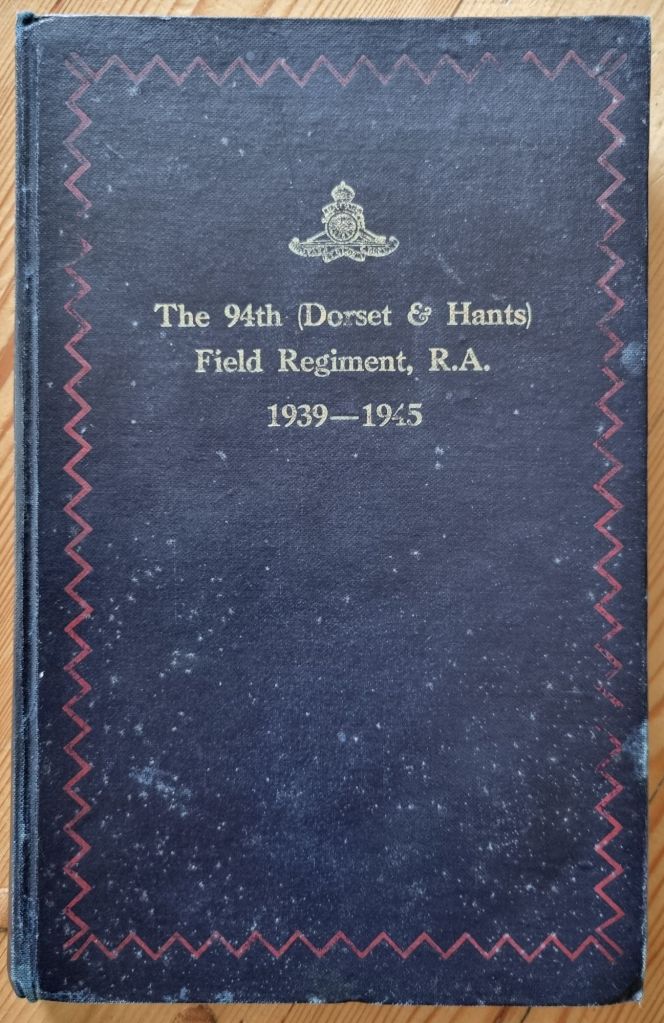
The story of his subsequent spell with the 94th (Dorset & Hants) Field Regiment, R.A., is re-told by Peter Whately-Smith in a regimental history published in 1948.
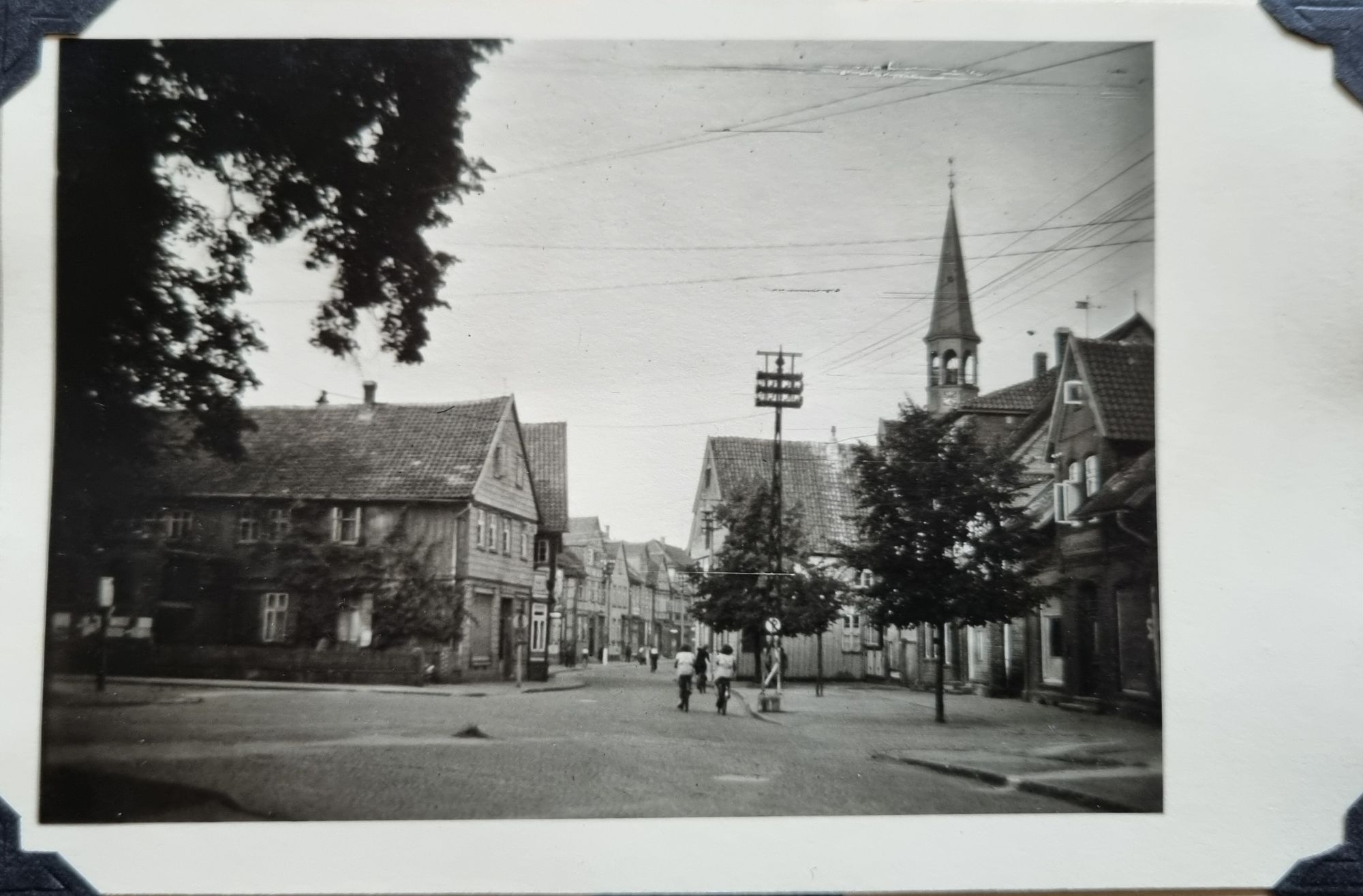
Once hostilities ended, the author describes how the “small pretty village” of Burgdorf, 15 miles north-east of the city of Hanover, became the regimental base from mid-May 1945.
There, Dad and his colleagues were “engaged in rounding up and disarming German troops … and combing large areas of countryside for enemy weapons and warlike stores.”
Then “began a period of hard grinding work. Guards, guards and more guards, escort parties, security patrols.”
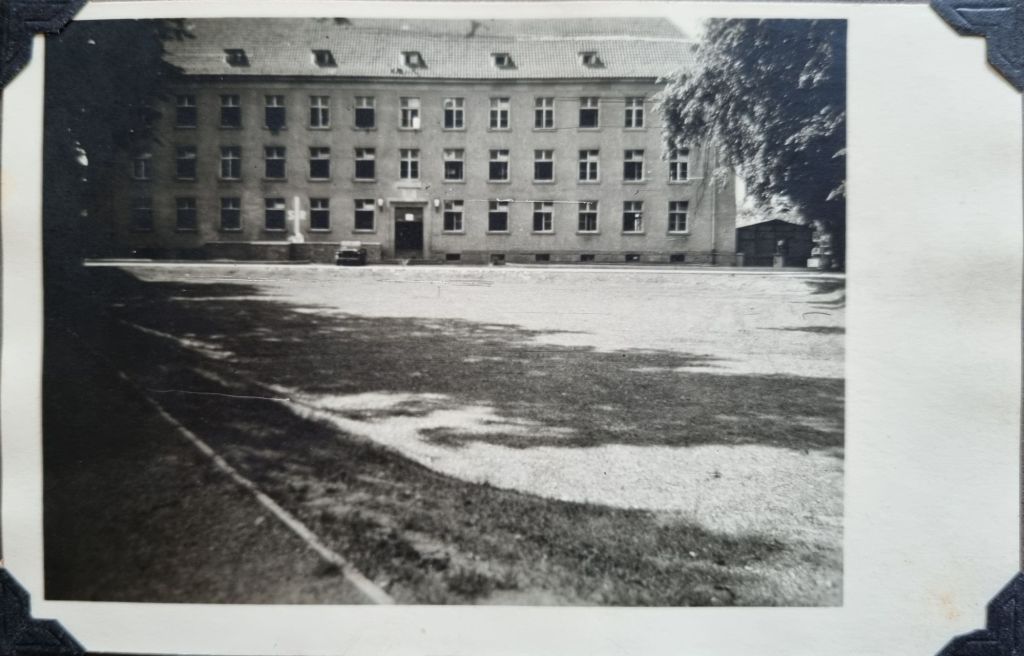
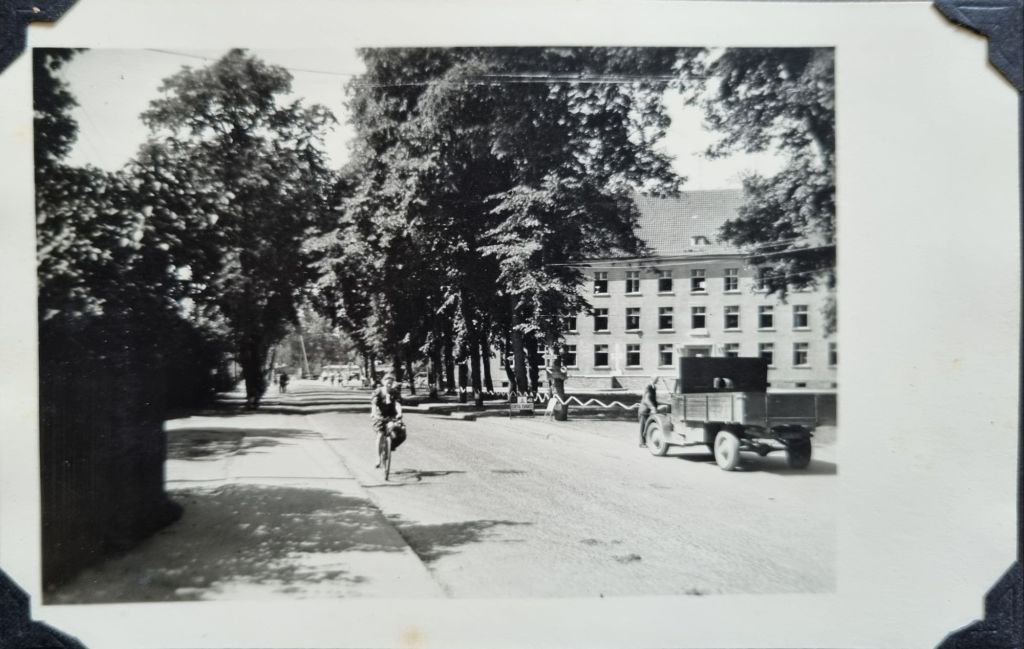
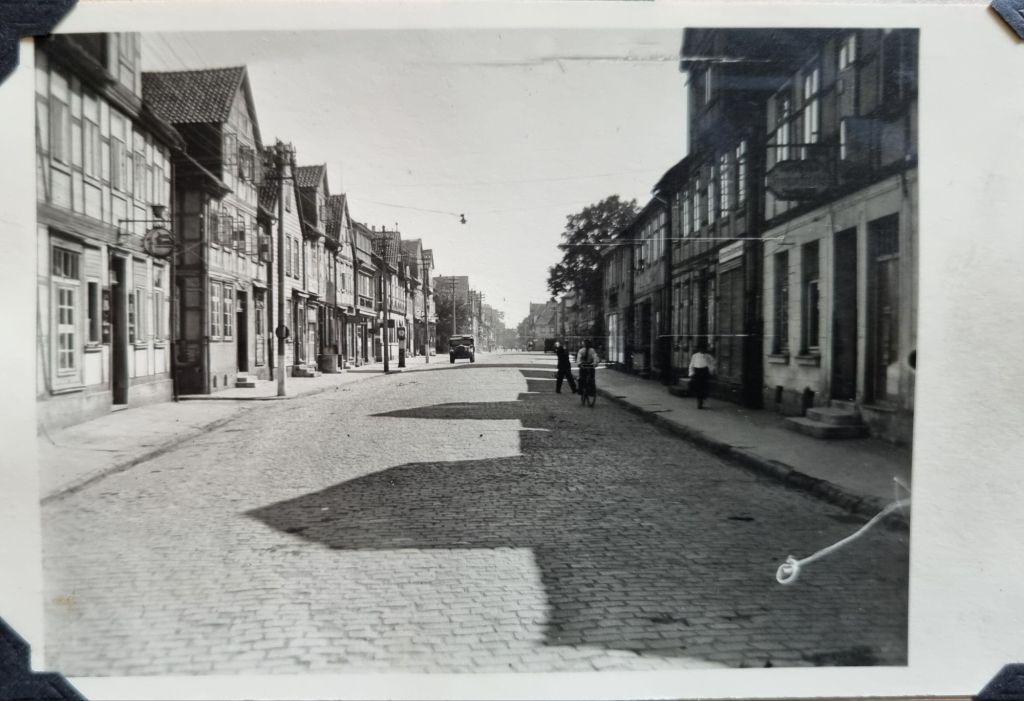
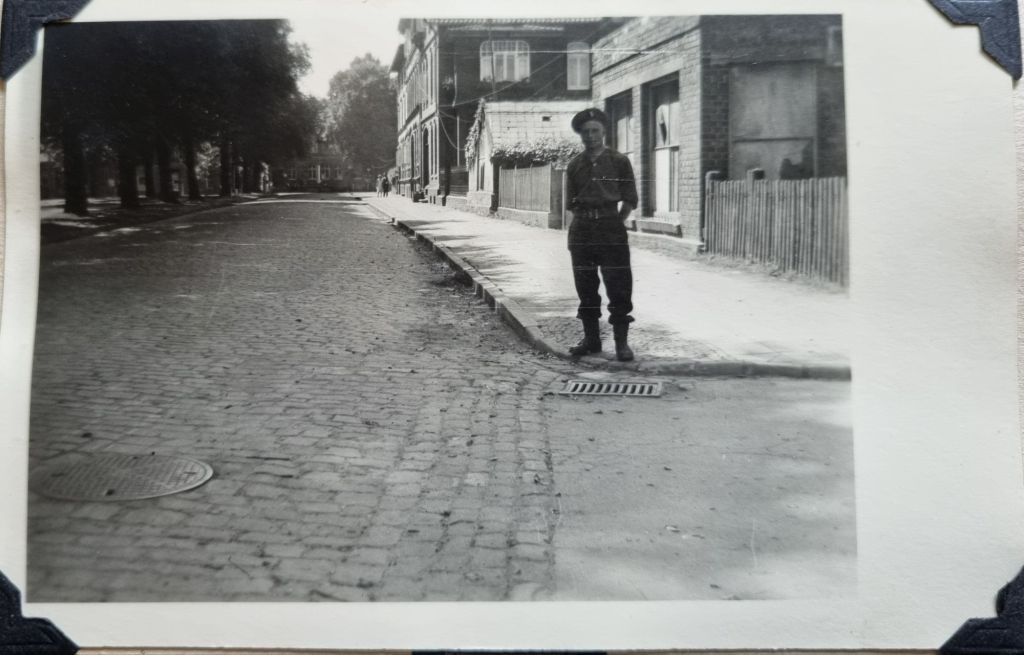
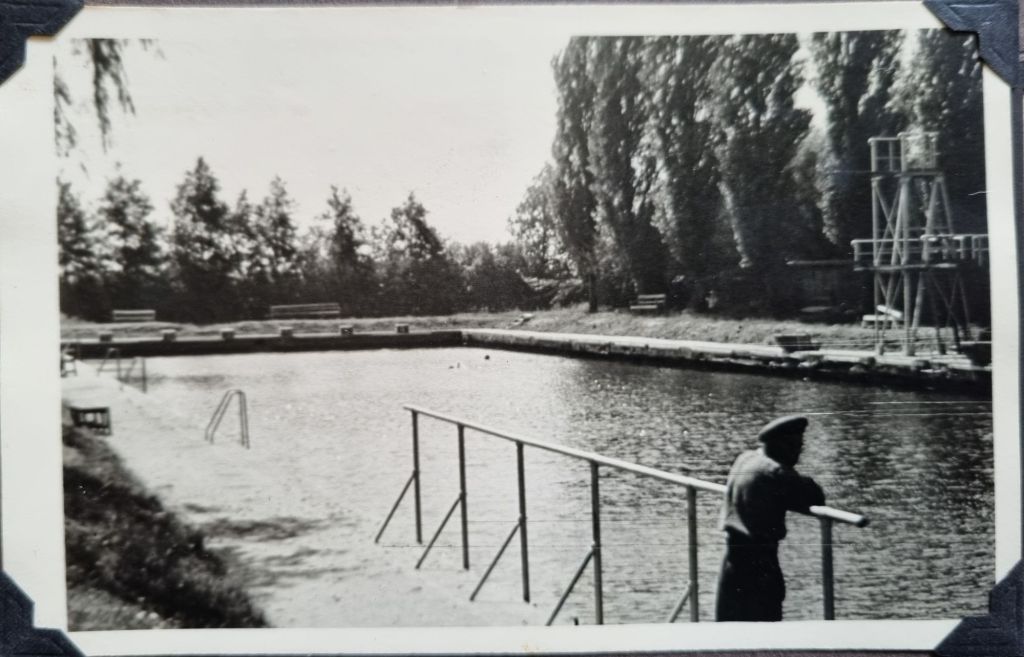
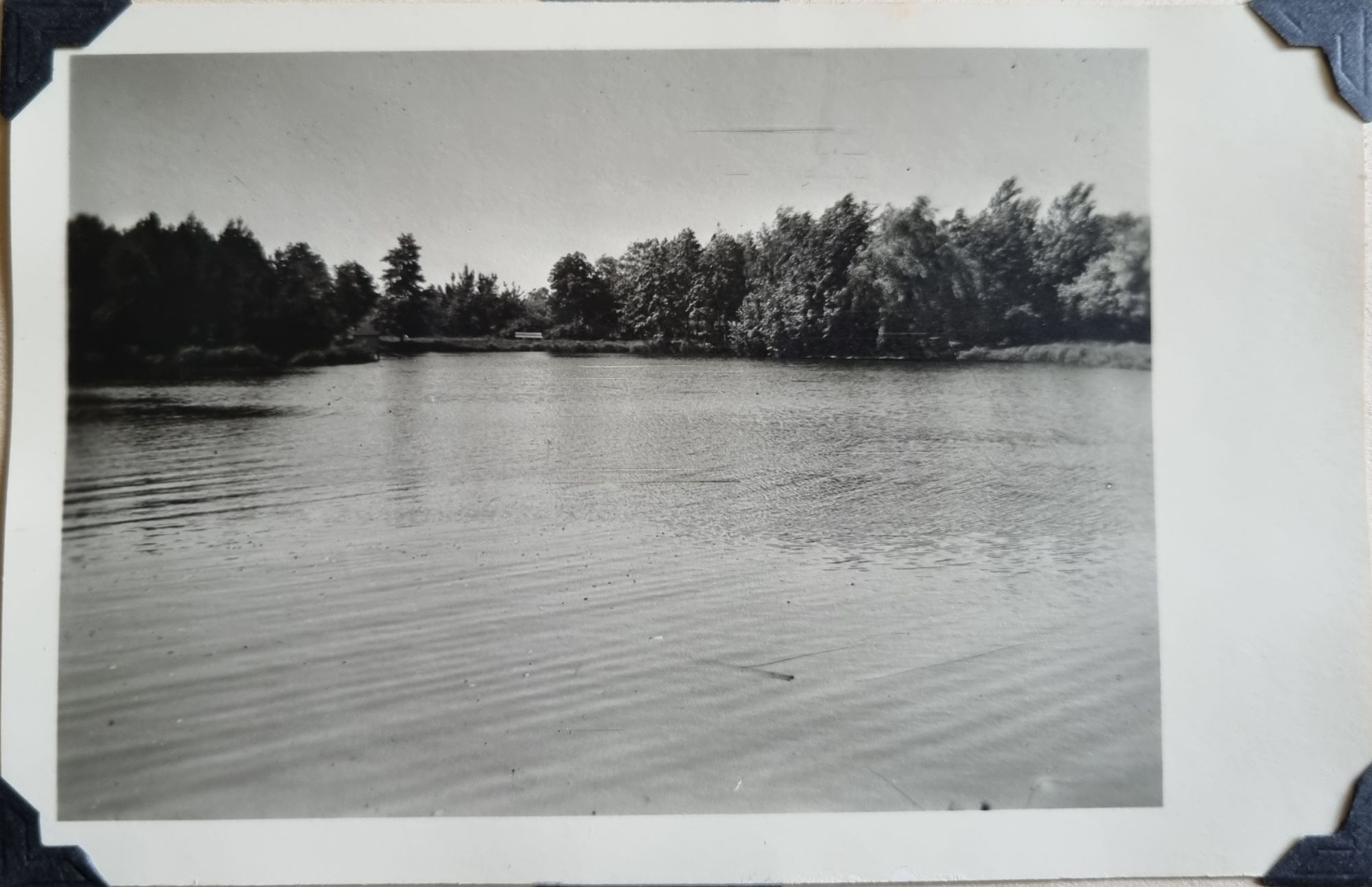
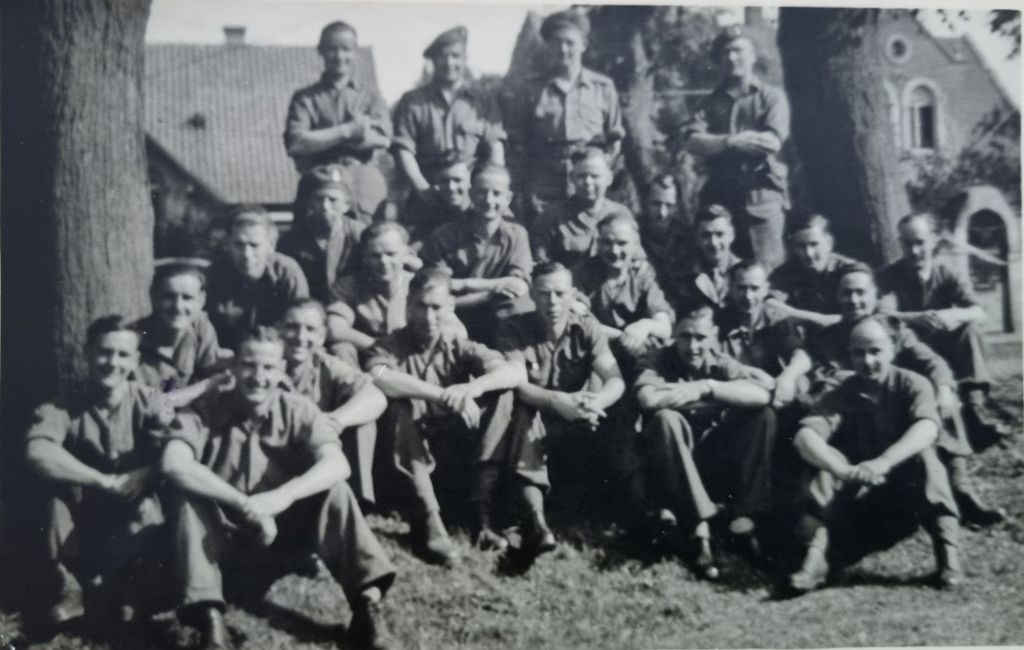
Burgdorf was “unscathed by war” and that fact is reflected in the handful of photographs that form the ‘Germany’ section of Dad’s war-time photo album.
In stark contrast to images usually associated with war-time, its black-and-white shots capture the peace that had been so hard won.
In one, a building features with a jeep parked to the left of the entrance, possibly the regimental HQ.
The third photo features a manicured grass lawn and planted border, perhaps fronting one of the buildings featured earlier, surrounded by trees in full leaf.
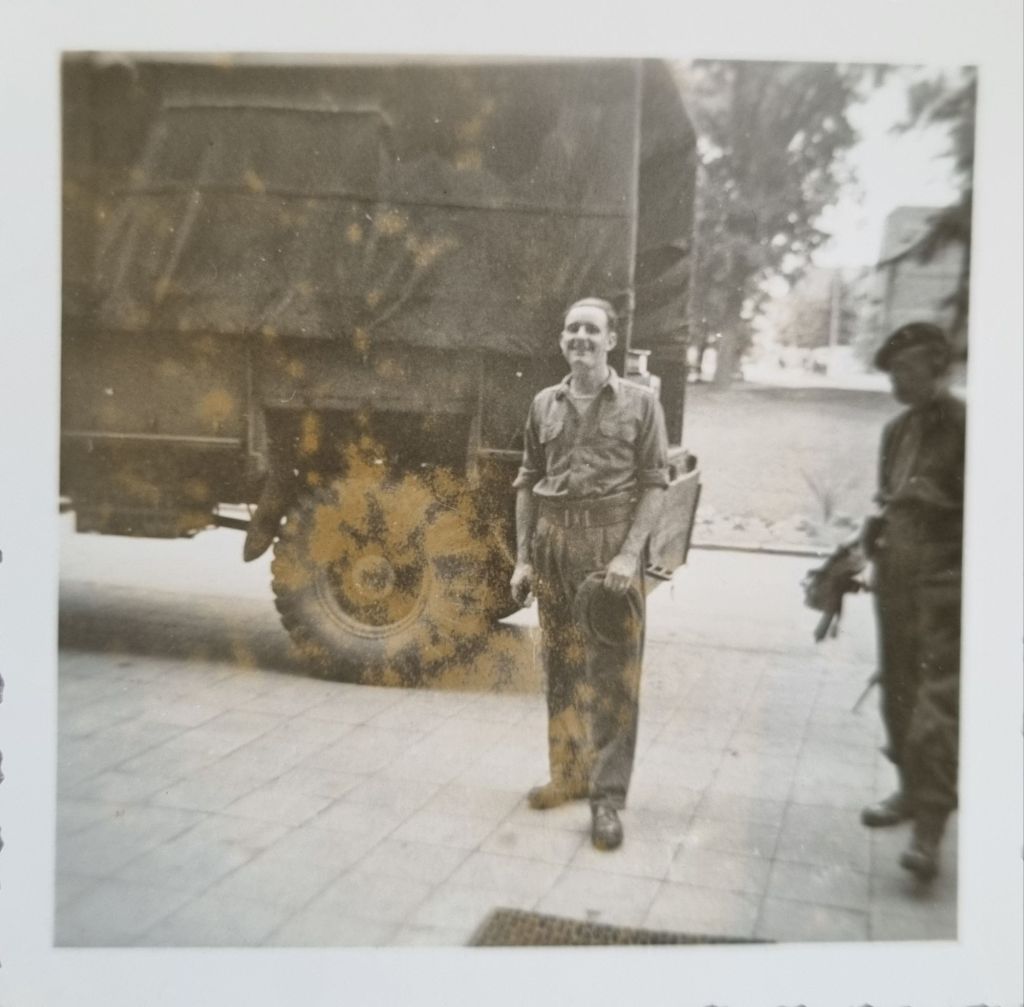
His Soldier’s Release Book records that he had been “employed in the Quarter-Masters Department as clerks store manager.”
This was a testimonial that helped prepare him for life after the forces, and in 1947, he secured a clerk’s job in civvy street with a Leeds-based soap manufacturer.
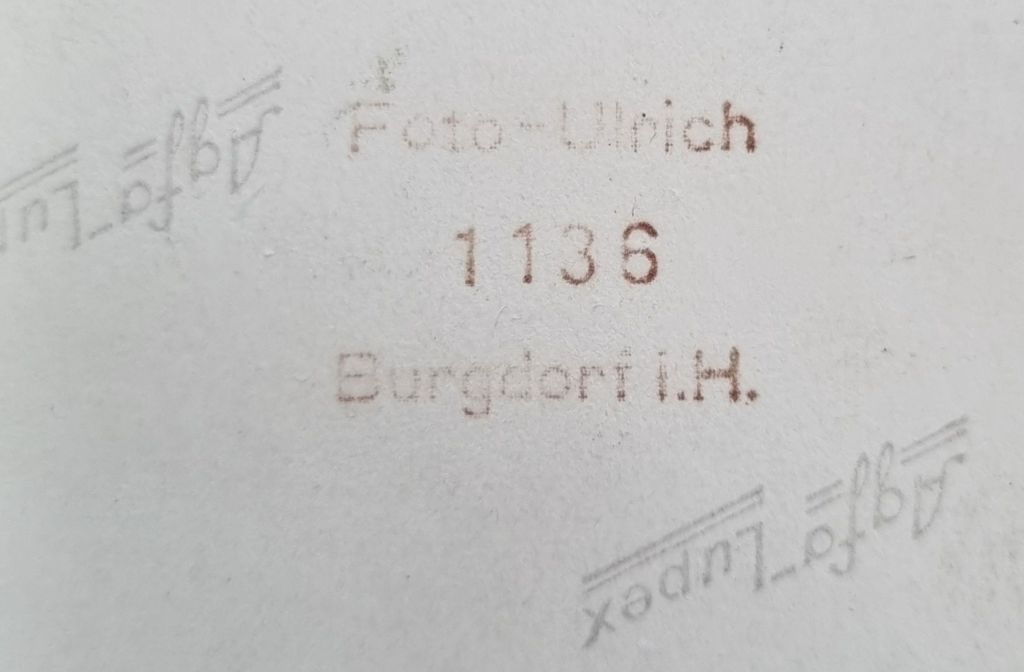
The verso of the ‘at work’ snapshot bears the stamp of the branded photo paper used – ‘Agfa Lupex’ – and the photo shop in Burgdorf that produced the resulting print.
Best of all, it shows Dad with a smile on his face.
It was one that must have reflected how he felt after the ordeal of an arduous campaign that began on D-Day and a global conflict that consumed nearly seven years of his young adult life.





 Pressphotoman
Leave a comment