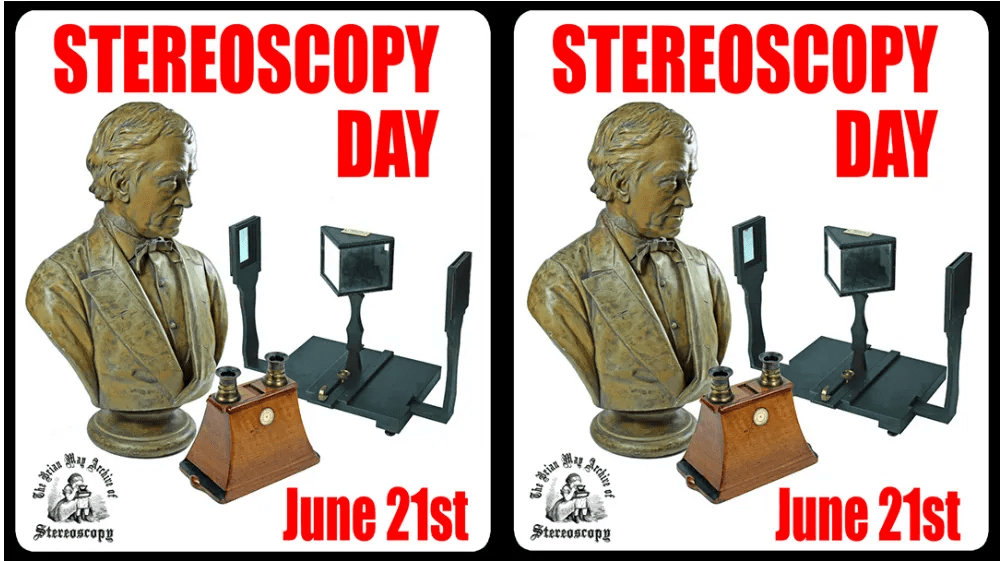
This week’s Stereoscopy Day, an international celebration of stereoscopic 3D, is a wonderful opportunity for enthusiasts to share their passion for this form of photography.
21st June marks the anniversary of the day in 1838 when Sir Charles Wheatstone shared his revolutionary reflecting telescope with the Royal Society of London and demonstrated his theory of binocular vision.
In the past 12 months, my own collection of stereocards has grown in size as examples by commercial publishers and amateur photographers have come to my attention.
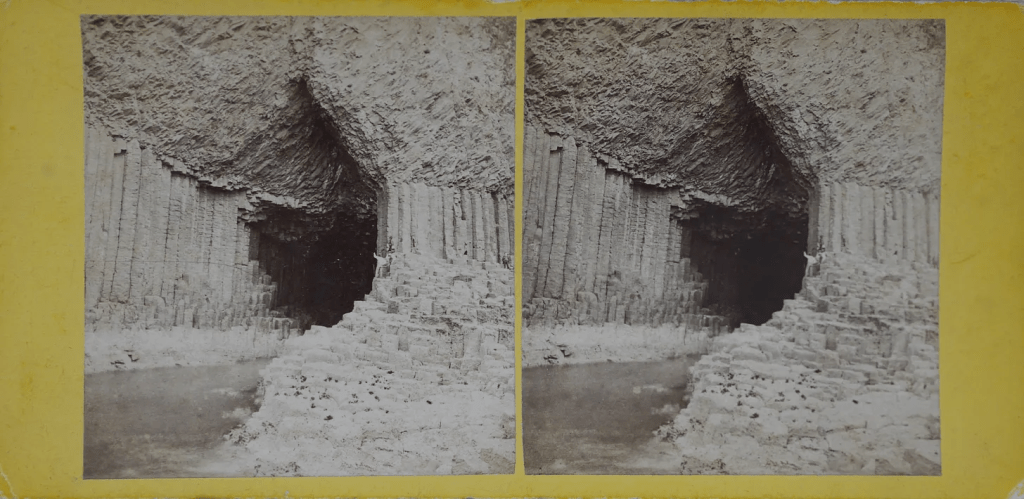
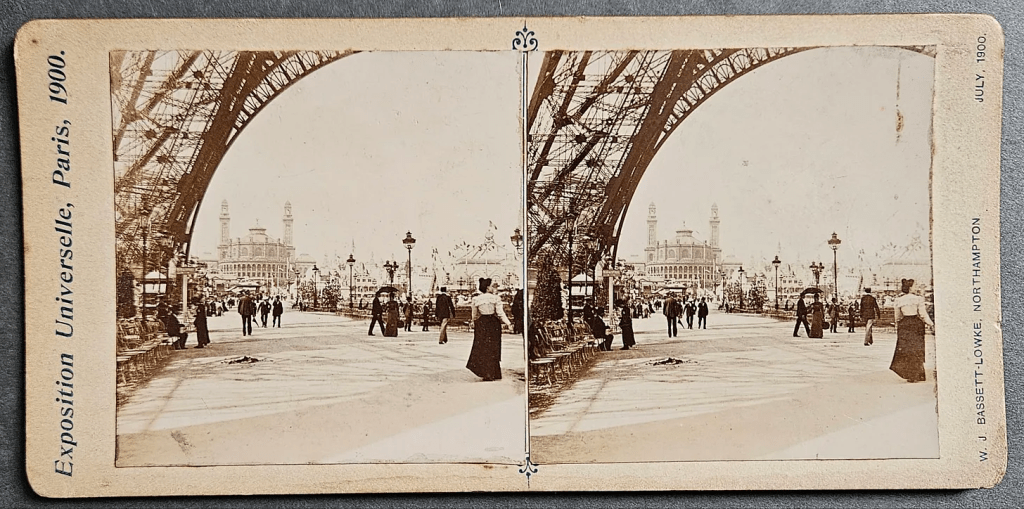
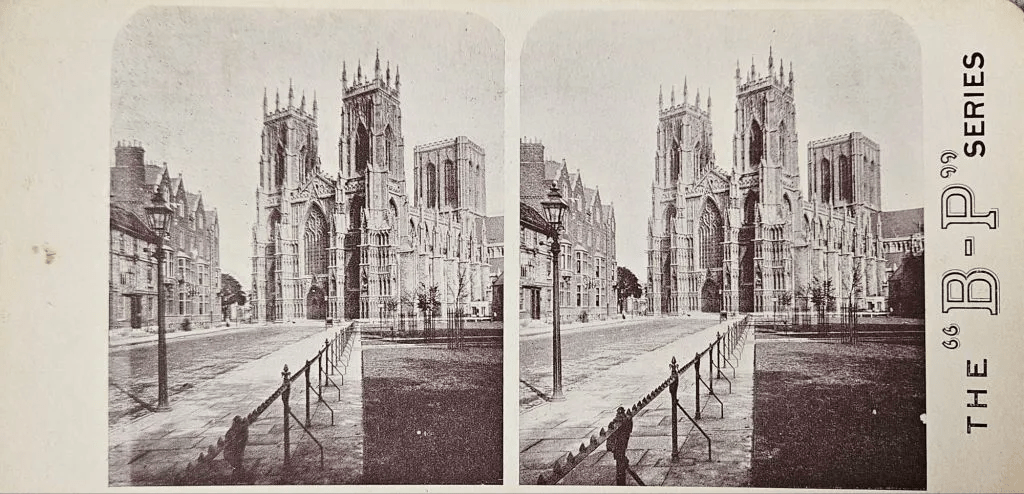
I’ve picked out a number of highlights with the accompanying Pressphotoman blogpost where you can learn more about each one.
It starts with what was a chance discovery: a card by George Washington Wilson of Aberdeen that is now the oldest in my collection.
The second card comes from a collection created at the turn of the 20th century by the model toy designer and entrepreneur W. J. Bassett-Lowke (1877-1953) of Northampton, England.
This Friday (21st June) is Stereoscopy Day, the third annual global celebration of stereoscopic 3D.
Organised by Denis Pellerin and Rebecca Sharpe, co-curators of the Brian May Archive of Stereoscopy, Stereoscopy Day marks 186 years since Sir Charles Wheatstone first presented the stereoscope and his theory of binocular vision to the world.
It was more than a decade ago when I first became aware of Wheatstone’s discovery.
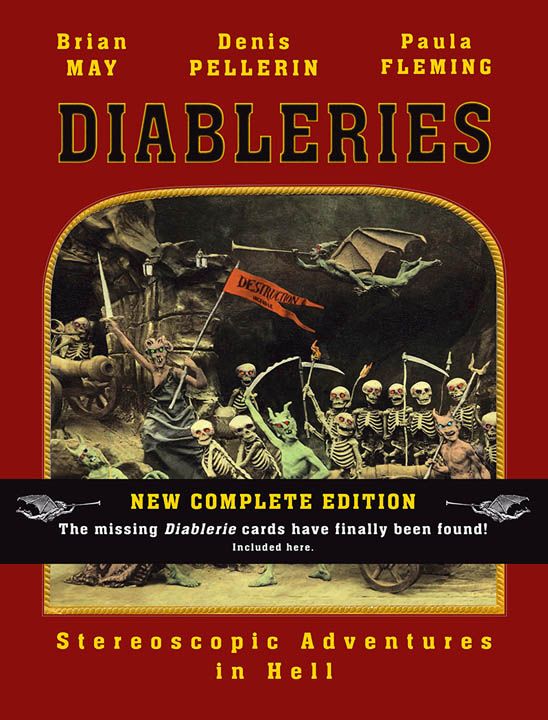
Studying for a Masters degree in Photographic History & Research at De Montfort University, Leicester, I was fortunate enough to attend a presentation by Brian May, Denis Pellerin and Paula Fleming about their book ‘Diableries: Stereoscopic Adventures in Hell.’
‘Diableries’ originally published in 2013.
For the first time, I heard terms like ‘stereocard,’ ‘stereoscope’ and ‘view’ and learned about the fascination that 3D held for the Victorians.
As it turned out, the presentation proved both inspirational and pertinent.
A few months later, my Masters research project took shape … and a professional stereographer, Percy R. Salmon FRPS (1872-1959), was at its heart.
2022 film celebrating the 150th birthday of Percy R. Salmon FRPS (1872-1959).
But there was only one problem.
However hard I tried, I could not see in 3D.
The reason lay in my ‘lazy’ right eye, diagnosed when I was 7 during a school medical.
My astigmatism has meant wearing glasses ever since.
Then one day, when I had almost given up all hope of seeing in 3D, I looked at a stereocard through a hand-held stereoscope for the umpteenth time – and the two images fused into one.
I could see the promised 3D ‘view.’
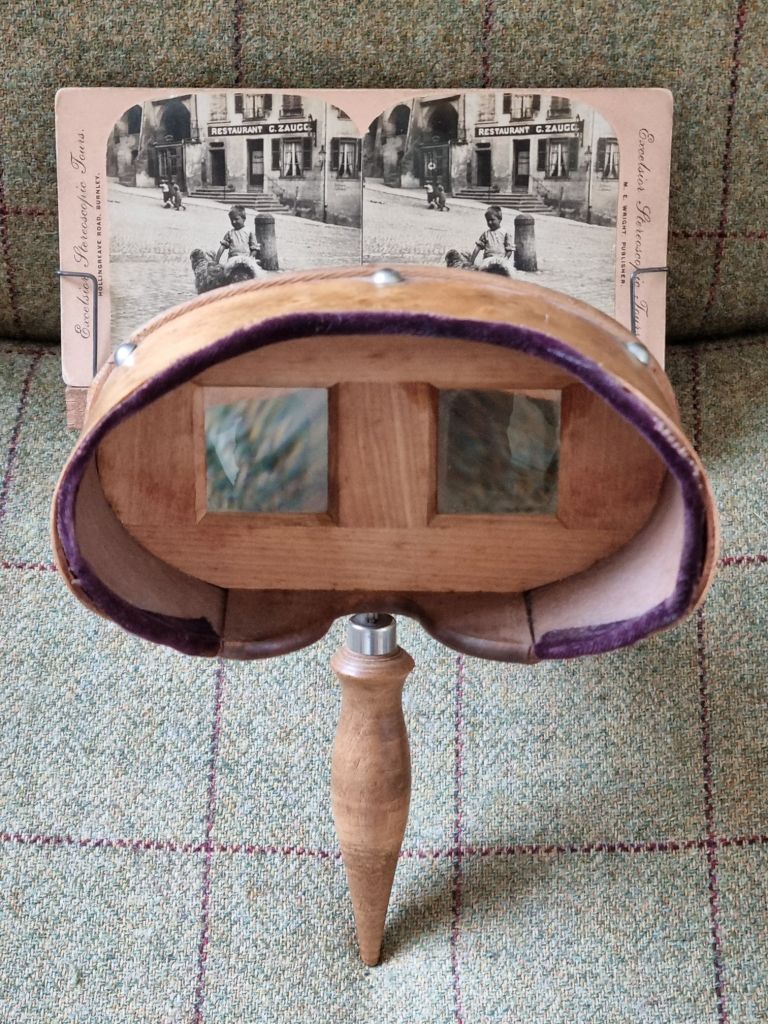
My first hand-held stereocard viewer, ‘The Perfecscope’ c. 1895.
Since then, stereoscopy has transformed my life, leading to a doctorate that investigated 3D’s influence on early press photography (see ‘Writings’).
It’s also improved my eye-sight, prompting my optician to wonder how this was possible given I am getting older.
What started as a handful of stereocards is now a growing collection.
It largely features the Underwood & Underwood company (1880s-1920s); plus Excelsior Stereoscopic Tours of Burnley, Lancashire; press stereographer James Edward Ellam (1857-1920); plus early stereos by W. & D. Downey and amateurs like Edward and Eliza Charlton, all featured elsewhere on this blog.
If you haven’t tried stereoscopy before, hunt down a few cards on Ebay and purchase an ‘Owl’ viewer designed by Brian May.

 Pressphotoman
Leave a comment