
Auty & Ruddock was a partnership between two of North East England’s finest late-Victorian photographers.
Matthew Auty (1850-1895) was a tobacconist, who turned his hobby into an award-winning photography business specialising in landscapes.
Richard Emerson Ruddock (1863-1931) featured in my recent Pressphotoman series on portrait photographers, who trained with royal warrant holders W. & D. Downey.
Auty & Ruddock’s partnership using premises at 20 Front Street, Tynemouth, a short train journey from Newcastle-on-Tyne, was short-lived.
It lasted from the late-1880s to March 1892 when the dissolution of their partnership was announced in the regional press.
Six months later, Ruddock set up his own portrait studio in Newcastle, leaving Auty to run the Tynemouth business as a solo enterprise.
In recent months, I’ve been on the look-out for photographic products bearing ‘Auty & Ruddock’ branding such as cabinet cards and cartes-de-visite.
With a large dose of serendipity, a beautifully embossed book of postcard-sized photographs, printed in Germany and titled ‘Tynemouth’ appeared on a well-known auction site.

©️ Author’s collection.
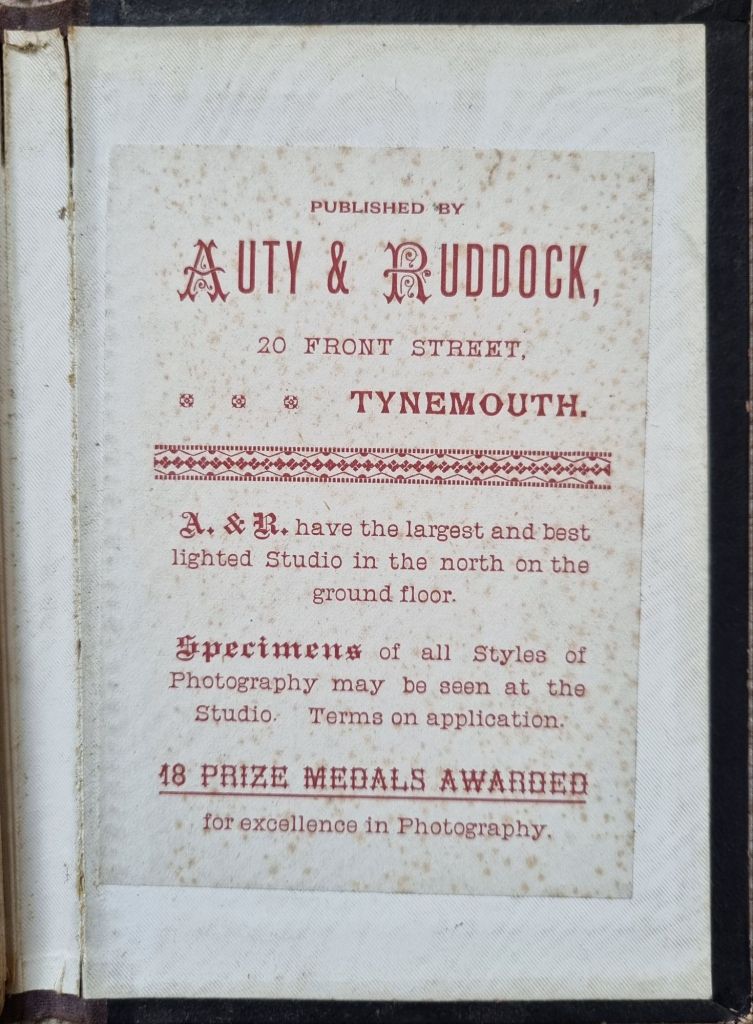
Featuring 12 ‘views’ taken in and around the seaside resort, a ‘Published by Auty & Ruddock’ label was pasted on the inside back cover.
©️ Author’s collection.
The reference to ‘A. & R. have the largest and best lighted Studio in the north on the ground floor’ promoted its facilities for portraiture in which Mr. Ruddock specialised.
However, the ‘Tynemouth’ book of ‘views’ points to it being the work of his partner, Mr. Auty.
His landscape photography had attracted ‘prize medals’ at competitions across the UK and in Europe.
As a pocket-sized book that folds up neatly, its design is particularly effective in displaying the ‘views’ as a sequence or tour.
The featured ‘Tynemouth’ locations are ones that remain popular today and would be familiar to anyone visiting on a day-trip or staying in the area on holiday.
It begins with ‘Long Sands,’ a majestic sweep of beach overlooked (from left to right) by the Tynemouth Aquarium and Winter Garden (1878), Beaconsfield House (1882) and the Grade 1 listed St. George’s Church (1884).
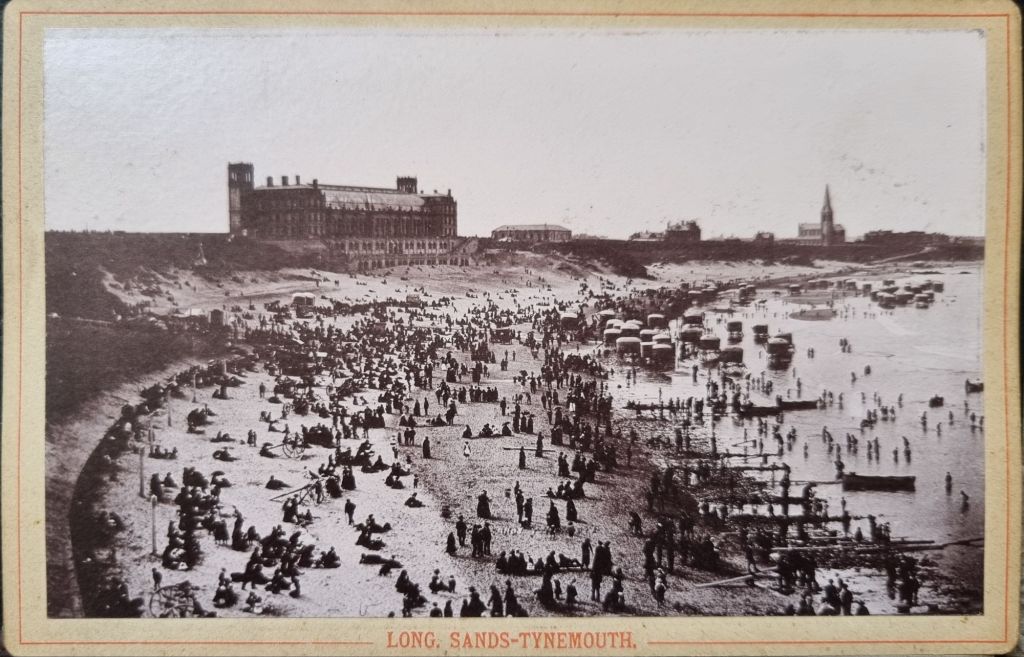
The presence of these landmarks indicates that it was most likely taken during the second half of the 1880s or early 1890s.
Aside from the crowds of people, the photograph also portrays a fleet of bathing machines at the water’s edge.
The two separate groups indicate that one was for men and one for women, preserving Victorian standards of modesty.
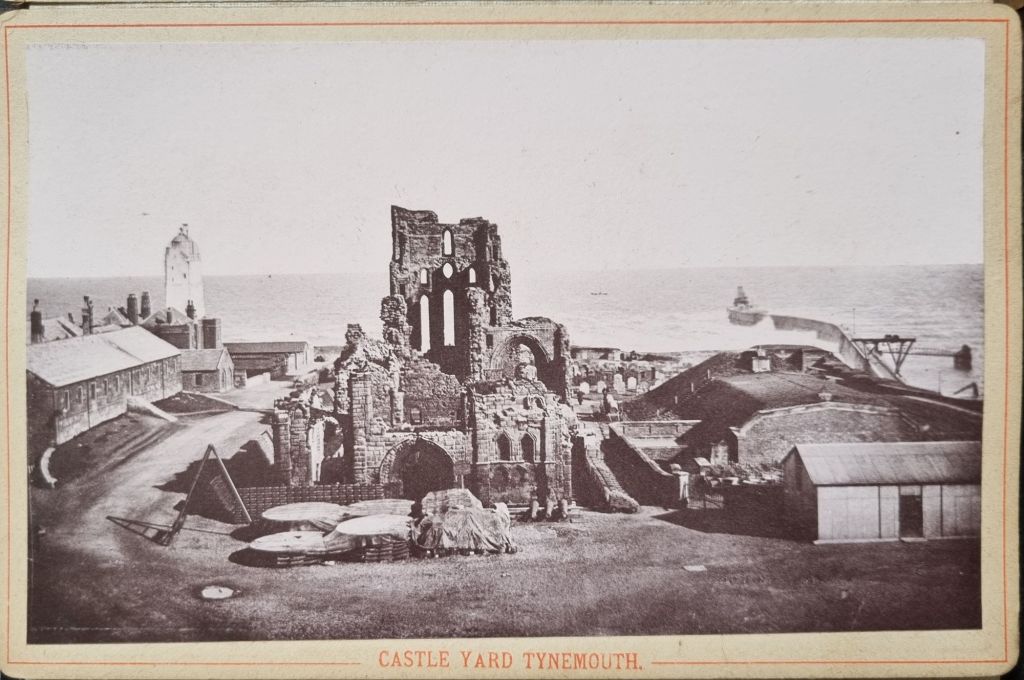
Tynemouth’s dramatic headland, home to the ruins of its Priory and Castle, feature prominently in a number of the ‘views.’
© Author’s collection.
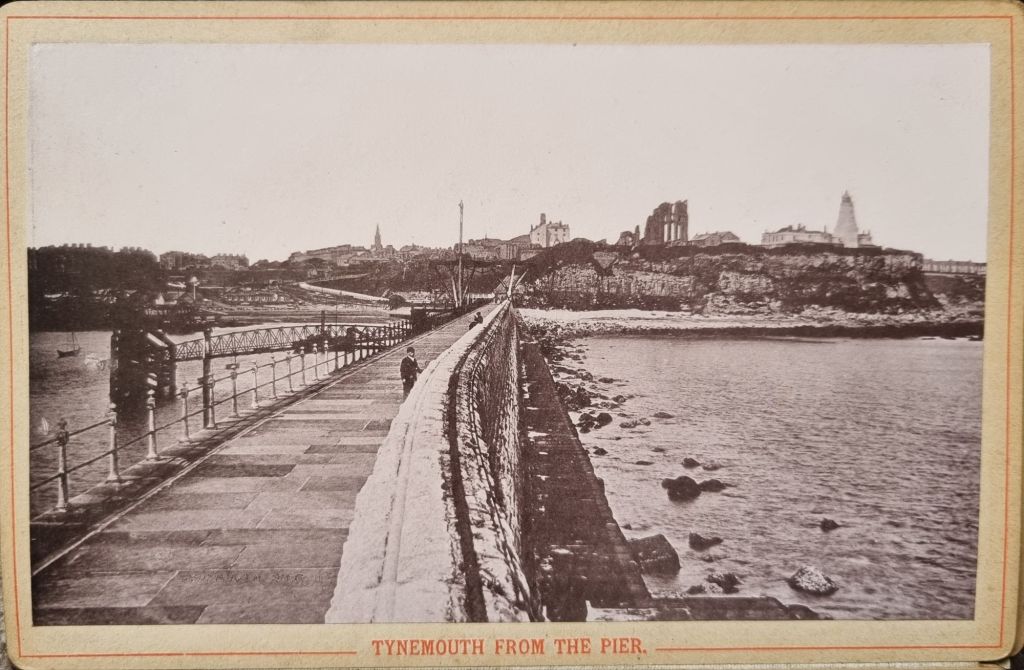
The curved pier complete with a lighthouse at its tip was regularly damaged by storms during the 1890s and was later replaced by a straightened version, which survives today.
‘Tynemouth From The Pier,’ complete with the remains of an older land-based lighthouse (right of frame), offers the reverse perspective.
© Author’s collection.
The book of ‘views’ then takes a short tour of the area, first along the banks of the River Tyne to the neighbouring fishing port of North Shields.
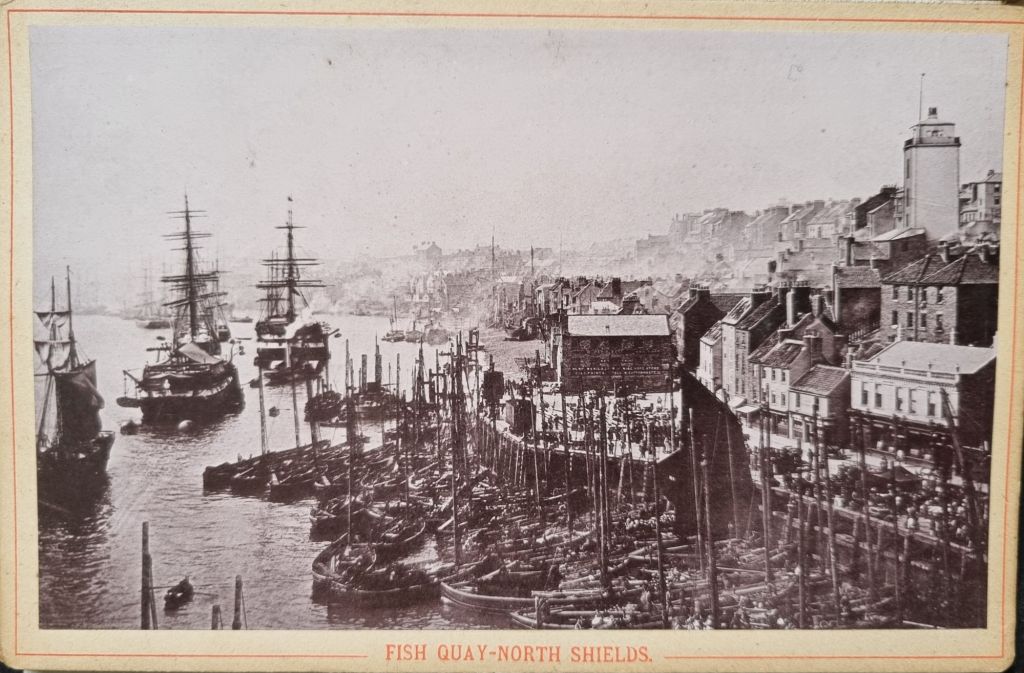
© Author’s collection.
A short walk north along the North Sea coast brings the visitor to Cullercoats, home to a thriving colony of artists in the late-19th century.
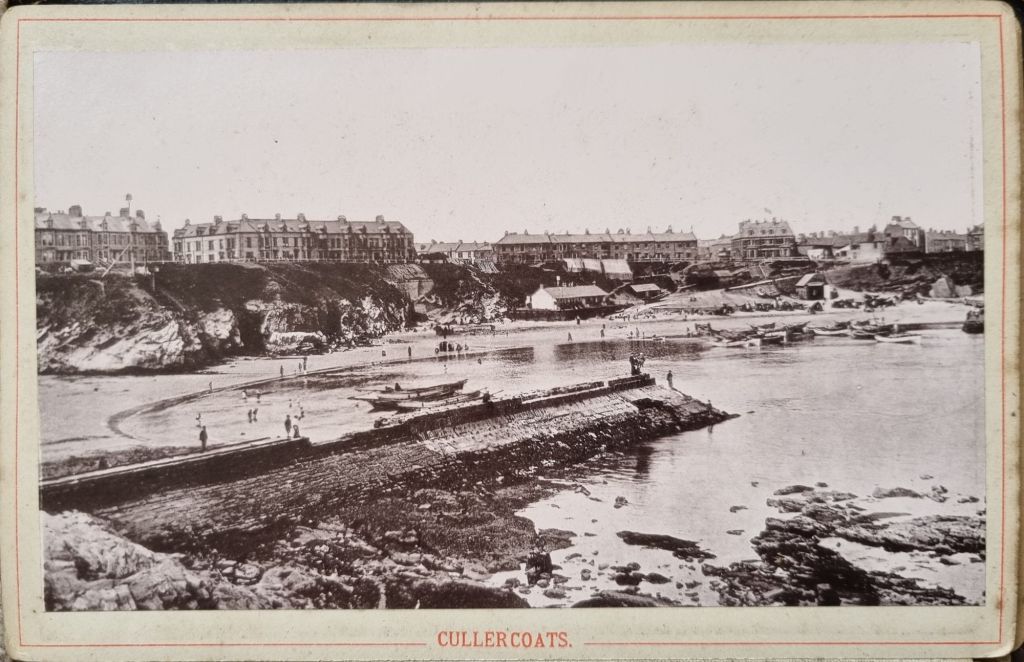
© Author’s collection.
The tour continues northwards via ‘Table Rocks’ to ‘Whitley Sands,’ better known today as Whitley Bay, where the tourist invasion of the 20th century was still in its infancy.
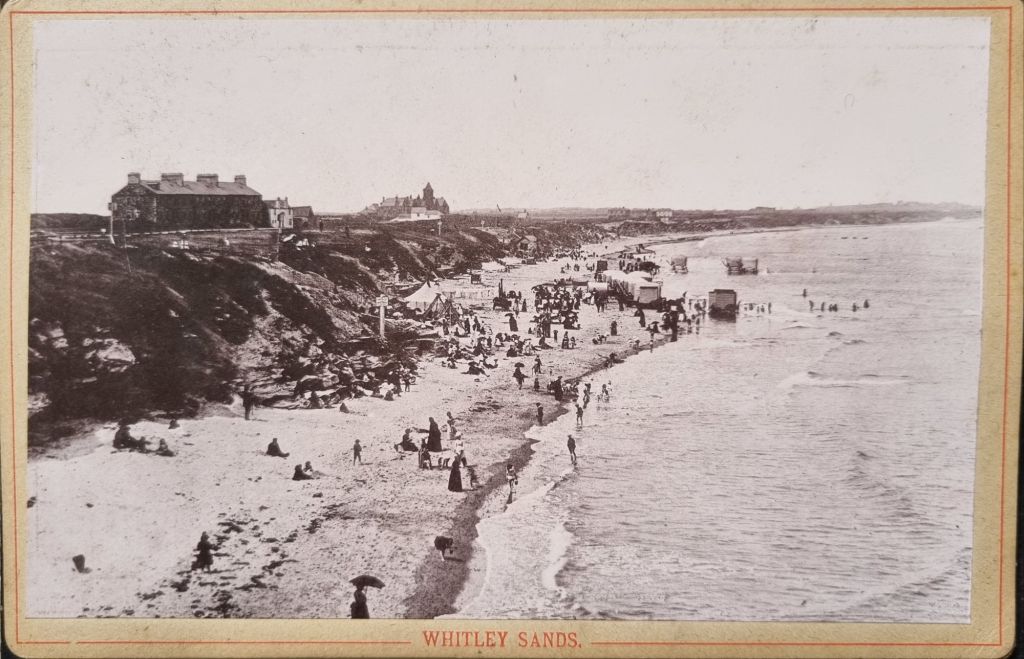
© Author’s collection.
Other ‘views’ in the photobook feature South Shields Pier, South Shields Sands and Marsden Rock.
Looking at this book of ‘views, the significance of the Auty & Ruddock partnership is how both photographers were later well-placed to exploit what followed: the golden age of postcards.
Though Matthew Auty died in 1895, the firm that bore his name continued to operate well into the 20th century.
Its ‘Auty series’ of postcards could be posted to family and friends with a ‘wish you were here’ message on the reverse.
Ruddock Ltd of Newcastle on Tyne transitioned from portraiture and, by 1904, it claimed to be the largest postcard publisher in the North of England.
As their ‘Tynemouth’ collaboration illustrates, the legacy of both Matthew Auty and Richard E. Ruddock is celebrated in the high-quality photographic products they left behind.
 Pressphotoman
Leave a comment