Saturday (6th December) marks the Feast of St. Nicholas when celebrations take place in many western Christian countries.
It’s a tradition that dates back to the 4th century when St. Nicholas as Bishop of Lyra was venerated for his generosity to children.
His later transformation into Santa Claus and Father Christmas during the 19th century has rather overshadowed his earlier role in the Christian church.
That said, many churches are named after St. Nicholas including one of my favourite buildings in Britain.
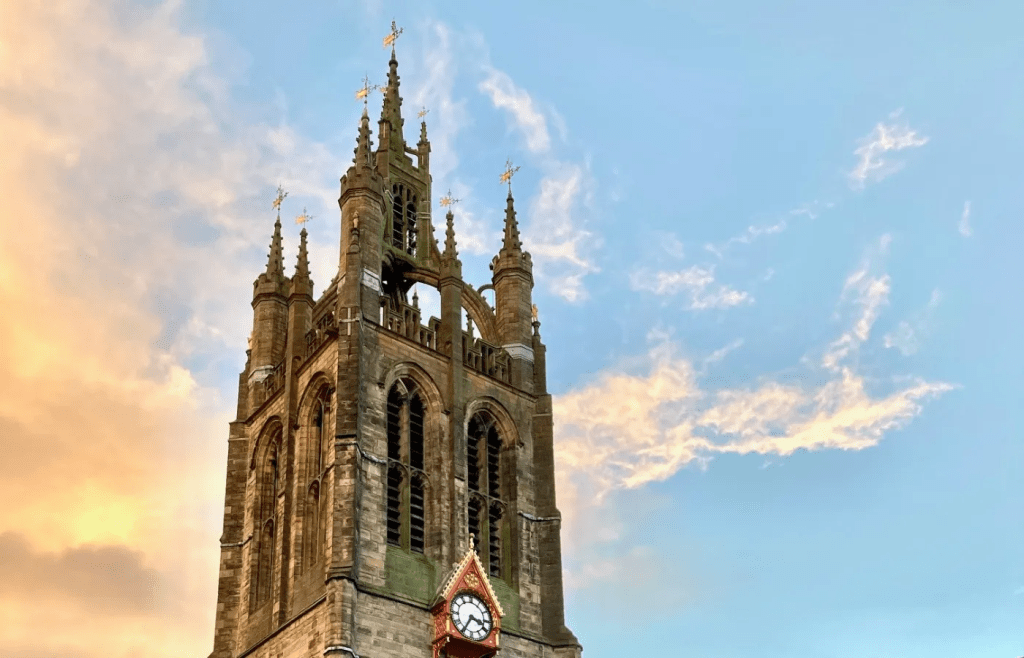
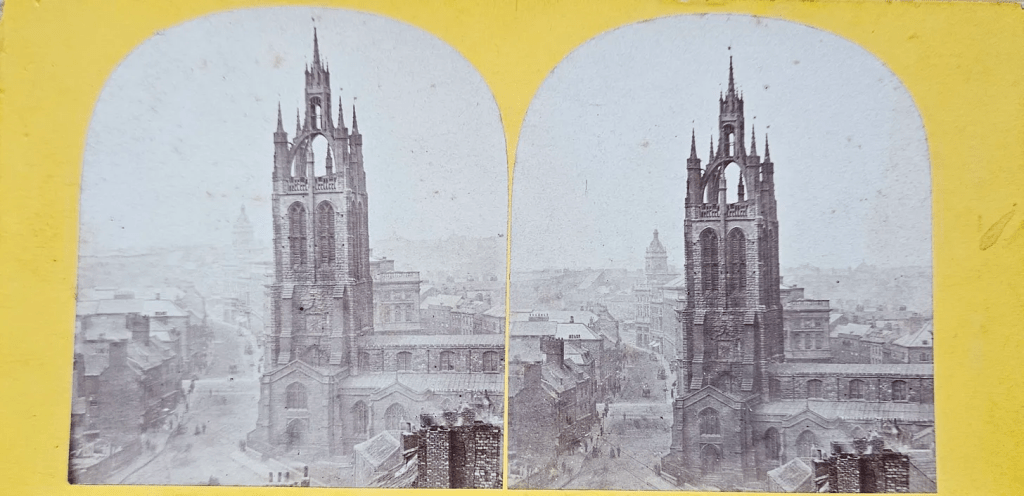
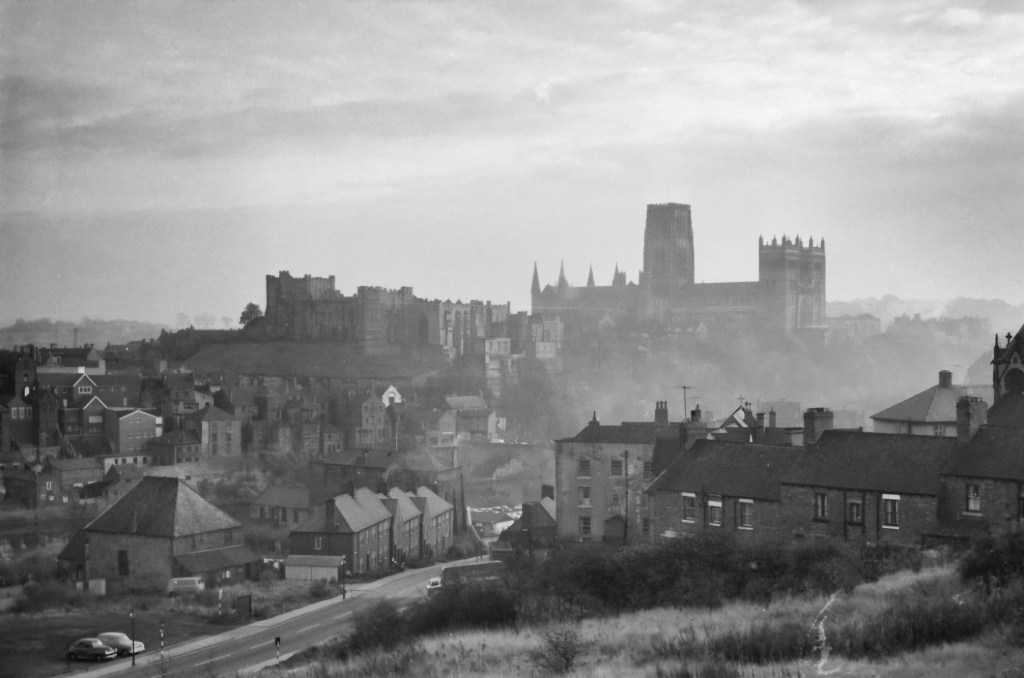
Newcastle Cathedral with its distinctive lantern tower began life during the 12th century as St. Nicholas Parish Church.
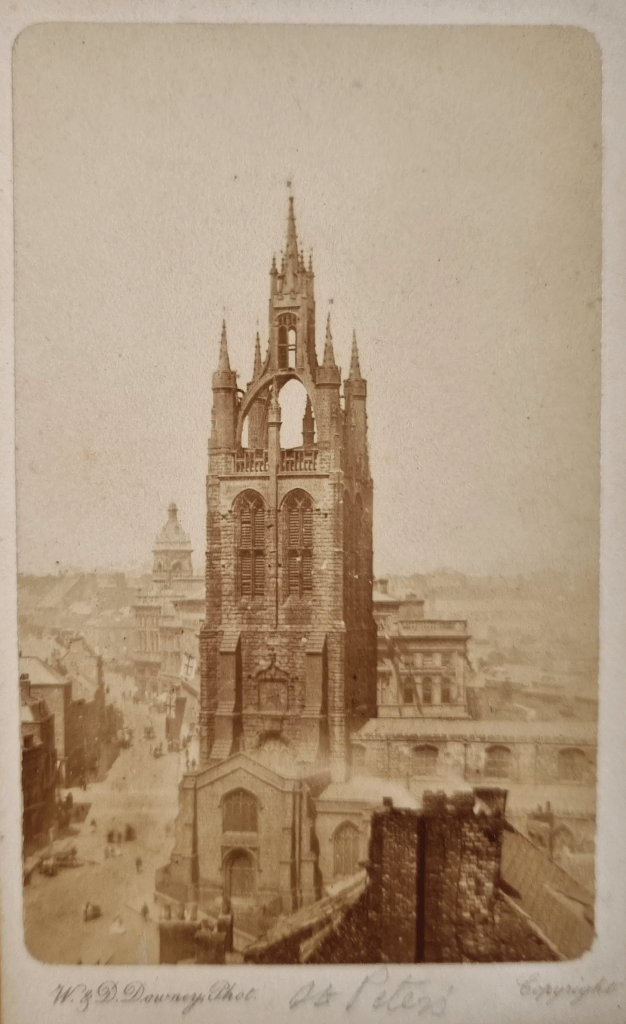
It’s a structure that continues to dominate the urban skyline and has been portrayed by successive generations of photographers as my own collection bears witness.
For instance, this carte de visite dates from the mid-1860s when the firm of W. & D. Downey was establishing its Newcastle studio in the heart of the city.
Erroneously titled ‘St. Peter’s’ in an unknown hand, it’s a view that had its origins in a stereoscopic 3D image.
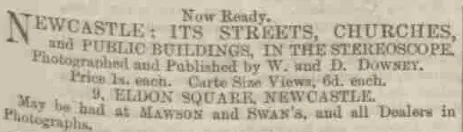
In July 1864 as Downey’s consolidated its reputation for high-quality work, the firm placed one of its regular ‘Now Ready’ advertisements in the local press.
Newcastle Journal (15th July 1864). From British Newspaper Archive.
Like most collectors, the search for a particular image sometimes ends when you are least expecting it.
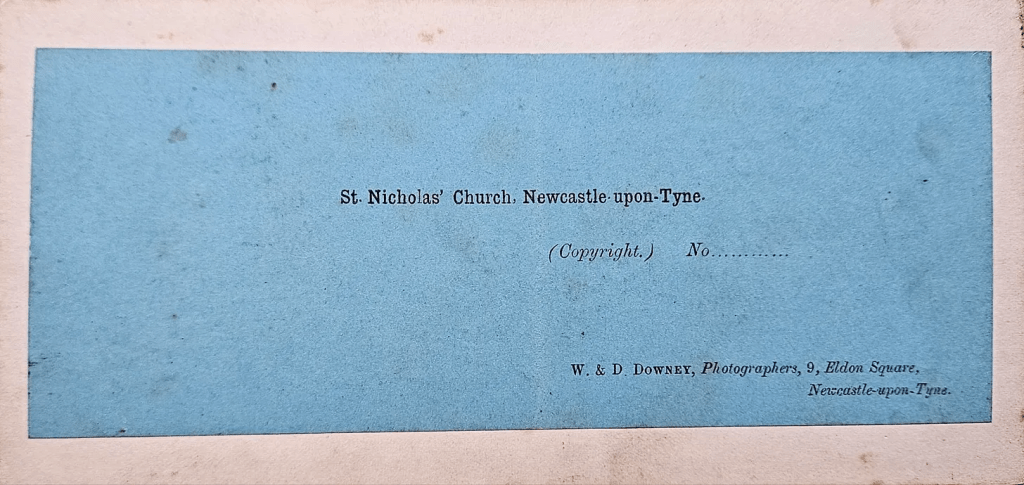
So it proved with a Downey stereo of St. Nicholas’ Church that appeared on a well-known auction site recently courtesy of a seller in the United States.
The first image I saw featured the verso of the stereocard revealing its title details printed on the company’s familar blue sticker.
The only slight disappointment was that, as closer examination of the two stereo halves reveals, the full 3D effect was undermined by the images being slightly out of alignment.
One explanation for this might be a result of the laborious process of cutting the photographic prints to size by hand.
Whether this particular stereo failed to meet Downey’s own high standards and ended up in the bin isn’t known.
Despite this, the pleasure of handling an object that is around 160 years old never fails to pall.
The attribution ‘Unknown Photographer’ is like catnip to the photohistorian.
Sometimes the pieces of the jigsaw fall neatly into place and a credible name for the author of an image emerges.
That’s exactly what happened during the writing of this blogpost.
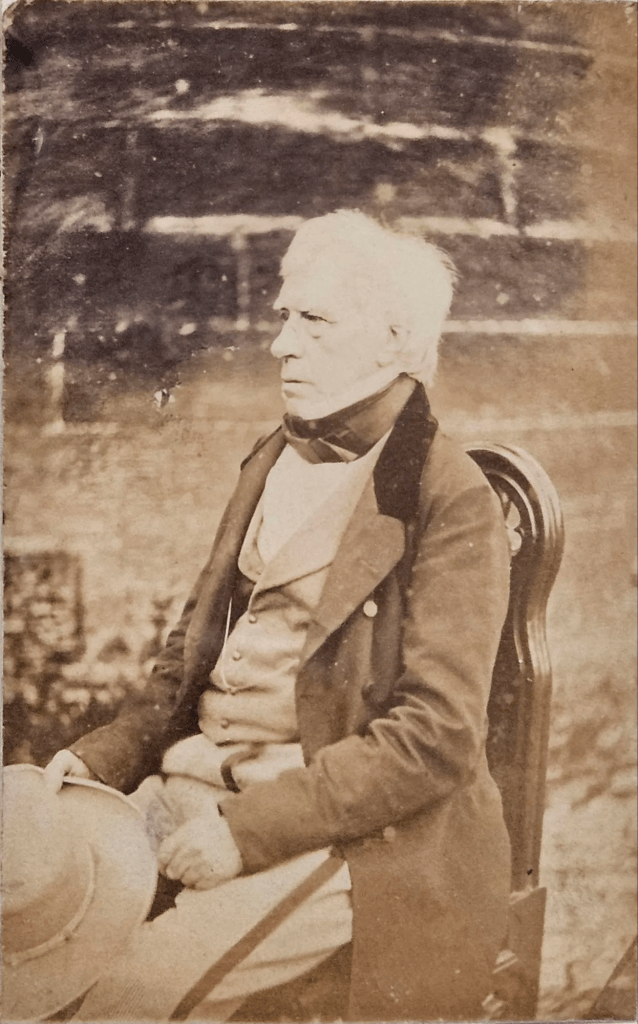
It began with a portrait photograph that is more than 160 years old and among the earliest protected by UK copyright law.
Copy 1/1/279. National Archives/OGL.
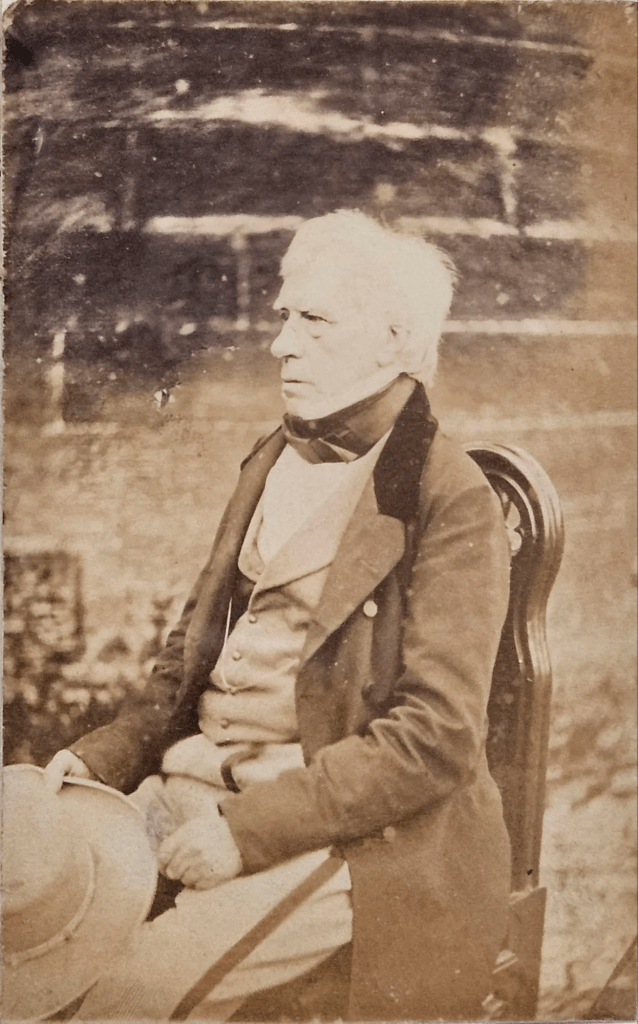
It features the veteran statesman and philosopher Henry, Lord Brougham (1778-1868) and was taken by Daniel Downey, one of the Tyneside brothers behind the celebrated photography firm of W. & D. Downey.
These facts are known because of a vital piece of legislation that early photographers in particular were quick to embrace.
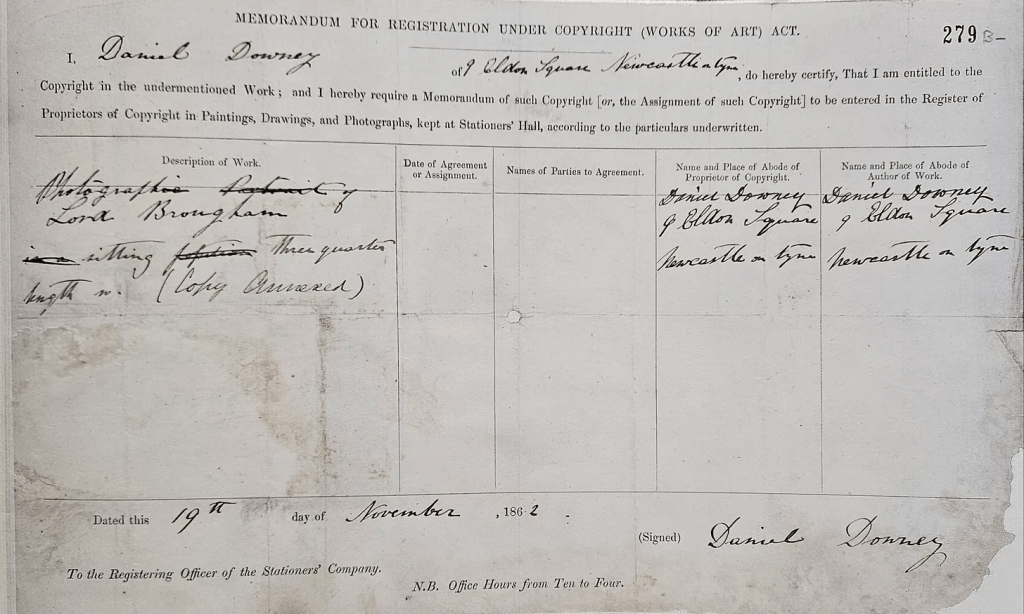
On 29th July 1862, the Fine Arts Copyright Act became law and required anyone wanting to protect their paintings, drawings or photographs to complete a form and attach a copy of the work.
The first photograph (COPY 1/1/1) was registered on 15th August at Stationers Hall in London where the act was administered.
A few months later, according to a document stored in the National Archives at Kew, Daniel Downey submitted a form together with a copy of the photograph (seen above) that he had taken.
Copy 1/1/279. National Archives/OGL.
Dated 19th November 1862, the resulting form complete with his signature is numbered ‘279.’
For a researcher like me with an ongoing interest in charting the history of the Downey company, seeing such a document in the flesh as I did recently was a real privilege.
As regular readers will be aware, 1862 was a pivotal year for the Downey brothers, William and Daniel, who had started their photography business in South Shields several years earlier.
That January, their photographs of the aftermath of the New Hartley pit disaster claiming the lives of 204 men and boys were acclaimed by Queen Victoria.
Then, in March, their new studio at 9 Eldon Square, Newcastle on Tyne opened and quickly became a go-to destination for the great and good seeking a high-quality photographic portrait.
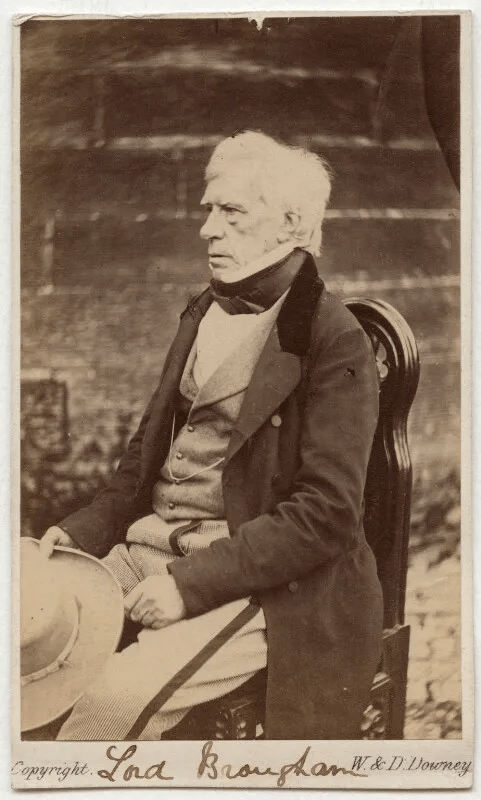
Daniel’s portrait of Lord Brougham was subsequently issued commercially as a carte de visite.
An example of this carte marked ‘Copyright’ and ‘W. & D. Downey’ on the front is part of the collection of the National Portrait Gallery, London.
As to when the photograph was taken, an article in the Newcastle Daily Journal (12th January 1863) reported how Downey had been honoured with repeated commissions from Brougham, who it called “the great opponent of the slave trade.”
The paper went on: “… only recently they were on a professional visit to his residence in Westmoreland, when they had the rare good fortune to obtain, in one small carte de visite, the portraits of both Lord Brougham and Mr. Gladstone.”
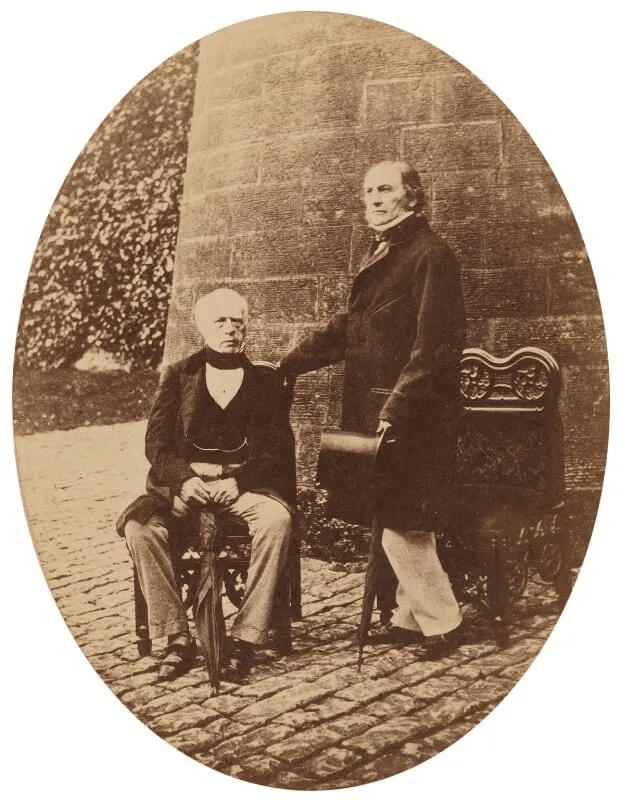
Searching online for this carte featuring Brougham with the then Chancellor of the Exchequer and later Prime Minister in four British governments, I came across this image.
Titled ‘Henry Brougham …. and William Ewart Gladstone’ and described as an ‘albumen print, late 1850s,’ the website of the National Portrait Gallery, London states that it was purchased in 1991 and attributes it to an ‘unknown photographer.’
Looking at the chair being used and the stone wall background, the visual evidence suggests a number of similarities with Daniel Downey’s copyrighted portrait of Lord Brougham.
Copy 1/1/279. National Archives/OGL.
Press reports also help identify a possible date and location at which these portraits featuring Brougham alone and together with Gladstone were taken.
In a report headlined ‘Mr. Gladstone’s visit to Newcastle’, the Newcastle Courant (10th October 1862) described how “the right honourable gentleman [Gladstone] and Mrs. Gladstone, who had been staying with Lord Brougham at Brougham Hall, near Penrith … arrived at Blaydon-on-Tyne, on Monday afternoon, by train from Carlisle.”
Newcastle Courant (10th October 1862). From British Newspaper Archive.
This account points to the period prior to this when the sittings took place with Brougham Hall being a strong candidate as the location.
It would also connect neatly with an event that took place in Newcastle the day after Gladstone and Mrs. Gladstone’s arrival in the city on Monday 7th October 1862.
The next day, the Newcastle Courant reported that Gladstone paid a visit to “the studio of Mr. Downey, photographer, Eldon Square, where the Chancellor of the Exchequer sat for a portrait.”
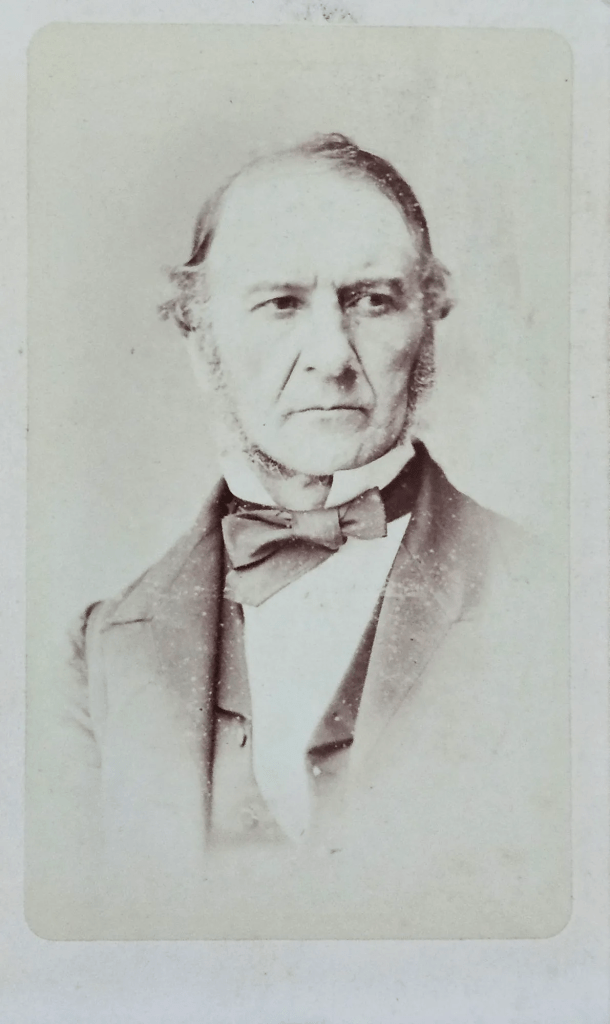
This resulting carte de visite issued by W. & D. Downey is part of my collection and also features in several versions in the collection of the National Portrait Gallery, London.
Taken together, the sequence of events strongly suggests that Daniel Downey not only took the portraits featuring Lord Brougham and Mr. Gladstone at Brougham Hall, but also as that of Gladstone at Downey’s Eldon Square studio in Newcastle.
Whatever the exact details of their provenance, the resulting photographs capture two of Britain’s best-known politicians in their Victorian pomp.
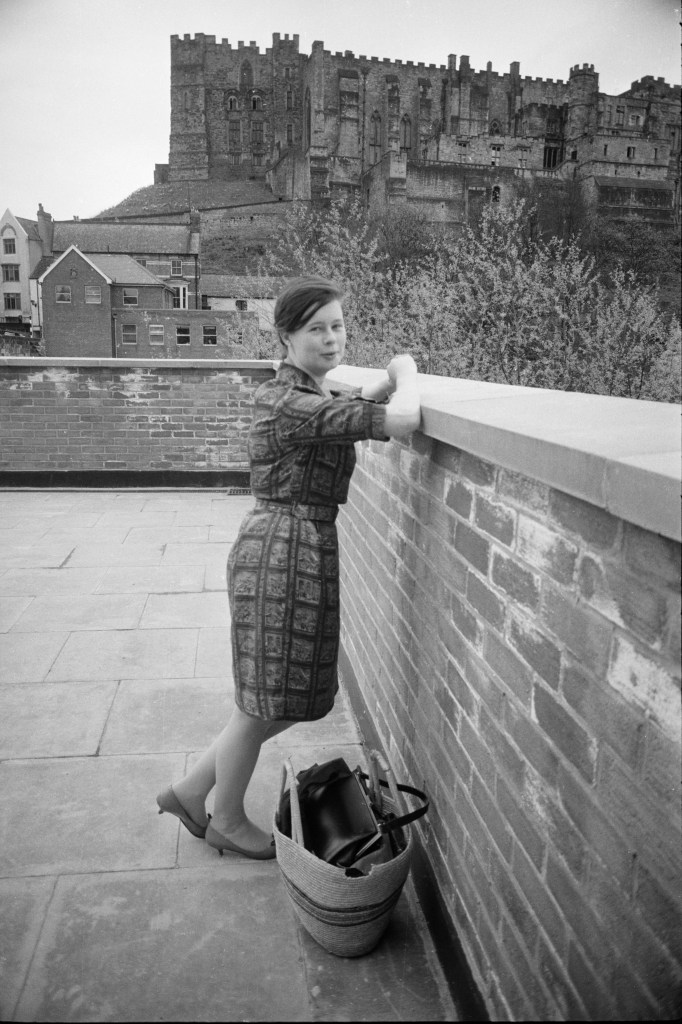
I first came across her work last year whilst browsing in a second-hand bookshop.
Historic Architecture of Newcastle Upon Tyne (Oriel Press, 1967) was full of striking photographs of a city that I’ve known for the past 40+ years.
From Historic Architecture of Newcastle upon Tyne (Oriel Press, 1967). Author’s Collection.
Reading the book’s credits revealed that, aside from two images, “all other photography by Ursula Clark.”
So who was Ursula Clark and how did she come to take such a huge number of striking photographs?
The answer and the results of a research project that’s occupied me for several months will be shared later this week during a free online talk for the Royal Photographic Society Historical Group.
The name of John Hunter Rutherford (1826-1890) lives on in a number of educational institutions.
An evangelical preacher from the Scottish Borders, he came to Newcastle on Tyne in 1850.
Among his many achievements as an educationalist, he is best known for setting up a series of elementary schools in the surrounding area.
Rutherford College named after him gave birth to what today is Northumbria University.
When Dr. Rutherford died suddenly, his reputation was such that 5,000 people took part in his funeral procession.
Newcastle Daily Chronicle (28th March 1890). From British Newspaper Archive.
In addition, the Newcastle WeeklyChronicle estimated that more 100,000 lined the processional route.
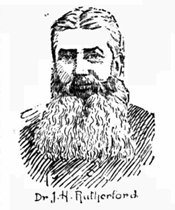
This line drawing of him in later life accompanied the newspaper’s three-column report of the occasion.
Newcastle Weekly Chronicle (28th March 1890). From British Newspaper Archive.
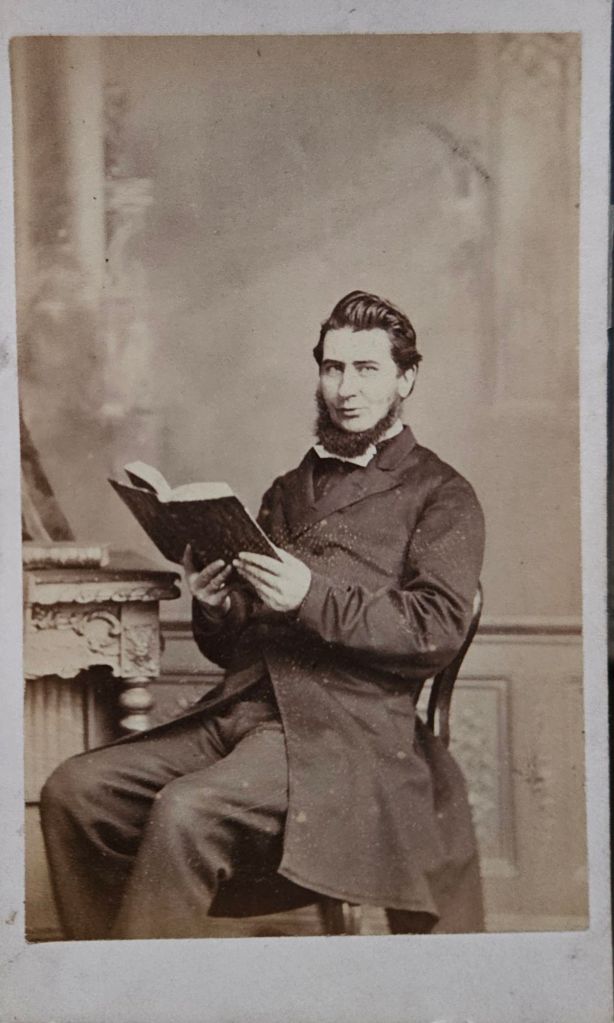
However, in his younger days, a recent addition to the Pressphotoman collection reveals that he posed for his portrait with leading Newcastle photographers W. & D. Downey.
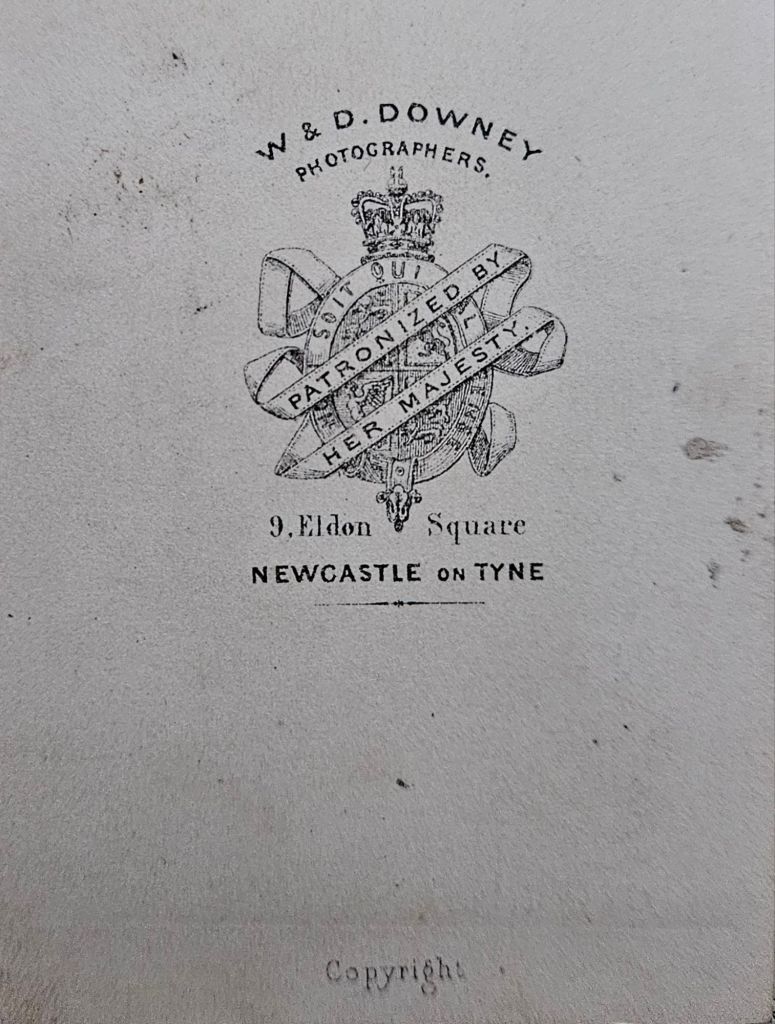
The slogan ‘Patronized By Her Majesty’ was used by the company before being replaced by ‘Photographers To Her Majesty’ in the middle of the decade.
This information and the lack of Downey branding on the front of the carte allows it to be dated c. 1862-1866.
At that point, Dr. Rutherford was in his late-30s and in the midst of his studies as a medical doctor.
A surprising twist to this blogpost is that his death occurred only a few doors away from where the Downey carte portrait was taken.
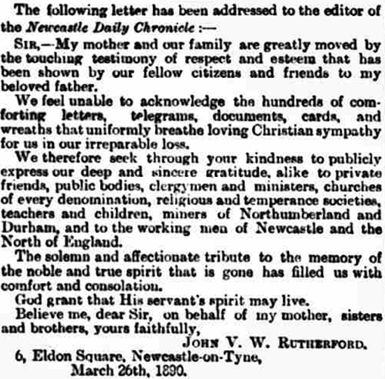
As part of its funeral report, the Newcastle Weekly Chronicle published a letter from Dr. Rutherford’s son John sent from 6 Eldon Square, the family home.
It indicates the esteem in which his father was held.
Newcastle Weekly Chronicle (28th March 1890). From British Newspaper Archive.
Given this, the Downey carte de visite of John Hunter Rutherford as a younger man making his way in the world seems all the more poignant.
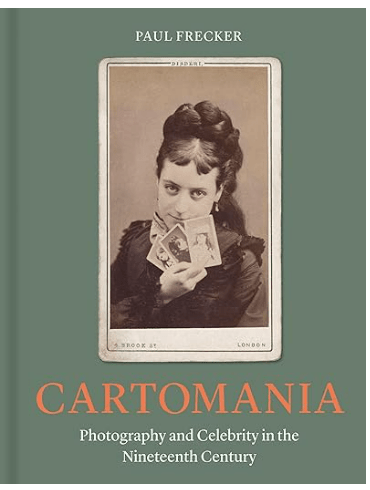
Paul Frecker’s recently published book Cartomania: Photography & Celebrity in the Nineteenth Century (September Publishing) is a veritable feast for collectors of cartes de visite.
Cartomania: Photography & Celebrity in the Nineteenth Century by Paul Frecker. (September Publishing (2024), £40).
It’s the culmination of more than two decades working as a specialist photography dealer.
In particular, it showcases Paul’s collection of the palm-of-the-hand-sized cards that reached peak popularity during the 1860s.
More modest in size, my own collection started amid ongoing research into the photography firm of W. & D. Downey of South Shields, Newcastle on Tyne and later London.
The company’s story, achievements and several examples of their cartes feature in Paul’s book, which I’m thoroughly enjoying reading.
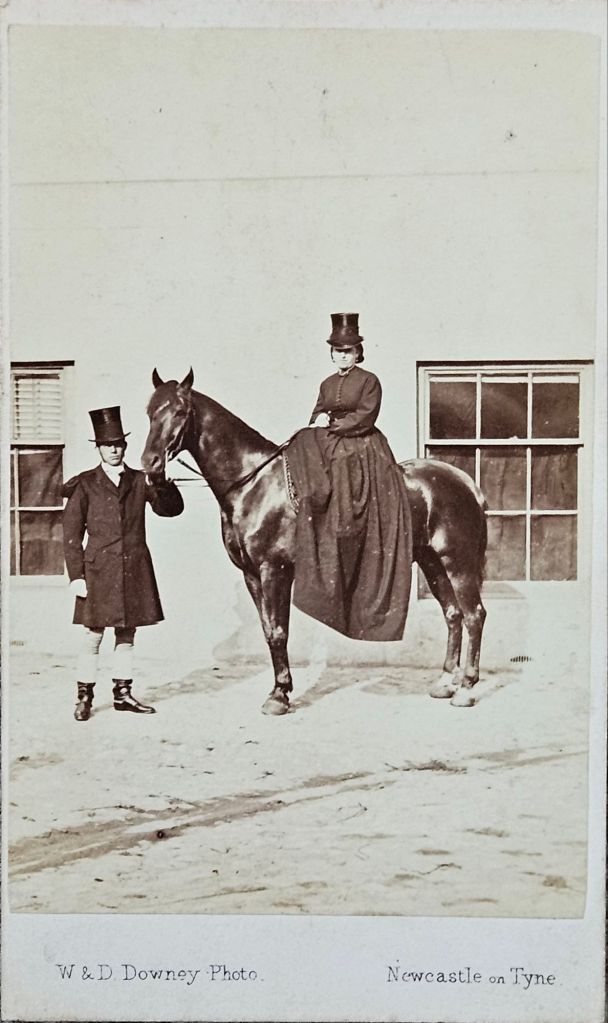
One early Downey carte that I obtained several months ago via a well-known auction site continues to intrigue me.
It features a woman in full riding habit and hat sat side-saddle on her horse with a smartly-dressed groom in attendance.
This striking example of the carte format prompted questions in my mind as to who it featured and when and where the photograph was taken.
Looking for clues, what appear to be footprints in the snow in the foreground suggest a winter’s day.
Shadows are cast onto the building in the background.
The low sun has also brought to life the horse’s coat, indicating that its groom had worked extra hard to prepare his charge for the camera.
As to who the carte features and when and where the photograph was taken, further research produced a helpful press report.
In May 1861 under the headline “The Photographic Art,” the North & South Shields Gazette printed an article about Downey’s activities.
It described how “the Messrs Downey” had just added “a series of local portraits” to “their photographs of illustrious men and legislators.”
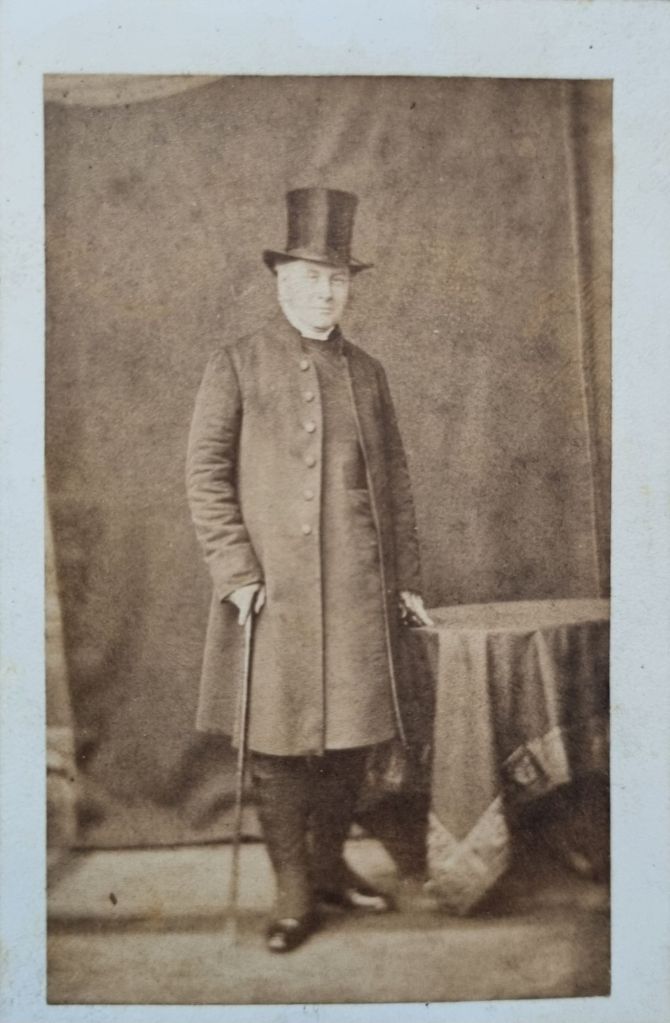
Among those “local portraits” were the Lord Bishop of Durham, Henry Montagu Villiers, and his family, who had “honoured them [Downey] with sittings at Auckland Castle.”
A previous Pressphotoman post (1st July 2024) revealed that the photoshoot for the carte below featuring the Lord Bishop of Durham took place in late-1860.
Among other “local portraits’ credited to Downey were several featuring Sir Edward Blackett and his family “taken at Matfen Hall.”
The Blacketts were a long-established Northumberland family and Matfen Hall near Corbridge, built in the early 1830s, was their stately home.
Today it’s a luxury hotel, spa and golf estate.
But it was the newspaper article’s next sentence that offered a tantalising clue as to the identity of Downey’s woman on horseback.
It continued: “Let us add, as exemplified in the case of one of Sir Edward’s daughters and one of the honourable Misses Villiers [my italics] that the artists have exhibited much felicity in their management of a figure on horseback.”
This information helped narrow the field of likely candidates.
Looking at other sources, the 1861 Census records Sir Edward Blackett in residence at Matfen Hall with his daughters Louisa, Anna Maria and Georgiana Emma, who were all in their twenties.
As to the Villiers family, they were not at Auckland Castle when the census was taken, but at their London residence – 30 Cavendish Place, Marylebone not far from Oxford Street.
It listed the bishop together with his wife Amelia Maria Villiers and three of their daughters.
At the time, Gertrude, Mary and Evelyn Villiers were 17, 14 and 8 respectively though they had an elder sister Amy, who would have been 19.
Given this information, I was pleased to come across a further piece of evidence that points firmly in the direction of a member of the Villiers family being the Downey woman on horseback.
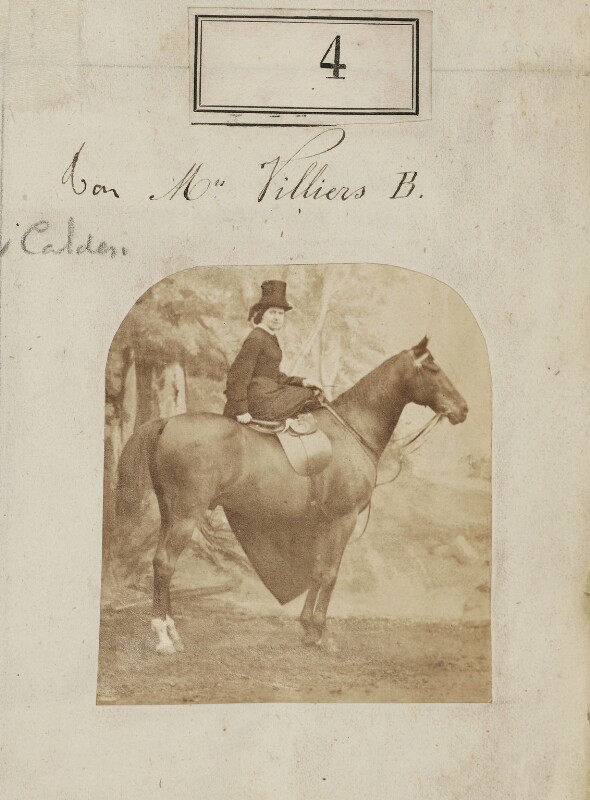
The collection of the National Portrait Gallery, London includes three horseback portraits featuring the ‘Hons. Mrs. Villiers.’
They are all by the celebrated portrait photographer Camille Silvy, who is a significant presence in Paul Frecker’s book Cartomania mentioned at the start of this post.
All three Silvy horseback portraits are dated 1860.
Given the physical similarity to the woman on horseback in Downey’s carte, might the ‘Hon. Mrs. Villiers’ (above) be the mother of “one of the honourable Misses Villiers?’
Our third subject is someone who Messrs. Mendelssohn and Edwards are likely to have known during their years with Downey.
James Herriott was born in 1846 in Blaydon, a town on the Tyne, a few miles across the river from Newcastle.
By his mid-twenties, he was married with a baby daughter and living in nearby Gateshead.
But he had already made valuable connections in the photographic business.
During his teens, he was apprenticed to Mawson & Swan of Newcastle on Tyne, who supplied firms like W. & D. Downey with the latest photographic equipment and chemicals.
Given this background, it’s perhaps unsurprising that James Herriott’s own career in photography was soon underway in Gateshead.
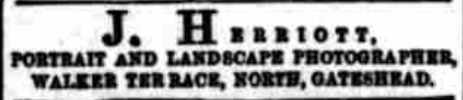
The 1871 census recorded his ‘rank, profession or occupation’ as ‘photographic artist,’ and the following year, a newspaper advertisement described him as a ‘portrait and landscape photographer.’
Advertisement from Gateshead Observer (1st June 1872). From British Newspaper Archive.
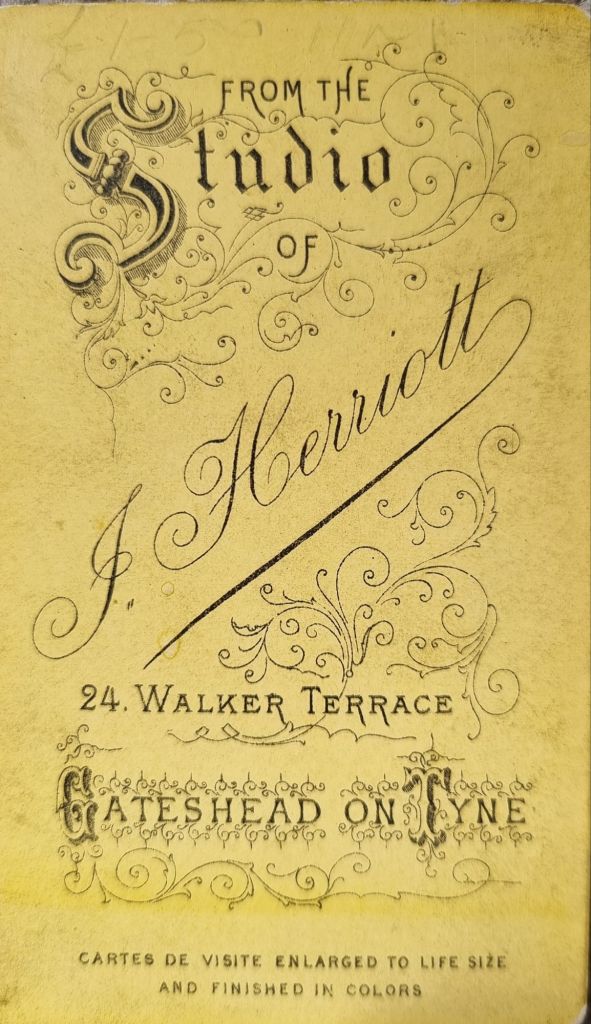
In terms of portraits, he offered customers ‘cartes de visite enlarged to life size and finished in colours.’
Whether his business hit financial or other difficulties, a notice published in the Newcastle Journal in April 1875 signalled a change of direction.
After closing for alterations, the notice stated, the business would re-open ‘under the named management of Downey and Herriott’ and ‘they will be prepared to do the highest class of work in the Art.’
The named ‘Mr. Downey, late of Oxford Street, Newcastle’ was photographer John Downey (1823-1906), elder brother of William and Daniel.
As described in part 1 of this mini-series, John Downey was previously in partnership for two years (1872-73) with Hayman Seleg (H.S.) Mendelssohn, another Downey apprentice.
The Downey & Herriott partnership though appears to have been even more short-lived.
Within a year or so, James Herriott was again advertising his Gateshead business, now with a second studio address in the centre of Newcastle.
Meanwhile, John Downey had set up ‘J & C. Downey, Photo Artists’ with his eldest son Cornelius at a separate address in Gateshead.
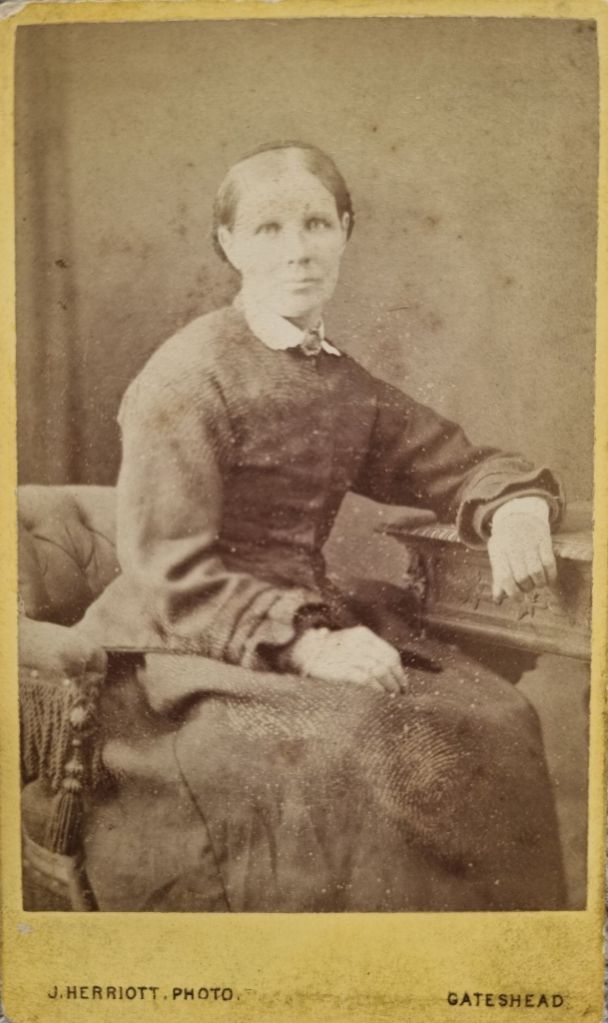
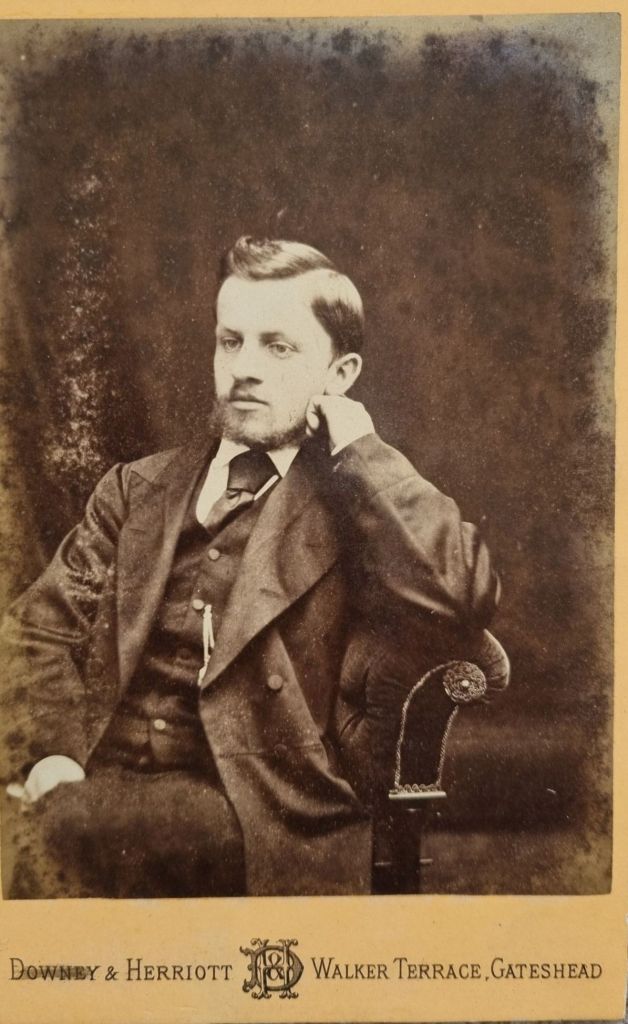
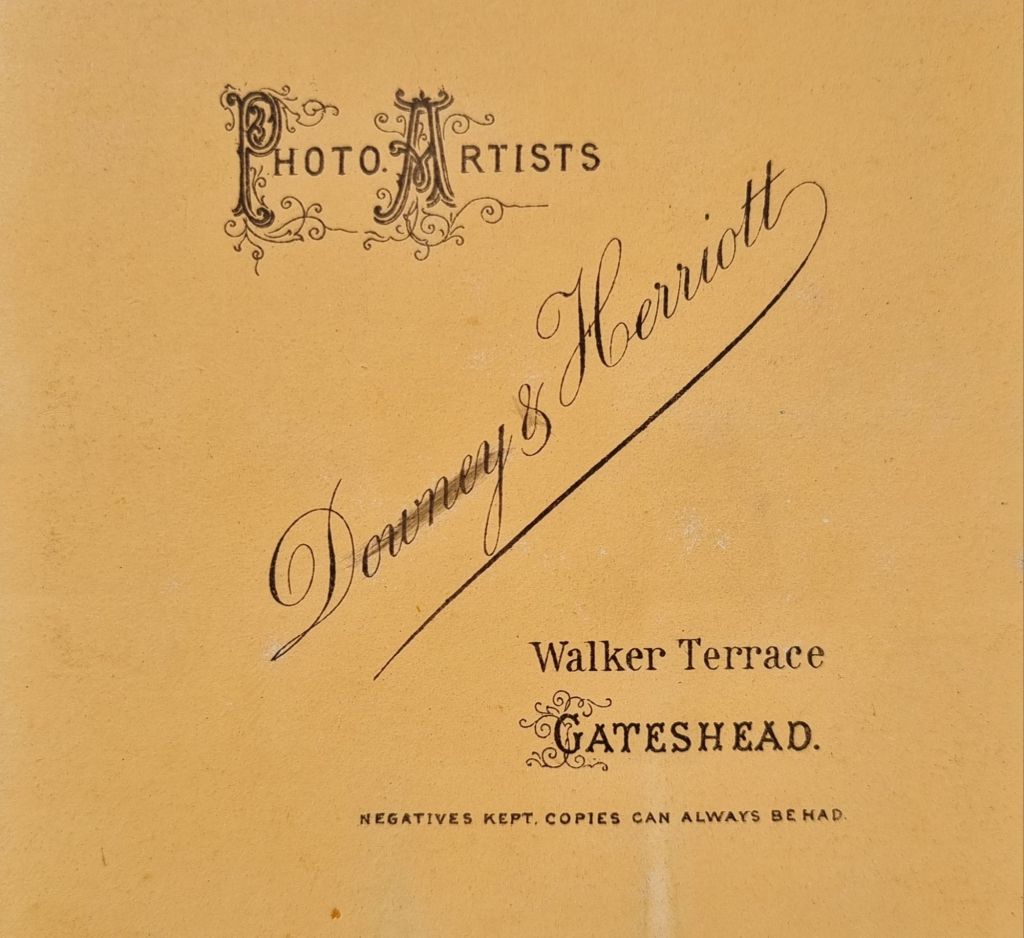
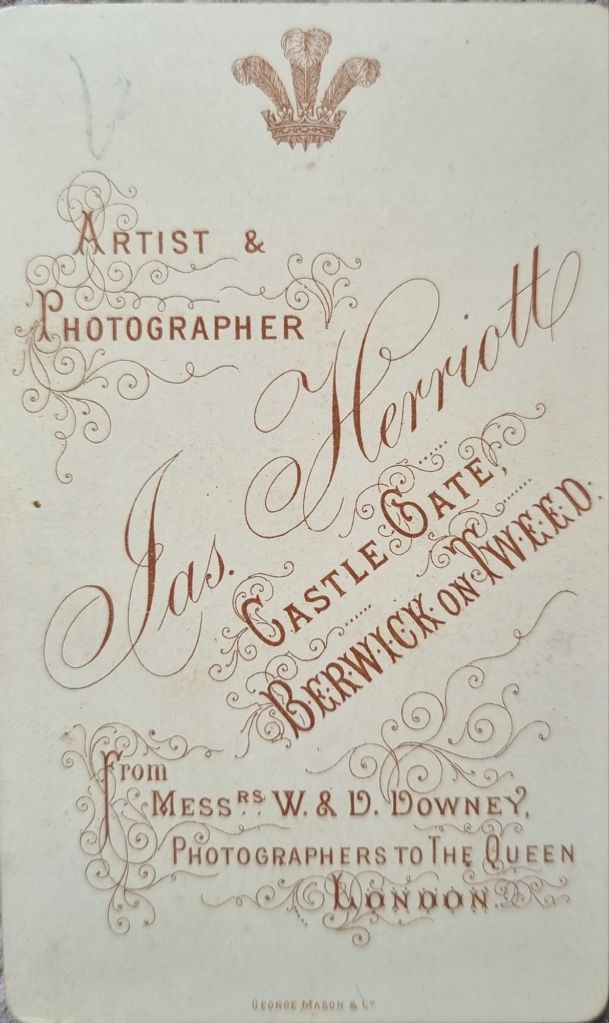
Downey & Herriott portraits are hard to track down, however, this cabinet card is unusual in that it shows the name ‘Downey’ crossed out on both front and the verso.
One explanation might be that card stock printed for the Downey & Herriott partnership was later used by James Herriott alone, perhaps because finances were still tight.
It’s also noticeable that both Downey & Herriott and Downey & Mendelssohn used the same distinctive orange-coloured card for their products.
Herriott’s involvement with the Downey photographic empire points to a long-running relationship.
It was one that perhaps began in the late-1860s following his Mawson & Swan apprenticeship and before opening his own Gateshead studio.
In a 1920s newspaper interview recalling ‘the days of his apprenticeship to W. and D. Downey,’ he recalled assisting ‘Mr. Downey’ in photographing both Queen Victoria and the Prince of Wales (later Edward VII) on separate occasions.
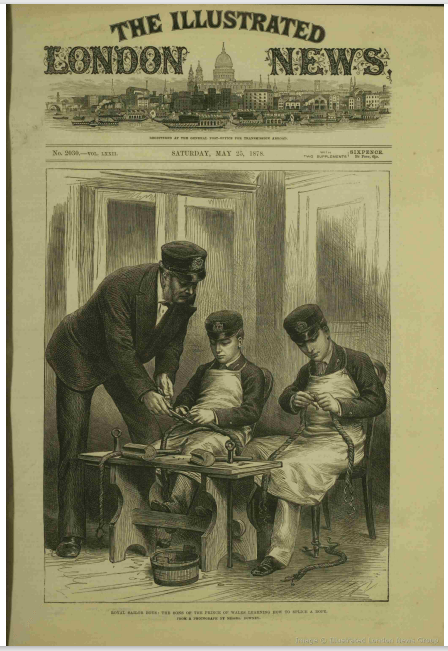
Another memory of a Downey assignment involved photographing Prince Albert (known as Eddy) and Prince George (the future George V) ‘while learning to splice rope’ during naval training aboard HMS Britannia.
In May 1878, the resulting photograph credited to ‘Messrs. Downey’ was reproduced as an engraving by the Illustrated London News.
Supplement to Illustrated London News (25th May 1878). From British Newspaper Archive.
The dating of 1878, at a point when James Herriott was running his own photographic business, reinforces the idea that he was a trusted Downey associate.
Within a few years though, the Tyneside chapter of his life came to an end.
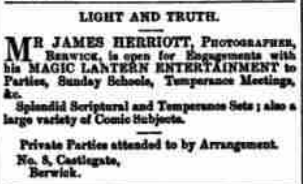
In March 1882, the Berwick Advertiser listed ‘James Herriott, photographer’ among ‘incomers’ to Berwick on Tweed.
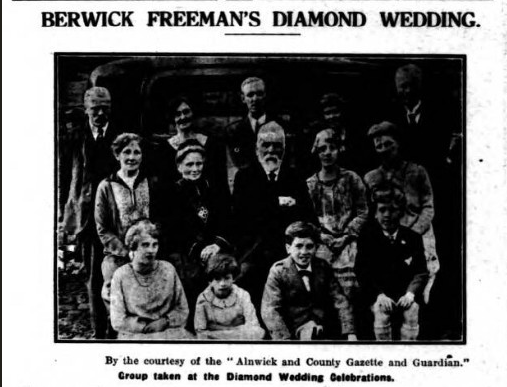
This move together with his wife Martha and their four children might be explained by James’s parents originating from Berwick, the northernmost town in England, where James had become a Freeman at the age of 21.
Resuming his photography, he opened a studio in the town’s Castlegate offering a range of portraits.
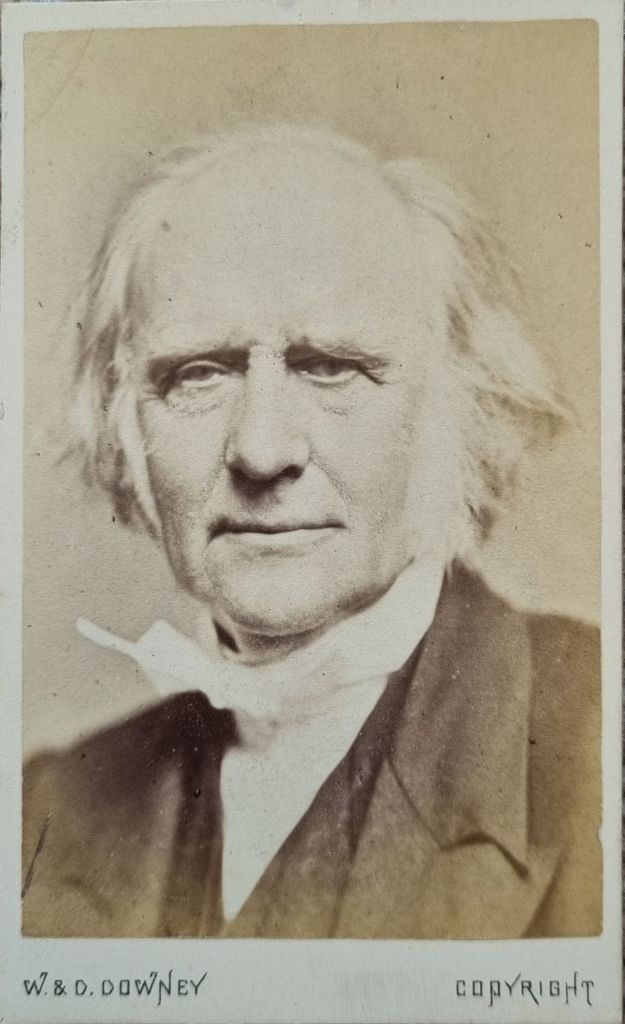
The verso of his products also took the opportunity to highlight his professional link to ‘Messrs. W. &. D. Downey, Photographers to the Queen, London.’
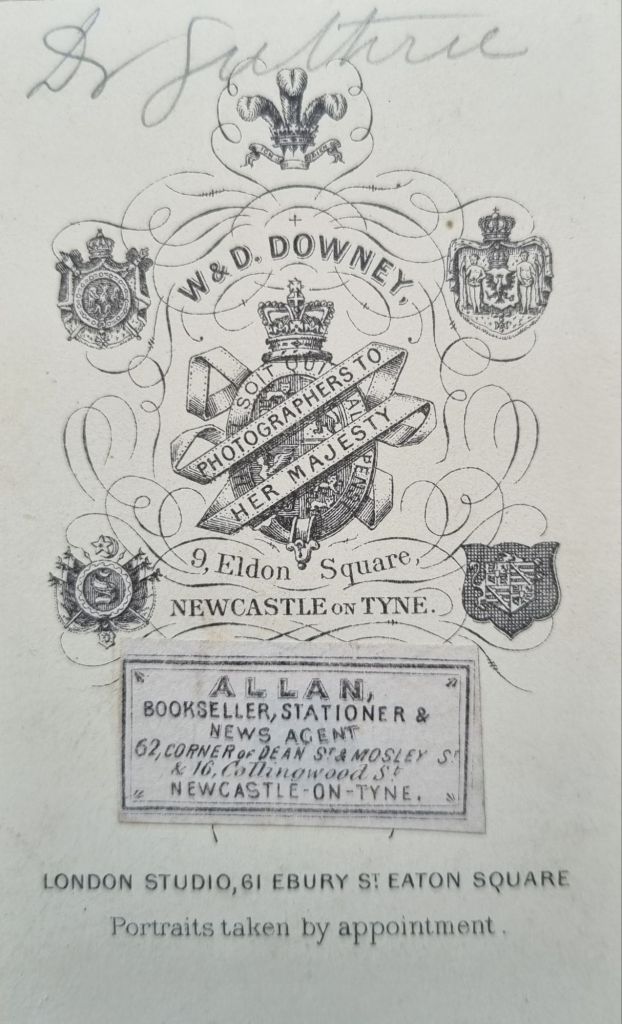
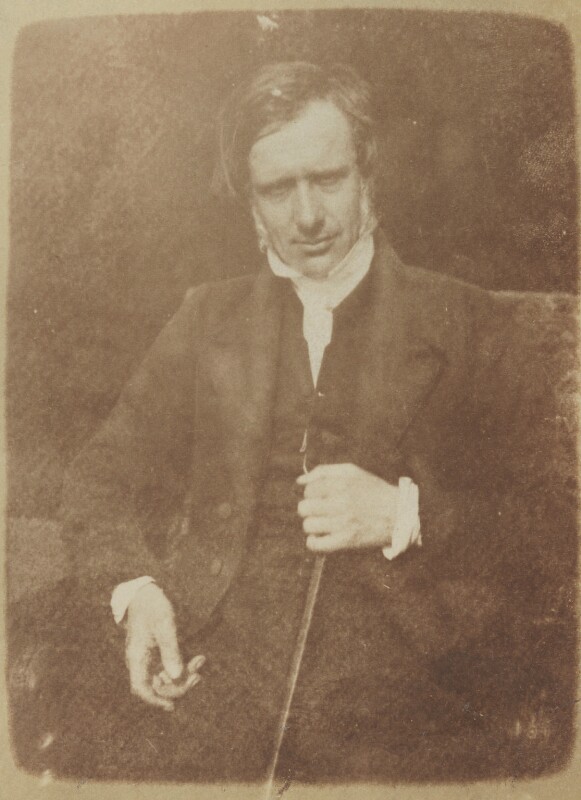
The arrival of the carte de visite format in the late 1850s was enthusiastically embraced by public figures such as Guthrie, who features in commercially available cards produced by several companies.
Downey’s version, which so impressed me, dates from the early 1870s towards the end of Guthrie’s life.
At that point, the company’s London studio at 61 Ebury Street off Eaton Square ‘opened occasionally,’ according to press adverts.
This ties in with the proviso stated on the verso that ‘portraits taken by appointment.’
As Downey’s business expanded from its Newcastle upon Tyne base to the capital, it encountered a number of accomplished competitors.
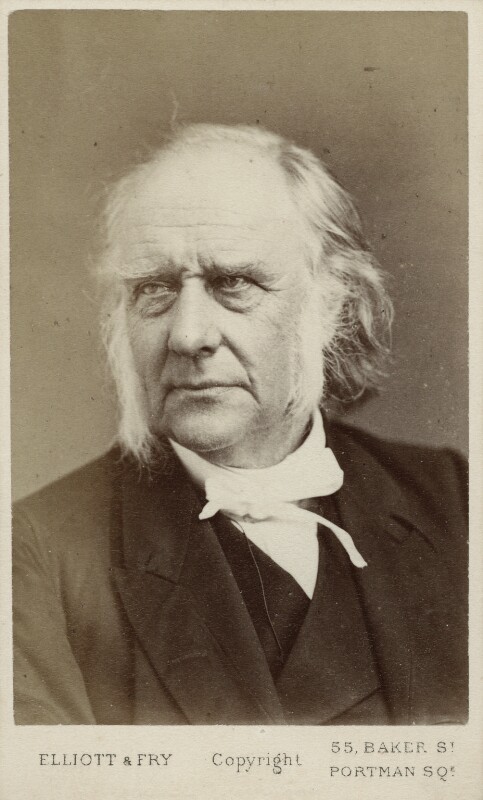
Founded in 1863, Elliott & Fry went on to establish itself as ‘one of the most important in the history of studio portraiture in London,’ according to the National Portrait Gallery, London website.
Its own carte de visite of Thomas Guthrie, also produced in the early 1870s, is in a similar style to Downey’s, perhaps suggesting that they kept an eye on each other’s products.
Guthrie’s death in February 1873 generated national newspaper headlines, and such carte de visites offered customers an affordable keepsake of a respected figure.
Given a choice, which of these Guthrie portraits would you have bought and why?
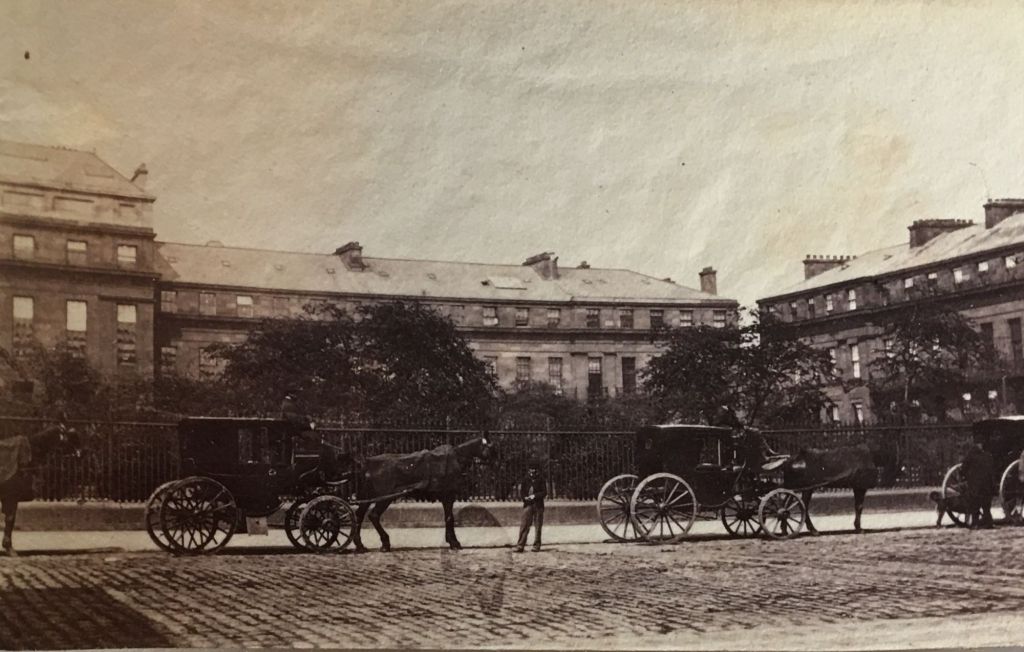
At no. 9 (on the right of facing terrace above), W. & D. Downey opened a new studio in March 1862, consolidating a growing reputation for supplying high-quality portraits.
Other leading photographers in the city such as P.M. Laws, E. Sawyer, R. Turner, G.C. Warren and T. Worden provided the Downey brothers, William and Daniel, with stiff competition.
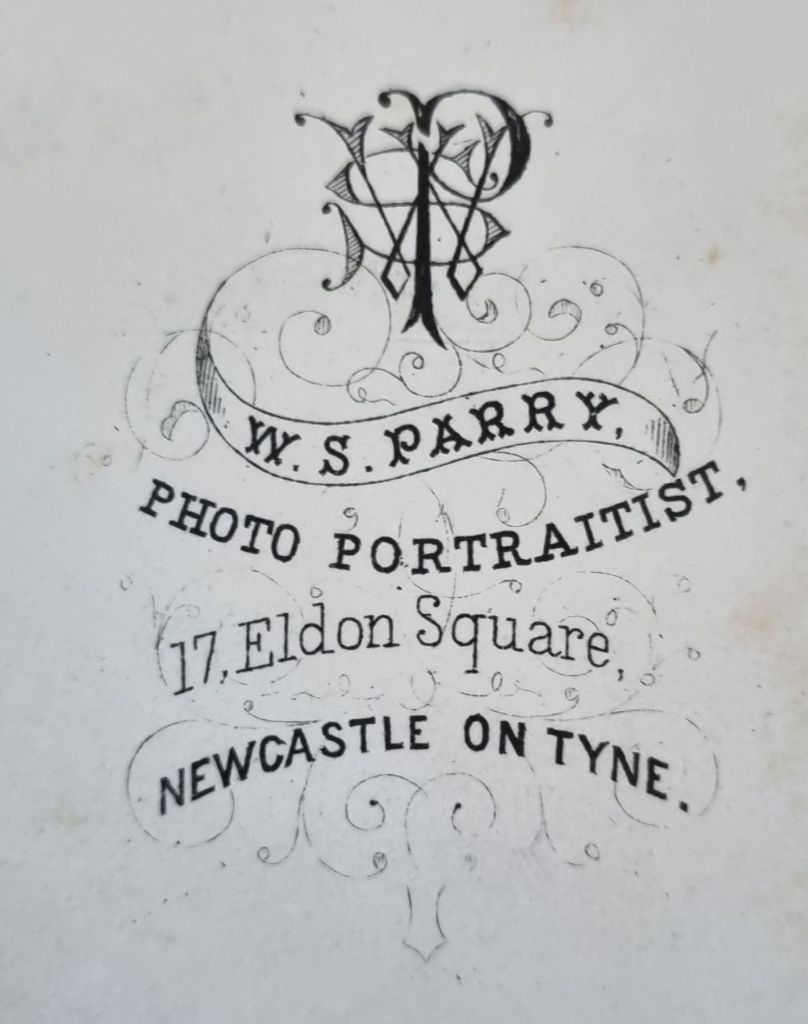
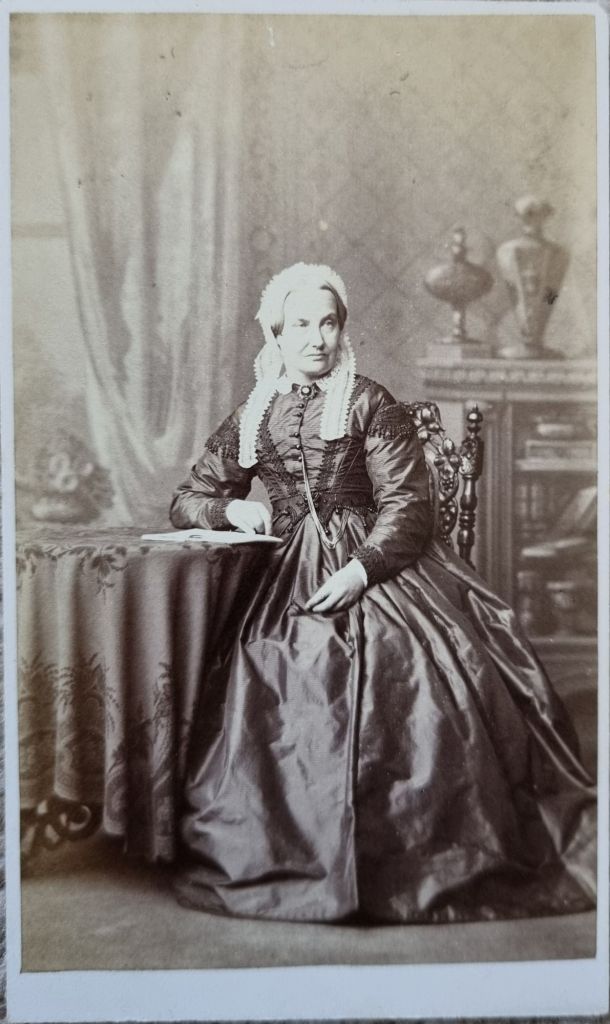
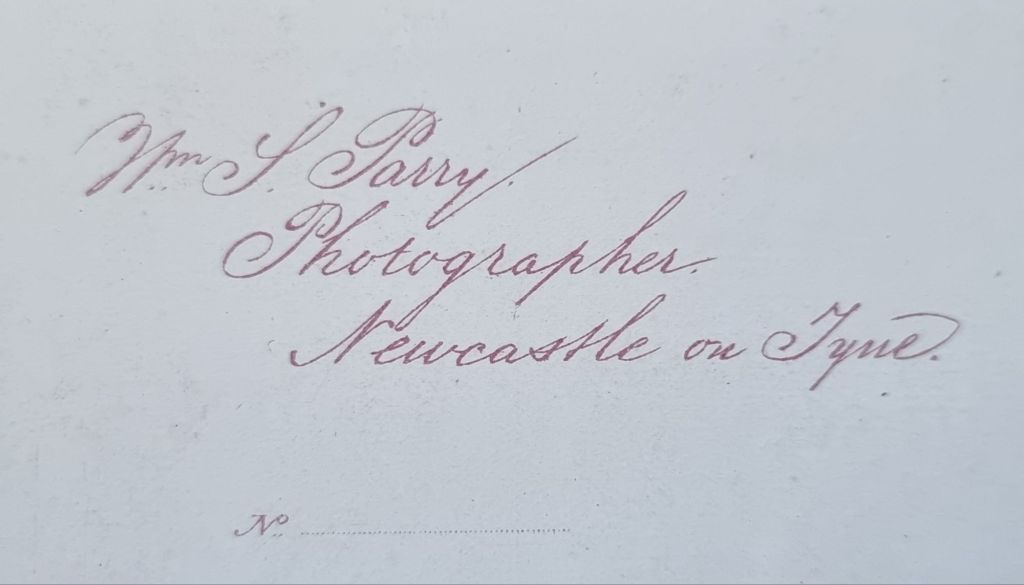
But in 1864, when W.S. Parry moved his long-established studio to no. 17 Eldon Square, a new chapter in Newcastle’s photo wars began.
William Softley Parry was born in 1826 across the River Tyne from Newcastle in Gateshead.
By the late-1840s, he was in business as a window glass merchant in Grainger Street, Newcastle, enjoying the new medium of photography as a hobby.
Initially, he produced paper calotypes which he exhibited at the Annual Conversaziones of the Literary and Philosophical Society of Newcastle upon Tyne (founded 1793), known as the ‘Lit & Phil.’
By 1855, following the invention of the wet collodion process which used glass plates, Parry opened his ‘Photographic Institution’ at 44 Newgate Street (‘nearly opposite St. John’s Lane’).
Press adverts promised ‘female attendance for ladies’ indicating that his wife Christiana was involved in producing the studio’s photographic portraits ‘on paper and glass.’
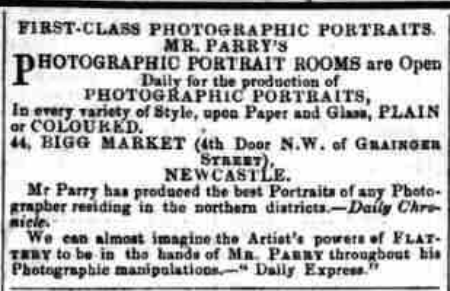
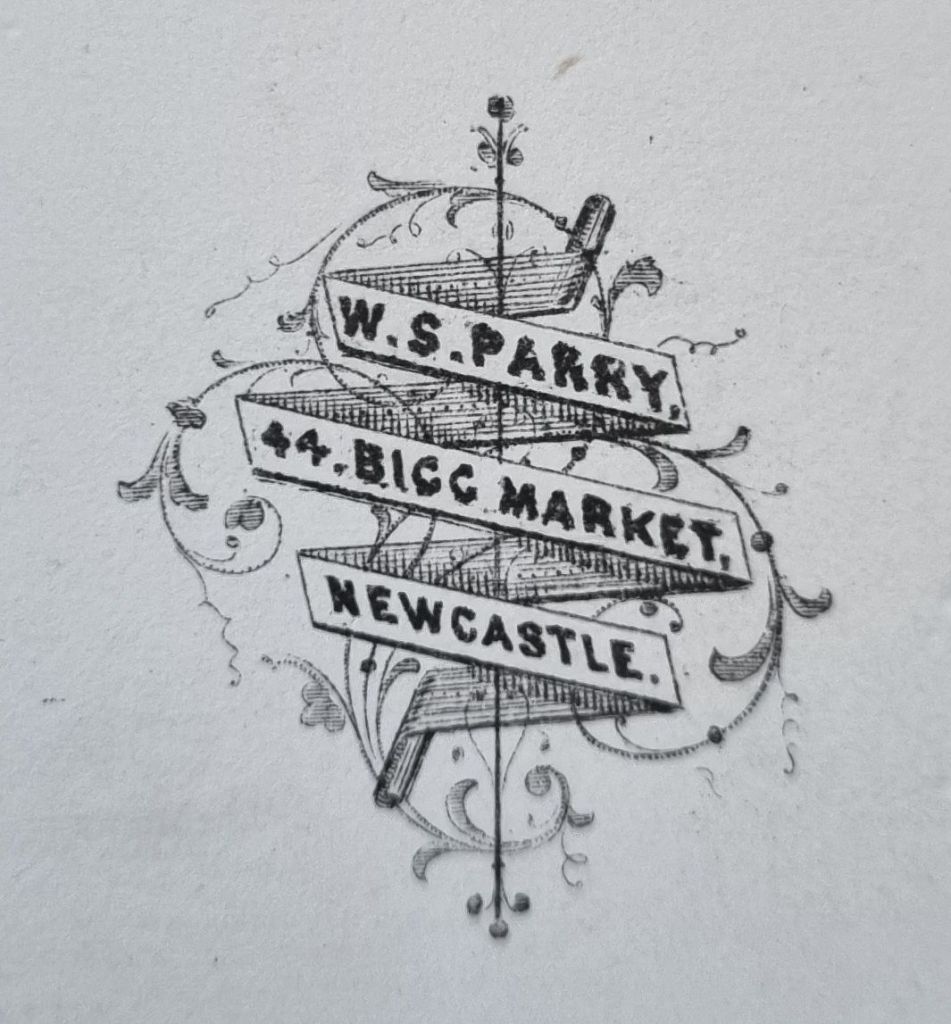
Three years later, the Parry’s business relocated to 44 Bigg Market (‘4th door N.W. of Grainger Street’) and glowing reviews from the national press helped promote its wares.
Advert from North & South Shields Gazette, 15th July 1858. From British Newspaper Archive.
The new fashion of carte de visite portraits attracted a wide variety of clients and offered an affordable opportunity to dress up and look your best.
Then in March 1864 with business evidently booming, an opportunity arose to relocate to the more prestigious surroundings of Eldon Square a few doors down from W. & D. Downey.
According to a notice placed in the Newcastle Courant, no. 17, described as an ‘eligible freehold dwelling house with Coach House and Stable,’ was ‘to be sold by auction.’
Advertisement from Newcastle Courant, 14th March 1864. From British Newspaper Archive.
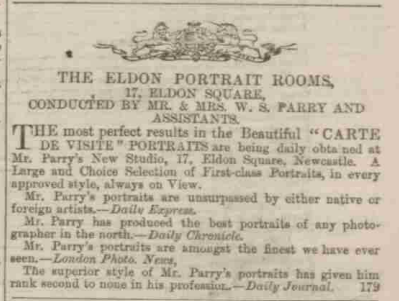
Within a few months, ‘The Eldon Portrait Rooms, 17 Eldon Square, Conducted by Mr. & Mrs. W. S. Parry and Assistants’ were open for business.
Advert from Newcastle Daily Journal, 20th July 1864. From British Newspaper Archive.
The Parry’s arrival cemented Eldon Square’s status as a place to go if you were having your photo portrait taken.
The fact that W. & D. Downey at no. 9 were the Parry’s neighbours and photographic competitors was reflected in subtle changes to their business offer.
For instance, when Downey’s offered a new series of stereoscopic views of Newcastle, Parry raided his photographic archive to advertise ‘local views, and others of general interest … taken from eight to sixteen years ago.’
In the drive for valuable custom, both studios placed almost daily front-page adverts in the Newcastle press.
Downey invariably occupied the top of the left-hand column whilst Parry took a prominent position on the right-hand side of the page.
Then, on 11th July 1868, the Newcastle Daily Journal reported the death of Christiana Parry.
In her late 30s, she had died at no. 17 the previous day though no cause of death was given.
It was the latest tragedy to befall the Parry family whose ‘eldest surviving daughter’ Euphemia died in 1862 aged five.
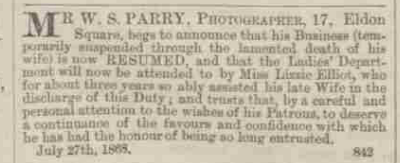
A fortnight after ‘the lamented death of his wife,’ William announced in a press ad that he was resuming business and that the Ladies’ Department would be run by her assistant for the past three years, Miss Lizzie Elliot.
Advert from Newcastle Daily Journal, 24th July 1868. From British Newspaper Archive.
Improvements to the studio in Eldon Square followed.
However, in June 1871, no. 17 was put ‘up for sale’ and William revealed that he would ‘shortly leave for the South.’
The following month, a two-day sale of ‘household furniture and effects’ and ‘the apparatus and working plant of the Photographic Department’ was held at his home.
After leaving Newcastle, W.S. Parry ran at least two photography businesses, one in Berkshire during the 1870s and another in Birmingham in the 1880s.
However, by the time of his death in 1915, his reputation as a pioneering photographer was long forgotten.
Even the Newcastle Journal, which celebrated his many photographic achievements during the Eldon Square years, headlined its report of an inquest into his death: ‘Blown Over By The Wind: An Old Man’s Sad Death At Middlesbrough.’
Despite this, William Softley Parry’s work as a pioneering photographer is chronicled in two respected accounts of the medium’s early years.
Notably John Werge’s History of Photography (1890) and, more recently, Roger Taylor’s Impressed By Light: British Photography from Paper Negatives, 1840-1860 (2007).
What they confirm is that W. S. Parry’s Newcastle years were both influential and productive and helped put the city on the map as a centre of photographic innovation.
Next time in the final part of this mini-series, new Pressphotoman research explores if an amateur husband-and-wife photography team were also living in Eldon Square at the turn of the 1860s.













 Pressphotoman
Leave a comment