Photohistory research often resembles a large jigsaw puzzle in which the pieces are randomly scattered around the world
It’s then the researcher’s job to try and locate pieces that have survived the passage of time and reassemble what remains of the puzzle until some sort of understandable picture emerges.
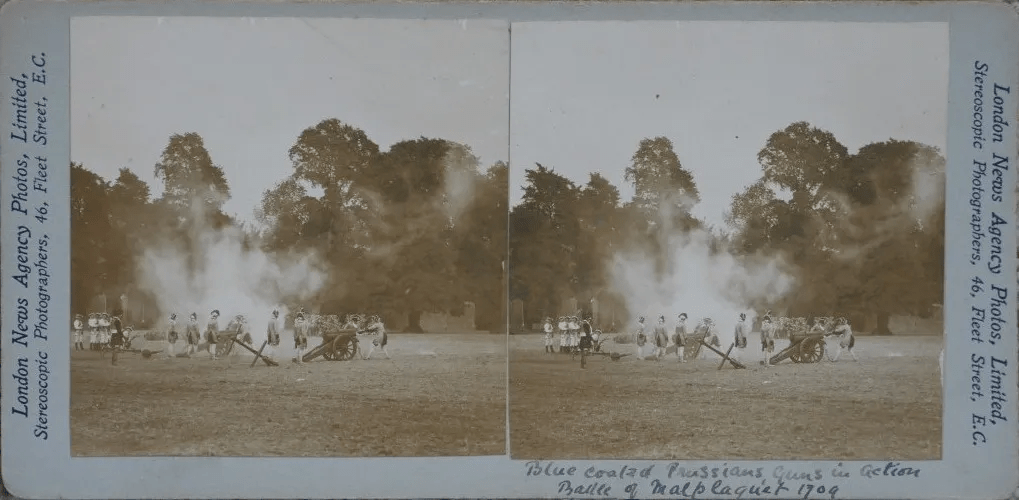
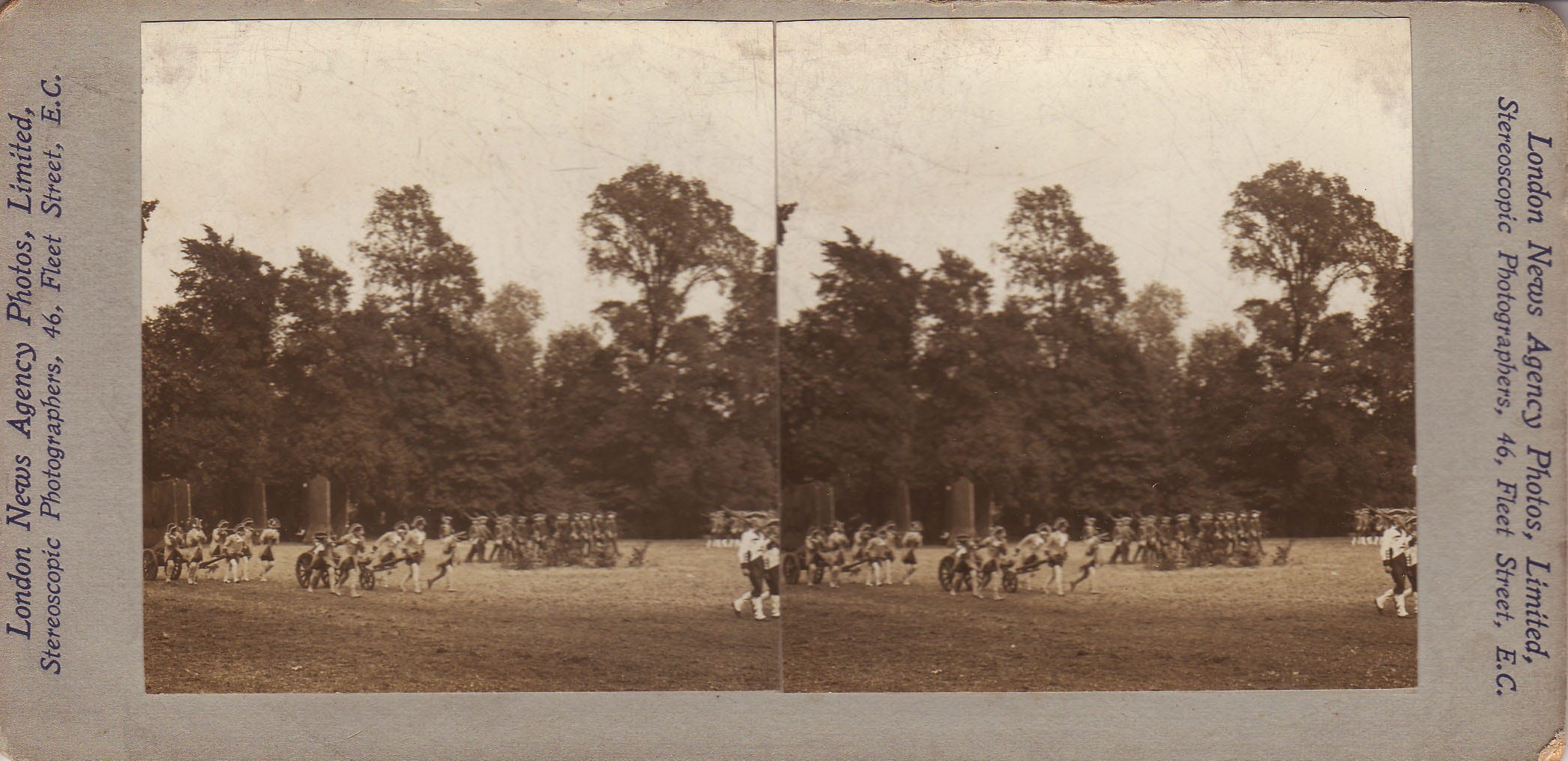
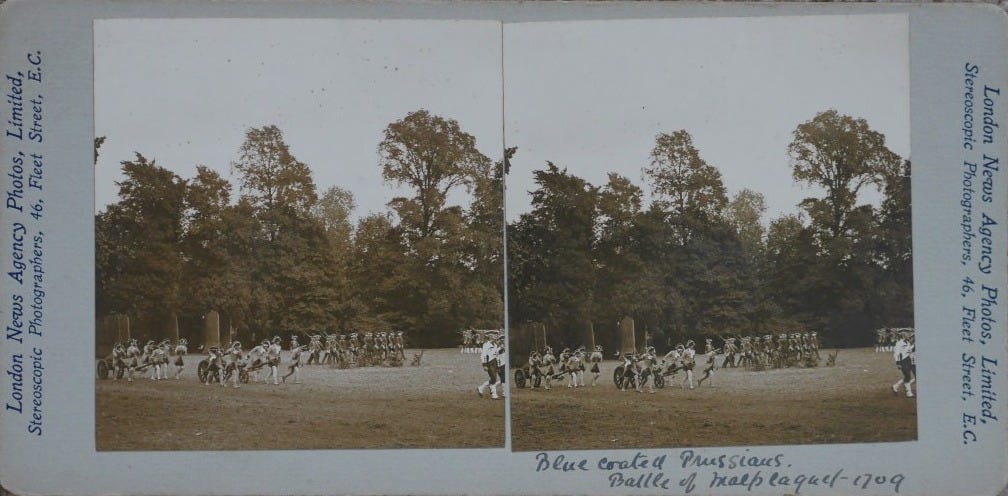
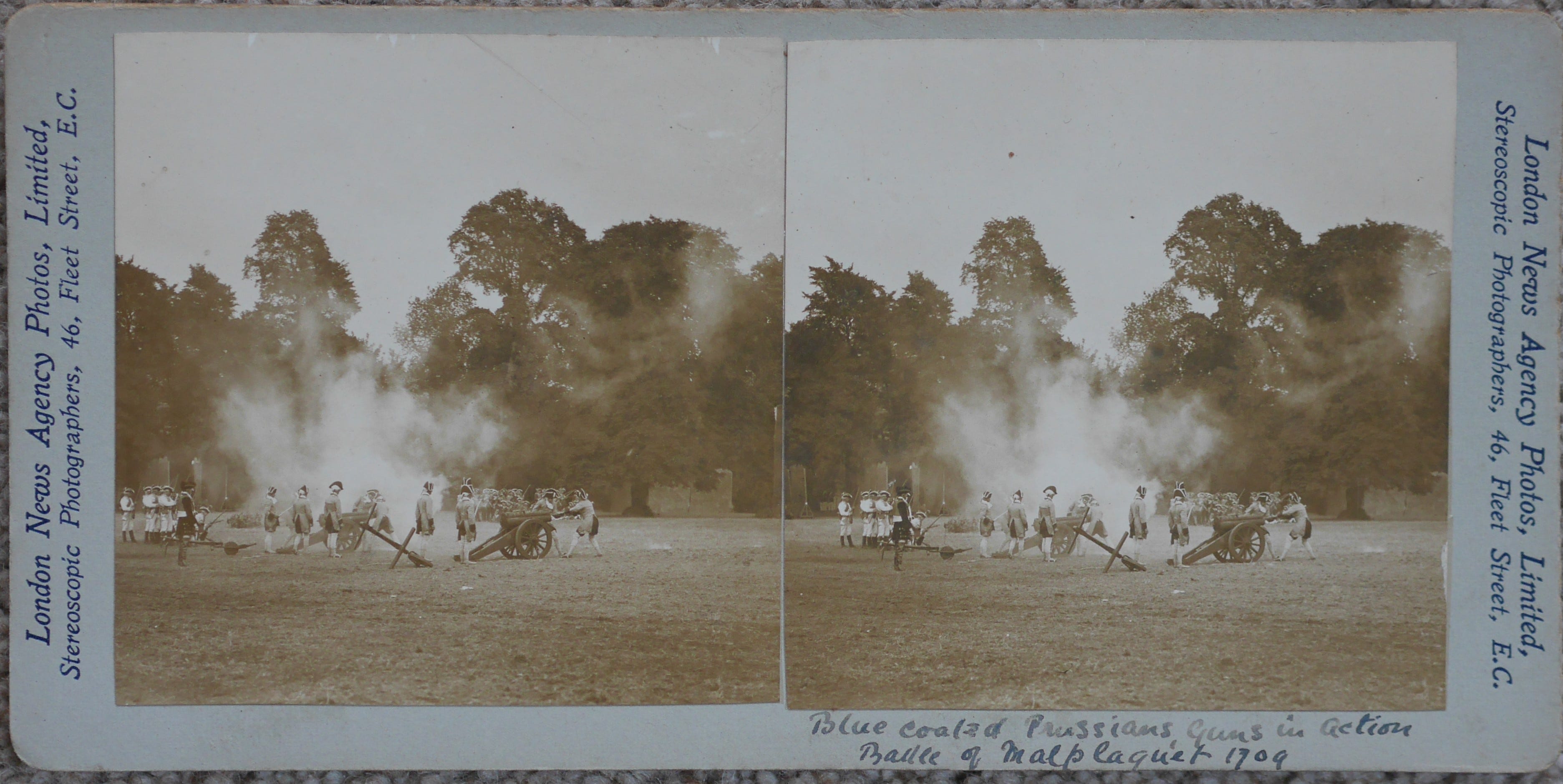
Nearly two years have passed since a couple of 3D stereoscopic images produced by London News Agency Photos (LNA) of 46 Fleet Street came to my attention on a well-known online auction site.
At the time, I made a case for the stereos taken at the 1910 Army Pageant at Fulham Palace being the work of early press photographer James Edward Ellam (1857-1920) whose career I continue to explore.
Then out of the blue, a recent email exchange with Julie Gibb from National Museums Scotland yielded yet more pieces of this particular jigsaw.
She curates the Bernard Howarth-Loomes Collection of around 11,000 stereos.
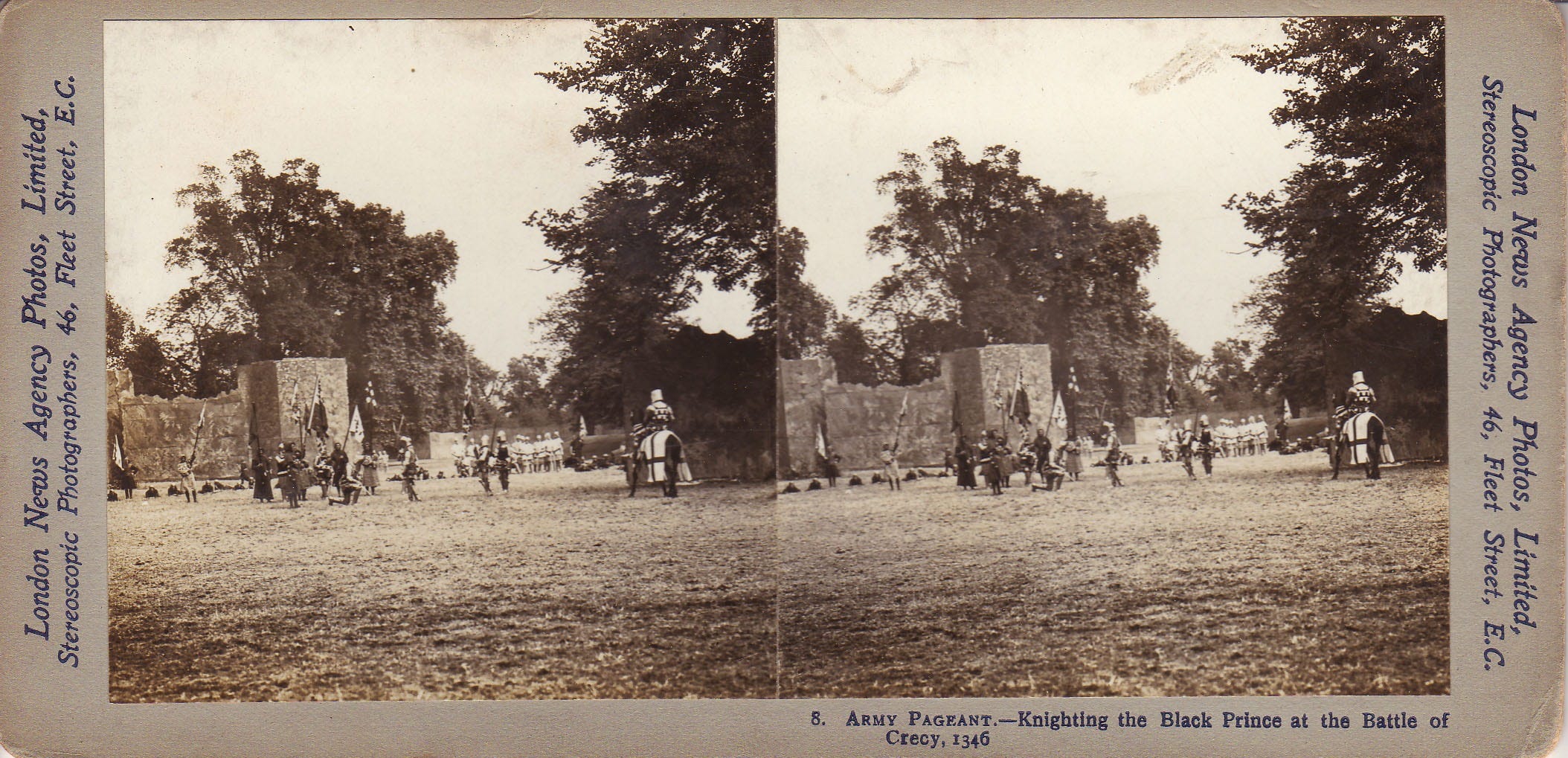
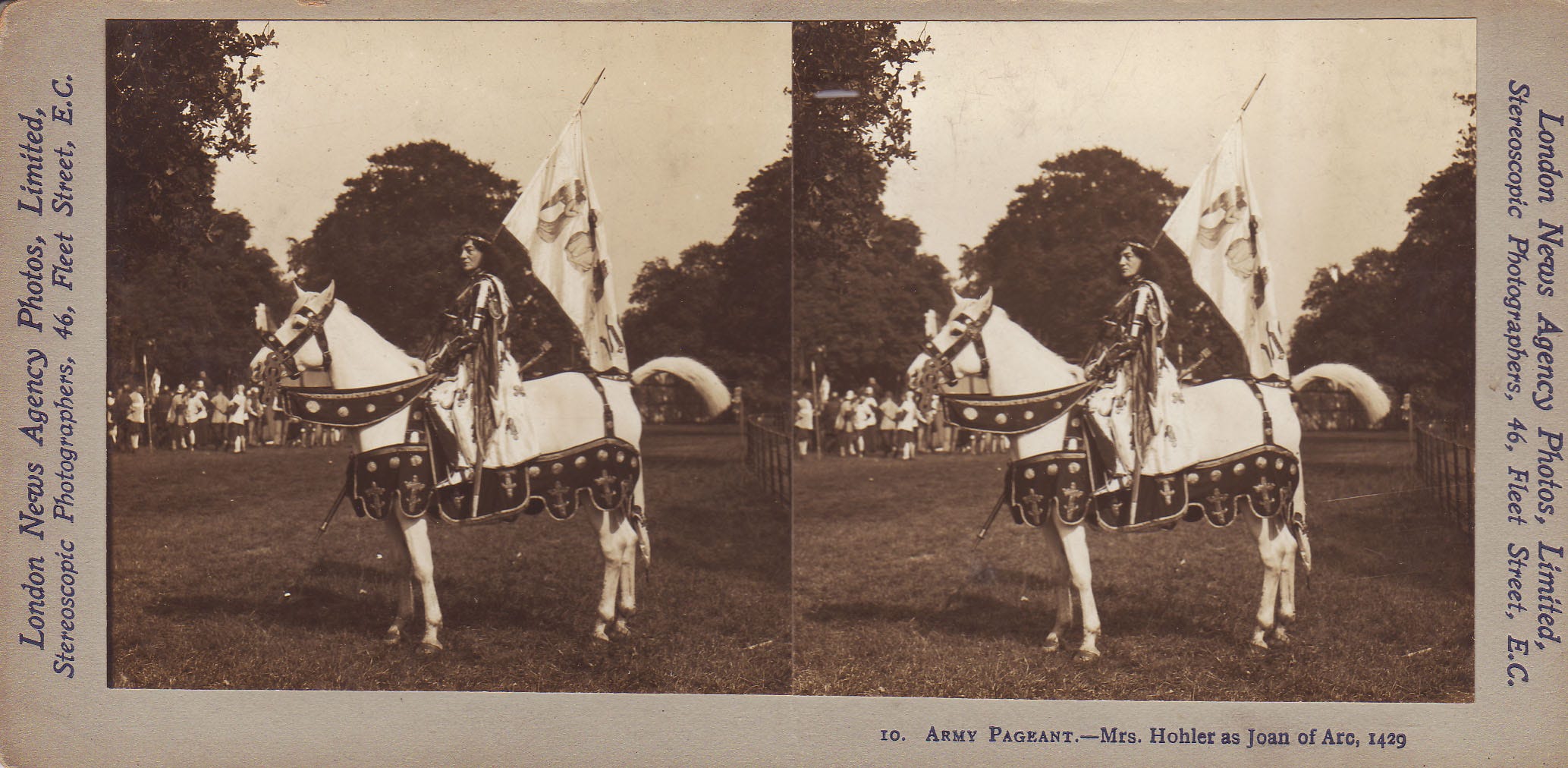
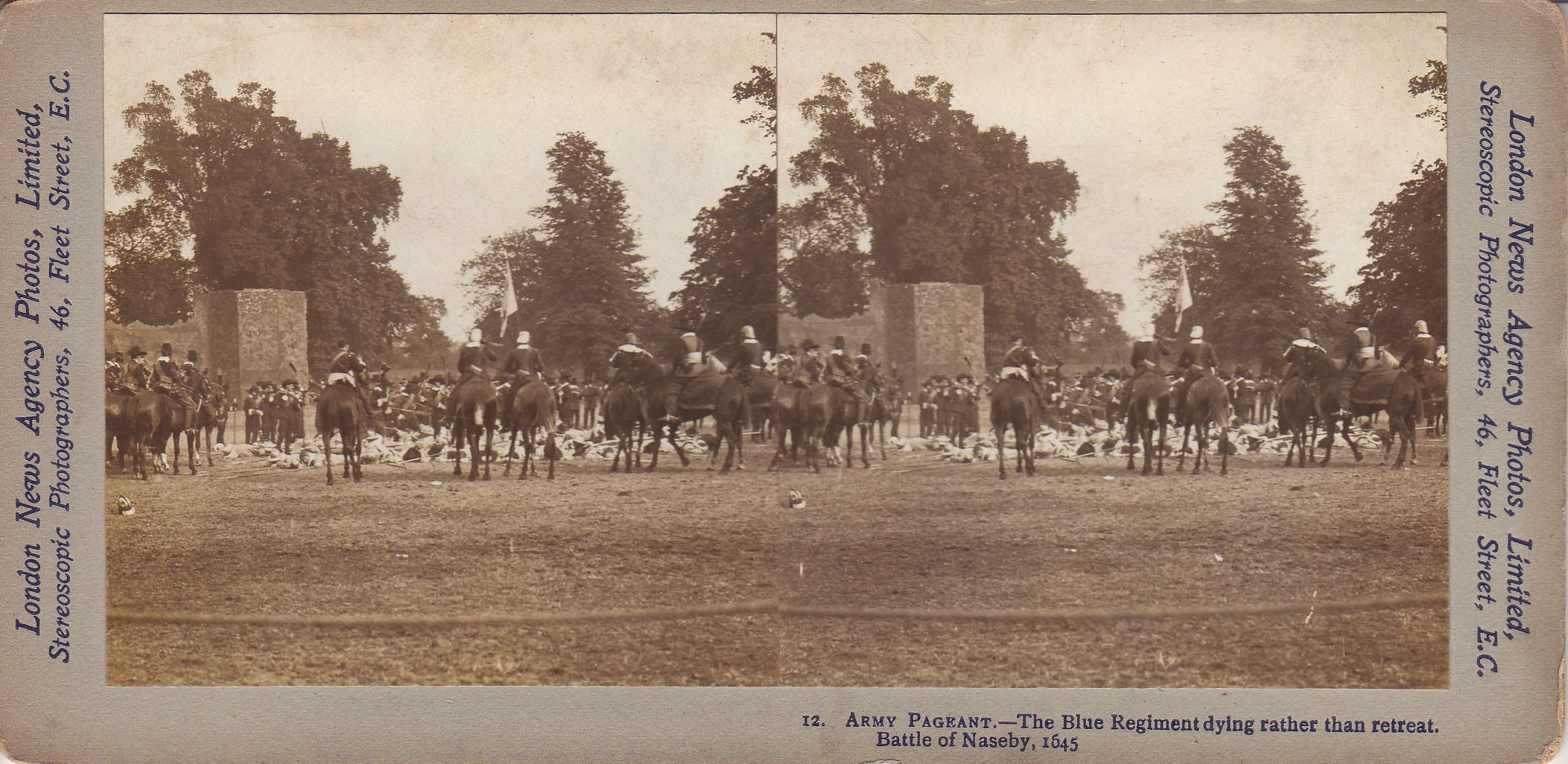
Unbeknownst to me, it included a set of five featuring the self-same 1910 Army Pageant and also published by London News Agency Photos
What was more exciting was that one of the Bernard Howarth-Loomes images matched the second one that that I obtained from Ebay in 2024 minus its handwritten caption as supplied by JE Ellam.
What is apparent from the further four LNA stereos in the Bernard Howarth-Loomes Collection is that they were published as a commercial set complete with printed captions.
This echoes the approach taken during the same era by Underwood & Underwood, a fellow stereoscopic photography company with a London office near Fleet Street.
Like LNA, they too published sets of stereocards featuring news events and supplied the images from the same assignment to newspapers and magazines.
To complete the picture, James Edward Ellam worked for the Underwood company for a decade from 1897 before joining London News Agency Photos after it began life in 1908.
These new LNA stereos featuring the 1910 Army Pageant add further weight to the case for them being Ellam’s work.
My thanks to Julie Gibb for permission to reproduce the following LNA stereos from the Bernard Howarth-Loomes Collection in this blogpost.
In September 2023, a blog-a-day series of Pressphotoman posts featuring stereographs mostly attributable to the early press photographer James Edward Ellam (1857-1920) concluded with a question.
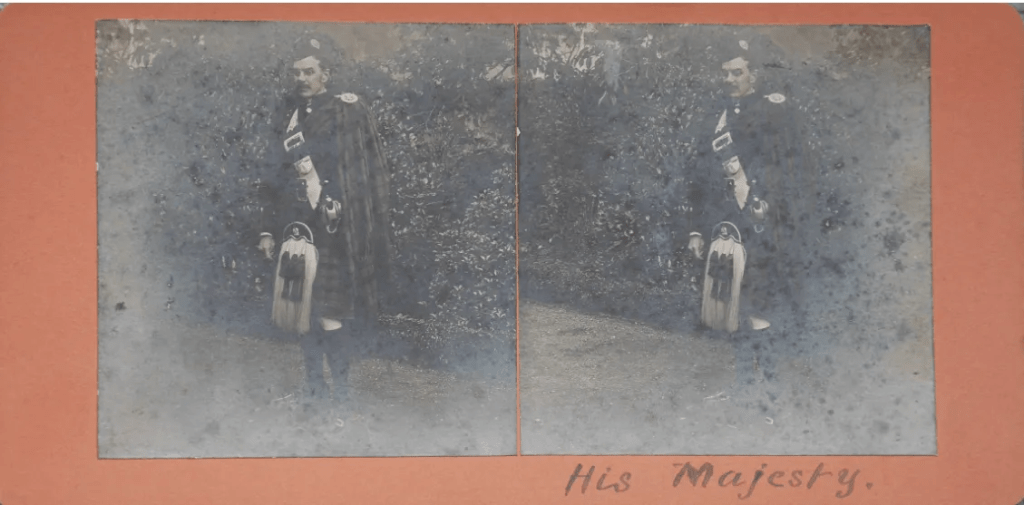
Was Ellam the man portrayed in one of the newly-discovered cache of stereos?
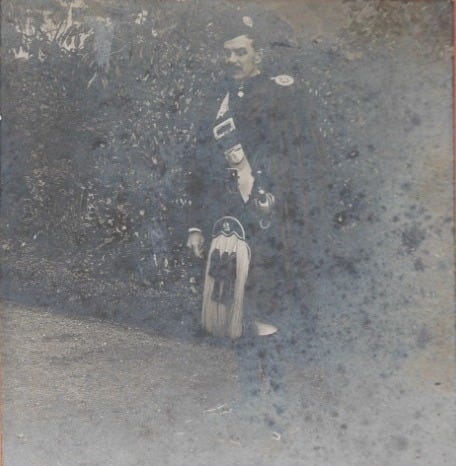
Though faded with age, a figure in full Highland dress pictured with a garden backdrop was captioned ‘His Majesty.’
The handwriting was immediately recognisable from the multiple copyright forms that Ellam completed during his career, whilst the title ‘His Majesty’ appeared to be a humorous reference to one of his best-known images.
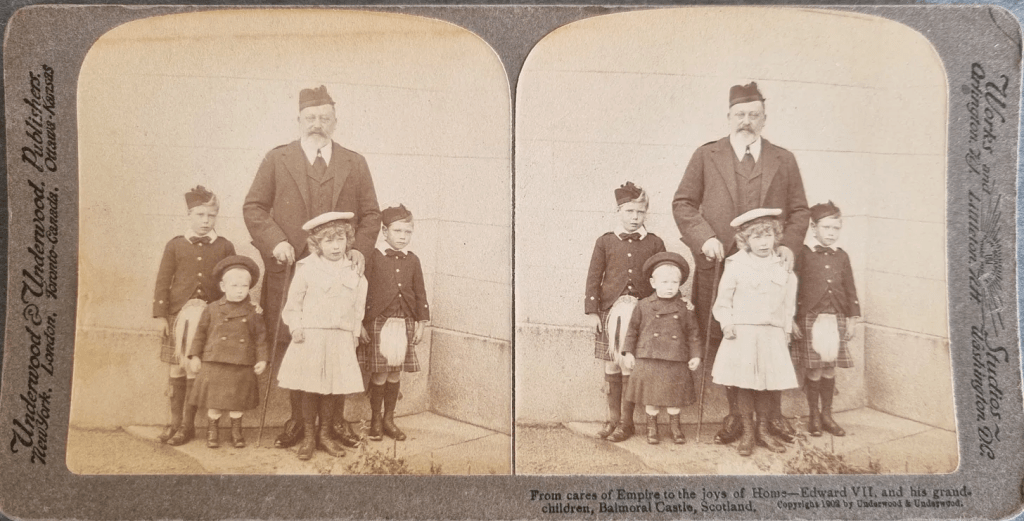
Taken for Underwood & Underwood, it featured Edward VII and his grandchildren (including the future Edward VIII and George VI) at Balmoral following the King’s Coronation in August 1902.
These pieces of evidence seemed to point strongly, but not conclusively, in one direction.
For the past couple of years, Pressphotoman has been on the look out for photographic evidence that might corroborate this theory.
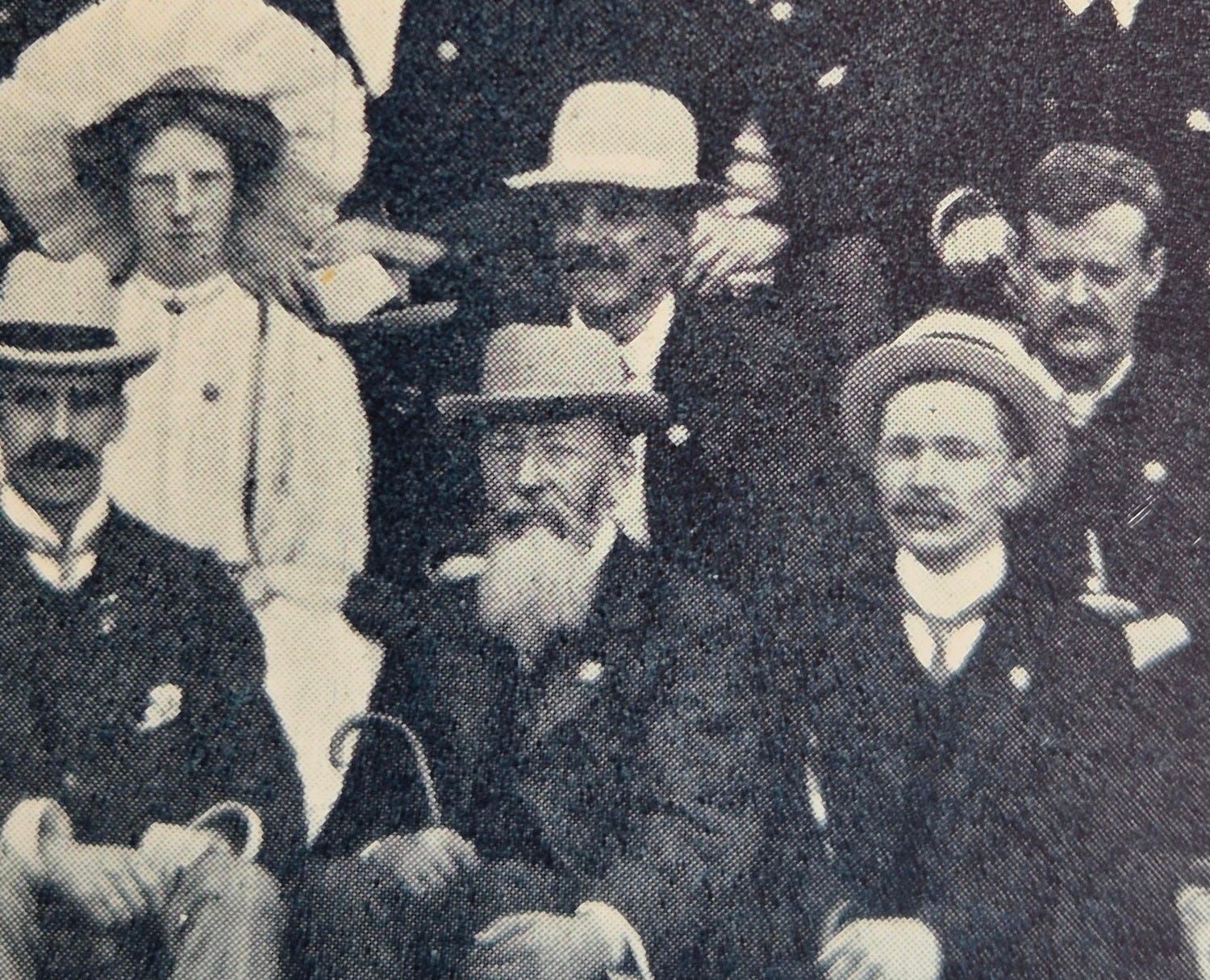
Thanks to Dr. Michael Pritchard, editor of the British Photographic History blog and The PhotoHistorian, journal of the Royal Photographic Society Historical Group, another photograph featuring Ellam has emerged.
It was taken in July 1908 when around 300 photographers, both professional and amateurs, gathered in Brussels for the 23rd Photographic Convention of the United Kingdom.
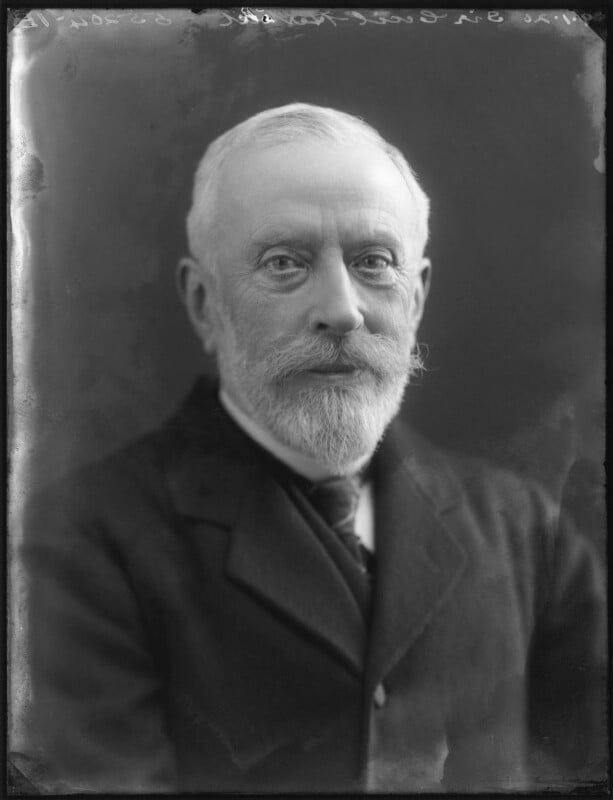
The choice of location was informed by the Convention president Sir Cecil Hertslet FRPS (1850-1934) who was His Majesty’s Consul-General to Belgium from 1903 to 1919.
At this point in his career as a professional photographer, Ellam was nearing the end of a decade-long working relationship with 3D giants Underwood & Underwood based in London’s West End.
He had become a member of the Royal Photographic Society in 1907 and was also an active member of the West London Photographic Society, lecturing on stereoscopic photography at one of its meetings.
In 1909, as part of a display by the United Stereoscopic Society, he created a stereoscopic transparency displayed by lantern at the annual RPS exhibition.
By the following year, he was working for London News Agency Photos at 46 Fleet Street covering events like the Army Pageant of 1910 held in Fulham Palace Gardens.
The discovery of another photograph of Ellam helps bring a further dimension to several blogposts on this site that can be found by putting his surname into the search engine via the link below.
The late August Bank Holiday in Britain (apart from Scotland) marks the traditional end of Summer.
Today’s forecast for glorious sunny weather offers an ideal opportunity to venture to the beach for a dip in the sea.
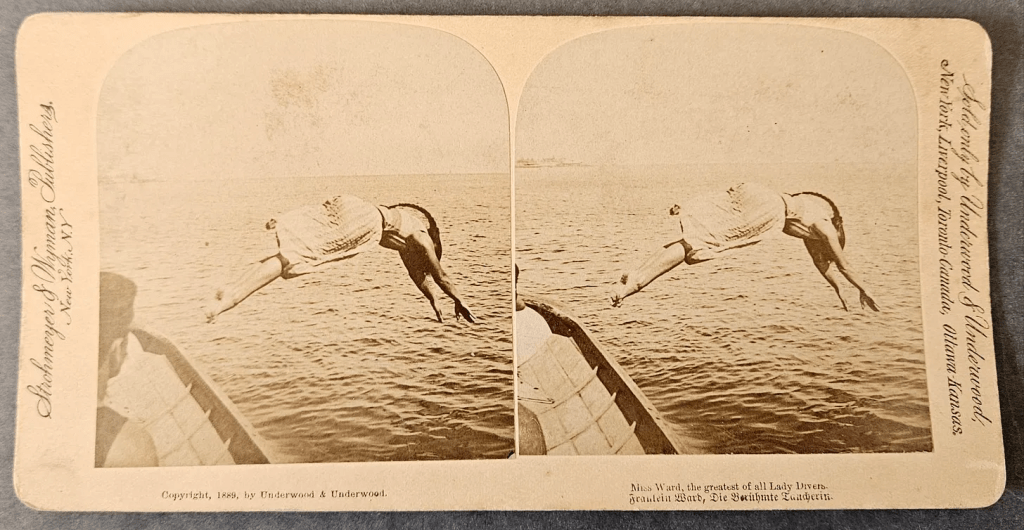
It’s a moment captured in a celebrated stereocard, titled ‘Miss Ward, the greatest of all Lady Divers’, whose back story comes to mind on this particular Bank Holiday Monday.
In the Spring of 1891, the American stereoscopic photography company Underwood & Underwood (U&U) opened a new branch office in Britain.
Its decision was informed by the port city of Liverpool’s key role in trade across the Atlantic Ocean and as a hub for transport links into the lucrative European market.
At this point, U&U’s 3D cards featured Liverpool alongside New York; Ottawa, Kansas (where it had started life); and Toronto, Canada as cities from which it operated.
Further evidence of its new commercial commitment to Europe came on 27th February 1893.
It was then that the company’s co-founder Bert Underwood (1862-1943), who had set up the Liverpool office, registered a number of its stereos for copyright in the UK.
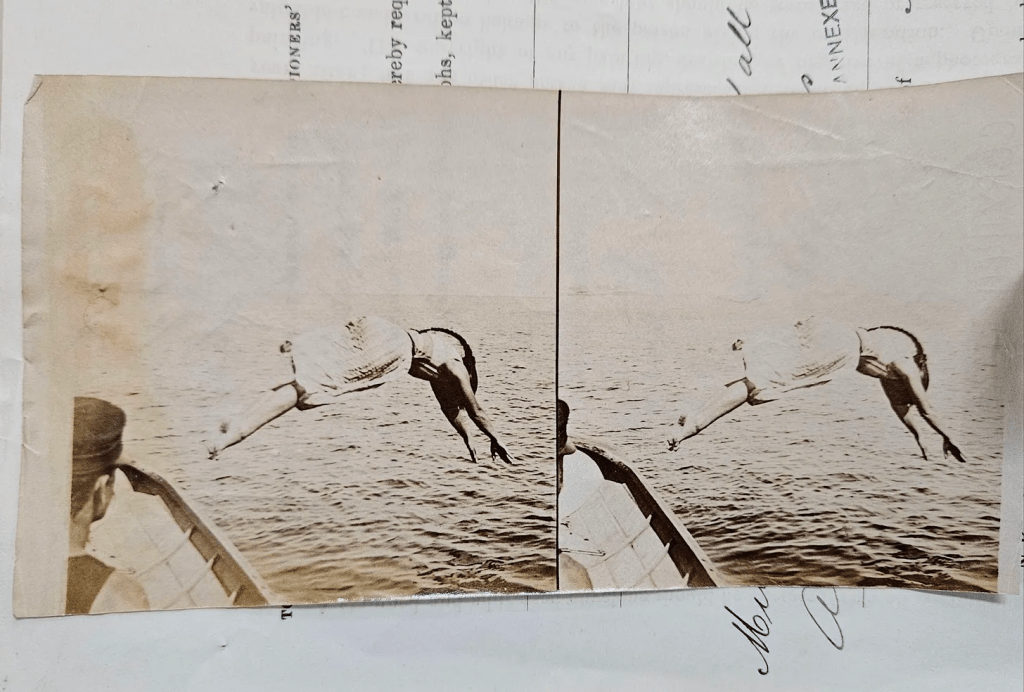
Among the first he submitted (COPY 1/411/262) was titled ‘Miss Ward, the greatest of all Lady Divers’ complete with its ‘copy attached’ seen below in the National Archives at Kew.
This stereo like others registered at the same time had proved a popular seller for Underwood & Underwood in the United States.
An example in the Pressphotoman collection reveals that it first appeared in 1889 bearing the stamp of its New York partner company Strohmeyer & Wyman.
The photographic brilliance of its ‘instantaneous’ composition allows the viewer to relive the feeling of flying through the air in 3D en route to the water beyond.
But who was ‘Miss Ward’ and where was this remarkable shot taken?
The card’s verso records its location as ‘Coney Island, U.S.A.’, home in its late-19th century heyday to three seaside resorts in the Brooklyn district of New York.
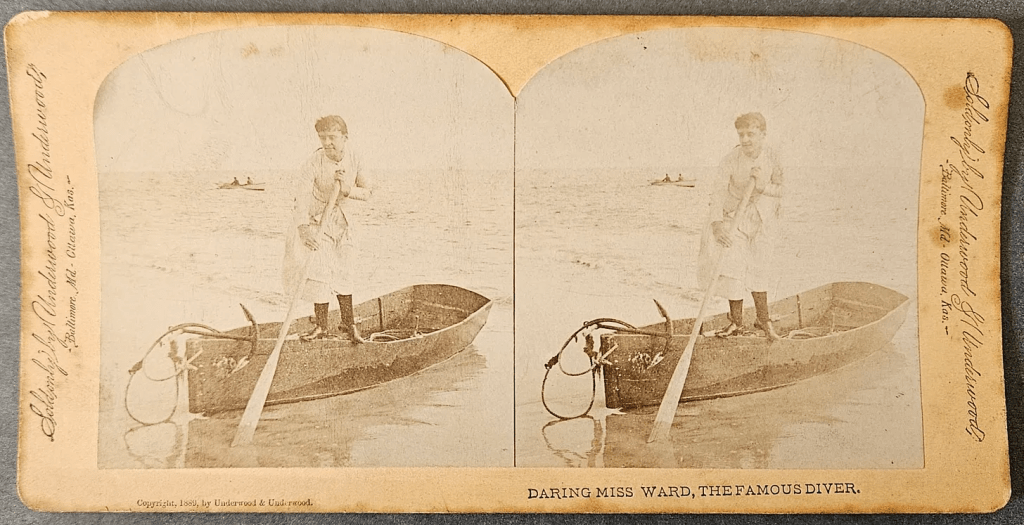
Among the amusements on offer to holidaymakers and daytrippers, ‘Miss Ward’ performed diving displays that drew large and enthusiastic crowds.
Another U&U stereocard, also taken in 1889, that recently joined the Pressphotoman collection features ‘Daring Miss Ward’ in a less dramatic pose.
In 1905, the photographer James Edward Ellam was at a turning point in his professional career.
A skilled amateur stereographer in his native Yorkshire, he had journeyed south a decade earlier to pursue opportunities offered in London by the leading American 3D company Underwood & Underwood.
It was a decision that changed his life.
Ellam is best-known for a number of the stereos he took for the Underwood company.
Today they feature in museum collections around the world.
Among them are Queen Victoria’s Golden Jubilee celebrations (1897), King Edward VII and Queen Alexandra in their coronation robes (1902) and Pope Pius X in his pontifical robes in the Vatican’s Throne Room (1903).
Despite these achievements, Ellam’s career path into Fleet Street seems to have included a subsequent period where he created photographs with a distinctly local flavour.
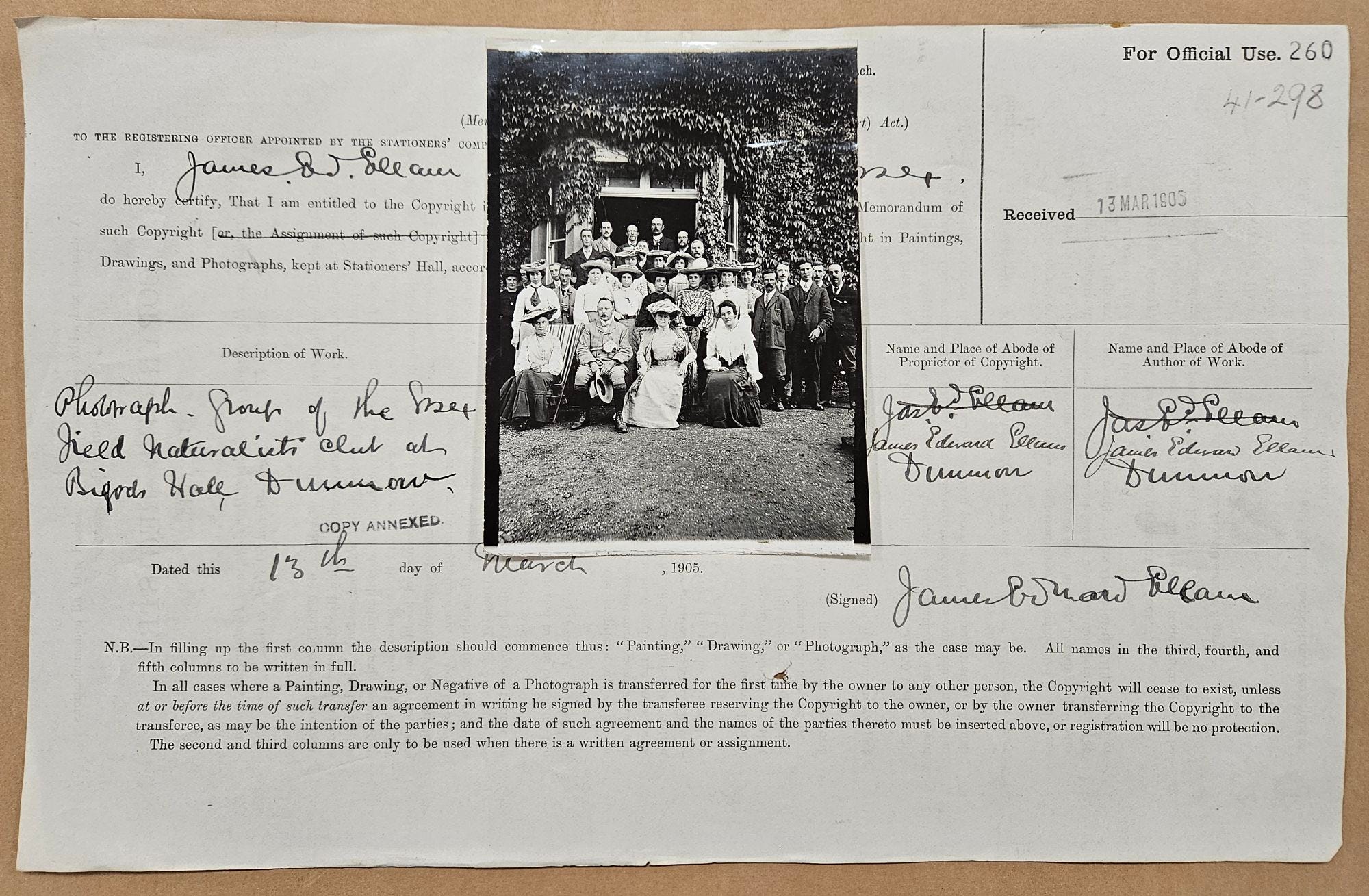
Hence, his decision to register the copyright of two images taken in or around the Essex town of Dunmow where he lodged at weekends.
Last week’s blogpost featured the first of these press photographs.
It portrayed the prospective Liberal Member of Parliament Barclay Heward (1853-1914) and his wife strolling along Dunmow High Street in the run-up to 1906 General Election.
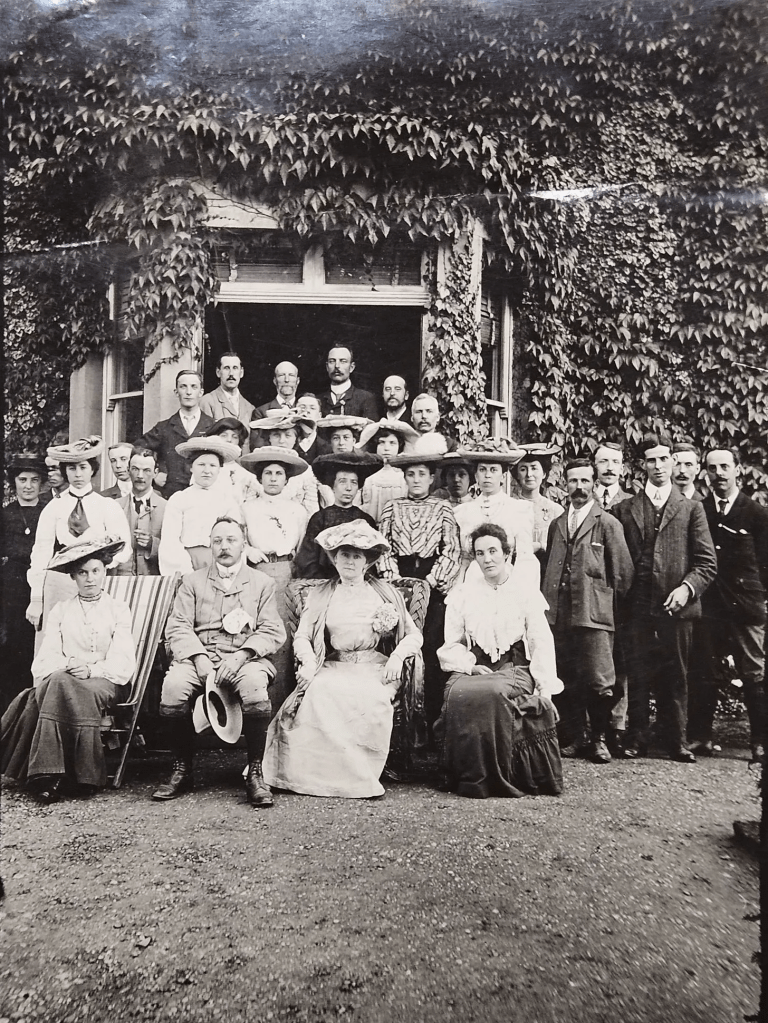
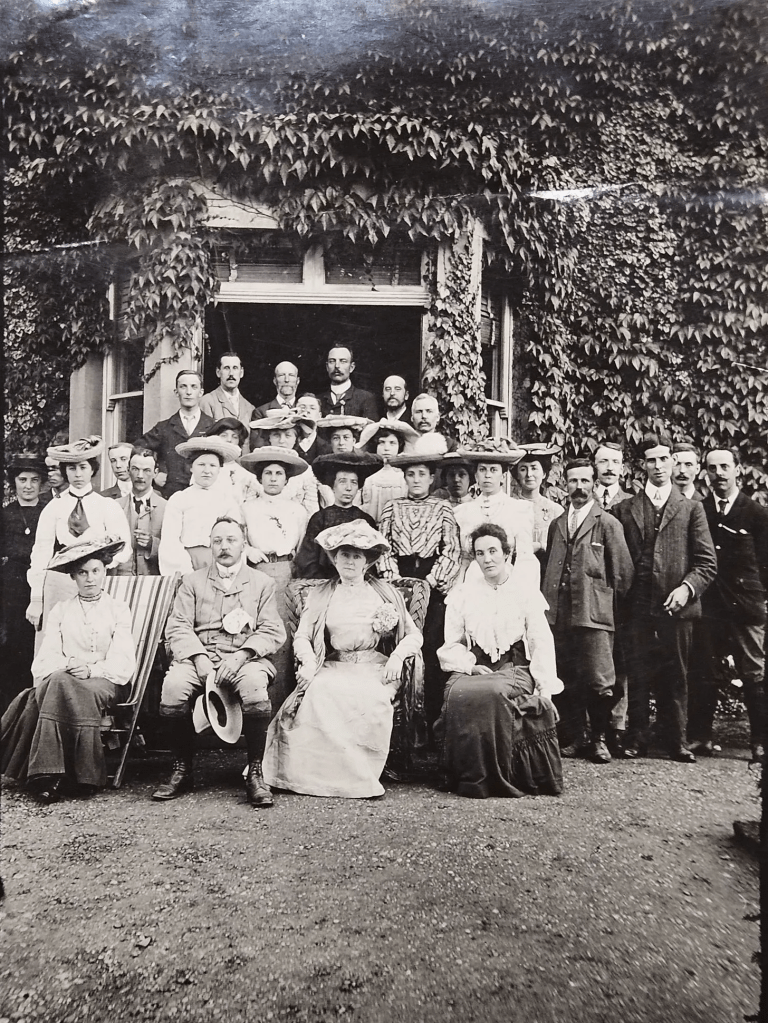
What he omitted to mention was that one of that group was one of the most famous women in the land.
Fashionably-dressed and seated on the front row in a wicker chair, Daisy, Countess of Warwick was a one-time mistress of King Edward VII.
She is pictured at a significant moment in her own life; one that was the subject of almost daily press attention.
During this period, Lady Warwick became actively engaged in politics as a member of the Social Democratic Federation.
However, unlike the Liberal candidate Barclay Heward, who featured in Ellam’s earlier photograph, she was increasingly active in promoting radical socialism ahead of the forthcoming General Election.
As to the photograph’s genesis, a press report in the East Anglian Daily Times and cited in the Essex Naturalist account of the club’s activities provides the background.
On Saturday 8th July 1905 at the invitation of the Earl and Countess of Warwick, “members of the club and many friends, about seventy in all, assembled … for the purpose of inaugurating ‘the Pictorial and Photographic Record of Essex.’”
The brief of the project was “to write the history of the county in pictures.”
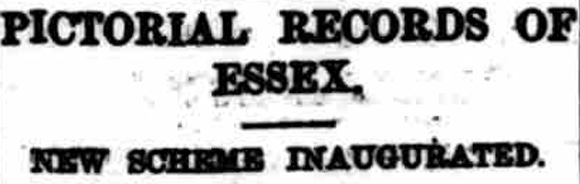
East Anglian Times (10th July 1905). From British Newspaper Archive.
The report described how Lady Warwick presided at a luncheon held at Easton Lodge near Dunmow, her husband’s ancestral Essex home.
She first apologised for the absence of the Earl, who was “at Brest on a yachting cruise.”
After lunch, a meeting to discuss the photography project was held “in a commodious double tent amongst trees at the back of the house.”
Following the meeting, the group paid a visit to nearby Bigods Hall, which the Countess had established years earlier as a secondary and agricultural school.
Those present were then entertained to tea by the Principal, Mr. T. Hacking and Mrs. Hacking.
Though the report refers to “about seventy in all” attending the luncheon and meeting held at Easton Lodge, the smaller group pictured in the Bigods Hall photograph perhaps indicates that not everyone made the line-up.
What is particularly noteworthy is the presence of so many women in the picture, making up around half of the group.
At this point in the medium’s history, photography had become a popular and affordable pastime thanks to the advent of Kodak’s ‘you press the button, we do the rest’ range of cameras.
Ellam’s presence too may well have been directly linked to the photographic project being discussed.
Copyrighting the image does though suggest that he recognised that this photograph of the Essex Field Naturalists Club had a long-term value.
What is slightly confusing is that the copyright form completed by Ellam, with this photograph attached and held by the National Archives, is stamped and dated ‘13th March 1905.’
As the weather during the Bigods Hall visit was reported as “gloriously fine,” the dress of those appearing on camera does suggest a July day rather than one in March.
One explanation may be that the 13th March form referred to an earlier occasion.
Armed with a new photograph of the group featuring the media-friendly Lady Warwick, he simply substituted a copy of that taken on 8th July.
Whatever the explanation, the resulting photograph captures a moment in the changing world of Edwardian Britain.
The death of Pope Francis aged 88 followed by his funeral over the weekend attracted the focus of the world’s media.
Speculation about who his successor will be is well underway.
By way of marking this latest chapter in papal history, I’m republishing research into an ambitious 3D photographic project featuring one of Pope Francis’s predecessors.
Following a conclave in 1903, Giuseppe Melchiorre Sarto was appointed Pope as Pius X.
Within months, the leading stereoscopic photography company Underwood & Underwood sent a team from its London offices to produce what became a popular series of 36 stereocards.
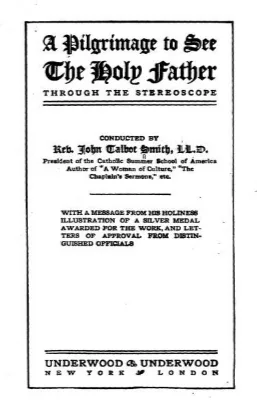
These were published the following year as A Pilgrimage to see the Holy Father through the Stereoscope.
Frontispiece of A Pilgrimage to see the Holy FatherThrough the Stereoscope (1904).
The images, which capture the Pope in relaxed and intimate settings around the Vatican, were reproduced by the press around the world and made available to the public as picture postcards.
Taken together, they highlight the importance of photography more than a century ago as an influential medium of mass communication to a global audience.
The recently-released film Conclave about the election of a new Pope is being touted as an Oscar contender.
This is largely because of the central performance by Ralph Fiennes for his portrayal of a “deeply-troubled Cardinal … at the centre of a murky Vatican plot” (Peter Bradshaw, The Guardian).
The film is the latest Papal subject to attract media attention and also that of this blog.
Last September’s Asia-Pacific tour by Pope Francis prompted a Pressphotoman post about a series of 3D stereoscopic portraits featuring one of his predecessors.
In an echo of the plot of Conclave, the stereos were published in 1904 following the election of Pope Pius X.
Given access to the Vatican, the leading stereoscopic company Underwood & Underwood produced a 36-card set titled A Pilgrimage to see the Holy Father through the Stereoscope.
The Underwood stereographer responsible was James Edward Ellam (1857-1920) whose career as a photojournalist is the subject of ongoing research by this blog.
A recent Pressphotoman acquisition adds another dimension to how these 3D images of Pius X were circulated in various formats and helped form the new Pope’s public image.
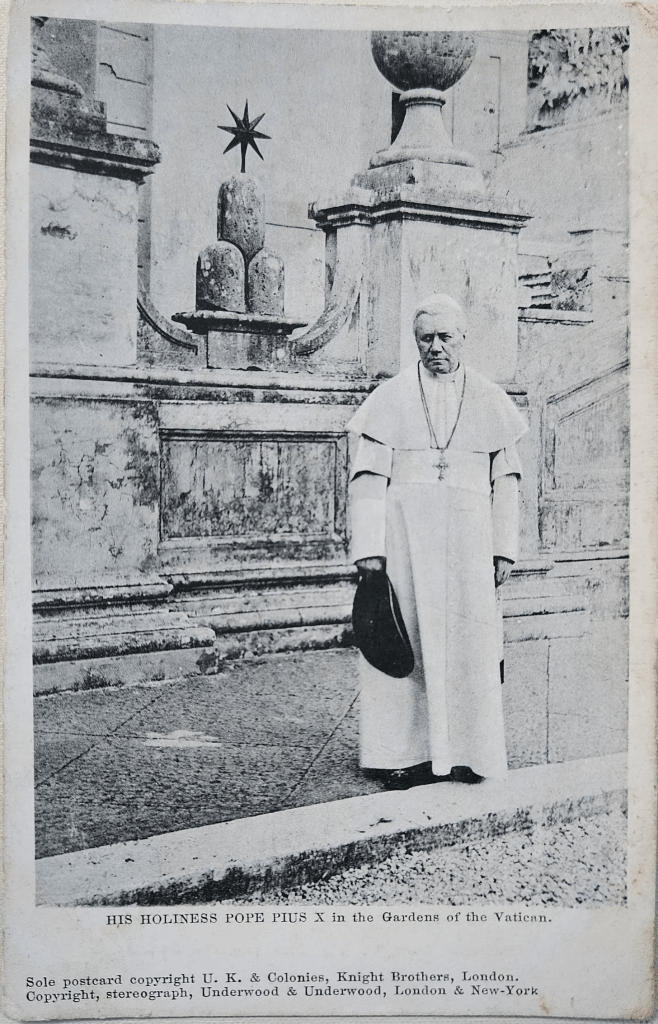
Titled “His Holiness Pope Pius X in the Gardens of the Vatican,” the credits on this picture postcard confirm that the image was taken from U&U’s original stereograph.
The ‘sole postcard copyright’ holder for the ‘U.K. & Colonies’ was identified as Knight Brothers of London.
They were certainly in the market for images to publish and sell to a worldwide audience.
The company was formed in 1904 by Watson and George Knight, who had previously worked for another London postcard publisher.
E. Wrench Ltd., launched by teenager John Evelyn Wrench, boomed spectacularly from 1900 as the picture postcard craze took hold.
But by 1906, the firm had crashed and burned amid financial difficulties.
Knight Brothers registered their trademark ‘knight’ in August 1905.
The number ‘1446’ on this postcard indicates that it may have been one of a series of Papal portraits secured from Underwood & Underwood.
Another point of note is that the card was ‘printed in Saxony’ which Wrench had first identified as home to a ‘veritable hotbed of good printers’ (Anthony Byatt, Picture Postcards and their Publishers, 1978).
Like Wrench before them though, Knight Brothers enjoyed short-lived success.
It became a limited company in 1906, but within a couple of years had ceased trading.



 Pressphotoman
Leave a comment