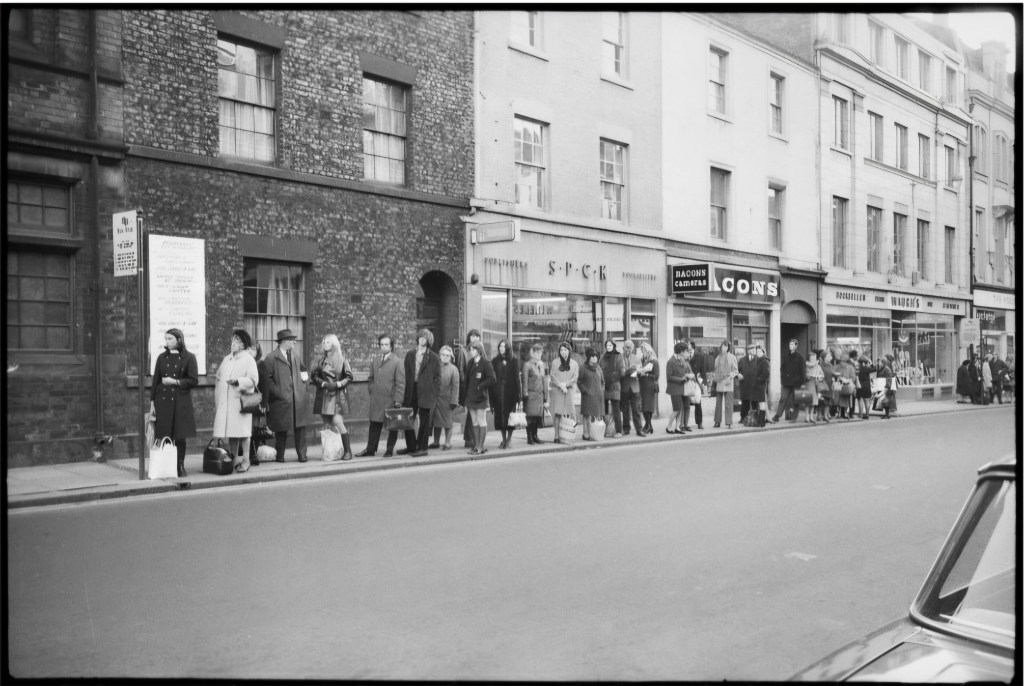
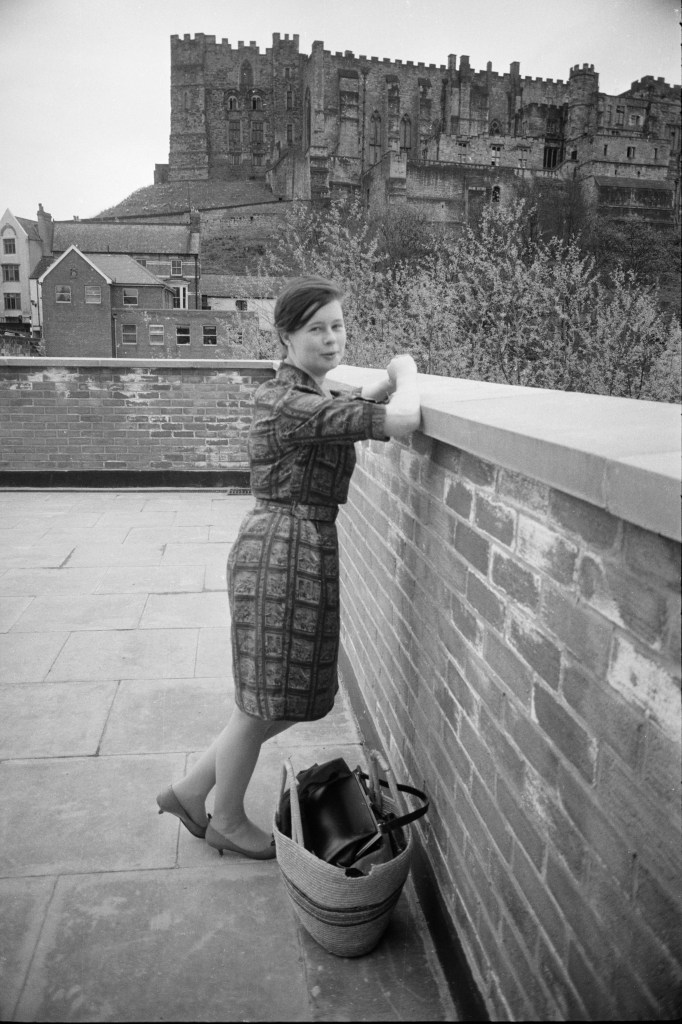
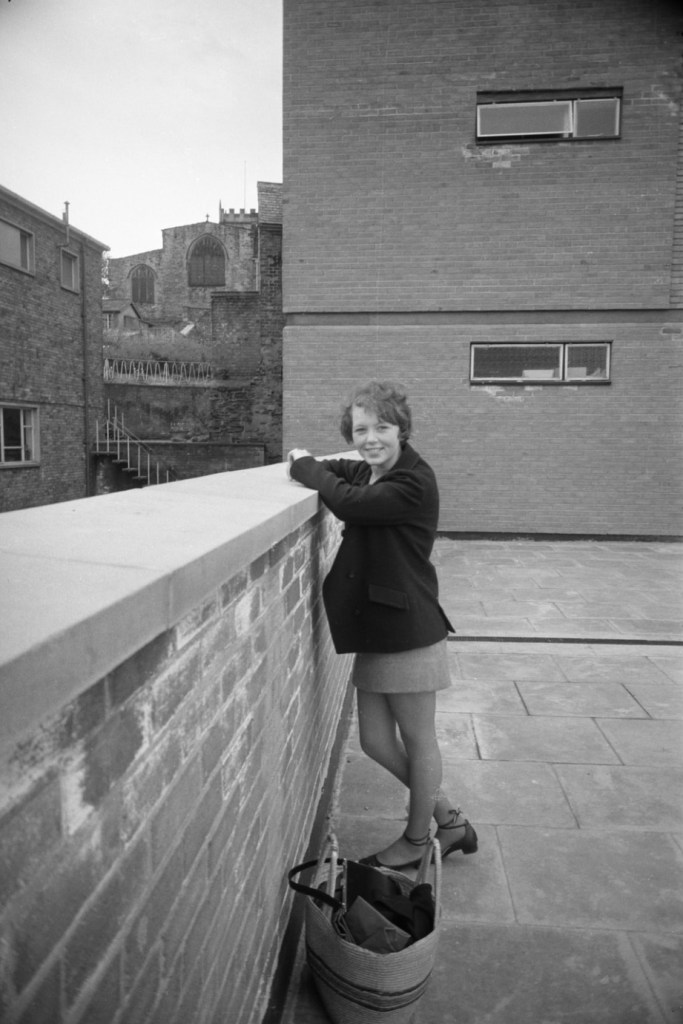
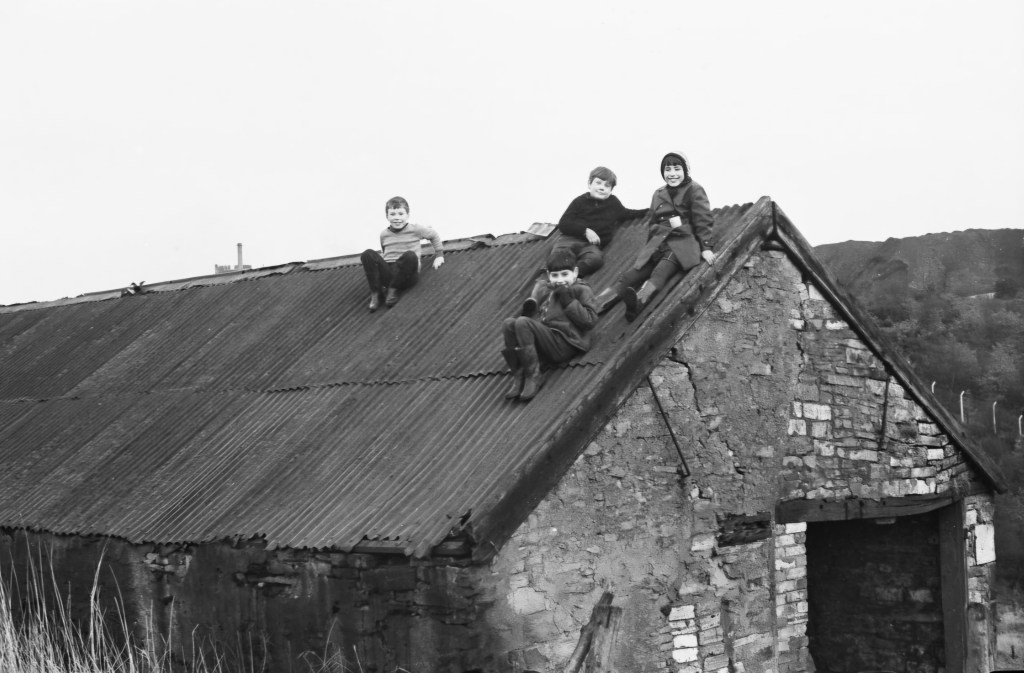
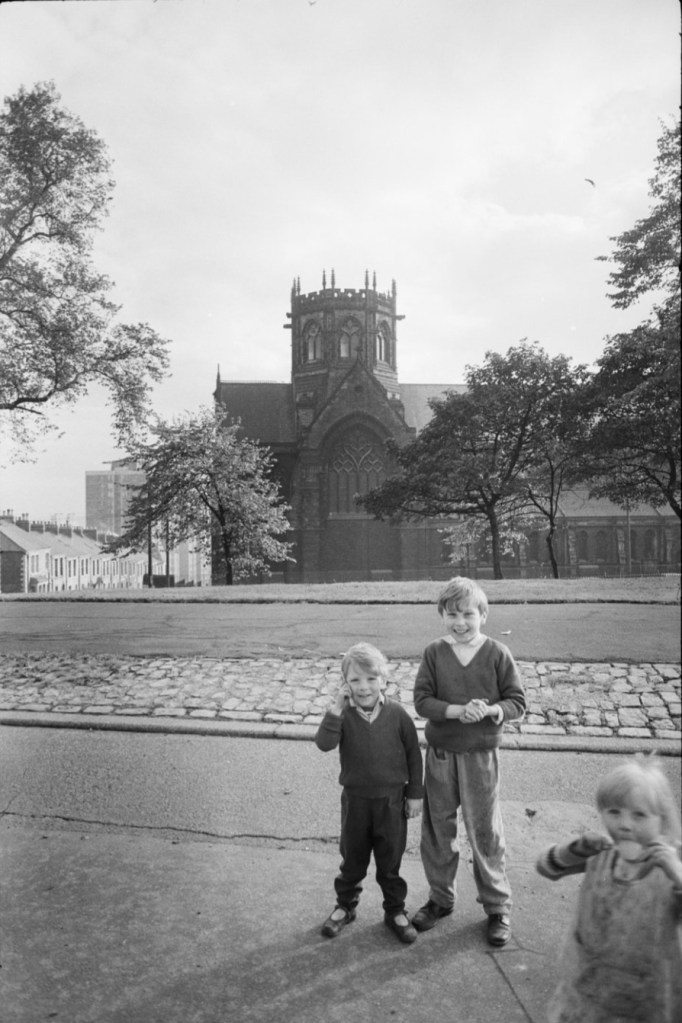
Around 2,000 of Ursula’s images have been digitised by the Historic England Archive from what is the largest of its collections created by a woman photographer.
Update 5th March 2025: Billy Embleton informs me: “That little girl is Ellen Parkin with her Uncle Jimmy Anderson in the burger van in 1965. She identified herself in 2021 when I posted the photo on Facebook. She’s now known as Ellen Przybylska.”
In my talk, I argued that these images echo those of other female photographers working during the same period such as Sirkka-Liisa Konttinen (born 1948) and Tish Murtha (1956-2013).
It would be wonderful to put names to the faces in these photographs and learn more about long ago interactions with a photographer, who clearly had a rapport with flesh-and-blood subjects too.
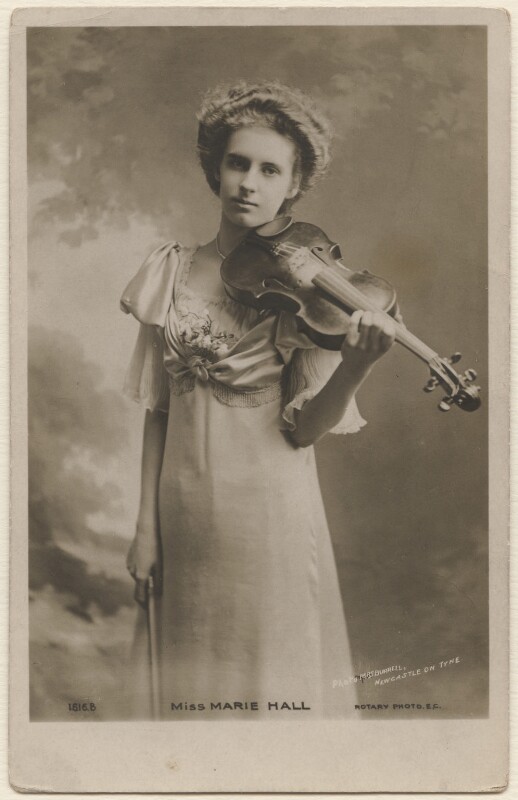
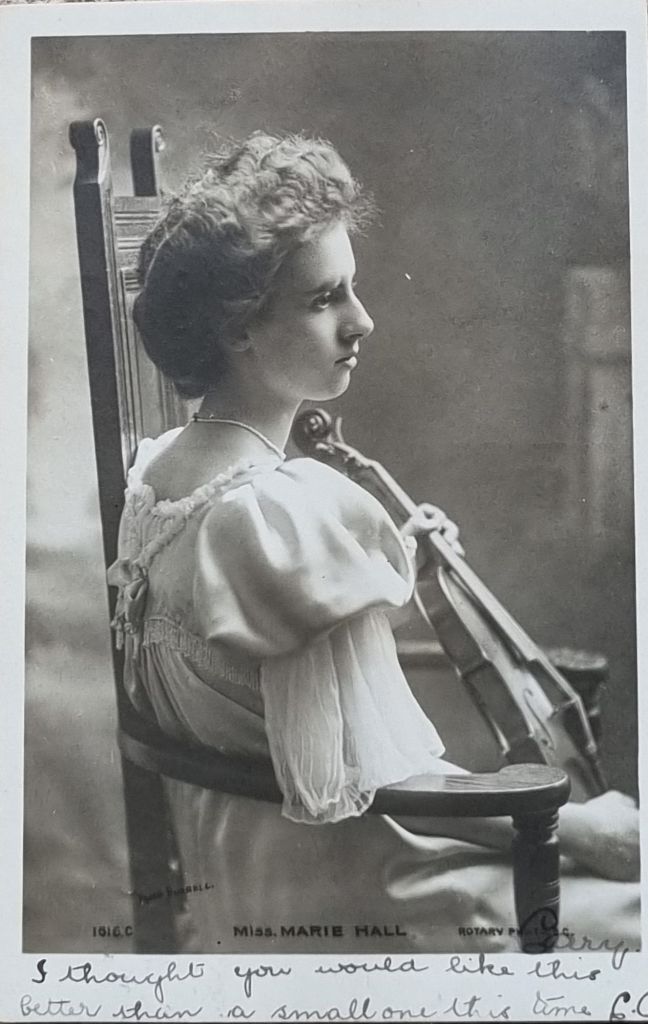
Last month’s post about ‘Mrs. Burrell’ (8th July 2024) has prompted further research into the photographic portraits she produced of the celebrated British violinist Marie Hall.
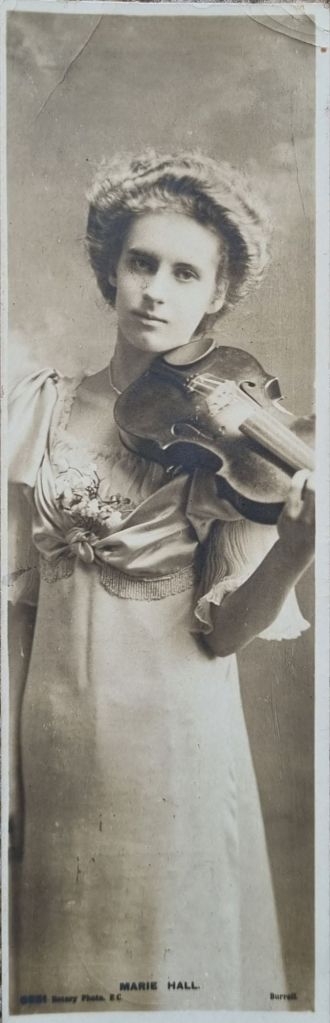
Whilst searching for the third, in which the violinist appears minus her instrument, I came across the image above reformatted (below) as a ‘book postcard.’
The original portrait has been unceremoniously edited to remove much of Marie Hall’s right arm, half of the violin’s fretboard and a few of her fingers.
Despite this unsympathetic treatment, the ‘book postcard’ format (in the shape of a bookmark, hence the name) proved popular.
Thanks to photo postcards, fans of Edwardian stage and music hall performers could obtain an affordable souvenir portrait of their idols.
The ‘book postcard’ offered customers a slimmer and cheaper option, but its reduced size came with certain restrictions.
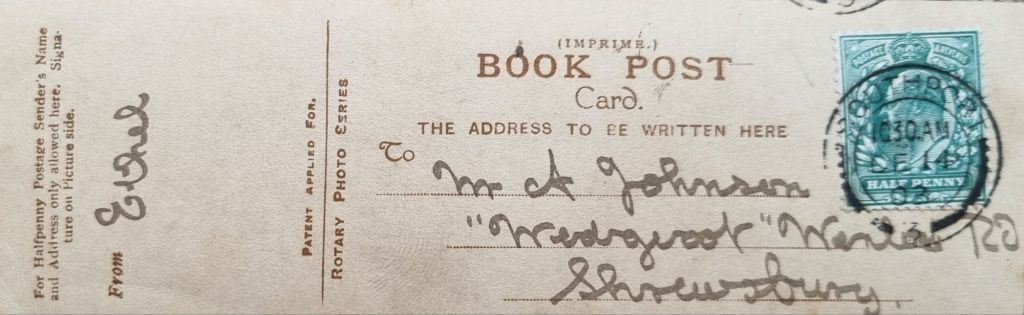
The sender could write their name (and address if desired) on the left-hand side of the card, but postal regulations forbade the inclusion of any message or additional text.
This was a drawback highlighted by one Marie Hall fan in a postcard posted in Newcastle on Tyne on 14th November 1903.
Signing herself as ‘C.H.’, ‘Carry’ went straight to the point on the front of the card to her female sendee in Redcar.
“I thought you would like this better than a small one this time,” she wrote, suggesting that a book postcard version of the violinist had been sent previously.
In the space ‘used for communication’ on the card’s verso, she continued: “This girl is shortly coming to N/C to perform in the Town Hall. She is a splendid player on the violin. I expect you will have heard about her.”
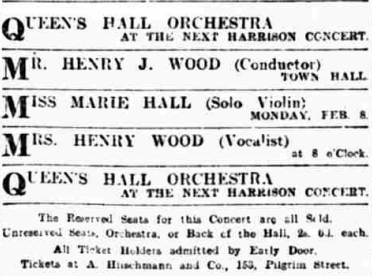
The concert referred to took place at Newcastle Town Hall a few weeks later on Monday 8th February 1904.
Newcastle Daily Chronicle (27th January 1904). From British Newspaper Archive.
For the concert, Miss Marie Hall was accompanied by the Queen’s Hall Orchestra conducted by Henry J. Wood, best known today as the founder of what became the BBC Proms.
A review of the concert (Newcastle Weekly Chronicle, 13th February 1904) reveals that the teenage violinist played Paganini’s Concerto in D and the Rondo Capriccioso by Saint-Saens.
The reviewer concluded that the concert was “an immense success, the applause being loud and long in each instance.”
Given her tangible enthusiasm, perhaps ‘Carry’ was able to attend the Newcastle concert in person, armed with a Marie Hall postcard and obtain an autograph afterwards at the stage door.
One of the joys of photo collecting is looking for clues that may help confirm the provenance of an image.
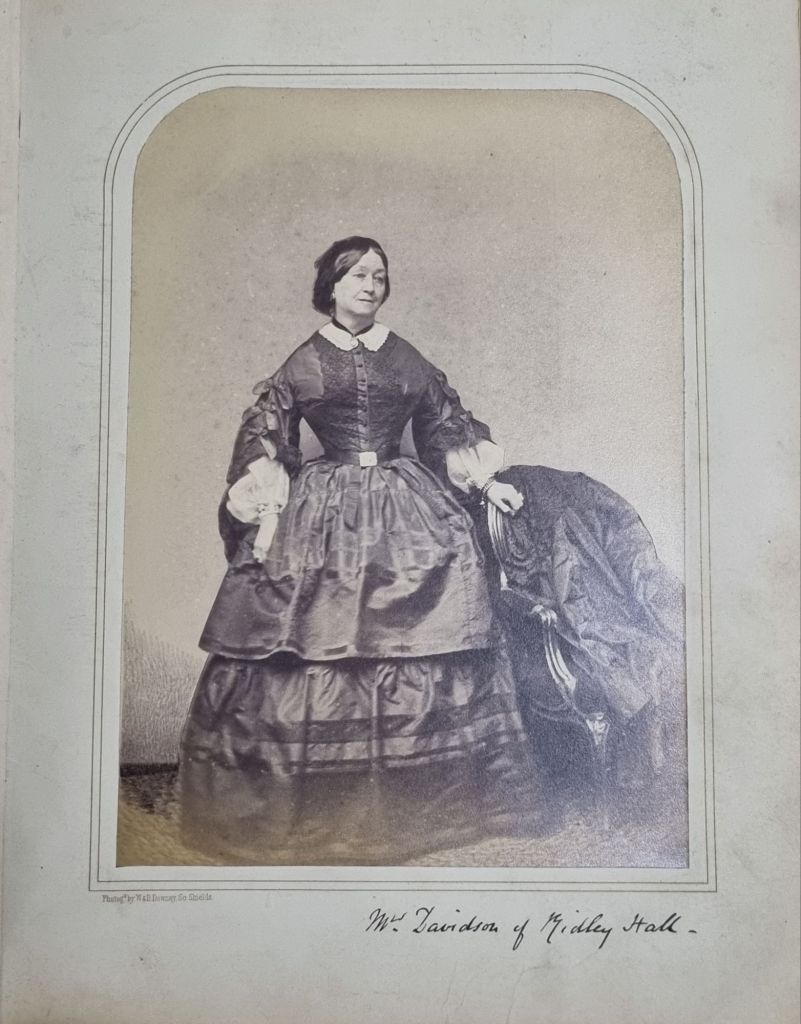
Last week’s blogpost about portraits of Mrs. Susan Davidson of Ridley Hall, Northumberland – one taken in Paris by Alexandre Ken and another by W. & D. Downey of South Shields – suggested further research questions.
What immediately caught my eye in both portraits was the distinctive armchair.
Such pieces of furniture were used to provide physical support to the standing “sitter” whilst the camera plate was being exposed and to avoid any blurring.
In addition, the floor covering in the immediate foreground of both photographs has a common pattern and design.
This evidence suggested that the same studio props were used by Downey for both portraits and (possibly) the same location too.
Armed with this information, I reviewed my collection of newspaper cuttings about Downey’s activities during its formative years.
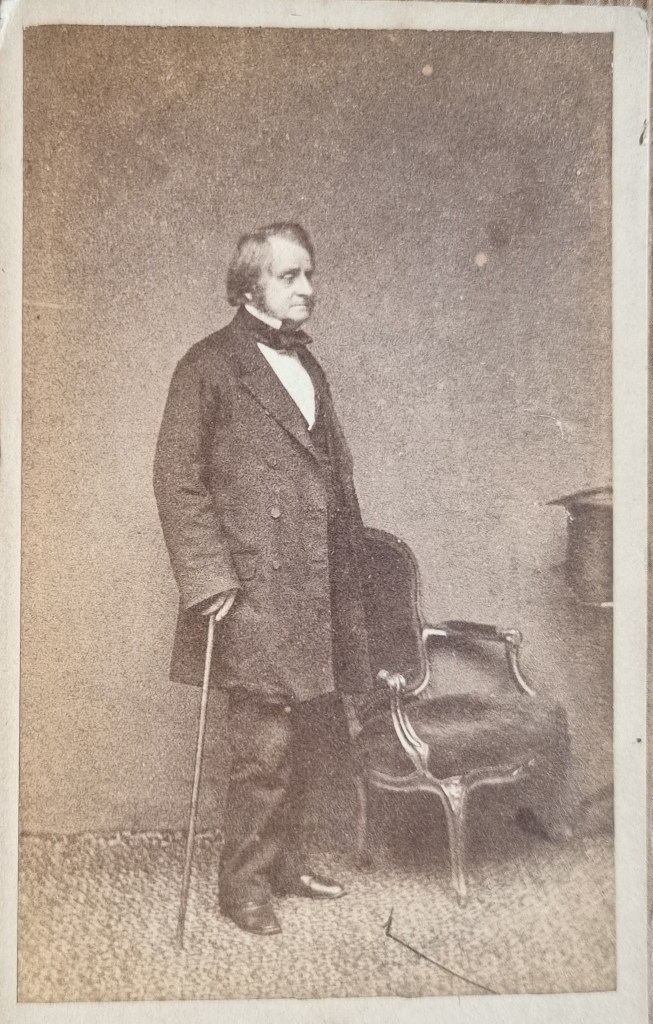
According to the North & South Shields Gazette (6th September 1860), “Mr. J.A. Roebuck, Esq., MP” was amongst “the noblemen and gentlemen” photographed during Downey’s “first professional visit to London.”
To underline this, the National Portrait Gallery, London has another cdv of Mr. Roebuck attributed to Downey in its collection.
Visibly from the same London sitting, the MP’s cane is leant against the backdrop whilst his top hat sits nearby on a small table.
As previously described, the same armchair and floor covering are on view.
The NPG dates its Roebuck cdv as “early 1860s” and its location as “unknown place (photographers’ studio).”
Where this “unknown place” was located is difficult to say, though it may have been a space borrowed for the occasion.
Afterwards, the Downey brothers, William and Downey, returned to the North-East of England and, by Christmas 1860, were displaying portraits from their London visit in the South Shields premises that were their base.
By the following Spring, their Roebuck portrait was among a fresh range of carte-de-visite being sold to the public, permission having been obtained from some of their London sitters.
In contrast, Mrs. Davidson’s portrait, though possessing many physical similarities in style and presentation, appears to have involved a more private arrangement.
As her later Parisien portrait by Alexandre Ken suggests, she was clearly attuned to the latest trends in portrait photography.
Evidence obtained for this blogpost suggests that she may have taken advantage of Downey’s presence in London in September 1860 to make her own statement about image and status.
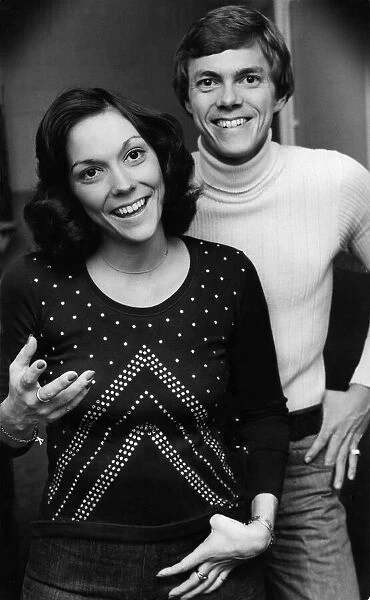
Fifty years ago tomorrow (20th February 1974), the Carpenters appeared at the Liverpool Empire during the British leg of their World Tour.
As a piece of music trivia, the significance of this anniversary lies only in the fact that it was my first pop/rock concert.
Memories of the occasion are sadly vague, though I do remember the support act was a Las Vegas-style comedy duo improbably named Skiles and Henderson.
Also, that I found myself in the front stalls thanks to a schoolfriend with a connection in the theatre’s box office.
As a result, I was within touching distance of Karen, Richard and their slick band of musicians as they celebrated “The Singles 1969-1973” reaching number 1 in the UK album chart.
What I didn’t realise until researching this blogpost was that a moment from their Liverpool visit had been captured by a local press photographer.
Backstage, Stephen Shakeshaft from the Liverpool Echo took this engaging photo of the brother-and sister duo.
Their casual but smart clothes suggest a photo shoot before they took to the stage for shows scheduled at 6.30pm and 8.30pm.
In the half century since, my answer to the question “what was your first pop/rock concert” has become a badge of pride.
The Carpenters music has stood the test of time and is a staple of radio and streaming around the globe.
Karen’s death in 1983 at the age of 32 is a tragedy that forms the backdrop to Lucy O’Brien’s latest book, “Lead Sister: The Story of Karen Carpenter.”
Recently published in paperback (Nine Eight Books £10.99), O’Brien seeks to capture what was special about a woman whose eating disorder has long overshadowed the story of “one of the greatest singers in popular music.”
Interestingly, the front cover of the book features an artist’s impression of Karen drumming while she sings, but nowhere among its 350+ pages will you find any photographs.
A sequence of images that captured her physical deterioration as the years went by would seem ill-judged in this context and undermine its focus on other neglected aspects of her life.
Looking at the press photo of the smiling couple taken backstage at the Liverpool Empire 50 years ago, I’m reminded how lucky I was to see the Carpenters at the top of their game.
Preparations are well underway in the UK for events during 2025 to mark the 200th anniversary of railway passenger travel.
On 27th September 1825, the Stockton & Darlington Railway opened with passengers being pulled in carriages behind a steam locomotive designed by George Stephenson (1781-1848).
In his native North East of England, Stephenson’s achievements as inventor and engineer are memorialised in various buildings and plaques.
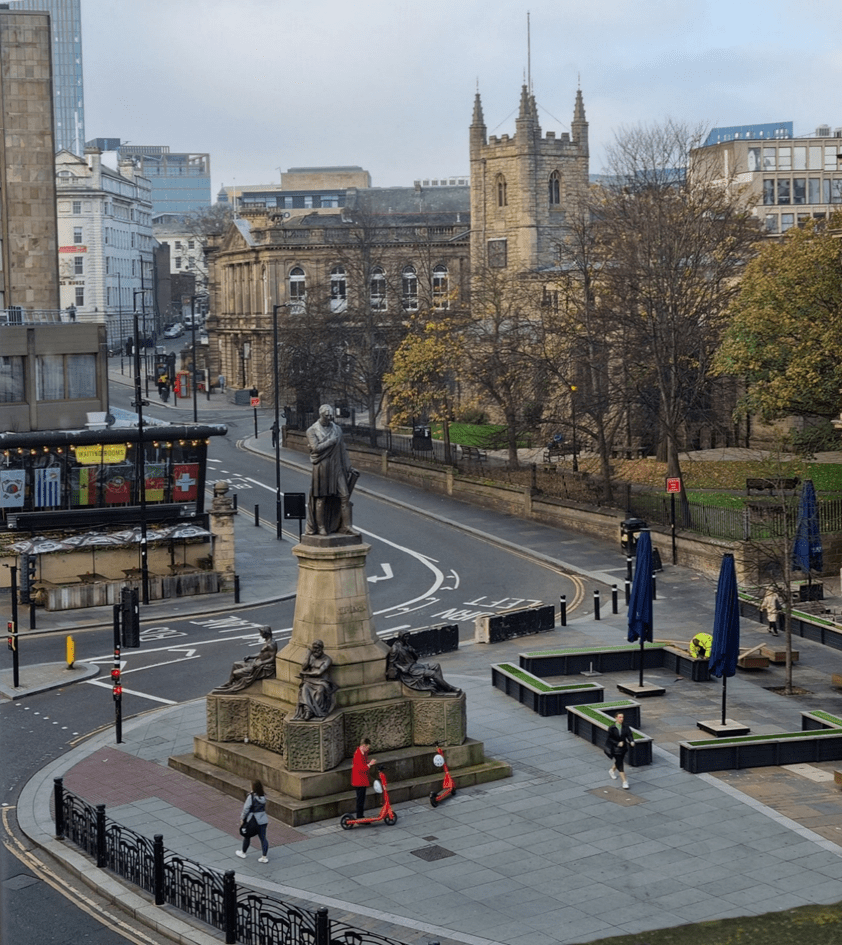
Perhaps the best-known is the Stephenson Memorial in the heart of Newcastle-upon-Tyne.
It can be viewed today as you leave the city’s Central Station and is within a stone’s throw of the pioneering engineering works that bore Stephenson’s name.
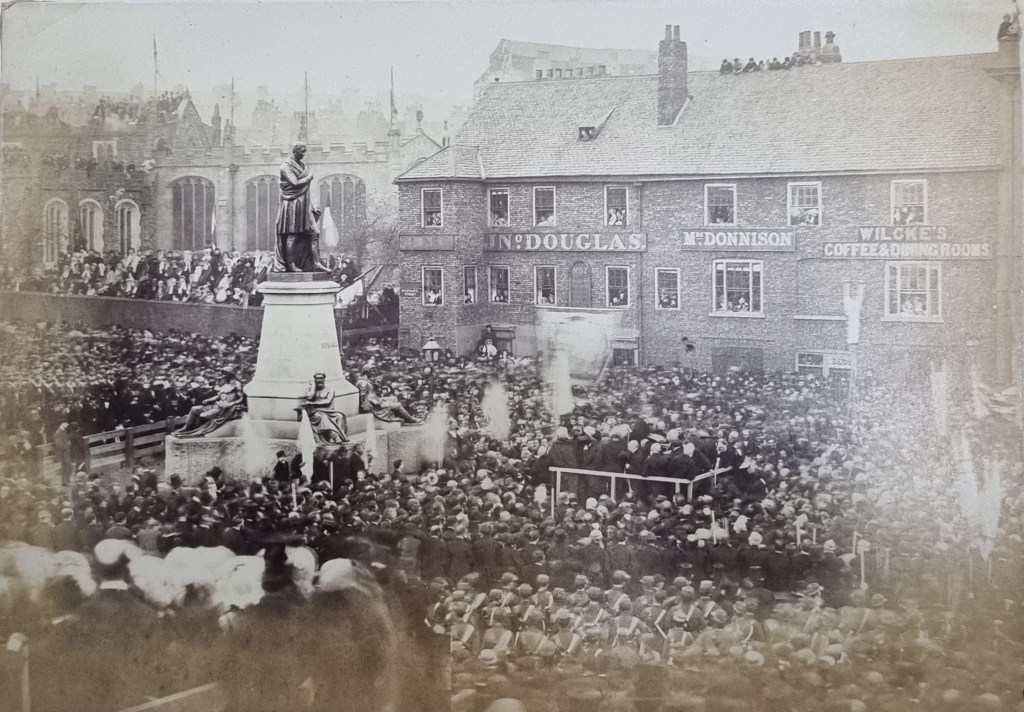
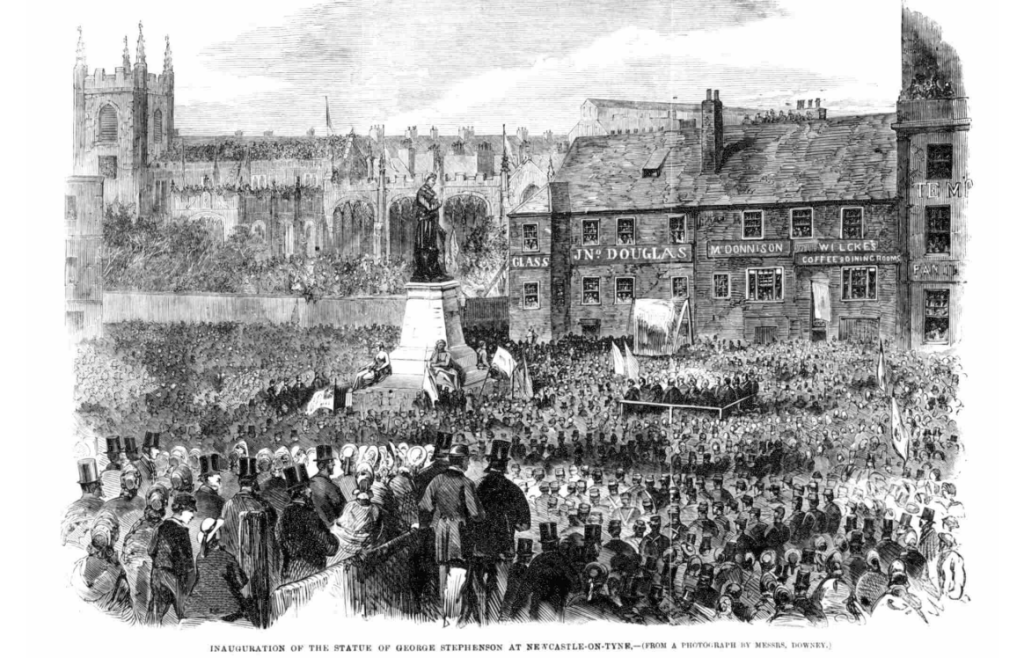
When the statue was unveiled to the public in October 1862, photographers were on hand to record the moment for posterity.
At the base of the statue, the Newcastle Daily Journal identified three of the city’s photography firms together with their equipment, observing “Messrs. Downey, Warren and Laws – pursuing their peaceful and interesting vocation.”
The photograph below taken from an elevated position can be attributed to W. & D. Downey, who advertised prints for sale in various sizes the following day.
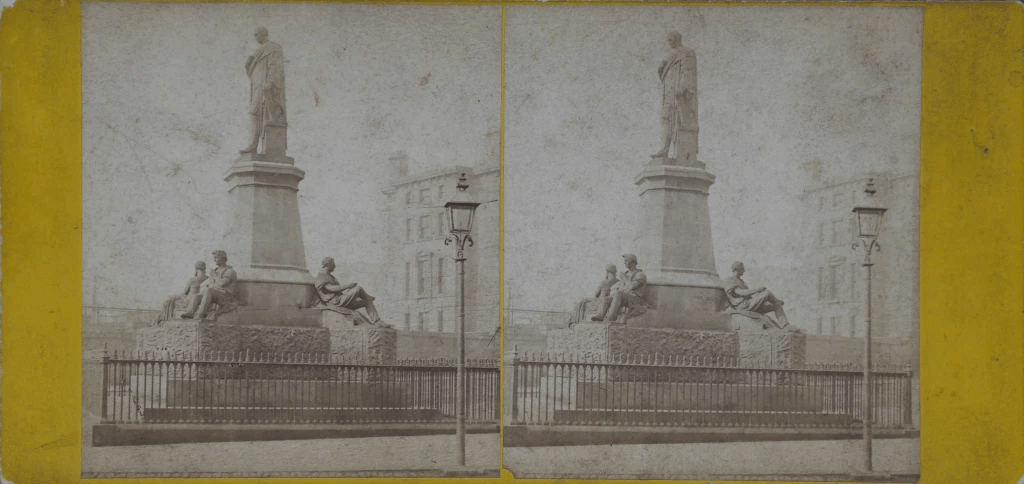
Another view of the Stephenson Memorial comes from this stereocard, which I recently added to my collection and which bears evidence of its age and frequent handling in a stereoscope.
The lamp standard (right of frame) is viewable in the Downey image above, though the metal railings appear to have replaced the wooden palisade that originally surrounded the statue.
Whilst there is no photographer’s stamp or credit, the verso does feature a slightly-faded sticker for “Allan” whose Newcastle business sold stereocards and carte-de-visites during this period.
After a week in which the health of King Charles III has hit the headlines, an article in the latest issue of The PhotoHistorian (No. 197/Winter 2023) sheds light on earlier media relationships with the monarchy.
In an essay titled “Photographers to Her Majesty,” Roger Taylor provides a fascinating insight into the relationship between photographers and Queen Victoria.
He describes how a system of Royal Warrants granted to approved companies proved difficult to enforce and, as a result, was widely abused.
Warrants were issued on the principle that “the tradesman must have supplied, on a regular basis, goods or services ordered and paid for by a department of the Royal Household.”
However, many businesses, not only photographers, falsely claimed royal patronage and displayed the royal arms without permission.
In reality, only 51 photography firms were granted Royal Warrants in the years 1849 to 1900, some on more than one occasion.
As a result, those operating without a warrant with its privileged access to royal personages faced a number of challenges to create photographs featuring the Queen and members of her family.
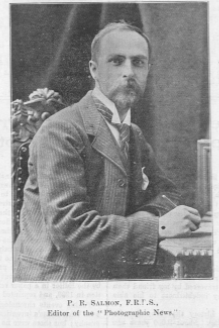
These are well described in an 1899 article written by PR Salmon, FRPS (1872-1959), details of whose life and career feature elsewhere on this website.
At the time, he was working as a travelling stereoscopic photographer for the 3D company Lévy et ses Fils of Paris, and filing reports as a journalist to the British press and trade papers.
In “With Queen and Camera at Cimiez” (British Journal of Photography, 21st April 1899), Salmon (using the pen-name ‘Richard Penlake’) described his attempts to photograph Queen Victoria during her annual visit to the South of France.
The brief from his French employer was to “stay one week and get what was possible,” however this proved a less than straightforward assignment.
To begin with, security was tight with sentries posted in the grounds and inside the Hotel Regina where the Queen was based.
According to Salmon’s account, photographers were more in fear of “Monsieur Paoli and his large corps of plain clothes officials, which includes some of the sharpest men from the detective force of Paris.”
Their modus operandi included wearing disguises and giving off an air of noncholant disinterest until anyone with a camera started behaving suspiciously.
Using a 7.5″ x 5″ (stereoscopic) hand camera, Salmon was advised by the Queen’s Courier in “a nicely worded letter” that photography was strictly forbidden in the Royal apartments and in the grounds.
Despite this, thanks to a permit obtained from the hotel manager, he was able to photograph in its grounds, where he had observed guests and visitors moving about freely.
This meant, he states: “I was able to add considerably to my stock of pictures, and, moreover, could get an excellent ‘pitch’ when the Queen left the hotel for her afternoon drives.”
Whilst PR Salmon was relying on his wits and ingenuity to obtain a royal photo, research for this piece has revealed that another stereographer was present during that week in Cimiez.
The difference between the two men was that the other was a Royal Warrant holder.
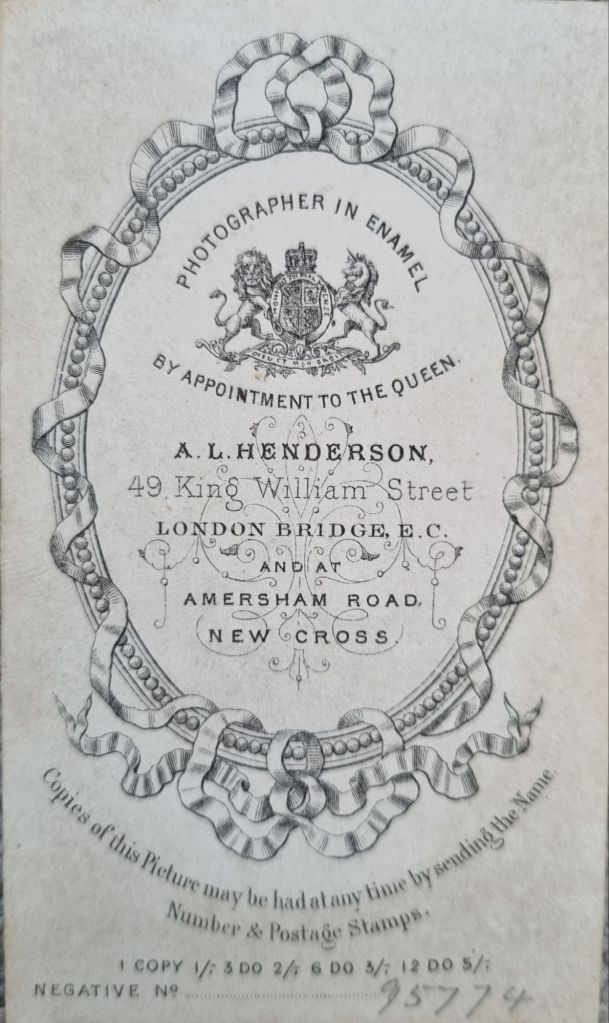
Edinburgh-born AL (Alexander Lamont) Henderson (1838-1907) ran a successful portrait photography business in the second half of the 19th century.
As revealed by this carte-de-visite verso, ‘A.L. Henderson’ operated studios at two locations in London endorsed by his impeccable royal credentials.
As a Royal Warrant holder, Henderson was also able to take advantage of other opportunities that arose from his privileged position.
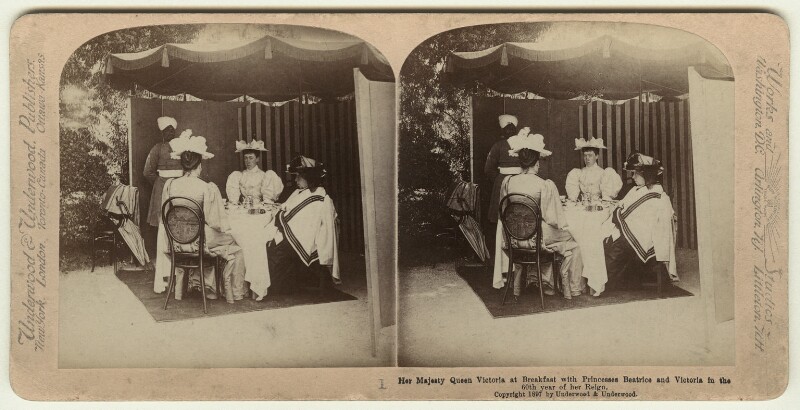
In 1897, 3D giants Underwood & Underwood published his stereo of “Her Majesty Queen Victoria at Breakfast …” issued to mark the Queen’s Diamond Jubilee.
The image had actually been taken two years earlier during the Queen’s annual South of France sojourn, but was re-branded “in the 60th year of her reign” to cash in on the Jubilee celebrations.
Like PR Salmon, AL Henderson was photographically active during Queen Victoria’s stay at Cimiez during April 1899.
This news photo was published in London by the Penny Illustrated Paper and credited to “AL Henderson, Photographer Royal.”
Penny Illustrated Paper (22nd April 1899). From the British Newspaper Archive.
Though the photo did not feature the Queen herself, the accompanying report bore evidence of Henderson’s inside knowledge of the Royal Household.
It named the kilted attendants as Sandy Rankin and Willie Brown, who had been in the Queen’s service for 18 years and 5 years respectively, and Mr. Bullen, the groom, who had clocked up 17 years.
The donkey pulling the carriage was named as Zora, “an Egyptian, but born at Windsor,” whilst Turin, the small white dog (sat in the carriage) was a Pomeranian from Italy, and the collie, Rob Roy, (by the wall) was called Roy for short.
As Salmon was also working as a journalist and knew Henderson through their photographic activities, it maybe that the pair collaborated on the Penny Illustrated Paper report.
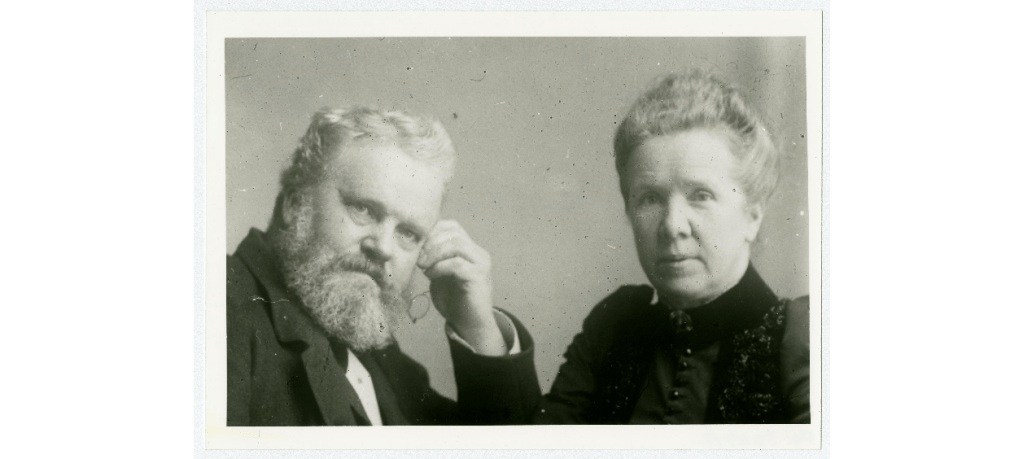
To conclude, photographs featuring photographers themselves tend to be the exception, so I was pleased to come across these images of AL Henderson and PR Salmon that were new to me.
Fleet Street titles led by the tabloid Daily Mirror had begun to employ their own staff photographers, but also relied upon agencies to meet the growing demand for illustrative material of all types.
Standard practice at the time was to credit the agency who supplied a news photo rather than its photographer.
As a result, identifying early press photographers and linking them to the images they produced is challenging for researchers.
One such figure that this blog has identified and who “had been associated with the London News Agency Photos, Ltd, for many years” was James Edward Ellam (1857-1920).
James’s speciality was stereoscopic or 3D photography whereby a single print taken from one half of a stereo negative was produced for press use.
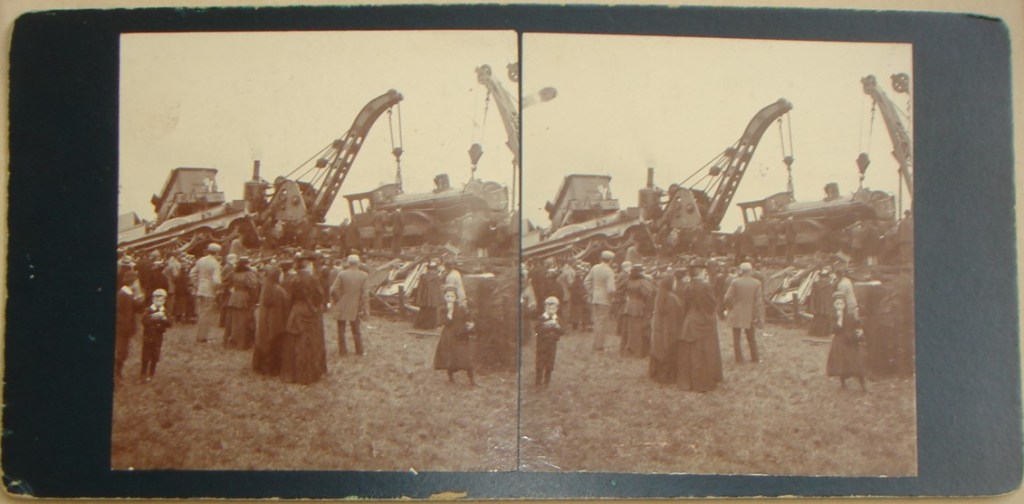
This had been his approach since operating as an amateur stereographer in Yorkshire covering news events such as rail crashes.
Stereo of “Scotch Express” crash scene, Northallerton by J.E. Ellam, October 1894. Courtesy of Stephanie Richardson.
During September 2023, a Pressphotoman blogpost-a-day series explored 30 recently-discovered stereos that can be attributed to James Edward Ellam.
Many bear examples of his distinctive handwriting captured on copyright forms he filled out and which are held by the National Archives at Kew.
So you can imagine my excitement when a leading auction site recently offered two stereos branded “London News Agency Photos, Limited, Stereoscopic Photographers, 46, Fleet Street, E.C.”
Not only that, but both were captioned in James’s handwriting.
Reference to the “Battle of Malplaquet 1709” pointed to these stereos being taken during an event staged in June and July 1910 in the grounds of Fulham Palace, London.
The Army Pageant featured around 5,000 performers and The Times estimated that its 21 shows were witnessed by 100,000 people, though it incurred huge financial loses.
According to the Historical Pageants in Britain website, the event “featured a disparate selection of episodes that illustrated the development of military conflict and the British armed forces.”
One of these episodes was the Battle of Malplaquet during the War of the Spanish Succession.
In September 1709, an Anglo-Dutch-Austrian army of 100,000 men led by the Duke of Marlborough defeated a 90,000-strong French force at Malplaquet on the France/Belgium border.
The Army Pageant programme described how “Lottum’s blue-coated Prussians enter, followed by guns, and then Schulemberg’s white-coated Austrians.”
Looking at James’s stereos, they seemed to be from this part of the event, captured as a sequence by his 3D camera.
Given this, did the stereographer and his photo agency employer succeed in placing any prints from this assignment with Fleet Street’s illustrated newspapers?
Certainly, media interest in the event was considerable and publications including The Sphere, The Graphic and The Sketch captured the visual spectacle in page upon page of captioned photos.
But it was from a 4-page photo spread in the Illustrated London News (25th June 1910) that an interesting possibility emerged.
On a page headlined “Great Battles Re-Fought: From Malplaquet to Badajos,” one photo (top left, figure 1) was captioned “The Battle of Malplaquet … English troops capturing a French gun.”
“Great Battles Re-Fought: From Malplaquet to Badajos,” Illustrated London News (25th June 1910). From British Newspaper Archive.
At the bottom of the page, credits for the photographs were attributed to three agencies; “Sport and General, L.N.A., and Illustrations General.”
Was it possible then that James, working for London News Agency Photos (L.N.A.), was responsible for a photo credited to the agency and published by the Illustrated London News?
Placing one half of his stereo (left) alongside the Battle of Malplaquet photo (right) highlights both the clarity of the 3D image and the poorer quality of the half-tone photo.
However, what is noticeable is that the same line of trees is visible in the background of both shots.
Part of a stereo (left) and news photo from ILN (right), possibly by JE Ellam.
This visual evidence suggests that both shots were the work of a camera operator using the same position.
By placing James at the Army Pageant with his stereoscopic camera, is it also possible to credit him with other photographs used by the Illustrated London News in the same issue?
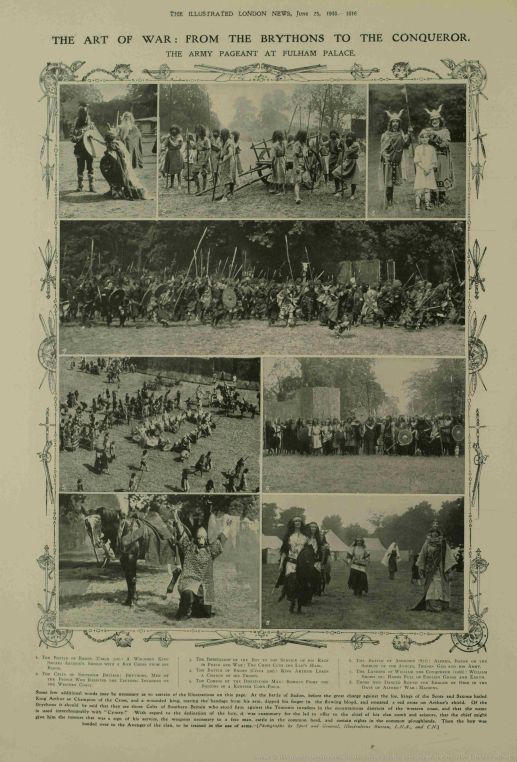
In a further full-page photo spread headlined “The Art of War: From the Brythons to the Conqueror,” London News Agency Photos (L.N.A.) was among four agencies credited with supplying the 8 images on view.
“The Art of War: From the Brythons to the Conqueror,” Illustrated London News (25th June 1910). From British Newspaper Archive.
Deciding which of the 8 was taken by James is impossible, though some of the shots do appear to have been composed with 3D in mind.
Another interesting point arising from this research is that London News Agency Photos promoted itself as being “stereoscopic photographers.”
By 1910, stereoscopic photography companies like Underwood & Underwood were already big players in the press photo market.
Indeed, James had worked for the Underwood company for several years prior to joining London News Agency Photos, so perhaps his new employer was hoping to secure a share of a growing market.
In December 1860, the Newcastle Journal devoted a short article to what it called “the beautiful art of photography.”
It described how photography was making rapid strides, not only in Newcastle-upon-Tyne, but in neighbouring Sunderland, Durham, North and South Shields.
It continued: “… in all of which towns, portraits of friends and relatives may be had at prices ranging from sixpence to as many guineas.”
I came across the article whilst researching the early years of the celebrated photographic company W. & D. Downey.
Downey began life as a travelling “portrait gallery” in Northumberland and established its first studio in South Shields in 1856.
In drawing attention to Downey’s accomplishments, the Journal article went on to list four Newcastle photographers that it was “unnecessary to call attention to the productions of … as their achievements are well known.”
The four were named as “Turner, Warren, Worden or [sic] Parry.”
For the past few years, I’ve kept an eye out for examples of their carte-de-visite or cdv portraits from the late 1850s when the format was first popularised.
But it’s only in the past few days that, thanks to a well-known auction site, I’ve managed to complete my set.
It was the first-named “Turner” that proved the most difficult to track down.
“Warren,” namely George Christopher Warren (1829-1918), featured in my talk about W. & D. Downey for the Royal Photographic Society Historical Group (see this blog’s Video Talks, 15th March 2023).
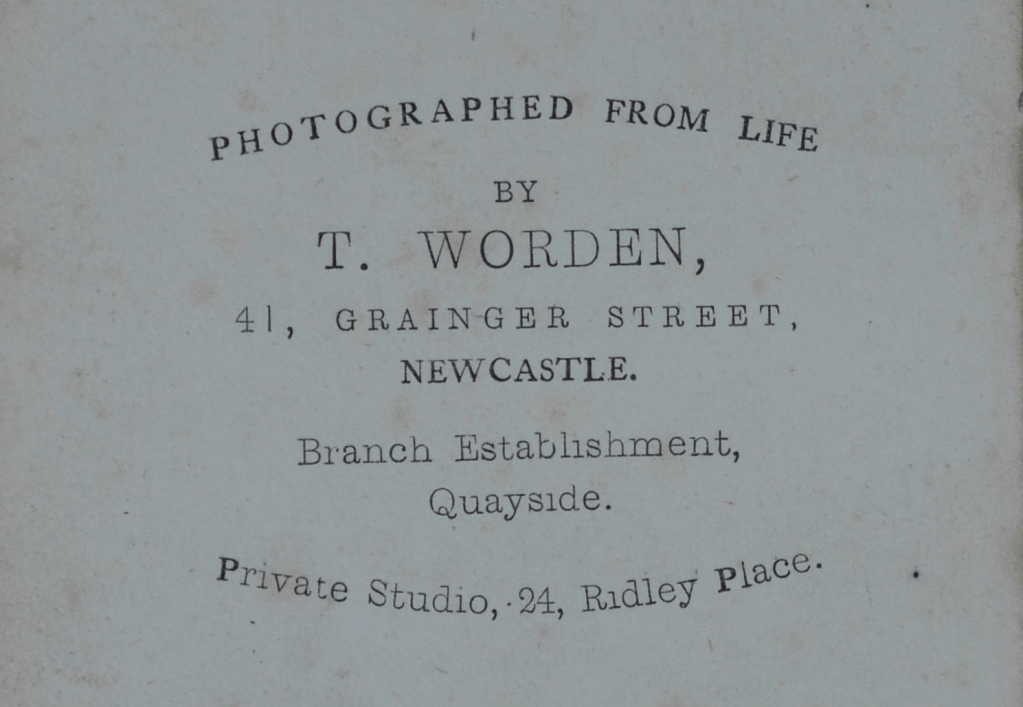
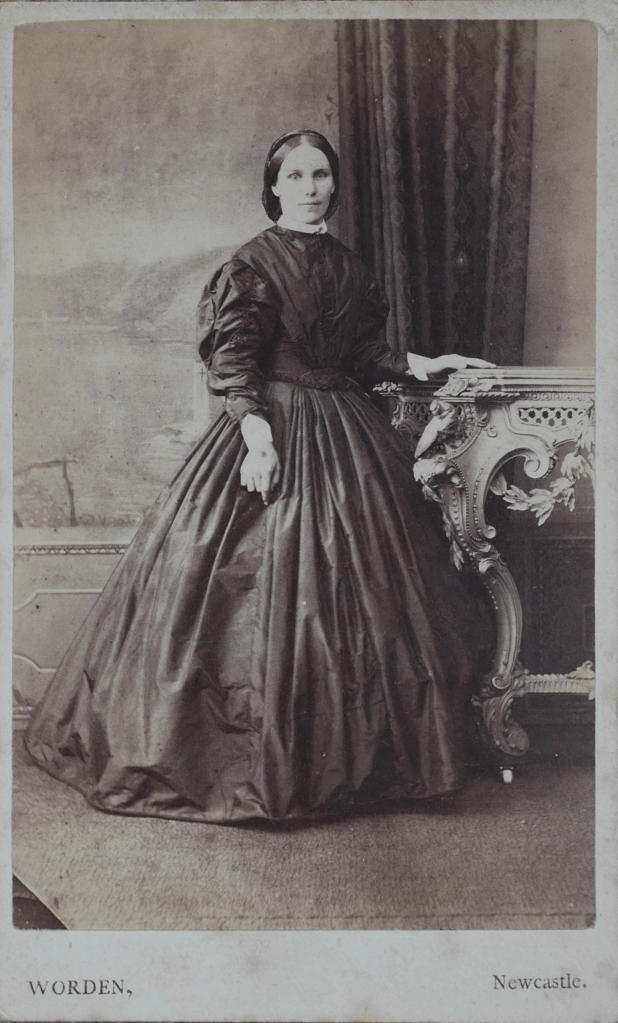
“Worden,” namely Thomas Worden, first established a photographic business in Newcastle in 1854. By the close of the decade, he advertised three city centre locations including a “private studio.”
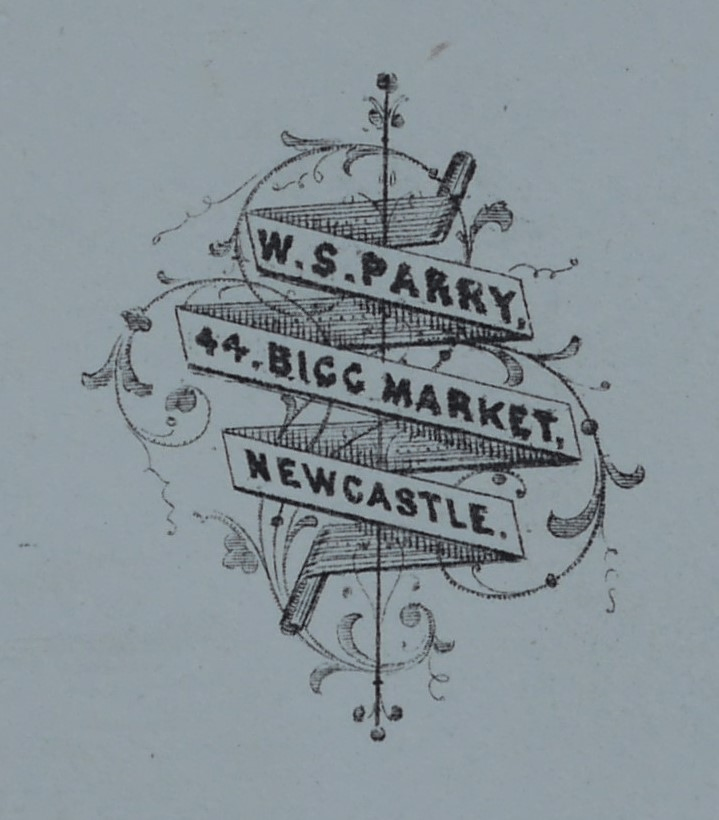
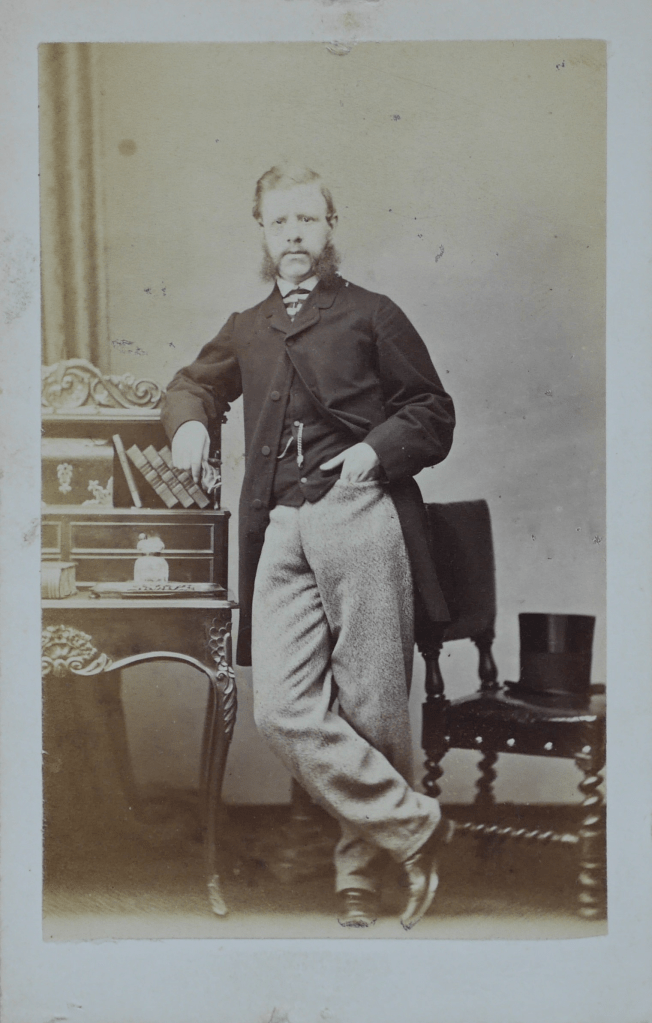
Finally, “Parry,” namely William Softley Parry (1826-1915), who like the other studios was integral to the development of commercial photography in Newcastle and the North-East of England.
Now the set is complete, it has prompted an idea for future research projects about their activities.
And here to conclude this post are carte-de-visite portraits produced by the studios of Turner, Warren, Worden and Parry featuring subjects that still meet our eye 160 years later.
Following “The Wheatear” yesterday, a second stereo featuring birdlife in this blogpost-a-day series can be attributed to James Edward Ellam (1857-1920).
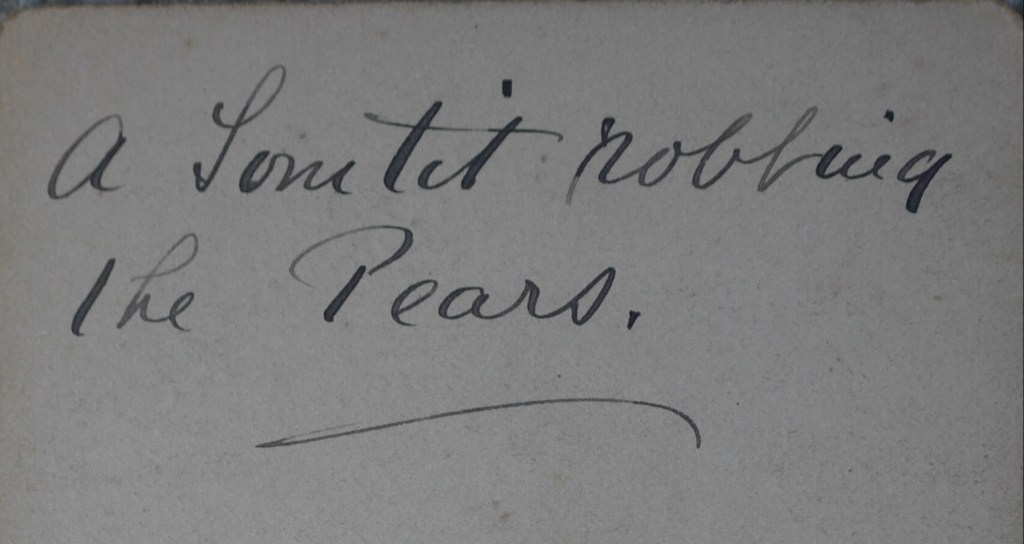
Evidenced by James’s familiar handwriting in ink on the verso, this stereo is titled “A (blue) tit robbing the Pears.”
By 1897, James Edward Ellam (1857-1920) had established a working relationship with the stereoscopic photography company Underwood & Underwood (U&U) and had relocated from Yorkshire to Essex.
From his new base, he was well placed to pursue his career as a photographer servicing newspapers in London’s Fleet Street with images.
Identifying the work of early press photographers such as James is difficult.
They were rarely credited individually by name and their work, in James’s case for 3D companies like U&U, was covered by a catch-all credit such as “taken from a stereograph by Underwood & Underwood.”
So I was delighted to come across these two stereos among the cache of 30 about which I have written this month.
There is no “J.E. Ellam” credit present or a title sticker featuring his distinctive handwriting, so there is only circumstantial evidence of their presence in this cache to point to James as their author.
Both stereos show signs of ageing, but their 3D qualities are largely intact.
They are presented on different coloured cards of light grey and black, both of which we have seen during this blogpost-a-day series.
The 3D images relate to what was billed by The Scotsman newspaper as “The Great Gale” which swept across Scotland in mid-October 1898.
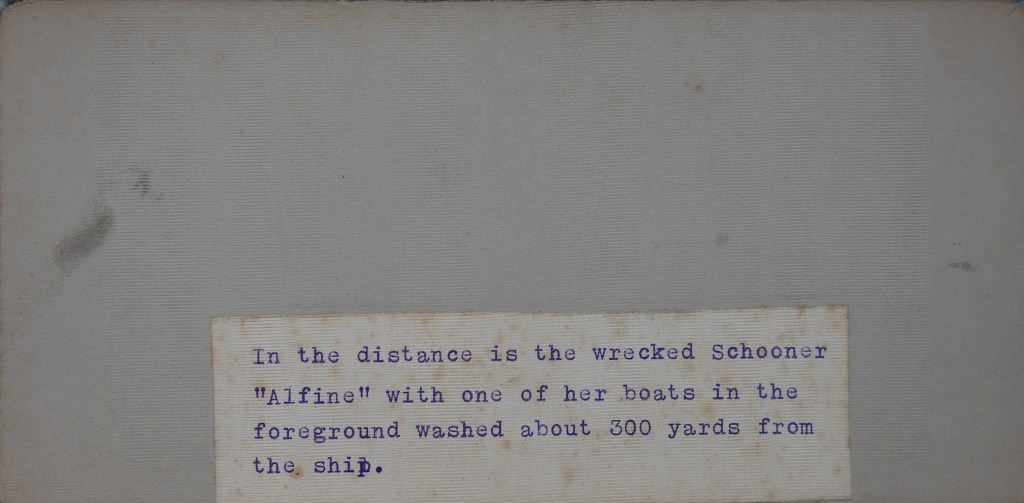
I’ve captioned them below with the text typed onto their versos.
This style of caption will be familiar to anyone who has encountered press photographs, particularly in the pre-digital era.
They provided a sub-editor with information to enable an image to be correctly captioned.
In this case though, the different spellings used for the Norwegian schooner would have triggered a double-check to verify it was, in fact, Alfen.
Whether James supplied these stereos to Underwood & Underwood, or he was working in a freelance capacity, is not known.
However, their existence provides an insight into the cross-pollination between 3D photography and the illustrated press either side of 1900.
“The Great Gale” was certainly a newsworthy story as is evidenced by The Sketch which published a photo of the wreck of the Alfen (2nd November, 1898), which was published without credit.
From The Sketch (2nd November 1898).
So far, the locations visited by James and featured in this series of blogposts have been confined to England, Scotland and Wales
But as we will see in tomorrow’s post, stereoscopic photography companies like Underwood & Underwood were interested in helping their customers travel the world in 3D.
During his years living and working in the small Yorkshire town of Yarm, James Edward Ellam (1857-1920) lodged with Henry Bradley and his family who ran its tailors and outfitters.
Whilst James was Honorary Secretary of the nearby Stockton Photographic Society, Henry was a Vice-President.
In July 1896, the local press reported that James and Henry would be leaving the society and the district.
Their joint destination was Dunmow in Essex where the Bradleys took over another outfitters’ business and James again lodged with the family.
It was a domestic arrangement that lasted until the photographer’s death in 1920.
With London only 30 miles away by train, James was able to pursue his photographic ambitions during the week before returning to Dunmow at weekends.
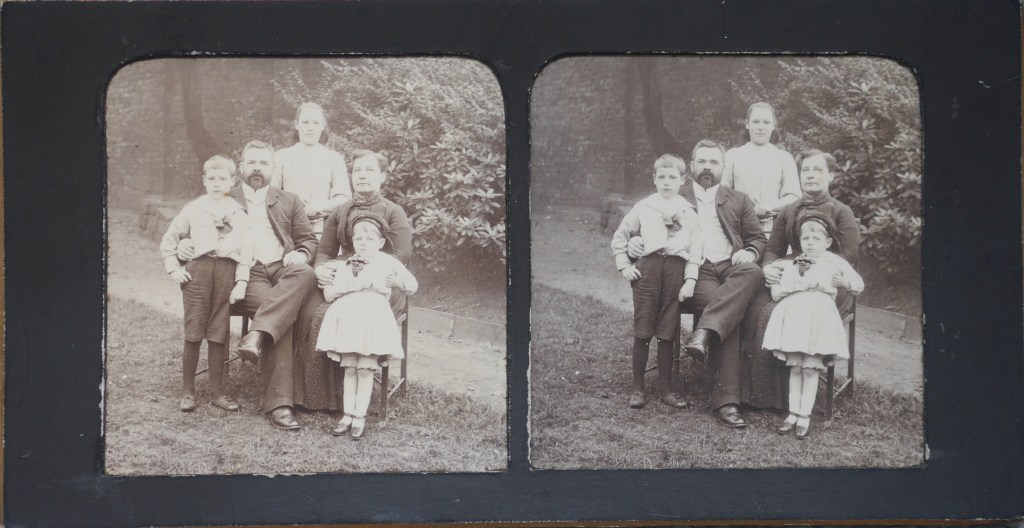
Today’s uncaptioned stereo, taken from a cache of 30 3D cards by him that are the subject of this blogpost-a-day series, almost took my breath away when I viewed it for the first time.
If features an unnamed family group, posing outdoors, in which I recognised the bearded figure of Henry Bradley (1852-1937).
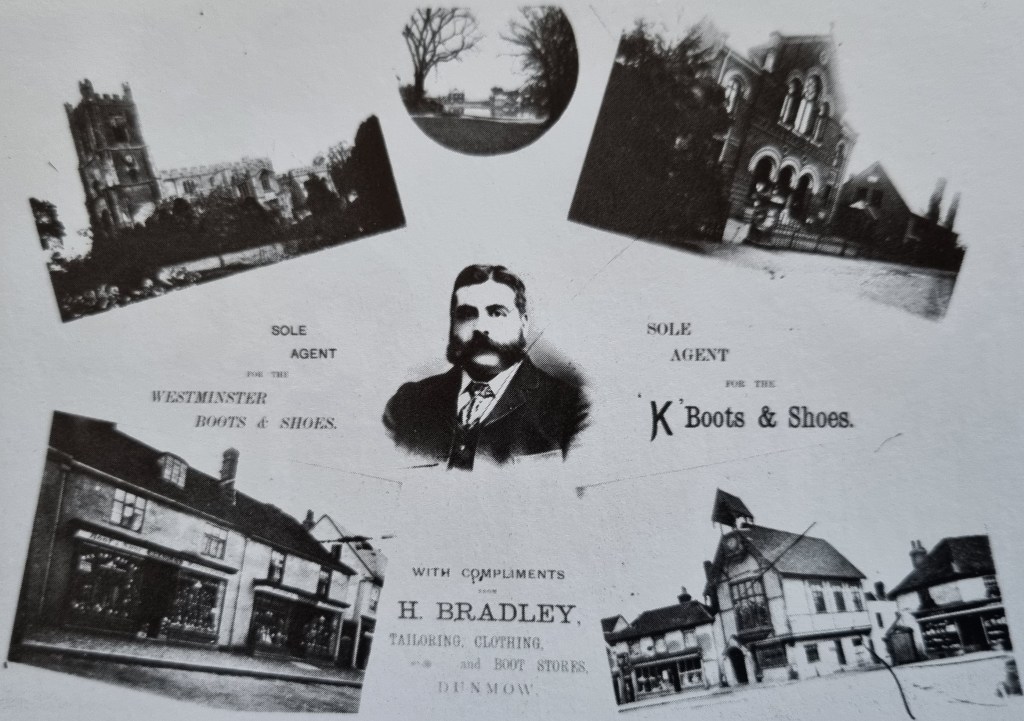
Researching the Bradley family’s years in Dunmow, I came across a postcard Henry produced to promote his new business that included a self-portrait at its heart.
Promotional postcard featuring Henry Bradley from Dunmow in Old Picture Postcards by Stan Jarvis (1986).
Using census records, I learned more about the Bradley family.
The woman to his right in the stereo is likely to be his wife Dorothy (1853-1931).
They are pictured together with three children.
Their eldest Clare Isabel was born in 1884 followed by Ellinor Pauline (1886), Feodora Alice (1887) and Marguerita Annie (1889).
The 1911 England Census records that another child had died by that point.
Parish records for Yarm reveal that a child named Rita Bradley, aged “24 hours,” was buried on 18th July 1883, so perhaps their last-born Marguerita was named partly in tribute to her sister.
Given this biographical information, and if the girl standing between her parents is their eldest, Clare Isabel, the stereo would appear to date from around the time the family left Yarm and moved south to Essex.
Whilst the stereo has no credit or markings on its verso, it would hardly be stretching credibility to think that it was taken by their lodger, James Edward Ellam.
More significantly, it was among the cache of 30 stereos which, I have recently learned, came into my hands via a donation to a charity … in Essex.
In today’s stereo by the press photo pioneer James Edward Ellam (1857-1920), we return to the Pictorialist style with which I began this series of blogposts (“On The Look Out – 1st September 2023).
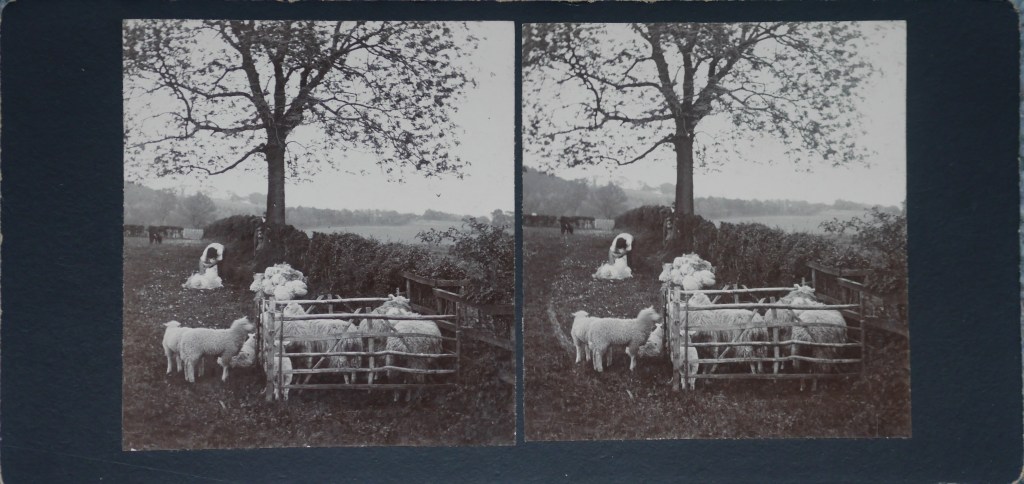
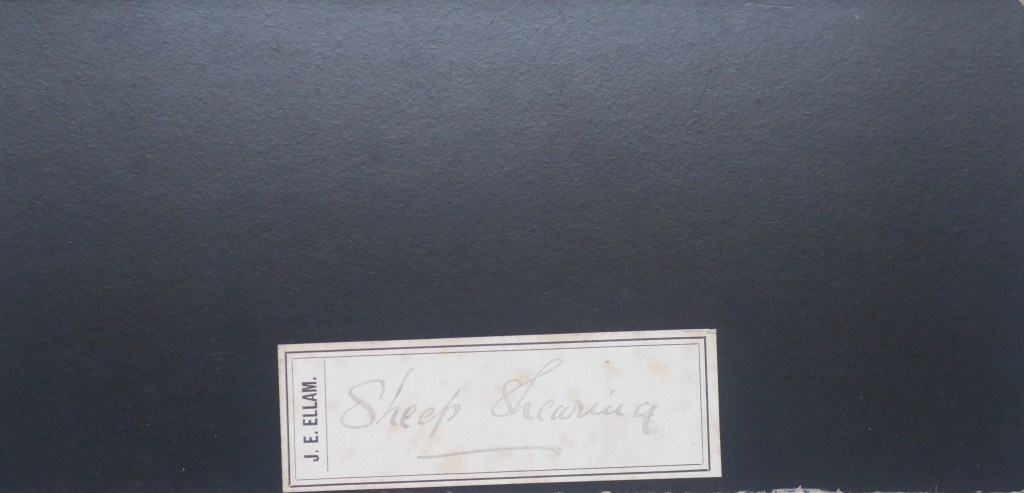
Here, James has carefully staged a familiar rural scene he’s titled “Sheep Shearing.”
In the immediate foreground, a group of sheep are enclosed in a pen made of wooden hurdles with a few waiting patiently close by.
In the middle distance, a shearer, hard at work with a set of hand clippers, is flanked by a pile of fleeces to his right at the base of a tree.
If you look closely, you will see a bearded man together with a young child hiding behind the tree, but failing to avoid being caught on camera.
Again, James has used a black card mount and the vertical “J.E. Ellam” sticker with its handwritten title on the verso suggests this stereo was taken in the middle 1890s.
One of the joys of photo collecting is the discovery of an item for which you’ve been searching and that suddenly appears for sale.
In my case, my research into the firm of W. & D. Downey of South Shields, Newcastle and London introduced me to its carte-de-visites, a format in which it excelled from the late-1850s.
But whilst I’ve known it produced ‘3D’ stereoscopic views from about the same point in its history, I’ve never seen any examples of its stereocards.
That is until this week when two emerged for sale on a well-known auction site.
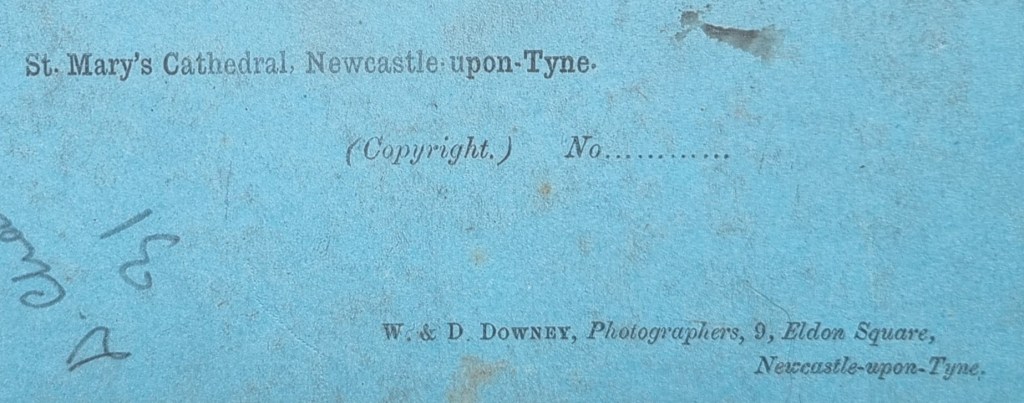
Hardly able to believe my good fortune, they were both captioned on the verso “St. Mary’s Cathedral, Newcastle-upon-Tyne” and boasted the credit “W. & D. Downey, Photographers, 9 Eldon Square, Newcastle-upon-Tyne.”
I wrote an earlier blogpost about a Downey carte-de-visite of the city’s Anglican cathedral church, St. Nicholas, with its distinctive lantern tower (December 7th 2022).
But before this week, I knew little its Catholic counterpart, St. Mary’s, apart from having walked past it a few times on exiting Newcastle central railway station.
Opened in 1844, St. Mary’s was designed by the architect Augustus Welby Northmore Pugin (1812-1852).
Pugin is perhaps best-known for his work on the interior of the House of Commons in the Palace of Westminster.
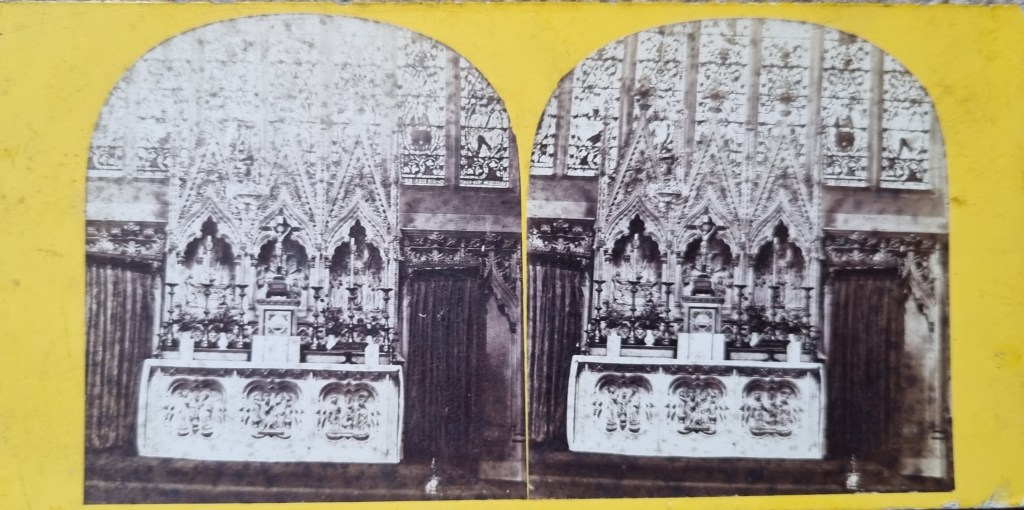
The first of the Downey stereos I have purchased features the Rood Screen and Crucifix at St, Mary’s which date from 1853.
The second is taken beyond the Rood Screen and is a close-up of the altar with its highly ornate design.
The likely dating of these stereos points towards the summer of 1864 when Downey copyrighted a number of photographs of St. Mary’s.
Then followed advertisements in the local press offering both stereos and carte size photos of “Newcastle: Its Streets, Churches and Public Buildings.”
Advert from the Newcastle Daily Journal, July 15th, 1864. Courtesy of British Newspaper Archive.
Naturally, I’m delighted to add these Downey stereos to my collection of the company’s photography and look forward to learning more about its 3D endeavours.
This Thursday sees the start of The Open Championship, an event so sure of its status that its name makes no reference to what its openness might refer.
The oldest golf tournament in the world is being staged for the 151st time, on this occasion at the Royal Liverpool course at Hoylake.
As someone whose formative years were spent not far from Hoylake, it seems curious that this links course is not actually in Liverpool.
Rather, it’s a short ferry ride across the River Mersey on the Wirral peninsula.
For the past few weeks, this blog has had to take a back seat as a combination of a holiday break and work on a new research paper have taken precedence.
So it’s pleasing that The Open offers a link to that research paper and to this stereoscopic photograph titled “Golf” that I have recently added to my collection.
It was taken by J.E. (James Edward) Ellam, one of the stereographers involved in the development of early press photography either side of 1900.
I wrote a blog about Mr. Ellam (Press Photo Pioneer – April 28, 2023), but since then I have become the owner of 30 stereos that can be attributed to him.
“Golf” with its “J.E. Ellam” credit stamp on the verso is one these stereos.
In future weeks, I’ll be blogging about these Ellam stereos and how they further inform understanding of how an amateur stereographer from Yorkshire became a Fleet Street press professional.
‘Glean’ is an exhibition at the City Art Centre, Edinburgh celebrating 14 women photographers and film-makers working in Scotland during the first half of the 20th century.
Poster for ‘Glean’ at the City Art Centre, Edinburgh until 12th March 2023.
The exhibition is wonderful, so it’s great to see that The Guardian has created a gallery/photo essay on its website showcasing some of the women, notably Margaret Fay Shaw, MEM (Mary Ethel Muir) Donaldson, Dr. Beatrice Garvie, Margaret Watkins, Johanna Kissling and Jenny Gilbertson.
Another of the featured photographers is Christina Broom (1862-1939) whose work I had come across in my research into early press photography.
Born in Edinburgh, she is best-known for her images portraying the suffragettes.
Panel for Christina Broom (1862-1939) in the ‘Glean’ exhibition.
But what is best about projects such as ‘Glean’ is that you become aware of photographers and artists of whom you had not heard or knew very little.
The result is that word spreads and other people contribute their knowledge of a particular figure who has been forgotten or relegated to the margins of photo history.
For example, a recent online ‘Zoom’ talk about Violet Banks, another of the featured women presented by the ‘Glean’ exhibition curator Jenny Brownrigg, produced an amazing moment.
In passing, Jenny mentioned that she thought Violet Banks had produced ceramics during her career.
Much to everyone’s delight, one of the attendees in Brussels then produced a piece of Banks’ ceramic work and displayed it on camera.
Then last night, my wife who is a knitting enthusiast booked into a talk by the writer Esther Rutter about ‘how the fishing communities of Scotland’s west coast influenced knitting traditions across the world.’
And there among her illustrations of the links between knitting and the sea were photographs of fishing communities taken by several of the women featured in ‘Glean.’
If any of this floats your boat, there is a further free online talk on Thursday 9th March titled ‘Margaret Fay Shaw, Hebridean Female Crofters in Sharp Focus.’
I’m aware that it’s been a little quiet on here in recent weeks.
The main reason for this is that I’ve been pulling together a 3,000-word journal article due for publication in the Spring (details to follow).
As a result, there hasn’t been much time left to write blogposts of the kind that have featured here since the turn of the year.
As you might imagine, both ‘The Hartley Catastrophe’ (16th January 2023) and ‘Excelsior Stereoscopic Tours’ (25th January 2023, updated 6th February 2023) involved a lot of research and writing up.
However, I’m pleased to report that they have prompted others interested in photo history to contact me with comments and additional information, which is the whole point of ‘pressphotoman.’
In the meantime, during a walk earlier today, my eye was caught by this old post box down by the pier at Berwick-upon-Tweed.
Wall post box, Berwick upon Tweed.
Strangely, it offered a visual clue to the subject of my forthcoming journal article.
More to the point, it also injected a welcome burst of colour into a cold and windy winter’s day.
The Christmas/New Year holiday offers an opportunity to enjoy another treasure from my recent visit to ‘Slightly Foxed,’ a second-hand bookshop in Berwick.
‘The Pickwick Papers’ is a Charles Dickens that I haven’t read before.
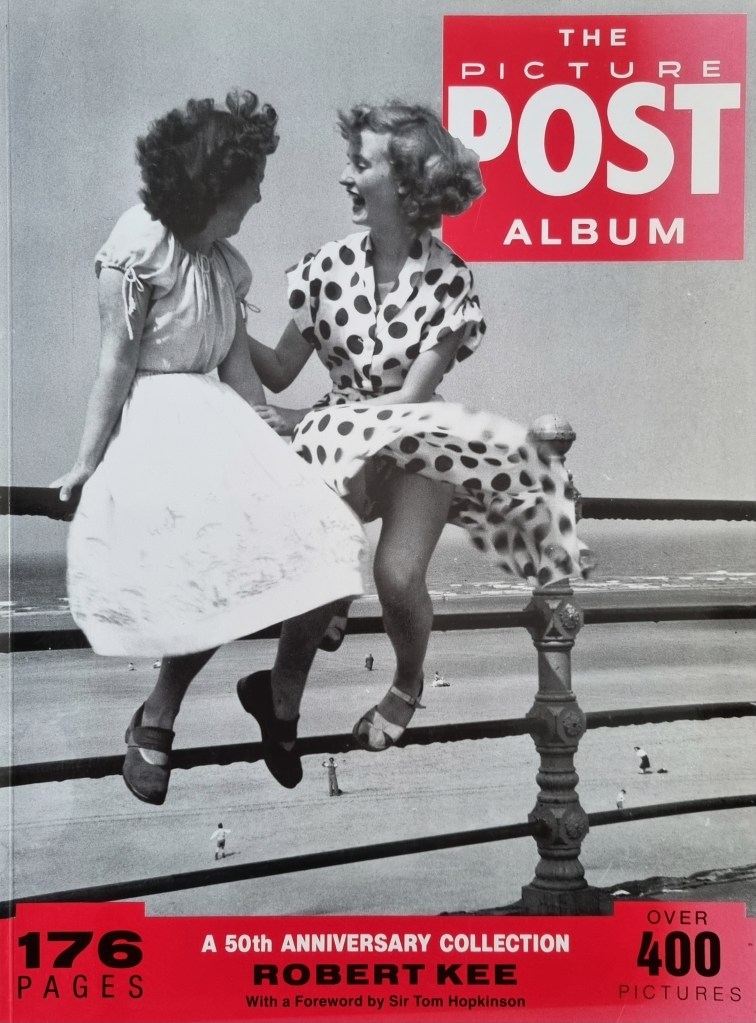
Apart from the brilliance of the writing and story-telling, the copy I bought (along with ‘The Picture Post Album’ – see December 15th, 2022 post) came with an instantly recognisable Quentin Blake cover.
‘The Pickwick Papers’ by Charles Dickens (Nelson Classics). Cover illustration by Quentin Blake c. 1971.
It dates from about 1971, the year Britain went decimal, as the price sticker has both 13 shillings and 65 pence.
Blake, now 90 and still active as an artist and illustrator, has an informative website that is well worth a visit.
The ‘Photography’ sections of second-hand bookshops are usually confined to just a couple of shelves.
But it never ceases to amaze me what can be purchased for just a few pounds.
So you can imagine my excitement when a pre-Christmas explore of the wonderfully-named (and wonderful) ‘Slightly Foxed’ in Berwick upon Tweed yielded this title.
The Picture Post Album: A 50th Anniversary Collection by Robert Kee first published in 1989.
Not only that, but there was a choice of copies as two had found their way to the shop.
As a former newspaper journalist and someone interested in the history of press photography, I’m looking forward to curling up with my newly-acquired purchase.






















 Pressphotoman
Leave a comment