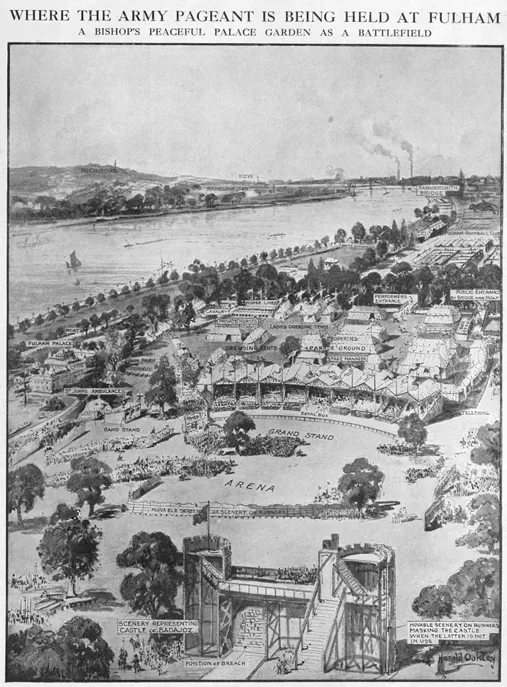
The Army Pageant held at Fulham Palace, London in the summer of 1910 continues to yield revelations for this blog.
Drawn by Harold Oakley, The Graphic Summer Number (25th June 1910). From British Newspaper Archive.
Witnessed by around 100,000 spectators, the event featured what the Historical Pageants in Britain website describes as “a disparate selection of episodes that illustrated the development of military conflict and the British armed forces.”
Regular readers will be aware that it was an assignment covered by pioneering Fleet Street press photographer James Edward Ellam (1857-1920).
Working for the recently-launched London News Agency Photos Ltd. (L.N.A.), he supplied prints taken from his 3D images that were published as halftones, notably by the Illustrated London News.
Illustrated London News (25th June 1910). From British Newspaper Archive.
By contrast, The Graphic, one of the ILN’s long-standing competitors, used the work of artists rather than press photos to convey the drama and spectacle on view.
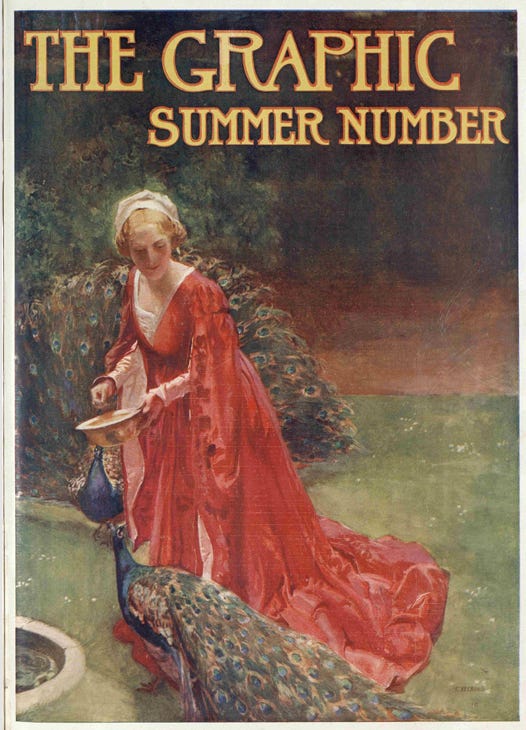
The costumes supplied to those participating in the pageant’s various episodes were particularly eye-catching as demonstrated by the cover of its Summer Number.
(The Graphic Summer Number (25th June 1910). From British Newspaper Archive.
Closer examination of the coverage inside revealed a detail I had previously missed.
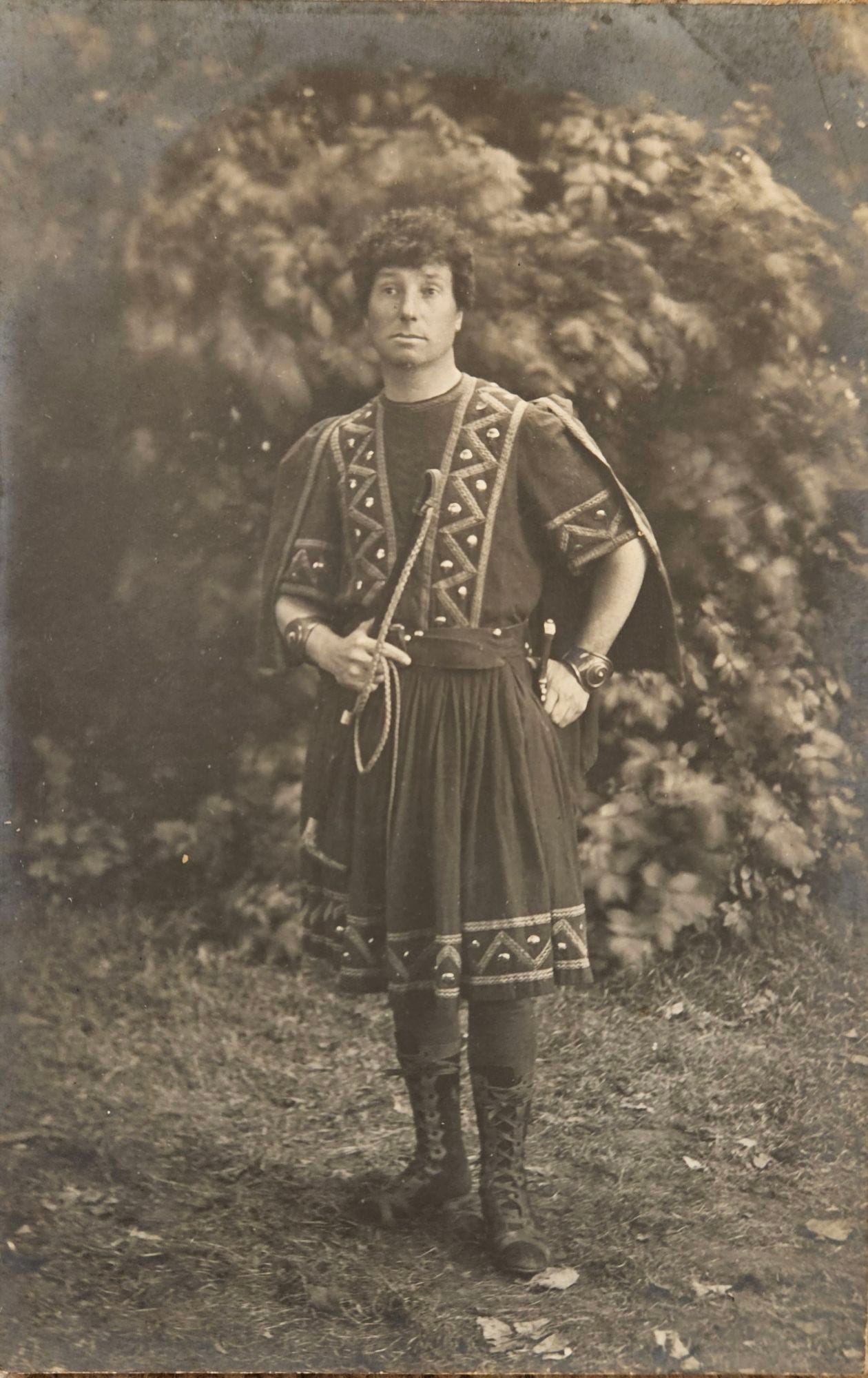
It concerned Fulham outfitter Stanley Cave, one of the event’s organisers and the subject of an earlier Pressphotoman blogpost.
Mr. Cave’s skills handling horses were alluded to in this photographic postcard that initially prompted the post, portraying him as a ‘Roman Charioteer’.
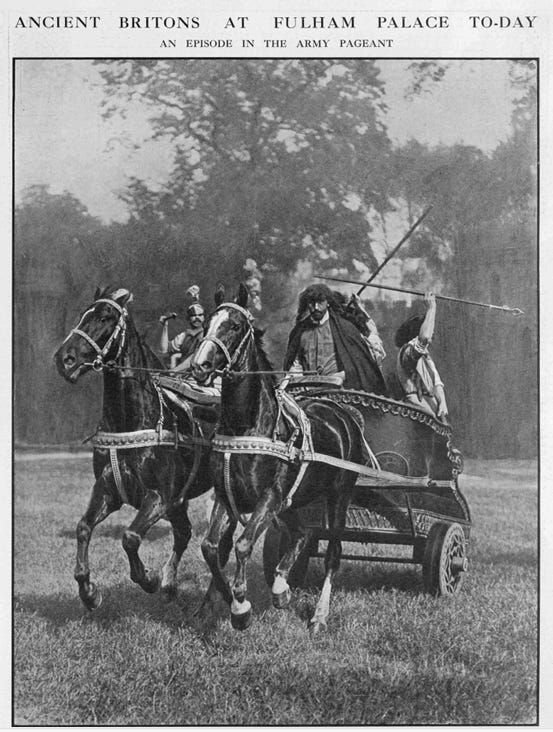
But in a scene from the pageant featuring ‘Ancient Britons’, an uncredited artist with TheGraphic placed Mr. Cave at the heart of a full-page drawing, adding a full beard to his distinctive facial features.
The Graphic Summer Number (25th June 1910). From British Newspaper Archive.
At this point in press history, the battle between art and photography as competing illustrative media was still in full swing.
It maybe that the Graphic artist used a photograph as the basis for his version, perhaps even one supplied by James Edward Ellam of L.N.A.
However, in this example with its vivid portrayal of a bearded Mr. Cave and his spectacular horse-drawn chariot, artistic licence could be argued to have won out over factual accuracy.
In September 2023, a blog-a-day series of Pressphotoman posts featuring stereographs mostly attributable to the early press photographer James Edward Ellam (1857-1920) concluded with a question.
Was Ellam the man portrayed in one of the newly-discovered cache of stereos?
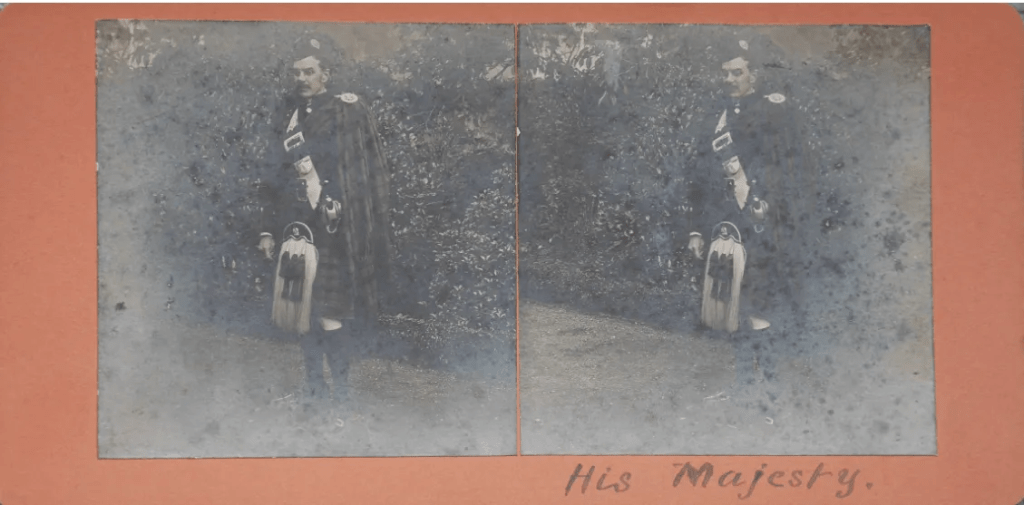
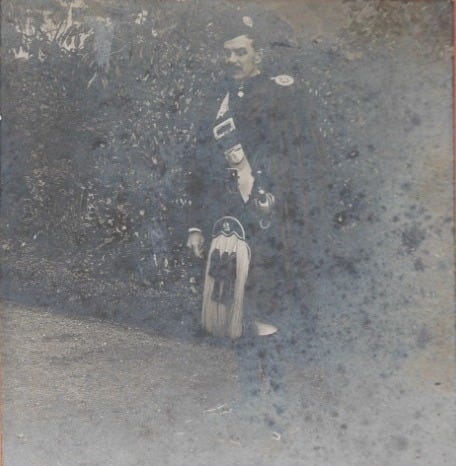
Though faded with age, a figure in full Highland dress pictured with a garden backdrop was captioned ‘His Majesty.’
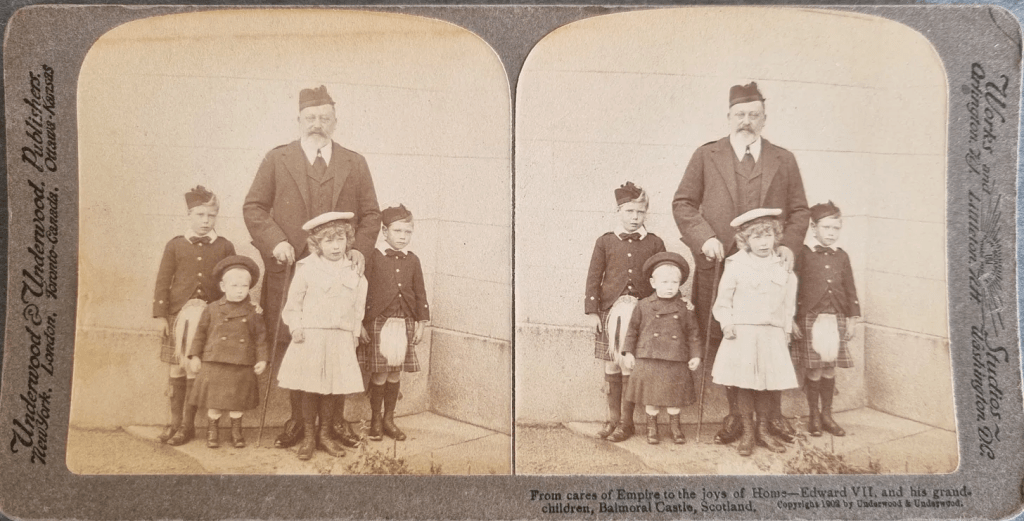
The handwriting was immediately recognisable from the multiple copyright forms that Ellam completed during his career, whilst the title ‘His Majesty’ appeared to be a humorous reference to one of his best-known images.
Taken for Underwood & Underwood, it featured Edward VII and his grandchildren (including the future Edward VIII and George VI) at Balmoral following the King’s Coronation in August 1902.
These pieces of evidence seemed to point strongly, but not conclusively, in one direction.
For the past couple of years, Pressphotoman has been on the look out for photographic evidence that might corroborate this theory.
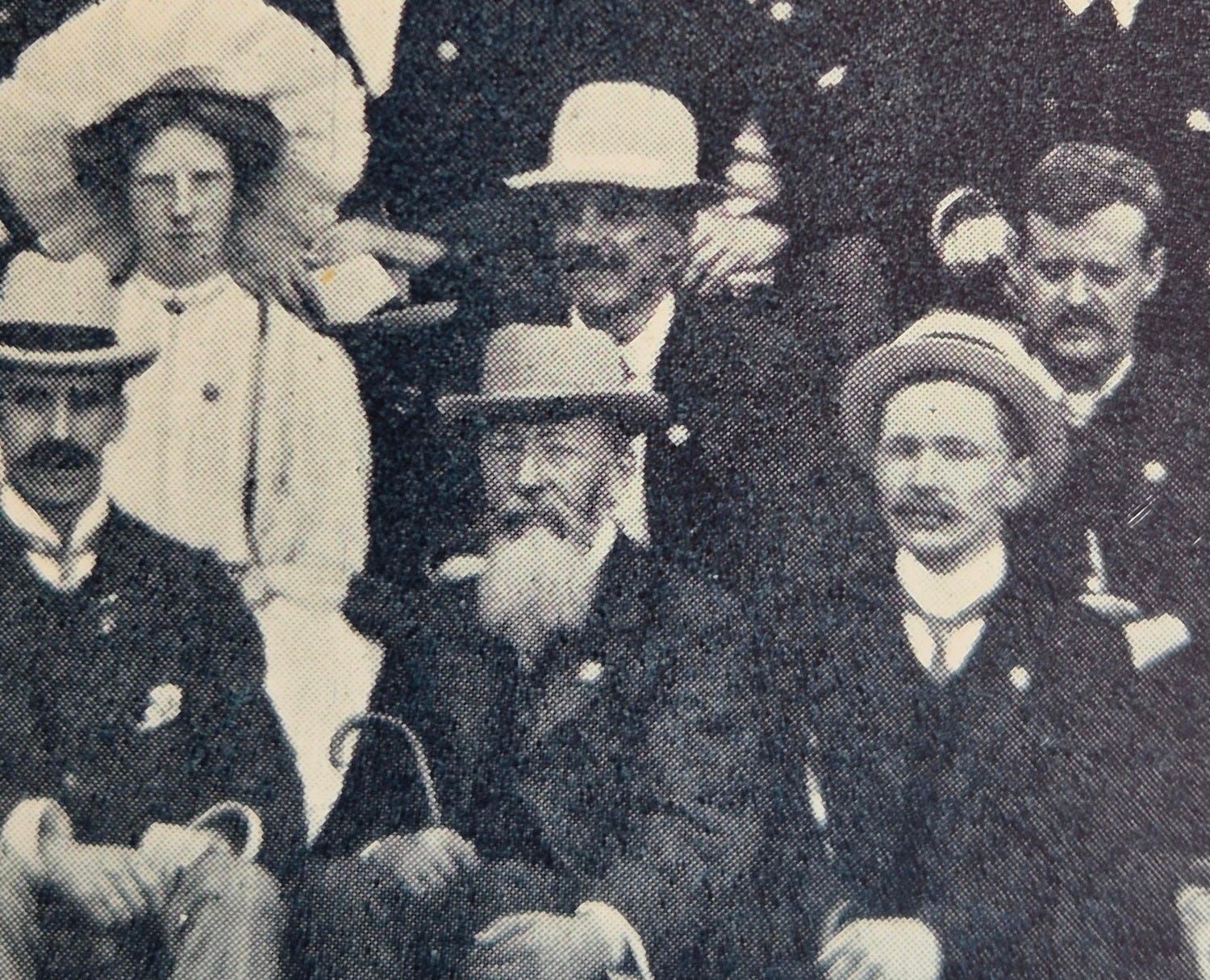
Thanks to Dr. Michael Pritchard, editor of the British Photographic History blog and The PhotoHistorian, journal of the Royal Photographic Society Historical Group, another photograph featuring Ellam has emerged.
It was taken in July 1908 when around 300 photographers, both professional and amateurs, gathered in Brussels for the 23rd Photographic Convention of the United Kingdom.
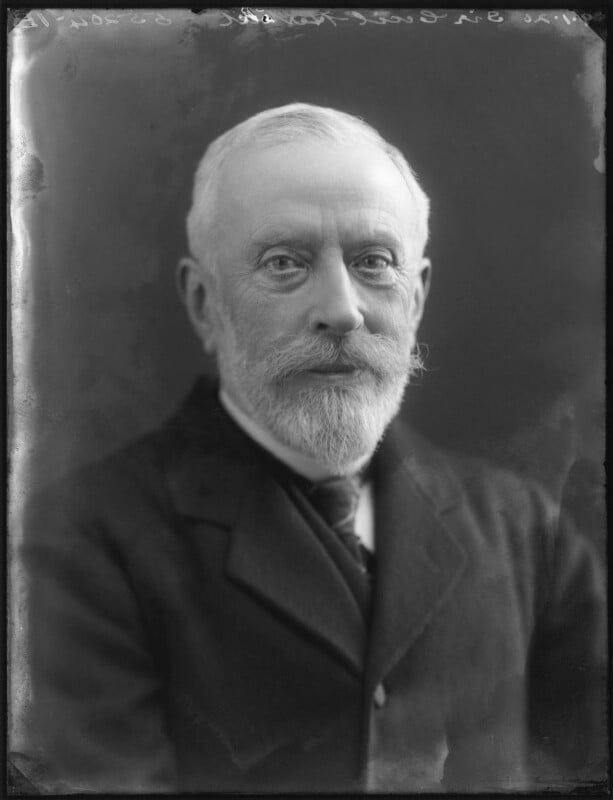
The choice of location was informed by the Convention president Sir Cecil Hertslet FRPS (1850-1934) who was His Majesty’s Consul-General to Belgium from 1903 to 1919.
At this point in his career as a professional photographer, Ellam was nearing the end of a decade-long working relationship with 3D giants Underwood & Underwood based in London’s West End.
He had become a member of the Royal Photographic Society in 1907 and was also an active member of the West London Photographic Society, lecturing on stereoscopic photography at one of its meetings.
In 1909, as part of a display by the United Stereoscopic Society, he created a stereoscopic transparency displayed by lantern at the annual RPS exhibition.
By the following year, he was working for London News Agency Photos at 46 Fleet Street covering events like the Army Pageant of 1910 held in Fulham Palace Gardens.
The discovery of another photograph of Ellam helps bring a further dimension to several blogposts on this site that can be found by putting his surname into the search engine via the link below.
In 1905, the photographer James Edward Ellam was at a turning point in his professional career.
A skilled amateur stereographer in his native Yorkshire, he had journeyed south a decade earlier to pursue opportunities offered in London by the leading American 3D company Underwood & Underwood.
It was a decision that changed his life.
Ellam is best-known for a number of the stereos he took for the Underwood company.
Today they feature in museum collections around the world.
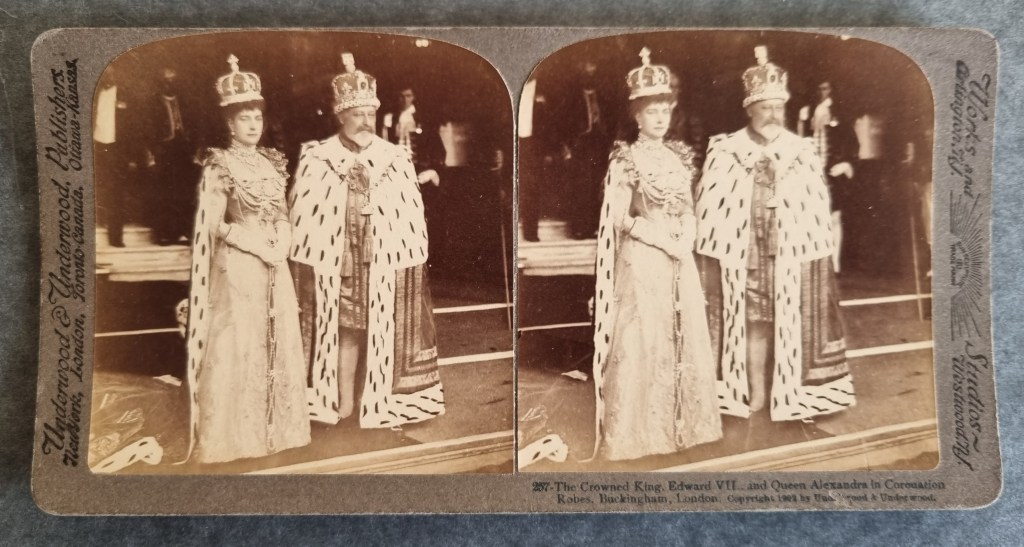
Among them are Queen Victoria’s Golden Jubilee celebrations (1897), King Edward VII and Queen Alexandra in their coronation robes (1902) and Pope Pius X in his pontifical robes in the Vatican’s Throne Room (1903).
Despite these achievements, Ellam’s career path into Fleet Street seems to have included a subsequent period where he created photographs with a distinctly local flavour.
Hence, his decision to register the copyright of two images taken in or around the Essex town of Dunmow where he lodged at weekends.
Last week’s blogpost featured the first of these press photographs.
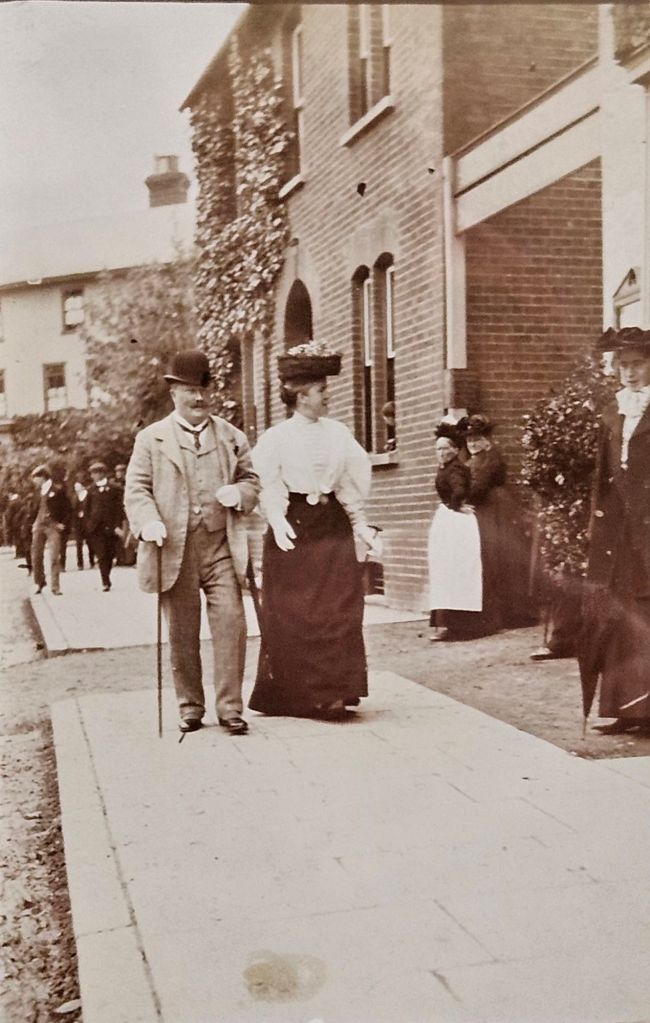
It portrayed the prospective Liberal Member of Parliament Barclay Heward (1853-1914) and his wife strolling along Dunmow High Street in the run-up to 1906 General Election.
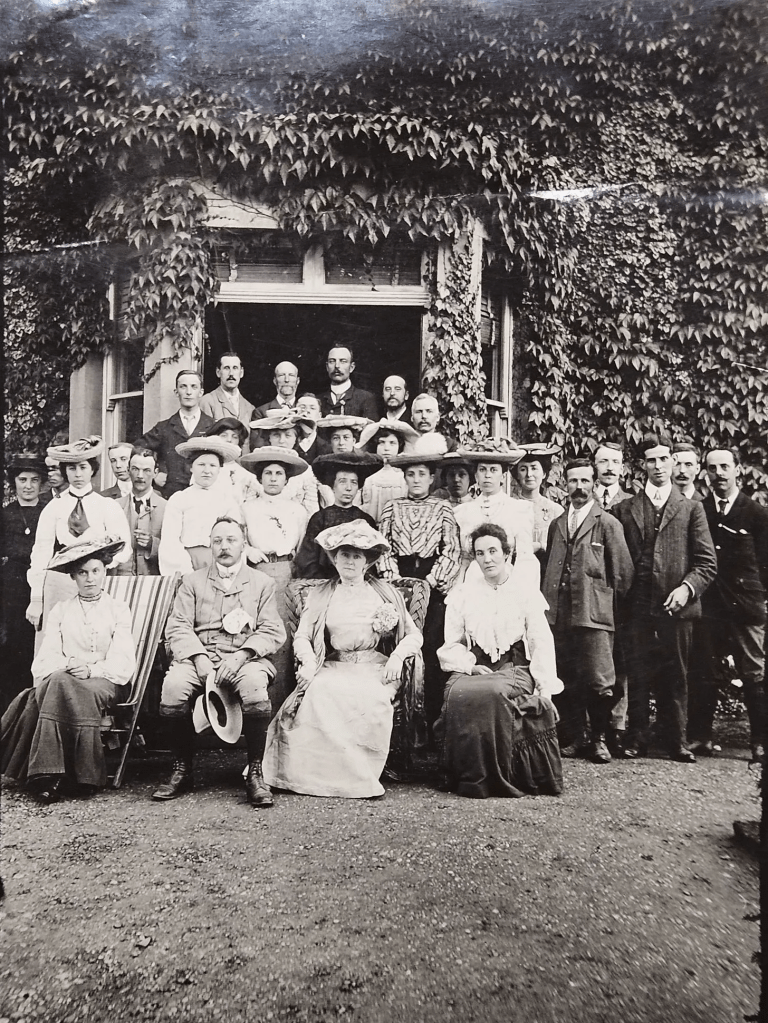
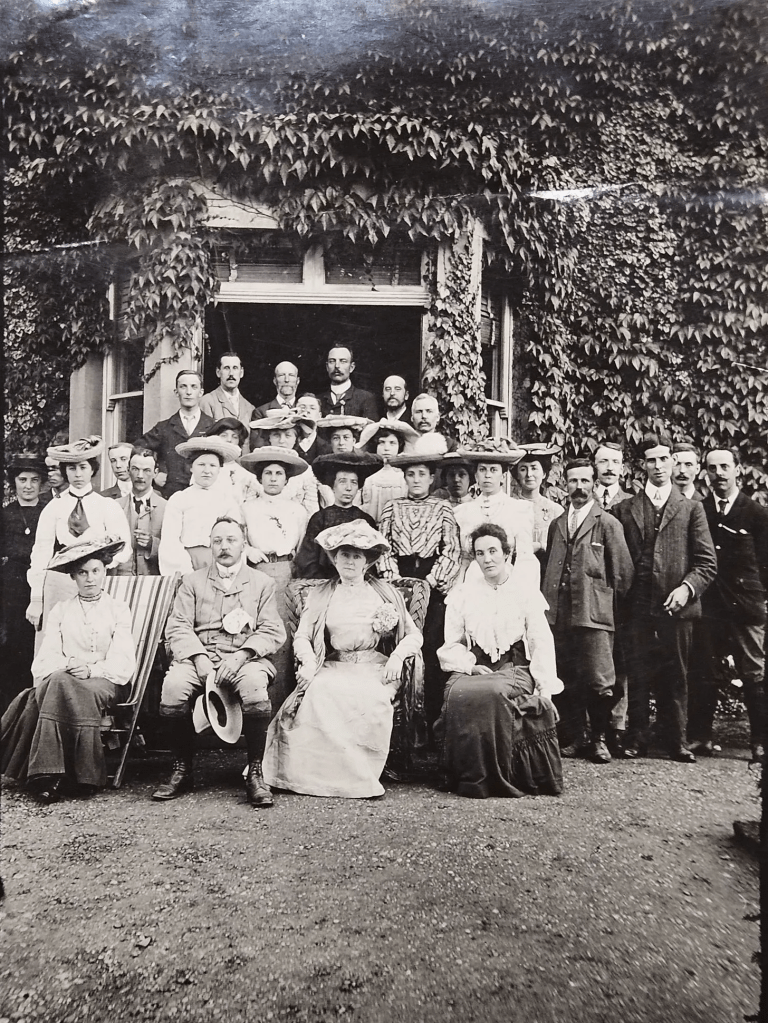
What he omitted to mention was that one of that group was one of the most famous women in the land.
Fashionably-dressed and seated on the front row in a wicker chair, Daisy, Countess of Warwick was a one-time mistress of King Edward VII.
She is pictured at a significant moment in her own life; one that was the subject of almost daily press attention.
During this period, Lady Warwick became actively engaged in politics as a member of the Social Democratic Federation.
However, unlike the Liberal candidate Barclay Heward, who featured in Ellam’s earlier photograph, she was increasingly active in promoting radical socialism ahead of the forthcoming General Election.
As to the photograph’s genesis, a press report in the East Anglian Daily Times and cited in the Essex Naturalist account of the club’s activities provides the background.
On Saturday 8th July 1905 at the invitation of the Earl and Countess of Warwick, “members of the club and many friends, about seventy in all, assembled … for the purpose of inaugurating ‘the Pictorial and Photographic Record of Essex.’”
The brief of the project was “to write the history of the county in pictures.”
East Anglian Times (10th July 1905). From British Newspaper Archive.
The report described how Lady Warwick presided at a luncheon held at Easton Lodge near Dunmow, her husband’s ancestral Essex home.
She first apologised for the absence of the Earl, who was “at Brest on a yachting cruise.”
After lunch, a meeting to discuss the photography project was held “in a commodious double tent amongst trees at the back of the house.”
Following the meeting, the group paid a visit to nearby Bigods Hall, which the Countess had established years earlier as a secondary and agricultural school.
Those present were then entertained to tea by the Principal, Mr. T. Hacking and Mrs. Hacking.
Though the report refers to “about seventy in all” attending the luncheon and meeting held at Easton Lodge, the smaller group pictured in the Bigods Hall photograph perhaps indicates that not everyone made the line-up.
What is particularly noteworthy is the presence of so many women in the picture, making up around half of the group.
At this point in the medium’s history, photography had become a popular and affordable pastime thanks to the advent of Kodak’s ‘you press the button, we do the rest’ range of cameras.
Ellam’s presence too may well have been directly linked to the photographic project being discussed.
Copyrighting the image does though suggest that he recognised that this photograph of the Essex Field Naturalists Club had a long-term value.
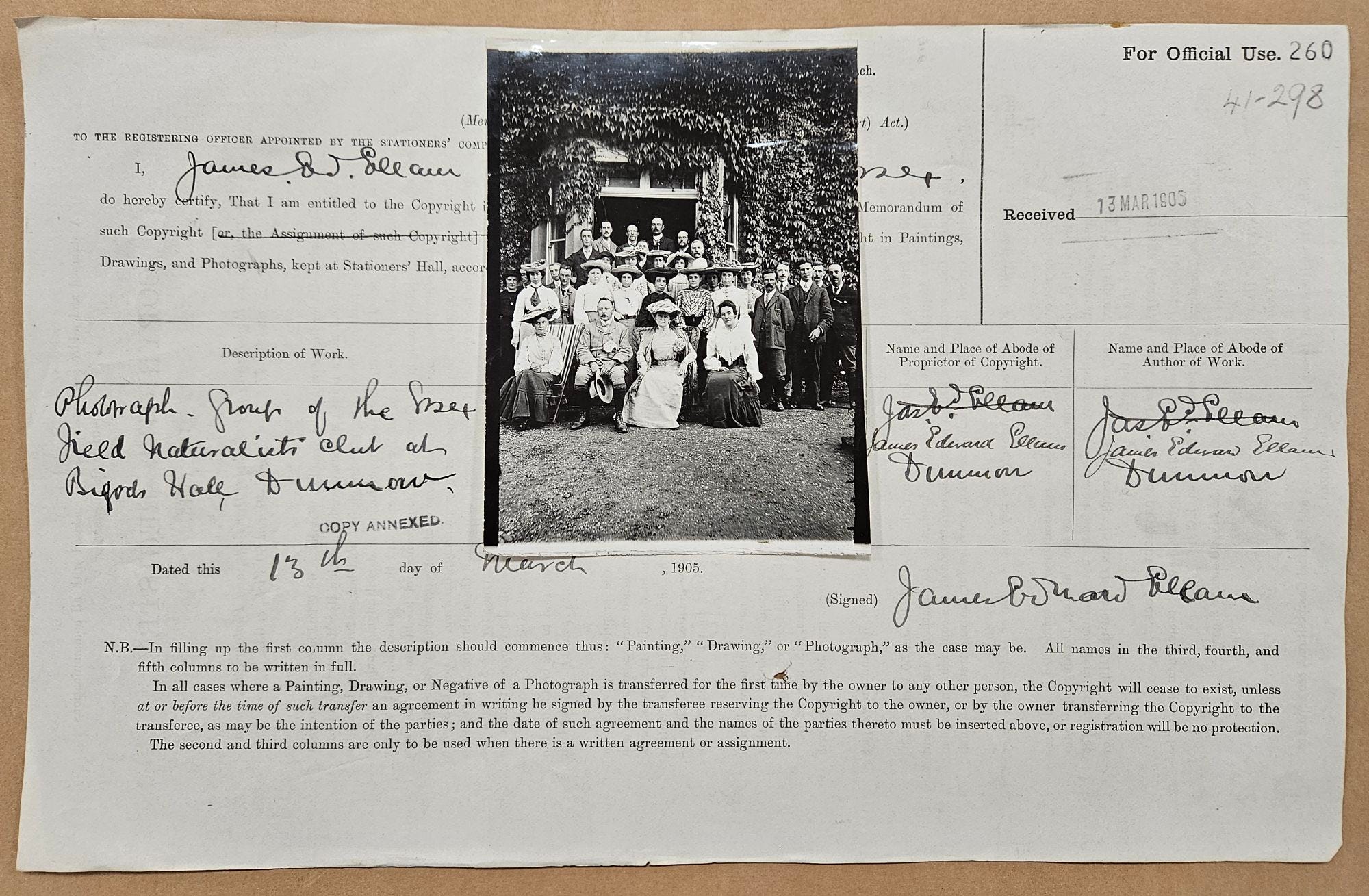
What is slightly confusing is that the copyright form completed by Ellam, with this photograph attached and held by the National Archives, is stamped and dated ‘13th March 1905.’
As the weather during the Bigods Hall visit was reported as “gloriously fine,” the dress of those appearing on camera does suggest a July day rather than one in March.
One explanation may be that the 13th March form referred to an earlier occasion.
Armed with a new photograph of the group featuring the media-friendly Lady Warwick, he simply substituted a copy of that taken on 8th July.
Whatever the explanation, the resulting photograph captures a moment in the changing world of Edwardian Britain.
Political elections and their outcomes are a talking point at the moment particularly in England, Canada and Australia where voters have recently gone to the polls.
Down the centuries, press and media coverage of such landmark events has evolved as demonstrated by this photograph.
More about the photograph’s subjects, its location and how it came to be taken shortly.
As to the photographer responsible, the image was created by James Edward Ellam (1857-1920) whose career as a stereographer and later press photographer is a continuing research thread for this blog.
The photograph’s existence is entirely due to the UK National Archives, formerly the Public Record Office.
The Fine Arts Copyright Act of 1862 required that anyone registering a photograph for copyright needed to complete a form with a copy of the image attached though not everyone did as they were required.
Today, those copyright records are stored in sturdy grey archival boxes in the National Archives building at Kew in London.
Each box contains a stack of forms preserved in see-through sleeves.
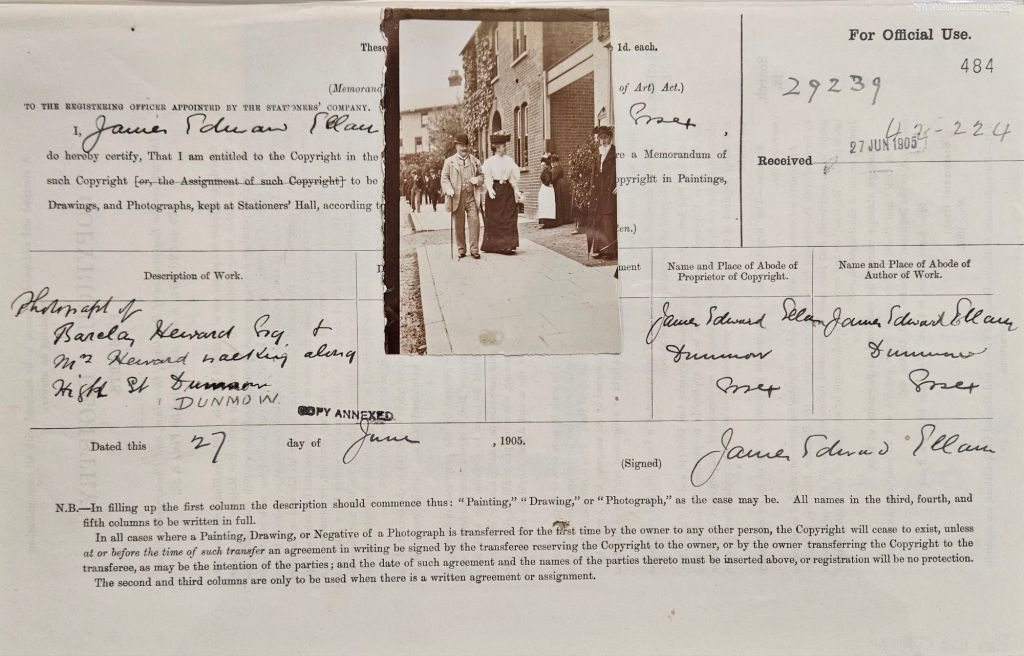
Fortunately for this researcher, Mr. Ellam’s form dated 27th June 1905 and signed by him together with the photograph it related to were intact.
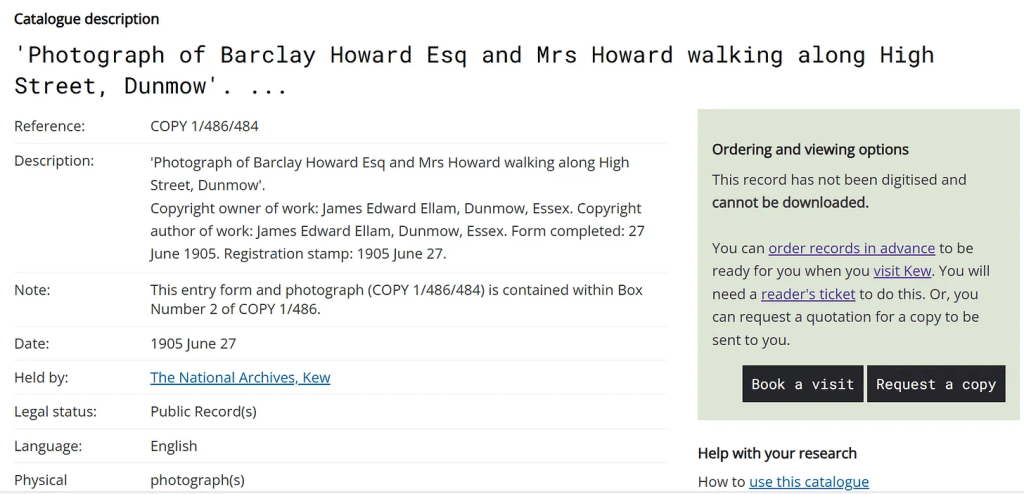
Helpfully, the National Archives have created a digital record of these copyright forms and their contents.
But the contents of the forms are not always accurately recorded and so can send the researcher down a few dead ends as it did in this case.
On further investigation, what the catalogue listed as ‘Photograph of Barclay Howard Esq and Mrs. Howard walking along High Street, Dunmow’ turned out to have mis-spelt the couple’s surname.
Mr and Mrs. Heward (rather than Howard) were Spencer Barclay Heward (1853-1914) and his wife Lina Emily née Sewell, who had married in 1879.
The reason that James Edward Ellam had taken their photograph on a June day in 1905 was all down to politics.
Mr. Heward was a candidate in the forthcoming United Kingdom General Election that took place over several days in late January and early February 1906.
This wasn’t Heward’s first attempt to become a Member of Parliament.
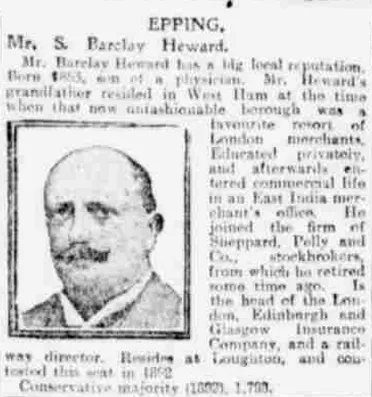
A retired stockbroker, he had stood unsuccessfully in 1892 as the Liberal candidate for the Epping constituency in Essex.
Stratford Express (16th July 1892). From British Newspaper Archive.
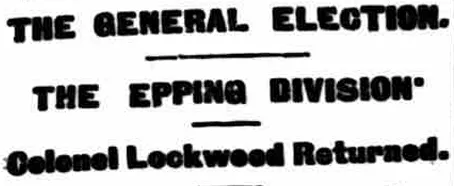
In November 1904, he was again selected to fight the seat for the Liberals in a bid to unseat the same Conservative opponent, Colonel Lockwood.
Ellam’s photograph of Mr. and Mrs. Heward captures the couple striding confidently along the pavement, attracting the attention of various onlookers.
One particular point of interest is the photograph’s location as stated on the copyright form: ‘High Street, Dunmow.’
Whilst working during the week as a press photographer servicing London’s Fleet Street, Ellam lodged at weekends with Henry Bradley and his family at their outfitters business on Dunmow High Street in Essex.
Whether the photoshoot with the Hewards had been pre-arranged or came from Ellam’s quick-thinking, it resulted in an image with topical news value.
There was a growing market for such photos among newspapers and magazines.
These though were early days as far as press photography were concerned and even national newspapers previewing the General Election predominantly used line drawings as illustrations.
London Daily Chronicle (1st January 1906). From British Newspaper Archive.
They were early days too for Ellam, who was operating at this point in his career as a freelance press photographer with an eye to selling his images to multiple customers.
Claiming copyright for his work provided a degree of protection for any financial benefits that might accrue if the photograph was reproduced by the press.
On this occasion though, and despite the Liberal landslide result across the UK, Ellam’s journalistic instinct went unrewarded at the polls.
The Woodford Times (26th January 1906). From British Newspaper Archive.
Also in 1905, Ellam created another photograph aimed at the press that he again copyrighted, which is the subject of the next Pressphotoman blogpost.
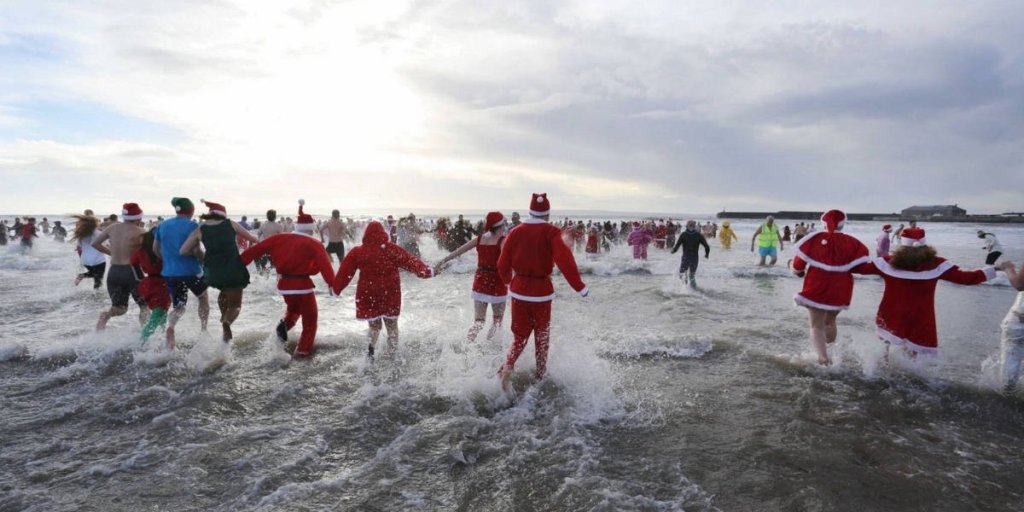
The tradition of taking a dip in the sea during the Christmas and New Year holidays is now firmly established in the seasonal calendar.
Each year, social and traditional media are swamped with images of figures dashing into the surf, many in colourful fancy dress outfits, braving the freezing temperatures for charity.
Little more than a century ago, the very idea of such a spectacle being contemplated, never mind taking place, would have seemed fanciful.
I have to thank Geoff Barker, Senior Curator of the State Library of New South Wales, for a recent LinkedIn post about a fellow Australian, who helped change public attitudes to swimwear.
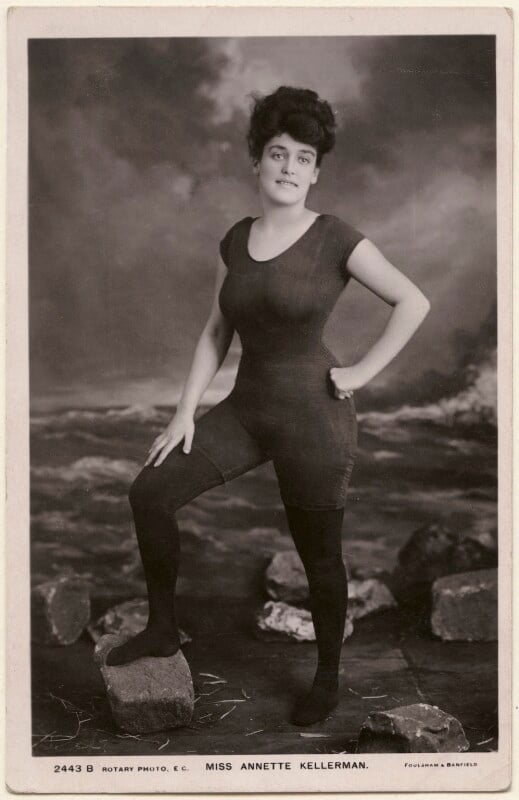
Annette Kellerman (1886-1975) was a professional athlete and later vaudeville and silent film star, who helped popularise the one-piece bathing suit.
I first learned about her whilst researching my doctoral thesis on the influence of stereoscopic 3D photography on press illustration.
Among her many accomplishments, she was the first woman to attempt to swim the English Channel (only officialdom stopped her completing the crossing).
She also took part in a number of highly-publicised river races in Paris and London.
The international media devoted many column inches to reporting her exploits and press photographers followed her every move.
This 1906 report from the Daily Mirror, Britain’s first tabloid newspaper, is typical of the coverage that Annette Kellerman attracted.
Daily Mirror (17th July 1906). From British Newspaper Archive.
The photographs reproduced in half-tone were supplied by Underwood & Underwood (U&U) whose photo agency soon became the largest in the world.
In a link with the Underwood company, the postcard of Miss Kellerman reproduced earlier in this post was published by the firm of Foulsham & Banfield.
Co-founder Frank Foulsham (1873-1939) had begun his photographic career as a stereographer.
He supplied images of politicians and music hall stars to U&U for publication in the press.
In time, Foulsham & Banfield’s name became synonymous with glossy postcard prints featuring a galaxy of music hall and vaudeville stars.
The National Portrait Gallery, London online archive features more images of Annette Kellerman including a number by H. Walter Barnett (1862-1934), a W & D. Downey alumni
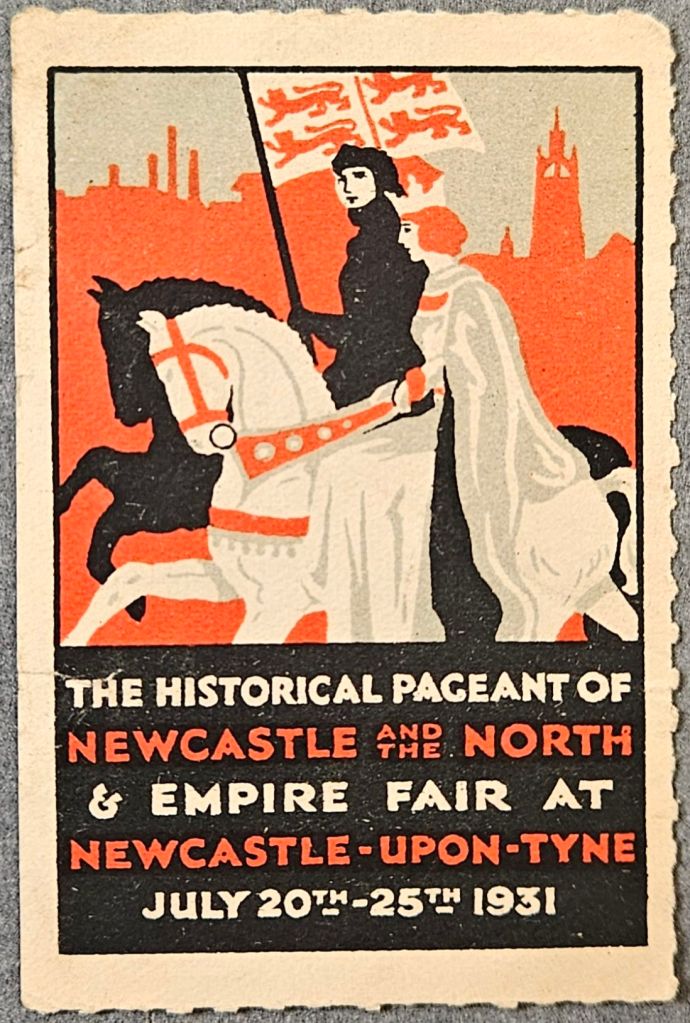
A colourful stamp-sized poster with the Newcastle skyline in the background left me wondering how this event was captured visually by photographers and film-makers.
Historical pageants in Britain during the 20th century offered communities up and down the country the chance to dress up, party and celebrate our national history.
Newcastle had previously hosted Northumbrian Pageants in 1923 and 1925.
The 1931 event had a wider geographical focus with participants from across the North of England.
At the time, the region was affected by the low morale and high unemployment that marked the Great Depression of the 1930s.
Deciding something must be done to address this state of affairs, the Women’s Committee of the Northern Counties Area of the National Union of Conservative and Unionist Associations organised a pageant and industrial fair.
Among its key figures was Irene Ward, who went on to be elected as Conservative MP for Wallsend (1931-1945) and Tynemouth (1950-1974).
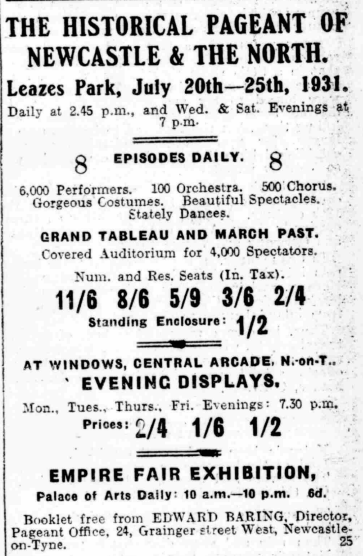
According to press adverts, the event involved 6,000 performers, a 100-piece orchestra and 500-strong chorus with the promise of “Gorgeous Costumes. Beautiful Spectacles. Stately Dances.”
Northern Weekly Gazette, 18th July 1931. From British Newspaper Archive.
Audiences estimated at more than 120,000 attended the pageant, which proved so successful that two additional performances were staged making 10 in total.
It was also restaged indoors at the city’s Empire Theatre in November 1932.
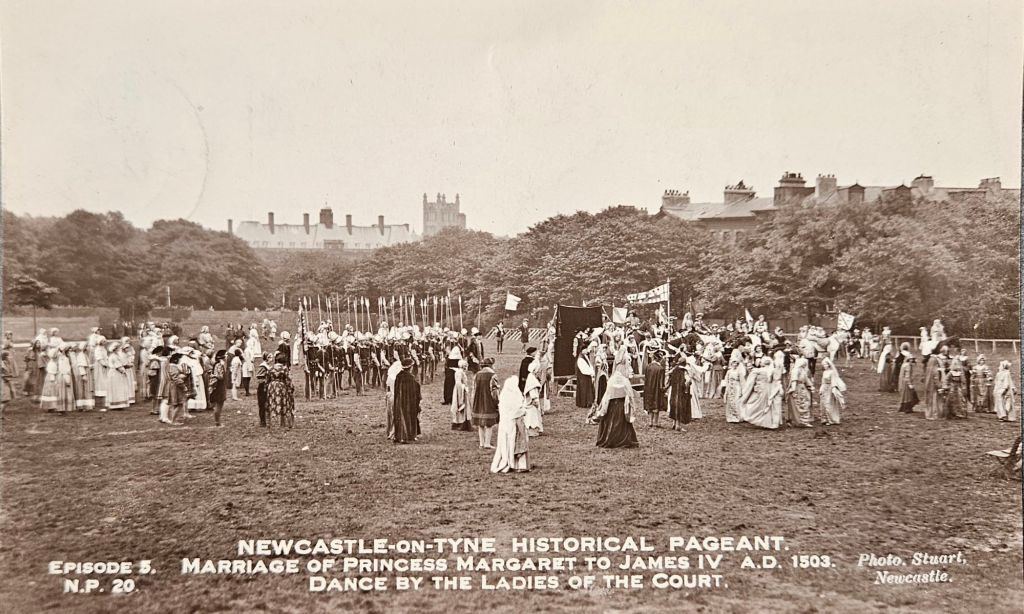
Photographically, Stuart, a long-established Newcastle firm based at the YMCA Buildings in Blackett Street were on hand to record the pageant’s sequence of Episodes.
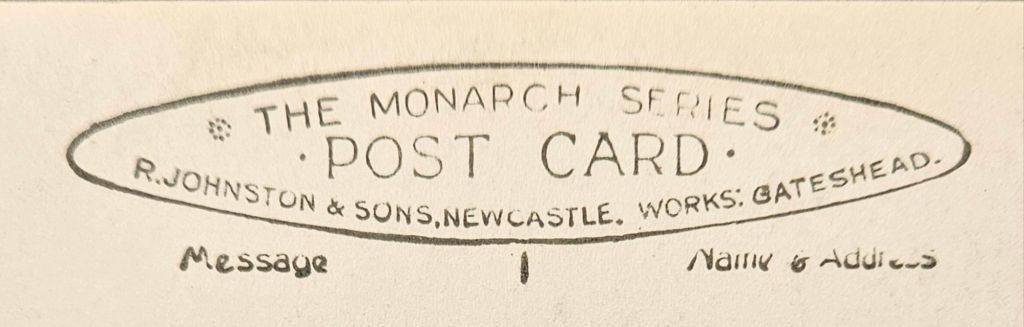
Black and white images were then reproduced in a series of ‘Monarch’ postcards published by another Newcastle firm, R. Johnston & Sons with its printing works in neighbouring Gateshead.
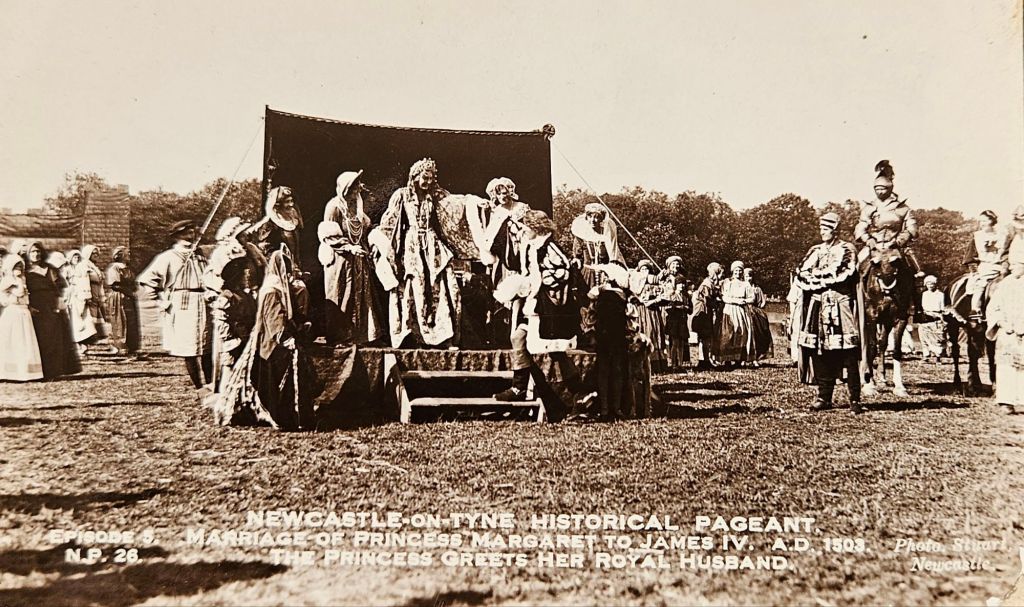
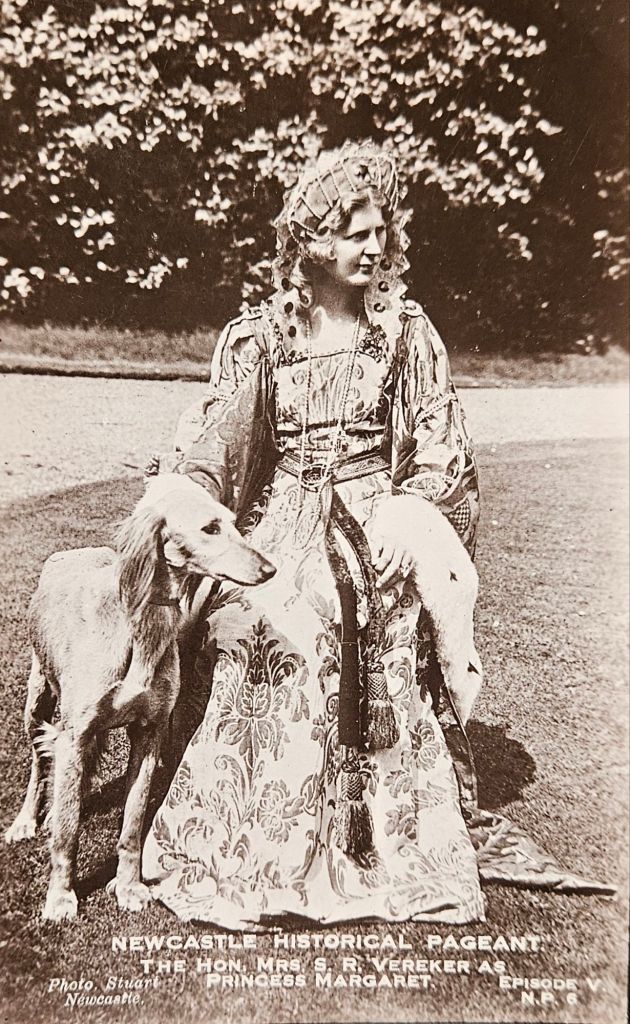
As an example of what the crowds witnessed, Episode 5 featuring ‘The Marriage of Princess Margaret to James IV, AD 1503’ was portrayed in a series of general views and close-ups.
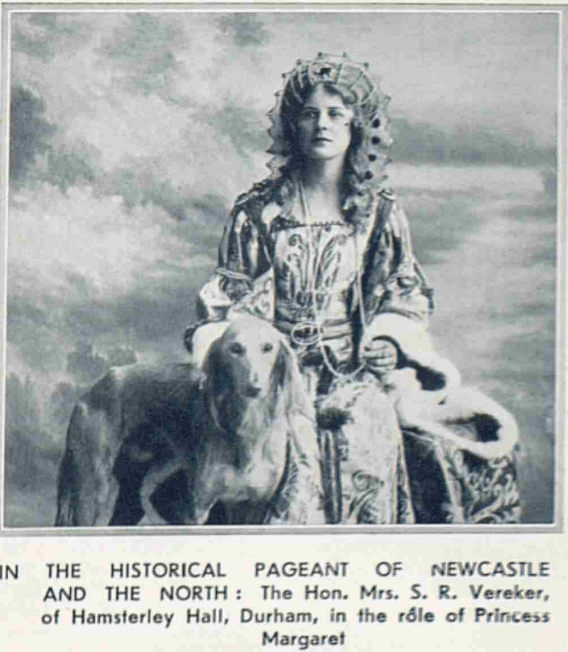
Centre-stage playing Princess Margaret was The Honourable Mrs. S. R. Vereker (1896-1972) of Hamsterley Hall, Durham.
Her aristocratic pedigree as one of the organisers connected her to a famous moment in Newcastle history.
Bessy Vereker (neé Surtees) was a descendant of Bessie Surtees whose elopement in 1772 with John Scott, later Earl of Eldon and Lord Chancellor of England, is the stuff of local legend.
Engraving based on an oil painting by Wilson Hepple.
Bessie Surtees House where the elopement took place still stands a stone’s throw from the River Tyne waterfront and is in the care of Historic England.
Following her marriage in 1921 to the Hon. Mr. Standish Robert Vereker, later Viscount Gort, Bessy became a regular client of leading photography studios in London.
Stylish portraits of her by both Bassano and Lafayette feature in the collection of the National Portrait Gallery, London.
At the Newcastle and the North Historical Pageant, a beautiful outfit created for her in the role of Princess Margaret (plus accompanying hound) combined to produce a striking image.
It also caught the attention of the press.
The Sphere was among the illustrated papers that featured her in a photo spread titled “Women of Fashion and Fashions of Women.”
The Sphere (18th July 1931). From British Newspaper Archive.
Perhaps most impressive of all was the footage created by a group from the Newcastle and District Amateur Cinematographers Association.
Sadly, given the eye-catching nature and design of the spectacle, Kodachrome 16mm colour film was not introduced to the market until 1935.
In total, 15 minutes of black-and-white footage was edited together and can be viewed on the British Film Institute website.
Episode 5 featuring the Hon. Mrs. S. R. Vereker as Princess Margaret begins at around 8′ 40″. It’s well worth a watch.
This post has been informed by the ‘Historical Pageants in Britain’ website, which includes detailed descriptions of similar pageants staged across the country.
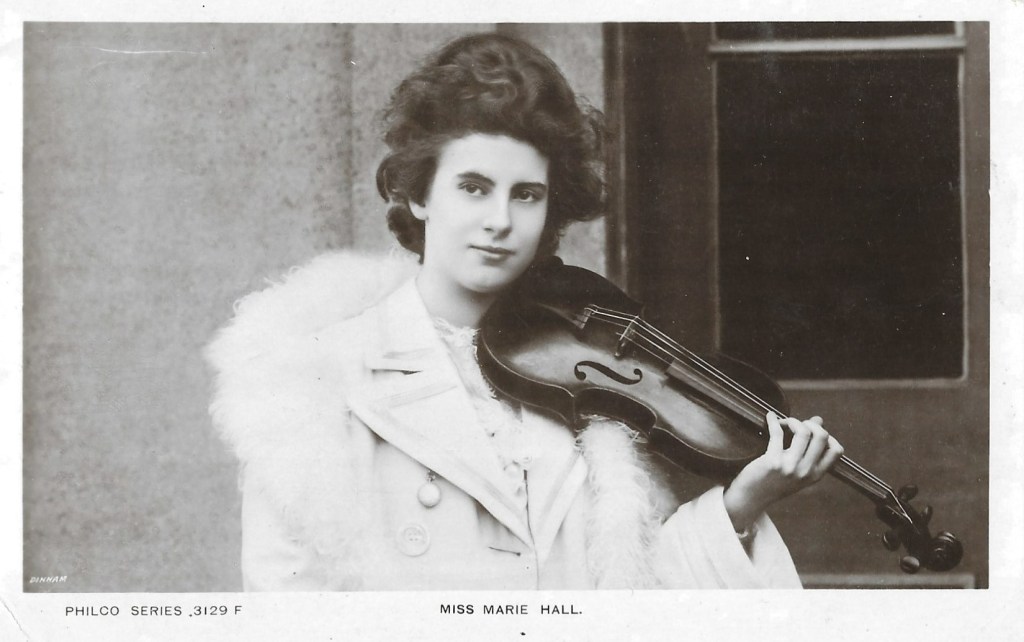
Last week’s post about the violin prodigy Marie Hall (1884-1956) was the latest resulting from a research dive into the numerous photographic postcards of her.
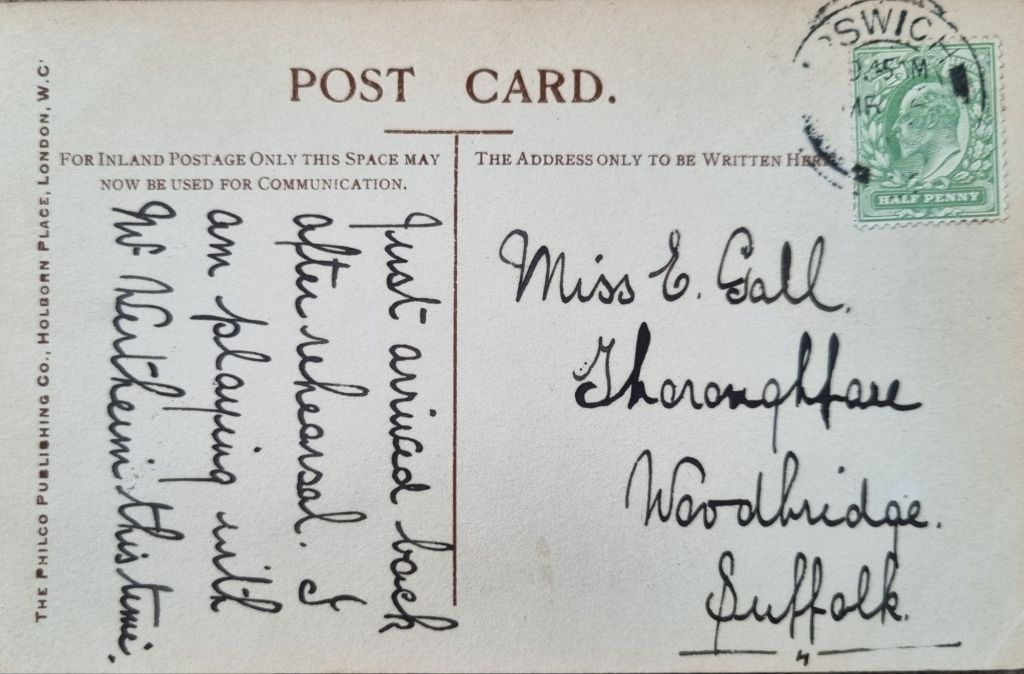
It was a real pleasure to identify one such postcard, sent to her younger sister Eveline, as Marie’s career was becoming a whirl of international engagements.
This latest post looks at the months immediately following her London concert debut in February 1903, aged 18, and how her public image was shaped by photography.
A number of portrait studios moved swiftly to produce images of the British teenager whose performance had caused such a sensation.
At this point, photographs were a newly attractive medium, both to illustrated papers and to postcard producers with an instinct for what the public wanted to buy.
In Marie Hall, they had a hot property.
Among the first to photograph the new star was the illustrious studio of Bassano.
Based at 25 Old Bond Street in London’s West End, it had been operating since the 1870s.
Their portrait presents the young woman in a typical violinist’s pose, playing alongside what appears to be an elaborately carved music stand.
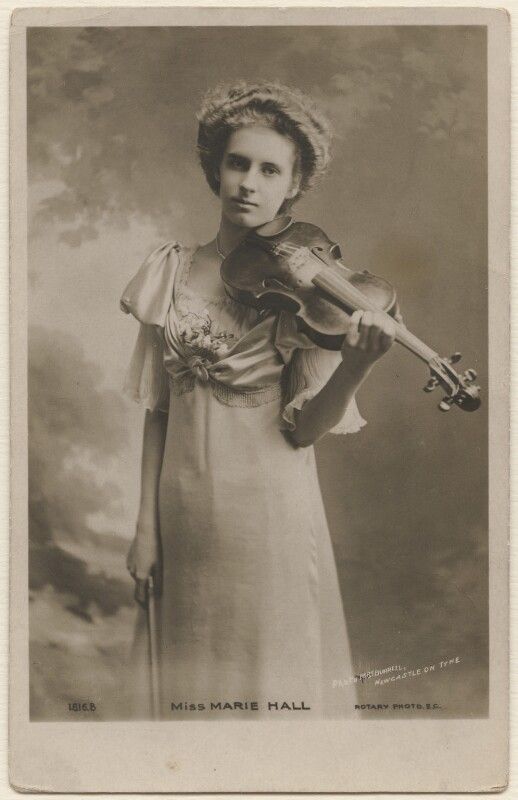
This image was published as a postcard in various sizes by the Rotary Photographic Company Ltd of West Drayton, Middlesex.
Also quick off the mark was the Newcastle on Tyne photographer Mrs. Henrietta Theonie Burrell (1860-1934), who initially triggered my interest in Marie Hall postcards.
A few weeks after the violinist’s London debut, Mrs. Burrell took advantage of a rapturously-received concert appearance in Marie’s native Tyneside.
By early April, the photographer had registered copyright forms for three different portraits of the wunderkind.
In due course, it was again the Rotary Photographic Company, who published them as a series of ‘real photo’ postcards.
The portraits are less formal and capture a different sense of the young woman’s style, even though she is wearing the same concert dress as in the Bassano portrait.
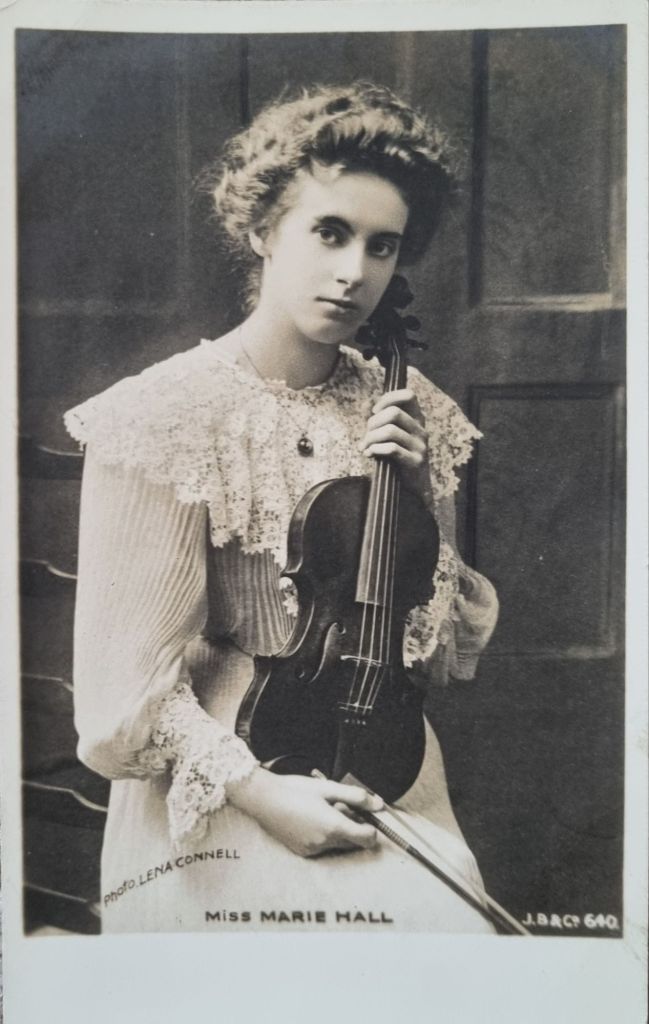
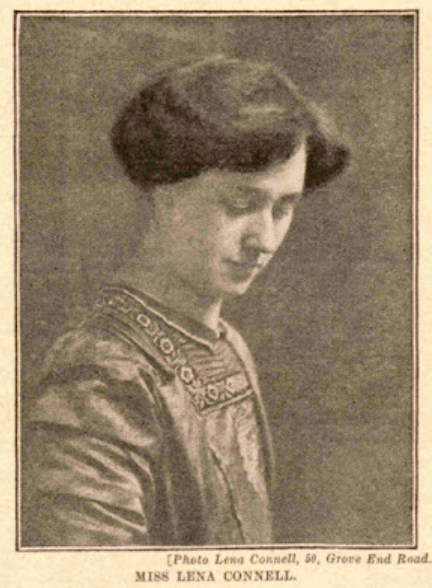
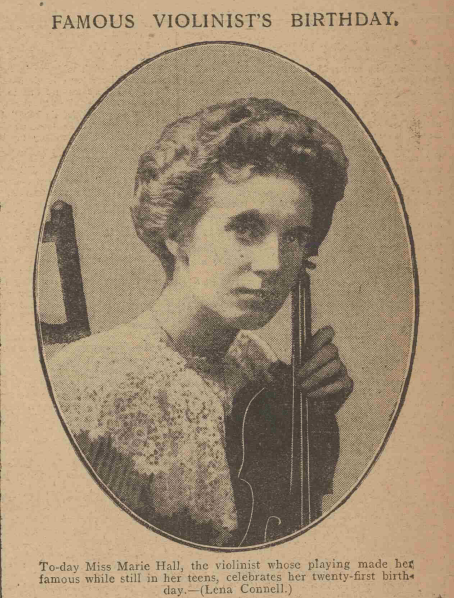
They were the work of Lena Connell (1875-1949), who learned her craft in the photography business run by her father.
Unusually for the time, her own studio employed female staff and photographed both male and female clients.
The Vote (7th May 1910). From British Newspaper Archive.
Today Lena Connell is best-known for her wonderful portraits of suffragettes involved with the Women’s Social and Political Union (WSPU) of which she was a member.
Speaking to The Vote newspaper in 1910, she recalled how “Miss Marie Hall was at the beginning of her career and the photo I did of her then is still her favourite.”
In the words of the writer: “Miss Connell showed me a photo of Miss Hall … her eyes with that curious half-frightened, half-determined look in them, looming out of the picture.”
This series of portraits was also published as postcards by another of London’s leading firms, J. Beagles & Co. Ltd.
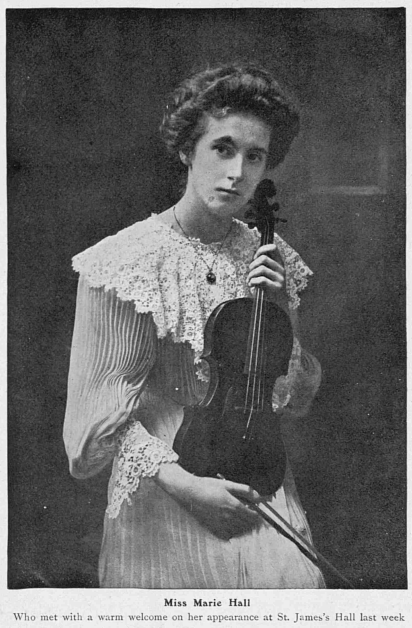
Lena’s images of the violinist also proved popular with the illustrated press, who used them in conjunction with news stories and concert reviews.
But, as in this example, Lena was not always credited for her work as was the experience of many portrait photographers, both male and female.
The Bystander (4th May 1904). From British Newspaper Archive.
Whether the photographer took it upon herself to fight for due recognition, the recently-launched tabloid Daily Mirror didn’t make the same error.
It correctly credited ‘Lena Connell’ when a re-sized halftone version of the same portrait appeared to mark Marie’s 21st birthday in April 1905.
Daily Mirror (8th April 1905). From British Newspaper Archive.
This reflected a new trend whereby such photographic portraits entered the libraries of newspapers and magazines and appeared alongside subsequent stories as stock shots.
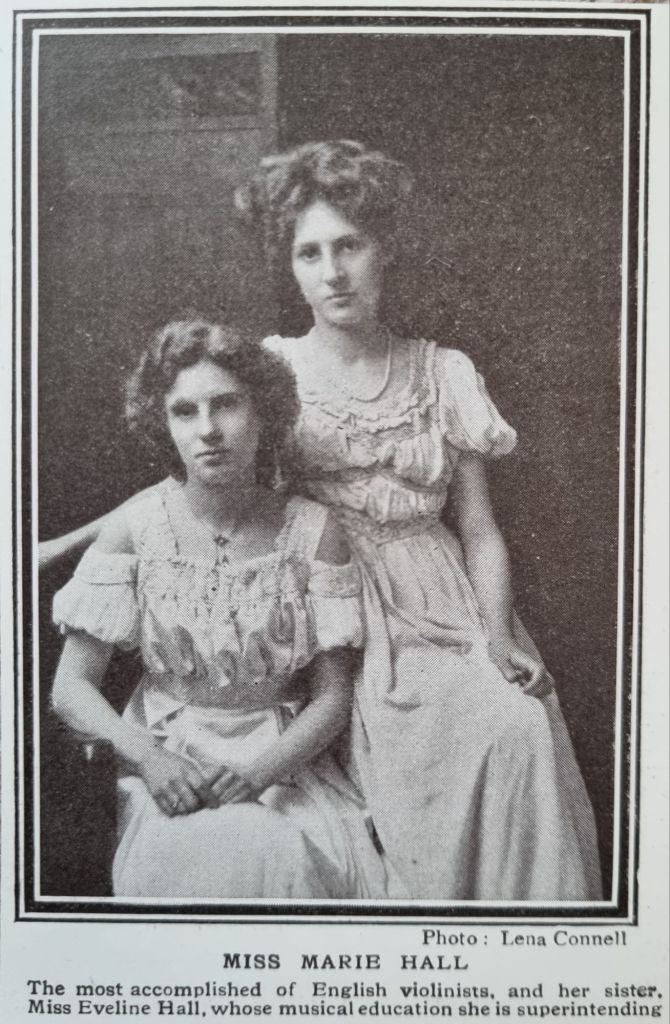
Lena’s working relationship with Marie Hall continued and this fine credited portrait alongside her younger sister Eveline was published by the popular weekly Black & White magazine in 1906.
Do you know of other Marie Hall portraits by Lena Connell?
A selection of Lena Connell’s photographs feature in the collection of the National Portrait Gallery, London.
For further reading, her career is the subject of Colleen Denney’s 2021 book The Suffrage Photography of Lena Connell: Creating a Cult of Great Women Leaders in Britain, 1908-1914 (McFarland Press: Jefferson, North Carolina).
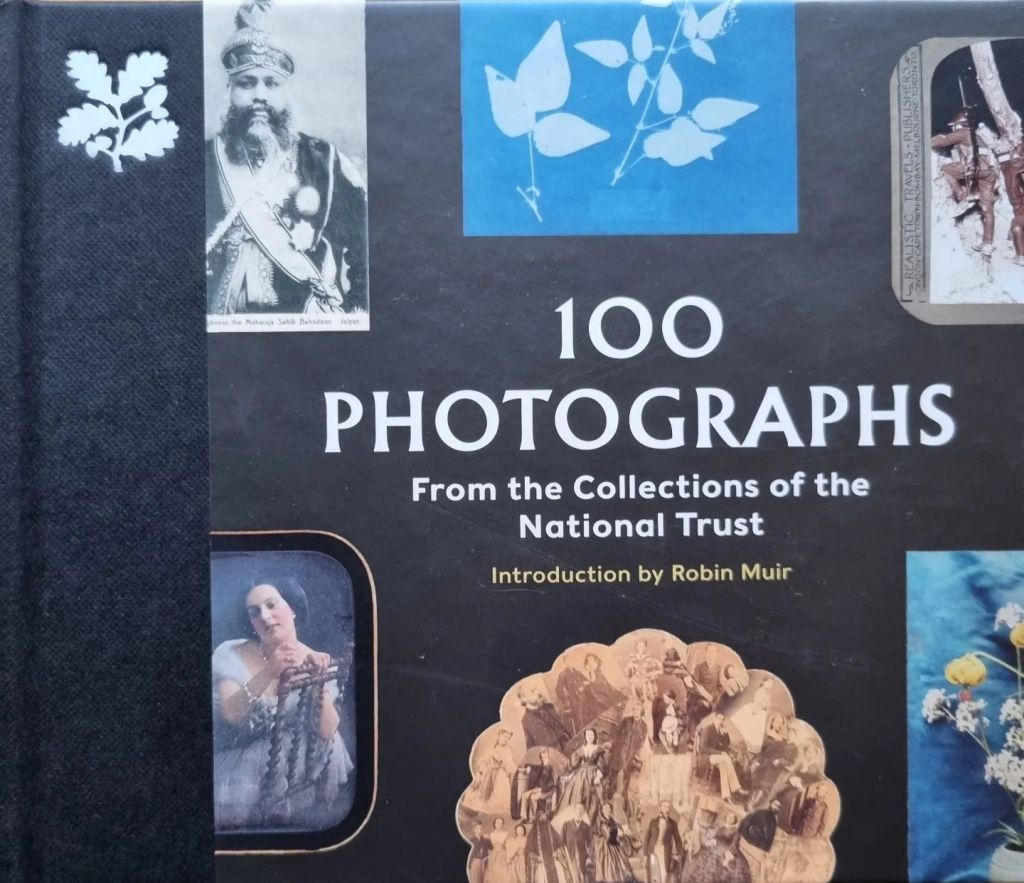
Since it was published last month, ‘100 Photographs From the Collections of the National Trust’ has been on Pressphotoman’s shopping list.
Front cover of ‘100 Photographs …’ (National Trust Cultural Heritage Publishing 2024).
The book features images taken from the NT’s collections of more than half a million photographic objects held at its properties in England and Wales.
National Curator of Photography Anna Sparham had the (un)enviable task of choosing the featured images, which are accompanied by illuminating background texts.
‘100 Photographs’ takes a chronological approach, introducing us to lesser-known or overlooked names behind the camera and giving many images their public debut.
Safe to say, the book is a veritable treasure trove for photohistorians and those interested in how the medium has reflected and continues to reflect the world around us.
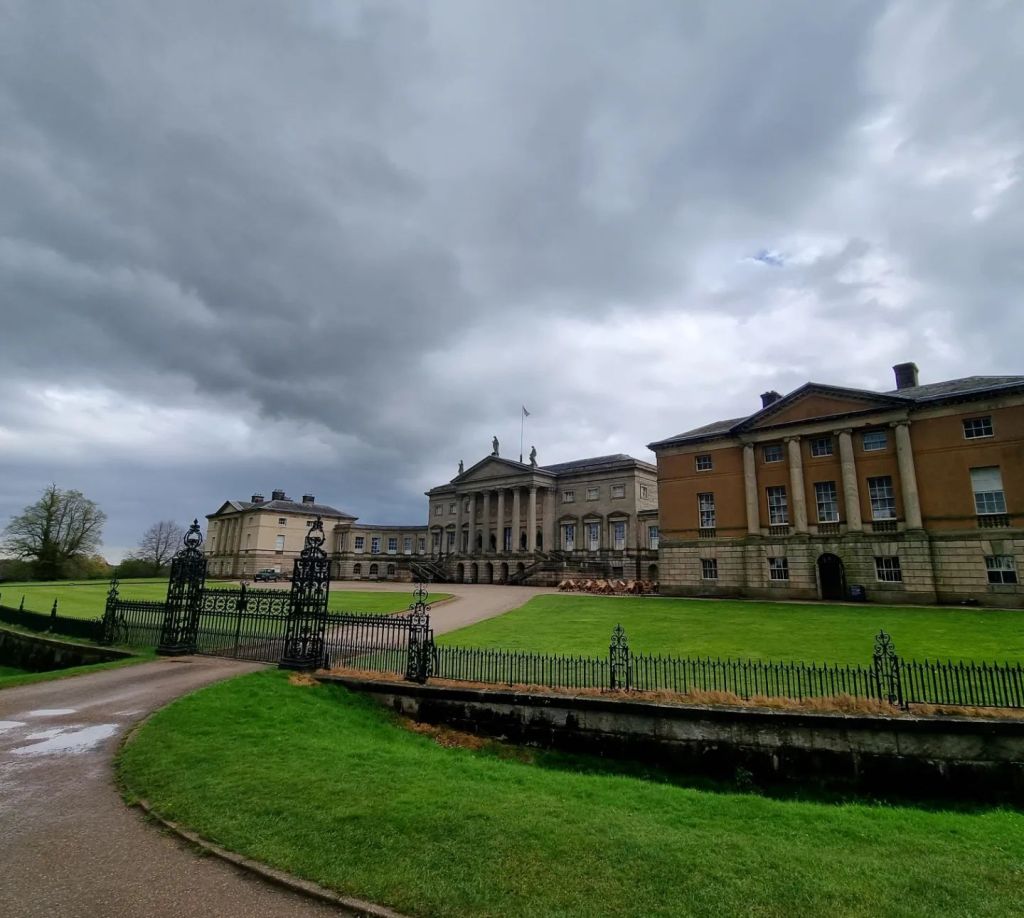
My copy was purchased during a holiday visit to Kedleston Hall near Derby, a National Trust property whose photographic collection is amongst those reflected in the 100 chosen images.
A new exhibition has just opened at the Photographers’ Gallery in London celebrating the career of photojournalist Bert Hardy (1913-1995).
Hardy is best-known for his work with the ground-breaking Picture Post and for images that still appear in newspapers, magazines and online.
What is exciting about the Photographers’ Gallery exhibition is that it offers an opportunity to see a range of photographs drawn from his entire career.
Promo video for “Bert Hardy: Photojournalism in War and Peace” at the Photographers’ Gallery, London.
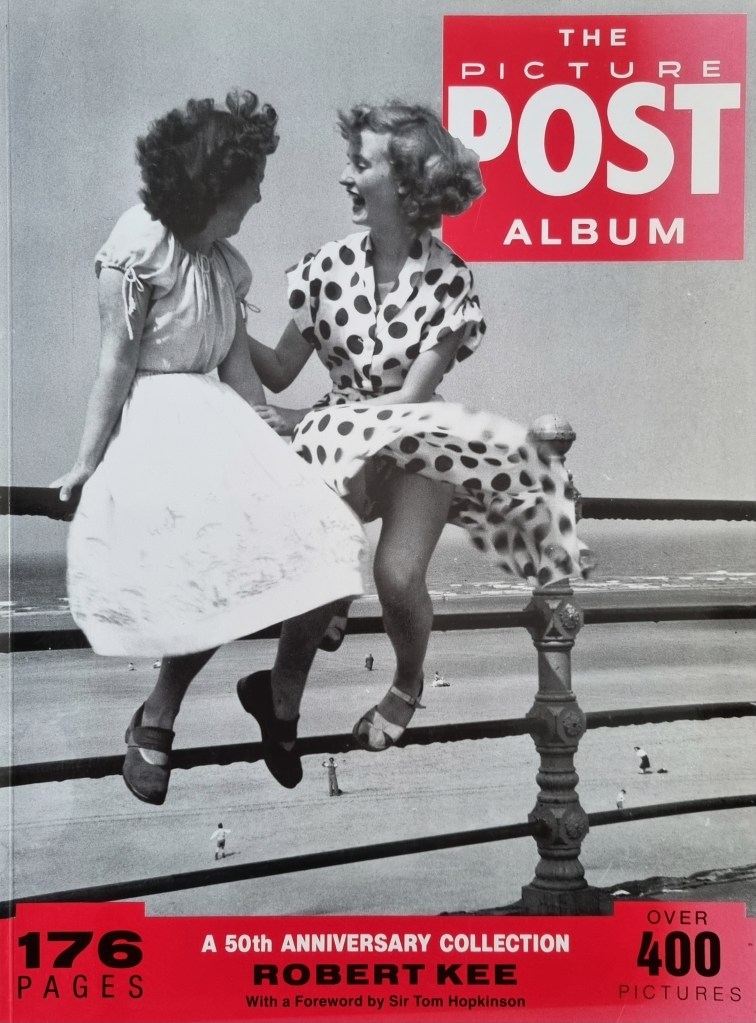
One of the first Pressphotoman blogposts (15th December 2022) concerned The Picture Post Album, a copy picked up for a few pounds in a second-hand bookshop.
Published to mark the 50th anniversary of the paper’s founding, two of Hardy’s best-known shots were deployed front and back.
“Blackpool, 14th July 1951” by Bert Hardy. Hulton Archive/Getty Images.“The Forgotten Gorbals” by Bert Hardy. Hulton Archive/Getty Images.
Like a songwriter being asked in every interview about one or two of their hits, I wonder if Hardy ever tired of talking about those ‘classic’ shots of the women on Blackpool seafront and the young boys in Glasgow’s Gorbals?
The exhibition website features less well-known examples of his work, and anyone interested in photojournalism and social history will want to see the show in person before it closes on 2nd June 2024.
Fifty years ago tomorrow (20th February 1974), the Carpenters appeared at the Liverpool Empire during the British leg of their World Tour.
As a piece of music trivia, the significance of this anniversary lies only in the fact that it was my first pop/rock concert.
Memories of the occasion are sadly vague, though I do remember the support act was a Las Vegas-style comedy duo improbably named Skiles and Henderson.
Also, that I found myself in the front stalls thanks to a schoolfriend with a connection in the theatre’s box office.
As a result, I was within touching distance of Karen, Richard and their slick band of musicians as they celebrated “The Singles 1969-1973” reaching number 1 in the UK album chart.
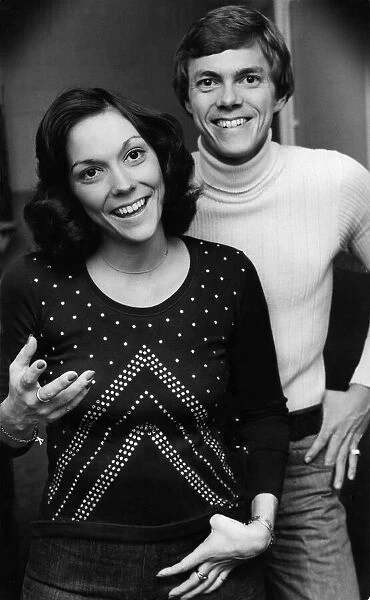
What I didn’t realise until researching this blogpost was that a moment from their Liverpool visit had been captured by a local press photographer.
Backstage, Stephen Shakeshaft from the Liverpool Echo took this engaging photo of the brother-and sister duo.
Their casual but smart clothes suggest a photo shoot before they took to the stage for shows scheduled at 6.30pm and 8.30pm.
In the half century since, my answer to the question “what was your first pop/rock concert” has become a badge of pride.
The Carpenters music has stood the test of time and is a staple of radio and streaming around the globe.
Karen’s death in 1983 at the age of 32 is a tragedy that forms the backdrop to Lucy O’Brien’s latest book, “Lead Sister: The Story of Karen Carpenter.”
Recently published in paperback (Nine Eight Books £10.99), O’Brien seeks to capture what was special about a woman whose eating disorder has long overshadowed the story of “one of the greatest singers in popular music.”
Interestingly, the front cover of the book features an artist’s impression of Karen drumming while she sings, but nowhere among its 350+ pages will you find any photographs.
A sequence of images that captured her physical deterioration as the years went by would seem ill-judged in this context and undermine its focus on other neglected aspects of her life.
Looking at the press photo of the smiling couple taken backstage at the Liverpool Empire 50 years ago, I’m reminded how lucky I was to see the Carpenters at the top of their game.
Fleet Street titles led by the tabloid Daily Mirror had begun to employ their own staff photographers, but also relied upon agencies to meet the growing demand for illustrative material of all types.
Standard practice at the time was to credit the agency who supplied a news photo rather than its photographer.
As a result, identifying early press photographers and linking them to the images they produced is challenging for researchers.
One such figure that this blog has identified and who “had been associated with the London News Agency Photos, Ltd, for many years” was James Edward Ellam (1857-1920).
James’s speciality was stereoscopic or 3D photography whereby a single print taken from one half of a stereo negative was produced for press use.
This had been his approach since operating as an amateur stereographer in Yorkshire covering news events such as rail crashes.
Stereo of “Scotch Express” crash scene, Northallerton by J.E. Ellam, October 1894. Courtesy of Stephanie Richardson.
During September 2023, a Pressphotoman blogpost-a-day series explored 30 recently-discovered stereos that can be attributed to James Edward Ellam.
Many bear examples of his distinctive handwriting captured on copyright forms he filled out and which are held by the National Archives at Kew.
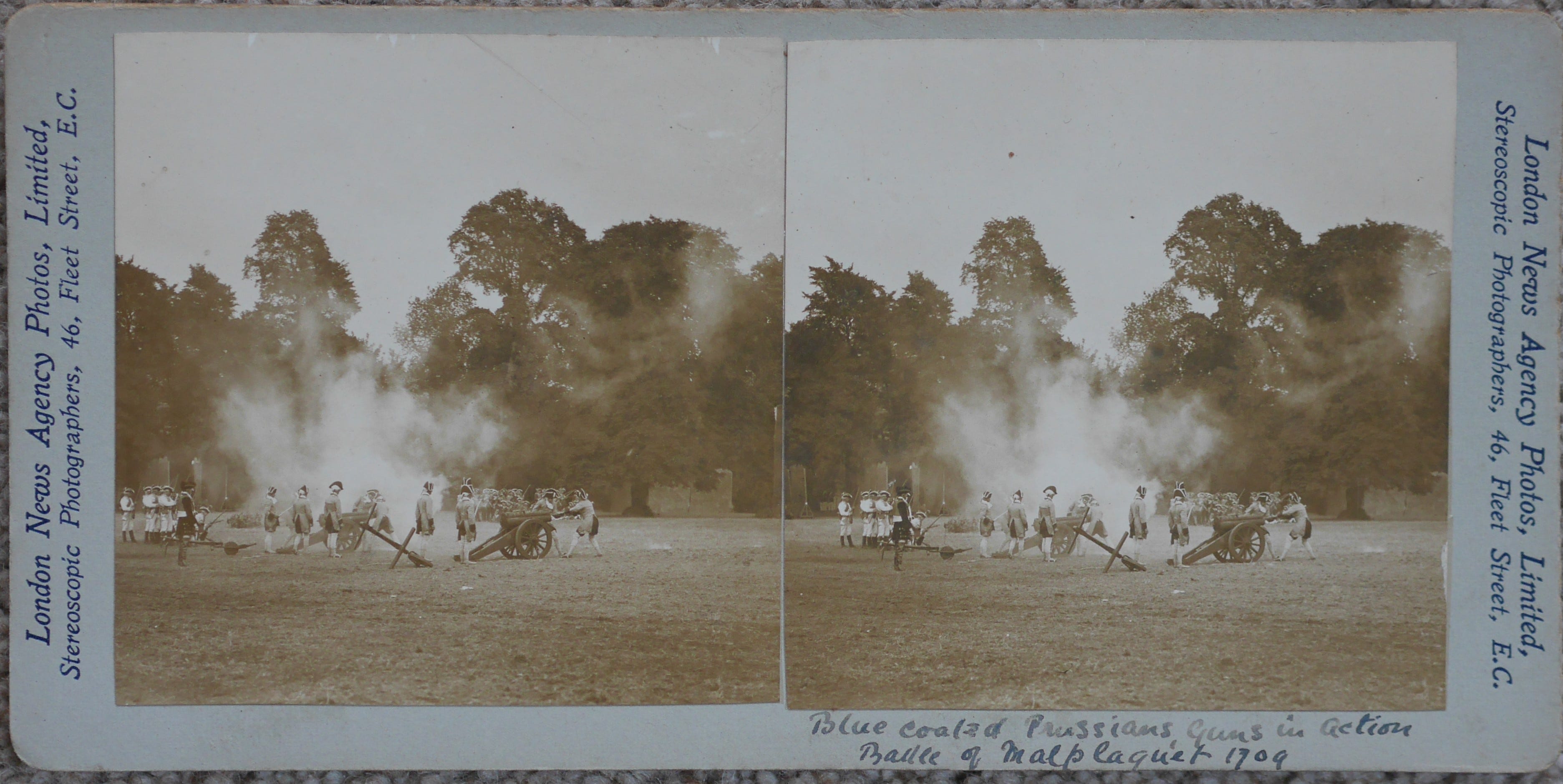
So you can imagine my excitement when a leading auction site recently offered two stereos branded “London News Agency Photos, Limited, Stereoscopic Photographers, 46, Fleet Street, E.C.”
Not only that, but both were captioned in James’s handwriting.
Reference to the “Battle of Malplaquet 1709” pointed to these stereos being taken during an event staged in June and July 1910 in the grounds of Fulham Palace, London.
The Army Pageant featured around 5,000 performers and The Times estimated that its 21 shows were witnessed by 100,000 people, though it incurred huge financial loses.
According to the Historical Pageants in Britain website, the event “featured a disparate selection of episodes that illustrated the development of military conflict and the British armed forces.”
One of these episodes was the Battle of Malplaquet during the War of the Spanish Succession.
In September 1709, an Anglo-Dutch-Austrian army of 100,000 men led by the Duke of Marlborough defeated a 90,000-strong French force at Malplaquet on the France/Belgium border.
The Army Pageant programme described how “Lottum’s blue-coated Prussians enter, followed by guns, and then Schulemberg’s white-coated Austrians.”
Looking at James’s stereos, they seemed to be from this part of the event, captured as a sequence by his 3D camera.
Given this, did the stereographer and his photo agency employer succeed in placing any prints from this assignment with Fleet Street’s illustrated newspapers?
Certainly, media interest in the event was considerable and publications including The Sphere, The Graphic and The Sketch captured the visual spectacle in page upon page of captioned photos.
But it was from a 4-page photo spread in the Illustrated London News (25th June 1910) that an interesting possibility emerged.
On a page headlined “Great Battles Re-Fought: From Malplaquet to Badajos,” one photo (top left, figure 1) was captioned “The Battle of Malplaquet … English troops capturing a French gun.”
“Great Battles Re-Fought: From Malplaquet to Badajos,” Illustrated London News (25th June 1910). From British Newspaper Archive.
At the bottom of the page, credits for the photographs were attributed to three agencies; “Sport and General, L.N.A., and Illustrations General.”
Was it possible then that James, working for London News Agency Photos (L.N.A.), was responsible for a photo credited to the agency and published by the Illustrated London News?
Placing one half of his stereo (left) alongside the Battle of Malplaquet photo (right) highlights both the clarity of the 3D image and the poorer quality of the half-tone photo.
However, what is noticeable is that the same line of trees is visible in the background of both shots.
Part of a stereo (left) and news photo from ILN (right), possibly by JE Ellam.
This visual evidence suggests that both shots were the work of a camera operator using the same position.
By placing James at the Army Pageant with his stereoscopic camera, is it also possible to credit him with other photographs used by the Illustrated London News in the same issue?
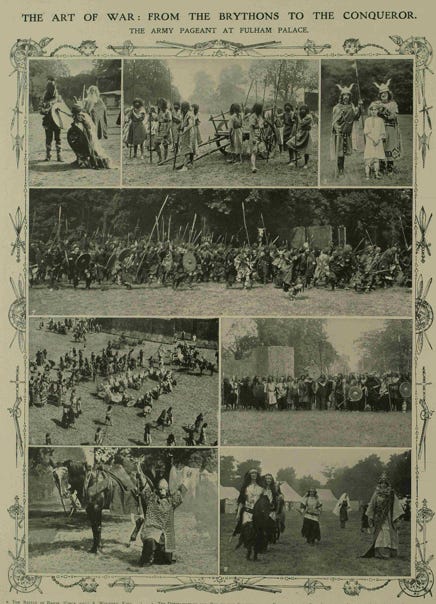
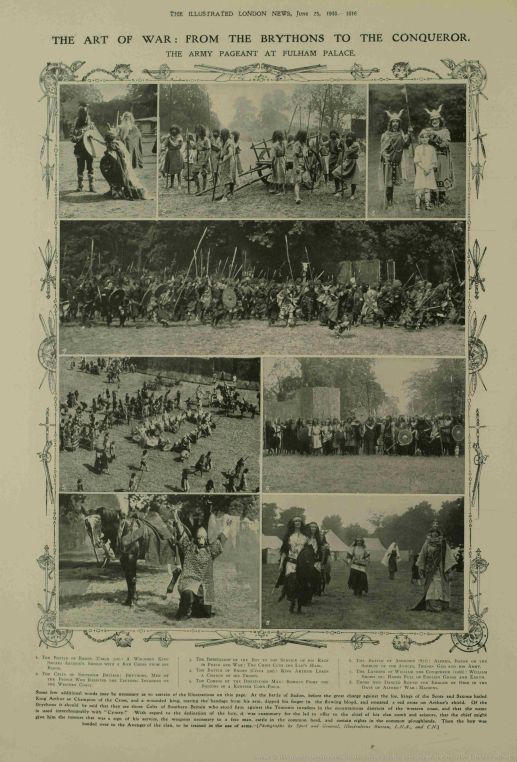
In a further full-page photo spread headlined “The Art of War: From the Brythons to the Conqueror,” London News Agency Photos (L.N.A.) was among four agencies credited with supplying the 8 images on view.
“The Art of War: From the Brythons to the Conqueror,” Illustrated London News (25th June 1910). From British Newspaper Archive.
Deciding which of the 8 was taken by James is impossible, though some of the shots do appear to have been composed with 3D in mind.
Another interesting point arising from this research is that London News Agency Photos promoted itself as being “stereoscopic photographers.”
By 1910, stereoscopic photography companies like Underwood & Underwood were already big players in the press photo market.
Indeed, James had worked for the Underwood company for several years prior to joining London News Agency Photos, so perhaps his new employer was hoping to secure a share of a growing market.
The National Stereoscopic Association, which celebrates all things 3D, holds an annual convention for its members each summer in an American city.
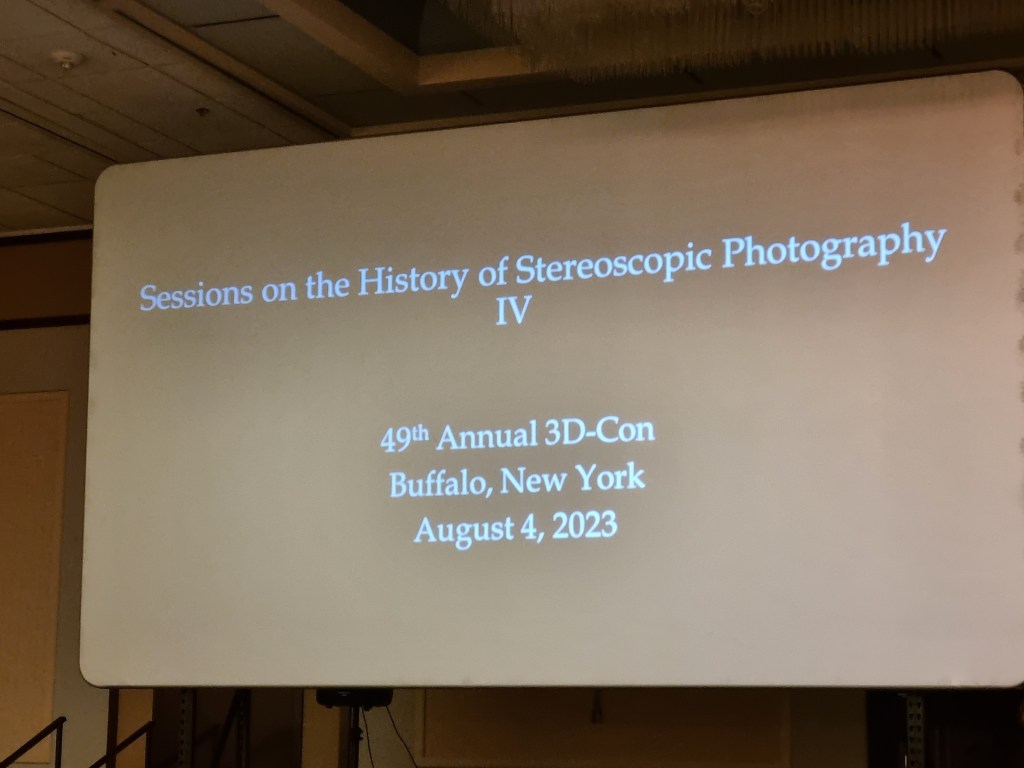
This year the 49th event took place in Buffalo in upstate New York, and I was pleased to attend and present my latest research on the influence of stereoscopy on early press photography.
Front cover of brochure for 3D-Con 2023.
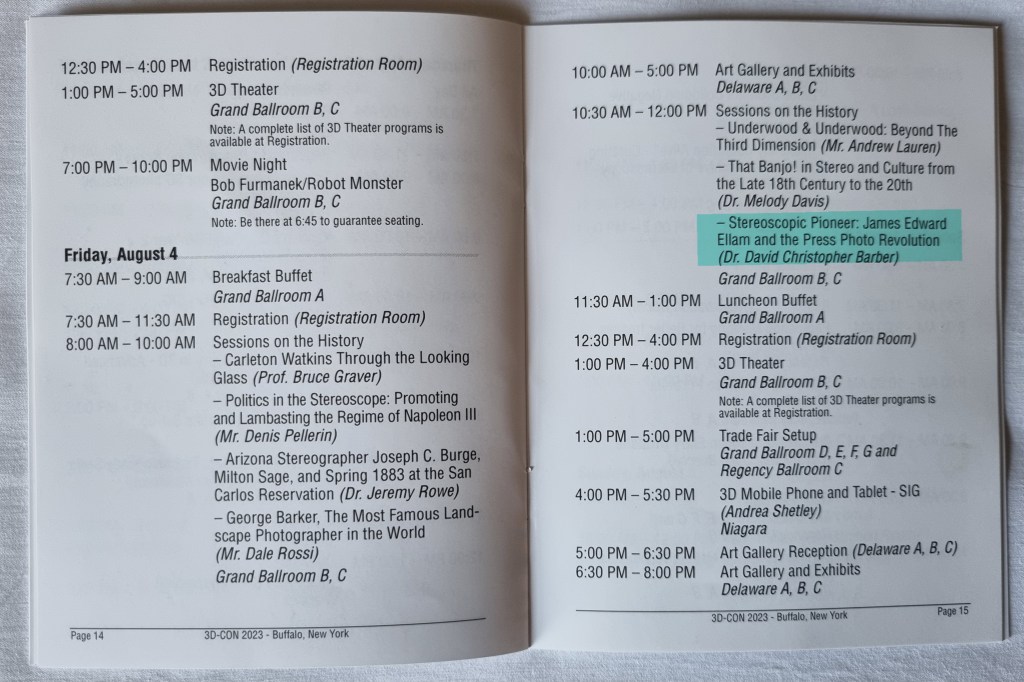
“Sessions of the History of Stereoscopic Photography IV” occupied a whole morning and a total of 7 speakers covered a range of topics.
Programme of talks for “Sessions on the History of Stereoscopy IV.”
These included presentations on Carleton Watkins, Napoleon III, Arizona, George Barker, Underwood & Underwood and the Banjo.
After speaking at conferences in the UK, it was my first overseas presentation to an international audience made up of attendees from all over the world.
My talk, “Stereoscopic Pioneer: James Edward Ellam and the Press Photo Revolution,” looked at the path followed by one amateur stereographer from Yorkshire to Fleet Street where he enjoyed a successful career as a press photographer.
Title slide of my presentation to 3D-Con 2023.
Regular readers of this blog will recognise the name James Edward Ellam from an earlier post (April 28, 2023: Press Photo Pioneer).
However, my 3D-Con talk was greatly informed by a recent discovery I made of a cache of Ellam stereos on a well-known auction website. They largely date from his time in the Yorkshire town of Yarm in the 1890s.
Many bore his name, “J.E. Ellam,” on printed stickers alongside his handwritten titles on the verso.
It’s handwriting that I recognised from various copyright forms I have seen in recent years in the National Archives at Kew that had been filled out and signed by him.
Most exciting of all was that two of the stereos indicated links with Underwood & Underwood with whom he had a productive working relationship as his stereos for U&U featuring Queen Victoria, King Edward VII & Queen Alexandra, and Pope Pius X testify.
Given that there are around 30 stereos, it seems that September offers an ideal opportunity to share these Ellam images day-by-day via this blog with a few new insights that I have learned by viewing them more closely.
This Thursday sees the start of The Open Championship, an event so sure of its status that its name makes no reference to what its openness might refer.
The oldest golf tournament in the world is being staged for the 151st time, on this occasion at the Royal Liverpool course at Hoylake.
As someone whose formative years were spent not far from Hoylake, it seems curious that this links course is not actually in Liverpool.
Rather, it’s a short ferry ride across the River Mersey on the Wirral peninsula.
For the past few weeks, this blog has had to take a back seat as a combination of a holiday break and work on a new research paper have taken precedence.
So it’s pleasing that The Open offers a link to that research paper and to this stereoscopic photograph titled “Golf” that I have recently added to my collection.
It was taken by J.E. (James Edward) Ellam, one of the stereographers involved in the development of early press photography either side of 1900.
I wrote a blog about Mr. Ellam (Press Photo Pioneer – April 28, 2023), but since then I have become the owner of 30 stereos that can be attributed to him.
“Golf” with its “J.E. Ellam” credit stamp on the verso is one these stereos.
In future weeks, I’ll be blogging about these Ellam stereos and how they further inform understanding of how an amateur stereographer from Yorkshire became a Fleet Street press professional.
The recent release of the first full 3D scan of the wreck of Titanic generated worldwide interest.
Magellan, a deep sea mapping company, completed the first full £D scan of Titanic on the ocean floor.
The sinking of Titanic is a story that continues to fascinate and one that wove its way into my recently-published doctoral thesis on early press photography.
By 1912, Underwood & Underwood (U&U), the 3D photography company that provided the case study for my thesis, was supplying news photos to newspapers and magazines across the world.
A story I was unaware of before beginning my research was the company’s role in securing a series a Titanic photographs taken by 17 year-old Bernice “Bernie” Palmer using a Kodak Brownie.
Bernice was a passenger on Carpathia, the ship that rescued passengers from Titanic. She was able to photograph both the iceberg involved as well as survivors recovering on deck in the days following the disaster.
The details are well described and illustrated in a blogpost featuring her remarkable snapshots put together by the Smithsonian Institution in Washington, DC.
According to the National Museum of American History’s account, Bernice was approached on her return to New York by a “newsman” working for Underwood & Underwood who offered to develop, print and return the pictures to her along with $10.
As a result, U&U copyrighted the resulting images and was able to widely distribute her photographs making front-page headlines in the process.
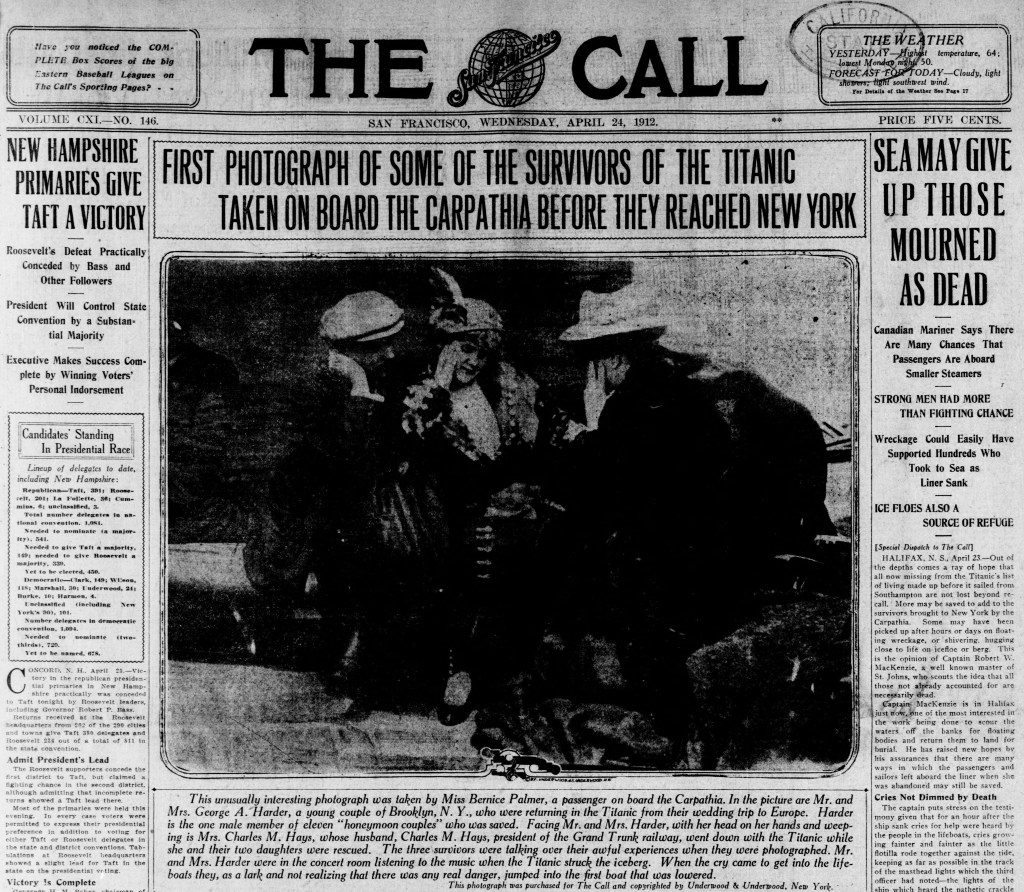
Front page of The Call, San Francisco, 24th April 1912, ten days after the sinking of Titanic. Image provided by University of California, Riverside, CA. Courtesy of Chronicling America.
Note the credit caption at the bottom of the page which states: “This photograph was purchased for The Call and copyrighted by Underwood & Underwood, New York.”
During a research trip to the Smithsonian in 2020, I was fortunate enough to be able to handle and view Underwood & Underwood’s original contractual agreement with Bernice dated 8th February 1913.
As this was several months after the sinking, it is reasonable to assume that by that point, the company had maximised the immediate commercial potential of its “exclusive” photos and and was willing to return the copyright to its owner.
The Epilogue to my thesis explores this sequence of events in more detail and examines some of the questionable behaviour that resulted in pursuit of a journalistic scoop.
If you wish to read more about the role played by stereoscopic 3D photography in shaping press illustration in the decades either side of 1900, you will find a link to the full thesis in my blogpost “Doctoral thesis” (13th May 2023).
“It is the first study devoted to analysing how stereoscopic 3D photography became integral to daily newspapers, illustrated weeklies, and magazines.”
My doctoral thesis, Another Dimension: Stereoscopic Photography and the Press, c.1896-1911, funded by the Arts and Humanities Research Council (AHRC) is now available via this link.
Underwood & Underwood were the pre-eminent supplier of press photos “taken from stereographs.” From National Geographic archives, Washington, DC.The company’s Illustration Department supplied the press with millions of photos taken from its stereos. From New York Public Library Digital Collections. b11652262.
For photohistorians, the Coronation of Charles III has provided an opportunity to revisit similar royal events and examine how they were recorded photographically.
The Coronation of 1902 is an occasion that prompted my recent article for The PhotoHistorian, the journal of the Royal Photographic Society Historical Group (available as a free download via this blog).
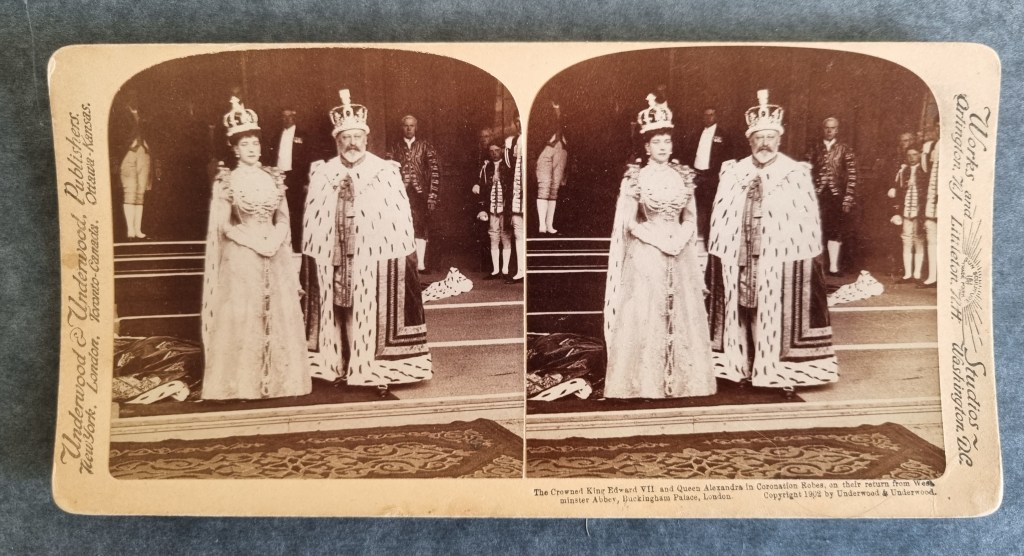
The article looked at how the American stereoscopic photography company Underwood & Underwood (U&U) secured a 3D exclusive featuring King Edward VII and Queen Alexandra in their robes and crowns.
“The Crowned King, Edward VII, and Queen Alexandra in Coronation Robes, Buckingham Palace, London” by James Edward Ellam. Author’s collection.
One of the figures who emerged from the shadows during my research was the British man who stereographed the royal couple on that occasion for U&U. His name was James Edward Ellam.
This blogpost draws on public records, newspaper reports and local history sources to highlight his previously under-studied role in the evolution of early press photography. It also includes previously unpublished examples of his work.
Born in Lindley, Huddersfield in the summer of 1857, James came from a large family. His father, Firth Ellam, was a cloth dresser in the textile industry and held the elected post of Guardian for the Huddersfield Poor Law Union.
James’s apparent non-appearance in the 1881 England Census leaves a gap in our knowledge about his years as a young adult.
However, in April 1885, newspapers in Hudderfield reported that “Mr. J.E. Ellam” was leaving the town, bringing an end to a long connection with the High Street Sunday School. Involvement in church activities was to be a recurrent theme in his life.
James’s career as a pioneering press photographer started to take shape when he relocated to Yarm, near Stockton-on-Tees. There, he lodged with the Bradley family who ran a long-established tailors and drapers shop. It was a domestic relationship that was to endure for the rest of his life.
By 1890, James was secretary of the Stockton Photographic Society, involved in organising talks, exhibitions and conversaziones where members photographs were exhibited.
By day, he worked in Yarm as a chemist’s assistant for Strickland & Holt, founded in 1854 and still in business in 2023.
As more of its customers started taking their own photographs, James helped develop their negatives, producing high-quality prints. The business on Yarm High Street also featured an outdoor portrait studio.
Strickland & Holt’s outdoor portrait studio, Yarm c. 1890s. Courtesy of Stephanie Richardson.
James’s speciality and that of the Stockton Photographic Society was stereoscopic 3D photography.
The illusion of three dimensions, which our eyes produce naturally, is created when two slightly different images captured on camera are viewed side-by-side in a stereoscope.
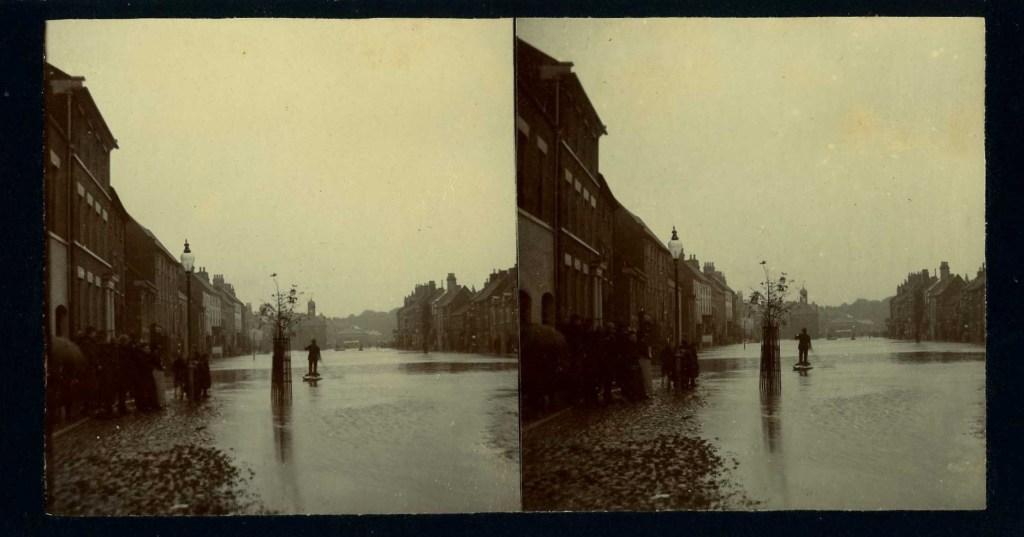
Initially, James trained his stereo camera on local happenings such as the flooding of Yarm, a regular occurrence when the nearby River Tees burst its banks.
Flood, Yarm High Street, October 1893 by J.E. Ellam. Courtesy of Preston Park Museum. T68105.
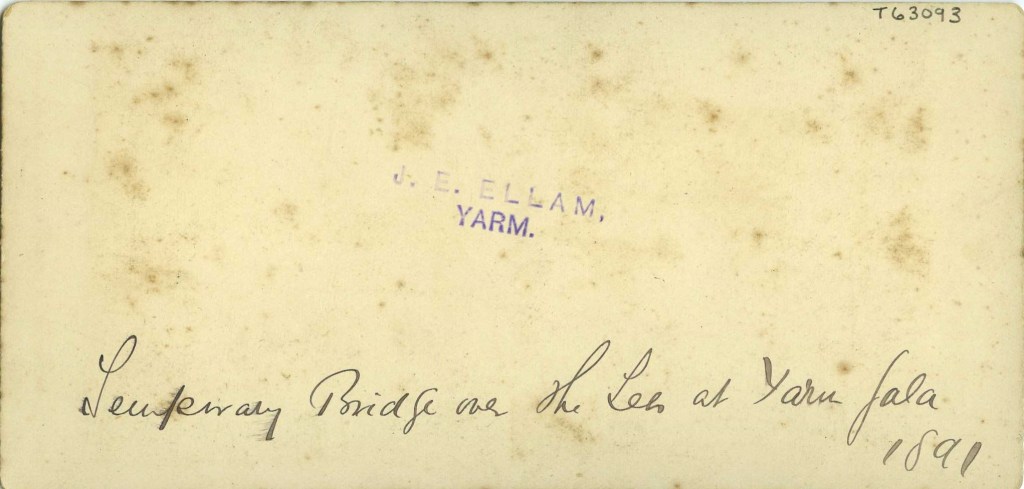
His stereos, such as “Temporary Bridge over the Tees at Yarm Gala 1891,” featured the stamp “J.E. Ellam, Yarm” on the verso.
Verso of 1891 stereo stamped “J.E. Ellam, Yarm.” Courtesy of Preston Park Museum. T63093.
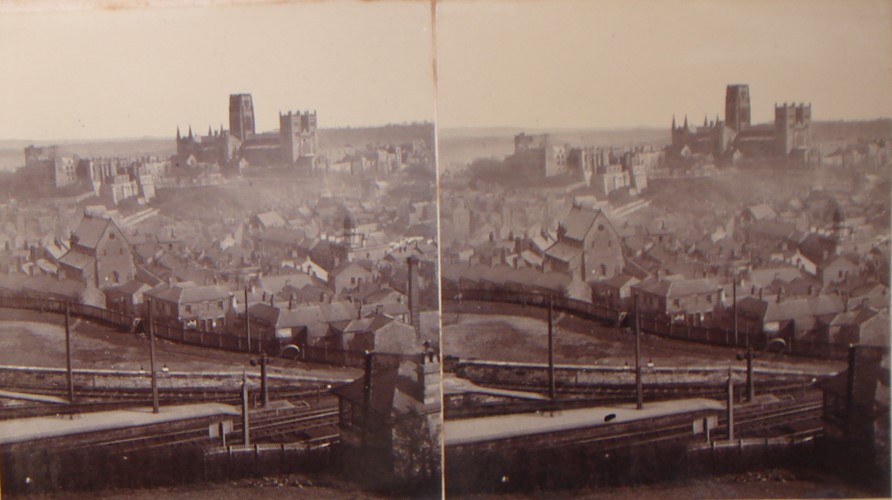
And he captured local ‘views’ such as this stereo of Durham taken from the town’s railway station with the cathedral in the distance.
“View of Durham from the railway station” by J.E. Ellam c. early 1890s. Courtesy of Stephanie Richardson.
The same ‘view’ was produced as a glass lantern slide credited to J.E. Ellam that is now part of the collection of Shropshire Museums. The slide is marked “Yarm 6,” suggesting that it was part of a lantern slide lecture.
The presence on his stereos of “J.E. Ellam, Yarm,” some with printed labels and titles, indicates that they might have been sold commercially.
At this point, an opportunity arose which allowed James to share his photography with a wider audience.
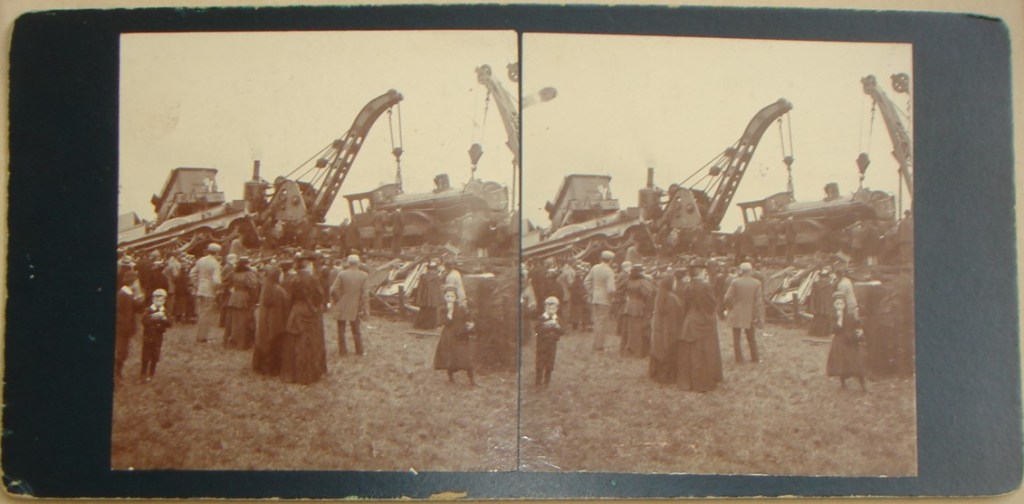
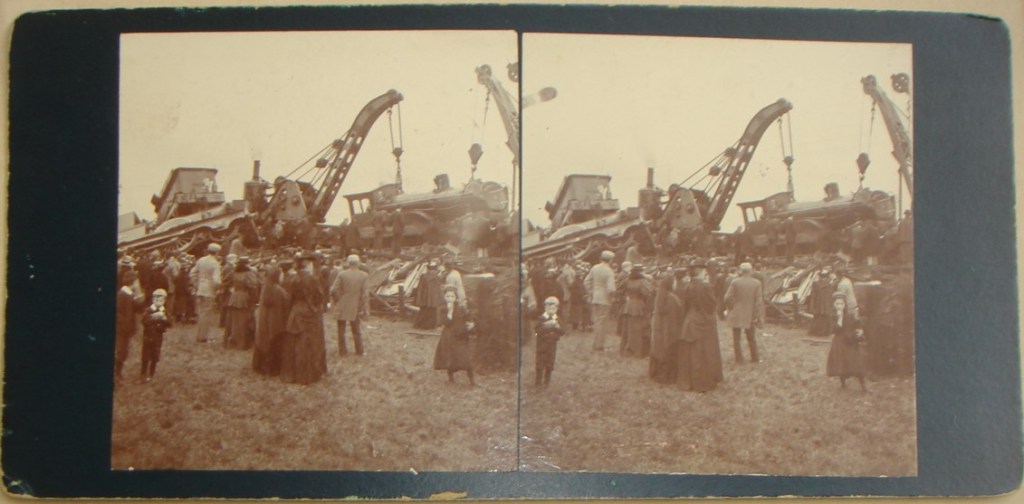
In October 1894, he supplied photographs to the national press of the aftermath of a fatal train crash involving the “Scotch Express” at nearby Northallerton.
Stereo of “Scotch Express” crash scene by J.E. Ellam, October 1894. Courtesy of Stephanie Richardson.
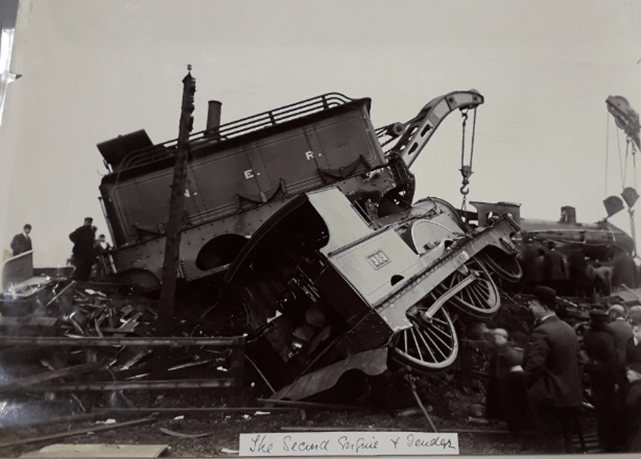
The following month, James registered the copyright of his rail accident photographs in order to protect his commercial interests.
These included “The Second Engine & Tender,” which the Illustrated London News had published uncredited in its report of the accident (“The Railway Accident at Northallerton,” 13th October 1894, p. 460).
“The Second Engine and Tender” by James Edward Ellam, October 1894. COPY 1/418/366, National Archives, Kew.
Apparently intent on pursuing a career in photography, James left Yarm in the summer of 1896. His timing was auspicious as the illustrated press had begun to adopt half-tone printing. This process allowed photographs to be reproduced and required a regular supply of news pictures.
In London, James’s 3D work came to the attention of a leading American stereoscopic company, Underwood & Underwood (U&U). The company had an office close to Fleet Street and was already supplying prints to the press taken from one half of a stereo negative.
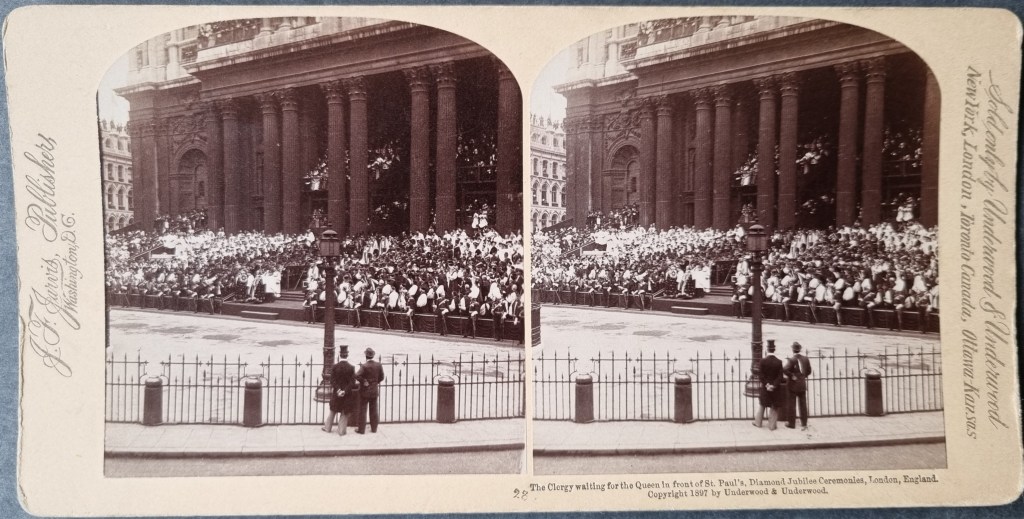
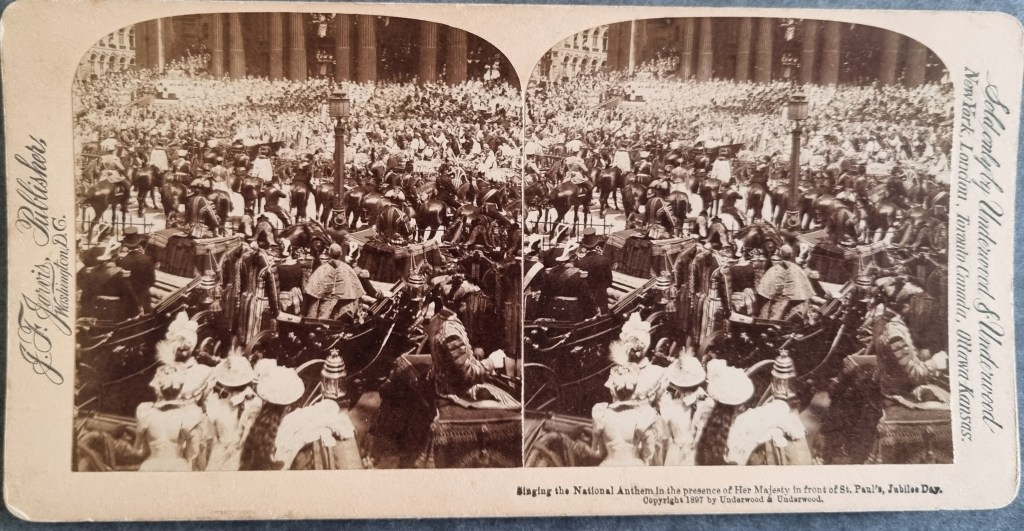
Among James’s first assignments was stereographing the Diamond Jubilee of Queen Victoria in June 1897. A set of stereos issued by U&U included a number taken in front of St. Paul’s Cathedral where the Queen attended a Thanksgiving Service.
These illustrate the prime location that James occupied and how events unfolded in front of his stereo camera over a number of hours. The lamppost located in the middle of the shots illustrates how the scene changed as he waited for the Queen to arrive.
“The Clergy waiting for the Queen in front of St. Paul’s, Diamond Jubilee Ceremonies, London, England” by James Edward Ellam. Author’s collection.“Singing the National Anthem in the presence of Her Majesty in front of St. Paul’s, Jubilee Day” by James Edward Ellam. Author’s collection.
In the second stereo, Queen Victoria (left of frame towards the top of shot) is visible in her carriage. It was positioned at the foot of the cathedral steps which she was unable to climb due to infirmity.
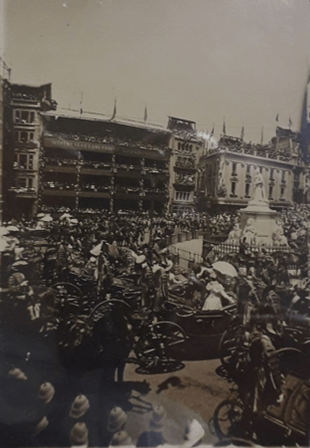
A few days after the event, a print taken from another of James’s stereos, “Ambassadors and Royalties witness the Thanksgiving Service,” was placed by U&U with The Graphic, a leading illustrated weekly paper, and credited to U&U, “Publishers of Stereoscopic Views.”
“Ambassadors and Royalties Witnessing …” Print taken from stereo. COPY 1/431/772, National Archives, Kew.
It was a significant moment for both James in his new career and for U&U in its pioneering efforts to establish a press photography service.
The copyright forms for these stereoscopic photographs refer to an agreement between U&U and “James Edward Ellam of Dunmow, Essex.” Dunmow was the town to which the Bradley family, with whom James had lodged in Yarm for several years, had also relocated.
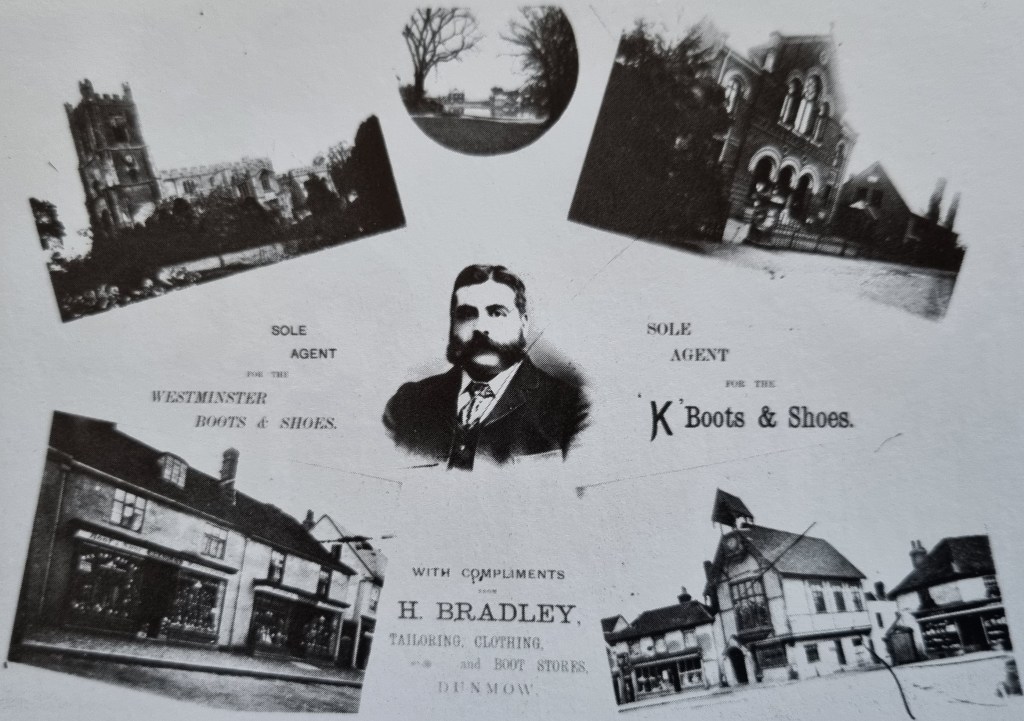
Henry Bradley, a fellow committee member with James in the Stockton Photographic Society, took over a tailors and outfitters business in Dunmow which he ran together with his wife Dorothy and their daughters.
As an entrepreneur, Henry used his own amateur photography to produce promotional postcards for his business featuring scenes around Dunmow.
Postcard produced by Henry Bradley to promote his business. From Dunmow in old picture postcards by Stan Jarvis (1986). Author’s collection.
As a commuter, James worked in London and stayed with the Bradleys at weekends where the England censuses of 1901 and 1911 recorded his presence as a “visitor.”
His working relationship with U&U continued, coinciding with a worldwide revival of interest in buying and collecting sets of 3D ‘views.’
During the summer of 1902, the company’s co-founder Bert Underwood (1862-1943) was in London to supervise U&U’s stereo set celebrating the coronation of Edward VII.
As one of Underwood’s trusted stereographers, James was involved in a project which involved covering various society events. It may have been partly enabled by a connection supplied by James himself.
In Dunmow, he was a near neighbour of the Countess of Warwick. Frances Evelyn Maynard, or “Daisy” as she was known, inherited her family estate at Easton Lodge near Dunmow at the age of 21.
In the 1880s and 1890s, the estate was the scene of extravagant weekend house parties, attended by society figures including the Prince of Wales, the future King Edward VII.
During that coronation summer of 1902, “Daisy” hosted society events at Warwick Castle, her husband’s family seat.
A week before the coronation, U&U photographed a “lavish fete” there attended by “Indian Princes and Colonial Premiers.” Given his Dunmow connections, it seems possible that James accompanied Bert Underwood who recorded this assignment in an unpublished memoir.
On Saturday 9th August, James was at Buckingham Palace to stereograph the King and Queen Alexandra in their coronation robes and crowns.
Alternate version of U&U’s “coronation robes and crowns” stereo by James Edward Ellam. Author’s collection.
A few weeks later, he travelled to Balmoral, the royal family’s Scottish home. This time he stereographed the King surrounded by his grandchildren including the future Edward VIII and George VI. Again, the image appeared in the illustrated press credited to U&U.
“Edward VII and his grandchildren, Balmoral Castle, Scotland” by James Edward Ellam. Author’s collection.
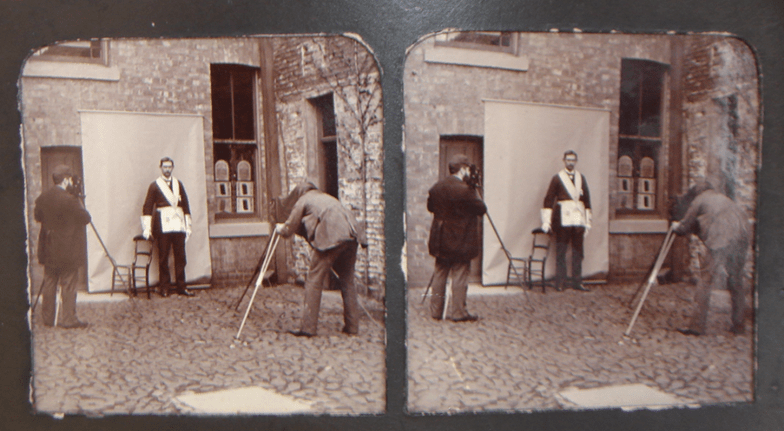
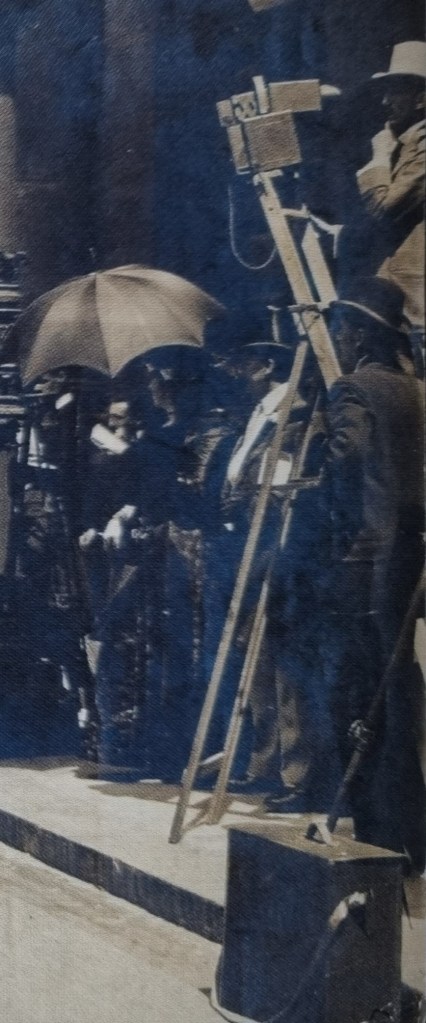
At another event that coronation summer, a photograph known to show Bert Underwood with his stereo camera atop a set of ladders featured another figure stood alongside him with an equipment bag at their feet.
Courtesy of George Eastman Museum. Detail from 1988.0202.0007.
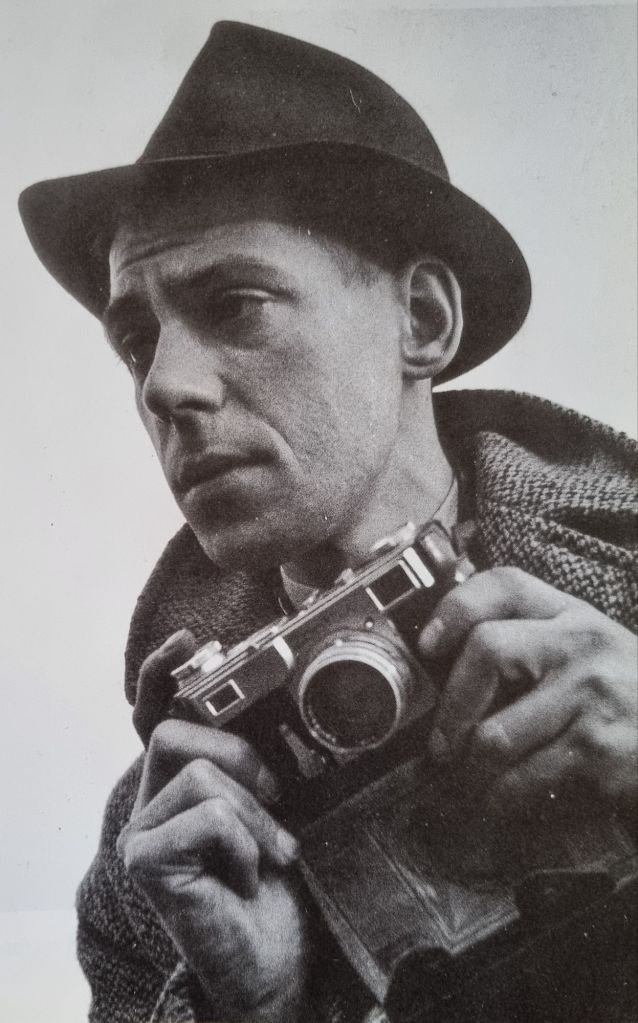
Could this be James Edward Ellam? If so, it is the only photo of James that research for this blogpost has identified.
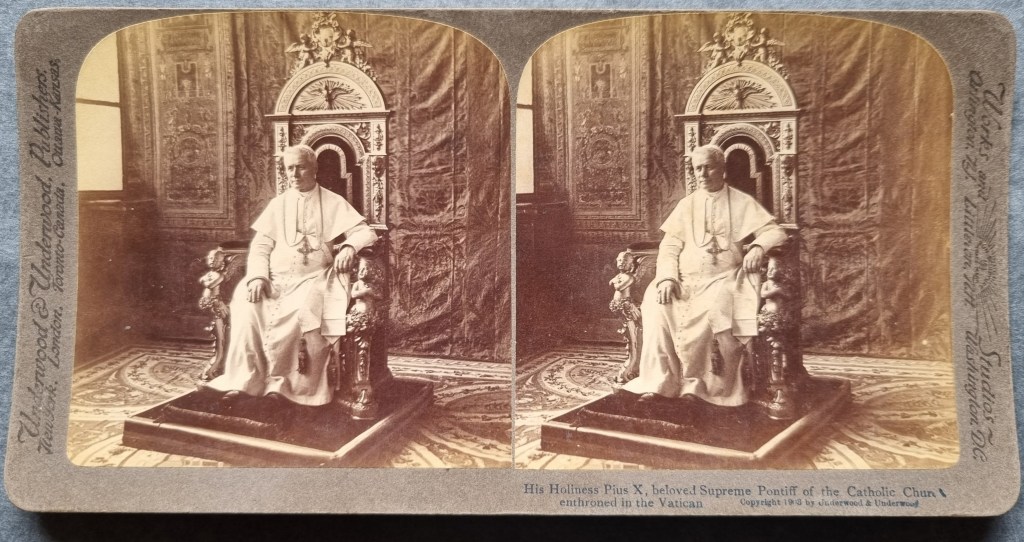
The following year, permission was given to U&U to create a set of 36 stereos featuring the new Pope, Pius X.
James was among the Underwood team who journeyed from London to the Vatican in Rome to create A Pilgrimage to See the Holy Father through the Stereoscope.
Such was the project’s global success that U&U later received a Silver Medal from the Pope to mark the occasion.
“His Holiness Pius X … enthroned in the Vatican” by James Edward Ellam. Author’s collection.
By now, daily newspapers such as the tabloid Daily Mirror, launched in 1904, were primarily using photographs rather than drawings to illustrate the news, and photography became integral to the press.
With his considerable experience, James was well placed to further develop his career. Around 1908, he began work as a staff photographer for the newly-established London News Agency Photos at 46 Fleet Street, one of many set up to meet the insatiable demand from the press for images.
Letterhead for London News Agency Photos Ltd c. 1921. Authors’ collection.
Among his colleagues was Alfred James Robinson whose family compiled a 2014 blogpost about his career which includes some wonderful photos and information about the agency.
Alongside this professional role, James continued to be active in the world of amateur photography from which his own career had emerged.
In 1908, he exhibited a print titled “A Sea of Steps,” a much photographed scene from Wells Cathedral, at the West London Photographic Society’s 19th annual exhibition.
The following year, as a member of the United Stereoscopic Society, his work was exhibited by the Royal Photographic Society at its 45th annual exhibition in London.
Small details of James’s day-to-day life during these years are also revealed by public records. London electoral rolls for 1910 and 1912 record him paying six shillings a week to live in an unfurnished room on the second floor of a terraced house in Hammersmith.
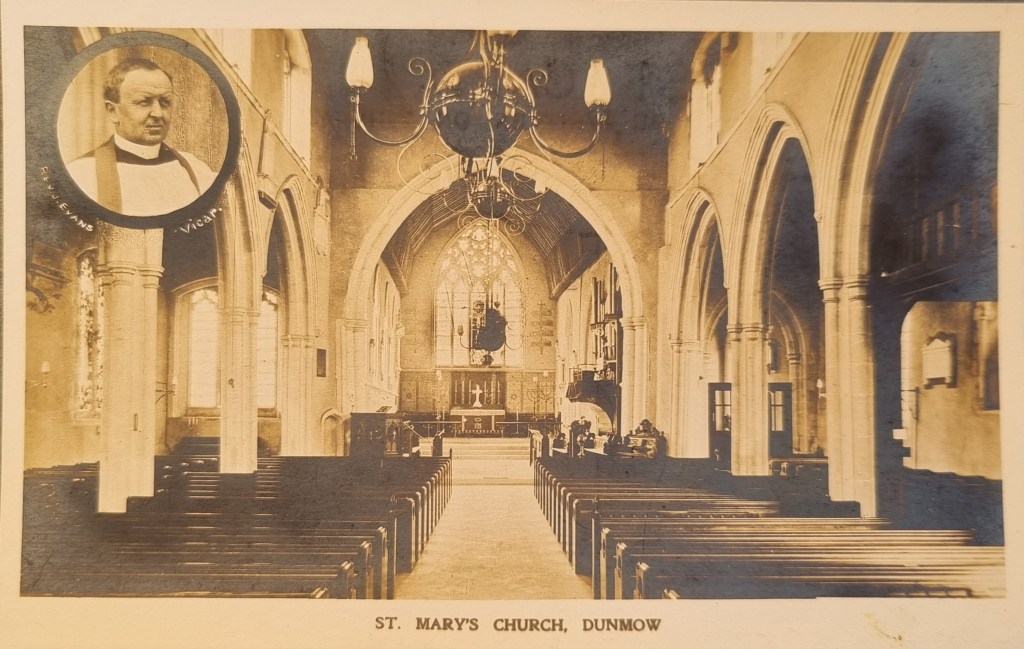
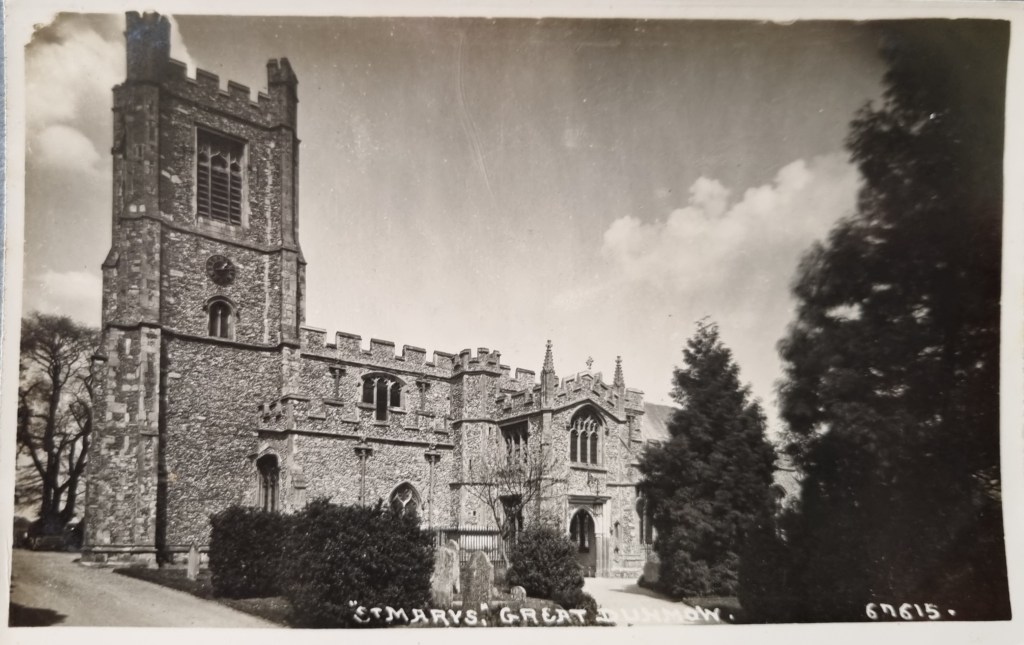
In Dunmow, he continued to be actively involved in the life of St. Mary’s Parish Church where he was superintendent of the Sunday School, sang in the choir and was a server to the vicar.
Between 1905 and 1915, the vicar was the Reverend John Evans and a postcard featuring the church’s interior together with his portrait was published during his incumbency.
Postcard of St. Mary’s, Dunmow featuring the Rev. John Evans. c. 1910. Author’s collection.
Whether or not James, or perhaps Henry Bradley, was involved in its conception, it certainly has stereoscopic qualities, using the rows of pews and the light fitting in the foreground to add a sense of depth.
Research has revealed little about James’s life in the years either side of the First World War.
However, in January 1920, his life came to a tragic end. Its circumstances were reported by many national and local newspapers.
As The Times stated in its News in Brief column: “Mr. James Edward Ellam, who had been associated with the London News Agency Photos, Limited, for many years was knocked down and killed by an omnibus in Fleet-street on Saturday morning.”
After the accident, James was taken less than half a mile to St. Bartholomew’s Hospital, but the internal injuries he sustained in the accident proved fatal. An inquest later recorded a verdict of “accidental death” (City of London Coroners Court CLA/041/IQ/04/03/001/015).
The Essex Chronicle report of his funeral service at St. Mary’s Church, Dunmow described how Henry Bradley was notified by police about the accident. That same day, he travelled to London to identify James whose death brought to an end a relationship with the Bradley family that spanned at least 30 years.
In October 1921, an oak prayer desk paid for by “friends, choirmen and Sunday School scholars” at St. Mary’s was dedicated to James’s memory.
Oak prayer desk (right) St. Mary’s Church Dunmow. Courtesy of Catherine Salmon. Dedication on oak prayer desk, St. Mary’s Church, Dunmow. Courtesy of Catherine Salmon.
In the years since, James’s most celebrated photographs have taken their place in public collections, notably his royal stereos for U&U in the National Portrait Gallery, London.
Further examples of his work as an agency press photographer are more difficult to identify as individuals were rarely if ever credited for their work.
Given his career with London News Agency Photos between 1908 and 1920, and his work prior to that for Underwood & Underwood, James Edward Ellam is deserving of greater recognition for his contribution to early press photography.
** The author would be pleased to hear from anyone with further information about James’s life and photographic career via the comments box below.
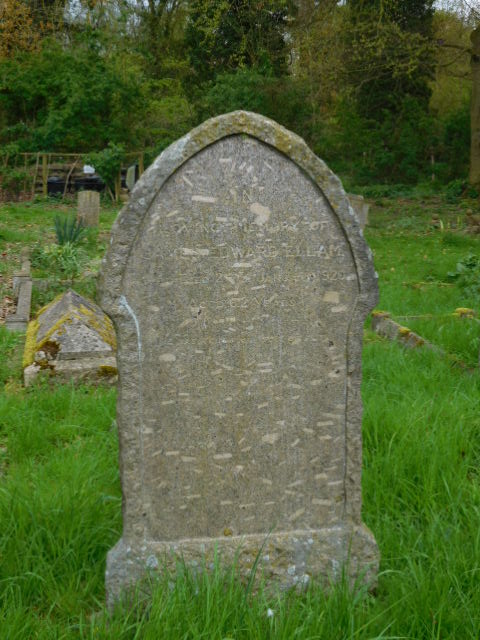
James Edward Ellam (1857-1920) is buried in the churchyard of St. Mary’s, Dunmow. Postcard c. 1920.James Edward Ellam’s gravestone May 2023. Courtesy of Catherine Salmon.


















 Pressphotoman
Leave a comment