Shortly before his sudden death in 1895 at the age of 45, the award-winning photographer Matthew Auty registered a number of views for copyright that he had taken around Tyneside.
Among them were well-known Newcastle locations including its Central Station, both High Level and Swing Bridges, Stephenson’s Monument and Jesmond Dene.
Many were popular sellers for the Auty Series imprint that continued to bear his name as the late-Victorian and Edwardian postcard boom took hold.
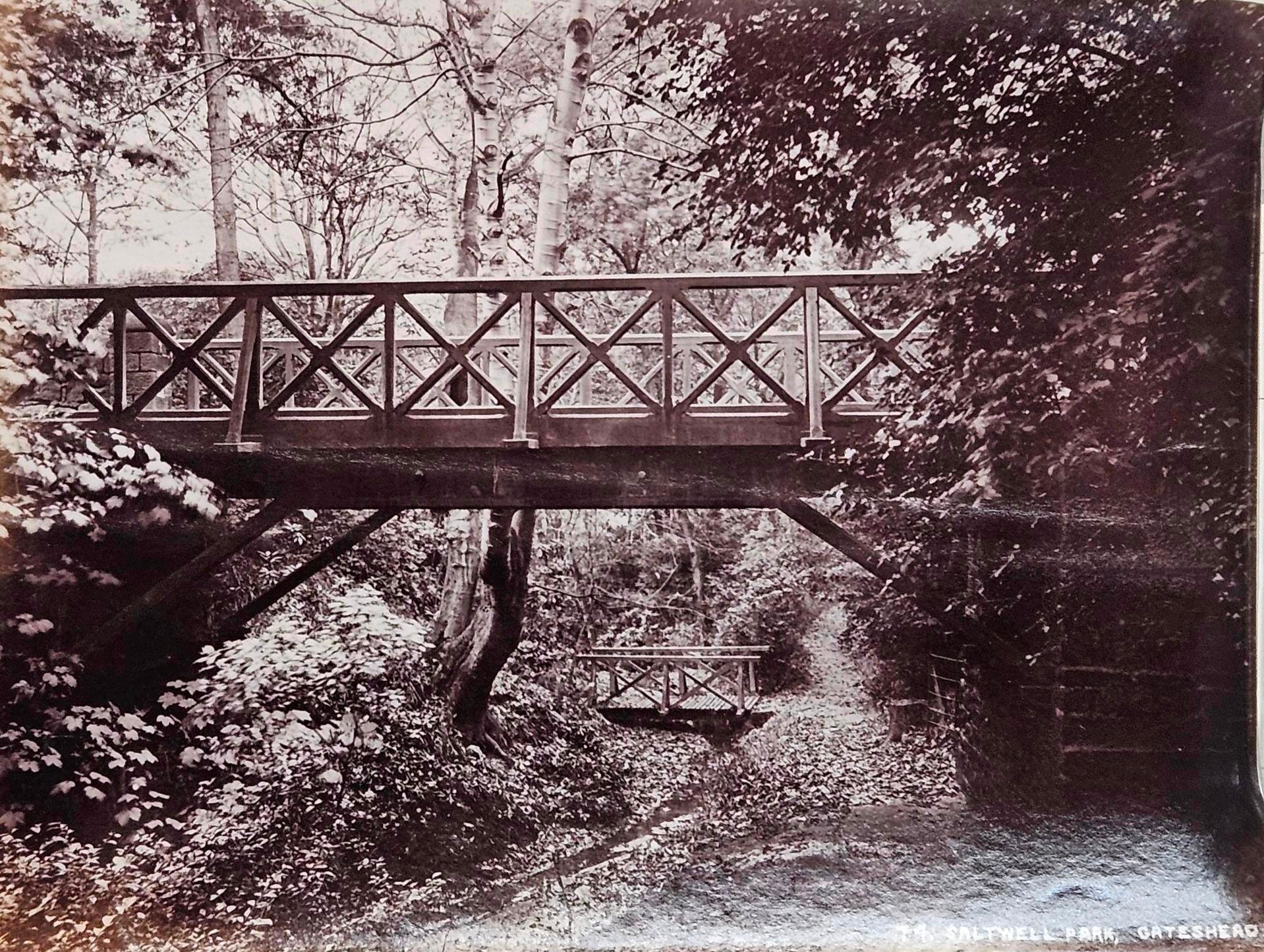
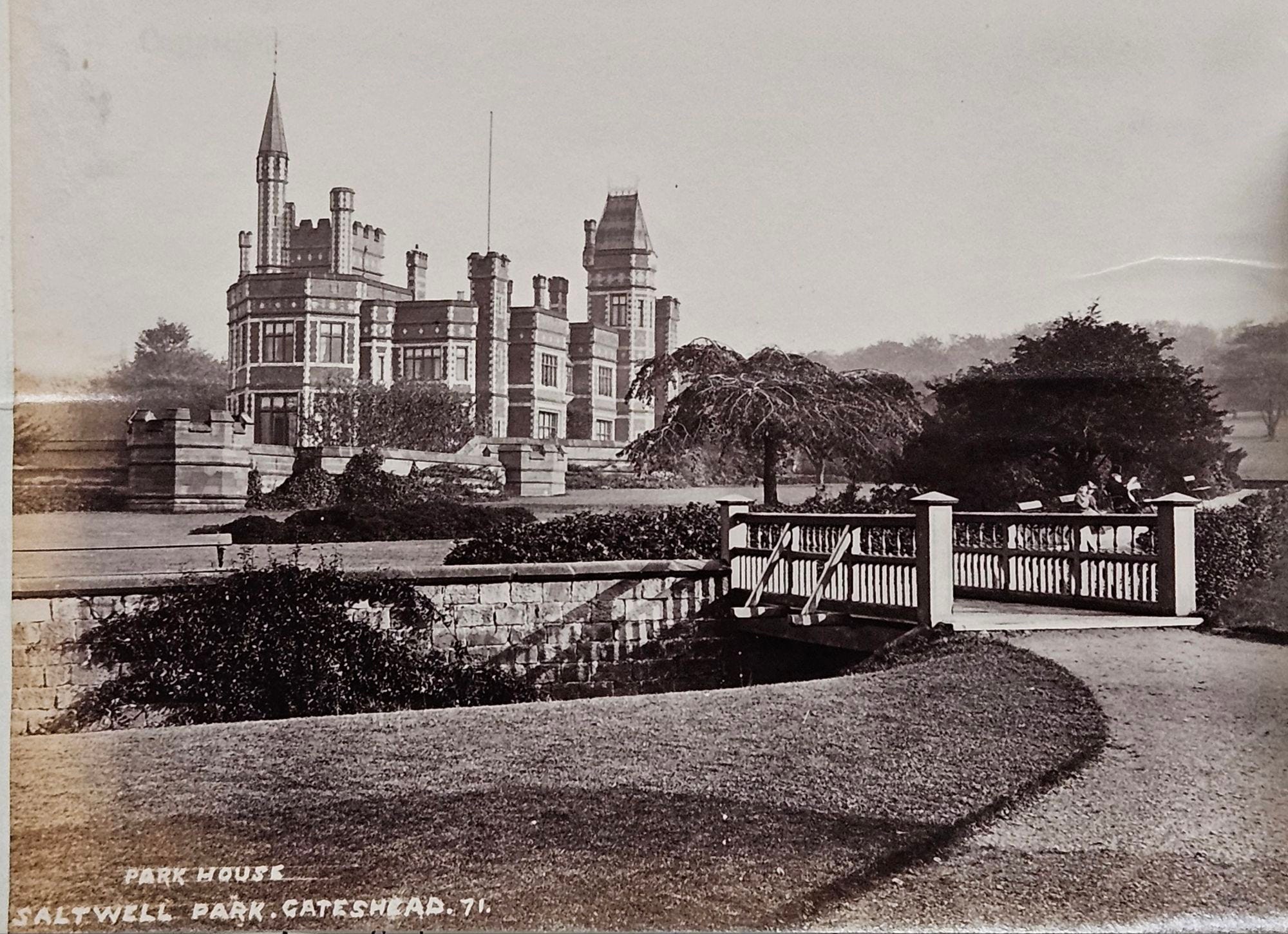
However, what caught my attention whilst visiting the National Archives where his copyright forms are stored were his less familiar views of locations across the River Tyne … in neighbouring Gateshead.
Today Saltwell Park is regarded as one of the best examples in Britain of a Victorian park and is popular with visitors of all ages.
At its heart sits the wonderful Saltwell Towers, an example of Gothic revival architecture, that was home to the distinguished stained glass manufacturer William Wailes (1808-1881).
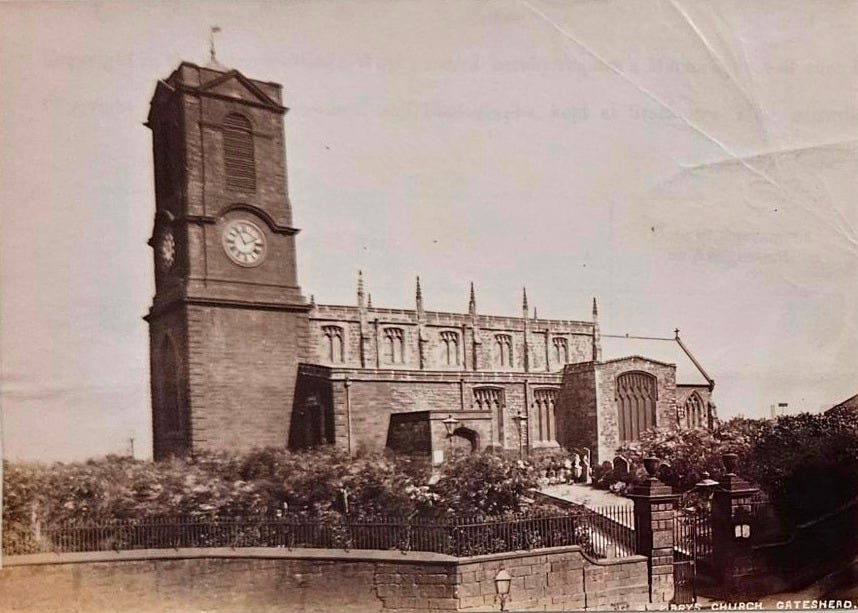
No doubt aware of the connection, another of Auty’s Gateshead views features examples of Wailes’s stained glass,
Today St. Mary’s Church, a familiar sight to train travellers on the East Coast railway line as it crosses the River Tyne, is Grade 1 listed and houses a Heritage Centre.
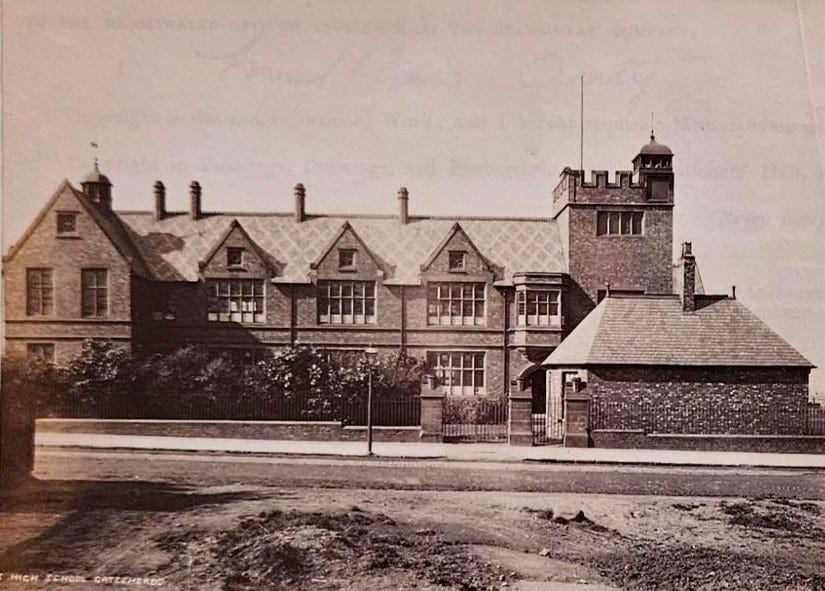
Around the time this photograph was taken, it was purchased by Gateshead School Board, re-named Gateshead Secondary School and underwent various name changes before its demolition in 1960.
It is rather poignant that the copyrighting of these images in November 1894 came in the final months of Matthew Auty’s career as a professional photographer.
Newcastle Weekly Chronicle (3rd August 1895). From British Newspaper Archive.
His importance as a photographer in the North East of England and further afield is reflected in the list of attendees at his burial in Newcastle’s Jesmond Old Cemetary.
These included a veritable Who’s Who of the region’s photographers led by J.P. Gibson, President of the Newcastle and Northern Counties Photographic Association.
Among those present were Linked Ring member Lyd Sawyer (1856-1927) and James Dickinson whose photography shop was a feature of Newcastle city centre well into the 20th century.
Since then, attempts to locate more examples of Theonie’s photography have sadly proved unsuccessful.
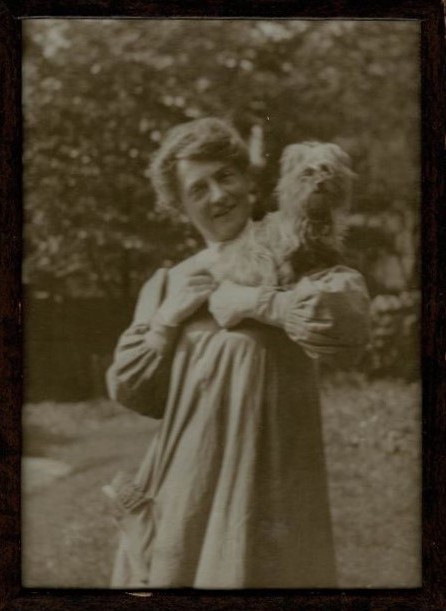
However, thanks to her great nephew Simon Burrell, I am able to share a photograph of the woman herself.
Henrietta Theonie Burrell (1860-1934). Courtesy of Simon Burrell.
She is pictured holding her dog Judy, standing in what may be the garden of the Burrell family home at Neville Cottage in the Elswick district of Newcastle.
As to identifying the photographer, it might be the work of her sister Fanny Johanna Bunning or her children Theonie Renee Burrell (1889-1945) or Cedric Ian Burrell (1892-1980).
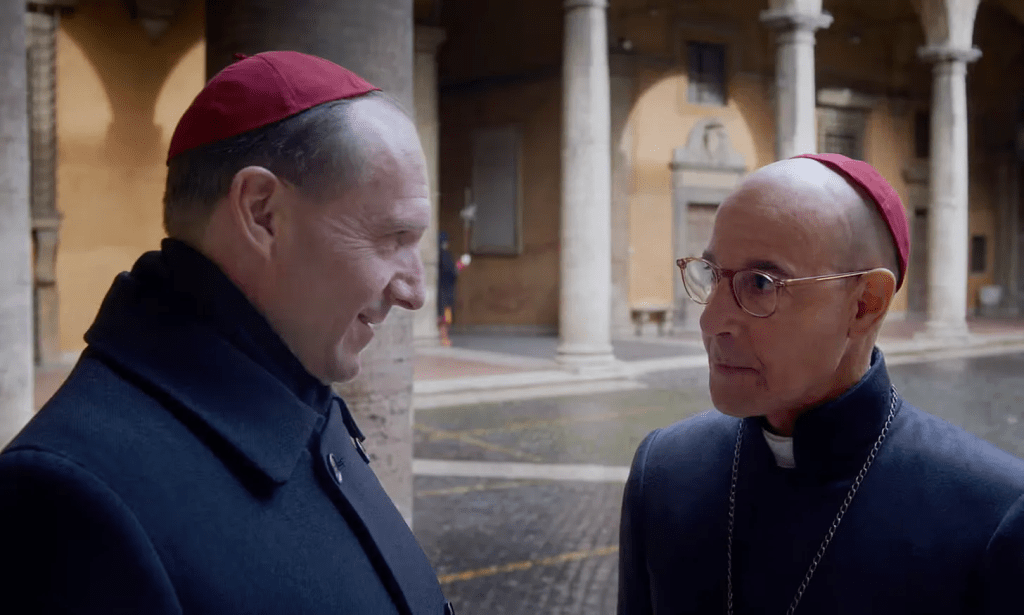
The recently-released film Conclave about the election of a new Pope is being touted as an Oscar contender.
This is largely because of the central performance by Ralph Fiennes for his portrayal of a “deeply-troubled Cardinal … at the centre of a murky Vatican plot” (Peter Bradshaw, The Guardian).
The film is the latest Papal subject to attract media attention and also that of this blog.
Last September’s Asia-Pacific tour by Pope Francis prompted a Pressphotoman post about a series of 3D stereoscopic portraits featuring one of his predecessors.
In an echo of the plot of Conclave, the stereos were published in 1904 following the election of Pope Pius X.
Given access to the Vatican, the leading stereoscopic company Underwood & Underwood produced a 36-card set titled A Pilgrimage to see the Holy Father through the Stereoscope.
The Underwood stereographer responsible was James Edward Ellam (1857-1920) whose career as a photojournalist is the subject of ongoing research by this blog.
A recent Pressphotoman acquisition adds another dimension to how these 3D images of Pius X were circulated in various formats and helped form the new Pope’s public image.
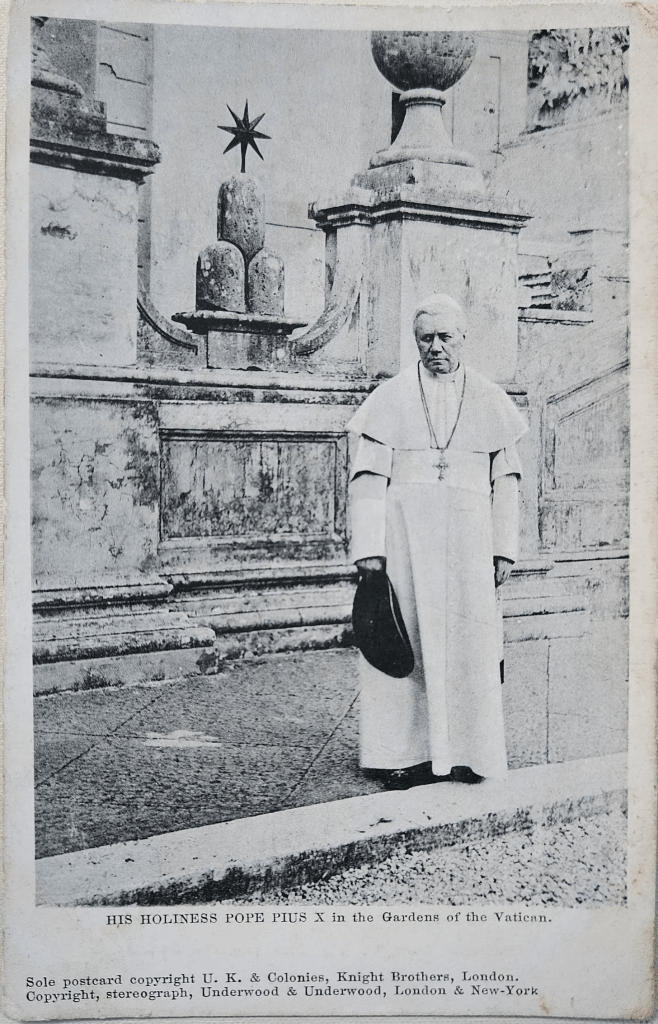
Titled “His Holiness Pope Pius X in the Gardens of the Vatican,” the credits on this picture postcard confirm that the image was taken from U&U’s original stereograph.
The ‘sole postcard copyright’ holder for the ‘U.K. & Colonies’ was identified as Knight Brothers of London.
They were certainly in the market for images to publish and sell to a worldwide audience.
The company was formed in 1904 by Watson and George Knight, who had previously worked for another London postcard publisher.
E. Wrench Ltd., launched by teenager John Evelyn Wrench, boomed spectacularly from 1900 as the picture postcard craze took hold.
But by 1906, the firm had crashed and burned amid financial difficulties.
Knight Brothers registered their trademark ‘knight’ in August 1905.
The number ‘1446’ on this postcard indicates that it may have been one of a series of Papal portraits secured from Underwood & Underwood.
Another point of note is that the card was ‘printed in Saxony’ which Wrench had first identified as home to a ‘veritable hotbed of good printers’ (Anthony Byatt, Picture Postcards and their Publishers, 1978).
Like Wrench before them though, Knight Brothers enjoyed short-lived success.
It became a limited company in 1906, but within a couple of years had ceased trading.
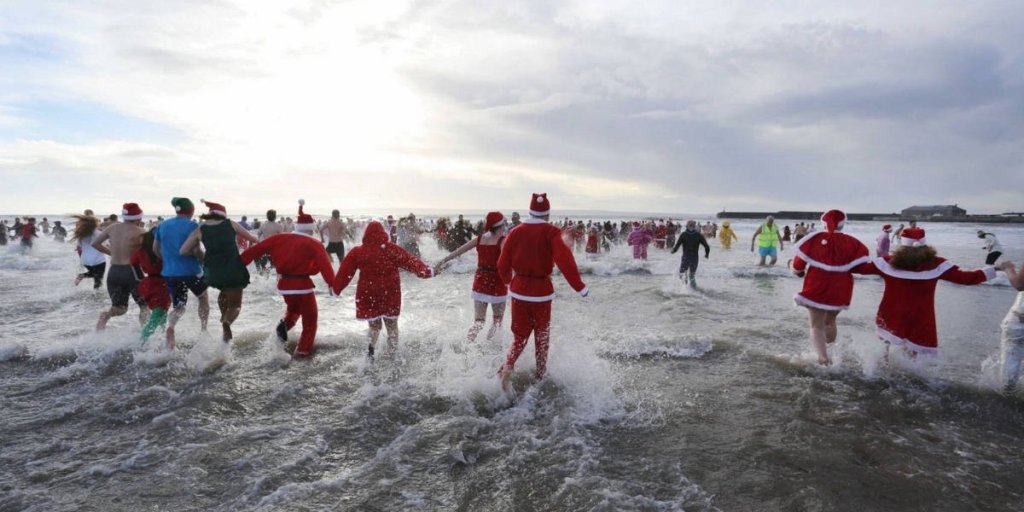
The tradition of taking a dip in the sea during the Christmas and New Year holidays is now firmly established in the seasonal calendar.
Each year, social and traditional media are swamped with images of figures dashing into the surf, many in colourful fancy dress outfits, braving the freezing temperatures for charity.
Little more than a century ago, the very idea of such a spectacle being contemplated, never mind taking place, would have seemed fanciful.
I have to thank Geoff Barker, Senior Curator of the State Library of New South Wales, for a recent LinkedIn post about a fellow Australian, who helped change public attitudes to swimwear.
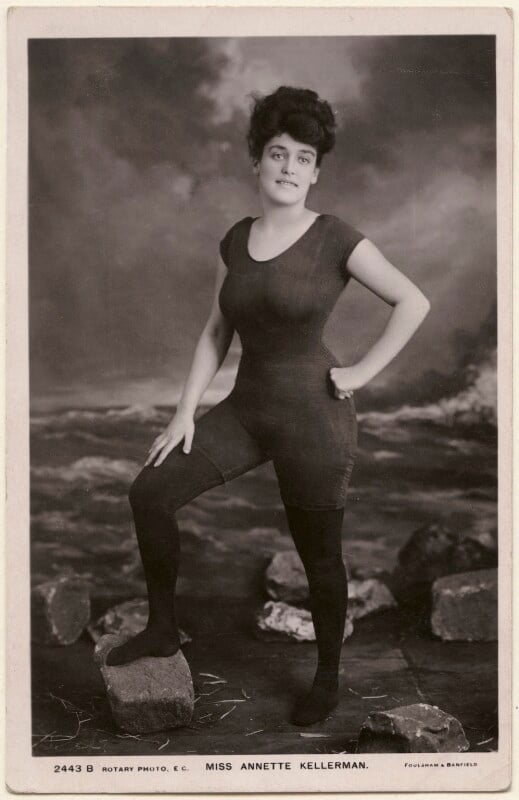
Annette Kellerman (1886-1975) was a professional athlete and later vaudeville and silent film star, who helped popularise the one-piece bathing suit.
I first learned about her whilst researching my doctoral thesis on the influence of stereoscopic 3D photography on press illustration.
Among her many accomplishments, she was the first woman to attempt to swim the English Channel (only officialdom stopped her completing the crossing).
She also took part in a number of highly-publicised river races in Paris and London.
The international media devoted many column inches to reporting her exploits and press photographers followed her every move.
This 1906 report from the Daily Mirror, Britain’s first tabloid newspaper, is typical of the coverage that Annette Kellerman attracted.
Daily Mirror (17th July 1906). From British Newspaper Archive.
The photographs reproduced in half-tone were supplied by Underwood & Underwood (U&U) whose photo agency soon became the largest in the world.
In a link with the Underwood company, the postcard of Miss Kellerman reproduced earlier in this post was published by the firm of Foulsham & Banfield.
Co-founder Frank Foulsham (1873-1939) had begun his photographic career as a stereographer.
He supplied images of politicians and music hall stars to U&U for publication in the press.
In time, Foulsham & Banfield’s name became synonymous with glossy postcard prints featuring a galaxy of music hall and vaudeville stars.
The National Portrait Gallery, London online archive features more images of Annette Kellerman including a number by H. Walter Barnett (1862-1934), a W & D. Downey alumni
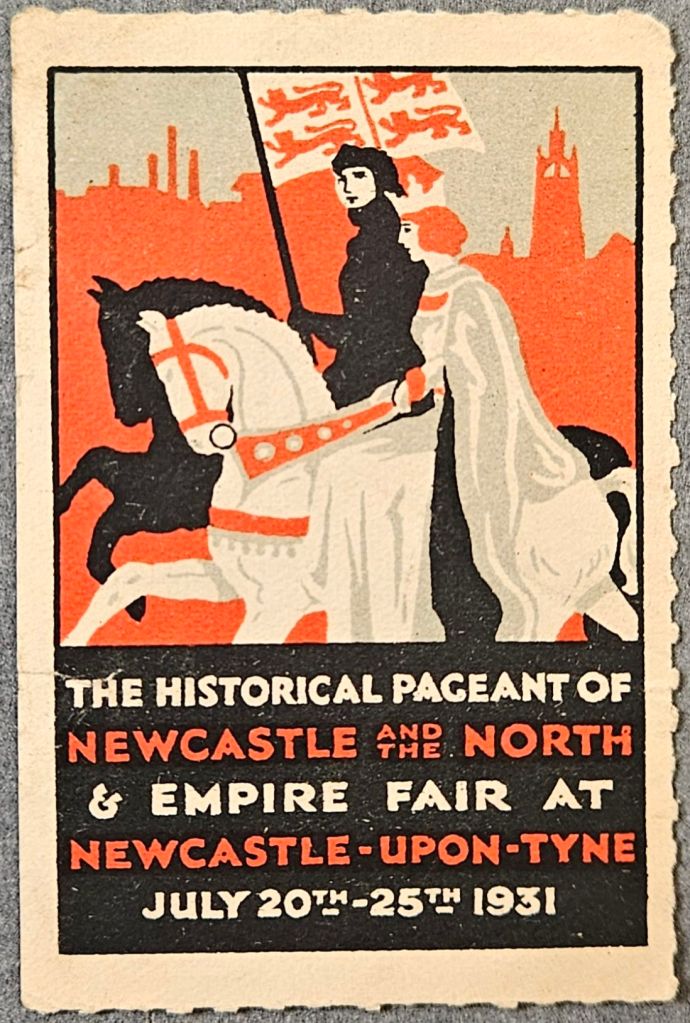
A colourful stamp-sized poster with the Newcastle skyline in the background left me wondering how this event was captured visually by photographers and film-makers.
Historical pageants in Britain during the 20th century offered communities up and down the country the chance to dress up, party and celebrate our national history.
Newcastle had previously hosted Northumbrian Pageants in 1923 and 1925.
The 1931 event had a wider geographical focus with participants from across the North of England.
At the time, the region was affected by the low morale and high unemployment that marked the Great Depression of the 1930s.
Deciding something must be done to address this state of affairs, the Women’s Committee of the Northern Counties Area of the National Union of Conservative and Unionist Associations organised a pageant and industrial fair.
Among its key figures was Irene Ward, who went on to be elected as Conservative MP for Wallsend (1931-1945) and Tynemouth (1950-1974).
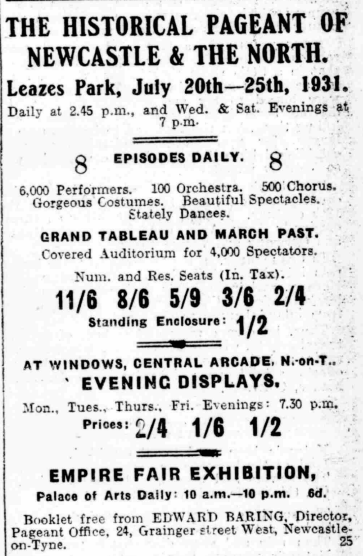
According to press adverts, the event involved 6,000 performers, a 100-piece orchestra and 500-strong chorus with the promise of “Gorgeous Costumes. Beautiful Spectacles. Stately Dances.”
Northern Weekly Gazette, 18th July 1931. From British Newspaper Archive.
Audiences estimated at more than 120,000 attended the pageant, which proved so successful that two additional performances were staged making 10 in total.
It was also restaged indoors at the city’s Empire Theatre in November 1932.
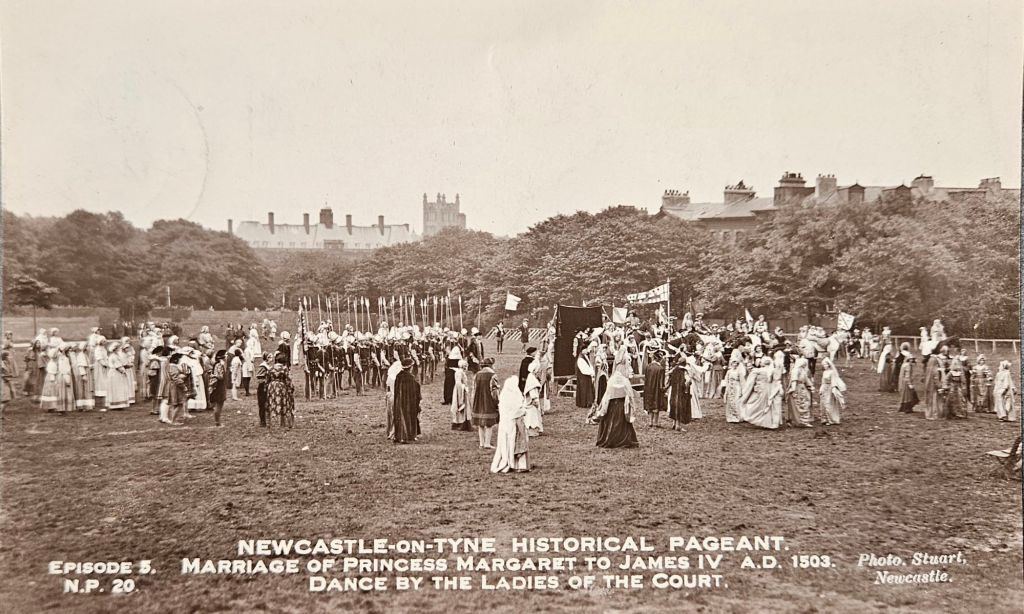
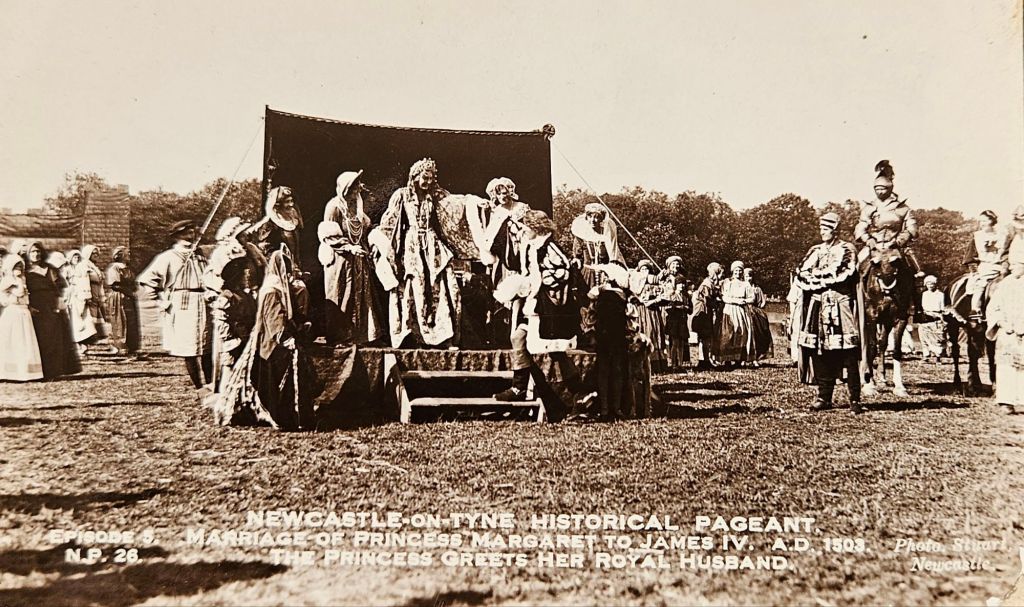
Photographically, Stuart, a long-established Newcastle firm based at the YMCA Buildings in Blackett Street were on hand to record the pageant’s sequence of Episodes.
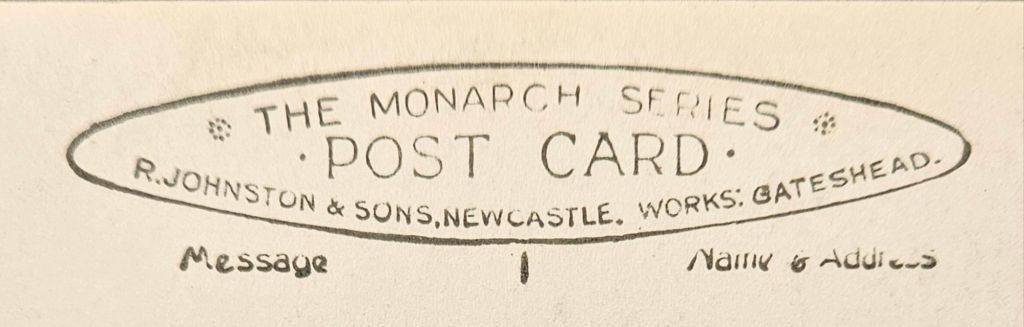
Black and white images were then reproduced in a series of ‘Monarch’ postcards published by another Newcastle firm, R. Johnston & Sons with its printing works in neighbouring Gateshead.
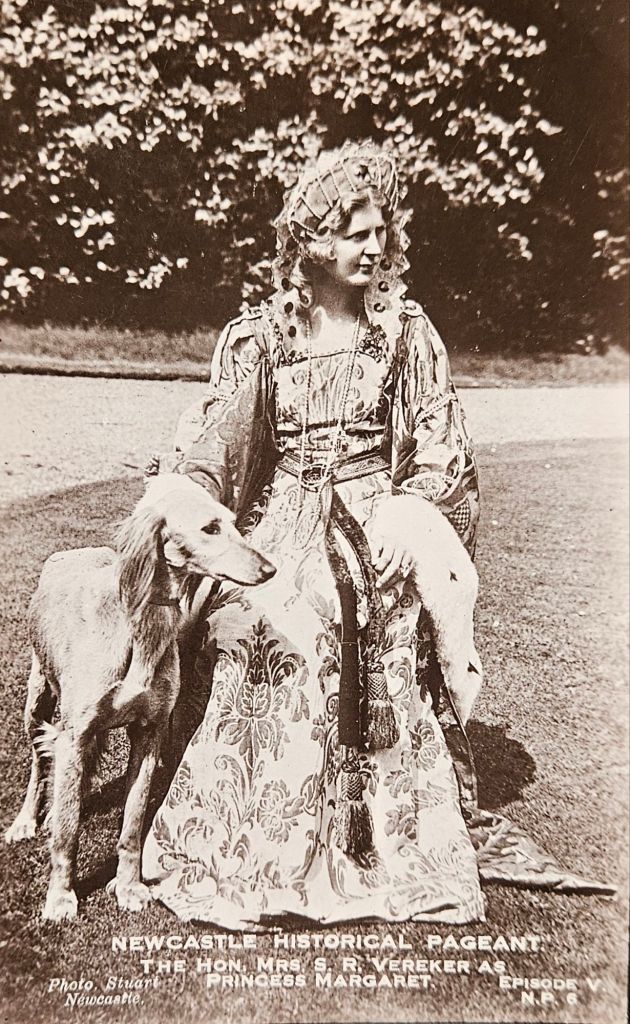
As an example of what the crowds witnessed, Episode 5 featuring ‘The Marriage of Princess Margaret to James IV, AD 1503’ was portrayed in a series of general views and close-ups.
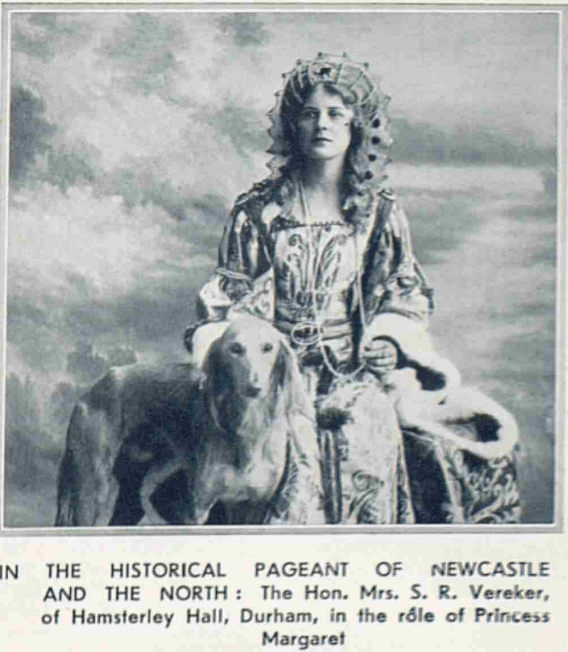
Centre-stage playing Princess Margaret was The Honourable Mrs. S. R. Vereker (1896-1972) of Hamsterley Hall, Durham.
Her aristocratic pedigree as one of the organisers connected her to a famous moment in Newcastle history.
Bessy Vereker (neé Surtees) was a descendant of Bessie Surtees whose elopement in 1772 with John Scott, later Earl of Eldon and Lord Chancellor of England, is the stuff of local legend.
Engraving based on an oil painting by Wilson Hepple.
Bessie Surtees House where the elopement took place still stands a stone’s throw from the River Tyne waterfront and is in the care of Historic England.
Following her marriage in 1921 to the Hon. Mr. Standish Robert Vereker, later Viscount Gort, Bessy became a regular client of leading photography studios in London.
Stylish portraits of her by both Bassano and Lafayette feature in the collection of the National Portrait Gallery, London.
At the Newcastle and the North Historical Pageant, a beautiful outfit created for her in the role of Princess Margaret (plus accompanying hound) combined to produce a striking image.
It also caught the attention of the press.
The Sphere was among the illustrated papers that featured her in a photo spread titled “Women of Fashion and Fashions of Women.”
The Sphere (18th July 1931). From British Newspaper Archive.
Perhaps most impressive of all was the footage created by a group from the Newcastle and District Amateur Cinematographers Association.
Sadly, given the eye-catching nature and design of the spectacle, Kodachrome 16mm colour film was not introduced to the market until 1935.
In total, 15 minutes of black-and-white footage was edited together and can be viewed on the British Film Institute website.
Episode 5 featuring the Hon. Mrs. S. R. Vereker as Princess Margaret begins at around 8′ 40″. It’s well worth a watch.
This post has been informed by the ‘Historical Pageants in Britain’ website, which includes detailed descriptions of similar pageants staged across the country.
The Golden Age of Postcards lasted two decades from around 1900 and was partly fuelled by the work of portrait photographers.
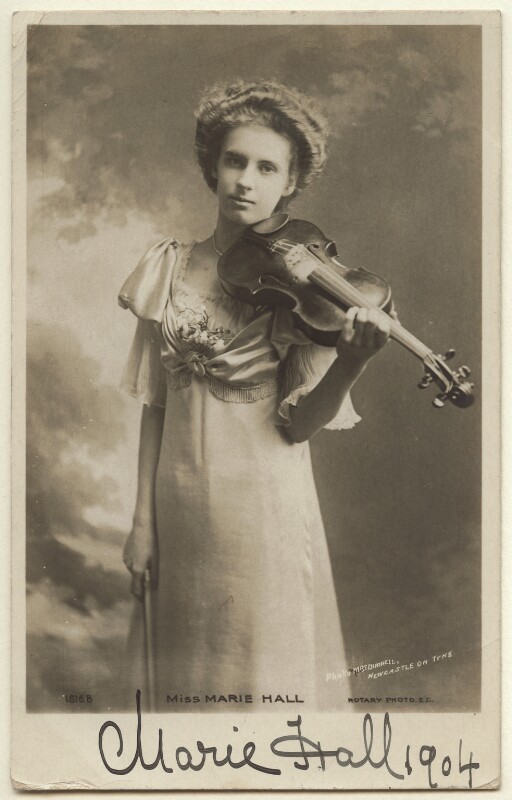
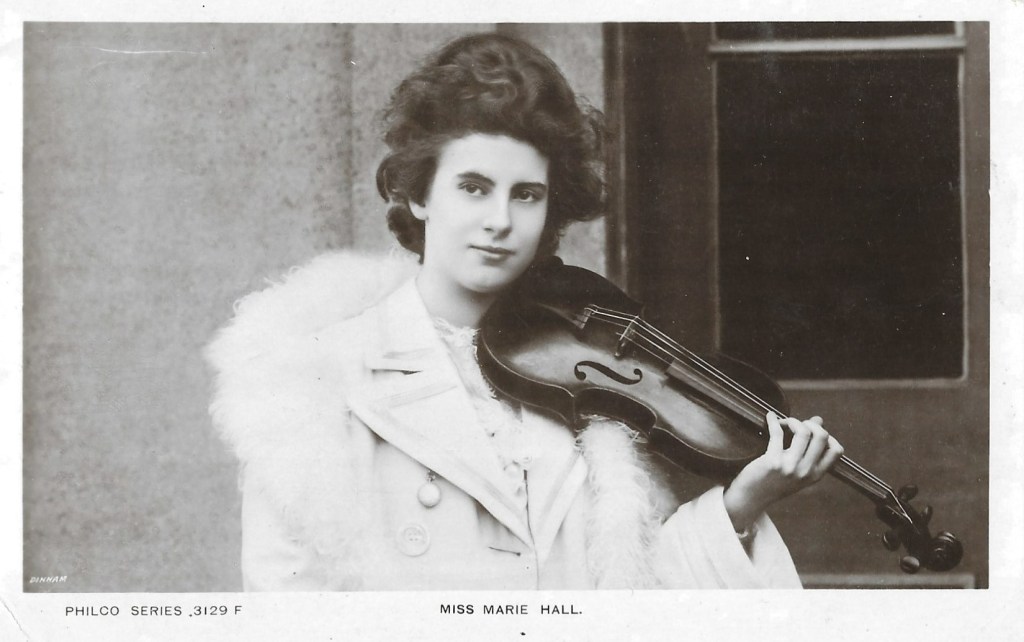
One popular subject was the celebrated violinist Marie Hall (1884-1956), who emerged as a rising star of classical music just as the photographic postcard made its mark.
During a lengthy career, Miss Hall was photographed by many of the leading studios and photographers, invariably incorporating her violin in their portraits.
These included early portraits taken in March 1903 by Mrs. Henrietta Theonie Burrell of Newcastle on Tyne.
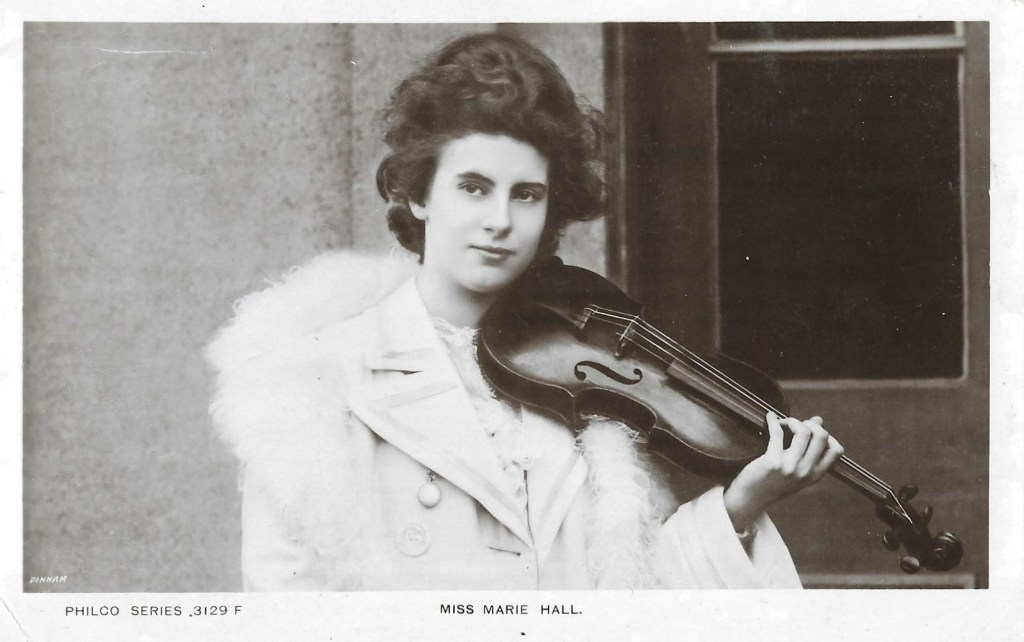
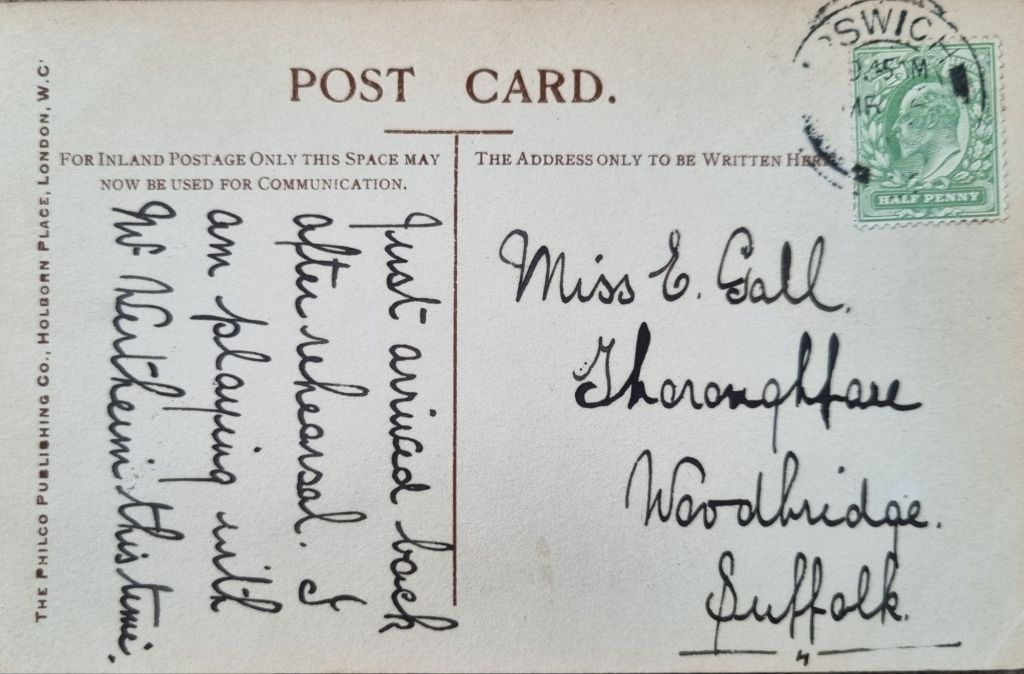
It was issued by The Philco Publishing Company (derived from Philip Cohen & Company) of Holborn Place, London, W.C.
However, rather than the striking photograph of which more shortly, it was the handwriting on the ‘communication’ and ‘address’ side of this postcard that really excited me.
It pointed towards the identity of its sender … as Marie Hall herself.
The connection to the violinist was underlined by the text, which read: “Just arrived back after rehearsal. I am playing with Mr. Wertheim this time.”
So who was Mr. Wertheim and was he likely to have played a part in Marie Hall’s musical life?
The answer was an emphatic ‘yes.’
From 1904, Siegfried Wertheim was principal viola with the Queen’s Hall Orchestra led by Henry Wood.
It was with Wood conducting the same Queen’s Hall Orchestra that Marie Hall made her London debut in 1903 performing concertos by Paganini and Tchaikovsky.
Given this musical pedigree, a collaboration between Miss Hall and Mr. Wertheim performing duet repertoire for violin and viola would have been a definite crowd pleaser.
The postcard’s addressee – ‘Miss E. Gall’ – even offered a wordplay (‘you’ve got a gall’) directed at Marie’s sister, Eveline, a talented harpist.
As the postcard featured Marie herself, there was clearly no need for her to sign it.
Whilst the card’s postmark of ‘Ipswich’ is legible, the date and time it was sent are not.
More certainty can be attached to the provenance of the Philco postcard, the identity of its photographer and the occasion on which it was taken.
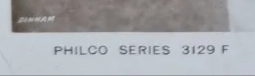
A credit in tiny letters etched into the bottom left-hand corner of the negative provided a clue. It reads ‘Dinham.’
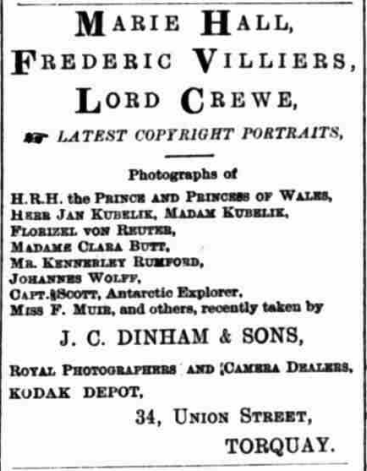
Within a few weeks, Marie Hall attracted top billing in a newspaper ad placed by J.C. Dinham & Sons for their “Latest Copyright Portraits.”
Ad from Torquay Times (3rd March 1905). From British Newspaper Archive.
The presence in the ad of other leading classical music performers such as violinist Jan Kubelik (1880-1940), who coincidentally mentored Marie Hall, and contralto Clara Butt (1872-1936) suggests Mr. Dinham had both a good ear and a good eye.
Whether he intended to copyright his Marie Hall scoop, he doesn’t seem to have got round to completing the paperwork as no records exist in the National Archives.
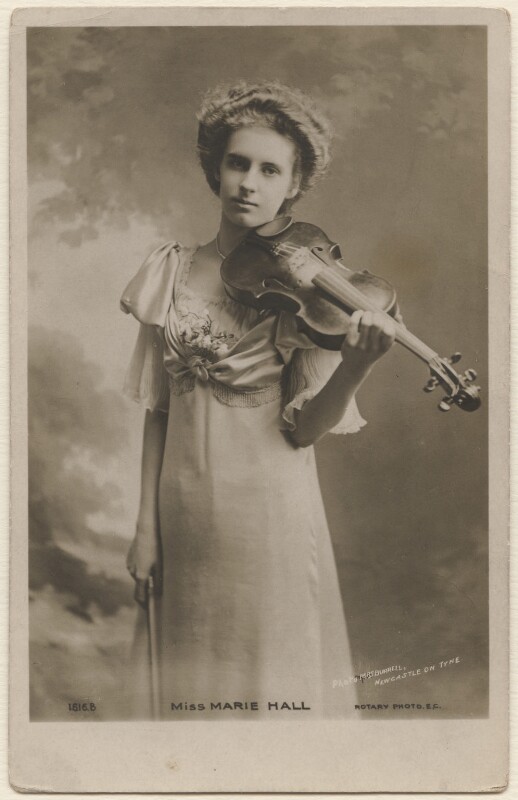
Despite this, his postcard portrait of Miss Marie Hall for Philco Publishing appeared in both landscape and portrait sizes.
The latter full-length version shows off her eye-catching outfit to even better effect.
A second ‘Marie Hall’ post next week explores how the violinist’s image was shaped by another celebrated female photographer best-known for portraying suffragettes.
Last month’s post about ‘Mrs. Burrell’ (8th July 2024) has prompted further research into the photographic portraits she produced of the celebrated British violinist Marie Hall.
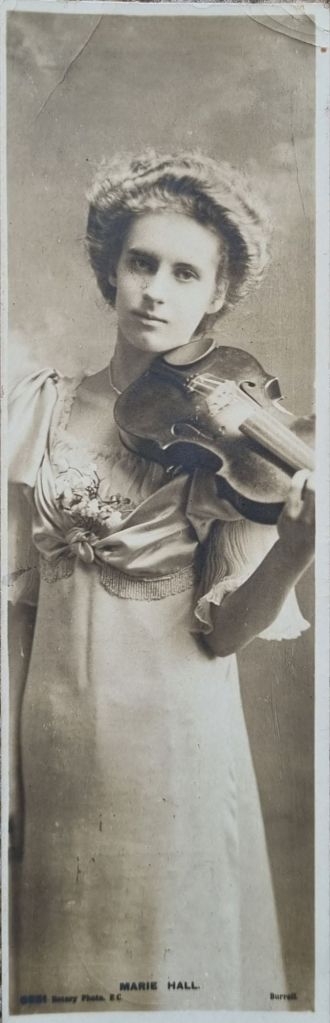
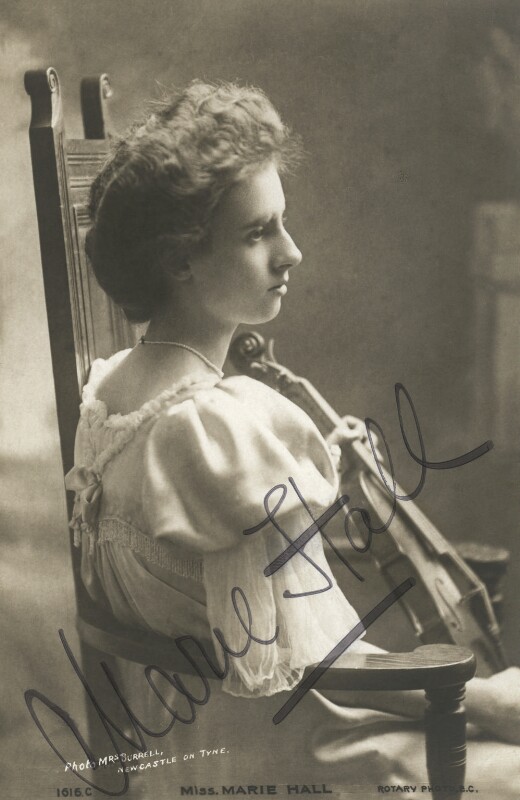
Whilst searching for the third, in which the violinist appears minus her instrument, I came across the image above reformatted (below) as a ‘book postcard.’
The original portrait has been unceremoniously edited to remove much of Marie Hall’s right arm, half of the violin’s fretboard and a few of her fingers.
Despite this unsympathetic treatment, the ‘book postcard’ format (in the shape of a bookmark, hence the name) proved popular.
Thanks to photo postcards, fans of Edwardian stage and music hall performers could obtain an affordable souvenir portrait of their idols.
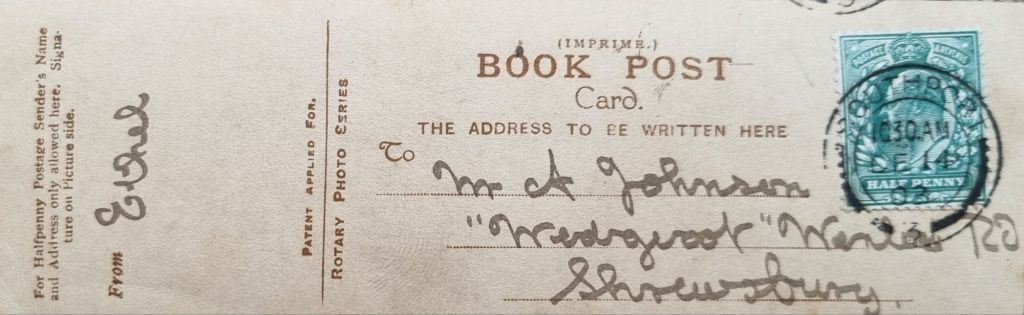
The ‘book postcard’ offered customers a slimmer and cheaper option, but its reduced size came with certain restrictions.
The sender could write their name (and address if desired) on the left-hand side of the card, but postal regulations forbade the inclusion of any message or additional text.
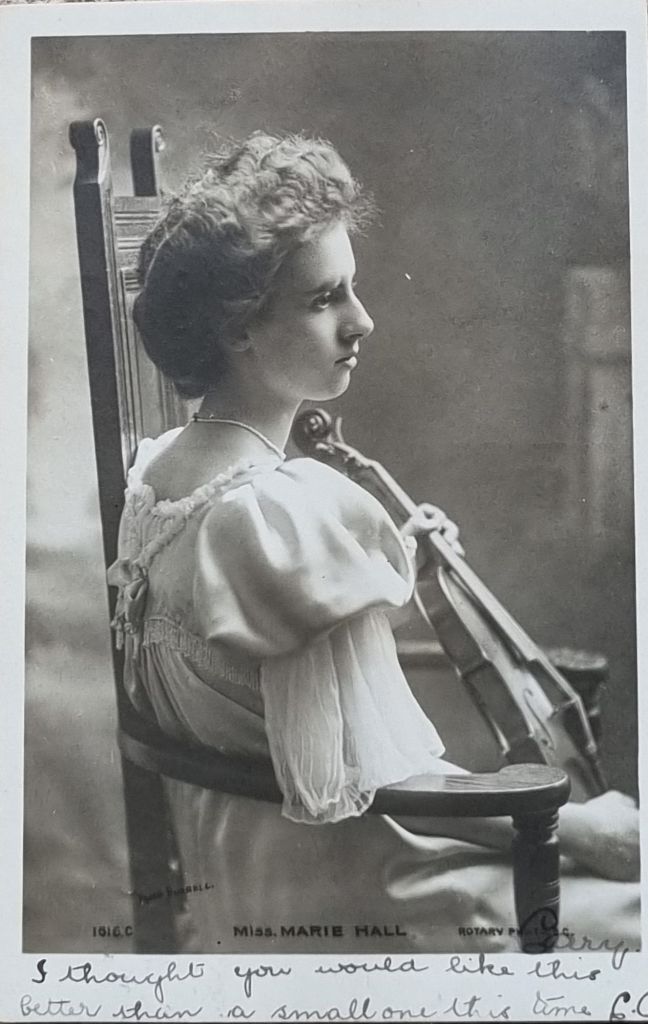
This was a drawback highlighted by one Marie Hall fan in a postcard posted in Newcastle on Tyne on 14th November 1903.
Signing herself as ‘C.H.’, ‘Carry’ went straight to the point on the front of the card to her female sendee in Redcar.
“I thought you would like this better than a small one this time,” she wrote, suggesting that a book postcard version of the violinist had been sent previously.
In the space ‘used for communication’ on the card’s verso, she continued: “This girl is shortly coming to N/C to perform in the Town Hall. She is a splendid player on the violin. I expect you will have heard about her.”
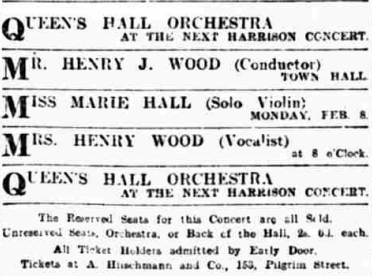
The concert referred to took place at Newcastle Town Hall a few weeks later on Monday 8th February 1904.
Newcastle Daily Chronicle (27th January 1904). From British Newspaper Archive.
For the concert, Miss Marie Hall was accompanied by the Queen’s Hall Orchestra conducted by Henry J. Wood, best known today as the founder of what became the BBC Proms.
A review of the concert (Newcastle Weekly Chronicle, 13th February 1904) reveals that the teenage violinist played Paganini’s Concerto in D and the Rondo Capriccioso by Saint-Saens.
The reviewer concluded that the concert was “an immense success, the applause being loud and long in each instance.”
Given her tangible enthusiasm, perhaps ‘Carry’ was able to attend the Newcastle concert in person, armed with a Marie Hall postcard and obtain an autograph afterwards at the stage door.
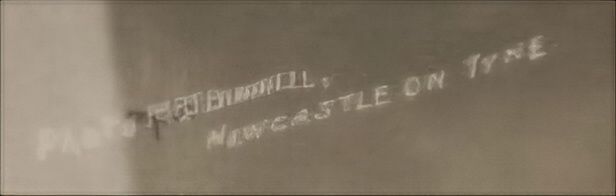
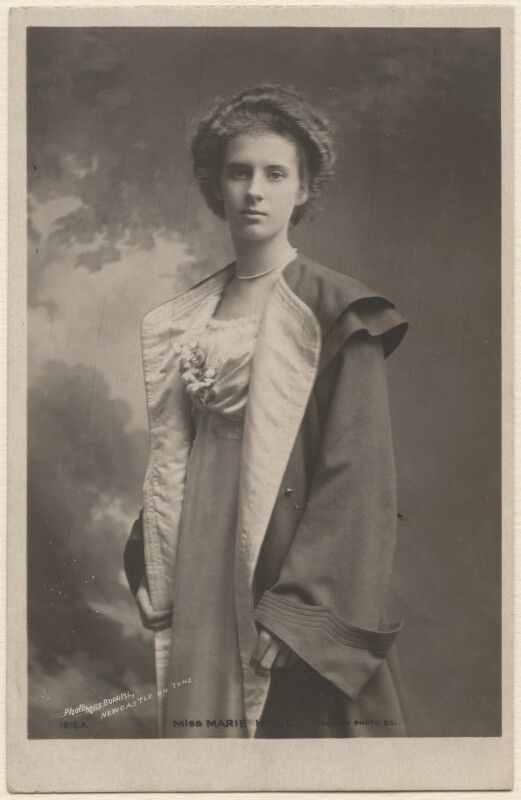
What particularly caught my attention was the photographer’s credit scratched into the bottom right-hand corner of the plate.
Photo credit for ‘Mrs. Burrell, Newcastle on Tyne.’
It read: ‘Mrs. Burrell, Newcastle on Tyne.’
A new name to me in the pantheon of Tyneside photographers, I wondered who ‘Mrs. Burrell’ was.
Using the British Newspaper Archive plus census and other public records, a fascinating biography emerges.
Born in Newcastle in 1860, Henrietta Theonie Bunning was the third child of a mechanical engineer and a German-born mother.
Known as Theonie, she was in her mid-twenties when she married William Sleigh Burrell, a chemical manure manufacturer. The couple then had two children.
The 1891 Census found the Burrell family living in the Elswick district of Newcastle with a cook, housemaid and nurse.
Their home, Neville Cottage, was previously the Bunning family residence where, a decade earlier, Theonie lived with her parents.
It was also the address that she later used professionally.
What is evident from press reports covering the late 1890s to 1920 is that Theonie was an accomplished artist.
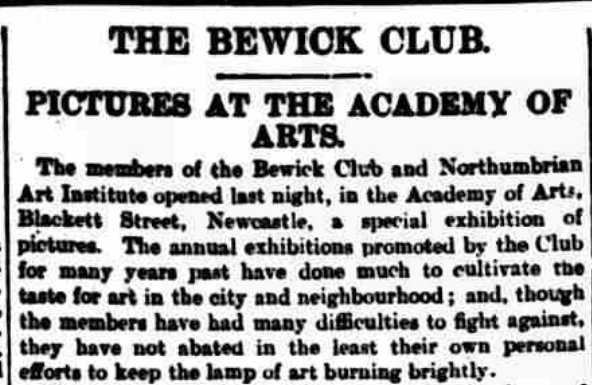
For example, in November 1898, the Newcastle Daily Chronicle reported on an exhibition in Newcastle by the Bewick Club, of which Theonie was a member.
Newcastle Daily Chronicle (2nd November 1898). From British Newspaper Archive.
Named after Thomas Bewick, the legendary Northumbrian wood engraver, the club was founded in 1884 with the primary aim of promoting the interests of professional artists.
The paper’s detailed report highlighted ‘a clever study of a child in pastel’ by ‘Miss [sic] H. Theonie Burrell.’
As to when Theonie’s career as an artist began, her ‘profession or occupation’ is not listed in any census before 1911.
However, the 1901 Census does offer a glimpse into her wider artistic life.
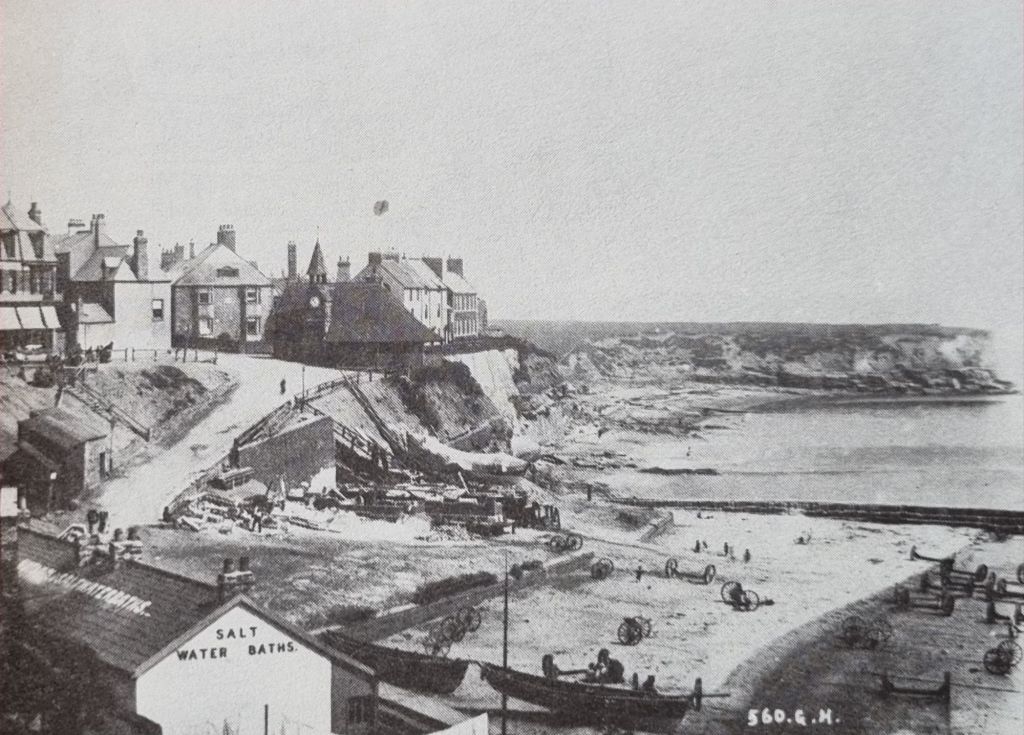
It records ‘Mrs. Burrell,’ her two young children and elder sister Fanny staying in the Tyneside seaside resort of Cullercoats, then home to a well-established artists’ colony.
Cullercoats c. late 1890s. Courtesy of Newcastle City Library.
Further afield, Theonie established a national reputation with artists’ organisations including the Society of Miniaturists.
Also, between 1906 and 1920, watercolour portraits credited to ‘Mrs. H. Theonie Burrell’ regularly featured in the Royal Academy’s prestigious Summer Exhibitions.
But what of her work as a photographer?
Mrs. Burrell’s photographic portraits of Marie Hall were published at a point at which the young violinist’s career was taking off.
Born in Newcastle on Tyne in 1884, she came from a musical family in which her father was a professional harpist in the city.
Marie was aged 10 when she made her public concert debut at Newcastle Town Hall before leaving the city to study violin in Birmingham, London and Prague.
She returned to Newcastle in March 1903 as an 18 year-old for a concert that was the talk of Tyneside.
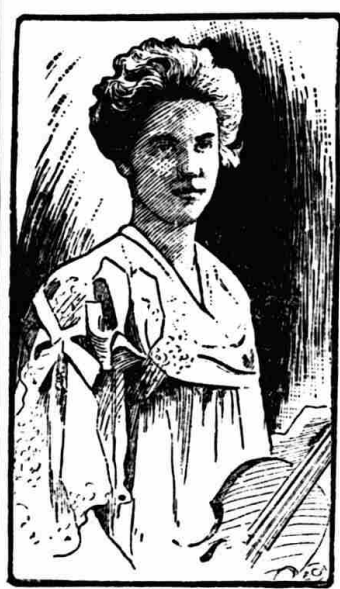
To mark the occasion, the Newcastle Daily Chronicle devoted a half-page column to reviewing her concert and used a line drawing illustration.
“There has seldom been in Newcastle a musical event so interesting as the appearance last night at the Town Hall of Miss Marie Hall.” Newcastle Daily Chronicle (11th March 1903). From British Newspaper Archive.
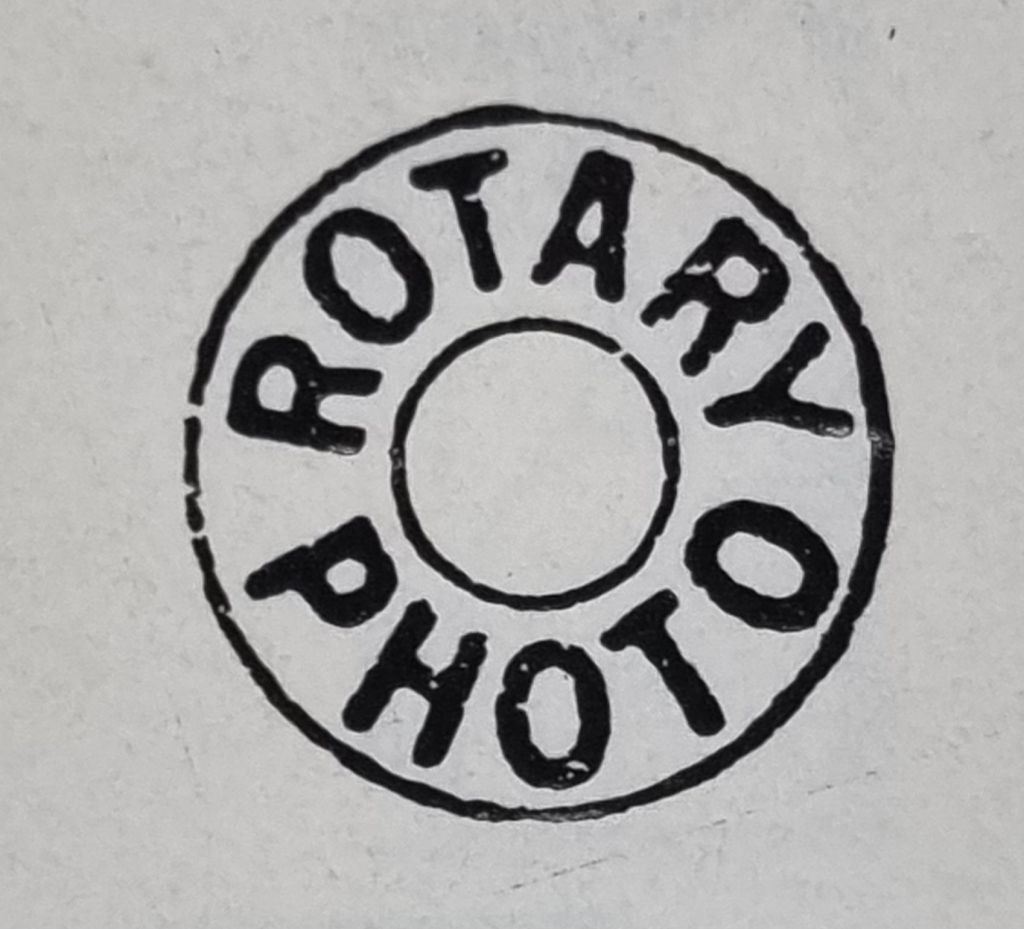
Such was her growing fame that the Rotary Photographic Company spotted a commercial opportunity.
Its ‘real photograph’ postcards offered celebrities a conveniently-sized format that could be signed for fans at stage doors and following public appearances.
As to how and where Mrs. Burrell’s photographs of the teenage violinist were taken, their painted backdrop suggests a studio location.
Or it may have been at Newcastle Town Hall as the photo shoot seems to have taken place shortly after her concert appearance there.
Three weeks later on 2nd April 1903, ‘Henrietta Theonie Burrell (Mrs.), Neville Cottage, Newcastle on Tyne’ registered the copyright of three cabinet-size photographs of ‘Miss Marie Hall’ (COPY1/460/372-374).
However, the slightly mystifying aspect of researching this story is that it has yielded hardly any further physical trace of Mrs. Burrell’s photography.
Copyright records held at the National Archives feature only one other ‘Mrs. Burrell’ photograph, namely a face-on portrait of a man named ‘John Cunningham’ registered in December 1904.
The 1911 Census listed her ‘trade or profession’ as ‘photographer and artist’ and in 1916, Ward’s trade directory featured a listing complete with telephone number.
Extract from Ward’s Directory 1916.
All of which leaves a number of unresolved questions, which future research may help answer.
Henrietta Theonie Burrell died in 1934 in Norton-on-Tees, County Durham aged 74.
If you know the wherabouts of any of her photographic or artistic portraits, the comments box below would welcome any information.
A coda to this blogpost involves Miss Marie Hall whose established place in the history of classical music involves one of the most popular pieces in the repertoire.
In 1920, she was the first performer and dedicatee of Ralph Vaughan Williams’ The Lark Ascending, a moment recreated in a 2012 BBC documentary about the piece.
Performance of The Lark Ascending by Ralph Vaughan Williams from BBC tv documentary (2012).








 Pressphotoman
Leave a comment