Saturday (6th December) marks the Feast of St. Nicholas when celebrations take place in many western Christian countries.
It’s a tradition that dates back to the 4th century when St. Nicholas as Bishop of Lyra was venerated for his generosity to children.
His later transformation into Santa Claus and Father Christmas during the 19th century has rather overshadowed his earlier role in the Christian church.
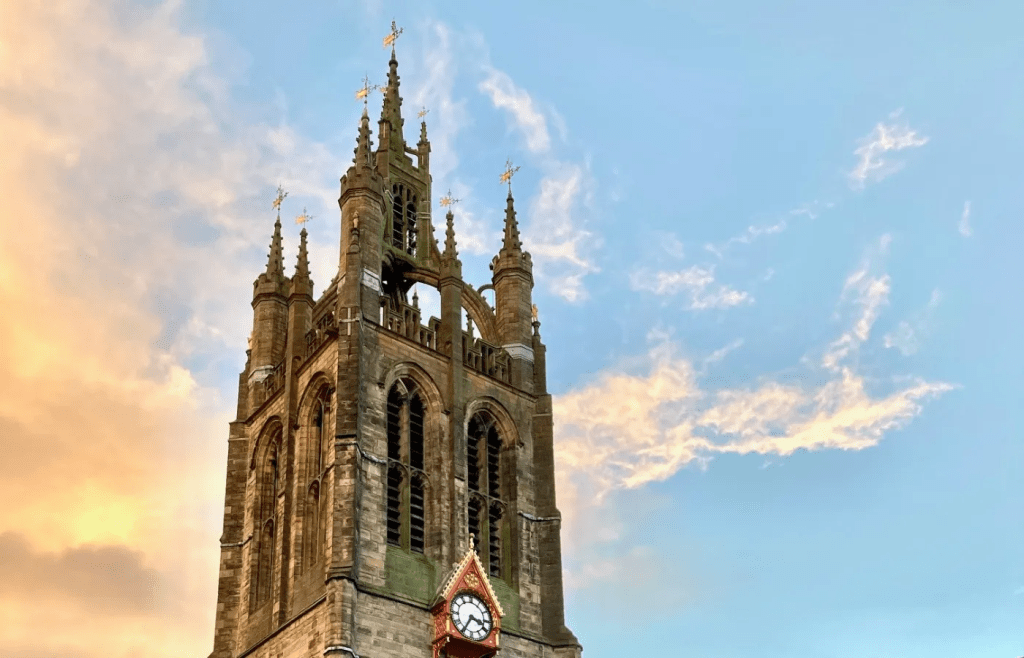
That said, many churches are named after St. Nicholas including one of my favourite buildings in Britain.
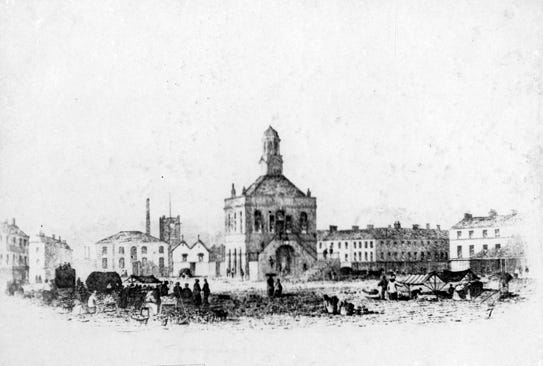
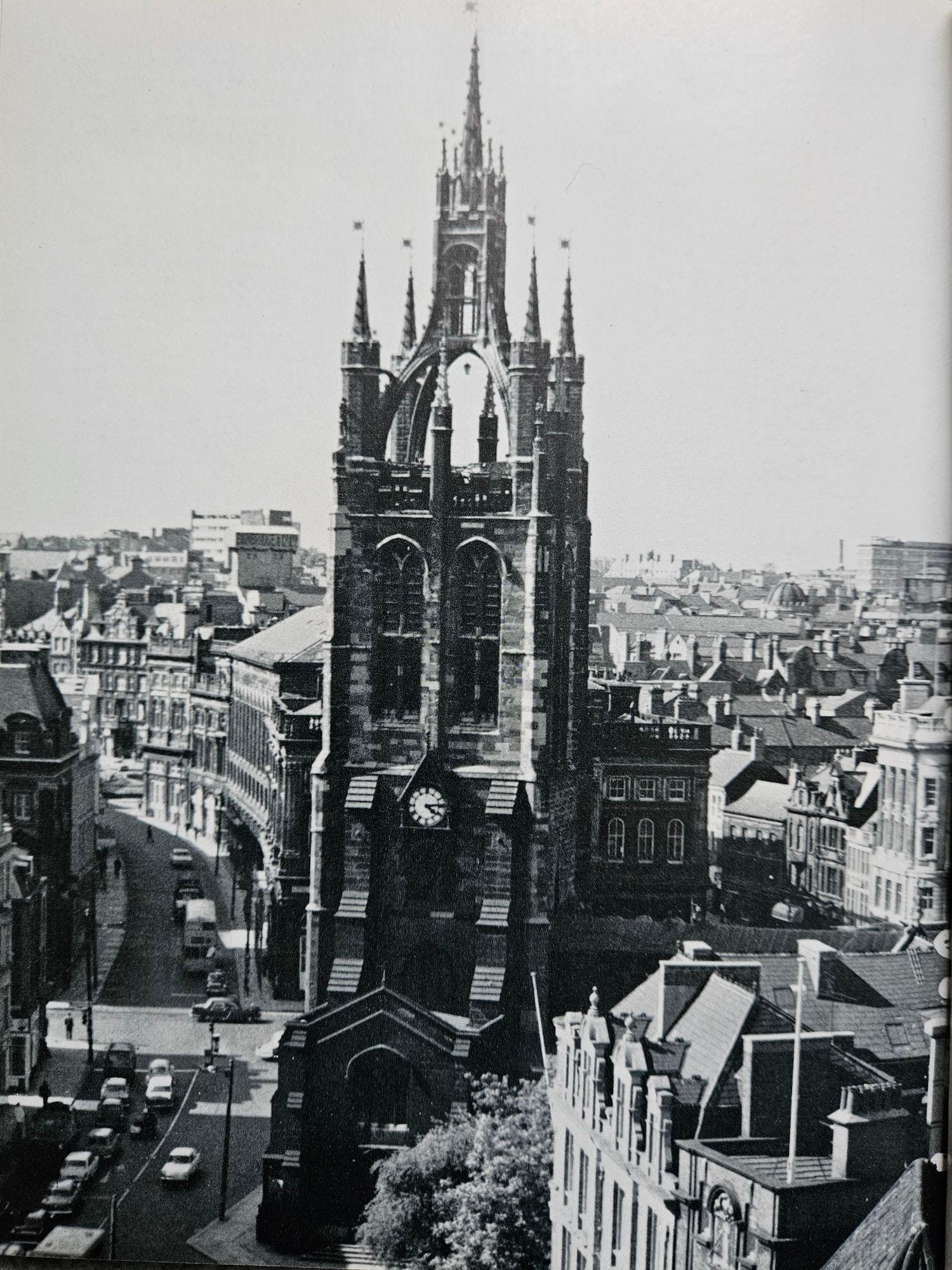
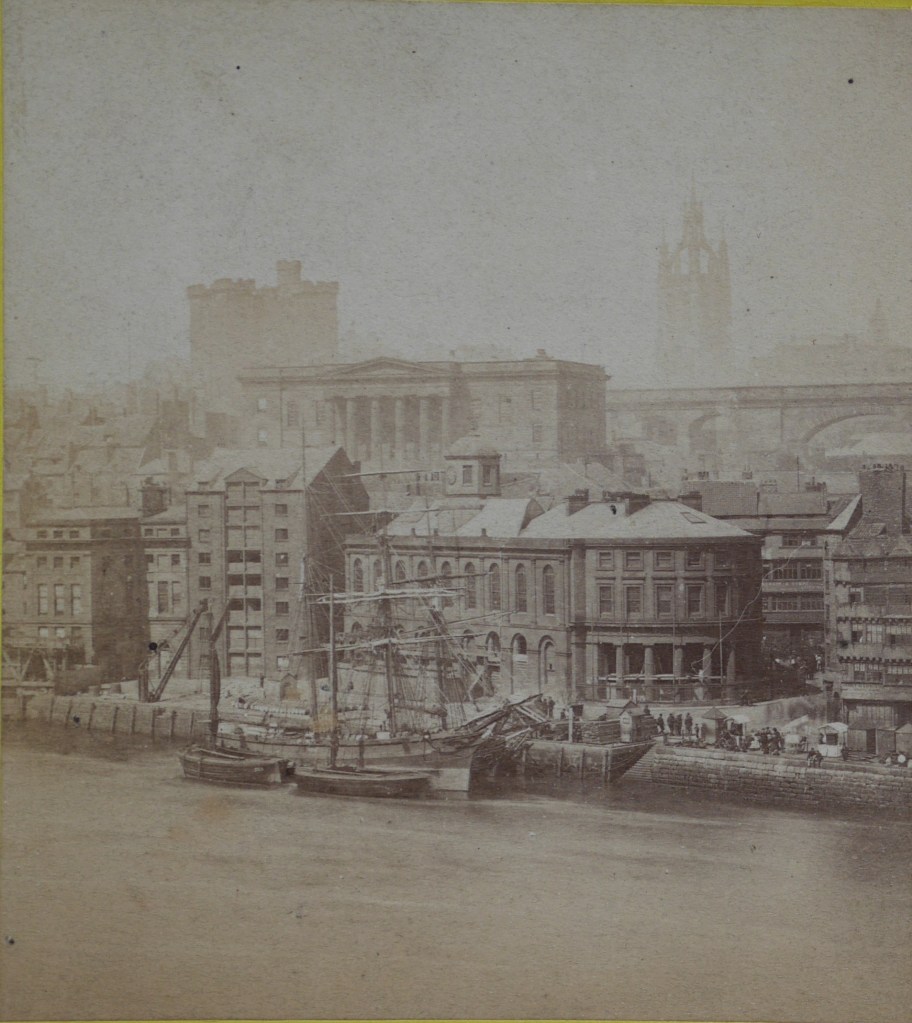
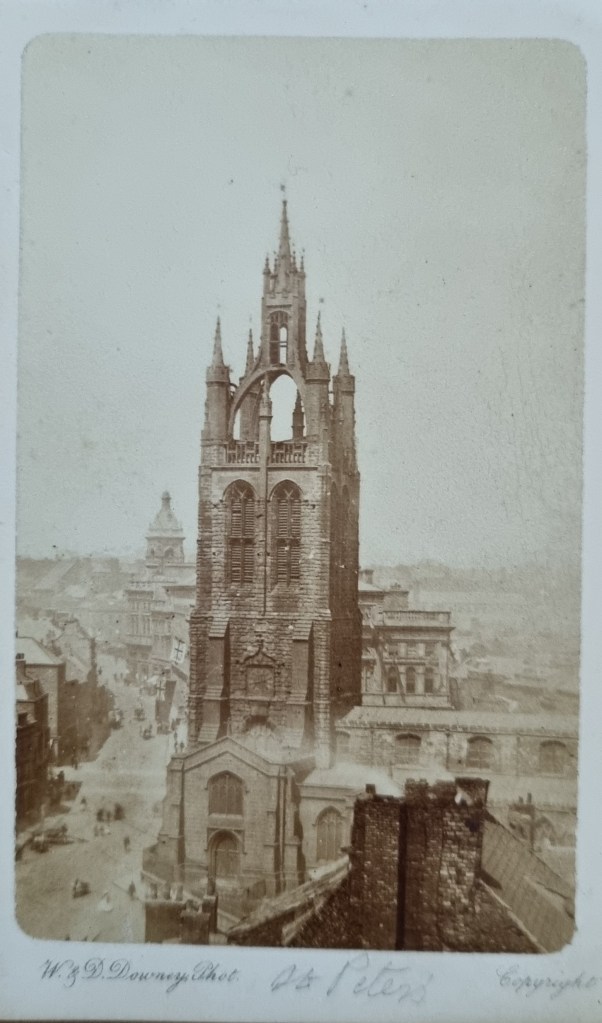
Newcastle Cathedral with its distinctive lantern tower began life during the 12th century as St. Nicholas Parish Church.
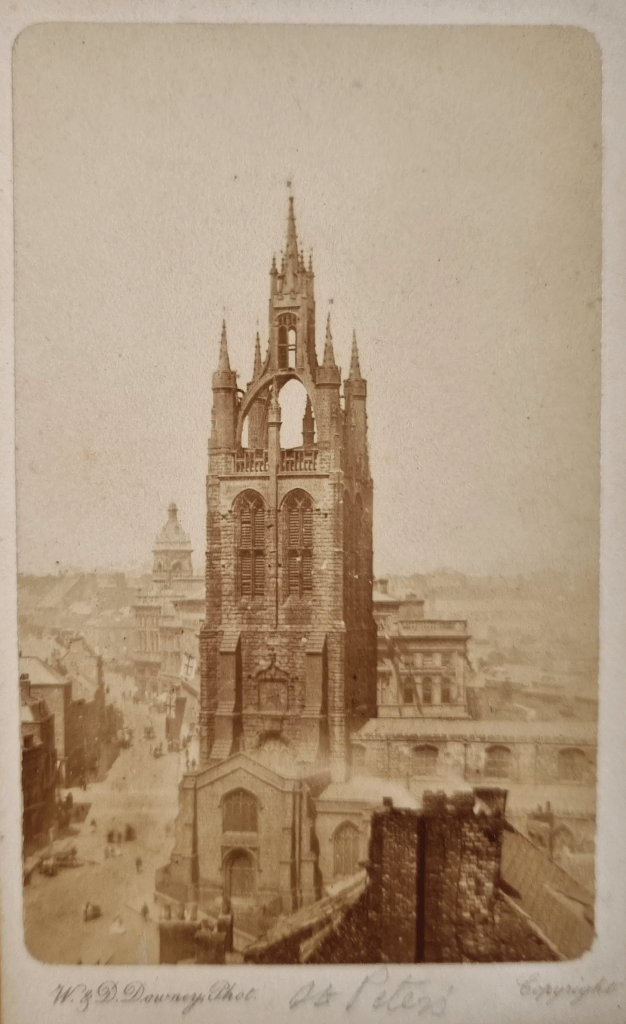
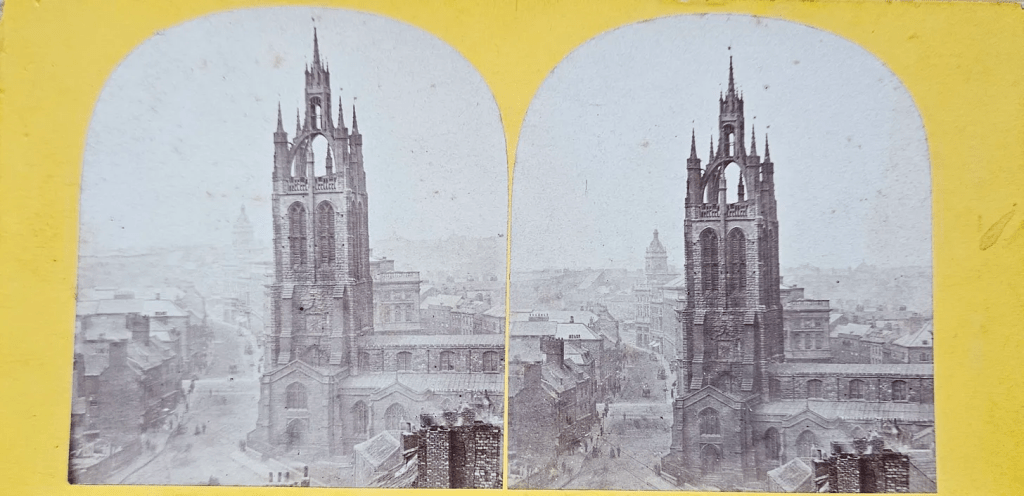
It’s a structure that continues to dominate the urban skyline and has been portrayed by successive generations of photographers as my own collection bears witness.
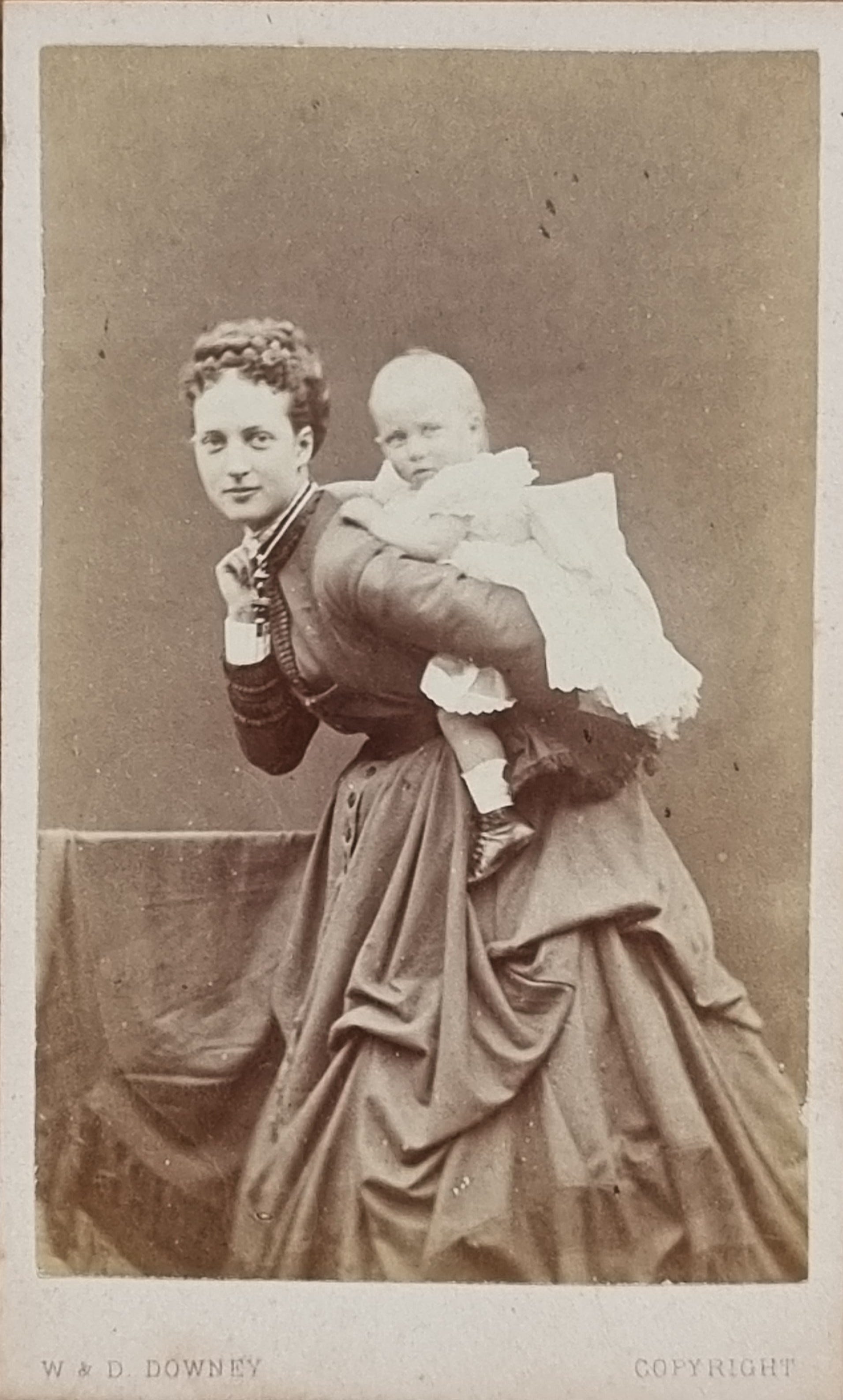
For instance, this carte de visite dates from the mid-1860s when the firm of W. & D. Downey was establishing its Newcastle studio in the heart of the city.
Erroneously titled ‘St. Peter’s’ in an unknown hand, it’s a view that had its origins in a stereoscopic 3D image.
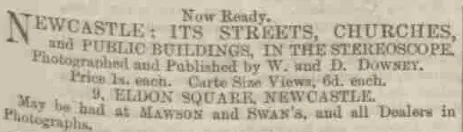
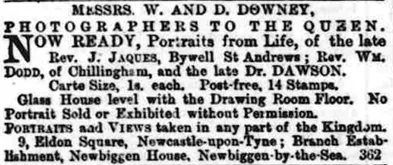
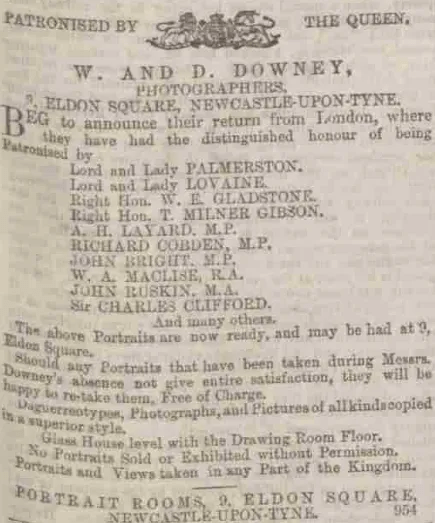
In July 1864 as Downey’s consolidated its reputation for high-quality work, the firm placed one of its regular ‘Now Ready’ advertisements in the local press.
Newcastle Journal (15th July 1864). From British Newspaper Archive.
Like most collectors, the search for a particular image sometimes ends when you are least expecting it.
So it proved with a Downey stereo of St. Nicholas’ Church that appeared on a well-known auction site recently courtesy of a seller in the United States.
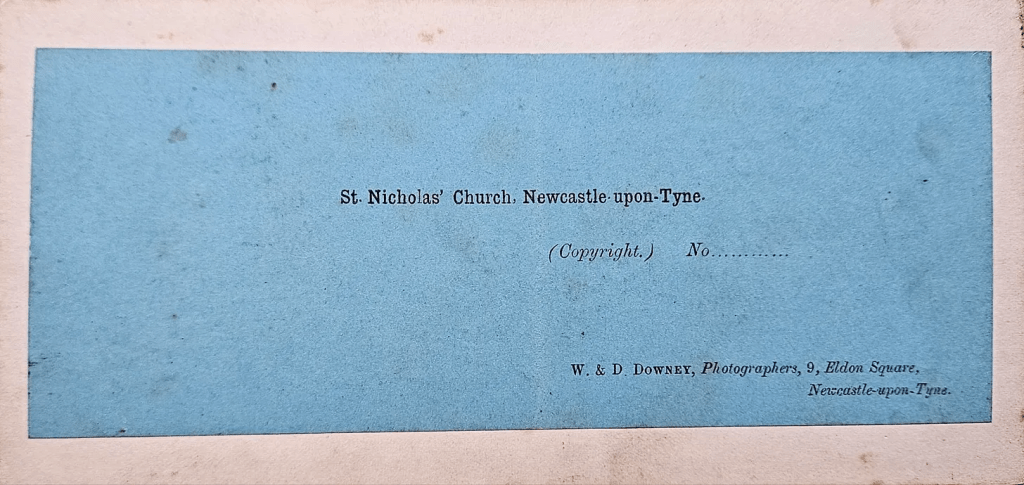
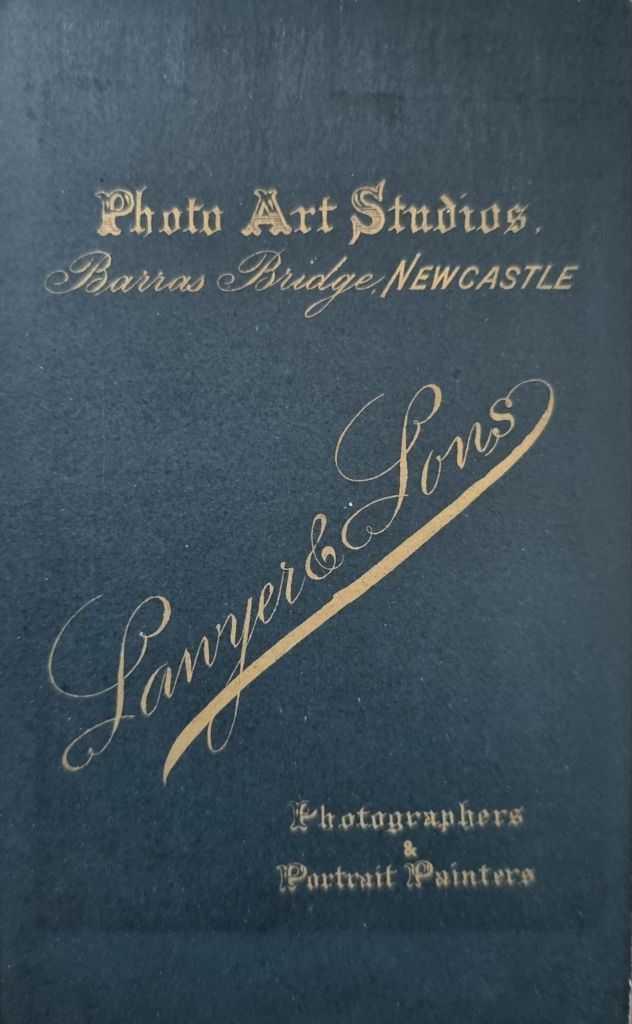
The first image I saw featured the verso of the stereocard revealing its title details printed on the company’s familar blue sticker.
The only slight disappointment was that, as closer examination of the two stereo halves reveals, the full 3D effect was undermined by the images being slightly out of alignment.
One explanation for this might be a result of the laborious process of cutting the photographic prints to size by hand.
Whether this particular stereo failed to meet Downey’s own high standards and ended up in the bin isn’t known.
Despite this, the pleasure of handling an object that is around 160 years old never fails to pall.
Photography has many memorable names associated with its long and celebrated history.
However, an unusual sounding one caught my attention during a recent research project.
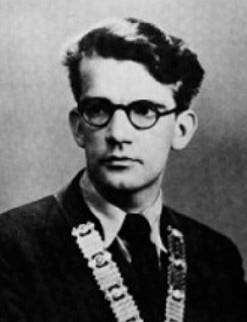
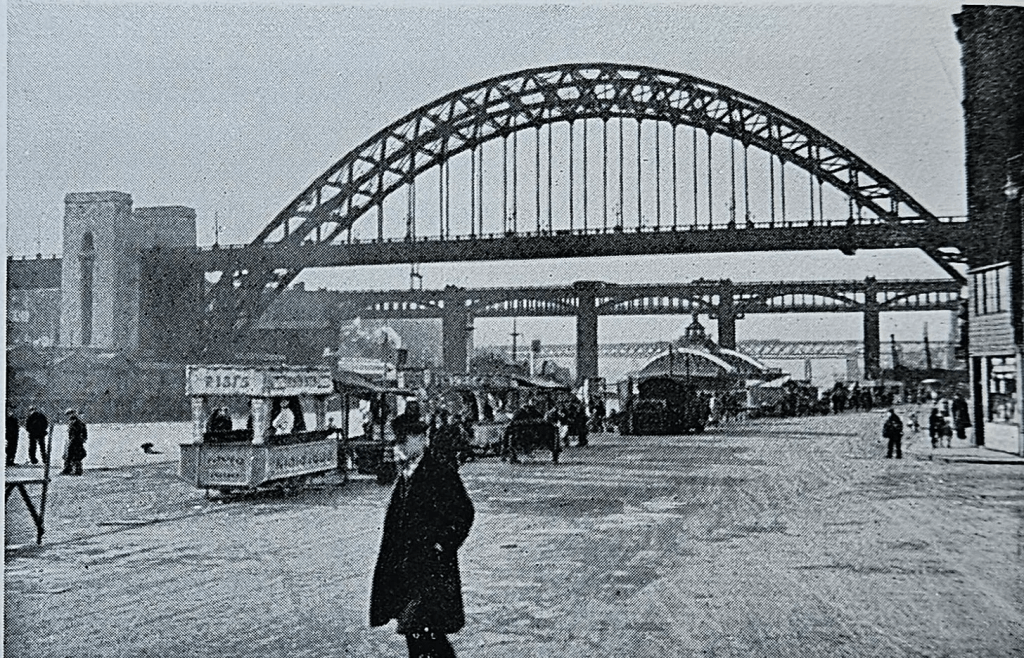
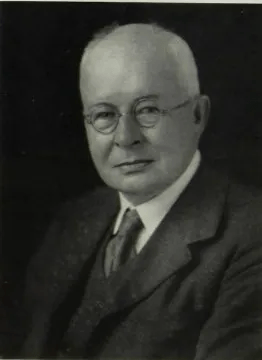
A life-long resident of Newcastle upon Tyne, Burdus Redford FRPS (1868-1951) was an insurance company official by day, but an active and respected photographer in his spare time.
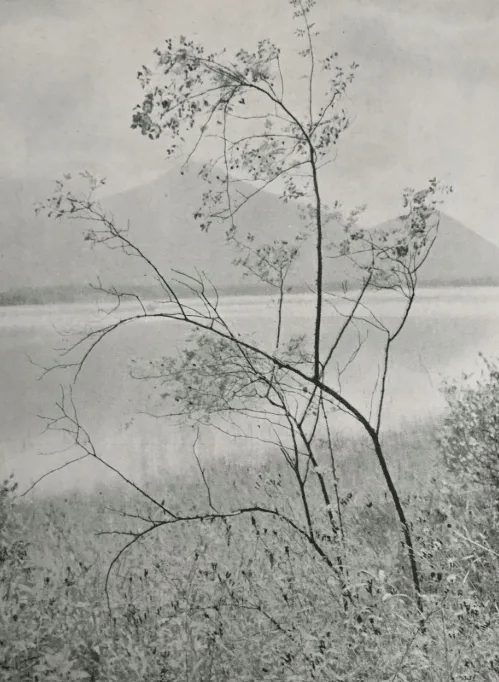
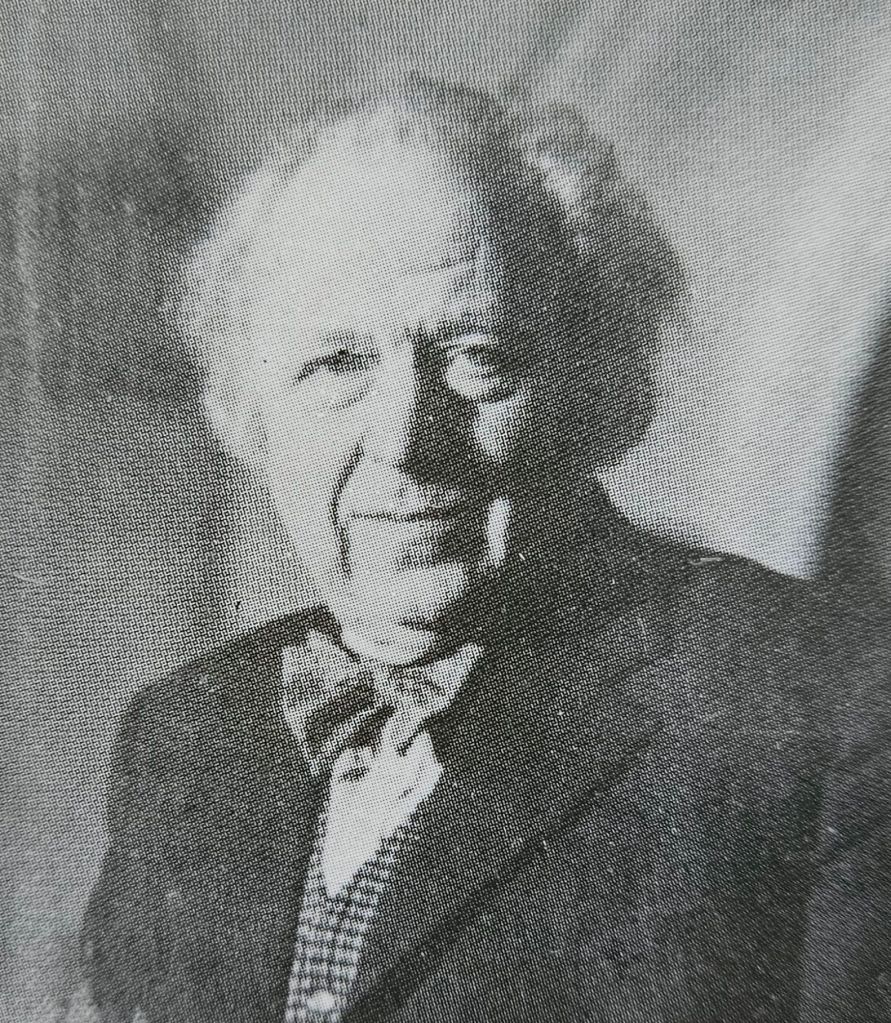
‘Four Bridges’ by Burdus Redford FRPS.Portrait of Burdus Redford FRPS by Philipson & Son Limited, Newcastle upon Tyne. From Royal Photographic Society Journal.
During his life, a number of organisations benefitted from Redford’s skill and expertise, both as a practitioner, who preferred to use plates rather than films, and as a lecturer employing lantern slides to illustrate his talks.
These included Tynemouth Photographic Society which he joined in 1904, later becoming its President; the Northern Counties Photographic Federation; and the Photographic Convention of the United Kingdom of which he was also President in the late-1920s.
This latter accolade seems to have coincided with a period when he became even more photographically active, perhaps in retirement.
For example, his membership of the Royal Photographic Society in 1927 was followed soon after by the award of a coveted fellowship (FRPS).
By this point in his life, Redford’s network of contacts was extensive and included John Betjeman (1906-1984), the celebrated architectural writer and later Poet Laureate
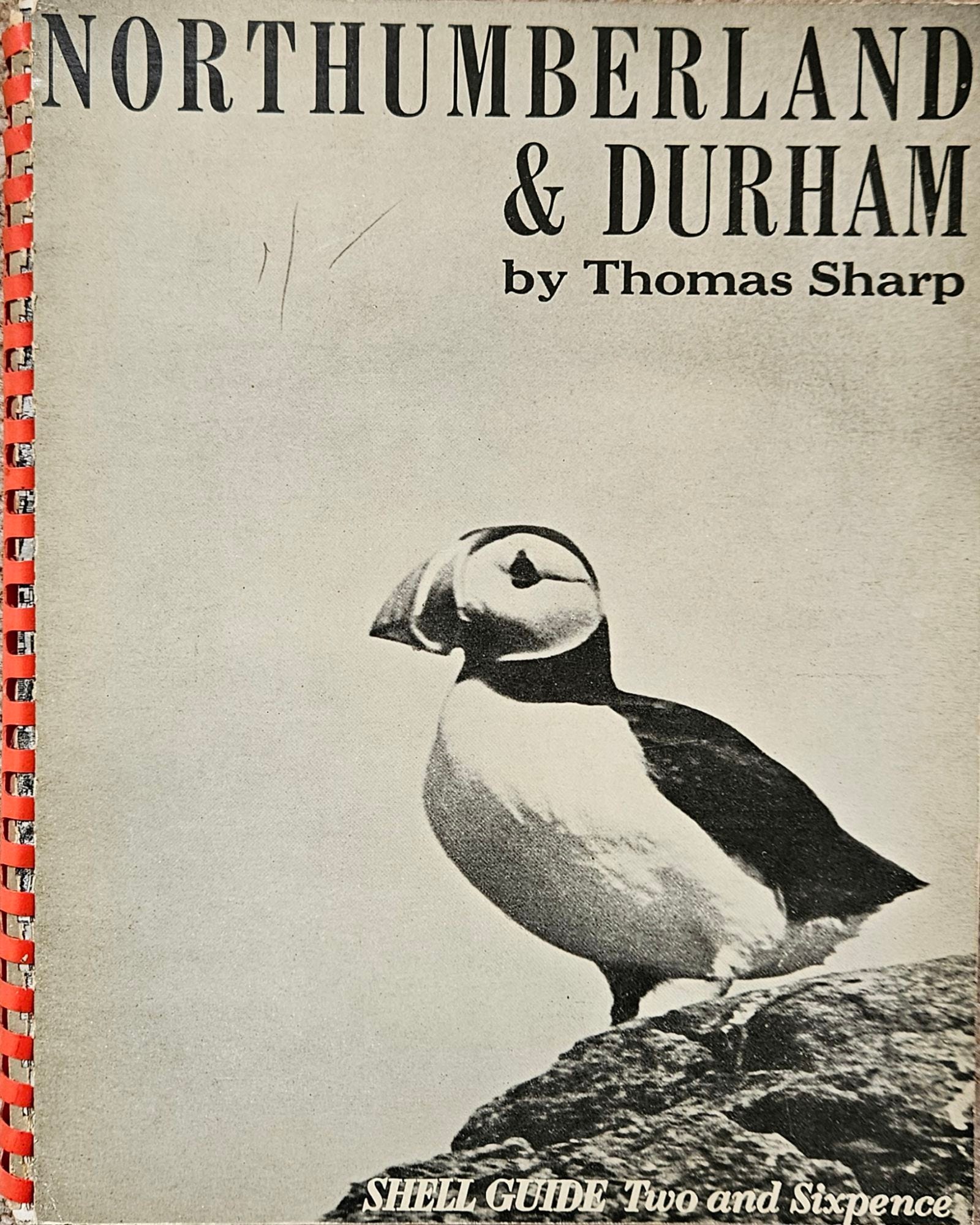
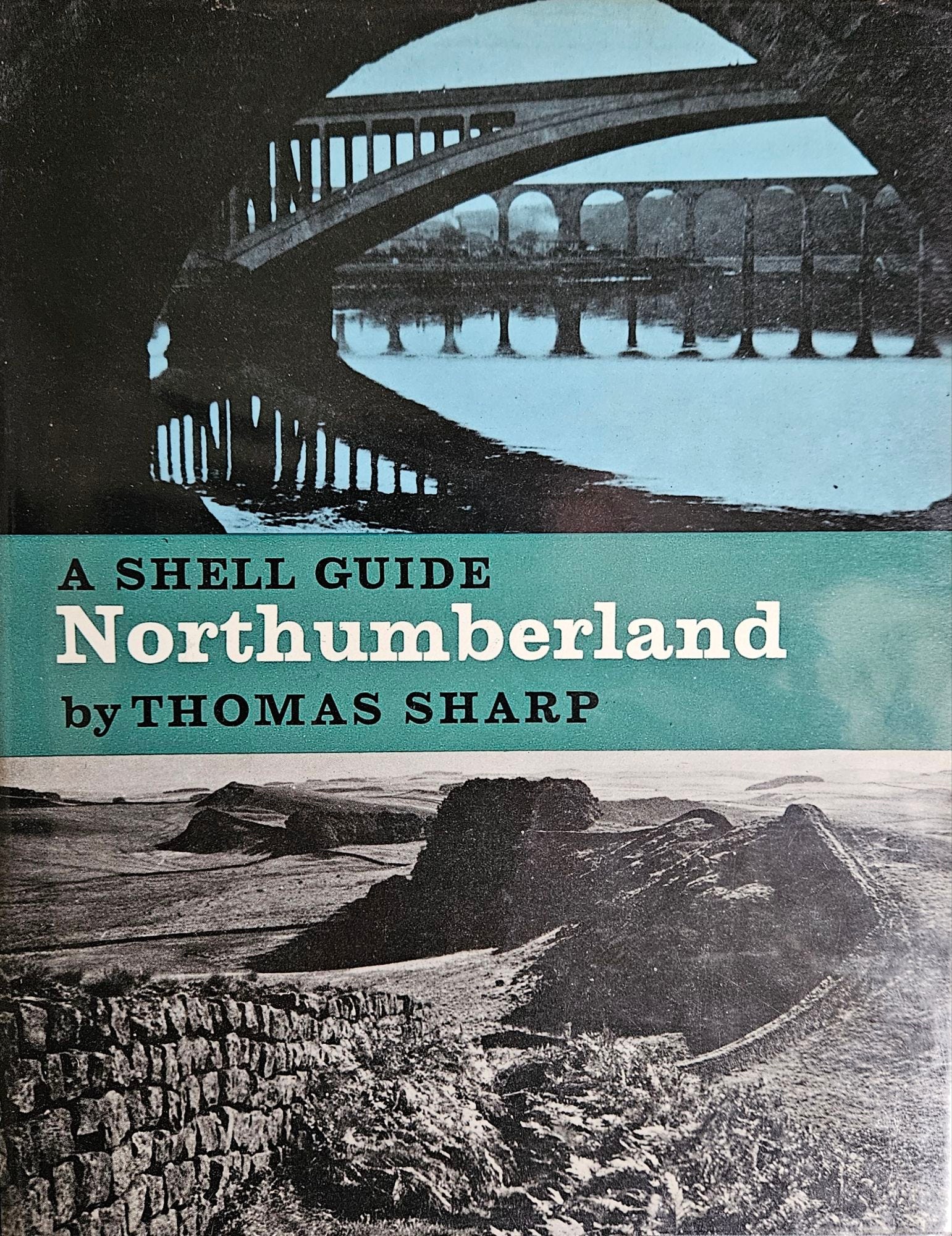
At Betjeman’s suggestion, he was invited to contribute photographs to Thomas Sharp’s Northumberland and Durham: A Shell Guide published in 1937.
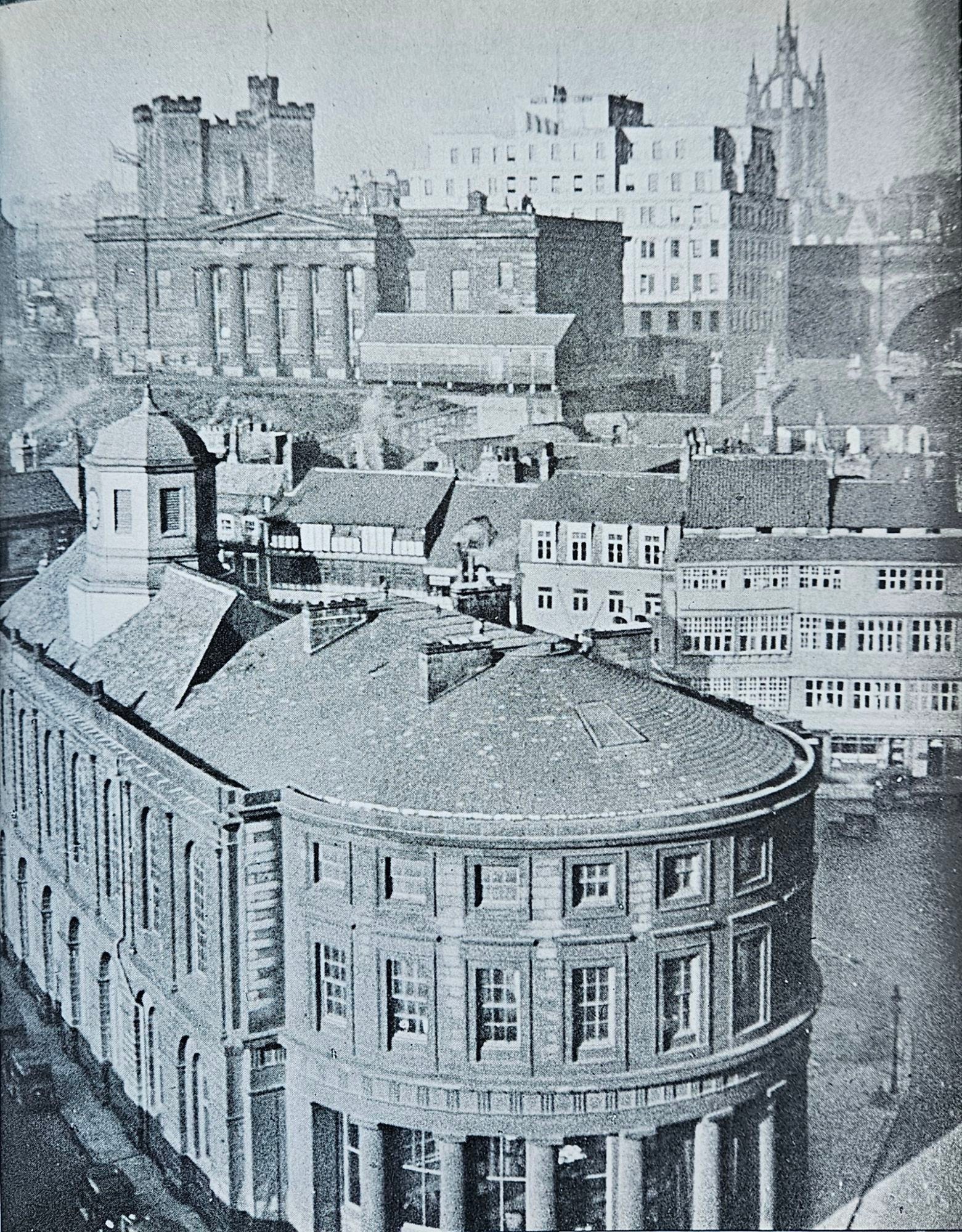
Alongside ‘Four Bridges’ (above), his view of ‘Newcastle’ taken from a high vantage point overlooking the quayside captures a number of prominent landmarks that are still visible nearly a century later.
‘Newcastle’ by Burdus Redford FRPS. From Northumberland and Durham: A Shell Guide by Thomas Sharp (London: B.T. Batsford Ltd., 1937).
The photograph’s quality meant it was still included in a Shell Guide devoted solely to Northumberland published in 1954.
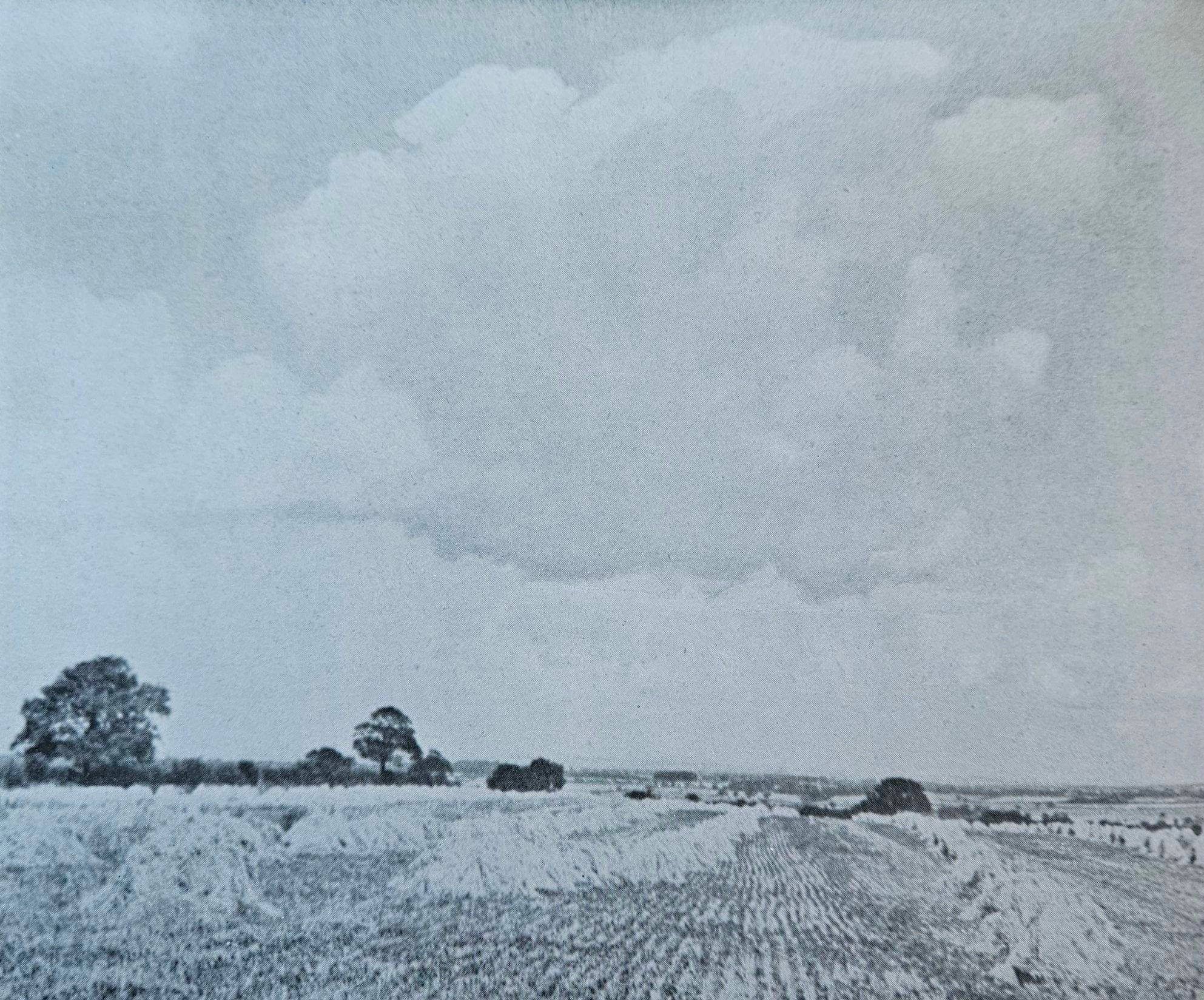
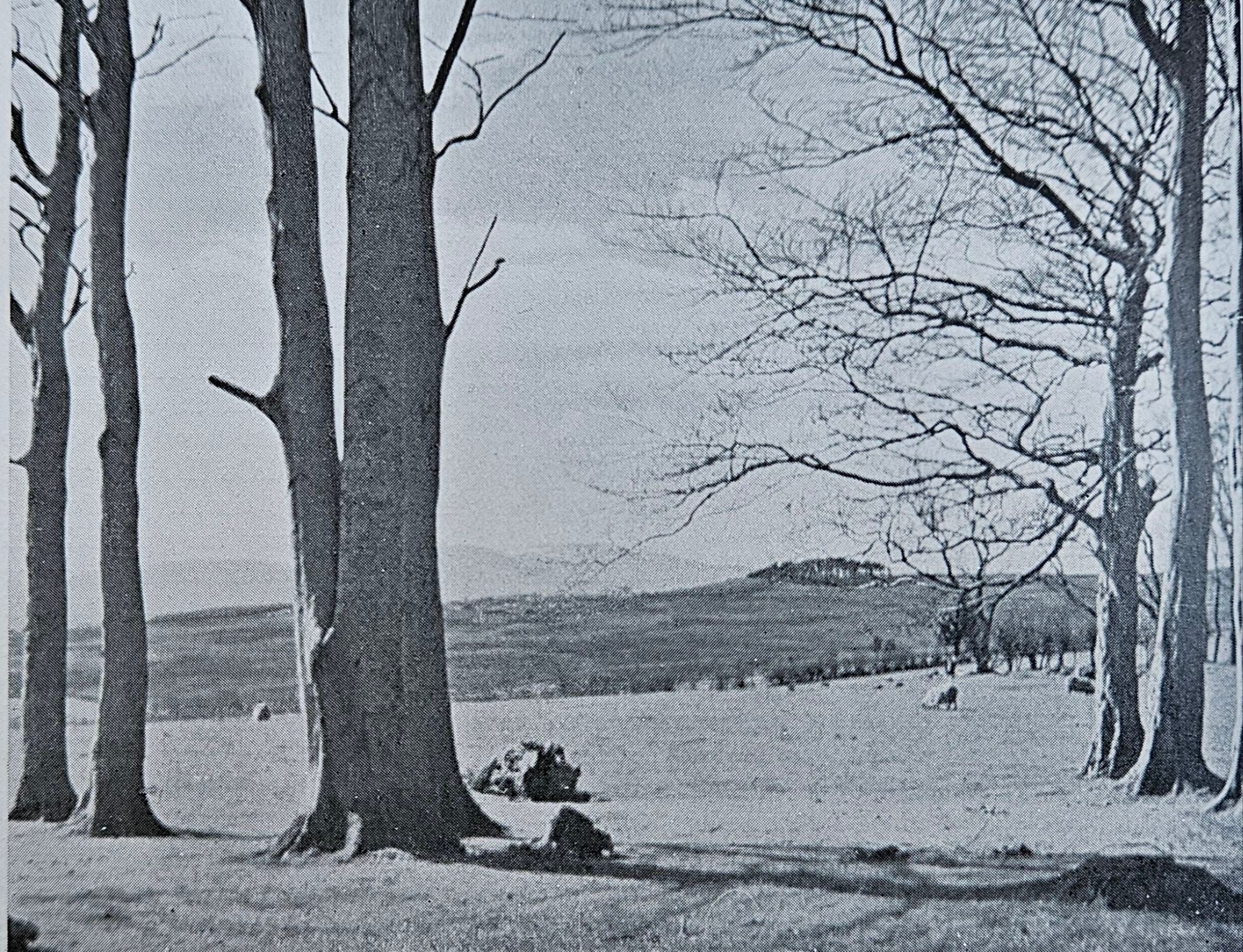
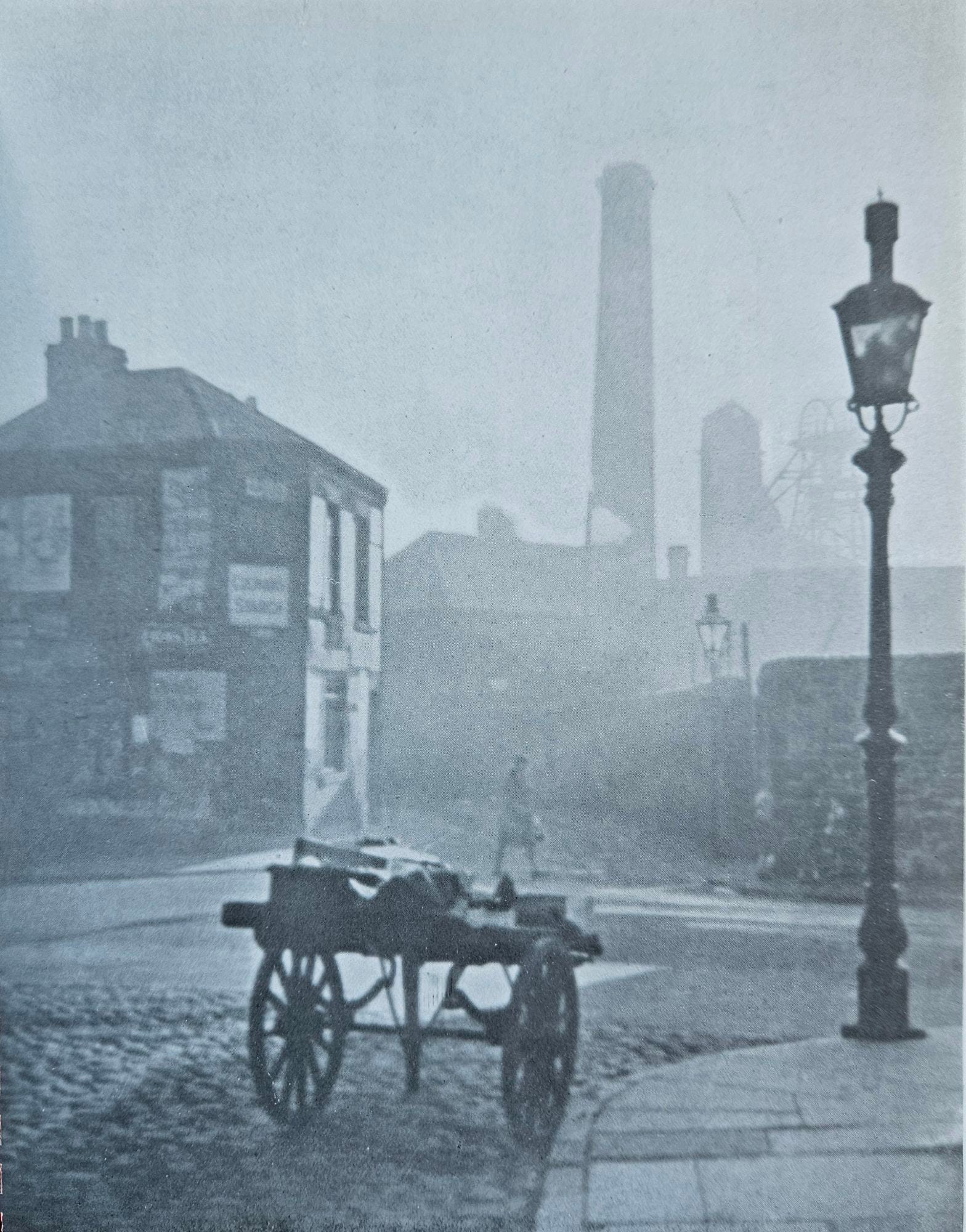
Betjeman was much taken by what he described as Redford’s “really exquisite views”, both rural and industrial.
‘Wheatfield’ by Burdus Redford FRPS.‘Hills and Trees’ by Burdus Redford FRPS.‘Colliery’ by Burdus Redford FRPS.
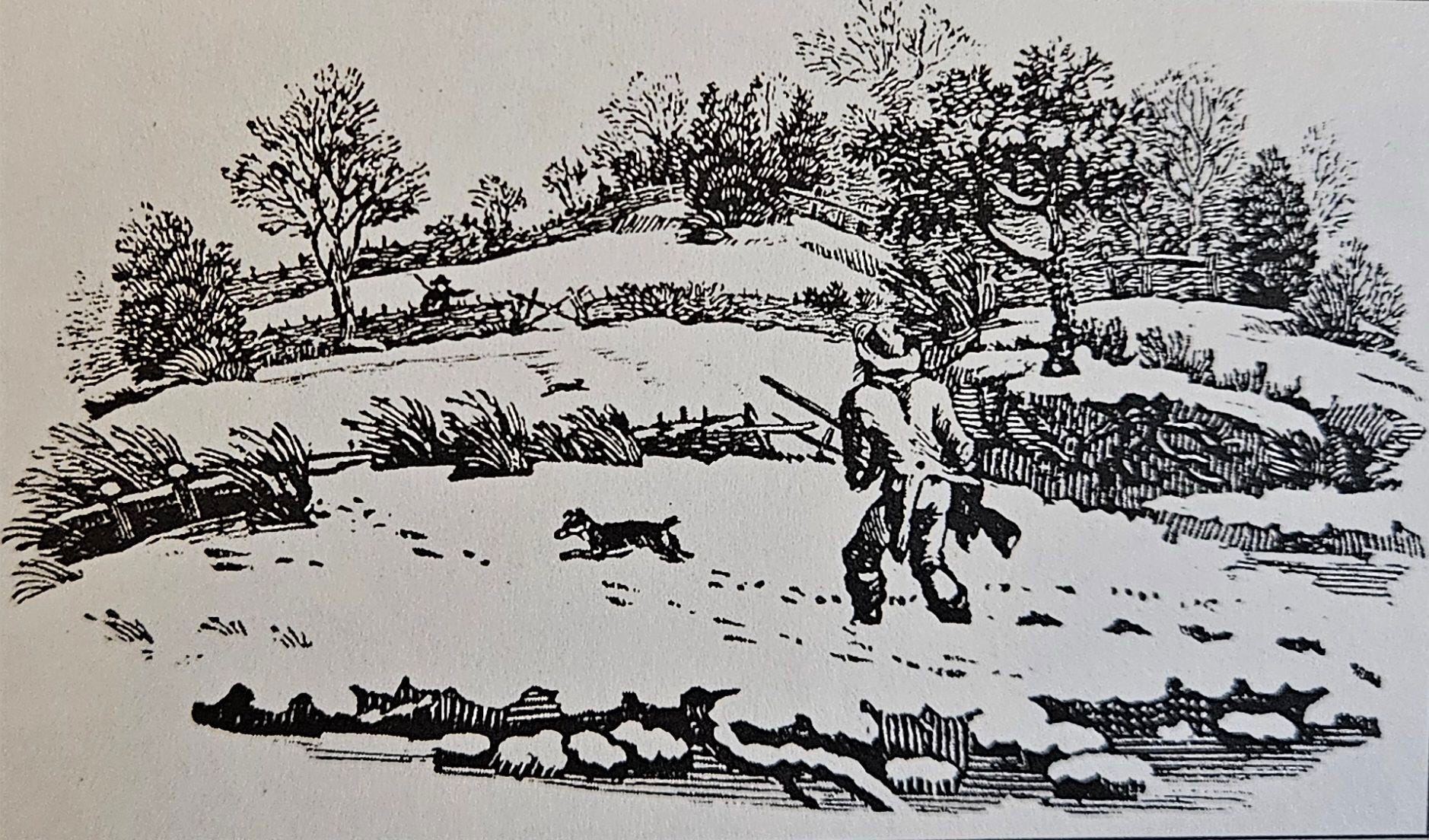
For Northumberland and Durham: A Shell Guide, Redford also supplied reproductions of woodcuts by the legendary North East wood engraver and author Thomas Bewick (1753-1828).
When Burdus Redford died in 1951, aged 82, an obituary published in the Royal Photographic Society Journal described him as “a craftsman … whose work was extremely delicate and showed the meticulous care which so characterised the man himself.”
During the summer of 1866, the celebrated photographic firm of W. & D. Downey named after its founding brothers William and Daniel placed a series of advertisements in the regional press.
These announced that they had opened a ‘branch establishment’ in the Northumberland seaside resort of Newbiggin by the Sea (last line below).
Newcastle Weekly Chronicle (16th June 1866). From British Newspaper Archive.
The choice of Newbiggin, fifteen miles along the North Sea coast from Downey’s main studio in Newcastle upon Tyne, was rooted in a significant family moment.
It was in Newbiggin that on 18th April 1866, Daniel Downey’s wife Elizabeth gave birth to a daughter.
Shields Daily News (20th April 1866). From British Newspaper Archive.
The couple’s choice of location for the baby’s delivery may well have been informed by the health benefits of escaping the pollution of an industrial city where child mortality rates were high.
Indeed, the couple, who married in 1863, had lost their first child, a boy named William Daniel, early the following year.
The safe arrival of Elizabeth Jane Downey was followed by a period of entrepreneurial photographic activity that characterised the firm throughout its long history.
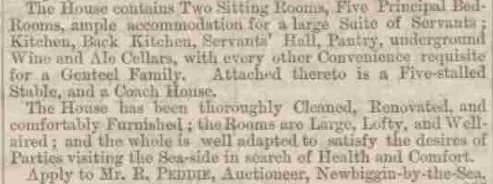
Newspaper adverts reveal that by mid-July, the Downey’s had moved their seaside studio to Monck House, a property once occupied by Sir Charles Monck of Belsay.
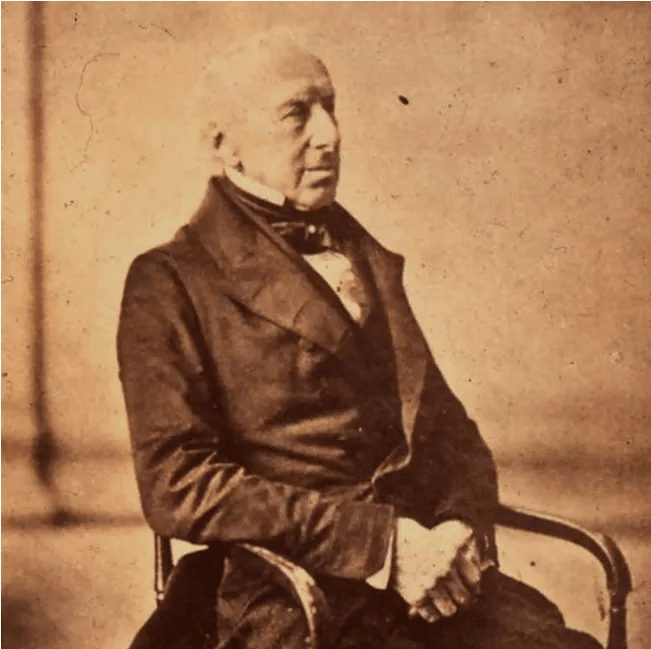
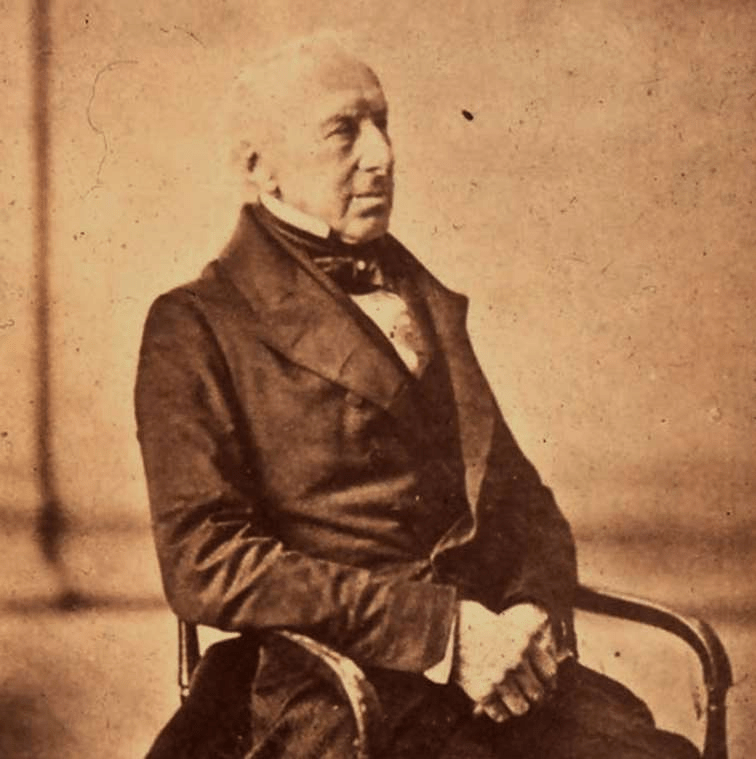
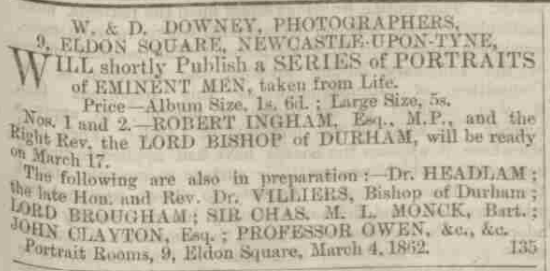
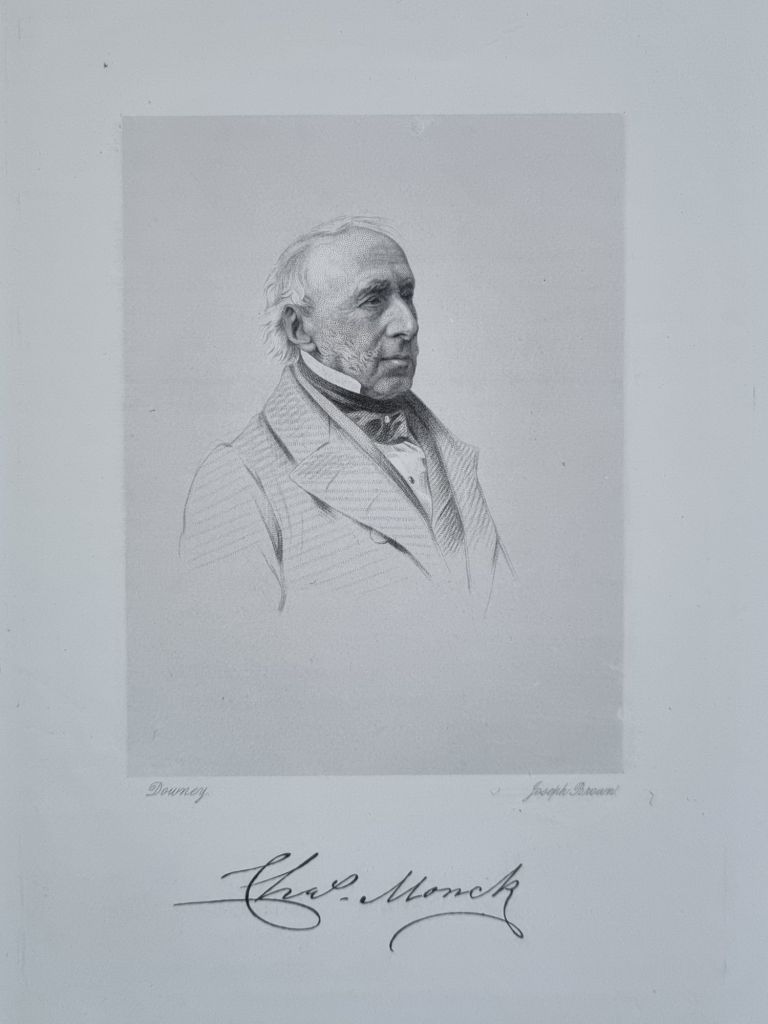
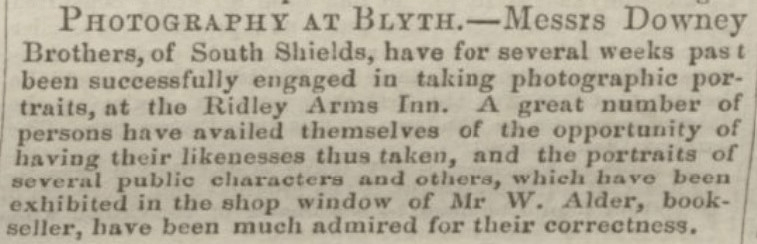
A leading aristocrat in the region, Monck had previously sat for the Downey’s at Belsay Hall and was part of their expanding network of influential figures.
Monck House was certainly more in keeping with the facilities on offer at their 9 Eldon Square base in Newcastle as this newspaper advert confirms.
Newcastle Daily Journal (3rd August 1861). From British Newspaper Archive.
On 14th July 1866, an advert carried by the Morpeth Herald announced that Downey’s Newbiggin branch, now with its Monck House address, was open “for a short season, for the convenience of visitors to this beautiful watering place.”
It also advised that “to prevent disappointment, or having to wait, it will be better to make an appointment.”
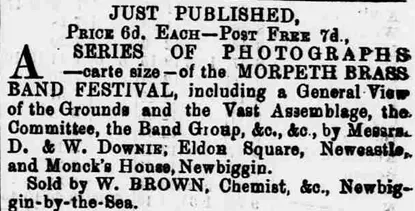
Together with a series of views of “Newcastle, Woodhorn and Newbiggin-by-the-Sea”, another of the paper’s small ads made its readers aware of yet more Downey product that could be purchased in the resort.
Morpeth Herald (14th July 1866). From British Newspaper Archive.
Apart from mis-spelling its surname, the use of ‘Messrs. D & W.’ reversing the usual order of ‘W. & D.’ suggests that Daniel was combining his duties as a new father with this varied photographic schedule.
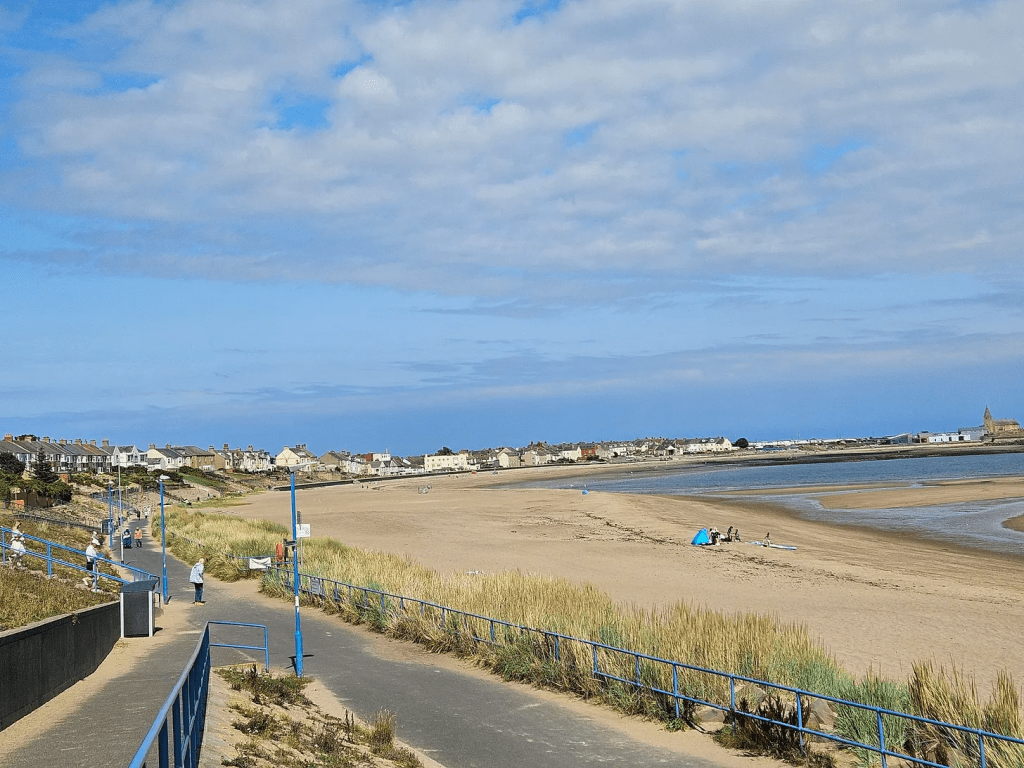
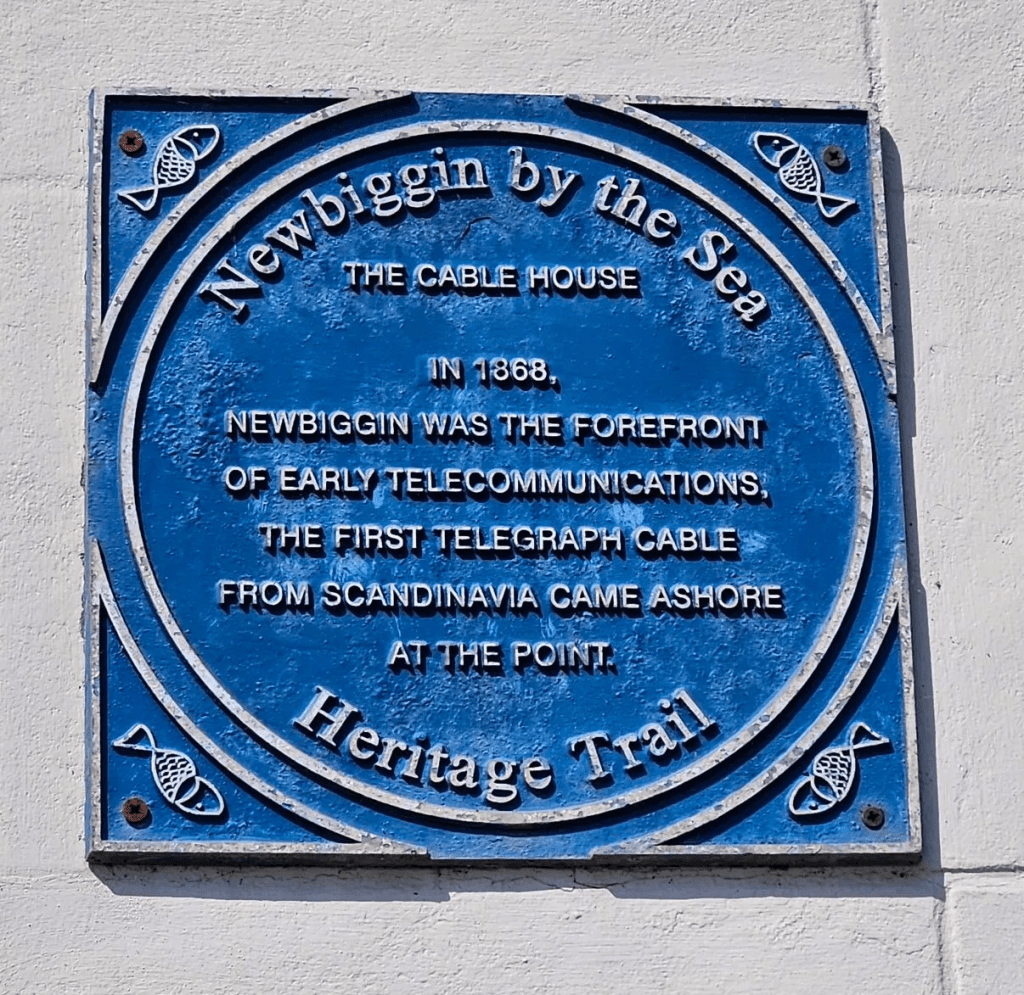
What a recent Pressphotoman visit to Newbiggin revealed was that the mid-1860s were pivotal years in the resort’s development.
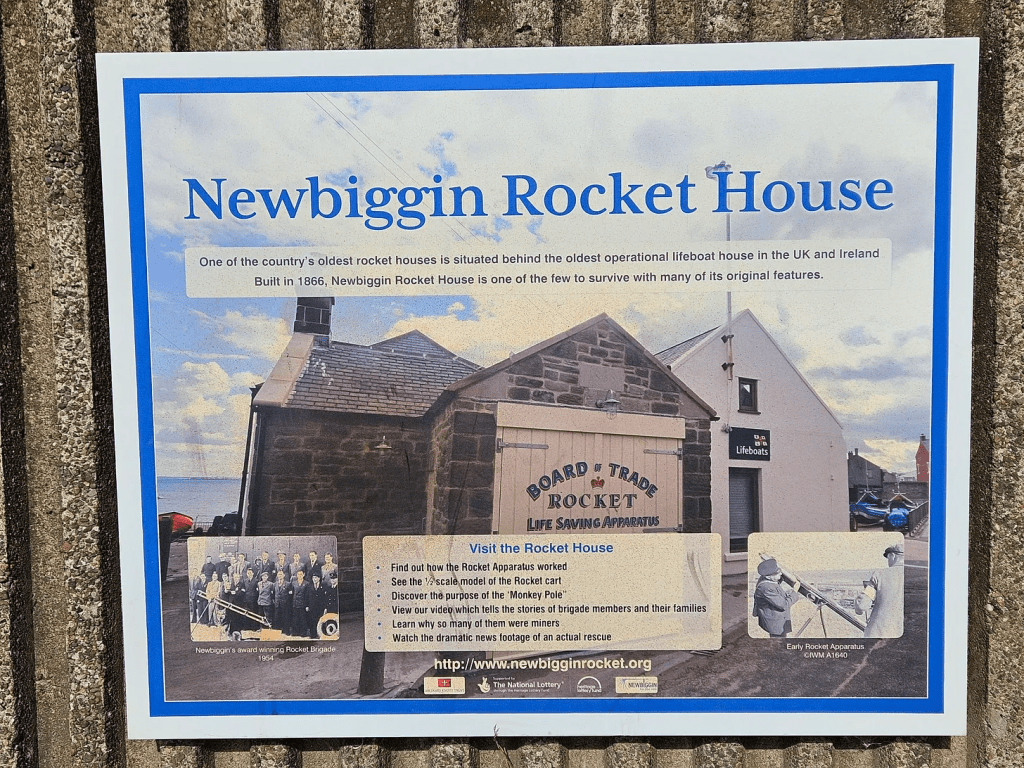
1866 itself saw the building of Newbiggin Rocket House, one of Britain’s oldest and one that was involved in life-saving ship rescues well into the 20th century.
Within weeks of their summer season at Newbiggin by the Sea, the Downey brothers began a ground-breaking new chapter in their firm’s illustrious history.
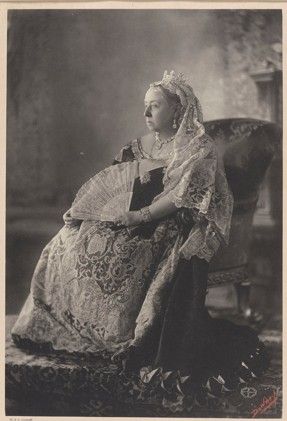
For the first time, they were summoned by Queen Victoria to Balmoral where her diary for Saturday 22nd September 1866 records that “on coming home was photographed by a very good photographer Downey from Newcastle”.
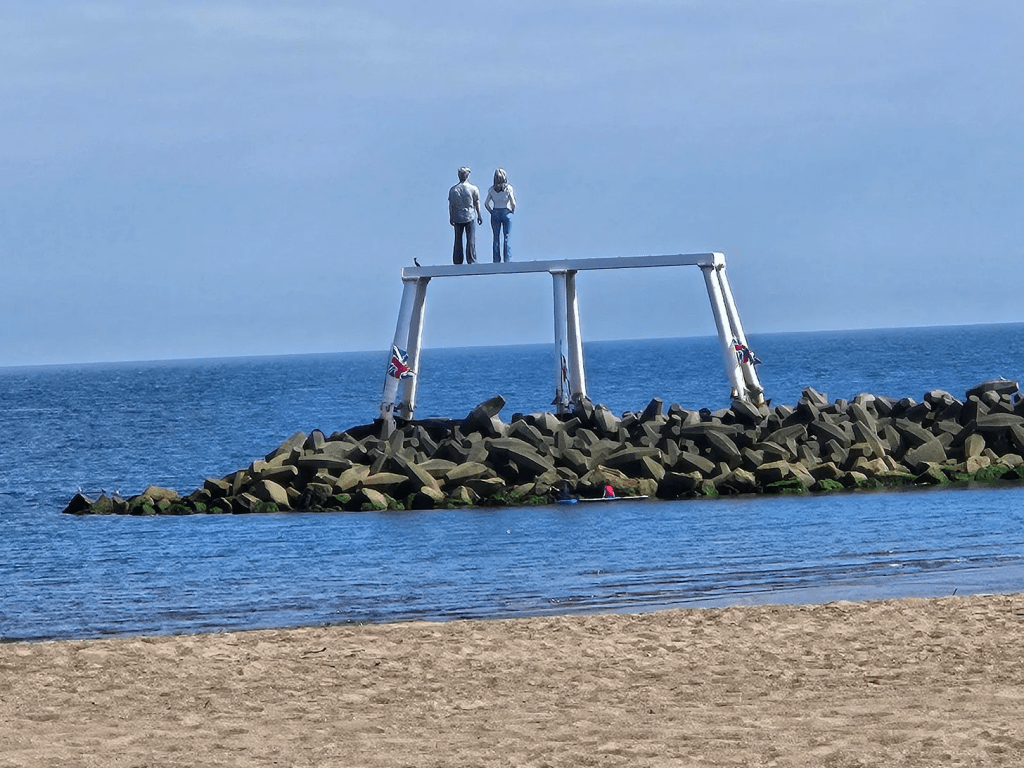
Like the couple featured in a giant sculpture that watches over Newbiggin by the Sea today, the Downey’s never looked back.
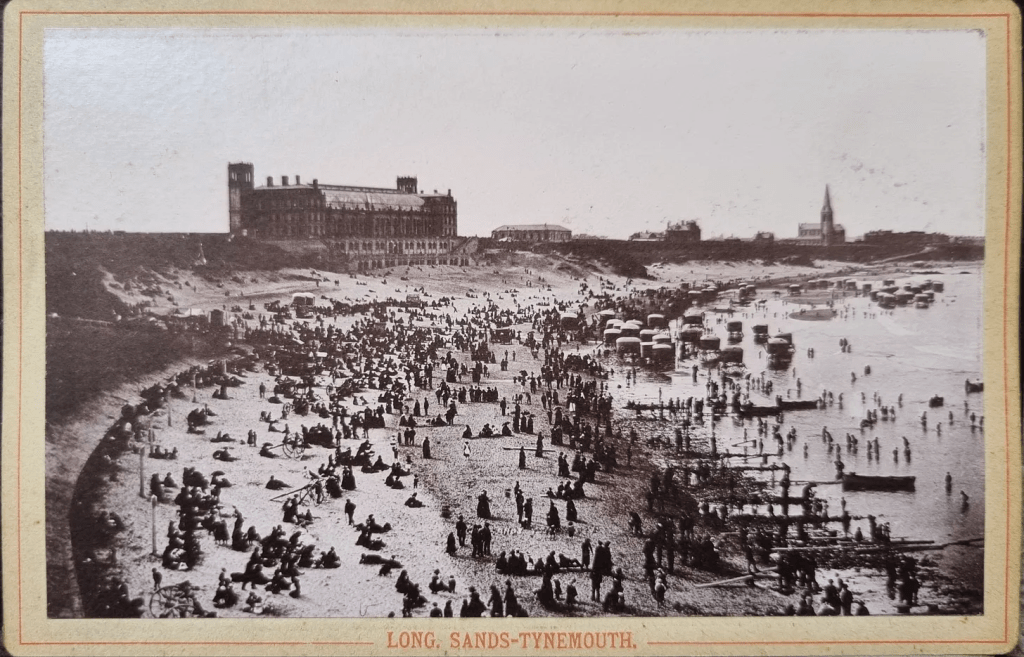
The genre of seaside photography has a long history in Britain dating back to Victorian times.
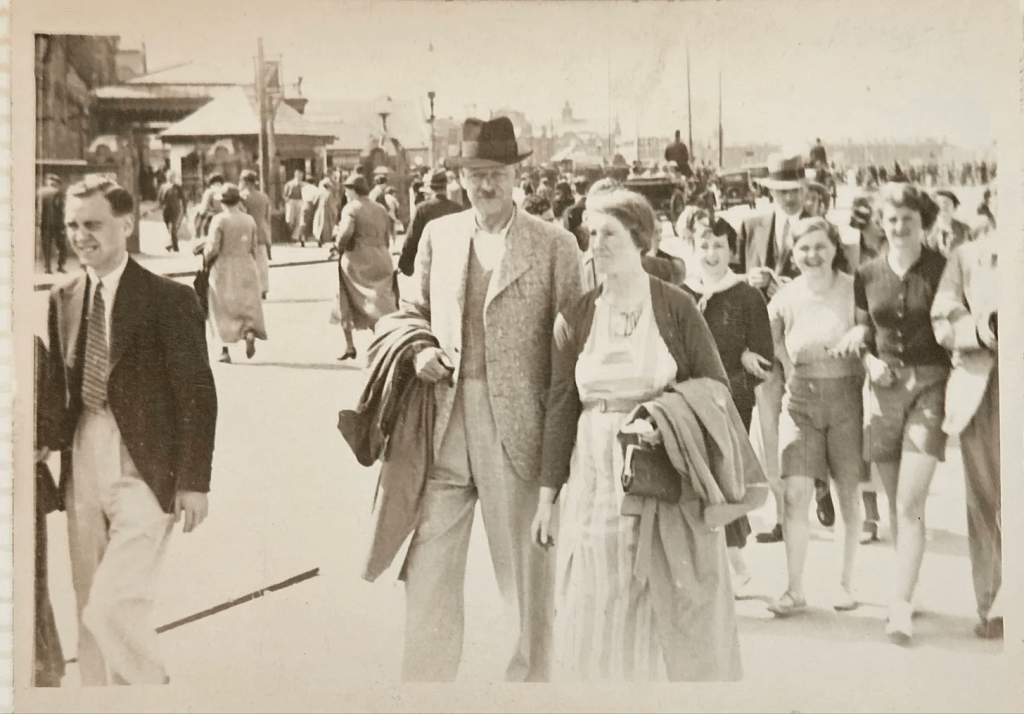
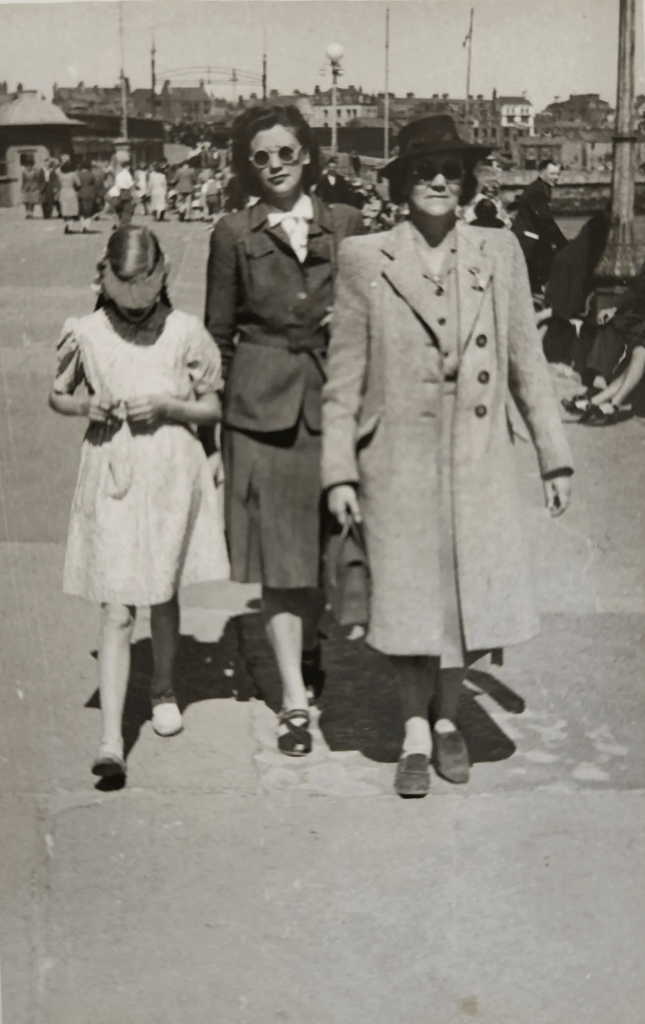
Armed with a camera, its practitioners operated on promenades and piers, snapping holidaymakers and trippers as they enjoyed a seaside stroll.
Customers were then issued with a card inviting them to call later at a booth to collect their set of prints.
Our family’s collection of photographs contains several examples of the genre snapped at various holiday resorts in the first half of the 20th century.
For photographers with access to a seaside location, the commercial opportunities were significant.
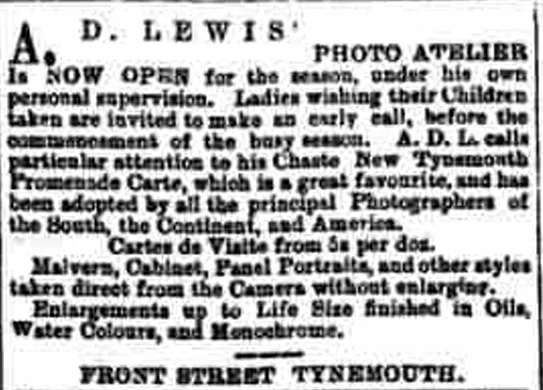
In the summer of 1882, A. D. (Alexander Denholm) Lewis opened his Photo Atelier in the coastal resort of Tynemouth.
Born in Scotland, he had operated as a photographer running the North of England Photo Institute at various addresses in nearby Newcastle on Tyne for around 20 years.
A new railway station had just opened in Tynemouth bringing day trippers from across the region as well as families wanting to enjoy the delights of the new craze for seaside holidays.
A.D. Lewis’ newspaper adverts drew particular attention to what he called his Chaste New Tynemouth Promenade Carte describing it as a “great favourite.”
The Shields Daily News (19th June 1882). From British Newspaper Archive.
The claim that it had “been adopted by all the principal Photographers of the South, the Continent and America” may seem exaggerated.
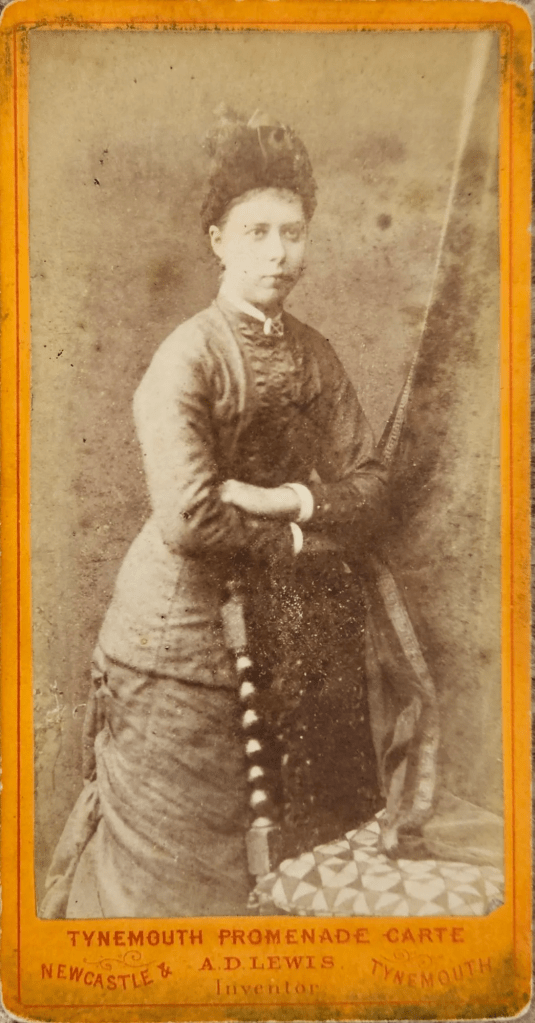
However, an example that recently joined the Pressphotoman collection suggests that Mr. Lewis saw himself as an inventor and even an innovator.
Measuring 12.5 cms x 6.5cms, the Tynemouth Promenade Carte is longer than a standard carte.
Rather than photographing clients as they strolled in the open air, ‘A.D.L’ appears to have used a studio at 56 Front Street which was only a stone’s throw from Tynemouth sea front.
This enabled him to offer customers a more formal setting for their portrait and eliminated many of the technical challenges that faced outdoor photographers.
Though seaside photographers were still operating well into the second half of the 20th century, Mr. Lewis’ like many of his competitors appears to have suffered a downturn in his fortunes.
Aged 67, the 1901 Census records that he was a ‘retired photographer’ and was an ‘inmate’ of the Union Workhouse in Westgate Road, Newcastle.
The architectural photographer Ursula Clark (1940-2000) is best-known for an archive of around 20,000 largely black-and-white images held by Historic England.
They were created by the Newcastle upon Tyne publisher Oriel Press during the 1960s and 1970s for a series of architecture guides featuring buildings in Britain and continental Europe.
Earlier this year, the Royal Photographic Society Historical Group hosted a talk in which I presented original research about Ursula Clark and her pioneering role in photographic history.
That research is ongoing and has focused recently on non-Oriel Press books and illustrated magazines where her architectural photographs were also published.
From visiting the Historic England archive in Swindon, I was aware that a proportion of her output involved colour photography.
Two of her exercise book shot lists are titled ‘Colour Copies’, suggesting that Oriel Press intended to reproduce images in colour.
Perhaps, given the company’s later financial difficulties which led to a corporate take-over by Routledge Kegan Paul in 1973, any plans proved too expensive to realise.
Given this background, it’s a pleasure to share colour versions of Ursula’s 35 mm photography in this latest Pressphotoman post about her photographic career.
These images were discovered in Architecture of Europe, a guide published in 1985 in Britain by Newnes Books and by Larousse in the United States.
The guide was authored by Bruce Allsopp (1912-2000), who was Ursula’s chief collaborator at Oriel Press and hired her on its launch as the publisher’s photographic editor in 1962.
Colour photographs credited to ‘Ursula Clark’ illustrate a section of Architecture of Europe devoted to Spain and Portugal.
It appears that some were first published as black-and-white illustrations in Oriel’s Architecture of Spain and The Great Tradition of Western Architecture (both 1966).
This information helps date these images as being taken during a period when Ursula was in her mid-twenties.
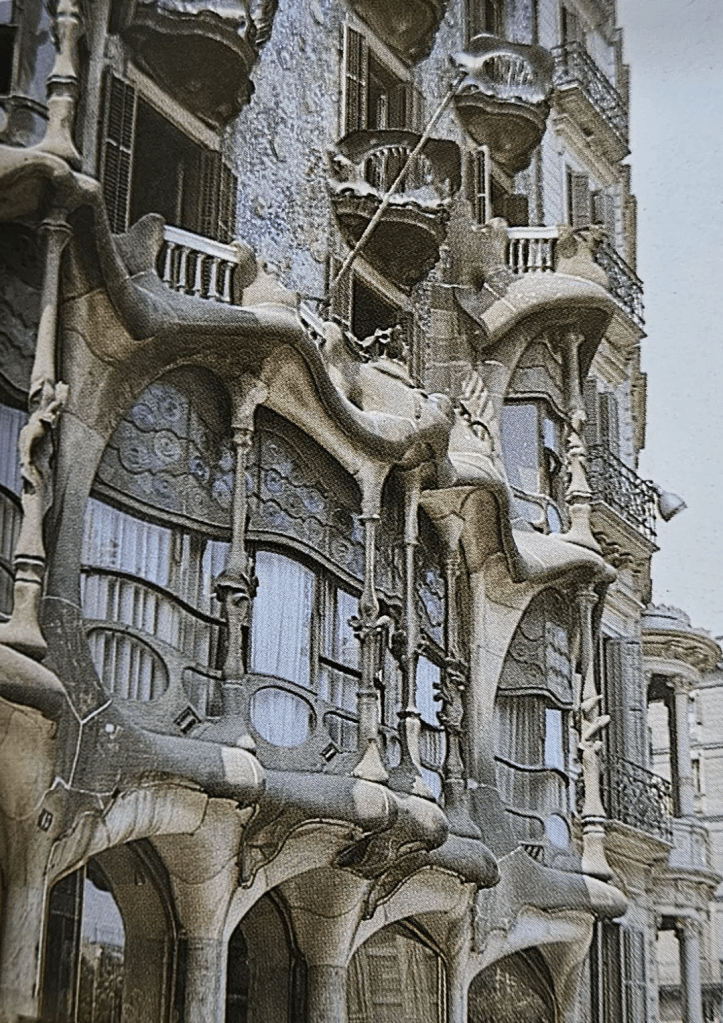
The sequence starts with a striking image of Barcelona’s ‘Facade of the Casa Battló’ (1905-07) by Antoni Gaudi, perhaps best-known for the catholic cathedral Segrada Familia, also in Barcelona that is due to be completed in 2026.
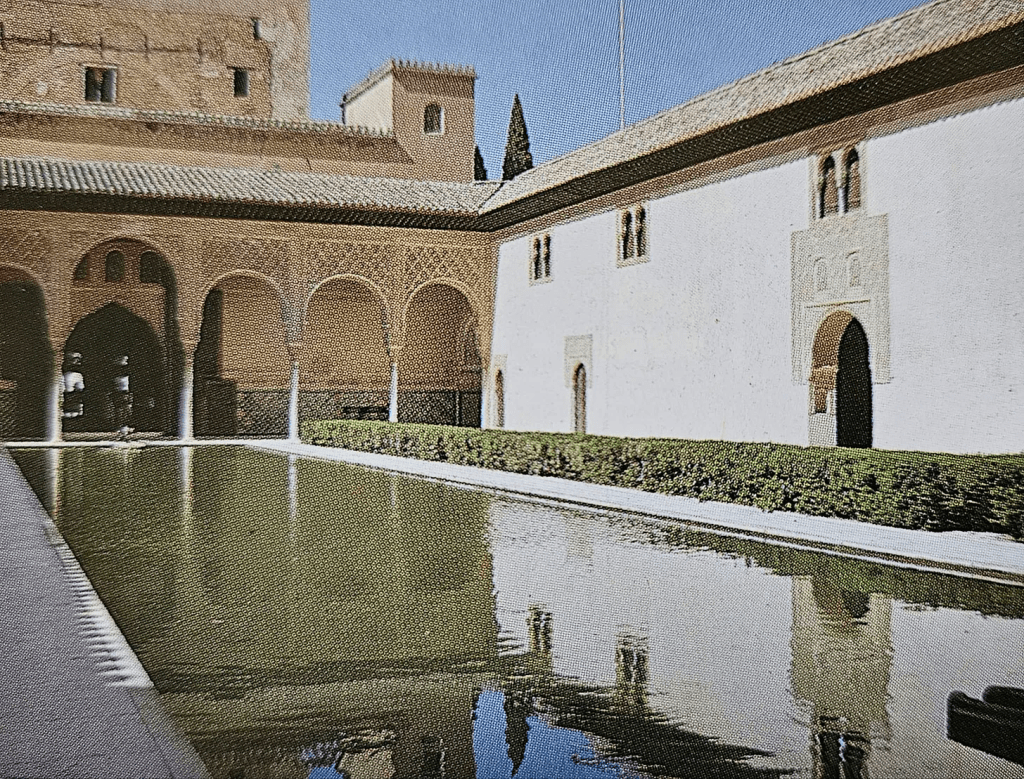
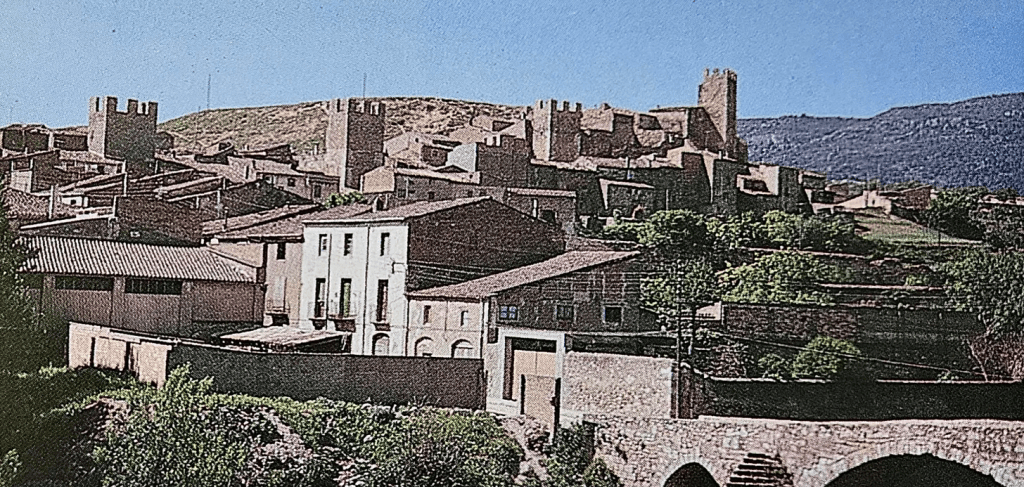
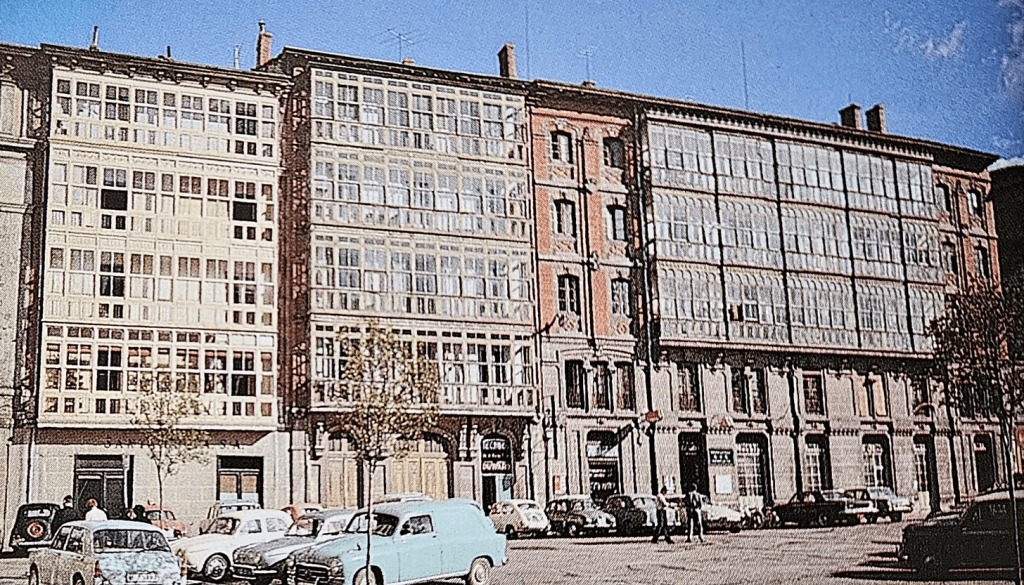
Then a double page is devoted to Ursula’s photographs with a brief accompanying explanatory text to point out significant features or historical information.
I reproduce them in the order they appear with a caption identifying each location.
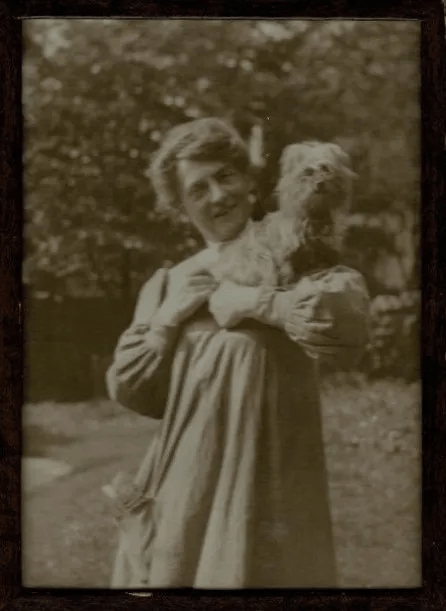
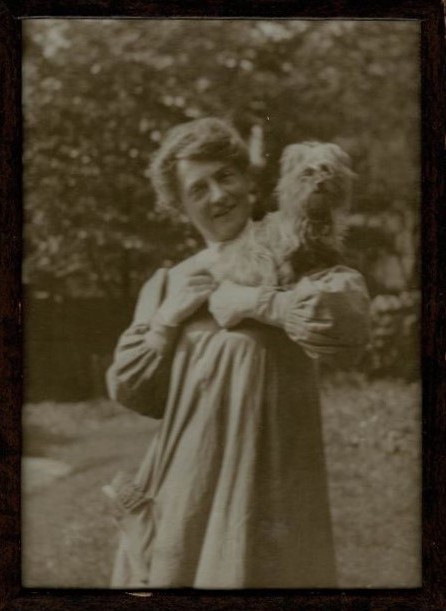
Following contact with her family, a photograph emerged of Mrs. Burrell, known as Theonie, together with her dog Judy.
Henrietta Theonie Burrell (1860-1934). Courtesy of Simon Burrell.
However, other examples of Mrs. Burrell’s work in the photographic medium have been reluctant to show themselves … until now.
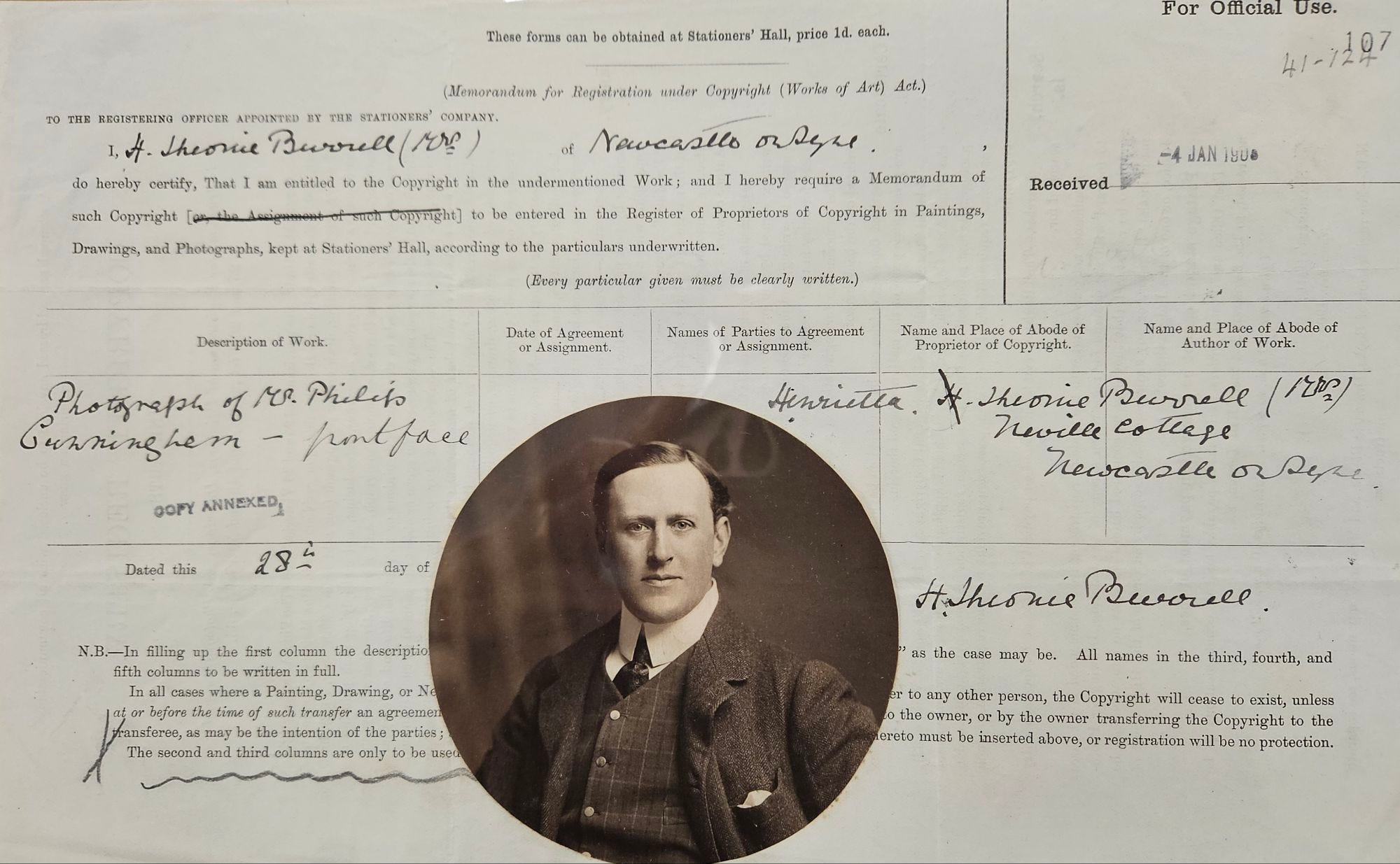
Copyright records held by the National Archives revealed that, alongside her Marie Hall portraits (COPY 1/460/372-374), she lodged another form with a different subject in late-December 1904.
According to its description, COPY 1/481/107 features a ‘Photograph of Mr. Philip Cunningham – front face.’
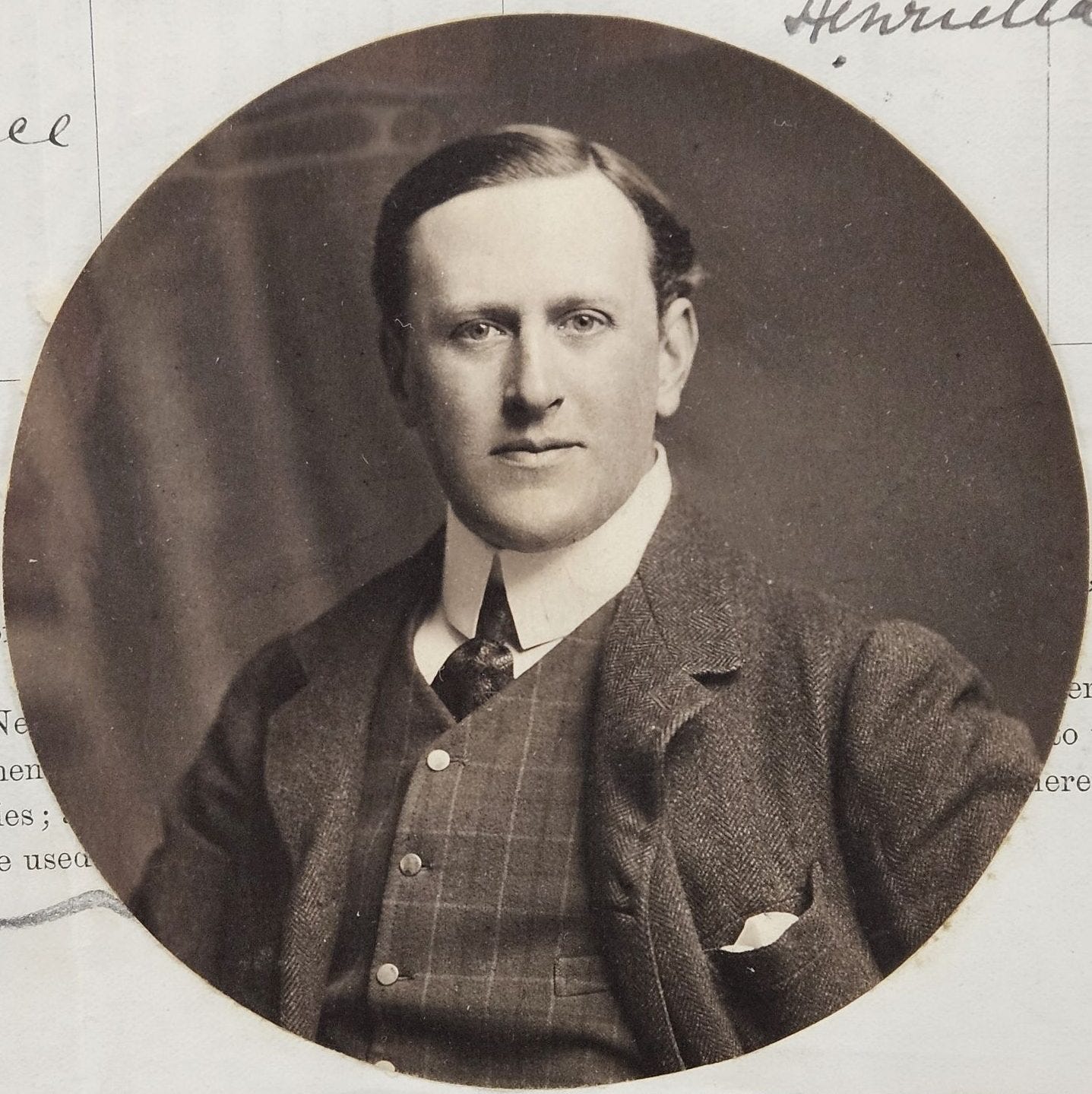
During a recent research visit, I successfully located the form together with its attached photograph.
Each form is preserved within a clear sleeve so obtaining a photograph without any reflections is nigh on impossible as the image below demonstrates.
Despite this, the quality of the portrait Mrs Burrell produced is evident.
Her sitter’s identity slowly emerged via a number of newspaper articles.
They revealed that ‘Philip Cunningham’ (or Cuningham’ as it is sometimes spelt) was the stage name of Philip Harold Boosey (1865-1928).
The family business was music publishing, but the lure of the stage proved irresisitible and he made his theatrical debut in 1885 as a walk-on alongside Sir Henry Irving in a London production of Faust.
By the time ‘Mr. Philip Cunningham’ appeared in front of Mrs. Burrell’s camera, he was a household name.
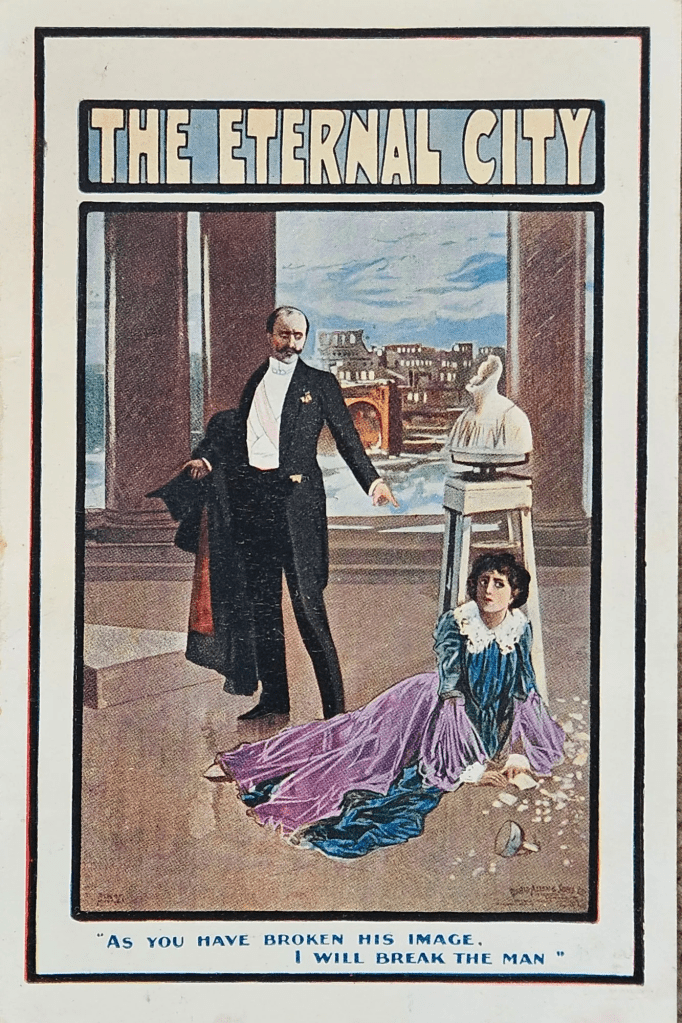
The exact circumstances of the sitting aren’t known, but the dating of Mrs. Burrell’s copyright form points to a touring production of ‘The Eternal City’ staged at the Theatre Royal, Newcastle in which he appeared.
Based on the novel by Hall Caine, the play portrayed what the Newcastle Daily Chronicle (17th May 1904) described as “pictures of Italian politics and Pontifical procedure.”
The reviewer went on: “If the mounting of the play is excellent, it can be said most unreservedly that the acting is upon an equally high level.”
There was particular praise for “Mr. Philip Cunningham as the Radical orator David Rossi.”
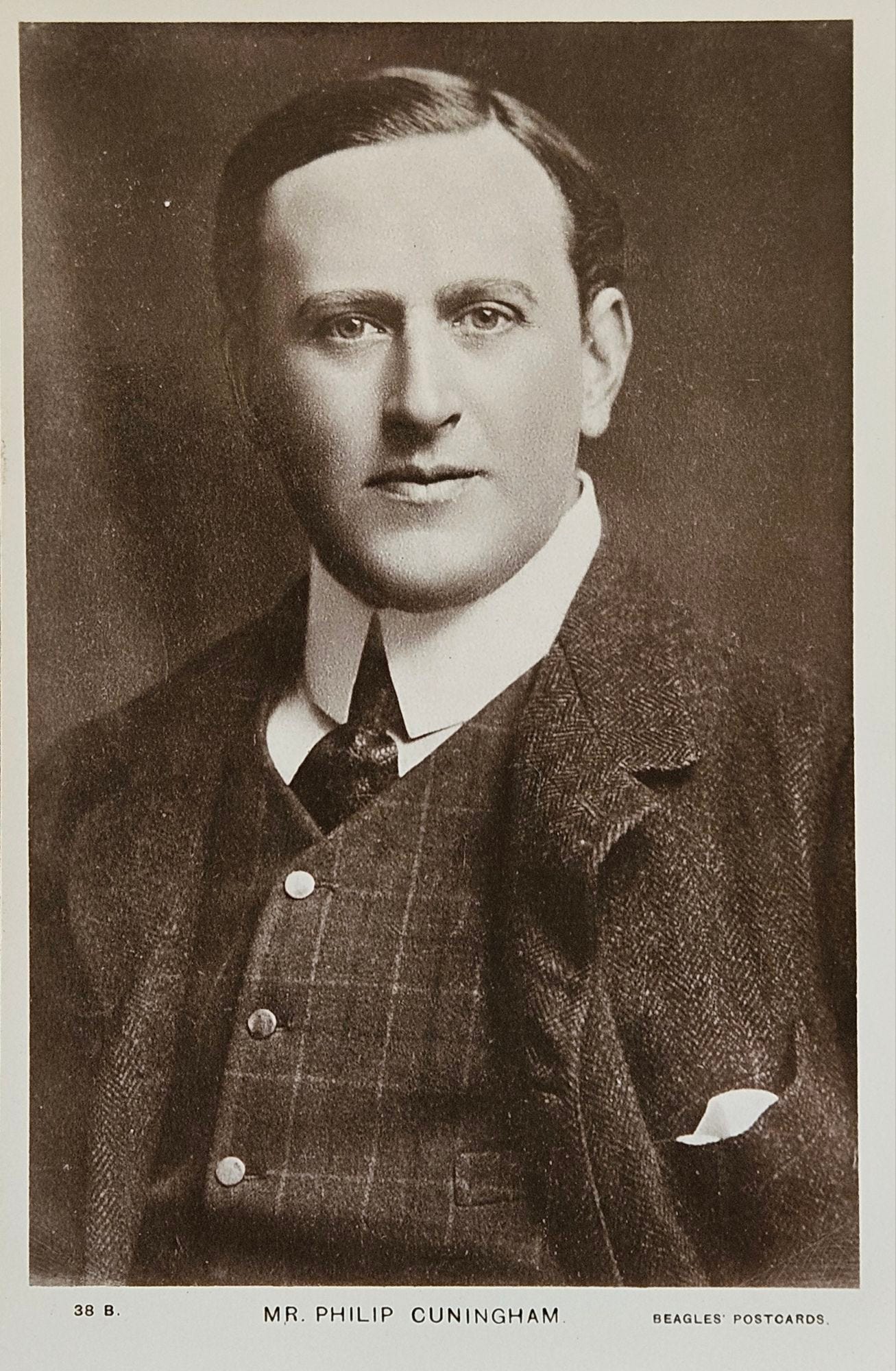
Given the success she enjoyed with her postcard portraits of Marie Hall, it seems likely that Mrs. Burrell pursued the same commercial model, but this time with a different London publisher, John Beagles & Co.
The resulting postcard of the actor is certainly a striking image and would have been popular with fans clamouring for his autograph at stage doors across the country.
Unlike her Marie Hall postcards though, the credit ‘Mrs. Burrell, Newcastle on Tyne’ was nowhere to be seen on either the image nor its verso.
As to the roundel version attached by Mrs. Burrell to her copyright form, it suggests that she may have produced a similar print for her sitter, perhaps for his private use.
Though he may be a largely forgotten name these days, Mr. Philip Cunningham as portrayed by Mrs. Burrell of Newcastle on Tyne captures a stage star at the peak of his powers in a rare surviving example of her photography.
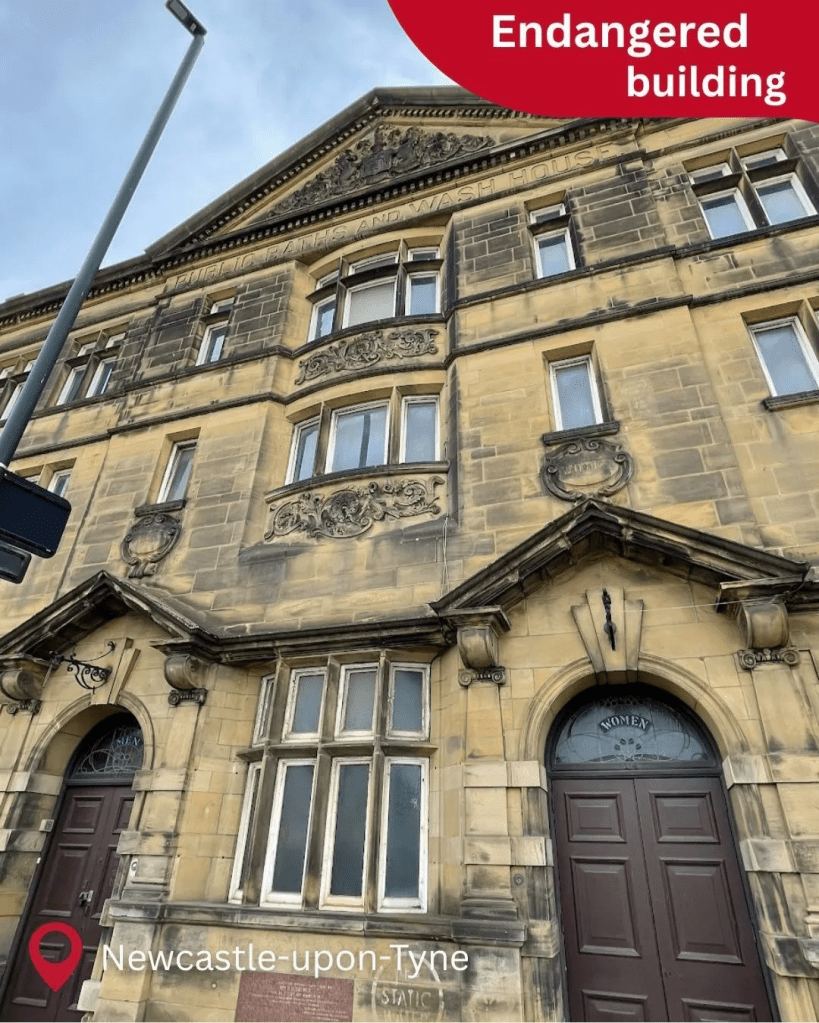
The Victorian Society’s national list of ‘Top Ten Endangered Buildings 2025’ features one building recognisable from regular visits down the decades to Newcastle upon Tyne.
Gibson Street Baths was built in the early 20th century under the 1846 Public Baths and Wash-houses Act that was still in force.
Photo: Graham Tyrrell/Instagram.
A weekly visit to such buildings was part of everyday life for many families including earlier generations of mine.
Now Grade 2 listed, Gibson Street Baths has lain dormant since 2016 and, according to the Victorian Society, “needs a sensitive reuse before restoration costs escalate further.”
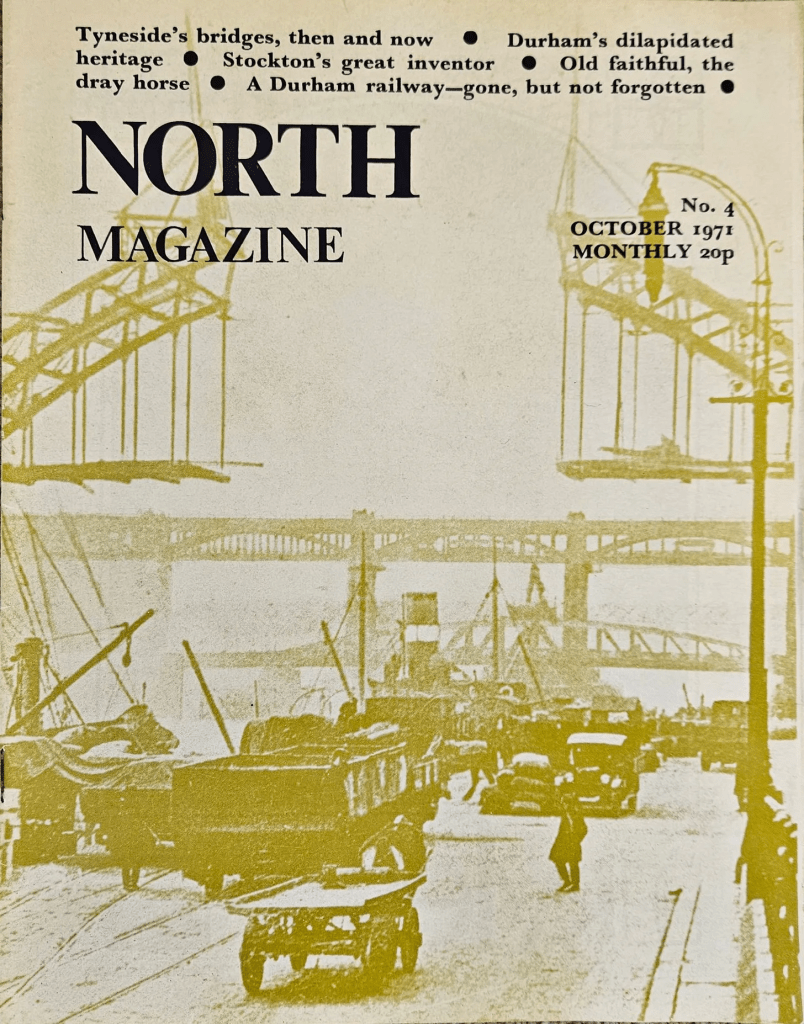
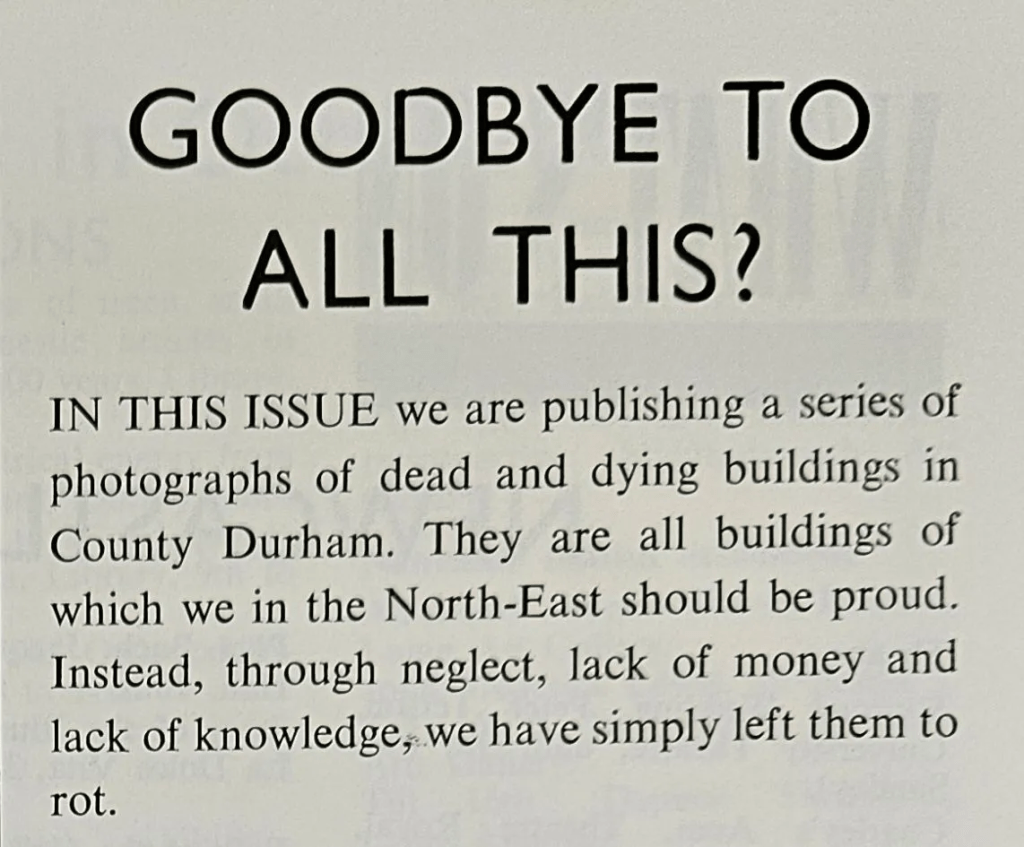
It’s a theme that has echoed down the years as revealed by a 1971 article that recently joined the Pressphotoman collection.
North Magazine was a monthly publication for ‘Durham, Northumberland and North Yorkshire’ edited by the journalist and author Leslie Geddes-Brown (1942-2020).
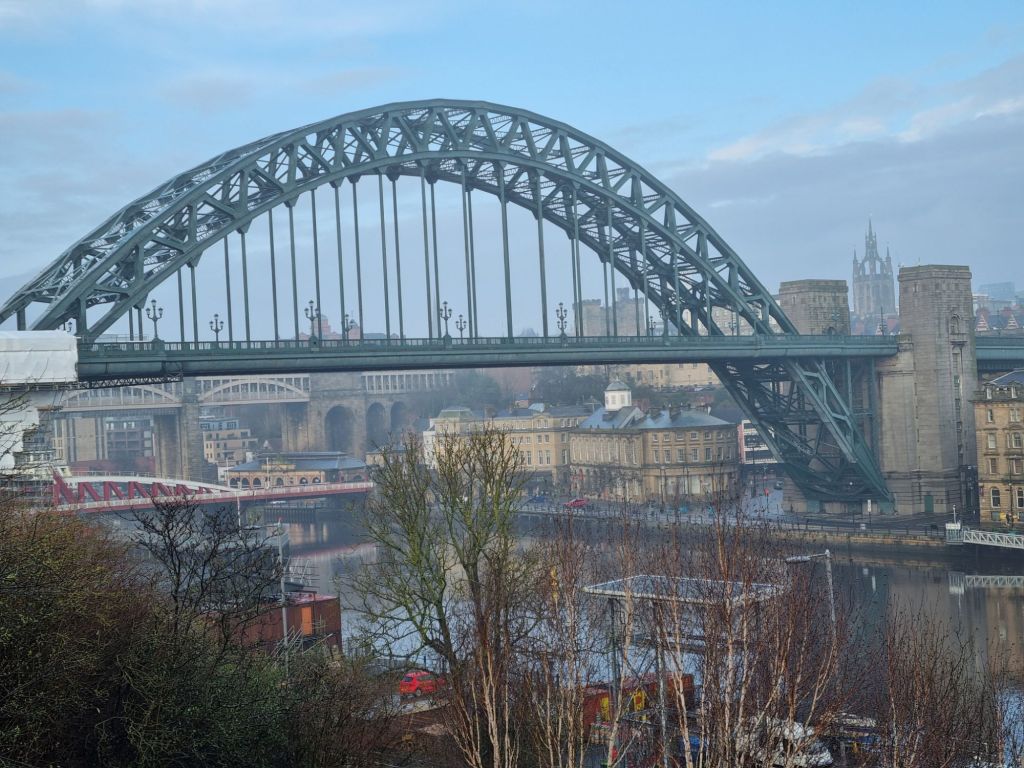
The cover of the October 1971 issue (vol. 1, no. 4) featured an eye-catching photograph of the Tyne Bridge, which is currently undergoing major renovation as it approaches its centenary in 2028.
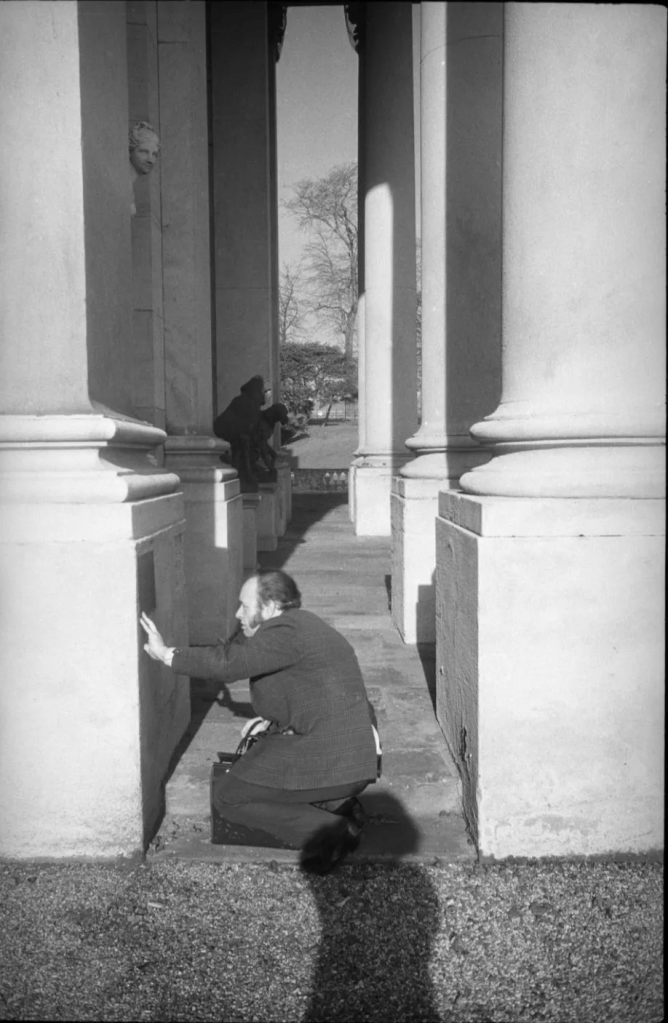
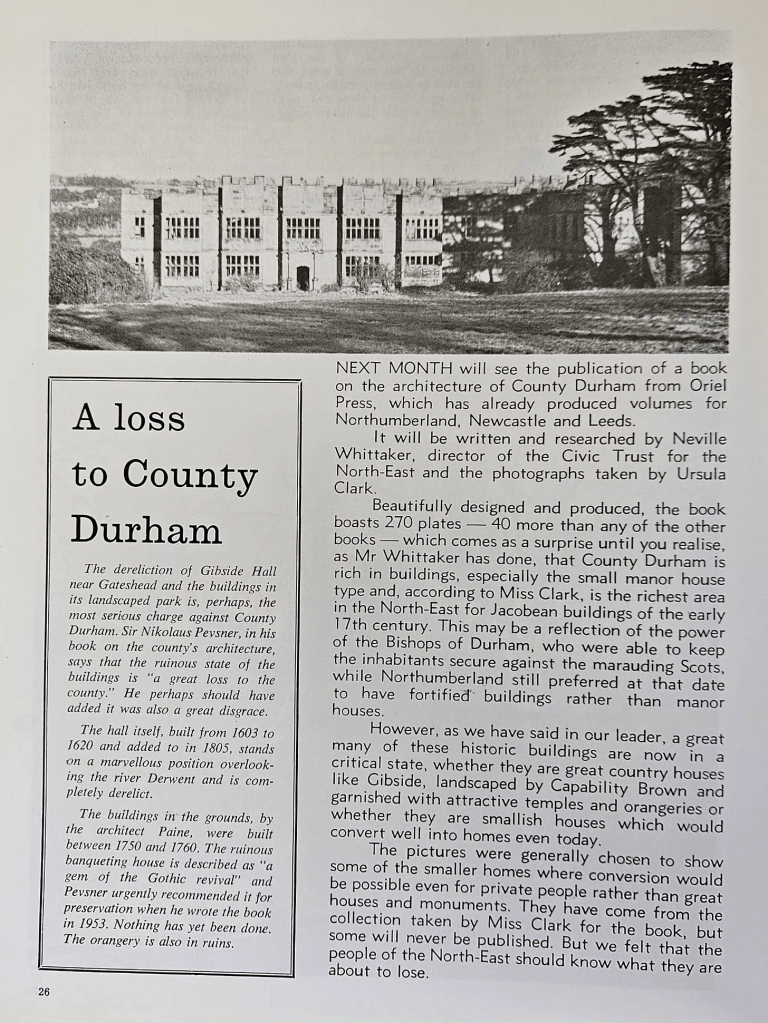
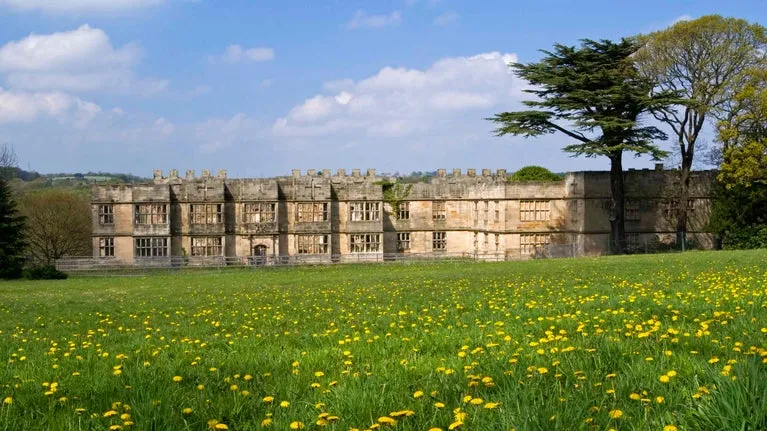
The series of photographs referred to came from Historic Architecture of County Durham by Neville Whittaker and Ursula Clark (Oriel Press) that was about to be published.
Regular readers will recognise the name of Ursula Clark (1940-2000) as the architectural photographer, who featured in my recent talk for the RPS Historical Group marking the 25th anniversary of her death.
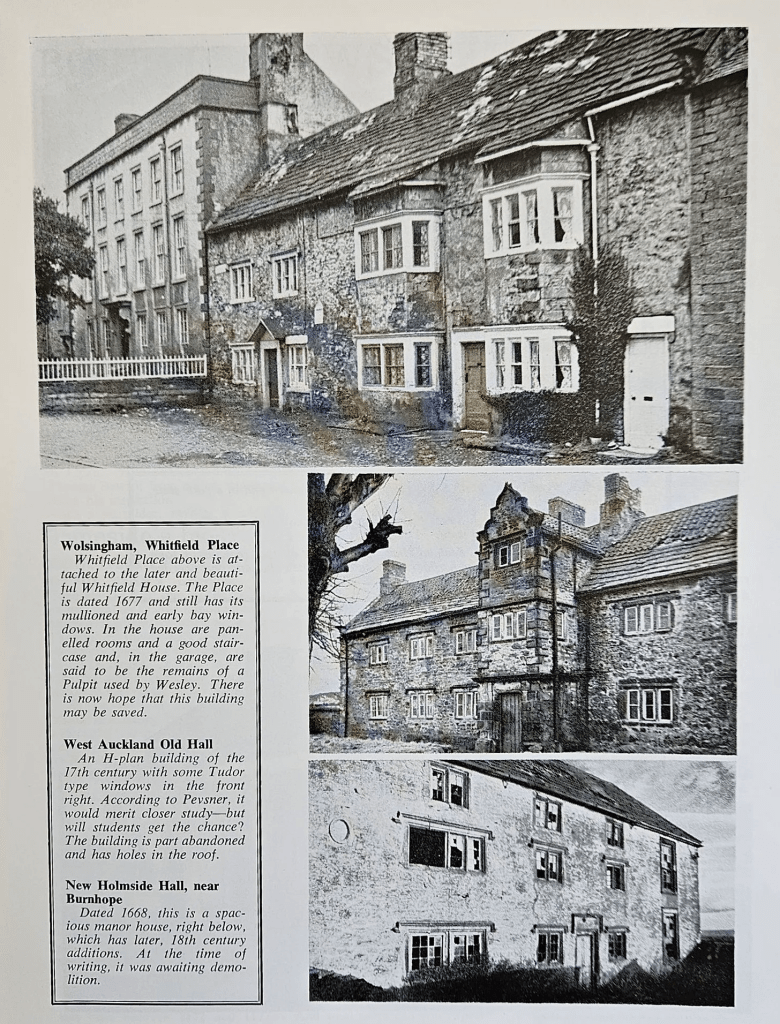
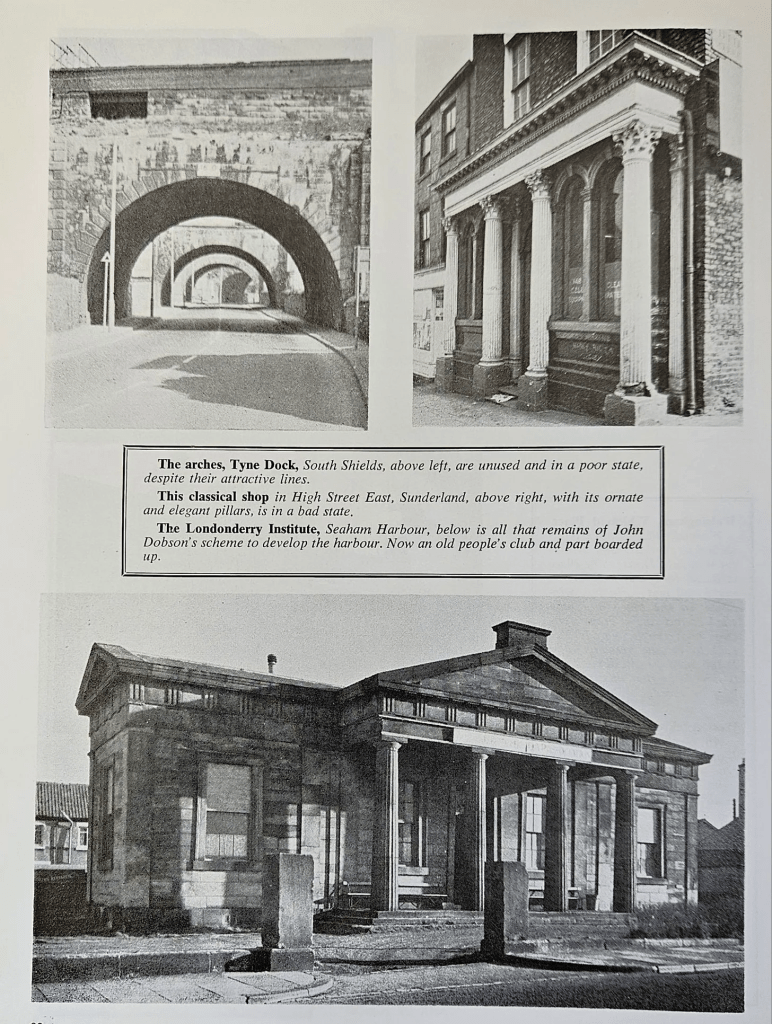
The three-page North Magazine article devoted much of its space to Ursula’s photographs and it is instructive to trace what has happened to the featured buildings in the half century since.
In the years since, all three of the featured properties – Whitfield Place, Wolsingham; West Auckland Old Hall; and New Holmside Hall, near Burnhope – have been lovingly restored to their former glory.
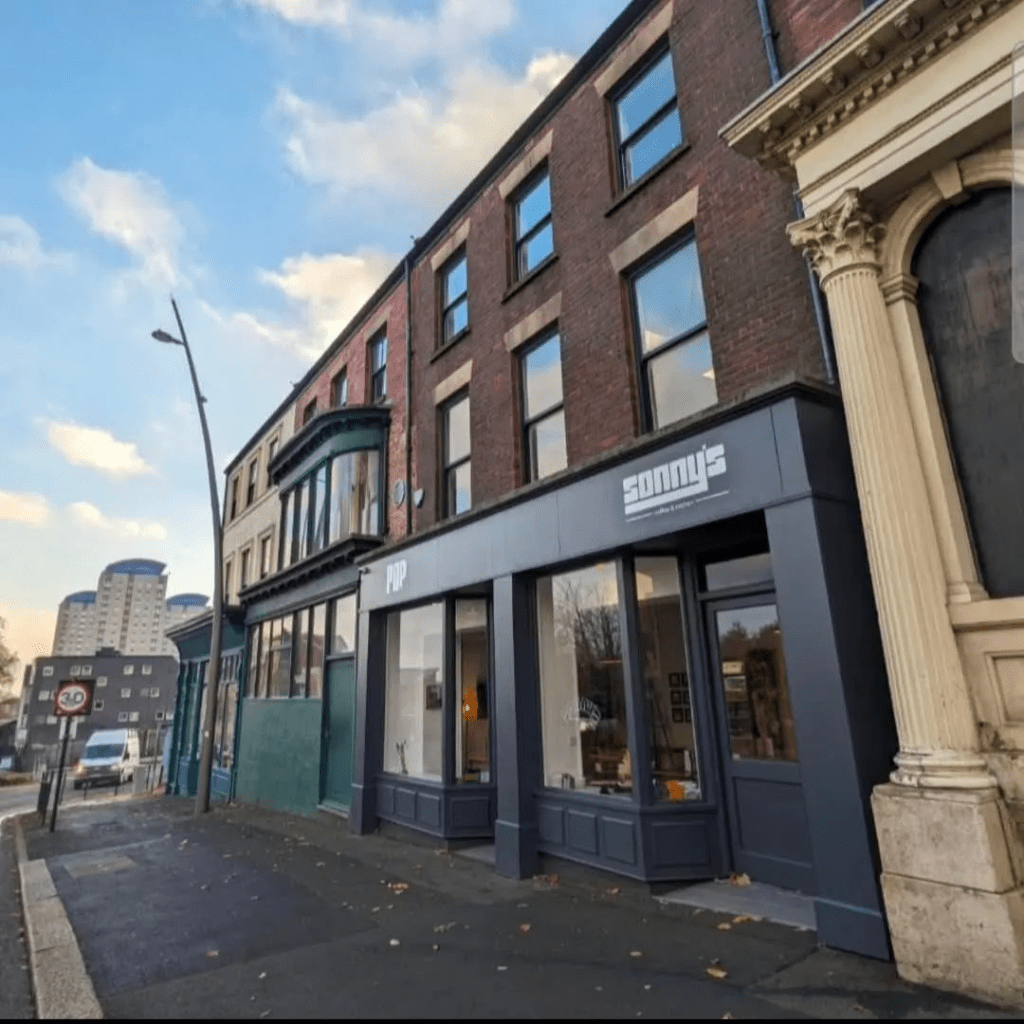
Perhaps the most stunning transformation though is the classical shop front in High Street East, Sunderland (top right below) with its “ornate and elegant pillars” described in 1971 as “in a bad state.”
Thanks to becoming part of Sunderland’s Heritage Action Zone (HAZ), the adjoining terrace initially built as merchants’ houses in the late 18th century is now home to Pop Recs, a café, music and arts venue and community hub.
Photo from Pop Recs Facebook page.
These restorations and reinventions confirm that there is hope for the current crop of endangered buildings of which Newcastle’s Gibson Street Baths is just one.
Since then, attempts to locate more examples of Theonie’s photography have sadly proved unsuccessful.
However, thanks to her great nephew Simon Burrell, I am able to share a photograph of the woman herself.
Henrietta Theonie Burrell (1860-1934). Courtesy of Simon Burrell.
She is pictured holding her dog Judy, standing in what may be the garden of the Burrell family home at Neville Cottage in the Elswick district of Newcastle.
As to identifying the photographer, it might be the work of her sister Fanny Johanna Bunning or her children Theonie Renee Burrell (1889-1945) or Cedric Ian Burrell (1892-1980).
Collecting carte de visite photographs is a never-ending journey of discovery.
Regular readers will be aware of my research into the studio of W. & D. Downey in South Shields and Newcastle on Tyne during the late-1850s and 1860s before relocating to London.
Their cartes of the great and good are a particular fascination of mine and my collection features not only single portraits, but others from the same sitting.
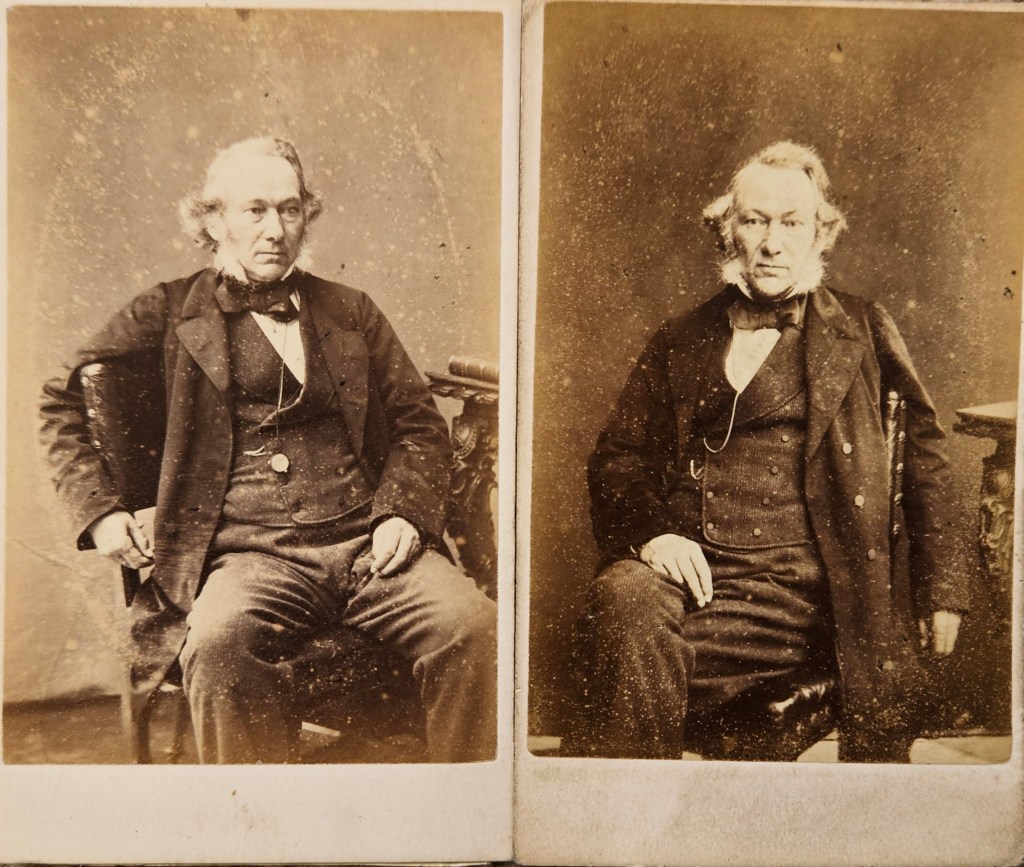
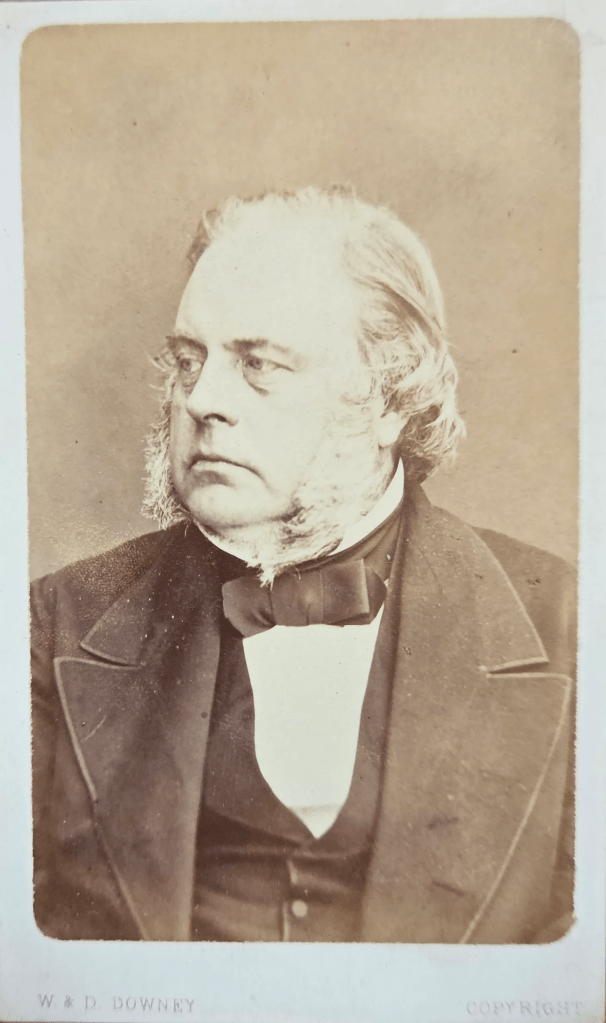
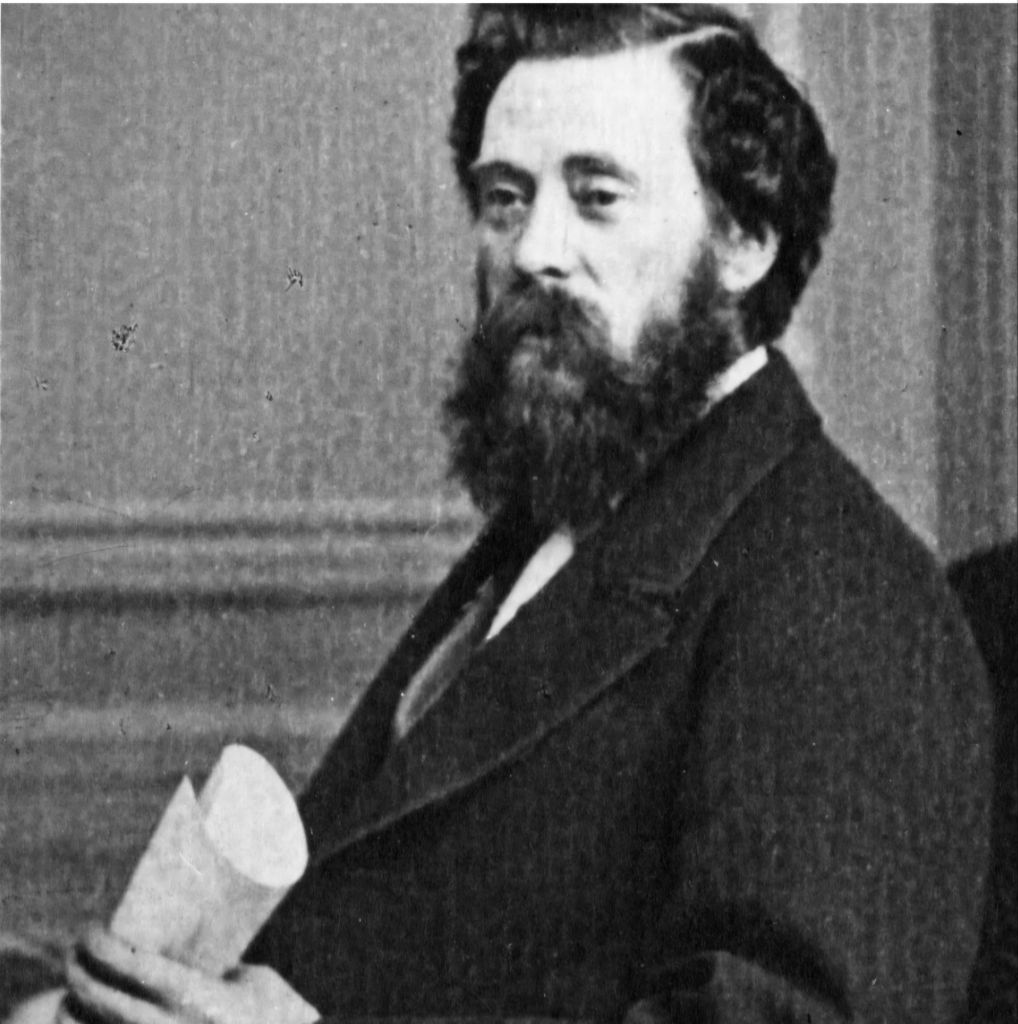
For example, Richard Cobden (1804-1865) was a Manchester businessman turned politician who became an MP.
He is best-known, together with his parliamentary colleague John Bright (1811-1889), for spearheading a successful campaign to repeal the Corn Laws, which penalised the poor.
In Cobden’s case, the two cartes published by Downey in my collection demonstrate how one man sitting on a chair could be successfully repositioned and reorientated for the camera to provide different images.
In one, he is looking to the left of the operator; in the second, he is looking straight down the lens.
In one, his right arm is draped over the back of the chair; in the second, it’s his left arm.
As for props, the table on the right hand side also reveals how a book, often a visible sign of the sitter’s learning and erudition, was part of one shot, but not the second.
The carte on the left is part of the collection of the National Portrait Gallery, London where the two examples it holds of the same card are distinguished by text in the white border at the bottom of the card.
These include the words ‘Copyright,’ ‘W. & D. Downey’ and ‘Mr. Cobden.’
A further two examples in the NPG collection are close-up head-and-shoulders shots taken from the same image where the original negative has been cropped by Downey to produce a more intimate portrait.
Cobden sat for his Downey portrait in the summer of 1863 during a visit to London by the firm as this newspaper advert confirms.
Newcastle Journal (30th July 1863). From British Newspaper Archive.
The Downey portrait of John Bright MP, listed above together with Cobden, also features in my collection and is equally distinguished.
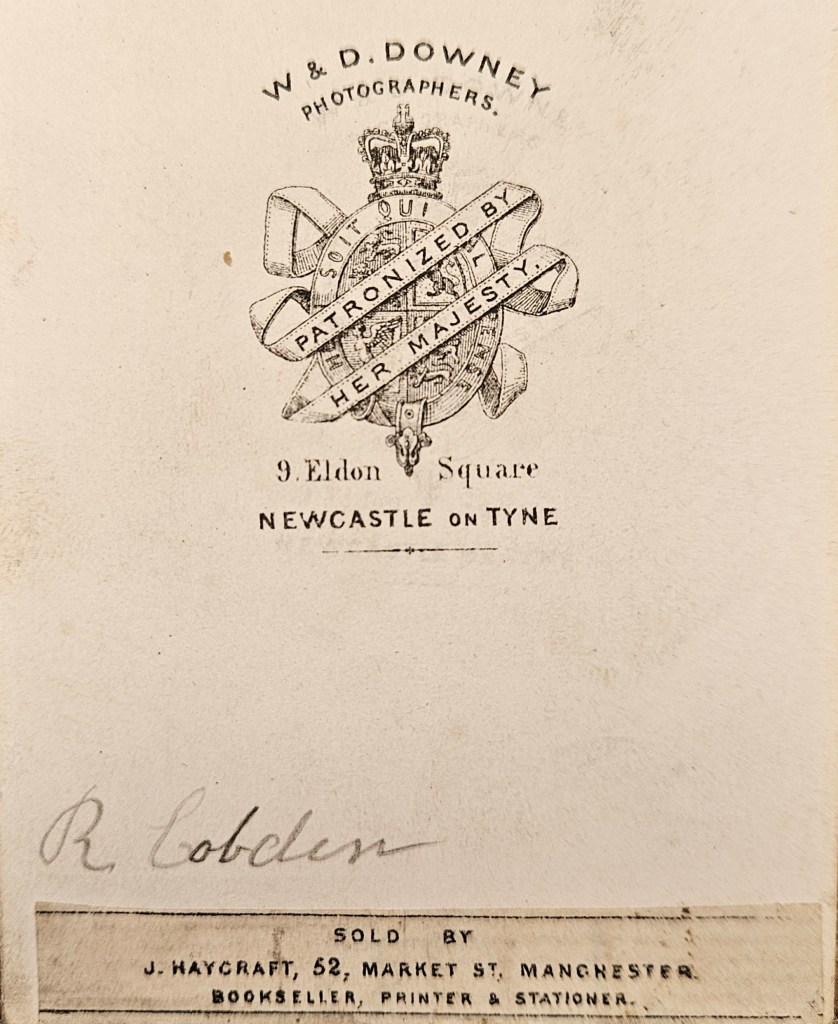
The seller was Kent-born Joseph Haycraft, who had been a printer and later bookseller and stationer in Manchester from the 1840s.
Like many in his trade, the cartomania phenomenon had given a considerable boost to business.
Politicians were among those figures conveyed celebrity status by these affordable photographs.
In the final years of his political career, Richard Cobden was MP for Rochdale, so cartes featuring his distinctive visage would have proved popular sellers in nearby Manchester.
When Cobden died in April 1865, Downey’s various portraits of him gained another lease of life.
Indeed, many previously unissued images may well have been marketed precisely because there was a public appetite to memorialise the late MP.
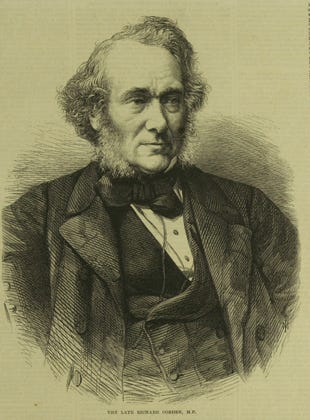
Downey portraits also featured in press tributes such as this engraving used by the Illustrated London News in its obituary though, as was sometimes the case, the photographer’s work was not credited in the press.
Illustrated London News (16th April 1865). From British Newspaper Archive.
As for Haycraft, he died only a year after Cobden in May 1866.
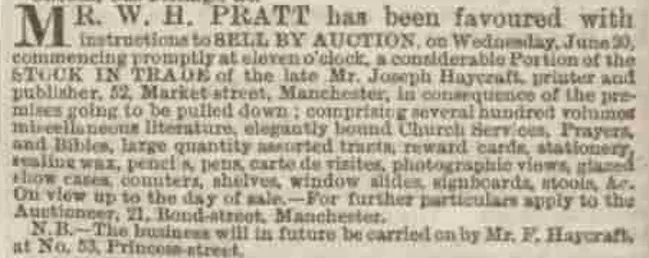
The following month, an advertisement in the Manchester Courier revealed that his premises at 52 Market Street were “going to be pulled down” and that an auction of his ‘stock in trade’ would take place.
Manchester Courier (16th June 1866). From British Newspaper Archive.
Following the auction, his son Frederick Taylor Haycraft, who had assisted him in the business, took over its running at new premises in nearby Princess Street.
However, the story does not have a happy ending as was the case for many who rode the carte de visite wave.
By the end of the decade, Frederick was listed as a ‘bankrupt bookseller’ by the London press.
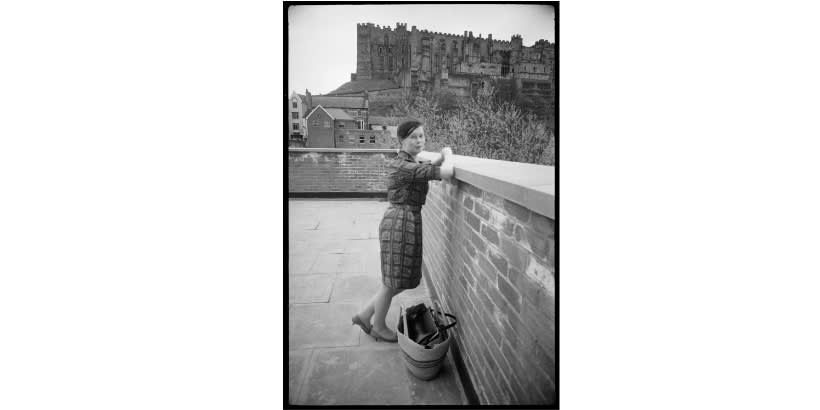
Around 2,000 of Ursula’s images have been digitised by the Historic England Archive from what is the largest of its collections created by a woman photographer.
Update 5th March 2025: Billy Embleton informs me: “That little girl is Ellen Parkin with her Uncle Jimmy Anderson in the burger van in 1965. She identified herself in 2021 when I posted the photo on Facebook. She’s now known as Ellen Przybylska.”
In my talk, I argued that these images echo those of other female photographers working during the same period such as Sirkka-Liisa Konttinen (born 1948) and Tish Murtha (1956-2013).
It would be wonderful to put names to the faces in these photographs and learn more about long ago interactions with a photographer, who clearly had a rapport with flesh-and-blood subjects too.
I first came across her work last year whilst browsing in a second-hand bookshop.
Historic Architecture of Newcastle Upon Tyne (Oriel Press, 1967) was full of striking photographs of a city that I’ve known for the past 40+ years.
From Historic Architecture of Newcastle upon Tyne (Oriel Press, 1967). Author’s Collection.
Reading the book’s credits revealed that, aside from two images, “all other photography by Ursula Clark.”
So who was Ursula Clark and how did she come to take such a huge number of striking photographs?
The answer and the results of a research project that’s occupied me for several months will be shared later this week during a free online talk for the Royal Photographic Society Historical Group.
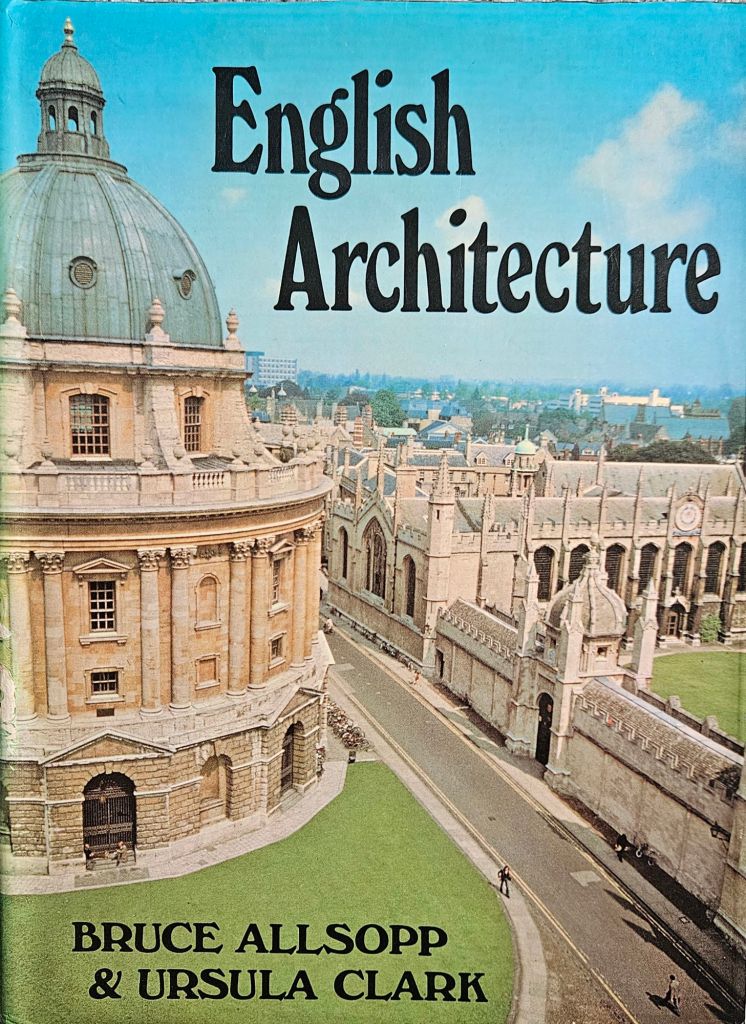
Through two decades, Allsopp & Clark collaborated with other leading authors on a series of popular architectural history guides.
English Architecture (Oriel Press, 1979).
These featured areas of Britain such as Northumberland and County Durham; cities like Newcastle upon Tyne and Leeds; and countries from England and Scotland to France, Italy and Spain.
To mark the 25th anniversaries of Allsopp & Clark’s deaths in 2000, I am presenting a talk later this month about Oriel Press with particular focus on Ursula Clark’s role as a photographer and photographic editor.
The talk will draw on her archive of 20,000 black-and-white negatives now in the care of Historic England.
One of the joys of blogwriting is connecting with readers who’ve discovered one of your posts, particularly when several months have passed since it first appeared.
It’s all the more exciting when that reader turns out to be a direct descendent of a subject of your photohistory research.
That was the case recently when I was contacted by Chris Parry whose great great grandfather was the subject of this Pressphotoman post in May 2024.
William Softley Parry (1826-1915) was a leading portrait photographer in Newcastle in the 1850s and 1860s.
But until Chris contacted me, I had never seen a portrait of WS Parry let alone one taken outside his photography business.
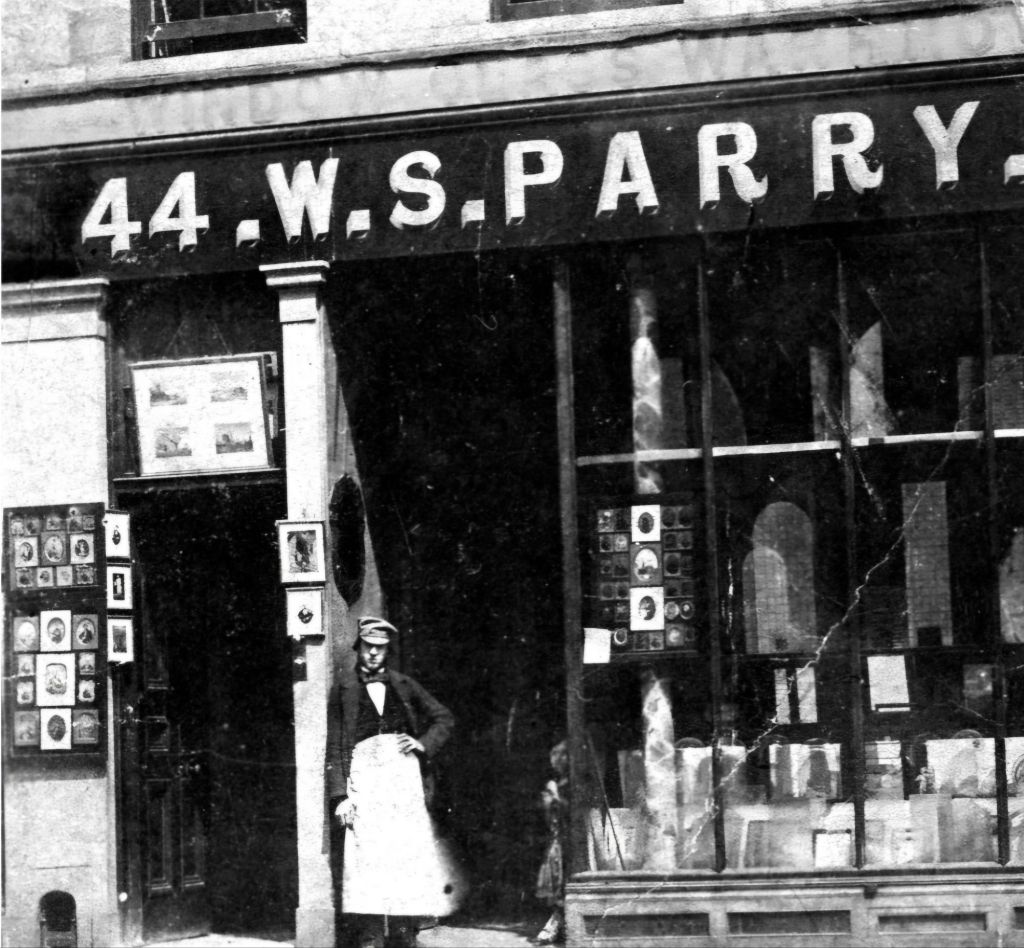
William Softley Parry (1826-1915). Courtesy of Chris Parry/South Tyneside Libraries.WS Parry outside his photography business. Courtesy of Chris Parry/South Tyneside Libraries.
What’s particularly interesting about the second image is whether it was taken outside his premises at 44 Newgate Street (1855-1858) or 44 Bigg Market (1858-1864).
The photographs may well have been taken by his wife, Christiana, who ran the shop’s Ladies Department.
I particularly love the examples of their portraiture displayed outside in various sizes and frames.
If you look very closely, you’ll glimpse a small child, possibly a girl, huddled in the doorway to Mr. Parry’s right, but still managing to look towards the camera.
The Parry’s eldest daughter Euphemia died aged 5 in 1862, so if the little girl is her, the location may well be 44 Bigg Market.
Chris Parry has written a Substack post about his fascinating family down the generations and kindly included some of my research about his great great grandfather.
The name of John Hunter Rutherford (1826-1890) lives on in a number of educational institutions.
An evangelical preacher from the Scottish Borders, he came to Newcastle on Tyne in 1850.
Among his many achievements as an educationalist, he is best known for setting up a series of elementary schools in the surrounding area.
Rutherford College named after him gave birth to what today is Northumbria University.
When Dr. Rutherford died suddenly, his reputation was such that 5,000 people took part in his funeral procession.
Newcastle Daily Chronicle (28th March 1890). From British Newspaper Archive.
In addition, the Newcastle WeeklyChronicle estimated that more 100,000 lined the processional route.
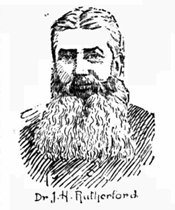
This line drawing of him in later life accompanied the newspaper’s three-column report of the occasion.
Newcastle Weekly Chronicle (28th March 1890). From British Newspaper Archive.
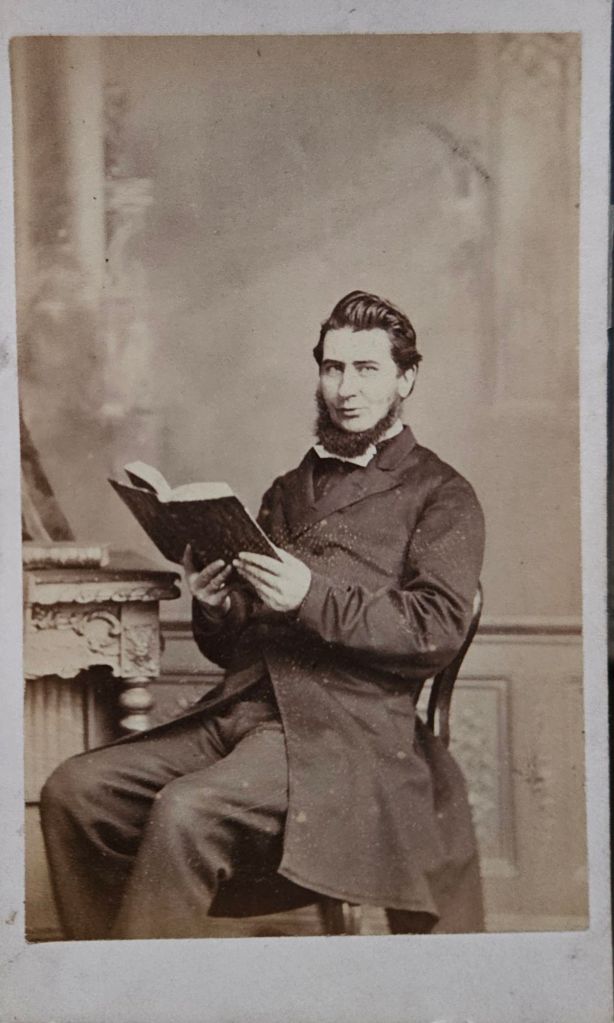
However, in his younger days, a recent addition to the Pressphotoman collection reveals that he posed for his portrait with leading Newcastle photographers W. & D. Downey.
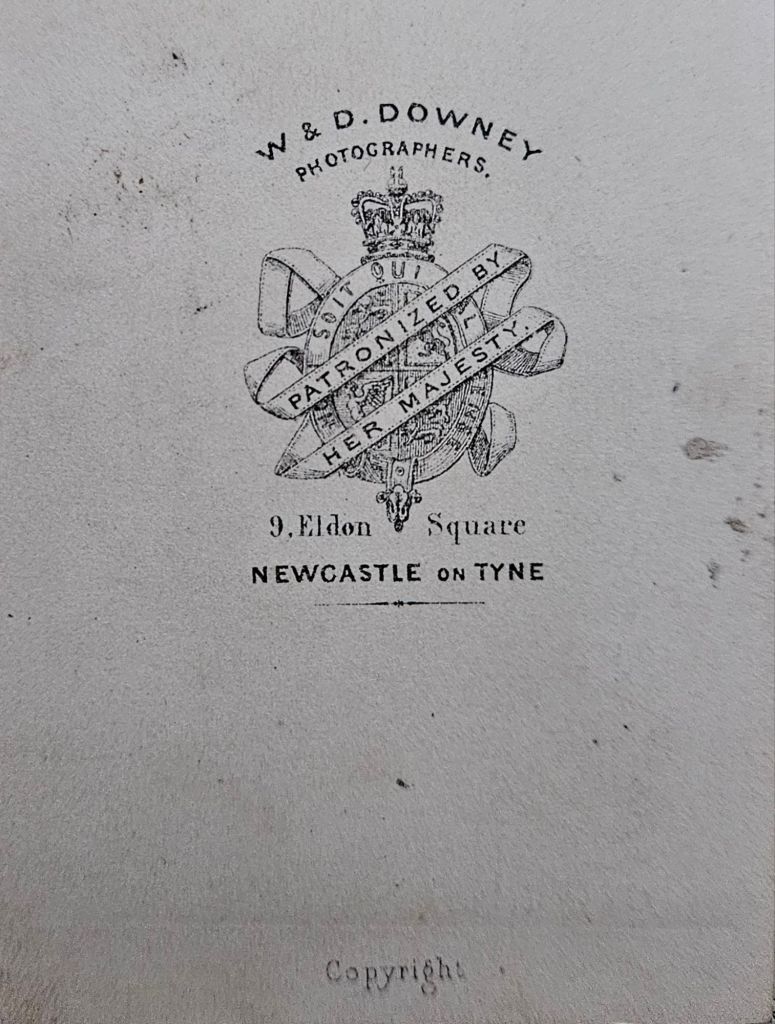
The slogan ‘Patronized By Her Majesty’ was used by the company before being replaced by ‘Photographers To Her Majesty’ in the middle of the decade.
This information and the lack of Downey branding on the front of the carte allows it to be dated c. 1862-1866.
At that point, Dr. Rutherford was in his late-30s and in the midst of his studies as a medical doctor.
A surprising twist to this blogpost is that his death occurred only a few doors away from where the Downey carte portrait was taken.
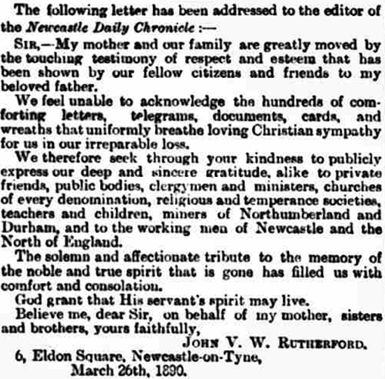
As part of its funeral report, the Newcastle Weekly Chronicle published a letter from Dr. Rutherford’s son John sent from 6 Eldon Square, the family home.
It indicates the esteem in which his father was held.
Newcastle Weekly Chronicle (28th March 1890). From British Newspaper Archive.
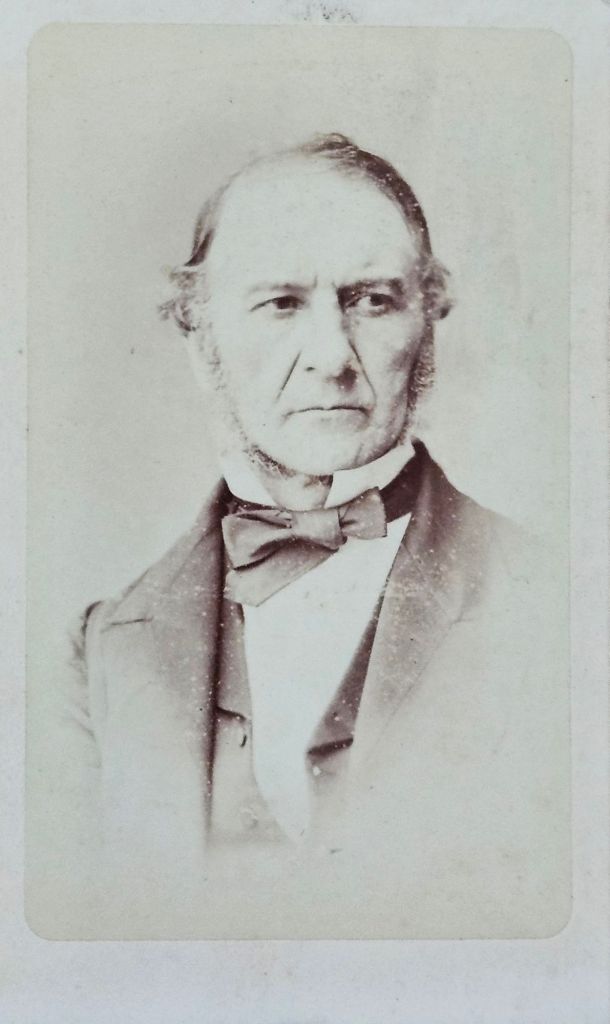
Given this, the Downey carte de visite of John Hunter Rutherford as a younger man making his way in the world seems all the more poignant.
It was taken during a visit to Newcastle on Tyne in October 1862 when he was Chancellor of the Exchequer.
Prior to a lavish banquet in the city’s Town Hall, Mr. Gladstone together with his wife toured several Newcastle locations.
These included the Literary & Philosophical Society, St. Nicholas Church (now the Anglican cathedral), the Castle and Old Norman Keep, and Central Exchange reading room.
According to the Newcastle Courant (10th October 1862): “The next move was to the studio of Mr. Downey, photographer, Eldon Square, where [Gladstone] sat for a portrait, which, our readers will, no doubt, by and by have an opportunity of inspecting.”
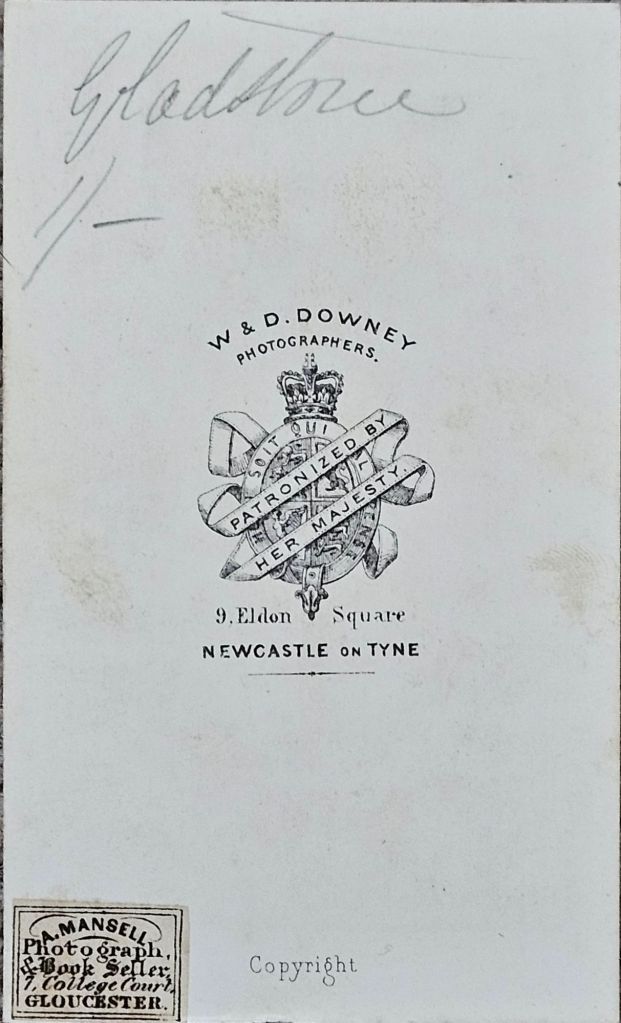
The verso of the resulting carte, with its seller’s stamp (bottom left) for ‘A. Mansell,’ a photograph and bookseller in Gloucester, illustrates the subsequent nationwide appeal of this one shilling photograph.
A copyright form for Downey’s carte of Gladstone was lodged several months later in July 1863.
This gap between the sitting and publication perhaps indicated a delay in securing the politician’s agreement to the photograph being put on general sale.
Indeed, Gladstone was a popular carte subject.
During the period 1862-1870, he was second only to members of the Royal Family with more than 50 registered copyrights for his photographic portrait.
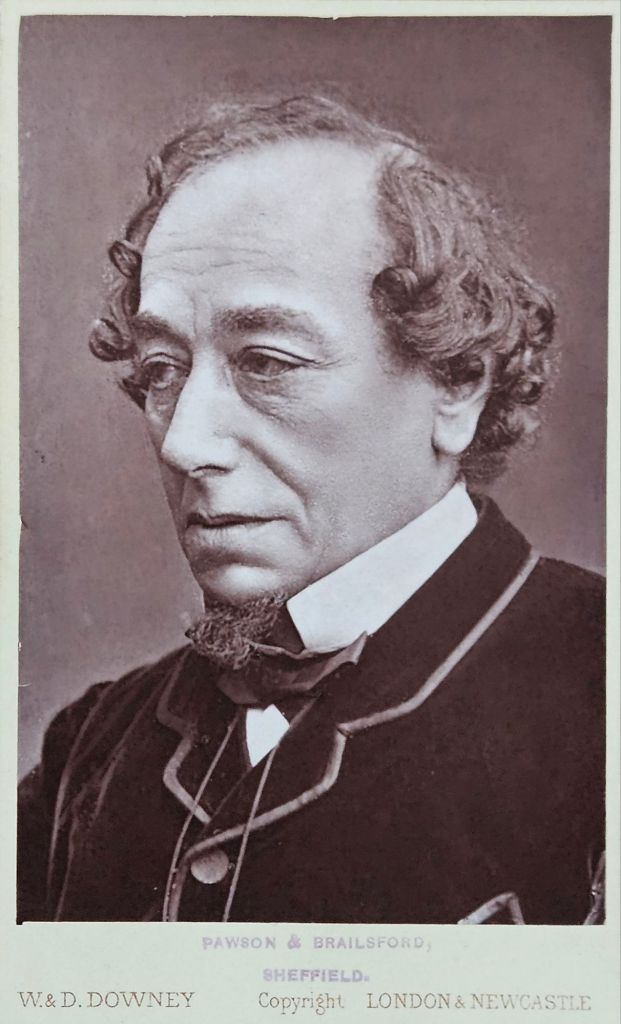
It was only when Disraeli succeeded Lord Derby as Prime Minister in 1868 that Downey secured a sitting with Gladstone’s political adversary.
On 3rd October 1868, the Newcastle Journal reported: “Our townsmen, Messrs. Downey, have had the honour of photographing the Right Hon. B. Disraeli during their sojourn at Balmoral.”
Queen Victoria’s diary records that he stayed at her Scottish home for 10 days during the second half of September.
As Downey busied themselves with the latest round of royal portraits, they also took the opportunity to photograph the Queen’s new Prime Minister.
It well illustrates how Downey set up the shot, allowing for a variety of framings that were used to produce different sized versions.
Later ennobled by Queen Victoria as Lord Beaconsfield, his death in 1881 allowed firms like Downey to re-issue its archive of Disraeli portraits to new customers
The carte that recently joined my collection with the company’s later ‘London & Newcastle’ branding falls into that category.
The prominent seller’s stamp for ‘Pawson & Brailsford,’ publishers and stationers in Sheffield, shows that the wider photographic trade was also keen to exploit such commercial opportunities.
stephenmartin81
Interesting to see how the Victorians liked portraits of their Prime Ministers and probably thus treated them with due respect. How times have changed!
Few today would want a portrait of recent Prime Ministers – except perhaps for darts’ practice!!! – and even the present Prime Minister and cabinet have reportedly removed portraits of certain recent Prime Ministers or senior Cabinet ministers from Government offices.
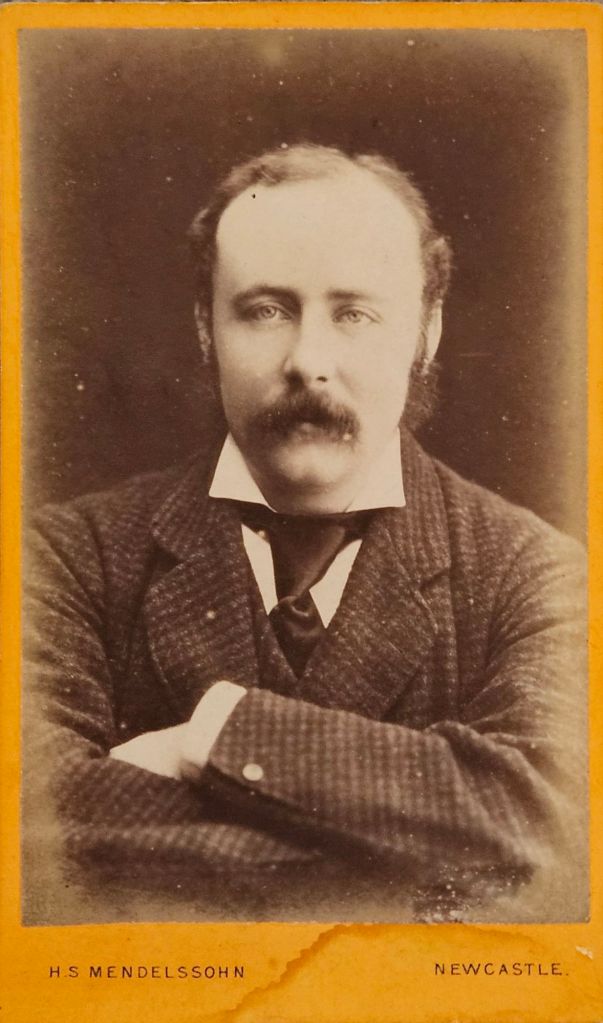
The man looking back at me had certainly made a good choice of photographer to capture his likeness.
H. S. Mendelssohn was one of Newcastle’s leading portrait studios during the 1870s and, later in his career, went on to photograph members of the British royal family.
Many of his Newcastle clientele came from well-to-do families, suggesting that our subject might be a person of means and status.
Arms folded and wearing a stylish jacket, the young man looked relaxed and at ease with the world, his eyes radiating a degree of self-confidence.
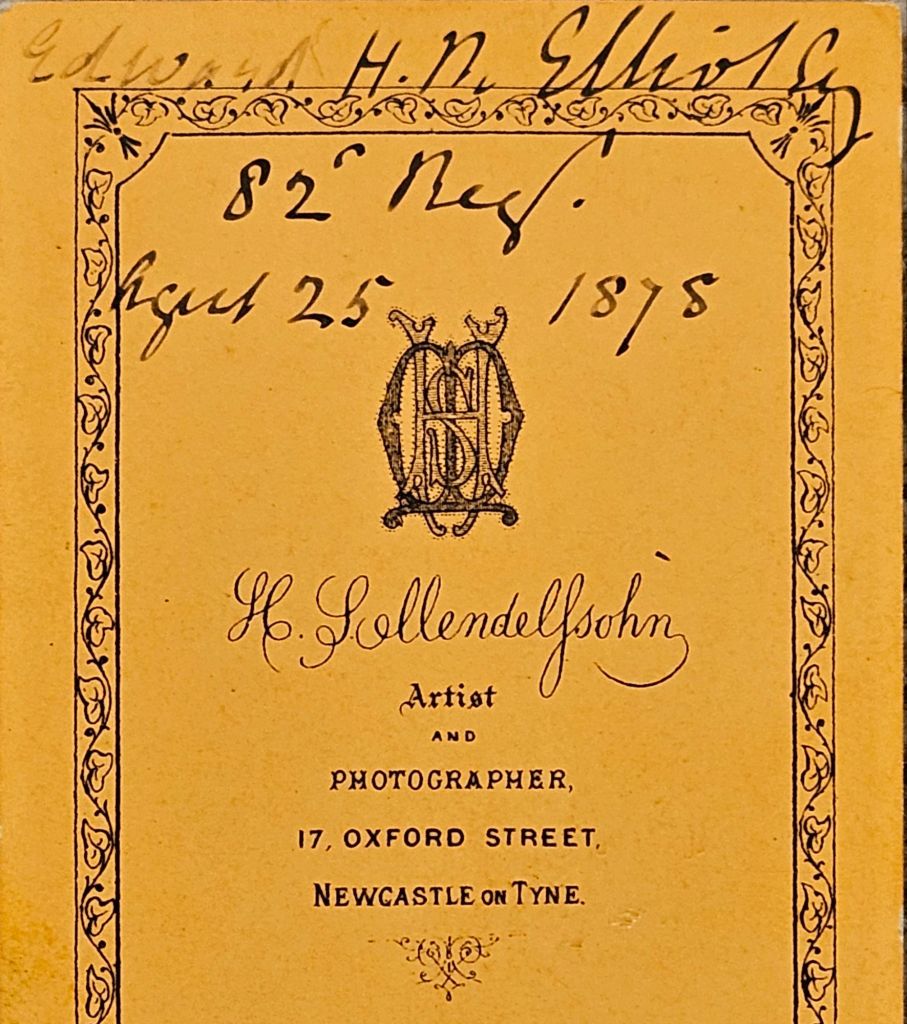
As regular readers might expect, the carte verso contained helpful clues.
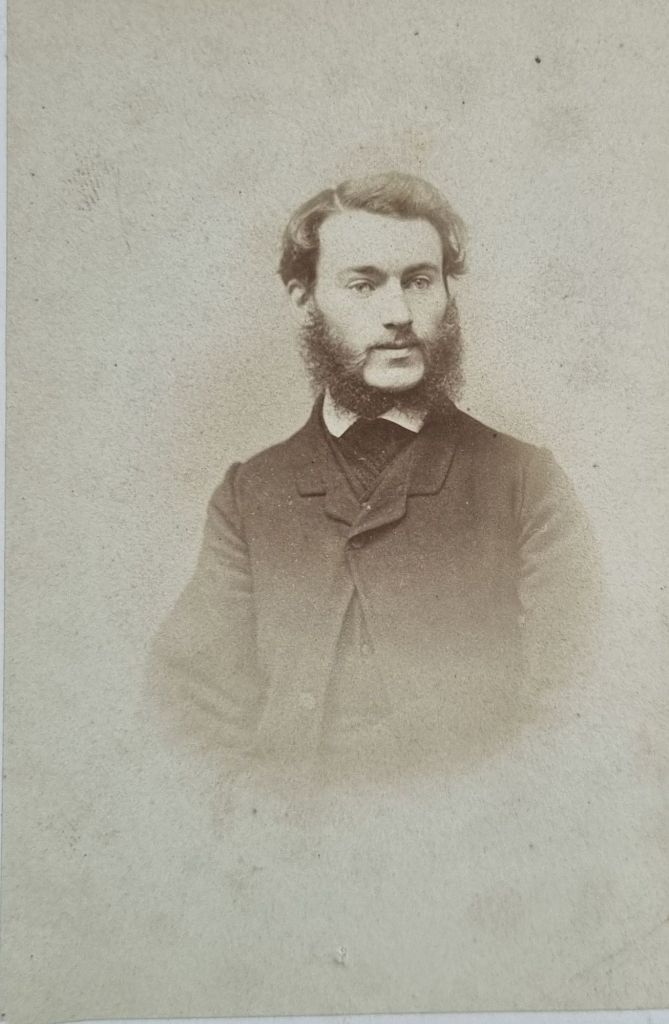
An unknown hand, possibly Mr. Mendelssohn’s own, had recorded the man’s identity: ‘Edward H. M. Elliot, Esq. 82nd Reg. Aged 25. 1878.’
Armed with this information, it did not take long to track down Edward Hay Mackenzie Elliot (1852-1920)
He was a career soldier who made his mark on history at various points in his life.
Born in India, Edward’s father was the celebrated Scottish naturalist Sir Walter Elliot (1803-1887).
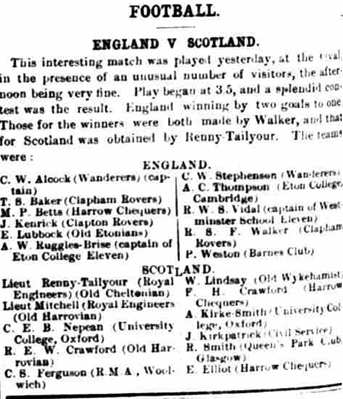
Schooling in England concluded at Harrow where skill on the football field led to him representing Scotland in two unofficial international matches against England staged in 1871 and 1872 (‘E. Elliot’ named bottom right-hand corner below).
Bell’s Life in London and Sporting Cheronicle (18th November 1871). From British Newspaper Archive.
That sporting prowess resurfaced between 1897 and 1903 when Edward played cricket for the MCC (Marylebone Cricket Club) in four matches against county opposition.
When he sat in front of HS Mendelssohn’s studio camera in 1878 as a 25 year-old, his career in the Army was already well underway.
Promoted to Lieutenant in the 82nd Regiment of Foot, he later reached the rank of Captain before serving as ADC (aide-de-camp) to Lord Glasgow when Governor of New Zealand between 1894 and 1899.
The Army and Navy Gazette (13th January 1894). From British Newspaper Archive.
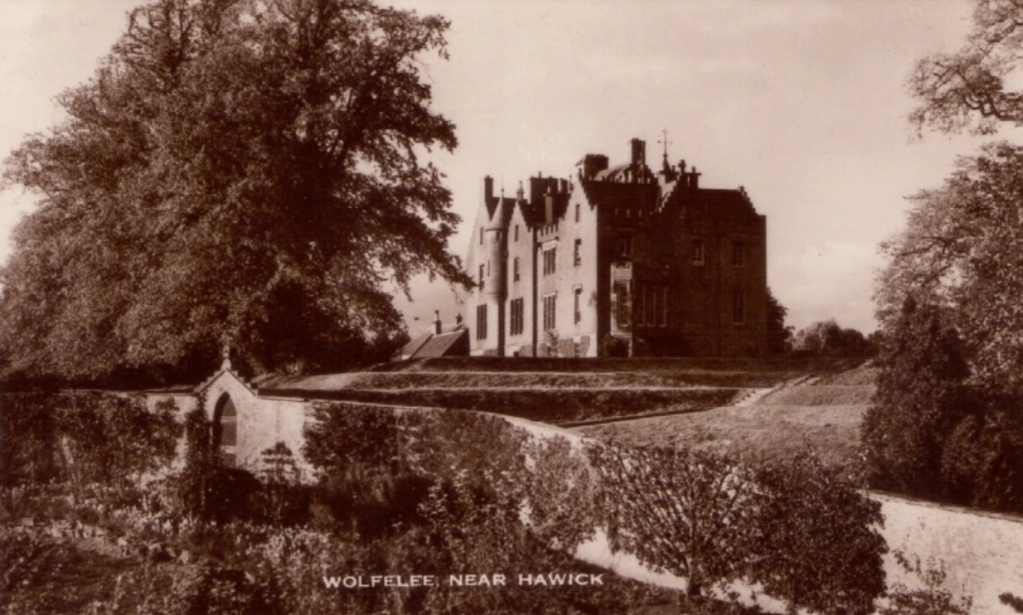
Despite retiring on full pay, Edward rejoined his former colleagues during the South African War of 1899-1902 before later returning to the Scottish family home at Wolfelee in Roxburghshire, which he had inherited.
In 1905, Edward, by now a Major in his early fifties, married Miss Edith Margaret Crawford, the 30 year-old daughter of a Surrey clergyman.
As the Surrey Mirror & County Post newspaper reported of the occasion: “The presents were numerous and costly.”
After their honeymoon in The Hague, the couple returned to live at Wolfelee.
If newspaper reports are to be relied upon, Major Elliot’s later years seem to have been characterised by brushes with the law.
In September 1910, the Hawick News reported that he had “forfeited a pledge of 30s [shillings] by non-appearance to a charge of disorderly conduct on Tower Knowe [Hawick] on Sunday morning.”
By 1913, by which time Edward and his wife had sold Wolfelee and moved to Herefordshire, he was again making headlines.
Returning to Newcastle on Tyne where he had been photographed by H.S. Mendelssohn, he was summoned to appear in court.
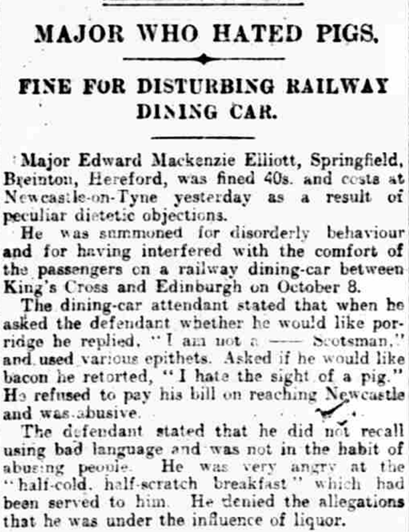
A Daily Citizen front-page court story was headlined ‘Major Who Hated Pigs: Fine For Disturbing Railway Dining Car.’
The report described an incident on a train journey from London to Edinburgh.
The Daily Citizen (29th November 1913). From British Newspaper Archive.
The death of Edward Hay Mackenzie Elliot in December 1920 at the Middlesex Hospital in London was marked by a notice to his creditors in the London Gazette.
His estate amounted to £3258, around £220,000 in today’s money.
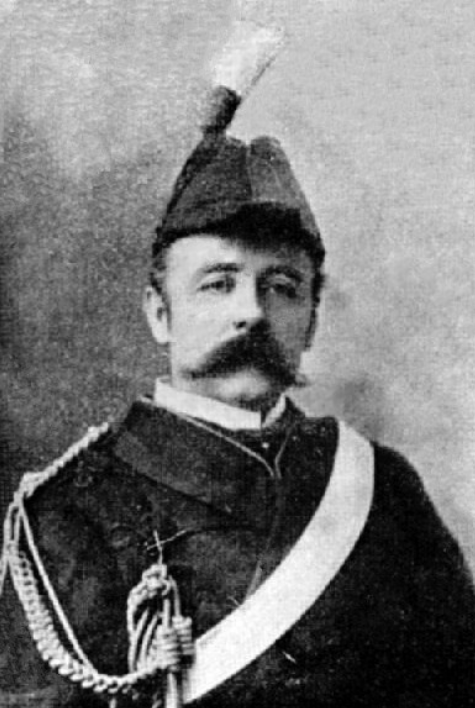
Looking at a rather severe portrait taken later in Edward’s eventful life, that by H.S. Mendelssohn photograph of his younger self is all the more poignant.
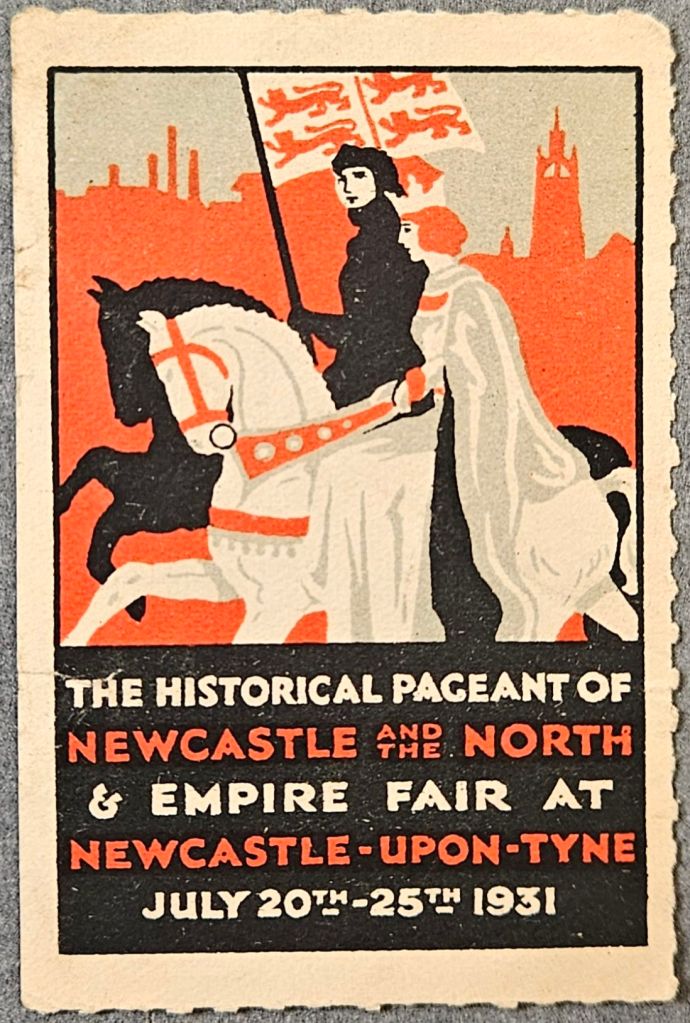
A colourful stamp-sized poster with the Newcastle skyline in the background left me wondering how this event was captured visually by photographers and film-makers.
Historical pageants in Britain during the 20th century offered communities up and down the country the chance to dress up, party and celebrate our national history.
Newcastle had previously hosted Northumbrian Pageants in 1923 and 1925.
The 1931 event had a wider geographical focus with participants from across the North of England.
At the time, the region was affected by the low morale and high unemployment that marked the Great Depression of the 1930s.
Deciding something must be done to address this state of affairs, the Women’s Committee of the Northern Counties Area of the National Union of Conservative and Unionist Associations organised a pageant and industrial fair.
Among its key figures was Irene Ward, who went on to be elected as Conservative MP for Wallsend (1931-1945) and Tynemouth (1950-1974).
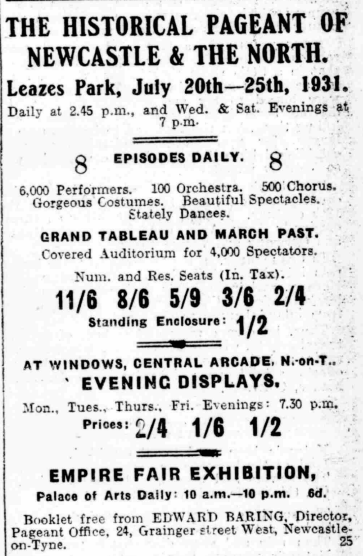
According to press adverts, the event involved 6,000 performers, a 100-piece orchestra and 500-strong chorus with the promise of “Gorgeous Costumes. Beautiful Spectacles. Stately Dances.”
Northern Weekly Gazette, 18th July 1931. From British Newspaper Archive.
Audiences estimated at more than 120,000 attended the pageant, which proved so successful that two additional performances were staged making 10 in total.
It was also restaged indoors at the city’s Empire Theatre in November 1932.
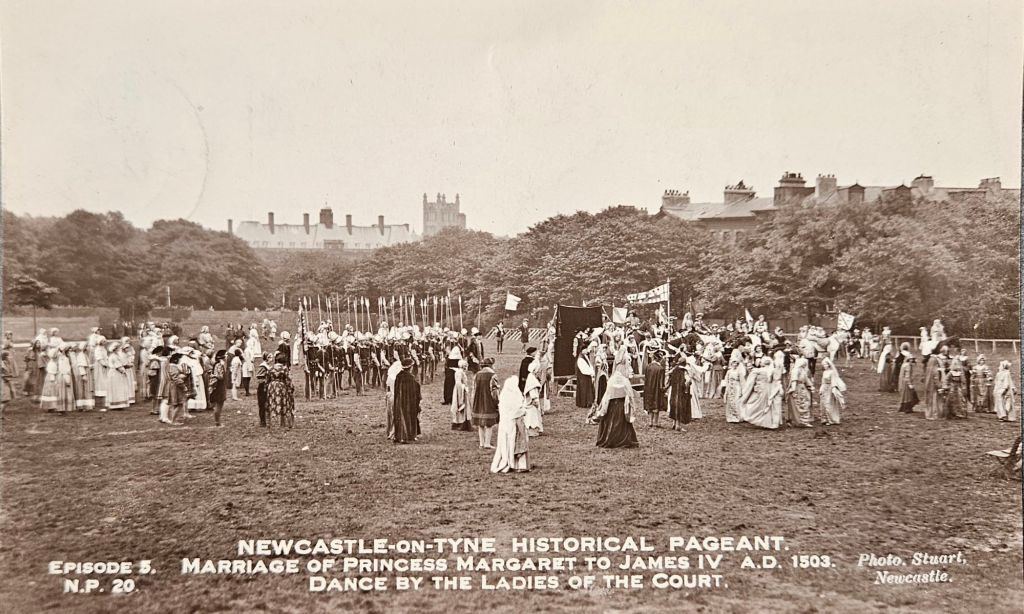
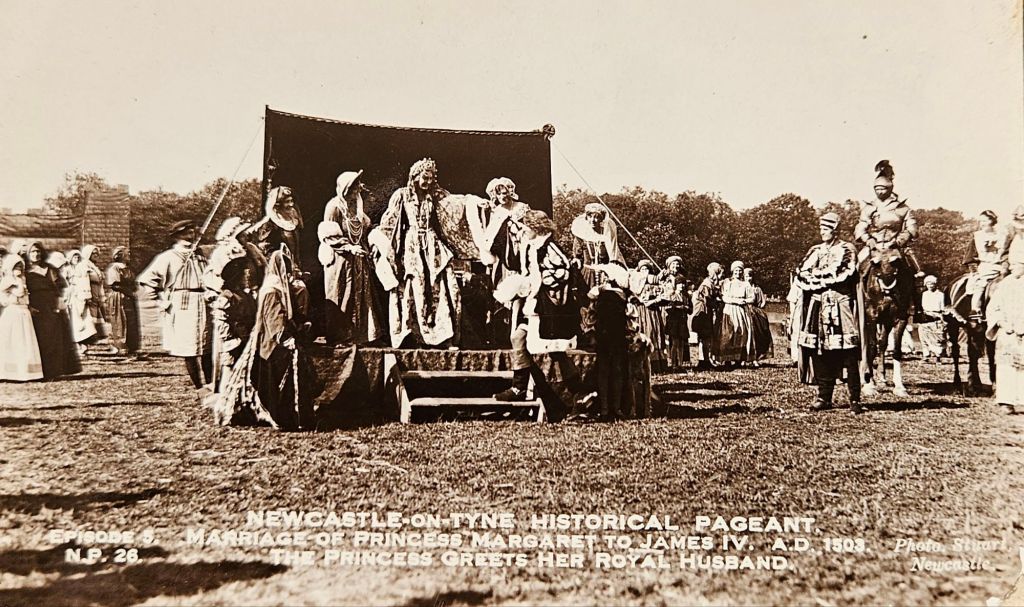
Photographically, Stuart, a long-established Newcastle firm based at the YMCA Buildings in Blackett Street were on hand to record the pageant’s sequence of Episodes.
Black and white images were then reproduced in a series of ‘Monarch’ postcards published by another Newcastle firm, R. Johnston & Sons with its printing works in neighbouring Gateshead.
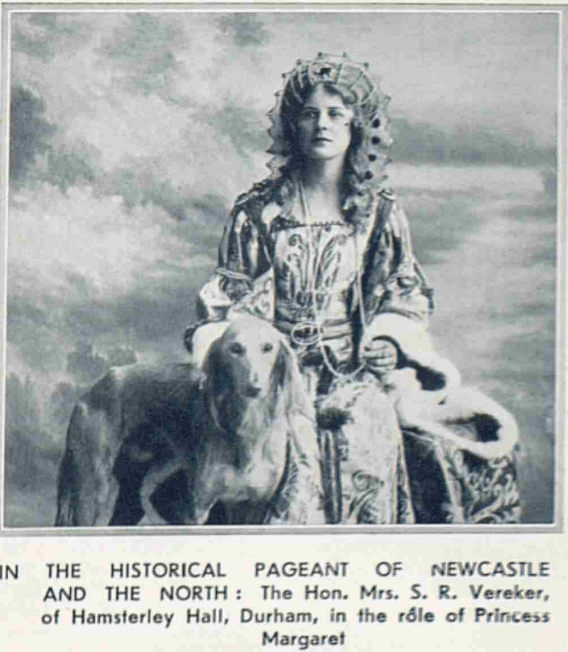
As an example of what the crowds witnessed, Episode 5 featuring ‘The Marriage of Princess Margaret to James IV, AD 1503’ was portrayed in a series of general views and close-ups.
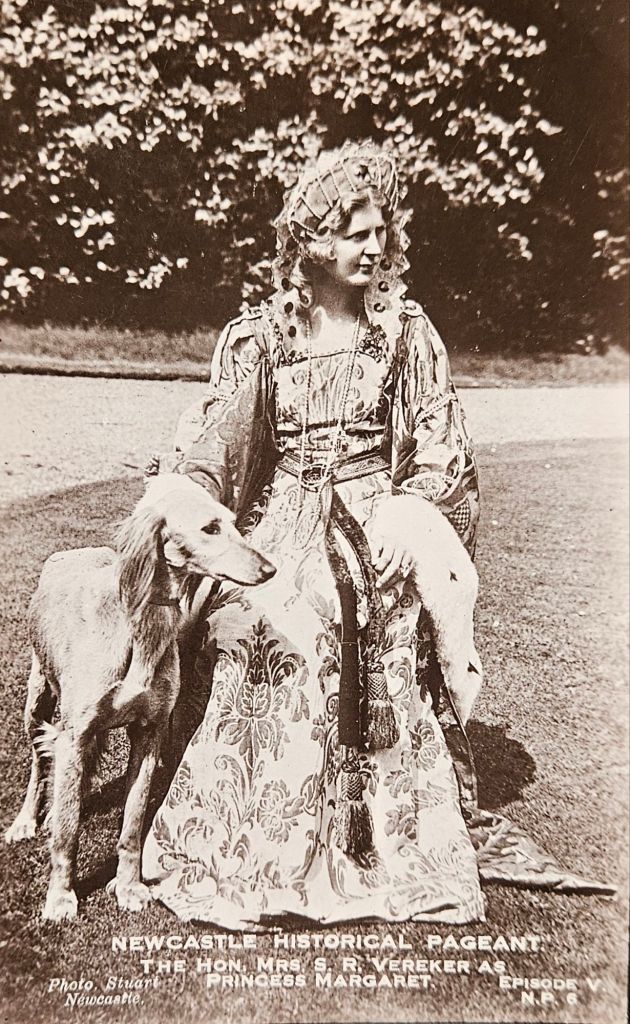
Centre-stage playing Princess Margaret was The Honourable Mrs. S. R. Vereker (1896-1972) of Hamsterley Hall, Durham.
Her aristocratic pedigree as one of the organisers connected her to a famous moment in Newcastle history.
Bessy Vereker (neé Surtees) was a descendant of Bessie Surtees whose elopement in 1772 with John Scott, later Earl of Eldon and Lord Chancellor of England, is the stuff of local legend.
Engraving based on an oil painting by Wilson Hepple.
Bessie Surtees House where the elopement took place still stands a stone’s throw from the River Tyne waterfront and is in the care of Historic England.
Following her marriage in 1921 to the Hon. Mr. Standish Robert Vereker, later Viscount Gort, Bessy became a regular client of leading photography studios in London.
Stylish portraits of her by both Bassano and Lafayette feature in the collection of the National Portrait Gallery, London.
At the Newcastle and the North Historical Pageant, a beautiful outfit created for her in the role of Princess Margaret (plus accompanying hound) combined to produce a striking image.
It also caught the attention of the press.
The Sphere was among the illustrated papers that featured her in a photo spread titled “Women of Fashion and Fashions of Women.”
The Sphere (18th July 1931). From British Newspaper Archive.
Perhaps most impressive of all was the footage created by a group from the Newcastle and District Amateur Cinematographers Association.
Sadly, given the eye-catching nature and design of the spectacle, Kodachrome 16mm colour film was not introduced to the market until 1935.
In total, 15 minutes of black-and-white footage was edited together and can be viewed on the British Film Institute website.
Episode 5 featuring the Hon. Mrs. S. R. Vereker as Princess Margaret begins at around 8′ 40″. It’s well worth a watch.
This post has been informed by the ‘Historical Pageants in Britain’ website, which includes detailed descriptions of similar pageants staged across the country.
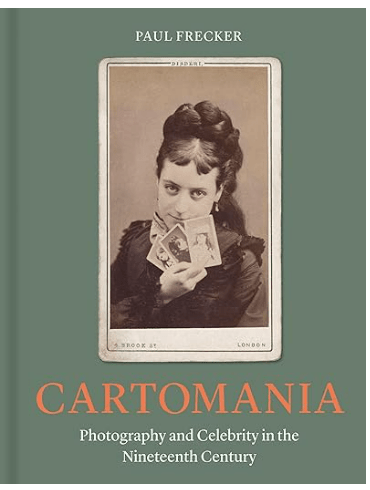
Paul Frecker’s recently published book Cartomania: Photography & Celebrity in the Nineteenth Century (September Publishing) is a veritable feast for collectors of cartes de visite.
Cartomania: Photography & Celebrity in the Nineteenth Century by Paul Frecker. (September Publishing (2024), £40).
It’s the culmination of more than two decades working as a specialist photography dealer.
In particular, it showcases Paul’s collection of the palm-of-the-hand-sized cards that reached peak popularity during the 1860s.
More modest in size, my own collection started amid ongoing research into the photography firm of W. & D. Downey of South Shields, Newcastle on Tyne and later London.
The company’s story, achievements and several examples of their cartes feature in Paul’s book, which I’m thoroughly enjoying reading.
One early Downey carte that I obtained several months ago via a well-known auction site continues to intrigue me.
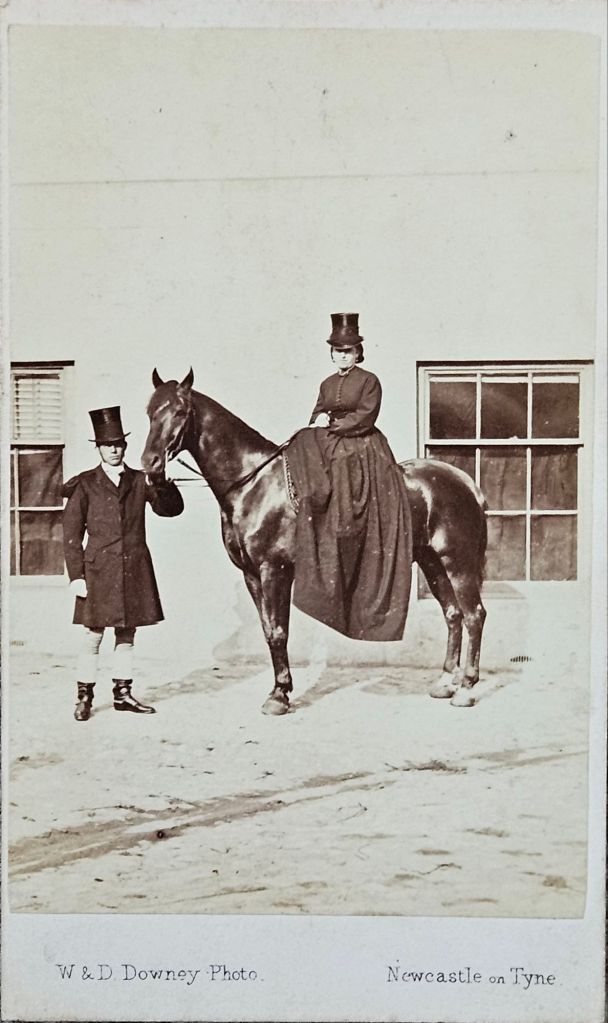
It features a woman in full riding habit and hat sat side-saddle on her horse with a smartly-dressed groom in attendance.
This striking example of the carte format prompted questions in my mind as to who it featured and when and where the photograph was taken.
Looking for clues, what appear to be footprints in the snow in the foreground suggest a winter’s day.
Shadows are cast onto the building in the background.
The low sun has also brought to life the horse’s coat, indicating that its groom had worked extra hard to prepare his charge for the camera.
As to who the carte features and when and where the photograph was taken, further research produced a helpful press report.
In May 1861 under the headline “The Photographic Art,” the North & South Shields Gazette printed an article about Downey’s activities.
It described how “the Messrs Downey” had just added “a series of local portraits” to “their photographs of illustrious men and legislators.”
Among those “local portraits” were the Lord Bishop of Durham, Henry Montagu Villiers, and his family, who had “honoured them [Downey] with sittings at Auckland Castle.”
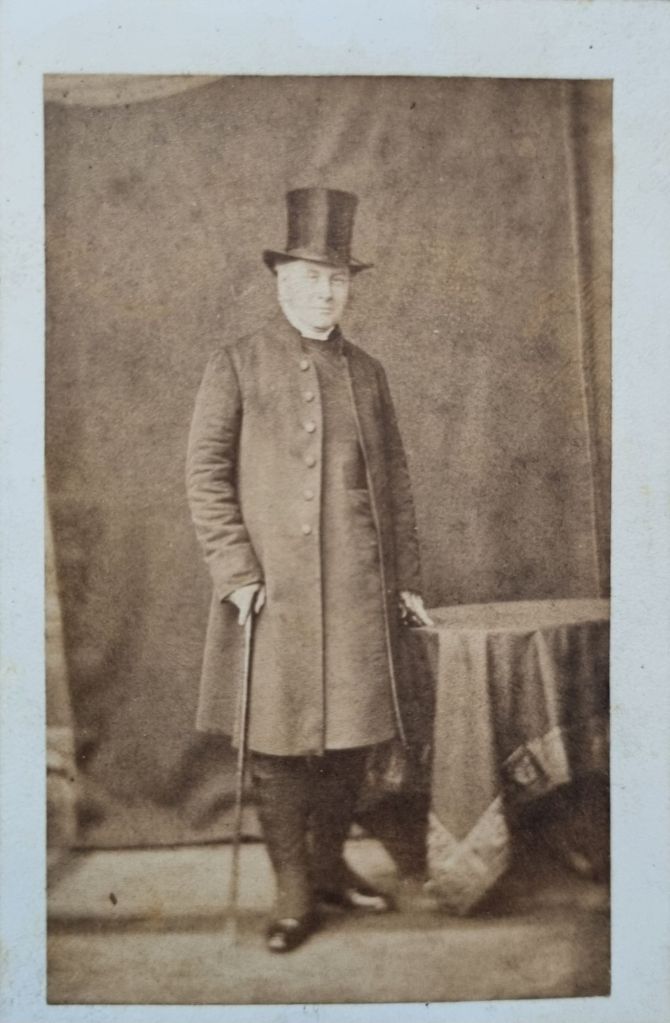
A previous Pressphotoman post (1st July 2024) revealed that the photoshoot for the carte below featuring the Lord Bishop of Durham took place in late-1860.
Among other “local portraits’ credited to Downey were several featuring Sir Edward Blackett and his family “taken at Matfen Hall.”
The Blacketts were a long-established Northumberland family and Matfen Hall near Corbridge, built in the early 1830s, was their stately home.
Today it’s a luxury hotel, spa and golf estate.
But it was the newspaper article’s next sentence that offered a tantalising clue as to the identity of Downey’s woman on horseback.
It continued: “Let us add, as exemplified in the case of one of Sir Edward’s daughters and one of the honourable Misses Villiers [my italics] that the artists have exhibited much felicity in their management of a figure on horseback.”
This information helped narrow the field of likely candidates.
Looking at other sources, the 1861 Census records Sir Edward Blackett in residence at Matfen Hall with his daughters Louisa, Anna Maria and Georgiana Emma, who were all in their twenties.
As to the Villiers family, they were not at Auckland Castle when the census was taken, but at their London residence – 30 Cavendish Place, Marylebone not far from Oxford Street.
It listed the bishop together with his wife Amelia Maria Villiers and three of their daughters.
At the time, Gertrude, Mary and Evelyn Villiers were 17, 14 and 8 respectively though they had an elder sister Amy, who would have been 19.
Given this information, I was pleased to come across a further piece of evidence that points firmly in the direction of a member of the Villiers family being the Downey woman on horseback.
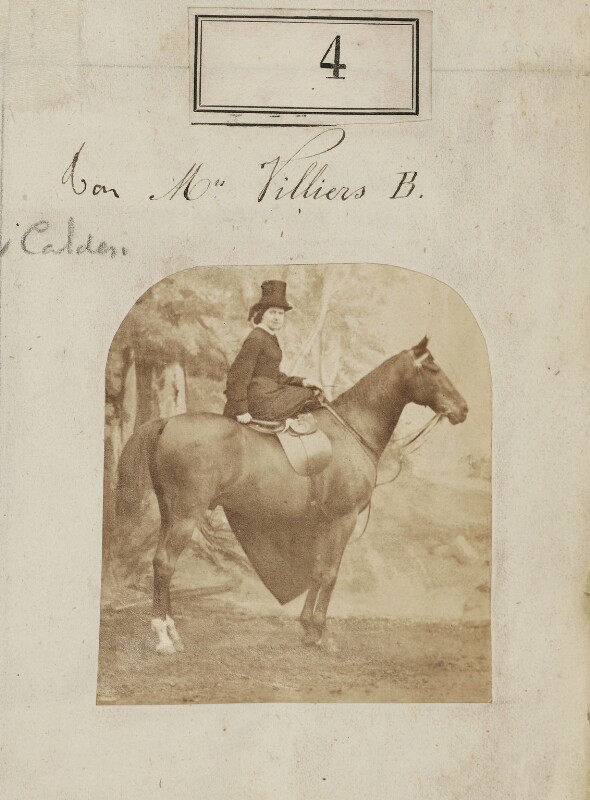
The collection of the National Portrait Gallery, London includes three horseback portraits featuring the ‘Hons. Mrs. Villiers.’
They are all by the celebrated portrait photographer Camille Silvy, who is a significant presence in Paul Frecker’s book Cartomania mentioned at the start of this post.
All three Silvy horseback portraits are dated 1860.
Given the physical similarity to the woman on horseback in Downey’s carte, might the ‘Hon. Mrs. Villiers’ (above) be the mother of “one of the honourable Misses Villiers?’
Often, as this blog illustrates, the versos or backs of photographs can provide a wealth of additional information about the subject captured on camera.
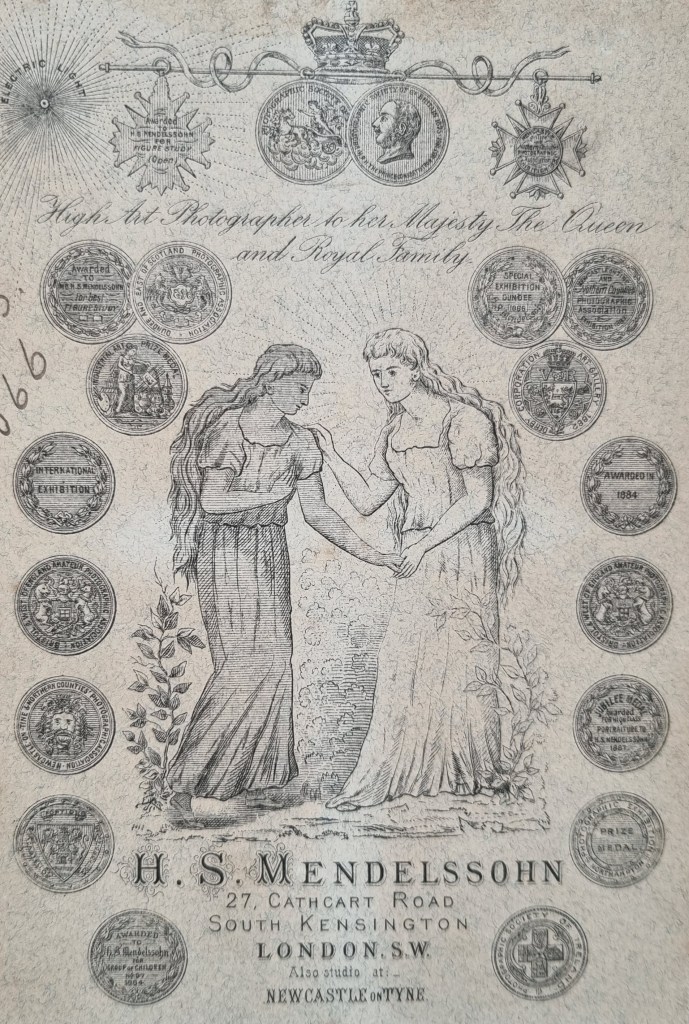
That was the case recently with a series of cartes-de-visites that emerged during research on the celebrated portrait photographer HS Mendelssohn (1847-1908).
A Jewish refugee, his early years in Newcastle on Tyne involved photographing well-connected clients for the firm of W. & D. Downey.
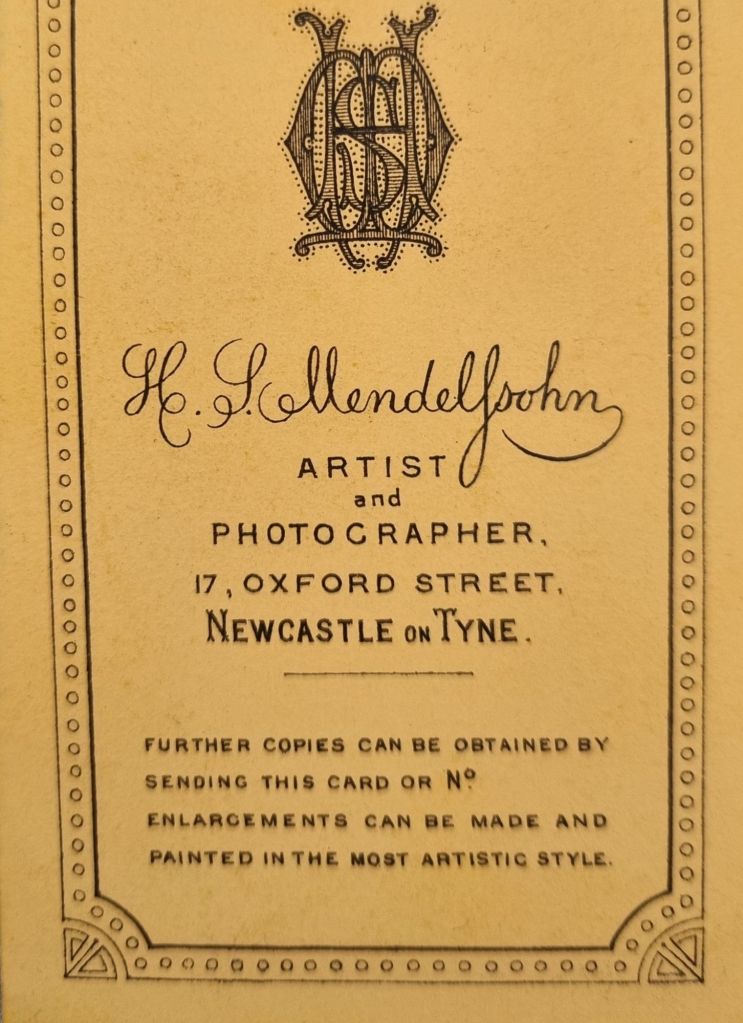
That apprenticeship was followed by a brief partnership operating as ‘Downey & Mendelssohn’ before setting up a studio in his own name at 17 Oxford Street in the heart of the city.
The design of cartes-de-visites, both front and back, can assist researchers in dating a photographer’s work and informed my earlier blogpost.
But one of the cards from his studio produced an unexpected twist.
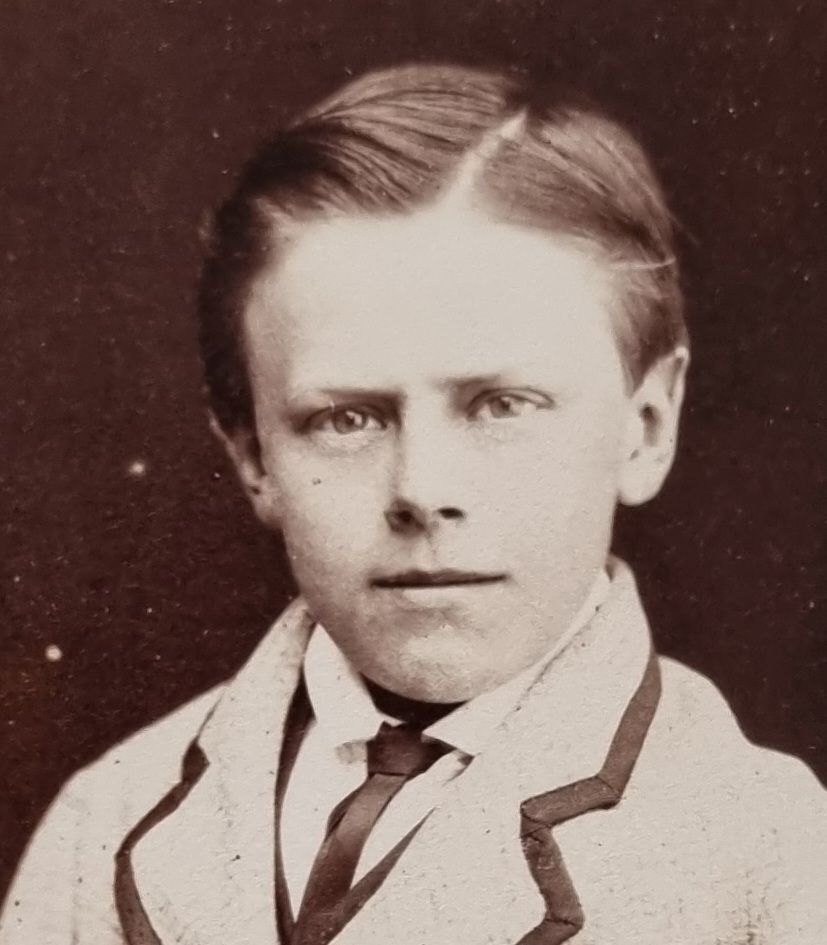
It featured a young boy wearing a smart suit staring intently at the camera.
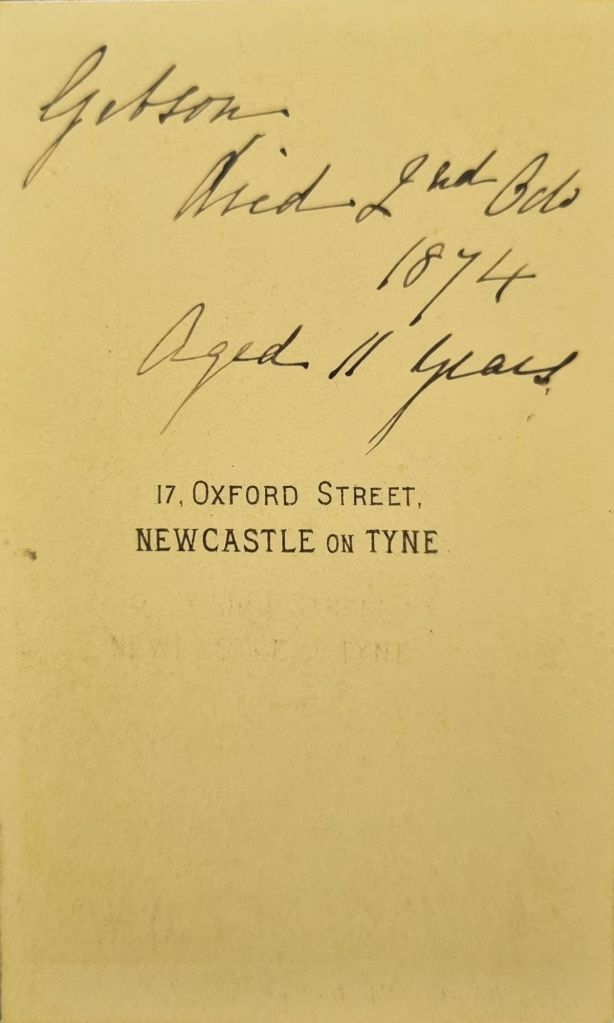
Turning the card over, handwritten details on the verso revealed that his young life had been cut short.
Using these brief details, a newspaper search produced a notice published in the Newcastle Journal identifying who the young boy was.
Newcastle Journal (3rd October 1874). From British Newspaper Archive.
Fast approaching his 12th birthday, Gibson Blenkinsop Youll lived with his father, a Newcastle solicitor, his mother, two younger sisters, and two domestic servants in the house where he died.
The cause of his premature death was not given, however child mortality in industrial cities such as Newcastle in Victorian times was far higher than today.
Looking at Gibson’s portrait photograph, I reflected on the long-term impact such a tragedy must have had on his family and how they fared subsequently.
The answer was a testament to human resilience.
Gibson’s father, John Gibson Youll, continued with his legal career in Newcastle, working as a partner in the firm of Chartres and Youll.
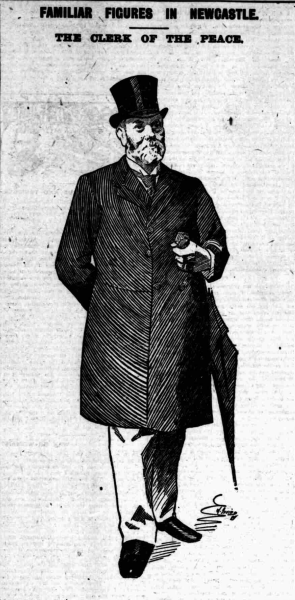
Politically ambitious, he first served as a Town Councillor, then Alderman, Sheriff and Deputy Mayor, before being appointed Clerk of the Peace in 1890.
In this prestigious role, he oversaw Newcastle’s courts and trade organisations for 25 years.
Mr. Youll’s celebrity was reflected in his appearance in a newspaper feature devoted to ‘Familiar Figures in Newcastle’ illustrated by a fine double-column line drawing.
From Newcastle Weekly Chronicle (2nd September 1899). From British Newspaper Archive.
As to the Youll family, they moved following Gibson’s death to the Newcastle suburb of Jesmond.
Three more sons, Harold, Chartres and Geoffrey, were born and all later joined the legal profession.
Harold and Chartres worked as solicitors in the family firm whilst Geoffrey was a barrister.
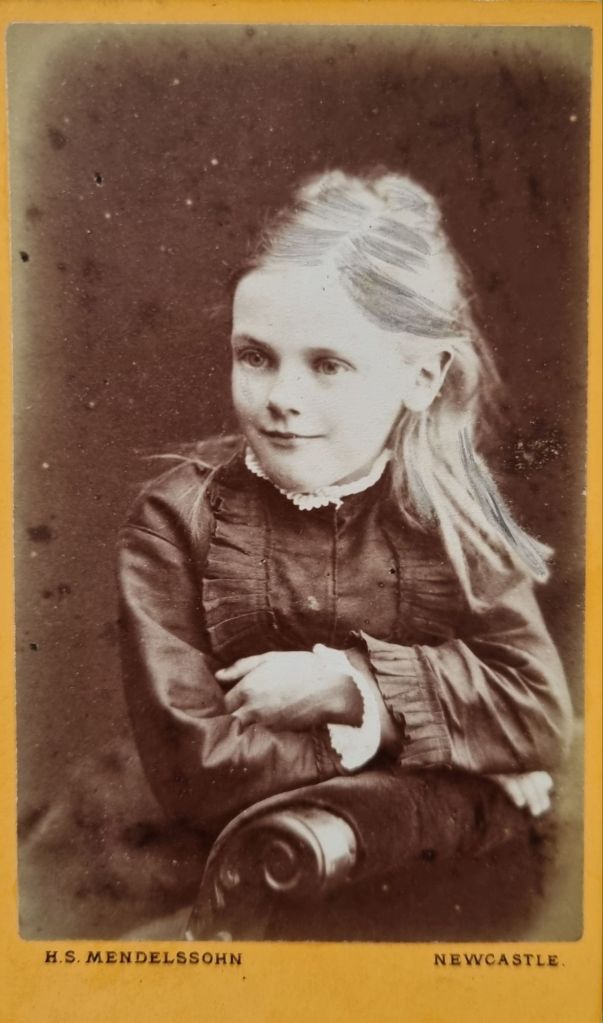
Like their late elder brother, Ethel and Maude Youll were also photographed as children by HS Mendelssohn in his Newcastle studio.
At this point in the 1870s, he was establishing a reputation, and both portraits demonstrate his ability to capture the girls’ personalities and characters.
The use of a sofa arm for Ethel to lean on and a pile of cushions on which Maude sits reflect the techniques needed to engage a young child having their photograph taken.
The Youll family’s patronage also indicated their trust in HS Mendelssohn’s skills as a portraitist.
As the two Youll girls became young women, their status in Newcastle society attracted the attention of the press.
In September 1892, Miss Ethel Youll married Mr. Mortimer Ash with younger sister Maude as one of her bridesmaids.
Under the headline ‘Fashionable Wedding at Jesmond,’ the Newcastle Weekly Chronicle described how “the bride wore a white satin gown trimmed with lace and orange blossom and Limerick lace veil.”
Of particular note was that the bridegroom was from another Newcastle – that in New South Wales, Australia.
Public records reveal that Mort and Ethel Ash later lived in London and had three sons before her death in Surrey in 1935 at the age of 67.
Meanwhile, Maude lived with her brothers at the family home in Newcastle until the deaths of their parents.
First, their mother Frances passed away in 1909 followed six years later by their father.
John Gibson Youll’s passing, aged 78, was widely reported in the national press and marked by fulsome obituaries in the Newcastle papers.
One described how “he was for many years identified with the public life of the city, and was held in high esteem.”
From Newcastle Daily Journal (27th March 1915). From British Newspaper Archive.
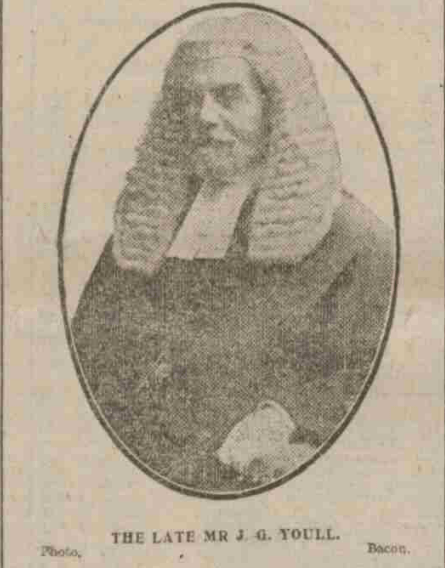
His photograph, reproduced as a half-tone by the Newcastle Daily Journal, was credited to ‘Bacon’ whose photographic studio and later camera shop in the city thrived well into the 20th century.
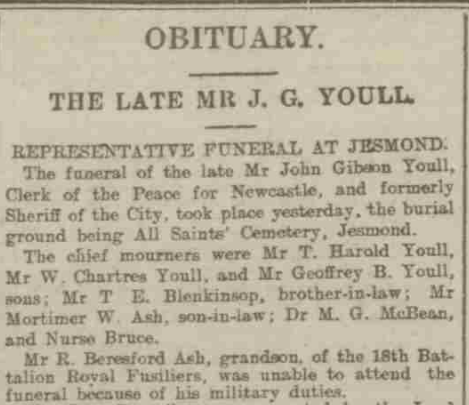
One report of Mr. Youll’s funeral listed dozens and dozens of mourners by name, though in the midst of the First World War, Mort and Ethel’s son Beresford “was unable to attend the funeral because of his military duties.”
From Newcastle Daily Journal (30th March 1915). From British Newspaper Archive.
Following their father’s death, Maude and Harold Youll as the eldest surviving children were appointed executors of his will.
As a prosperous and successful solicitor, J. Gibson Youll’s estate was valued at nearly £15,000 (more than £1.9 million today).
Like her elder sister, Maude Youll too got married, later settling in the West Country where she died in 1955 at the age of 85.
The loss of Gibson, the Youll’s eldest child, was one that must have stayed with members of his family throughout their lives.
Years after his death, the young boy still featured in public records such as the 1911 Census, which his father completed and signed.
Asked to record the number of children born during the Youll’s marriage, he recored the figure ‘1’ in the extreme right-hand column for ‘Children who have Died.’
Extract from 1911 Census for Beechwood, Clayton Road, Newcastle. From My Ancestry.
Had it not been for HS Mendelssohn’s surviving carte-de-visite, this chapter in one family’s visual history might have been lost completely.
Instead, the details captured on its verso poignantly record Gibson Blenkinsop Youll’s death 150 years ago, his features immortalised in a fine portrait photograph.
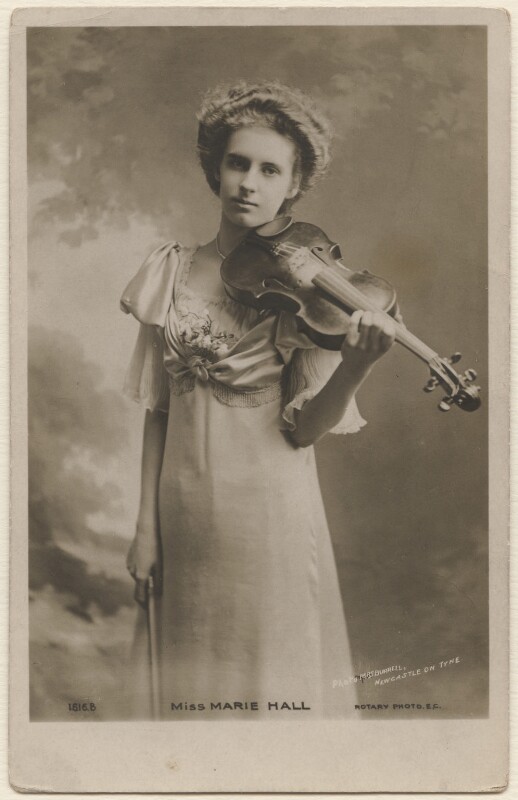
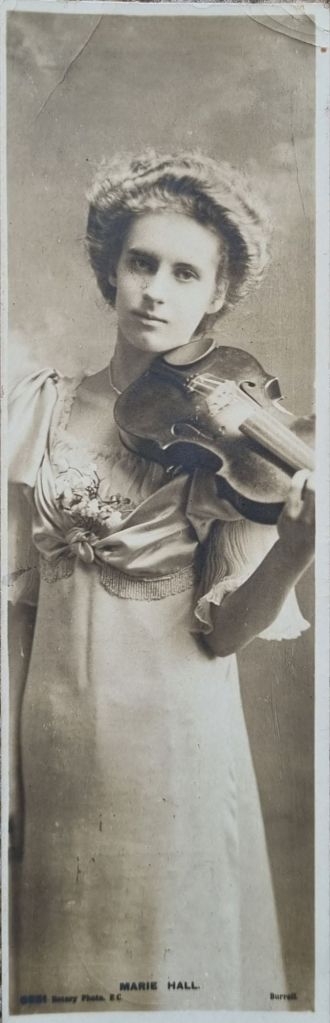
Last month’s post about ‘Mrs. Burrell’ (8th July 2024) has prompted further research into the photographic portraits she produced of the celebrated British violinist Marie Hall.
Whilst searching for the third, in which the violinist appears minus her instrument, I came across the image above reformatted (below) as a ‘book postcard.’
The original portrait has been unceremoniously edited to remove much of Marie Hall’s right arm, half of the violin’s fretboard and a few of her fingers.
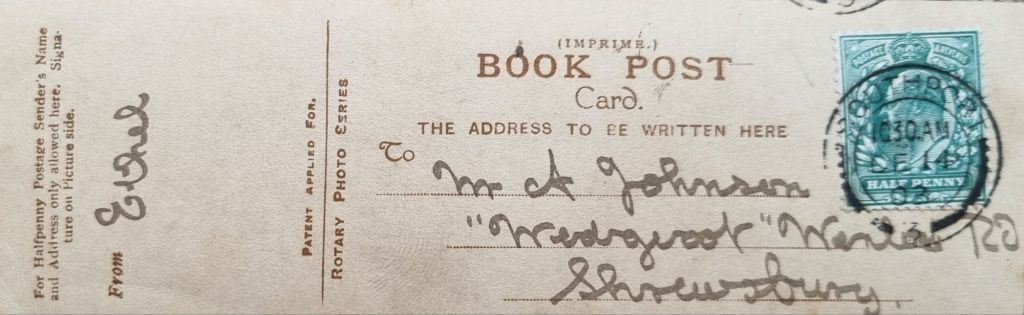
Despite this unsympathetic treatment, the ‘book postcard’ format (in the shape of a bookmark, hence the name) proved popular.
Thanks to photo postcards, fans of Edwardian stage and music hall performers could obtain an affordable souvenir portrait of their idols.
The ‘book postcard’ offered customers a slimmer and cheaper option, but its reduced size came with certain restrictions.
The sender could write their name (and address if desired) on the left-hand side of the card, but postal regulations forbade the inclusion of any message or additional text.
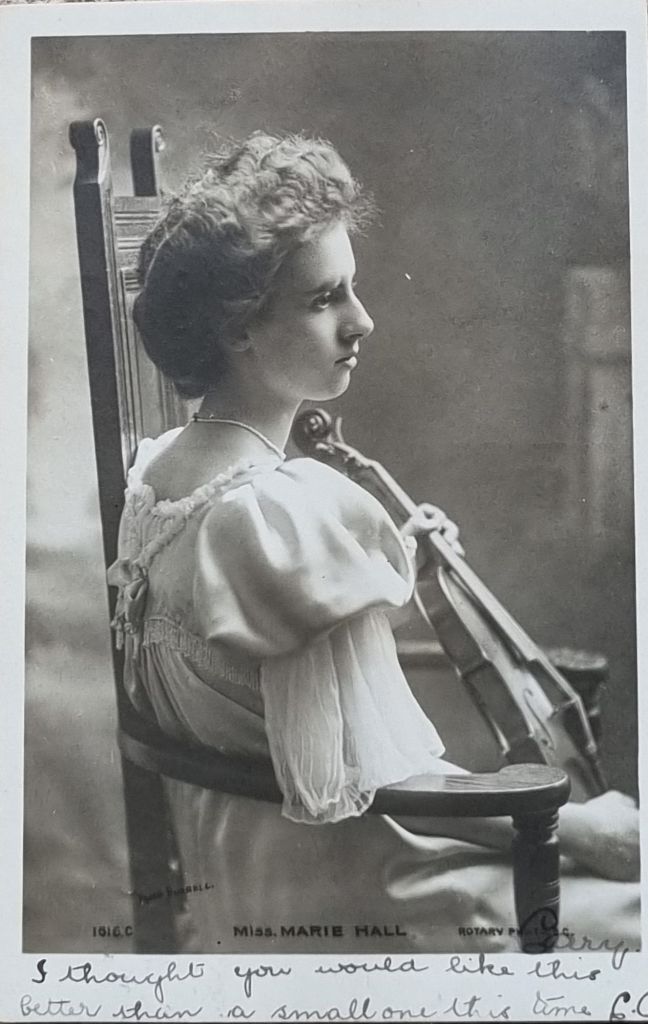
This was a drawback highlighted by one Marie Hall fan in a postcard posted in Newcastle on Tyne on 14th November 1903.
Signing herself as ‘C.H.’, ‘Carry’ went straight to the point on the front of the card to her female sendee in Redcar.
“I thought you would like this better than a small one this time,” she wrote, suggesting that a book postcard version of the violinist had been sent previously.
In the space ‘used for communication’ on the card’s verso, she continued: “This girl is shortly coming to N/C to perform in the Town Hall. She is a splendid player on the violin. I expect you will have heard about her.”
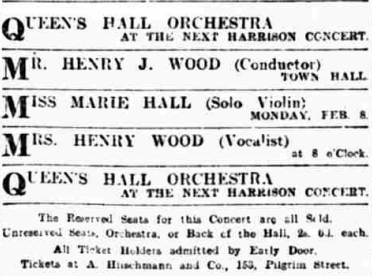
The concert referred to took place at Newcastle Town Hall a few weeks later on Monday 8th February 1904.
Newcastle Daily Chronicle (27th January 1904). From British Newspaper Archive.
For the concert, Miss Marie Hall was accompanied by the Queen’s Hall Orchestra conducted by Henry J. Wood, best known today as the founder of what became the BBC Proms.
A review of the concert (Newcastle Weekly Chronicle, 13th February 1904) reveals that the teenage violinist played Paganini’s Concerto in D and the Rondo Capriccioso by Saint-Saens.
The reviewer concluded that the concert was “an immense success, the applause being loud and long in each instance.”
Given her tangible enthusiasm, perhaps ‘Carry’ was able to attend the Newcastle concert in person, armed with a Marie Hall postcard and obtain an autograph afterwards at the stage door.
The success of W. & D. Downey of South Shields, Newcastle on Tyne and London was built upon its ability to recruit and train the right photographers.
As demonstrated by this mini-series profiling Downey luminaries, an association with the company, as royal warrant holders to Queen Victoria, proved useful when selling their own products.
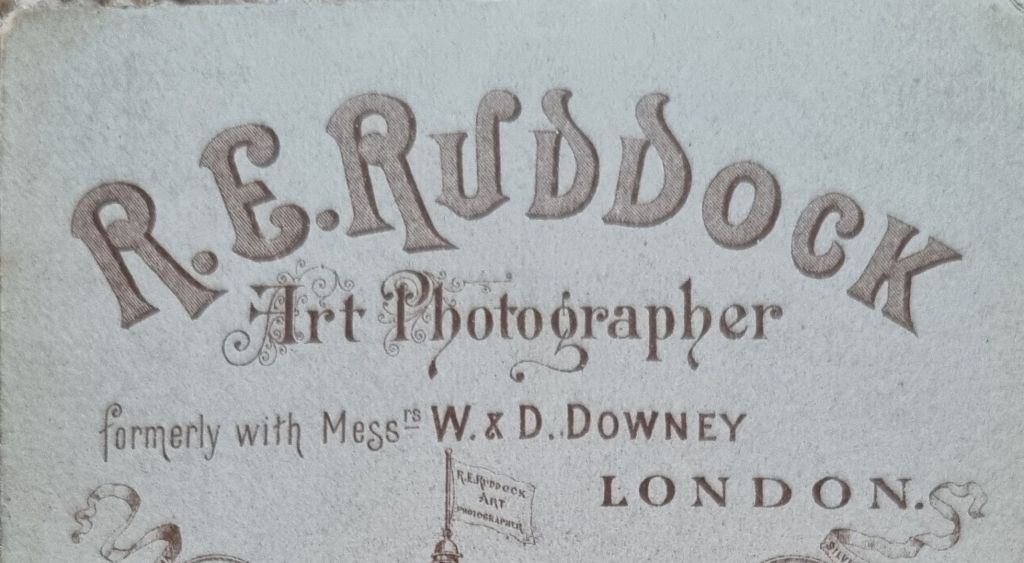
Our final subject also used the verso of his cartes-de-visite to announce that he was ‘formerly with Messrs. W. & D. Downey, London.’
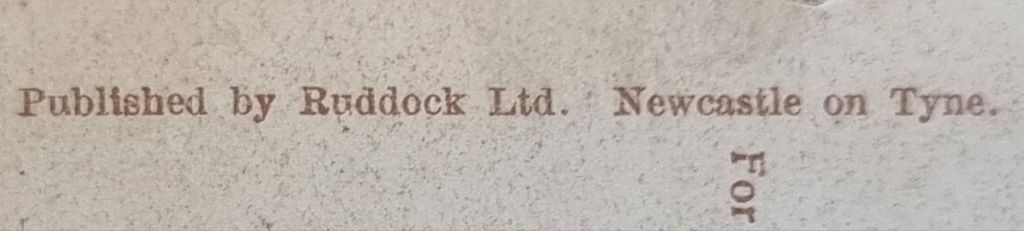
Given Downey’s origins in the North East of England, R. E. Ruddock’s credentials were impeccable.
Born in Bishopwearmouth, Sunderland in 1863, Richard Emerson Ruddock was part of a media family.
His father, also Richard, was a newspaper reporter and later executive with the Newcastle Chronicle for nearly half a century.
By the time he was 18, Ruddock junior was living in the Elswick district of Newcastle, working as an ‘artist and photographer.’
Given his father’s position, an opportunity to work for ‘W. & D. Downey, London’ may well have emerged through family contacts.
Though details of his assignments are not known, a period of employment at Downey’s studio in Ebury Street, Belgravia during the 1880s would have provided invaluable experience.
By the end of the decade, R.E. Ruddock had returned to the North East and formed a partnership with another Tyneside photographer, Matthew Auty (1850-1895).
‘Auty & Ruddock’ operated from the seaside resort of Tynemouth where the Ruddock family including wife Alice and a son, also named Richard, made their home.
However, in March 1892, the ‘Auty & Ruddock’ business partnership was dissolved and six months later, R.E. Ruddock launched his own portrait studio in nearby Newcastle.
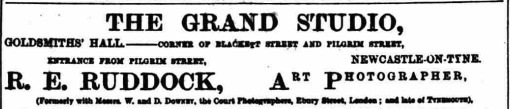
The opening of the Grand Studio in Goldsmiths Hall ‘at the corner of Blackett Street and Pilgrim Street’ was supported by an advertising campaign in the local press.
This included a double-column advertisement in a number of newspapers including the Newcastle Daily Chronicle.
Newcastle Daily Chronicle (6th September 1892). From British Newspaper Archive.
The ad went on to include a detailed description of the new studio and its facilities.
One press report described it as ‘an establishment which, for luxury and artistic refinement, excels anything of the kind either in the provinces or in London itself.’
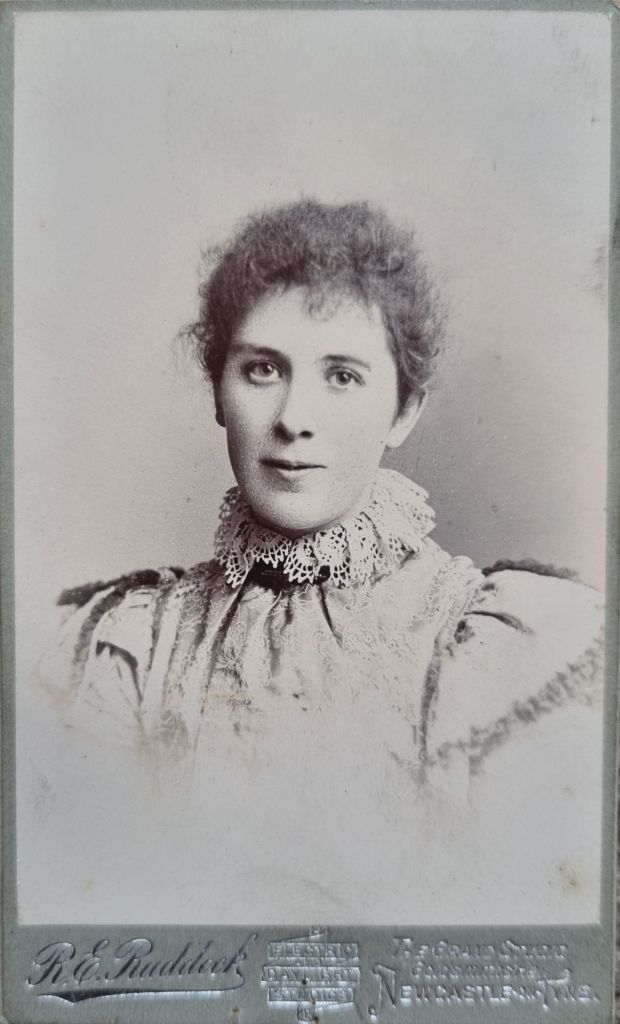
The high-quality theme extended to the design of Ruddock’s products including silver-etched cartes-de-visite.
At some point during the 1890s, ‘R.E. Ruddock’ became ‘Ruddock Ltd’ and extended its range to include portraits mounted within embossed cardboard frames.
Despite the fact that photographic portraits credited to ‘Ruddock Ltd’ still appeared as illustrations in the Newcastle press, the business was in financial difficulties.
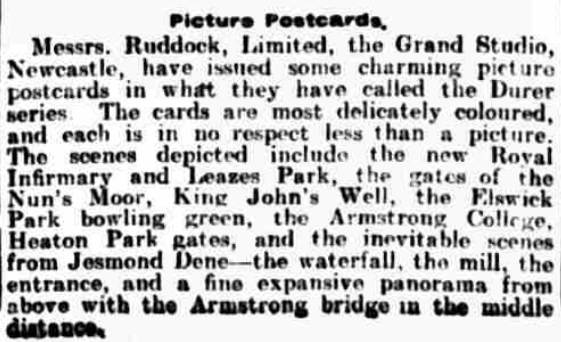
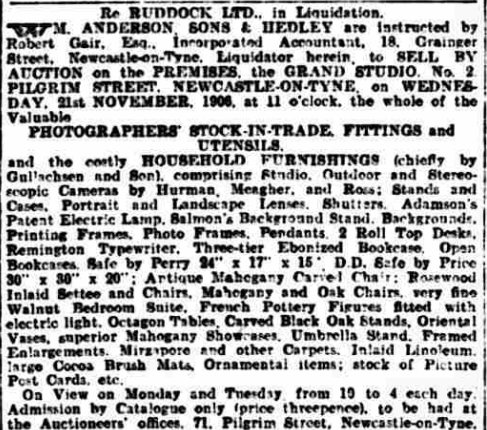
By November, its liquidation was announced and the ‘Grand Studio’ and its high-quality contents including a ‘stock of picture postcards’ were sold by auction, presumably to realise assets and pay off creditors.
Newcastle Daily Chronicle (19th November 1906). From the British Newspaper Archive.
Whatever the reputational damage caused by this business failure, R.E. Ruddock was not yet finished with photography. Far from it.
Within a short time, he took over the long-established studio of ‘Abel Lewis’ on Whiteladies Road in the Clifton district of Bristol.
Lewis, a long-serving member of the Royal Photographic Society, established his award-winning photography studio in the 1860s, first in the Isle of Man and then in Bristol.
Following the Ruddock take-over, photographs credited to ‘Ruddock Ltd, Clifton’ were soon appearing in local newspapers suggesting access to a wider photographic and press network.
However, the death in 1908 of Richard Ruddock senior prompted his son’s return to Newcastle where he was among the funeral’s chief mourners.
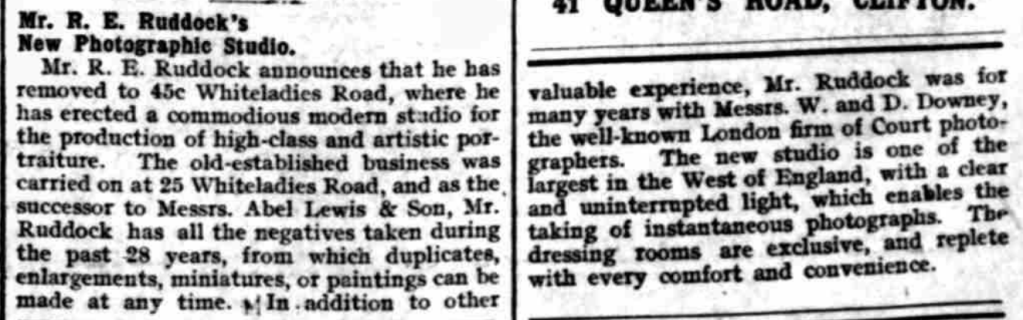
Mr. R.E. Ruddock’s Bristol studio continued to operate and in 1912, he opened a ‘New Photographic Studio’ further along Whiteladies Road.
The press article announcing this news also found space to highlight its proprietor’s connection ‘for many years’ to ‘W. & D. Downey, the well-known firm of court photographers.’
Clifton and Redland Free Press (15th March 1912). From British Newspaper Archive.
However, two years later, the same paper reported: ‘We understand that Mr. Frank Holmes has acquired the goodwill and business of Mr. R. E. Ruddock (late Abel Lewis).’
That August, as the First World War broke out, Ruddock emigrated to the United States where he was then joined by his wife Alice and other family members, settling in Seattle, Washington.
US citizenship followed in 1921 where he continued working as a photographer.
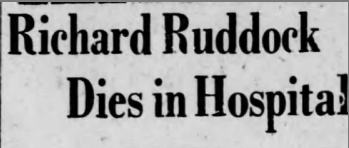
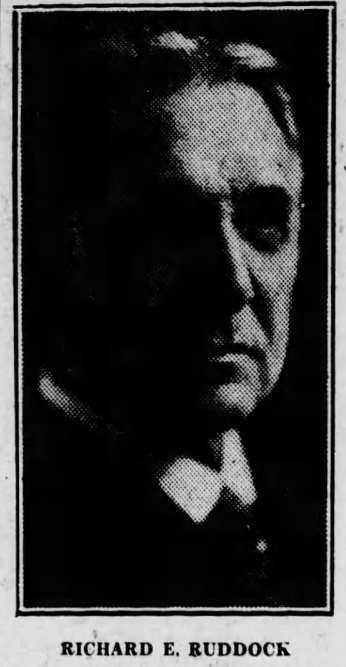
His death a decade later, aged 68 in Scranton, Pennsylvania, was marked by a short newspaper obituaryaccompanied by a poorly reproduced halftone photograph.
The Tribune, Scranton, Pennsylvania(23rd November 1931). From Newspapers.com by MyAncestry.
The paper reported that Ruddock, a widower, died of pneumonia, had ‘been employed at J.B. Schreiver’s [photographic] studio during the past several years’ and ‘was well-known in the city.’
Like his fellow Downey luminaries H.S. Mendelssohn and John Edwards, who featured earlier in this mini-series, a handful of Ruddock’s portraits feature in the collection of the National Portrait Gallery, London.
The value of having worked for W. & D. Downey whether on Tyneside or in London seems to have held all our subjects in good stead during their subsequent careers in photography.
If you can add any information to each of the four photographers profiled or if you know of examples of their work, please use the comments box at the bottom of this blogpost or any of the blogposts below.
Our third subject is someone who Messrs. Mendelssohn and Edwards are likely to have known during their years with Downey.
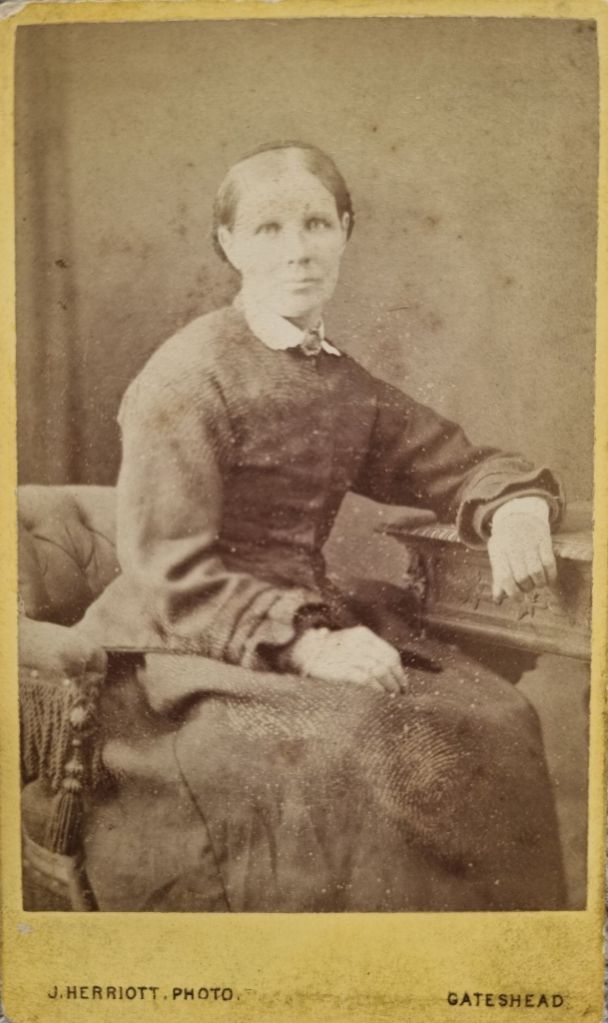
James Herriott was born in 1846 in Blaydon, a town on the Tyne, a few miles across the river from Newcastle.
By his mid-twenties, he was married with a baby daughter and living in nearby Gateshead.
But he had already made valuable connections in the photographic business.
During his teens, he was apprenticed to Mawson & Swan of Newcastle on Tyne, who supplied firms like W. & D. Downey with the latest photographic equipment and chemicals.
Given this background, it’s perhaps unsurprising that James Herriott’s own career in photography was soon underway in Gateshead.
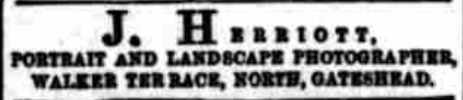
The 1871 census recorded his ‘rank, profession or occupation’ as ‘photographic artist,’ and the following year, a newspaper advertisement described him as a ‘portrait and landscape photographer.’
Advertisement from Gateshead Observer (1st June 1872). From British Newspaper Archive.
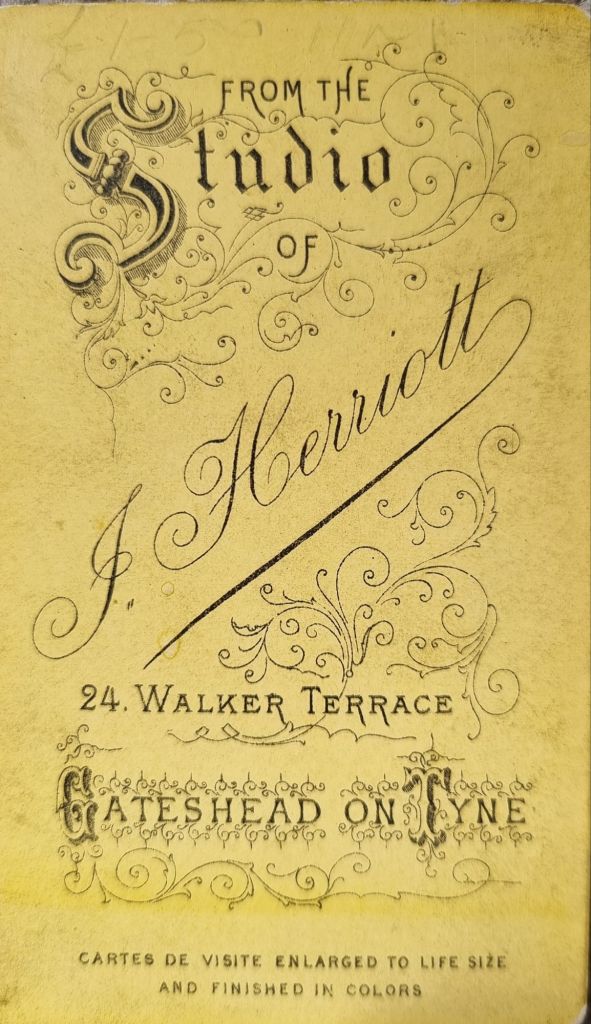
In terms of portraits, he offered customers ‘cartes de visite enlarged to life size and finished in colours.’
Whether his business hit financial or other difficulties, a notice published in the Newcastle Journal in April 1875 signalled a change of direction.
After closing for alterations, the notice stated, the business would re-open ‘under the named management of Downey and Herriott’ and ‘they will be prepared to do the highest class of work in the Art.’
The named ‘Mr. Downey, late of Oxford Street, Newcastle’ was photographer John Downey (1823-1906), elder brother of William and Daniel.
As described in part 1 of this mini-series, John Downey was previously in partnership for two years (1872-73) with Hayman Seleg (H.S.) Mendelssohn, another Downey apprentice.
The Downey & Herriott partnership though appears to have been even more short-lived.
Within a year or so, James Herriott was again advertising his Gateshead business, now with a second studio address in the centre of Newcastle.
Meanwhile, John Downey had set up ‘J & C. Downey, Photo Artists’ with his eldest son Cornelius at a separate address in Gateshead.
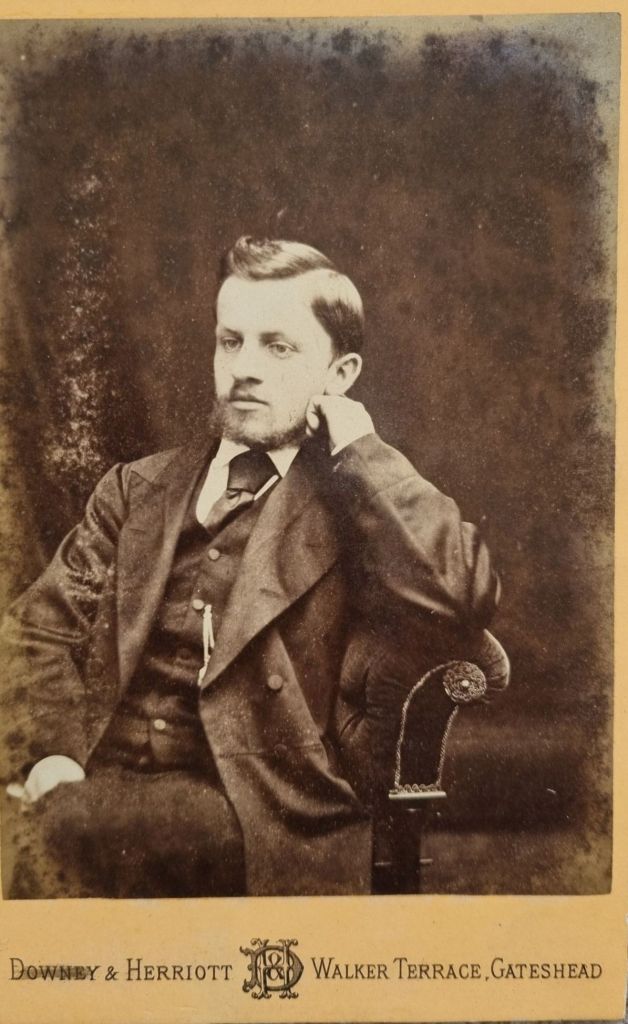
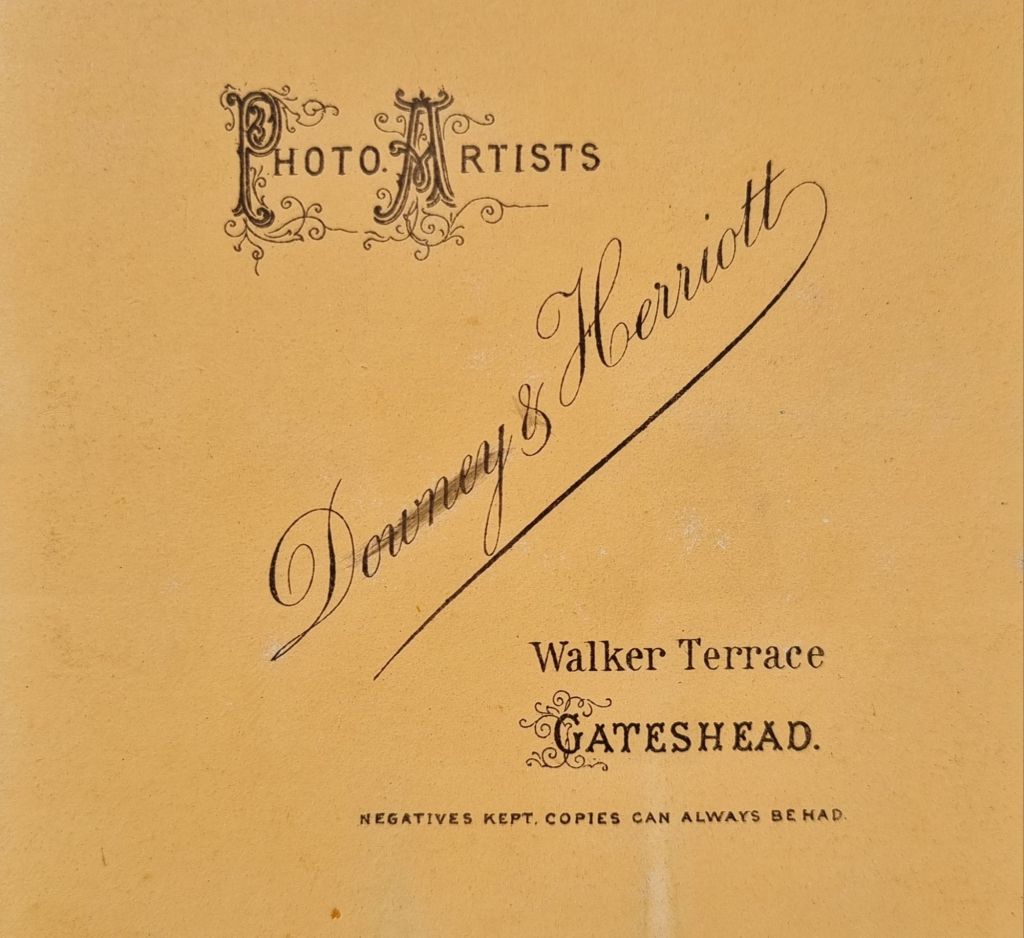
Downey & Herriott portraits are hard to track down, however, this cabinet card is unusual in that it shows the name ‘Downey’ crossed out on both front and the verso.
One explanation might be that card stock printed for the Downey & Herriott partnership was later used by James Herriott alone, perhaps because finances were still tight.
It’s also noticeable that both Downey & Herriott and Downey & Mendelssohn used the same distinctive orange-coloured card for their products.
Herriott’s involvement with the Downey photographic empire points to a long-running relationship.
It was one that perhaps began in the late-1860s following his Mawson & Swan apprenticeship and before opening his own Gateshead studio.
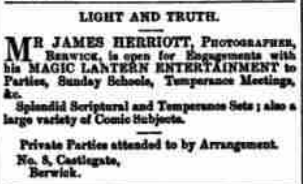
In a 1920s newspaper interview recalling ‘the days of his apprenticeship to W. and D. Downey,’ he recalled assisting ‘Mr. Downey’ in photographing both Queen Victoria and the Prince of Wales (later Edward VII) on separate occasions.
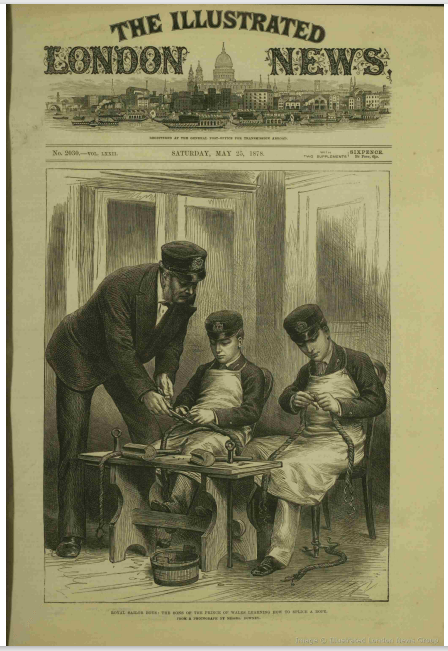
Another memory of a Downey assignment involved photographing Prince Albert (known as Eddy) and Prince George (the future George V) ‘while learning to splice rope’ during naval training aboard HMS Britannia.
In May 1878, the resulting photograph credited to ‘Messrs. Downey’ was reproduced as an engraving by the Illustrated London News.
Supplement to Illustrated London News (25th May 1878). From British Newspaper Archive.
The dating of 1878, at a point when James Herriott was running his own photographic business, reinforces the idea that he was a trusted Downey associate.
Within a few years though, the Tyneside chapter of his life came to an end.
In March 1882, the Berwick Advertiser listed ‘James Herriott, photographer’ among ‘incomers’ to Berwick on Tweed.
This move together with his wife Martha and their four children might be explained by James’s parents originating from Berwick, the northernmost town in England, where James had become a Freeman at the age of 21.
Resuming his photography, he opened a studio in the town’s Castlegate offering a range of portraits.
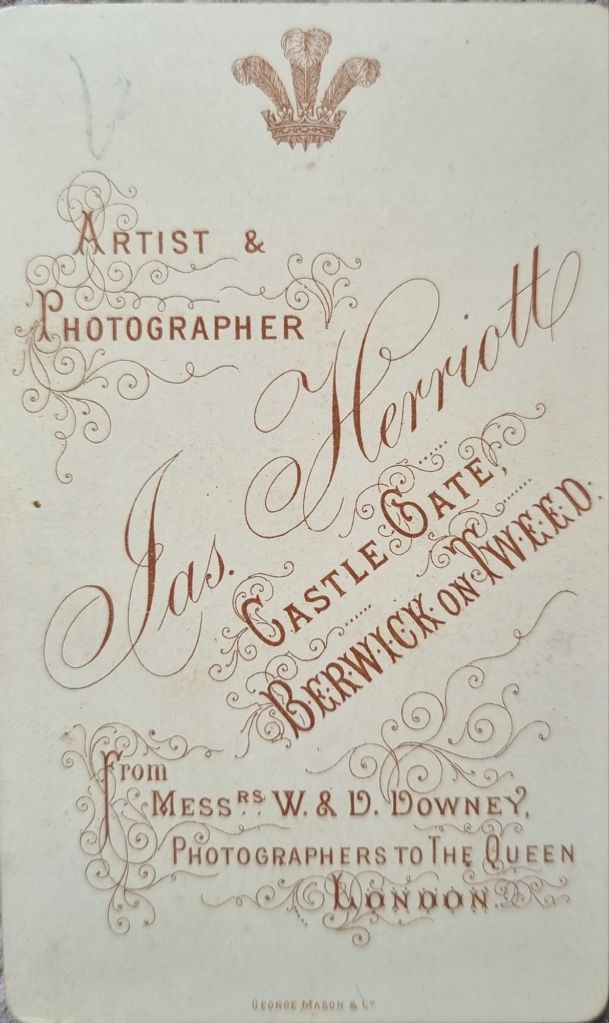
The verso of his products also took the opportunity to highlight his professional link to ‘Messrs. W. &. D. Downey, Photographers to the Queen, London.’
The absence of company records means it is difficult to identify individual Downey photographers as their names rarely appeared in print alongside their work.
Researching John Edwards life and career in photography is further complicated by his name being so commonplace.
Fortunately, he features in the 1881 census which recorded that he was born in the ‘East Indies,’ that he was a ‘photographer,’ and that he was 67 years old.
At that point, he was living with his wife Harriet together with a servant in London’s Kensington district.
In that same year, 1881, an advertisement in the London press highlighted ‘Mr. John Edwards’ photographic portrait studio near Hyde Park Corner, a well-known London landmark.
The Morning Post (11th June 1881). From British Newspaper Archive.
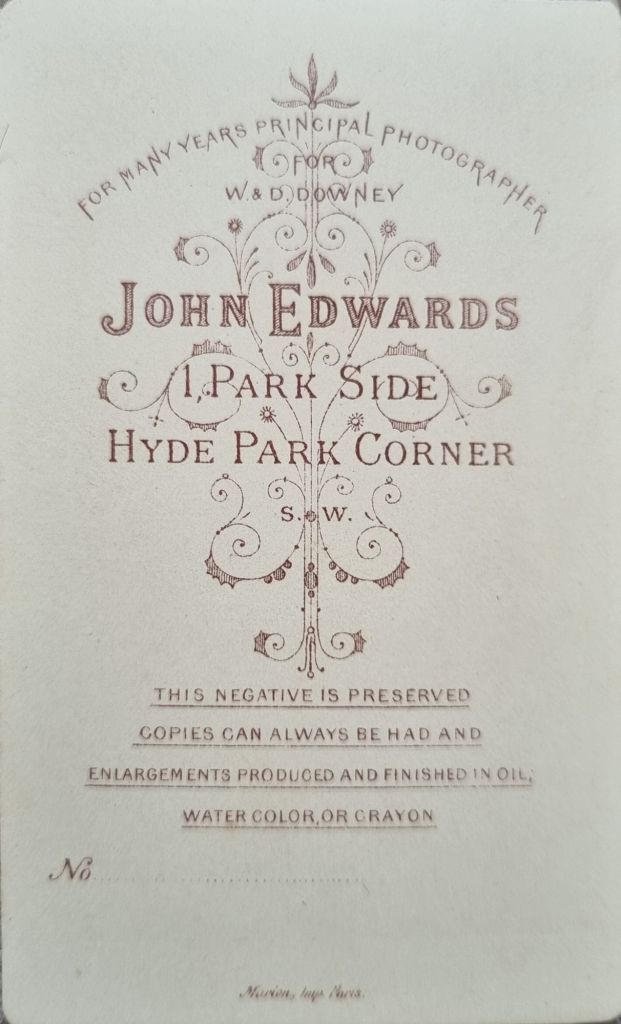
Given the reference to ‘for many years,’ it seems reasonable to conclude that Edwards employment as Downey’s ‘principal photographer’ covered the early decades of the company’s history.
This was a period from 1860 to 1880 during which it consolidated its base in the North East of England and established a London studio on Ebury Street in Belgravia.
It would also point to John Edwards photographing key Downey clients from royalty to celebrities, working alongside co-founders William and Daniel Downey and a growing team of staff.
His own studio at 1 Park Side, Hyde Park Corner attracted the sort of well-to-do individuals and families that he would have been well used to photographing.
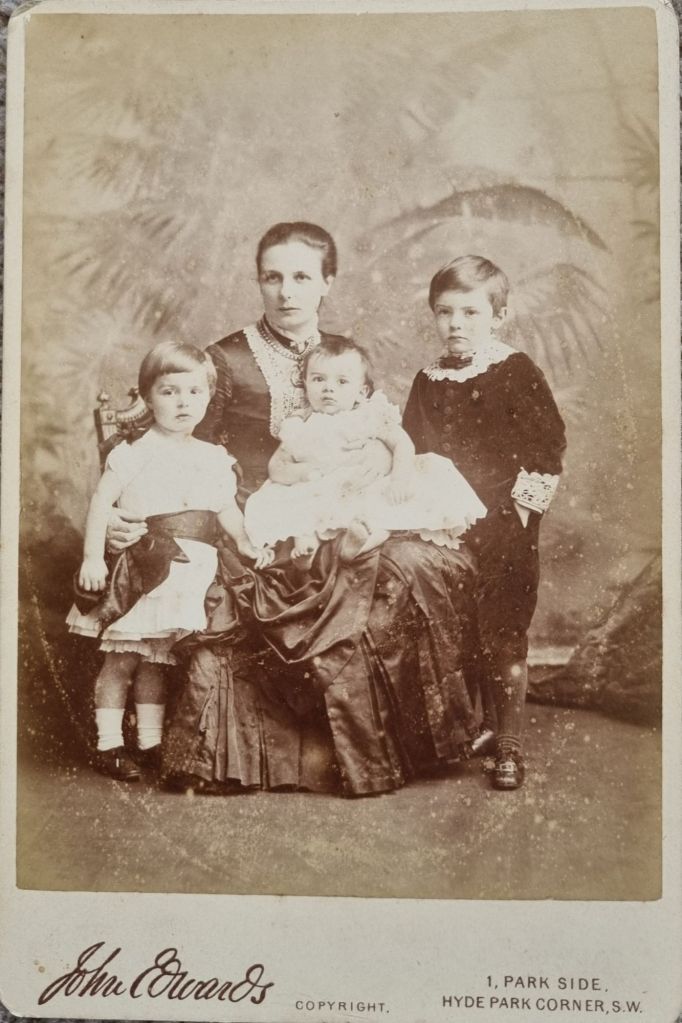
A cabinet card, recently added to the Pressphotoman collection, well illustrates his studio’s appeal to a particular class of customer.
Helpfully, the verso featured the names and ages of those appearing before his studio camera in 1884.
Mrs. Laura Hoare is pictured with her children Geoffrey, aged 5, two year-old Lionel and Richard, aged 10 months.
All three took their mother’s maiden name as their middle name, which is also recorded in pencil on the verso.
The daughter of a baronet, Laura Lennard had married William Hoare in 1878.
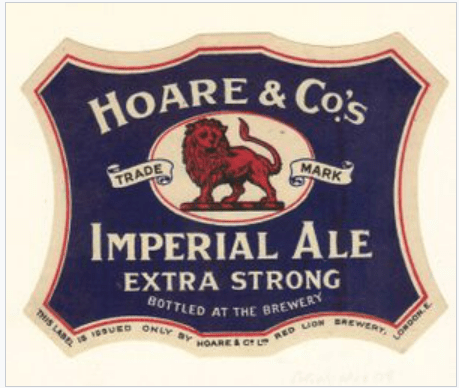
Educated at Eton and Cambridge University, William was a partner in both Hoare’s Bank and a family brewery business, which included a chain of more than 100 public houses.
Label for Hoare & Co’s Imperial Ale.
The couple went on to have four children including a daughter Mary, whose ‘personal occupation’ is recorded in the 1911 census as ‘poultry keeper.’
However, one of the boys who featured in the 1884 cabinet card, like many of his generation, pre-deceased both his parents.
Their youngest son Richard was killed in 1916 whilst serving as a captain during the First World War.
When Laura died in 1929 aged 78, the press report of her funeral recorded both Geoffrey and Lionel as being Lieutenant Colonels, perhaps indicating military careers rather than banking or brewing.
Their father, who was absent from the family photo created by John Edwards, had died in 1925.
The former Downey principal photographer continued to portray London’s leading families for posterity.
He also supplied images to the illustrated press as the halftone revolution enabled photographic reproduction.
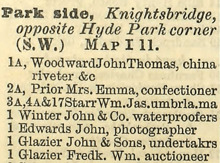
By the mid-1890s, his studio at 1 Park Side shared its address with three other businesses – a waterproofers, an undertakers, and an auctioneer – reflecting that a golden era of portrait photography was nearing its end.
Extract from 1895 Street Directory. From My Ancestry
Shortly before his death, John Edwards’ business including its negatives was taken over by yet another Downey graduate, the celebrated Australian photographer H. Walter Barnett (1862-1934).
However, ‘John Edwards’ portraits continued to appear in newspapers as stock images.
A small number of other portraits credited to John Edwards (1813-1898) feature in the collection of the National Portrait Gallery, London.
If you have any further details of John Edwards biography or know other examples of his photography, please use the comments box below.
In part 3 of this mini-series, how a Mawson & Swan apprentice in Newcastle on Tyne became a trusted Downey assistant, photographing Queen Victoria and the future Edward VII and George V.
Research into the photographic firm W. & D. Downey of South Shields, Newcastle upon Tyne and London is regularly published on this blog.
A number of photographers who worked for the Downey brothers, William (1829-1915) and Daniel (1831-1881), later went on to enjoy successful careers of their own.
Over coming weeks, a Pressphotoman mini-series will share new research on a selection of Downey luminaries.
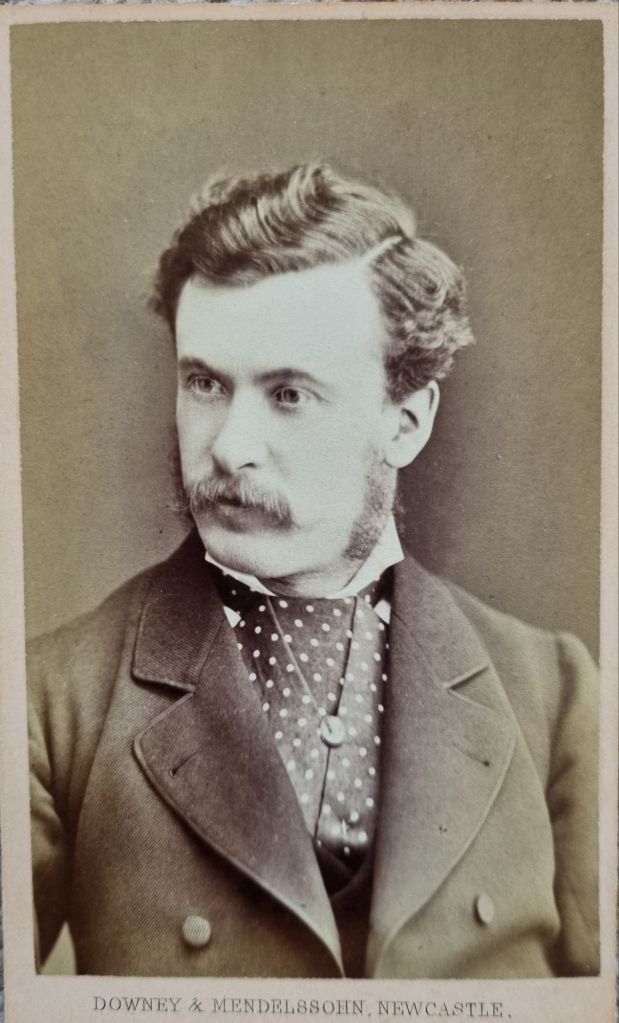
When the celebrated portrait photographer Hayman Seleg (H.S.) Mendelssohn died in 1908, aged 59, a brief obituary in the Royal Photographic Society Journal described how his career began.
Born in 1847 in Germany and raised in Poland, “… political reasons obliged him to leave that country, and he settled at Newcastle-on-Tyne where he commenced his photographic career.”
It went on: “After serving with Mr. D. Downey for some time, he went into business for himself.”
This passing reference to Daniel Downey points to an apprenticeship with the company’s Eldon Square studio in the late 1860s.
W. & D. Downey’s Newcastle on Tyne studio was located in Eldon Square. Courtesy of Private Collection, Zurich.
Married with two very young children, the transition to life in a different country must have been unimaginably hard.
The Mendelssohns were one of only 160 Jewish families living in Newcastle at that time.
By 1871, they were sharing a house with jeweller Simon Falk and his family in Blandford Street, a short walk from the city’s railway station.
Evidently, employment with W. & D. Downey proved life-changing.
In the 1871 census, Mr. Mendelssohn’s stated ‘trade or profession’ was ‘photographer.’
He then formed a business partnership with another of the Downey brothers, John (1823-1906), who was also a photographer.
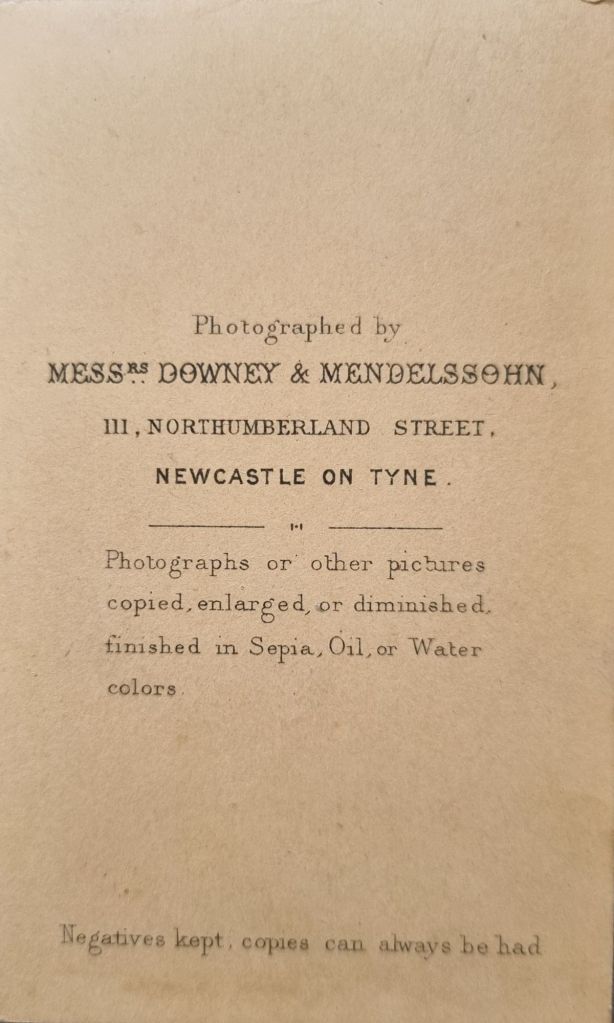
In late-January 1872, the firm of Downey & Mendelssohn opened for business in premises at 111 Northumberland Street.
Interestingly, this was the address that W. & D. Downey used when it opened its first studio in Newcastle on Tyne a decade earlier.
Advertisements placed by Downey & Mendelssohn in the Newcastle press offered a range of services.
These included ‘photographs taken of any animate or inanimate object’ and ‘Rembrandt portraits taken to perfection,’ however conventional portraits were their stock-in-trade.
Another notable detail was the addition of the term ‘Photo Artists’ in line with an array of competitors in the city, adding ‘sepia, oil or water colors [sic]’ to their products.
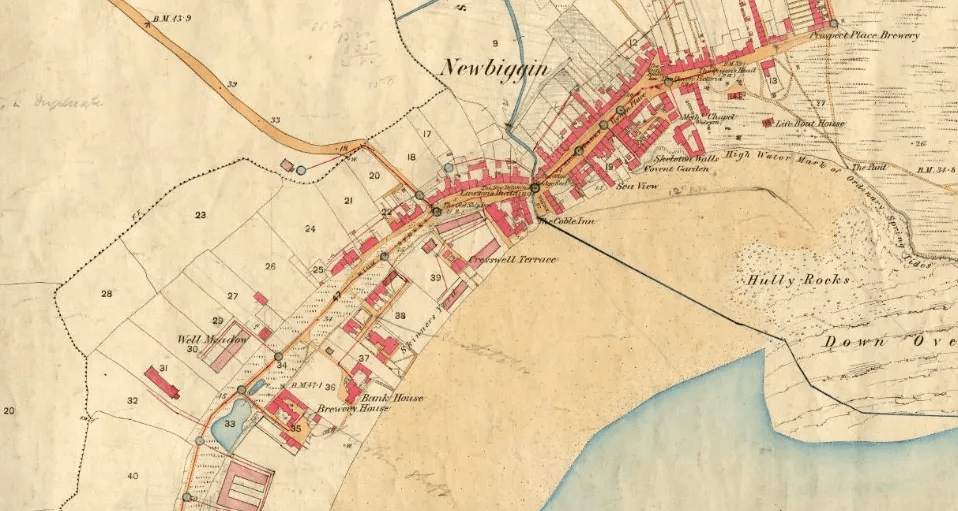
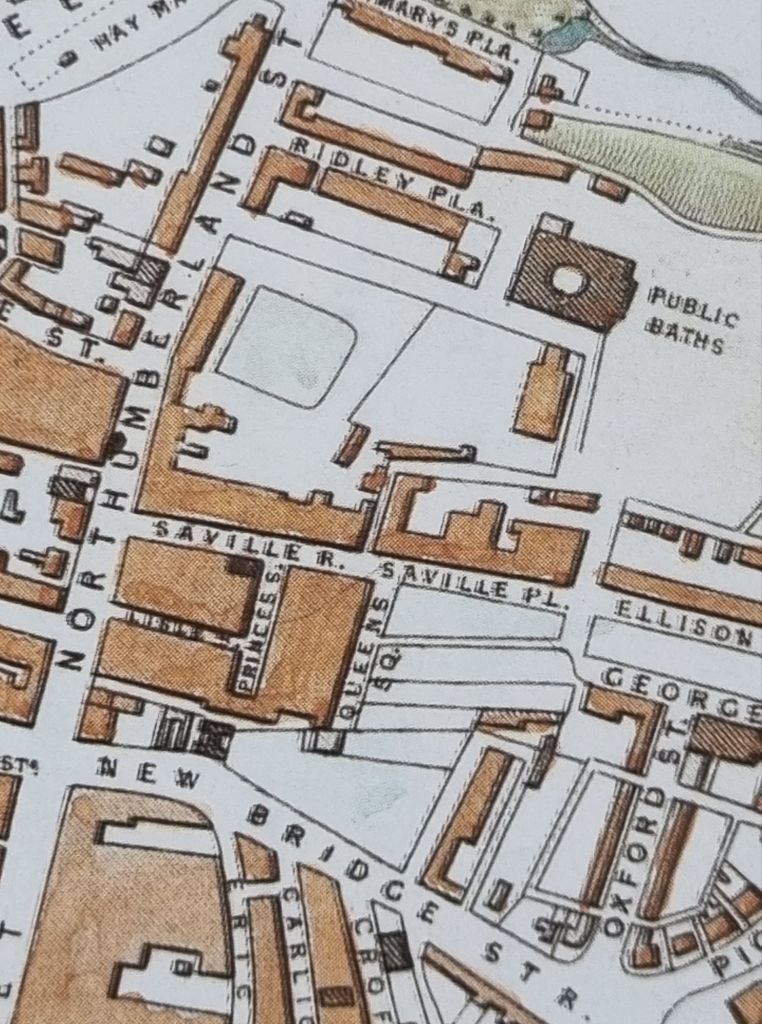
Within 12 months, their studio moved a short distance from 111 Northumberland Street (left of map below) to 17 Oxford Street (bottom right).
Studio moved from Northumberland Street (left) to nearby Oxford Street (bottom right). From John Tallis map of Newcastle on Tyne (1854).
The firm also adopted a distinctive orange-coloured card for presenting its products.
In December 1873, Downey & Mendelssohn’s two-year long partnership came to an end, and ‘H. S. Mendelssohn, Photo Artists’ became sole proprietor of 17 Oxford Street.
By this point, he was an active participant in the photographic life of the city.
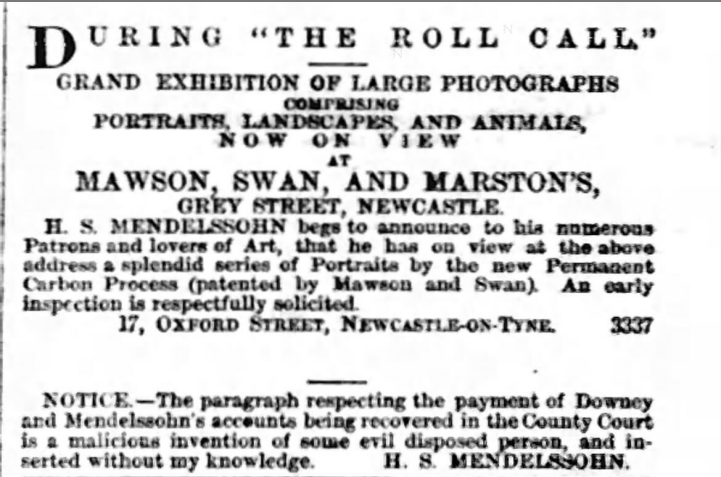
This 1874 newspaper advertisement promoted an exhibition of his portraits using the carbon print process invented in Newcastle by (Sir) Joseph Swan.
Newcastle Daily Journal (15th October 1874). From British Newspaper Archive.
However, the adjoining ‘Notice’ hints at a form of intimidation that could be viewed as anti-semitic, which he was willing to confront publicly.
From this point, H.S. Mendelssohn’s career went from strength to strength.
He opened a further studio in nearby Sunderland in 1881 and the following year, his business expanded to London where his growing reputation attracted prestigious clients.
Queen Victoria’s diary entry for 20th December 1883, made at Osborne House on the Isle of Wight, recorded: “A new photographer, named Mendelssohn, has taken lovely photographs of [Victoria’s grandchildren] Daisy [Margaret of Connaught] and little Arthur [Duke of Connaught].”
Whether W. & D. Downey’s royal warrant to Her Majesty (1879) played a part, it proved to be the first of many royal commissions.
H.S. Mendelssohn’s career is celebrated in various collections including the National Portrait Gallery, London where he is credited with 70 portraits.
This cabinet card featuring the actress Miss Ellen Terry taken in 1883 demonstrates his skills and how far he had travelled since arriving in Newcastle on Tyne as a refugee fleeing persecution.
Miss Ellen Terry by H.S. Mendelssohn. National Portrait Gallery, London. NPG Ax5571.
In the next post in this mini-series, how Downey’s principal photographer in the 1860s and 1870s used that calling card to attract clients to his own successful portrait studio.
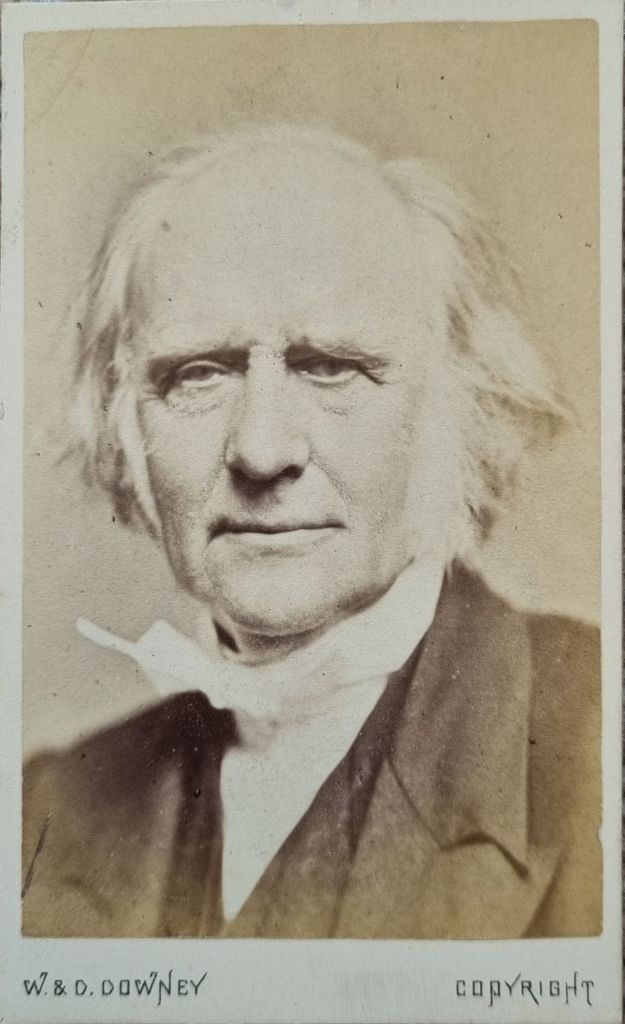
The arrival of the carte de visite format in the late 1850s was enthusiastically embraced by public figures such as Guthrie, who features in commercially available cards produced by several companies.
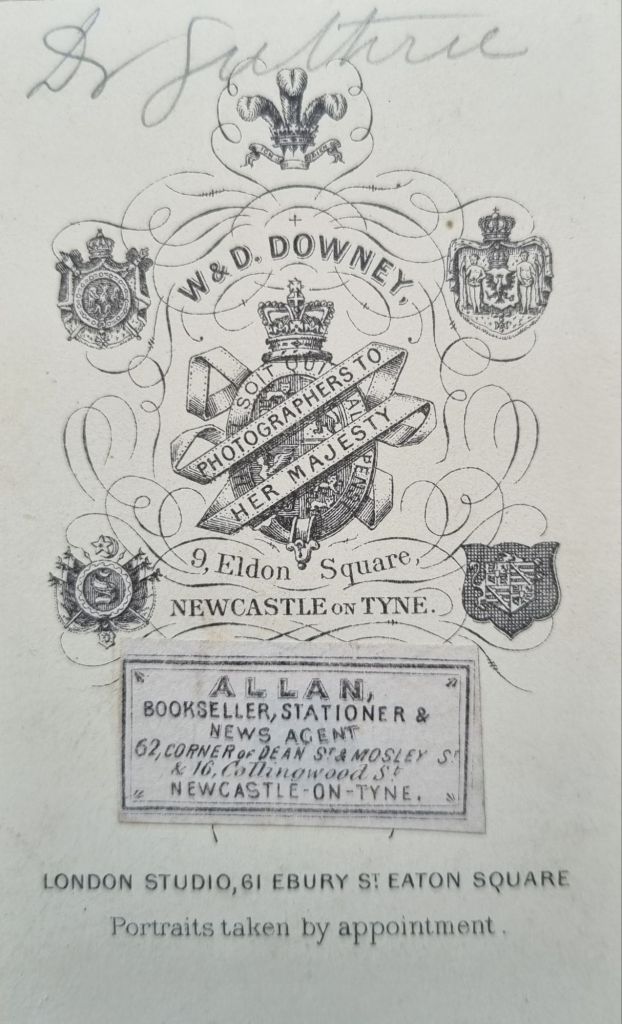
Downey’s version, which so impressed me, dates from the early 1870s towards the end of Guthrie’s life.
At that point, the company’s London studio at 61 Ebury Street off Eaton Square ‘opened occasionally,’ according to press adverts.
This ties in with the proviso stated on the verso that ‘portraits taken by appointment.’
As Downey’s business expanded from its Newcastle upon Tyne base to the capital, it encountered a number of accomplished competitors.
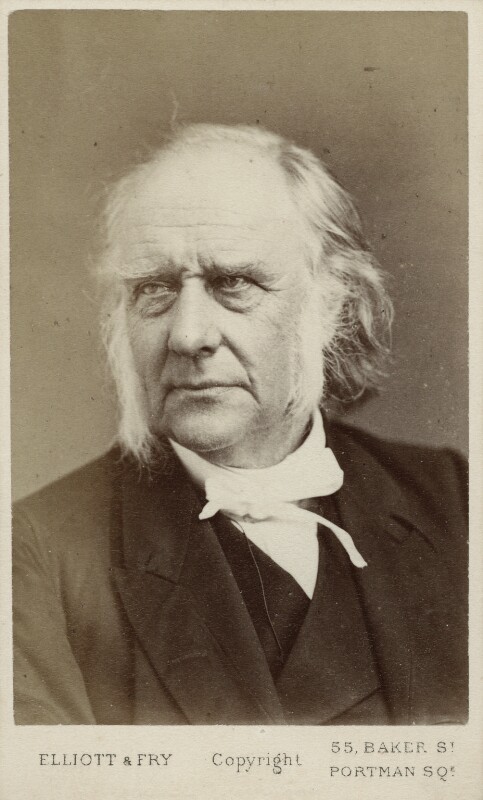
Founded in 1863, Elliott & Fry went on to establish itself as ‘one of the most important in the history of studio portraiture in London,’ according to the National Portrait Gallery, London website.
Its own carte de visite of Thomas Guthrie, also produced in the early 1870s, is in a similar style to Downey’s, perhaps suggesting that they kept an eye on each other’s products.
Guthrie’s death in February 1873 generated national newspaper headlines, and such carte de visites offered customers an affordable keepsake of a respected figure.
Given a choice, which of these Guthrie portraits would you have bought and why?
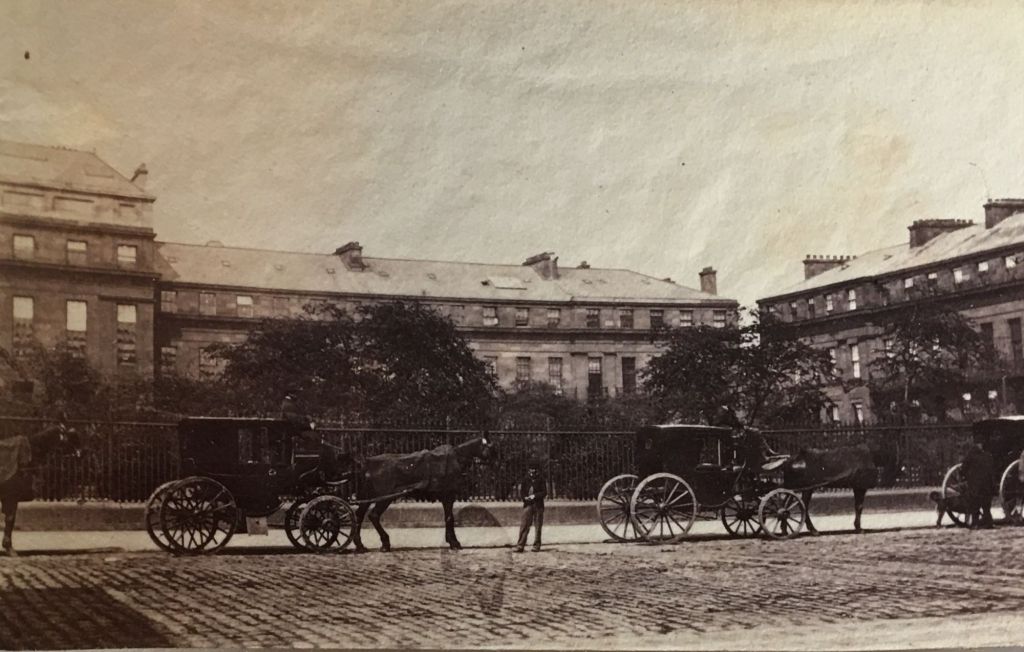
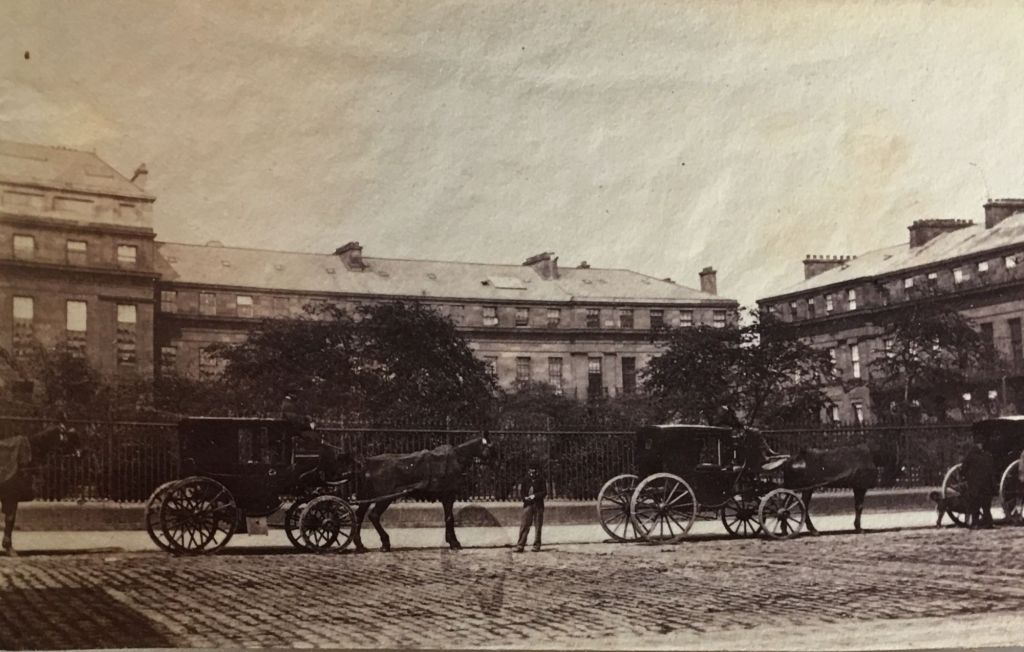
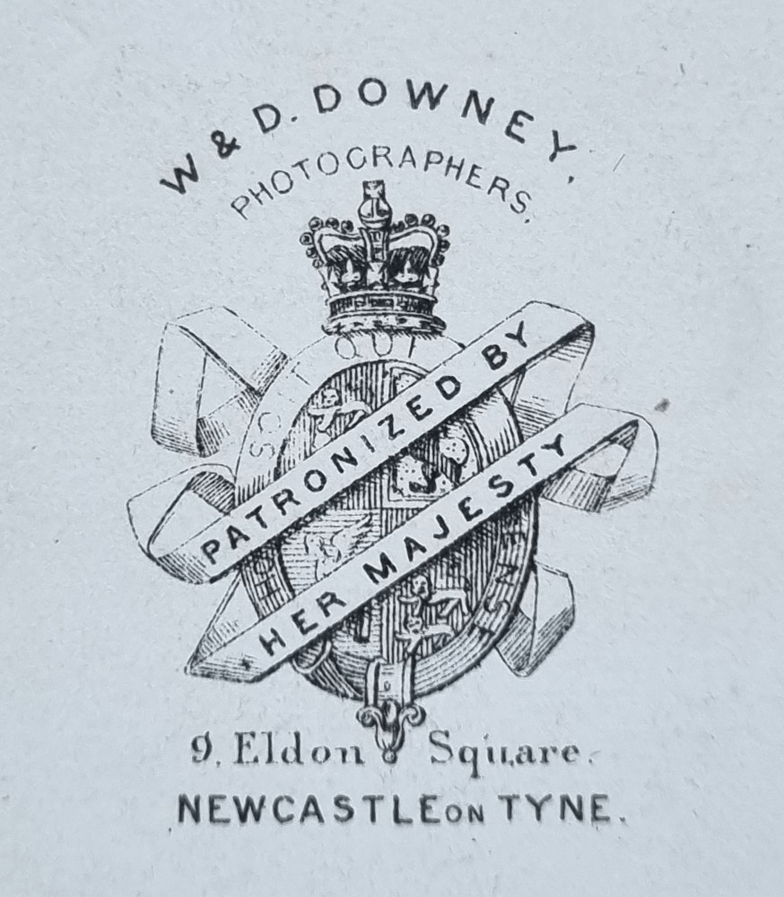
At no. 9 (on the right of facing terrace above), W. & D. Downey opened a new studio in March 1862, consolidating a growing reputation for supplying high-quality portraits.
Other leading photographers in the city such as P.M. Laws, E. Sawyer, R. Turner, G.C. Warren and T. Worden provided the Downey brothers, William and Daniel, with stiff competition.
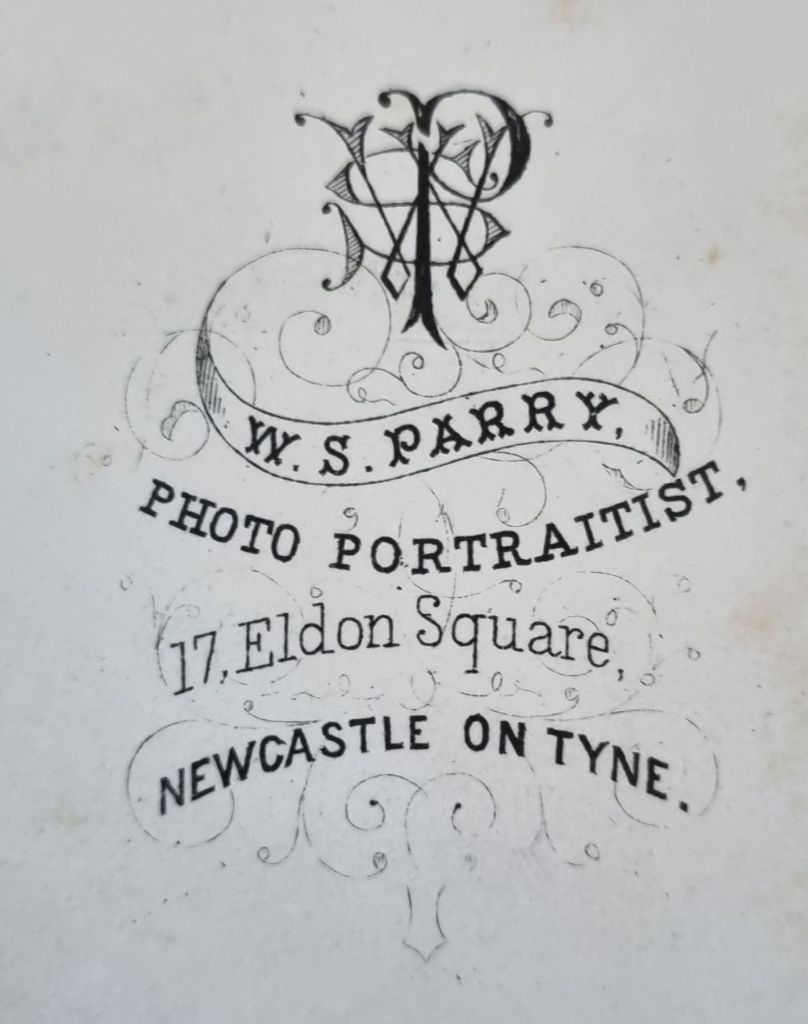
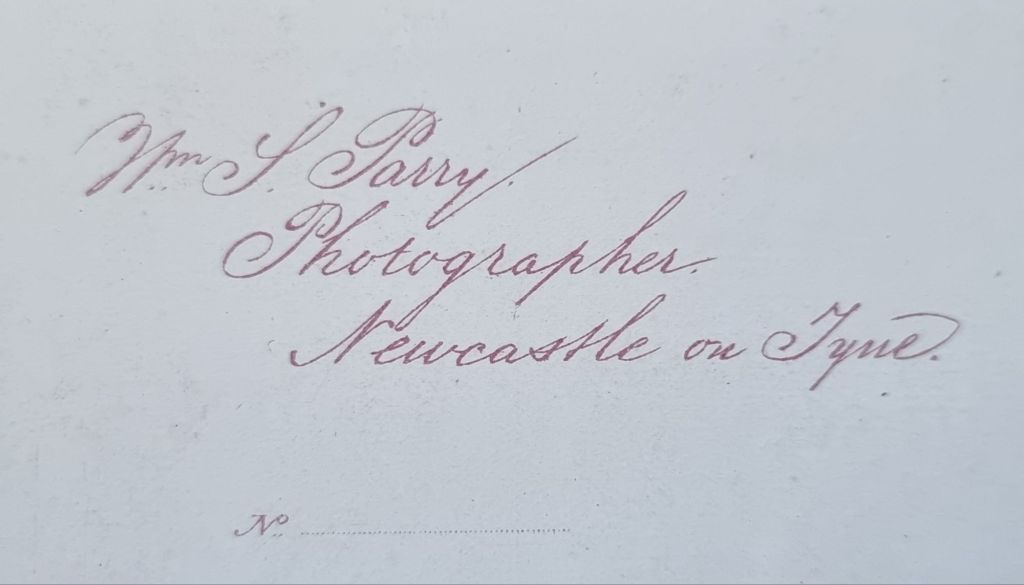
But in 1864, when W.S. Parry moved his long-established studio to no. 17 Eldon Square, a new chapter in Newcastle’s photo wars began.
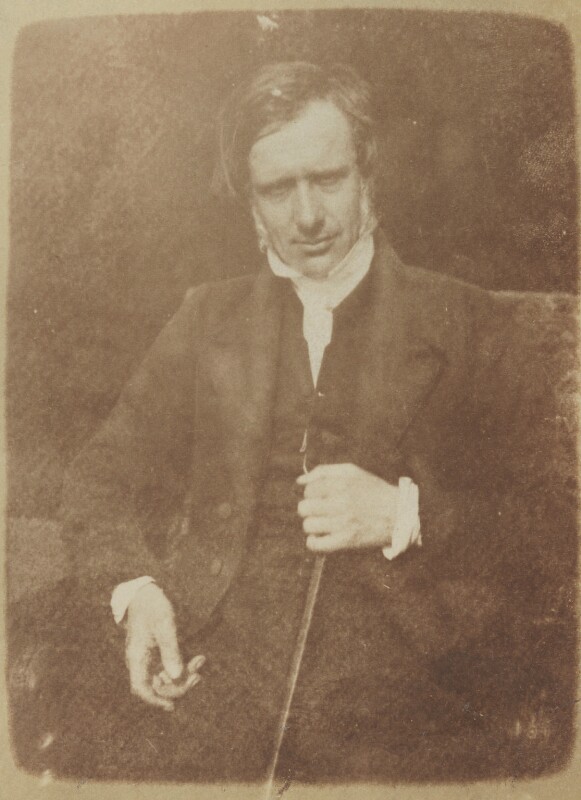
William Softley Parry was born in 1826 across the River Tyne from Newcastle in Gateshead.
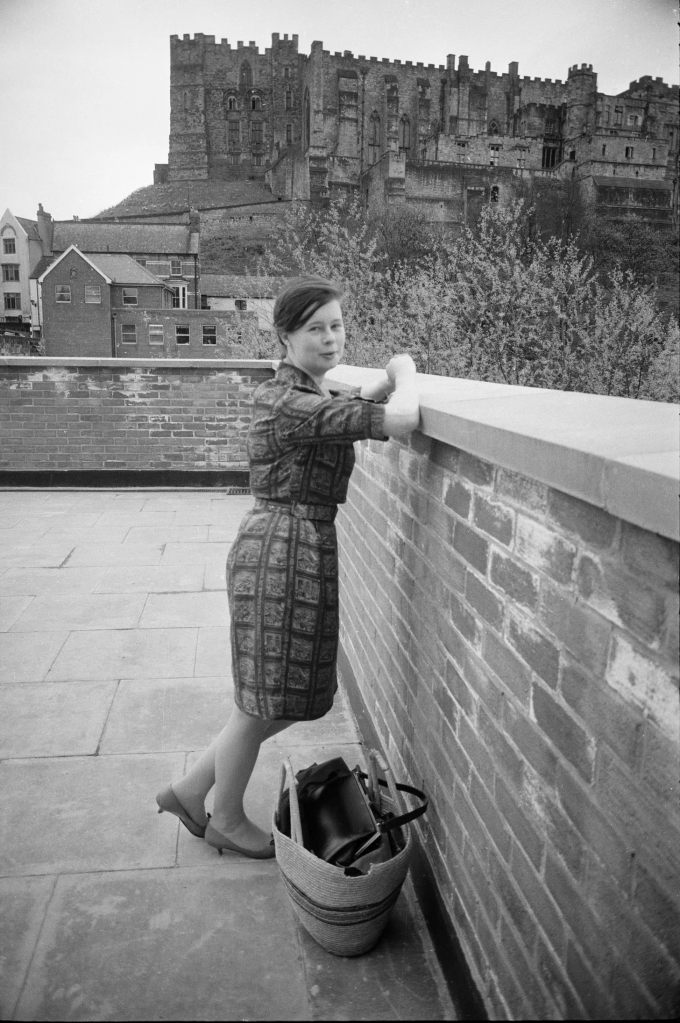
By the late-1840s, he was in business as a window glass merchant in Grainger Street, Newcastle, enjoying the new medium of photography as a hobby.
Initially, he produced paper calotypes which he exhibited at the Annual Conversaziones of the Literary and Philosophical Society of Newcastle upon Tyne (founded 1793), known as the ‘Lit & Phil.’
By 1855, following the invention of the wet collodion process which used glass plates, Parry opened his ‘Photographic Institution’ at 44 Newgate Street (‘nearly opposite St. John’s Lane’).
Press adverts promised ‘female attendance for ladies’ indicating that his wife Christiana was involved in producing the studio’s photographic portraits ‘on paper and glass.’
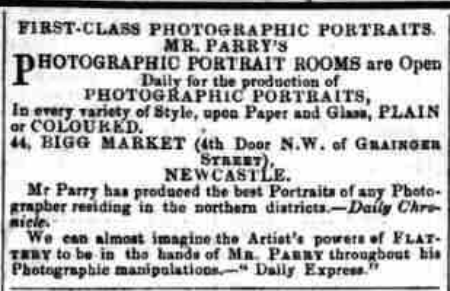
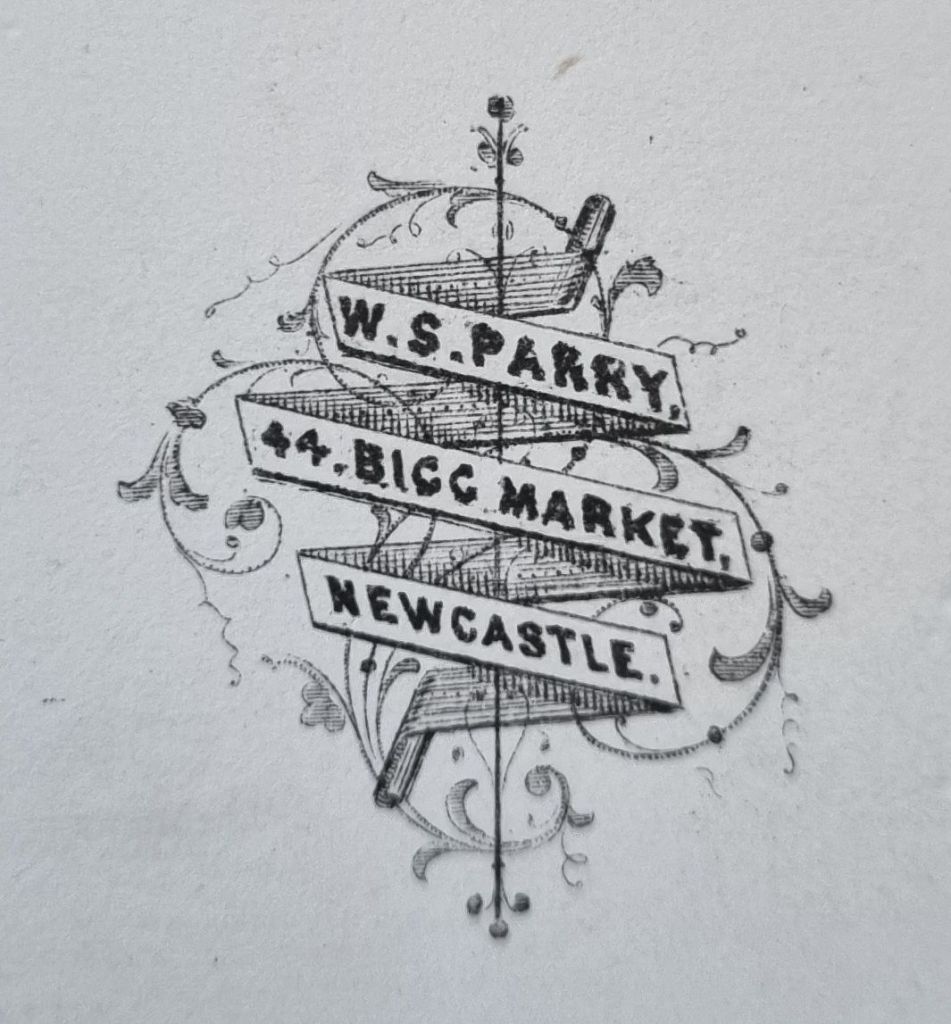
Three years later, the Parry’s business relocated to 44 Bigg Market (‘4th door N.W. of Grainger Street’) and glowing reviews from the national press helped promote its wares.
Advert from North & South Shields Gazette, 15th July 1858. From British Newspaper Archive.
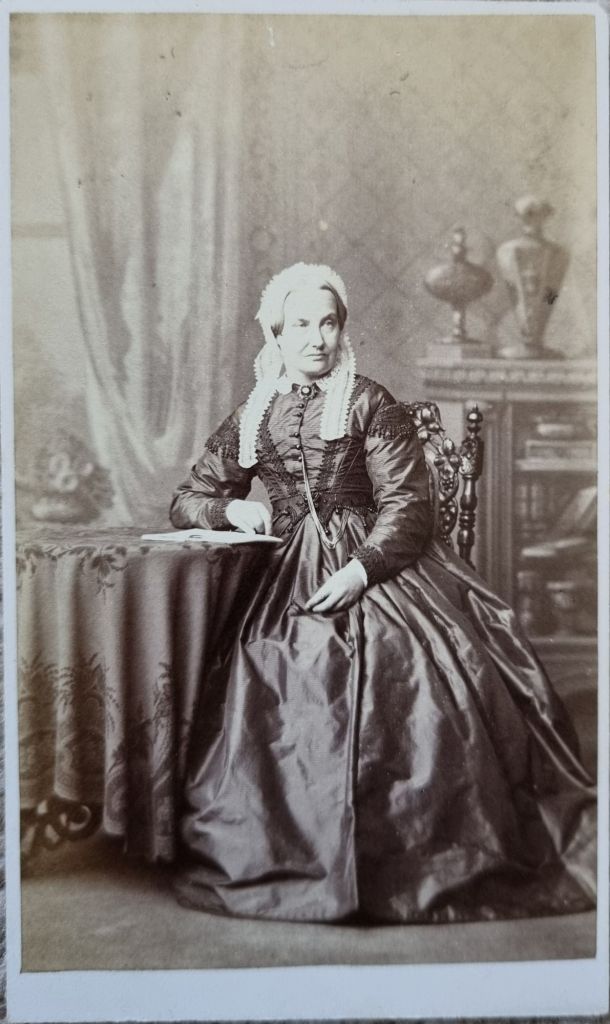
The new fashion of carte de visite portraits attracted a wide variety of clients and offered an affordable opportunity to dress up and look your best.
Then in March 1864 with business evidently booming, an opportunity arose to relocate to the more prestigious surroundings of Eldon Square a few doors down from W. & D. Downey.
According to a notice placed in the Newcastle Courant, no. 17, described as an ‘eligible freehold dwelling house with Coach House and Stable,’ was ‘to be sold by auction.’
Advertisement from Newcastle Courant, 14th March 1864. From British Newspaper Archive.
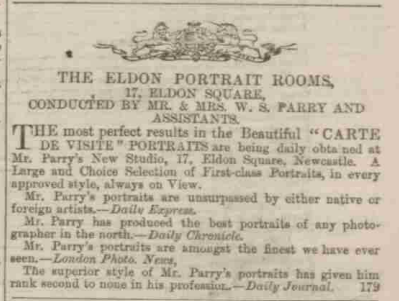
Within a few months, ‘The Eldon Portrait Rooms, 17 Eldon Square, Conducted by Mr. & Mrs. W. S. Parry and Assistants’ were open for business.
Advert from Newcastle Daily Journal, 20th July 1864. From British Newspaper Archive.
The Parry’s arrival cemented Eldon Square’s status as a place to go if you were having your photo portrait taken.
The fact that W. & D. Downey at no. 9 were the Parry’s neighbours and photographic competitors was reflected in subtle changes to their business offer.
For instance, when Downey’s offered a new series of stereoscopic views of Newcastle, Parry raided his photographic archive to advertise ‘local views, and others of general interest … taken from eight to sixteen years ago.’
In the drive for valuable custom, both studios placed almost daily front-page adverts in the Newcastle press.
Downey invariably occupied the top of the left-hand column whilst Parry took a prominent position on the right-hand side of the page.
Then, on 11th July 1868, the Newcastle Daily Journal reported the death of Christiana Parry.
In her late 30s, she had died at no. 17 the previous day though no cause of death was given.
It was the latest tragedy to befall the Parry family whose ‘eldest surviving daughter’ Euphemia died in 1862 aged five.
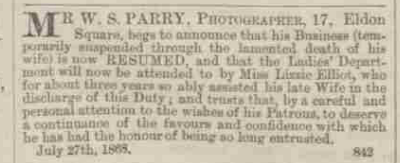
A fortnight after ‘the lamented death of his wife,’ William announced in a press ad that he was resuming business and that the Ladies’ Department would be run by her assistant for the past three years, Miss Lizzie Elliot.
Advert from Newcastle Daily Journal, 24th July 1868. From British Newspaper Archive.
Improvements to the studio in Eldon Square followed.
However, in June 1871, no. 17 was put ‘up for sale’ and William revealed that he would ‘shortly leave for the South.’
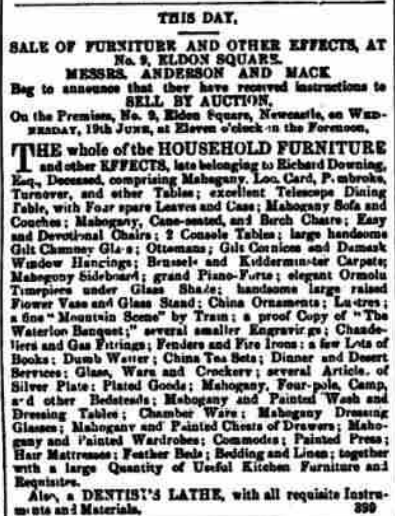
The following month, a two-day sale of ‘household furniture and effects’ and ‘the apparatus and working plant of the Photographic Department’ was held at his home.
After leaving Newcastle, W.S. Parry ran at least two photography businesses, one in Berkshire during the 1870s and another in Birmingham in the 1880s.
However, by the time of his death in 1915, his reputation as a pioneering photographer was long forgotten.
Even the Newcastle Journal, which celebrated his many photographic achievements during the Eldon Square years, headlined its report of an inquest into his death: ‘Blown Over By The Wind: An Old Man’s Sad Death At Middlesbrough.’
Despite this, William Softley Parry’s work as a pioneering photographer is chronicled in two respected accounts of the medium’s early years.
Notably John Werge’s History of Photography (1890) and, more recently, Roger Taylor’s Impressed By Light: British Photography from Paper Negatives, 1840-1860 (2007).
What they confirm is that W. S. Parry’s Newcastle years were both influential and productive and helped put the city on the map as a centre of photographic innovation.
Next time in the final part of this mini-series, new Pressphotoman research explores if an amateur husband-and-wife photography team were also living in Eldon Square at the turn of the 1860s.
This photograph taken in the 1860s shows its terrace of grand houses designed by architects John Dobson and Thomas Oliver and built by Richard Grainger between 1825 and 1831 (Pevsner and Richmond).
Over the next few weeks, Pressphotoman will shine a spotlight on particular houses, exploring their contribution to photography’s growing popularity during the medium’s early decades.
To launch this mini-series, 9 Eldon Square will be an address familiar to regular readers of this blog as the long-time home of commercial photography firm W. & D. Downey.
For new readers, brothers William and Daniel Downey started in business in their native South Shields around 1856, opening a studio in Newcastle upon Tyne at 111 Northumberland Street in the autumn of 1861.
Within six months, the Downey’s had moved studios again and secured a prime location in Eldon Square, one of the city’s most fashionable addresses.
As the census reveals, its residents were typically medical practitioners, dental surgeons, lawyers and well-connected ladies and gentlemen of means with the necessary domestic staff to maintain such a lifestyle.
Research into how no. 9 became home to W. & D. Downey reveals a tragic tale played out in the columns of the local press.
On 7th June 1861, the Newcastle Courant reported an inquest into the death of Richard Downing Esq., a 63 year-old surgeon dentist.
London-born, he had lived with his ‘landed proprietor’ father in Eldon Square since it was built, first at no. 17, then at no. 9.
Under the headline ‘Distressing Suicide,’ the paper reported how Mr. Downing had been in a depressed state of mind during the previous fortnight.
After going upstairs to his bedroom after dinner, his younger sister Jane “heard something fall heavily in the deceased’s room.
“She entered the apartment, and then saw Mr. Downing laying on his back with a deep and large gash in his throat and in a state of insensibility.”
A servant was despatched to bring Dr. De May, “the family medical man,” who lived at no. 15, accompanied by Dr. Heath.
The newspaper account continued: “The deceased was unhappily beyond the reach of medical skill, and within five or six minutes after the arrival of the professional gentleman he expired.”
The nature of Downing’s depression was not disclosed, but he had ended a business partnership with his father and brother in March 1860, and the following month, 9 Eldon Square was put up for ‘sale by auction.’
A year later though, as recorded by the 1861 census, Richard Downing, his sister Jane and a house servant and maid servant were still in residence.
Following Downing’s death, efforts to put his affairs in order moved at speed.
Within a fortnight, an auction of his ‘household furniture and other effects’ took place at no. 9.
Ad for sale of ‘household furniture and effects’ at 9 Eldon Square. Daily Chronicle, 19th June 1861. From British Newspaper Archive.
By August, the house was again on the property market, this time ‘to be let and entered upon immediately,’ suggesting no. 9 was empty and that Downing’s sister and domestic staff had moved out.
Ad from Newcastle Daily Journal, 19th August 1861. From British Newspaper Archive.
Described as a ‘desirable dwelling house’ complete with Coach House, the same ad appeared regularly in the local press for several months.
Attempts to find a suitable tenant may have been hampered in part by the property’s association with Mr. Downing’s death.
Eventually in March 1862, Downey’s used one of its regular ads in the Newcastle papers to announce that no. 9 had new occupants.
Newcastle Daily Journal, 1st March 1862. From British Newspaper Archive.
From a commercial point of view, the timing could not have been better.
Two months earlier, Downey’s had taken a series of photographs in the aftermath of the Hartley Pit Disaster, 15 miles away, which claimed the lives of more than 200 men and boys.
Using its entrepreneurial instincts, the company sent copies to Queen Victoria, enabling it to re-brand its products with a new logo advertising both its royal patronage and new Newcastle address.
The move signalled the start of a highly successful chapter in the history of W. & D. Downey and 9 Eldon Square became a go-to destination for those in the region and beyond wanting a photographic portrait in the latest style.
In the next blogpost in this mini-series, a rival commercial photographer moves into Eldon Square, signalling a battle for customers that lasted into the 1870s.
One of the intriguing aspects of photography’s commercialisation in the middle of the 19th century is its impact on the established medium of art.
It’s a collision that continues to fascinate researchers who spend time investigating the 1850s and 1860s.
The new invention of photography offered an affordable alternative at a time when artists still dominated the portraiture market.
A figure who epitomises the emergence of the ‘Photo Artist’ is the subject of this blogpost.
Pressphotoman first came across Edward Sawyer (1828-1902) during research into the early days of W. & D. Downey of South Shields, Newcastle upon Tyne and London.
After touring Northumberland and Durham in a horse-drawn van christened “Downey’s Crystal Place Portrait Gallery,” brothers William (1829-1915) and Daniel (1831-1881) were rapidly expanding their business.
North & South Shields Gazette, 11th April 1857. From British Newspaper Archive.
Shortly after this advert’s appearance in April 1857, Downey’s announced they had secured a “First Class Artist for Colouring Photographs” adding that “Photography Like Nature Needs A Handmaid.”
Edward Sawyer, a native of neighbouring North Shields across the River Tyne, had established a local reputation for his artistic skills.
With Sawyer on the payroll, Downey again used the columns of the North & South Shields Gazette (8th July 1857), this time to report a “royal” commission.
“Mr. Moffet of the Queen’s Head Inn, North Shields, has just had painted, at the Photographic Establishment of Messrs. W and D. Downey, South Shields, by their artist, Mr. Edward Sawyers [sic], a beautiful full-length portrait of her Majesty.”
This royal likeness of Queen Victoria, the paper informed its readers, had been placed by the landlord “in front of his house on the Tynemouth Road.”
Whether this portrait was an up-market hand-painted pub sign, it was followed by a recognisably photographic assignment.
Downey’s had produced “a fine negative” of the Mayor of South Shields “sitting in the civic chair in his official robes.”
Some of the copies taken from this were then “coloured in oil in a superior style by Messrs. Downey’s artist” (North & South Shields Gazette, 29th July 1857).
This was highly-skilled work and early photographic portrait studios successfully combined the new and established forms of visual media.
How long Edward Sawyer worked for the Downey brothers is not known, but the 1861 Census recorded he was living in Sunderland with his wife and young family and that his occupation was “portrait painter and photographic colourist.”
By then, his commissions had moved into another league as demonstrated by this portrait dated by various sources to 1862.
It features John Clayton (1792-1890), the then long-serving town clerk of Newcastle upon Tyne and a man who is widely credited with saving Hadrian’s Wall.
In the background of the portrait can be glimpsed prominent Newcastle landmarks including Grey’s Monument, the Theatre Royal and Grey Street itself.
Because of his background, it’s possible that Sawyer used a photograph of his illustrious client as the basis for the portrait .
Around this time, the artist set up his own business at 40 Grey Street, arguably the city’s most prestigious address.
By the spring of 1863, E. Sawyer & Co had moved to 95 Clayton Street, a neighbouring Newcastle thoroughfare named after the subject of the portrait above.
Advertisement from Newcastle Daily Chronicle, 28th April 1863. From British Newspaper Archive.
As this newspaper advertisement confirms, Sawyer’s company was offering its services as both “photographers and portrait painters” whilst offering customers the opportunity to view “Six First-class Life Size Photographs of Local Celebrities.”
As demonstrated by the carte de visite from which this company logo is taken,’ E. Sawyer & Co’ produced affordable photographic portraits such as this one in a style that appealed to a range of customers.
The dividing line between portraits produced by photography and those produced by art is difficult to pinpoint.
But as far as Edward Sawyer was concerned, the marriage between photography and art produced a successful business empire.
By the 1870s, Sawyer senior was joined in running his ‘Photo Art Studios’ business on Barras Bridge, Newcastle by his eldest son Lyddell (1856-1927) and other Sawyer siblings.
Known as ‘Lyd,’ Lyddell Sawyer’s international reputation as an art photographer and member of the Linked Ring means that he is better known today than his father.
If you are interested in the Sawyer dynasty and, in particular, viewing examples of Lyddell Sawyer’s art photography, I can recommend ‘Don’t look at the Camera’ by Geoff Lowe published in 2017.
In the meantime, Pressphotoman’s research into the early years of Edward Sawyer’s career and his working relationship with the Downey brothers continues.
Over the weekend, a trip to the Glasshouse International Centre for Music (formerly Sage Gateshead) had a welcome photographic spin-off.
It offered an opportunity to look at Newcastle from across the River Tyne and see how much has changed since a stereographer captured the same scene in the 1860s.
Here’s that stereo from my collection. There is no identifying photographer or company credit on either front or verso.
From left to right, they are the Castle Keep with its crenellated battlements, the Greek Doric order Moot Hall opened as a courthouse in 1812 and St. Nicholas’ Church with its distinctive lantern tower.
On the quayside, a masted sailing ship is tied up alongside various smaller craft.
A dock crane is visible to the left and groups of people are huddled together amid wooden huts and stalls to the right.
The stereo, though difficult to date precisely, is similar in style and presentation to that of the Stephenson Memorial (unveiled in 1862) featured in a recent Pressphotoman blogpost (5th February 2024).
By way of comparison, here is a location photograph taken over the weekend from roughly the same position using a Samsung Galaxy phone.
View of Newcastle-upon-Tyne from the Glasshouse, Gateshead. Author’s photo. 2nd March 2024.
Still visible between the towers of the Tyne Bridge (opened in 1928) is St. Nicholas Church (now Cathedral), whilst the Castle Keep can also be glimpsed between the road and the curve of the metal girders above.
The Moot Hall, now a grade 1 listed building, is obscured by the bridge structure.
Down on the quayside, the sailing ships may have gone, but the buildings with their curved architectural sweep and topped by a white roof rotunda remain intact from the 1860s.
Much of the quayside area was devastated by a huge fire in 1854, so it is interesting to see buildings that survived, captured photographically around 160 years apart.
A new exhibition opened over the weekend at Belsay Hall in Northumberland featuring work by the Turner Prize-nominated artist Ingrid Pollard.
“There is Light in the Fissures” features tree stumps and lumps of stone that form installations and interventions in Belsay’s spectacular Greek Revival house and quarry gardens.
Belsay was the brainchild of Sir Charles Miles Lambert Monck (1779-1867), who was a Whig MP during the early 19th century and also served as a magistrate.
Now in the care of English Heritage, the property that Monck shaped to mirror his own artistic vision has inspired Ingrid Pollard in her role as EH’s first visual art fellow.
Monck’s role in the creation of Belsay is celebrated on the English Heritage website in the “History of Belsay” section.
There, it uses this uncredited portrait photograph captioned “Sir Charles Monck in 1865 at the age of 86.”
“Sir Charles Monck in 1865 at the age of 86.” Taken from the English Heritage website for Belsay Hall, Castle and Gardens.
The website entry goes on: “He refused to have his portrait painted, but was interested in ‘the new medium of photography.’”
Given Monck’s enthusiasm, I wondered if it was possible to identify the photographer responsible for his portrait.
My research revealed a small ad placed in the Newcastle Daily Journal by “W. & D. Downey, Photographers, 9 Eldon Square, Newcastle-Upon-Tyne.”
There “Sir Chas. M.L. Monck, Bart” featured amongst a list of well-known names in its forthcoming “Series of Portraits of Eminent Men.”
Small ad placed by W. & D. Downey for its “Series of Portraits of Eminent Men” including Sir Charles Monck. From British Newspaper Archive.
However, the ad’s dating of “March 4, 1862” in the bottom line did not align with the 1865 date given by English Heritage on its Belsay Hall website.
So was this a reference to the same Monck portrait?
Confirmation that it is one and the same comes from this 1908 reproduction of an engraving of Downey’s photograph of Monck that I recently added to my collection.
The same engraving features in the collection of the British Museum where it is attributed to Joseph Brown (1809-1887) “after a photograph by Downey” and dated to 1862 when it first appeared in Baily’s Magazine.
It’s not everyday that you come across a pile of old newspapers from the middle of the 19th century.
But that was the sight that greeted me in a second-hand bookshop recently within a few steps of the entrance.
The first thing I noticed was the familiar masthead of the Newcastle Courant with its wonderful slogan ‘General Hue and Cry.’
Launched in 1711, the Courant was published as a weekly newspaper for approaching 200 years in Newcastle, North and South Shields, Sunderland, Durham and the “Northern Counties of England.” (British Newspaper Archive).
At the top right-hand corner of each newspaper was the handwritten name ‘Mrs. Dickson,’ who I presumed might be their first owner.
A single-column advertisement informed readers that “Mr. Sarony will take no more portraits in Newcastle after Saturday, the 26th June.”
Mr. Sarony’s was a name that I had come across before during research into pioneering portrait photographers in Newcastle and the North-East of England during the 1850s.
According to the National Portrait Gallery in London, Oliver François Xavier Sarony (1820-1879) was born in Quebec and trained as a daguerreotypist in New York before travelling to England.
A brother of the better-known celebrity portrait photographer Napoleon Sarony (1821-1896), Oliver “was one of the most successful provincial photographers of his time” (NPG website).
Press reports and newspaper advertisements from the period paint a fascinating portrait of a man establishing his reputation.
Shortly before Christmas 1857, the Newcastle Journal announced that “the celebrated American photographer, late of Cambridge, Norwich and Scarborough” would be taking photographic portraits at 69 Blackett Street.
Advertisement from Newcastle Journal, 12th December 1857. From the British Newspaper Archive.
Mr. Sarony’s six month residency in Newcastle upon Tyne may have been brief.
But, as this advertisement reveals, he embedded himself at the heart of the city’s fast-growing photographic community in Blackett Street and neighbouring Grey Street.
I was delighted to find a supporting article on the paper’s back page revealing more details of the photographer’s collaborative approach to business.
Headlined ‘Mr. Sarony,’ it described his success in Newcastle as “truly astonishing.”
It then went on to highlight how the photographer had “at the solicitation of a few friends arranged with T. Carrick, Esq., of London, the well-known and distinguished miniature painter, to colour a few heads for him in this town.”
The said Thomas Heathfield Carrick (1802-1874) was indeed “well-known and distinguished.”
A regular exhibitor at the Royal Academy in London, his miniature portraits were popularised in the form of engravings and mezzotint prints.
However, like many of his artist contemporaries, Carrick’s career was cut short by the arrival of photography.
In that context, Carrick’s advertised collaboration with Oliver Sarony at this point in both their careers can be viewed as a watershed moment for art and photography.
As a result of the aforementioned bookshop visit, two issues of the Newcastle Courant from June and August 1858 now feature in my collection of old newspapers. My bank account is slightly less healthy.
Following Tish’s death in 2013, her daughter Ella has made it her mission to share that photography with as wide an audience as possible.
As a result, photographs from “Elswick Kids” (1978), “Juvenile Jazz Bands” (1979) and “Youth Unemployment” (1981) are now part of the permanent collection at Tate Britain in London.
Ella plays a key role in Tish interviewing family, friends and documentary photographers about the woman she refers to throughout as “my mam.”
The resulting film tells a haunting and moving story and is one that I would thoroughly recommend seeking out if it visits a cinema near you.
Twelve months ago, I presented new research on the early years of the celebrated photography firm W. &. D. Downey of South Shields, Newcastle-upon-Tyne and later London.
For its trip to Newcastle in November 2022, the Historical Group of the Royal Photographic Society visited locations with strong links to the early decades of photography in the North-East of England.
In the morning, the Literary and Philosophical Society (known as the Lit & Phil) hosted a talk about Sir Joseph Swan by fellow group member Paul Cordes in its Westgate Road headquarters.
Then in the afternoon, we moved to the Anglican Cathedral of St. Nicholas with its distinctive lantern tower where I presented an illustrated talk on Downey’s activities in the 1850s and 1860s.
St. Nicholas Church, Newcastle c. mid-1860s. From carte-de-visite by W. & D. Downey. Author’s collection.
This was repeated as a livestream event in March 2023 that can be viewed in the “Video Talks” section of this website.
As my Downey research is ongoing, this anniversary seemed a timely opportunity to share new findings from recent months about the company’s first decade.
One discovery in particular has added further detail to how and when the Downey brothers, William (1829-1915) and Daniel (1831-1881), began taking photographic portraits in the Northumberland port of Blyth.
The first mention in the press of their activities that I had previously found came in the North and South Shields Gazette (5th June 1856).
A brief article credited to “Correspondent” described Downey’s Crystal Palace Portrait Gallery as “a handsome, commodious, and substantial wood building” in the yard of the Star and Garter Inn, Blyth.
North & South Shields Gazette, 5th June 1856. From British Newspaper Archive.
However, a recent newspaper archive search has now revealed an earlier report in the Newcastle Guardian published on 10th May 1856.
It described how “Messrs. Downey Brothers of South Shields” had been taking photographic portraits “for several weeks past” at another pub in Blyth, the Ridley Arms Inn.
In addition, “Mr. W. Alder, bookseller” was named as providing a shop window where Downey’s “portraits of several public characters and others” could be seen.
The Newcastle Guardian, 10th May 1856. From British Newspaper Archive.
The revelation that Downey’s residency at the Ridley Arms pre-dated its time at the Star and Garter adds further detail to its beginnings as a photography enterprise.
Records held at Blyth Library reveal that the Ridley Arms started life in the 1770s as a private house and was one of the town’s original public houses.
By 1846, a “Mr. Grimson” was its landlord and “ran the daily post coaches to North Shields,” a service gradually replaced by the railways in most provincial towns in Britain during the 1850s.
In Northumberland, the Blyth and Tyne Railway (B&TR) began life in 1853, largely transporting coal from the area’s collieries.
These details about the evolution of mid-19th century transport links in the region shed further light on how the Downey’s maintained communication with their native South Shields fifteen miles to the south.
What is less clear is how the brothers processed their wet plate negatives and then produced prints for sale to the general public.
The mention of “Mr. W. Alder, bookseller” in the Newcastle Guardian article provides a clue.
The 1858 Post Office Directory for Blyth lists William Alder as “printer, bookseller, bookbinder, stationer and news agent.”
William Alder’s shop premises (left) from Blyth Through Time by Gordon Smith (2012).
Access to printing facilities in Blyth would have been helpful to producing Downey’s “life-like portraits” that were “much admired for their correctness.”
In identifying William Alder (1829-1883) as a suitable collaborator in their fledgling business, the Downey brothers chose well.
He went on to become a significant figure in Blyth, notably in publishing and printing The Blyth Illustrated Weekly News from 1874.
Masthead from an early issue of The Blyth Illustrated Weekly News published by William Alder.
The ultimate for Downey collectors is to find examples of the brothers’ early portraits produced in Blyth or from their photographic van during its tour of country towns and villages in Northumberland during the summer of 1856.
The name of John Mawson (1815-1867) is one that has featured in earlier posts on this blog, notably ‘The Hartley Catastrophe’ (16th January 2023).
As a chemist and druggist in Newcastle-upon-Tyne in the 1850s, Mawson was well placed to supply the needs of those taking up photography in the North East of England.
They included the fledgling company of W. & D. Downey of South Shields, Newcastle and later London whose activities I continue to research.
In 1854, Mawson was able to announce in the press that he held the sole license from William Fox Talbot for “the practice of photographic portraiture in Newcastle and neighbourhood.”
Advertisement from Durham Chronicle, 19th May 1854.
Mawson & Swan, the company formed with his brother-in-law Joseph (later Sir Joseph) Swan, went on to establish itself as a leading supplier of the collodion products that revolutionised wet-plate photography.
Their address at 13 Mosley Street, Newcastle-upon-Tyne became known around the world and a plaque on the building marks some of their achievements.
Memorial plaque outside 13 Mosley Street, Newcastle upon Tyne. Author’s photograph October 2022.
Locating actual photographs featuring such pioneering figures in the medium’s evolution often proves surprisingly difficult.
During my ongoing Downey research, I have previously come across only one photograph of John Mawson.
Taken on 26th June 1862 by the London-based portraitist Camille Silvy (1834-1910), it features in the collection of the National Portrait Gallery, London.
At some point in its history, “Mr. John Mawson” has been written in pencil along the bottom of the card.
In the process, the credit, “W. & D. Downey. Phot.,” together with the word “copyright” have been partially obscured.
Aside from it being evidence of another photographic collaboration between Messrs. Mawson and Downey, the card’s verso contained the additional notation “Sheriff of Newcastle,” apparently in the same hand.
According to the Newcastle Daily Chronicle (7th October 1867), John Mawson was elected to the post of Sheriff after serving as a member of Newcastle Council for nine years.
Soon afterwards though, his life came to a tragic end.
As described by Roger Taylor in Impressed By Light (2007, p. 347): “Mawson, in his role as sheriff, was called in to dispose of barrels of nitroglycerin found in the basement of pub in the heart of Newcastle.
“Tragically, he and seven others were killed in the process.”
Whether this carte-de-visite was issued by Downey to mark Mawson’s appointment as Sheriff or following his death, it is a fine portrait with a natural quality lacking in the more formal posed version by Silvy.
The informality of this carte-de-visite may have reflected the long-standing relationship between the Downey brothers, William and Daniel, their studio and its staff and John Mawson.
Finally, another aspect of the card’s verso picks up a question first raised in my blogpost “If photographs could speak” (7th December 2023).
What is the explanation for the appearance of 4 Eldon Square as Downey’s Newcastle studio address rather than number 9 where the company’s best-known location in the city opened in March 1862?
Since writing my original post, I have seen several other Downey examples featuring the 4 Eldon Square verso together with the same list of “illustrious and eminent persons.”
That list, with its inclusion of “H.M. the Queen ” and “H.R.H the Prince and Princess of Wales,” who were first photographed by Downey in the Autumn of 1866, points to 4 Eldon Square cards being issued after that point.
Despite extensive searching, I have yet to come across a newspaper advert placed by Downey in the late 1860s or an article about the company from that period that features number 4 in any context.
Of the theories put forward in the earlier post, that suggesting human error, involving a mis-reading of “4” as “9” in the order for a batch of cards produced by a third-party printer, is fast gaining momentum.
My latest carte-de-visite purchase via a well-known auction site caught my eye for a number of reasons.
The gentleman featured in this full-length portrait has a magnificent beard, is wearing a smart suit and waistcoat complete with watch chain and is carrying a silk top hat which has caught the light.
But it was actually the painted background in front of which the gentleman is standing that particularly attracted my attention.
Detail from carte-de-visite.
Those familiar with Newcastle and the north east of England will recognise it as the lantern tower of the anglican Newcastle Cathedral, England’s most northerly.
Until 1882, it was known as St. Nicholas’ parish church, but the building’s distinctive lantern tower has been part of the city’s skyline since the 15th century.
The verso of the cdv confirms it to be by “W. & D. Downey of 9 Eldon Square, Newcastle upon Tyne” and states the firm is “Patronized By Her Majesty.”
This locates it to a period between March 1862 when Downey opened its studio in Eldon Square, and September 1866 when the firm took its first portrait of Queen Victoria.
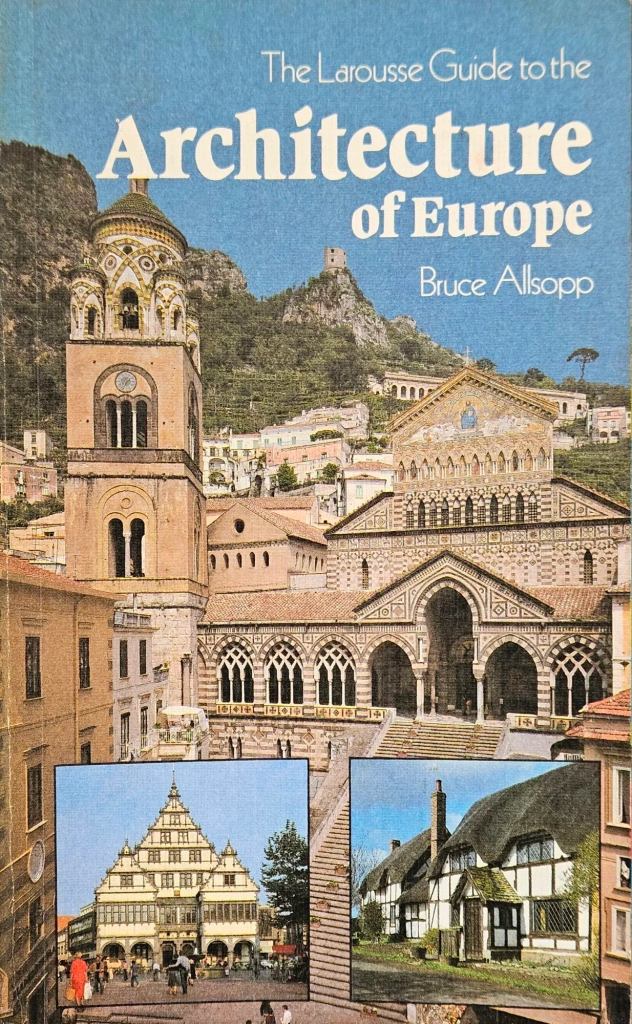
After this point, it used the slogan “Photographers to Her Majesty” on its products even though its first Royal Warrant was not granted until 1879.
What I hadn’t realised until looking at the cathedral’s website is that in 1865, the celebrated architect Sir George Gilbert Scott was commissioned to underpin and rebuild the lantern tower after it started to lean as a result of nearby building work.
This dating suggests that Downey’s use of the landmark in its branding was not merely a sign of its arrival in Newcastle from nearby South Shields where it started in 1856.
Work to correct the leaning lantern tower would have meant St. Nicholas Church was a talking-point and customers having their portrait taken may have wished to mark their connection with Newcastle and its revitalised skyline accordingly.
It also might inform the dating in the mid-1860s of another Downey cdv in my collection (erroneously titled by an unknown hand in pencil as “St. Peter’s”) in which the then St. Nicholas’ Church takes centre stage.
Cdv of St. Nicholas’ Church, Newcastle by W. & D. Downey.
An illustrated talk that I presented recently for the Royal Photographic Society’s Historical Group set me thinking about one image in particular.
The subject of the talk was the photography firm of W. & D. Downey and its first decade in the North-East of England in the 1850s and 1860s.
Downey’s celebrated image of Alexandra as Princess of Wales carrying her daughter Louise on her back featured in an earlier post (2nd December 2022).
In the past year, I’ve started collecting Downey carte-de-visites. Such was their ubiquity that many thousands are still in circulation.
The carte-de-visite format appeared in the late-1850s and immediately proved popular with the public.
Aside from its affordability, a carte-de-visite by design nestles conveniently in the palm of your hand
As the talk took place at Newcastle Cathedral, I was pleased to track down a card that featured the building’s distinctive ‘lantern tower’ and then included it in my presentation.
Confusingly though, at some point in its life, an unknown hand has written ‘St Peters’ in pencil on the front of the card, a point that members of my North-East audience were quick to point out.
In fact, the cathedral’s patron saint is St. Nicholas and not St. Peter.
However, that’s not the only aspect of the photograph that prompted a little head scratching.
When you turn the card over (to its ‘verso’), it lists ‘W. & D. Downey. Photographers’ as being based at ‘4 Eldon Square, Newcastle on Tyne.’
As proclaimed in regular adverts for its wares in the local press, the company’s studio in the city from 1862 to the late 1880s was at 9 Eldon Square rather than at number 4.
What then might be the explanation for this apparent anomaly?
Eldon Square, a group of impressive townhouses created by the eminent architect John Dobson between 1825 and 1831, became one of the most fashionable addresses in Newcastle by the mid-19th century.
Public records reveal that 4 Eldon Square was home to one ‘Thomas Humble MD,’ a physician who features in both the 1861 and 1871 censuses for that address.
According to a notice he placed in the Newcastle Courant (1st March 1867), Dr. Humble served the Newcastle Dispensary, a medical charity treating the city’s poor and destitute, for nearly 38 years. He was resigning the position, he said, due to his ‘increasing engagements.’
Given this background, is it possible that he needed to let out rooms to his photographer neighbour to earn additional income?
Downey’s photographic business was certainly booming and extra capacity to accommodate its growing clientele may well have been welcome, if only on a temporary basis.
This scenario is partly supported by other information on the card’s verso.
It lists ‘illustrious and eminent persons’ the firm had photographed including Her Majesty Queen Victoria.
This dates the card’s likely production to late 1866/early 1867 by which point Downey had recently photographed the Queen at Balmoral for the first time.
On the other hand, human error might have been responsible.
Simply put, a batch of carte-de-visite produced for Downey were printed with the wrong address featuring number 4 rather than number 9 Eldon Square.
Despite this error, they were used anyway and sold to a public whose main interest lay in a carte-de-visite photograph rather than its ‘advert’ verso.
There is one remaining possibility though and one that needs to be considered by collectors of all kinds of objects.
That the card is a fake.
If so, it’s a very convincing one.
The faker has even gone to the trouble of attaching a sales sticker for Allan, a bookseller, stationer and news agent in 1860s Newcastle, known to have been one of Downey’s sales outlets.
Leave a comment