The Army Pageant held at Fulham Palace, London in the summer of 1910 continues to yield revelations for this blog.
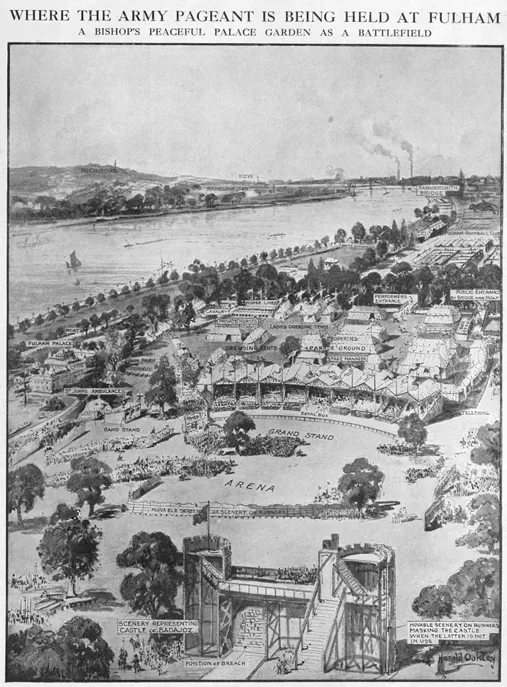
Drawn by Harold Oakley, The Graphic Summer Number (25th June 1910). From British Newspaper Archive.
Witnessed by around 100,000 spectators, the event featured what the Historical Pageants in Britain website describes as “a disparate selection of episodes that illustrated the development of military conflict and the British armed forces.”
Regular readers will be aware that it was an assignment covered by pioneering Fleet Street press photographer James Edward Ellam (1857-1920).
Working for the recently-launched London News Agency Photos Ltd. (L.N.A.), he supplied prints taken from his 3D images that were published as halftones, notably by the Illustrated London News.
Illustrated London News (25th June 1910). From British Newspaper Archive.
By contrast, The Graphic, one of the ILN’s long-standing competitors, used the work of artists rather than press photos to convey the drama and spectacle on view.
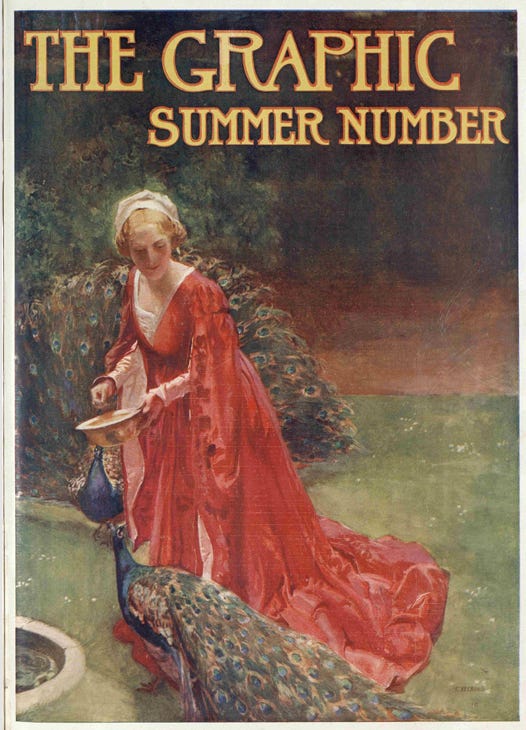
The costumes supplied to those participating in the pageant’s various episodes were particularly eye-catching as demonstrated by the cover of its Summer Number.
(The Graphic Summer Number (25th June 1910). From British Newspaper Archive.
Closer examination of the coverage inside revealed a detail I had previously missed.
It concerned Fulham outfitter Stanley Cave, one of the event’s organisers and the subject of an earlier Pressphotoman blogpost.
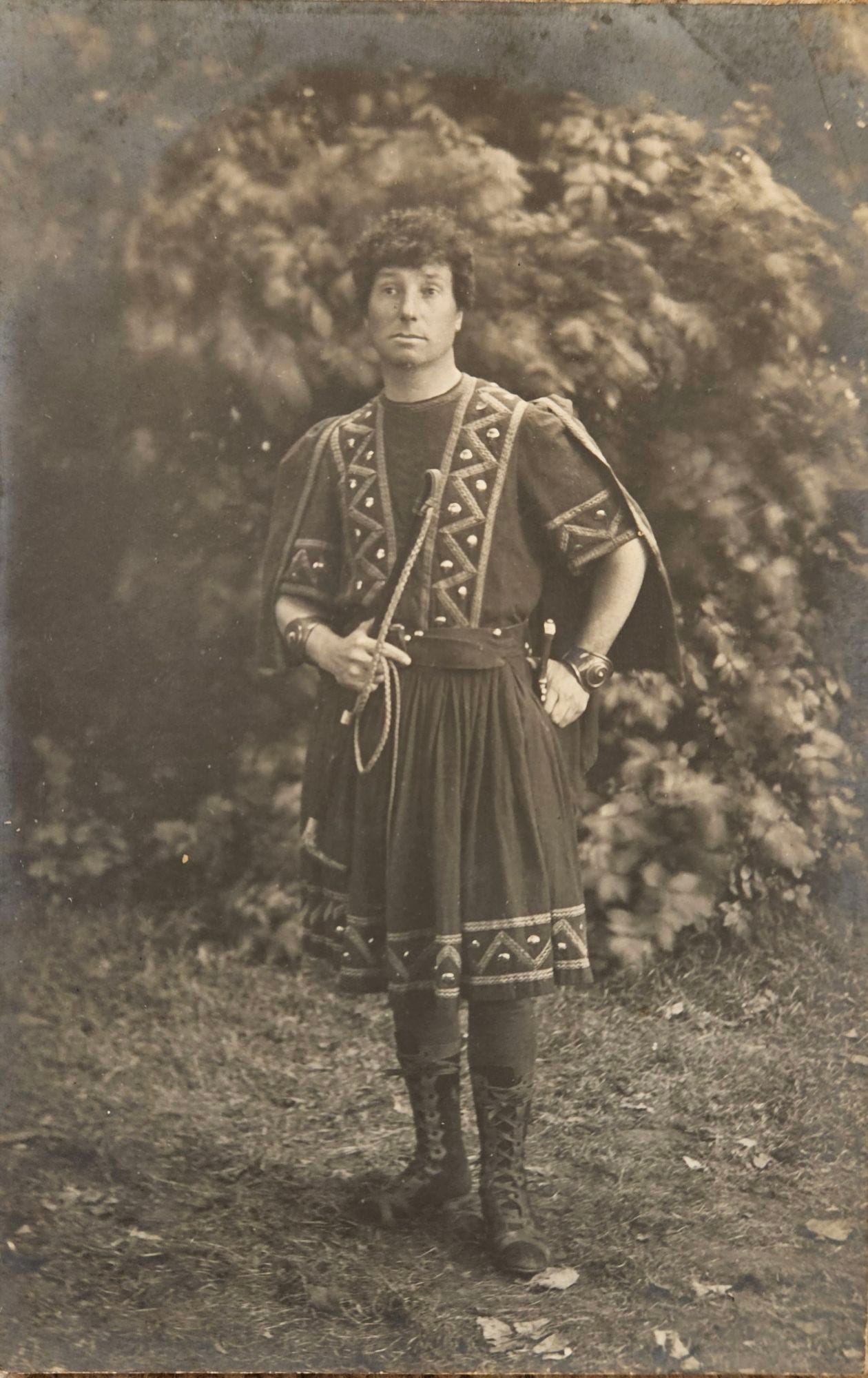
Mr. Cave’s skills handling horses were alluded to in this photographic postcard that initially prompted the post, portraying him as a ‘Roman Charioteer’.
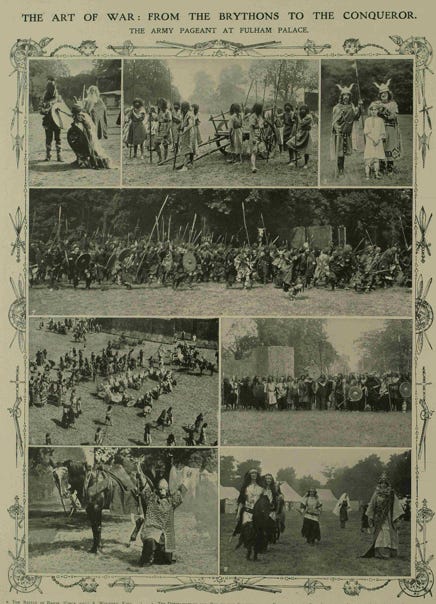
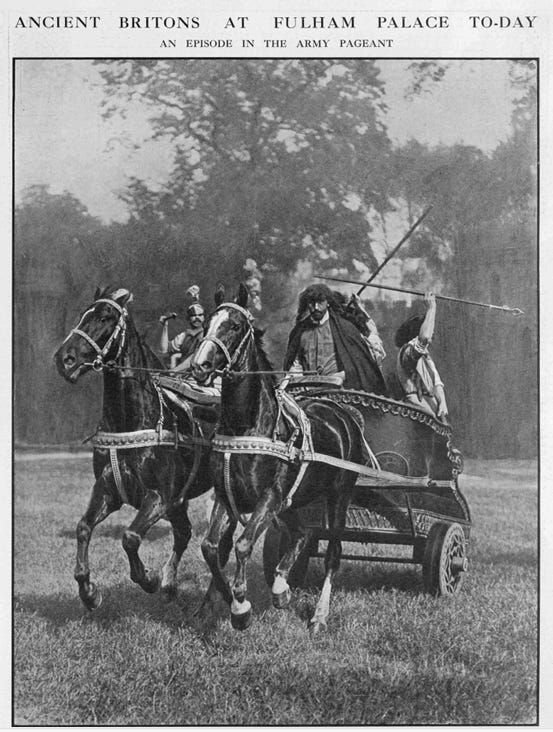
But in a scene from the pageant featuring ‘Ancient Britons’, an uncredited artist with TheGraphic placed Mr. Cave at the heart of a full-page drawing, adding a full beard to his distinctive facial features.
The Graphic Summer Number (25th June 1910). From British Newspaper Archive.
At this point in press history, the battle between art and photography as competing illustrative media was still in full swing.
It maybe that the Graphic artist used a photograph as the basis for his version, perhaps even one supplied by James Edward Ellam of L.N.A.
However, in this example with its vivid portrayal of a bearded Mr. Cave and his spectacular horse-drawn chariot, artistic licence could be argued to have won out over factual accuracy.
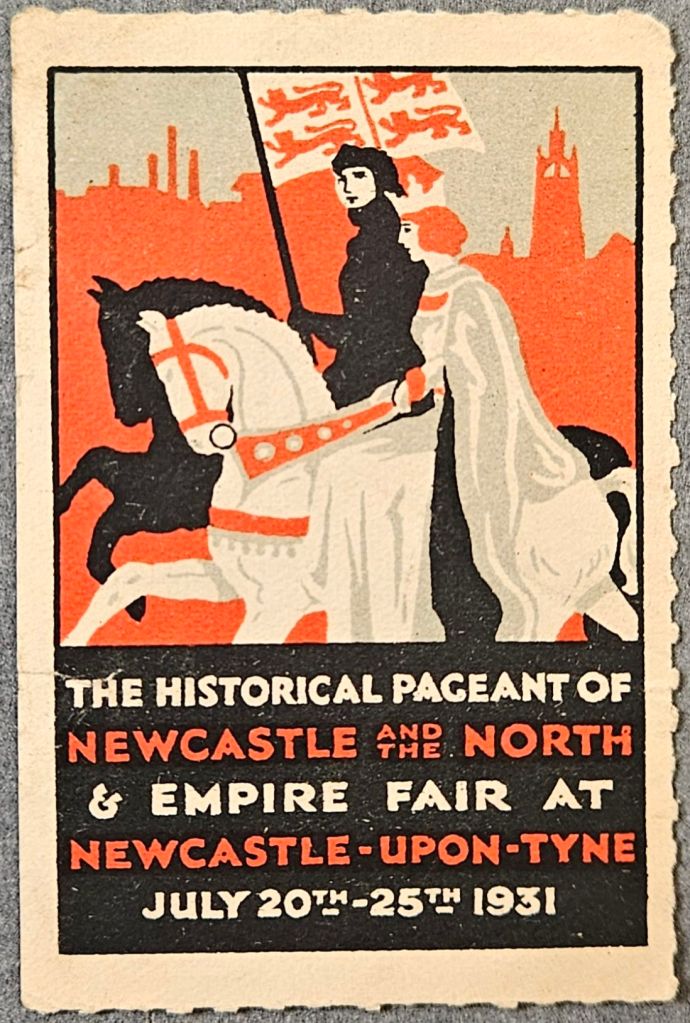
A colourful stamp-sized poster with the Newcastle skyline in the background left me wondering how this event was captured visually by photographers and film-makers.
Historical pageants in Britain during the 20th century offered communities up and down the country the chance to dress up, party and celebrate our national history.
Newcastle had previously hosted Northumbrian Pageants in 1923 and 1925.
The 1931 event had a wider geographical focus with participants from across the North of England.
At the time, the region was affected by the low morale and high unemployment that marked the Great Depression of the 1930s.
Deciding something must be done to address this state of affairs, the Women’s Committee of the Northern Counties Area of the National Union of Conservative and Unionist Associations organised a pageant and industrial fair.
Among its key figures was Irene Ward, who went on to be elected as Conservative MP for Wallsend (1931-1945) and Tynemouth (1950-1974).
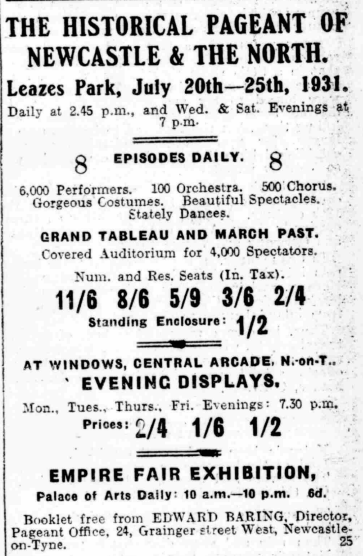
According to press adverts, the event involved 6,000 performers, a 100-piece orchestra and 500-strong chorus with the promise of “Gorgeous Costumes. Beautiful Spectacles. Stately Dances.”
Northern Weekly Gazette, 18th July 1931. From British Newspaper Archive.
Audiences estimated at more than 120,000 attended the pageant, which proved so successful that two additional performances were staged making 10 in total.
It was also restaged indoors at the city’s Empire Theatre in November 1932.
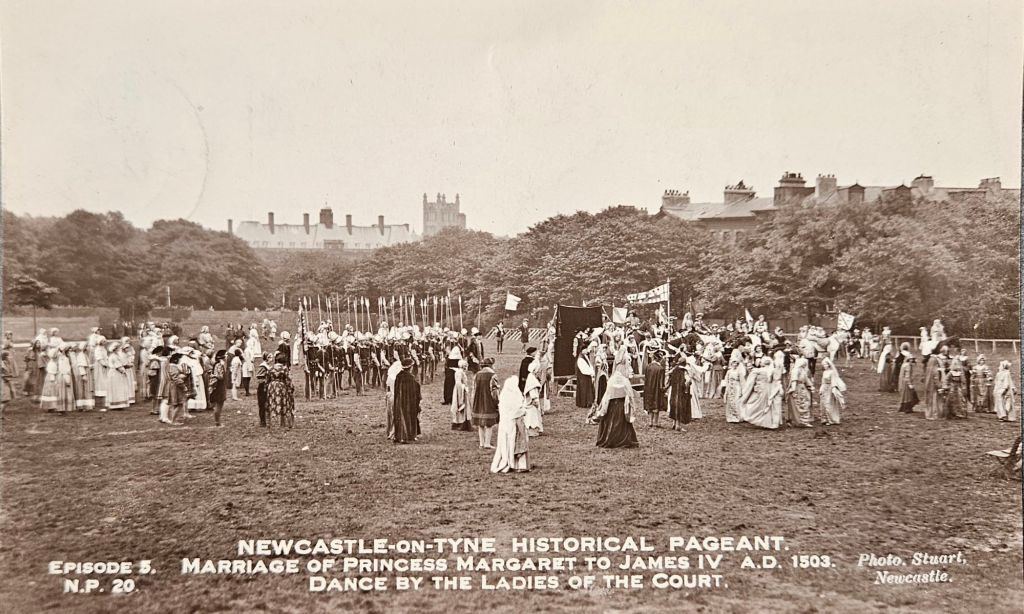
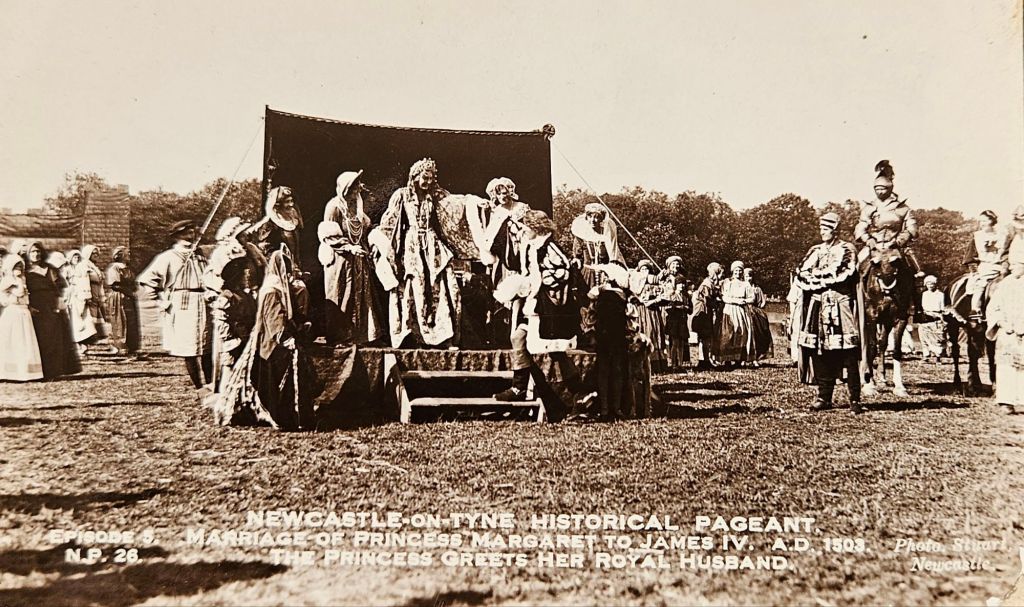
Photographically, Stuart, a long-established Newcastle firm based at the YMCA Buildings in Blackett Street were on hand to record the pageant’s sequence of Episodes.
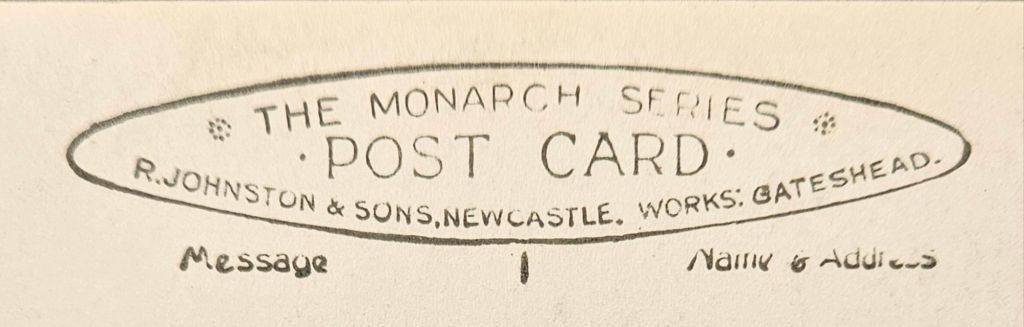
Black and white images were then reproduced in a series of ‘Monarch’ postcards published by another Newcastle firm, R. Johnston & Sons with its printing works in neighbouring Gateshead.
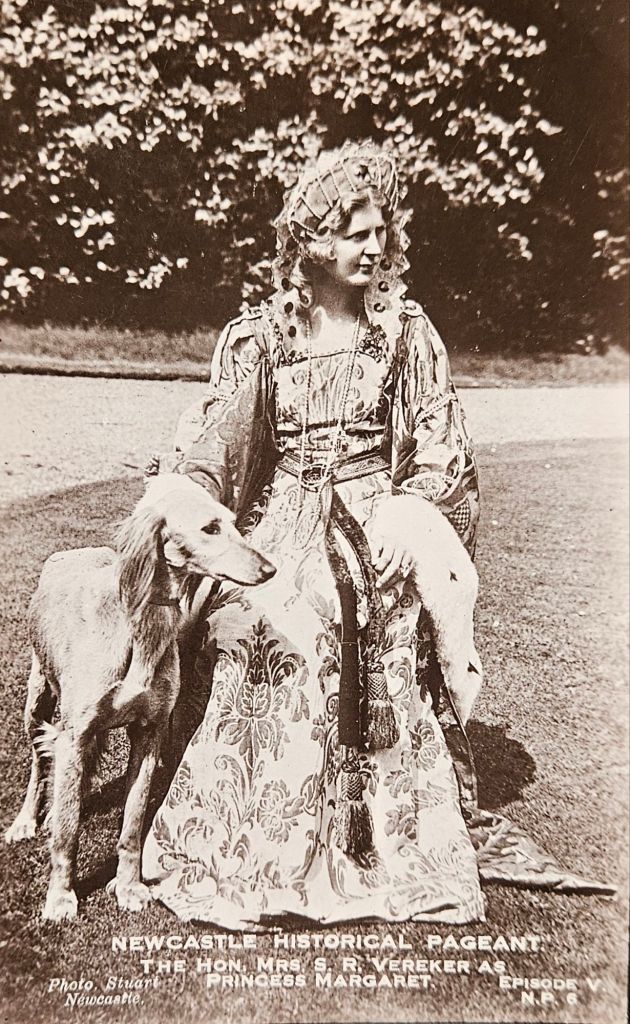
As an example of what the crowds witnessed, Episode 5 featuring ‘The Marriage of Princess Margaret to James IV, AD 1503’ was portrayed in a series of general views and close-ups.
Centre-stage playing Princess Margaret was The Honourable Mrs. S. R. Vereker (1896-1972) of Hamsterley Hall, Durham.
Her aristocratic pedigree as one of the organisers connected her to a famous moment in Newcastle history.
Bessy Vereker (neé Surtees) was a descendant of Bessie Surtees whose elopement in 1772 with John Scott, later Earl of Eldon and Lord Chancellor of England, is the stuff of local legend.
Engraving based on an oil painting by Wilson Hepple.
Bessie Surtees House where the elopement took place still stands a stone’s throw from the River Tyne waterfront and is in the care of Historic England.
Following her marriage in 1921 to the Hon. Mr. Standish Robert Vereker, later Viscount Gort, Bessy became a regular client of leading photography studios in London.
Stylish portraits of her by both Bassano and Lafayette feature in the collection of the National Portrait Gallery, London.
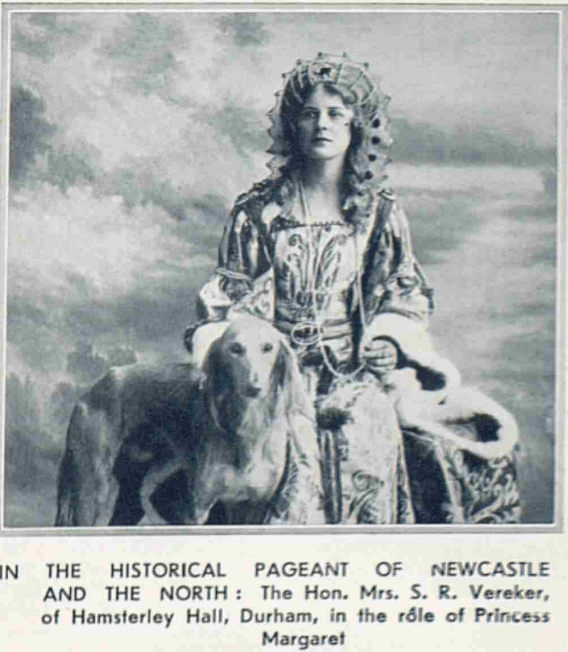
At the Newcastle and the North Historical Pageant, a beautiful outfit created for her in the role of Princess Margaret (plus accompanying hound) combined to produce a striking image.
It also caught the attention of the press.
The Sphere was among the illustrated papers that featured her in a photo spread titled “Women of Fashion and Fashions of Women.”
The Sphere (18th July 1931). From British Newspaper Archive.
Perhaps most impressive of all was the footage created by a group from the Newcastle and District Amateur Cinematographers Association.
Sadly, given the eye-catching nature and design of the spectacle, Kodachrome 16mm colour film was not introduced to the market until 1935.
In total, 15 minutes of black-and-white footage was edited together and can be viewed on the British Film Institute website.
Episode 5 featuring the Hon. Mrs. S. R. Vereker as Princess Margaret begins at around 8′ 40″. It’s well worth a watch.
This post has been informed by the ‘Historical Pageants in Britain’ website, which includes detailed descriptions of similar pageants staged across the country.
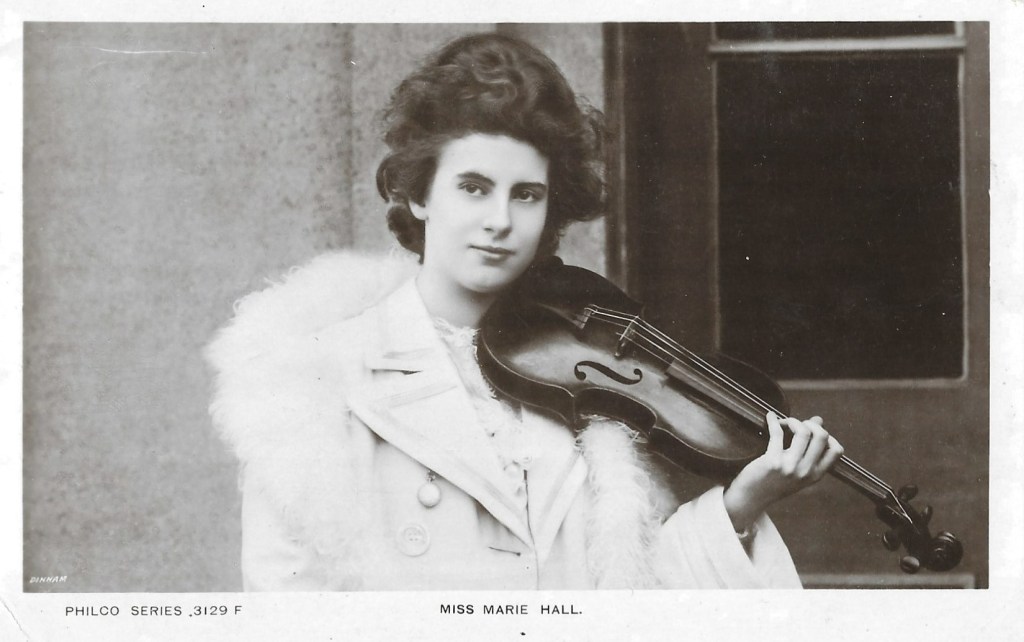
Last week’s post about the violin prodigy Marie Hall (1884-1956) was the latest resulting from a research dive into the numerous photographic postcards of her.
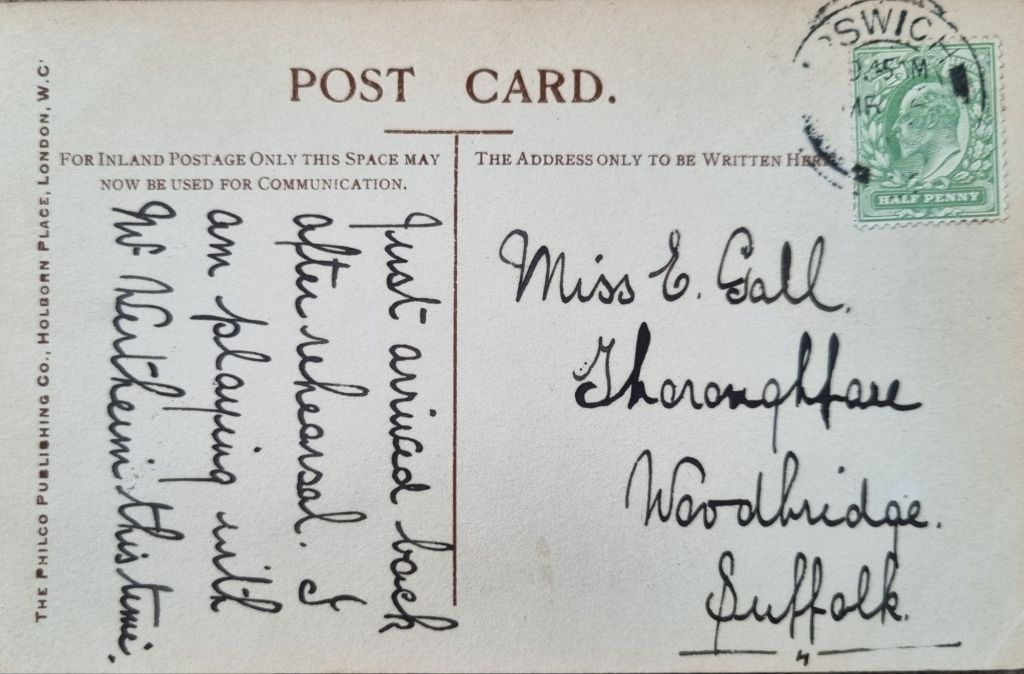
It was a real pleasure to identify one such postcard, sent to her younger sister Eveline, as Marie’s career was becoming a whirl of international engagements.
This latest post looks at the months immediately following her London concert debut in February 1903, aged 18, and how her public image was shaped by photography.
A number of portrait studios moved swiftly to produce images of the British teenager whose performance had caused such a sensation.
At this point, photographs were a newly attractive medium, both to illustrated papers and to postcard producers with an instinct for what the public wanted to buy.
In Marie Hall, they had a hot property.
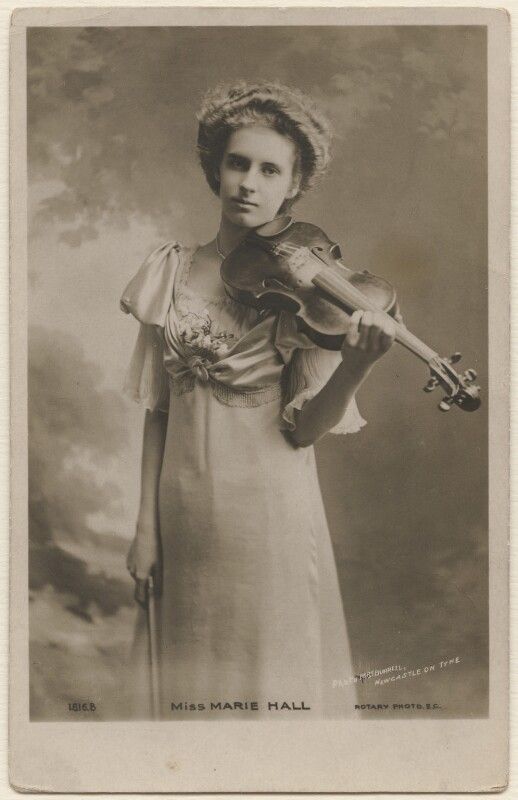
Among the first to photograph the new star was the illustrious studio of Bassano.
Based at 25 Old Bond Street in London’s West End, it had been operating since the 1870s.
Their portrait presents the young woman in a typical violinist’s pose, playing alongside what appears to be an elaborately carved music stand.
This image was published as a postcard in various sizes by the Rotary Photographic Company Ltd of West Drayton, Middlesex.
Also quick off the mark was the Newcastle on Tyne photographer Mrs. Henrietta Theonie Burrell (1860-1934), who initially triggered my interest in Marie Hall postcards.
A few weeks after the violinist’s London debut, Mrs. Burrell took advantage of a rapturously-received concert appearance in Marie’s native Tyneside.
By early April, the photographer had registered copyright forms for three different portraits of the wunderkind.
In due course, it was again the Rotary Photographic Company, who published them as a series of ‘real photo’ postcards.
The portraits are less formal and capture a different sense of the young woman’s style, even though she is wearing the same concert dress as in the Bassano portrait.
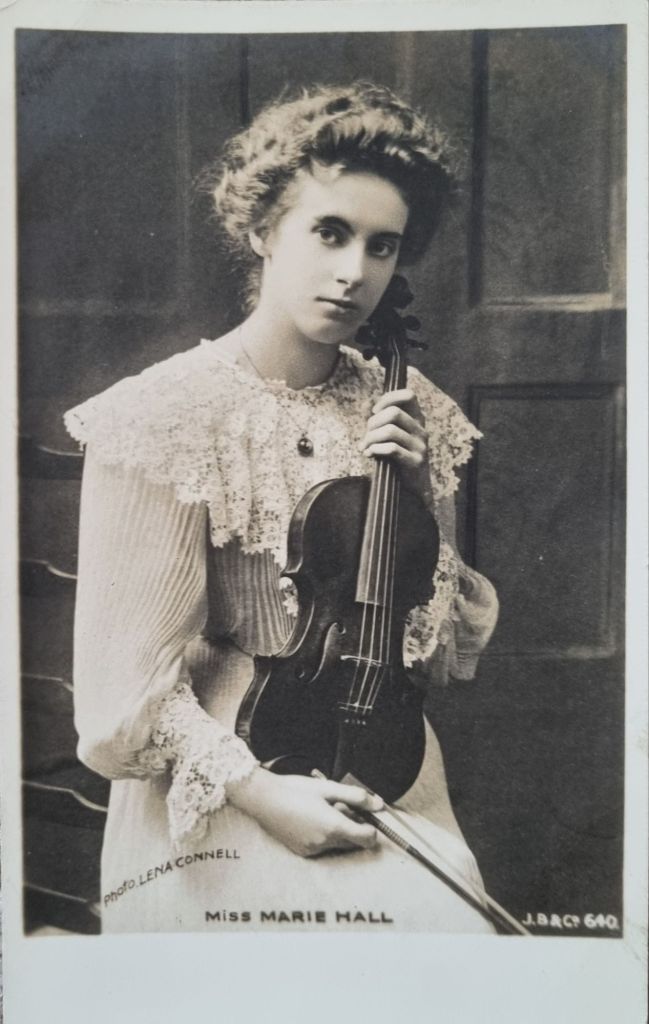
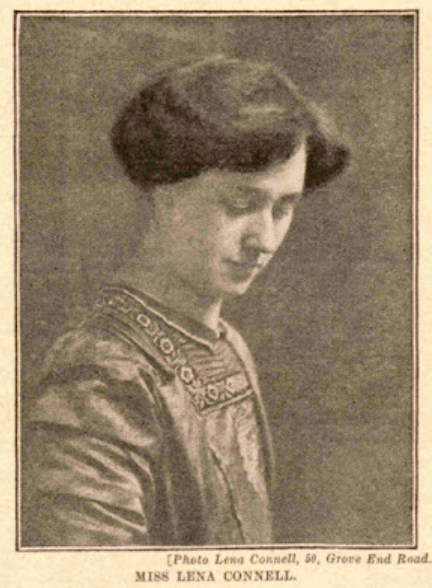
They were the work of Lena Connell (1875-1949), who learned her craft in the photography business run by her father.
Unusually for the time, her own studio employed female staff and photographed both male and female clients.
The Vote (7th May 1910). From British Newspaper Archive.
Today Lena Connell is best-known for her wonderful portraits of suffragettes involved with the Women’s Social and Political Union (WSPU) of which she was a member.
Speaking to The Vote newspaper in 1910, she recalled how “Miss Marie Hall was at the beginning of her career and the photo I did of her then is still her favourite.”
In the words of the writer: “Miss Connell showed me a photo of Miss Hall … her eyes with that curious half-frightened, half-determined look in them, looming out of the picture.”
This series of portraits was also published as postcards by another of London’s leading firms, J. Beagles & Co. Ltd.
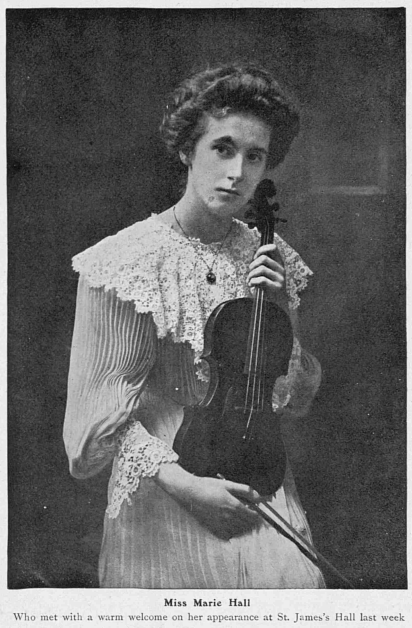
Lena’s images of the violinist also proved popular with the illustrated press, who used them in conjunction with news stories and concert reviews.
But, as in this example, Lena was not always credited for her work as was the experience of many portrait photographers, both male and female.
The Bystander (4th May 1904). From British Newspaper Archive.
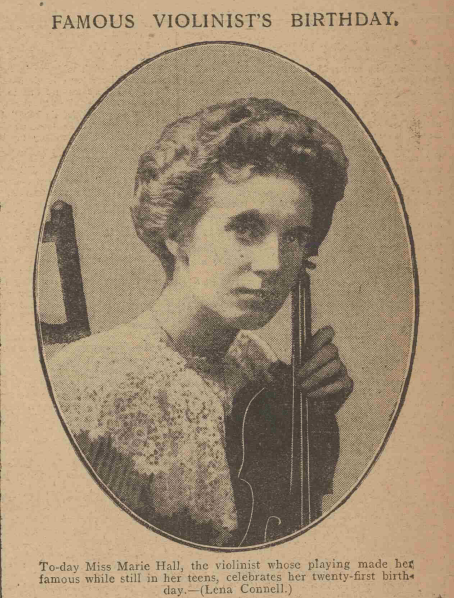
Whether the photographer took it upon herself to fight for due recognition, the recently-launched tabloid Daily Mirror didn’t make the same error.
It correctly credited ‘Lena Connell’ when a re-sized halftone version of the same portrait appeared to mark Marie’s 21st birthday in April 1905.
Daily Mirror (8th April 1905). From British Newspaper Archive.
This reflected a new trend whereby such photographic portraits entered the libraries of newspapers and magazines and appeared alongside subsequent stories as stock shots.
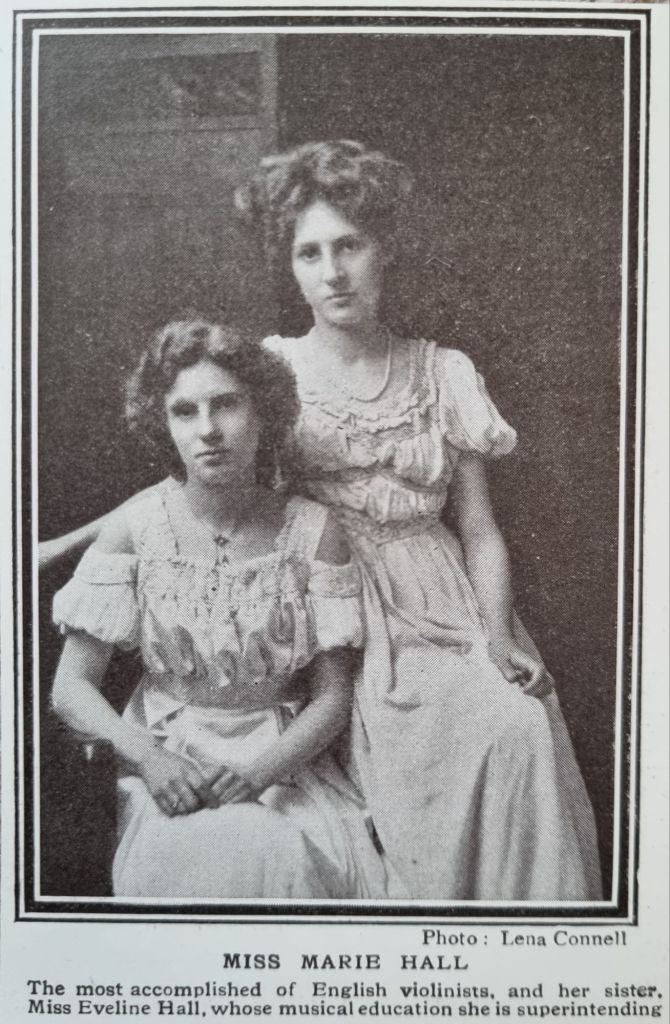
Lena’s working relationship with Marie Hall continued and this fine credited portrait alongside her younger sister Eveline was published by the popular weekly Black & White magazine in 1906.
Do you know of other Marie Hall portraits by Lena Connell?
A selection of Lena Connell’s photographs feature in the collection of the National Portrait Gallery, London.
For further reading, her career is the subject of Colleen Denney’s 2021 book The Suffrage Photography of Lena Connell: Creating a Cult of Great Women Leaders in Britain, 1908-1914 (McFarland Press: Jefferson, North Carolina).



 Pressphotoman
Leave a comment