Shortly before his sudden death in 1895 at the age of 45, the award-winning photographer Matthew Auty registered a number of views for copyright that he had taken around Tyneside.
Among them were well-known Newcastle locations including its Central Station, both High Level and Swing Bridges, Stephenson’s Monument and Jesmond Dene.
Many were popular sellers for the Auty Series imprint that continued to bear his name as the late-Victorian and Edwardian postcard boom took hold.
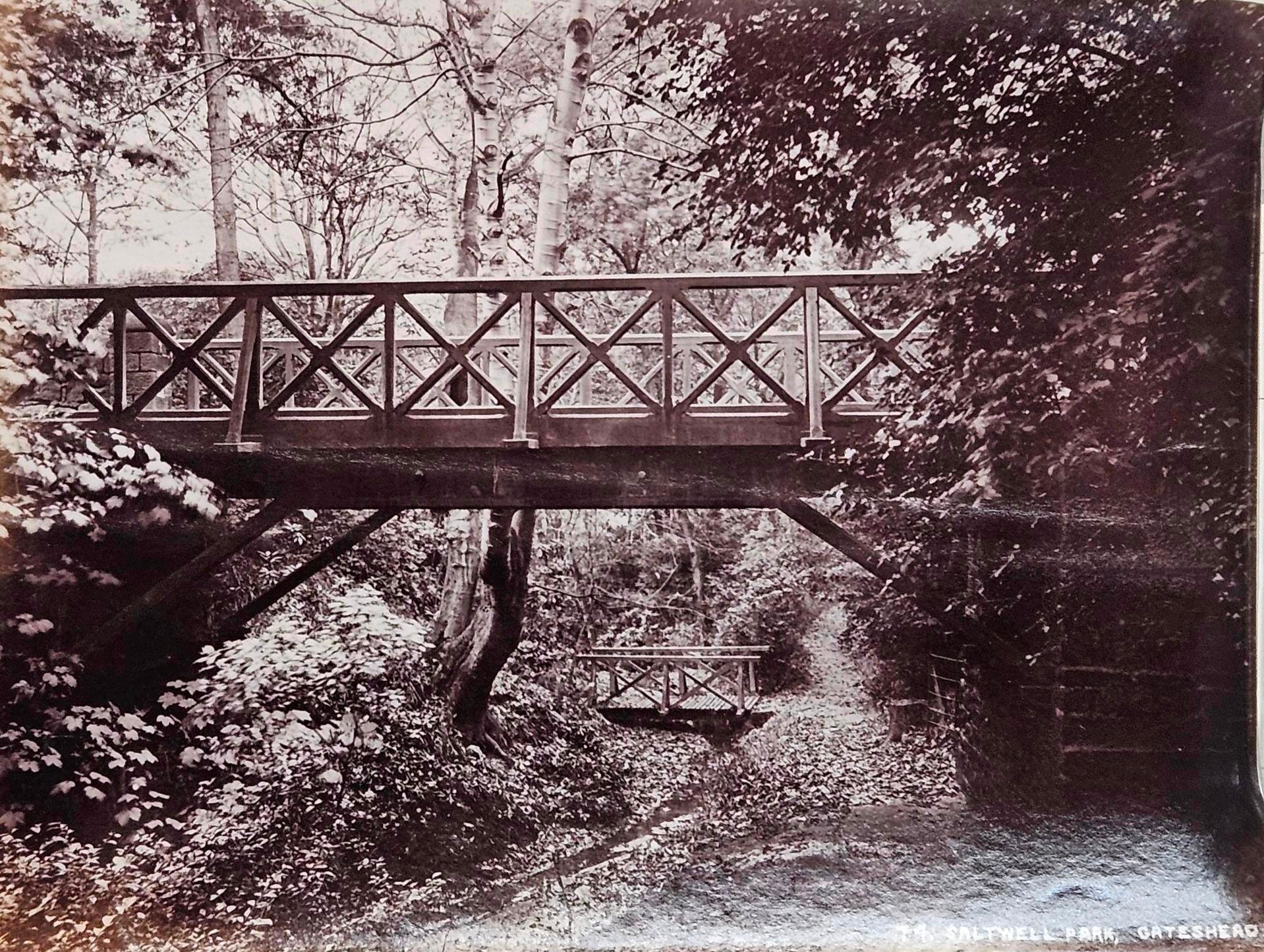
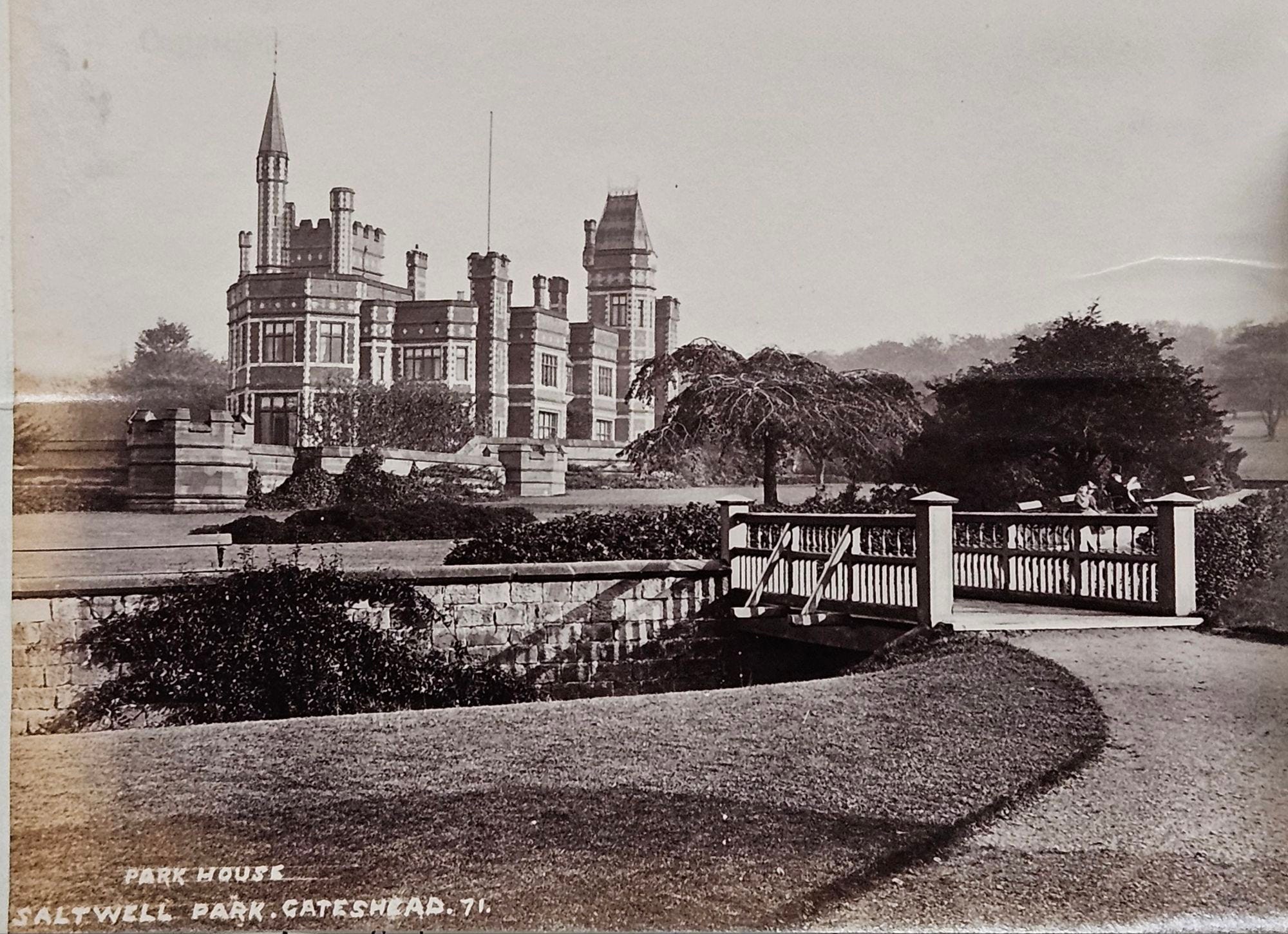
However, what caught my attention whilst visiting the National Archives where his copyright forms are stored were his less familiar views of locations across the River Tyne … in neighbouring Gateshead.
Today Saltwell Park is regarded as one of the best examples in Britain of a Victorian park and is popular with visitors of all ages.
At its heart sits the wonderful Saltwell Towers, an example of Gothic revival architecture, that was home to the distinguished stained glass manufacturer William Wailes (1808-1881).
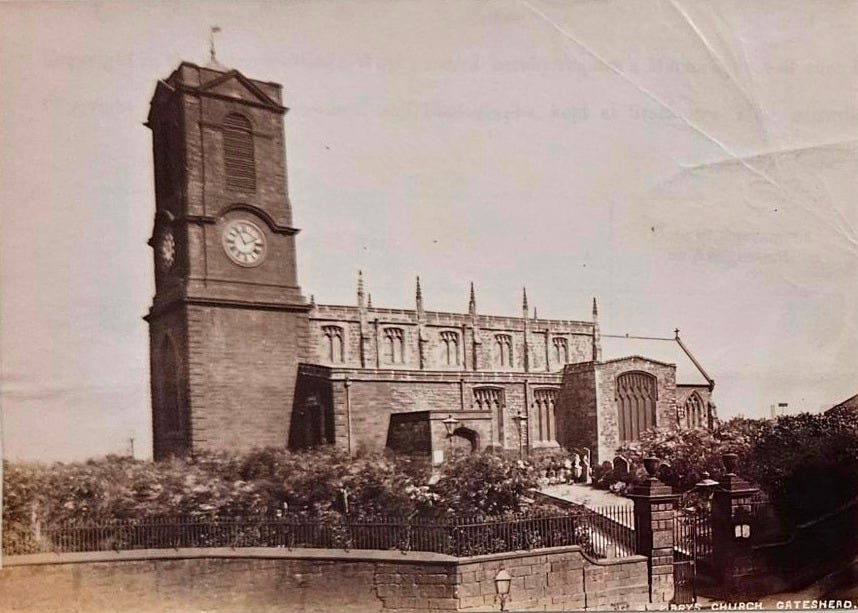
No doubt aware of the connection, another of Auty’s Gateshead views features examples of Wailes’s stained glass,
Today St. Mary’s Church, a familiar sight to train travellers on the East Coast railway line as it crosses the River Tyne, is Grade 1 listed and houses a Heritage Centre.
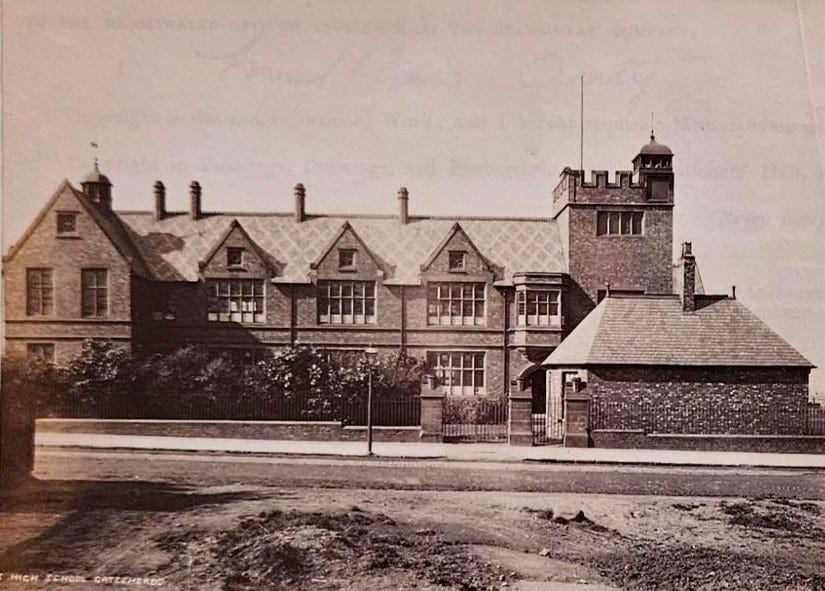
Around the time this photograph was taken, it was purchased by Gateshead School Board, re-named Gateshead Secondary School and underwent various name changes before its demolition in 1960.
It is rather poignant that the copyrighting of these images in November 1894 came in the final months of Matthew Auty’s career as a professional photographer.
Newcastle Weekly Chronicle (3rd August 1895). From British Newspaper Archive.
His importance as a photographer in the North East of England and further afield is reflected in the list of attendees at his burial in Newcastle’s Jesmond Old Cemetary.
These included a veritable Who’s Who of the region’s photographers led by J.P. Gibson, President of the Newcastle and Northern Counties Photographic Association.
Among those present were Linked Ring member Lyd Sawyer (1856-1927) and James Dickinson whose photography shop was a feature of Newcastle city centre well into the 20th century.
Our third subject is someone who Messrs. Mendelssohn and Edwards are likely to have known during their years with Downey.
James Herriott was born in 1846 in Blaydon, a town on the Tyne, a few miles across the river from Newcastle.
By his mid-twenties, he was married with a baby daughter and living in nearby Gateshead.
But he had already made valuable connections in the photographic business.
During his teens, he was apprenticed to Mawson & Swan of Newcastle on Tyne, who supplied firms like W. & D. Downey with the latest photographic equipment and chemicals.
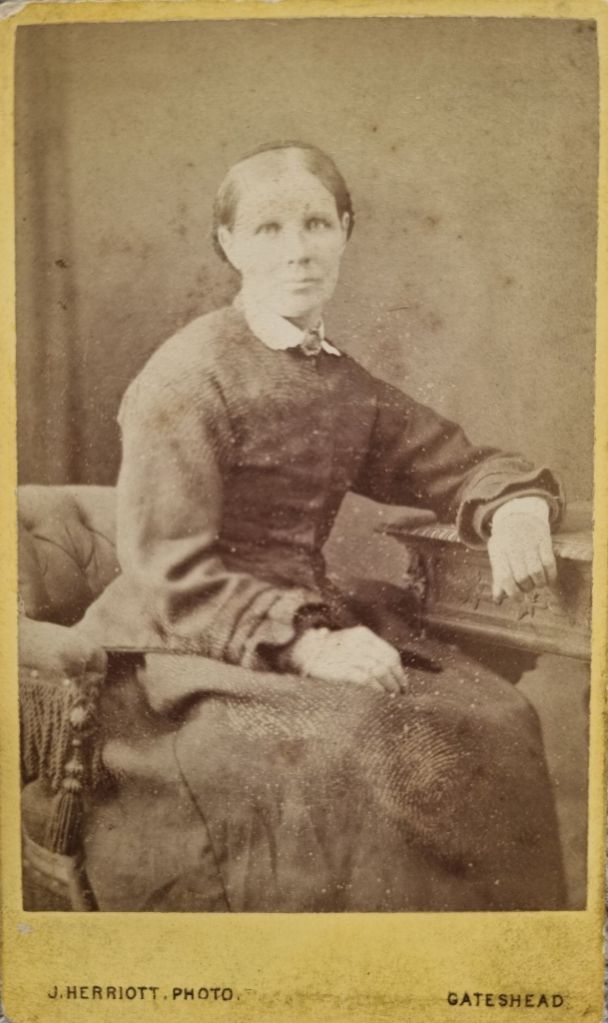
Given this background, it’s perhaps unsurprising that James Herriott’s own career in photography was soon underway in Gateshead.
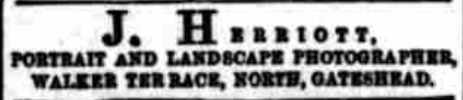
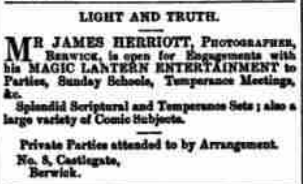
The 1871 census recorded his ‘rank, profession or occupation’ as ‘photographic artist,’ and the following year, a newspaper advertisement described him as a ‘portrait and landscape photographer.’
Advertisement from Gateshead Observer (1st June 1872). From British Newspaper Archive.
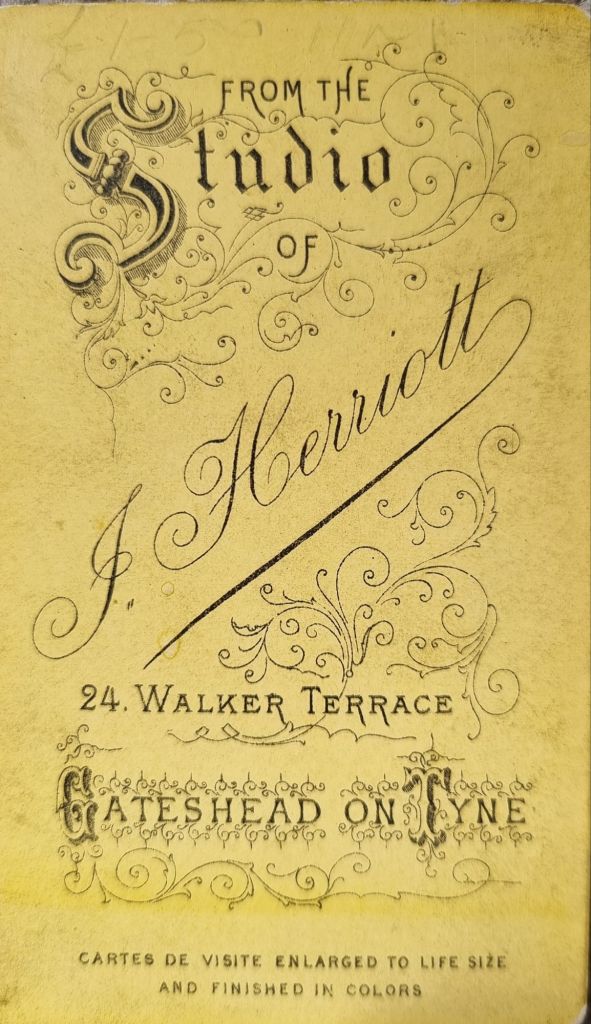
In terms of portraits, he offered customers ‘cartes de visite enlarged to life size and finished in colours.’
Whether his business hit financial or other difficulties, a notice published in the Newcastle Journal in April 1875 signalled a change of direction.
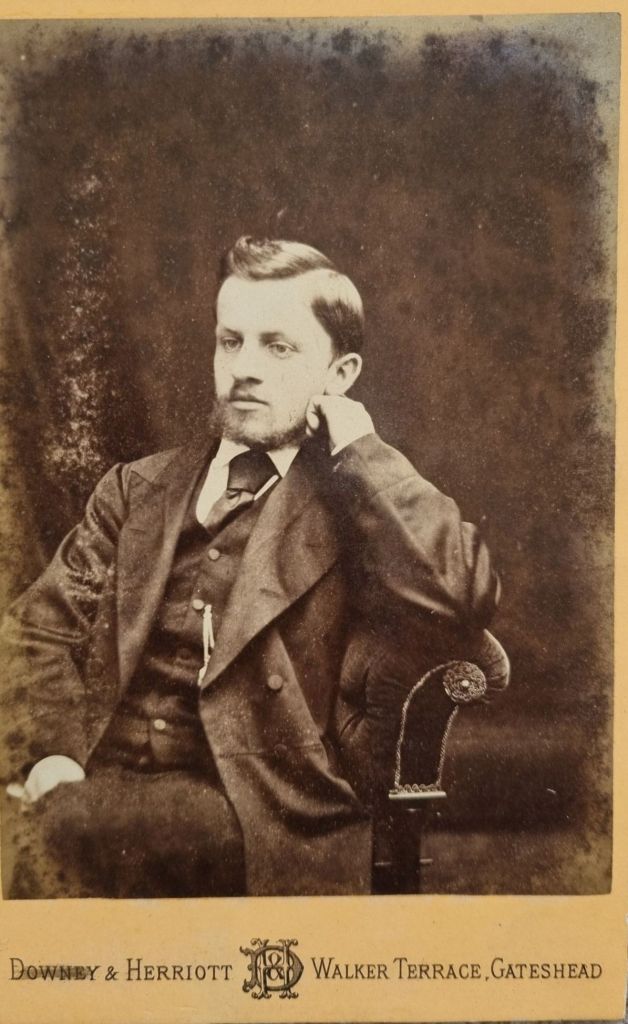
After closing for alterations, the notice stated, the business would re-open ‘under the named management of Downey and Herriott’ and ‘they will be prepared to do the highest class of work in the Art.’
The named ‘Mr. Downey, late of Oxford Street, Newcastle’ was photographer John Downey (1823-1906), elder brother of William and Daniel.
As described in part 1 of this mini-series, John Downey was previously in partnership for two years (1872-73) with Hayman Seleg (H.S.) Mendelssohn, another Downey apprentice.
The Downey & Herriott partnership though appears to have been even more short-lived.
Within a year or so, James Herriott was again advertising his Gateshead business, now with a second studio address in the centre of Newcastle.
Meanwhile, John Downey had set up ‘J & C. Downey, Photo Artists’ with his eldest son Cornelius at a separate address in Gateshead.
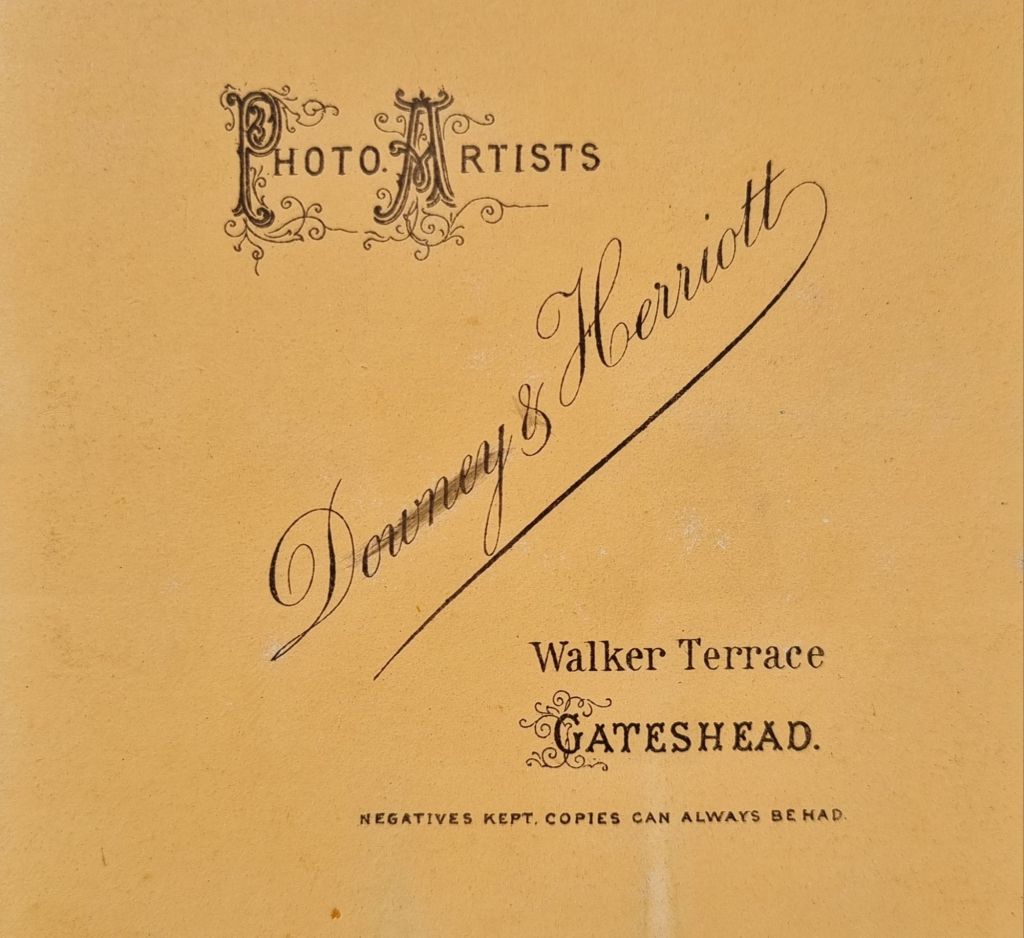
Downey & Herriott portraits are hard to track down, however, this cabinet card is unusual in that it shows the name ‘Downey’ crossed out on both front and the verso.
One explanation might be that card stock printed for the Downey & Herriott partnership was later used by James Herriott alone, perhaps because finances were still tight.
It’s also noticeable that both Downey & Herriott and Downey & Mendelssohn used the same distinctive orange-coloured card for their products.
Herriott’s involvement with the Downey photographic empire points to a long-running relationship.
It was one that perhaps began in the late-1860s following his Mawson & Swan apprenticeship and before opening his own Gateshead studio.
In a 1920s newspaper interview recalling ‘the days of his apprenticeship to W. and D. Downey,’ he recalled assisting ‘Mr. Downey’ in photographing both Queen Victoria and the Prince of Wales (later Edward VII) on separate occasions.
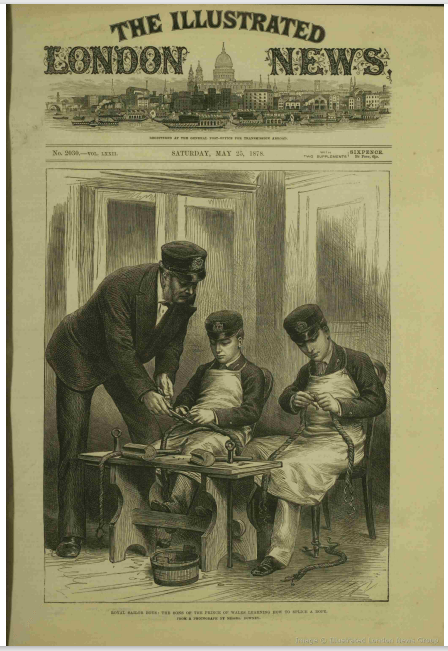
Another memory of a Downey assignment involved photographing Prince Albert (known as Eddy) and Prince George (the future George V) ‘while learning to splice rope’ during naval training aboard HMS Britannia.
In May 1878, the resulting photograph credited to ‘Messrs. Downey’ was reproduced as an engraving by the Illustrated London News.
Supplement to Illustrated London News (25th May 1878). From British Newspaper Archive.
The dating of 1878, at a point when James Herriott was running his own photographic business, reinforces the idea that he was a trusted Downey associate.
Within a few years though, the Tyneside chapter of his life came to an end.
In March 1882, the Berwick Advertiser listed ‘James Herriott, photographer’ among ‘incomers’ to Berwick on Tweed.
This move together with his wife Martha and their four children might be explained by James’s parents originating from Berwick, the northernmost town in England, where James had become a Freeman at the age of 21.
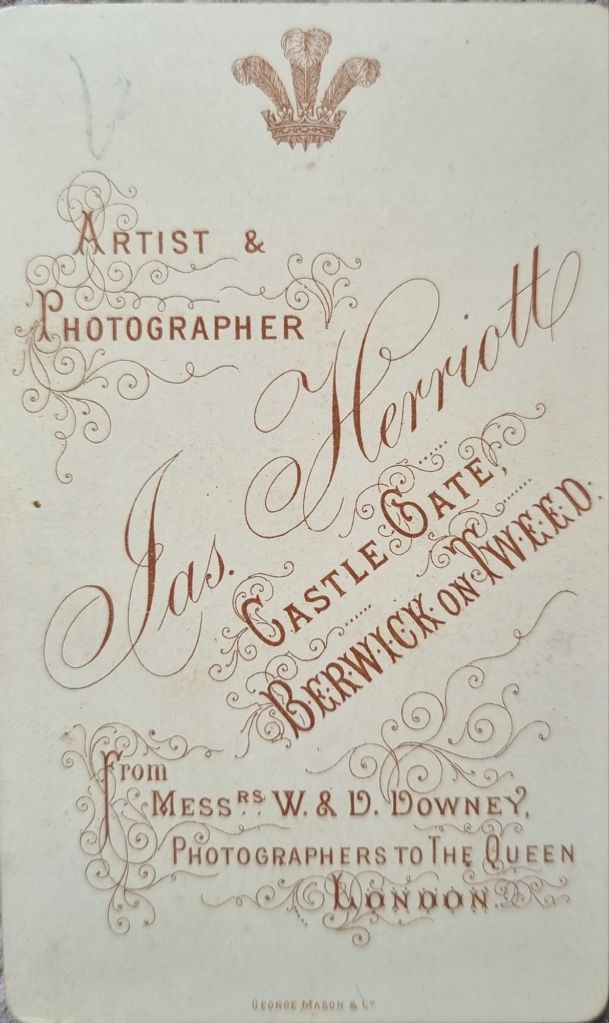
Resuming his photography, he opened a studio in the town’s Castlegate offering a range of portraits.
The verso of his products also took the opportunity to highlight his professional link to ‘Messrs. W. &. D. Downey, Photographers to the Queen, London.’




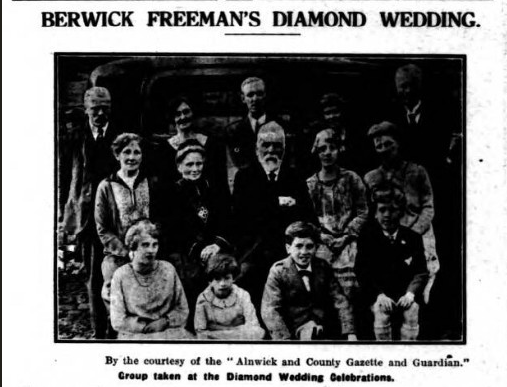
 Pressphotoman
Leave a comment