A regular occurrence during the holiday season off the Northumberland coast is the rescue of visitors heading along the causeway to the Holy Island of Lindisfarne.
Within a few days last month, two different families were plucked to safety by teams from the RNLI and Coastguard Rescue as their vehicles were consumed by the incoming tide.
Despite repeated warnings to check the tide tables, Northumberland County Council estimate that between 10 and 20 vehicles are stranded each year, putting the lives of both rescuers and the rescued at risk.
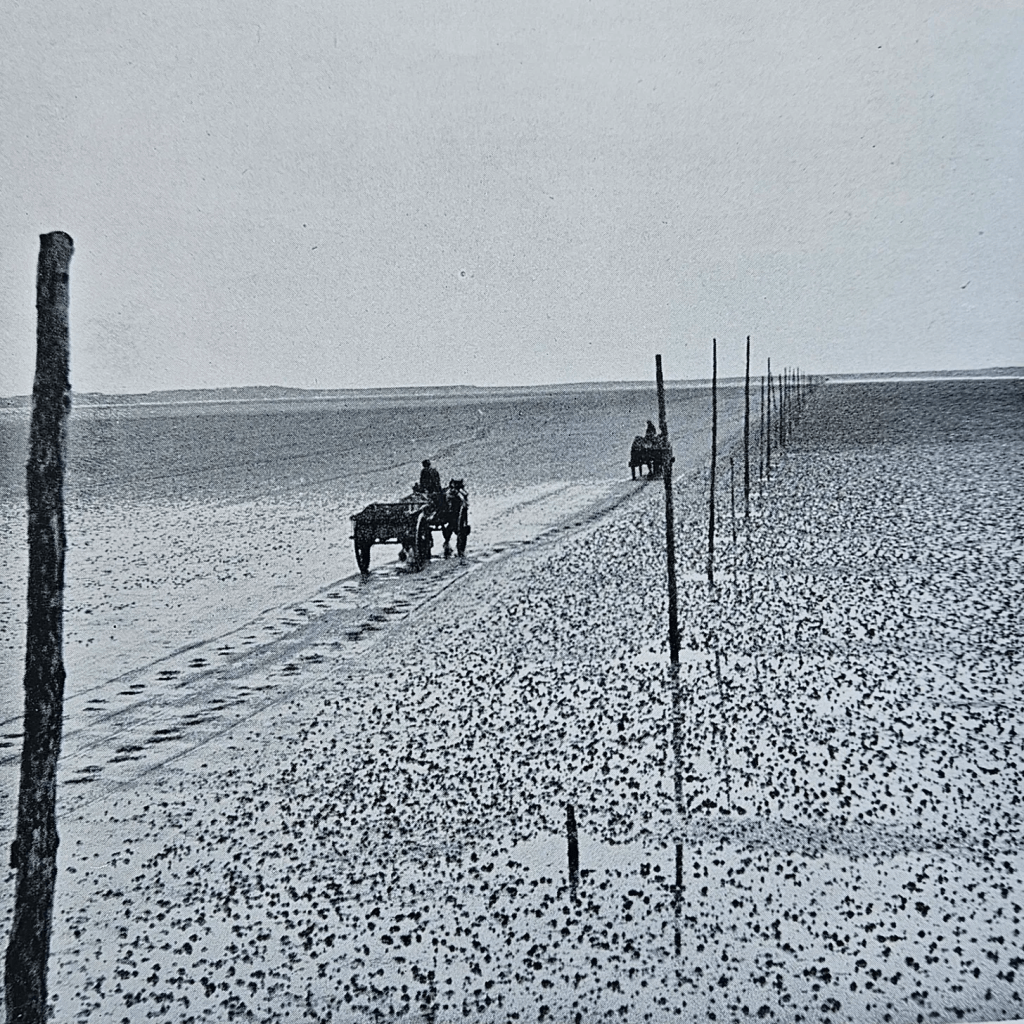
News headlines created by these recent incidents reminded me of a photograph taken nearly a century ago titled ‘Road to Holy Island.’
A wonderfully evocative image, it was taken by Lancashire-born J.R. Bainbridge (1891-1967).
Known as Roland, he took up freelance journalism and photography during the economic slump of the 1920s by which time he had relocated to Belfast in Northern Ireland.
Like a number of photographers, he responded to a call for images to illustrate Northumberland and Durham: A Shell Guide published in 1937.
The idea of publishing a series of county guides aimed at holidaying motorists was inspired by John Betjeman, the celebrated architectural writer and later Poet Laureate.
With Betjeman as editor, the series sponsored by Shell Petroleum launched in 1934 with Cornwall followed in quick succession by Kent, Wiltshire, Derbyshire, Devon, Dorset, Buckinghamshire, Somerset and Oxfordshire.
For Northumberland & Durham, Betjeman signed-up County Durham-born Thomas Sharp (1901-1978) whose writings about the changing face of Britain were attracting national attention.
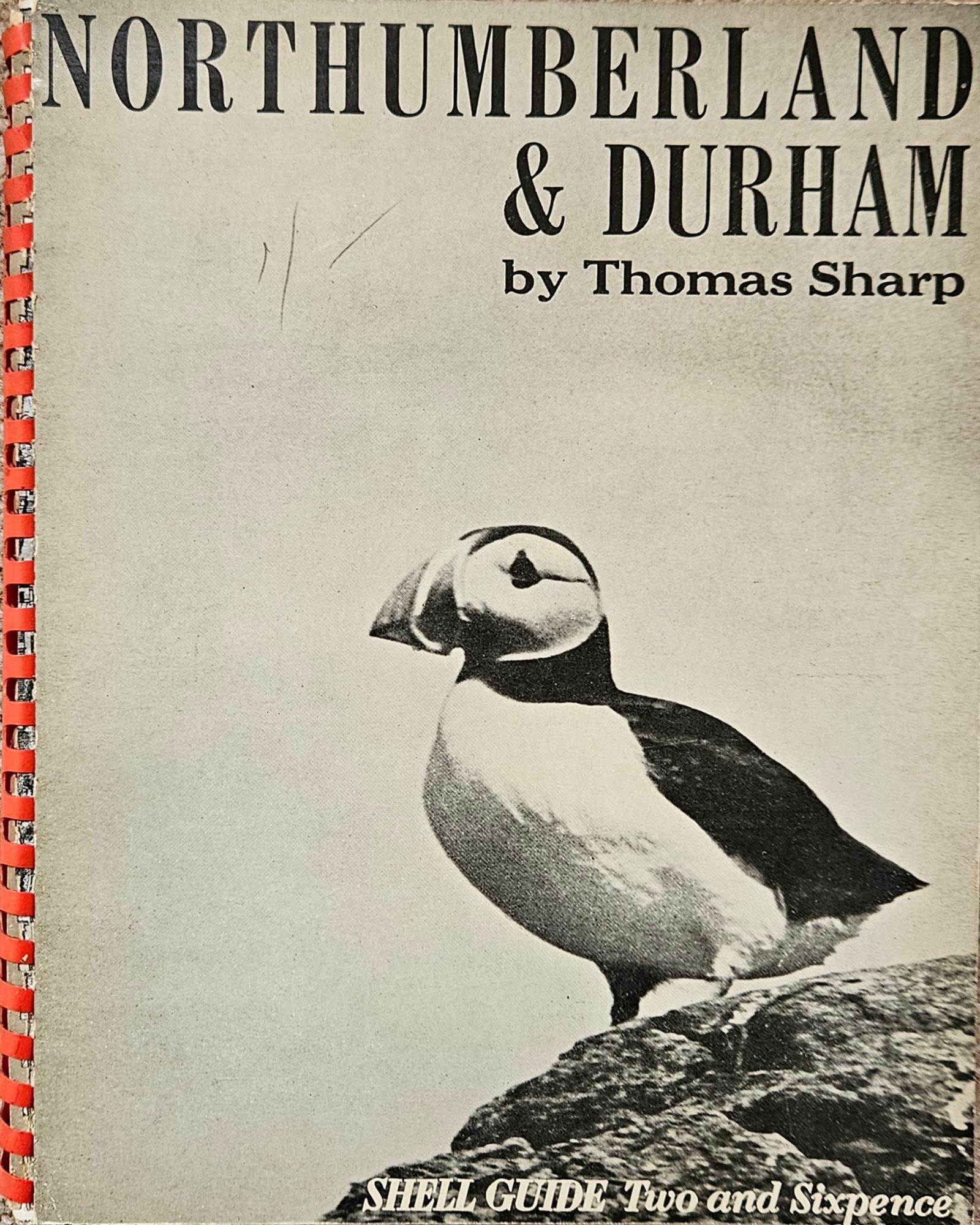
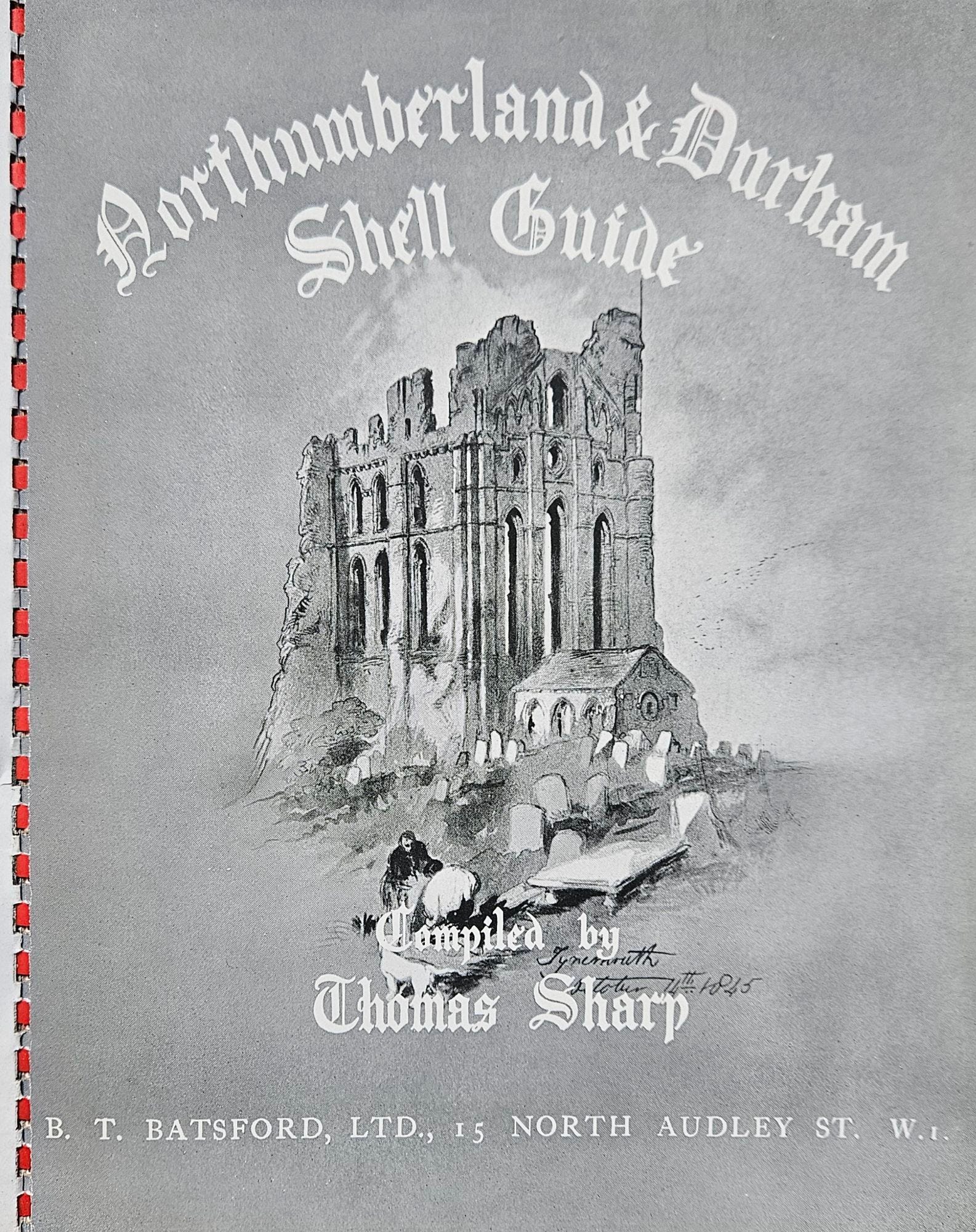
The guide that Sharp compiled was published with an eye-catching cover featuring a Farne Islands puffin with a painting of Tynemouth Priory on its title page.
The guide’s design was more problematic as it employed a ring-bound spine in red plastic, which means that few copies have survived intact.
Alongside line drawings and reproductions of works by legendary Northumberland wood engraver Thomas Bewick (1753-1828), nearly 50 photographs were chosen to illustrate the guide.
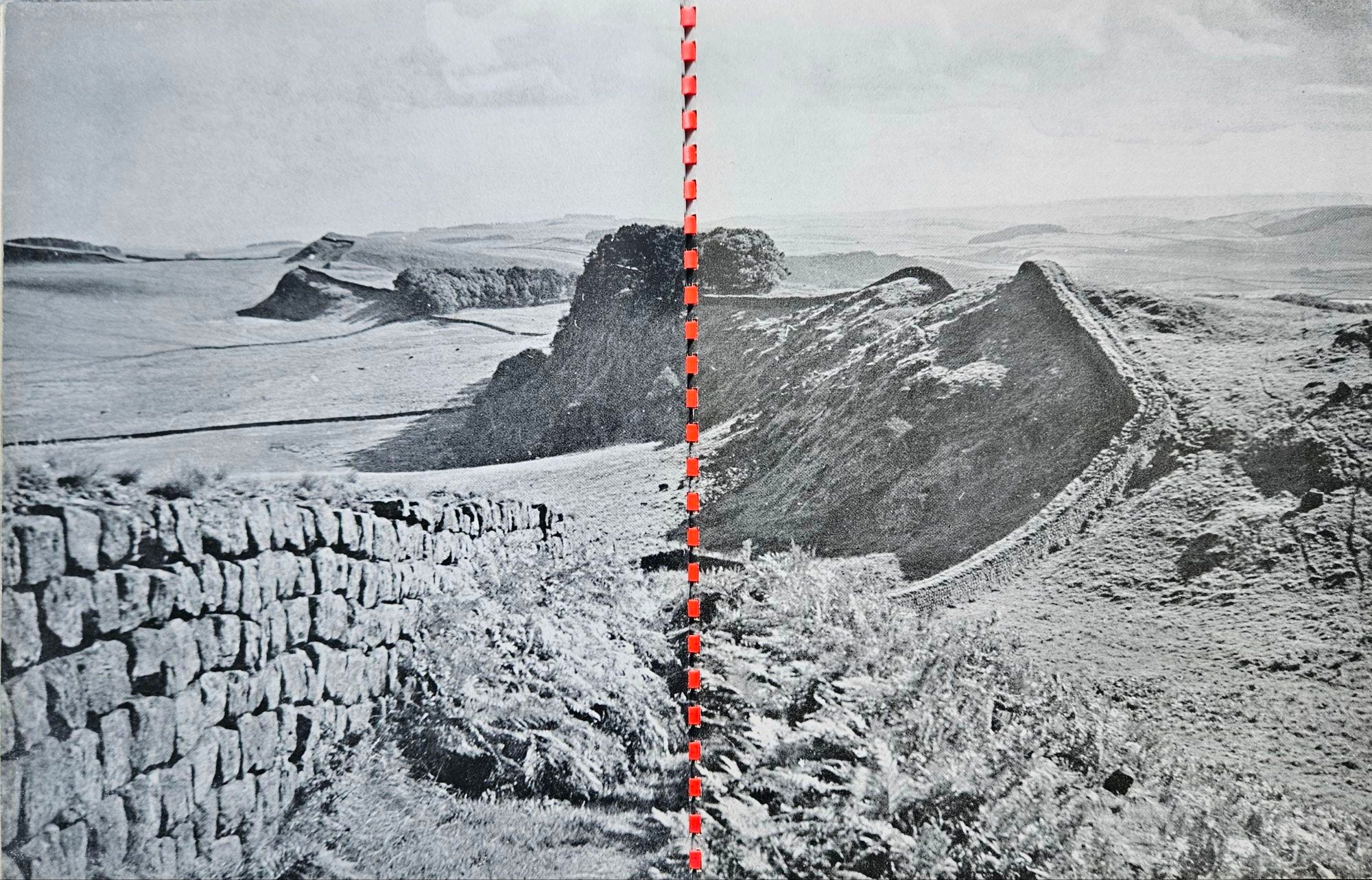
In addition to ‘Road to Holy Island’, JR Bainbridge was credited with a second image titled ‘Roman Wall’.
Despite being presented across two pages with the red ring binding cutting it in half, this stretch of Hadrian’s Wall is immediately recognisable.
It will also be familiar to those who know Dan Jackson’s The Northumbrians (London: Hurst, 2019).
The book’s cover features the same location as portrayed in a British Railways poster by the artist and illustrator Jack Merriott (1901-1968) that was created around the same time as Bainbridge’s photograph.
Today, J.R. Bainbridge is best-known to historians and researchers for his photographs taken in Ulster during the Second World War.
However, his two contributions to Northumberland & Durham: A Shell Guide were considered of sufficient quality to appear nearly twenty years later when a Shell Guide devoted solely to Northumberland was published.
Scrolling on my phone the other day (I know, I know …), one of my all-time favourite photographs suddenly appeared.
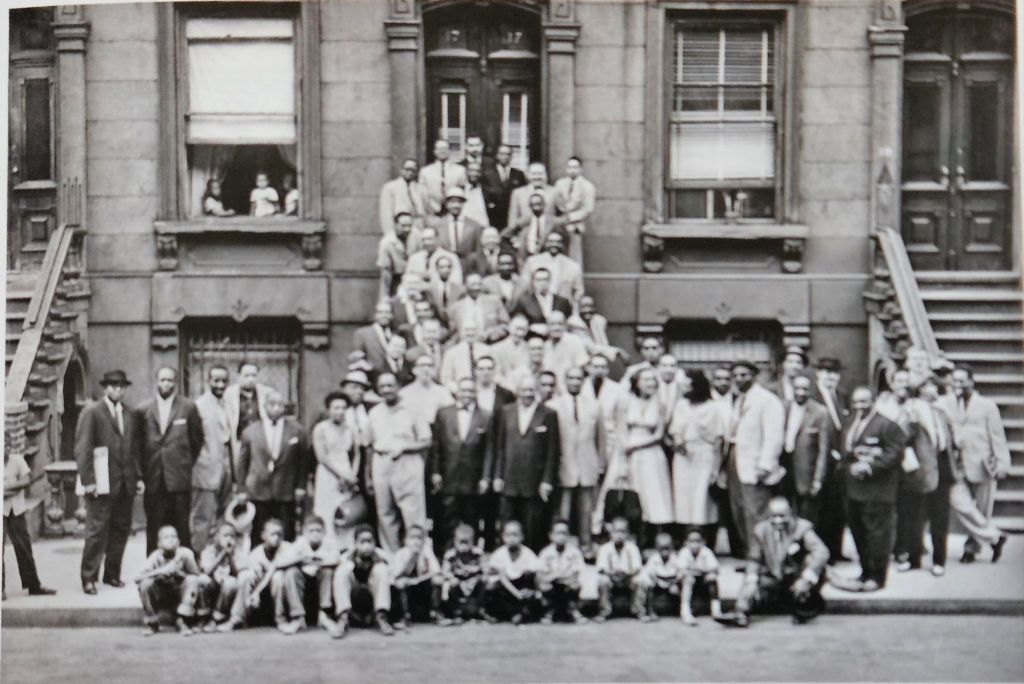
Originally titled ‘Harlem 1958,’ it was reputedly the first professional shot taken by the legendary photographer Art Kane (1925-1995).
It features nearly 60 famous and not-so-famous jazz musicians gathered outside a brownstone in New York on an August morning.
What caught my attention on social media was a New York Times interactive article about the photograph, of which more shortly.
My own relationship with the image reaches back thirty years.
During the London Jazz Festival, I went to a cinema screening of a new documentary about the photograph and how it came to be created.
Titled ‘A Great Day in Harlem,’ the hour-long film with narration by Quincy Jones told an enthralling story.
I was not alone in loving it and it received an Oscar nomination for Best Documentary.
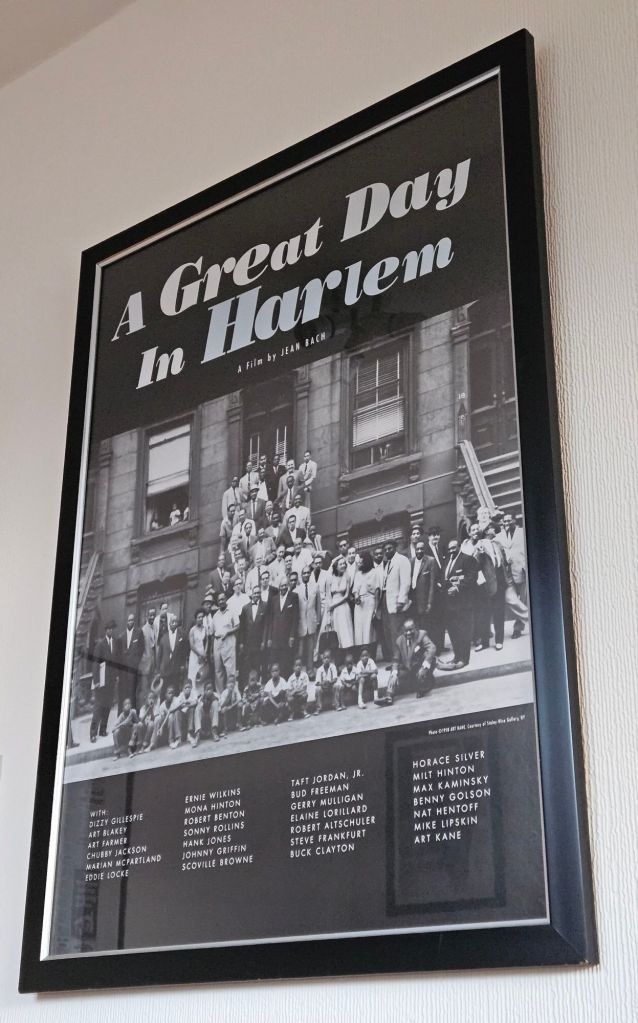
When the film was released on video (VHS), there was a cut-out form inside the accompanying booklet, offering the chance to own ‘A Great Day in Harlem’ poster.
Mine duly arrived, was framed at a local art gallery run by a couple of jazz enthusiasts and hangs today on my study wall.
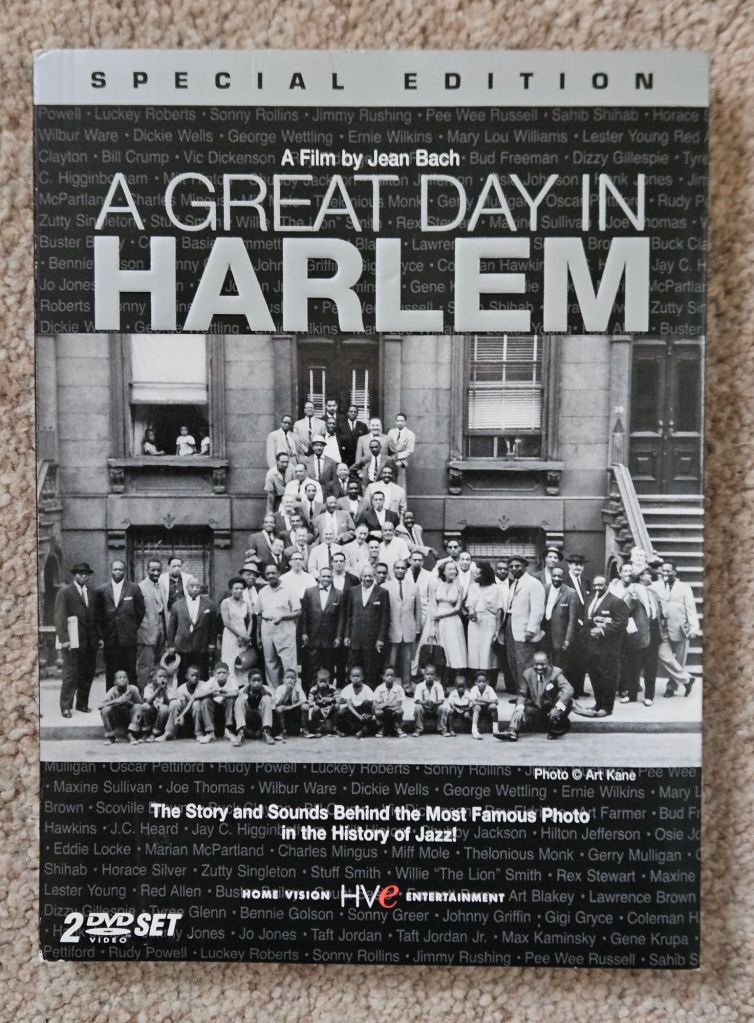
Sub-titled ‘A Film by Jean Bach,’ it was only when the film was released on DVD in the noughties that I learned about its producer’s determined efforts to bring her idea to the screen.
Jean Bach (1918-2013) was a radio producer and jazz fan, who tracked down surviving members of the group in the photograph and interviewed them.
As any researcher will agree, many of their recollections, even down to identifying who actually featured in the shot, turned out to be wildly inaccurate.
So it was a joy to discover the New York Times interactive article.
Its angle was that saxophonist Sonny Rollins, now aged 94, is the only survivor from that Great Day in Harlem photograph.
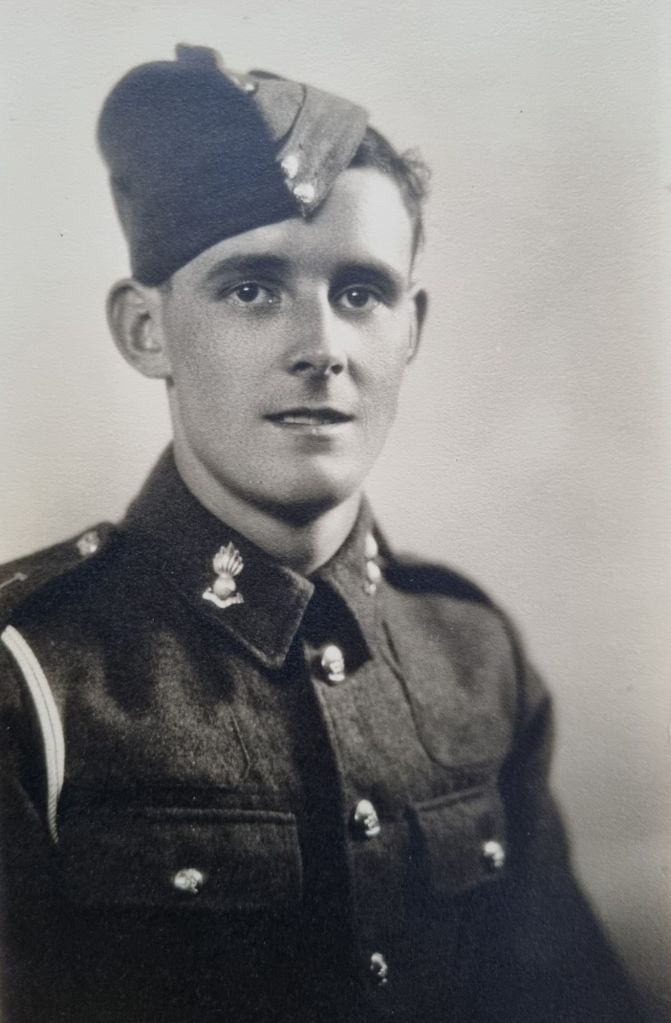
Following D-Day, his last artillery regiment reached its ultimate objective in April 1945, and Dad was then based in Germany until his ‘demob’ the following February.
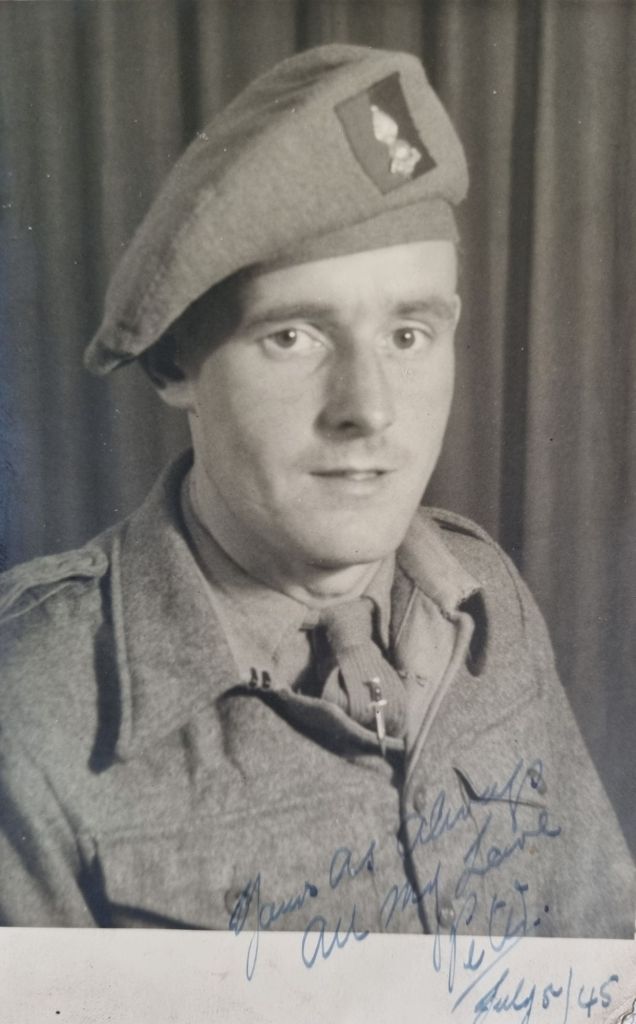
It’s only in the decades since his death that I’ve discovered details of Dad’s war service, culminating in D-Day and the events that followed.
Two regimental histories proved invaluable.
‘Mike Target’ by John Mercer (The Book Guild, 1990) vividly describes the build-up to 6th June 1944.
Dad and his fellow West Yorkshiremen in 185 Field Regiment, R.A., were due to land in Normandy on D +7.
Cover of Mike Target by John Mercer (The Book Guild, 1990).
Following anxious days aboard a ship anchored off the French coast and night-time visits from the Luftwaffe, the regiment finally disembarked on D +13.
As to his part in the Normandy campaign, Dad only ever recounted one incident that illustrated the random nature of warfare.
It happened to him during a shift change from one field gun crew to another.
Within seconds of handing over his place to a colleague, Dad’s replacement was killed by incoming fire.
By the end of 1944, numbers in his regiment were so low that he and his fellow survivors were dispersed to other artillery units.
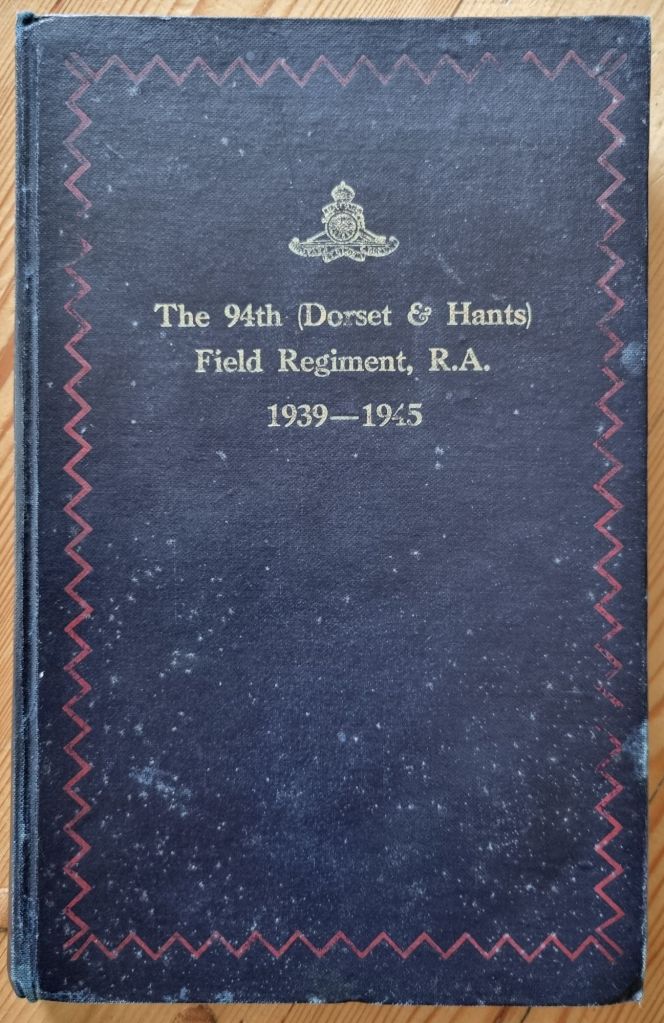
The story of his subsequent spell with the 94th (Dorset & Hants) Field Regiment, R.A., is re-told by Peter Whately-Smith in a regimental history published in 1948.
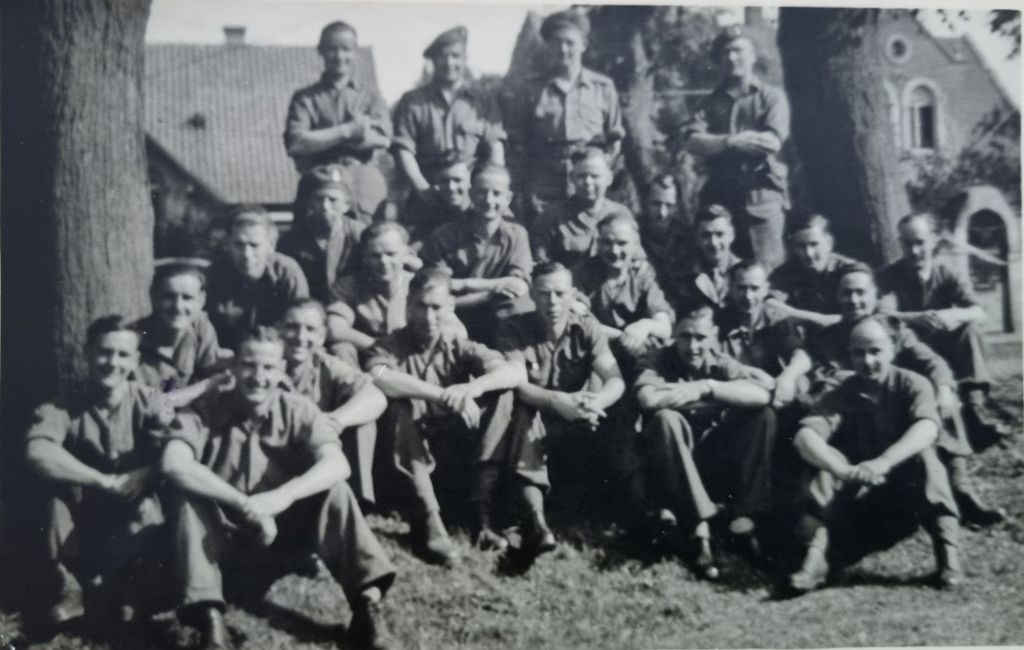
Once hostilities ended, the author describes how the “small pretty village” of Burgdorf, 15 miles north-east of the city of Hanover, became the regimental base from mid-May 1945.
There, Dad and his colleagues were “engaged in rounding up and disarming German troops … and combing large areas of countryside for enemy weapons and warlike stores.”
Then “began a period of hard grinding work. Guards, guards and more guards, escort parties, security patrols.”
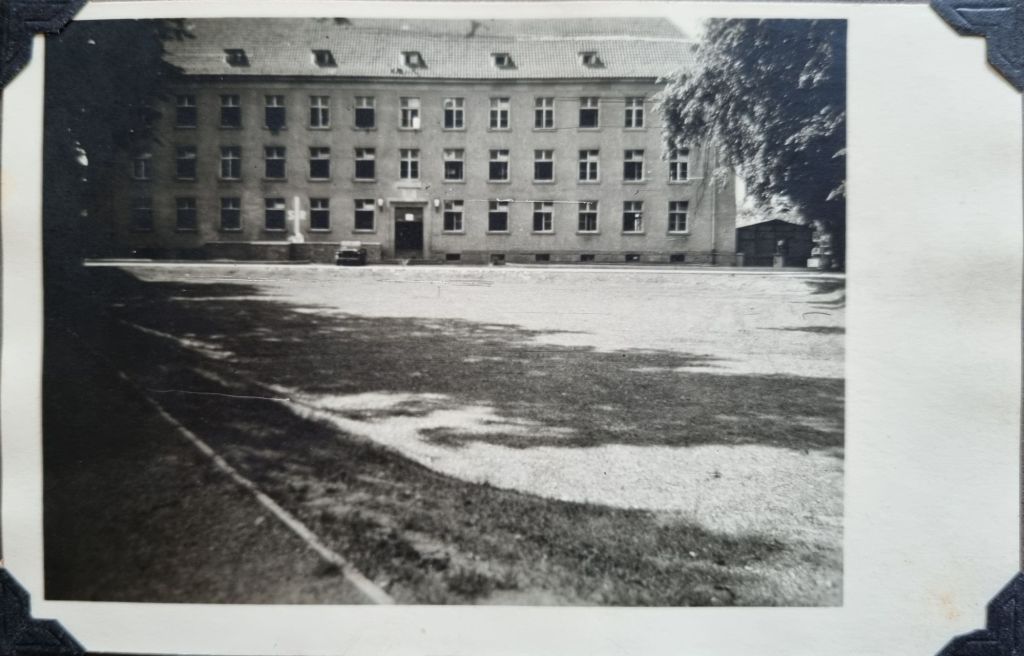
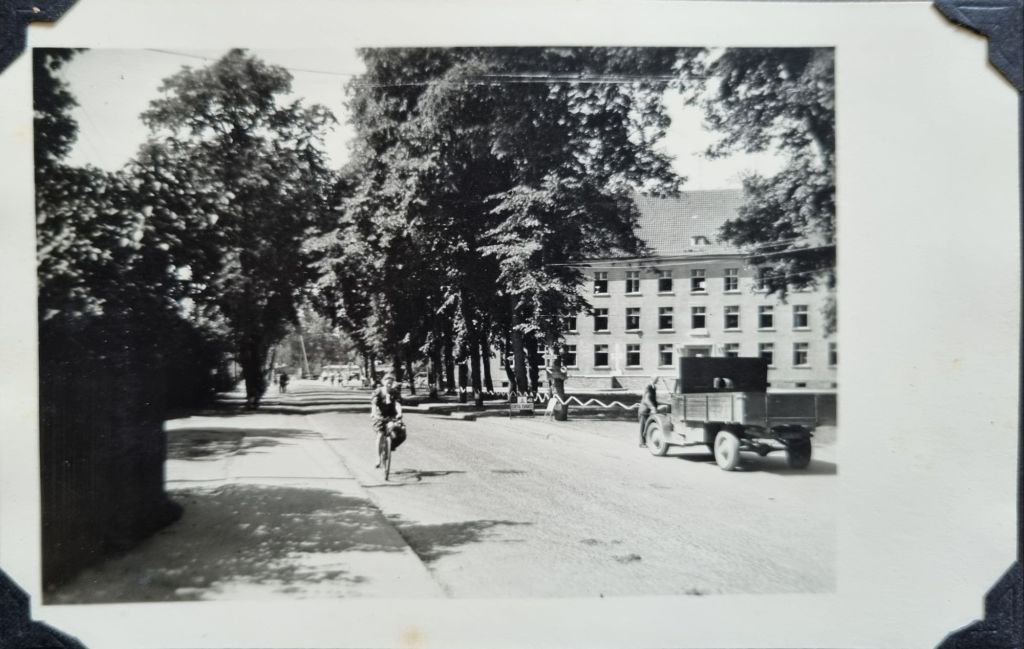
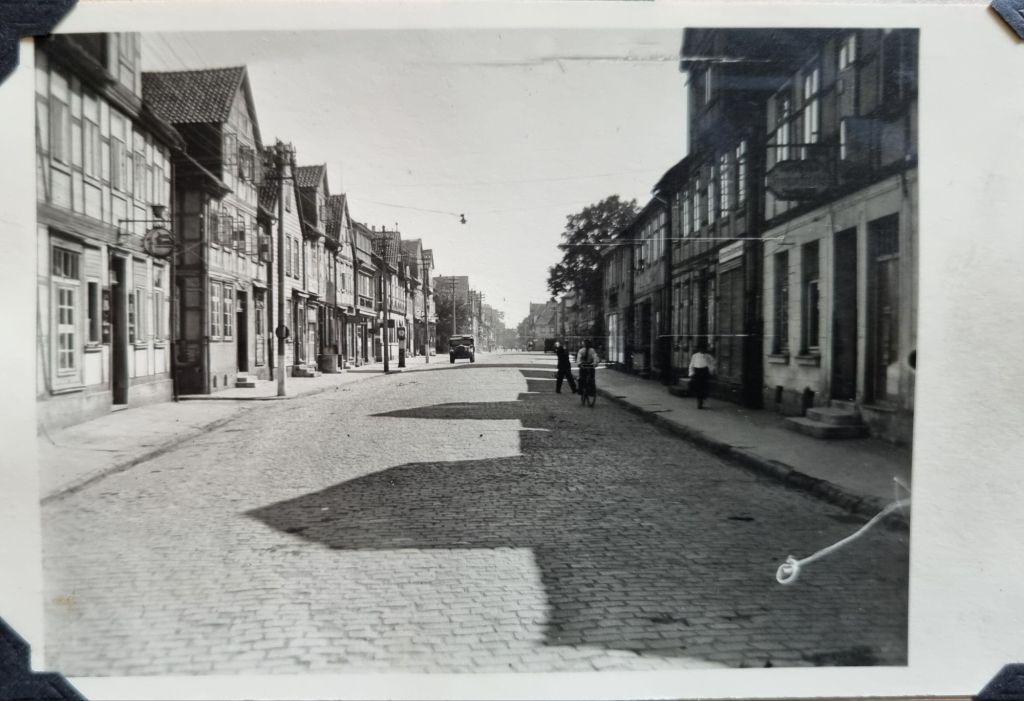
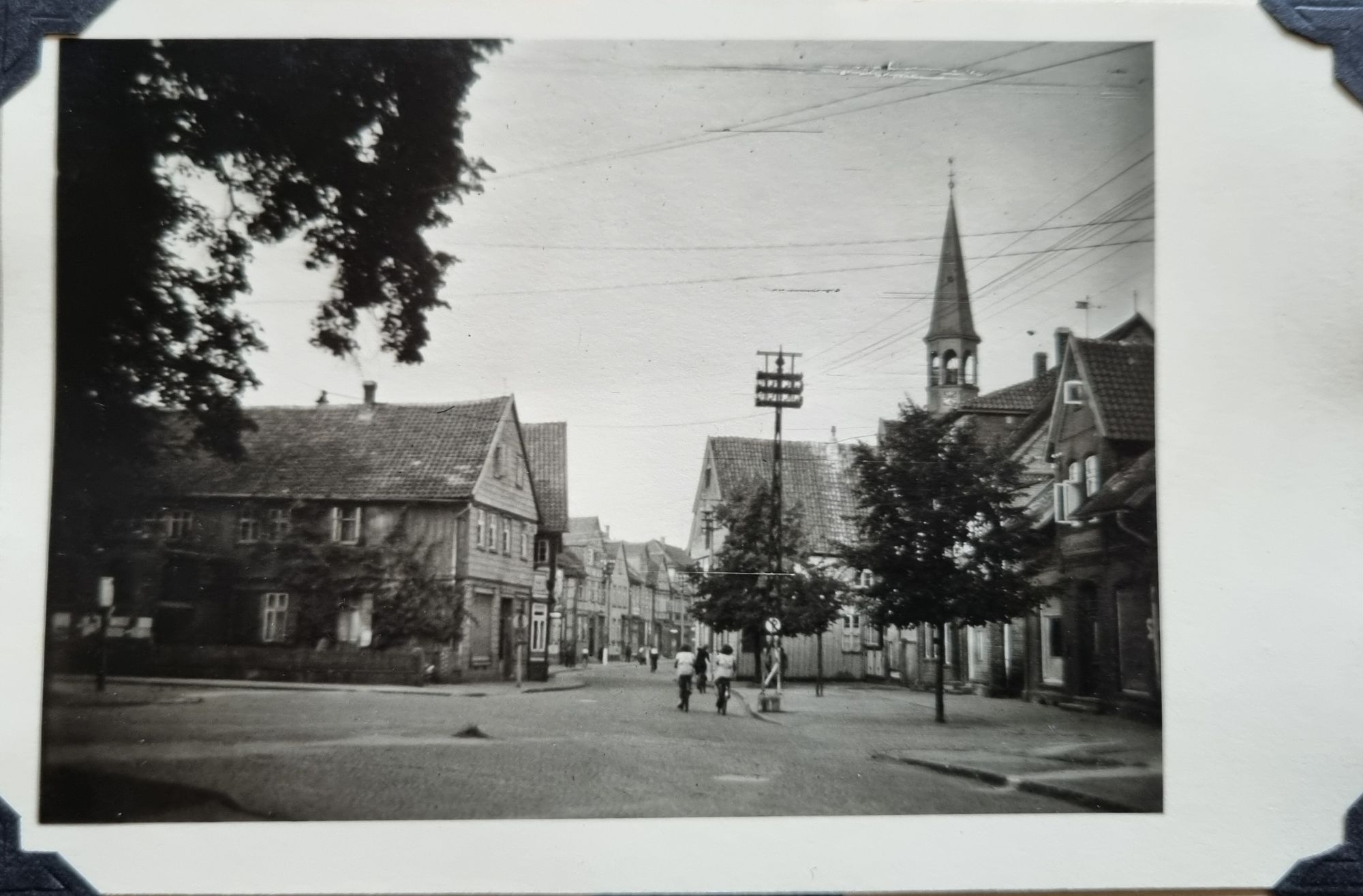
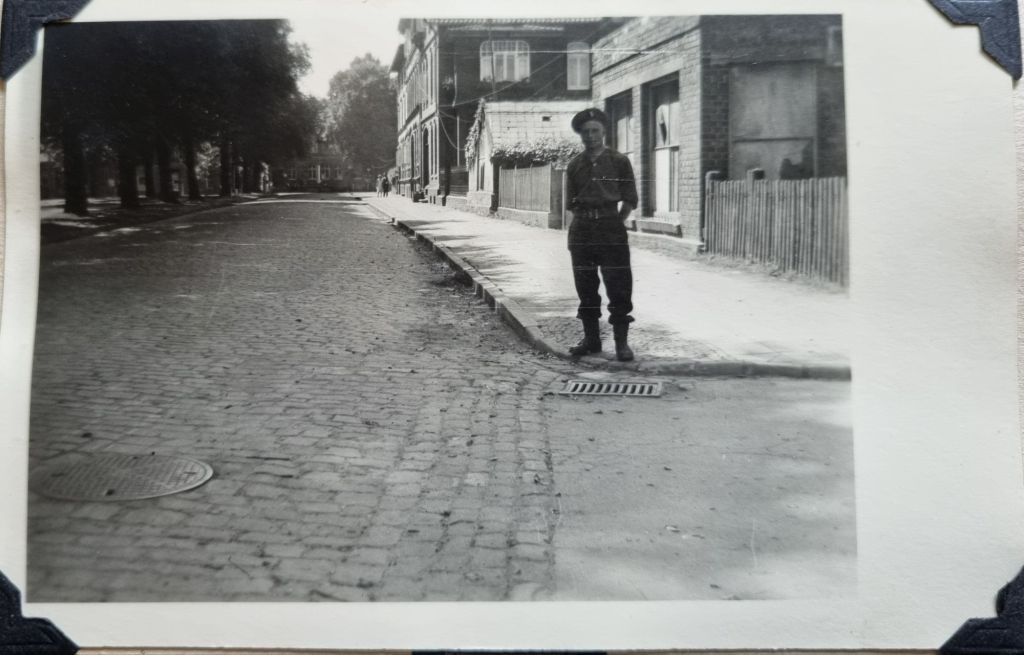
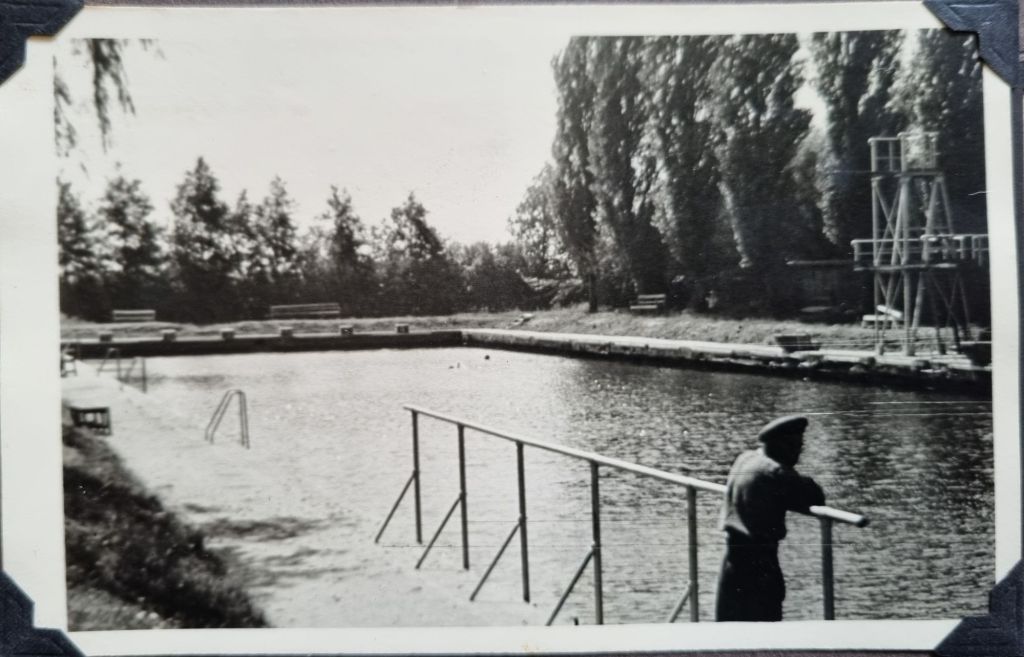
Burgdorf was “unscathed by war” and that fact is reflected in the handful of photographs that form the ‘Germany’ section of Dad’s war-time photo album.
In stark contrast to images usually associated with war-time, its black-and-white shots capture the peace that had been so hard won.
In one, a building features with a jeep parked to the left of the entrance, possibly the regimental HQ.
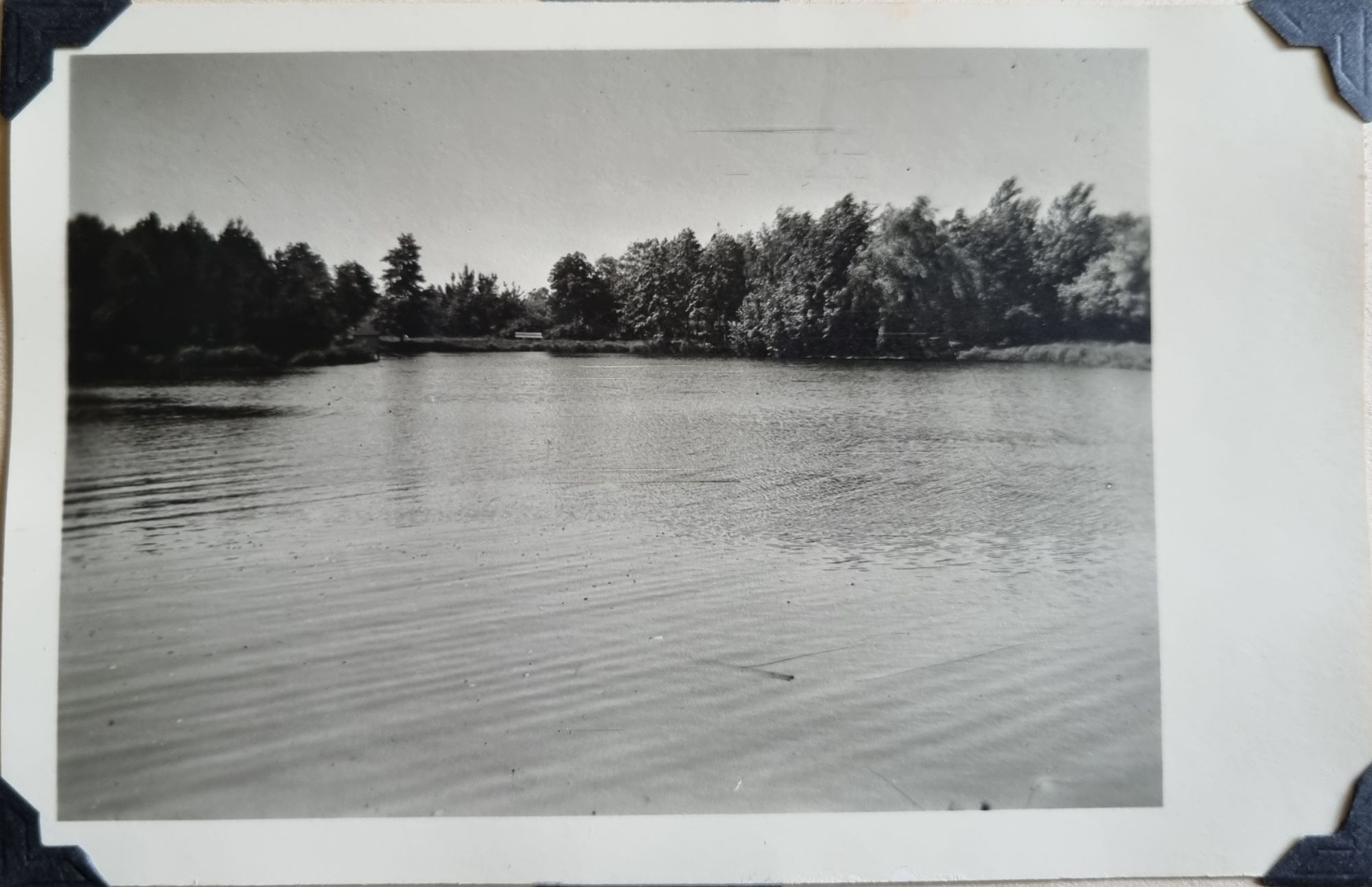
The third photo features a manicured grass lawn and planted border, perhaps fronting one of the buildings featured earlier, surrounded by trees in full leaf.
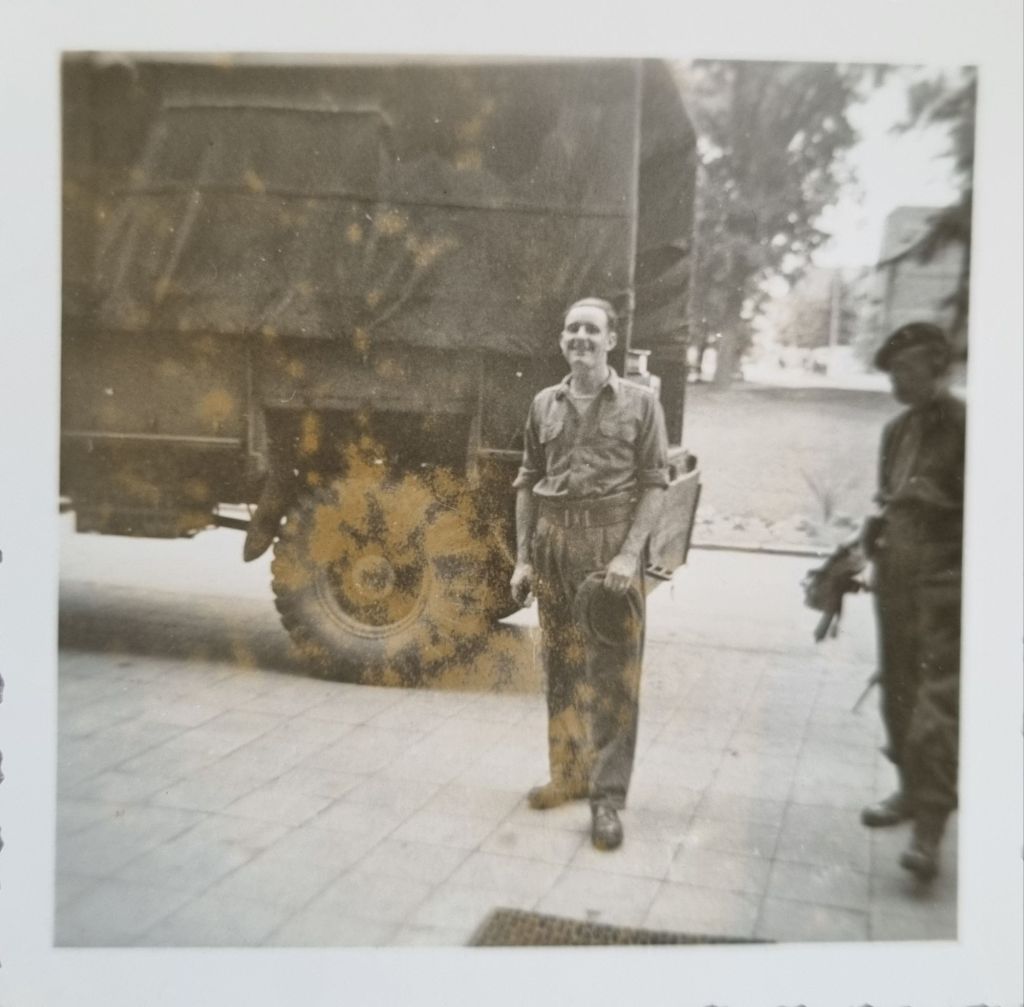
His Soldier’s Release Book records that he had been “employed in the Quarter-Masters Department as clerks store manager.”
This was a testimonial that helped prepare him for life after the forces, and in 1947, he secured a clerk’s job in civvy street with a Leeds-based soap manufacturer.
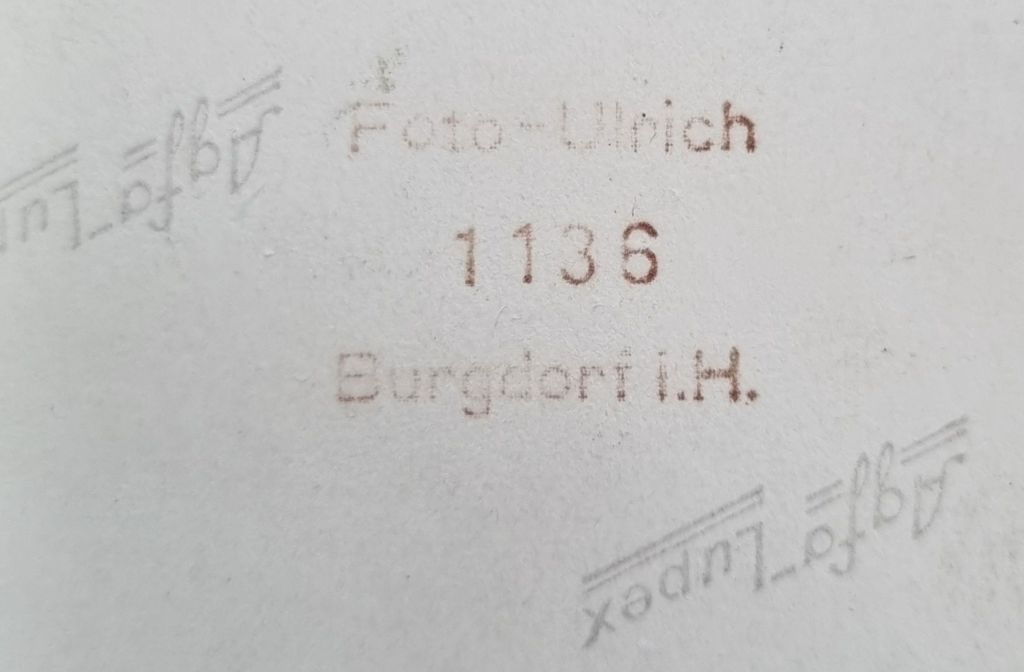
The verso of the ‘at work’ snapshot bears the stamp of the branded photo paper used – ‘Agfa Lupex’ – and the photo shop in Burgdorf that produced the resulting print.
Best of all, it shows Dad with a smile on his face.
It was one that must have reflected how he felt after the ordeal of an arduous campaign that began on D-Day and a global conflict that consumed nearly seven years of his young adult life.
Following Tish’s death in 2013, her daughter Ella has made it her mission to share that photography with as wide an audience as possible.
As a result, photographs from “Elswick Kids” (1978), “Juvenile Jazz Bands” (1979) and “Youth Unemployment” (1981) are now part of the permanent collection at Tate Britain in London.
Ella plays a key role in Tish interviewing family, friends and documentary photographers about the woman she refers to throughout as “my mam.”
The resulting film tells a haunting and moving story and is one that I would thoroughly recommend seeking out if it visits a cinema near you.








 Pressphotoman
Leave a comment