
This week (12th March) marks 153 years since the birth of photographer, author and journalist Percy R. Salmon FRPS (1872-1959).
His life and career were celebrated in 2022 in a short film produced by the Royal Photographic Society marking his contribution as a fellow and society member for more than half a century.
Since then, Pressphotoman has continued research into different aspects of PRS’s life in photography and then shared the findings with readers around the anniversary of his birth.
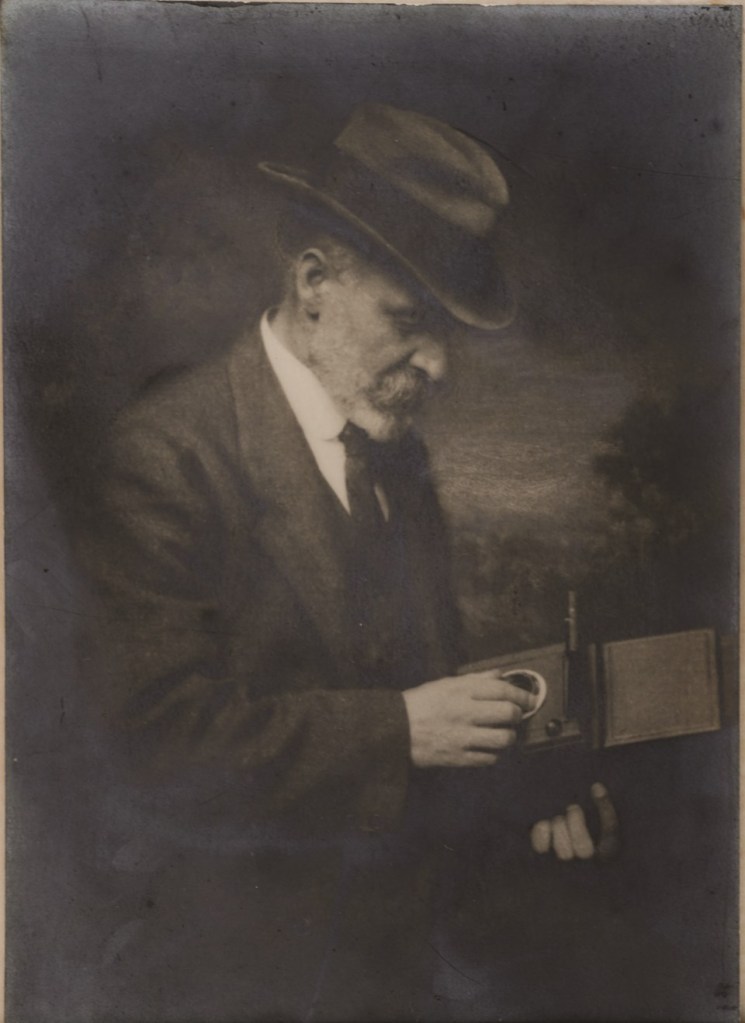
A recent discovery is that he was a key figure in the arrival in Britain of the Autochrome, the first accessible colour photography process.
This involved coating a glass plate with varnish.
Then with a randomly mixed layer of red, blue and green dyed potato starch, with around five million grains per square inch, painting the glass plate with an orthochromatic emulsion.
A complex programme followed of developing, washing, bleaching, redeveloping, fixing and more washing.
The stipled colour result was soft and subtle and is still regarded today as “the most beautiful of the colour processes” (Pam Roberts, The Royal Photographic Society Collection, 1994, p. 62).
The Lumière brothers, Auguste and Louis, patented their Autochrome on 17th December 1903 and publicly unveiled their invention at the Académie des Sciences in Paris at the end of March 1904.
However, it was not until June 1907 that it was released commercially in France (Catlin Langford, Colour Mania: Photographing The World In Autochrome, Thames & Hudson/V&A, 2022, p. 18).
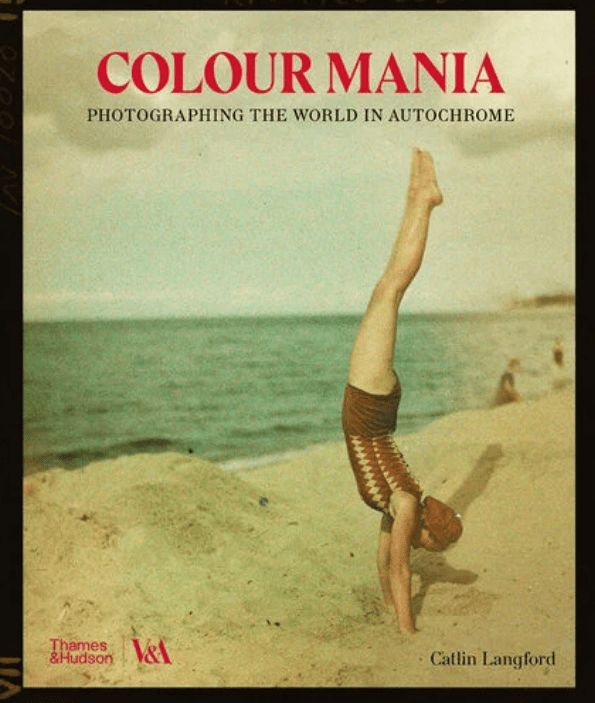
By August, the Autochrome was being excitedly referred to in the British photographic press, which is where Percy R. Salmon comes into the story.
On 5th September, an ‘informal meeting’ about ‘the Autochrome colour-plate’ took place at the Royal Photographic Society in London.
The Morning Post newspaper (7th September 1907) reported that ‘Mr. P.R. Salmon’ was named “among those who showed examples” at the meeting of what it called “that new toy.”

From British Newspaper Archive.
Also referred to in the report were ‘Mr. J. McIntosh,’ secretary of the RPS (1905-1921) and ‘Mr. Francis T. Beeson,’ who had been an RPS Fellow since 1897.
According to Langford (2022, p.19), “the first [Autochrome] plates arrived in Britain in October 1907, but only in small quantities.”
This would suggest that RPS members attending the ‘informal meeting’ in early September had privileged access to an alternative supply.
In Salmon’s case, this may well have been through contacts he had established in Paris while working as a travelling stereoscopic (3D) photographer for Lévy et ses Fils between 1897 and 1900.
He was also well connected through his years as Editor of Photographic News (1901-1905), a popular weekly newspaper established in Britain in 1858.
Events seems to have moved swiftly as what was described as a ‘Section’ at the annual RPS Exhibition, which opened on 19th September at the New Gallery in Regent Street, London, was devoted to ‘The Autochrome.’

The exhibition catalogue records that ‘P.R. Salmon’ exhibited a portrait, listed as no. 60.
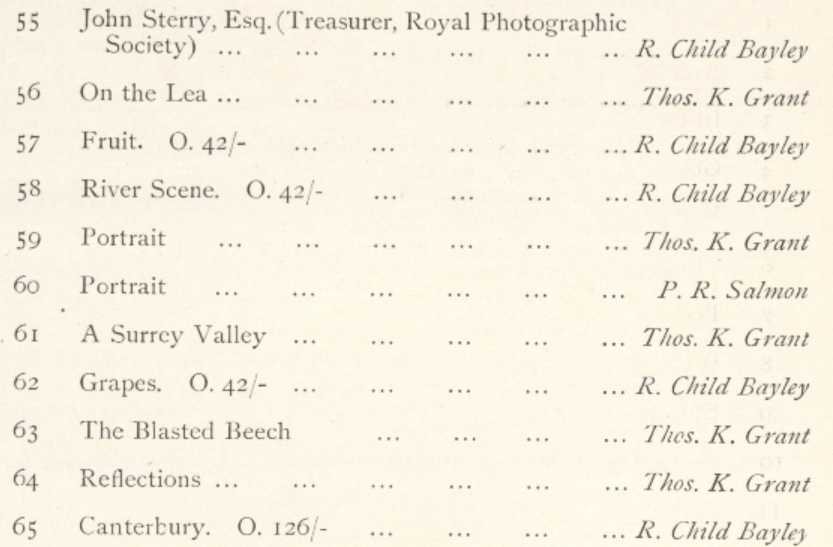
The Autochrome Section had been “collected and arranged by R. Child Bayley and Thos. K. Grant by invitation from the [RPS] Council,” so Salmon found himself sandwiched between several examples produced by its two organisers.
The exhibition proved very popular and each day (until it closed on 26th October), a selection of the Autochromes on display were “shown on the lantern screen” (Morning Post, 19th September 1907).
By early November, a meeting of the RPS that featured an Autochrome demonstration broke all attendance records (Langford, 2022, p.19).
Efforts to locate Mr. Salmon’s Autochrome portrait from the 1907 Exhibition or any other Autochromes he produced have so far proved unsuccessful.
However, increased research activity into this eye-catching process and its early history suggests that all hope is not lost.


 Pressphotoman
Leave a comment