Historic England’s newly-published round-up of listings added during 2025 attracted plenty of media attention.
Ancient burial sites, shipwrecks, a corrugated iron church and arts and crafts gardens were among the nearly 200 examples of places granted protection.
Pyramid-shape obstacles known as ‘dragon’s teeth’ designed to thwart Nazi tanks were made of concrete, a design material enthusiastically adopted throughout the 20th century.
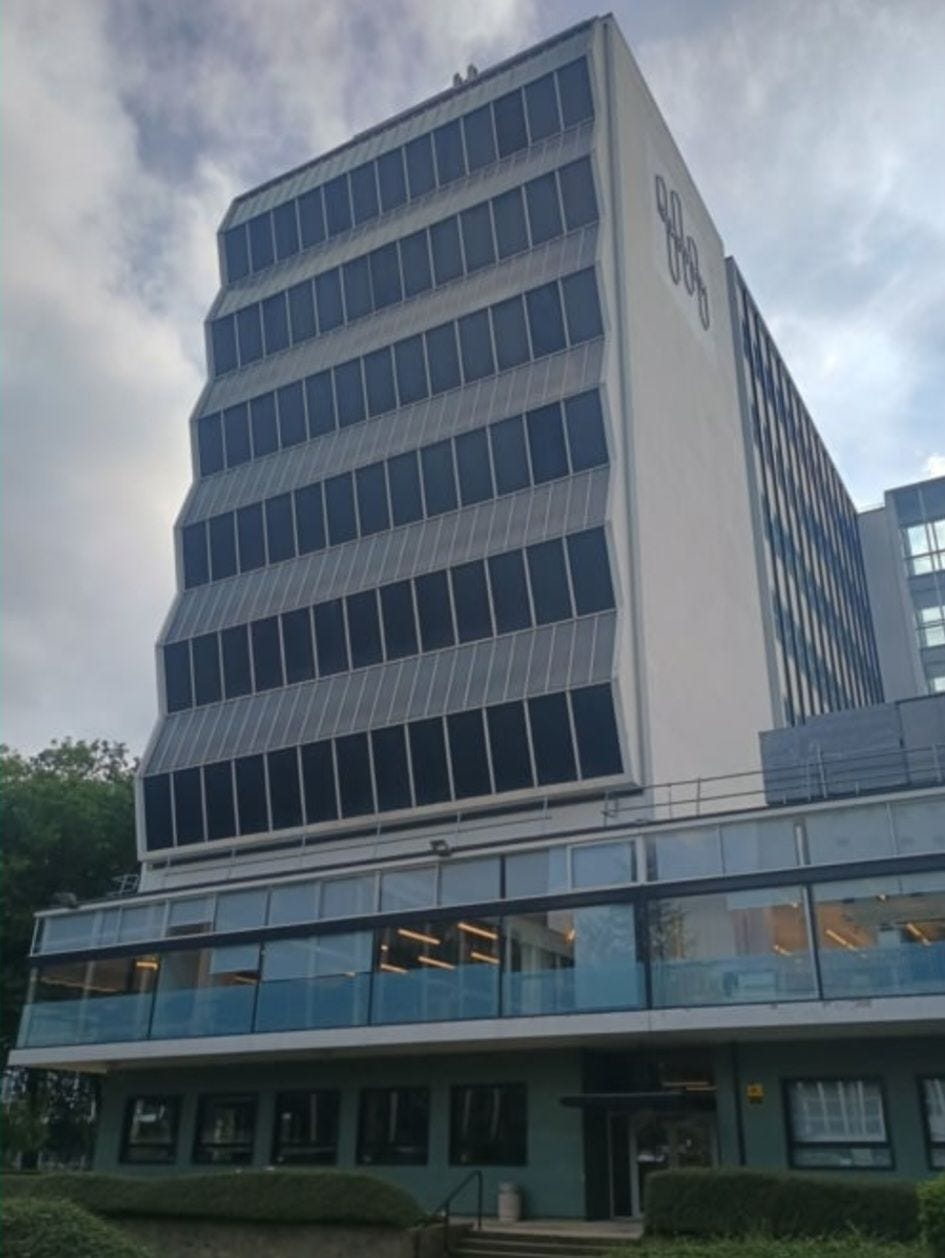
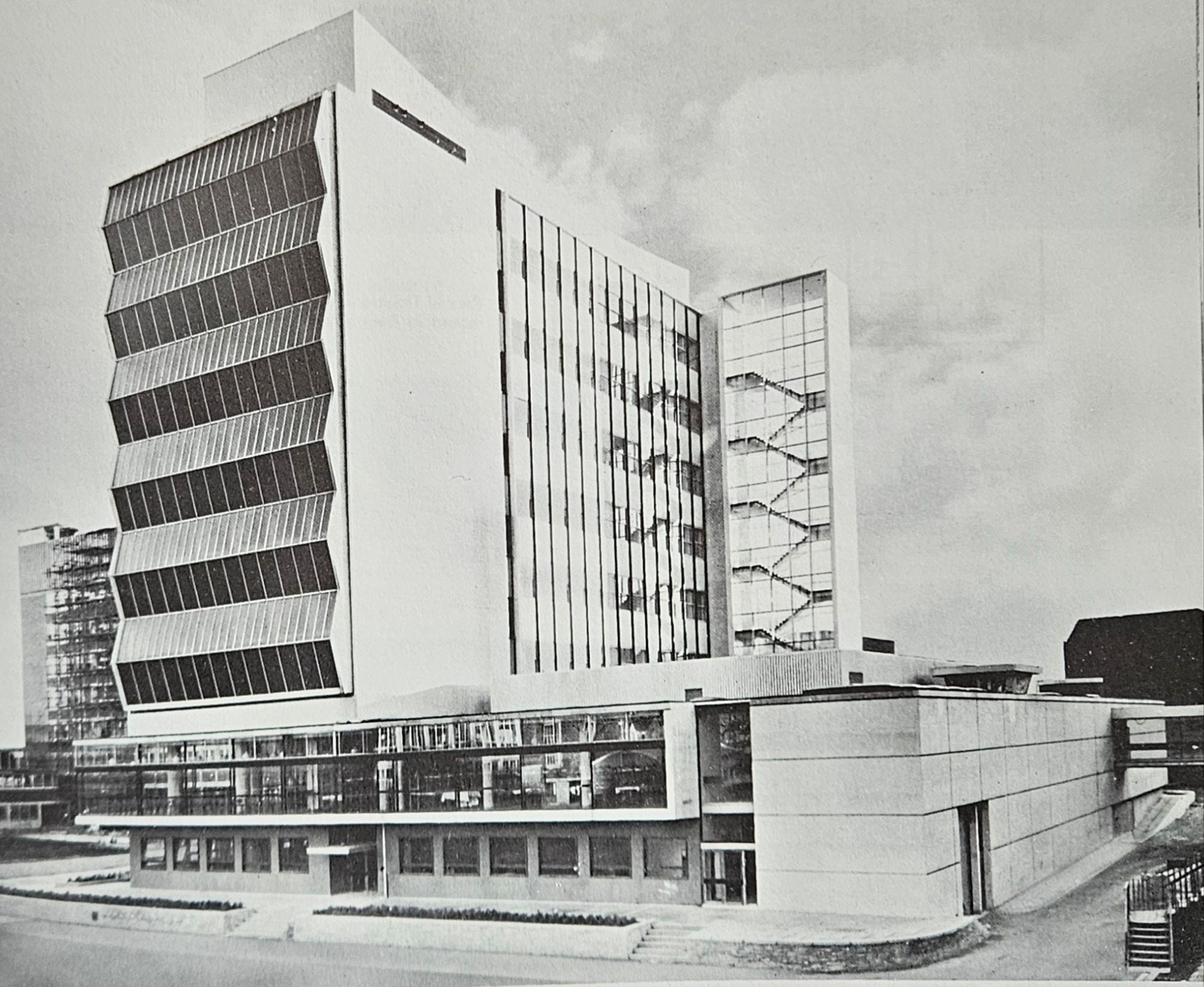
Another example was a building designed by W.A. Gibbon and opened in 1962 as the country’s first purpose-built lecture block.
The Renold Building, once part of the University of Manchester Institute of Science and Technology (UMIST), still has an eye-catching exterior.
However, much of the building’s original interior was lost during its recent transformation into an Innovation Hub with no-cost and low-cost workspaces for business start-ups.
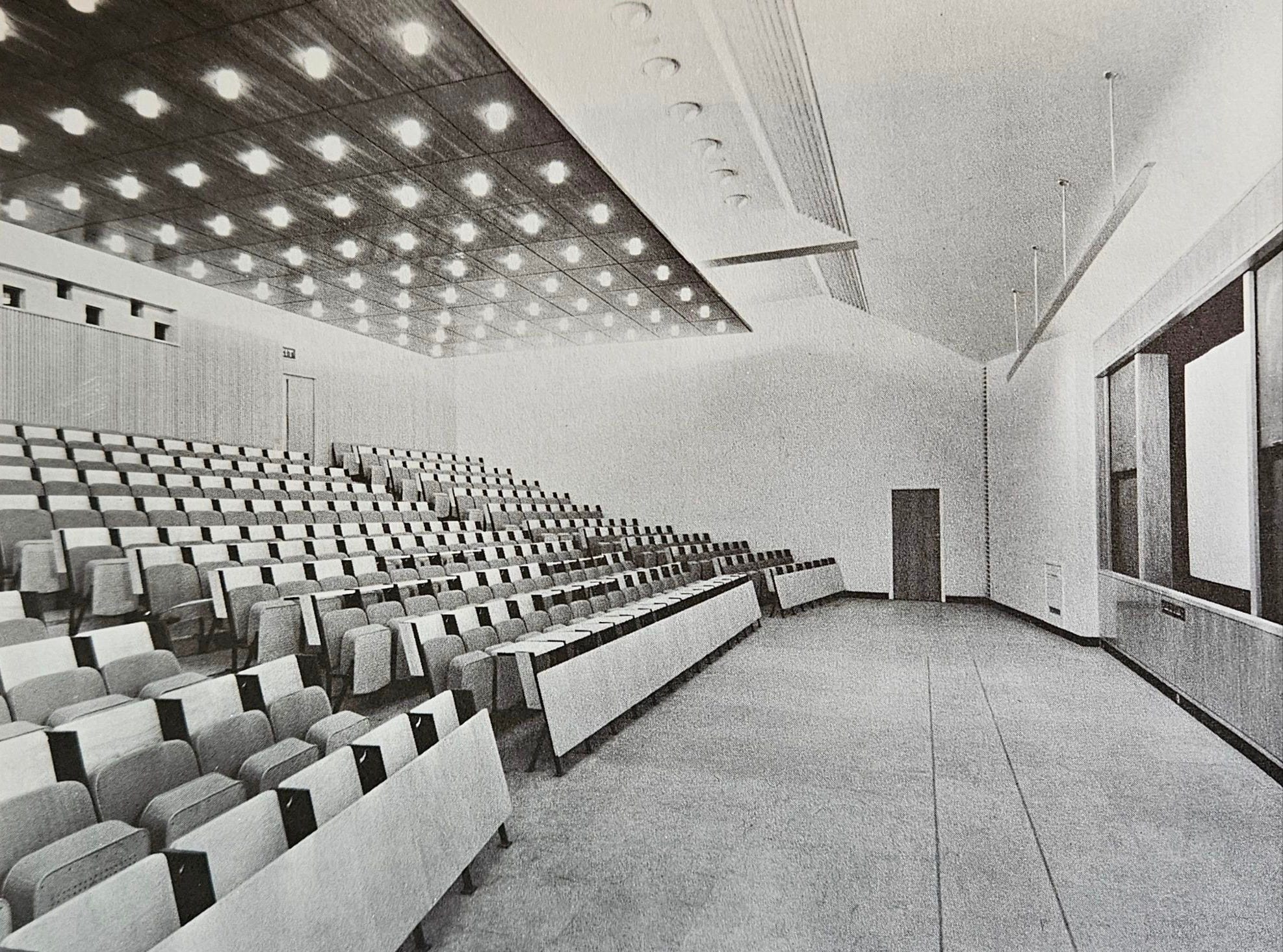
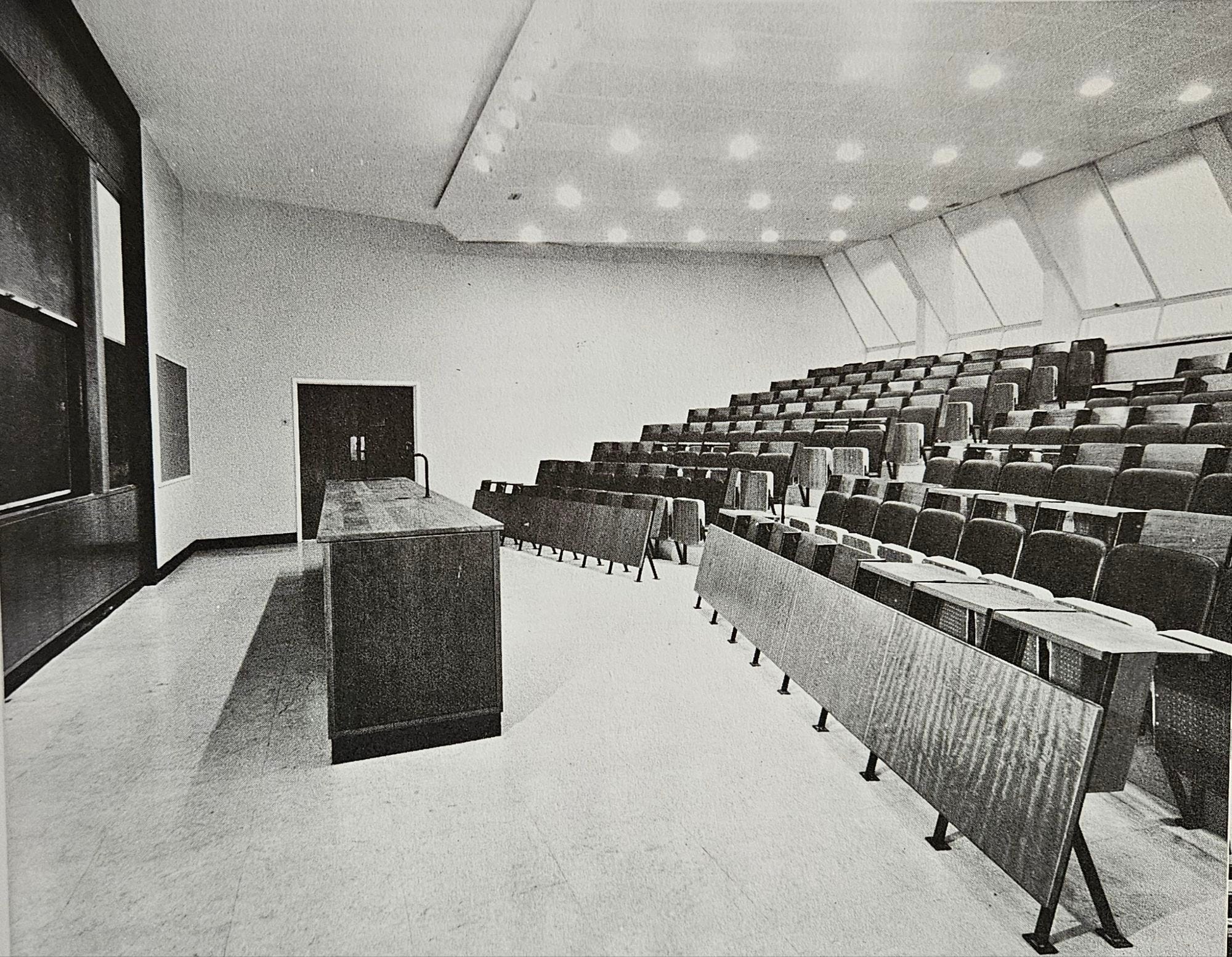
Fortunately for posterity, photographers were on hand to record what the Renold Building looked like when it first opened in 1962.
Photo: Elsam, Mann & Cooper Ltd.
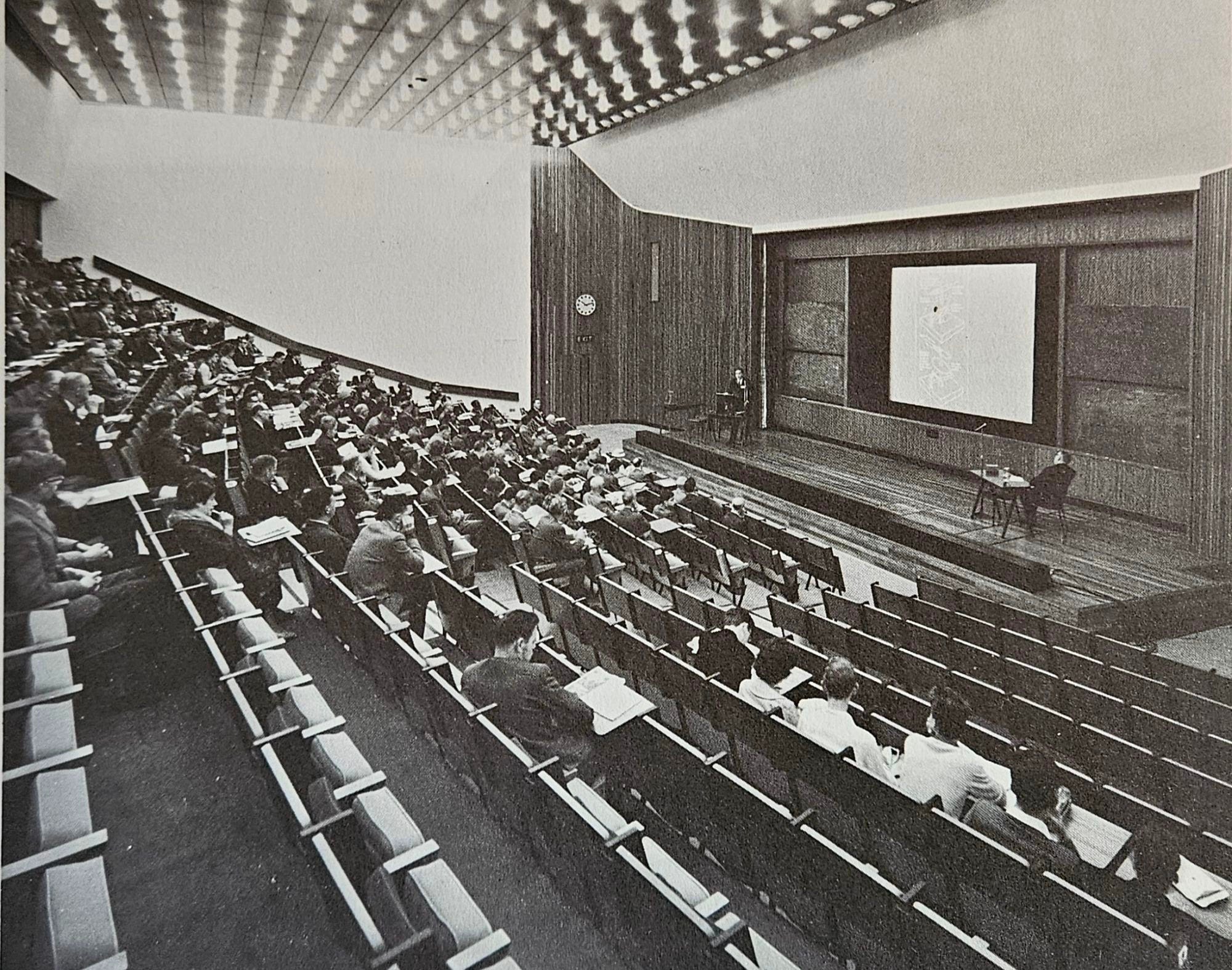
The following selection of images were published by Oriel Press in Modern Lecture Theatres (Newcastle upon Tyne, 1966).
The weighty book showcased examples of pioneering design and innovation from Britain, Europe and America and was edited by C.J. Duncan (1916-1979), head of the Department of Photography at Newcastle University.
For the Renold Building, a total of nine lecture theatres complete with blackboards, cinema screens and sound systems were designed to accommodate 500, 300 and 140 students in various configurations.
‘The Main Renold 500 seat Theatre – Conference in session.’ From Modern Lecture Theatres (Oriel Press: Newcastle upon Tyne, 1966).‘One of the twin 300 seat Theatres in lower block’. From Modern Lecture Theatres (Oriel Press: Newcastle upon Tyne, 1966).‘One of the six 140 seat theatres …’ From Modern Lecture Theatres (Oriel Press: Newcastle upon Tyne, 1966).
The fact that such spaces will be instantly recognisable to students of all ages from the past half century or so is a tribute to the success of their original innovative design.
Photography has many memorable names associated with its long and celebrated history.
However, an unusual sounding one caught my attention during a recent research project.
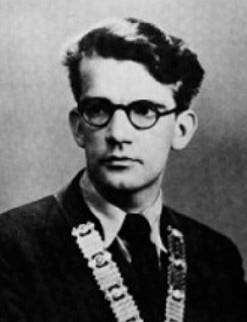
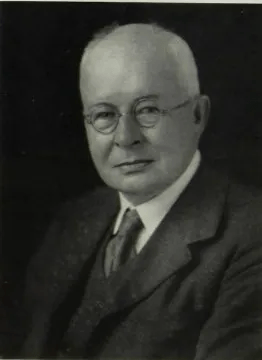
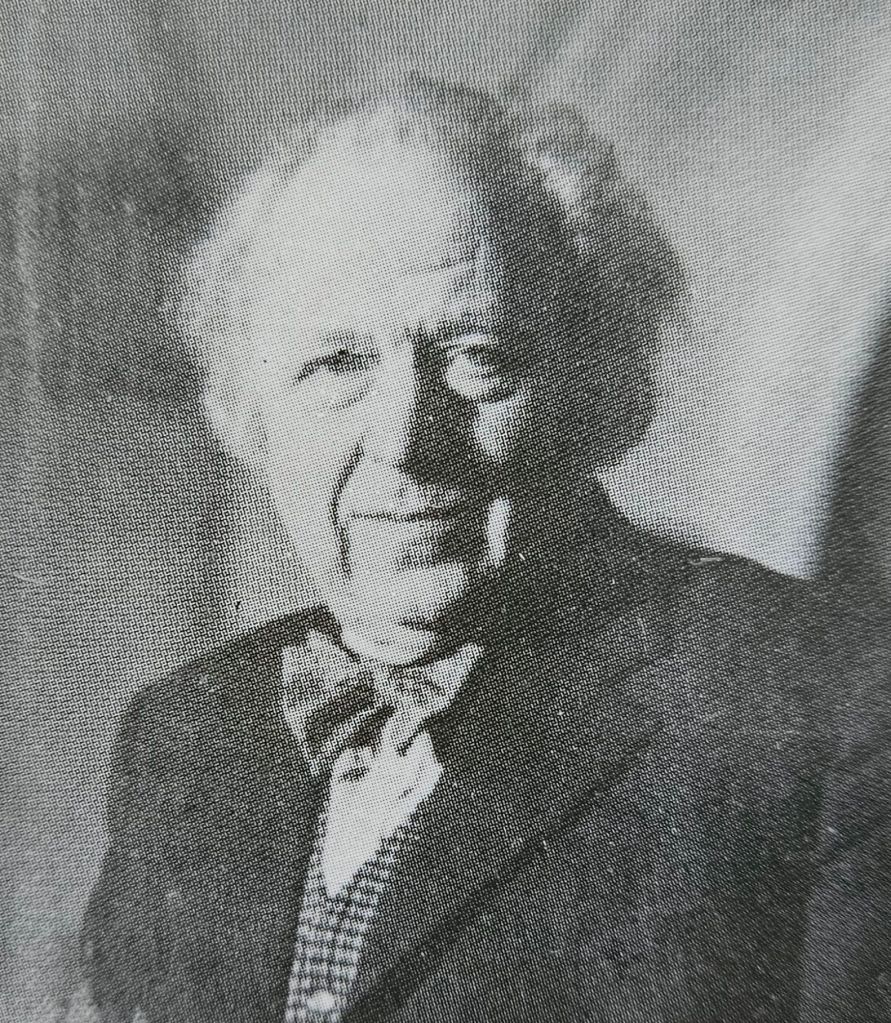
A life-long resident of Newcastle upon Tyne, Burdus Redford FRPS (1868-1951) was an insurance company official by day, but an active and respected photographer in his spare time.
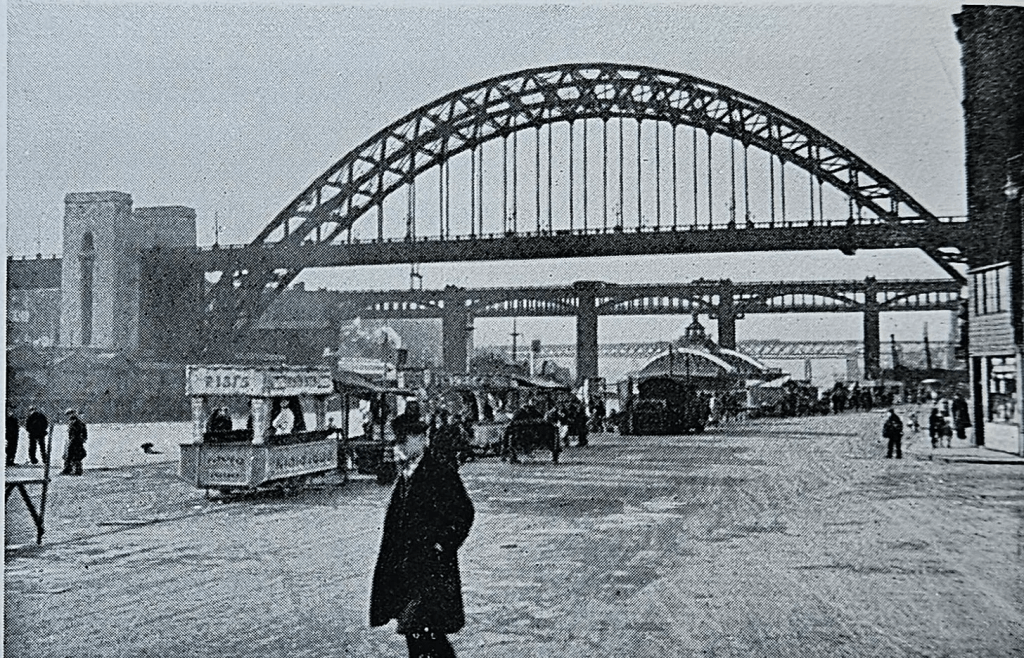
‘Four Bridges’ by Burdus Redford FRPS.Portrait of Burdus Redford FRPS by Philipson & Son Limited, Newcastle upon Tyne. From Royal Photographic Society Journal.
During his life, a number of organisations benefitted from Redford’s skill and expertise, both as a practitioner, who preferred to use plates rather than films, and as a lecturer employing lantern slides to illustrate his talks.
These included Tynemouth Photographic Society which he joined in 1904, later becoming its President; the Northern Counties Photographic Federation; and the Photographic Convention of the United Kingdom of which he was also President in the late-1920s.
This latter accolade seems to have coincided with a period when he became even more photographically active, perhaps in retirement.
For example, his membership of the Royal Photographic Society in 1927 was followed soon after by the award of a coveted fellowship (FRPS).
By this point in his life, Redford’s network of contacts was extensive and included John Betjeman (1906-1984), the celebrated architectural writer and later Poet Laureate
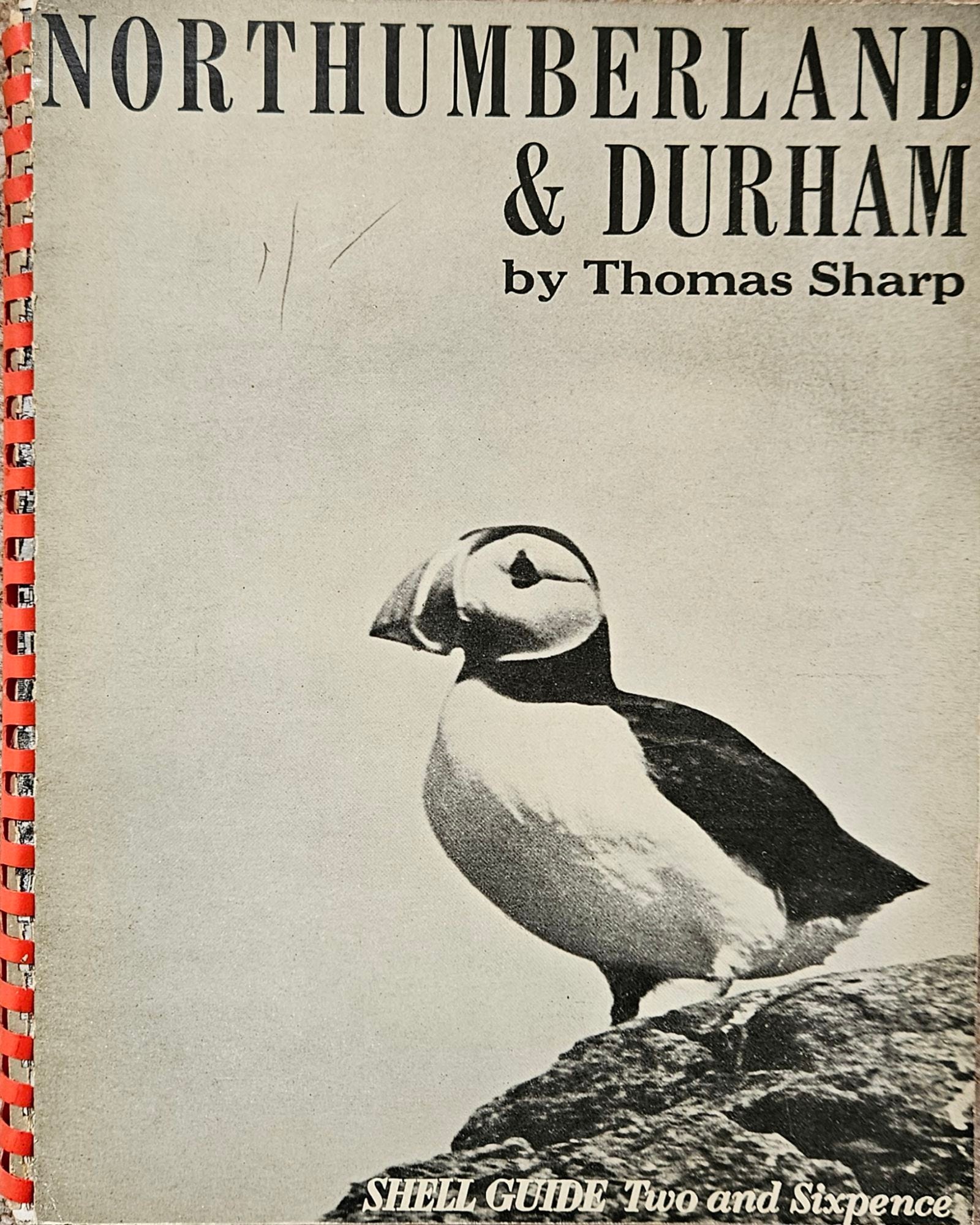
At Betjeman’s suggestion, he was invited to contribute photographs to Thomas Sharp’s Northumberland and Durham: A Shell Guide published in 1937.
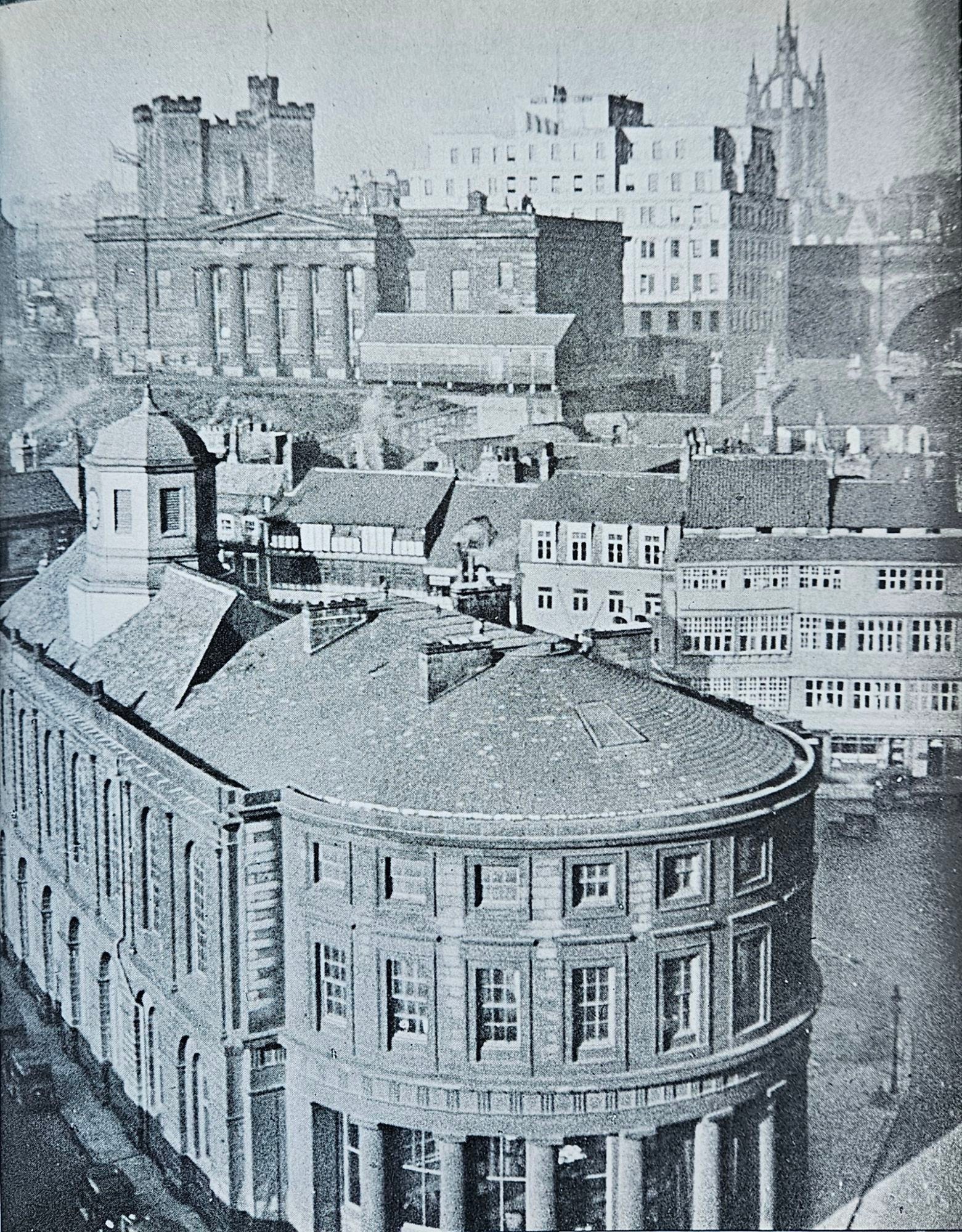
Alongside ‘Four Bridges’ (above), his view of ‘Newcastle’ taken from a high vantage point overlooking the quayside captures a number of prominent landmarks that are still visible nearly a century later.
‘Newcastle’ by Burdus Redford FRPS. From Northumberland and Durham: A Shell Guide by Thomas Sharp (London: B.T. Batsford Ltd., 1937).
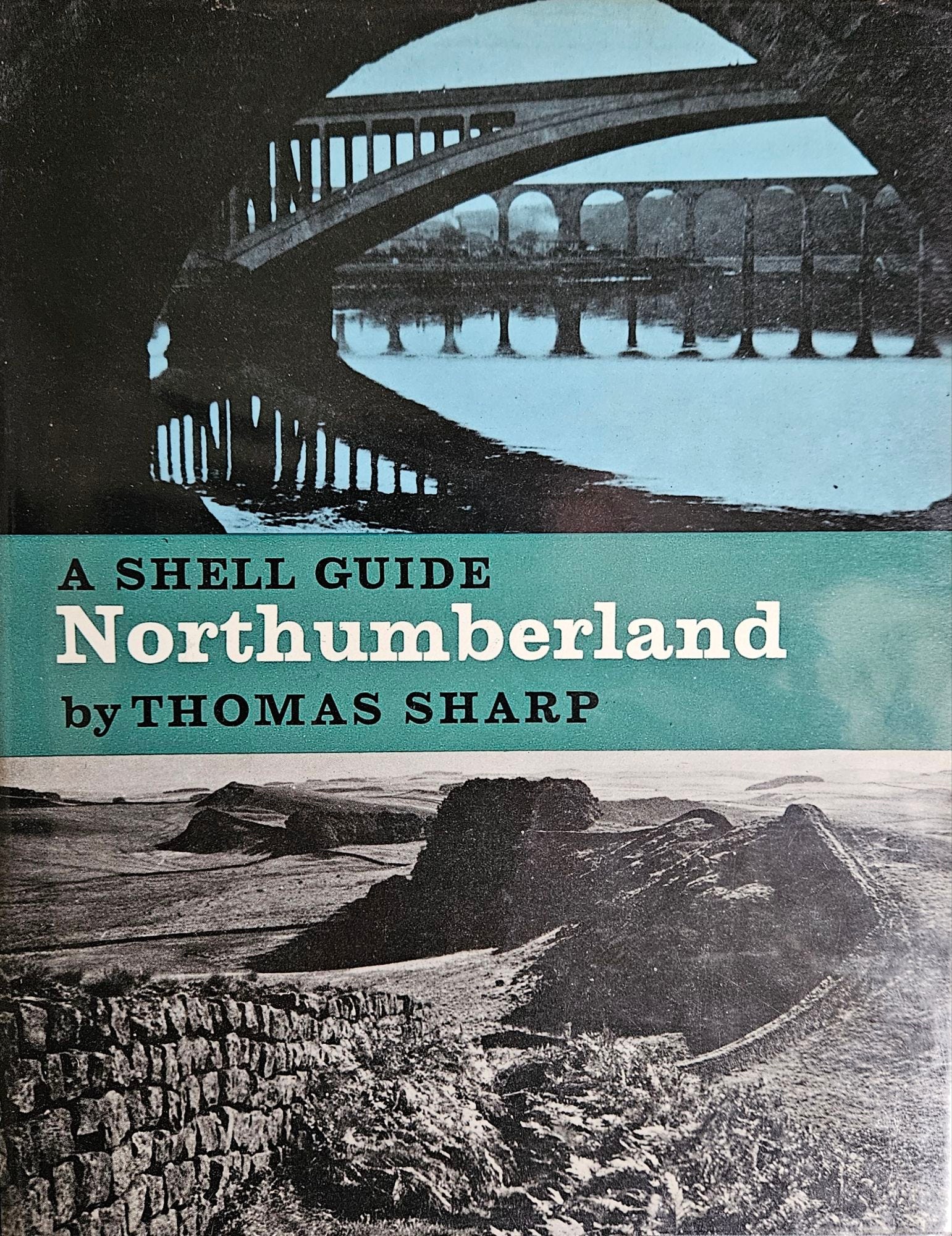
The photograph’s quality meant it was still included in a Shell Guide devoted solely to Northumberland published in 1954.
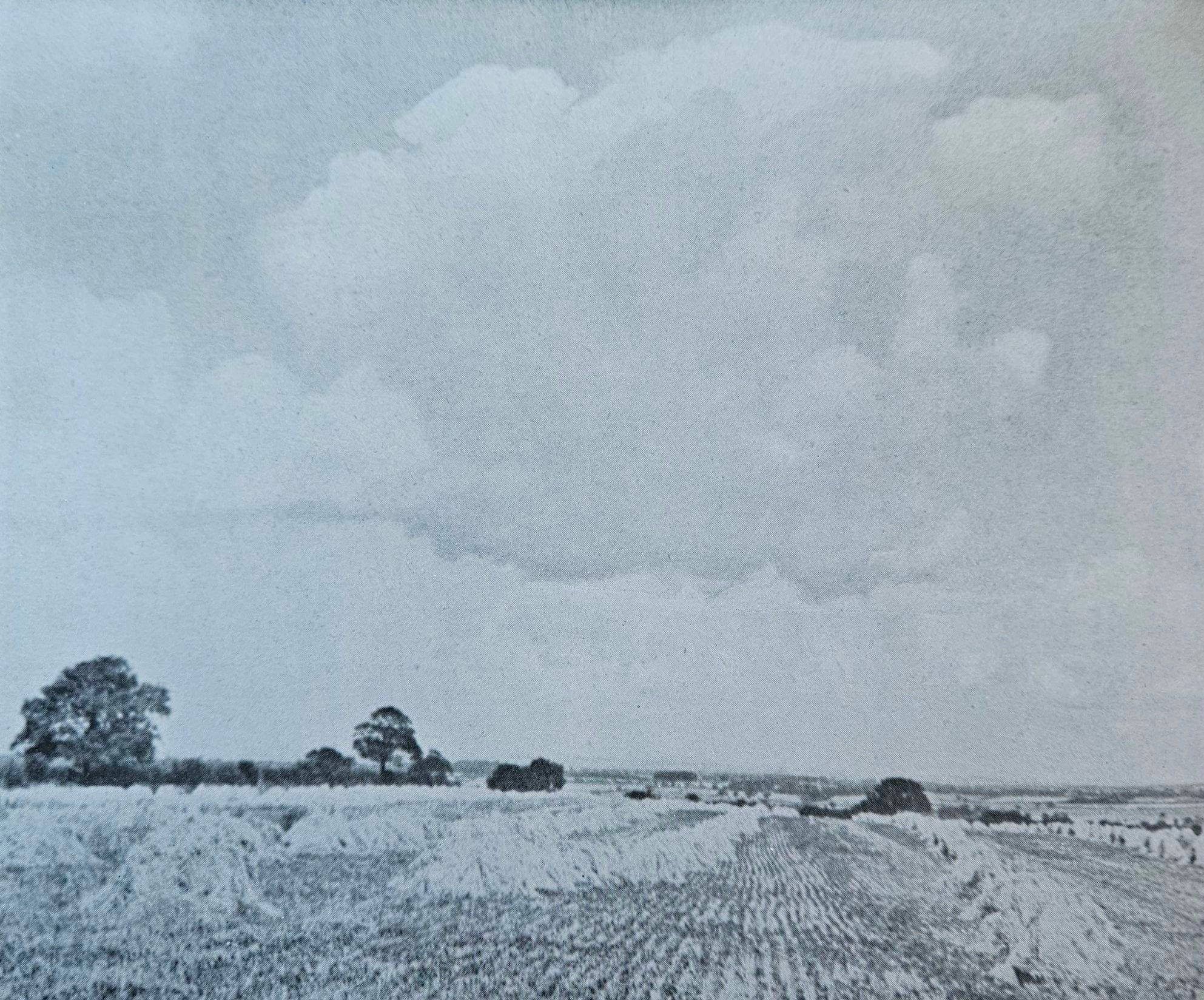
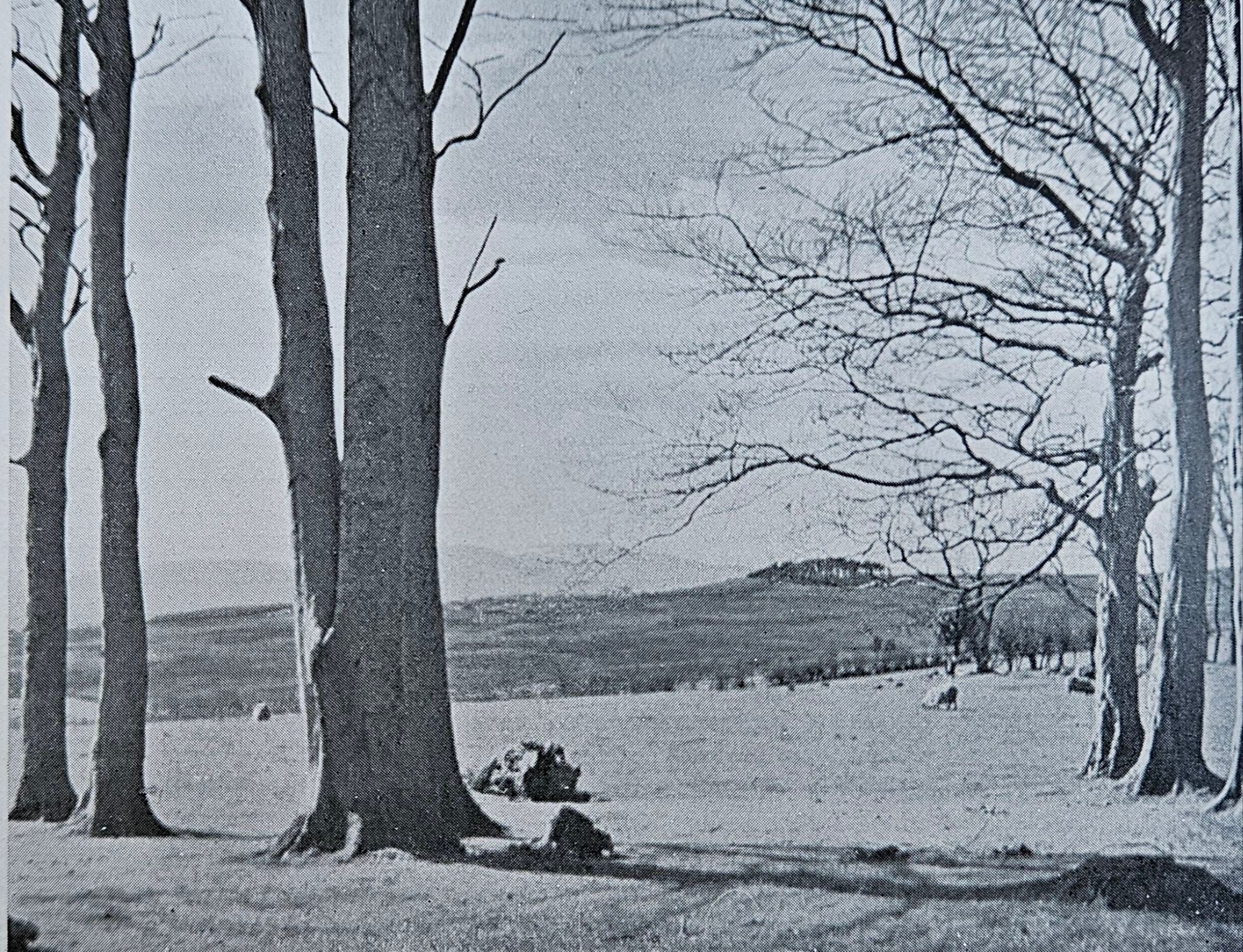
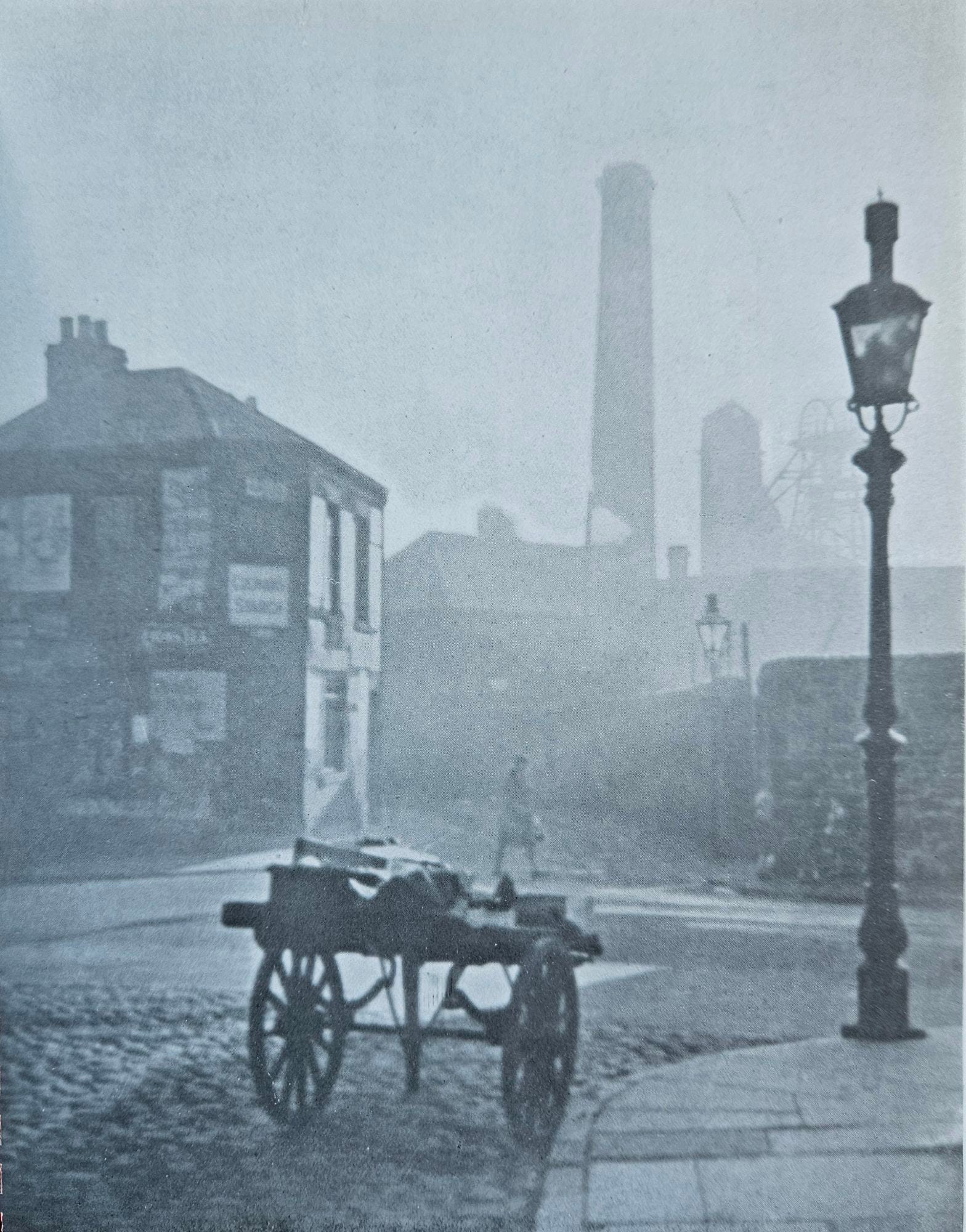
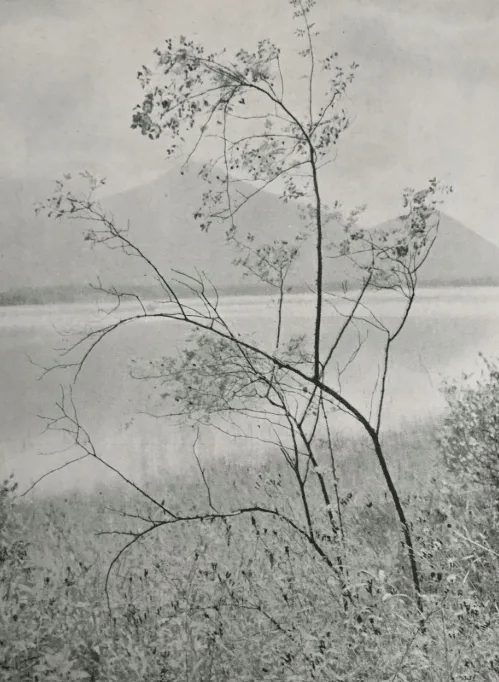
Betjeman was much taken by what he described as Redford’s “really exquisite views”, both rural and industrial.
‘Wheatfield’ by Burdus Redford FRPS.‘Hills and Trees’ by Burdus Redford FRPS.‘Colliery’ by Burdus Redford FRPS.
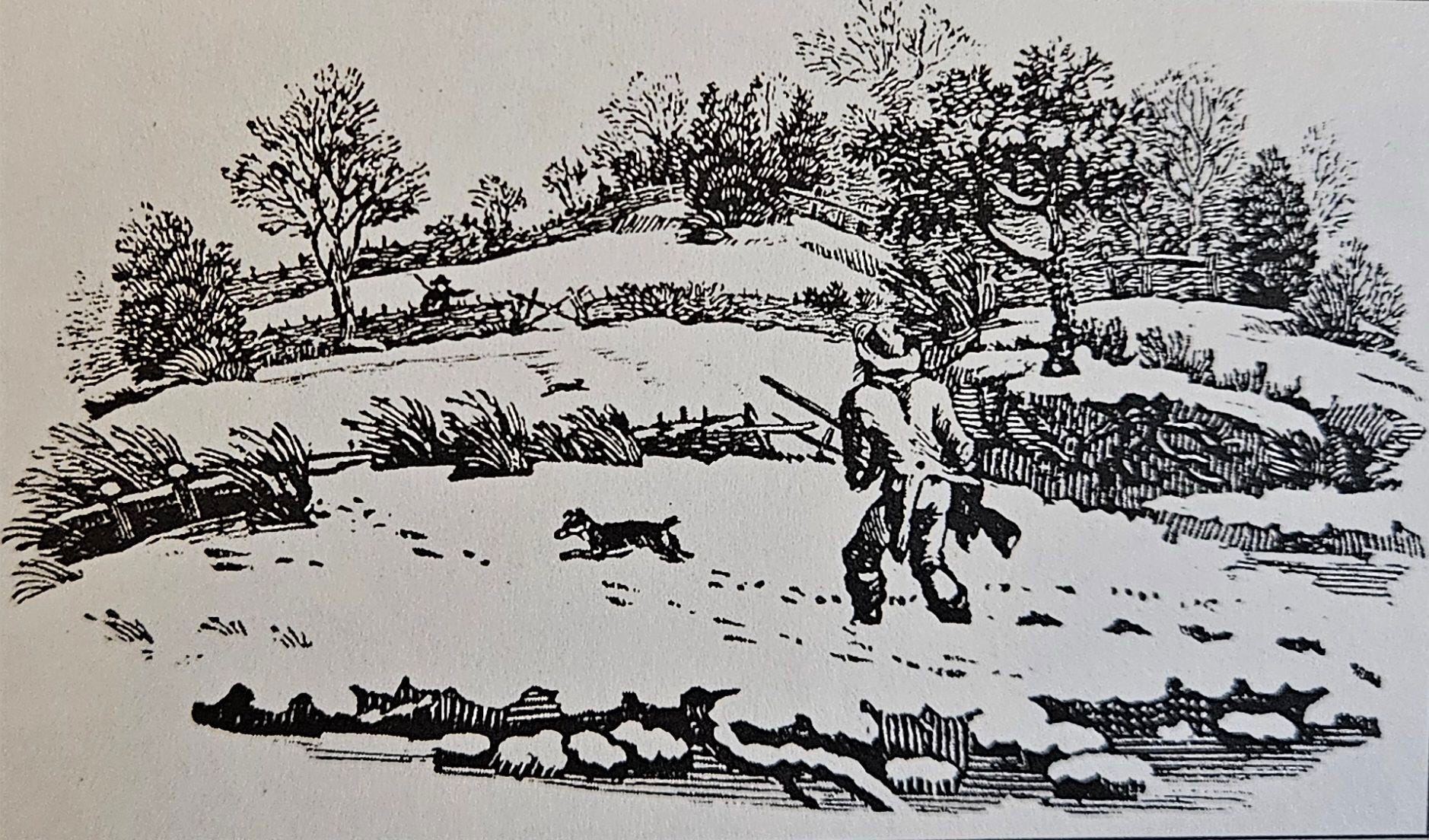
For Northumberland and Durham: A Shell Guide, Redford also supplied reproductions of woodcuts by the legendary North East wood engraver and author Thomas Bewick (1753-1828).
When Burdus Redford died in 1951, aged 82, an obituary published in the Royal Photographic Society Journal described him as “a craftsman … whose work was extremely delicate and showed the meticulous care which so characterised the man himself.”
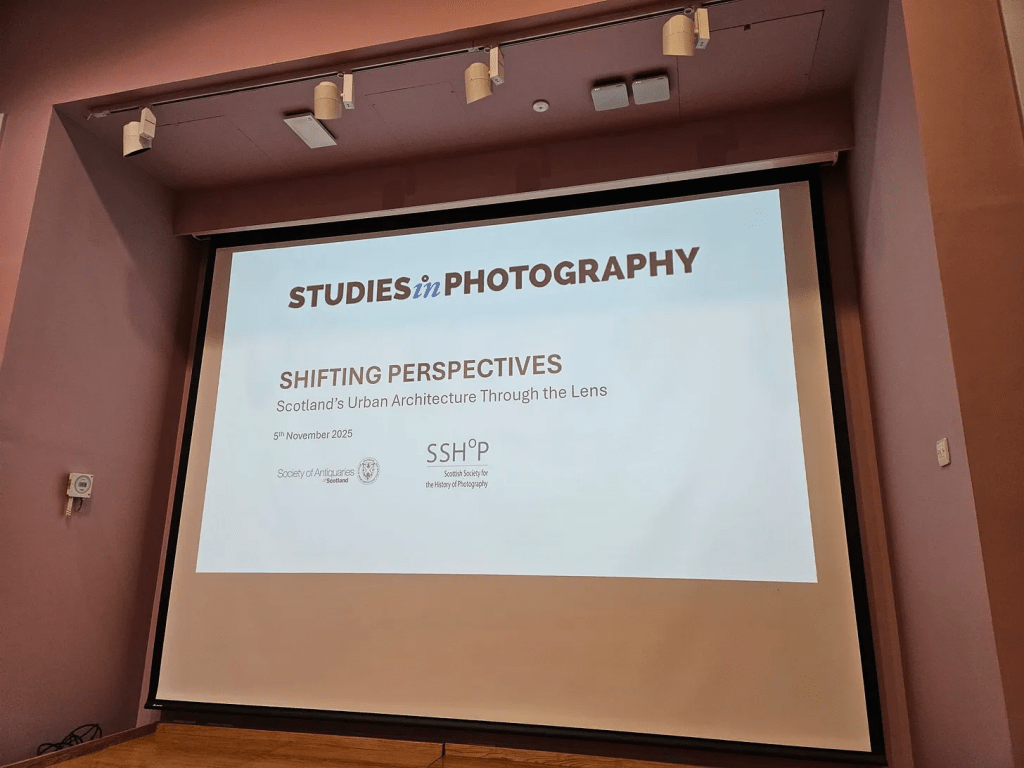
Earlier this month, a conference titled ‘Shifting Perspectives: Scotland’s Urban Architecture Through the Lens’ was held at the National Library of Scotland in Edinburgh.
This offered a welcome opportunity to share new research on the architectural photographer Ursula Clark (1940-2000) whose overlooked career has been celebrated on this blog throughout 2025.
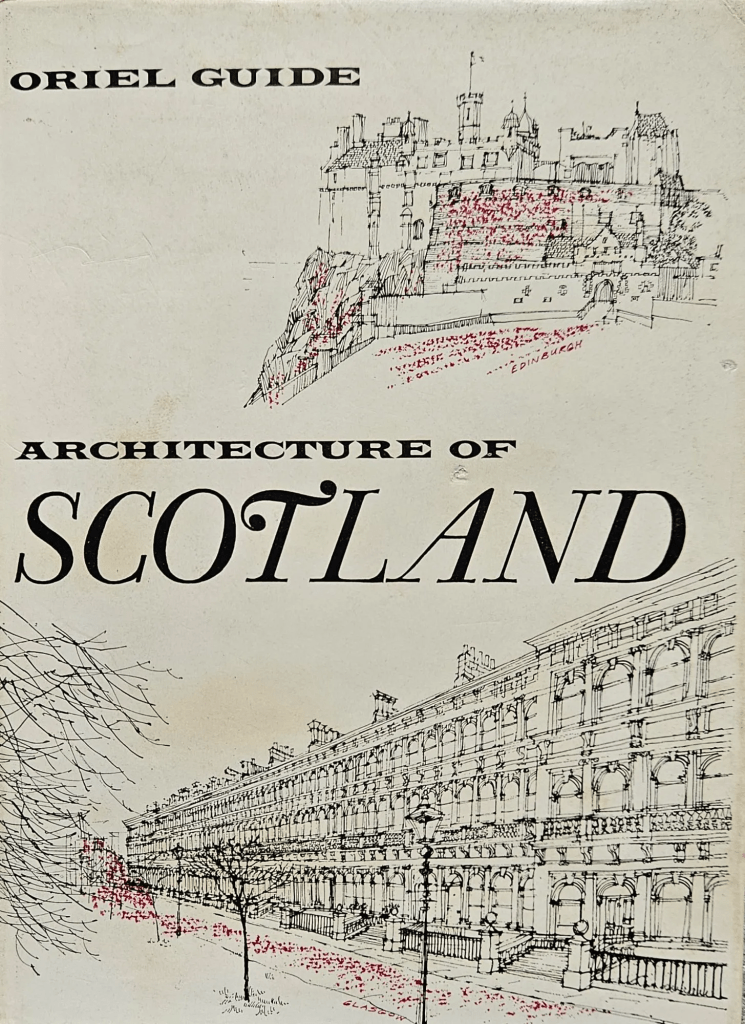
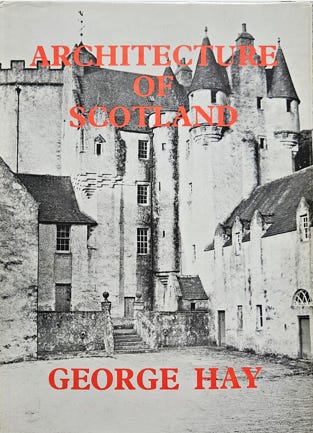
My paper focused on the Oriel Guide Architecture of Scotland (1969) for which Ursula was photographic editor and to which she contributed a number of photographs.
Front cover of Architecture of Scotland by George Hay (Newcastle upon Tyne: Oriel Press, 1969).
As regular readers will know, around 20,000 largely black-and-white negatives form the largest collection by a woman photographer in the care of Historic England.
Around 2,000 images in the Ursula Clark Collection have been digitised and show buildings in England that were previously under-represented including those from her native Newcastle-upon-Tyne and North East England.
However her Scotland images have remained unseen since first being published nearly 60 years ago.
In 1966, Architecture of Scotland was promoted as being “in preparation” by Ursula’s employer, the publisher Oriel Press of Newcastle upon Tyne, indicating the time period when the images were taken.
However, it was 1969 before the book appeared.
Its 96 pages feature nearly 250 photographs interwoven with text supplied by the Scottish architectural historian George Hay (1911-1986).
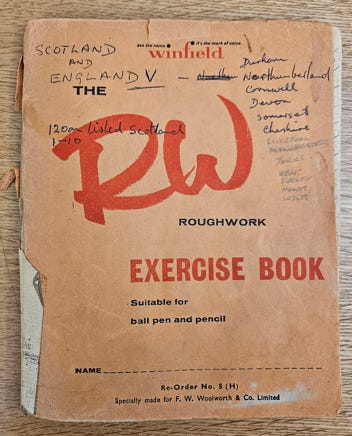
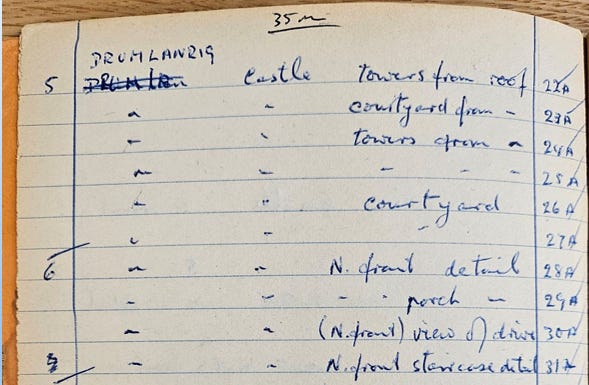
With the help of the team at Historic England’s archives in Swindon and using Ursula’s detailed shotlists, it has proved possible to identify a number of the Scottish locations that she photographed as well as the type of 35mm film she used.
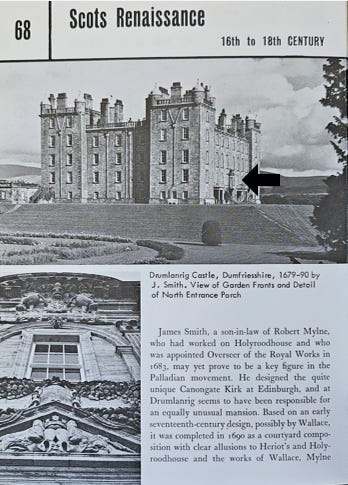
Amongst the entries was Drumlanrig Castle in Dumfriesshire (1679-1690) where a sequence was photographed featuring the building in both wide-shot and close-up.
One shot in particular stands out featuring the ‘North front porch detail’ (negative no. 29A), a perspective arrowed in the page below.
From Architecture of Scotland (Newcastle upon Tyne: Oriel Press, 1969).
In this example, her use of Kodak Panatomic-X fine grain black-and-white film captures the intricacy of the stonework beautifully.
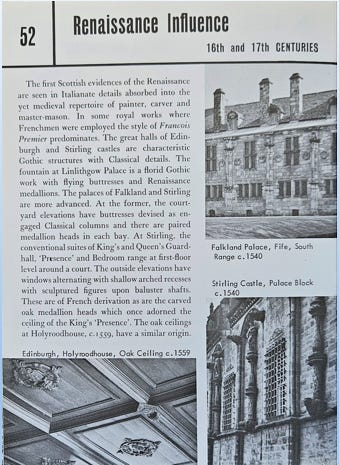
Another castle she photographed was Falkland Palace in Fife.
This summer, I had an opportunity to stand in Ursula’s footsteps and take a shot from a similar position of the South Range (top right below) using my Samsung camera phone
The main difference in the views taken 6 decades or so apart is the length of the adjoining grass.
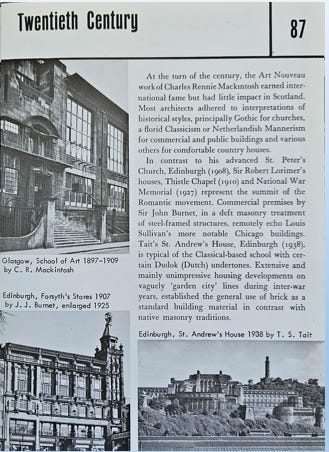
Such is the richness of Scotland’s architecture that comparatively few pages in the Oriel Guide are given over to recent buildings photographed by Ursula such as the Glasgow School of Art (1897-1909, top left) and St. Andrew’s House, Edinburgh (1938, bottom right).
From Architecture of Scotland (Oriel Press: Newcastle upon Tyne, 1969).
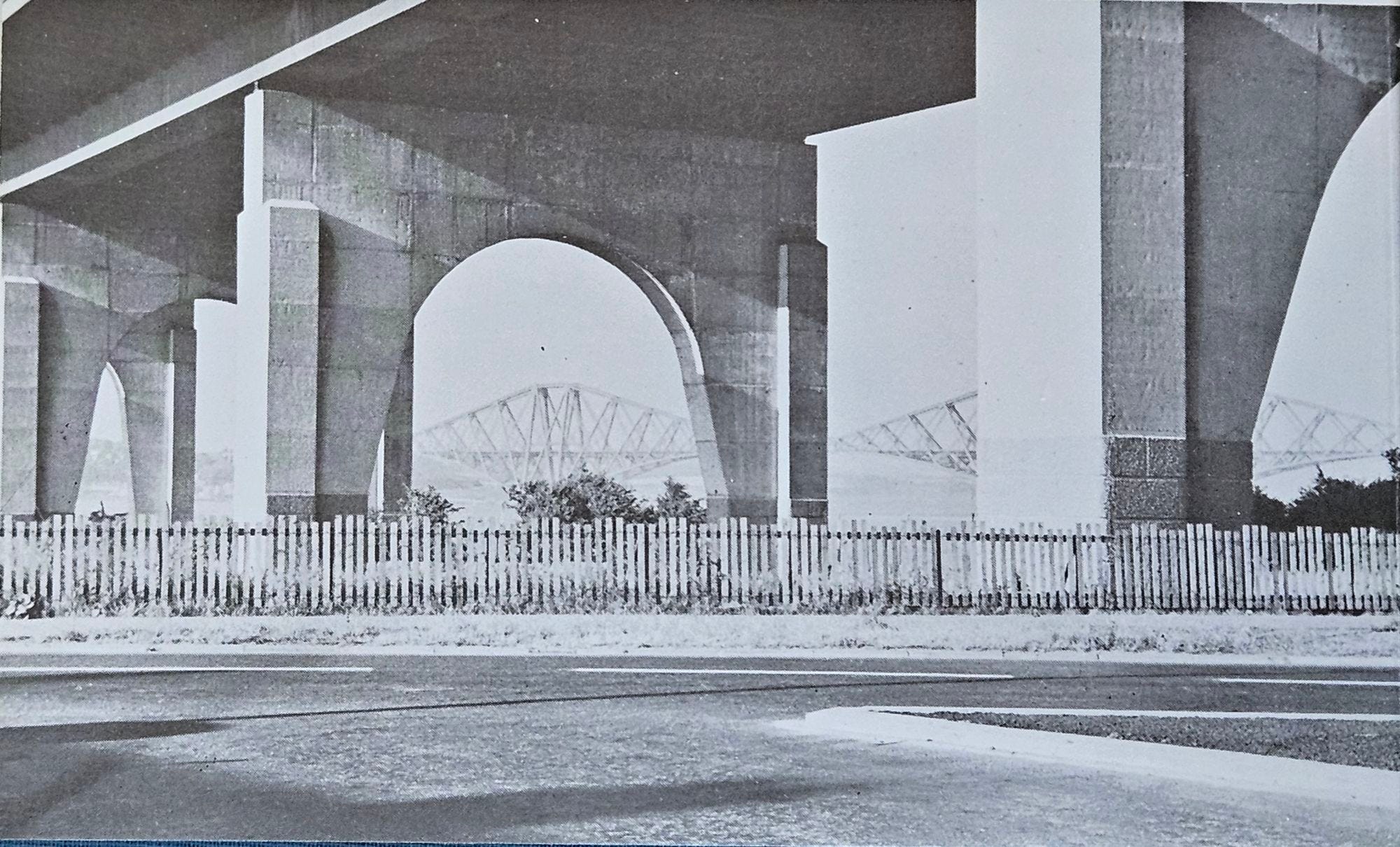
Perhaps my favourite Scotland shot of Ursula’s features a structure that emerged in the landscape as her architectural photography career was taking flight.
The shot list records a sequence featuring the Forth Road Bridge (1958-1964) and culminating in a shot that also features the railway bridge (1890) in the far distance.
When the book was published, Architecture of Scotland was well received by both critics and readers with the British Book News highlighting “Ursula Clark’s magic as photographic editor”.
Following Oriel Press’s takeover in 1973 by Routledge & Kegan Paul, a second enlarged and revised edition with a new cover featuring Midmar Castle (1570) was published four years later.
Second-hand copies of Architecture of Scotland in both editions can be spotted from time to time on book websites such as AbeBooks.
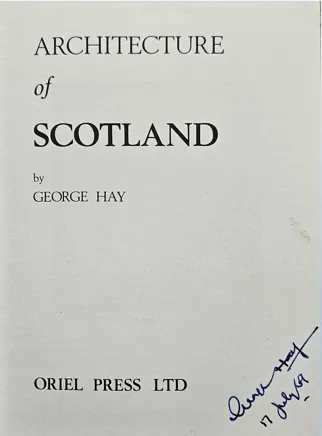
The first edition copy that I managed to obtain was even signed by George Hay on 17th July 1969, just a few days before the first moon landing.
Despite a lack of the co-credit that she received for several other Oriel Guides, the quality of Ursula Clark’s contribution to Architecture of Scotland still shines through.
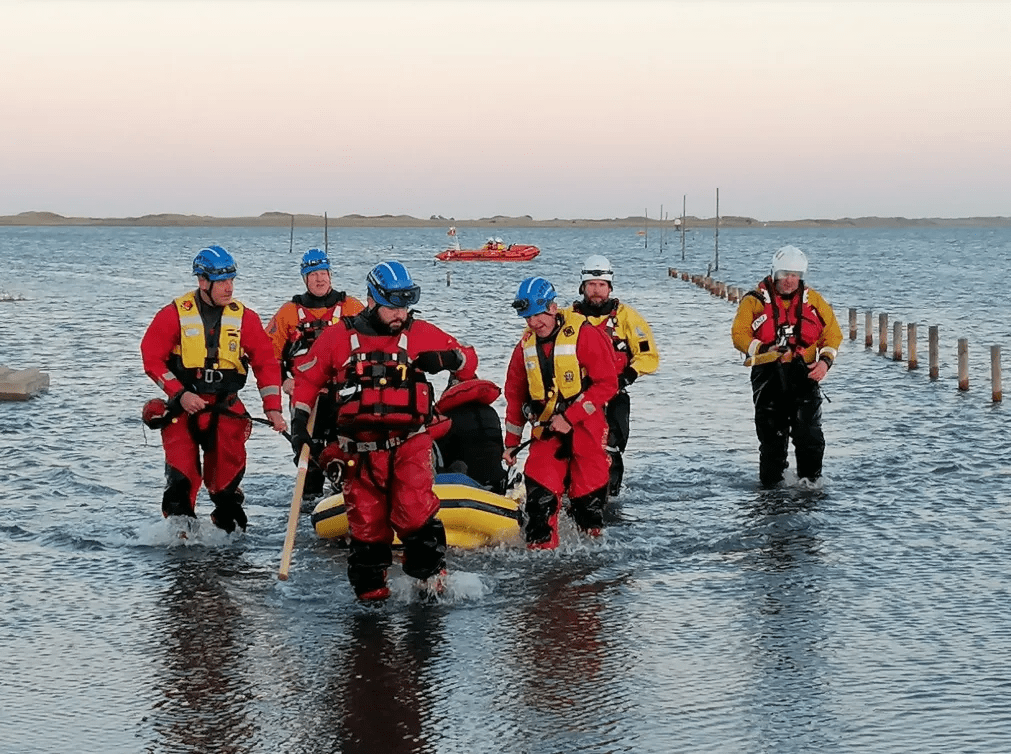
A regular occurrence during the holiday season off the Northumberland coast is the rescue of visitors heading along the causeway to the Holy Island of Lindisfarne.
Within a few days last month, two different families were plucked to safety by teams from the RNLI and Coastguard Rescue as their vehicles were consumed by the incoming tide.
Despite repeated warnings to check the tide tables, Northumberland County Council estimate that between 10 and 20 vehicles are stranded each year, putting the lives of both rescuers and the rescued at risk.
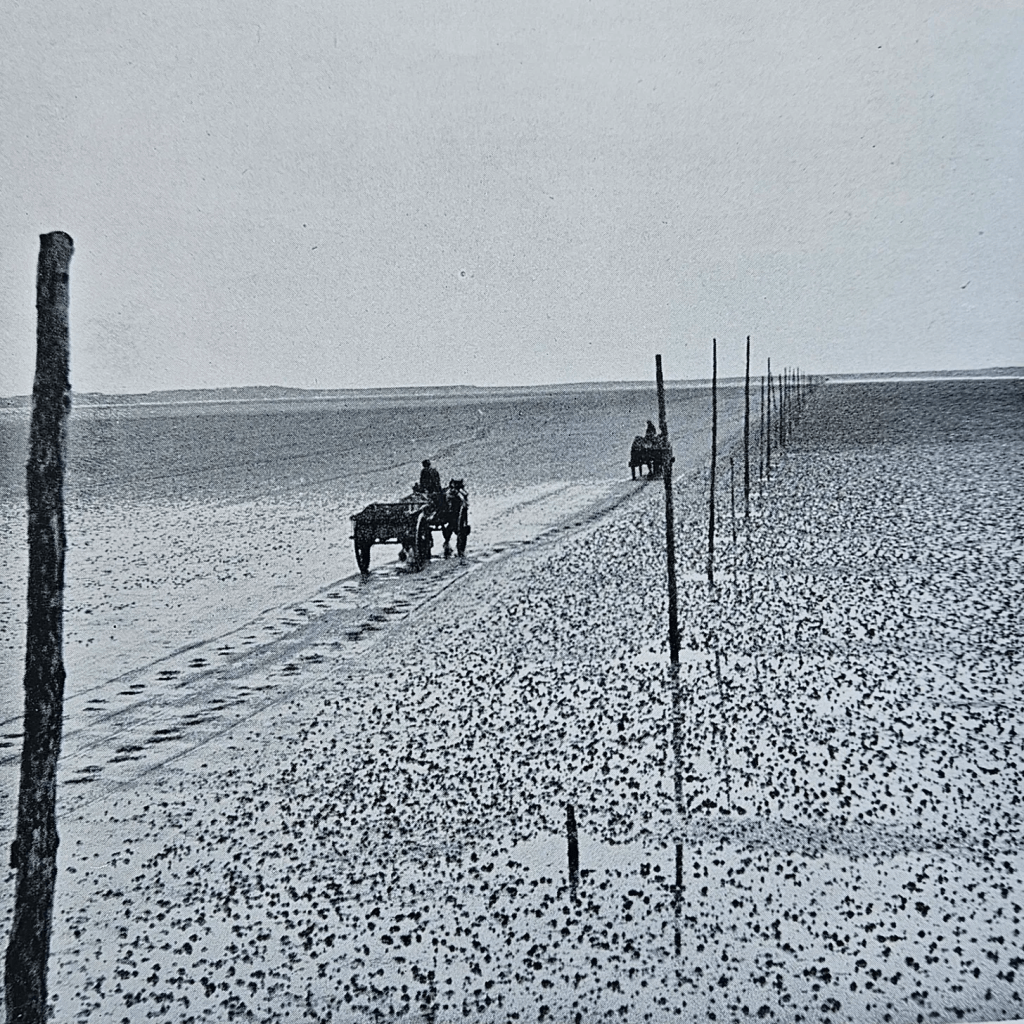
News headlines created by these recent incidents reminded me of a photograph taken nearly a century ago titled ‘Road to Holy Island.’
A wonderfully evocative image, it was taken by Lancashire-born J.R. Bainbridge (1891-1967).
Known as Roland, he took up freelance journalism and photography during the economic slump of the 1920s by which time he had relocated to Belfast in Northern Ireland.
Like a number of photographers, he responded to a call for images to illustrate Northumberland and Durham: A Shell Guide published in 1937.
The idea of publishing a series of county guides aimed at holidaying motorists was inspired by John Betjeman, the celebrated architectural writer and later Poet Laureate.
With Betjeman as editor, the series sponsored by Shell Petroleum launched in 1934 with Cornwall followed in quick succession by Kent, Wiltshire, Derbyshire, Devon, Dorset, Buckinghamshire, Somerset and Oxfordshire.
For Northumberland & Durham, Betjeman signed-up County Durham-born Thomas Sharp (1901-1978) whose writings about the changing face of Britain were attracting national attention.
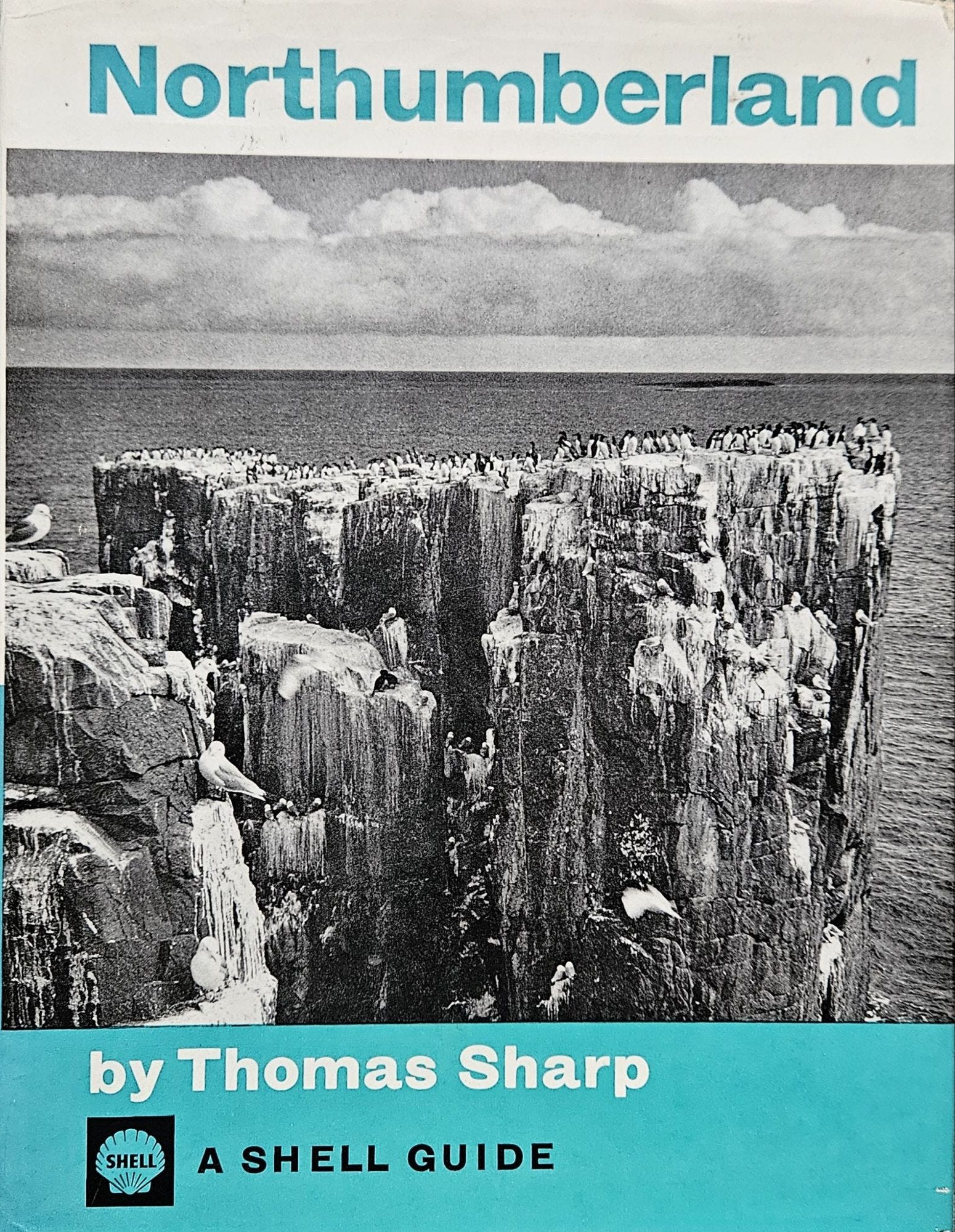
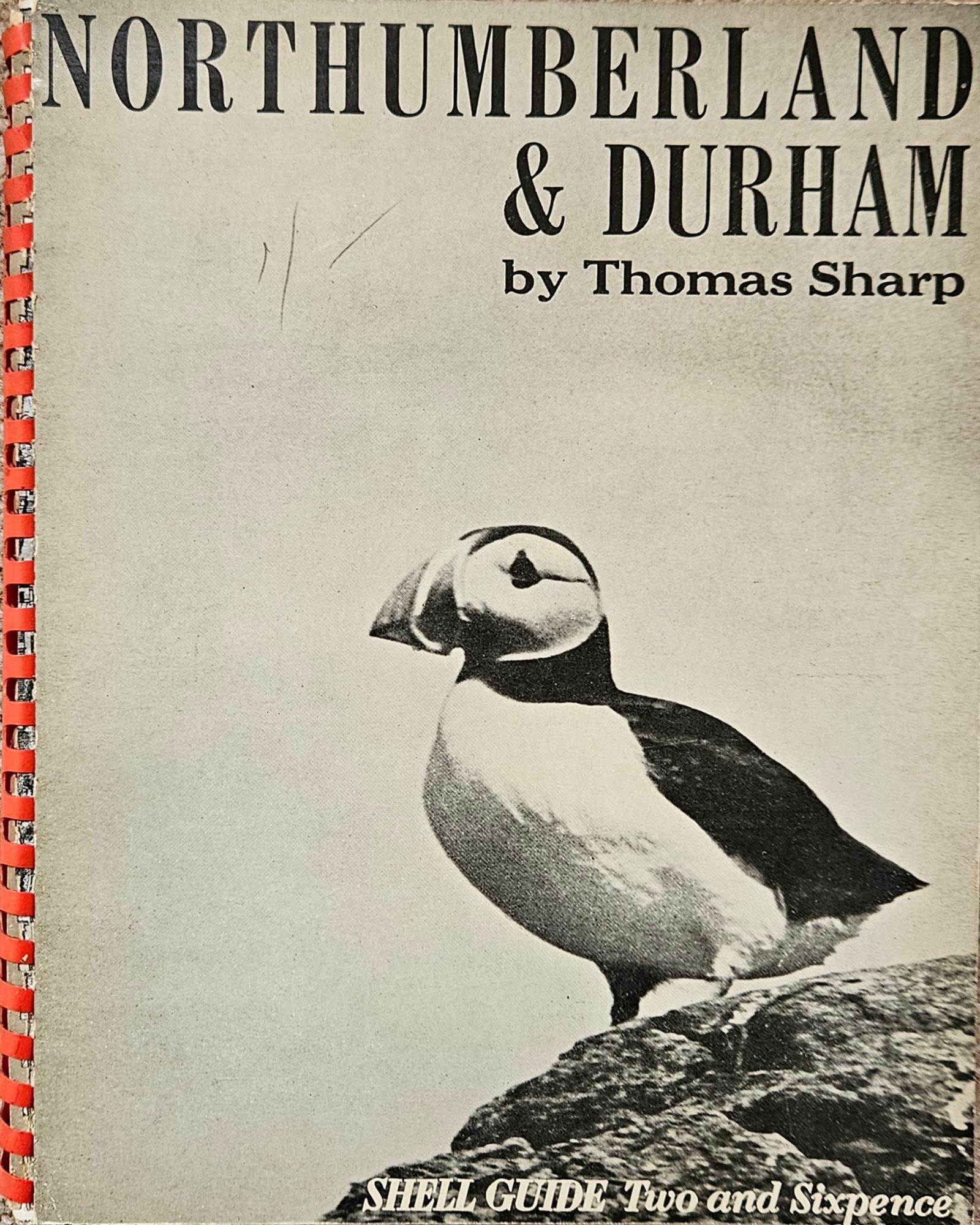
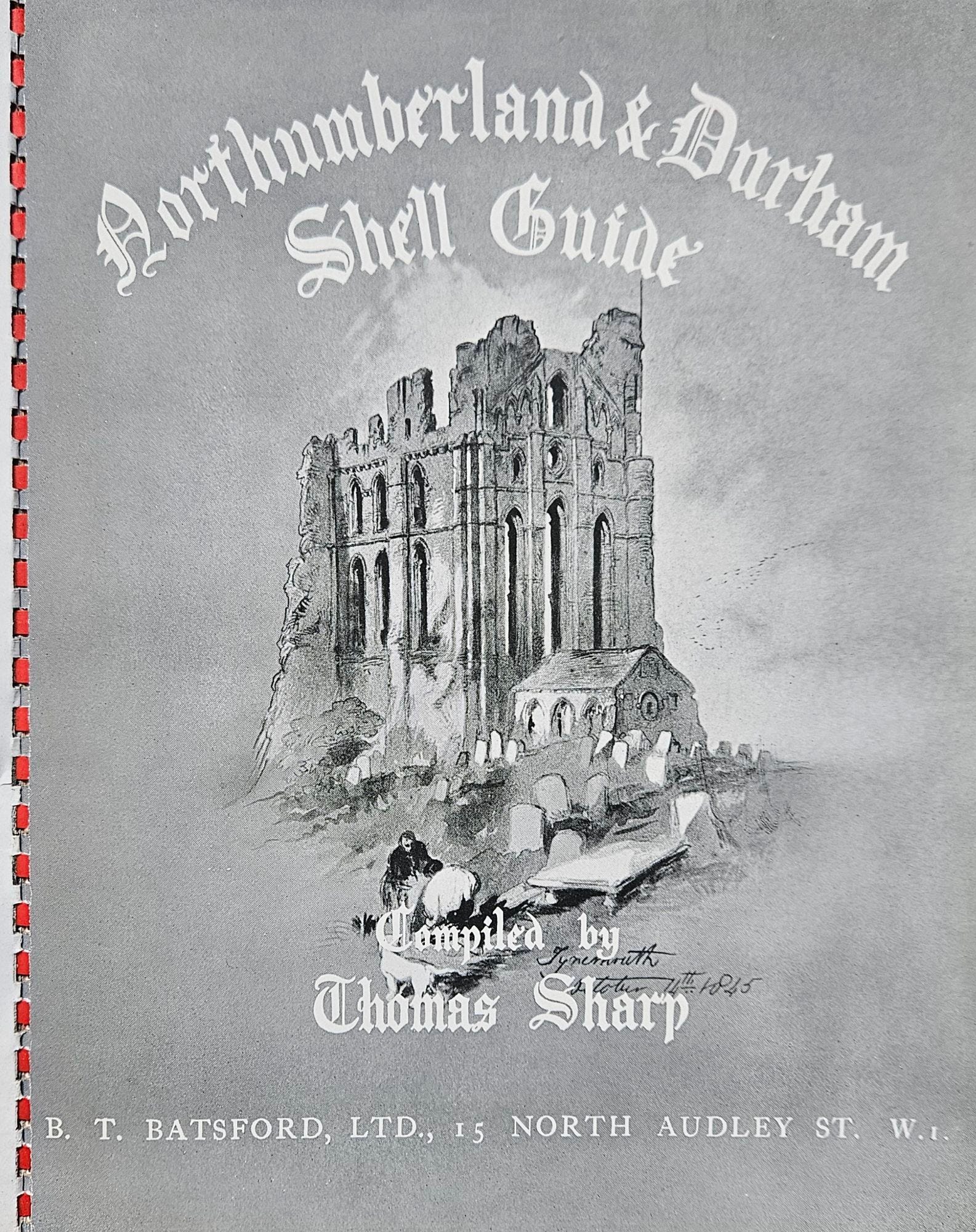
The guide that Sharp compiled was published with an eye-catching cover featuring a Farne Islands puffin with a painting of Tynemouth Priory on its title page.
The guide’s design was more problematic as it employed a ring-bound spine in red plastic, which means that few copies have survived intact.
Alongside line drawings and reproductions of works by legendary Northumberland wood engraver Thomas Bewick (1753-1828), nearly 50 photographs were chosen to illustrate the guide.
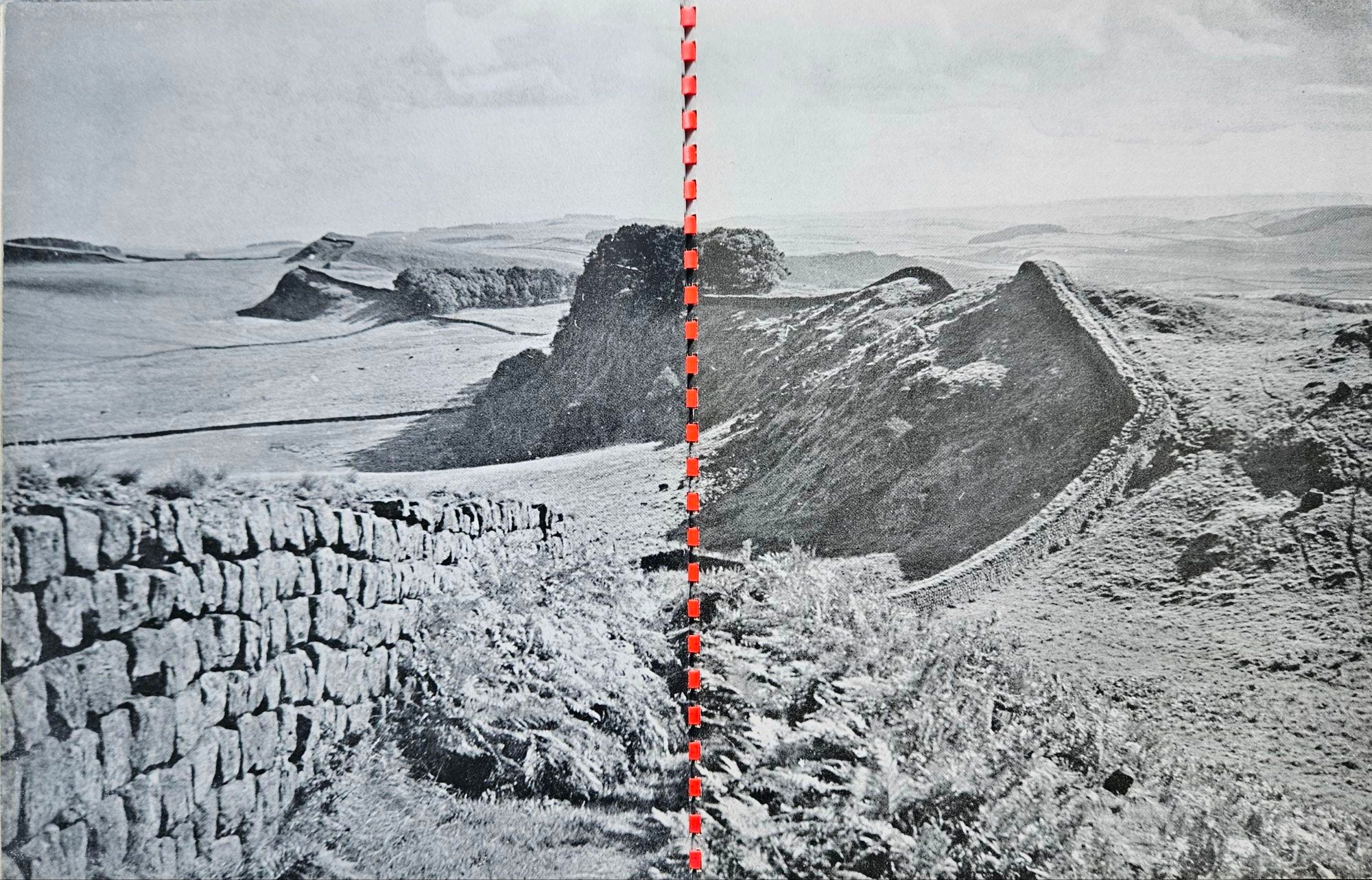
In addition to ‘Road to Holy Island’, JR Bainbridge was credited with a second image titled ‘Roman Wall’.
Despite being presented across two pages with the red ring binding cutting it in half, this stretch of Hadrian’s Wall is immediately recognisable.
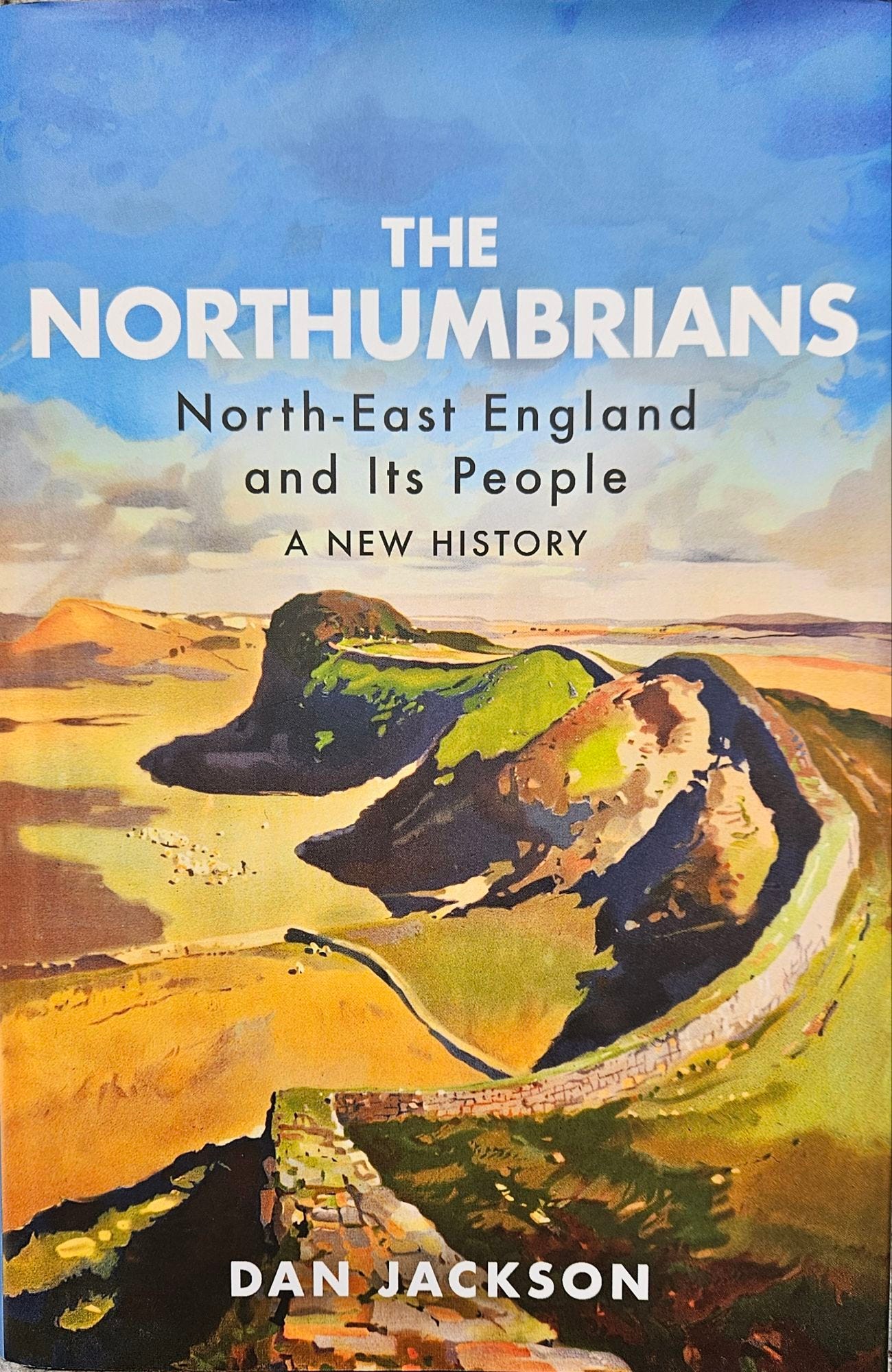
It will also be familiar to those who know Dan Jackson’s The Northumbrians (London: Hurst, 2019).
The book’s cover features the same location as portrayed in a British Railways poster by the artist and illustrator Jack Merriott (1901-1968) that was created around the same time as Bainbridge’s photograph.
Today, J.R. Bainbridge is best-known to historians and researchers for his photographs taken in Ulster during the Second World War.
However, his two contributions to Northumberland & Durham: A Shell Guide were considered of sufficient quality to appear nearly twenty years later when a Shell Guide devoted solely to Northumberland was published.
Last week’s post featuring William Tyler’s photographic journey along the River Thames around 1896 drew a number of admiring comments about his prints.
Part 2 features another five that he registered for copyright in January 1897 and are part of the National Archives at Kew.
Their pristine condition suggests that they have lain unseen for over a century.
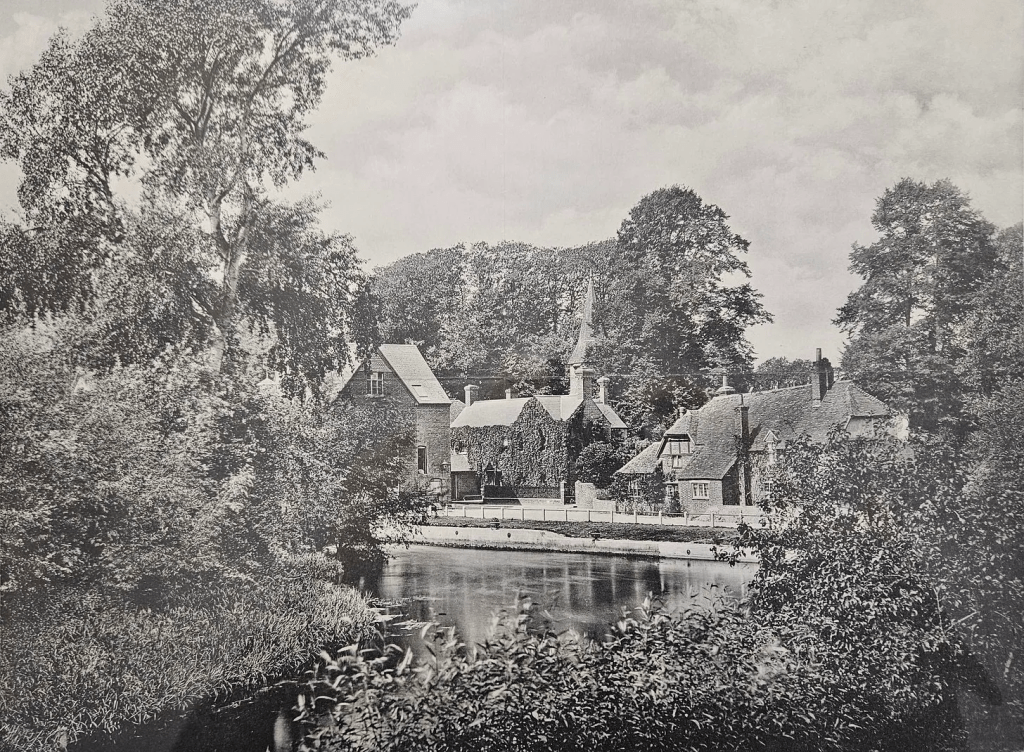
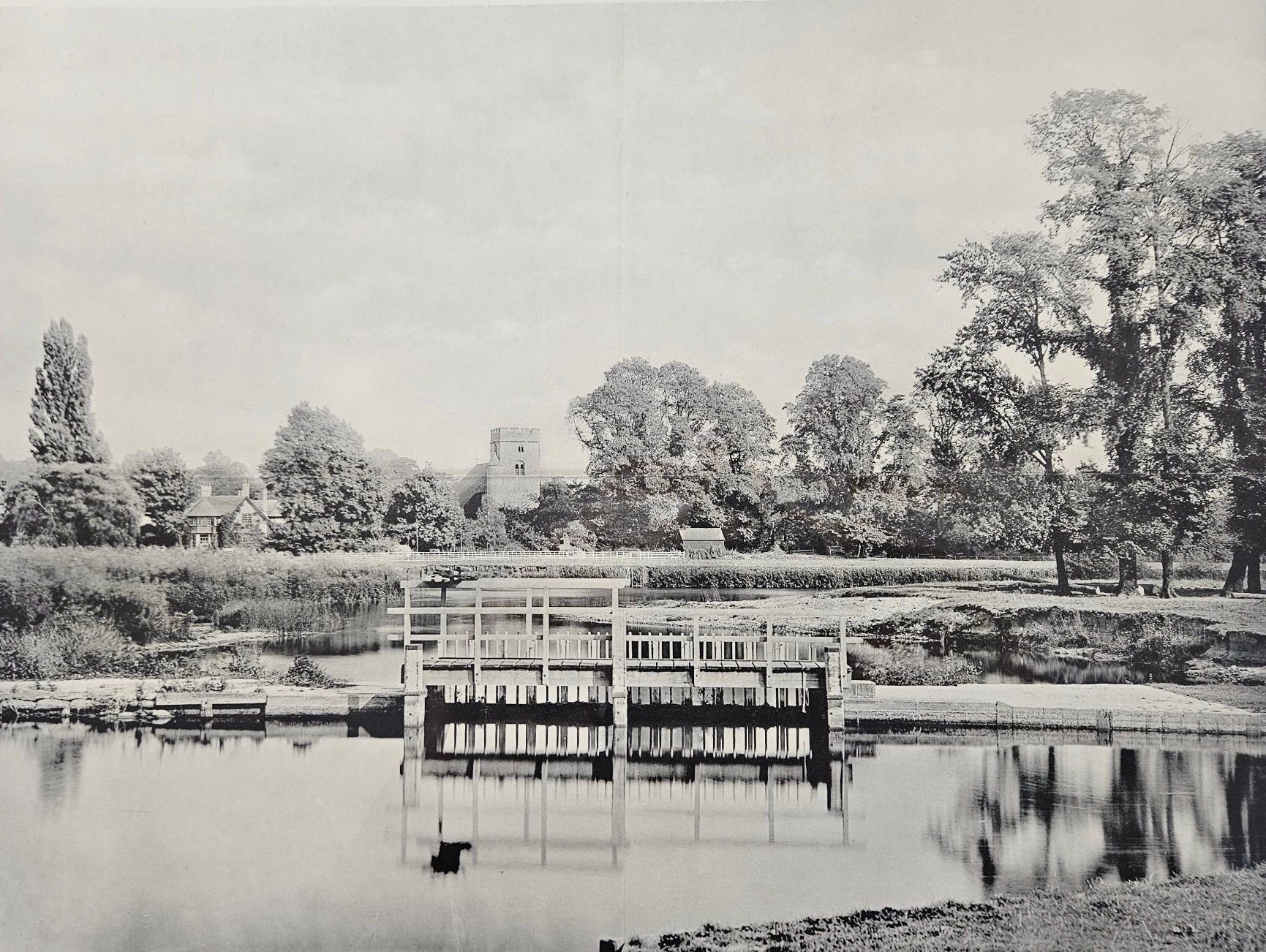
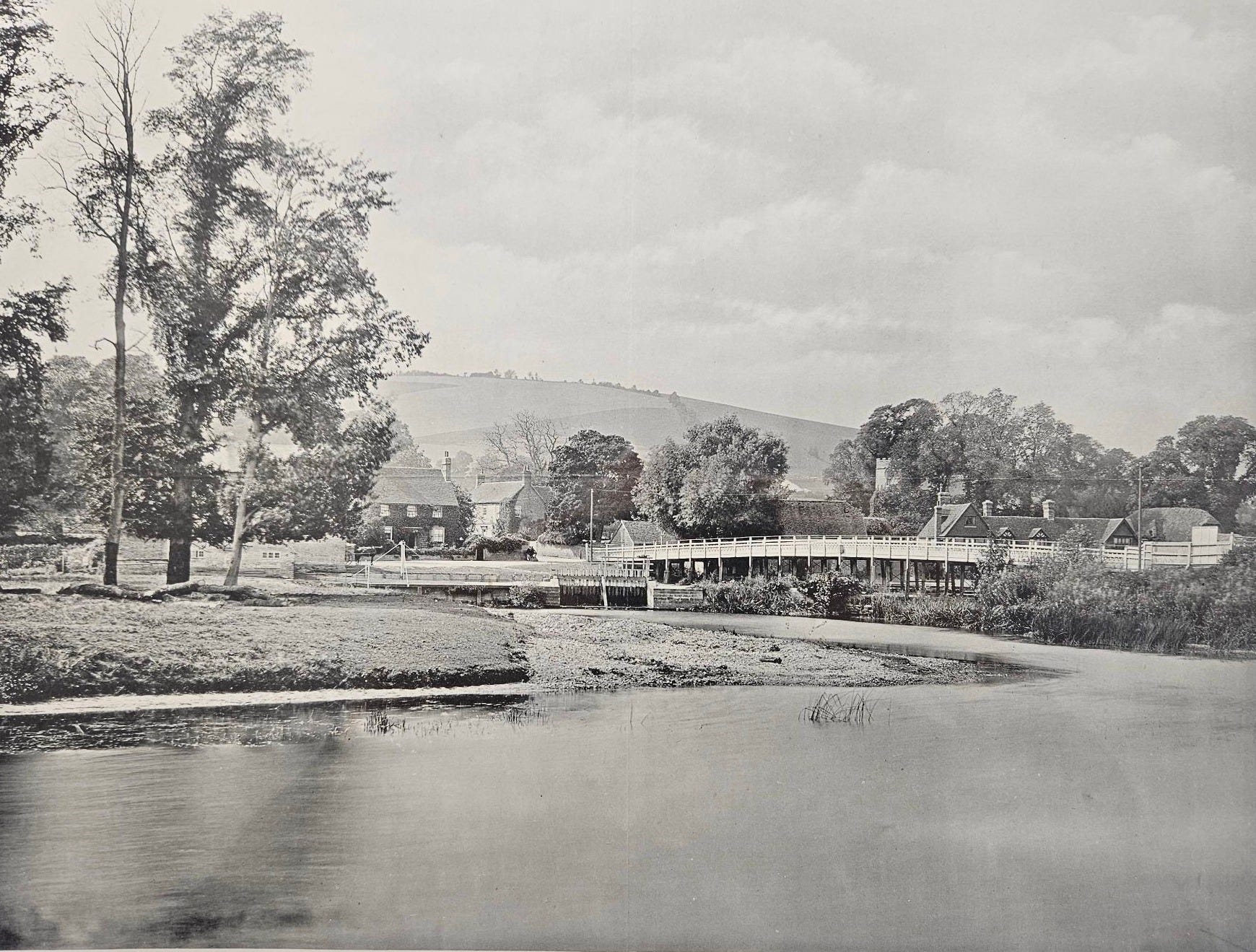
Tylar’s view of the South Oxfordshire village of Whitchurch on Thames includes the steeple of St. Mary’s Church in the centre of the shot and Whitchurch Mill to its left.
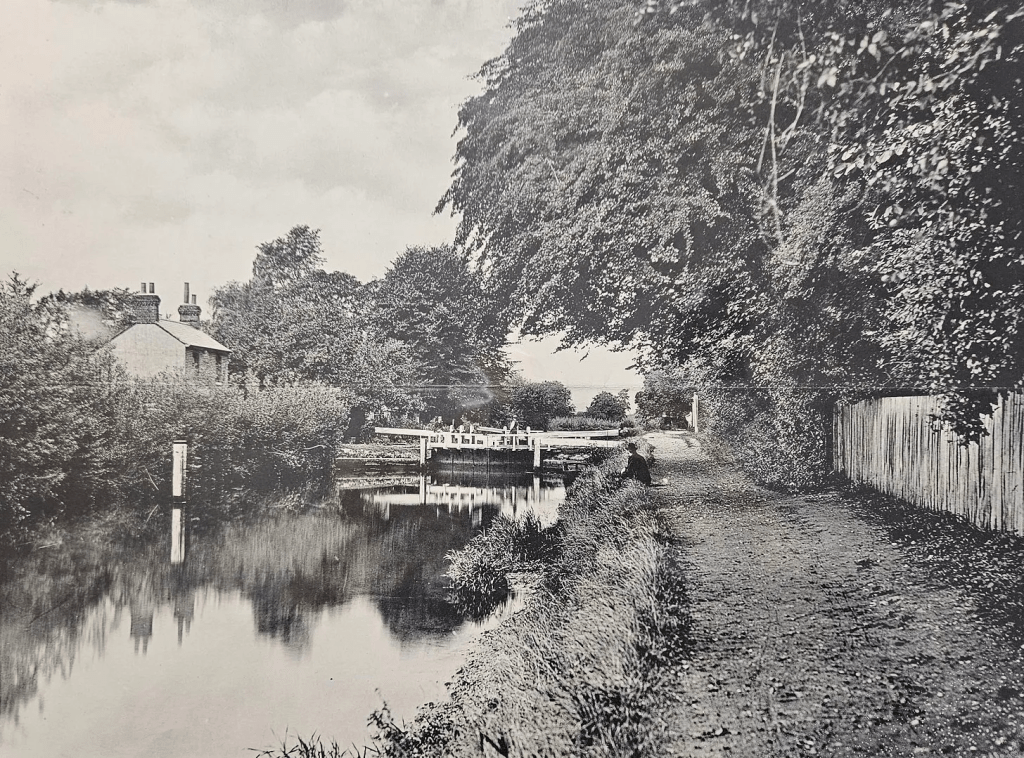
Sonning Lock to the east of Reading has been rebuilt three times since its first appearance in 1773 and now features steel gates that replaced the original wood at the start of the 21st century.
In this portrait, Tylar has managed to capture a group navigating a craft through the lock, a bowler-hatted man sat on the riverbank and another figure walking towards camera in the far distance.
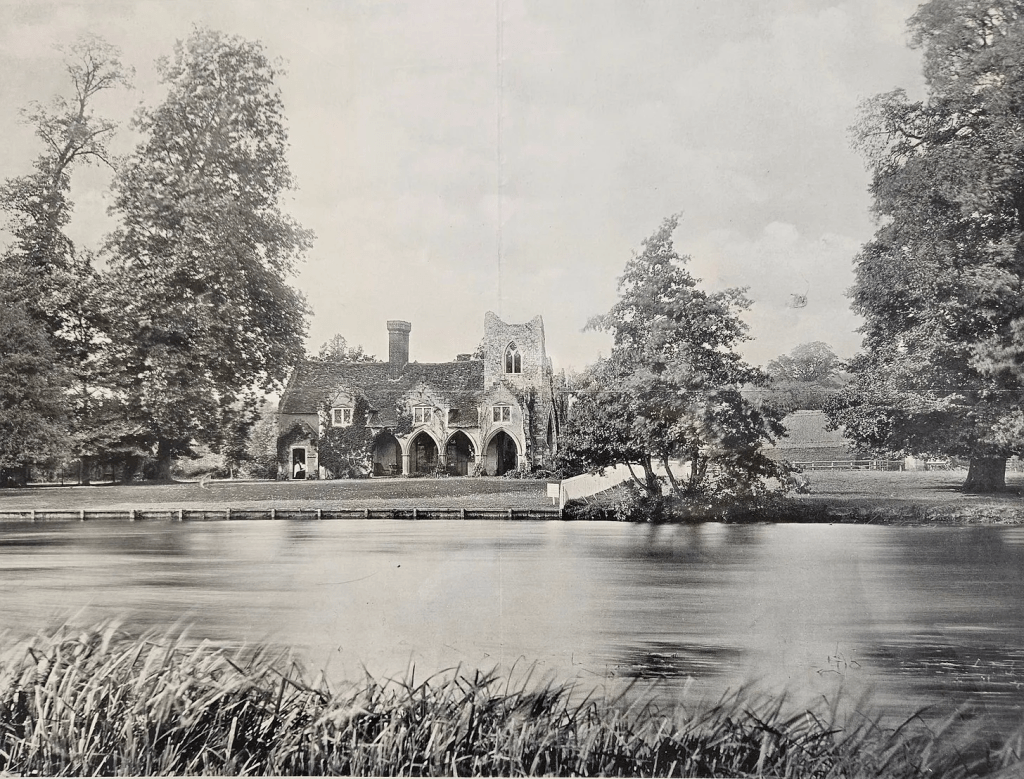
Medmenham Abbey, misspelled by Tylar as ‘Medenham’ on both his copyright form and the photograph’s original caption, occupies the site of what was once a Cistercian monastery.
Its history includes hosting the infamous Hellfire Club during the 18th century when Sir Francis Dashwood and his followers “socialised”.
Today it is a grade 2 listed mansion that is privately owned.
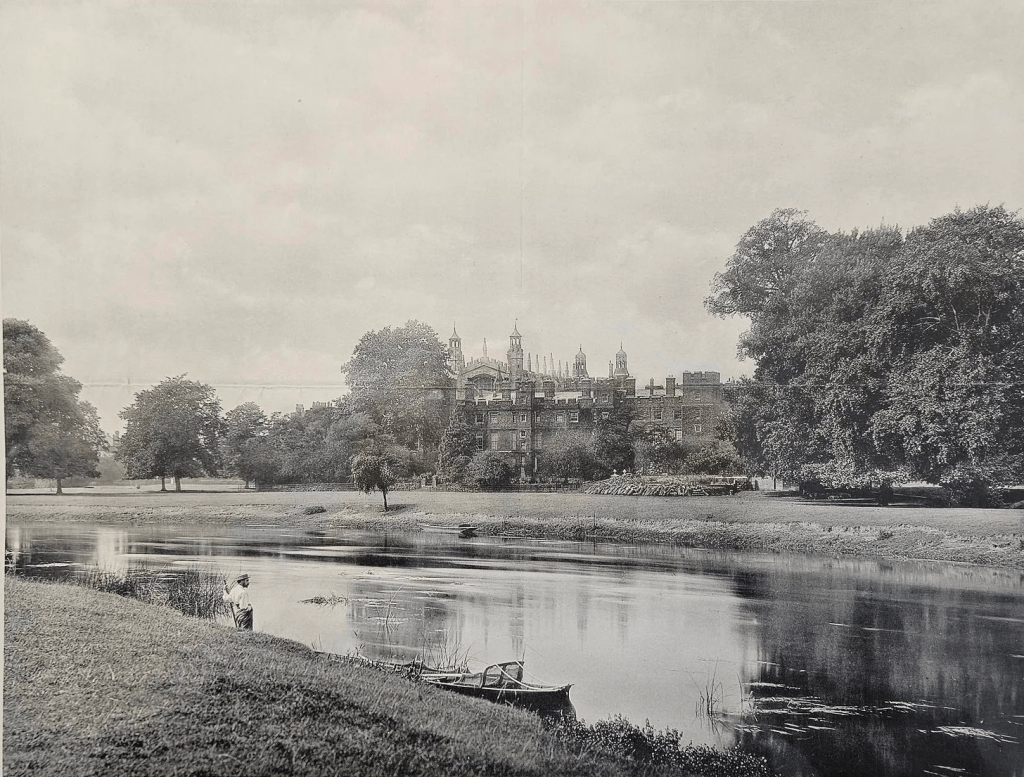
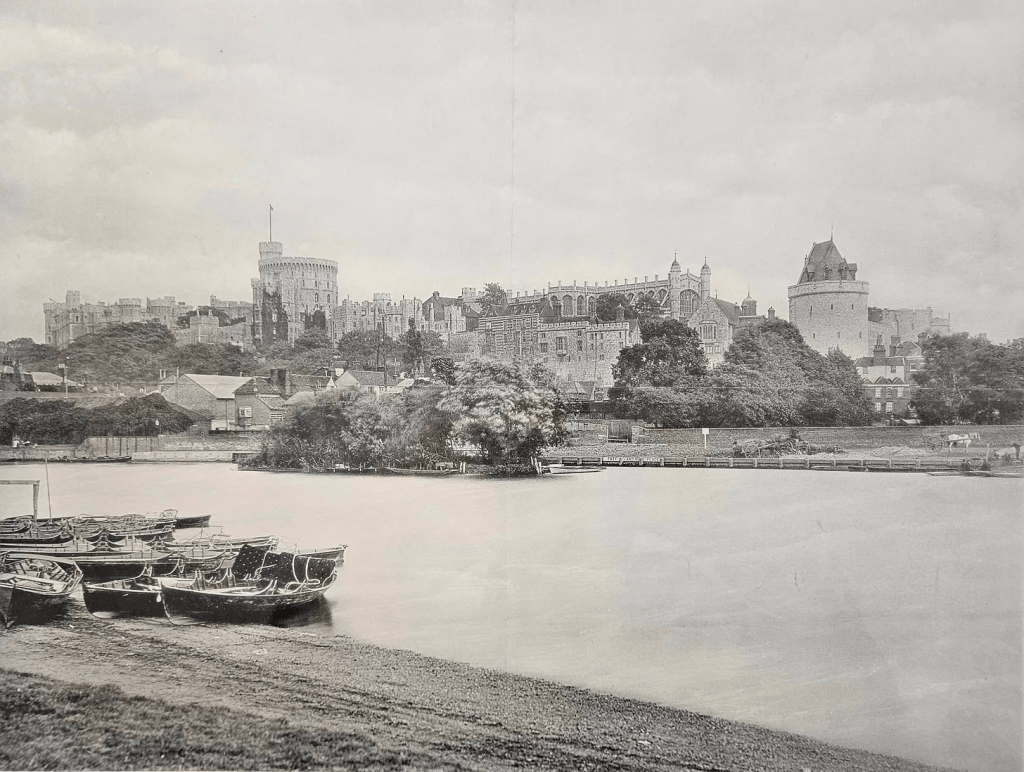
Tylar’s final two prints need little introduction as they feature Eton College, one of Britain’s best-known public schools, and Windsor Castle, the oldest and largest occupied castle in the world.
Both scenes are being observed not only by their cameraman.
A man in a punt is enjoying the view across the river to Eton College whilst a white horse with cart in tow is taking a rest amid harvest time in the shadow of Windsor Castle.
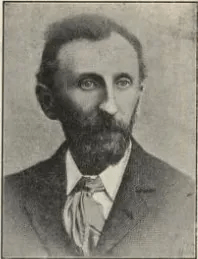
William Tylar (1859-1929). Courtesy of British Library.
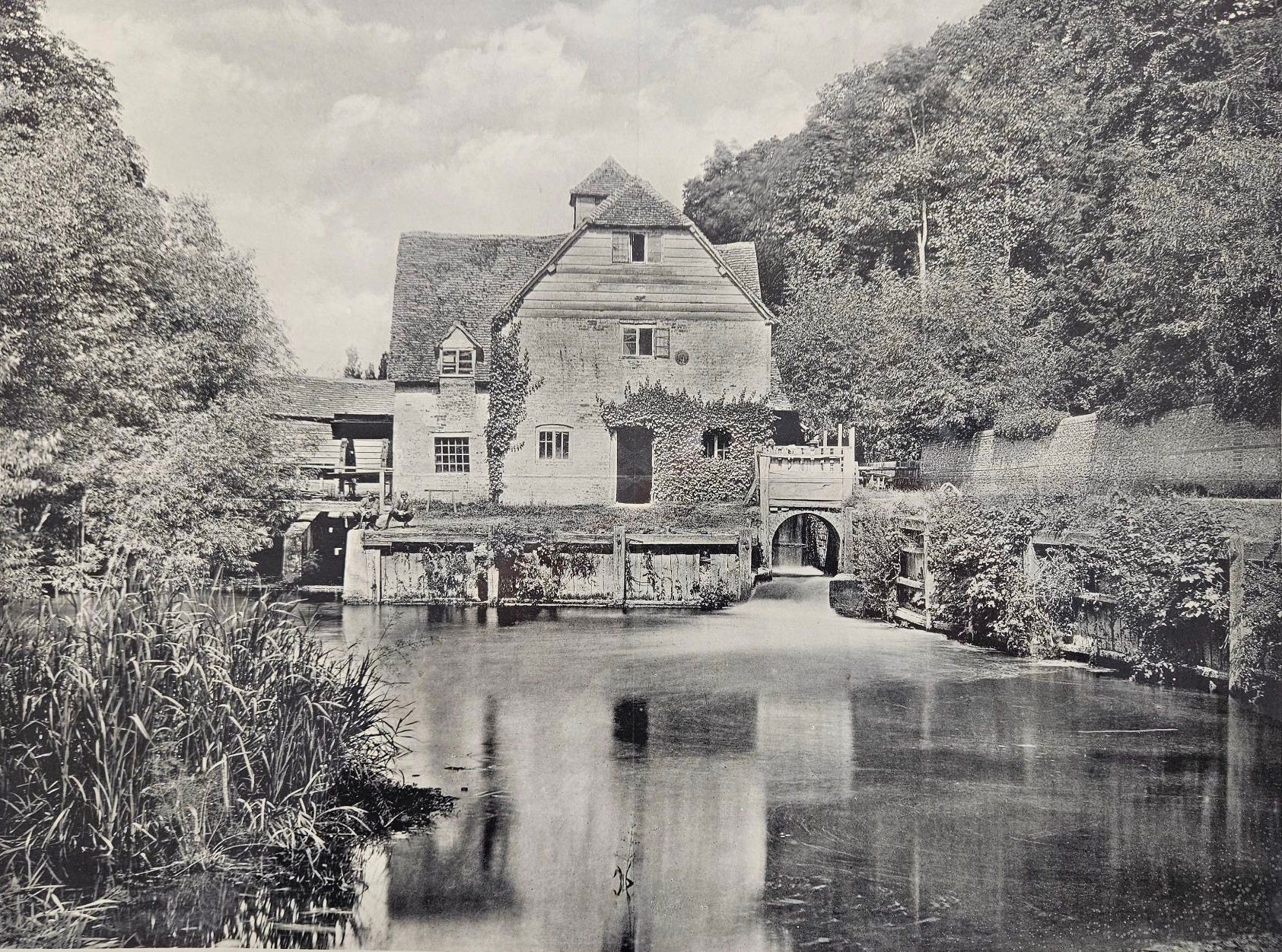
According to copyright forms (COPY 1/428/397-405, 410) that he submitted in January 1897, Tylar photographed a sequence of well-known Thames locations between Oxford and Windsor.
What I wasn’t prepared for when viewing the ‘Copy Attached’ to each of the forms was both the size and quality of the ten black-and-white prints he produced.
They were approximately 16” x 20” (40cms x 50cms), framed in card mounts and presumably intended for display or exhibition.
Judging by their pristine condition, they had lain unviewed for well over a century.
To rectify this unintended neglect, this week’s post and next will be devoted to sharing these wonderful images
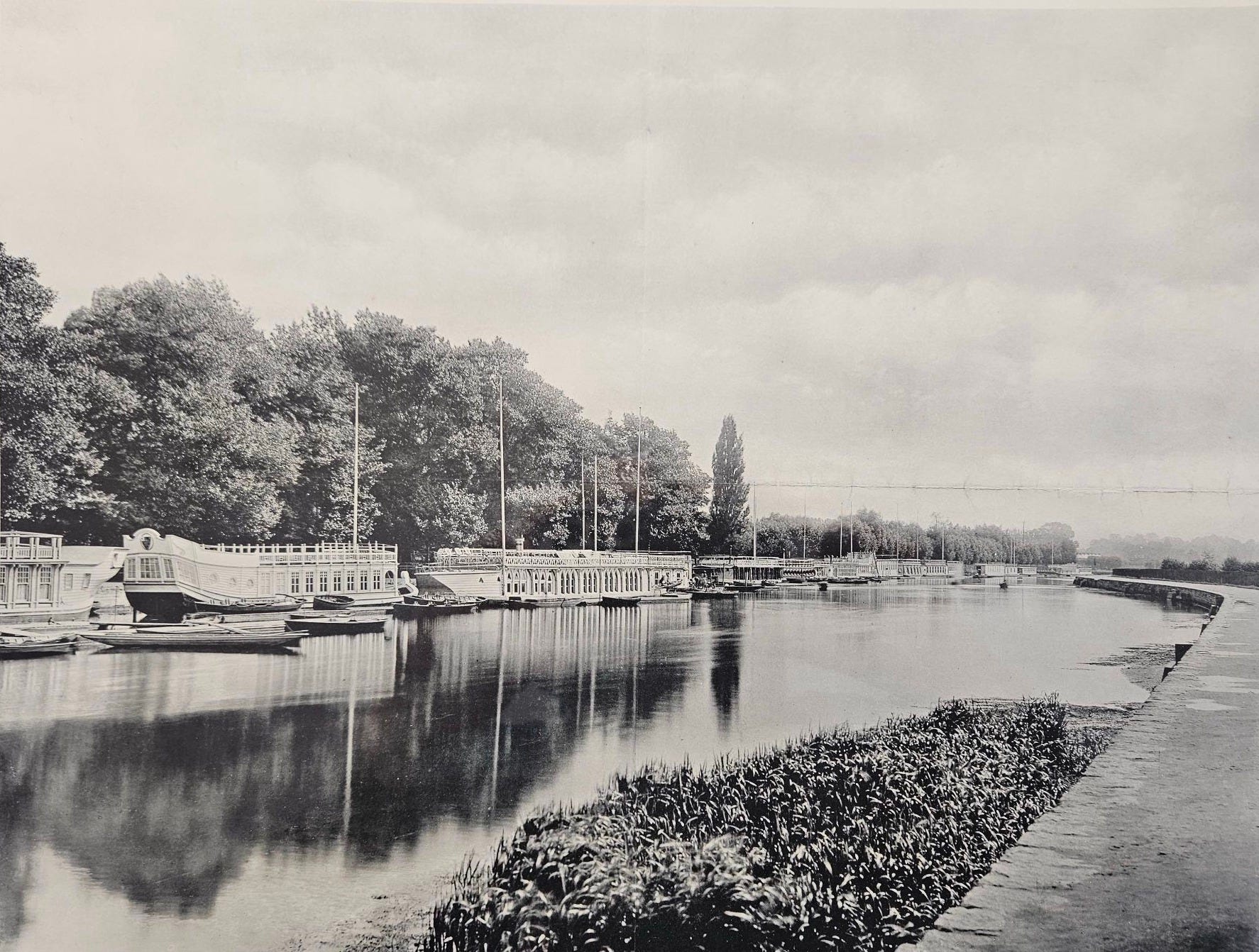
The sequence starts in Oxford with a scene featuring university barges moored along the river, also known as Isis, at Christ Church Meadows.
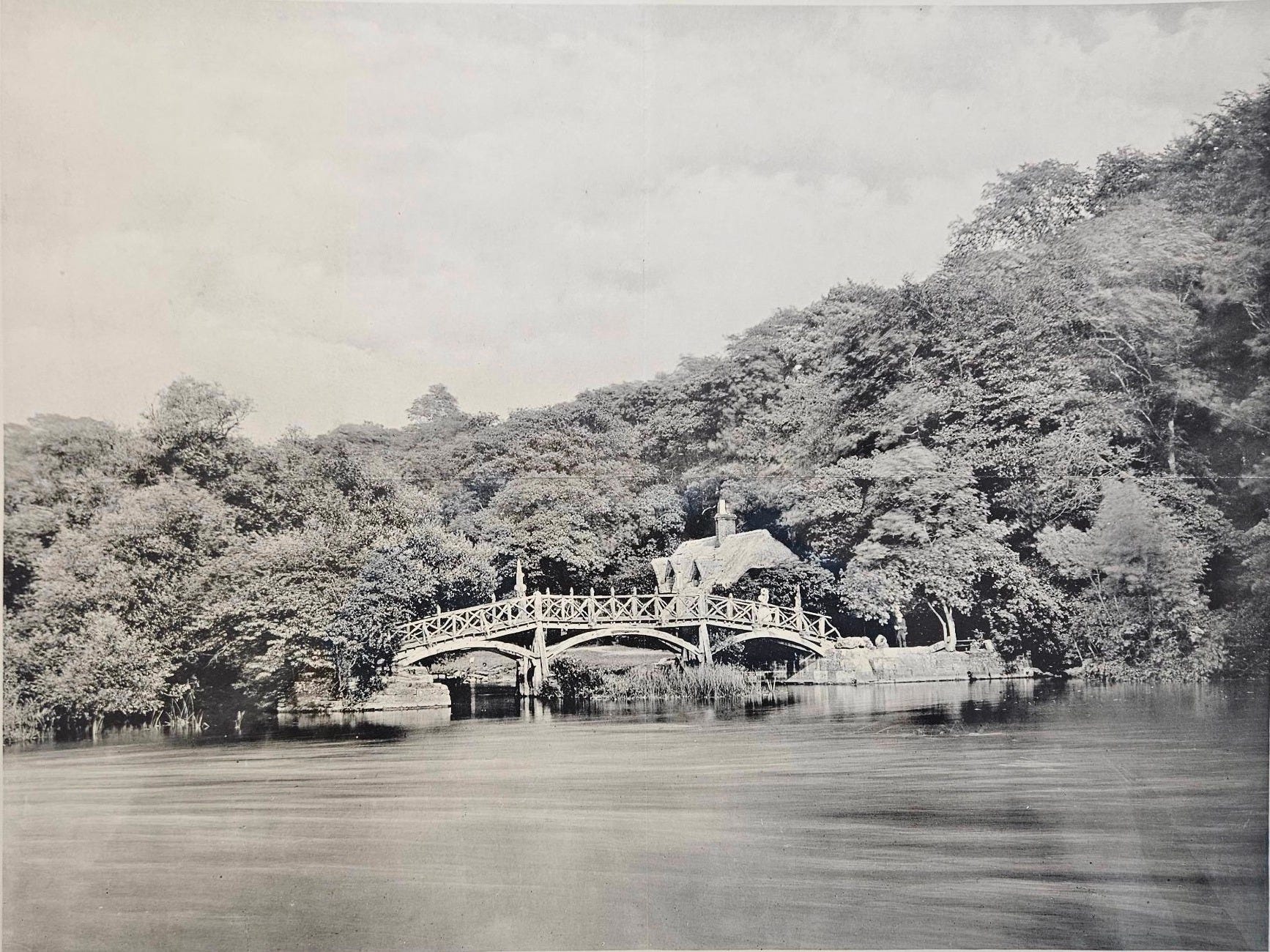
They were constructed in the 1770s as part of Capability Brown’s landscaping scheme for the Harcourt family’s estate.
During the 1920s, both the cottages and wooden bridge are thought to have fallen into disrepair and demolished during the Second World War when Nuneham Courtnay House was used by the RAF.
UPDATE: Andrew Crosby writes on Facebook: “The lock cottage at Nuneham there is still partly extant. Only a few bricks and a wall, but it’s not gone completely. The bridge to the island is not to be seen, but it is clear where it was originally located.”
One of the Thames most scenic spots is occupied by the villages of Goring in Oxfordshire and Streatley in Berkshire which lie opposite each other.
Tylar’s prints manage to capture the beauty and peace of both locations, partly because he chose a time to set up his camera when no-one was around.
Continuing his river trip, Tylar’s view of Mapledurham Mill near Reading is equally calm and tranquil though two young boys can be seen kneeling to the front left of the mill building.
Dating from 1626, the watermill is pictured here prior to the years between 1947 and 1977 when it was out of operation and had to be restored.
Next week, another five of William Tylar’s prints from his expedition along the River Thames in the summer of 1896 including Windsor Castle and Eton College.
The architectural photographer Ursula Clark (1940-2000) is best-known for an archive of around 20,000 largely black-and-white images held by Historic England.
They were created by the Newcastle upon Tyne publisher Oriel Press during the 1960s and 1970s for a series of architecture guides featuring buildings in Britain and continental Europe.
Earlier this year, the Royal Photographic Society Historical Group hosted a talk in which I presented original research about Ursula Clark and her pioneering role in photographic history.
That research is ongoing and has focused recently on non-Oriel Press books and illustrated magazines where her architectural photographs were also published.
From visiting the Historic England archive in Swindon, I was aware that a proportion of her output involved colour photography.
Two of her exercise book shot lists are titled ‘Colour Copies’, suggesting that Oriel Press intended to reproduce images in colour.
Perhaps, given the company’s later financial difficulties which led to a corporate take-over by Routledge Kegan Paul in 1973, any plans proved too expensive to realise.
Given this background, it’s a pleasure to share colour versions of Ursula’s 35 mm photography in this latest Pressphotoman post about her photographic career.
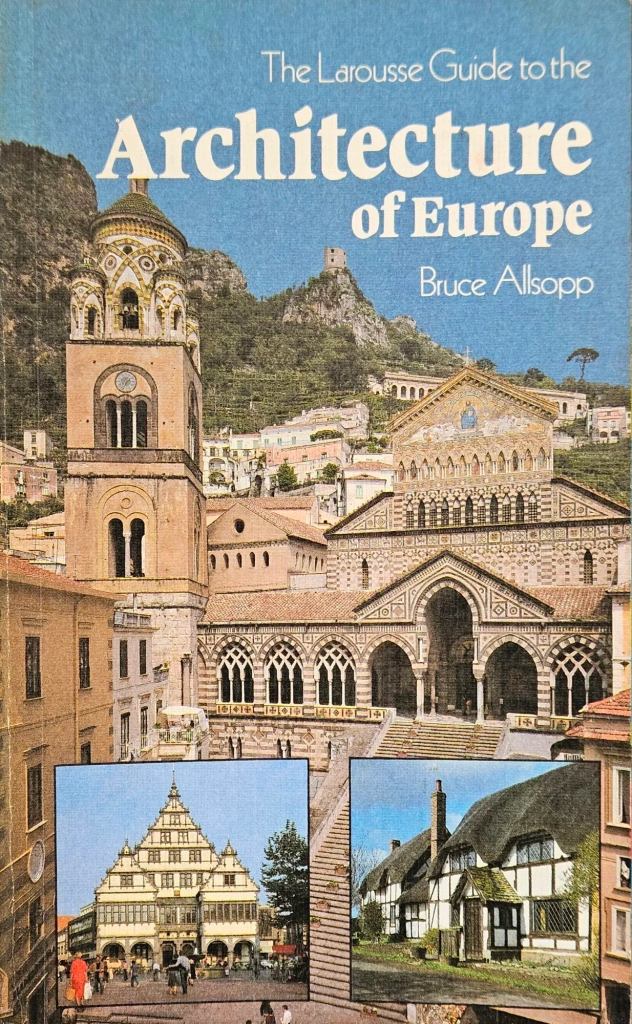
These images were discovered in Architecture of Europe, a guide published in 1985 in Britain by Newnes Books and by Larousse in the United States.
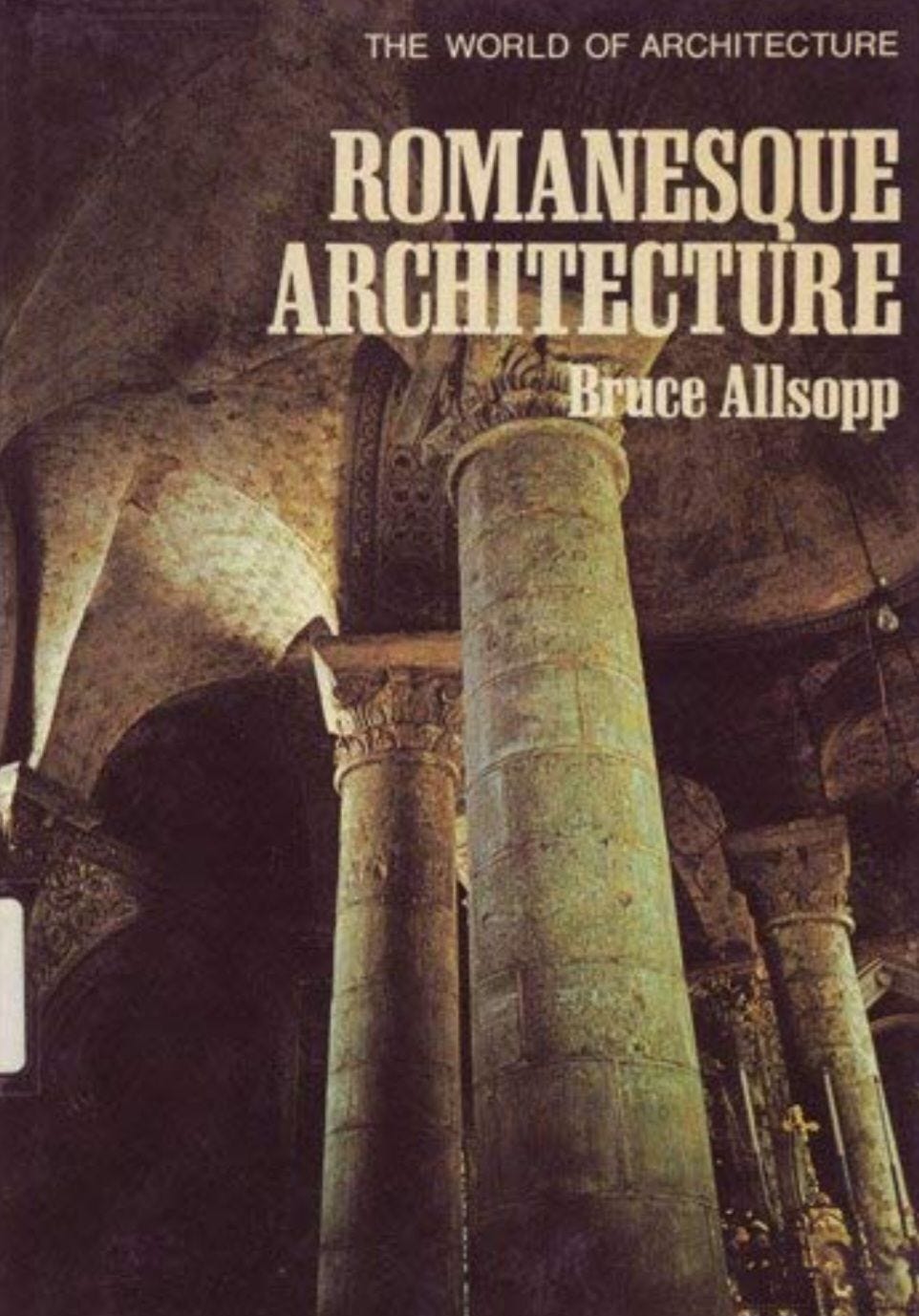
The guide was authored by Bruce Allsopp (1912-2000), who was Ursula’s chief collaborator at Oriel Press and hired her on its launch as the publisher’s photographic editor in 1962.
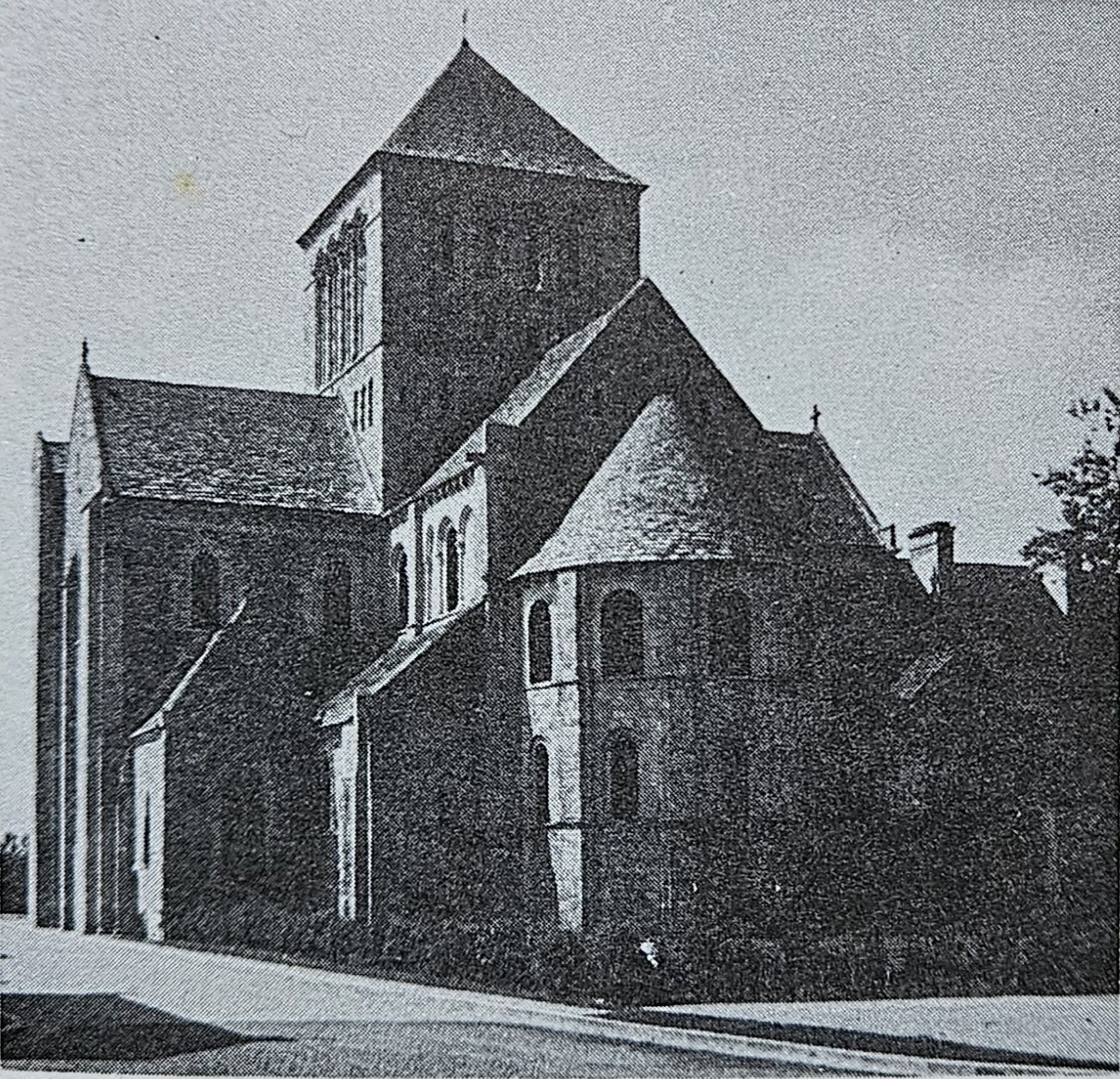
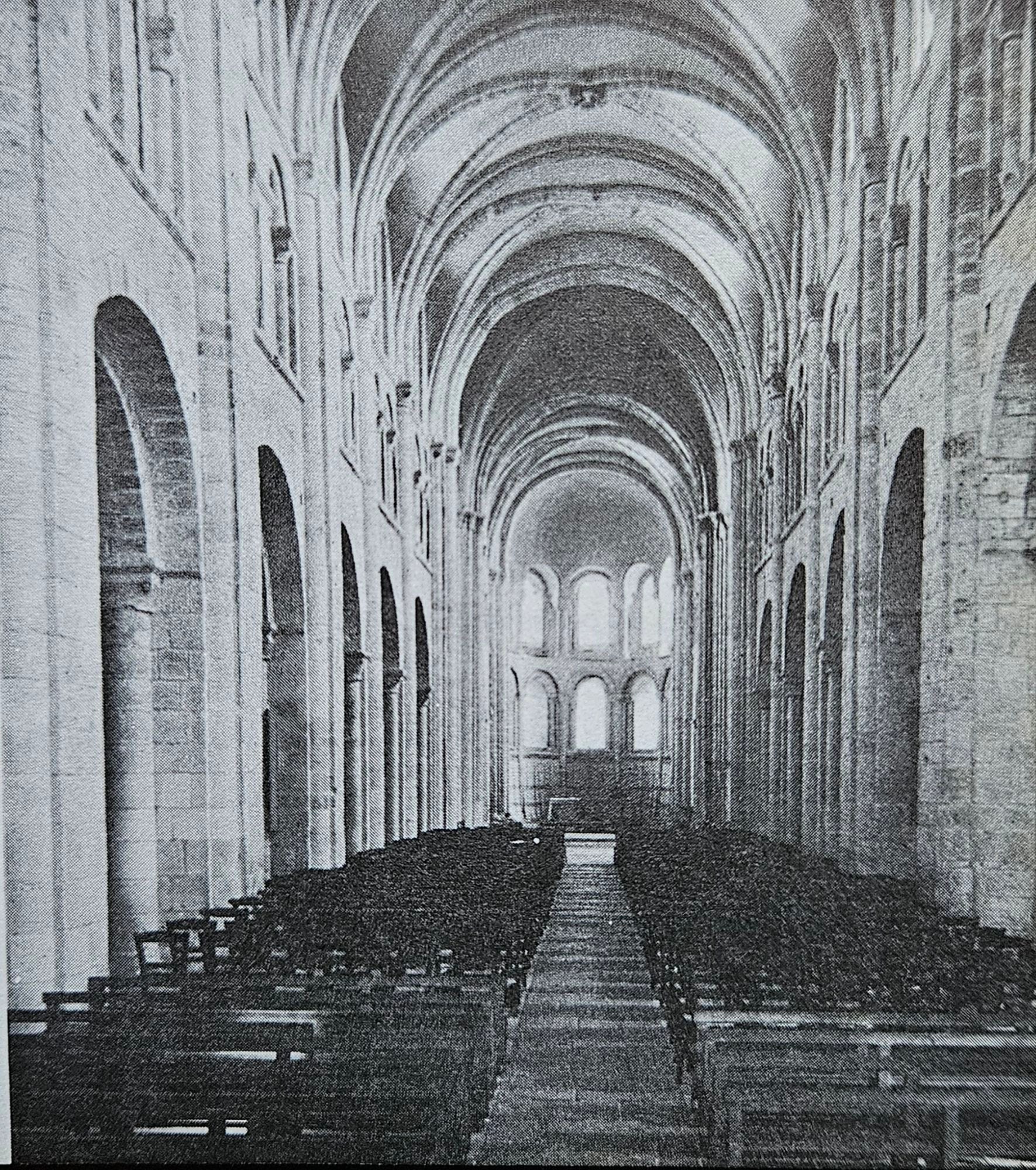
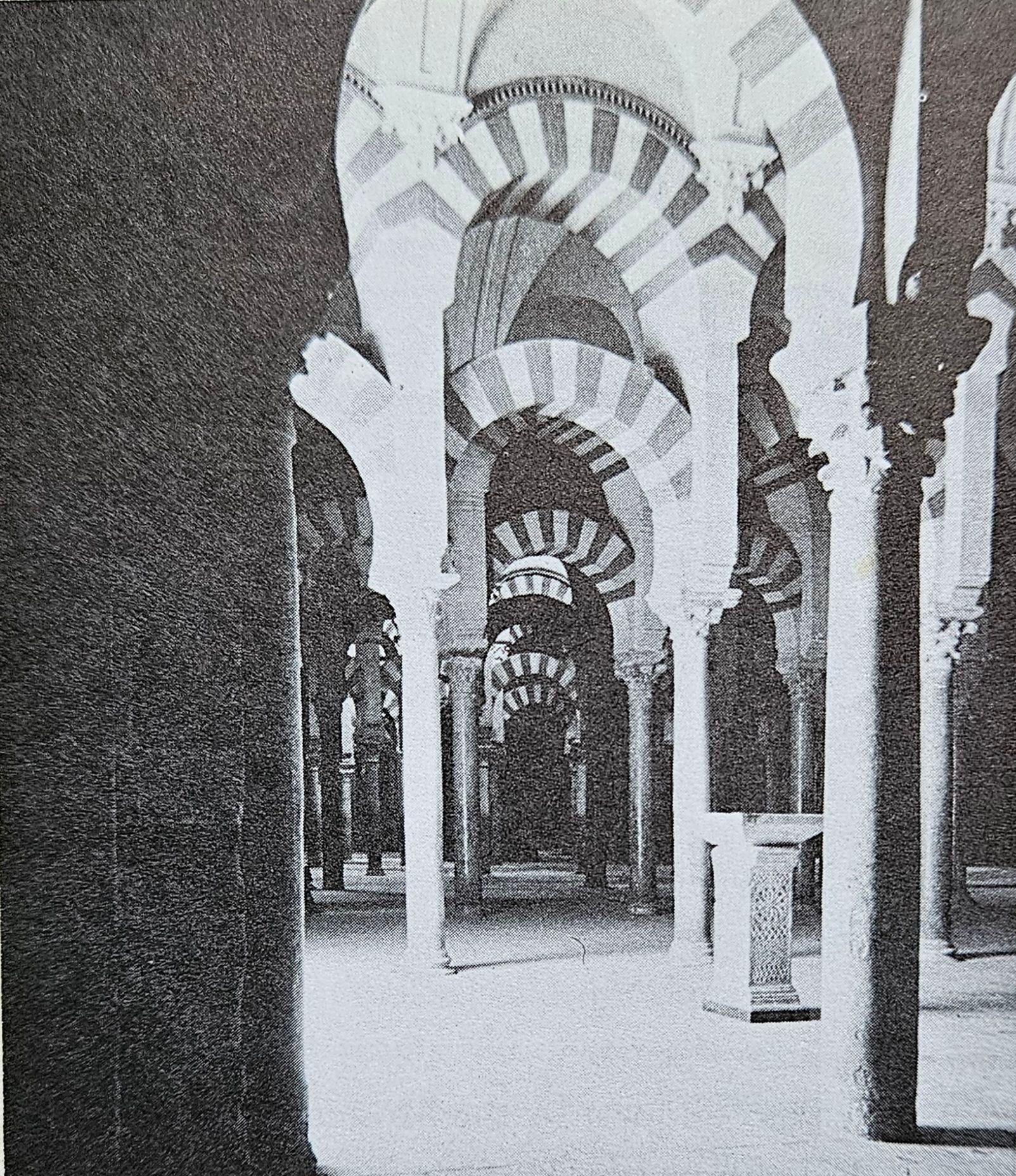
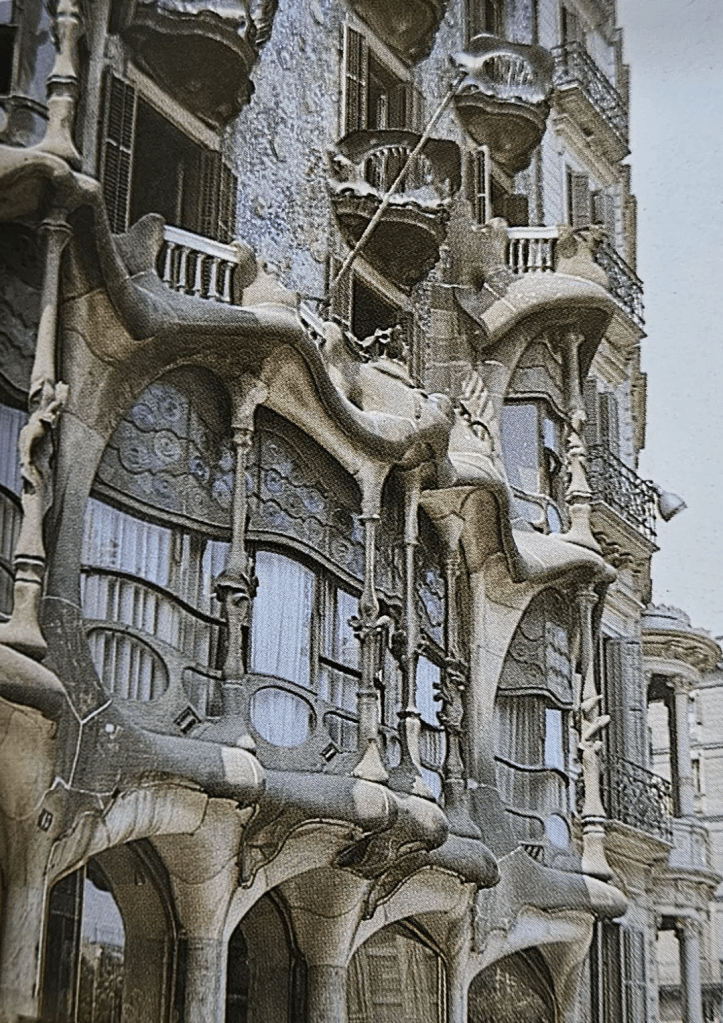
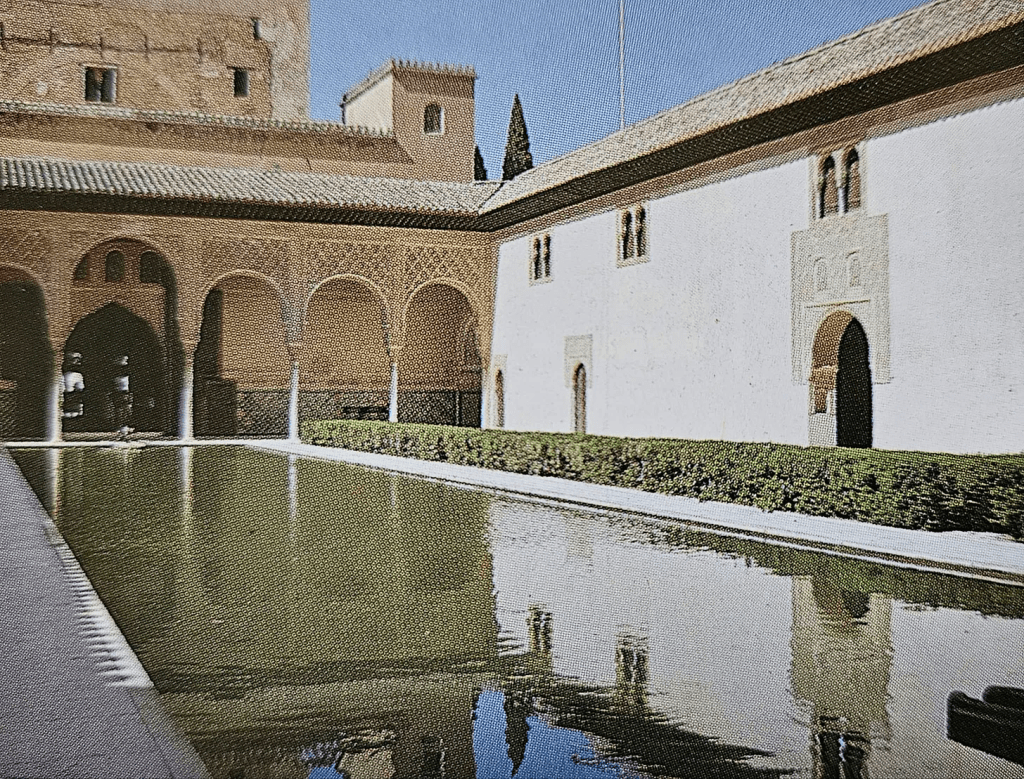
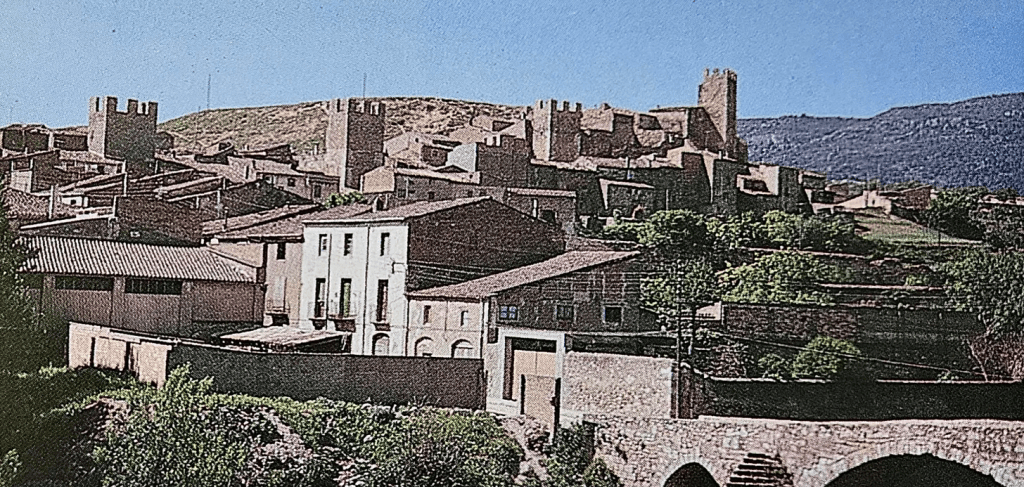
Colour photographs credited to ‘Ursula Clark’ illustrate a section of Architecture of Europe devoted to Spain and Portugal.
It appears that some were first published as black-and-white illustrations in Oriel’s Architecture of Spain and The Great Tradition of Western Architecture (both 1966).
This information helps date these images as being taken during a period when Ursula was in her mid-twenties.
The sequence starts with a striking image of Barcelona’s ‘Facade of the Casa Battló’ (1905-07) by Antoni Gaudi, perhaps best-known for the catholic cathedral Segrada Familia, also in Barcelona that is due to be completed in 2026.
Then a double page is devoted to Ursula’s photographs with a brief accompanying explanatory text to point out significant features or historical information.
I reproduce them in the order they appear with a caption identifying each location.
The previous Pressphotoman piece marking a significant photographic anniversary has sent this blog’s research into the firm of W. & D. Downey of Newcastle on Tyne in fresh directions.
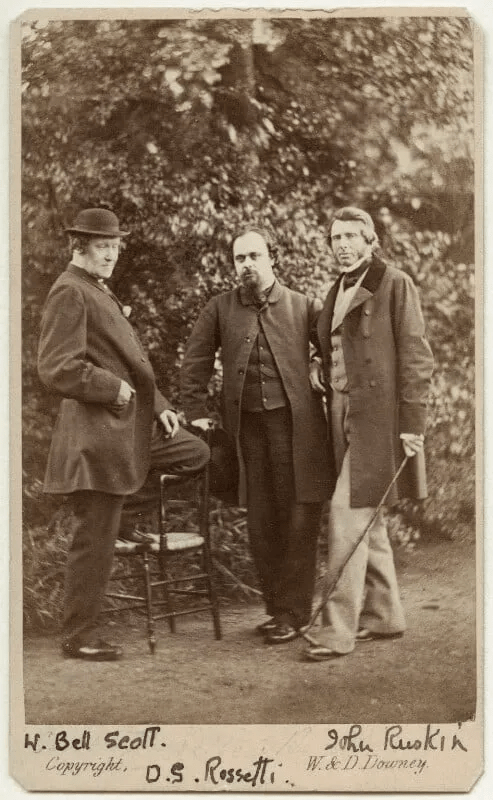
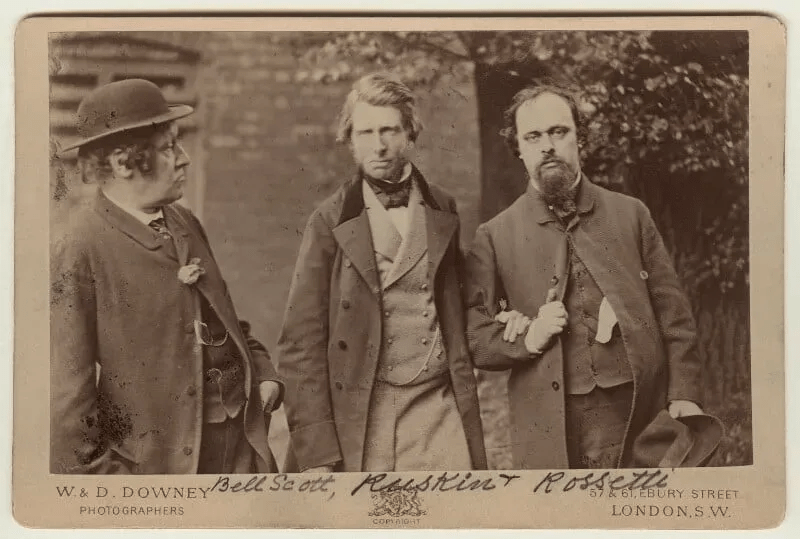
On 29th June 1863, William Downey took this group portrait in the garden of the London home of the Pre-Raphaelite artist Dante Gabriel Rossetti.
It features Rossetti and William Scott Bell, known as the Northern Pre-Raphaelite, together with the movement’s champion John Ruskin.
The explanation for the hat and wig he is wearing is that his facial hair including his eye brows had recently fallen out due to an attack of alopecia.
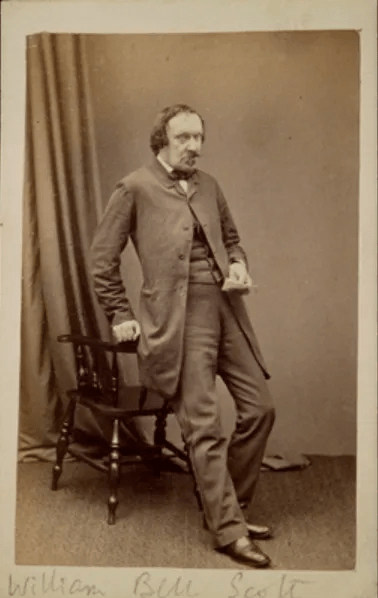
This dramatic change is evident in an earlier Bell Scott portrait, also attributed to W. & D. Downey.
It is one that features in the collection of the Watts Gallery, Surrey (my thanks to Antony Ryan for this information).
The exact dating of the portrait is unknown, but it has the hallmarks of the company’s early celebrity cartes de visite published around 1860 when the Downeys were still based in South Shields.
As head of the Government’s School of Design in nearby Newcastle on Tyne (1843-1864), Bell Scott was a significant figure in the North East of England.
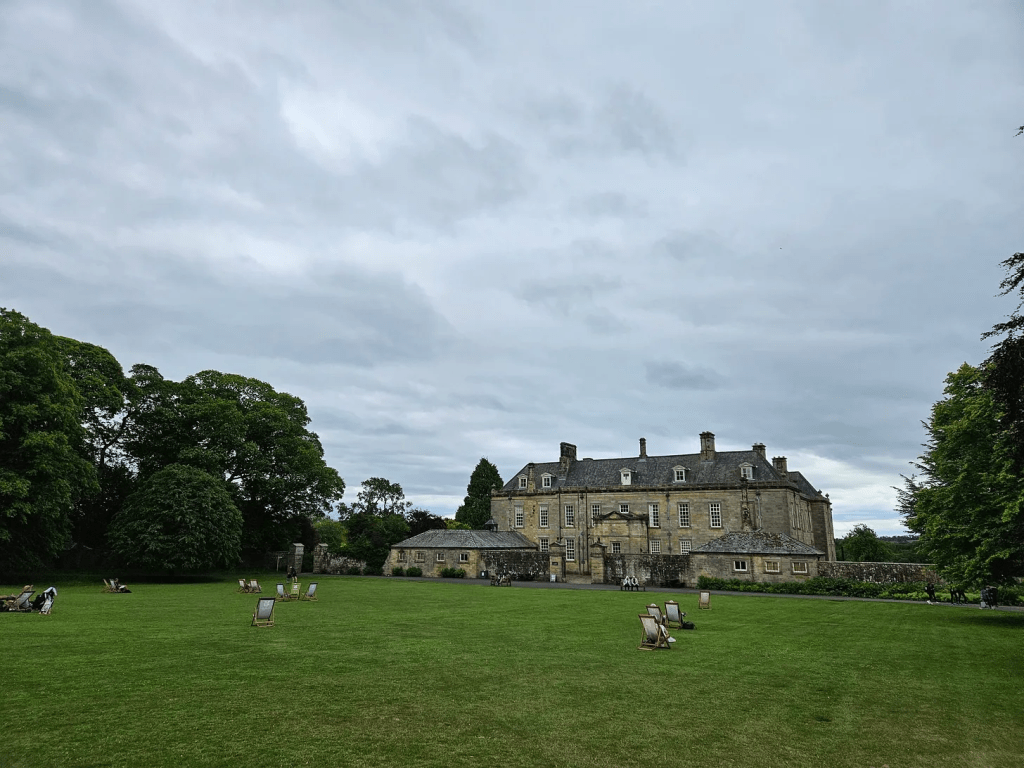
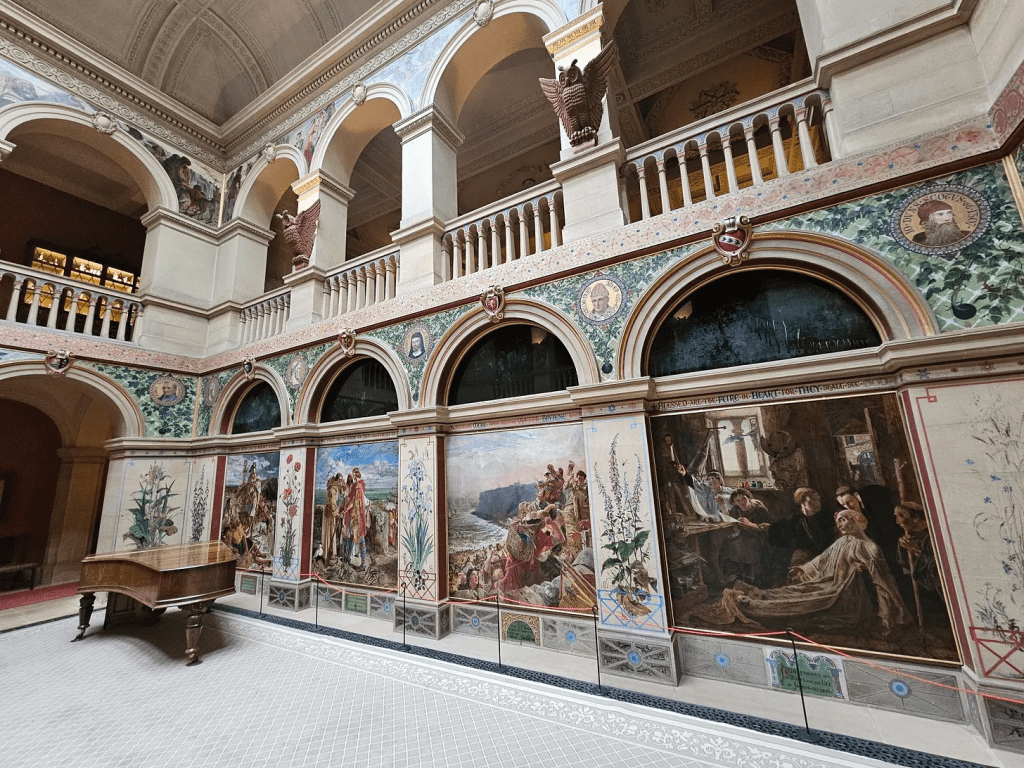
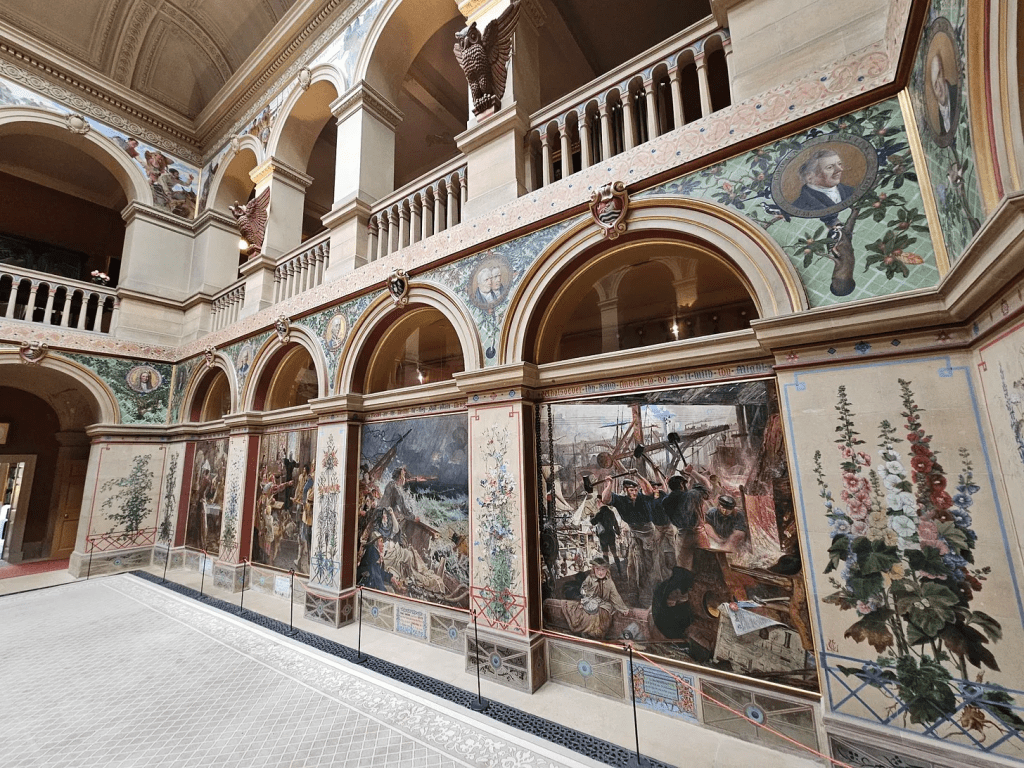
Eight of his best-known artworks completed between 1857 and 1861 feature in the Central Hall of Wallington, Northumberland, a stately home now in the care of the National Trust.
Rear view of Wallington, Northumberland. June 2025. Author’s photo.
Commissioned by Lady Pauline Trevelyan, Bell Scott’s brief was to decorate the hall with ‘wall paintings to illuminate the history and worthies of Northumbria.’
These are titled ‘The Roman Wall,’ ‘King Efrid and Cuthbert,’ ‘The Descent of the Danes,’ ‘The Death of Bede,’ ‘Spur in the Dish,’ ‘Bernard Gilpin,’ ‘Grace Darling’ and ‘Iron & Coal.’
The Central Hall designed by the Newcastle architect John Dobson took its inspiration from John Ruskin’s vision of an Italian Renaissance courtyard.
A recent opportunity to visit Wallington confirmed the impressive nature of both the hall and its paintings.
Central Hall, Wallington. June 2025. Author’s photo.Central Hall, Wallington. June 2025. Author’s photo.
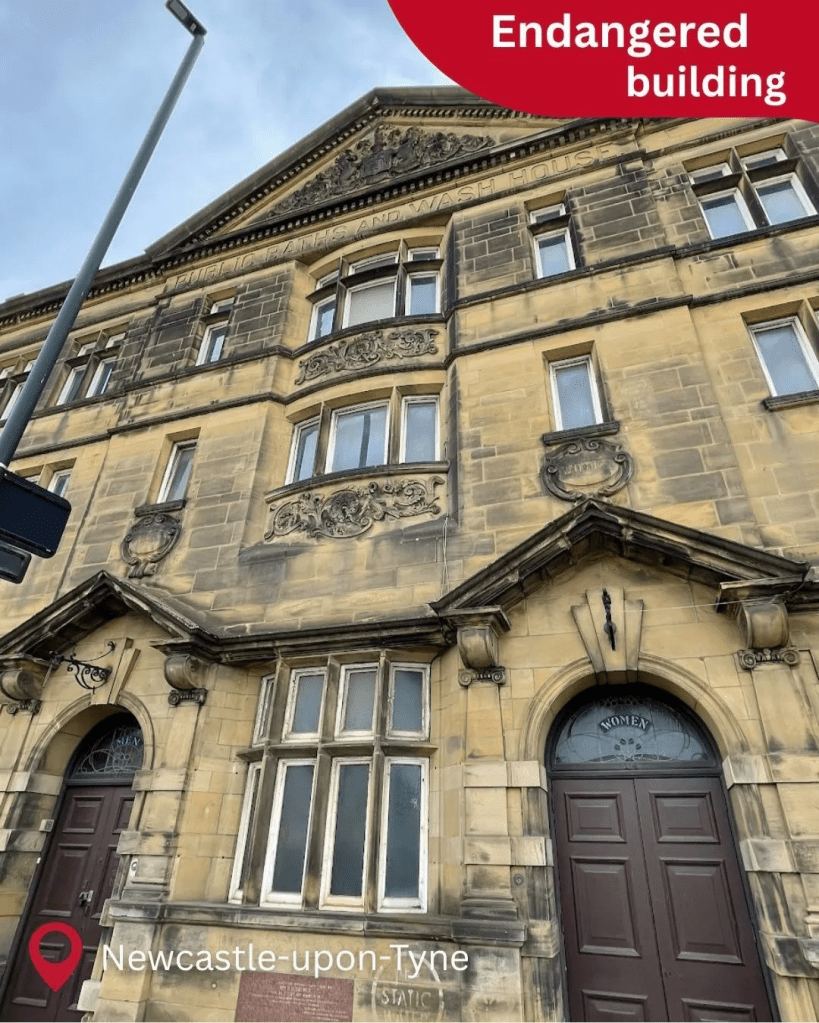
The Victorian Society’s national list of ‘Top Ten Endangered Buildings 2025’ features one building recognisable from regular visits down the decades to Newcastle upon Tyne.
Gibson Street Baths was built in the early 20th century under the 1846 Public Baths and Wash-houses Act that was still in force.
Photo: Graham Tyrrell/Instagram.
A weekly visit to such buildings was part of everyday life for many families including earlier generations of mine.
Now Grade 2 listed, Gibson Street Baths has lain dormant since 2016 and, according to the Victorian Society, “needs a sensitive reuse before restoration costs escalate further.”
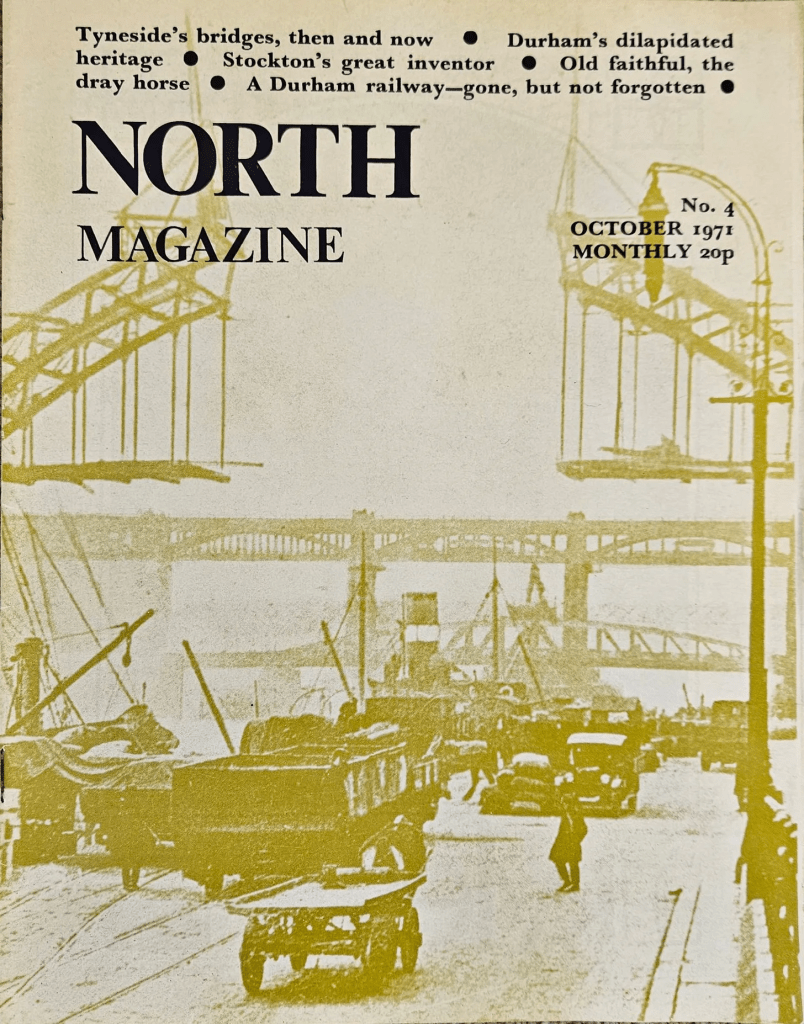
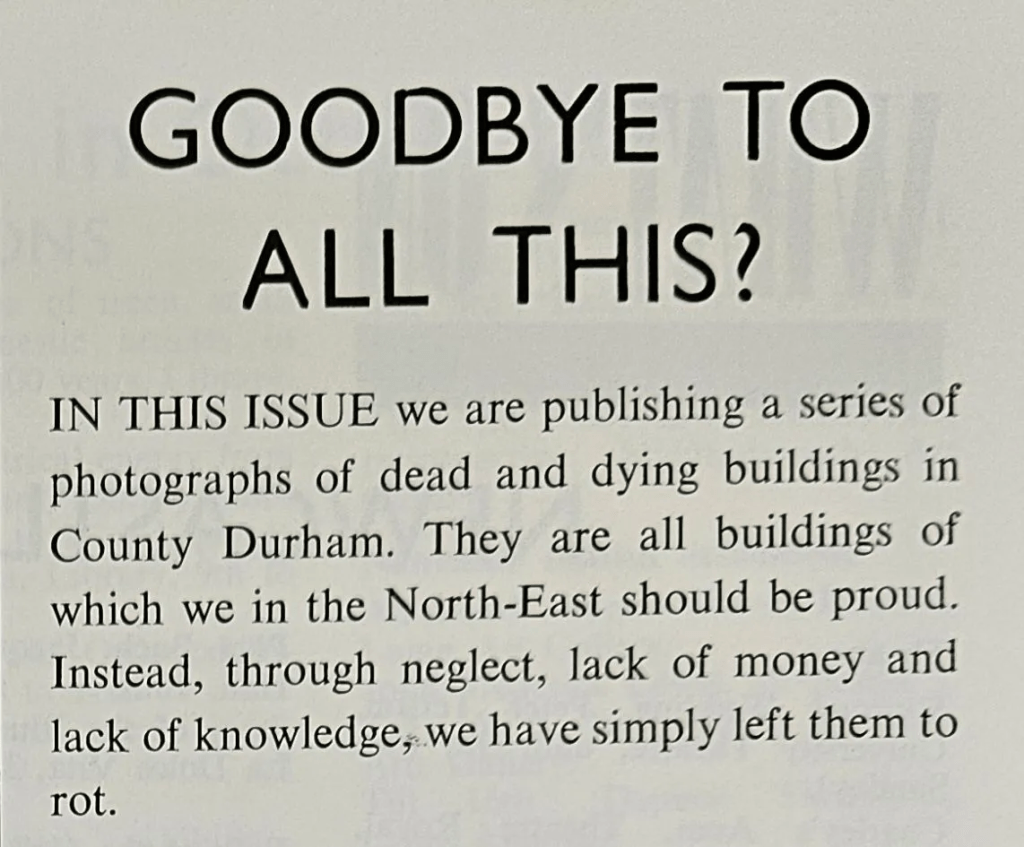
It’s a theme that has echoed down the years as revealed by a 1971 article that recently joined the Pressphotoman collection.
North Magazine was a monthly publication for ‘Durham, Northumberland and North Yorkshire’ edited by the journalist and author Leslie Geddes-Brown (1942-2020).
The cover of the October 1971 issue (vol. 1, no. 4) featured an eye-catching photograph of the Tyne Bridge, which is currently undergoing major renovation as it approaches its centenary in 2028.
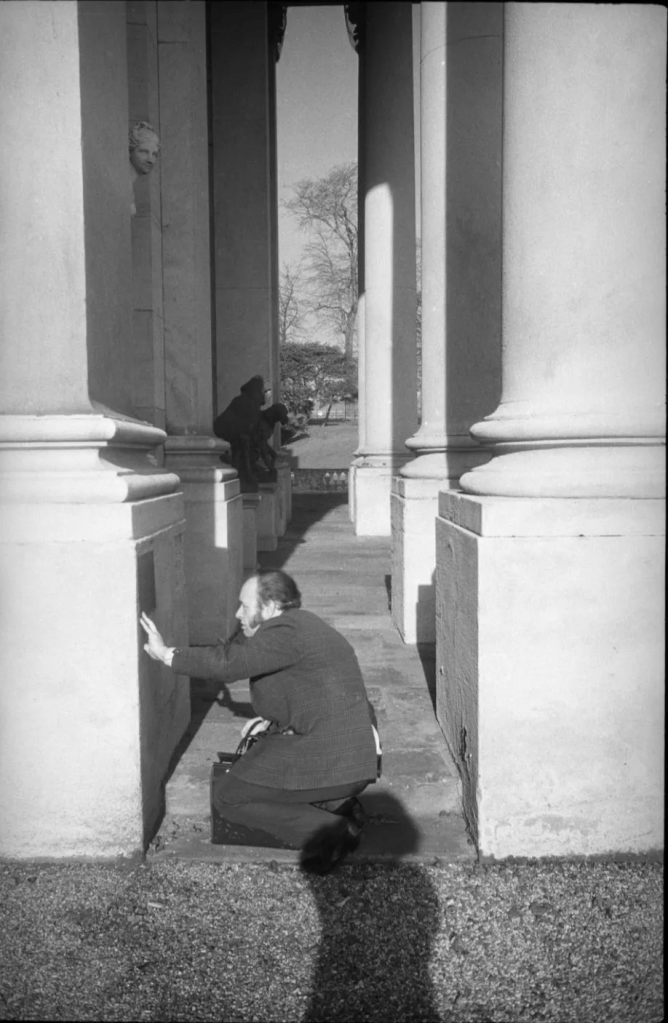
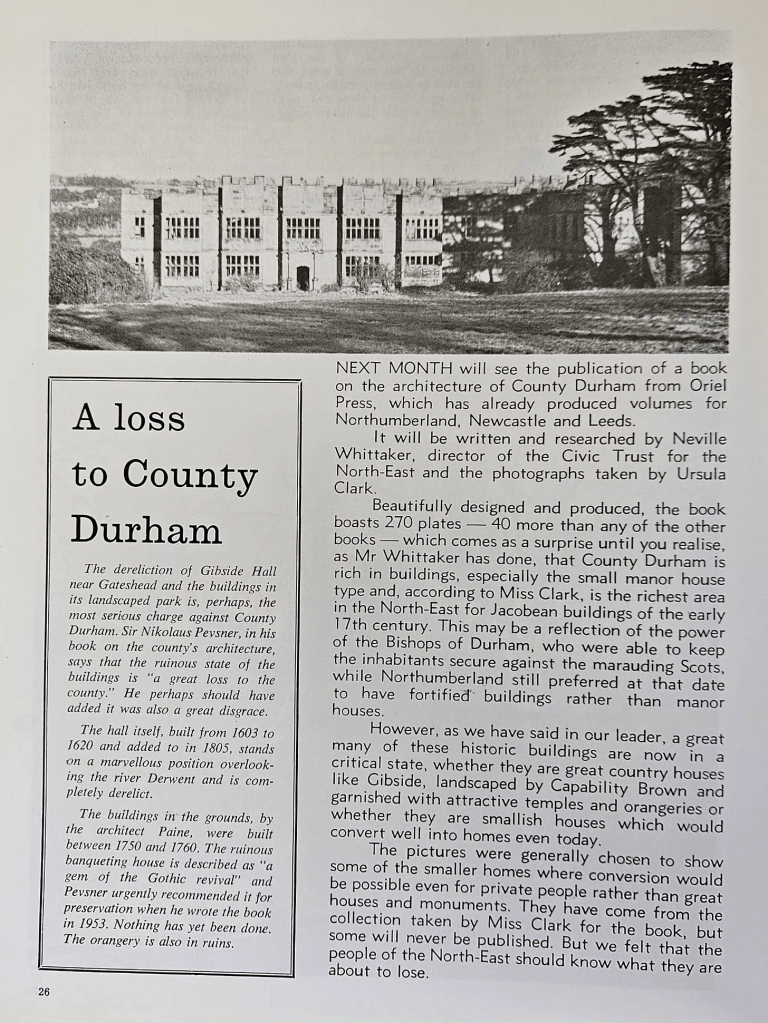
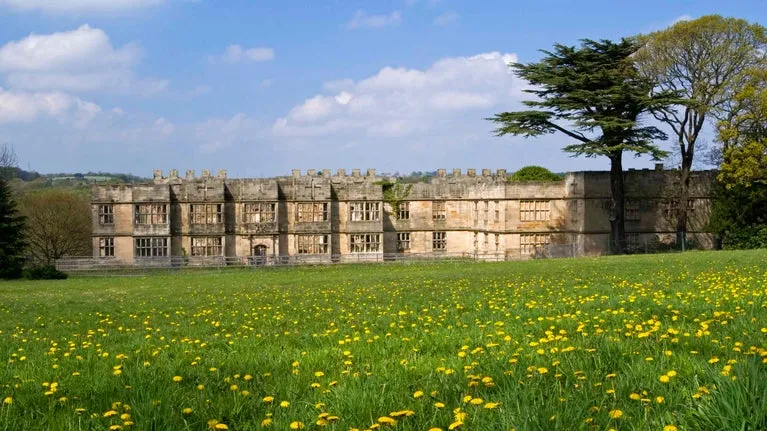
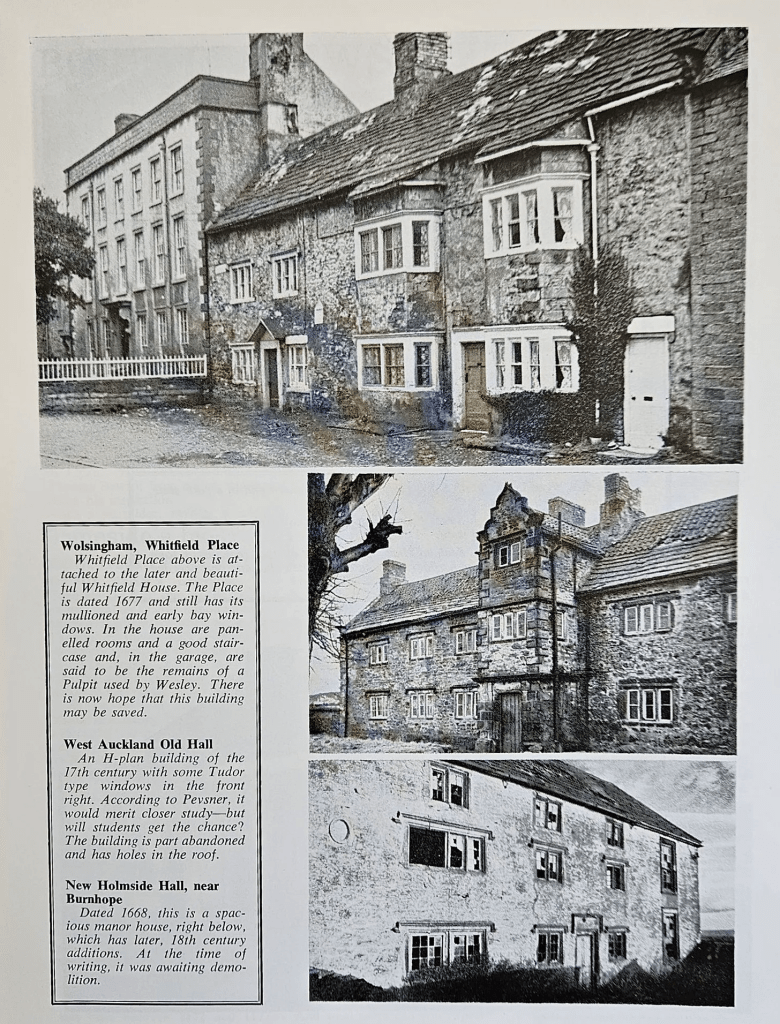
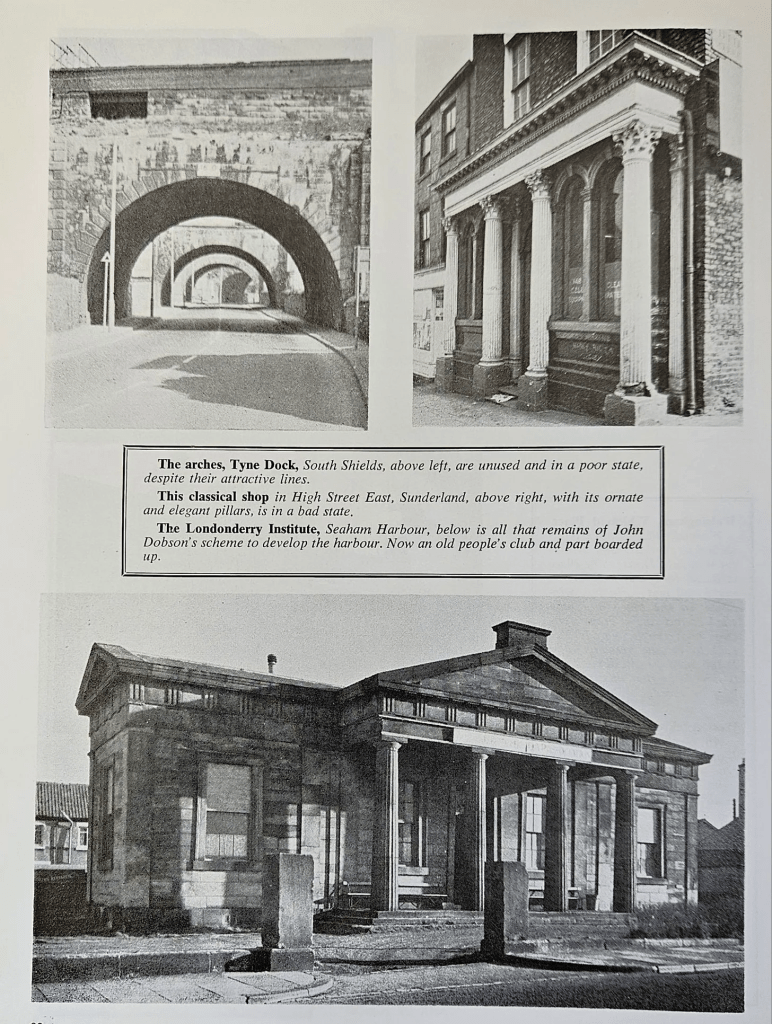
The series of photographs referred to came from Historic Architecture of County Durham by Neville Whittaker and Ursula Clark (Oriel Press) that was about to be published.
Regular readers will recognise the name of Ursula Clark (1940-2000) as the architectural photographer, who featured in my recent talk for the RPS Historical Group marking the 25th anniversary of her death.
The three-page North Magazine article devoted much of its space to Ursula’s photographs and it is instructive to trace what has happened to the featured buildings in the half century since.
In the years since, all three of the featured properties – Whitfield Place, Wolsingham; West Auckland Old Hall; and New Holmside Hall, near Burnhope – have been lovingly restored to their former glory.
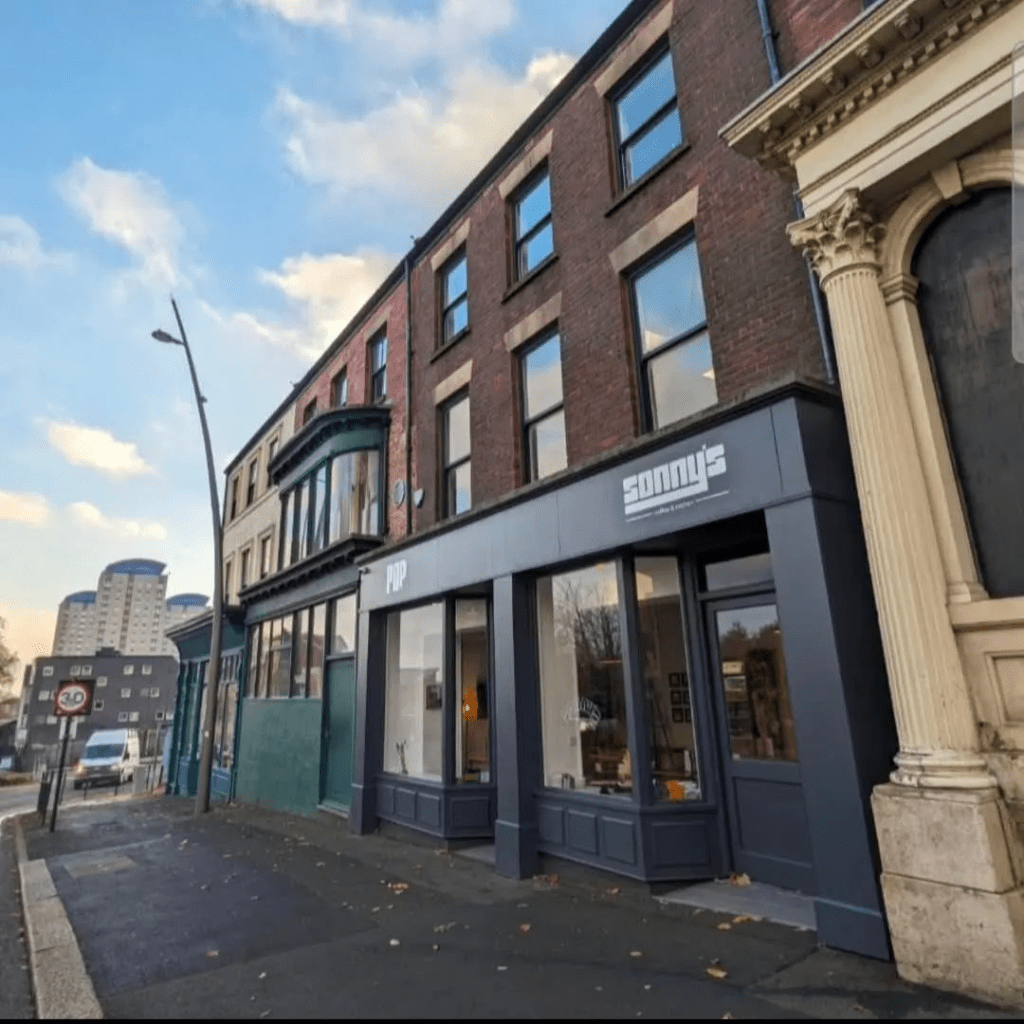
Perhaps the most stunning transformation though is the classical shop front in High Street East, Sunderland (top right below) with its “ornate and elegant pillars” described in 1971 as “in a bad state.”
Thanks to becoming part of Sunderland’s Heritage Action Zone (HAZ), the adjoining terrace initially built as merchants’ houses in the late 18th century is now home to Pop Recs, a café, music and arts venue and community hub.
Photo from Pop Recs Facebook page.
These restorations and reinventions confirm that there is hope for the current crop of endangered buildings of which Newcastle’s Gibson Street Baths is just one.
An article featuring my research about the architectural photographer Ursula Clark (1940-2000) has just been published by The PhotoHistorian (Spring 2025, no. 201).
It follows a recent talk about Ursula’s photography for the Royal Photographic Society Historical Group.
A YouTube recording is fast approaching 4,000 views and has attracted an audience far beyond the niche one anticipated.
‘Ursula Clark: Architectural Photographer’ for RPS Historical Group. 28th February 2025.
As a result of social media interest and wider publicity, I am now following up various research threads, which I hope to share in future Pressphotoman posts.
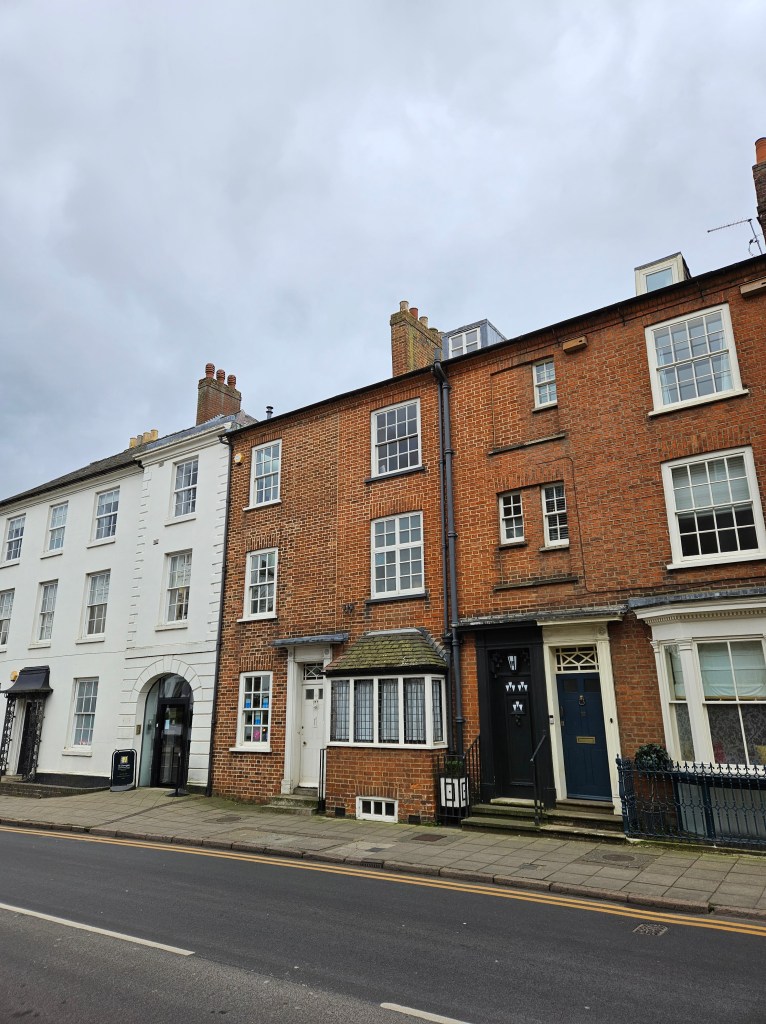
A recent road trip to visit family and friends in the South of England offered an ideal opportunity to visit 78 Derngate, Northampton.
Regular readers will recognise the address as the home of WJ Bassett-Lowke (1877-1953), an entrepreneurial model engineer and amateur photographer and film-maker.
A selection of his 3D stereocards bought during an eBay auction featured in a series of Pressphotoman posts during January and February.
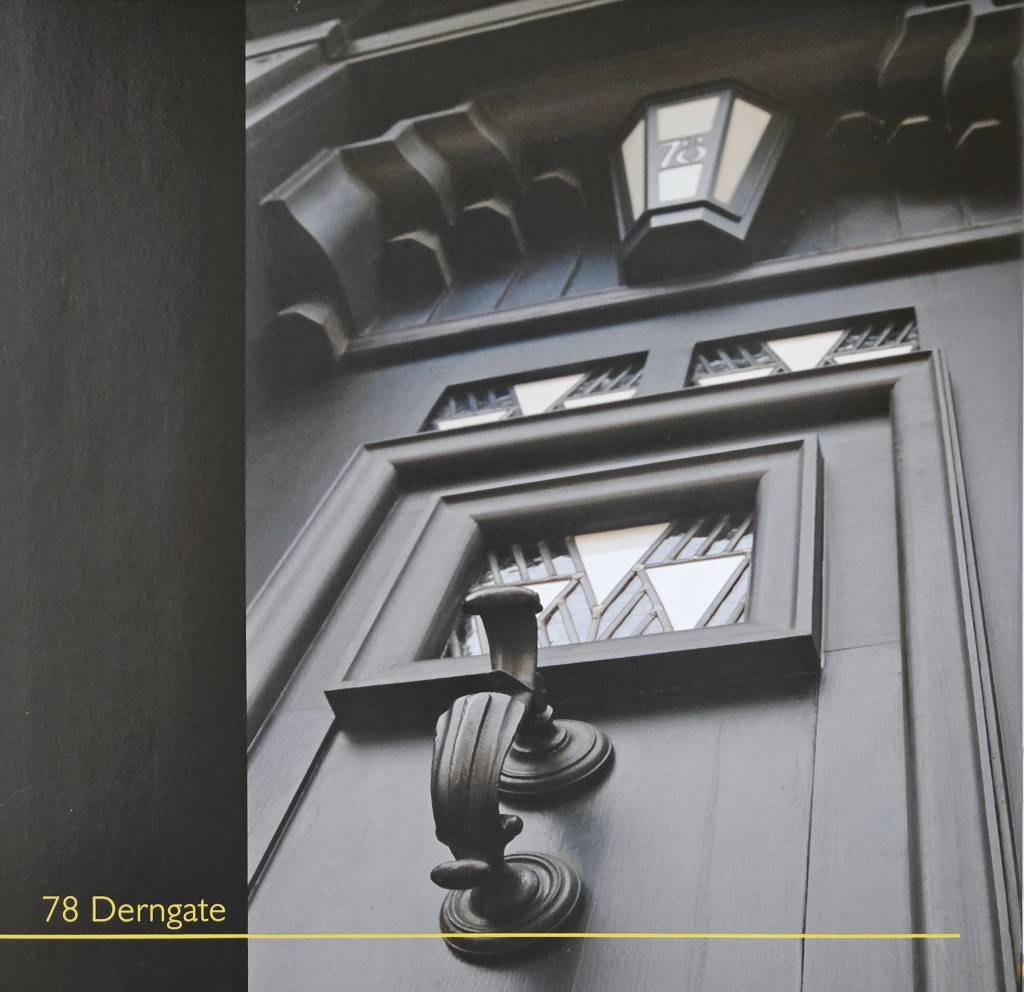
78 Derngate, a wedding present from WJ’s father, was remodelled in 1916 by the celebrated architect and designer Charles Rennie Mackintosh (1868-1928).
Indeed, it was his last major architectural commission, so as a photohistorian and lover of all things Mackintosh, my visit to 78 Derngate held a number of attractions.
I wasn’t disappointed.
The original Georgian house sits on a terraced street though it was once on the edge of Northampton rather than close to the town’s busy hospital as it is today.
Front elevation of 78 Derngate, Northampton. 11th March 2025. Author’s photo.
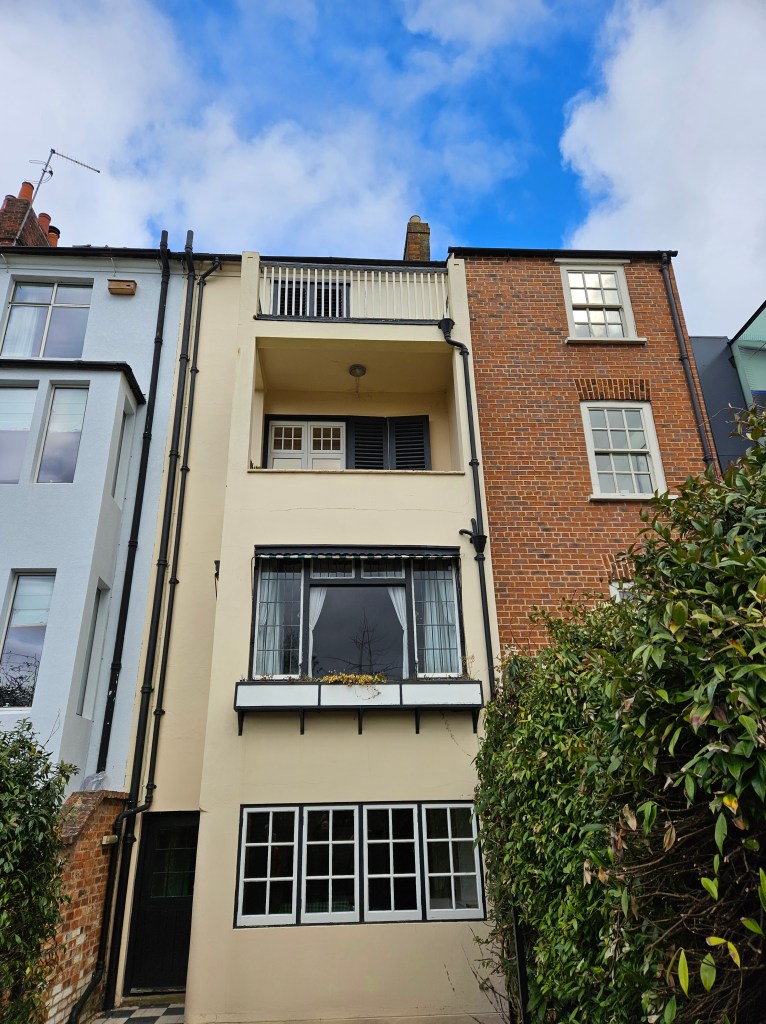
As you approach, number 78’s black front door, featuring Mackintosh’s signature style, immediately marks it out as does the rear elevation complete with balconies.
Rear elevation of 78 Derngate, Northampton. 11th March 2025. Author’s photo.
My arrival coincided with a guided tour of the property that lasted more than an hour, but which flew by in a whirl of information to accompany the visual and design delights of each room.
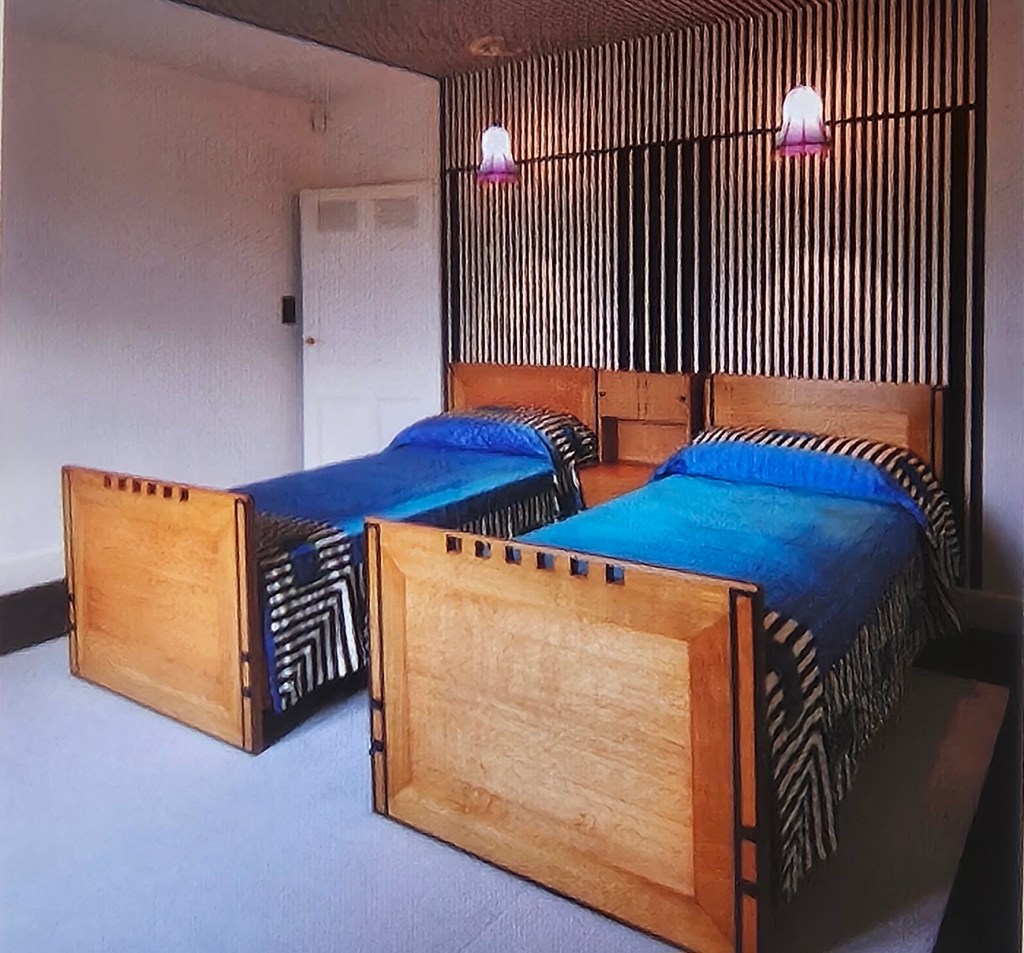
From 78 Derngate, Northampton Souvenir Guide (78 Derngate Trust, 2005).
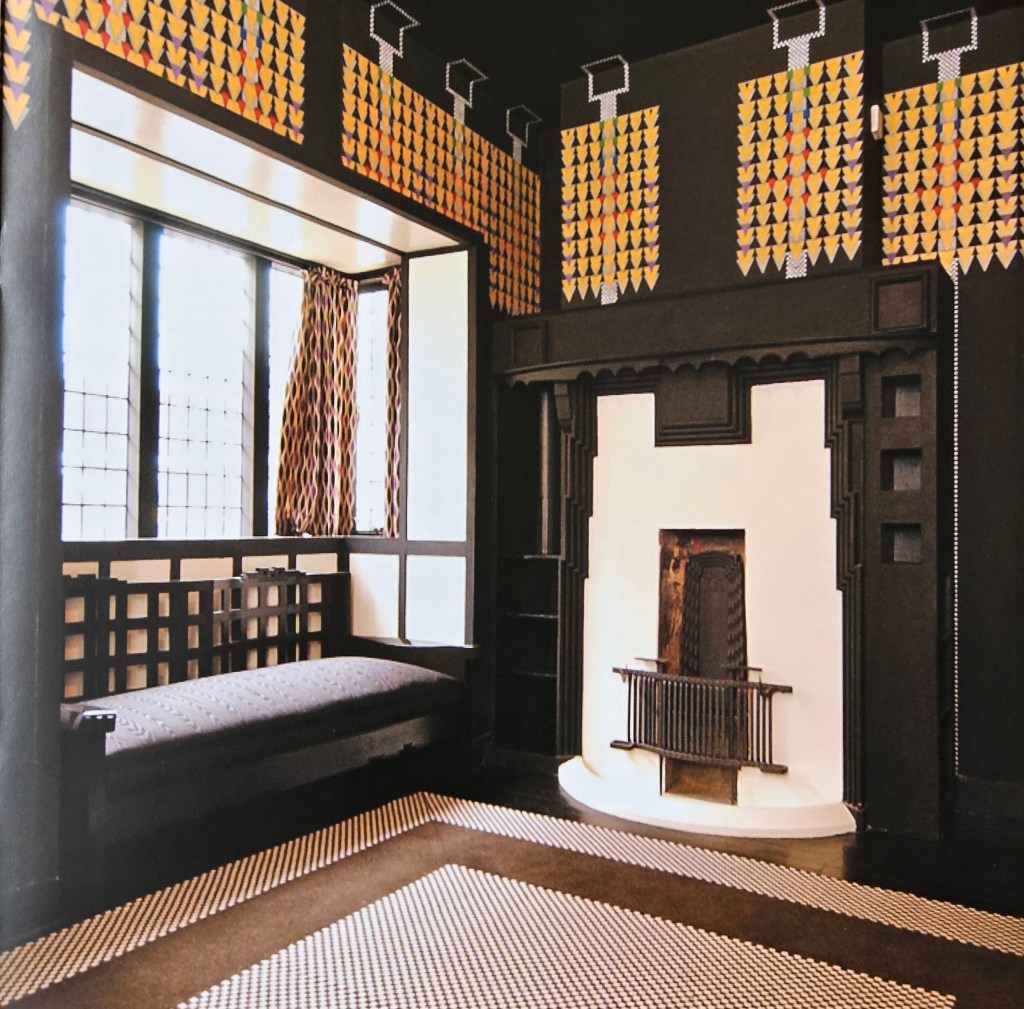
The guest bedroom (above) was once occupied by the playwright George Bernard Shaw, a keen photographer himself, whilst the sitting room (below) is almost too dazzling to spend a lot of time in.
From 78 Derngate Northampton Souvenir Guide (78 Derngate Trust, 2005).
There is so much to take in on one visit, but my attention was caught by a display case featuring cameras that WJ wielded at various points.
The serendipity of adding a dozen of his stereocards to my collection, taken between 1900 and 1904 when he was launching the model train business that bore his name, has continued.
In a subsequent eBay transaction with the same seller, I was fortunate enough to secure a further five Bassett-Lowke cards.
In addition, I bought an Underwood & Underwood stereo titled ‘The Children’s Paradise – A German Toy exhibit in the Industrial Arts Building’ taken at the 1900 Paris Exposition.
It was during his visit to Paris that WJ saw the model railway engines built by German companies from Nuremberg that inspired the future direction of Bassett-Lowke Ltd.
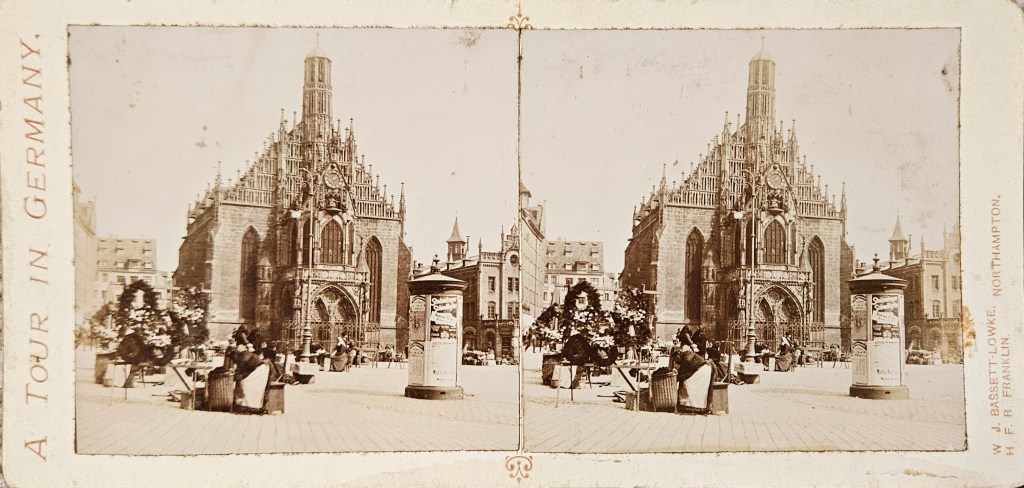
My favourite of the latest cards is a stereo of the famous Frauenkirche on the edge of the city’s market square.
It is taken from ‘A Tour of Germany’ that he and his business partner Harry Franklin undertook in April 1900 and is numbered on the verso as ‘35.’
The clock tower shows the time as ten past one and a market stall holder in the foreground appears to be on her way to lunch.
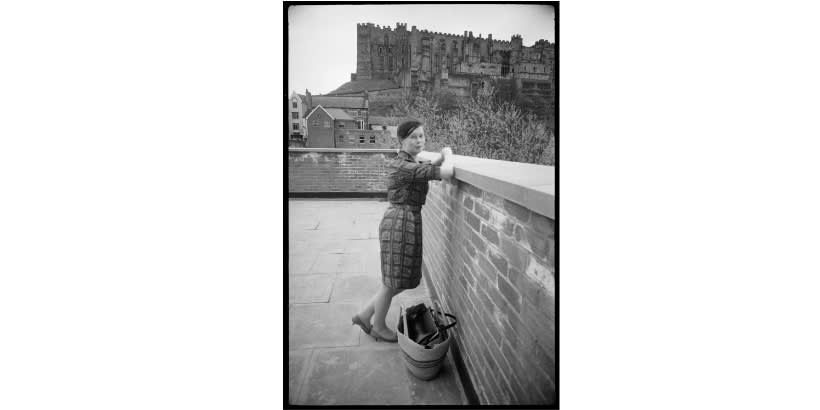
Around 2,000 of Ursula’s images have been digitised by the Historic England Archive from what is the largest of its collections created by a woman photographer.
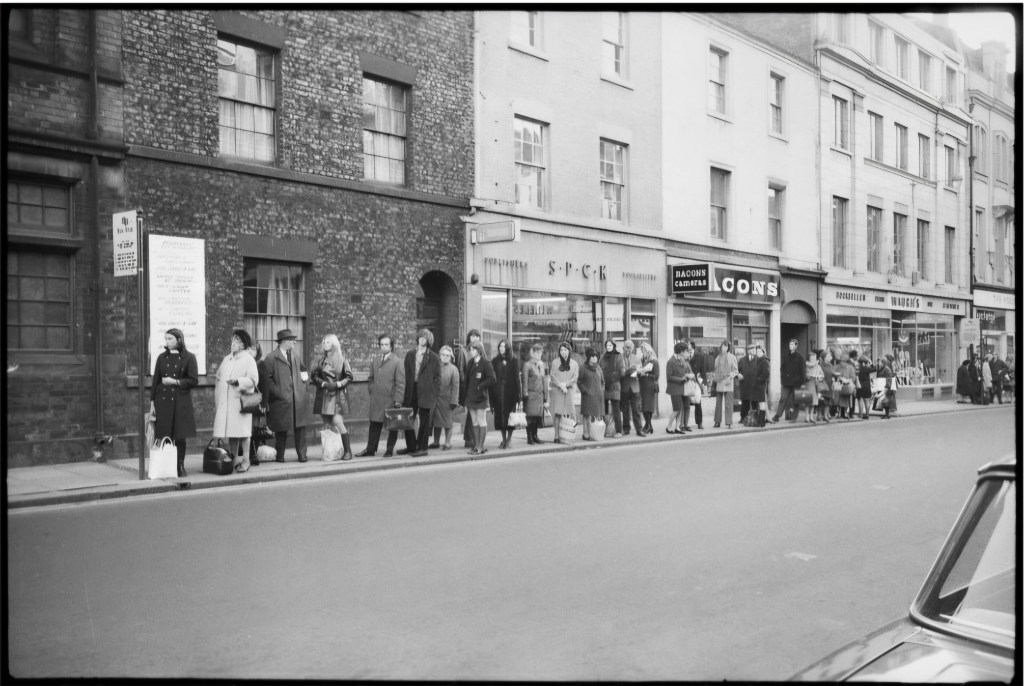
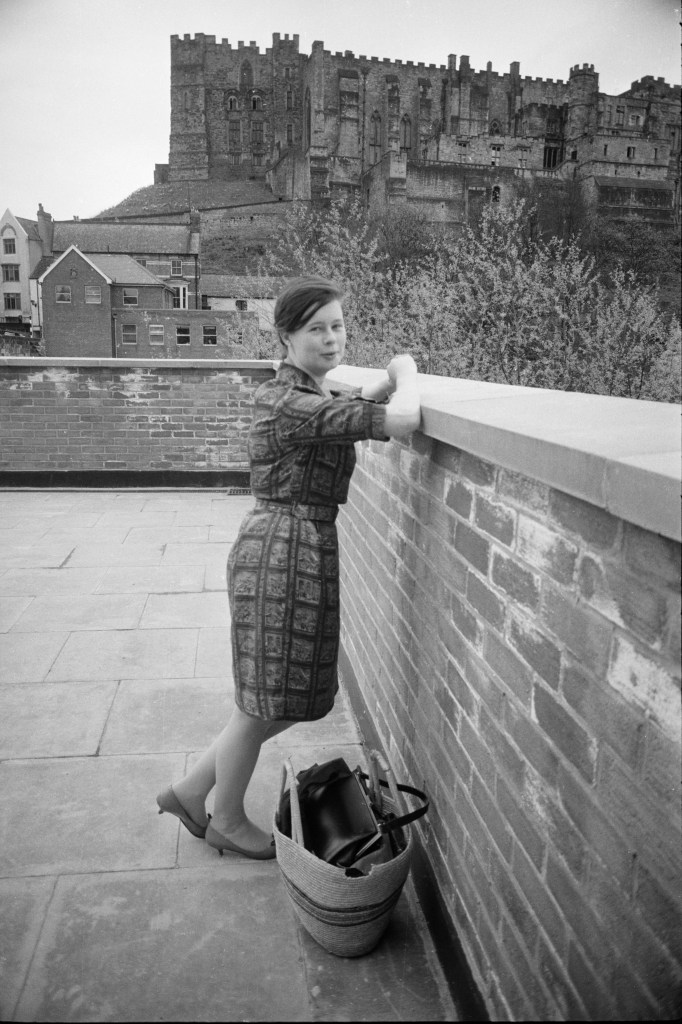
Update 5th March 2025: Billy Embleton informs me: “That little girl is Ellen Parkin with her Uncle Jimmy Anderson in the burger van in 1965. She identified herself in 2021 when I posted the photo on Facebook. She’s now known as Ellen Przybylska.”
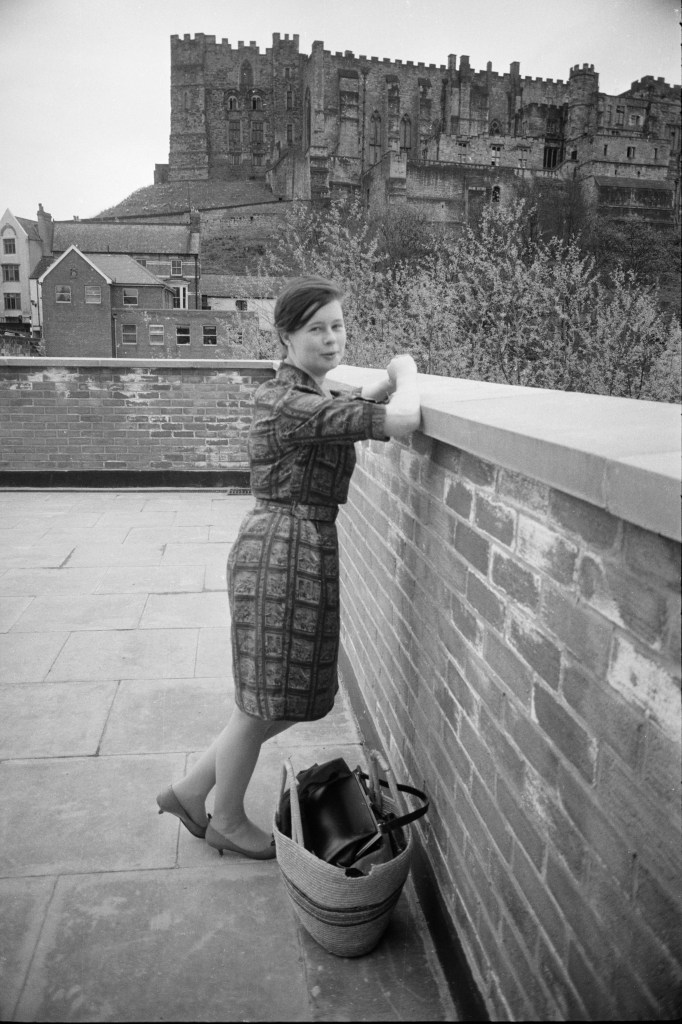
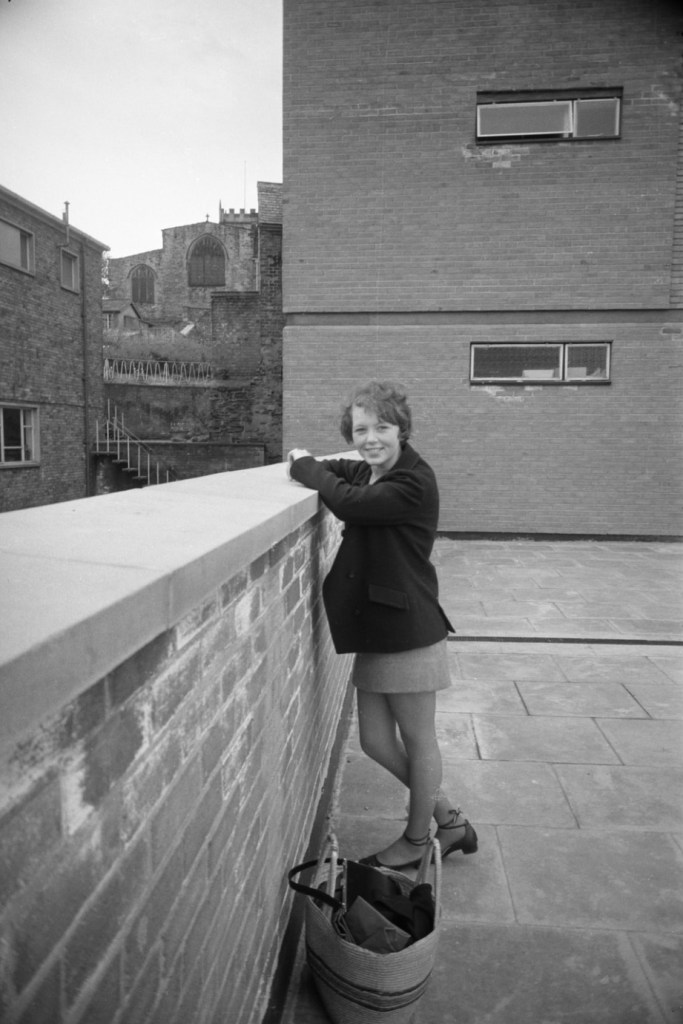
In my talk, I argued that these images echo those of other female photographers working during the same period such as Sirkka-Liisa Konttinen (born 1948) and Tish Murtha (1956-2013).
It would be wonderful to put names to the faces in these photographs and learn more about long ago interactions with a photographer, who clearly had a rapport with flesh-and-blood subjects too.
I first came across her work last year whilst browsing in a second-hand bookshop.
Historic Architecture of Newcastle Upon Tyne (Oriel Press, 1967) was full of striking photographs of a city that I’ve known for the past 40+ years.
From Historic Architecture of Newcastle upon Tyne (Oriel Press, 1967). Author’s Collection.
Reading the book’s credits revealed that, aside from two images, “all other photography by Ursula Clark.”
So who was Ursula Clark and how did she come to take such a huge number of striking photographs?
The answer and the results of a research project that’s occupied me for several months will be shared later this week during a free online talk for the Royal Photographic Society Historical Group.
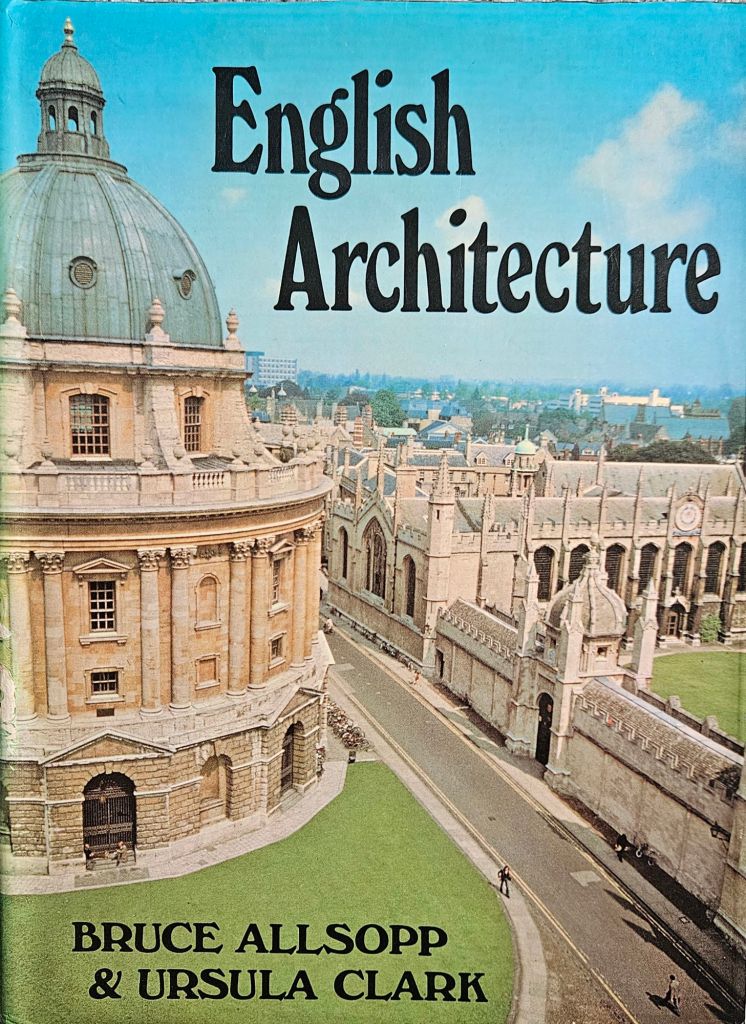
Through two decades, Allsopp & Clark collaborated with other leading authors on a series of popular architectural history guides.
English Architecture (Oriel Press, 1979).
These featured areas of Britain such as Northumberland and County Durham; cities like Newcastle upon Tyne and Leeds; and countries from England and Scotland to France, Italy and Spain.
To mark the 25th anniversaries of Allsopp & Clark’s deaths in 2000, I am presenting a talk later this month about Oriel Press with particular focus on Ursula Clark’s role as a photographer and photographic editor.
The talk will draw on her archive of 20,000 black-and-white negatives now in the care of Historic England.
Auty & Ruddock was a partnership between two of North East England’s finest late-Victorian photographers.
Matthew Auty (1850-1895) was a tobacconist, who turned his hobby into an award-winning photography business specialising in landscapes.
Richard Emerson Ruddock (1863-1931) featured in my recent Pressphotoman series on portrait photographers, who trained with royal warrant holders W. & D. Downey.
Auty & Ruddock’s partnership using premises at 20 Front Street, Tynemouth, a short train journey from Newcastle-on-Tyne, was short-lived.
It lasted from the late-1880s to March 1892 when the dissolution of their partnership was announced in the regional press.
Six months later, Ruddock set up his own portrait studio in Newcastle, leaving Auty to run the Tynemouth business as a solo enterprise.
In recent months, I’ve been on the look-out for photographic products bearing ‘Auty & Ruddock’ branding such as cabinet cards and cartes-de-visite.
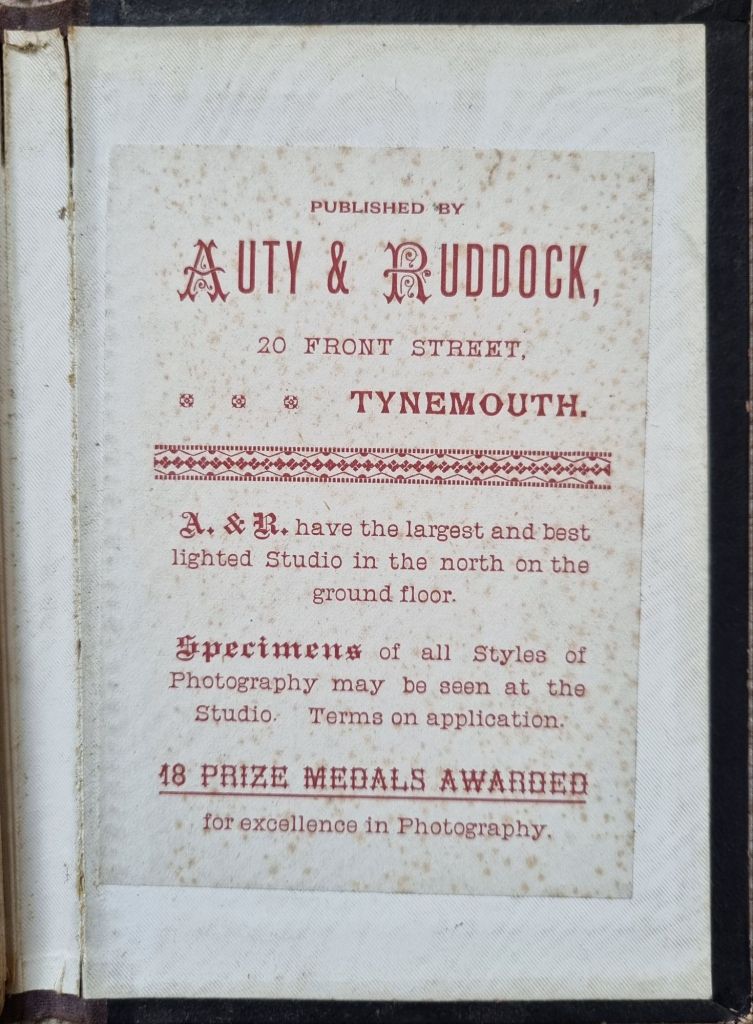
With a large dose of serendipity, a beautifully embossed book of postcard-sized photographs, printed in Germany and titled ‘Tynemouth’ appeared on a well-known auction site.
The reference to ‘A. & R. have the largest and best lighted Studio in the north on the ground floor’ promoted its facilities for portraiture in which Mr. Ruddock specialised.
However, the ‘Tynemouth’ book of ‘views’ points to it being the work of his partner, Mr. Auty.
His landscape photography had attracted ‘prize medals’ at competitions across the UK and in Europe.
As a pocket-sized book that folds up neatly, its design is particularly effective in displaying the ‘views’ as a sequence or tour.
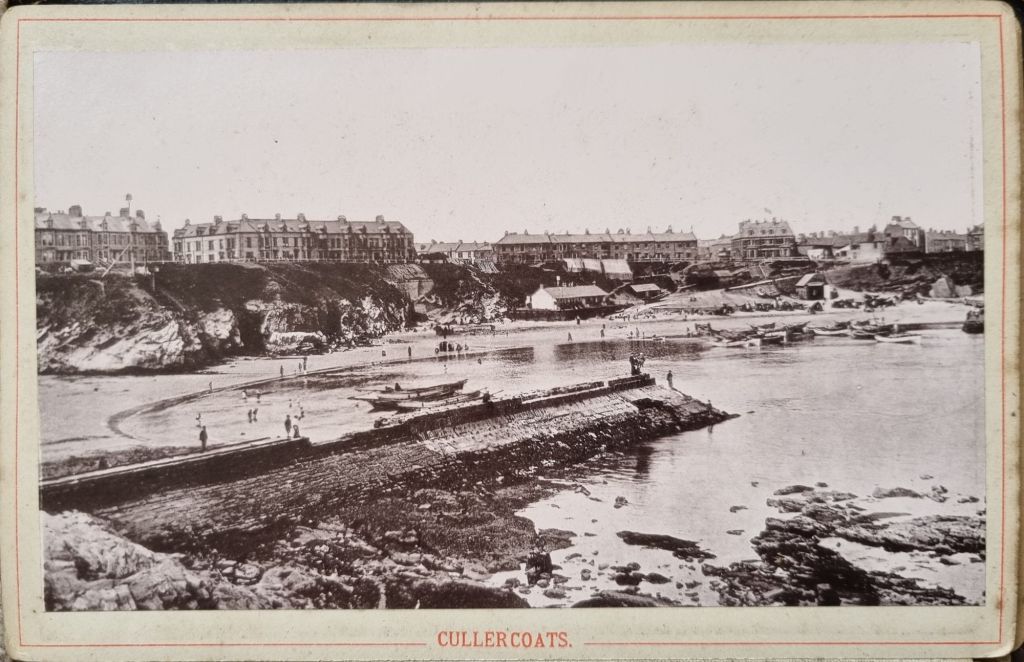
The featured ‘Tynemouth’ locations are ones that remain popular today and would be familiar to anyone visiting on a day-trip or staying in the area on holiday.
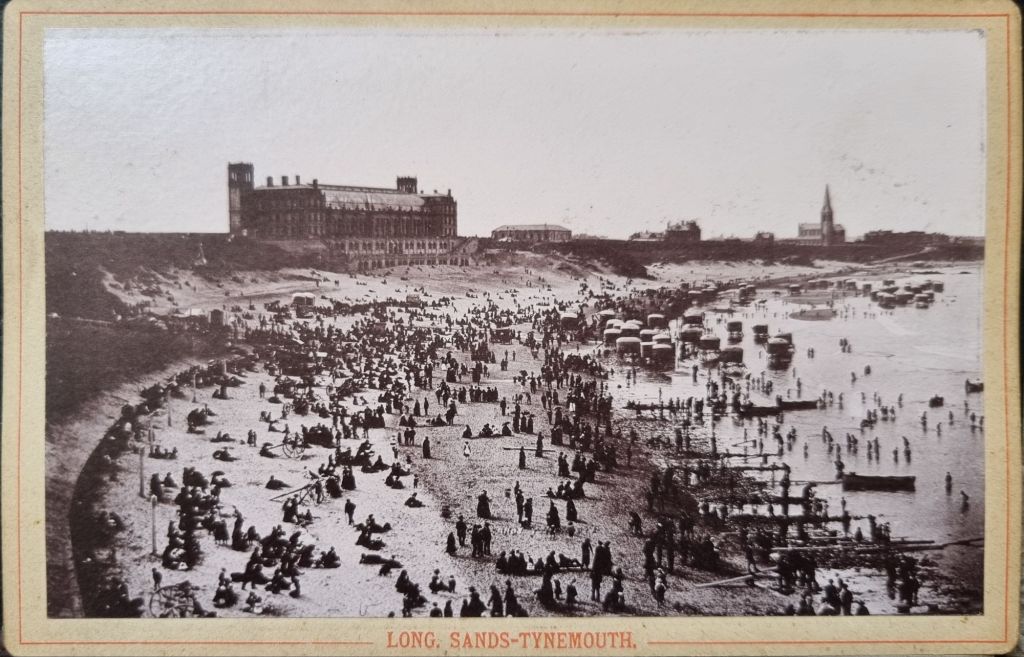
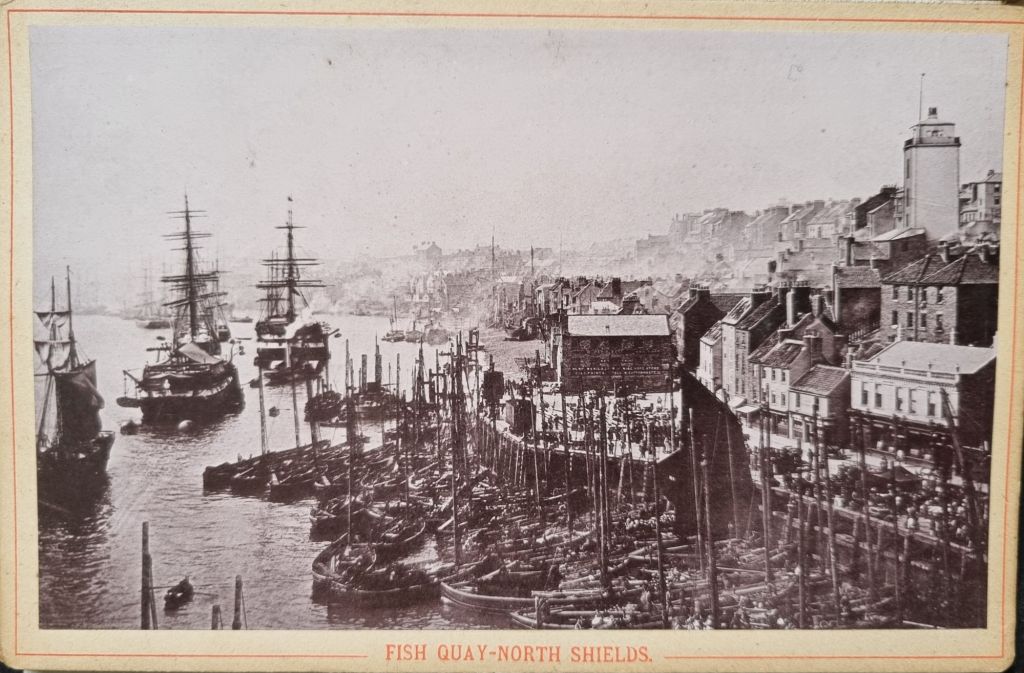
It begins with ‘Long Sands,’ a majestic sweep of beach overlooked (from left to right) by the Tynemouth Aquarium and Winter Garden (1878), Beaconsfield House (1882) and the Grade 1 listed St. George’s Church (1884).
The curved pier complete with a lighthouse at its tip was regularly damaged by storms during the 1890s and was later replaced by a straightened version, which survives today.
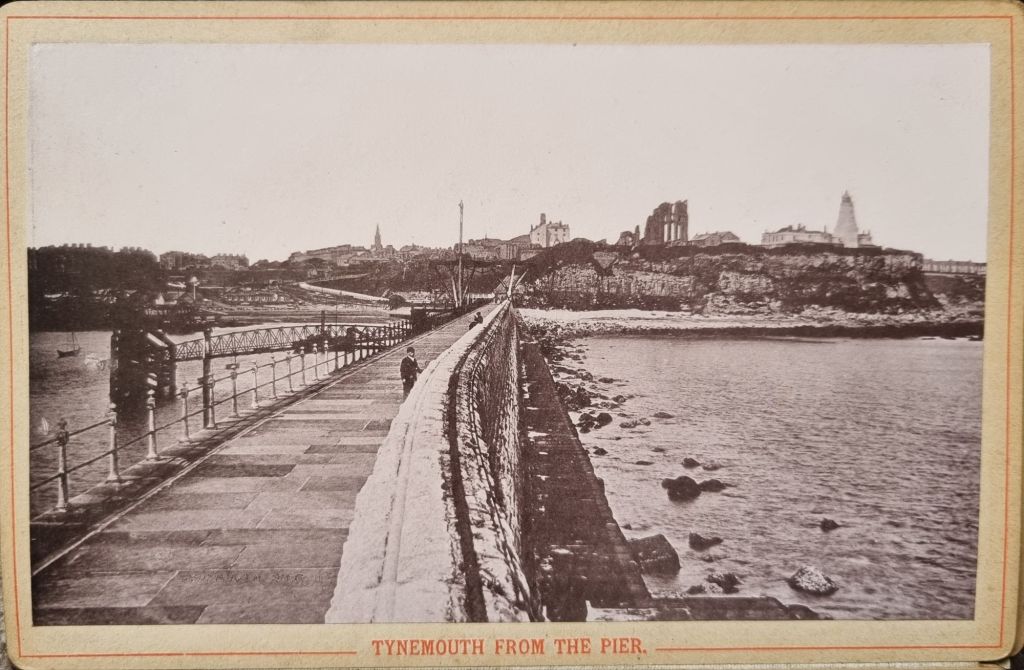
‘Tynemouth From The Pier,’ complete with the remains of an older land-based lighthouse (right of frame), offers the reverse perspective.
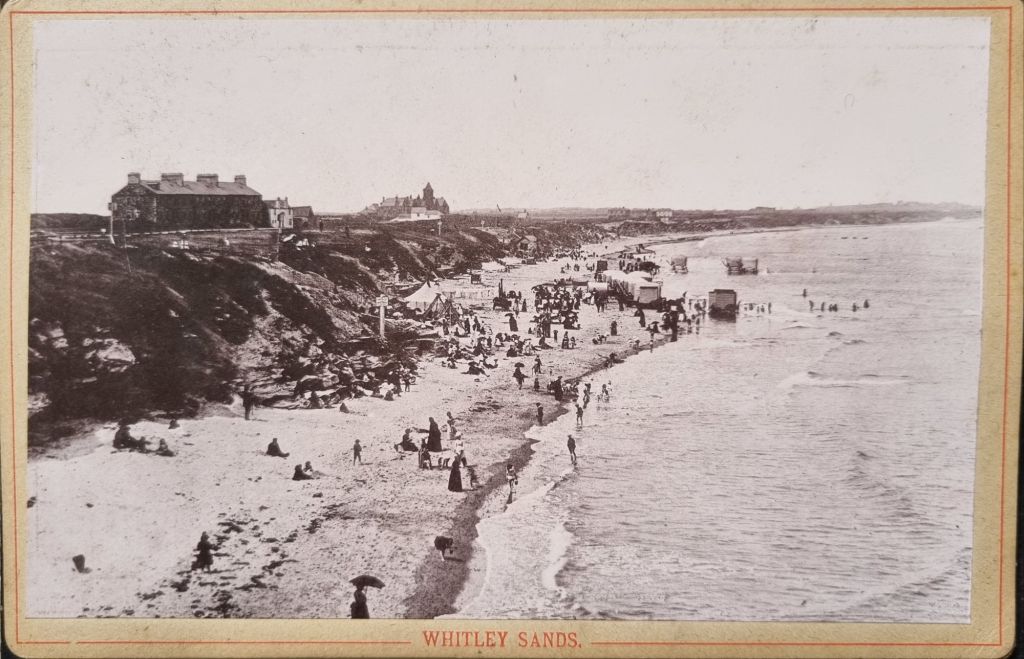
The tour continues northwards via ‘Table Rocks’ to ‘Whitley Sands,’ better known today as Whitley Bay, where the tourist invasion of the 20th century was still in its infancy.
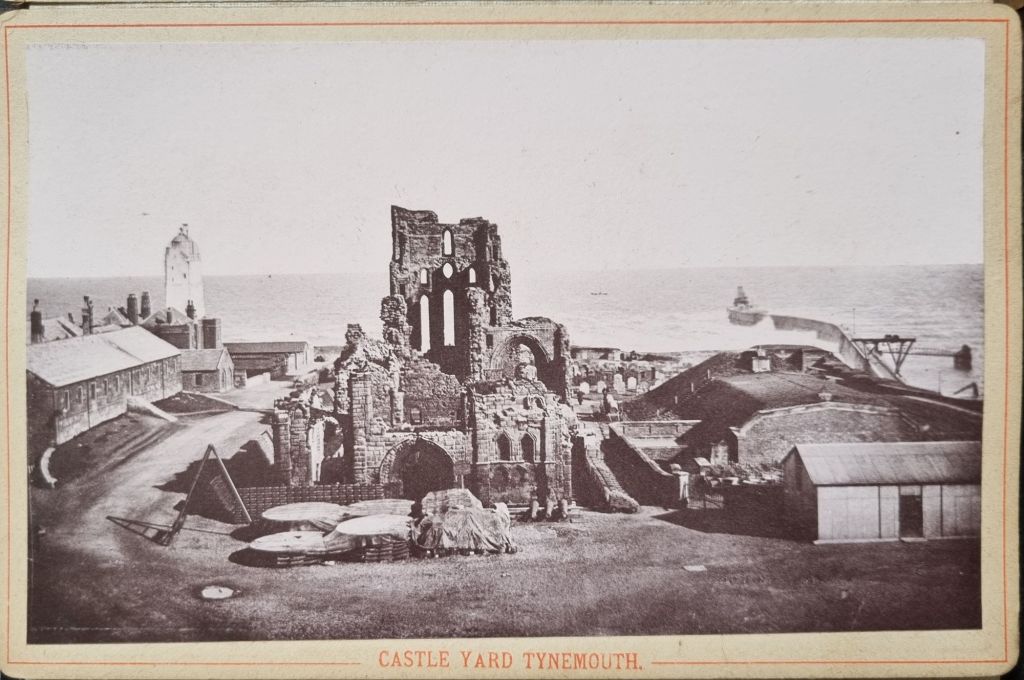
Other ‘views’ in the photobook feature South Shields Pier, South Shields Sands and Marsden Rock.
Looking at this book of ‘views, the significance of the Auty & Ruddock partnership is how both photographers were later well-placed to exploit what followed: the golden age of postcards.
Though Matthew Auty died in 1895, the firm that bore his name continued to operate well into the 20th century.
Its ‘Auty series’ of postcards could be posted to family and friends with a ‘wish you were here’ message on the reverse.
Ruddock Ltd of Newcastle on Tyne transitioned from portraiture and, by 1904, it claimed to be the largest postcard publisher in the North of England.
As their ‘Tynemouth’ collaboration illustrates, the legacy of both Matthew Auty and Richard E. Ruddock is celebrated in the high-quality photographic products they left behind.
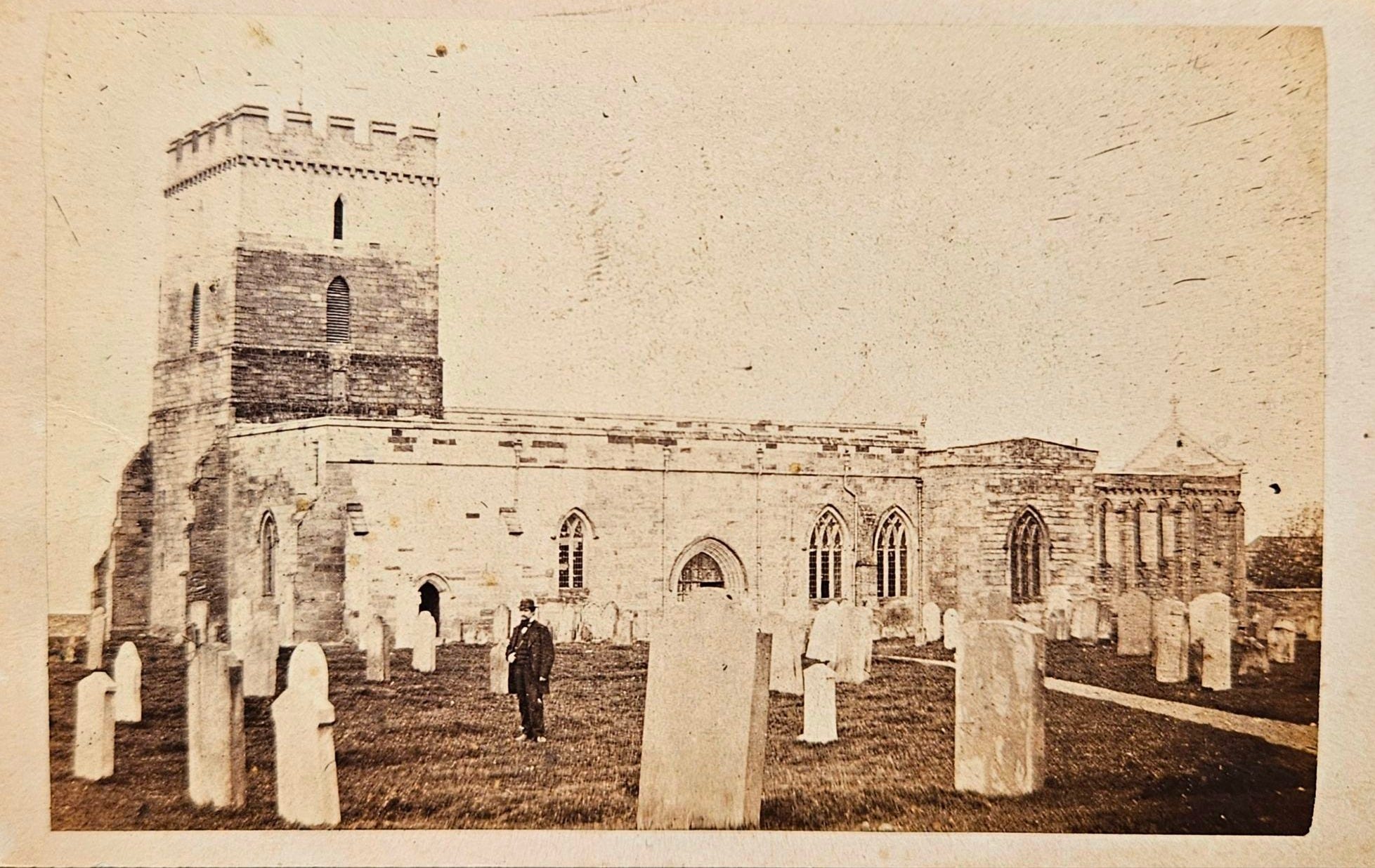
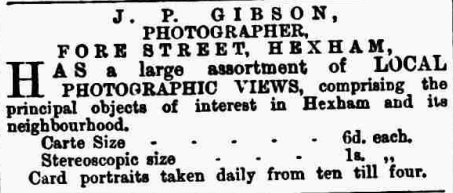
When he married in 1861, Gibson’s stated profession was ‘photographer’ and he soon established his own business in Hexham offering portraits and local views.
Advertisement from Hexham Courant, 14th September 1864. From British Newspaper Archive.
One of the gems of Hexham is its abbey, a building dating back to the late 12th century that is well worth a visit.
Gibson was well aware of the abbey’s appeal and this carte de visite dating from the early years of his career captures the magnificence of one of its transepts.
Leave a comment