
A recent visit to the National Archives at Kew near London took Pressphotoman within a short hop, skip and jump of the River Thames.
The Thames flows across Southern England for 215 miles and has inspired generations of artists and writers who have attempted to capture its magic.
One was William Tylar (1859-1929) whose career as a photographic entrepreneur featured in an earlier post.
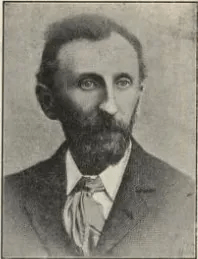
According to copyright forms (COPY 1/428/397-405, 410) that he submitted in January 1897, Tylar photographed a sequence of well-known Thames locations between Oxford and Windsor.
What I wasn’t prepared for when viewing the ‘Copy Attached’ to each of the forms was both the size and quality of the ten black-and-white prints he produced.
They were approximately 16” x 20” (40cms x 50cms), framed in card mounts and presumably intended for display or exhibition.
Judging by their pristine condition, they had lain unviewed for well over a century.
To rectify this unintended neglect, this week’s post and next will be devoted to sharing these wonderful images
The sequence starts in Oxford with a scene featuring university barges moored along the river, also known as Isis, at Christ Church Meadows.
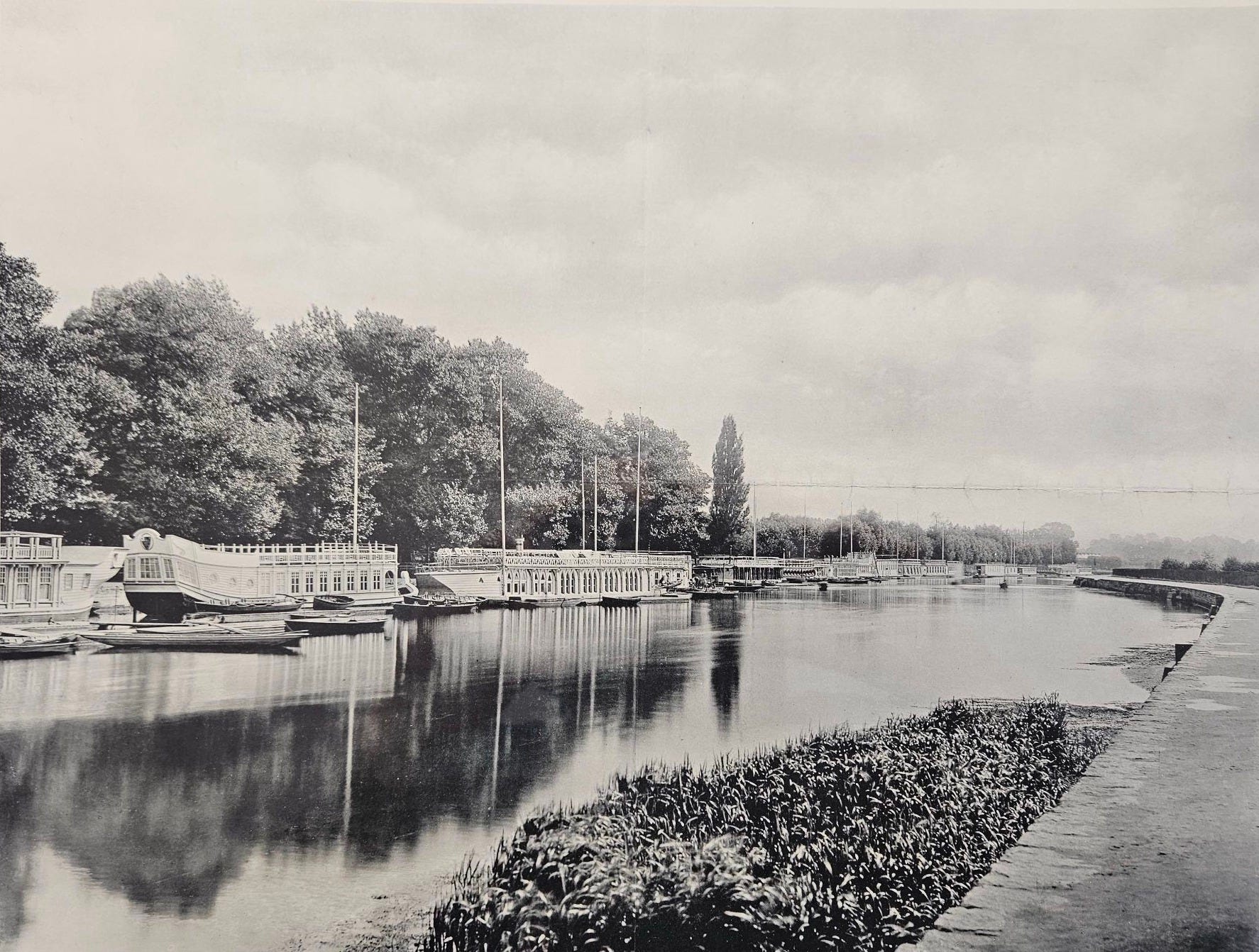
The barges were owned by individual Oxford colleges and used as floating club houses and changing rooms for their rowing teams.
Several miles down river, Tylar photographed the lock keepers’ cottages and wooden footbridge at Nuneham.
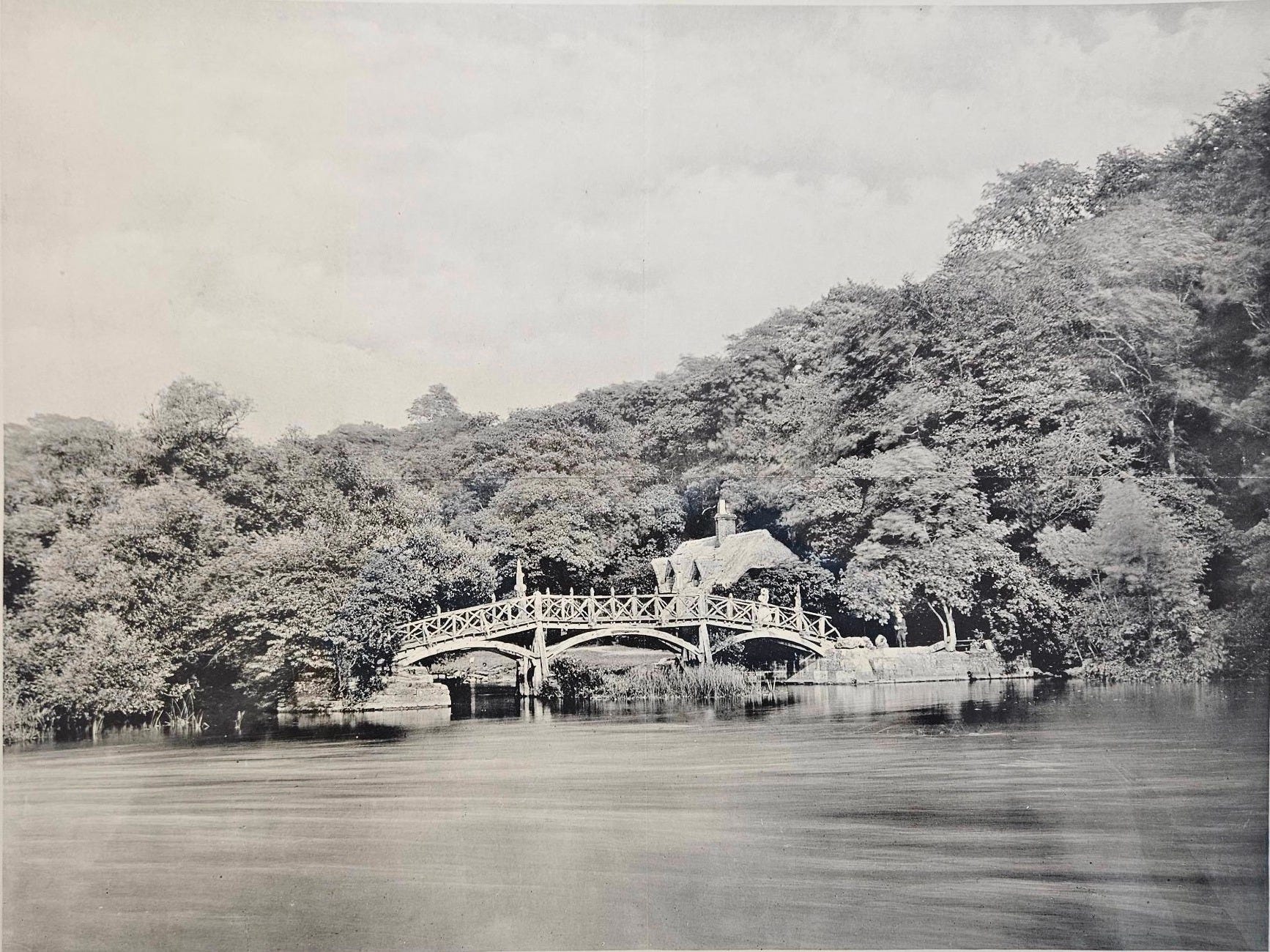
They were constructed in the 1770s as part of Capability Brown’s landscaping scheme for the Harcourt family’s estate.
During the 1920s, both the cottages and wooden bridge are thought to have fallen into disrepair and demolished during the Second World War when Nuneham Courtnay House was used by the RAF.
UPDATE: Andrew Crosby writes on Facebook: “The lock cottage at Nuneham there is still partly extant. Only a few bricks and a wall, but it’s not gone completely. The bridge to the island is not to be seen, but it is clear where it was originally located.”
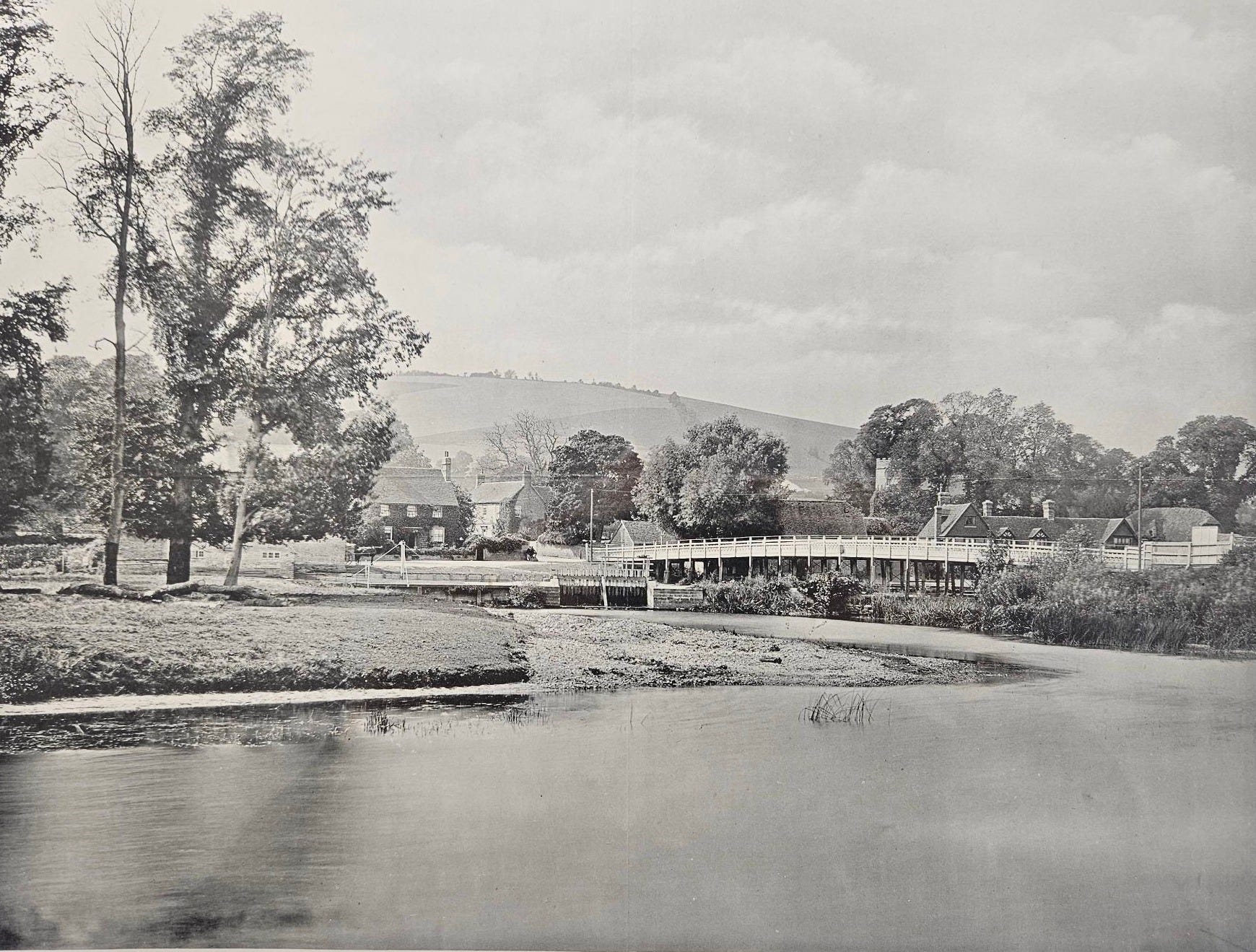
One of the Thames most scenic spots is occupied by the villages of Goring in Oxfordshire and Streatley in Berkshire which lie opposite each other.
Tylar’s prints manage to capture the beauty and peace of both locations, partly because he chose a time to set up his camera when no-one was around.
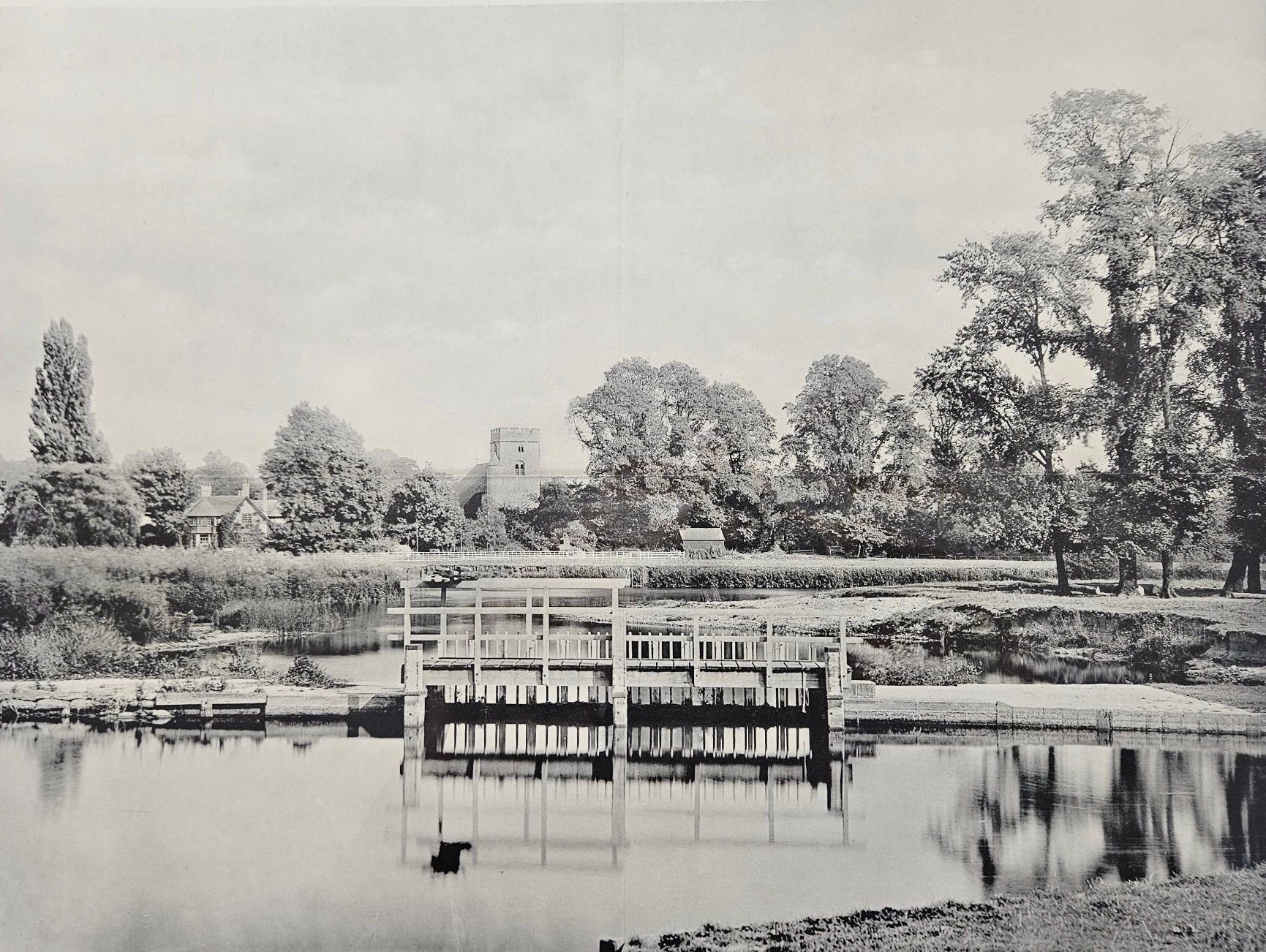
Continuing his river trip, Tylar’s view of Mapledurham Mill near Reading is equally calm and tranquil though two young boys can be seen kneeling to the front left of the mill building.
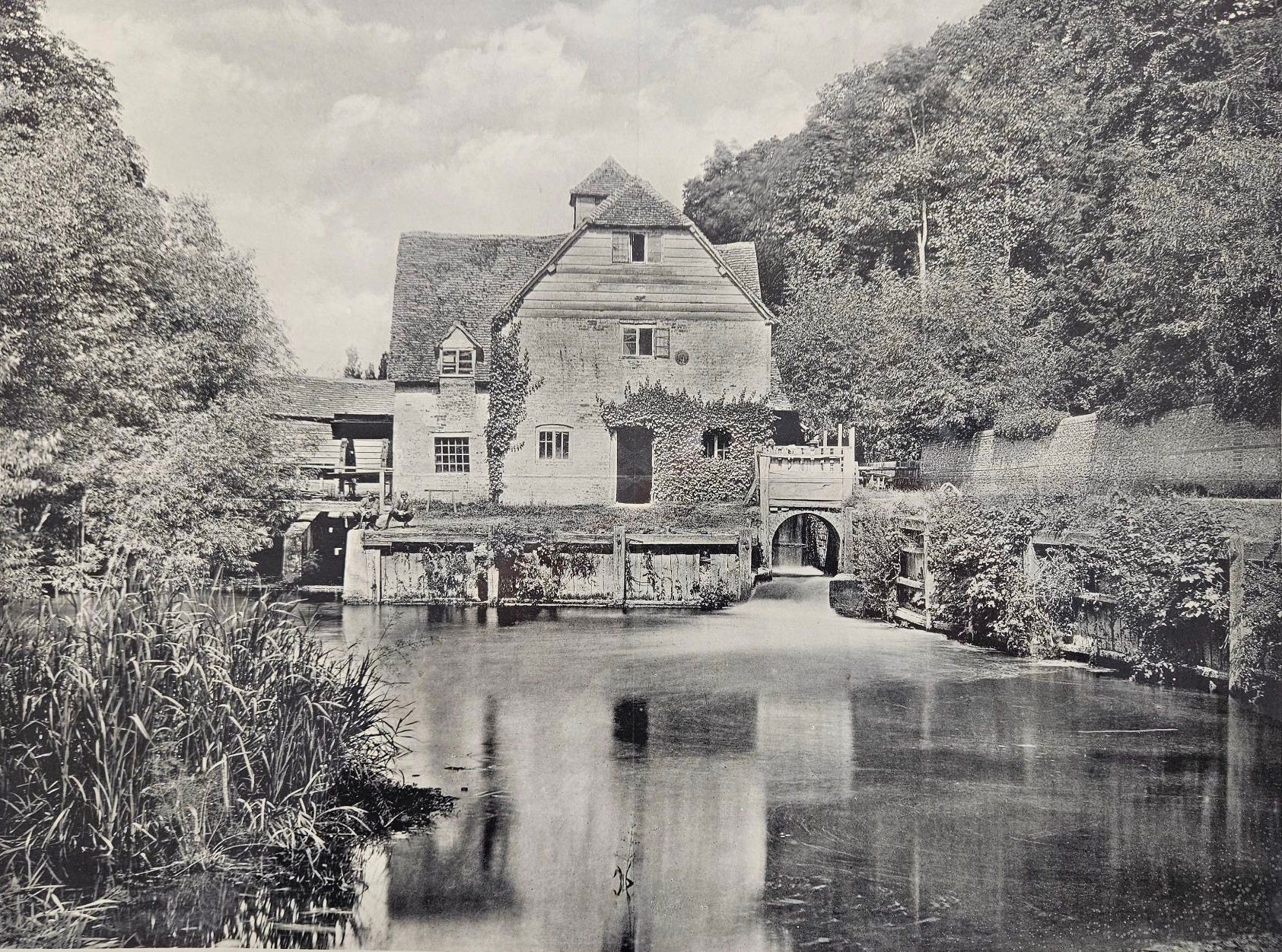
Dating from 1626, the watermill is pictured here prior to the years between 1947 and 1977 when it was out of operation and had to be restored.
Next week, another five of William Tylar’s prints from his expedition along the River Thames in the summer of 1896 including Windsor Castle and Eton College.

 Pressphotoman
Leave a comment