
The genre of seaside photography has a long history in Britain dating back to Victorian times.
Armed with a camera, its practitioners operated on promenades and piers, snapping holidaymakers and trippers as they enjoyed a seaside stroll.
Customers were then issued with a card inviting them to call later at a booth to collect their set of prints.
Our family’s collection of photographs contains several examples of the genre snapped at various holiday resorts in the first half of the 20th century.
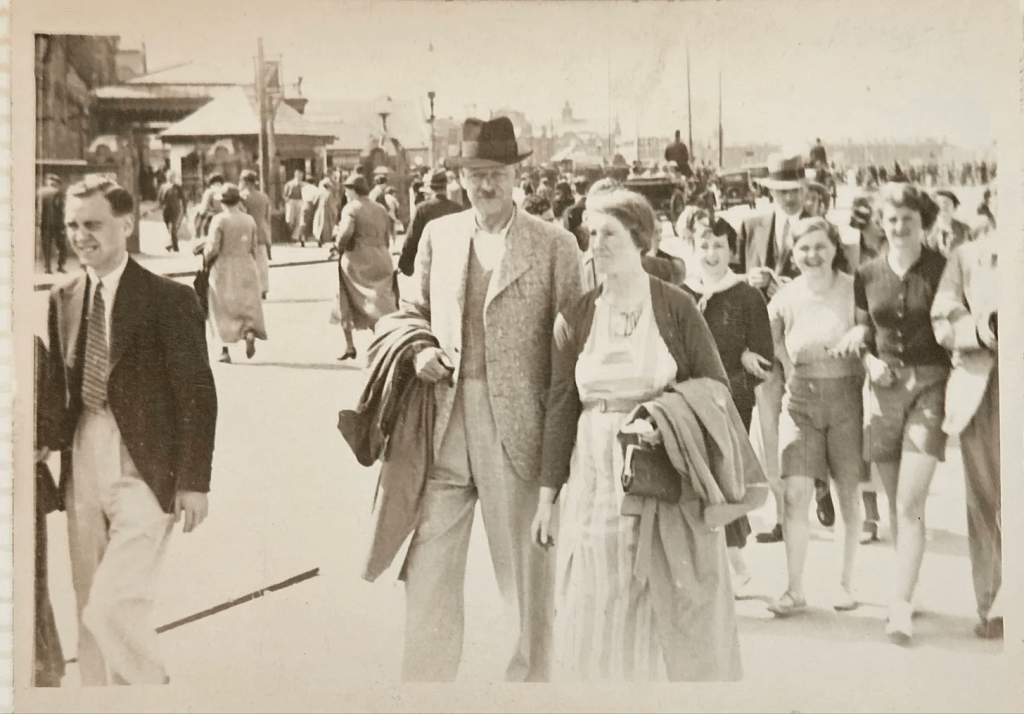
© Author’s collection.
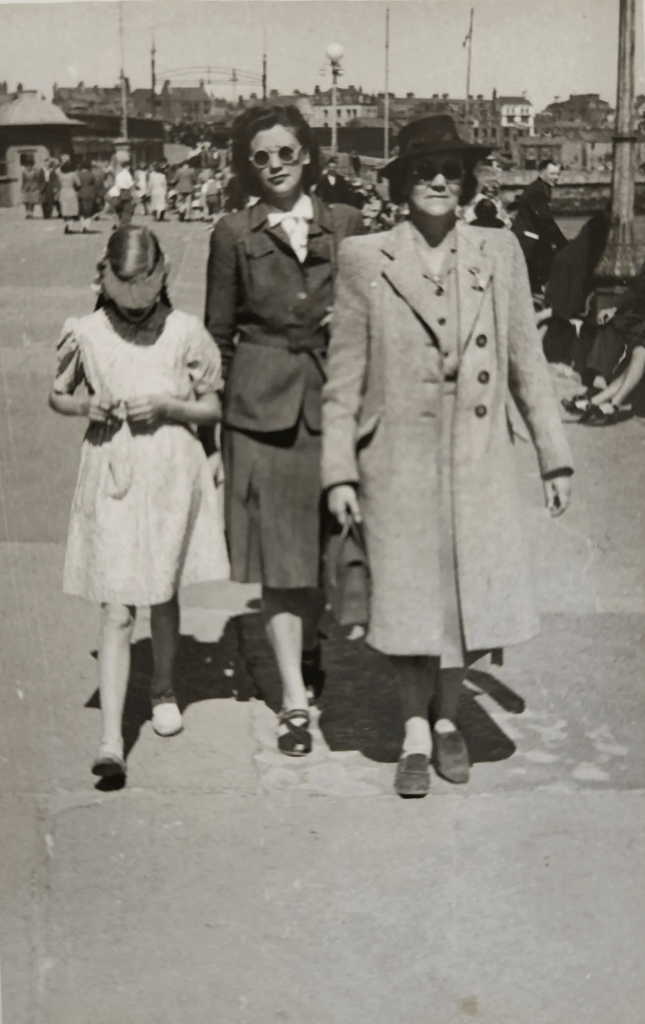
© Author’s collection.
For photographers with access to a seaside location, the commercial opportunities were significant.
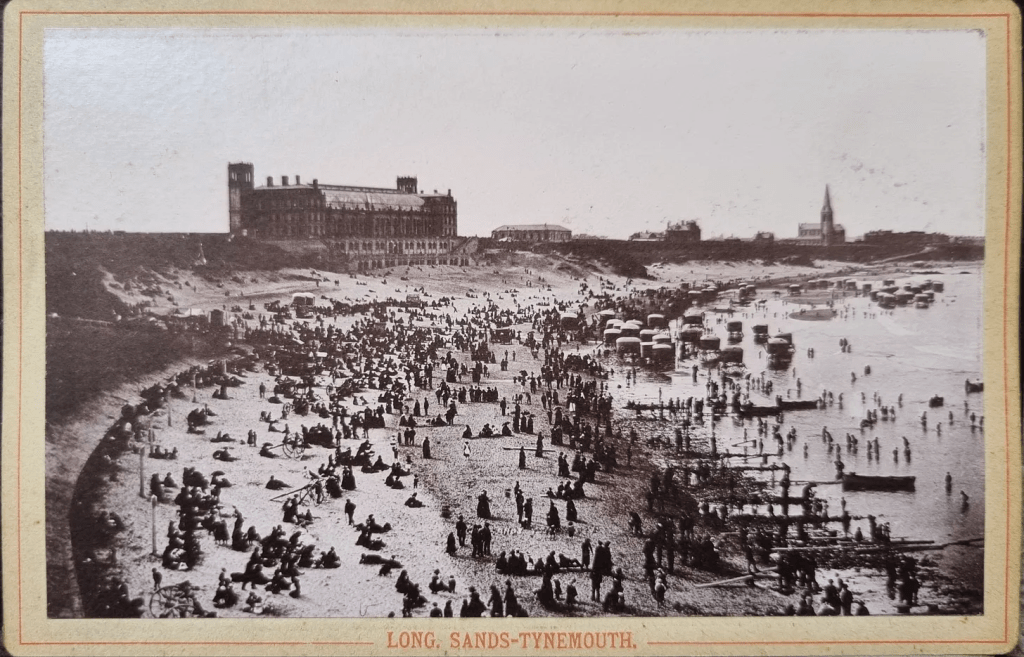
In the summer of 1882, A. D. (Alexander Denholm) Lewis opened his Photo Atelier in the coastal resort of Tynemouth.
Born in Scotland, he had operated as a photographer running the North of England Photo Institute at various addresses in nearby Newcastle on Tyne for around 20 years.
A new railway station had just opened in Tynemouth bringing day trippers from across the region as well as families wanting to enjoy the delights of the new craze for seaside holidays.
A.D. Lewis’ newspaper adverts drew particular attention to what he called his Chaste New Tynemouth Promenade Carte describing it as a “great favourite.”
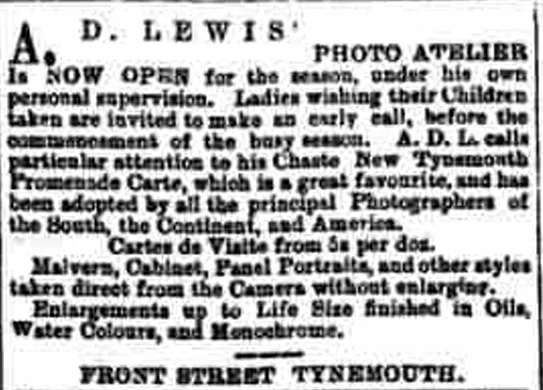
The claim that it had “been adopted by all the principal Photographers of the South, the Continent and America” may seem exaggerated.
However, an example that recently joined the Pressphotoman collection suggests that Mr. Lewis saw himself as an inventor and even an innovator.
Measuring 12.5 cms x 6.5cms, the Tynemouth Promenade Carte is longer than a standard carte.
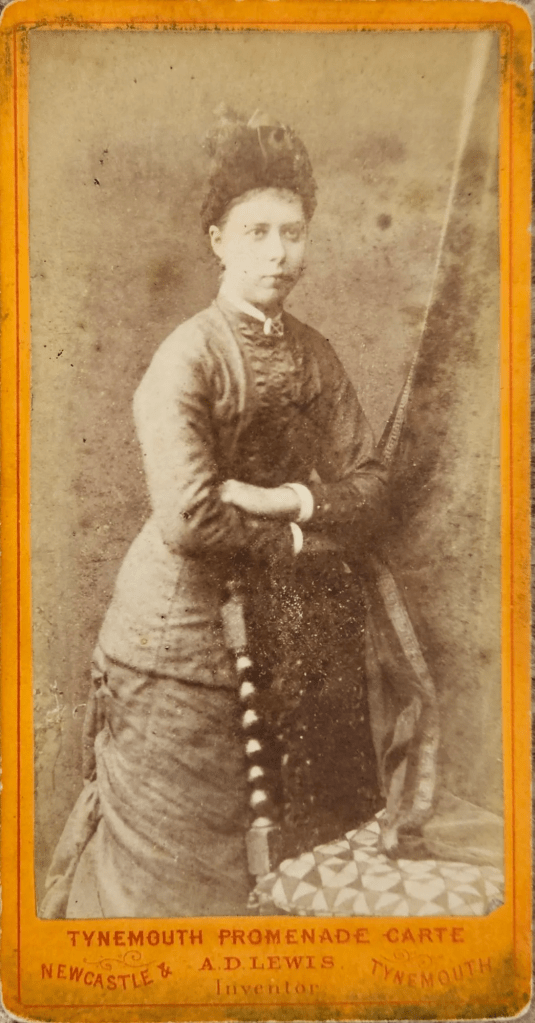
Rather than photographing clients as they strolled in the open air, ‘A.D.L’ appears to have used a studio at 56 Front Street which was only a stone’s throw from Tynemouth sea front.
This enabled him to offer customers a more formal setting for their portrait and eliminated many of the technical challenges that faced outdoor photographers.
Though seaside photographers were still operating well into the second half of the 20th century, Mr. Lewis’ like many of his competitors appears to have suffered a downturn in his fortunes.
Aged 67, the 1901 Census records that he was a ‘retired photographer’ and was an ‘inmate’ of the Union Workhouse in Westgate Road, Newcastle.
 Pressphotoman
Leave a comment