
Collecting carte de visite photographs is a never-ending journey of discovery.
Regular readers will be aware of my research into the studio of W. & D. Downey in South Shields and Newcastle on Tyne during the late-1850s and 1860s before relocating to London.
Their cartes of the great and good are a particular fascination of mine and my collection features not only single portraits, but others from the same sitting.
For example, Richard Cobden (1804-1865) was a Manchester businessman turned politician who became an MP.
He is best-known, together with his parliamentary colleague John Bright (1811-1889), for spearheading a successful campaign to repeal the Corn Laws, which penalised the poor.
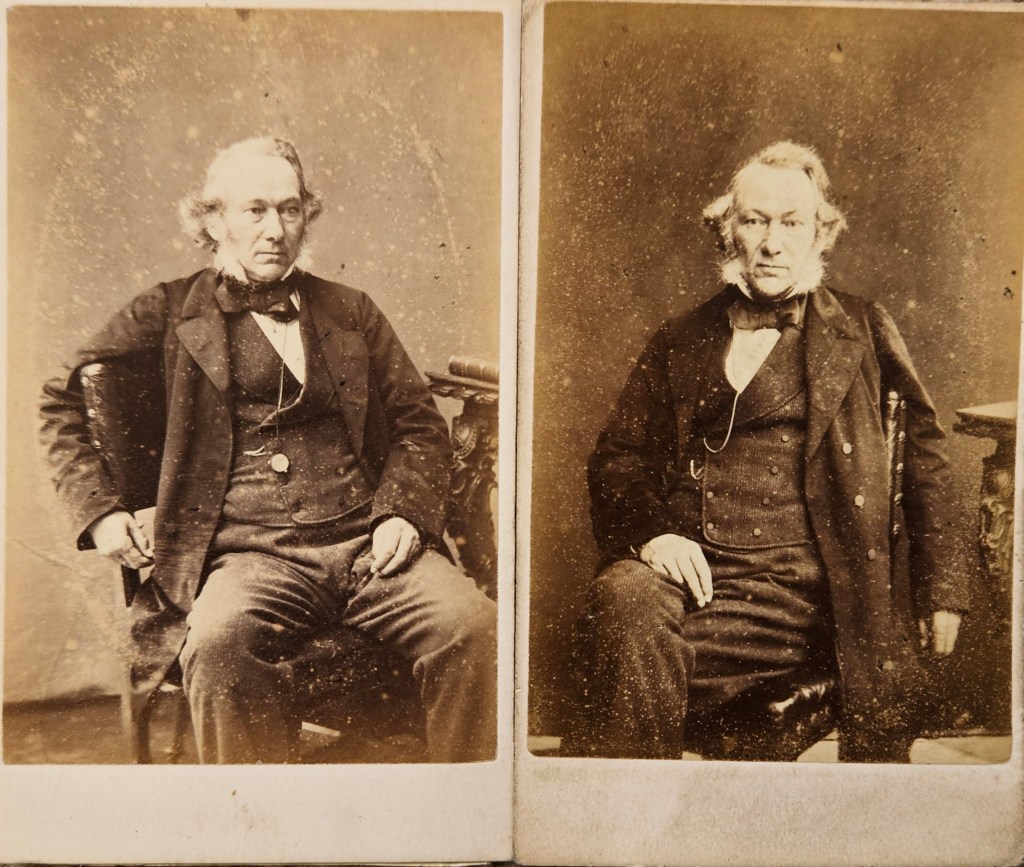
In Cobden’s case, the two cartes published by Downey in my collection demonstrate how one man sitting on a chair could be successfully repositioned and reorientated for the camera to provide different images.
© Author’s collection.
In one, he is looking to the left of the operator; in the second, he is looking straight down the lens.
In one, his right arm is draped over the back of the chair; in the second, it’s his left arm.
As for props, the table on the right hand side also reveals how a book, often a visible sign of the sitter’s learning and erudition, was part of one shot, but not the second.
The carte on the left is part of the collection of the National Portrait Gallery, London where the two examples it holds of the same card are distinguished by text in the white border at the bottom of the card.
These include the words ‘Copyright,’ ‘W. & D. Downey’ and ‘Mr. Cobden.’
A further two examples in the NPG collection are close-up head-and-shoulders shots taken from the same image where the original negative has been cropped by Downey to produce a more intimate portrait.
Cobden sat for his Downey portrait in the summer of 1863 during a visit to London by the firm as this newspaper advert confirms.
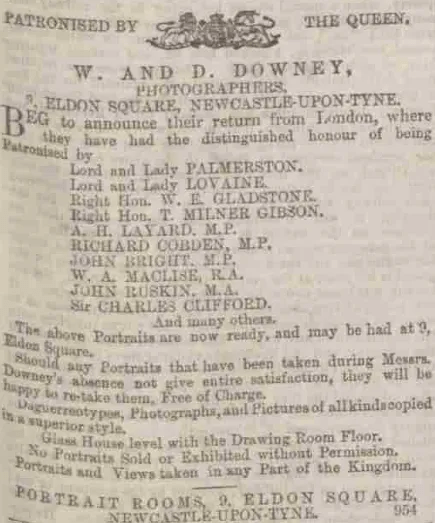
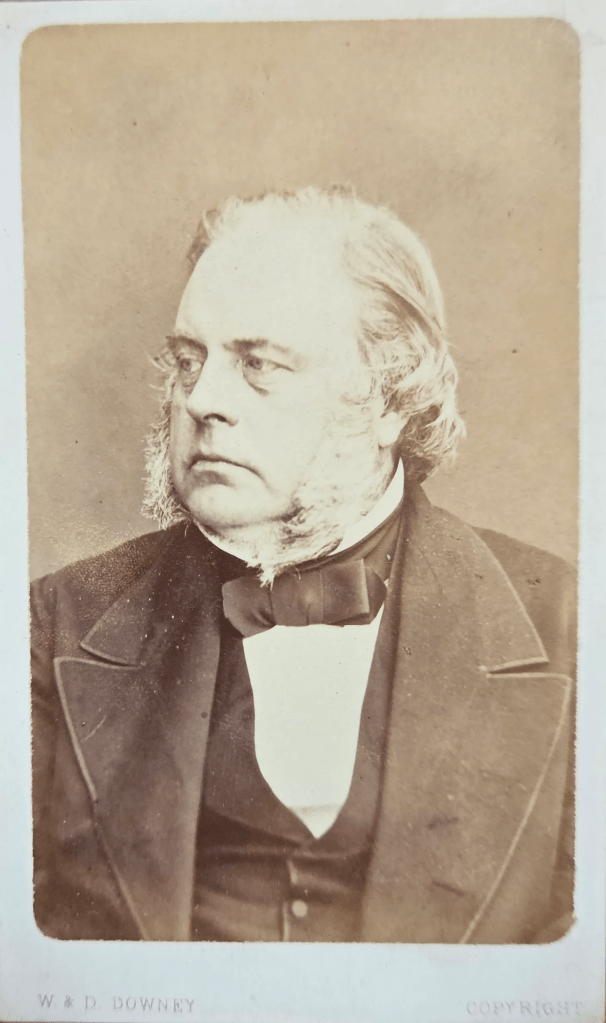
The Downey portrait of John Bright MP, listed above together with Cobden, also features in my collection and is equally distinguished.
© Author’s collection.
For the photohistorian, further interest lies on the verso of such cartes.
As well as Downey’s ‘9 Eldon Square’ branding, one of the Cobden cartes in my collection features a seller’s stamp.
As is often the case, it holds an interesting back story.
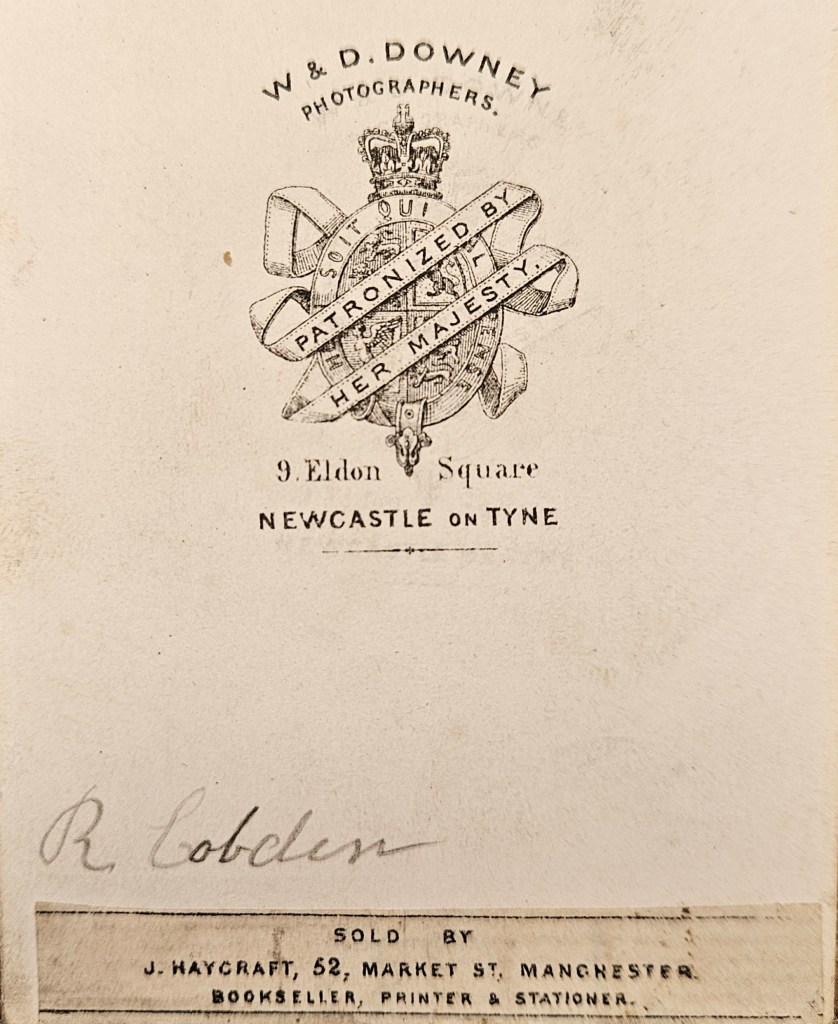
The seller was Kent-born Joseph Haycraft, who had been a printer and later bookseller and stationer in Manchester from the 1840s.
Like many in his trade, the cartomania phenomenon had given a considerable boost to business.
Politicians were among those figures conveyed celebrity status by these affordable photographs.
In the final years of his political career, Richard Cobden was MP for Rochdale, so cartes featuring his distinctive visage would have proved popular sellers in nearby Manchester.
When Cobden died in April 1865, Downey’s various portraits of him gained another lease of life.
Indeed, many previously unissued images may well have been marketed precisely because there was a public appetite to memorialise the late MP.
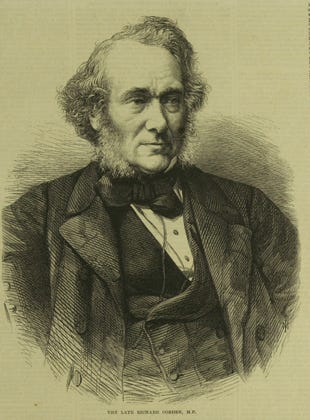
Downey portraits also featured in press tributes such as this engraving used by the Illustrated London News in its obituary though, as was sometimes the case, the photographer’s work was not credited in the press.
As for Haycraft, he died only a year after Cobden in May 1866.
The following month, an advertisement in the Manchester Courier revealed that his premises at 52 Market Street were “going to be pulled down” and that an auction of his ‘stock in trade’ would take place.
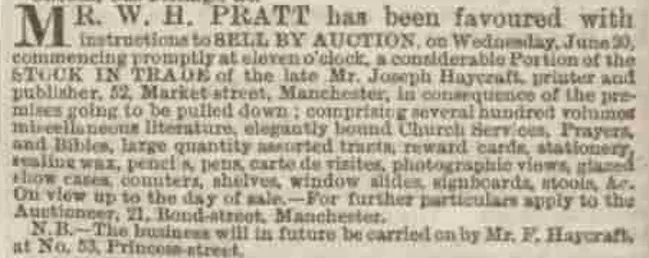
Following the auction, his son Frederick Taylor Haycraft, who had assisted him in the business, took over its running at new premises in nearby Princess Street.
However, the story does not have a happy ending as was the case for many who rode the carte de visite wave.
By the end of the decade, Frederick was listed as a ‘bankrupt bookseller’ by the London press.

 Pressphotoman
Leave a comment