
The model railway pioneer Wenman Joseph Bassett-Lowke (1877-1953) was also a skilled photographer and later cine filmmaker.
According to his niece Janet Bassett-Lowke, who wrote a 1999 biography of her uncle: “Photographs were even taken by WJ in stereograph (3D).”
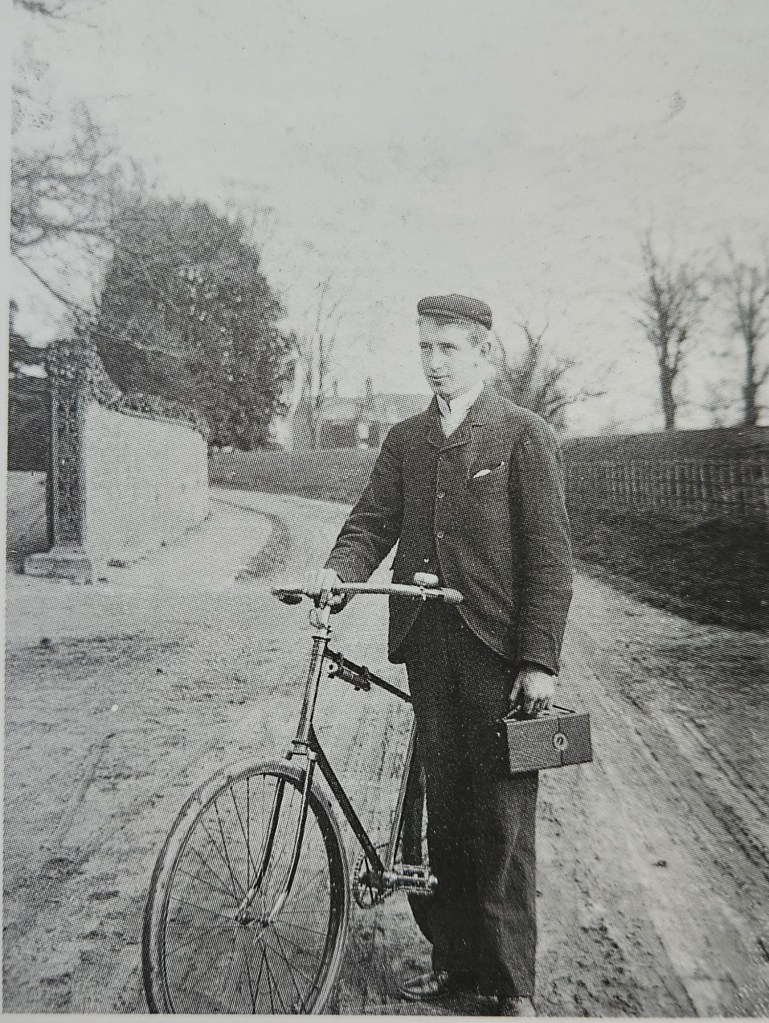
(Rail Romances, Chester, 1999).
As described in Part 1 of this blogpost mini-series, a recently discovered cache of his stereocards not only sheds new light on his photography.
They also capture a key moment in the evolution of the Bassett-Lowke company, which had began life producing parts for miniature steam engines by 1899.
The following July, WJ travelled from Northampton to visit L’Exposition de Paris 1900.
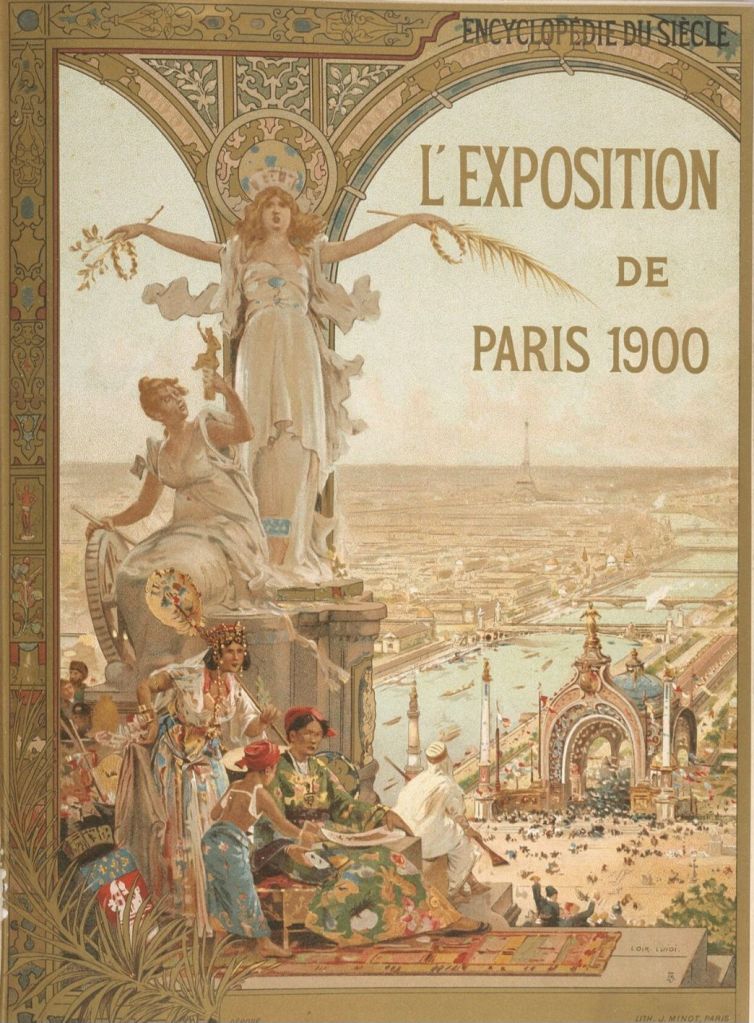
As a World’s Fair, it celebrated the achievements of the past century and showcased the latest developments for the one to come.
According to his own account, WJ’s decision to visit was inspired by reports in local newspapers.
These “aroused my curiosity and interest … there was a good collection of mechanical toys and also some Continental scale models to be seen there.”
Armed with his 3D camera, he travelled to Paris with a friend.
Frank Jones, his future brother-in-law whose family ran a Northampton shoe company, was going to look at the Fair’s leather section.
All the major commercial stereoscopic companies produced sets of 3D cards capturing the event in detail.
So it’s interesting to see how an amateur yet skilled stereographer tackled the same task.
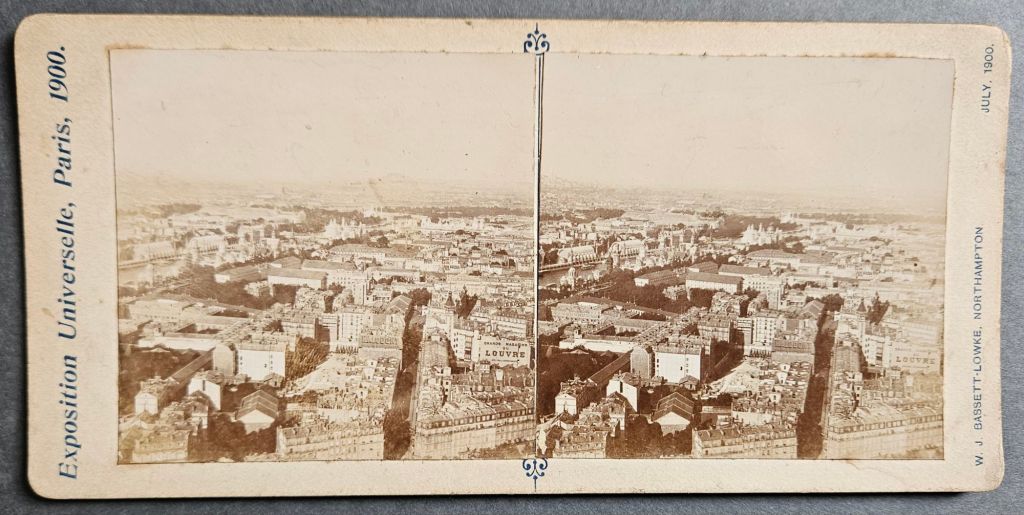
The Eiffel Tower built for the 1889 World’s Fair features in three of the four WJ cards shot in Paris that now in the Pressphotoman collection.
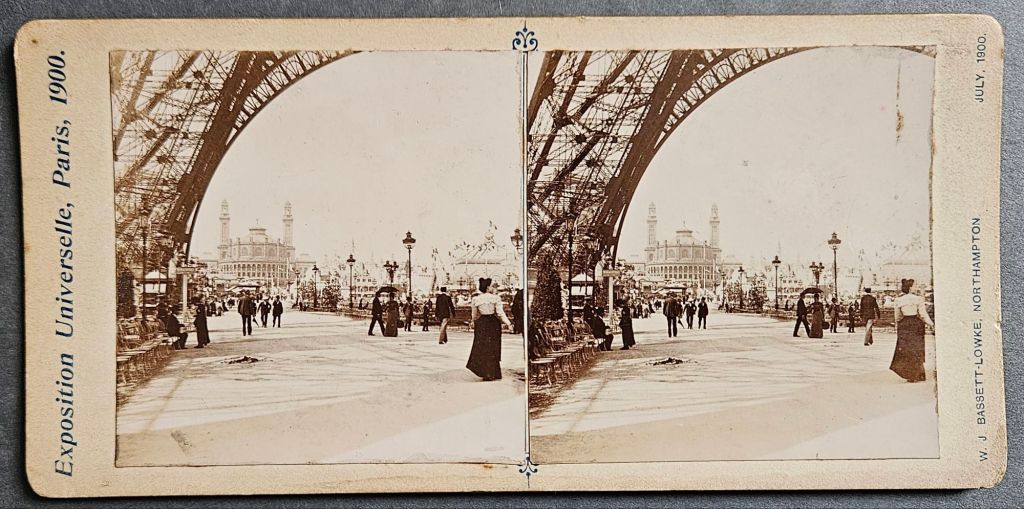
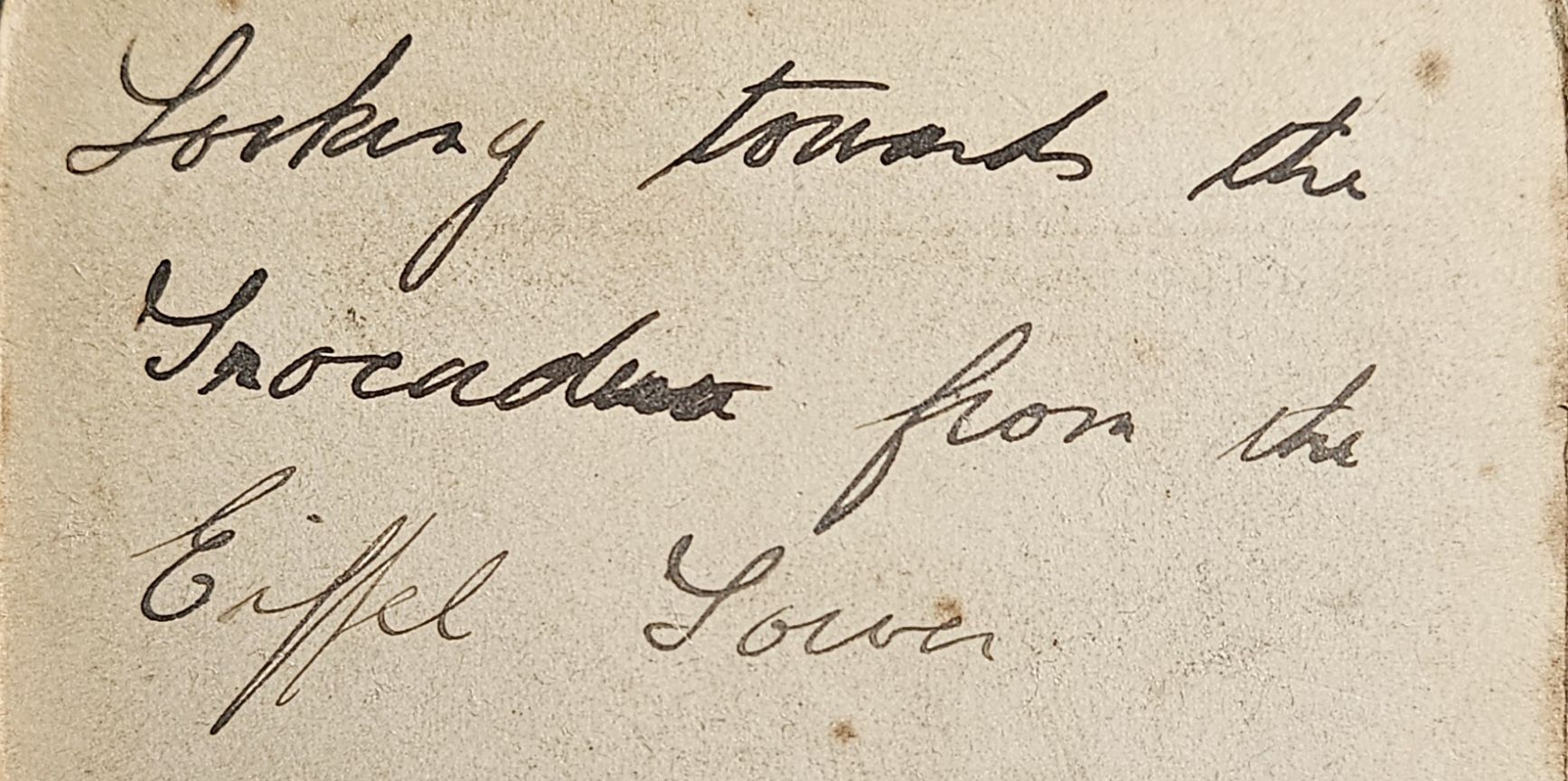
This one stamped with its location (left) and date and stereographer credit (right) is captioned on the verso: “Looking towards the Trocadero from the Eiffel Tower.”
From the Eiffel Tower’s second stage, he recorded this pin-sharp image of the panoramic scene below.
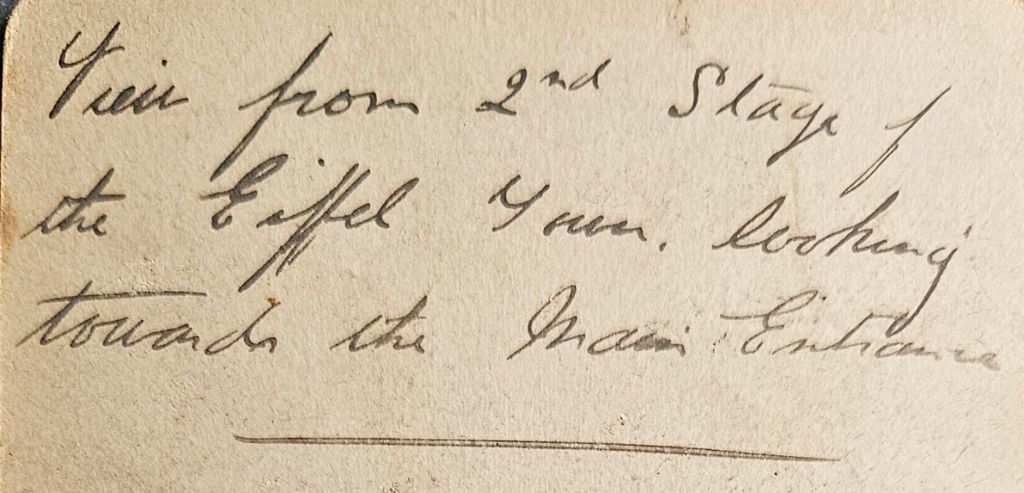
It is captioned on the verso: “View from 2nd stage of the Eiffel Tower looking towards the Main Entrance.”
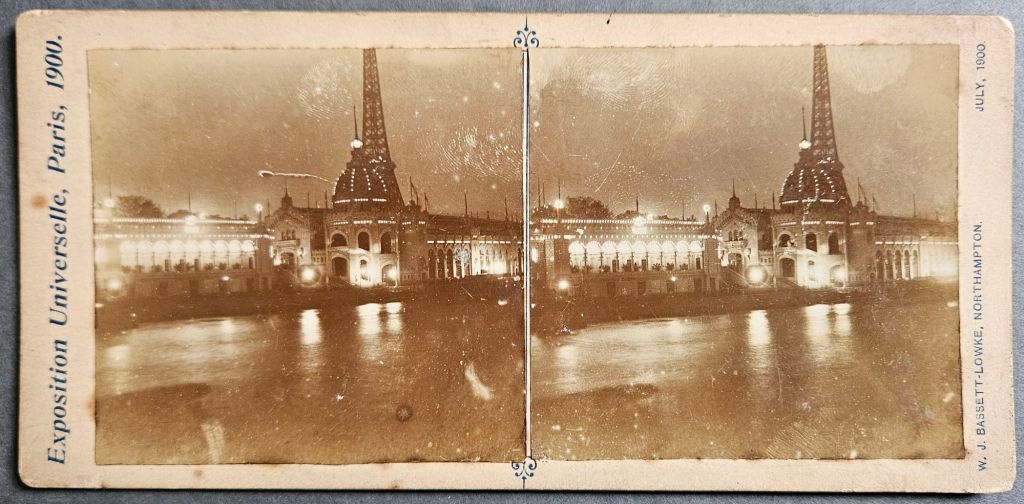
The third stereo features a night-time scene on the banks of the River Seine that must have been particularly challenging to capture photographically.
WJ’s other Paris stereo was taken in one of the Machine Halls and gives a flavour of the innovative technology on show.
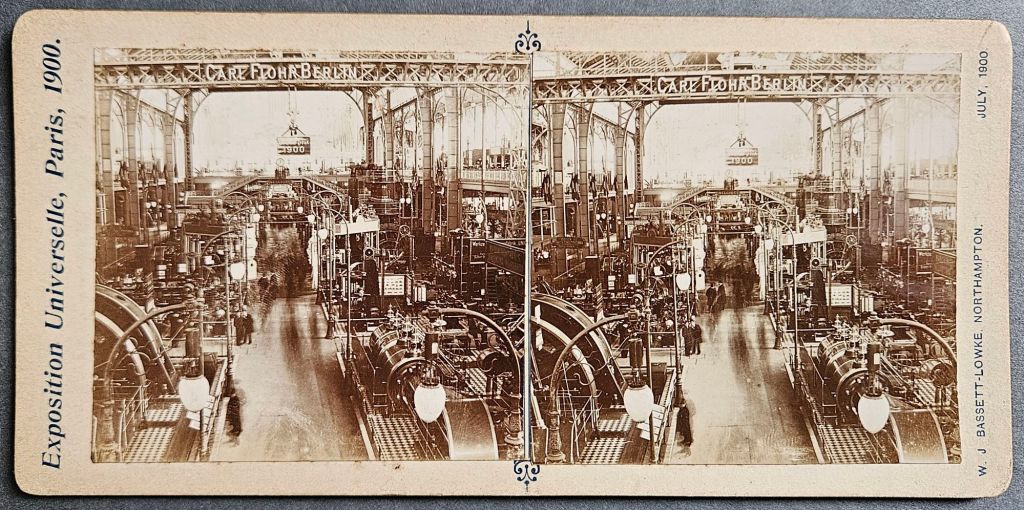
The view features an unusual overhead travelling crane made by the Carl Flohr company of Berlin whose logo can be viewed in the centre of shot.
Elsewhere, WJ’s attention was grabbed by miniature model railways with locomotives, coaches, wagons and other accessories, also produced by German companies.
“One of the finest displays was that of … Bing Bros. of Nuremberg,” he wrote later.
It was a business connection that led in time to Bing and other ‘Toymakers of Nuremberg’ supplying a range of model trains to Bassett-Lowke specifically designed for the British market.
These started appearing in the company’s catalogues from 1901.
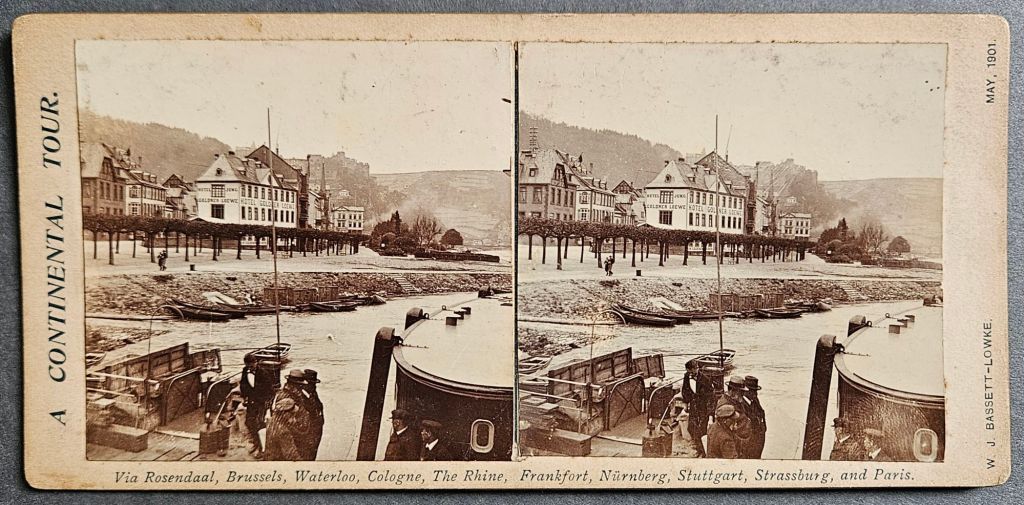
A visit to Germany to finalise exact details of this production deal may well have prompted ‘A Continental Tour’ undertaken by WJ that May.
Nuremberg was among the locations listed beneath the stereo images of a hotel where WJ perhaps stayed.
In the final part of this series, enjoy more WJ stereo views taken during a trip to Normandy in 1904.

 Pressphotoman
Leave a comment