
As the saying goes, ‘Every Face Tells A Story.’
As I gazed at a recent carte de visite purchase, I wondered exactly what that story might be.
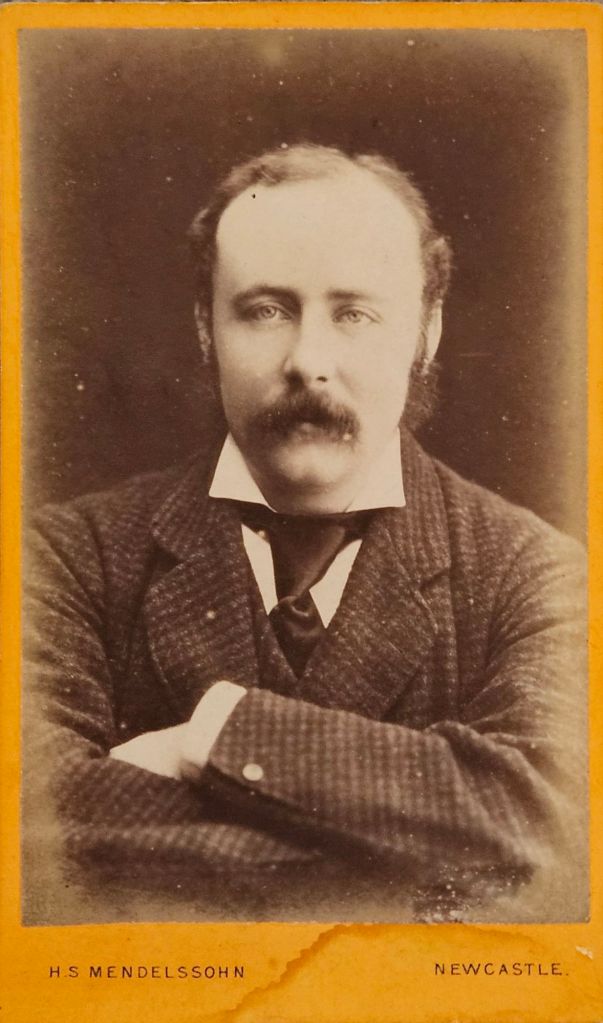
The man looking back at me had certainly made a good choice of photographer to capture his likeness.
H. S. Mendelssohn was one of Newcastle’s leading portrait studios during the 1870s and, later in his career, went on to photograph members of the British royal family.
Many of his Newcastle clientele came from well-to-do families, suggesting that our subject might be a person of means and status.
Arms folded and wearing a stylish jacket, the young man looked relaxed and at ease with the world, his eyes radiating a degree of self-confidence.
As regular readers might expect, the carte verso contained helpful clues.
An unknown hand, possibly Mr. Mendelssohn’s own, had recorded the man’s identity: ‘Edward H. M. Elliot, Esq. 82nd Reg. Aged 25. 1878.’
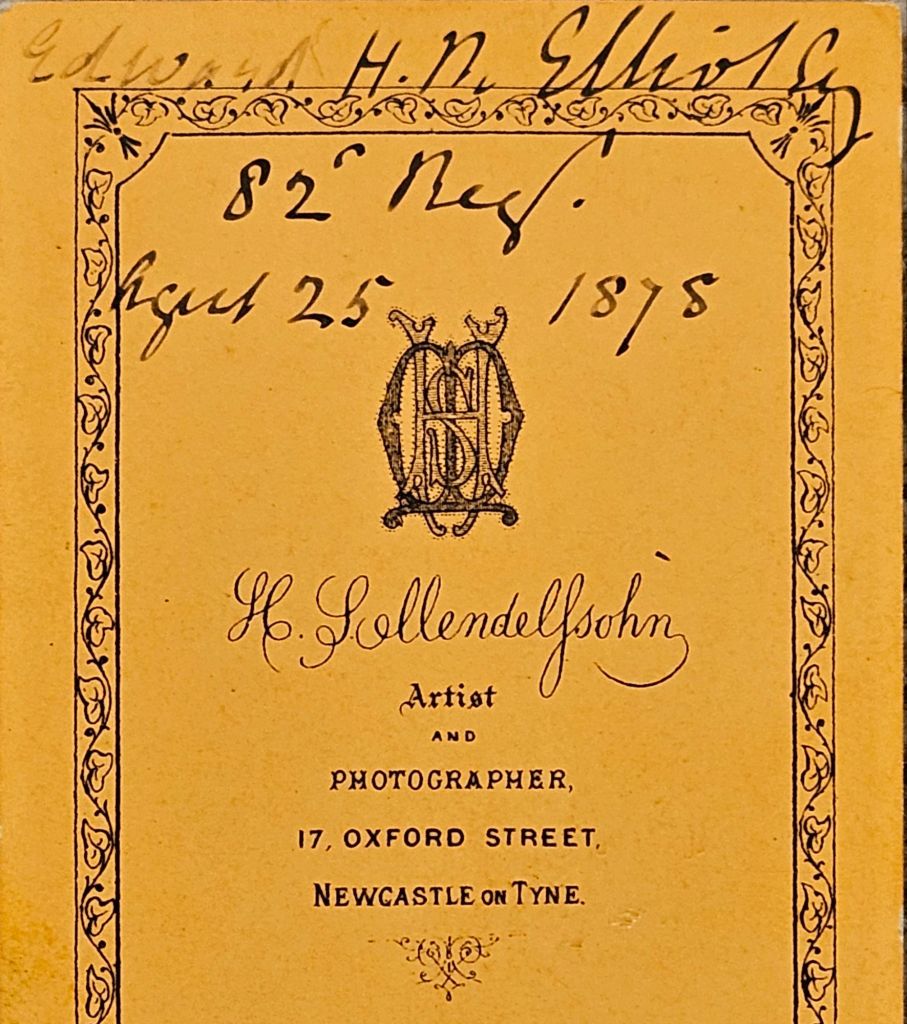
Armed with this information, it did not take long to track down Edward Hay Mackenzie Elliot (1852-1920)
He was a career soldier who made his mark on history at various points in his life.
Born in India, Edward’s father was the celebrated Scottish naturalist Sir Walter Elliot (1803-1887).
Schooling in England concluded at Harrow where skill on the football field led to him representing Scotland in two unofficial international matches against England staged in 1871 and 1872 (‘E. Elliot’ named bottom right-hand corner below).
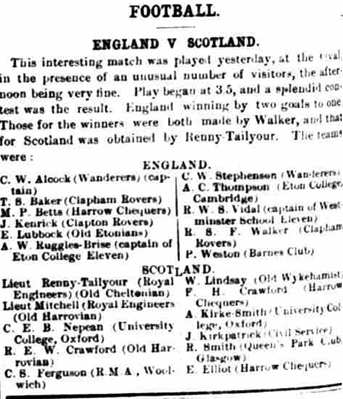
From British Newspaper Archive.
That sporting prowess resurfaced between 1897 and 1903 when Edward played cricket for the MCC (Marylebone Cricket Club) in four matches against county opposition.
When he sat in front of HS Mendelssohn’s studio camera in 1878 as a 25 year-old, his career in the Army was already well underway.
Promoted to Lieutenant in the 82nd Regiment of Foot, he later reached the rank of Captain before serving as ADC (aide-de-camp) to Lord Glasgow when Governor of New Zealand between 1894 and 1899.


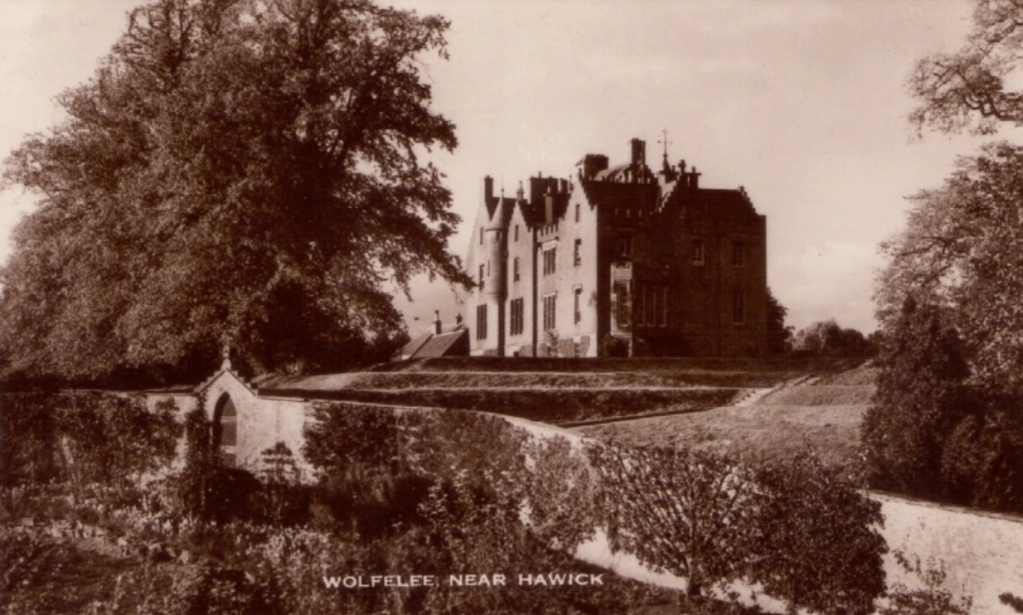
Despite retiring on full pay, Edward rejoined his former colleagues during the South African War of 1899-1902 before later returning to the Scottish family home at Wolfelee in Roxburghshire, which he had inherited.
In 1905, Edward, by now a Major in his early fifties, married Miss Edith Margaret Crawford, the 30 year-old daughter of a Surrey clergyman.
As the Surrey Mirror & County Post newspaper reported of the occasion: “The presents were numerous and costly.”
After their honeymoon in The Hague, the couple returned to live at Wolfelee.
If newspaper reports are to be relied upon, Major Elliot’s later years seem to have been characterised by brushes with the law.
In September 1910, the Hawick News reported that he had “forfeited a pledge of 30s [shillings] by non-appearance to a charge of disorderly conduct on Tower Knowe [Hawick] on Sunday morning.”
By 1913, by which time Edward and his wife had sold Wolfelee and moved to Herefordshire, he was again making headlines.
Returning to Newcastle on Tyne where he had been photographed by H.S. Mendelssohn, he was summoned to appear in court.
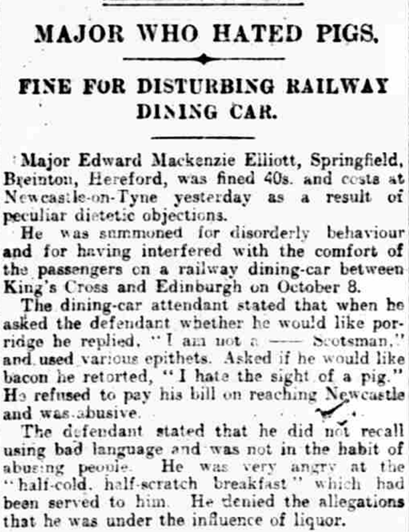
A Daily Citizen front-page court story was headlined ‘Major Who Hated Pigs: Fine For Disturbing Railway Dining Car.’
The report described an incident on a train journey from London to Edinburgh.
The death of Edward Hay Mackenzie Elliot in December 1920 at the Middlesex Hospital in London was marked by a notice to his creditors in the London Gazette.
His estate amounted to £3258, around £220,000 in today’s money.
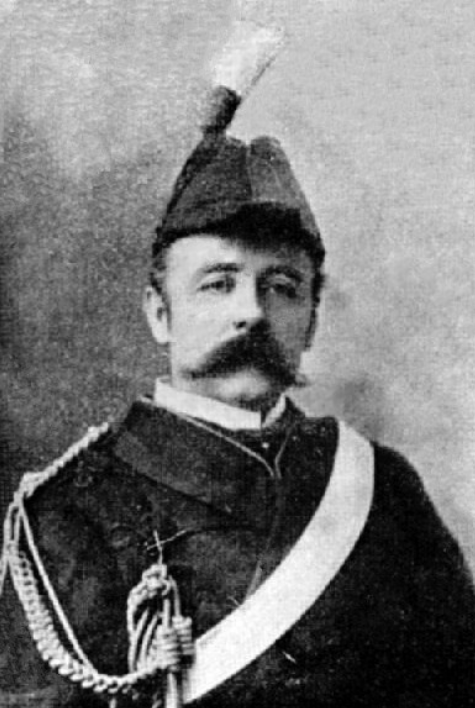
Looking at a rather severe portrait taken later in Edward’s eventful life, that by H.S. Mendelssohn photograph of his younger self is all the more poignant.
From Wikipedia.
©️ Author’s collection.

 Pressphotoman
Leave a comment