
In the early decades of the twentieth century, it’s estimated that around 200 billion postcards were in global circulation.
According to one recent study, they were ‘the world’s first social network.’
For photographers, the postcard offered an additional source of income and proved an effective means of circulating their work.
Among the most prolific publishers of ‘real photograph’ postcards using the platino-bromide process was the Rotary Photographic Company of London.
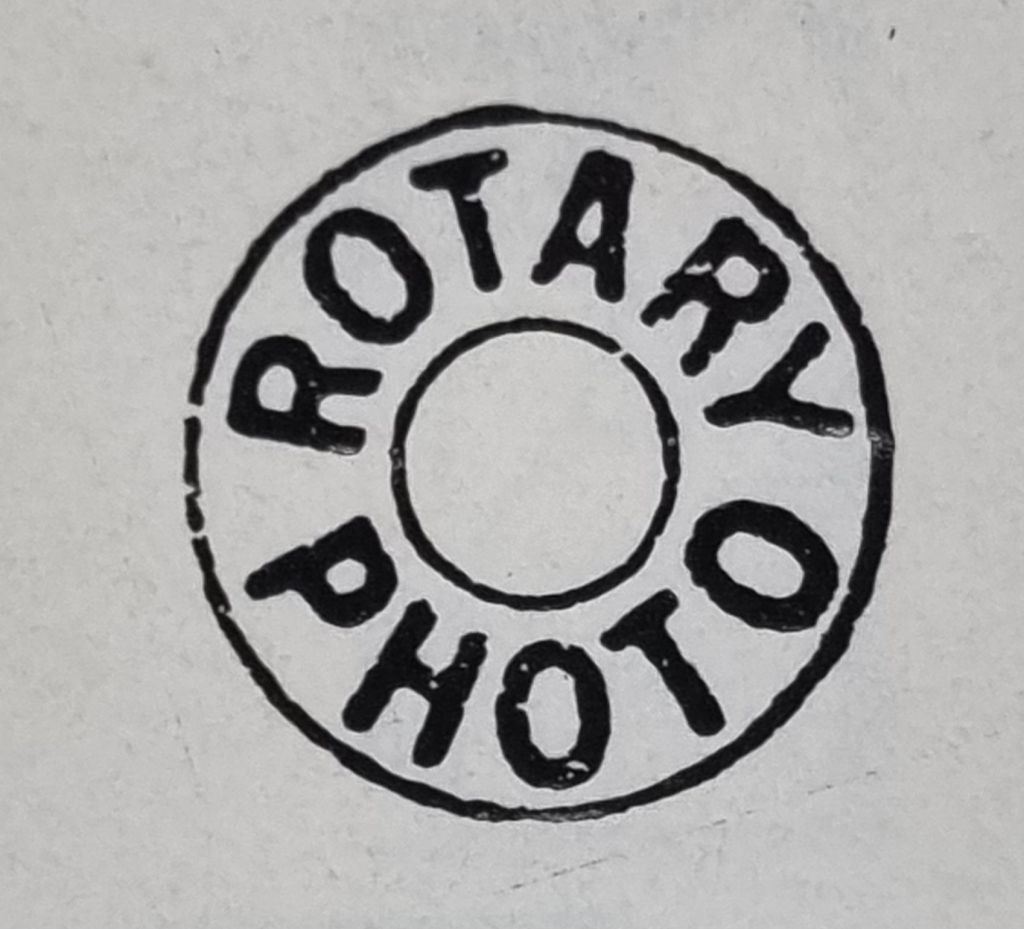
A beautiful set of three of the company’s cards recently came to my attention and turned out to have an intriguing backstory.
They featured the British violinist Marie Hall (1884-1956), a child prodigy, who went on to enjoy a successful international career.
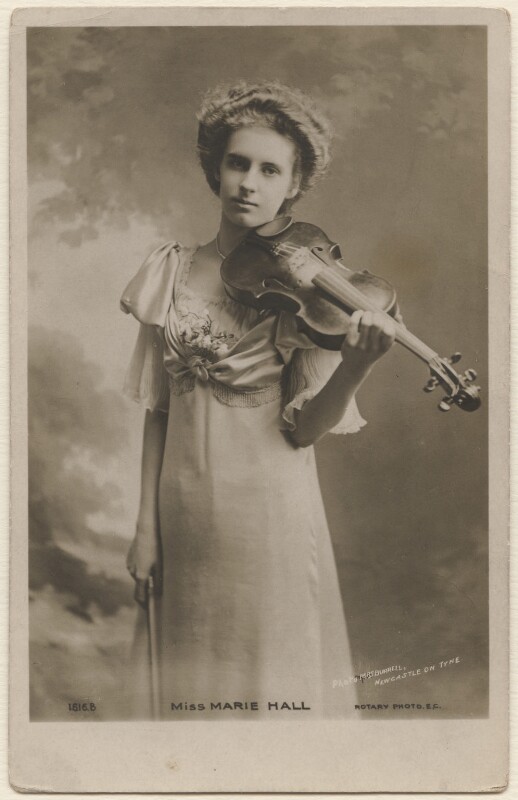
©️ National Portrait Gallery, London. NPG x126797.
What particularly caught my attention was the photographer’s credit scratched into the bottom right-hand corner of the plate.
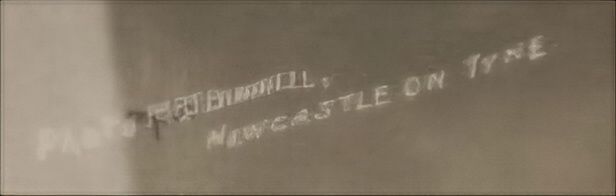
It read: ‘Mrs. Burrell, Newcastle on Tyne.’
A new name to me in the pantheon of Tyneside photographers, I wondered who ‘Mrs. Burrell’ was.
Using the British Newspaper Archive plus census and other public records, a fascinating biography emerges.
Born in Newcastle in 1860, Henrietta Theonie Bunning was the third child of a mechanical engineer and a German-born mother.
Known as Theonie, she was in her mid-twenties when she married William Sleigh Burrell, a chemical manure manufacturer. The couple then had two children.
The 1891 Census found the Burrell family living in the Elswick district of Newcastle with a cook, housemaid and nurse.

Their home, Neville Cottage, was previously the Bunning family residence where, a decade earlier, Theonie lived with her parents.
It was also the address that she later used professionally.
What is evident from press reports covering the late 1890s to 1920 is that Theonie was an accomplished artist.
For example, in November 1898, the Newcastle Daily Chronicle reported on an exhibition in Newcastle by the Bewick Club, of which Theonie was a member.
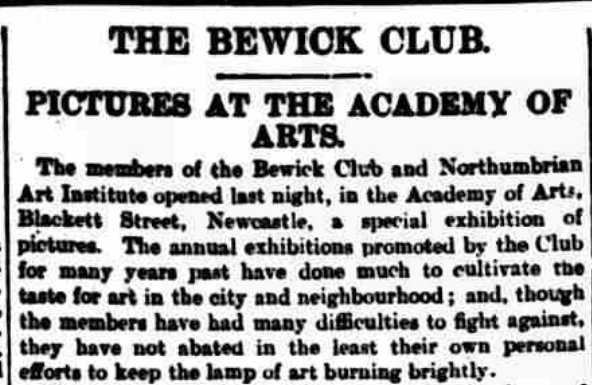
From British Newspaper Archive.
Named after Thomas Bewick, the legendary Northumbrian wood engraver, the club was founded in 1884 with the primary aim of promoting the interests of professional artists.
The paper’s detailed report highlighted ‘a clever study of a child in pastel’ by ‘Miss [sic] H. Theonie Burrell.’
As to when Theonie’s career as an artist began, her ‘profession or occupation’ is not listed in any census before 1911.
However, the 1901 Census does offer a glimpse into her wider artistic life.
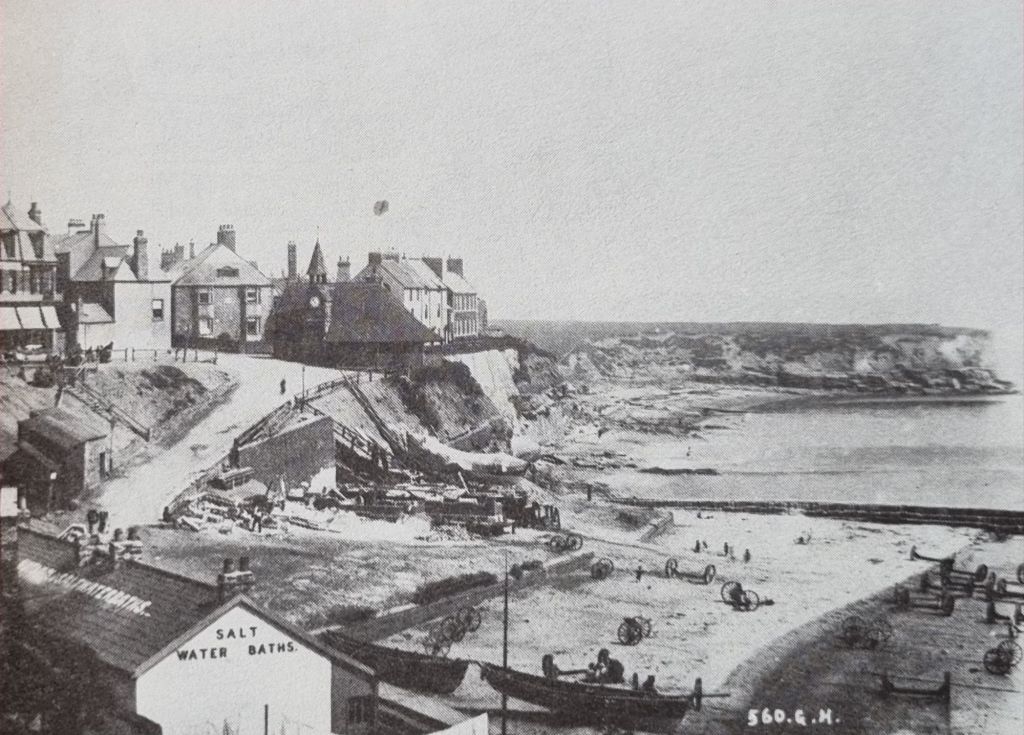
It records ‘Mrs. Burrell,’ her two young children and elder sister Fanny staying in the Tyneside seaside resort of Cullercoats, then home to a well-established artists’ colony.
Further afield, Theonie established a national reputation with artists’ organisations including the Society of Miniaturists.
Also, between 1906 and 1920, watercolour portraits credited to ‘Mrs. H. Theonie Burrell’ regularly featured in the Royal Academy’s prestigious Summer Exhibitions.
But what of her work as a photographer?
Mrs. Burrell’s photographic portraits of Marie Hall were published at a point at which the young violinist’s career was taking off.
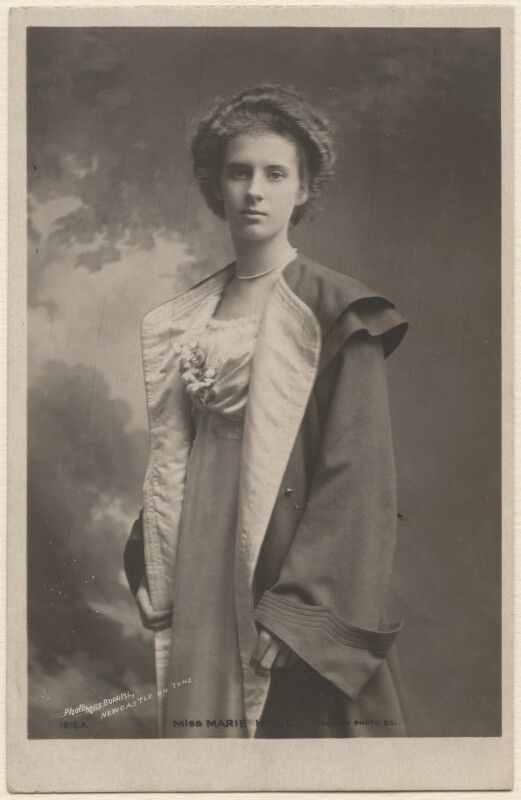
© National Portrait Gallery, London. NPG x126796.
Born in Newcastle on Tyne in 1884, she came from a musical family in which her father was a professional harpist in the city.
Marie was aged 10 when she made her public concert debut at Newcastle Town Hall before leaving the city to study violin in Birmingham, London and Prague.
She returned to Newcastle in March 1903 as an 18 year-old for a concert that was the talk of Tyneside.
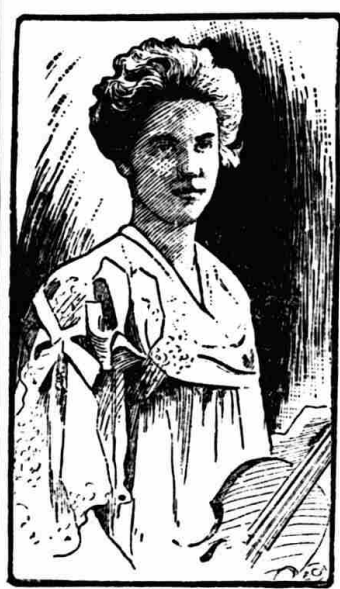
To mark the occasion, the Newcastle Daily Chronicle devoted a half-page column to reviewing her concert and used a line drawing illustration.

Such was her growing fame that the Rotary Photographic Company spotted a commercial opportunity.
Its ‘real photograph’ postcards offered celebrities a conveniently-sized format that could be signed for fans at stage doors and following public appearances.
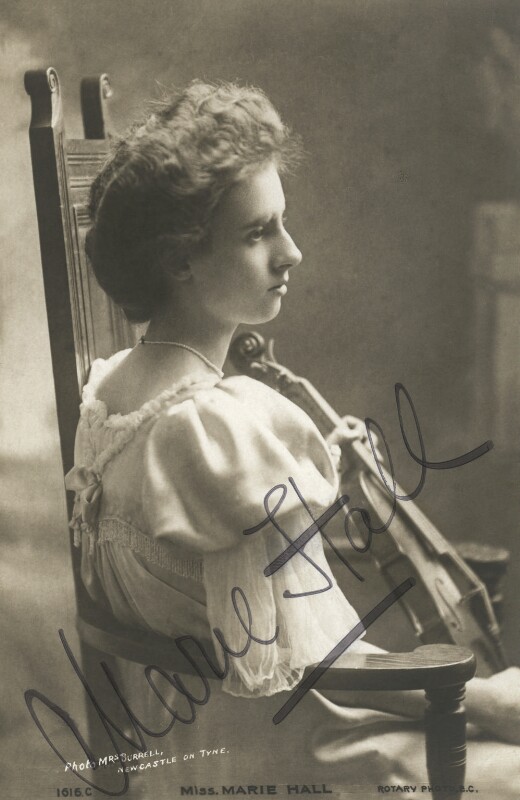
© National Portrait Gallery, London.
NPG x17231.
As to how and where Mrs. Burrell’s photographs of the teenage violinist were taken, their painted backdrop suggests a studio location.
Or it may have been at Newcastle Town Hall as the photo shoot seems to have taken place shortly after her concert appearance there.
Three weeks later on 2nd April 1903, ‘Henrietta Theonie Burrell (Mrs.), Neville Cottage, Newcastle on Tyne’ registered the copyright of three cabinet-size photographs of ‘Miss Marie Hall’ (COPY1/460/372-374).
However, the slightly mystifying aspect of researching this story is that it has yielded hardly any further physical trace of Mrs. Burrell’s photography.
Copyright records held at the National Archives feature only one other ‘Mrs. Burrell’ photograph, namely a face-on portrait of a man named ‘John Cunningham’ registered in December 1904.
The 1911 Census listed her ‘trade or profession’ as ‘photographer and artist’ and in 1916, Ward’s trade directory featured a listing complete with telephone number.

All of which leaves a number of unresolved questions, which future research may help answer.
Henrietta Theonie Burrell died in 1934 in Norton-on-Tees, County Durham aged 74.
If you know the wherabouts of any of her photographic or artistic portraits, the comments box below would welcome any information.
A coda to this blogpost involves Miss Marie Hall whose established place in the history of classical music involves one of the most popular pieces in the repertoire.
In 1920, she was the first performer and dedicatee of Ralph Vaughan Williams’ The Lark Ascending, a moment recreated in a 2012 BBC documentary about the piece.

 Pressphotoman
Leave a comment