
This week’s 80th anniversary of the D-Day landings is a poignant one for many.
Dad took part in the Normandy campaign as a gunner in the Royal Artillery.
Among his war-time memorabilia is a now rather battered photograph album.
©️ Author’s collection.
Looking through the album, it is split into two sections.
One is titled ‘Iceland’ where he was stationed from July 1940 to September 1942 and features the majority of the 80 or so images.
The second is titled ‘Germany.

©️ Author’s collection.
Following D-Day, his last artillery regiment reached its ultimate objective in April 1945, and Dad was then based in Germany until his ‘demob’ the following February.
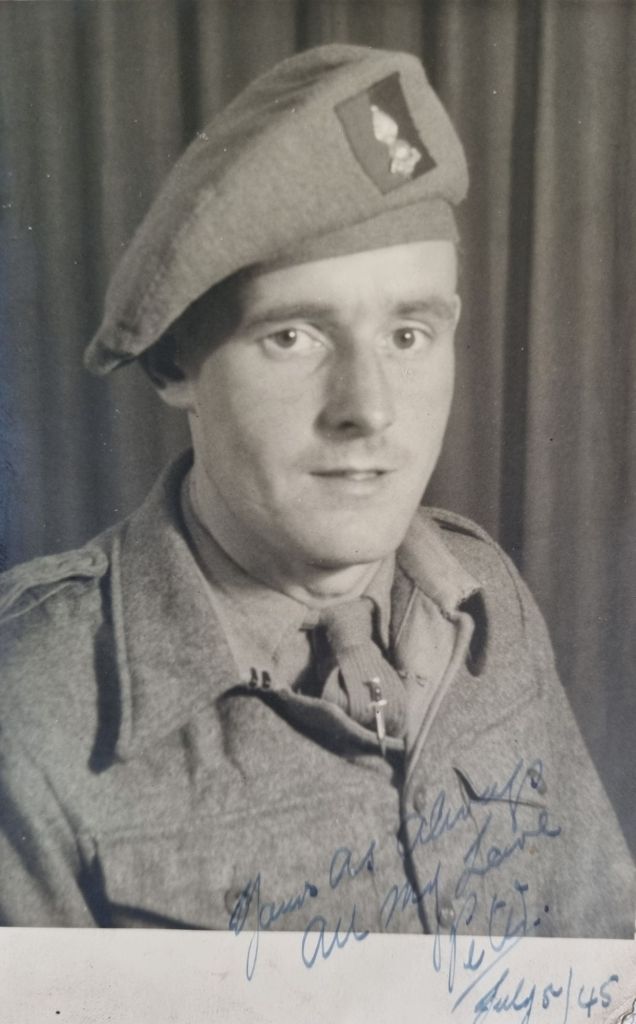
©️ Author’s collection.
His war-time photo album makes for fascinating viewing, particularly in light of my role as a photohistorian.
It is largely made up of assorted general views and group shots of men he served alongside.
Perhaps unsurprisingly, there are no images in the album of the death and destruction he witnessed during the battle for North West Europe.
As was common amongst his contemporaries who survived the conflict, Dad rarely spoke of his part in the Second World War.
It began in May 1939 when, aged 19, he enlisted in the Territorial Army in his home city of Leeds.
A posting to 69th Field Regiment, R.A., meant he was already ’embodied’ when war was declared on 3rd September.
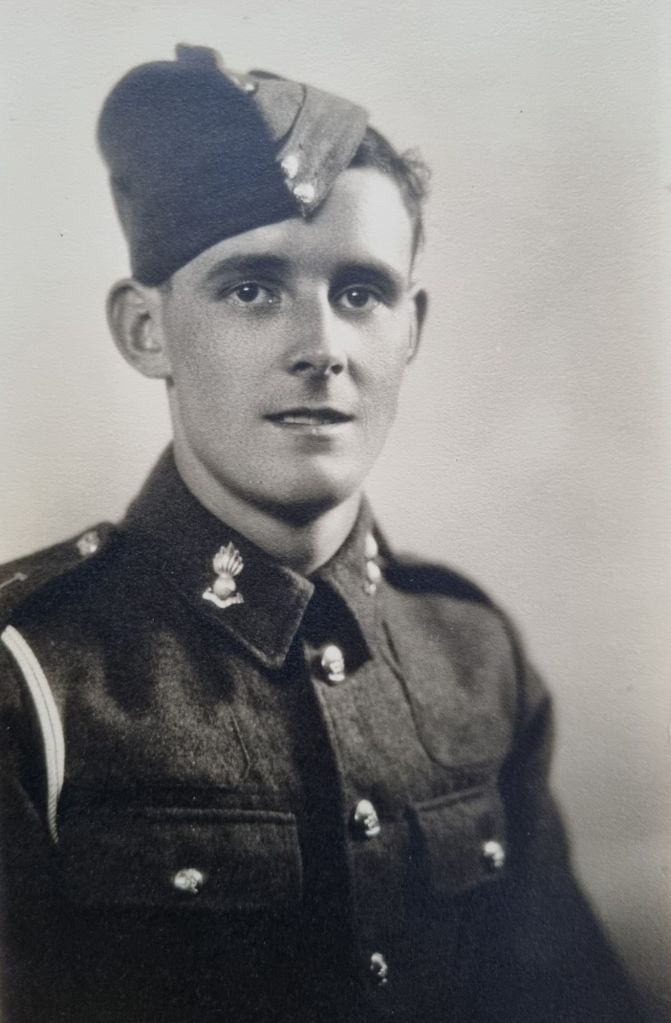
©️ Author’s collection..
It’s only in the decades since his death that I’ve discovered details of Dad’s war service, culminating in D-Day and the events that followed.
Two regimental histories proved invaluable.
‘Mike Target’ by John Mercer (The Book Guild, 1990) vividly describes the build-up to 6th June 1944.
Dad and his fellow West Yorkshiremen in 185 Field Regiment, R.A., were due to land in Normandy on D +7.

(The Book Guild, 1990).
Following anxious days aboard a ship anchored off the French coast and night-time visits from the Luftwaffe, the regiment finally disembarked on D +13.
As to his part in the Normandy campaign, Dad only ever recounted one incident that illustrated the random nature of warfare.
It happened to him during a shift change from one field gun crew to another.
Within seconds of handing over his place to a colleague, Dad’s replacement was killed by incoming fire.
By the end of 1944, numbers in his regiment were so low that he and his fellow survivors were dispersed to other artillery units.
The story of his subsequent spell with the 94th (Dorset & Hants) Field Regiment, R.A., is re-told by Peter Whately-Smith in a regimental history published in 1948.
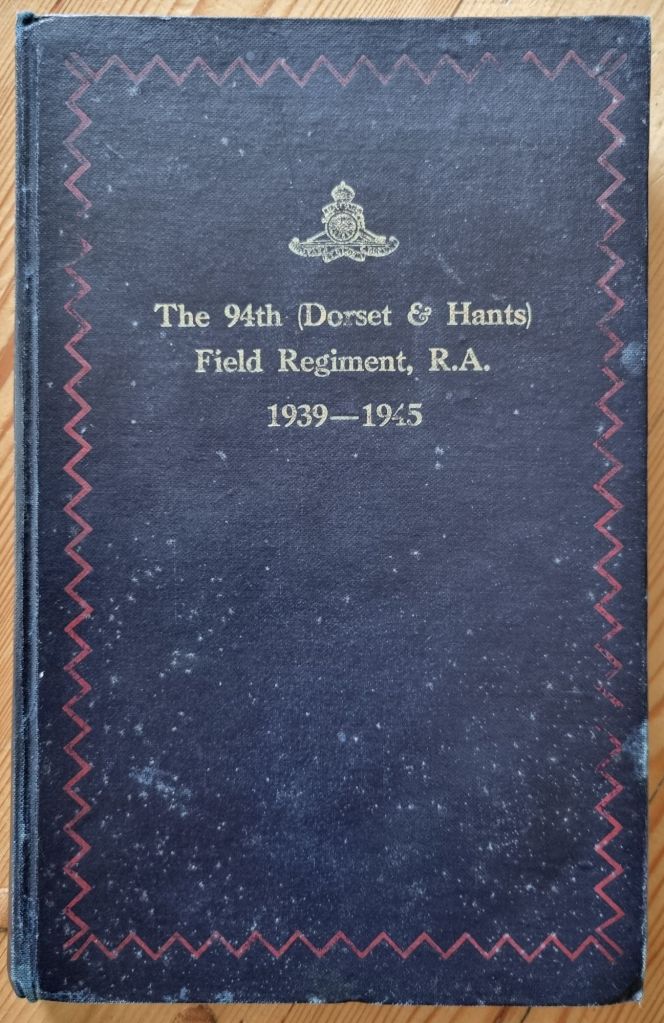
(The Dorset Press, Dorchester, 1948).
©️ Author’s collection.
Once hostilities ended, the author describes how the “small pretty village” of Burgdorf, 15 miles north-east of the city of Hanover, became the regimental base from mid-May 1945.
There, Dad and his colleagues were “engaged in rounding up and disarming German troops … and combing large areas of countryside for enemy weapons and warlike stores.”
Then “began a period of hard grinding work. Guards, guards and more guards, escort parties, security patrols.”
Burgdorf was “unscathed by war” and that fact is reflected in the handful of photographs that form the ‘Germany’ section of Dad’s war-time photo album.
In stark contrast to images usually associated with war-time, its black-and-white shots capture the peace that had been so hard won.
In one, a building features with a jeep parked to the left of the entrance, possibly the regimental HQ.
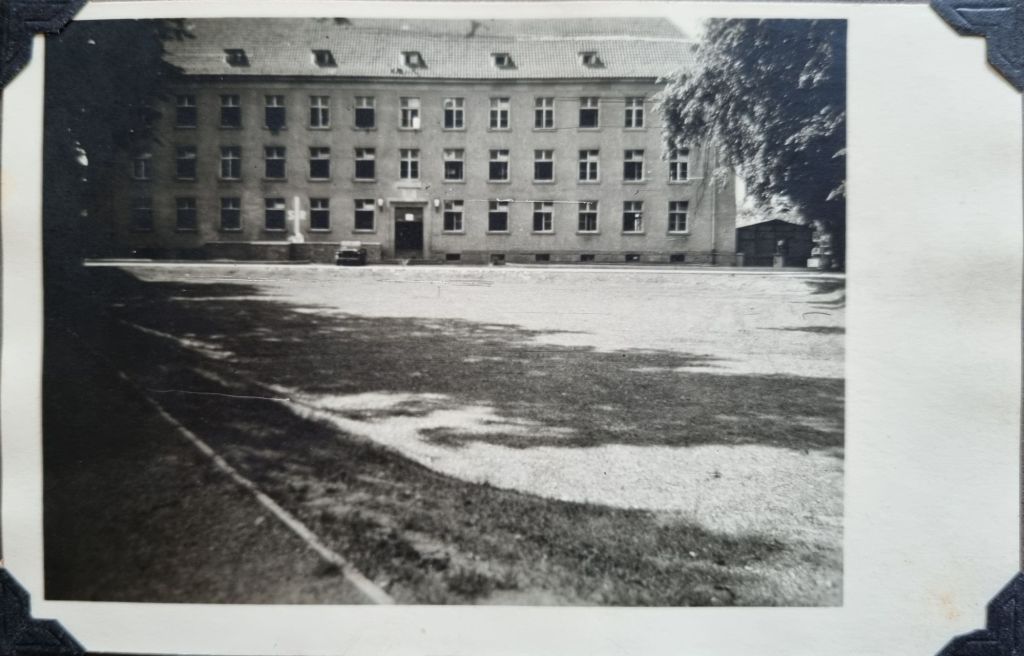
In another, a woman cycles towards the camera whilst across the road, a single truck on an unknown mission is parked up.
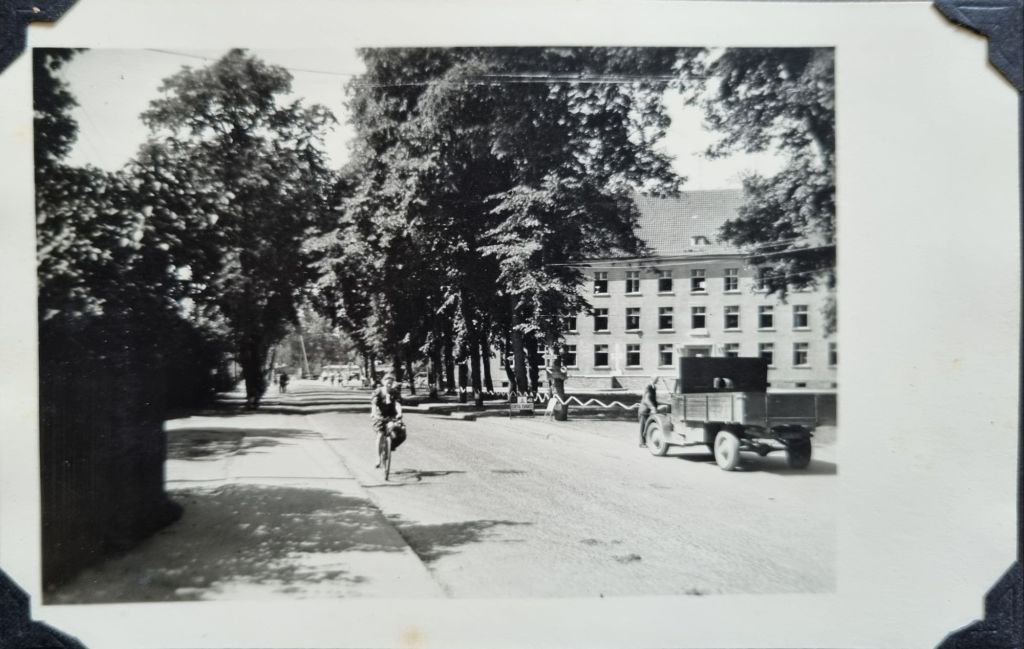
The third photo features a manicured grass lawn and planted border, perhaps fronting one of the buildings featured earlier, surrounded by trees in full leaf.

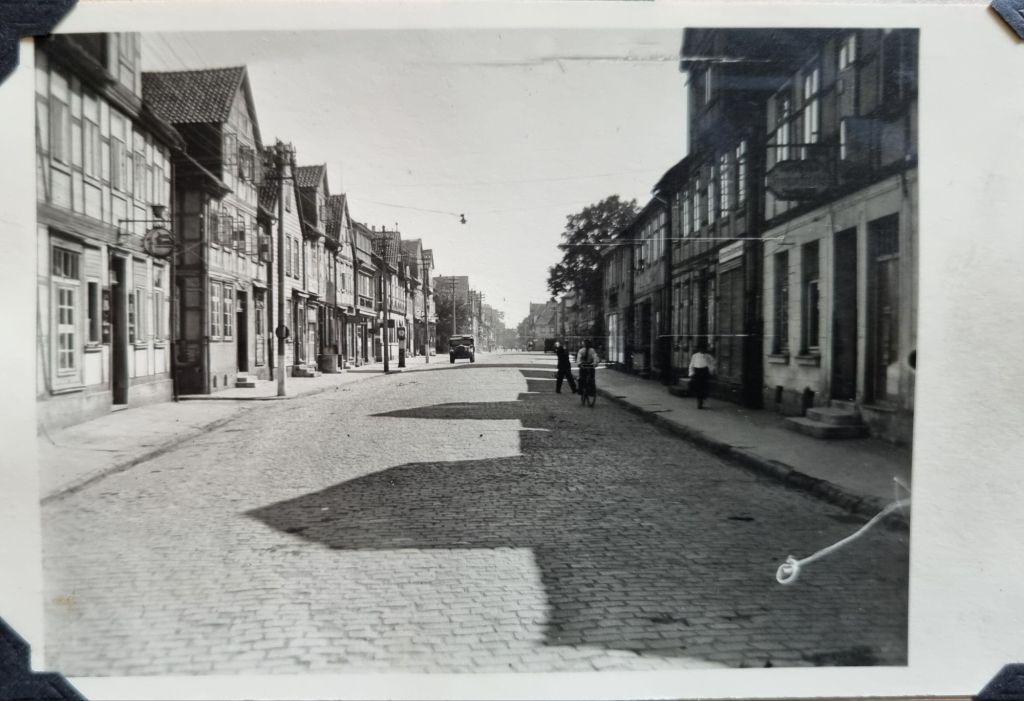
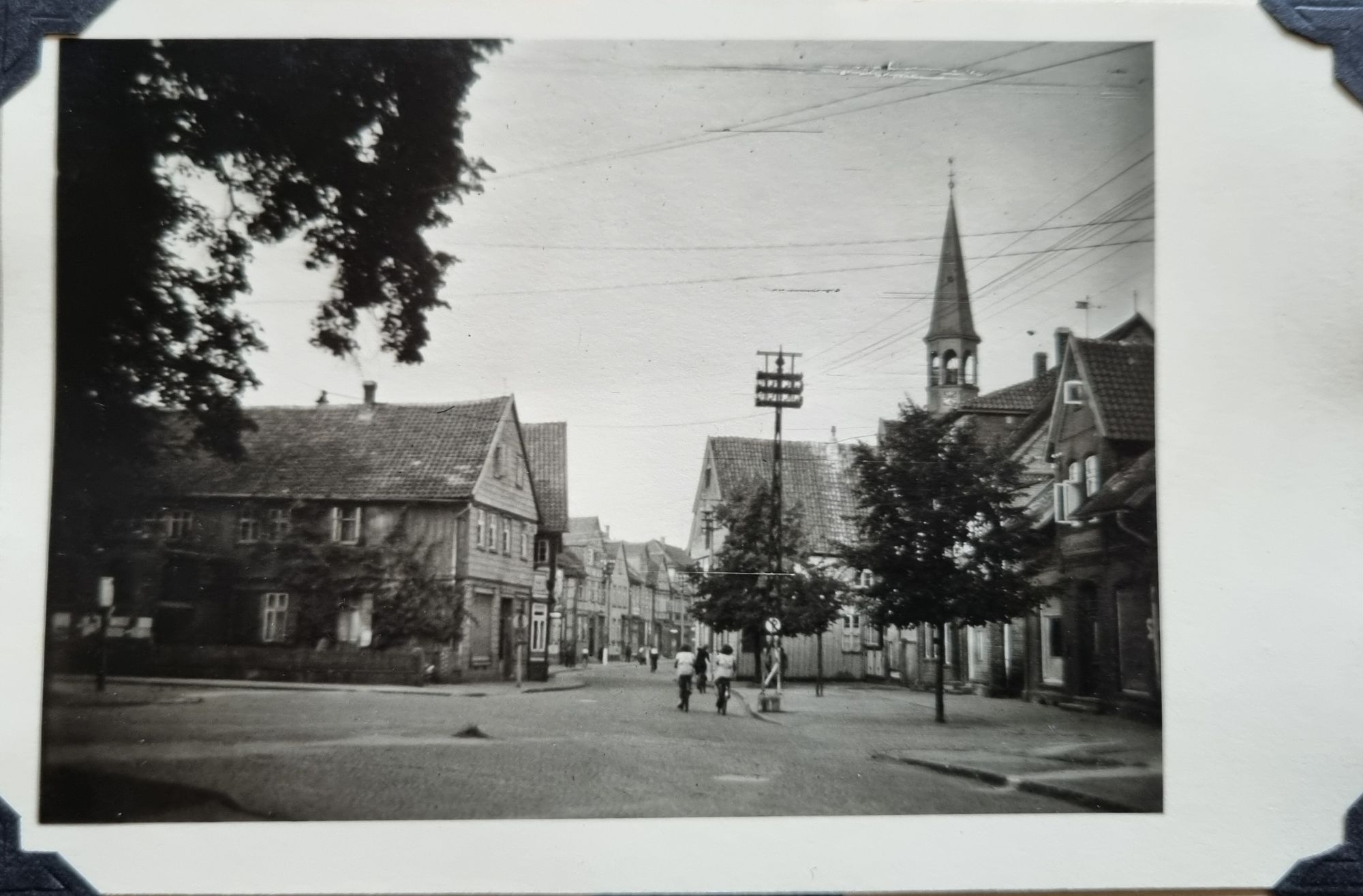
Street scenes reveal that Burgdorf was a settlement with a rich history, evident in its timber-framed buildings and cobbled streets.
Whoever took these photographs had a good eye for composition as is evident in the way the buildings’ shadows are captured below.
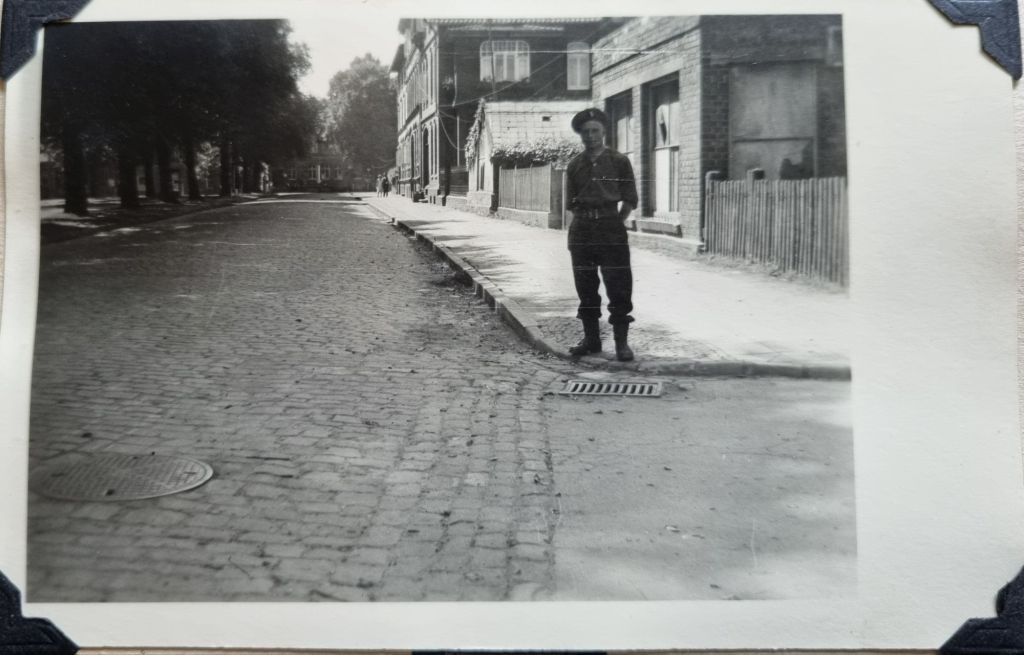
The photographer was also accompanied on a tour of the town by an unnamed soldier.
An open-air swimming pool and unidentified stretch of water also feature.
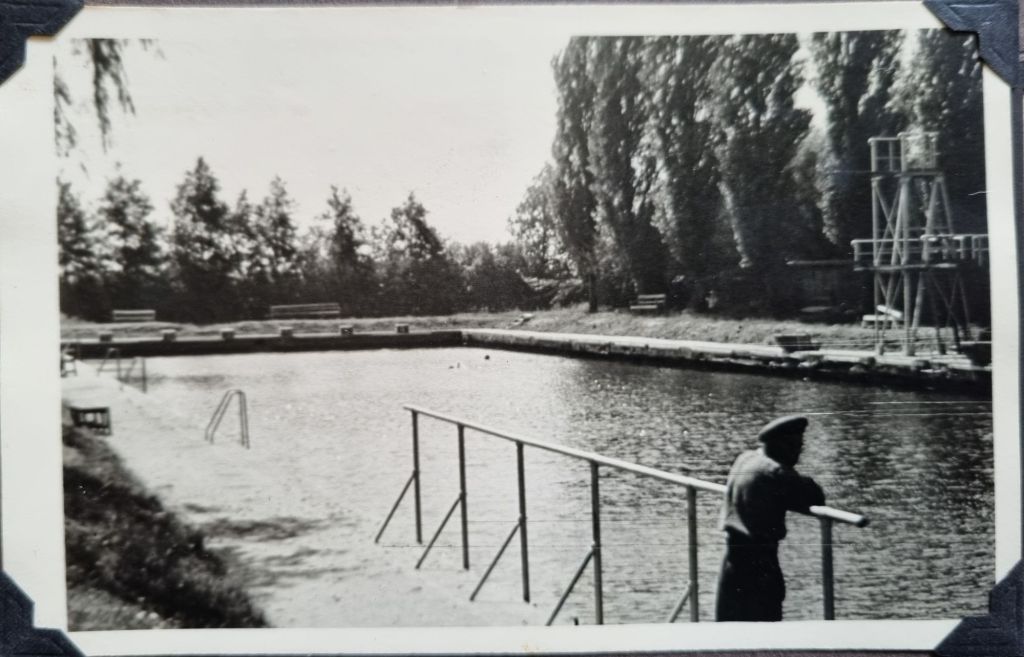
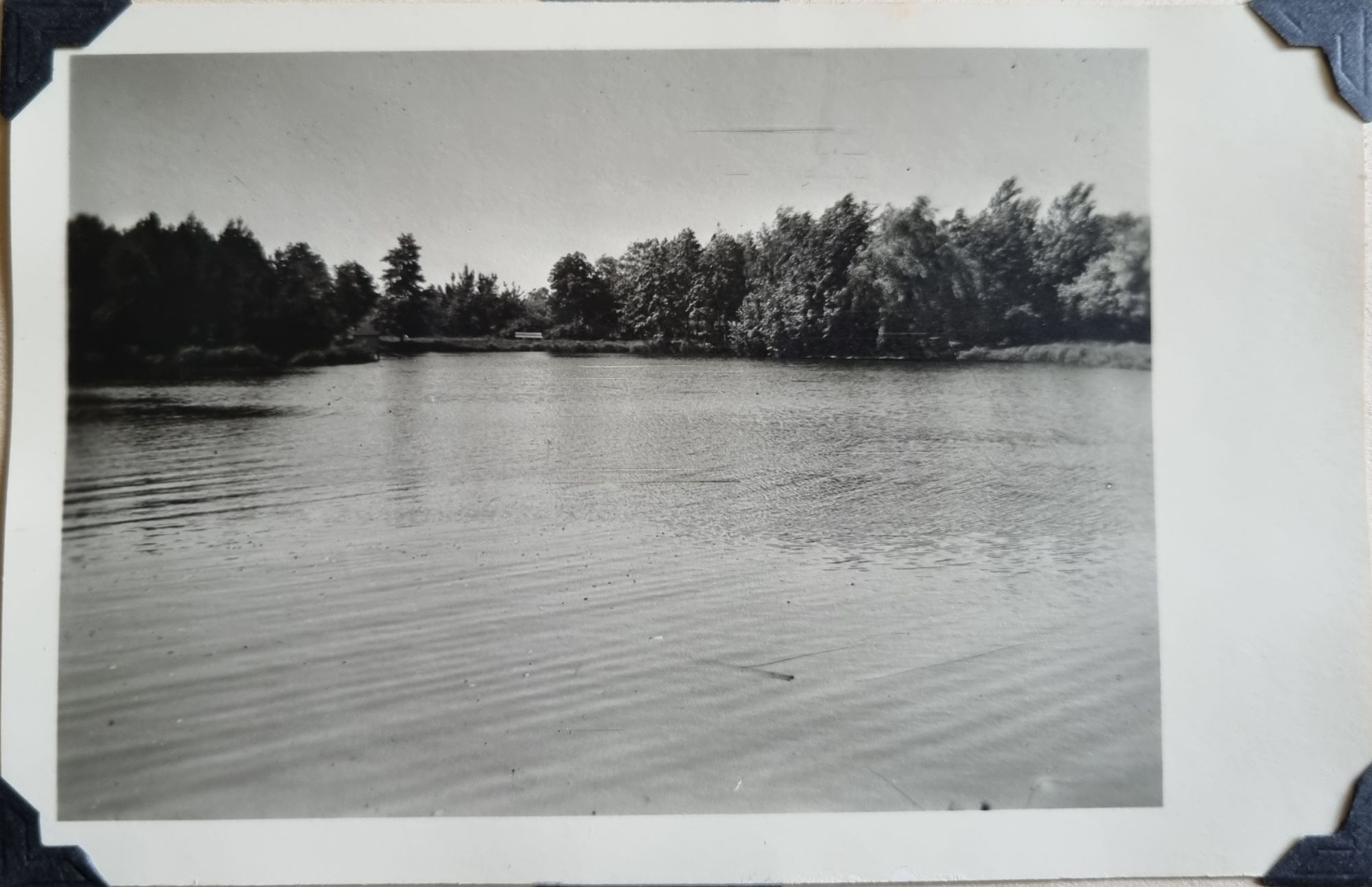
As to their creation, the verso of the photographs offers clues to a possible scenario.
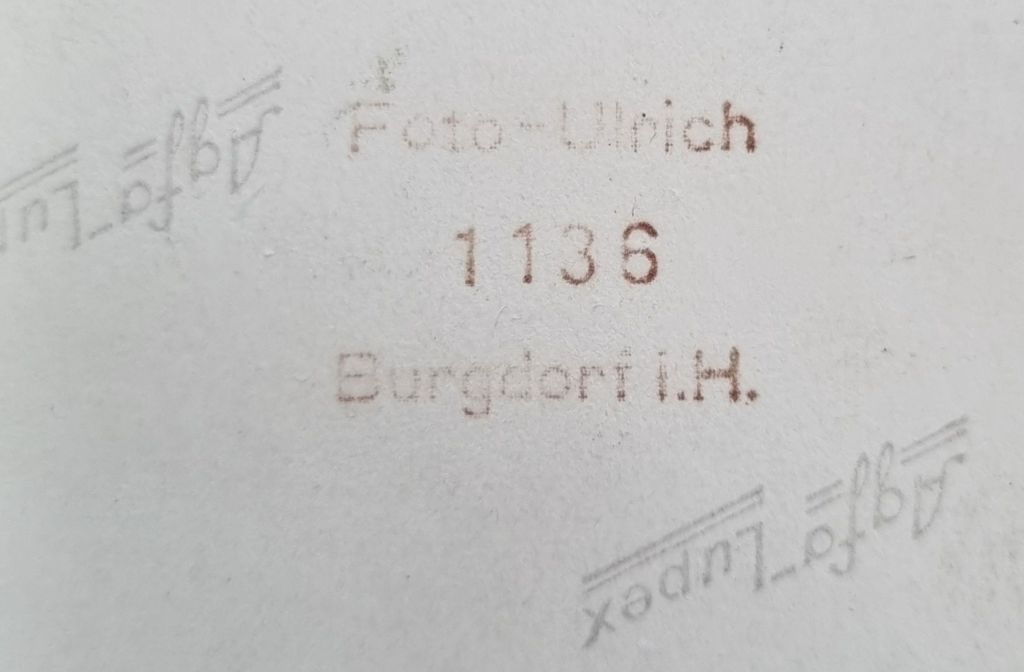
They reveal a printed postcard format and the logo of the German photographic company ‘Agfa’ printed on the dividing line.
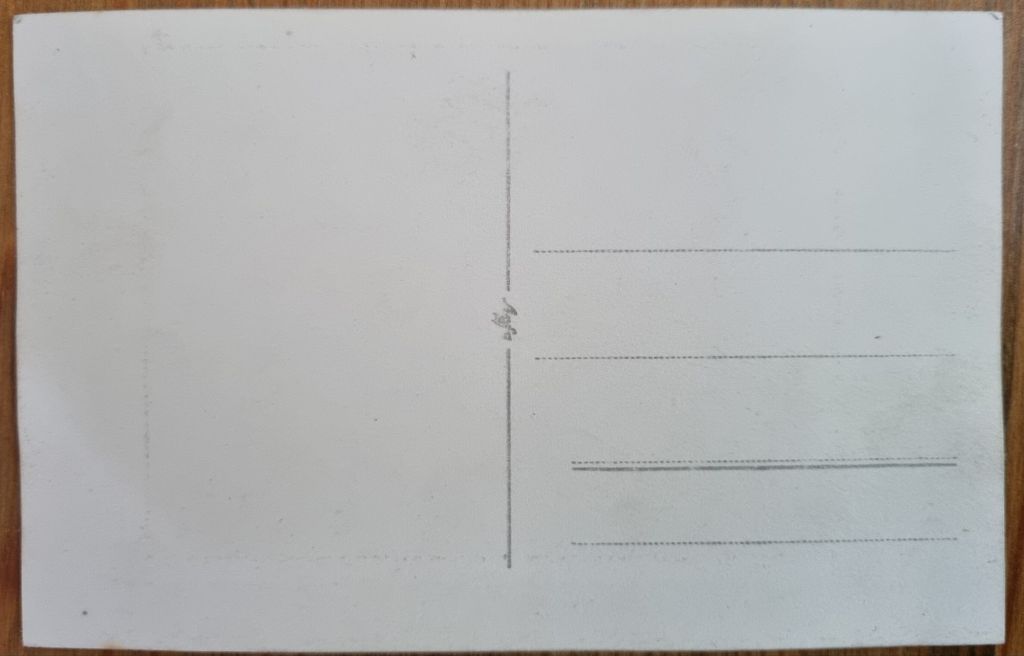
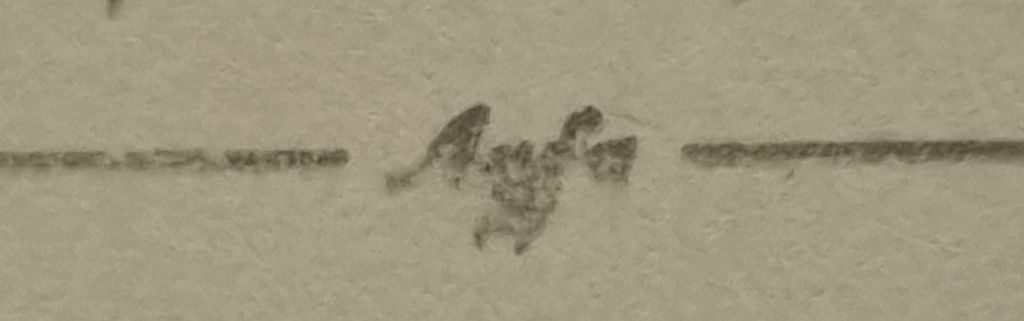
The divided postcard layout allowed space for both a postal address and brief message to be included.
This suggests that members of the regiment, who obtained a set of these photo postcards, might wish to send one home to reassure worried relatives.
In a separate family album, I found another photo with the same size print and postcard format.
It shows a group of around 25 men in military uniform including Dad (pictured second from the left immediately next to the tree trunk).
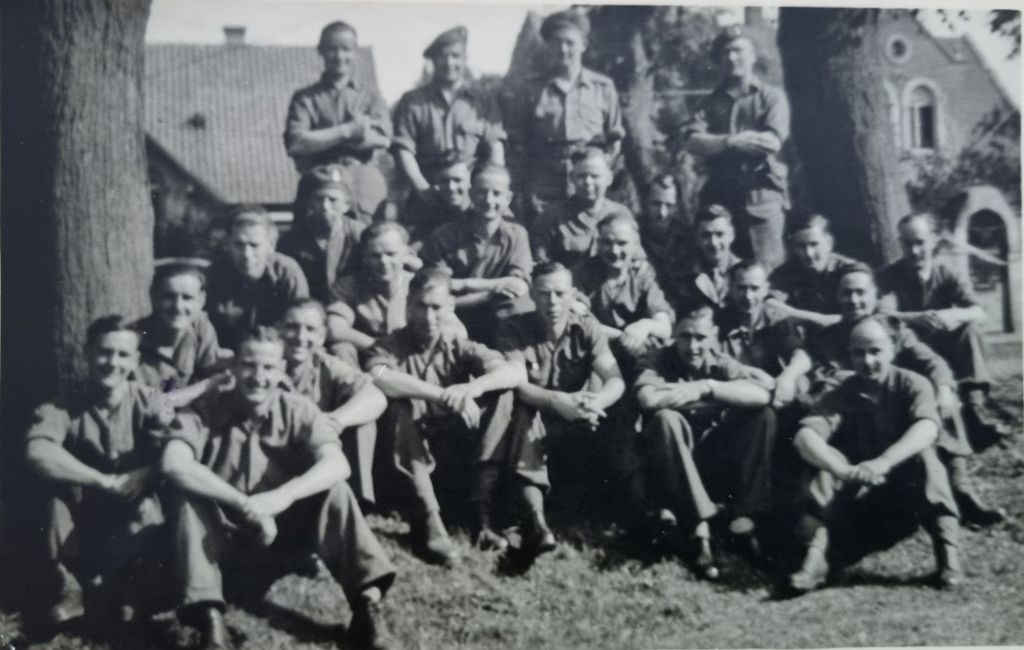
The men’s smiles and relaxed poses point to the photo being taken in Burgdorf during the regiment’s post-war duties.
A (slightly damaged) smaller snapshot photograph, again detached from his war-time album, shows Dad at work.
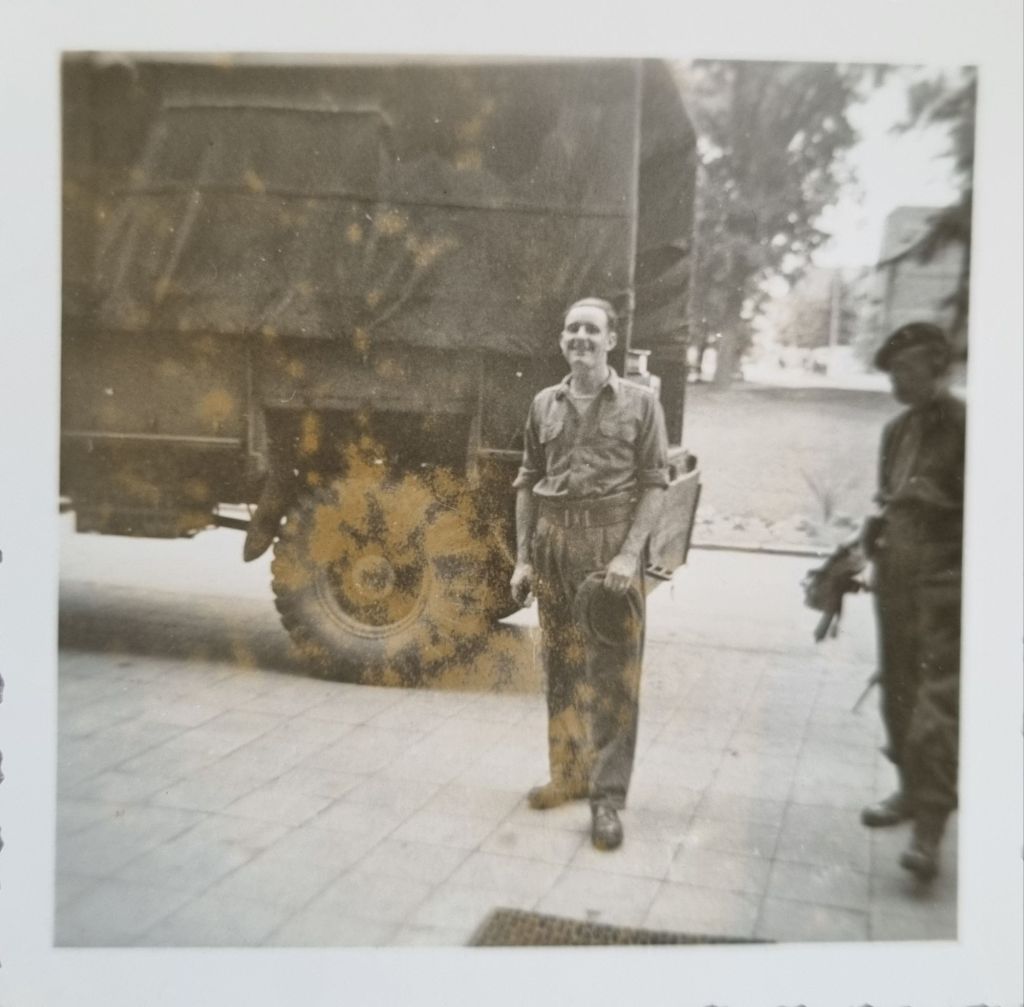
His Soldier’s Release Book records that he had been “employed in the Quarter-Masters Department as clerks store manager.”
This was a testimonial that helped prepare him for life after the forces, and in 1947, he secured a clerk’s job in civvy street with a Leeds-based soap manufacturer.
The verso of the ‘at work’ snapshot bears the stamp of the branded photo paper used – ‘Agfa Lupex’ – and the photo shop in Burgdorf that produced the resulting print.
Best of all, it shows Dad with a smile on his face.
It was one that must have reflected how he felt after the ordeal of an arduous campaign that began on D-Day and a global conflict that consumed nearly seven years of his young adult life.


 Pressphotoman
Leave a comment