
One of the intriguing aspects of photography’s commercialisation in the middle of the 19th century is its impact on the established medium of art.
It’s a collision that continues to fascinate researchers who spend time investigating the 1850s and 1860s.
The new invention of photography offered an affordable alternative at a time when artists still dominated the portraiture market.
A figure who epitomises the emergence of the ‘Photo Artist’ is the subject of this blogpost.
Pressphotoman first came across Edward Sawyer (1828-1902) during research into the early days of W. & D. Downey of South Shields, Newcastle upon Tyne and London.
After touring Northumberland and Durham in a horse-drawn van christened “Downey’s Crystal Place Portrait Gallery,” brothers William (1829-1915) and Daniel (1831-1881) were rapidly expanding their business.
From British Newspaper Archive.
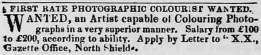
Shortly after this advert’s appearance in April 1857, Downey’s announced they had secured a “First Class Artist for Colouring Photographs” adding that “Photography Like Nature Needs A Handmaid.”
Edward Sawyer, a native of neighbouring North Shields across the River Tyne, had established a local reputation for his artistic skills.
With Sawyer on the payroll, Downey again used the columns of the North & South Shields Gazette (8th July 1857), this time to report a “royal” commission.
“Mr. Moffet of the Queen’s Head Inn, North Shields, has just had painted, at the Photographic Establishment of Messrs. W and D. Downey, South Shields, by their artist, Mr. Edward Sawyers [sic], a beautiful full-length portrait of her Majesty.”
This royal likeness of Queen Victoria, the paper informed its readers, had been placed by the landlord “in front of his house on the Tynemouth Road.”
Whether this portrait was an up-market hand-painted pub sign, it was followed by a recognisably photographic assignment.
Downey’s had produced “a fine negative” of the Mayor of South Shields “sitting in the civic chair in his official robes.”
Some of the copies taken from this were then “coloured in oil in a superior style by Messrs. Downey’s artist” (North & South Shields Gazette, 29th July 1857).
This was highly-skilled work and early photographic portrait studios successfully combined the new and established forms of visual media.
How long Edward Sawyer worked for the Downey brothers is not known, but the 1861 Census recorded he was living in Sunderland with his wife and young family and that his occupation was “portrait painter and photographic colourist.”
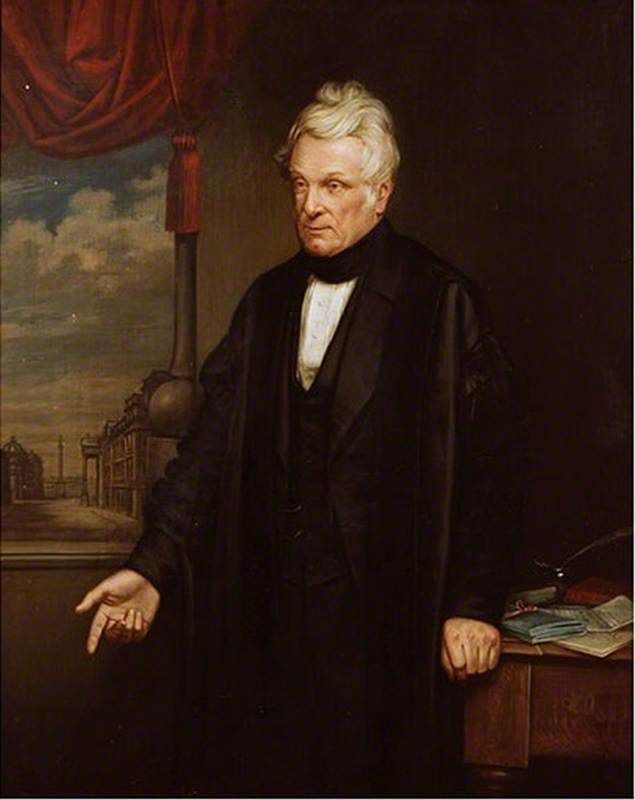
By then, his commissions had moved into another league as demonstrated by this portrait dated by various sources to 1862.
© English Heritage, Chesters Roman Fort Museum.
It features John Clayton (1792-1890), the then long-serving town clerk of Newcastle upon Tyne and a man who is widely credited with saving Hadrian’s Wall.
https://www.claytonromantrust.online/collection.html
In the background of the portrait can be glimpsed prominent Newcastle landmarks including Grey’s Monument, the Theatre Royal and Grey Street itself.
Because of his background, it’s possible that Sawyer used a photograph of his illustrious client as the basis for the portrait .
Around this time, the artist set up his own business at 40 Grey Street, arguably the city’s most prestigious address.
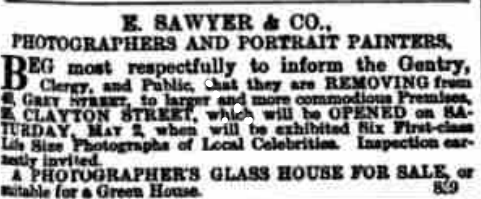
By the spring of 1863, E. Sawyer & Co had moved to 95 Clayton Street, a neighbouring Newcastle thoroughfare named after the subject of the portrait above.
From British Newspaper Archive.
As this newspaper advertisement confirms, Sawyer’s company was offering its services as both “photographers and portrait painters” whilst offering customers the opportunity to view “Six First-class Life Size Photographs of Local Celebrities.”
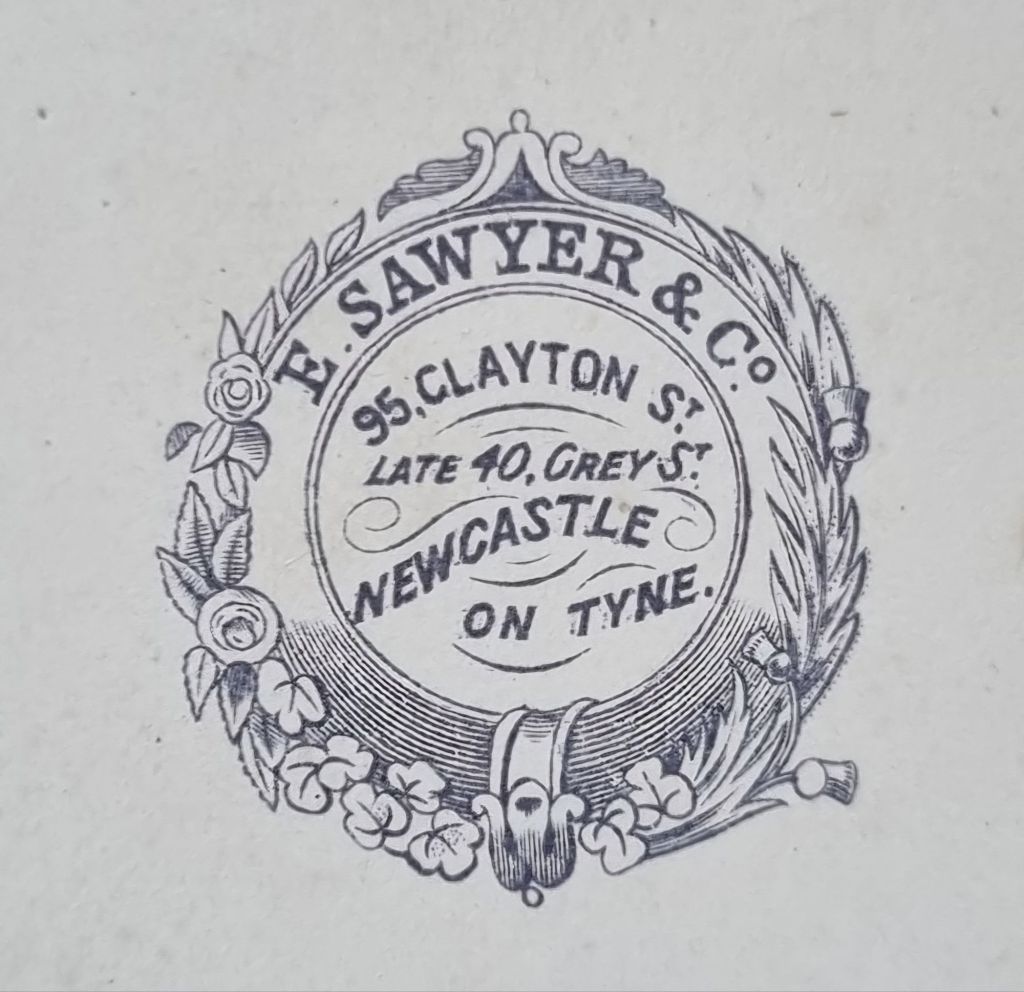
As demonstrated by the carte de visite from which this company logo is taken,’ E. Sawyer & Co’ produced affordable photographic portraits such as this one in a style that appealed to a range of customers.
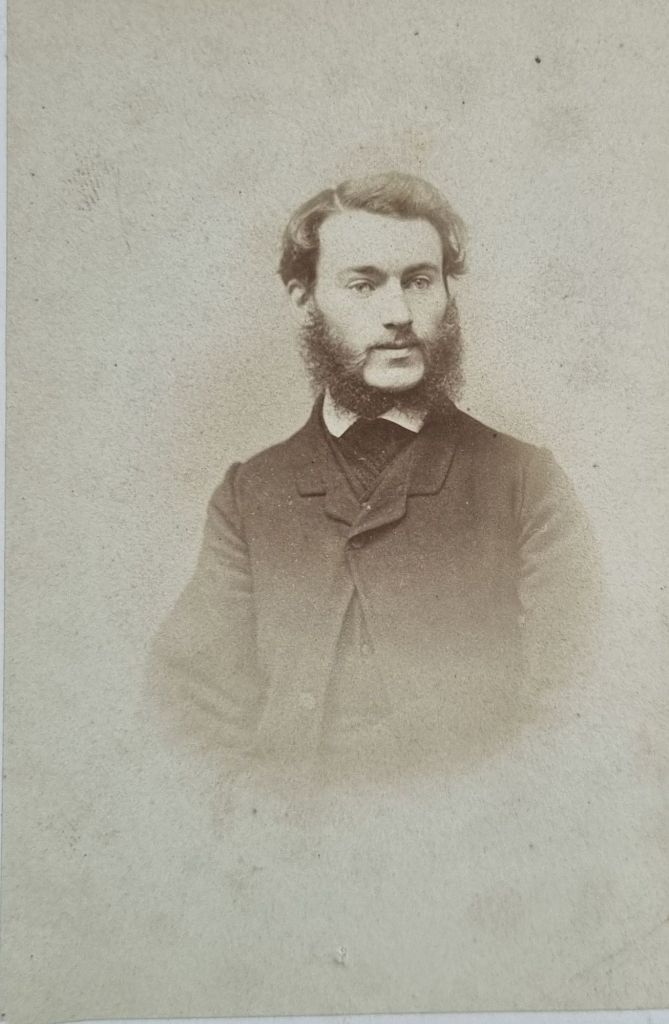
© Author’s collection.
The dividing line between portraits produced by photography and those produced by art is difficult to pinpoint.
But as far as Edward Sawyer was concerned, the marriage between photography and art produced a successful business empire.
By the 1870s, Sawyer senior was joined in running his ‘Photo Art Studios’ business on Barras Bridge, Newcastle by his eldest son Lyddell (1856-1927) and other Sawyer siblings.
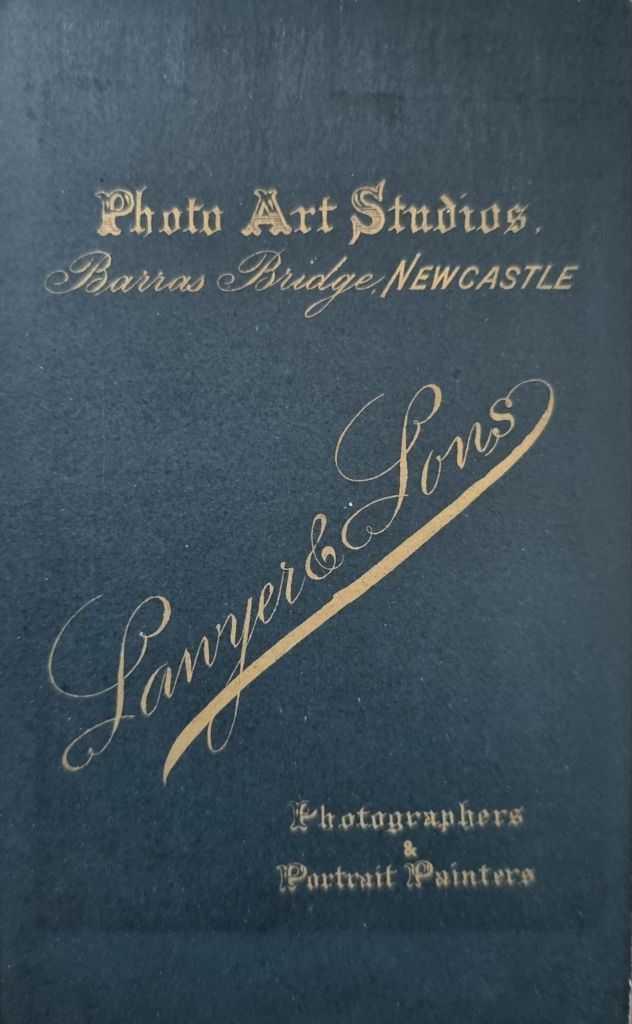
© Author’s collection.
Known as ‘Lyd,’ Lyddell Sawyer’s international reputation as an art photographer and member of the Linked Ring means that he is better known today than his father.
https://www.npg.org.uk/collections/search/person/mp08611/edward-lyddell-sawyer
If you are interested in the Sawyer dynasty and, in particular, viewing examples of Lyddell Sawyer’s art photography, I can recommend ‘Don’t look at the Camera’ by Geoff Lowe published in 2017.
https://britishphotohistory.ning.com/profiles/blogs/publication-lyddell-sawyer
In the meantime, Pressphotoman’s research into the early years of Edward Sawyer’s career and his working relationship with the Downey brothers continues.
 Pressphotoman
Leave a comment