
A new exhibition opened over the weekend at Belsay Hall in Northumberland featuring work by the Turner Prize-nominated artist Ingrid Pollard.
“There is Light in the Fissures” features tree stumps and lumps of stone that form installations and interventions in Belsay’s spectacular Greek Revival house and quarry gardens.
Belsay was the brainchild of Sir Charles Miles Lambert Monck (1779-1867), who was a Whig MP during the early 19th century and also served as a magistrate.
Now in the care of English Heritage, the property that Monck shaped to mirror his own artistic vision has inspired Ingrid Pollard in her role as EH’s first visual art fellow.
Monck’s role in the creation of Belsay is celebrated on the English Heritage website in the “History of Belsay” section.
https://www.english-heritage.org.uk/visit/places/belsay-hall-castle-and-gardens/history
There, it uses this uncredited portrait photograph captioned “Sir Charles Monck in 1865 at the age of 86.”
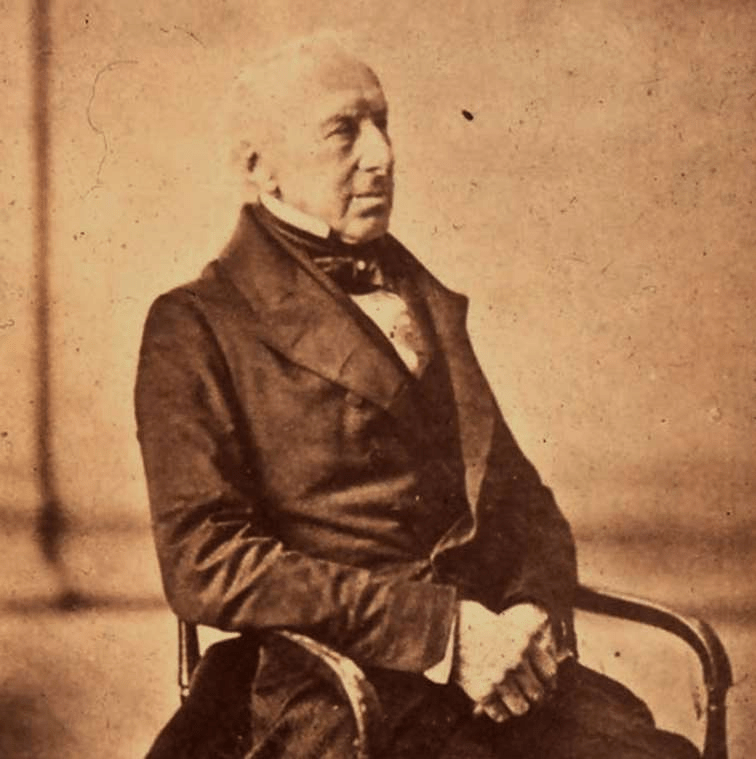
Taken from the English Heritage website for Belsay Hall, Castle and Gardens.
The website entry goes on: “He refused to have his portrait painted, but was interested in ‘the new medium of photography.’”
Given Monck’s enthusiasm, I wondered if it was possible to identify the photographer responsible for his portrait.
My research revealed a small ad placed in the Newcastle Daily Journal by “W. & D. Downey, Photographers, 9 Eldon Square, Newcastle-Upon-Tyne.”
There “Sir Chas. M.L. Monck, Bart” featured amongst a list of well-known names in its forthcoming “Series of Portraits of Eminent Men.”
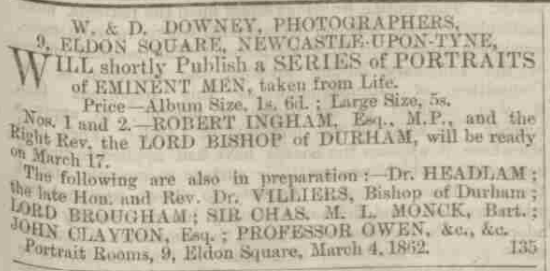
From British Newspaper Archive.
However, the ad’s dating of “March 4, 1862” in the bottom line did not align with the 1865 date given by English Heritage on its Belsay Hall website.
So was this a reference to the same Monck portrait?
Confirmation that it is one and the same comes from this 1908 reproduction of an engraving of Downey’s photograph of Monck that I recently added to my collection.
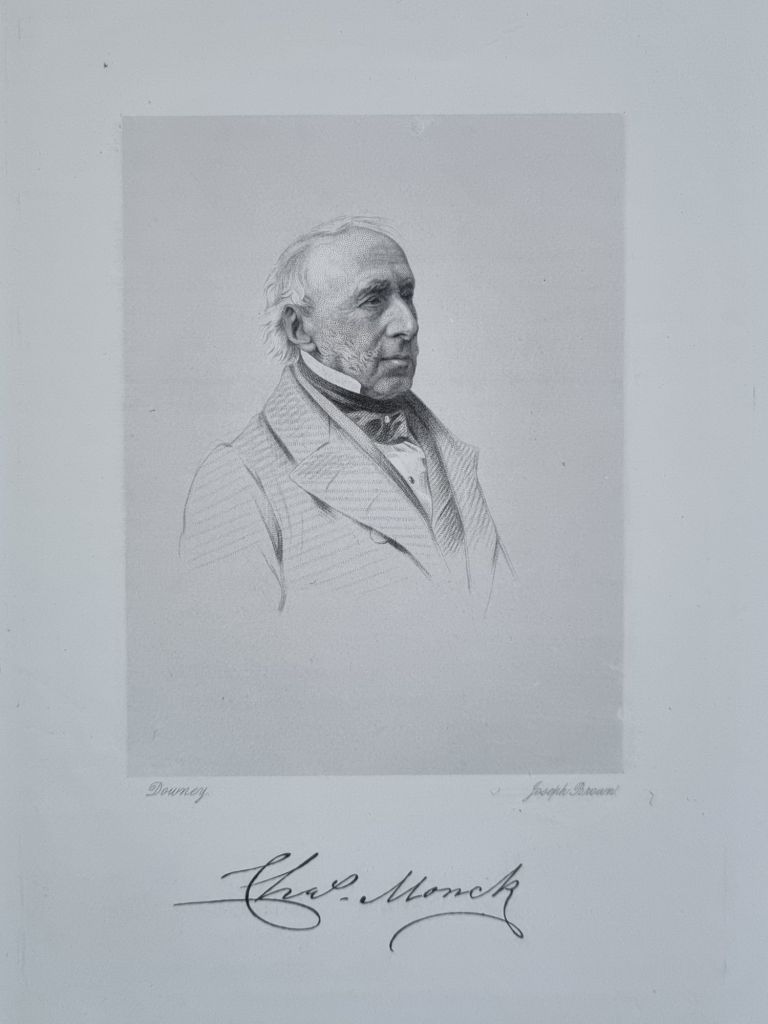
© Author’s collection.
The same engraving features in the collection of the British Museum where it is attributed to Joseph Brown (1809-1887) “after a photograph by Downey” and dated to 1862 when it first appeared in Baily’s Magazine.
https://www.britishmuseum.org/collection/object/P_1943-0410-1752
This revised dating would still mean that Monck was around 83 years of age when he sat for Downey at Belsay Hall.
I’ll leave you to ponder whether Downey’s original negative underwent any retouching to smooth away evidence of wrinkles or signs of ageing.
 Pressphotoman
Leave a comment