
Today’s stereo, attributable to the pioneering press photographer James Edward Ellam (1857-1920), was one that I immediately recognised.
It captures a significant news story in the small town of Yarm where he lived and worked in the first half of the 1890s.
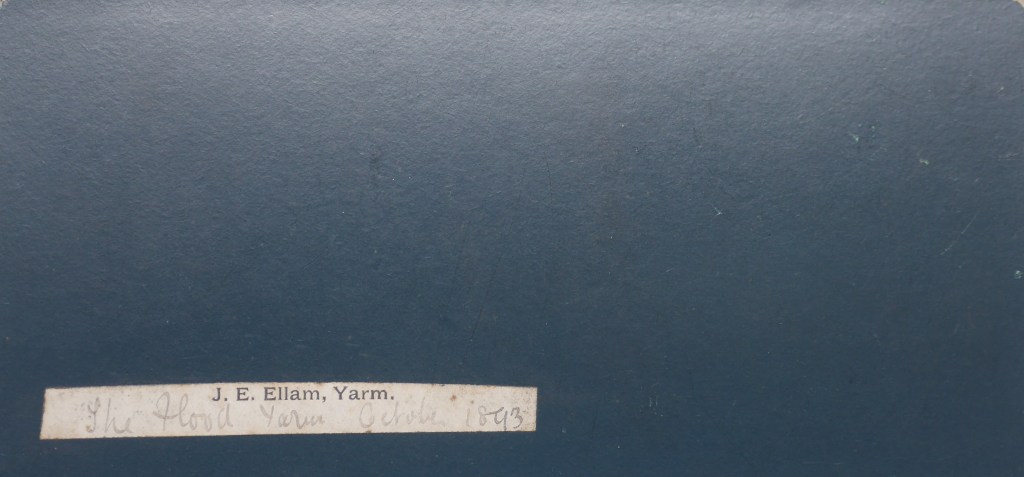
Dated “October 1893,” the stereo shows the effect of the nearby River Tees bursting its banks, inundating the High Street and its distinctive Town Hall.

It was a scene familiar to me from another stereo with the same caption that I saw during my PhD research in 2018.
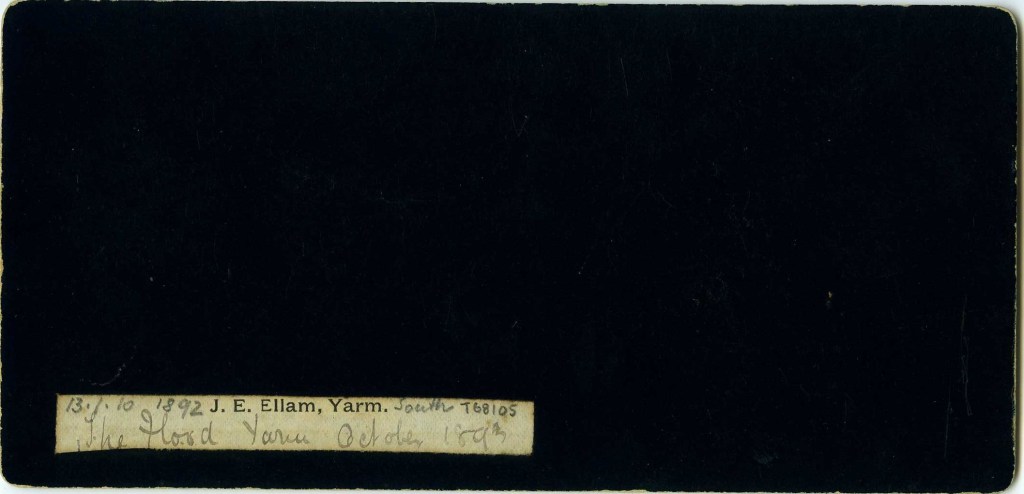
That Ellam stereo (T68105) is part of the collection at Preston Park Museum located a few miles from Yarm.
Its dating, I now realise, has been mis-recorded at some point as “1892” because the final figure on its caption in James’s hand looks at first glance more like a “2” than a “3.”
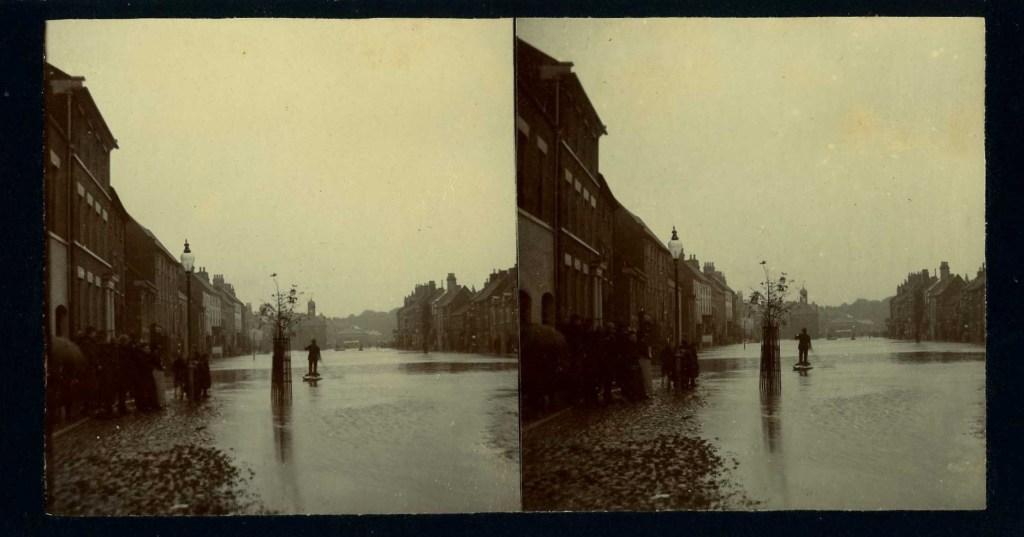
This stereo shows the flooded High Street from the southern end of Yarm with the Town Hall visible in the far distance.
In the middle distance, someone appears to be paddling towards the camera in a small craft.
The “J.E. Ellam, Yarm” stereo now in my collection and taken from the northern end of the town captures a similarly desolate scene.
According to the Town Hall clock, it is shortly before a quarter past four in the afternoon though the flooding might have caused it to stop working.
Having blogged so far about James’s amateur stereos of beauty spots and posed scenes, “The Flood, Yarm. October 1893” marks a significant moment in his photographic life.
For the residents of Yarm, the River Tees bursting its banks and flooding the town and the surrounding area was a frequent occurrence, most notably in 1881, creating headlines in local newspapers.
Photographically, James makes good use of the reflections on the water capturing the Town Hall’s arches.
He also noticed another intrepid soul on the water, this time to the right of the building , who appears to be piloting a cart down the middle of the flooded street.
In the far distance, you can make out a few figures taking in the scene from a slightly elevated position.
As a stereo, it certainly captures the reality of flooding with the river’s eddies rippling the water to the left of the Town Hall building.
In addition to capturing the scene as a photographic observer, the flood would have affected James personally as both his home and work place were on Yarm High Street.
Looking at his subsequent career as both a royal stereographer and news agency photographer servicing Fleet Street, this stereo from 1893 looks to be a pivotal moment.
Tomorrow: “Rose Hill Gardens.”
 Pressphotoman
Leave a comment